mergechannels 0.1.0__cp311-cp311-macosx_11_0_arm64.whl → 0.1.2__cp311-cp311-macosx_11_0_arm64.whl
This diff represents the content of publicly available package versions that have been released to one of the supported registries. The information contained in this diff is provided for informational purposes only and reflects changes between package versions as they appear in their respective public registries.
Potentially problematic release.
This version of mergechannels might be problematic. Click here for more details.
- mergechannels/__init__.py +4 -4
- mergechannels/__init__.pyi +8 -2
- mergechannels/_internal.py +17 -26
- mergechannels/mergechannels.cpython-311-darwin.so +0 -0
- mergechannels-0.1.2.dist-info/METADATA +115 -0
- mergechannels-0.1.2.dist-info/RECORD +11 -0
- {mergechannels-0.1.0.dist-info → mergechannels-0.1.2.dist-info}/licenses/LICENSE +1 -1
- mergechannels-0.1.0.dist-info/METADATA +0 -63
- mergechannels-0.1.0.dist-info/RECORD +0 -11
- {mergechannels-0.1.0.dist-info → mergechannels-0.1.2.dist-info}/WHEEL +0 -0
mergechannels/__init__.py
CHANGED
|
@@ -2,12 +2,12 @@
|
|
|
2
2
|
from .mergechannels import ( # type: ignore
|
|
3
3
|
apply_color_map,
|
|
4
4
|
apply_colors_and_merge_nc,
|
|
5
|
-
)
|
|
5
|
+
)
|
|
6
6
|
|
|
7
7
|
from ._internal import merge
|
|
8
8
|
|
|
9
9
|
__all__ = [
|
|
10
|
-
|
|
11
|
-
|
|
12
|
-
|
|
10
|
+
'apply_color_map',
|
|
11
|
+
'apply_colors_and_merge_nc',
|
|
12
|
+
'merge',
|
|
13
13
|
]
|
mergechannels/__init__.pyi
CHANGED
|
@@ -9,13 +9,19 @@ def merge(
|
|
|
9
9
|
arrs: Sequence[np.ndarray],
|
|
10
10
|
colors: Sequence[COLORMAPS] = (),
|
|
11
11
|
blending: Literal[BLENDING_OPTIONS] = 'max',
|
|
12
|
+
saturation_limits: tuple[float, float] = (0.2, 99.8),
|
|
12
13
|
) -> np.ndarray:
|
|
13
14
|
...
|
|
14
15
|
|
|
15
|
-
def apply_color_map(
|
|
16
|
+
def apply_color_map(
|
|
17
|
+
arr: np.ndarray,
|
|
18
|
+
cmap_name: COLORMAPS,
|
|
19
|
+
saturation_limits: tuple[float, float] = (0.2, 99.8),
|
|
20
|
+
) -> np.ndarray: ...
|
|
16
21
|
|
|
17
22
|
def apply_colors_and_merge_nc(
|
|
18
23
|
arrs: Sequence[np.ndarray],
|
|
19
24
|
colors: Sequence[COLORMAPS] = (),
|
|
20
25
|
blending: Literal[BLENDING_OPTIONS] = 'max',
|
|
21
|
-
|
|
26
|
+
saturation_limits: Sequence[tuple[float, float]] = (),
|
|
27
|
+
) -> np.ndarray: ...
|
mergechannels/_internal.py
CHANGED
|
@@ -11,24 +11,16 @@ from ._blending import BLENDING_OPTIONS
|
|
|
11
11
|
|
|
12
12
|
def merge(
|
|
13
13
|
arrs: Sequence[np.ndarray],
|
|
14
|
-
colors: Sequence[COLORMAPS]
|
|
14
|
+
colors: Sequence[COLORMAPS],
|
|
15
15
|
blending: BLENDING_OPTIONS = 'max',
|
|
16
16
|
) -> np.ndarray:
|
|
17
17
|
'''
|
|
18
18
|
apply cmaps to arrays and blend the colors
|
|
19
19
|
'''
|
|
20
|
+
# region validation
|
|
20
21
|
n_arrs = len(arrs)
|
|
21
22
|
n_colors = len(colors)
|
|
22
|
-
if n_arrs
|
|
23
|
-
arr_shapes = [arr.shape for arr in arrs]
|
|
24
|
-
if not all([len(arr_shape) == 3 for arr_shape in arr_shapes]):
|
|
25
|
-
raise ValueError(
|
|
26
|
-
'Expected a sequence of pre-colorized arrays, '
|
|
27
|
-
f'got {n_arrs} arrays of shapes {arr_shapes}'
|
|
28
|
-
)
|
|
29
|
-
# call merge rgb arrs here
|
|
30
|
-
return np.zeros((3,3))
|
|
31
|
-
if not n_arrs == n_colors:
|
|
23
|
+
if not n_arrs == n_colors and n_arrs > 0:
|
|
32
24
|
raise ValueError(
|
|
33
25
|
'Expected an equal number of arrays to colorize and colormap names to apply. '
|
|
34
26
|
f'Got {n_arrs} arrays and {n_colors} colors'
|
|
@@ -38,19 +30,18 @@ def merge(
|
|
|
38
30
|
raise ValueError(
|
|
39
31
|
f'Expected every array to have the same shape, got {arr_shapes}'
|
|
40
32
|
)
|
|
41
|
-
|
|
42
|
-
|
|
43
|
-
|
|
44
|
-
|
|
45
|
-
|
|
46
|
-
|
|
47
|
-
|
|
48
|
-
|
|
49
|
-
|
|
50
|
-
|
|
51
|
-
|
|
52
|
-
|
|
53
|
-
|
|
54
|
-
|
|
55
|
-
|
|
33
|
+
if not len(arr_shapes[0]) == 2:
|
|
34
|
+
raise ValueError(
|
|
35
|
+
f'Expected every array to be 2D, got {arr_shapes[0]}'
|
|
36
|
+
)
|
|
37
|
+
arr_dtypes = [arr.dtype for arr in arrs]
|
|
38
|
+
if not len(set(arr_dtypes)) == 1:
|
|
39
|
+
raise ValueError(
|
|
40
|
+
f'Expected every array to have the same dtype, got {arr_dtypes}'
|
|
41
|
+
)
|
|
42
|
+
# endregion
|
|
56
43
|
|
|
44
|
+
if n_arrs == 1:
|
|
45
|
+
return apply_color_map(arr=arrs[0], cmap_name=colors[0])
|
|
46
|
+
else:
|
|
47
|
+
return apply_colors_and_merge_nc(arrs, colors, blending)
|
|
Binary file
|
|
@@ -0,0 +1,115 @@
|
|
|
1
|
+
Metadata-Version: 2.4
|
|
2
|
+
Name: mergechannels
|
|
3
|
+
Version: 0.1.2
|
|
4
|
+
Classifier: Programming Language :: Rust
|
|
5
|
+
Classifier: Programming Language :: Python :: Implementation :: CPython
|
|
6
|
+
Classifier: Programming Language :: Python :: Implementation :: PyPy
|
|
7
|
+
Classifier: License :: OSI Approved :: MIT License
|
|
8
|
+
Classifier: Programming Language :: Python :: 3
|
|
9
|
+
Classifier: Programming Language :: Python :: 3.9
|
|
10
|
+
Classifier: Programming Language :: Python :: 3.10
|
|
11
|
+
Classifier: Programming Language :: Python :: 3.11
|
|
12
|
+
Classifier: Programming Language :: Python :: 3.12
|
|
13
|
+
Classifier: Programming Language :: Python :: 3.13
|
|
14
|
+
Requires-Dist: numpy>1.25.0
|
|
15
|
+
License-File: LICENSE
|
|
16
|
+
License: MIT
|
|
17
|
+
Requires-Python: >=3.9, <=3.13
|
|
18
|
+
Description-Content-Type: text/markdown; charset=UTF-8; variant=GFM
|
|
19
|
+
|
|
20
|
+
[](https://github.com/zacswider/mergechannels/actions/workflows/CI.yml)
|
|
21
|
+

|
|
22
|
+

|
|
23
|
+

|
|
24
|
+
|
|
25
|
+
# mergechannels
|
|
26
|
+
|
|
27
|
+
This project was originally conceived because I often find myself wanting to apply and blend colormaps to images while working from Python, and for historical reasons many of my favorite colormaps are distributed as [FIJI](https://imagej.net/software/fiji/) lookup tables. I also care about things likes speed and memory usage (e.g., not casting large arrays to floating point dtypes, not creating multiple whole arrays just to add them together), so I was interested in seeing if I could at least match matplotlib's colormapping performance with my own hand-rolled colorizer in Rust.
|
|
28
|
+
|
|
29
|
+
|
|
30
|
+
|
|
31
|
+
## Installation
|
|
32
|
+
|
|
33
|
+
Install pre-compiled binaries from [PyPI](https://pypi.org/project/mergechannels/):
|
|
34
|
+
```bash
|
|
35
|
+
pip install mergechannels
|
|
36
|
+
```
|
|
37
|
+
|
|
38
|
+
Build from source on your own machine:
|
|
39
|
+
```bash
|
|
40
|
+
pip install git+https://github.com/zacswider/mergechannels.git
|
|
41
|
+
```
|
|
42
|
+
|
|
43
|
+
## Usage
|
|
44
|
+
*NOTE*: scikit-image is not a dependency of this project, but is used in the examples below to fetch images.
|
|
45
|
+
|
|
46
|
+
### colorize a single image
|
|
47
|
+
|
|
48
|
+
```python
|
|
49
|
+
from skimage import data
|
|
50
|
+
import mergechannels as mc
|
|
51
|
+
|
|
52
|
+
img = data.camera()
|
|
53
|
+
colorized = mc.apply_color_map(img, 'Red/Green')
|
|
54
|
+
fig, axes = plt.subplots(1, 2, figsize=(6, 3), dpi=150)
|
|
55
|
+
for ax in axes: ax.axis('off')
|
|
56
|
+
(a, b) = axes
|
|
57
|
+
a.imshow(img, cmap='gray')
|
|
58
|
+
b.imshow(colorized)
|
|
59
|
+
plt.show()
|
|
60
|
+
print(colorized.shape, colorized.dtype)
|
|
61
|
+
>> (512, 512, 3) uint8
|
|
62
|
+
```
|
|
63
|
+

|
|
65
|
+
|
|
66
|
+
|
|
67
|
+
### apply a different colormap to each channel
|
|
68
|
+
```python
|
|
69
|
+
from skimage import data
|
|
70
|
+
import matplotlib.pyplot as plt
|
|
71
|
+
import mergechannels as mc
|
|
72
|
+
|
|
73
|
+
cells, nuclei = data.cells3d().max(axis=0)
|
|
74
|
+
cells = to_uint8(cells) # normalize your own arrays, mergechannels doesn't currently handle this
|
|
75
|
+
nuclei = to_uint8(nuclei) # normalize your own arrays, mergechannels doesn't currently handle this
|
|
76
|
+
|
|
77
|
+
fig, axes = plt.subplots(2, 2, figsize=(6, 6), dpi=150)
|
|
78
|
+
for ax in axes.ravel(): ax.axis('off')
|
|
79
|
+
(a, b, c, d) = axes.ravel()
|
|
80
|
+
a.imshow(cells, cmap='gray')
|
|
81
|
+
b.imshow(nuclei, cmap='gray')
|
|
82
|
+
c.imshow(
|
|
83
|
+
mc.merge(
|
|
84
|
+
[cells, nuclei],
|
|
85
|
+
['Orange Hot', 'Cyan Hot'], # maximum blending is the default
|
|
86
|
+
),
|
|
87
|
+
)
|
|
88
|
+
d.imshow(
|
|
89
|
+
mc.merge(
|
|
90
|
+
[cells, nuclei],
|
|
91
|
+
['I Blue', 'I Forest'],
|
|
92
|
+
blending='min', # use minimum blending with inverted colormaps
|
|
93
|
+
),
|
|
94
|
+
)
|
|
95
|
+
fig.tight_layout()
|
|
96
|
+
plt.show()
|
|
97
|
+
```
|
|
98
|
+
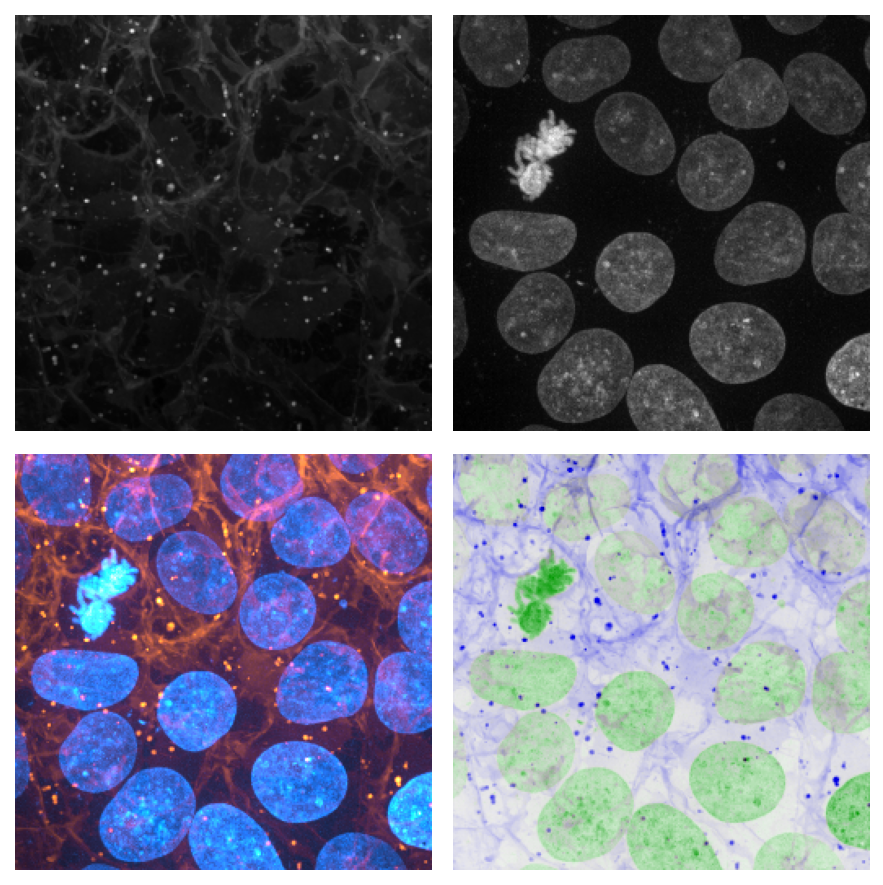
|
|
99
|
+
|
|
100
|
+
|
|
101
|
+
## Roadmap
|
|
102
|
+
mergechannels is currently incredibly simple. It can apply one or more colormaps to one or more 2D 8-bit images and that's it.
|
|
103
|
+
- Add support for any numerical dtype
|
|
104
|
+
- Add support for 3D images
|
|
105
|
+
- Add option to return any colormap as a matplotlib colormap
|
|
106
|
+
- Add support for directly passing matplotlib colormaps instead of colormap names
|
|
107
|
+
- Parallelize colormap application on large images (if it's helpful)
|
|
108
|
+
- Add option to overlay binary or instance masks onto colorized images
|
|
109
|
+
|
|
110
|
+
## Acknowledgements
|
|
111
|
+
|
|
112
|
+
There are other great colormapping libraries available (e.g., [microfilm](https://github.com/guiwitz/microfilm), [cmap](https://github.com/pyapp-kit/cmap)) that are more feature-rich than this one, but which don't address my goals. My hope is that this project can fill an un-met niche and otherwise maintain full compatibility with these and similar libraries.
|
|
113
|
+
|
|
114
|
+
This project incorporates a number of colormaps that were hand-crafted by Christophe Leterrier and were originally distributed here under the MIT license: https://github.com/cleterrier/ChrisLUTs
|
|
115
|
+
|
|
@@ -0,0 +1,11 @@
|
|
|
1
|
+
mergechannels-0.1.2.dist-info/METADATA,sha256=fdx3XuAlrCeScx655leoDJJEMtrZQ2-K2tX--JalIAI,4676
|
|
2
|
+
mergechannels-0.1.2.dist-info/WHEEL,sha256=wsVBlw9xyAuHecZeOYqJ_tA7emUKfXYOn-_180uZRi4,104
|
|
3
|
+
mergechannels-0.1.2.dist-info/licenses/LICENSE,sha256=csvD60rgtSorbYEM3f8867qNyPCzmIXyFNj8h01Bd6c,1071
|
|
4
|
+
mergechannels/_internal.py,sha256=Abzeacre5CQOcWn9WDIVuxFdEjTLIudEWQn8EsiH3oE,1243
|
|
5
|
+
mergechannels/__init__.pyi,sha256=lSMX8eip_zkzoJPJKvxvAhOsewwagoAhS9H5gXJ2Da8,711
|
|
6
|
+
mergechannels/__init__.py,sha256=jy8Qd3TOQ0mm-K64snjOqjdDQiSJ3gWjOjGZrliYy6k,222
|
|
7
|
+
mergechannels/_luts.py,sha256=DxwCMBnAAJc1ZX-D4cq8HabW-sLuBQpUqOWMWXqt_84,1035
|
|
8
|
+
mergechannels/py.typed,sha256=47DEQpj8HBSa-_TImW-5JCeuQeRkm5NMpJWZG3hSuFU,0
|
|
9
|
+
mergechannels/_blending.py,sha256=mE5Cr9wvVJRcwfymg_UUZUjdIKx2mldfLU8QJT95bVM,84
|
|
10
|
+
mergechannels/mergechannels.cpython-311-darwin.so,sha256=smcFKCmpG-5u5ODm8ZGm_Bz11lYxFyuNPkeujYslAg0,726064
|
|
11
|
+
mergechannels-0.1.2.dist-info/RECORD,,
|
|
@@ -18,4 +18,4 @@ FITNESS FOR A PARTICULAR PURPOSE AND NONINFRINGEMENT. IN NO EVENT SHALL THE
|
|
|
18
18
|
AUTHORS OR COPYRIGHT HOLDERS BE LIABLE FOR ANY CLAIM, DAMAGES OR OTHER
|
|
19
19
|
LIABILITY, WHETHER IN AN ACTION OF CONTRACT, TORT OR OTHERWISE, ARISING FROM,
|
|
20
20
|
OUT OF OR IN CONNECTION WITH THE SOFTWARE OR THE USE OR OTHER DEALINGS IN THE
|
|
21
|
-
SOFTWARE.
|
|
21
|
+
SOFTWARE.
|
|
@@ -1,63 +0,0 @@
|
|
|
1
|
-
Metadata-Version: 2.4
|
|
2
|
-
Name: mergechannels
|
|
3
|
-
Version: 0.1.0
|
|
4
|
-
Classifier: Programming Language :: Rust
|
|
5
|
-
Classifier: Programming Language :: Python :: Implementation :: CPython
|
|
6
|
-
Classifier: Programming Language :: Python :: Implementation :: PyPy
|
|
7
|
-
Requires-Dist: numpy>=1.24.4
|
|
8
|
-
License-File: LICENSE
|
|
9
|
-
Requires-Python: >=3.8, <3.13
|
|
10
|
-
Description-Content-Type: text/markdown; charset=UTF-8; variant=GFM
|
|
11
|
-
|
|
12
|
-
# mergechannels
|
|
13
|
-
|
|
14
|
-
This project was originally conceived because I often find myself wanting to apply and blend colormaps to images while working from Python, and for historical reasons many of my favorite colormaps are distributed as [FIJI](https://imagej.net/software/fiji/) lookup tables. I also care about things likes speed and memory usage (e.g., not casting large arrays to floating point dtypes), so I was interested in seeing if I could at least match matplotlib's colormapping performance with my own hand-rolled colorizer in Rust.
|
|
15
|
-
|
|
16
|
-
There are other great colormapping libraries available (e.g., [microfilm](https://github.com/guiwitz/microfilm), [cmap](https://github.com/pyapp-kit/cmap)) that are more feature-rich than this projecting on your needs, but which don't address the my goals. My hope is that this project can fill and un-met niche and otherwise maintain full compatibility with these and similar libraries.
|
|
17
|
-
|
|
18
|
-
## Installation
|
|
19
|
-
|
|
20
|
-
Install pre-compiled binaries from [PyPI](https://pypi.org/project/mergechannels/):
|
|
21
|
-
```bash
|
|
22
|
-
pip install mergechannels
|
|
23
|
-
```
|
|
24
|
-
|
|
25
|
-
Build from source on your own machine:
|
|
26
|
-
```bash
|
|
27
|
-
pip install git+https://github.com/zacswider/mergechannels.git
|
|
28
|
-
```
|
|
29
|
-
|
|
30
|
-
## Usage
|
|
31
|
-
*NOTE*: scikit-image is not a dependency of this project, but is used in the examples below to fetch images.
|
|
32
|
-
|
|
33
|
-
### colorize a single image
|
|
34
|
-
|
|
35
|
-
```python
|
|
36
|
-
from skimage import data
|
|
37
|
-
import matplotlib.pyplot as plt
|
|
38
|
-
import mergechannels as mc
|
|
39
|
-
|
|
40
|
-
img = data.camera()
|
|
41
|
-
fig, ax = plt.subplots()
|
|
42
|
-
ax.imshow(mc.apply_colormap(img, 'Orange Hot'))
|
|
43
|
-
```
|
|
44
|
-
|
|
45
|
-
### apply a different colormap to each channel
|
|
46
|
-
```python
|
|
47
|
-
from skimage import data
|
|
48
|
-
import matplotlib.pyplot as plt
|
|
49
|
-
import mergechannels as mc
|
|
50
|
-
|
|
51
|
-
cells, nuclei = data.cells3d().max(axis=0)
|
|
52
|
-
cells = to_uint8(cells / cells.max()) <- broken until normalization is handled
|
|
53
|
-
nuclei = to_uint8(nuclei / nuclei.max()) <- broken until normalization is handled
|
|
54
|
-
fig, (a, b, c) = plt.subplots(1, 3)
|
|
55
|
-
a.imshow(cells, cmap='gray')
|
|
56
|
-
b.imshow(nuclei, cmap='gray')
|
|
57
|
-
|
|
58
|
-
import mergechannels as mc
|
|
59
|
-
c.imshow(mc.merge([cells, nuclei], ['Orange Hot', 'Cyan Hot']))
|
|
60
|
-
```
|
|
61
|
-
|
|
62
|
-
## Acknowledgements
|
|
63
|
-
This project incorporates a number of colormaps that were hand-crafted by Christophe Leterrier and were originally distributed here under the MIT license: https://github.com/cleterrier/ChrisLUTs
|
|
@@ -1,11 +0,0 @@
|
|
|
1
|
-
mergechannels-0.1.0.dist-info/METADATA,sha256=tK_250ZwpjXLerJFVfX5GcLBgbLRcwCGpExsDb9ebtg,2677
|
|
2
|
-
mergechannels-0.1.0.dist-info/WHEEL,sha256=wsVBlw9xyAuHecZeOYqJ_tA7emUKfXYOn-_180uZRi4,104
|
|
3
|
-
mergechannels-0.1.0.dist-info/licenses/LICENSE,sha256=R5es2fadg5bQoUJCJlcU36nDOAG6Te2XtsfysfTT_xY,1070
|
|
4
|
-
mergechannels/_internal.py,sha256=UrR1K-JYbg8BS7wbmtxcOLWnWuoxmKJztlWT3TQ-Pyk,1300
|
|
5
|
-
mergechannels/__init__.pyi,sha256=Z4dmA6TQydClHHVU_wje6X4CD0xh8l_b9D2imN4pLzI,524
|
|
6
|
-
mergechannels/__init__.py,sha256=Tj-1QoMYkvDi-Bew6N2kbKrOhtgo4kq61_vmnHacp3o,224
|
|
7
|
-
mergechannels/_luts.py,sha256=DxwCMBnAAJc1ZX-D4cq8HabW-sLuBQpUqOWMWXqt_84,1035
|
|
8
|
-
mergechannels/py.typed,sha256=47DEQpj8HBSa-_TImW-5JCeuQeRkm5NMpJWZG3hSuFU,0
|
|
9
|
-
mergechannels/_blending.py,sha256=mE5Cr9wvVJRcwfymg_UUZUjdIKx2mldfLU8QJT95bVM,84
|
|
10
|
-
mergechannels/mergechannels.cpython-311-darwin.so,sha256=GKUfHavebuAc_qSI3Kayol7aT8y2rP625kWw9fLq_ZY,711560
|
|
11
|
-
mergechannels-0.1.0.dist-info/RECORD,,
|
|
File without changes
|