elastica 1.0.0__py3-none-any.whl
This diff represents the content of publicly available package versions that have been released to one of the supported registries. The information contained in this diff is provided for informational purposes only and reflects changes between package versions as they appear in their respective public registries.
- elastica/__init__.py +44 -0
- elastica/cli.py +211 -0
- elastica/data.py +189 -0
- elastica/dml.py +206 -0
- elastica/estimate.py +113 -0
- elastica/pricing.py +183 -0
- elastica/py.typed +0 -0
- elastica/simulate.py +98 -0
- elastica-1.0.0.dist-info/METADATA +187 -0
- elastica-1.0.0.dist-info/RECORD +13 -0
- elastica-1.0.0.dist-info/WHEEL +4 -0
- elastica-1.0.0.dist-info/entry_points.txt +2 -0
- elastica-1.0.0.dist-info/licenses/LICENSE +21 -0
elastica/__init__.py
ADDED
|
@@ -0,0 +1,44 @@
|
|
|
1
|
+
"""Causal price elasticity with double machine learning."""
|
|
2
|
+
|
|
3
|
+
from importlib.metadata import version
|
|
4
|
+
|
|
5
|
+
from elastica.data import DataError, Frequency, Panel, Schema, prepare, read_transactions
|
|
6
|
+
from elastica.dml import DMLResult, Folds, estimate_elasticity
|
|
7
|
+
from elastica.estimate import EstimateOptions, ProductEstimate, estimate, estimates_frame
|
|
8
|
+
from elastica.pricing import (
|
|
9
|
+
PriceBand,
|
|
10
|
+
Recommendation,
|
|
11
|
+
demand_curve,
|
|
12
|
+
optimal_price,
|
|
13
|
+
recommend,
|
|
14
|
+
recommendations_frame,
|
|
15
|
+
)
|
|
16
|
+
from elastica.simulate import Simulation, SimulationConfig, simulate
|
|
17
|
+
|
|
18
|
+
__version__ = version("elastica")
|
|
19
|
+
|
|
20
|
+
__all__ = [
|
|
21
|
+
"DMLResult",
|
|
22
|
+
"DataError",
|
|
23
|
+
"EstimateOptions",
|
|
24
|
+
"Folds",
|
|
25
|
+
"Frequency",
|
|
26
|
+
"Panel",
|
|
27
|
+
"PriceBand",
|
|
28
|
+
"ProductEstimate",
|
|
29
|
+
"Recommendation",
|
|
30
|
+
"Schema",
|
|
31
|
+
"Simulation",
|
|
32
|
+
"SimulationConfig",
|
|
33
|
+
"__version__",
|
|
34
|
+
"demand_curve",
|
|
35
|
+
"estimate",
|
|
36
|
+
"estimate_elasticity",
|
|
37
|
+
"estimates_frame",
|
|
38
|
+
"optimal_price",
|
|
39
|
+
"prepare",
|
|
40
|
+
"read_transactions",
|
|
41
|
+
"recommend",
|
|
42
|
+
"recommendations_frame",
|
|
43
|
+
"simulate",
|
|
44
|
+
]
|
elastica/cli.py
ADDED
|
@@ -0,0 +1,211 @@
|
|
|
1
|
+
"""`elastica` command line."""
|
|
2
|
+
|
|
3
|
+
from __future__ import annotations
|
|
4
|
+
|
|
5
|
+
import argparse
|
|
6
|
+
import sys
|
|
7
|
+
from pathlib import Path
|
|
8
|
+
from typing import TYPE_CHECKING
|
|
9
|
+
|
|
10
|
+
from elastica import __version__
|
|
11
|
+
from elastica.data import DataError, Frequency, Schema, prepare, read_transactions
|
|
12
|
+
from elastica.dml import Folds
|
|
13
|
+
from elastica.estimate import EstimateOptions, ProductEstimate, estimate, estimates_frame
|
|
14
|
+
from elastica.pricing import PriceBand, recommend, recommendations_frame
|
|
15
|
+
from elastica.simulate import SimulationConfig, simulate
|
|
16
|
+
|
|
17
|
+
if TYPE_CHECKING:
|
|
18
|
+
from collections.abc import Callable, Sequence
|
|
19
|
+
|
|
20
|
+
import pandas as pd
|
|
21
|
+
|
|
22
|
+
EXIT_OK = 0
|
|
23
|
+
EXIT_FAILURE = 1
|
|
24
|
+
|
|
25
|
+
|
|
26
|
+
def main(argv: Sequence[str] | None = None) -> int:
|
|
27
|
+
args = _parser().parse_args(argv)
|
|
28
|
+
handler: Callable[[argparse.Namespace], int] = args.handler
|
|
29
|
+
try:
|
|
30
|
+
return handler(args)
|
|
31
|
+
except (DataError, ValueError) as exc:
|
|
32
|
+
print(f"error: {exc}", file=sys.stderr)
|
|
33
|
+
return EXIT_FAILURE
|
|
34
|
+
|
|
35
|
+
|
|
36
|
+
def _parser() -> argparse.ArgumentParser:
|
|
37
|
+
parser = argparse.ArgumentParser(
|
|
38
|
+
prog="elastica",
|
|
39
|
+
description="Estimate causal price elasticity with double ML and recommend prices.",
|
|
40
|
+
)
|
|
41
|
+
parser.add_argument("--version", action="version", version=f"%(prog)s {__version__}")
|
|
42
|
+
commands = parser.add_subparsers(required=True, metavar="COMMAND")
|
|
43
|
+
|
|
44
|
+
sim = commands.add_parser("simulate", help="write synthetic sales with known elasticities")
|
|
45
|
+
sim.add_argument("-o", "--output", type=Path, required=True, help="output .csv")
|
|
46
|
+
sim.add_argument("--products", type=int, default=4)
|
|
47
|
+
sim.add_argument("--days", type=int, default=730)
|
|
48
|
+
sim.add_argument("--seed", type=int, default=7)
|
|
49
|
+
sim.set_defaults(handler=_simulate)
|
|
50
|
+
|
|
51
|
+
est = commands.add_parser("estimate", help="estimate the price elasticity of each product")
|
|
52
|
+
_add_data_arguments(est)
|
|
53
|
+
est.add_argument("-o", "--output", type=Path, help="also write results to .csv")
|
|
54
|
+
est.set_defaults(handler=_estimate)
|
|
55
|
+
|
|
56
|
+
price = commands.add_parser("price", help="recommend a price for each product")
|
|
57
|
+
_add_data_arguments(price)
|
|
58
|
+
price.add_argument("--unit-cost", type=float, help="unit cost for every product")
|
|
59
|
+
price.add_argument(
|
|
60
|
+
"--band",
|
|
61
|
+
default="0.8,1.2",
|
|
62
|
+
help="lowest and highest price as multiples of the current one (default 0.8,1.2)",
|
|
63
|
+
)
|
|
64
|
+
price.add_argument("-o", "--output", type=Path, help="also write results to .csv")
|
|
65
|
+
price.set_defaults(handler=_price)
|
|
66
|
+
return parser
|
|
67
|
+
|
|
68
|
+
|
|
69
|
+
def _add_data_arguments(parser: argparse.ArgumentParser) -> None:
|
|
70
|
+
parser.add_argument("data", type=Path, help="transactions .csv or .parquet")
|
|
71
|
+
columns = parser.add_argument_group("columns")
|
|
72
|
+
columns.add_argument("--date", default="date")
|
|
73
|
+
columns.add_argument("--price", default="price")
|
|
74
|
+
columns.add_argument("--quantity", default="quantity")
|
|
75
|
+
columns.add_argument("--product", default="product", help="use '' for a single product")
|
|
76
|
+
columns.add_argument("--cost", help="column with the unit cost")
|
|
77
|
+
columns.add_argument("--controls", default="", help="comma-separated control columns")
|
|
78
|
+
model = parser.add_argument_group("model")
|
|
79
|
+
model.add_argument(
|
|
80
|
+
"--frequency", choices=[f.value for f in Frequency], default=Frequency.DAY.value
|
|
81
|
+
)
|
|
82
|
+
model.add_argument("--pooled", action="store_true", help="one estimate across products")
|
|
83
|
+
model.add_argument("--folds", choices=[f.value for f in Folds], default=Folds.RANDOM.value)
|
|
84
|
+
model.add_argument("--n-folds", type=int, default=5)
|
|
85
|
+
model.add_argument("--repeats", type=int, default=3)
|
|
86
|
+
model.add_argument("--confidence", type=float, default=0.95)
|
|
87
|
+
model.add_argument("--seed", type=int, default=0)
|
|
88
|
+
|
|
89
|
+
|
|
90
|
+
def _simulate(args: argparse.Namespace) -> int:
|
|
91
|
+
config = SimulationConfig(n_products=args.products, n_days=args.days, seed=args.seed)
|
|
92
|
+
sim = simulate(config)
|
|
93
|
+
sim.transactions.to_csv(args.output, index=False)
|
|
94
|
+
print(f"wrote {len(sim.transactions)} rows to {args.output}", file=sys.stderr)
|
|
95
|
+
print("true elasticities: " + ", ".join(f"{k} {v}" for k, v in sim.true_elasticity.items()))
|
|
96
|
+
return EXIT_OK
|
|
97
|
+
|
|
98
|
+
|
|
99
|
+
def _run_estimates(args: argparse.Namespace) -> list[ProductEstimate]:
|
|
100
|
+
schema = Schema(
|
|
101
|
+
date=args.date,
|
|
102
|
+
price=args.price,
|
|
103
|
+
quantity=args.quantity,
|
|
104
|
+
product=args.product or None,
|
|
105
|
+
cost=args.cost,
|
|
106
|
+
controls=tuple(c.strip() for c in args.controls.split(",") if c.strip()),
|
|
107
|
+
)
|
|
108
|
+
panel = prepare(read_transactions(args.data), schema, Frequency(args.frequency))
|
|
109
|
+
if panel.dropped:
|
|
110
|
+
print(f"dropped {panel.dropped} period(s) with zero sales or price", file=sys.stderr)
|
|
111
|
+
options = EstimateOptions(
|
|
112
|
+
folds=Folds(args.folds),
|
|
113
|
+
n_folds=args.n_folds,
|
|
114
|
+
n_repeats=args.repeats,
|
|
115
|
+
confidence=args.confidence,
|
|
116
|
+
seed=args.seed,
|
|
117
|
+
)
|
|
118
|
+
return estimate(panel, options, pooled=args.pooled)
|
|
119
|
+
|
|
120
|
+
|
|
121
|
+
def _estimate(args: argparse.Namespace) -> int:
|
|
122
|
+
estimates = _run_estimates(args)
|
|
123
|
+
frame = estimates_frame(estimates)
|
|
124
|
+
level = round(args.confidence * 100)
|
|
125
|
+
print(
|
|
126
|
+
render(
|
|
127
|
+
frame,
|
|
128
|
+
{
|
|
129
|
+
"product": "Product",
|
|
130
|
+
"elasticity": "Elasticity",
|
|
131
|
+
"ci_low": f"{level}% CI low",
|
|
132
|
+
"ci_high": f"{level}% CI high",
|
|
133
|
+
"naive_elasticity": "Naive",
|
|
134
|
+
"n_obs": "Periods",
|
|
135
|
+
},
|
|
136
|
+
)
|
|
137
|
+
)
|
|
138
|
+
_print_warnings(frame)
|
|
139
|
+
_write(frame, args.output)
|
|
140
|
+
return EXIT_OK if any(e.result for e in estimates) else EXIT_FAILURE
|
|
141
|
+
|
|
142
|
+
|
|
143
|
+
def _price(args: argparse.Namespace) -> int:
|
|
144
|
+
lower, upper = (float(v) for v in args.band.split(","))
|
|
145
|
+
band = PriceBand(lower, upper)
|
|
146
|
+
recommendations = [
|
|
147
|
+
recommend(e, unit_cost=args.unit_cost, band=band) for e in _run_estimates(args)
|
|
148
|
+
]
|
|
149
|
+
frame = recommendations_frame(recommendations)
|
|
150
|
+
print(
|
|
151
|
+
render(
|
|
152
|
+
frame,
|
|
153
|
+
{
|
|
154
|
+
"product": "Product",
|
|
155
|
+
"elasticity": "Elasticity",
|
|
156
|
+
"current_price": "Current",
|
|
157
|
+
"recommended_price": "Recommended",
|
|
158
|
+
"price_low": "Range low",
|
|
159
|
+
"price_high": "Range high",
|
|
160
|
+
"profit_change": "Profit",
|
|
161
|
+
"revenue_change": "Revenue",
|
|
162
|
+
},
|
|
163
|
+
)
|
|
164
|
+
)
|
|
165
|
+
_print_warnings(frame)
|
|
166
|
+
_write(frame, args.output)
|
|
167
|
+
return EXIT_OK
|
|
168
|
+
|
|
169
|
+
|
|
170
|
+
PERCENT_COLUMNS = {"profit_change", "revenue_change", "quantity_change"}
|
|
171
|
+
|
|
172
|
+
|
|
173
|
+
def render(frame: pd.DataFrame, columns: dict[str, str]) -> str:
|
|
174
|
+
rows = [list(columns.values())]
|
|
175
|
+
for record in frame.to_dict("records"):
|
|
176
|
+
rows.append([_cell(name, record[name]) for name in columns])
|
|
177
|
+
widths = [max(len(row[i]) for row in rows) for i in range(len(columns))]
|
|
178
|
+
lines = []
|
|
179
|
+
for index, row in enumerate(rows):
|
|
180
|
+
cells = [row[0].ljust(widths[0])] + [
|
|
181
|
+
cell.rjust(width) for cell, width in zip(row[1:], widths[1:], strict=True)
|
|
182
|
+
]
|
|
183
|
+
lines.append(" ".join(cells))
|
|
184
|
+
if index == 0:
|
|
185
|
+
lines.append(" ".join("-" * width for width in widths))
|
|
186
|
+
return "\n".join(lines)
|
|
187
|
+
|
|
188
|
+
|
|
189
|
+
def _cell(name: str, value: object) -> str:
|
|
190
|
+
if value is None or (isinstance(value, float) and value != value):
|
|
191
|
+
return "—"
|
|
192
|
+
if isinstance(value, float):
|
|
193
|
+
return f"{value:+.1%}" if name in PERCENT_COLUMNS else f"{value:,.2f}"
|
|
194
|
+
return str(value)
|
|
195
|
+
|
|
196
|
+
|
|
197
|
+
def _print_warnings(frame: pd.DataFrame) -> None:
|
|
198
|
+
sys.stdout.flush()
|
|
199
|
+
for record in frame.to_dict("records"):
|
|
200
|
+
if record["warnings"]:
|
|
201
|
+
print(f"\n{record['product']}: {record['warnings']}", file=sys.stderr)
|
|
202
|
+
|
|
203
|
+
|
|
204
|
+
def _write(frame: pd.DataFrame, output: Path | None) -> None:
|
|
205
|
+
if output is not None:
|
|
206
|
+
frame.to_csv(output, index=False)
|
|
207
|
+
print(f"wrote {output}", file=sys.stderr)
|
|
208
|
+
|
|
209
|
+
|
|
210
|
+
if __name__ == "__main__":
|
|
211
|
+
raise SystemExit(main())
|
elastica/data.py
ADDED
|
@@ -0,0 +1,189 @@
|
|
|
1
|
+
"""Turn raw transactions into a product x period panel ready for estimation."""
|
|
2
|
+
|
|
3
|
+
from __future__ import annotations
|
|
4
|
+
|
|
5
|
+
from dataclasses import dataclass, field
|
|
6
|
+
from enum import StrEnum
|
|
7
|
+
from pathlib import Path
|
|
8
|
+
|
|
9
|
+
import numpy as np
|
|
10
|
+
import pandas as pd
|
|
11
|
+
|
|
12
|
+
LOG_PRICE = "log_price"
|
|
13
|
+
LOG_QUANTITY = "log_quantity"
|
|
14
|
+
CALENDAR_FEATURES = ("trend", "month", "day_of_year", "week_sin", "week_cos")
|
|
15
|
+
DAILY_FEATURES = ("day_of_week",)
|
|
16
|
+
ALL_PRODUCTS = "all"
|
|
17
|
+
|
|
18
|
+
|
|
19
|
+
class DataError(ValueError):
|
|
20
|
+
"""The input cannot be used for estimation; the message says why."""
|
|
21
|
+
|
|
22
|
+
|
|
23
|
+
class Frequency(StrEnum):
|
|
24
|
+
DAY = "D"
|
|
25
|
+
WEEK = "W"
|
|
26
|
+
MONTH = "M"
|
|
27
|
+
|
|
28
|
+
|
|
29
|
+
@dataclass(frozen=True, slots=True)
|
|
30
|
+
class Schema:
|
|
31
|
+
"""Which input columns hold each field. Only date, price and quantity are required."""
|
|
32
|
+
|
|
33
|
+
date: str = "date"
|
|
34
|
+
price: str = "price"
|
|
35
|
+
quantity: str = "quantity"
|
|
36
|
+
product: str | None = "product"
|
|
37
|
+
cost: str | None = None
|
|
38
|
+
controls: tuple[str, ...] = ()
|
|
39
|
+
|
|
40
|
+
|
|
41
|
+
@dataclass(frozen=True, slots=True)
|
|
42
|
+
class Panel:
|
|
43
|
+
frame: pd.DataFrame
|
|
44
|
+
"""One row per product and period: product, period, price, quantity, log columns, features."""
|
|
45
|
+
features: tuple[str, ...]
|
|
46
|
+
frequency: Frequency
|
|
47
|
+
costs: dict[str, float] = field(default_factory=dict)
|
|
48
|
+
dropped: int = 0
|
|
49
|
+
"""Periods dropped because their quantity or price was zero."""
|
|
50
|
+
|
|
51
|
+
@property
|
|
52
|
+
def products(self) -> list[str]:
|
|
53
|
+
return sorted(self.frame["product"].unique())
|
|
54
|
+
|
|
55
|
+
def for_product(self, product: str) -> pd.DataFrame:
|
|
56
|
+
return self.frame[self.frame["product"] == product]
|
|
57
|
+
|
|
58
|
+
|
|
59
|
+
def read_transactions(path: str | Path) -> pd.DataFrame:
|
|
60
|
+
file = Path(path)
|
|
61
|
+
if not file.exists():
|
|
62
|
+
raise DataError(f"{file} does not exist")
|
|
63
|
+
if file.suffix.lower() == ".parquet":
|
|
64
|
+
try:
|
|
65
|
+
return pd.read_parquet(file)
|
|
66
|
+
except ImportError as exc:
|
|
67
|
+
raise DataError("reading Parquet needs pyarrow: pip install pyarrow") from exc
|
|
68
|
+
return pd.read_csv(file)
|
|
69
|
+
|
|
70
|
+
|
|
71
|
+
def prepare(
|
|
72
|
+
transactions: pd.DataFrame, schema: Schema | None = None, frequency: Frequency = Frequency.DAY
|
|
73
|
+
) -> Panel:
|
|
74
|
+
"""Validate, aggregate to product x period and add calendar features."""
|
|
75
|
+
schema = schema or Schema()
|
|
76
|
+
frame, controls = _encode_controls(_normalize(transactions, schema), schema.controls)
|
|
77
|
+
costs = _costs(frame)
|
|
78
|
+
aggregated = _aggregate(frame, controls, frequency)
|
|
79
|
+
positive = (aggregated["quantity"] > 0) & (aggregated["price"] > 0)
|
|
80
|
+
panel = aggregated[positive].copy()
|
|
81
|
+
if panel.empty:
|
|
82
|
+
raise DataError("no period has both a positive price and a positive quantity")
|
|
83
|
+
calendar = _add_calendar(panel, frequency)
|
|
84
|
+
panel[LOG_PRICE] = np.log(panel["price"])
|
|
85
|
+
panel[LOG_QUANTITY] = np.log(panel["quantity"])
|
|
86
|
+
return Panel(
|
|
87
|
+
frame=panel.reset_index(drop=True),
|
|
88
|
+
features=(*calendar, *controls),
|
|
89
|
+
frequency=frequency,
|
|
90
|
+
costs=costs,
|
|
91
|
+
dropped=int((~positive).sum()),
|
|
92
|
+
)
|
|
93
|
+
|
|
94
|
+
|
|
95
|
+
def _normalize(transactions: pd.DataFrame, schema: Schema) -> pd.DataFrame:
|
|
96
|
+
required = [schema.date, schema.price, schema.quantity, *schema.controls]
|
|
97
|
+
optional = [c for c in (schema.product, schema.cost) if c is not None]
|
|
98
|
+
missing = [c for c in [*required, *optional] if c not in transactions.columns]
|
|
99
|
+
if missing:
|
|
100
|
+
available = ", ".join(map(str, transactions.columns))
|
|
101
|
+
raise DataError(f"missing column(s) {', '.join(missing)}; available: {available}")
|
|
102
|
+
frame = pd.DataFrame(
|
|
103
|
+
{
|
|
104
|
+
"date": _dates(transactions[schema.date]),
|
|
105
|
+
"price": _numbers(transactions[schema.price], schema.price),
|
|
106
|
+
"quantity": _numbers(transactions[schema.quantity], schema.quantity),
|
|
107
|
+
"product": transactions[schema.product].astype(str) if schema.product else ALL_PRODUCTS,
|
|
108
|
+
}
|
|
109
|
+
)
|
|
110
|
+
if schema.cost:
|
|
111
|
+
frame["cost"] = _numbers(transactions[schema.cost], schema.cost)
|
|
112
|
+
for control in schema.controls:
|
|
113
|
+
frame[control] = transactions[control].to_numpy()
|
|
114
|
+
if (frame["price"] < 0).any() or (frame["quantity"] < 0).any():
|
|
115
|
+
raise DataError("price and quantity must not be negative")
|
|
116
|
+
return frame
|
|
117
|
+
|
|
118
|
+
|
|
119
|
+
def _dates(column: pd.Series) -> pd.Series:
|
|
120
|
+
try:
|
|
121
|
+
return pd.to_datetime(column, format="mixed")
|
|
122
|
+
except (ValueError, TypeError) as exc:
|
|
123
|
+
raise DataError(f"column {column.name!r} has values that are not dates") from exc
|
|
124
|
+
|
|
125
|
+
|
|
126
|
+
def _numbers(column: pd.Series, name: str) -> pd.Series:
|
|
127
|
+
numbers = pd.to_numeric(column, errors="coerce")
|
|
128
|
+
bad = numbers.isna() & column.notna()
|
|
129
|
+
if bad.any():
|
|
130
|
+
example = column[bad].iloc[0]
|
|
131
|
+
raise DataError(f"column {name!r} has non-numeric values, e.g. {example!r}")
|
|
132
|
+
if numbers.isna().any():
|
|
133
|
+
raise DataError(f"column {name!r} has missing values")
|
|
134
|
+
return numbers.astype(float)
|
|
135
|
+
|
|
136
|
+
|
|
137
|
+
def _encode_controls(
|
|
138
|
+
frame: pd.DataFrame, controls: tuple[str, ...]
|
|
139
|
+
) -> tuple[pd.DataFrame, list[str]]:
|
|
140
|
+
"""One-hot encode non-numeric controls; return the frame and the final control columns."""
|
|
141
|
+
names: list[str] = []
|
|
142
|
+
for control in controls:
|
|
143
|
+
if pd.api.types.is_numeric_dtype(frame[control]):
|
|
144
|
+
names.append(control)
|
|
145
|
+
continue
|
|
146
|
+
dummies = pd.get_dummies(frame[control].astype(str), prefix=control, dtype=float)
|
|
147
|
+
frame = pd.concat([frame.drop(columns=control), dummies], axis=1)
|
|
148
|
+
names.extend(dummies.columns)
|
|
149
|
+
return frame, names
|
|
150
|
+
|
|
151
|
+
|
|
152
|
+
def _costs(frame: pd.DataFrame) -> dict[str, float]:
|
|
153
|
+
if "cost" not in frame.columns:
|
|
154
|
+
return {}
|
|
155
|
+
return {str(k): float(v) for k, v in frame.groupby("product")["cost"].median().items()}
|
|
156
|
+
|
|
157
|
+
|
|
158
|
+
def _aggregate(frame: pd.DataFrame, controls: list[str], frequency: Frequency) -> pd.DataFrame:
|
|
159
|
+
frame = frame.assign(
|
|
160
|
+
period=frame["date"].dt.to_period(frequency.value).dt.start_time,
|
|
161
|
+
revenue=frame["price"] * frame["quantity"],
|
|
162
|
+
)
|
|
163
|
+
grouped = frame.groupby(["product", "period"], sort=True)
|
|
164
|
+
result = grouped.agg(
|
|
165
|
+
quantity=("quantity", "sum"),
|
|
166
|
+
revenue=("revenue", "sum"),
|
|
167
|
+
list_price=("price", "mean"),
|
|
168
|
+
**{c: (c, "mean") for c in controls},
|
|
169
|
+
).reset_index()
|
|
170
|
+
with np.errstate(divide="ignore", invalid="ignore"):
|
|
171
|
+
weighted = result["revenue"] / result["quantity"]
|
|
172
|
+
result["price"] = weighted.where(result["quantity"] > 0, result["list_price"])
|
|
173
|
+
return result.drop(columns=["revenue", "list_price"])
|
|
174
|
+
|
|
175
|
+
|
|
176
|
+
def _add_calendar(panel: pd.DataFrame, frequency: Frequency) -> list[str]:
|
|
177
|
+
period = panel["period"]
|
|
178
|
+
start = period.min()
|
|
179
|
+
panel["trend"] = (period - start).dt.days / 365.25
|
|
180
|
+
panel["month"] = period.dt.month.astype(float)
|
|
181
|
+
panel["day_of_year"] = period.dt.day_of_year.astype(float)
|
|
182
|
+
week = period.dt.isocalendar().week.astype(float)
|
|
183
|
+
panel["week_sin"] = np.sin(2 * np.pi * week / 52.18)
|
|
184
|
+
panel["week_cos"] = np.cos(2 * np.pi * week / 52.18)
|
|
185
|
+
features = list(CALENDAR_FEATURES)
|
|
186
|
+
if frequency is Frequency.DAY:
|
|
187
|
+
panel["day_of_week"] = period.dt.day_of_week.astype(float)
|
|
188
|
+
features.extend(DAILY_FEATURES)
|
|
189
|
+
return features
|
elastica/dml.py
ADDED
|
@@ -0,0 +1,206 @@
|
|
|
1
|
+
"""Double machine learning for the partially linear model ``y = θ·d + g(X) + ε``.
|
|
2
|
+
|
|
3
|
+
With ``y = log quantity`` and ``d = log price``, ``θ`` is the price elasticity of demand.
|
|
4
|
+
Reference: Chernozhukov et al. (2018), "Double/debiased machine learning for treatment and
|
|
5
|
+
structural parameters", The Econometrics Journal 21(1).
|
|
6
|
+
"""
|
|
7
|
+
|
|
8
|
+
from __future__ import annotations
|
|
9
|
+
|
|
10
|
+
from dataclasses import dataclass
|
|
11
|
+
from enum import StrEnum
|
|
12
|
+
from statistics import NormalDist
|
|
13
|
+
from typing import Protocol, Self
|
|
14
|
+
|
|
15
|
+
import numpy as np
|
|
16
|
+
from numpy.typing import NDArray
|
|
17
|
+
from sklearn.base import clone
|
|
18
|
+
from sklearn.ensemble import HistGradientBoostingRegressor
|
|
19
|
+
from sklearn.model_selection import KFold
|
|
20
|
+
from threadpoolctl import threadpool_limits
|
|
21
|
+
|
|
22
|
+
Array = NDArray[np.float64]
|
|
23
|
+
|
|
24
|
+
MIN_OBSERVATIONS = 60
|
|
25
|
+
WEAK_PRICE_SHARE = 0.05
|
|
26
|
+
|
|
27
|
+
|
|
28
|
+
class Regressor(Protocol):
|
|
29
|
+
"""Any scikit-learn style regressor."""
|
|
30
|
+
|
|
31
|
+
def fit(self, x: Array, y: Array) -> Self: ...
|
|
32
|
+
def predict(self, x: Array) -> Array: ...
|
|
33
|
+
|
|
34
|
+
|
|
35
|
+
class Folds(StrEnum):
|
|
36
|
+
RANDOM = "random"
|
|
37
|
+
"""Shuffled folds, re-drawn on every repetition."""
|
|
38
|
+
TIME = "time"
|
|
39
|
+
"""Contiguous blocks in time order, which limits leakage between neighbouring periods."""
|
|
40
|
+
|
|
41
|
+
|
|
42
|
+
@dataclass(frozen=True, slots=True)
|
|
43
|
+
class DMLResult:
|
|
44
|
+
elasticity: float
|
|
45
|
+
std_error: float
|
|
46
|
+
ci_low: float
|
|
47
|
+
ci_high: float
|
|
48
|
+
confidence: float
|
|
49
|
+
naive_elasticity: float
|
|
50
|
+
"""Slope of log quantity on log price with no controls."""
|
|
51
|
+
linear_elasticity: float
|
|
52
|
+
"""Price coefficient of an OLS that adds the controls linearly."""
|
|
53
|
+
n_obs: int
|
|
54
|
+
outcome_r2: float
|
|
55
|
+
"""Cross-fitted R² of the model predicting log quantity from the controls."""
|
|
56
|
+
price_r2: float
|
|
57
|
+
"""Cross-fitted R² of the model predicting log price from the controls."""
|
|
58
|
+
warnings: tuple[str, ...]
|
|
59
|
+
|
|
60
|
+
@property
|
|
61
|
+
def residual_price_share(self) -> float:
|
|
62
|
+
"""Share of price variation left after removing what the controls explain."""
|
|
63
|
+
return max(0.0, 1.0 - self.price_r2)
|
|
64
|
+
|
|
65
|
+
@property
|
|
66
|
+
def p_value(self) -> float:
|
|
67
|
+
"""Two-sided p-value for ``elasticity == 0``."""
|
|
68
|
+
if self.std_error == 0:
|
|
69
|
+
return 0.0
|
|
70
|
+
return 2 * (1 - NormalDist().cdf(abs(self.elasticity / self.std_error)))
|
|
71
|
+
|
|
72
|
+
|
|
73
|
+
def default_learner(seed: int = 0) -> Regressor:
|
|
74
|
+
model: Regressor = HistGradientBoostingRegressor(
|
|
75
|
+
max_iter=100,
|
|
76
|
+
learning_rate=0.1,
|
|
77
|
+
max_leaf_nodes=15,
|
|
78
|
+
min_samples_leaf=10,
|
|
79
|
+
random_state=seed,
|
|
80
|
+
)
|
|
81
|
+
return model
|
|
82
|
+
|
|
83
|
+
|
|
84
|
+
def estimate_elasticity(
|
|
85
|
+
y: Array,
|
|
86
|
+
d: Array,
|
|
87
|
+
x: Array,
|
|
88
|
+
*,
|
|
89
|
+
learner: Regressor | None = None,
|
|
90
|
+
folds: Folds = Folds.RANDOM,
|
|
91
|
+
n_folds: int = 5,
|
|
92
|
+
n_repeats: int = 3,
|
|
93
|
+
confidence: float = 0.95,
|
|
94
|
+
seed: int = 0,
|
|
95
|
+
) -> DMLResult:
|
|
96
|
+
"""Estimate θ with cross-fitting. Rows must be in time order when ``folds`` is ``TIME``."""
|
|
97
|
+
y, d, x = _check_inputs(y, d, x, n_folds)
|
|
98
|
+
estimates: list[tuple[float, float]] = []
|
|
99
|
+
r2_y: list[float] = []
|
|
100
|
+
r2_d: list[float] = []
|
|
101
|
+
for repeat in range(n_repeats):
|
|
102
|
+
model = learner if learner is not None else default_learner(seed + repeat)
|
|
103
|
+
splitter = _splitter(folds, n_folds, seed + repeat)
|
|
104
|
+
y_hat = _cross_fit(model, x, y, splitter)
|
|
105
|
+
d_hat = _cross_fit(model, x, d, splitter)
|
|
106
|
+
estimates.append(_orthogonal_estimate(y - y_hat, d - d_hat))
|
|
107
|
+
r2_y.append(_r2(y, y_hat))
|
|
108
|
+
r2_d.append(_r2(d, d_hat))
|
|
109
|
+
theta, std_error = _aggregate(estimates)
|
|
110
|
+
z = NormalDist().inv_cdf(0.5 + confidence / 2)
|
|
111
|
+
price_r2 = float(np.median(r2_d))
|
|
112
|
+
return DMLResult(
|
|
113
|
+
elasticity=theta,
|
|
114
|
+
std_error=std_error,
|
|
115
|
+
ci_low=theta - z * std_error,
|
|
116
|
+
ci_high=theta + z * std_error,
|
|
117
|
+
confidence=confidence,
|
|
118
|
+
naive_elasticity=_ols_slope(y, d, None),
|
|
119
|
+
linear_elasticity=_ols_slope(y, d, x),
|
|
120
|
+
n_obs=len(y),
|
|
121
|
+
outcome_r2=float(np.median(r2_y)),
|
|
122
|
+
price_r2=price_r2,
|
|
123
|
+
warnings=_warnings(theta, len(y), price_r2),
|
|
124
|
+
)
|
|
125
|
+
|
|
126
|
+
|
|
127
|
+
def _check_inputs(y: Array, d: Array, x: Array, n_folds: int) -> tuple[Array, Array, Array]:
|
|
128
|
+
y = np.asarray(y, dtype=float)
|
|
129
|
+
d = np.asarray(d, dtype=float)
|
|
130
|
+
x = np.asarray(x, dtype=float)
|
|
131
|
+
if x.ndim == 1:
|
|
132
|
+
x = x.reshape(-1, 1)
|
|
133
|
+
if not (len(y) == len(d) == len(x)):
|
|
134
|
+
raise ValueError("y, d and x must have the same number of rows")
|
|
135
|
+
if len(y) < 2 * n_folds:
|
|
136
|
+
raise ValueError(f"need at least {2 * n_folds} observations for {n_folds} folds")
|
|
137
|
+
if not (np.isfinite(y).all() and np.isfinite(d).all() and np.isfinite(x).all()):
|
|
138
|
+
raise ValueError("inputs contain NaN or infinite values")
|
|
139
|
+
if np.ptp(d) == 0:
|
|
140
|
+
raise ValueError("price never changes, so its effect cannot be estimated")
|
|
141
|
+
return y, d, x
|
|
142
|
+
|
|
143
|
+
|
|
144
|
+
def _splitter(folds: Folds, n_folds: int, seed: int) -> KFold:
|
|
145
|
+
if folds is Folds.TIME:
|
|
146
|
+
return KFold(n_splits=n_folds, shuffle=False)
|
|
147
|
+
return KFold(n_splits=n_folds, shuffle=True, random_state=seed)
|
|
148
|
+
|
|
149
|
+
|
|
150
|
+
def _cross_fit(model: Regressor, x: Array, target: Array, splitter: KFold) -> Array:
|
|
151
|
+
predictions = np.empty_like(target)
|
|
152
|
+
with threadpool_limits(limits=1, user_api="openmp"):
|
|
153
|
+
for train, test in splitter.split(x):
|
|
154
|
+
fitted: Regressor = clone(model).fit(x[train], target[train])
|
|
155
|
+
predictions[test] = fitted.predict(x[test])
|
|
156
|
+
return predictions
|
|
157
|
+
|
|
158
|
+
|
|
159
|
+
def _orthogonal_estimate(y_res: Array, d_res: Array) -> tuple[float, float]:
|
|
160
|
+
"""θ and its variance from the Neyman-orthogonal partialling-out score."""
|
|
161
|
+
jacobian = float(np.mean(d_res**2))
|
|
162
|
+
if jacobian == 0:
|
|
163
|
+
raise ValueError("the controls explain price perfectly; no variation is left")
|
|
164
|
+
theta = float(np.mean(d_res * y_res)) / jacobian
|
|
165
|
+
score = (y_res - theta * d_res) * d_res
|
|
166
|
+
variance = float(np.mean(score**2)) / jacobian**2 / len(y_res)
|
|
167
|
+
return theta, variance
|
|
168
|
+
|
|
169
|
+
|
|
170
|
+
def _aggregate(estimates: list[tuple[float, float]]) -> tuple[float, float]:
|
|
171
|
+
"""Median over repetitions, with the spread between repetitions added to the variance."""
|
|
172
|
+
thetas = np.array([t for t, _ in estimates])
|
|
173
|
+
theta = float(np.median(thetas))
|
|
174
|
+
variances = np.array([v for _, v in estimates]) + (thetas - theta) ** 2
|
|
175
|
+
return theta, float(np.sqrt(np.median(variances)))
|
|
176
|
+
|
|
177
|
+
|
|
178
|
+
def _r2(target: Array, predicted: Array) -> float:
|
|
179
|
+
total = float(np.sum((target - target.mean()) ** 2))
|
|
180
|
+
if total == 0:
|
|
181
|
+
return 0.0
|
|
182
|
+
return 1 - float(np.sum((target - predicted) ** 2)) / total
|
|
183
|
+
|
|
184
|
+
|
|
185
|
+
def _ols_slope(y: Array, d: Array, x: Array | None) -> float:
|
|
186
|
+
columns = [np.ones_like(d), d] if x is None else [np.ones_like(d), d, *x.T]
|
|
187
|
+
design = np.column_stack(columns)
|
|
188
|
+
coefficients, *_ = np.linalg.lstsq(design, y, rcond=None)
|
|
189
|
+
return float(coefficients[1])
|
|
190
|
+
|
|
191
|
+
|
|
192
|
+
def _warnings(theta: float, n_obs: int, price_r2: float) -> tuple[str, ...]:
|
|
193
|
+
messages = []
|
|
194
|
+
if n_obs < MIN_OBSERVATIONS:
|
|
195
|
+
messages.append(f"only {n_obs} observations; the estimate is imprecise")
|
|
196
|
+
if 1 - price_r2 < WEAK_PRICE_SHARE:
|
|
197
|
+
messages.append(
|
|
198
|
+
"the controls explain almost all price changes, so little independent price "
|
|
199
|
+
"variation is left; the estimate is weakly identified"
|
|
200
|
+
)
|
|
201
|
+
if theta > 0:
|
|
202
|
+
messages.append(
|
|
203
|
+
"positive elasticity: demand rises with price, which usually means a confounder "
|
|
204
|
+
"is missing from the controls"
|
|
205
|
+
)
|
|
206
|
+
return tuple(messages)
|
elastica/estimate.py
ADDED
|
@@ -0,0 +1,113 @@
|
|
|
1
|
+
"""Elasticity per product (or pooled across products) over a prepared panel."""
|
|
2
|
+
|
|
3
|
+
from __future__ import annotations
|
|
4
|
+
|
|
5
|
+
from dataclasses import dataclass
|
|
6
|
+
|
|
7
|
+
import numpy as np
|
|
8
|
+
import pandas as pd
|
|
9
|
+
|
|
10
|
+
from elastica.data import LOG_PRICE, LOG_QUANTITY, Panel
|
|
11
|
+
from elastica.dml import DMLResult, Folds, Regressor, estimate_elasticity
|
|
12
|
+
|
|
13
|
+
POOLED = "(pooled)"
|
|
14
|
+
RECENT_PERIODS = 4
|
|
15
|
+
|
|
16
|
+
|
|
17
|
+
@dataclass(frozen=True, slots=True)
|
|
18
|
+
class EstimateOptions:
|
|
19
|
+
learner: Regressor | None = None
|
|
20
|
+
folds: Folds = Folds.RANDOM
|
|
21
|
+
n_folds: int = 5
|
|
22
|
+
n_repeats: int = 3
|
|
23
|
+
confidence: float = 0.95
|
|
24
|
+
seed: int = 0
|
|
25
|
+
|
|
26
|
+
|
|
27
|
+
@dataclass(frozen=True, slots=True)
|
|
28
|
+
class ProductEstimate:
|
|
29
|
+
product: str
|
|
30
|
+
result: DMLResult | None
|
|
31
|
+
current_price: float
|
|
32
|
+
"""Median price over the most recent periods, the anchor for price recommendations."""
|
|
33
|
+
current_quantity: float
|
|
34
|
+
"""Mean quantity per period over the same recent periods."""
|
|
35
|
+
unit_cost: float | None
|
|
36
|
+
error: str | None = None
|
|
37
|
+
|
|
38
|
+
|
|
39
|
+
def estimate(
|
|
40
|
+
panel: Panel, options: EstimateOptions | None = None, *, pooled: bool = False
|
|
41
|
+
) -> list[ProductEstimate]:
|
|
42
|
+
"""One estimate per product, or a single fixed-effects estimate when ``pooled``."""
|
|
43
|
+
options = options or EstimateOptions()
|
|
44
|
+
if pooled:
|
|
45
|
+
return [_pooled(panel, options)]
|
|
46
|
+
return [_one(panel, product, options) for product in panel.products]
|
|
47
|
+
|
|
48
|
+
|
|
49
|
+
def estimates_frame(estimates: list[ProductEstimate]) -> pd.DataFrame:
|
|
50
|
+
rows = []
|
|
51
|
+
for item in estimates:
|
|
52
|
+
result = item.result
|
|
53
|
+
rows.append(
|
|
54
|
+
{
|
|
55
|
+
"product": item.product,
|
|
56
|
+
"elasticity": result.elasticity if result else np.nan,
|
|
57
|
+
"ci_low": result.ci_low if result else np.nan,
|
|
58
|
+
"ci_high": result.ci_high if result else np.nan,
|
|
59
|
+
"std_error": result.std_error if result else np.nan,
|
|
60
|
+
"naive_elasticity": result.naive_elasticity if result else np.nan,
|
|
61
|
+
"linear_elasticity": result.linear_elasticity if result else np.nan,
|
|
62
|
+
"n_obs": result.n_obs if result else 0,
|
|
63
|
+
"price_r2": result.price_r2 if result else np.nan,
|
|
64
|
+
"current_price": item.current_price,
|
|
65
|
+
"unit_cost": item.unit_cost,
|
|
66
|
+
"warnings": "; ".join(result.warnings) if result else item.error,
|
|
67
|
+
}
|
|
68
|
+
)
|
|
69
|
+
return pd.DataFrame(rows)
|
|
70
|
+
|
|
71
|
+
|
|
72
|
+
def _one(panel: Panel, product: str, options: EstimateOptions) -> ProductEstimate:
|
|
73
|
+
frame = panel.for_product(product).sort_values("period")
|
|
74
|
+
return _fit(frame, list(panel.features), product, panel.costs.get(product), options)
|
|
75
|
+
|
|
76
|
+
|
|
77
|
+
def _pooled(panel: Panel, options: EstimateOptions) -> ProductEstimate:
|
|
78
|
+
frame = panel.frame.sort_values("period")
|
|
79
|
+
dummies = pd.get_dummies(frame["product"], prefix="product", dtype=float, drop_first=True)
|
|
80
|
+
frame = pd.concat([frame, dummies], axis=1)
|
|
81
|
+
features = [*panel.features, *dummies.columns]
|
|
82
|
+
costs = list(panel.costs.values())
|
|
83
|
+
cost = float(np.median(costs)) if costs else None
|
|
84
|
+
return _fit(frame, features, POOLED, cost, options)
|
|
85
|
+
|
|
86
|
+
|
|
87
|
+
def _fit(
|
|
88
|
+
frame: pd.DataFrame,
|
|
89
|
+
features: list[str],
|
|
90
|
+
product: str,
|
|
91
|
+
cost: float | None,
|
|
92
|
+
options: EstimateOptions,
|
|
93
|
+
) -> ProductEstimate:
|
|
94
|
+
recent = frame[
|
|
95
|
+
frame["period"] >= frame["period"].drop_duplicates().nlargest(RECENT_PERIODS).min()
|
|
96
|
+
]
|
|
97
|
+
current_price = float(recent["price"].median())
|
|
98
|
+
current_quantity = float(recent.groupby("product")["quantity"].mean().sum())
|
|
99
|
+
try:
|
|
100
|
+
result = estimate_elasticity(
|
|
101
|
+
frame[LOG_QUANTITY].to_numpy(),
|
|
102
|
+
frame[LOG_PRICE].to_numpy(),
|
|
103
|
+
frame[features].to_numpy(dtype=float),
|
|
104
|
+
learner=options.learner,
|
|
105
|
+
folds=options.folds,
|
|
106
|
+
n_folds=options.n_folds,
|
|
107
|
+
n_repeats=options.n_repeats,
|
|
108
|
+
confidence=options.confidence,
|
|
109
|
+
seed=options.seed,
|
|
110
|
+
)
|
|
111
|
+
except ValueError as exc:
|
|
112
|
+
return ProductEstimate(product, None, current_price, current_quantity, cost, str(exc))
|
|
113
|
+
return ProductEstimate(product, result, current_price, current_quantity, cost)
|
elastica/pricing.py
ADDED
|
@@ -0,0 +1,183 @@
|
|
|
1
|
+
"""Turn an elasticity into a price, under explicit and conservative assumptions.
|
|
2
|
+
|
|
3
|
+
Demand is modelled as constant-elasticity around the current price, ``q = q0 · (p / p0)^θ``.
|
|
4
|
+
That approximation is only trustworthy near prices that were actually observed, so every
|
|
5
|
+
recommendation is kept inside a band around the current price.
|
|
6
|
+
"""
|
|
7
|
+
|
|
8
|
+
from __future__ import annotations
|
|
9
|
+
|
|
10
|
+
from dataclasses import dataclass
|
|
11
|
+
from enum import StrEnum
|
|
12
|
+
from typing import TYPE_CHECKING
|
|
13
|
+
|
|
14
|
+
import numpy as np
|
|
15
|
+
import pandas as pd
|
|
16
|
+
|
|
17
|
+
if TYPE_CHECKING:
|
|
18
|
+
from elastica.estimate import ProductEstimate
|
|
19
|
+
|
|
20
|
+
|
|
21
|
+
class Objective(StrEnum):
|
|
22
|
+
PROFIT = "profit"
|
|
23
|
+
REVENUE = "revenue"
|
|
24
|
+
|
|
25
|
+
|
|
26
|
+
class Reason(StrEnum):
|
|
27
|
+
OPTIMUM = "optimum inside the band"
|
|
28
|
+
UPPER = "capped at the top of the band"
|
|
29
|
+
LOWER = "capped at the bottom of the band"
|
|
30
|
+
NO_ESTIMATE = "no elasticity estimate"
|
|
31
|
+
|
|
32
|
+
|
|
33
|
+
@dataclass(frozen=True, slots=True)
|
|
34
|
+
class PriceBand:
|
|
35
|
+
"""Multipliers of the current price that bound any recommendation."""
|
|
36
|
+
|
|
37
|
+
lower: float = 0.8
|
|
38
|
+
upper: float = 1.2
|
|
39
|
+
|
|
40
|
+
def __post_init__(self) -> None:
|
|
41
|
+
if not 0 < self.lower <= 1 <= self.upper:
|
|
42
|
+
raise ValueError("the band must satisfy 0 < lower <= 1 <= upper")
|
|
43
|
+
|
|
44
|
+
|
|
45
|
+
@dataclass(frozen=True, slots=True)
|
|
46
|
+
class Recommendation:
|
|
47
|
+
product: str
|
|
48
|
+
objective: Objective
|
|
49
|
+
current_price: float
|
|
50
|
+
recommended_price: float
|
|
51
|
+
price_range: tuple[float, float]
|
|
52
|
+
"""Recommended price at each end of the elasticity's confidence interval."""
|
|
53
|
+
elasticity: float | None
|
|
54
|
+
unit_cost: float | None
|
|
55
|
+
quantity_change: float
|
|
56
|
+
revenue_change: float
|
|
57
|
+
profit_change: float | None
|
|
58
|
+
reason: Reason
|
|
59
|
+
warnings: tuple[str, ...]
|
|
60
|
+
|
|
61
|
+
|
|
62
|
+
def optimal_price(elasticity: float, unit_cost: float) -> float | None:
|
|
63
|
+
"""Profit-maximizing price ``c · θ / (1 + θ)``; None when demand is inelastic (θ ≥ -1)."""
|
|
64
|
+
if elasticity >= -1:
|
|
65
|
+
return None
|
|
66
|
+
return unit_cost * elasticity / (1 + elasticity)
|
|
67
|
+
|
|
68
|
+
|
|
69
|
+
def recommend(
|
|
70
|
+
item: ProductEstimate, *, unit_cost: float | None = None, band: PriceBand | None = None
|
|
71
|
+
) -> Recommendation:
|
|
72
|
+
band = band or PriceBand()
|
|
73
|
+
cost = unit_cost if unit_cost is not None else item.unit_cost
|
|
74
|
+
objective = Objective.PROFIT if cost is not None else Objective.REVENUE
|
|
75
|
+
current = item.current_price
|
|
76
|
+
if item.result is None:
|
|
77
|
+
return Recommendation(
|
|
78
|
+
item.product, objective, current, current, (current, current), None, cost,
|
|
79
|
+
0.0, 0.0, 0.0 if cost is not None else None, Reason.NO_ESTIMATE,
|
|
80
|
+
(item.error or "no estimate",),
|
|
81
|
+
) # fmt: skip
|
|
82
|
+
theta = item.result.elasticity
|
|
83
|
+
price, reason = _best_price(theta, cost, current, band)
|
|
84
|
+
ends = sorted(
|
|
85
|
+
_best_price(bound, cost, current, band)[0]
|
|
86
|
+
for bound in (item.result.ci_low, item.result.ci_high)
|
|
87
|
+
)
|
|
88
|
+
ratio = price / current
|
|
89
|
+
quantity_ratio = ratio**theta
|
|
90
|
+
profit_change = None
|
|
91
|
+
if cost is not None and current != cost:
|
|
92
|
+
profit_change = (price - cost) * quantity_ratio / (current - cost) - 1
|
|
93
|
+
return Recommendation(
|
|
94
|
+
product=item.product,
|
|
95
|
+
objective=objective,
|
|
96
|
+
current_price=current,
|
|
97
|
+
recommended_price=round(price, 2),
|
|
98
|
+
price_range=(round(ends[0], 2), round(ends[1], 2)),
|
|
99
|
+
elasticity=theta,
|
|
100
|
+
unit_cost=cost,
|
|
101
|
+
quantity_change=quantity_ratio - 1,
|
|
102
|
+
revenue_change=ratio * quantity_ratio - 1,
|
|
103
|
+
profit_change=profit_change,
|
|
104
|
+
reason=reason,
|
|
105
|
+
warnings=_warnings(item, cost, reason),
|
|
106
|
+
)
|
|
107
|
+
|
|
108
|
+
|
|
109
|
+
def demand_curve(
|
|
110
|
+
current_price: float,
|
|
111
|
+
current_quantity: float,
|
|
112
|
+
elasticity: float,
|
|
113
|
+
*,
|
|
114
|
+
unit_cost: float | None = None,
|
|
115
|
+
band: PriceBand | None = None,
|
|
116
|
+
points: int = 41,
|
|
117
|
+
) -> pd.DataFrame:
|
|
118
|
+
"""Price, quantity, revenue and (with a cost) profit across the band."""
|
|
119
|
+
band = band or PriceBand()
|
|
120
|
+
prices = np.linspace(band.lower * current_price, band.upper * current_price, points)
|
|
121
|
+
quantity = current_quantity * (prices / current_price) ** elasticity
|
|
122
|
+
frame = pd.DataFrame({"price": prices, "quantity": quantity, "revenue": prices * quantity})
|
|
123
|
+
if unit_cost is not None:
|
|
124
|
+
frame["profit"] = (prices - unit_cost) * quantity
|
|
125
|
+
return frame
|
|
126
|
+
|
|
127
|
+
|
|
128
|
+
def recommendations_frame(recommendations: list[Recommendation]) -> pd.DataFrame:
|
|
129
|
+
return pd.DataFrame(
|
|
130
|
+
[
|
|
131
|
+
{
|
|
132
|
+
"product": r.product,
|
|
133
|
+
"objective": r.objective.value,
|
|
134
|
+
"elasticity": r.elasticity,
|
|
135
|
+
"unit_cost": r.unit_cost,
|
|
136
|
+
"current_price": r.current_price,
|
|
137
|
+
"recommended_price": r.recommended_price,
|
|
138
|
+
"price_low": r.price_range[0],
|
|
139
|
+
"price_high": r.price_range[1],
|
|
140
|
+
"quantity_change": r.quantity_change,
|
|
141
|
+
"revenue_change": r.revenue_change,
|
|
142
|
+
"profit_change": r.profit_change,
|
|
143
|
+
"reason": r.reason.value,
|
|
144
|
+
"warnings": "; ".join(r.warnings),
|
|
145
|
+
}
|
|
146
|
+
for r in recommendations
|
|
147
|
+
]
|
|
148
|
+
)
|
|
149
|
+
|
|
150
|
+
|
|
151
|
+
def _best_price(
|
|
152
|
+
elasticity: float, cost: float | None, current: float, band: PriceBand
|
|
153
|
+
) -> tuple[float, Reason]:
|
|
154
|
+
low, high = band.lower * current, band.upper * current
|
|
155
|
+
if cost is None:
|
|
156
|
+
# Revenue p·q grows with price when θ > -1 and falls when θ < -1.
|
|
157
|
+
return (high, Reason.UPPER) if elasticity > -1 else (low, Reason.LOWER)
|
|
158
|
+
target = optimal_price(elasticity, cost)
|
|
159
|
+
if target is None or target > high:
|
|
160
|
+
return high, Reason.UPPER
|
|
161
|
+
if target < low:
|
|
162
|
+
return low, Reason.LOWER
|
|
163
|
+
return target, Reason.OPTIMUM
|
|
164
|
+
|
|
165
|
+
|
|
166
|
+
def _warnings(item: ProductEstimate, cost: float | None, reason: Reason) -> tuple[str, ...]:
|
|
167
|
+
assert item.result is not None
|
|
168
|
+
messages = list(item.result.warnings)
|
|
169
|
+
if item.result.elasticity >= -1:
|
|
170
|
+
messages.append(
|
|
171
|
+
"demand looks inelastic, so the model keeps pushing the price up; it is capped at "
|
|
172
|
+
"the band because the constant-elasticity assumption breaks down far from observed "
|
|
173
|
+
"prices"
|
|
174
|
+
)
|
|
175
|
+
if cost is not None and item.current_price <= cost:
|
|
176
|
+
messages.append("the current price does not cover the unit cost")
|
|
177
|
+
if cost is None:
|
|
178
|
+
messages.append("no unit cost given: maximizing revenue, not profit")
|
|
179
|
+
if item.result.ci_low < -1 < item.result.ci_high:
|
|
180
|
+
messages.append("the confidence interval includes -1; elastic vs inelastic is uncertain")
|
|
181
|
+
if reason is not Reason.OPTIMUM and cost is not None:
|
|
182
|
+
messages.append(f"price {reason.value}; consider testing a wider band in small steps")
|
|
183
|
+
return tuple(messages)
|
elastica/py.typed
ADDED
|
File without changes
|
elastica/simulate.py
ADDED
|
@@ -0,0 +1,98 @@
|
|
|
1
|
+
"""Synthetic daily sales with a known price elasticity and realistic confounding.
|
|
2
|
+
|
|
3
|
+
Demand and price both rise in high season and around two sharp sales peaks (mid-November and
|
|
4
|
+
Christmas), so a naive regression of quantity on price underestimates how price-sensitive
|
|
5
|
+
customers are. Season and peaks are observable from the date, which is what lets double machine
|
|
6
|
+
learning recover the true elasticity; the peaks are non-linear in the calendar, which is what
|
|
7
|
+
defeats a linear regression with the same controls.
|
|
8
|
+
"""
|
|
9
|
+
|
|
10
|
+
from __future__ import annotations
|
|
11
|
+
|
|
12
|
+
from dataclasses import dataclass
|
|
13
|
+
|
|
14
|
+
import numpy as np
|
|
15
|
+
import pandas as pd
|
|
16
|
+
|
|
17
|
+
|
|
18
|
+
@dataclass(frozen=True, slots=True)
|
|
19
|
+
class Simulation:
|
|
20
|
+
transactions: pd.DataFrame
|
|
21
|
+
"""Columns: date, product, price, quantity, promo, unit_cost."""
|
|
22
|
+
true_elasticity: dict[str, float]
|
|
23
|
+
|
|
24
|
+
|
|
25
|
+
@dataclass(frozen=True, slots=True)
|
|
26
|
+
class SimulationConfig:
|
|
27
|
+
n_products: int = 4
|
|
28
|
+
n_days: int = 730
|
|
29
|
+
start: str = "2024-01-01"
|
|
30
|
+
elasticity_range: tuple[float, float] = (-2.2, -1.2)
|
|
31
|
+
base_price: float = 100.0
|
|
32
|
+
base_quantity: float = 60.0
|
|
33
|
+
season_on_price: float = 0.15
|
|
34
|
+
season_on_demand: float = 0.6
|
|
35
|
+
peak_on_price: float = 0.2
|
|
36
|
+
peak_on_demand: float = 0.8
|
|
37
|
+
promo_rate: float = 0.12
|
|
38
|
+
promo_discount: float = 0.2
|
|
39
|
+
promo_lift: float = 0.3
|
|
40
|
+
price_noise: float = 0.08
|
|
41
|
+
demand_noise: float = 0.15
|
|
42
|
+
margin: float = 0.55
|
|
43
|
+
seed: int = 7
|
|
44
|
+
|
|
45
|
+
|
|
46
|
+
def simulate(config: SimulationConfig | None = None) -> Simulation:
|
|
47
|
+
cfg = config or SimulationConfig()
|
|
48
|
+
rng = np.random.default_rng(cfg.seed)
|
|
49
|
+
dates = pd.date_range(cfg.start, periods=cfg.n_days, freq="D")
|
|
50
|
+
day_of_year = dates.day_of_year.to_numpy()
|
|
51
|
+
season = np.sin(2 * np.pi * (day_of_year - 80) / 365.25)
|
|
52
|
+
weekend = (dates.day_of_week.to_numpy() >= 5).astype(float)
|
|
53
|
+
peak = _peaks(day_of_year)
|
|
54
|
+
|
|
55
|
+
low, high = cfg.elasticity_range
|
|
56
|
+
elasticities = np.round(np.linspace(low, high, cfg.n_products), 2)
|
|
57
|
+
frames = []
|
|
58
|
+
truth: dict[str, float] = {}
|
|
59
|
+
for index, elasticity in enumerate(elasticities):
|
|
60
|
+
product = f"SKU-{index + 1:03d}"
|
|
61
|
+
truth[product] = float(elasticity)
|
|
62
|
+
base_price = cfg.base_price * rng.uniform(0.6, 1.6)
|
|
63
|
+
promo = rng.random(cfg.n_days) < cfg.promo_rate
|
|
64
|
+
log_price = (
|
|
65
|
+
np.log(base_price)
|
|
66
|
+
+ cfg.season_on_price * season
|
|
67
|
+
+ cfg.peak_on_price * peak
|
|
68
|
+
- cfg.promo_discount * promo
|
|
69
|
+
+ rng.normal(0, cfg.price_noise, cfg.n_days)
|
|
70
|
+
)
|
|
71
|
+
log_demand = (
|
|
72
|
+
np.log(cfg.base_quantity)
|
|
73
|
+
+ elasticity * (log_price - np.log(base_price))
|
|
74
|
+
+ cfg.season_on_demand * season
|
|
75
|
+
+ cfg.peak_on_demand * peak
|
|
76
|
+
+ cfg.promo_lift * promo
|
|
77
|
+
+ 0.25 * weekend
|
|
78
|
+
+ rng.normal(0, cfg.demand_noise, cfg.n_days)
|
|
79
|
+
)
|
|
80
|
+
frames.append(
|
|
81
|
+
pd.DataFrame(
|
|
82
|
+
{
|
|
83
|
+
"date": dates,
|
|
84
|
+
"product": product,
|
|
85
|
+
"price": np.round(np.exp(log_price), 2),
|
|
86
|
+
"quantity": rng.poisson(np.exp(log_demand)),
|
|
87
|
+
"promo": promo.astype(int),
|
|
88
|
+
"unit_cost": round(base_price * (1 - cfg.margin), 2),
|
|
89
|
+
}
|
|
90
|
+
)
|
|
91
|
+
)
|
|
92
|
+
return Simulation(pd.concat(frames, ignore_index=True), truth)
|
|
93
|
+
|
|
94
|
+
|
|
95
|
+
def _peaks(day_of_year: np.ndarray) -> np.ndarray:
|
|
96
|
+
"""Narrow bumps (about a week wide) centred on mid-November and Christmas."""
|
|
97
|
+
centres = (320, 357)
|
|
98
|
+
return np.sum([np.exp(-0.5 * ((day_of_year - c) / 5.0) ** 2) for c in centres], axis=0)
|
|
@@ -0,0 +1,187 @@
|
|
|
1
|
+
Metadata-Version: 2.5
|
|
2
|
+
Name: elastica
|
|
3
|
+
Version: 1.0.0
|
|
4
|
+
Summary: Causal price elasticity from transaction data with double machine learning, and the profit-maximizing price that follows.
|
|
5
|
+
Project-URL: Homepage, https://github.com/DiegoTepichin/elastica
|
|
6
|
+
Project-URL: Repository, https://github.com/DiegoTepichin/elastica
|
|
7
|
+
Project-URL: Issues, https://github.com/DiegoTepichin/elastica/issues
|
|
8
|
+
Author: Diego Tepichin
|
|
9
|
+
License-Expression: MIT
|
|
10
|
+
License-File: LICENSE
|
|
11
|
+
Keywords: causal inference,demand,dml,double machine learning,econometrics,price elasticity,pricing,scikit-learn
|
|
12
|
+
Classifier: Development Status :: 5 - Production/Stable
|
|
13
|
+
Classifier: Environment :: Console
|
|
14
|
+
Classifier: Intended Audience :: Developers
|
|
15
|
+
Classifier: Intended Audience :: Science/Research
|
|
16
|
+
Classifier: Programming Language :: Python :: 3
|
|
17
|
+
Classifier: Programming Language :: Python :: 3.11
|
|
18
|
+
Classifier: Programming Language :: Python :: 3.12
|
|
19
|
+
Classifier: Programming Language :: Python :: 3.13
|
|
20
|
+
Classifier: Programming Language :: Python :: 3.14
|
|
21
|
+
Classifier: Topic :: Office/Business
|
|
22
|
+
Classifier: Topic :: Scientific/Engineering :: Information Analysis
|
|
23
|
+
Classifier: Typing :: Typed
|
|
24
|
+
Requires-Python: >=3.11
|
|
25
|
+
Requires-Dist: numpy>=1.26
|
|
26
|
+
Requires-Dist: pandas>=2.2
|
|
27
|
+
Requires-Dist: scikit-learn>=1.5
|
|
28
|
+
Requires-Dist: threadpoolctl>=3.1
|
|
29
|
+
Description-Content-Type: text/markdown
|
|
30
|
+
|
|
31
|
+
# elastica
|
|
32
|
+
|
|
33
|
+
Estimate how price-sensitive your customers really are from plain sales data, with double machine learning, and turn that into a price recommendation you can defend.
|
|
34
|
+
|
|
35
|
+
[](https://github.com/DiegoTepichin/elastica/actions/workflows/ci.yml)
|
|
36
|
+
[](LICENSE)
|
|
37
|
+
|
|
38
|
+
[Leer en español](README.es.md)
|
|
39
|
+
|
|
40
|
+
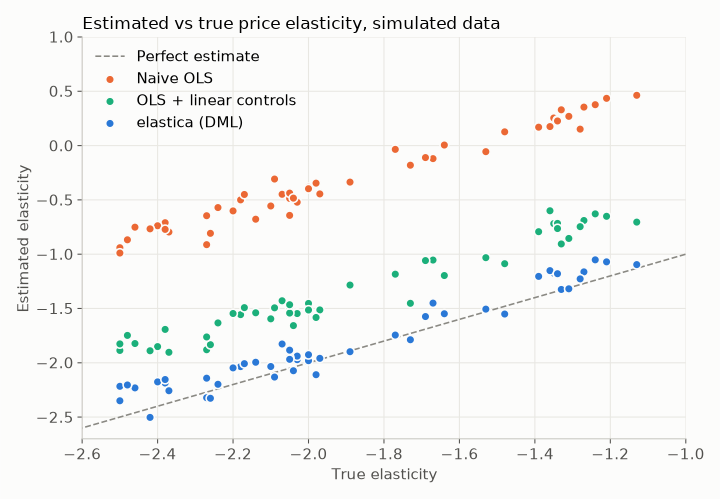
|
|
41
|
+
|
|
42
|
+
## Why
|
|
43
|
+
|
|
44
|
+
The usual way to measure price elasticity, regressing log quantity on log price, is wrong whenever something moves price and demand together. Retailers raise prices in high season, when demand is high anyway, so the naive slope says customers barely react to price. In the benchmark above it is not just off: for many products it comes out **positive**.
|
|
45
|
+
|
|
46
|
+
`elastica` removes that confounding with double machine learning (Chernozhukov et al., 2018): it predicts both price and demand from the calendar and your controls with gradient boosting, then estimates the elasticity from what is left. You get a confidence interval, diagnostics that tell you when not to trust the number, and a price recommendation that stays close to the prices you have actually tried.
|
|
47
|
+
|
|
48
|
+
## Benchmark
|
|
49
|
+
|
|
50
|
+
`examples/benchmark.py` simulates 50 products with a known elasticity, seasonality and two week-long sales peaks that raise both price and demand, then compares three estimators on the same data:
|
|
51
|
+
|
|
52
|
+
| Method | Mean absolute error | Mean bias |
|
|
53
|
+
|---|---|---|
|
|
54
|
+
| Naive OLS (log q on log p) | 1.59 | +1.59 |
|
|
55
|
+
| OLS + the same controls, linear | 0.55 | +0.55 |
|
|
56
|
+
| **elastica (DML)** | **0.12** | **+0.09** |
|
|
57
|
+
|
|
58
|
+
elastica's 95 % confidence interval contains the true value in 80 % of runs. The shortfall from 95 % comes from the sharp sales peaks: with two years of daily data the nuisance models cannot fully learn them, which leaves a small bias toward zero. Without the peaks, coverage is 19 of 20 runs. Reproduce it with `uv run --group docs python examples/benchmark.py`.
|
|
59
|
+
|
|
60
|
+
## Install
|
|
61
|
+
|
|
62
|
+
```bash
|
|
63
|
+
pip install elastica
|
|
64
|
+
```
|
|
65
|
+
|
|
66
|
+
Requires Python 3.11+. Dependencies: numpy, pandas, scikit-learn.
|
|
67
|
+
|
|
68
|
+
## Quickstart
|
|
69
|
+
|
|
70
|
+
Generate a demo dataset with known answers, then estimate and price (from a clone of this repository, prefix each command with `uv run`):
|
|
71
|
+
|
|
72
|
+
```text
|
|
73
|
+
$ elastica simulate -o sales.csv
|
|
74
|
+
true elasticities: SKU-001 -2.2, SKU-002 -1.87, SKU-003 -1.53, SKU-004 -1.2
|
|
75
|
+
|
|
76
|
+
$ elastica estimate sales.csv --controls promo
|
|
77
|
+
Product Elasticity 95% CI low 95% CI high Naive Periods
|
|
78
|
+
------- ---------- ---------- ----------- ----- -------
|
|
79
|
+
SKU-001 -2.02 -2.23 -1.81 -0.55 730
|
|
80
|
+
SKU-002 -1.77 -1.97 -1.58 -0.32 730
|
|
81
|
+
SKU-003 -1.47 -1.66 -1.27 -0.05 730
|
|
82
|
+
SKU-004 -1.07 -1.26 -0.89 0.35 730
|
|
83
|
+
|
|
84
|
+
$ elastica price sales.csv --controls promo --cost unit_cost
|
|
85
|
+
Product Elasticity Current Recommended Range low Range high Profit Revenue
|
|
86
|
+
------- ---------- ------- ----------- --------- ---------- ------ -------
|
|
87
|
+
SKU-001 -2.02 105.34 109.15 99.95 123.10 +0.1% -3.6%
|
|
88
|
+
SKU-002 -1.77 67.42 72.35 64.06 80.91 +0.4% -5.3%
|
|
89
|
+
SKU-003 -1.47 128.62 154.35 146.68 154.35 +4.6% -8.1%
|
|
90
|
+
SKU-004 -1.07 96.10 115.33 115.33 115.33 +13.1% -1.3%
|
|
91
|
+
|
|
92
|
+
SKU-003: price capped at the top of the band; consider testing a wider band in small steps
|
|
93
|
+
|
|
94
|
+
SKU-004: the confidence interval includes -1; elastic vs inelastic is uncertain; price capped at the top of the band; consider testing a wider band in small steps
|
|
95
|
+
```
|
|
96
|
+
|
|
97
|
+
*Range* is the recommended price at each end of the elasticity's confidence interval. *Profit* and *Revenue* are the expected changes per period if the model's assumptions hold.
|
|
98
|
+
|
|
99
|
+
## Your data
|
|
100
|
+
|
|
101
|
+
One row per sale or per product and day, in CSV or Parquet. Only three columns are required; name them however you like:
|
|
102
|
+
|
|
103
|
+
| Field | Flag | Required | Notes |
|
|
104
|
+
|---|---|---|---|
|
|
105
|
+
| Date | `--date` | yes | Any format pandas can parse. |
|
|
106
|
+
| Price | `--price` | yes | Unit price actually paid. |
|
|
107
|
+
| Quantity | `--quantity` | yes | Units sold. |
|
|
108
|
+
| Product | `--product` | no | Pass `--product ''` if the file has a single product. |
|
|
109
|
+
| Unit cost | `--cost` | no | Needed for profit-maximizing prices; or pass `--unit-cost 42` for all products. |
|
|
110
|
+
| Controls | `--controls a,b` | no | Anything else that moves price or demand: promotions, store, channel, stock-outs. Text columns are one-hot encoded. |
|
|
111
|
+
|
|
112
|
+
Rows are aggregated to product × day (`--frequency W` or `M` for weekly or monthly) with a quantity-weighted price. Calendar features (trend, month, day of year, week of year, day of week) are added automatically. Periods with zero sales are dropped and counted.
|
|
113
|
+
|
|
114
|
+
## How it works
|
|
115
|
+
|
|
116
|
+
For each product, on log-log data:
|
|
117
|
+
|
|
118
|
+
```
|
|
119
|
+
log q = θ · log p + g(X) + ε θ is the elasticity
|
|
120
|
+
log p = m(X) + v
|
|
121
|
+
```
|
|
122
|
+
|
|
123
|
+
1. **Cross-fitting.** `g` and `m` are learned with gradient boosting on K−1 folds and predicted on the held-out fold, so no observation is predicted by a model that saw it.
|
|
124
|
+
2. **Partialling out.** `θ` is the slope of the outcome residuals on the price residuals: the part of price variation the calendar and controls cannot explain.
|
|
125
|
+
3. **Inference.** Standard errors come from the Neyman-orthogonal score; the whole procedure is repeated with new splits (3 by default) and aggregated by the median.
|
|
126
|
+
4. **Pricing.** Demand is treated as constant-elasticity around the current price, so the profit-maximizing price is `cost · θ / (1 + θ)` when `θ < −1`. The result is clamped to a band around the current price (default 80 %–120 %), because the approximation is only reliable near prices you have observed.
|
|
127
|
+
|
|
128
|
+
Every estimate reports the naive slope and an OLS with linear controls next to the DML estimate, plus the cross-fitted R² of both nuisance models.
|
|
129
|
+
|
|
130
|
+
### Warnings you may see
|
|
131
|
+
|
|
132
|
+
| Warning | Meaning |
|
|
133
|
+
|---|---|
|
|
134
|
+
| weakly identified | The controls explain almost all price changes. There is too little independent price variation to learn from; run a price test. |
|
|
135
|
+
| positive elasticity | Demand rises with price. A confounder is probably missing from `--controls`. |
|
|
136
|
+
| confidence interval includes −1 | The data cannot tell elastic from inelastic demand, so the direction of the optimal price change is uncertain. |
|
|
137
|
+
| capped at the band | The optimum is outside the prices you have tried. Move toward it in small, measured steps. |
|
|
138
|
+
|
|
139
|
+
## Python API
|
|
140
|
+
|
|
141
|
+
```python
|
|
142
|
+
import elastica
|
|
143
|
+
|
|
144
|
+
sim = elastica.simulate()
|
|
145
|
+
panel = elastica.prepare(sim.transactions, elastica.Schema(cost="unit_cost", controls=("promo",)))
|
|
146
|
+
|
|
147
|
+
for item in elastica.estimate(panel):
|
|
148
|
+
r = item.result
|
|
149
|
+
rec = elastica.recommend(item)
|
|
150
|
+
print(
|
|
151
|
+
f"{item.product}: {r.elasticity:.2f} [{r.ci_low:.2f}, {r.ci_high:.2f}] naive {r.naive_elasticity:+.2f} -> {rec.current_price:.2f} to {rec.recommended_price:.2f} ({rec.reason})"
|
|
152
|
+
)
|
|
153
|
+
```
|
|
154
|
+
|
|
155
|
+
```text
|
|
156
|
+
SKU-001: -2.02 [-2.23, -1.81] naive -0.55 -> 105.34 to 109.15 (optimum inside the band)
|
|
157
|
+
SKU-002: -1.77 [-1.97, -1.58] naive -0.32 -> 67.42 to 72.35 (optimum inside the band)
|
|
158
|
+
SKU-003: -1.47 [-1.66, -1.27] naive -0.05 -> 128.62 to 154.35 (capped at the top of the band)
|
|
159
|
+
SKU-004: -1.07 [-1.26, -0.89] naive +0.35 -> 96.10 to 115.33 (capped at the top of the band)
|
|
160
|
+
```
|
|
161
|
+
|
|
162
|
+
More:
|
|
163
|
+
|
|
164
|
+
- `elastica.estimate(panel, pooled=True)`: one estimate across products with product fixed effects, for SKUs with little history.
|
|
165
|
+
- `elastica.EstimateOptions(learner=..., folds=Folds.TIME, n_folds=5, n_repeats=3, confidence=0.9)`: any scikit-learn regressor works as `learner`. Time-blocked folds are more conservative and need about three seasons of history.
|
|
166
|
+
- `elastica.estimate_elasticity(y, d, x)`: the estimator on raw arrays.
|
|
167
|
+
- `elastica.demand_curve(...)`, `estimates_frame`, `recommendations_frame`: tables for plotting and reporting.
|
|
168
|
+
|
|
169
|
+
## Limits
|
|
170
|
+
|
|
171
|
+
- Causal only under the usual assumption: everything that moves both price and demand is in the date or in `--controls`. If a competitor's price drives yours and is not in the data, the estimate is biased.
|
|
172
|
+
- Own-price elasticity only; cross-price effects and substitution between products are not modelled.
|
|
173
|
+
- The price recommendation is a starting point for a test, not an order.
|
|
174
|
+
|
|
175
|
+
## Development
|
|
176
|
+
|
|
177
|
+
```bash
|
|
178
|
+
uv sync
|
|
179
|
+
uv run pytest
|
|
180
|
+
uv run ruff check . && uv run ruff format --check . && uv run mypy .
|
|
181
|
+
```
|
|
182
|
+
|
|
183
|
+
See [CONTRIBUTING.md](CONTRIBUTING.md).
|
|
184
|
+
|
|
185
|
+
## License
|
|
186
|
+
|
|
187
|
+
[MIT](LICENSE) © Diego Tepichin
|
|
@@ -0,0 +1,13 @@
|
|
|
1
|
+
elastica/__init__.py,sha256=YNmqJvcKJ1RbivtK0P-hes5ajVx62Q6BCYyJqnu3uhY,1056
|
|
2
|
+
elastica/cli.py,sha256=tY2ahXtJBSfsO57kO1cLhyUC32-Iwg_b4EZGQO14LKc,7819
|
|
3
|
+
elastica/data.py,sha256=D0r7A6BrCkUE2vvpUvojv1Uohb-4B4nZkNC7dewRX6c,7009
|
|
4
|
+
elastica/dml.py,sha256=xrEcCmreB4-8YoEYZu5eEFQ_RGLzPZQR6_802wAiH9U,7351
|
|
5
|
+
elastica/estimate.py,sha256=LmRvHAWboib6ANGugDwe1TxAm884L9ypADnmVe_t98g,4083
|
|
6
|
+
elastica/pricing.py,sha256=An7j8gkqED32_vaP-AvVjGbnbsyPCQXsfYLwYILhPOo,6570
|
|
7
|
+
elastica/py.typed,sha256=47DEQpj8HBSa-_TImW-5JCeuQeRkm5NMpJWZG3hSuFU,0
|
|
8
|
+
elastica/simulate.py,sha256=ugf81n0L4lYCZYDLhmVsHycJAqQX4xCB7t6TD6_F72k,3564
|
|
9
|
+
elastica-1.0.0.dist-info/METADATA,sha256=6tpx0vyvnGQ8YJsEZOpz4ez05mUnAcgjHThfXTpc1zU,10015
|
|
10
|
+
elastica-1.0.0.dist-info/WHEEL,sha256=2iZrJkDIkeDh0k9SikKMqFuRP-ua6mb4Ir1AsER4BEw,87
|
|
11
|
+
elastica-1.0.0.dist-info/entry_points.txt,sha256=OiN4xAEjJgxtn3L-5pWnnEBDH-M3XDhWZDAWqQXDzGc,47
|
|
12
|
+
elastica-1.0.0.dist-info/licenses/LICENSE,sha256=KqUp30oQmCvUSAgdjZN7rp5cgwS06fkPzdyjEQjeTfU,1071
|
|
13
|
+
elastica-1.0.0.dist-info/RECORD,,
|
|
@@ -0,0 +1,21 @@
|
|
|
1
|
+
MIT License
|
|
2
|
+
|
|
3
|
+
Copyright (c) 2026 Diego Tepichin
|
|
4
|
+
|
|
5
|
+
Permission is hereby granted, free of charge, to any person obtaining a copy
|
|
6
|
+
of this software and associated documentation files (the "Software"), to deal
|
|
7
|
+
in the Software without restriction, including without limitation the rights
|
|
8
|
+
to use, copy, modify, merge, publish, distribute, sublicense, and/or sell
|
|
9
|
+
copies of the Software, and to permit persons to whom the Software is
|
|
10
|
+
furnished to do so, subject to the following conditions:
|
|
11
|
+
|
|
12
|
+
The above copyright notice and this permission notice shall be included in all
|
|
13
|
+
copies or substantial portions of the Software.
|
|
14
|
+
|
|
15
|
+
THE SOFTWARE IS PROVIDED "AS IS", WITHOUT WARRANTY OF ANY KIND, EXPRESS OR
|
|
16
|
+
IMPLIED, INCLUDING BUT NOT LIMITED TO THE WARRANTIES OF MERCHANTABILITY,
|
|
17
|
+
FITNESS FOR A PARTICULAR PURPOSE AND NONINFRINGEMENT. IN NO EVENT SHALL THE
|
|
18
|
+
AUTHORS OR COPYRIGHT HOLDERS BE LIABLE FOR ANY CLAIM, DAMAGES OR OTHER
|
|
19
|
+
LIABILITY, WHETHER IN AN ACTION OF CONTRACT, TORT OR OTHERWISE, ARISING FROM,
|
|
20
|
+
OUT OF OR IN CONNECTION WITH THE SOFTWARE OR THE USE OR OTHER DEALINGS IN THE
|
|
21
|
+
SOFTWARE.
|