zapier-platform-cli 15.0.1 → 15.1.0
This diff represents the content of publicly available package versions that have been released to one of the supported registries. The information contained in this diff is provided for informational purposes only and reflects changes between package versions as they appear in their respective public registries.
- package/README-source.md +19 -11
- package/README.md +22 -14
- package/oclif.manifest.json +1 -1
- package/package.json +1 -1
- package/src/constants.js +2 -0
- package/src/oclif/ZapierBaseCommand.js +4 -0
- package/src/oclif/commands/promote.js +7 -3
- package/src/oclif/commands/register.js +18 -3
package/README-source.md
CHANGED
|
@@ -12,7 +12,7 @@
|
|
|
12
12
|
|
|
13
13
|
Zapier is a platform for creating integrations and workflows. This CLI is your gateway to creating custom applications on the Zapier platform.
|
|
14
14
|
|
|
15
|
-
You may find
|
|
15
|
+
You may find some documents on the Zapier site duplicate or outdated. The most up-to-date contents are always available on GitHub:
|
|
16
16
|
|
|
17
17
|
- [Latest CLI Docs](https://github.com/zapier/zapier-platform/blob/main/packages/cli/README.md)
|
|
18
18
|
- [Latest CLI Reference](https://github.com/zapier/zapier-platform/blob/main/packages/cli/docs/cli.md)
|
|
@@ -22,9 +22,9 @@ Our code is updated frequently. To see a full list of changes, look no further t
|
|
|
22
22
|
|
|
23
23
|
This doc describes the latest CLI version (**PACKAGE_VERSION**), as of this writing. If you're using an older version of the CLI, you may want to check out these historical releases:
|
|
24
24
|
|
|
25
|
-
- CLI Docs: [
|
|
26
|
-
- CLI Reference: [
|
|
27
|
-
- Schema Docs: [
|
|
25
|
+
- CLI Docs: [14.x](https://github.com/zapier/zapier-platform/blob/zapier-platform-cli@14.1.2/packages/cli/README.md), [13.x](https://github.com/zapier/zapier-platform/blob/zapier-platform-cli@13.0.0/packages/cli/README.md)
|
|
26
|
+
- CLI Reference: [14.x](https://github.com/zapier/zapier-platform/blob/zapier-platform-cli@14.1.2/packages/cli/docs/cli.md), [13.x](https://github.com/zapier/zapier-platform/blob/zapier-platform-cli@13.0.0/packages/cli/docs/cli.md)
|
|
27
|
+
- Schema Docs: [14.x](https://github.com/zapier/zapier-platform/blob/zapier-platform-schema@14.1.2/packages/schema/docs/build/schema.md), [13.x](https://github.com/zapier/zapier-platform/blob/zapier-platform-schema@13.0.0/packages/schema/docs/build/schema.md)
|
|
28
28
|
|
|
29
29
|
## Table of Contents
|
|
30
30
|
|
|
@@ -100,6 +100,8 @@ Your Zapier CLI should be installed and ready to go at this point. Next up, we'l
|
|
|
100
100
|
# create a directory with the minimum required files
|
|
101
101
|
zapier init example-app
|
|
102
102
|
|
|
103
|
+
> Note: When you run `zapier init`, you'll be presented with a list of templates to start with. Pick the one that matches a feature you'll need (such as "dynamic-dropdown" for an integration with [dynamic dropdown fields](https://github.com/zapier/zapier-platform/blob/main/packages/cli/README.md#dynamic-dropdowns)), or select "minimal" for an integration with only the essentials. [View more example apps here](https://github.com/zapier/zapier-platform/tree/main/example-apps).
|
|
104
|
+
|
|
103
105
|
# move into the new directory
|
|
104
106
|
cd example-app
|
|
105
107
|
|
|
@@ -113,7 +115,6 @@ Depending on the authentication method for your app, you'll also likely need to
|
|
|
113
115
|
$ zapier env:set 1.0.0 CLIENT_ID=1234
|
|
114
116
|
$ zapier env:set 1.0.0 CLIENT_SECRET=abcd
|
|
115
117
|
```
|
|
116
|
-
> Note: When you run `zapier init`, you'll be presented with a list of templates to start with. Pick the one that matches a feature you'll need (such as "dynamic-dropdown" for an integration with [dynamic dropdown fields](#dynamic-dropdowns)), or select "minimal" for an integration with only the essentials. [View more example apps here](https://github.com/zapier/zapier-platform/tree/main/example-apps).
|
|
117
118
|
|
|
118
119
|
You should now have a working local app. You can run several local commands to try it out.
|
|
119
120
|
|
|
@@ -405,7 +406,7 @@ Also, `authentication.oauth1Config.getAccessToken` has access to the additional
|
|
|
405
406
|
|
|
406
407
|
### OAuth2
|
|
407
408
|
|
|
408
|
-
Zapier's OAuth2 implementation is based on the `authorization_code` flow, similar to [GitHub](https://
|
|
409
|
+
Zapier's OAuth2 implementation is based on the `authorization_code` flow, similar to [GitHub](https://docs.github.com/en/apps/oauth-apps/building-oauth-apps/authorizing-oauth-apps) and [Facebook](https://developers.facebook.com/docs/facebook-login/guides/advanced/manual-flow).
|
|
409
410
|
|
|
410
411
|
> To create a new integration with OAuth2, run `zapier init [your app name] --template oauth2`. You can also check out [our working example app](https://github.com/zapier/zapier-platform/tree/main/example-apps/oauth2).
|
|
411
412
|
|
|
@@ -451,12 +452,15 @@ Also, `authentication.oauth2Config.getAccessToken` has access to the additional
|
|
|
451
452
|
|
|
452
453
|
If you define `fields` to collect additional details from the user, please note that `client_id` and `client_secret` are reserved keys and cannot be used as keys for input form fields.
|
|
453
454
|
|
|
455
|
+
> Note: The OAuth2 `state` param is a [standard security feature](https://auth0.com/docs/secure/attack-protection/state-parameters) that helps ensure that authorization requests are only coming from your servers. Most OAuth clients have support for this and will send back the `state` query param that the user brings to your app. The Zapier Platform performs this check and this required field cannot be disabled. The state parameter is automatically generated by Zapier in the background, and can be accessed at `bundle.inputData.state`.
|
|
456
|
+
Since Zapier uses the `state` to verify that GET requests to your redirect URL truly come from your app, it needs to be generated by Zapier so that it can be validated later (once the user confirms that they'd like to grant Zapier permission to access their account in your app).
|
|
457
|
+
|
|
454
458
|
|
|
455
459
|
### OAuth2 with PKCE
|
|
456
460
|
|
|
457
461
|
*Added in v14.0.0.*
|
|
458
462
|
|
|
459
|
-
Zapier's OAuth2 implementation also supports [PKCE](https://oauth.net/2/pkce/). This implementation is an extension of the OAuth2 `authorization_code` flow described above.
|
|
463
|
+
Zapier's OAuth2 implementation also supports [PKCE](https://oauth.net/2/pkce/). This implementation is an extension of the OAuth2 `authorization_code` flow described above.
|
|
460
464
|
|
|
461
465
|
To use PKCE in your OAuth2 flow, you'll need to set the following variables:
|
|
462
466
|
1. `enablePkce: true`
|
|
@@ -811,7 +815,7 @@ We provide several methods off of the `z` object, which is provided as the first
|
|
|
811
815
|
|
|
812
816
|
### `z.request([url], options)`
|
|
813
817
|
|
|
814
|
-
`z.request([url], options)` is a promise based HTTP client with some Zapier-specific goodies. See [Making HTTP Requests](#making-http-requests).
|
|
818
|
+
`z.request([url], options)` is a promise based HTTP client with some Zapier-specific goodies. See [Making HTTP Requests](#making-http-requests). `z.request()` will [percent-encode](https://developer.mozilla.org/en-US/docs/Glossary/Percent-encoding) non-ascii characters and these reserved characters: ``:$/?#[]@$&+,;=^@`\``. Use [`skipEncodingChars`](https://github.com/zapier/zapier-platform/blob/main/packages/schema/docs/build/schema.md#requestschema) to modify this behaviour.
|
|
815
819
|
|
|
816
820
|
### `z.console`
|
|
817
821
|
|
|
@@ -870,6 +874,7 @@ For example, in your `perform` you might do:
|
|
|
870
874
|
const perform = async (z, bundle) => {
|
|
871
875
|
// something like this url:
|
|
872
876
|
// https://zapier.com/hooks/callback/123/abcdef01-2345-6789-abcd-ef0123456789/abcdef0123456789abcdef0123456789abcdef01/
|
|
877
|
+
// consider checking bundle.meta.isLoadingSample to determine if this is a test run or real run!
|
|
873
878
|
const callbackUrl = z.generateCallbackUrl();
|
|
874
879
|
await z.request({
|
|
875
880
|
url: 'https://example.com/api/slow-job',
|
|
@@ -892,6 +897,7 @@ Content-Type: application/json
|
|
|
892
897
|
|
|
893
898
|
{"foo":"bar"}
|
|
894
899
|
```
|
|
900
|
+
> We recommend using `bundle.meta.isLoadingSample` to determine if the execution is happening in the foreground (IE: during Zap setup) as using `z.generateCallbackUrl()` can be inappropriate given the disconnect. Instead, wait for the long running request without generating a callback, or if you must, return stubbed data.
|
|
895
901
|
|
|
896
902
|
And finally, in a `performResume` to handle the final step which will receive three bundle properties:
|
|
897
903
|
|
|
@@ -908,6 +914,8 @@ const performResume = async (z, bundle) => {
|
|
|
908
914
|
|
|
909
915
|
> The app will have a maximum of 30 days to `POST` to the callback URL. If a user deletes or modifies the Zap or Task in the meantime, we will not resume the task.
|
|
910
916
|
|
|
917
|
+
> `performResume` will only run when the Zap runs live, and cannot be tested in the Zap Editor when configuring the Zap. It is possible to use `bundle.meta.isLoadingSample` to load a fixed sample to allow users to test a step that includes `performResume`.
|
|
918
|
+
|
|
911
919
|
|
|
912
920
|
## Bundle Object
|
|
913
921
|
|
|
@@ -1007,7 +1015,7 @@ In `bundle.rawRequest`, headers other than `Content-Length` and `Content-Type` w
|
|
|
1007
1015
|
|
|
1008
1016
|
### `bundle.cleanedRequest`
|
|
1009
1017
|
|
|
1010
|
-
> `bundle.cleanedRequest` is only available in the `perform` for webhooks, `getAccessToken` for
|
|
1018
|
+
> `bundle.cleanedRequest` is only available in the `perform` for webhooks, `getAccessToken` for OAuth authentication methods, and `performResume` in a callback action.
|
|
1011
1019
|
|
|
1012
1020
|
`bundle.cleanedRequest` will return a formatted and parsed version of the request. Some or all of the following will be available:
|
|
1013
1021
|
|
|
@@ -1388,7 +1396,7 @@ Dehydration, and its counterpart Hydration, is a tool that can lazily load data
|
|
|
1388
1396
|
|
|
1389
1397
|
The method `z.dehydrate(func, inputData)` has two required arguments:
|
|
1390
1398
|
|
|
1391
|
-
* `func` - the function to call to fetch the extra data. Can be any raw `function`, defined in the file doing the dehydration or imported from another part of your app. You must also register the function in the app's `hydrators` property. Note that since v10.1.0, the maximum payload size to pass to `z.dehydrate` / `z.dehydrateFile` is 6KB.
|
|
1399
|
+
* `func` - the function to call to fetch the extra data. Can be any raw `function`, defined in the file doing the dehydration or imported from another part of your app. You must also register the function in the app's `hydrators` property. Note that since v10.1.0, the maximum payload size to pass to `z.dehydrate` / `z.dehydrateFile` is 6KB.
|
|
1392
1400
|
* `inputData` - this is an object that contains things like a `path` or `id` - whatever you need to load data on the other side
|
|
1393
1401
|
|
|
1394
1402
|
> **Why do I need to register my functions?** Because of how JavaScript works with its module system, we need an explicit handle on the function that can be accessed from the App definition without trying to "automagically" (and sometimes incorrectly) infer code locations.
|
|
@@ -1639,7 +1647,7 @@ const yourAfterResponse = (resp) => {
|
|
|
1639
1647
|
```
|
|
1640
1648
|
Instead of a user’s Zap erroring and halting, the request will be repeatedly retried at the specified time.
|
|
1641
1649
|
|
|
1642
|
-
For throttled requests that occur during processing of a webhook trigger's perform, before results are produced; there is a max retry delay of 300 seconds and a default delay of 60 seconds if none is specified. For webhook processing only, if a request during the retry attempt is also throttled, it will not be re-attempted again.
|
|
1650
|
+
For throttled requests that occur during processing of a webhook trigger's perform, before results are produced; there is a max retry delay of 300 seconds and a default delay of 60 seconds if none is specified. For webhook processing only, if a request during the retry attempt is also throttled, it will not be re-attempted again.
|
|
1643
1651
|
|
|
1644
1652
|
## Testing
|
|
1645
1653
|
|
package/README.md
CHANGED
|
@@ -14,7 +14,7 @@
|
|
|
14
14
|
|
|
15
15
|
Zapier is a platform for creating integrations and workflows. This CLI is your gateway to creating custom applications on the Zapier platform.
|
|
16
16
|
|
|
17
|
-
You may find
|
|
17
|
+
You may find some documents on the Zapier site duplicate or outdated. The most up-to-date contents are always available on GitHub:
|
|
18
18
|
|
|
19
19
|
- [Latest CLI Docs](https://github.com/zapier/zapier-platform/blob/main/packages/cli/README.md)
|
|
20
20
|
- [Latest CLI Reference](https://github.com/zapier/zapier-platform/blob/main/packages/cli/docs/cli.md)
|
|
@@ -22,11 +22,11 @@ You may find docs duplicate or outdated across the Zapier site. The most up-to-d
|
|
|
22
22
|
|
|
23
23
|
Our code is updated frequently. To see a full list of changes, look no further than [the CHANGELOG](https://github.com/zapier/zapier-platform/blob/main/CHANGELOG.md).
|
|
24
24
|
|
|
25
|
-
This doc describes the latest CLI version (**15.0
|
|
25
|
+
This doc describes the latest CLI version (**15.1.0**), as of this writing. If you're using an older version of the CLI, you may want to check out these historical releases:
|
|
26
26
|
|
|
27
|
-
- CLI Docs: [
|
|
28
|
-
- CLI Reference: [
|
|
29
|
-
- Schema Docs: [
|
|
27
|
+
- CLI Docs: [14.x](https://github.com/zapier/zapier-platform/blob/zapier-platform-cli@14.1.2/packages/cli/README.md), [13.x](https://github.com/zapier/zapier-platform/blob/zapier-platform-cli@13.0.0/packages/cli/README.md)
|
|
28
|
+
- CLI Reference: [14.x](https://github.com/zapier/zapier-platform/blob/zapier-platform-cli@14.1.2/packages/cli/docs/cli.md), [13.x](https://github.com/zapier/zapier-platform/blob/zapier-platform-cli@13.0.0/packages/cli/docs/cli.md)
|
|
29
|
+
- Schema Docs: [14.x](https://github.com/zapier/zapier-platform/blob/zapier-platform-schema@14.1.2/packages/schema/docs/build/schema.md), [13.x](https://github.com/zapier/zapier-platform/blob/zapier-platform-schema@13.0.0/packages/schema/docs/build/schema.md)
|
|
30
30
|
|
|
31
31
|
## Table of Contents
|
|
32
32
|
|
|
@@ -218,6 +218,8 @@ Your Zapier CLI should be installed and ready to go at this point. Next up, we'l
|
|
|
218
218
|
# create a directory with the minimum required files
|
|
219
219
|
zapier init example-app
|
|
220
220
|
|
|
221
|
+
> Note: When you run `zapier init`, you'll be presented with a list of templates to start with. Pick the one that matches a feature you'll need (such as "dynamic-dropdown" for an integration with [dynamic dropdown fields](https://github.com/zapier/zapier-platform/blob/main/packages/cli/README.md#dynamic-dropdowns)), or select "minimal" for an integration with only the essentials. [View more example apps here](https://github.com/zapier/zapier-platform/tree/main/example-apps).
|
|
222
|
+
|
|
221
223
|
# move into the new directory
|
|
222
224
|
cd example-app
|
|
223
225
|
|
|
@@ -231,7 +233,6 @@ Depending on the authentication method for your app, you'll also likely need to
|
|
|
231
233
|
$ zapier env:set 1.0.0 CLIENT_ID=1234
|
|
232
234
|
$ zapier env:set 1.0.0 CLIENT_SECRET=abcd
|
|
233
235
|
```
|
|
234
|
-
> Note: When you run `zapier init`, you'll be presented with a list of templates to start with. Pick the one that matches a feature you'll need (such as "dynamic-dropdown" for an integration with [dynamic dropdown fields](#dynamic-dropdowns)), or select "minimal" for an integration with only the essentials. [View more example apps here](https://github.com/zapier/zapier-platform/tree/main/example-apps).
|
|
235
236
|
|
|
236
237
|
You should now have a working local app. You can run several local commands to try it out.
|
|
237
238
|
|
|
@@ -763,7 +764,7 @@ Also, `authentication.oauth1Config.getAccessToken` has access to the additional
|
|
|
763
764
|
|
|
764
765
|
### OAuth2
|
|
765
766
|
|
|
766
|
-
Zapier's OAuth2 implementation is based on the `authorization_code` flow, similar to [GitHub](https://
|
|
767
|
+
Zapier's OAuth2 implementation is based on the `authorization_code` flow, similar to [GitHub](https://docs.github.com/en/apps/oauth-apps/building-oauth-apps/authorizing-oauth-apps) and [Facebook](https://developers.facebook.com/docs/facebook-login/guides/advanced/manual-flow).
|
|
767
768
|
|
|
768
769
|
> To create a new integration with OAuth2, run `zapier init [your app name] --template oauth2`. You can also check out [our working example app](https://github.com/zapier/zapier-platform/tree/main/example-apps/oauth2).
|
|
769
770
|
|
|
@@ -871,12 +872,15 @@ Also, `authentication.oauth2Config.getAccessToken` has access to the additional
|
|
|
871
872
|
|
|
872
873
|
If you define `fields` to collect additional details from the user, please note that `client_id` and `client_secret` are reserved keys and cannot be used as keys for input form fields.
|
|
873
874
|
|
|
875
|
+
> Note: The OAuth2 `state` param is a [standard security feature](https://auth0.com/docs/secure/attack-protection/state-parameters) that helps ensure that authorization requests are only coming from your servers. Most OAuth clients have support for this and will send back the `state` query param that the user brings to your app. The Zapier Platform performs this check and this required field cannot be disabled. The state parameter is automatically generated by Zapier in the background, and can be accessed at `bundle.inputData.state`.
|
|
876
|
+
Since Zapier uses the `state` to verify that GET requests to your redirect URL truly come from your app, it needs to be generated by Zapier so that it can be validated later (once the user confirms that they'd like to grant Zapier permission to access their account in your app).
|
|
877
|
+
|
|
874
878
|
|
|
875
879
|
### OAuth2 with PKCE
|
|
876
880
|
|
|
877
881
|
*Added in v14.0.0.*
|
|
878
882
|
|
|
879
|
-
Zapier's OAuth2 implementation also supports [PKCE](https://oauth.net/2/pkce/). This implementation is an extension of the OAuth2 `authorization_code` flow described above.
|
|
883
|
+
Zapier's OAuth2 implementation also supports [PKCE](https://oauth.net/2/pkce/). This implementation is an extension of the OAuth2 `authorization_code` flow described above.
|
|
880
884
|
|
|
881
885
|
To use PKCE in your OAuth2 flow, you'll need to set the following variables:
|
|
882
886
|
1. `enablePkce: true`
|
|
@@ -1784,7 +1788,7 @@ We provide several methods off of the `z` object, which is provided as the first
|
|
|
1784
1788
|
|
|
1785
1789
|
### `z.request([url], options)`
|
|
1786
1790
|
|
|
1787
|
-
`z.request([url], options)` is a promise based HTTP client with some Zapier-specific goodies. See [Making HTTP Requests](#making-http-requests).
|
|
1791
|
+
`z.request([url], options)` is a promise based HTTP client with some Zapier-specific goodies. See [Making HTTP Requests](#making-http-requests). `z.request()` will [percent-encode](https://developer.mozilla.org/en-US/docs/Glossary/Percent-encoding) non-ascii characters and these reserved characters: ``:$/?#[]@$&+,;=^@`\``. Use [`skipEncodingChars`](https://github.com/zapier/zapier-platform/blob/main/packages/schema/docs/build/schema.md#requestschema) to modify this behaviour.
|
|
1788
1792
|
|
|
1789
1793
|
### `z.console`
|
|
1790
1794
|
|
|
@@ -1843,6 +1847,7 @@ For example, in your `perform` you might do:
|
|
|
1843
1847
|
const perform = async (z, bundle) => {
|
|
1844
1848
|
// something like this url:
|
|
1845
1849
|
// https://zapier.com/hooks/callback/123/abcdef01-2345-6789-abcd-ef0123456789/abcdef0123456789abcdef0123456789abcdef01/
|
|
1850
|
+
// consider checking bundle.meta.isLoadingSample to determine if this is a test run or real run!
|
|
1846
1851
|
const callbackUrl = z.generateCallbackUrl();
|
|
1847
1852
|
await z.request({
|
|
1848
1853
|
url: 'https://example.com/api/slow-job',
|
|
@@ -1865,6 +1870,7 @@ Content-Type: application/json
|
|
|
1865
1870
|
|
|
1866
1871
|
{"foo":"bar"}
|
|
1867
1872
|
```
|
|
1873
|
+
> We recommend using `bundle.meta.isLoadingSample` to determine if the execution is happening in the foreground (IE: during Zap setup) as using `z.generateCallbackUrl()` can be inappropriate given the disconnect. Instead, wait for the long running request without generating a callback, or if you must, return stubbed data.
|
|
1868
1874
|
|
|
1869
1875
|
And finally, in a `performResume` to handle the final step which will receive three bundle properties:
|
|
1870
1876
|
|
|
@@ -1881,6 +1887,8 @@ const performResume = async (z, bundle) => {
|
|
|
1881
1887
|
|
|
1882
1888
|
> The app will have a maximum of 30 days to `POST` to the callback URL. If a user deletes or modifies the Zap or Task in the meantime, we will not resume the task.
|
|
1883
1889
|
|
|
1890
|
+
> `performResume` will only run when the Zap runs live, and cannot be tested in the Zap Editor when configuring the Zap. It is possible to use `bundle.meta.isLoadingSample` to load a fixed sample to allow users to test a step that includes `performResume`.
|
|
1891
|
+
|
|
1884
1892
|
|
|
1885
1893
|
## Bundle Object
|
|
1886
1894
|
|
|
@@ -1980,7 +1988,7 @@ In `bundle.rawRequest`, headers other than `Content-Length` and `Content-Type` w
|
|
|
1980
1988
|
|
|
1981
1989
|
### `bundle.cleanedRequest`
|
|
1982
1990
|
|
|
1983
|
-
> `bundle.cleanedRequest` is only available in the `perform` for webhooks, `getAccessToken` for
|
|
1991
|
+
> `bundle.cleanedRequest` is only available in the `perform` for webhooks, `getAccessToken` for OAuth authentication methods, and `performResume` in a callback action.
|
|
1984
1992
|
|
|
1985
1993
|
`bundle.cleanedRequest` will return a formatted and parsed version of the request. Some or all of the following will be available:
|
|
1986
1994
|
|
|
@@ -2400,7 +2408,7 @@ This behavior has changed periodically across major versions, which changes how/
|
|
|
2400
2408
|
|
|
2401
2409
|
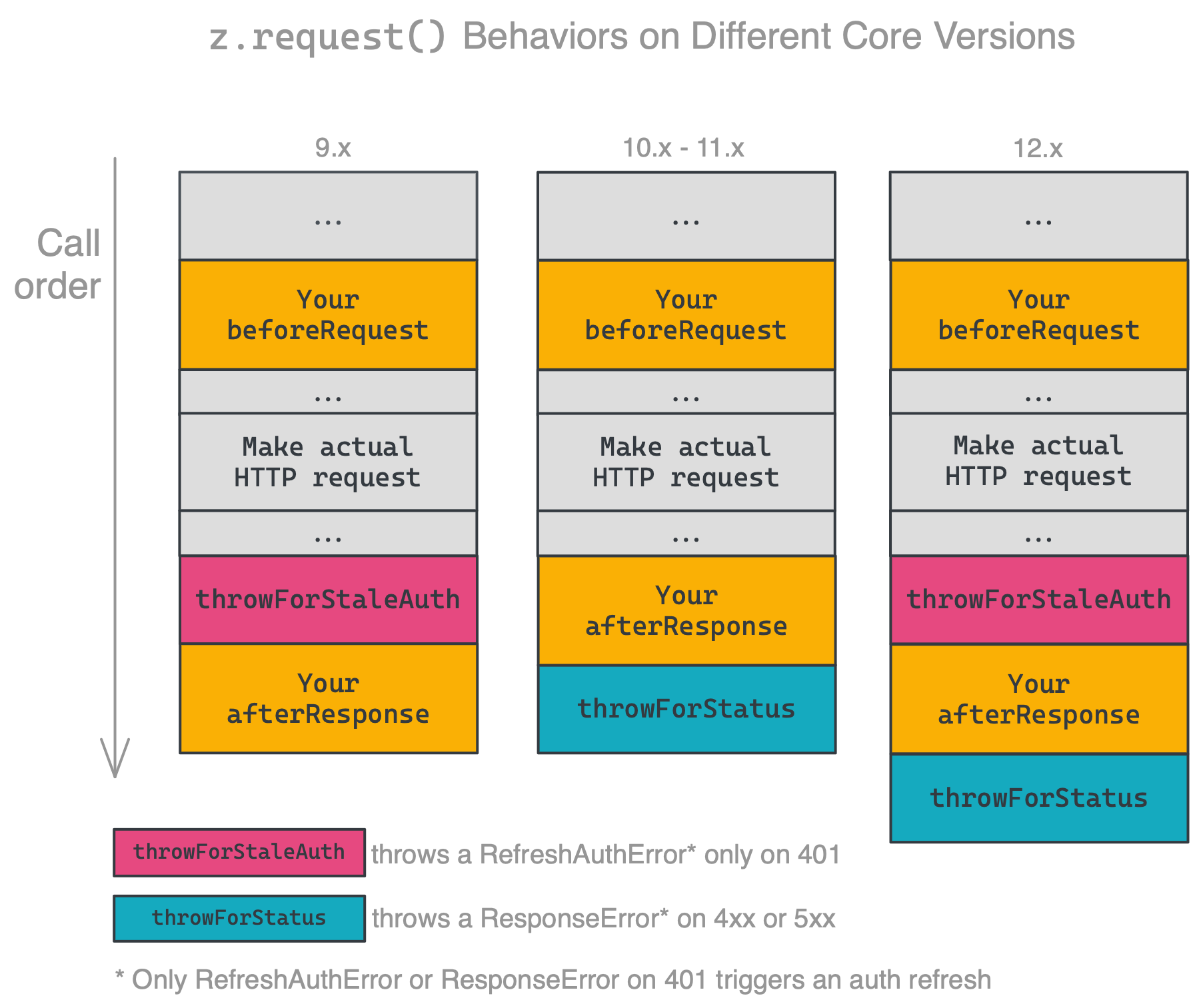
|
|
2402
2410
|
|
|
2403
|
-
Ensure you're handling errors correctly for your platform version. The latest released version is **15.0
|
|
2411
|
+
Ensure you're handling errors correctly for your platform version. The latest released version is **15.1.0**.
|
|
2404
2412
|
|
|
2405
2413
|
### HTTP Request Options
|
|
2406
2414
|
|
|
@@ -2506,7 +2514,7 @@ Dehydration, and its counterpart Hydration, is a tool that can lazily load data
|
|
|
2506
2514
|
|
|
2507
2515
|
The method `z.dehydrate(func, inputData)` has two required arguments:
|
|
2508
2516
|
|
|
2509
|
-
* `func` - the function to call to fetch the extra data. Can be any raw `function`, defined in the file doing the dehydration or imported from another part of your app. You must also register the function in the app's `hydrators` property. Note that since v10.1.0, the maximum payload size to pass to `z.dehydrate` / `z.dehydrateFile` is 6KB.
|
|
2517
|
+
* `func` - the function to call to fetch the extra data. Can be any raw `function`, defined in the file doing the dehydration or imported from another part of your app. You must also register the function in the app's `hydrators` property. Note that since v10.1.0, the maximum payload size to pass to `z.dehydrate` / `z.dehydrateFile` is 6KB.
|
|
2510
2518
|
* `inputData` - this is an object that contains things like a `path` or `id` - whatever you need to load data on the other side
|
|
2511
2519
|
|
|
2512
2520
|
> **Why do I need to register my functions?** Because of how JavaScript works with its module system, we need an explicit handle on the function that can be accessed from the App definition without trying to "automagically" (and sometimes incorrectly) infer code locations.
|
|
@@ -2854,7 +2862,7 @@ const yourAfterResponse = (resp) => {
|
|
|
2854
2862
|
```
|
|
2855
2863
|
Instead of a user’s Zap erroring and halting, the request will be repeatedly retried at the specified time.
|
|
2856
2864
|
|
|
2857
|
-
For throttled requests that occur during processing of a webhook trigger's perform, before results are produced; there is a max retry delay of 300 seconds and a default delay of 60 seconds if none is specified. For webhook processing only, if a request during the retry attempt is also throttled, it will not be re-attempted again.
|
|
2865
|
+
For throttled requests that occur during processing of a webhook trigger's perform, before results are produced; there is a max retry delay of 300 seconds and a default delay of 60 seconds if none is specified. For webhook processing only, if a request during the retry attempt is also throttled, it will not be re-attempted again.
|
|
2858
2866
|
|
|
2859
2867
|
## Testing
|
|
2860
2868
|
|
|
@@ -3593,7 +3601,7 @@ Broadly speaking, all releases will continue to work indefinitely. While you nev
|
|
|
3593
3601
|
For more info about which Node versions are supported, see [the faq](#how-do-i-manually-set-the-nodejs-version-to-run-my-app-with).
|
|
3594
3602
|
|
|
3595
3603
|
<!-- TODO: if we decouple releases, change this -->
|
|
3596
|
-
The most recently released version of `cli` and `core` is **15.0
|
|
3604
|
+
The most recently released version of `cli` and `core` is **15.1.0**. You can see the versions you're working with by running `zapier -v`.
|
|
3597
3605
|
|
|
3598
3606
|
To update `cli`, run `npm install -g zapier-platform-cli`.
|
|
3599
3607
|
|
package/oclif.manifest.json
CHANGED
|
@@ -1 +1 @@
|
|
|
1
|
-
{"version":"15.0.1","commands":{"analytics":{"id":"analytics","description":"Show the status of the analytics that are collected. Also used to change what is collected.","pluginName":"zapier-platform-cli","pluginType":"core","aliases":[],"examples":["zapier analytics --mode enabled"],"flags":{"mode":{"name":"mode","type":"option","char":"m","description":"Choose how much information to share. Anonymous mode drops the OS type and Zapier user id, but keeps command info. Identifying information is used only for debugging purposes.","options":["enabled","anonymous","disabled"]},"debug":{"name":"debug","type":"boolean","char":"d","description":"Show extra debugging output.","allowNo":false},"invokedFromAnotherCommand":{"name":"invokedFromAnotherCommand","type":"boolean","hidden":true,"allowNo":false}},"args":[]},"build":{"id":"build","description":"Build a pushable zip from the current directory.\n\nThis command does the following:\n\n* Creates a temporary folder\n* Copies all code into the temporary folder\n* Adds an entry point: `zapierwrapper.js`\n* Generates and validates app definition.\n* Detects dependencies via browserify (optional, on by default)\n* Zips up all needed `.js` files. If you want to include more files, add a \"includeInBuild\" property (array with strings of regexp paths) to your `.zapierapprc`.\n* Moves the zip to `build/build.zip` and `build/source.zip` and deletes the temp folder\n\nThis command is typically followed by `zapier upload`.","pluginName":"zapier-platform-cli","pluginType":"core","aliases":[],"flags":{"disable-dependency-detection":{"name":"disable-dependency-detection","type":"boolean","description":"Disable \"smart\" file inclusion. By default, Zapier only includes files that are required by `index.js`. If you (or your dependencies) require files dynamically (such as with `require(someVar)`), then you may see \"Cannot find module\" errors. Disabling this may make your `build.zip` too large. If that's the case, try using the `includeInBuild` option in your `.zapierapprc`. See the docs about `includeInBuild` for more info.","allowNo":false},"skip-npm-install":{"name":"skip-npm-install","type":"boolean","description":"Skips installing a fresh copy of npm dependencies on build. Helpful for using `yarn` or local copies of dependencies.","hidden":true,"allowNo":false},"skip-validation":{"name":"skip-validation","type":"boolean","description":"Skips local pre-push validation checks, and remote validation check of the CLI app's schema and AppVersion integrity.","hidden":true,"allowNo":false},"debug":{"name":"debug","type":"boolean","char":"d","description":"Show extra debugging output.","allowNo":false},"invokedFromAnotherCommand":{"name":"invokedFromAnotherCommand","type":"boolean","hidden":true,"allowNo":false}},"args":[]},"convert":{"id":"convert","description":"Convert a Visual Builder integration to a CLI integration.\n\nThe resulting CLI integration will be identical to its Visual Builder version and ready to push and use immediately!\n\nIf you re-run this command on an existing directory it will leave existing files alone and not clobber them.\n\nYou'll need to do a `zapier push` before the new version is visible in the editor, but otherwise you're good to go.","pluginName":"zapier-platform-cli","pluginType":"core","aliases":[],"flags":{"version":{"name":"version","type":"option","char":"v","description":"Convert a specific version. Required when converting a Visual Builder integration.","required":true},"debug":{"name":"debug","type":"boolean","char":"d","description":"Show extra debugging output.","allowNo":false},"invokedFromAnotherCommand":{"name":"invokedFromAnotherCommand","type":"boolean","hidden":true,"allowNo":false}},"args":[{"name":"integrationId","description":"To get the integration/app ID, go to \"https://developer.zapier.com\", click on an integration, and copy the number directly after \"/app/\" in the URL.","required":true},{"name":"path","description":"Relative to your current path - IE: `.` for current directory.","required":true}]},"deprecate":{"id":"deprecate","description":"Mark a non-production version of your integration as deprecated, with removal by a certain date.\n\nUse this when an integration version will not be supported or start breaking at a known date.\n\nZapier will send an email warning users of the deprecation once a date is set, they'll start seeing it as \"Deprecated\" in the UI, and once the deprecation date arrives, if the Zaps weren't updated, they'll be paused and the users will be emailed again explaining what happened.\n\nAfter the deprecation date has passed it will be safe to delete that integration version.\n\nDo not use this if you have non-breaking changes, such as fixing help text.","pluginName":"zapier-platform-cli","pluginType":"core","aliases":[],"examples":["zapier deprecate 1.2.3 2011-10-01"],"flags":{"debug":{"name":"debug","type":"boolean","char":"d","description":"Show extra debugging output.","allowNo":false},"invokedFromAnotherCommand":{"name":"invokedFromAnotherCommand","type":"boolean","hidden":true,"allowNo":false}},"args":[{"name":"version","description":"The version to deprecate.","required":true},{"name":"date","description":"The date (YYYY-MM-DD) when Zapier will make the specified version unavailable.","required":true}]},"describe":{"id":"describe","description":"Describe the current integration.\n\nThis command prints a human readable enumeration of your integrations's\ntriggers, searches, and creates as seen by Zapier. Useful to understand how your\nresources convert and relate to different actions.\n\n* **Noun**: your action's noun\n* **Label**: your action's label\n* **Resource**: the resource (if any) this action is tied to\n* **Available Methods**: testable methods for this action","pluginName":"zapier-platform-cli","pluginType":"core","aliases":[],"flags":{"format":{"name":"format","type":"option","char":"f","description":"Change the way structured data is presented. If \"json\" or \"raw\", you can pipe the output of the command into other tools, such as jq.","options":["plain","json","raw","row","table"],"default":"table"},"debug":{"name":"debug","type":"boolean","char":"d","description":"Show extra debugging output.","allowNo":false},"invokedFromAnotherCommand":{"name":"invokedFromAnotherCommand","type":"boolean","hidden":true,"allowNo":false}},"args":[]},"history":{"id":"history","description":"Get the history of your integration.\n\nHistory includes all the changes made over the lifetime of your integration. This includes everything from creation, updates, migrations, admins, and invitee changes, as well as who made the change and when.","pluginName":"zapier-platform-cli","pluginType":"core","aliases":[],"flags":{"format":{"name":"format","type":"option","char":"f","description":"Change the way structured data is presented. If \"json\" or \"raw\", you can pipe the output of the command into other tools, such as jq.","options":["plain","json","raw","row","table"],"default":"table"},"debug":{"name":"debug","type":"boolean","char":"d","description":"Show extra debugging output.","allowNo":false},"invokedFromAnotherCommand":{"name":"invokedFromAnotherCommand","type":"boolean","hidden":true,"allowNo":false}},"args":[]},"init":{"id":"init","description":"Initialize a new Zapier integration with a project template.\n\nAfter running this, you'll have a new integration in the specified directory. If you re-run this command on an existing directory, it will prompt before overwriting any existing files.\n\nThis doesn't register or deploy the integration with Zapier - try the `zapier register` and `zapier push` commands for that!","pluginName":"zapier-platform-cli","pluginType":"core","aliases":[],"examples":["zapier init myapp","zapier init ./path/myapp --template oauth2"],"flags":{"template":{"name":"template","type":"option","char":"t","description":"The template to start your integration with.","options":["basic-auth","callback","custom-auth","digest-auth","dynamic-dropdown","files","minimal","oauth1-trello","oauth2","search-or-create","session-auth","typescript"]},"debug":{"name":"debug","type":"boolean","char":"d","description":"Show extra debugging output.","allowNo":false},"invokedFromAnotherCommand":{"name":"invokedFromAnotherCommand","type":"boolean","hidden":true,"allowNo":false}},"args":[{"name":"path","description":"Where to create the new integration. If the directory doesn't exist, it will be created. If the directory isn't empty, we'll ask for confirmation","required":true}]},"integrations":{"id":"integrations","description":"List integrations you have admin access to.\n\nThis command also checks the current directory for a linked integration.","pluginName":"zapier-platform-cli","pluginType":"core","aliases":["apps"],"flags":{"format":{"name":"format","type":"option","char":"f","description":"Change the way structured data is presented. If \"json\" or \"raw\", you can pipe the output of the command into other tools, such as jq.","options":["plain","json","raw","row","table"],"default":"table"},"debug":{"name":"debug","type":"boolean","char":"d","description":"Show extra debugging output.","allowNo":false},"invokedFromAnotherCommand":{"name":"invokedFromAnotherCommand","type":"boolean","hidden":true,"allowNo":false}},"args":[]},"jobs":{"id":"jobs","description":"Lists ongoing migration or promotion jobs for the current integration.\n\nA job represents a background process that will be queued up when users execute a \"migrate\" or \"promote\" command for the current integration.\n\nEach job will be added to the end of a queue of \"promote\" and \"migration\" jobs where the \"Job Stage\" will then be initialized with \"requested\".\n\nJob stages will then move to \"estimating\", \"in_progress\" and finally one of four \"end\" stages: \"complete\", \"aborted\", \"errored\" or \"paused\".\n\nJob times will vary as it depends on the size of the queue and how many users your integration has.\n\nJobs are returned from oldest to newest.\n","pluginName":"zapier-platform-cli","pluginType":"core","aliases":[],"examples":["zapier jobs"],"flags":{"format":{"name":"format","type":"option","char":"f","description":"Change the way structured data is presented. If \"json\" or \"raw\", you can pipe the output of the command into other tools, such as jq.","options":["plain","json","raw","row","table"],"default":"table"},"debug":{"name":"debug","type":"boolean","char":"d","description":"Show extra debugging output.","allowNo":false},"invokedFromAnotherCommand":{"name":"invokedFromAnotherCommand","type":"boolean","hidden":true,"allowNo":false}},"args":[]},"link":{"id":"link","description":"Link the current directory with an existing integration.\n\nThis command generates a `.zapierapprc` file in the directory in which it's ran. This file ties this code to an integration and is referenced frequently during `push` and `validate` operations. This file should be checked into source control.\n\nIf you're starting an integration from scratch, use `zapier init` instead.","pluginName":"zapier-platform-cli","pluginType":"core","aliases":[],"flags":{"debug":{"name":"debug","type":"boolean","char":"d","description":"Show extra debugging output.","allowNo":false},"invokedFromAnotherCommand":{"name":"invokedFromAnotherCommand","type":"boolean","hidden":true,"allowNo":false}},"args":[]},"login":{"id":"login","description":"Configure your `~/.zapierrc` with a deploy key.","pluginName":"zapier-platform-cli","pluginType":"core","aliases":[],"flags":{"sso":{"name":"sso","type":"boolean","char":"s","description":"Use this flag if you log into Zapier a Single Sign-On (SSO) button and don't have a Zapier password.","allowNo":false},"debug":{"name":"debug","type":"boolean","char":"d","description":"Show extra debugging output.","allowNo":false},"invokedFromAnotherCommand":{"name":"invokedFromAnotherCommand","type":"boolean","hidden":true,"allowNo":false}},"args":[]},"logout":{"id":"logout","description":"Deactivate your active deploy key and reset `~/.zapierrc`.","pluginName":"zapier-platform-cli","pluginType":"core","aliases":[],"flags":{"debug":{"name":"debug","type":"boolean","char":"d","description":"Show extra debugging output.","allowNo":false},"invokedFromAnotherCommand":{"name":"invokedFromAnotherCommand","type":"boolean","hidden":true,"allowNo":false}},"args":[]},"logs":{"id":"logs","description":"Print recent logs.\n\nLogs are created when your integration is run as part of a Zap. They come from explicit calls to `z.console.log()`, usage of `z.request()`, and any runtime errors.\n\nThis won't show logs from running locally with `zapier test`, since those never hit our server.","pluginName":"zapier-platform-cli","pluginType":"core","aliases":[],"flags":{"version":{"name":"version","type":"option","char":"v","description":"Filter logs to the specified version."},"status":{"name":"status","type":"option","char":"s","description":"Filter logs to only see errors or successes","options":["any","success","error"],"default":"any"},"type":{"name":"type","type":"option","char":"t","description":"See logs of the specified type","options":["console","bundle","http"],"default":"console"},"detailed":{"name":"detailed","type":"boolean","description":"See extra info, like request/response body and headers.","allowNo":false},"user":{"name":"user","type":"option","char":"u","description":"Only show logs for this user. Defaults to your account.","default":"me"},"limit":{"name":"limit","type":"option","description":"Cap the number of logs returned. Max is 50 (also the default)","default":50},"format":{"name":"format","type":"option","char":"f","description":"Change the way structured data is presented. If \"json\" or \"raw\", you can pipe the output of the command into other tools, such as jq.","options":["plain","json","raw","row","table"],"default":"table"},"debug":{"name":"debug","type":"boolean","char":"d","description":"Show extra debugging output.","allowNo":false},"invokedFromAnotherCommand":{"name":"invokedFromAnotherCommand","type":"boolean","hidden":true,"allowNo":false}},"args":[]},"migrate":{"id":"migrate","description":"Migrate a percentage of users or a single user from one version of your integration to another.\n\nStart a migration to move users between different versions of your integration. You may also \"revert\" by simply swapping the from/to verion strings in the command line arguments (i.e. `zapier migrate 1.0.1 1.0.0`).\n\n**Only use this command to migrate users between non-breaking versions, use `zapier deprecate` if you have breaking changes!**\n\nMigration time varies based on the number of affected Zaps. Be patient and check `zapier jobs` to track the status. Or use `zapier history` if you want to see older jobs.\n\nSince a migration is only for non-breaking changes, users are not emailed about the update/migration. It will be a transparent process for them.\n\nWe recommend migrating a small subset of users first, via the percent argument, then watching error logs of the new version for any sort of odd behavior. When you feel confident there are no bugs, go ahead and migrate everyone. If you see unexpected errors, you can revert.\n\nYou can migrate a specific user's Zaps by using `--user` (i.e. `zapier migrate 1.0.0 1.0.1 --user=user@example.com`). This will migrate Zaps in any account the user is a member of where the following criteria is met.\n\n - The Zap is owned by the user.\n - The Zap is not shared.\n - The integration auth used is not shared.\n\nAlternatively, you can pass the `--account` flag, (i.e. `zapier migrate 1.0.0 1.0.1 --account=account@example.com`). This will migrate all users' Zaps, Private & Shared, within all accounts for which the specified user is a member.\n\n**The `--account` flag should be used cautiously as it can break shared Zaps for other users in Team or Company accounts.**\n\nYou cannot pass both `PERCENT` and `--user` or `--account`.\n\nYou cannot pass both `--user` and `--account`.","pluginName":"zapier-platform-cli","pluginType":"core","aliases":[],"examples":["zapier migrate 1.0.0 1.0.1","zapier migrate 1.0.1 2.0.0 10","zapier migrate 2.0.0 2.0.1 --user=user@example.com","zapier migrate 2.0.0 2.0.1 --account=account@example.com"],"flags":{"user":{"name":"user","type":"option","description":"Migrates all of a users' Private Zaps within all accounts for which the specified user is a member"},"account":{"name":"account","type":"option","description":"Migrates all of a users' Zaps, Private & Shared, within all accounts for which the specified user is a member"},"debug":{"name":"debug","type":"boolean","char":"d","description":"Show extra debugging output.","allowNo":false},"invokedFromAnotherCommand":{"name":"invokedFromAnotherCommand","type":"boolean","hidden":true,"allowNo":false}},"args":[{"name":"fromVersion","description":"The version FROM which to migrate users.","required":true},{"name":"toVersion","description":"The version TO which to migrate users.","required":true},{"name":"percent","description":"Percentage (between 1 and 100) of users to migrate.","default":100}]},"promote":{"id":"promote","description":"Promote a specific version to public access.\n\nPromote an integration version into production (non-private) rotation, which means new users can use this integration version.\n\n* This **does** mark the version as the official public version - all other versions & users are grandfathered.\n* This does **NOT** build/upload or deploy a version to Zapier - you should `zapier push` first.\n* This does **NOT** move old users over to this version - `zapier migrate 1.0.0 1.0.1` does that.\n* This does **NOT** recommend old users stop using this version - `zapier deprecate 1.0.0 2017-01-01` does that.\n\nPromotes are an inherently safe operation for all existing users of your integration.\n\nIf your integration is private and passes our integration checks, this will give you a URL to a form where you can fill in additional information for your integration to go public. After reviewing, the Zapier team will approve to make it public if there are no issues or decline with feedback.\n\nCheck `zapier jobs` to track the status of the promotion. Or use `zapier history` if you want to see older jobs.","pluginName":"zapier-platform-cli","pluginType":"core","aliases":[],"examples":["zapier promote 1.0.0"],"flags":{"yes":{"name":"yes","type":"boolean","char":"y","description":"Automatically answer \"yes\" to any prompts. Useful if you want to avoid interactive prompts to run this command in CI.","allowNo":false},"debug":{"name":"debug","type":"boolean","char":"d","description":"Show extra debugging output.","allowNo":false},"invokedFromAnotherCommand":{"name":"invokedFromAnotherCommand","type":"boolean","hidden":true,"allowNo":false}},"args":[{"name":"version","description":"The version you want to promote.","required":true}]},"push":{"id":"push","description":"Build and upload the current integration.\n\nThis command is the same as running `zapier build` and `zapier upload` in sequence. See those for more info.","pluginName":"zapier-platform-cli","pluginType":"core","aliases":[],"flags":{"disable-dependency-detection":{"name":"disable-dependency-detection","type":"boolean","description":"Disable \"smart\" file inclusion. By default, Zapier only includes files that are required by `index.js`. If you (or your dependencies) require files dynamically (such as with `require(someVar)`), then you may see \"Cannot find module\" errors. Disabling this may make your `build.zip` too large. If that's the case, try using the `includeInBuild` option in your `.zapierapprc`. See the docs about `includeInBuild` for more info.","allowNo":false},"skip-npm-install":{"name":"skip-npm-install","type":"boolean","description":"Skips installing a fresh copy of npm dependencies on build. Helpful for using `yarn` or local copies of dependencies.","hidden":true,"allowNo":false},"skip-validation":{"name":"skip-validation","type":"boolean","description":"Skips local pre-push validation checks, and remote validation check of the CLI app's schema and AppVersion integrity.","hidden":true,"allowNo":false},"debug":{"name":"debug","type":"boolean","char":"d","description":"Show extra debugging output.","allowNo":false},"invokedFromAnotherCommand":{"name":"invokedFromAnotherCommand","type":"boolean","hidden":true,"allowNo":false}},"args":[]},"register":{"id":"register","description":"Register a new integration in your account, or update the existing one if a `.zapierapprc` file is found.\n\nThis command creates a new integration and links it in the `./.zapierapprc` file. If `.zapierapprc` already exists, it will ask you if you want to update the currently-linked integration, as opposed to creating a new one.\n\nAfter registering a new integration, you can run `zapier push` to build and upload your integration for use in the Zapier editor. This will change `.zapierapprc`, which identifies this directory as holding code for a specific integration.","pluginName":"zapier-platform-cli","pluginType":"core","aliases":[],"examples":["zapier register","zapier register \"My Cool Integration\"","zapier register \"My Cool Integration\" --desc \"My Cool Integration helps you integrate your apps with the apps that you need.\" --no-subscribe","zapier register \"My Cool Integration\" --url \"https://www.zapier.com\" --audience private --role employee --category marketing-automation","zapier register --subscribe"],"flags":{"desc":{"name":"desc","type":"option","char":"D","description":"A sentence describing your app in 140 characters or less, e.g. \"Trello is a team collaboration tool to organize tasks and keep projects on track.\""},"url":{"name":"url","type":"option","char":"u","description":"The homepage URL of your app, e.g., https://example.com."},"audience":{"name":"audience","type":"option","char":"a","description":"Are you building a public or private integration?"},"role":{"name":"role","type":"option","char":"r","description":"What is your relationship with the app you're integrating with Zapier?"},"category":{"name":"category","type":"option","char":"c","description":"How would you categorize your app? Choose the most appropriate option for your app's core features."},"subscribe":{"name":"subscribe","type":"boolean","char":"s","description":"Get tips and recommendations about this integration along with our monthly newsletter that details the performance of your integration and the latest Zapier news.","allowNo":true},"yes":{"name":"yes","type":"boolean","char":"y","description":"Assume yes for all yes/no prompts. This flag will also update an existing integration (as opposed to registering a new one) if a .zapierapprc file is found.","allowNo":false},"debug":{"name":"debug","type":"boolean","char":"d","description":"Show extra debugging output.","allowNo":false},"invokedFromAnotherCommand":{"name":"invokedFromAnotherCommand","type":"boolean","hidden":true,"allowNo":false}},"args":[{"name":"title","description":"Your integrations's public title. Asked interactively if not present."}]},"scaffold":{"id":"scaffold","description":"Add a starting trigger, create, search, or resource to your integration.\n\nThe first argument should be one of `trigger|search|create|resource` followed by the noun that this will act on (something like \"contact\" or \"deal\").\n\nThe scaffold command does two general things:\n\n* Creates a new file (such as `triggers/contact.js`)\n* Imports and registers it inside your `index.js`\n\nYou can mix and match several options to customize the created scaffold for your project.","pluginName":"zapier-platform-cli","pluginType":"core","aliases":[],"examples":["zapier scaffold trigger contact","zapier scaffold search contact --dest=my_src/searches","zapier scaffold create contact --entry=src/index.js","zapier scaffold resource contact --force"],"flags":{"dest":{"name":"dest","type":"option","char":"d","description":"Specify the new file's directory. Use this flag when you want to create a different folder structure such as `src/triggers` instead of the default `triggers`. Defaults to `[triggers|searches|creates]/{noun}`."},"test-dest":{"name":"test-dest","type":"option","description":"Specify the new test file's directory. Use this flag when you want to create a different folder structure such as `src/triggers` instead of the default `triggers`. Defaults to `test/[triggers|searches|creates]/{noun}`."},"entry":{"name":"entry","type":"option","char":"e","description":"Supply the path to your integration's root (`index.js`). Only needed if your `index.js` is in a subfolder, like `src`.","default":"index.js"},"force":{"name":"force","type":"boolean","char":"f","description":"Should we overwrite an exisiting trigger/search/create file?","allowNo":false},"no-help":{"name":"no-help","type":"boolean","description":"When scaffolding, should we skip adding helpful intro comments? Useful if this isn't your first rodeo.","allowNo":false},"debug":{"name":"debug","type":"boolean","char":"d","description":"Show extra debugging output.","allowNo":false},"invokedFromAnotherCommand":{"name":"invokedFromAnotherCommand","type":"boolean","hidden":true,"allowNo":false}},"args":[{"name":"actionType","required":true,"options":["trigger","search","create","resource"]},{"name":"noun","required":true}]},"test":{"id":"test","description":"Test your integration via the \"test\" script in your \"package.json\".\n\nThis command is a wrapper around `npm test` that also validates the structure of your integration and sets up extra environment variables.\n\nYou can pass any args/flags after a `--`; they will get forwarded onto your test script.","pluginName":"zapier-platform-cli","pluginType":"core","aliases":[],"examples":["zapier test","zapier test --skip-validate -- -t 30000 --grep api","zapier test -- -fo --testNamePattern \"auth pass\""],"flags":{"skip-validate":{"name":"skip-validate","type":"boolean","description":"Forgo running `zapier validate` before tests are run. This will speed up tests if you're modifying functionality of an existing integration rather than adding new actions.","allowNo":false},"yarn":{"name":"yarn","type":"boolean","description":"Use `yarn` instead of `npm`. This happens automatically if there's a `yarn.lock` file, but you can manually force `yarn` if you run tests from a sub-directory.","allowNo":false},"pnpm":{"name":"pnpm","type":"boolean","description":"Use `pnpm` instead of `npm`. This happens automatically if there's a `pnpm-lock.yaml` file, but you can manually force `pnpm` if you run tests from a sub-directory.","allowNo":false},"debug":{"name":"debug","type":"boolean","char":"d","description":"Show extra debugging output.","allowNo":false},"invokedFromAnotherCommand":{"name":"invokedFromAnotherCommand","type":"boolean","hidden":true,"allowNo":false}},"args":[]},"upload":{"id":"upload","description":"Upload the latest build of your integration to Zapier.\n\nThis command sends both build/build.zip and build/source.zip to Zapier for use.\n\nTypically we recommend using `zapier push`, which does a build and upload, rather than `upload` by itself.\n","pluginName":"zapier-platform-cli","pluginType":"core","aliases":[],"flags":{"debug":{"name":"debug","type":"boolean","char":"d","description":"Show extra debugging output.","allowNo":false},"invokedFromAnotherCommand":{"name":"invokedFromAnotherCommand","type":"boolean","hidden":true,"allowNo":false}},"args":[]},"validate":{"id":"validate","description":"Validate your integration.\n\nRun the standard validation routine powered by json-schema that checks your integration for any structural errors. This is the same routine that runs during `zapier build`, `zapier upload`, `zapier push` or even as a test in `zapier test`.","pluginName":"zapier-platform-cli","pluginType":"core","aliases":[],"examples":["zapier validate","zapier validate --without-style","zapier validate --format json"],"flags":{"without-style":{"name":"without-style","type":"boolean","description":"Forgo pinging the Zapier server to run further checks.","allowNo":false},"format":{"name":"format","type":"option","char":"f","description":"Change the way structured data is presented. If \"json\" or \"raw\", you can pipe the output of the command into other tools, such as jq.","options":["plain","json","raw","row","table"],"default":"table"},"debug":{"name":"debug","type":"boolean","char":"d","description":"Show extra debugging output.","allowNo":false},"invokedFromAnotherCommand":{"name":"invokedFromAnotherCommand","type":"boolean","hidden":true,"allowNo":false}},"args":[]},"versions":{"id":"versions","description":"List the versions of your integration available for use in the Zapier editor.","pluginName":"zapier-platform-cli","pluginType":"core","aliases":[],"flags":{"format":{"name":"format","type":"option","char":"f","description":"Change the way structured data is presented. If \"json\" or \"raw\", you can pipe the output of the command into other tools, such as jq.","options":["plain","json","raw","row","table"],"default":"table"},"debug":{"name":"debug","type":"boolean","char":"d","description":"Show extra debugging output.","allowNo":false},"invokedFromAnotherCommand":{"name":"invokedFromAnotherCommand","type":"boolean","hidden":true,"allowNo":false}},"args":[]},"cache:clear":{"id":"cache:clear","description":"Clear the cache data for a major version. \n\nThis command clears the cache data for a major version of your integration.\nThe job will be run in the background and may take some time to complete.\nYou can check `zapier history` to see the job status.\n","pluginName":"zapier-platform-cli","pluginType":"core","aliases":[],"examples":["zapier cache:clear","zapier cache:clear 2"],"flags":{"debug":{"name":"debug","type":"boolean","char":"d","description":"Show extra debugging output.","allowNo":false},"invokedFromAnotherCommand":{"name":"invokedFromAnotherCommand","type":"boolean","hidden":true,"allowNo":false}},"args":[{"name":"majorVersion","description":"(Optional) The cache data will be deleted for this major version. If not provided, you must pick from a list of major versions for this integration.","required":false}]},"delete:integration":{"id":"delete:integration","description":"Delete your integration (including all versions).\n\nThis only works if there are no active users or Zaps on any version. If you only want to delete certain versions, use the `zapier delete:version` command instead. It's unlikely that you'll be able to run this on an app that you've pushed publicly, since there are usually still users.","pluginName":"zapier-platform-cli","pluginType":"core","aliases":["delete:app"],"flags":{"debug":{"name":"debug","type":"boolean","char":"d","description":"Show extra debugging output.","allowNo":false},"invokedFromAnotherCommand":{"name":"invokedFromAnotherCommand","type":"boolean","hidden":true,"allowNo":false}},"args":[]},"delete:version":{"id":"delete:version","description":"Delete a specific version of your integration.\n\nThis only works if there are no users or Zaps on that version. You will probably need to have run `zapier migrate` and `zapier deprecate` before this command will work.","pluginName":"zapier-platform-cli","pluginType":"core","aliases":[],"flags":{"debug":{"name":"debug","type":"boolean","char":"d","description":"Show extra debugging output.","allowNo":false},"invokedFromAnotherCommand":{"name":"invokedFromAnotherCommand","type":"boolean","hidden":true,"allowNo":false}},"args":[{"name":"version","description":"Specify the version to delete. It must have no users or Zaps.","required":true}]},"env:get":{"id":"env:get","description":"Get environment variables for a version.","pluginName":"zapier-platform-cli","pluginType":"core","aliases":[],"examples":["zapier env:get 1.2.3"],"flags":{"format":{"name":"format","type":"option","char":"f","description":"Change the way structured data is presented. If \"json\" or \"raw\", you can pipe the output of the command into other tools, such as jq.","options":["plain","json","raw","row","table"],"default":"table"},"debug":{"name":"debug","type":"boolean","char":"d","description":"Show extra debugging output.","allowNo":false},"invokedFromAnotherCommand":{"name":"invokedFromAnotherCommand","type":"boolean","hidden":true,"allowNo":false}},"args":[{"name":"version","description":"The version to get the environment for.","required":true}]},"env:set":{"id":"env:set","description":"Set environment variables for a version.","pluginName":"zapier-platform-cli","pluginType":"core","aliases":[],"examples":["zapier env:set 1.2.3 SECRET=12345 OTHER=4321"],"flags":{"debug":{"name":"debug","type":"boolean","char":"d","description":"Show extra debugging output.","allowNo":false},"invokedFromAnotherCommand":{"name":"invokedFromAnotherCommand","type":"boolean","hidden":true,"allowNo":false}},"args":[{"name":"version","description":"The version to set the environment for. Values are copied forward when a new version is created, but this command will only ever affect the specified version.","required":true},{"name":"key-value pairs...","description":"The key-value pairs to set. Keys are case-insensitive. Each pair should be space separated and pairs should be separated by an `=`. For example: `A=123 B=456`"}]},"env:unset":{"id":"env:unset","description":"Unset environment variables for a version.","pluginName":"zapier-platform-cli","pluginType":"core","aliases":[],"examples":["zapier env:unset 1.2.3 SECRET OTHER"],"flags":{"debug":{"name":"debug","type":"boolean","char":"d","description":"Show extra debugging output.","allowNo":false},"invokedFromAnotherCommand":{"name":"invokedFromAnotherCommand","type":"boolean","hidden":true,"allowNo":false}},"args":[{"name":"version","description":"The version to set the environment for.","required":true},{"name":"keys...","description":"The keys to unset. Keys are case-insensitive."}]},"team:add":{"id":"team:add","description":"Add a team member to your integration.\n\nThese users come in three levels:\n\n * `admin`, who can edit everything about the integration\n * `collaborator`, who has read-only access for the app, and will receive periodic email updates. These updates include quarterly health scores and more.\n * `subscriber`, who can't directly access the app, but will receive periodic email updates. These updates include quarterly health scores and more.\n\nTeam members can be freely added and removed.","pluginName":"zapier-platform-cli","pluginType":"core","aliases":["team:invite"],"examples":["zapier team:add bruce@wayne.com admin","zapier team:add robin@wayne.com collaborator \"Hey Robin, check out this app.\"","zapier team:add alfred@wayne.com subscriber \"Hey Alfred, check out this app.\""],"flags":{"debug":{"name":"debug","type":"boolean","char":"d","description":"Show extra debugging output.","allowNo":false},"invokedFromAnotherCommand":{"name":"invokedFromAnotherCommand","type":"boolean","hidden":true,"allowNo":false}},"args":[{"name":"email","description":"The user to be invited. If they don't have a Zapier account, they'll be prompted to create one.","required":true},{"name":"role","description":"The level the invited team member should be at. Admins can edit everything and get email updates. Collaborators have read-access to the app and get email updates. Subscribers only get email updates.","required":true,"options":["admin","collaborator","subscriber"]},{"name":"message","description":"A message sent in the email to your team member, if you need to provide context. Wrap the message in quotes to ensure spaces get saved."}]},"team:get":{"id":"team:get","description":"Get team members involved with your integration.\n\nThese users come in three levels:\n\n * `admin`, who can edit everything about the integration\n * `collaborator`, who has read-only access for the app, and will receive periodic email updates. These updates include quarterly health scores and more.\n * `subscriber`, who can't directly access the app, but will receive periodic email updates. These updates include quarterly health scores and more.\n\nUse the `zapier team:add` and `zapier team:remove` commands to modify your team.\n","pluginName":"zapier-platform-cli","pluginType":"core","aliases":["team:list"],"flags":{"format":{"name":"format","type":"option","char":"f","description":"Change the way structured data is presented. If \"json\" or \"raw\", you can pipe the output of the command into other tools, such as jq.","options":["plain","json","raw","row","table"],"default":"table"},"debug":{"name":"debug","type":"boolean","char":"d","description":"Show extra debugging output.","allowNo":false},"invokedFromAnotherCommand":{"name":"invokedFromAnotherCommand","type":"boolean","hidden":true,"allowNo":false}},"args":[]},"team:remove":{"id":"team:remove","description":"Remove a team member from all versions of your integration.\n\nAdmins will immediately lose write access to the integration.\nCollaborators will immediately lose read access to the integration.\nSubscribers won't receive future email updates.","pluginName":"zapier-platform-cli","pluginType":"core","aliases":["team:delete"],"flags":{"debug":{"name":"debug","type":"boolean","char":"d","description":"Show extra debugging output.","allowNo":false},"invokedFromAnotherCommand":{"name":"invokedFromAnotherCommand","type":"boolean","hidden":true,"allowNo":false}},"args":[]},"users:add":{"id":"users:add","description":"Add a user to some or all versions of your integration.\n\nWhen this command is run, we'll send an email to the user inviting them to try your integration. You can track the status of that invite using the `zapier users:get` command.\n\nInvited users will be able to see your integration's name, logo, and description. They'll also be able to create Zaps using any available triggers and actions.","pluginName":"zapier-platform-cli","pluginType":"core","aliases":["users:invite"],"examples":["zapier users:add bruce@wayne.com","zapier users:add alfred@wayne.com 1.2.3"],"flags":{"force":{"name":"force","type":"boolean","char":"f","description":"Skip confirmation. Useful for running programatically.","allowNo":false},"debug":{"name":"debug","type":"boolean","char":"d","description":"Show extra debugging output.","allowNo":false},"invokedFromAnotherCommand":{"name":"invokedFromAnotherCommand","type":"boolean","hidden":true,"allowNo":false}},"args":[{"name":"email","description":"The user to be invited. If they don't have a Zapier account, they'll be prompted to create one.","required":true},{"name":"version","description":"A version string (like 1.2.3). Optional, used only if you want to invite a user to a specific version instead of all versions."}]},"users:get":{"id":"users:get","description":"Get a list of users who have been invited to your integration.\n\nNote that this list of users is NOT a comprehensive list of everyone who is using your integration. It only includes users who were invited directly by email (using the `\u001b[36mzapier users:add\u001b[39m` command or the web UI). Users who joined by clicking links generated using the `\u001b[36mzapier user:links\u001b[39m` command won't show up here.","pluginName":"zapier-platform-cli","pluginType":"core","aliases":["users:list"],"flags":{"format":{"name":"format","type":"option","char":"f","description":"Change the way structured data is presented. If \"json\" or \"raw\", you can pipe the output of the command into other tools, such as jq.","options":["plain","json","raw","row","table"],"default":"table"},"debug":{"name":"debug","type":"boolean","char":"d","description":"Show extra debugging output.","allowNo":false},"invokedFromAnotherCommand":{"name":"invokedFromAnotherCommand","type":"boolean","hidden":true,"allowNo":false}},"args":[]},"users:links":{"id":"users:links","description":"Get a list of links that are used to invite users to your integration.","pluginName":"zapier-platform-cli","pluginType":"core","aliases":[],"flags":{"format":{"name":"format","type":"option","char":"f","description":"Change the way structured data is presented. If \"json\" or \"raw\", you can pipe the output of the command into other tools, such as jq.","options":["plain","json","raw","row","table"],"default":"table"},"debug":{"name":"debug","type":"boolean","char":"d","description":"Show extra debugging output.","allowNo":false},"invokedFromAnotherCommand":{"name":"invokedFromAnotherCommand","type":"boolean","hidden":true,"allowNo":false}},"args":[]},"users:remove":{"id":"users:remove","description":"Remove a user from all versions of your integration.\n\nWhen this command is run, their Zaps will immediately turn off. They won't be able to use your app again until they're re-invited or it has gone public. In practice, this command isn't run often as it's very disruptive to users.","pluginName":"zapier-platform-cli","pluginType":"core","aliases":["users:delete"],"flags":{"force":{"name":"force","type":"boolean","char":"f","description":"Skips confirmation. Useful for running programatically.","allowNo":false},"debug":{"name":"debug","type":"boolean","char":"d","description":"Show extra debugging output.","allowNo":false},"invokedFromAnotherCommand":{"name":"invokedFromAnotherCommand","type":"boolean","hidden":true,"allowNo":false}},"args":[{"name":"email","description":"The user to be removed.","required":true}]}}}
|
|
1
|
+
{"version":"15.1.0","commands":{"analytics":{"id":"analytics","description":"Show the status of the analytics that are collected. Also used to change what is collected.","pluginName":"zapier-platform-cli","pluginType":"core","aliases":[],"examples":["zapier analytics --mode enabled"],"flags":{"mode":{"name":"mode","type":"option","char":"m","description":"Choose how much information to share. Anonymous mode drops the OS type and Zapier user id, but keeps command info. Identifying information is used only for debugging purposes.","options":["enabled","anonymous","disabled"]},"debug":{"name":"debug","type":"boolean","char":"d","description":"Show extra debugging output.","allowNo":false},"invokedFromAnotherCommand":{"name":"invokedFromAnotherCommand","type":"boolean","hidden":true,"allowNo":false}},"args":[]},"build":{"id":"build","description":"Build a pushable zip from the current directory.\n\nThis command does the following:\n\n* Creates a temporary folder\n* Copies all code into the temporary folder\n* Adds an entry point: `zapierwrapper.js`\n* Generates and validates app definition.\n* Detects dependencies via browserify (optional, on by default)\n* Zips up all needed `.js` files. If you want to include more files, add a \"includeInBuild\" property (array with strings of regexp paths) to your `.zapierapprc`.\n* Moves the zip to `build/build.zip` and `build/source.zip` and deletes the temp folder\n\nThis command is typically followed by `zapier upload`.","pluginName":"zapier-platform-cli","pluginType":"core","aliases":[],"flags":{"disable-dependency-detection":{"name":"disable-dependency-detection","type":"boolean","description":"Disable \"smart\" file inclusion. By default, Zapier only includes files that are required by `index.js`. If you (or your dependencies) require files dynamically (such as with `require(someVar)`), then you may see \"Cannot find module\" errors. Disabling this may make your `build.zip` too large. If that's the case, try using the `includeInBuild` option in your `.zapierapprc`. See the docs about `includeInBuild` for more info.","allowNo":false},"skip-npm-install":{"name":"skip-npm-install","type":"boolean","description":"Skips installing a fresh copy of npm dependencies on build. Helpful for using `yarn` or local copies of dependencies.","hidden":true,"allowNo":false},"skip-validation":{"name":"skip-validation","type":"boolean","description":"Skips local pre-push validation checks, and remote validation check of the CLI app's schema and AppVersion integrity.","hidden":true,"allowNo":false},"debug":{"name":"debug","type":"boolean","char":"d","description":"Show extra debugging output.","allowNo":false},"invokedFromAnotherCommand":{"name":"invokedFromAnotherCommand","type":"boolean","hidden":true,"allowNo":false}},"args":[]},"convert":{"id":"convert","description":"Convert a Visual Builder integration to a CLI integration.\n\nThe resulting CLI integration will be identical to its Visual Builder version and ready to push and use immediately!\n\nIf you re-run this command on an existing directory it will leave existing files alone and not clobber them.\n\nYou'll need to do a `zapier push` before the new version is visible in the editor, but otherwise you're good to go.","pluginName":"zapier-platform-cli","pluginType":"core","aliases":[],"flags":{"version":{"name":"version","type":"option","char":"v","description":"Convert a specific version. Required when converting a Visual Builder integration.","required":true},"debug":{"name":"debug","type":"boolean","char":"d","description":"Show extra debugging output.","allowNo":false},"invokedFromAnotherCommand":{"name":"invokedFromAnotherCommand","type":"boolean","hidden":true,"allowNo":false}},"args":[{"name":"integrationId","description":"To get the integration/app ID, go to \"https://developer.zapier.com\", click on an integration, and copy the number directly after \"/app/\" in the URL.","required":true},{"name":"path","description":"Relative to your current path - IE: `.` for current directory.","required":true}]},"deprecate":{"id":"deprecate","description":"Mark a non-production version of your integration as deprecated, with removal by a certain date.\n\nUse this when an integration version will not be supported or start breaking at a known date.\n\nZapier will send an email warning users of the deprecation once a date is set, they'll start seeing it as \"Deprecated\" in the UI, and once the deprecation date arrives, if the Zaps weren't updated, they'll be paused and the users will be emailed again explaining what happened.\n\nAfter the deprecation date has passed it will be safe to delete that integration version.\n\nDo not use this if you have non-breaking changes, such as fixing help text.","pluginName":"zapier-platform-cli","pluginType":"core","aliases":[],"examples":["zapier deprecate 1.2.3 2011-10-01"],"flags":{"debug":{"name":"debug","type":"boolean","char":"d","description":"Show extra debugging output.","allowNo":false},"invokedFromAnotherCommand":{"name":"invokedFromAnotherCommand","type":"boolean","hidden":true,"allowNo":false}},"args":[{"name":"version","description":"The version to deprecate.","required":true},{"name":"date","description":"The date (YYYY-MM-DD) when Zapier will make the specified version unavailable.","required":true}]},"describe":{"id":"describe","description":"Describe the current integration.\n\nThis command prints a human readable enumeration of your integrations's\ntriggers, searches, and creates as seen by Zapier. Useful to understand how your\nresources convert and relate to different actions.\n\n* **Noun**: your action's noun\n* **Label**: your action's label\n* **Resource**: the resource (if any) this action is tied to\n* **Available Methods**: testable methods for this action","pluginName":"zapier-platform-cli","pluginType":"core","aliases":[],"flags":{"format":{"name":"format","type":"option","char":"f","description":"Change the way structured data is presented. If \"json\" or \"raw\", you can pipe the output of the command into other tools, such as jq.","options":["plain","json","raw","row","table"],"default":"table"},"debug":{"name":"debug","type":"boolean","char":"d","description":"Show extra debugging output.","allowNo":false},"invokedFromAnotherCommand":{"name":"invokedFromAnotherCommand","type":"boolean","hidden":true,"allowNo":false}},"args":[]},"history":{"id":"history","description":"Get the history of your integration.\n\nHistory includes all the changes made over the lifetime of your integration. This includes everything from creation, updates, migrations, admins, and invitee changes, as well as who made the change and when.","pluginName":"zapier-platform-cli","pluginType":"core","aliases":[],"flags":{"format":{"name":"format","type":"option","char":"f","description":"Change the way structured data is presented. If \"json\" or \"raw\", you can pipe the output of the command into other tools, such as jq.","options":["plain","json","raw","row","table"],"default":"table"},"debug":{"name":"debug","type":"boolean","char":"d","description":"Show extra debugging output.","allowNo":false},"invokedFromAnotherCommand":{"name":"invokedFromAnotherCommand","type":"boolean","hidden":true,"allowNo":false}},"args":[]},"init":{"id":"init","description":"Initialize a new Zapier integration with a project template.\n\nAfter running this, you'll have a new integration in the specified directory. If you re-run this command on an existing directory, it will prompt before overwriting any existing files.\n\nThis doesn't register or deploy the integration with Zapier - try the `zapier register` and `zapier push` commands for that!","pluginName":"zapier-platform-cli","pluginType":"core","aliases":[],"examples":["zapier init myapp","zapier init ./path/myapp --template oauth2"],"flags":{"template":{"name":"template","type":"option","char":"t","description":"The template to start your integration with.","options":["basic-auth","callback","custom-auth","digest-auth","dynamic-dropdown","files","minimal","oauth1-trello","oauth2","search-or-create","session-auth","typescript"]},"debug":{"name":"debug","type":"boolean","char":"d","description":"Show extra debugging output.","allowNo":false},"invokedFromAnotherCommand":{"name":"invokedFromAnotherCommand","type":"boolean","hidden":true,"allowNo":false}},"args":[{"name":"path","description":"Where to create the new integration. If the directory doesn't exist, it will be created. If the directory isn't empty, we'll ask for confirmation","required":true}]},"integrations":{"id":"integrations","description":"List integrations you have admin access to.\n\nThis command also checks the current directory for a linked integration.","pluginName":"zapier-platform-cli","pluginType":"core","aliases":["apps"],"flags":{"format":{"name":"format","type":"option","char":"f","description":"Change the way structured data is presented. If \"json\" or \"raw\", you can pipe the output of the command into other tools, such as jq.","options":["plain","json","raw","row","table"],"default":"table"},"debug":{"name":"debug","type":"boolean","char":"d","description":"Show extra debugging output.","allowNo":false},"invokedFromAnotherCommand":{"name":"invokedFromAnotherCommand","type":"boolean","hidden":true,"allowNo":false}},"args":[]},"jobs":{"id":"jobs","description":"Lists ongoing migration or promotion jobs for the current integration.\n\nA job represents a background process that will be queued up when users execute a \"migrate\" or \"promote\" command for the current integration.\n\nEach job will be added to the end of a queue of \"promote\" and \"migration\" jobs where the \"Job Stage\" will then be initialized with \"requested\".\n\nJob stages will then move to \"estimating\", \"in_progress\" and finally one of four \"end\" stages: \"complete\", \"aborted\", \"errored\" or \"paused\".\n\nJob times will vary as it depends on the size of the queue and how many users your integration has.\n\nJobs are returned from oldest to newest.\n","pluginName":"zapier-platform-cli","pluginType":"core","aliases":[],"examples":["zapier jobs"],"flags":{"format":{"name":"format","type":"option","char":"f","description":"Change the way structured data is presented. If \"json\" or \"raw\", you can pipe the output of the command into other tools, such as jq.","options":["plain","json","raw","row","table"],"default":"table"},"debug":{"name":"debug","type":"boolean","char":"d","description":"Show extra debugging output.","allowNo":false},"invokedFromAnotherCommand":{"name":"invokedFromAnotherCommand","type":"boolean","hidden":true,"allowNo":false}},"args":[]},"link":{"id":"link","description":"Link the current directory with an existing integration.\n\nThis command generates a `.zapierapprc` file in the directory in which it's ran. This file ties this code to an integration and is referenced frequently during `push` and `validate` operations. This file should be checked into source control.\n\nIf you're starting an integration from scratch, use `zapier init` instead.","pluginName":"zapier-platform-cli","pluginType":"core","aliases":[],"flags":{"debug":{"name":"debug","type":"boolean","char":"d","description":"Show extra debugging output.","allowNo":false},"invokedFromAnotherCommand":{"name":"invokedFromAnotherCommand","type":"boolean","hidden":true,"allowNo":false}},"args":[]},"login":{"id":"login","description":"Configure your `~/.zapierrc` with a deploy key.","pluginName":"zapier-platform-cli","pluginType":"core","aliases":[],"flags":{"sso":{"name":"sso","type":"boolean","char":"s","description":"Use this flag if you log into Zapier a Single Sign-On (SSO) button and don't have a Zapier password.","allowNo":false},"debug":{"name":"debug","type":"boolean","char":"d","description":"Show extra debugging output.","allowNo":false},"invokedFromAnotherCommand":{"name":"invokedFromAnotherCommand","type":"boolean","hidden":true,"allowNo":false}},"args":[]},"logout":{"id":"logout","description":"Deactivate your active deploy key and reset `~/.zapierrc`.","pluginName":"zapier-platform-cli","pluginType":"core","aliases":[],"flags":{"debug":{"name":"debug","type":"boolean","char":"d","description":"Show extra debugging output.","allowNo":false},"invokedFromAnotherCommand":{"name":"invokedFromAnotherCommand","type":"boolean","hidden":true,"allowNo":false}},"args":[]},"logs":{"id":"logs","description":"Print recent logs.\n\nLogs are created when your integration is run as part of a Zap. They come from explicit calls to `z.console.log()`, usage of `z.request()`, and any runtime errors.\n\nThis won't show logs from running locally with `zapier test`, since those never hit our server.","pluginName":"zapier-platform-cli","pluginType":"core","aliases":[],"flags":{"version":{"name":"version","type":"option","char":"v","description":"Filter logs to the specified version."},"status":{"name":"status","type":"option","char":"s","description":"Filter logs to only see errors or successes","options":["any","success","error"],"default":"any"},"type":{"name":"type","type":"option","char":"t","description":"See logs of the specified type","options":["console","bundle","http"],"default":"console"},"detailed":{"name":"detailed","type":"boolean","description":"See extra info, like request/response body and headers.","allowNo":false},"user":{"name":"user","type":"option","char":"u","description":"Only show logs for this user. Defaults to your account.","default":"me"},"limit":{"name":"limit","type":"option","description":"Cap the number of logs returned. Max is 50 (also the default)","default":50},"format":{"name":"format","type":"option","char":"f","description":"Change the way structured data is presented. If \"json\" or \"raw\", you can pipe the output of the command into other tools, such as jq.","options":["plain","json","raw","row","table"],"default":"table"},"debug":{"name":"debug","type":"boolean","char":"d","description":"Show extra debugging output.","allowNo":false},"invokedFromAnotherCommand":{"name":"invokedFromAnotherCommand","type":"boolean","hidden":true,"allowNo":false}},"args":[]},"migrate":{"id":"migrate","description":"Migrate a percentage of users or a single user from one version of your integration to another.\n\nStart a migration to move users between different versions of your integration. You may also \"revert\" by simply swapping the from/to verion strings in the command line arguments (i.e. `zapier migrate 1.0.1 1.0.0`).\n\n**Only use this command to migrate users between non-breaking versions, use `zapier deprecate` if you have breaking changes!**\n\nMigration time varies based on the number of affected Zaps. Be patient and check `zapier jobs` to track the status. Or use `zapier history` if you want to see older jobs.\n\nSince a migration is only for non-breaking changes, users are not emailed about the update/migration. It will be a transparent process for them.\n\nWe recommend migrating a small subset of users first, via the percent argument, then watching error logs of the new version for any sort of odd behavior. When you feel confident there are no bugs, go ahead and migrate everyone. If you see unexpected errors, you can revert.\n\nYou can migrate a specific user's Zaps by using `--user` (i.e. `zapier migrate 1.0.0 1.0.1 --user=user@example.com`). This will migrate Zaps in any account the user is a member of where the following criteria is met.\n\n - The Zap is owned by the user.\n - The Zap is not shared.\n - The integration auth used is not shared.\n\nAlternatively, you can pass the `--account` flag, (i.e. `zapier migrate 1.0.0 1.0.1 --account=account@example.com`). This will migrate all users' Zaps, Private & Shared, within all accounts for which the specified user is a member.\n\n**The `--account` flag should be used cautiously as it can break shared Zaps for other users in Team or Company accounts.**\n\nYou cannot pass both `PERCENT` and `--user` or `--account`.\n\nYou cannot pass both `--user` and `--account`.","pluginName":"zapier-platform-cli","pluginType":"core","aliases":[],"examples":["zapier migrate 1.0.0 1.0.1","zapier migrate 1.0.1 2.0.0 10","zapier migrate 2.0.0 2.0.1 --user=user@example.com","zapier migrate 2.0.0 2.0.1 --account=account@example.com"],"flags":{"user":{"name":"user","type":"option","description":"Migrates all of a users' Private Zaps within all accounts for which the specified user is a member"},"account":{"name":"account","type":"option","description":"Migrates all of a users' Zaps, Private & Shared, within all accounts for which the specified user is a member"},"debug":{"name":"debug","type":"boolean","char":"d","description":"Show extra debugging output.","allowNo":false},"invokedFromAnotherCommand":{"name":"invokedFromAnotherCommand","type":"boolean","hidden":true,"allowNo":false}},"args":[{"name":"fromVersion","description":"The version FROM which to migrate users.","required":true},{"name":"toVersion","description":"The version TO which to migrate users.","required":true},{"name":"percent","description":"Percentage (between 1 and 100) of users to migrate.","default":100}]},"promote":{"id":"promote","description":"Promote a specific version to public access.\n\nPromote an integration version into production (non-private) rotation, which means new users can use this integration version.\n\n* This **does** mark the version as the official public version - all other versions & users are grandfathered.\n* This does **NOT** build/upload or deploy a version to Zapier - you should `zapier push` first.\n* This does **NOT** move old users over to this version - `zapier migrate 1.0.0 1.0.1` does that.\n* This does **NOT** recommend old users stop using this version - `zapier deprecate 1.0.0 2017-01-01` does that.\n\nPromotes are an inherently safe operation for all existing users of your integration.\n\nIf your integration is private and passes our integration checks, this will give you a URL to a form where you can fill in additional information for your integration to go public. After reviewing, the Zapier team will approve to make it public if there are no issues or decline with feedback.\n\nCheck `zapier jobs` to track the status of the promotion. Or use `zapier history` if you want to see older jobs.","pluginName":"zapier-platform-cli","pluginType":"core","aliases":[],"examples":["zapier promote 1.0.0"],"flags":{"yes":{"name":"yes","type":"boolean","char":"y","description":"Automatically answer \"yes\" to any prompts. Useful if you want to avoid interactive prompts to run this command in CI.","allowNo":false},"debug":{"name":"debug","type":"boolean","char":"d","description":"Show extra debugging output.","allowNo":false},"invokedFromAnotherCommand":{"name":"invokedFromAnotherCommand","type":"boolean","hidden":true,"allowNo":false}},"args":[{"name":"version","description":"The version you want to promote.","required":true}]},"push":{"id":"push","description":"Build and upload the current integration.\n\nThis command is the same as running `zapier build` and `zapier upload` in sequence. See those for more info.","pluginName":"zapier-platform-cli","pluginType":"core","aliases":[],"flags":{"disable-dependency-detection":{"name":"disable-dependency-detection","type":"boolean","description":"Disable \"smart\" file inclusion. By default, Zapier only includes files that are required by `index.js`. If you (or your dependencies) require files dynamically (such as with `require(someVar)`), then you may see \"Cannot find module\" errors. Disabling this may make your `build.zip` too large. If that's the case, try using the `includeInBuild` option in your `.zapierapprc`. See the docs about `includeInBuild` for more info.","allowNo":false},"skip-npm-install":{"name":"skip-npm-install","type":"boolean","description":"Skips installing a fresh copy of npm dependencies on build. Helpful for using `yarn` or local copies of dependencies.","hidden":true,"allowNo":false},"skip-validation":{"name":"skip-validation","type":"boolean","description":"Skips local pre-push validation checks, and remote validation check of the CLI app's schema and AppVersion integrity.","hidden":true,"allowNo":false},"debug":{"name":"debug","type":"boolean","char":"d","description":"Show extra debugging output.","allowNo":false},"invokedFromAnotherCommand":{"name":"invokedFromAnotherCommand","type":"boolean","hidden":true,"allowNo":false}},"args":[]},"register":{"id":"register","description":"Register a new integration in your account, or update the existing one if a `.zapierapprc` file is found.\n\nThis command creates a new integration and links it in the `./.zapierapprc` file. If `.zapierapprc` already exists, it will ask you if you want to update the currently-linked integration, as opposed to creating a new one.\n\nAfter registering a new integration, you can run `zapier push` to build and upload your integration for use in the Zapier editor. This will change `.zapierapprc`, which identifies this directory as holding code for a specific integration.","pluginName":"zapier-platform-cli","pluginType":"core","aliases":[],"examples":["zapier register","zapier register \"My Cool Integration\"","zapier register \"My Cool Integration\" --desc \"My Cool Integration helps you integrate your apps with the apps that you need.\" --no-subscribe","zapier register \"My Cool Integration\" --url \"https://www.zapier.com\" --audience private --role employee --category marketing-automation","zapier register --subscribe"],"flags":{"desc":{"name":"desc","type":"option","char":"D","description":"A sentence describing your app in 140 characters or less, e.g. \"Trello is a team collaboration tool to organize tasks and keep projects on track.\""},"url":{"name":"url","type":"option","char":"u","description":"The homepage URL of your app, e.g., https://example.com."},"audience":{"name":"audience","type":"option","char":"a","description":"Are you building a public or private integration?"},"role":{"name":"role","type":"option","char":"r","description":"What is your relationship with the app you're integrating with Zapier?"},"category":{"name":"category","type":"option","char":"c","description":"How would you categorize your app? Choose the most appropriate option for your app's core features."},"subscribe":{"name":"subscribe","type":"boolean","char":"s","description":"Get tips and recommendations about this integration along with our monthly newsletter that details the performance of your integration and the latest Zapier news.","allowNo":true},"yes":{"name":"yes","type":"boolean","char":"y","description":"Assume yes for all yes/no prompts. This flag will also update an existing integration (as opposed to registering a new one) if a .zapierapprc file is found.","allowNo":false},"debug":{"name":"debug","type":"boolean","char":"d","description":"Show extra debugging output.","allowNo":false},"invokedFromAnotherCommand":{"name":"invokedFromAnotherCommand","type":"boolean","hidden":true,"allowNo":false}},"args":[{"name":"title","description":"Your integration's public title. Asked interactively if not present."}]},"scaffold":{"id":"scaffold","description":"Add a starting trigger, create, search, or resource to your integration.\n\nThe first argument should be one of `trigger|search|create|resource` followed by the noun that this will act on (something like \"contact\" or \"deal\").\n\nThe scaffold command does two general things:\n\n* Creates a new file (such as `triggers/contact.js`)\n* Imports and registers it inside your `index.js`\n\nYou can mix and match several options to customize the created scaffold for your project.","pluginName":"zapier-platform-cli","pluginType":"core","aliases":[],"examples":["zapier scaffold trigger contact","zapier scaffold search contact --dest=my_src/searches","zapier scaffold create contact --entry=src/index.js","zapier scaffold resource contact --force"],"flags":{"dest":{"name":"dest","type":"option","char":"d","description":"Specify the new file's directory. Use this flag when you want to create a different folder structure such as `src/triggers` instead of the default `triggers`. Defaults to `[triggers|searches|creates]/{noun}`."},"test-dest":{"name":"test-dest","type":"option","description":"Specify the new test file's directory. Use this flag when you want to create a different folder structure such as `src/triggers` instead of the default `triggers`. Defaults to `test/[triggers|searches|creates]/{noun}`."},"entry":{"name":"entry","type":"option","char":"e","description":"Supply the path to your integration's root (`index.js`). Only needed if your `index.js` is in a subfolder, like `src`.","default":"index.js"},"force":{"name":"force","type":"boolean","char":"f","description":"Should we overwrite an exisiting trigger/search/create file?","allowNo":false},"no-help":{"name":"no-help","type":"boolean","description":"When scaffolding, should we skip adding helpful intro comments? Useful if this isn't your first rodeo.","allowNo":false},"debug":{"name":"debug","type":"boolean","char":"d","description":"Show extra debugging output.","allowNo":false},"invokedFromAnotherCommand":{"name":"invokedFromAnotherCommand","type":"boolean","hidden":true,"allowNo":false}},"args":[{"name":"actionType","required":true,"options":["trigger","search","create","resource"]},{"name":"noun","required":true}]},"test":{"id":"test","description":"Test your integration via the \"test\" script in your \"package.json\".\n\nThis command is a wrapper around `npm test` that also validates the structure of your integration and sets up extra environment variables.\n\nYou can pass any args/flags after a `--`; they will get forwarded onto your test script.","pluginName":"zapier-platform-cli","pluginType":"core","aliases":[],"examples":["zapier test","zapier test --skip-validate -- -t 30000 --grep api","zapier test -- -fo --testNamePattern \"auth pass\""],"flags":{"skip-validate":{"name":"skip-validate","type":"boolean","description":"Forgo running `zapier validate` before tests are run. This will speed up tests if you're modifying functionality of an existing integration rather than adding new actions.","allowNo":false},"yarn":{"name":"yarn","type":"boolean","description":"Use `yarn` instead of `npm`. This happens automatically if there's a `yarn.lock` file, but you can manually force `yarn` if you run tests from a sub-directory.","allowNo":false},"pnpm":{"name":"pnpm","type":"boolean","description":"Use `pnpm` instead of `npm`. This happens automatically if there's a `pnpm-lock.yaml` file, but you can manually force `pnpm` if you run tests from a sub-directory.","allowNo":false},"debug":{"name":"debug","type":"boolean","char":"d","description":"Show extra debugging output.","allowNo":false},"invokedFromAnotherCommand":{"name":"invokedFromAnotherCommand","type":"boolean","hidden":true,"allowNo":false}},"args":[]},"upload":{"id":"upload","description":"Upload the latest build of your integration to Zapier.\n\nThis command sends both build/build.zip and build/source.zip to Zapier for use.\n\nTypically we recommend using `zapier push`, which does a build and upload, rather than `upload` by itself.\n","pluginName":"zapier-platform-cli","pluginType":"core","aliases":[],"flags":{"debug":{"name":"debug","type":"boolean","char":"d","description":"Show extra debugging output.","allowNo":false},"invokedFromAnotherCommand":{"name":"invokedFromAnotherCommand","type":"boolean","hidden":true,"allowNo":false}},"args":[]},"validate":{"id":"validate","description":"Validate your integration.\n\nRun the standard validation routine powered by json-schema that checks your integration for any structural errors. This is the same routine that runs during `zapier build`, `zapier upload`, `zapier push` or even as a test in `zapier test`.","pluginName":"zapier-platform-cli","pluginType":"core","aliases":[],"examples":["zapier validate","zapier validate --without-style","zapier validate --format json"],"flags":{"without-style":{"name":"without-style","type":"boolean","description":"Forgo pinging the Zapier server to run further checks.","allowNo":false},"format":{"name":"format","type":"option","char":"f","description":"Change the way structured data is presented. If \"json\" or \"raw\", you can pipe the output of the command into other tools, such as jq.","options":["plain","json","raw","row","table"],"default":"table"},"debug":{"name":"debug","type":"boolean","char":"d","description":"Show extra debugging output.","allowNo":false},"invokedFromAnotherCommand":{"name":"invokedFromAnotherCommand","type":"boolean","hidden":true,"allowNo":false}},"args":[]},"versions":{"id":"versions","description":"List the versions of your integration available for use in the Zapier editor.","pluginName":"zapier-platform-cli","pluginType":"core","aliases":[],"flags":{"format":{"name":"format","type":"option","char":"f","description":"Change the way structured data is presented. If \"json\" or \"raw\", you can pipe the output of the command into other tools, such as jq.","options":["plain","json","raw","row","table"],"default":"table"},"debug":{"name":"debug","type":"boolean","char":"d","description":"Show extra debugging output.","allowNo":false},"invokedFromAnotherCommand":{"name":"invokedFromAnotherCommand","type":"boolean","hidden":true,"allowNo":false}},"args":[]},"cache:clear":{"id":"cache:clear","description":"Clear the cache data for a major version. \n\nThis command clears the cache data for a major version of your integration.\nThe job will be run in the background and may take some time to complete.\nYou can check `zapier history` to see the job status.\n","pluginName":"zapier-platform-cli","pluginType":"core","aliases":[],"examples":["zapier cache:clear","zapier cache:clear 2"],"flags":{"debug":{"name":"debug","type":"boolean","char":"d","description":"Show extra debugging output.","allowNo":false},"invokedFromAnotherCommand":{"name":"invokedFromAnotherCommand","type":"boolean","hidden":true,"allowNo":false}},"args":[{"name":"majorVersion","description":"(Optional) The cache data will be deleted for this major version. If not provided, you must pick from a list of major versions for this integration.","required":false}]},"delete:integration":{"id":"delete:integration","description":"Delete your integration (including all versions).\n\nThis only works if there are no active users or Zaps on any version. If you only want to delete certain versions, use the `zapier delete:version` command instead. It's unlikely that you'll be able to run this on an app that you've pushed publicly, since there are usually still users.","pluginName":"zapier-platform-cli","pluginType":"core","aliases":["delete:app"],"flags":{"debug":{"name":"debug","type":"boolean","char":"d","description":"Show extra debugging output.","allowNo":false},"invokedFromAnotherCommand":{"name":"invokedFromAnotherCommand","type":"boolean","hidden":true,"allowNo":false}},"args":[]},"delete:version":{"id":"delete:version","description":"Delete a specific version of your integration.\n\nThis only works if there are no users or Zaps on that version. You will probably need to have run `zapier migrate` and `zapier deprecate` before this command will work.","pluginName":"zapier-platform-cli","pluginType":"core","aliases":[],"flags":{"debug":{"name":"debug","type":"boolean","char":"d","description":"Show extra debugging output.","allowNo":false},"invokedFromAnotherCommand":{"name":"invokedFromAnotherCommand","type":"boolean","hidden":true,"allowNo":false}},"args":[{"name":"version","description":"Specify the version to delete. It must have no users or Zaps.","required":true}]},"env:get":{"id":"env:get","description":"Get environment variables for a version.","pluginName":"zapier-platform-cli","pluginType":"core","aliases":[],"examples":["zapier env:get 1.2.3"],"flags":{"format":{"name":"format","type":"option","char":"f","description":"Change the way structured data is presented. If \"json\" or \"raw\", you can pipe the output of the command into other tools, such as jq.","options":["plain","json","raw","row","table"],"default":"table"},"debug":{"name":"debug","type":"boolean","char":"d","description":"Show extra debugging output.","allowNo":false},"invokedFromAnotherCommand":{"name":"invokedFromAnotherCommand","type":"boolean","hidden":true,"allowNo":false}},"args":[{"name":"version","description":"The version to get the environment for.","required":true}]},"env:set":{"id":"env:set","description":"Set environment variables for a version.","pluginName":"zapier-platform-cli","pluginType":"core","aliases":[],"examples":["zapier env:set 1.2.3 SECRET=12345 OTHER=4321"],"flags":{"debug":{"name":"debug","type":"boolean","char":"d","description":"Show extra debugging output.","allowNo":false},"invokedFromAnotherCommand":{"name":"invokedFromAnotherCommand","type":"boolean","hidden":true,"allowNo":false}},"args":[{"name":"version","description":"The version to set the environment for. Values are copied forward when a new version is created, but this command will only ever affect the specified version.","required":true},{"name":"key-value pairs...","description":"The key-value pairs to set. Keys are case-insensitive. Each pair should be space separated and pairs should be separated by an `=`. For example: `A=123 B=456`"}]},"env:unset":{"id":"env:unset","description":"Unset environment variables for a version.","pluginName":"zapier-platform-cli","pluginType":"core","aliases":[],"examples":["zapier env:unset 1.2.3 SECRET OTHER"],"flags":{"debug":{"name":"debug","type":"boolean","char":"d","description":"Show extra debugging output.","allowNo":false},"invokedFromAnotherCommand":{"name":"invokedFromAnotherCommand","type":"boolean","hidden":true,"allowNo":false}},"args":[{"name":"version","description":"The version to set the environment for.","required":true},{"name":"keys...","description":"The keys to unset. Keys are case-insensitive."}]},"team:add":{"id":"team:add","description":"Add a team member to your integration.\n\nThese users come in three levels:\n\n * `admin`, who can edit everything about the integration\n * `collaborator`, who has read-only access for the app, and will receive periodic email updates. These updates include quarterly health scores and more.\n * `subscriber`, who can't directly access the app, but will receive periodic email updates. These updates include quarterly health scores and more.\n\nTeam members can be freely added and removed.","pluginName":"zapier-platform-cli","pluginType":"core","aliases":["team:invite"],"examples":["zapier team:add bruce@wayne.com admin","zapier team:add robin@wayne.com collaborator \"Hey Robin, check out this app.\"","zapier team:add alfred@wayne.com subscriber \"Hey Alfred, check out this app.\""],"flags":{"debug":{"name":"debug","type":"boolean","char":"d","description":"Show extra debugging output.","allowNo":false},"invokedFromAnotherCommand":{"name":"invokedFromAnotherCommand","type":"boolean","hidden":true,"allowNo":false}},"args":[{"name":"email","description":"The user to be invited. If they don't have a Zapier account, they'll be prompted to create one.","required":true},{"name":"role","description":"The level the invited team member should be at. Admins can edit everything and get email updates. Collaborators have read-access to the app and get email updates. Subscribers only get email updates.","required":true,"options":["admin","collaborator","subscriber"]},{"name":"message","description":"A message sent in the email to your team member, if you need to provide context. Wrap the message in quotes to ensure spaces get saved."}]},"team:get":{"id":"team:get","description":"Get team members involved with your integration.\n\nThese users come in three levels:\n\n * `admin`, who can edit everything about the integration\n * `collaborator`, who has read-only access for the app, and will receive periodic email updates. These updates include quarterly health scores and more.\n * `subscriber`, who can't directly access the app, but will receive periodic email updates. These updates include quarterly health scores and more.\n\nUse the `zapier team:add` and `zapier team:remove` commands to modify your team.\n","pluginName":"zapier-platform-cli","pluginType":"core","aliases":["team:list"],"flags":{"format":{"name":"format","type":"option","char":"f","description":"Change the way structured data is presented. If \"json\" or \"raw\", you can pipe the output of the command into other tools, such as jq.","options":["plain","json","raw","row","table"],"default":"table"},"debug":{"name":"debug","type":"boolean","char":"d","description":"Show extra debugging output.","allowNo":false},"invokedFromAnotherCommand":{"name":"invokedFromAnotherCommand","type":"boolean","hidden":true,"allowNo":false}},"args":[]},"team:remove":{"id":"team:remove","description":"Remove a team member from all versions of your integration.\n\nAdmins will immediately lose write access to the integration.\nCollaborators will immediately lose read access to the integration.\nSubscribers won't receive future email updates.","pluginName":"zapier-platform-cli","pluginType":"core","aliases":["team:delete"],"flags":{"debug":{"name":"debug","type":"boolean","char":"d","description":"Show extra debugging output.","allowNo":false},"invokedFromAnotherCommand":{"name":"invokedFromAnotherCommand","type":"boolean","hidden":true,"allowNo":false}},"args":[]},"users:add":{"id":"users:add","description":"Add a user to some or all versions of your integration.\n\nWhen this command is run, we'll send an email to the user inviting them to try your integration. You can track the status of that invite using the `zapier users:get` command.\n\nInvited users will be able to see your integration's name, logo, and description. They'll also be able to create Zaps using any available triggers and actions.","pluginName":"zapier-platform-cli","pluginType":"core","aliases":["users:invite"],"examples":["zapier users:add bruce@wayne.com","zapier users:add alfred@wayne.com 1.2.3"],"flags":{"force":{"name":"force","type":"boolean","char":"f","description":"Skip confirmation. Useful for running programatically.","allowNo":false},"debug":{"name":"debug","type":"boolean","char":"d","description":"Show extra debugging output.","allowNo":false},"invokedFromAnotherCommand":{"name":"invokedFromAnotherCommand","type":"boolean","hidden":true,"allowNo":false}},"args":[{"name":"email","description":"The user to be invited. If they don't have a Zapier account, they'll be prompted to create one.","required":true},{"name":"version","description":"A version string (like 1.2.3). Optional, used only if you want to invite a user to a specific version instead of all versions."}]},"users:get":{"id":"users:get","description":"Get a list of users who have been invited to your integration.\n\nNote that this list of users is NOT a comprehensive list of everyone who is using your integration. It only includes users who were invited directly by email (using the `\u001b[36mzapier users:add\u001b[39m` command or the web UI). Users who joined by clicking links generated using the `\u001b[36mzapier user:links\u001b[39m` command won't show up here.","pluginName":"zapier-platform-cli","pluginType":"core","aliases":["users:list"],"flags":{"format":{"name":"format","type":"option","char":"f","description":"Change the way structured data is presented. If \"json\" or \"raw\", you can pipe the output of the command into other tools, such as jq.","options":["plain","json","raw","row","table"],"default":"table"},"debug":{"name":"debug","type":"boolean","char":"d","description":"Show extra debugging output.","allowNo":false},"invokedFromAnotherCommand":{"name":"invokedFromAnotherCommand","type":"boolean","hidden":true,"allowNo":false}},"args":[]},"users:links":{"id":"users:links","description":"Get a list of links that are used to invite users to your integration.","pluginName":"zapier-platform-cli","pluginType":"core","aliases":[],"flags":{"format":{"name":"format","type":"option","char":"f","description":"Change the way structured data is presented. If \"json\" or \"raw\", you can pipe the output of the command into other tools, such as jq.","options":["plain","json","raw","row","table"],"default":"table"},"debug":{"name":"debug","type":"boolean","char":"d","description":"Show extra debugging output.","allowNo":false},"invokedFromAnotherCommand":{"name":"invokedFromAnotherCommand","type":"boolean","hidden":true,"allowNo":false}},"args":[]},"users:remove":{"id":"users:remove","description":"Remove a user from all versions of your integration.\n\nWhen this command is run, their Zaps will immediately turn off. They won't be able to use your app again until they're re-invited or it has gone public. In practice, this command isn't run often as it's very disruptive to users.","pluginName":"zapier-platform-cli","pluginType":"core","aliases":["users:delete"],"flags":{"force":{"name":"force","type":"boolean","char":"f","description":"Skips confirmation. Useful for running programatically.","allowNo":false},"debug":{"name":"debug","type":"boolean","char":"d","description":"Show extra debugging output.","allowNo":false},"invokedFromAnotherCommand":{"name":"invokedFromAnotherCommand","type":"boolean","hidden":true,"allowNo":false}},"args":[{"name":"email","description":"The user to be removed.","required":true}]}}}
|
package/package.json
CHANGED
package/src/constants.js
CHANGED
|
@@ -57,6 +57,7 @@ const IS_TESTING =
|
|
|
57
57
|
argvStr.includes('jest') ||
|
|
58
58
|
(process.env.NODE_ENV || '').toLowerCase().startsWith('test');
|
|
59
59
|
|
|
60
|
+
const MIN_TITLE_LENGTH = 2;
|
|
60
61
|
const MAX_DESCRIPTION_LENGTH = 140;
|
|
61
62
|
|
|
62
63
|
const EXAMPLE_CHANGELOG = `
|
|
@@ -101,6 +102,7 @@ module.exports = {
|
|
|
101
102
|
ISSUES_URL,
|
|
102
103
|
LAMBDA_VERSION,
|
|
103
104
|
LEGACY_RUNNER_PACKAGE,
|
|
105
|
+
MIN_TITLE_LENGTH,
|
|
104
106
|
MAX_DESCRIPTION_LENGTH,
|
|
105
107
|
NODE_VERSION,
|
|
106
108
|
NODE_VERSION_CLI_REQUIRES,
|
|
@@ -167,6 +167,10 @@ class ZapierBaseCommand extends Command {
|
|
|
167
167
|
input.length > charLimit
|
|
168
168
|
? `Please provide a value ${charLimit} characters or less.`
|
|
169
169
|
: true,
|
|
170
|
+
charMinimum: (input, charMinimum) =>
|
|
171
|
+
input.length < charMinimum
|
|
172
|
+
? `Please provide a value ${charMinimum} characters or more.`
|
|
173
|
+
: true,
|
|
170
174
|
};
|
|
171
175
|
let aggregateResult = true;
|
|
172
176
|
|
|
@@ -93,8 +93,8 @@ ${metadataPromptHelper}`);
|
|
|
93
93
|
if (appFeatureUpdates || issueFeatureUpdates) {
|
|
94
94
|
this.log(
|
|
95
95
|
`Feature updates: ${[
|
|
96
|
-
...appFeatureUpdates,
|
|
97
|
-
...issueFeatureUpdates,
|
|
96
|
+
...(appFeatureUpdates ?? []),
|
|
97
|
+
...(issueFeatureUpdates ?? []),
|
|
98
98
|
].join(', ')}`
|
|
99
99
|
);
|
|
100
100
|
}
|
|
@@ -114,7 +114,11 @@ ${metadataPromptHelper}`);
|
|
|
114
114
|
.map(({ issue_id }) => `#${issue_id}`);
|
|
115
115
|
|
|
116
116
|
if (appBugfixes || issueBugfixes) {
|
|
117
|
-
this.log(
|
|
117
|
+
this.log(
|
|
118
|
+
`Bug fixes: ${[...(appBugfixes ?? []), ...(issueBugfixes ?? [])].join(
|
|
119
|
+
', '
|
|
120
|
+
)}`
|
|
121
|
+
);
|
|
118
122
|
}
|
|
119
123
|
|
|
120
124
|
if (
|
|
@@ -2,7 +2,11 @@ const colors = require('colors/safe');
|
|
|
2
2
|
const { flags } = require('@oclif/command');
|
|
3
3
|
|
|
4
4
|
const ZapierBaseCommand = require('../ZapierBaseCommand');
|
|
5
|
-
const {
|
|
5
|
+
const {
|
|
6
|
+
CURRENT_APP_FILE,
|
|
7
|
+
MAX_DESCRIPTION_LENGTH,
|
|
8
|
+
MIN_TITLE_LENGTH,
|
|
9
|
+
} = require('../../constants');
|
|
6
10
|
const { buildFlags } = require('../buildFlags');
|
|
7
11
|
const {
|
|
8
12
|
callAPI,
|
|
@@ -19,6 +23,7 @@ class RegisterCommand extends ZapierBaseCommand {
|
|
|
19
23
|
async perform() {
|
|
20
24
|
// Flag validation
|
|
21
25
|
this._validateEnumFlags();
|
|
26
|
+
|
|
22
27
|
if (
|
|
23
28
|
'desc' in this.flags &&
|
|
24
29
|
this.flags.desc.length > MAX_DESCRIPTION_LENGTH
|
|
@@ -28,6 +33,15 @@ class RegisterCommand extends ZapierBaseCommand {
|
|
|
28
33
|
);
|
|
29
34
|
}
|
|
30
35
|
|
|
36
|
+
if (
|
|
37
|
+
this.args.title !== undefined &&
|
|
38
|
+
this.args.title.length < MIN_TITLE_LENGTH
|
|
39
|
+
) {
|
|
40
|
+
throw new Error(
|
|
41
|
+
`Please provide a title that is ${MIN_TITLE_LENGTH} characters or more.`
|
|
42
|
+
);
|
|
43
|
+
}
|
|
44
|
+
|
|
31
45
|
const { appMeta, action } = await this._promptForAppMeta();
|
|
32
46
|
|
|
33
47
|
switch (action) {
|
|
@@ -145,9 +159,10 @@ class RegisterCommand extends ZapierBaseCommand {
|
|
|
145
159
|
appMeta.title = this.args.title?.trim();
|
|
146
160
|
if (!appMeta.title) {
|
|
147
161
|
appMeta.title = await this.prompt(
|
|
148
|
-
|
|
162
|
+
`What is the title of your integration? It must be ${MIN_TITLE_LENGTH} characters at minimum.`,
|
|
149
163
|
{
|
|
150
164
|
required: true,
|
|
165
|
+
charMinimum: MIN_TITLE_LENGTH,
|
|
151
166
|
default: this.app?.title,
|
|
152
167
|
}
|
|
153
168
|
);
|
|
@@ -241,7 +256,7 @@ RegisterCommand.args = [
|
|
|
241
256
|
{
|
|
242
257
|
name: 'title',
|
|
243
258
|
description:
|
|
244
|
-
"Your
|
|
259
|
+
"Your integration's public title. Asked interactively if not present.",
|
|
245
260
|
},
|
|
246
261
|
];
|
|
247
262
|
|