zapier-platform-cli 12.2.0 → 12.2.1
This diff represents the content of publicly available package versions that have been released to one of the supported registries. The information contained in this diff is provided for informational purposes only and reflects changes between package versions as they appear in their respective public registries.
- package/README-source.md +49 -28
- package/README.md +52 -31
- package/oclif.manifest.json +1 -1
- package/package.json +1 -1
package/README-source.md
CHANGED
|
@@ -1,9 +1,5 @@
|
|
|
1
1
|
<h1 align="center">
|
|
2
|
-
<
|
|
3
|
-
<source media="(prefers-color-scheme: dark)" srcset="https://cdn.zappy.app/11069978ee4a9b1eeeeb62b11f541b7c.png">
|
|
4
|
-
<source media="(prefers-color-scheme: light)" srcset="https://cdn.zappy.app/2602734341239f1b82ef0ff4ca160430.png">
|
|
5
|
-
<img alt="Zapier Logo" src="https://cdn.zappy.app/2602734341239f1b82ef0ff4ca160430.png" width="300px">
|
|
6
|
-
</picture>
|
|
2
|
+
<img alt="Zapier Logo" src="https://cdn.zappy.app/1cd66b15407db2d9a01fbe8d600772fe.svg" width="300px">
|
|
7
3
|
<br>
|
|
8
4
|
Platform CLI
|
|
9
5
|
<br>
|
|
@@ -96,7 +92,7 @@ npm install -g zapier-platform-cli
|
|
|
96
92
|
# setup auth to Zapier's platform with a deploy key
|
|
97
93
|
zapier login
|
|
98
94
|
```
|
|
99
|
-
> Note: If you log into Zapier via the single sign-on (Google, Facebook, or Microsoft), you may not have a Zapier password. If that's the case, you'll need to generate a deploy key, go to [your Zapier developer
|
|
95
|
+
> Note: If you log into Zapier via the single sign-on (Google, Facebook, or Microsoft), you may not have a Zapier password. If that's the case, you'll need to generate a deploy key, go to [your Zapier developer account here](https://zapier.com/developer/partner-settings/deploy-keys/) and create/copy a key, then run ```zapier login``` command with the --sso flag.
|
|
100
96
|
|
|
101
97
|
Your Zapier CLI should be installed and ready to go at this point. Next up, we'll create our first app!
|
|
102
98
|
|
|
@@ -324,7 +320,7 @@ If your app uses Basic auth with an encoded API key rather than a username and p
|
|
|
324
320
|
|
|
325
321
|
### Digest
|
|
326
322
|
|
|
327
|
-
*
|
|
323
|
+
*Added in v7.4.0.*
|
|
328
324
|
|
|
329
325
|
The setup and user experience of Digest Auth is identical to Basic Auth. Users provide Zapier their username and password, and Zapier handles all the nonce and quality of protection details automatically.
|
|
330
326
|
|
|
@@ -340,7 +336,7 @@ The setup and user experience of Digest Auth is identical to Basic Auth. Users p
|
|
|
340
336
|
|
|
341
337
|
Custom auth is most commonly used for apps that authenticate with API keys, although it also provides flexibility for any unusual authentication setup. You'll likely provide some custom `beforeRequest` middleware or a `requestTemplate` (see [Making HTTP Requests](#making-http-requests)) to pass in data returned from the authentication process, most commonly by adding/computing needed headers.
|
|
342
338
|
|
|
343
|
-
> To create a new integration with custom authentication, run `zapier init [your app name] --custom-auth`. You can also review an example of that code [here](https://github.com/zapier/zapier-platform/tree/master/example-apps/custom-auth).
|
|
339
|
+
> To create a new integration with custom authentication, run `zapier init [your app name] --template custom-auth`. You can also review an example of that code [here](https://github.com/zapier/zapier-platform/tree/master/example-apps/custom-auth).
|
|
344
340
|
|
|
345
341
|
```js
|
|
346
342
|
[insert-file:./snippets/custom-auth.js]
|
|
@@ -360,7 +356,7 @@ For Session auth, the function that fetches the additional authentication data n
|
|
|
360
356
|
|
|
361
357
|
### OAuth1
|
|
362
358
|
|
|
363
|
-
*
|
|
359
|
+
*Added in `v7.5.0`.*
|
|
364
360
|
|
|
365
361
|
Zapier's OAuth1 implementation matches [Twitter](https://developer.twitter.com/en/docs/tutorials/authenticating-with-twitter-api-for-enterprise/authentication-method-overview#oauth1.0a) and [Trello](https://developer.atlassian.com/cloud/trello/guides/rest-api/authorization/#using-basic-oauth) implementations of the 3-legged OAuth flow.
|
|
366
362
|
|
|
@@ -445,6 +441,8 @@ For OAuth2, `authentication.oauth2Config.authorizeUrl`, `authentication.oauth2Co
|
|
|
445
441
|
|
|
446
442
|
Also, `authentication.oauth2Config.getAccessToken` has access to the additional return values in `rawRequest` and `cleanedRequest` should you need to extract other values (for example, from the query string).
|
|
447
443
|
|
|
444
|
+
If you define `fields` to collect additional details from the user, please note that `client_id` and `client_secret` are reserved keys and cannot be used as keys for input form fields.
|
|
445
|
+
|
|
448
446
|
### Connection Label
|
|
449
447
|
|
|
450
448
|
When a user connects to your app via Zapier and a connection is created to hold the related data in `bundle.authData`, the connection is automatically labeled with the app name. You also have the option of setting a connection label (`connectionLabel`), which can be extremely helpful to identify information like which user is connected or what instance of your app they are connected to. That way, users don't get confused if they have multiple connections to your app.
|
|
@@ -553,18 +551,33 @@ In cases where Zapier needs to show an example record to the user, but we are un
|
|
|
553
551
|
|
|
554
552
|
## Input Fields
|
|
555
553
|
|
|
556
|
-
On each trigger, search, or create in the `operation` directive
|
|
554
|
+
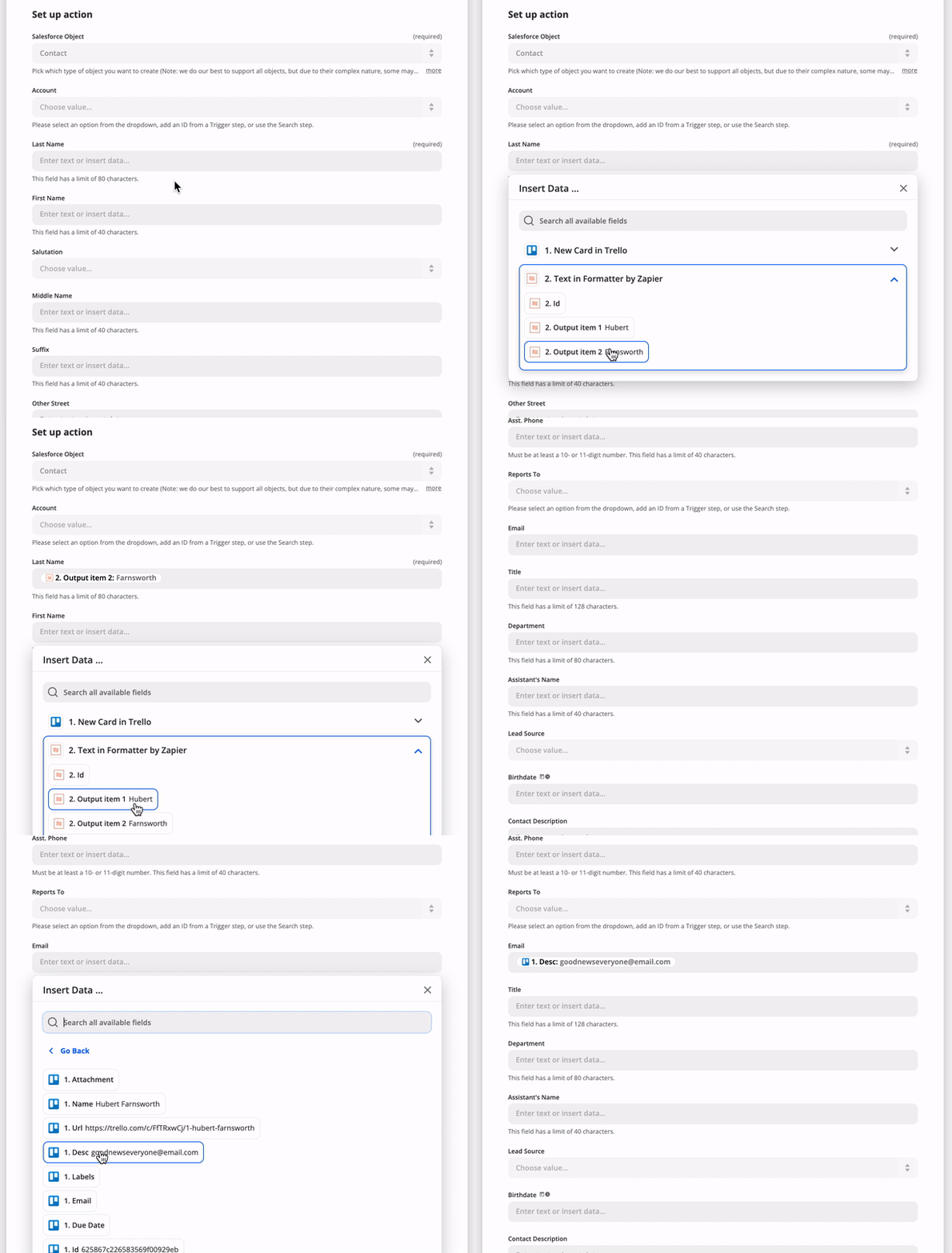
On each trigger, search, or create in the `operation` directive, you can provide fields as an array of objects under `inputFields`. Input Fields are what your users see in Zapier when setting up your app's triggers and actions. For example, you might have a "Create Contact" action with fields like "First name", "Last name", "Email", etc. These fields will be able to accept input from the user, or from previous steps in a Zap. For example:
|
|
557
555
|
|
|
558
556
|
|
|
559
557
|
|
|
560
|
-
You can find more details about setting action fields from a user perspective in [our help documentation](https://zapier.com/help/creating-zap
|
|
558
|
+
You can find more details about setting action fields from a user perspective in [our help documentation](https://zapier.com/help/creating-zap/).
|
|
561
559
|
|
|
562
|
-
Those fields have various options you can provide
|
|
560
|
+
Those fields have various options you can provide. Here is a brief example:
|
|
563
561
|
|
|
564
562
|
```js
|
|
565
563
|
[insert-file:./snippets/fields.js]
|
|
566
564
|
```
|
|
567
565
|
|
|
566
|
+
Notably, fields come in different types, which may look and act differently in the Zap editor. The default field display is a single-line input field.
|
|
567
|
+
|
|
568
|
+
| Type | Behavior |
|
|
569
|
+
|------|----------|
|
|
570
|
+
| `string` | Accepts text input. |
|
|
571
|
+
| `text` | Displays large, `<textarea>`-style entry box, accepts text input. |
|
|
572
|
+
| `code` | Displays large, `<textarea>`-style box with a fixed-width font, accepts text input. |
|
|
573
|
+
| `integer` | Accepts integer number values. |
|
|
574
|
+
| `number` | Accepts any numeric value, including decimal numbers. |
|
|
575
|
+
| `boolean` | Displays dropdown menu offering true and false options. Passes along `true` or `false`. |
|
|
576
|
+
| `datetime` | Accepts both [precise and human-readable date-time values](https://help.zapier.com/hc/en-us/articles/8496259603341-Different-field-types-in-Zaps#date-time-fields-0-0). Passes along an ISO-formatted time string. |
|
|
577
|
+
| `file` | Accepts a file object or a string. If a URL is provided in the string, Zapier will automatically make a GET for that file. Otherwise, a text file will be generated. |
|
|
578
|
+
| `password` | Displays entered characters as hidden, accepts text input. Does not accept input from previous steps. |
|
|
579
|
+
| `copy` | Does not allow users enter data. Shows the value of the Markdown-formatted Help Text for the field as a rich text note in the Zap editor. Good for important notices to users. |
|
|
580
|
+
|
|
568
581
|
You can find more details on the different field schema options at [our Field Schema](https://github.com/zapier/zapier-platform/blob/master/packages/schema/docs/build/schema.md#fieldschema).
|
|
569
582
|
|
|
570
583
|
### Custom/Dynamic Fields
|
|
@@ -751,7 +764,7 @@ We provide several methods off of the `z` object, which is provided as the first
|
|
|
751
764
|
|
|
752
765
|
The available errors are:
|
|
753
766
|
|
|
754
|
-
* `Error` (
|
|
767
|
+
* `Error` (_added in v9.3.0_) - Stops the current operation, allowing for (auto) replay. Read more on [General Errors](#general-errors)
|
|
755
768
|
* `HaltedError` - Stops current operation, but will never turn off Zap. Read more on [Halting Execution](#halting-execution)
|
|
756
769
|
* `ExpiredAuthError` - Turns off Zap and emails user to manually reconnect. Read more on [Stale Authentication Credentials](#stale-authentication-credentials)
|
|
757
770
|
* `RefreshAuthError` - (OAuth2 or Session Auth) Tells Zapier to refresh credentials and retry operation. Read more on [Stale Authentication Credentials](#stale-authentication-credentials)
|
|
@@ -1210,7 +1223,7 @@ Ensure you're handling errors correctly for your platform version. The latest re
|
|
|
1210
1223
|
* `agent`: Node.js `http.Agent` instance, allows custom proxy, certificate etc. Default is `null`.
|
|
1211
1224
|
* `timeout`: request / response timeout in ms. Set to `0` to disable (OS limit still applies), timeout reset on `redirect`. Default is `0` (disabled).
|
|
1212
1225
|
* `size`: maximum response body size in bytes. Set to `0` to disable. Default is `0` (disabled).
|
|
1213
|
-
* `skipThrowForStatus` (
|
|
1226
|
+
* `skipThrowForStatus` (_added in v10.0.0_): don't call `response.throwForStatus()` before resolving the request with `response`. See [HTTP Response Object](#http-response-object).
|
|
1214
1227
|
|
|
1215
1228
|
```js
|
|
1216
1229
|
const response = await z.request({
|
|
@@ -1240,10 +1253,10 @@ The response object returned by `z.request([url], options)` supports the followi
|
|
|
1240
1253
|
|
|
1241
1254
|
* `status`: The response status code, i.e. `200`, `404`, etc.
|
|
1242
1255
|
* `content`: The response content as a String. For Buffer, try `options.raw = true`.
|
|
1243
|
-
* `data` (
|
|
1256
|
+
* `data` (_added in v10.0.0_): The response content as an object if the content is JSON or `application/x-www-form-urlencoded` (`undefined` otherwise).
|
|
1244
1257
|
* `headers`: Response headers object. The header keys are all lower case.
|
|
1245
1258
|
* `getHeader(key)`: Retrieve response header, case insensitive: `response.getHeader('My-Header')`
|
|
1246
|
-
* `skipThrowForStatus` (
|
|
1259
|
+
* `skipThrowForStatus` (_added in v10.0.0_): don't call `throwForStatus()` before resolving the request with this response.
|
|
1247
1260
|
* `throwForStatus()`: Throws an error if `400 <= statusCode < 600`.
|
|
1248
1261
|
* `request`: The original request options object (see above).
|
|
1249
1262
|
|
|
@@ -1336,21 +1349,23 @@ movie.details = {
|
|
|
1336
1349
|
|
|
1337
1350
|
### File Dehydration
|
|
1338
1351
|
|
|
1339
|
-
*
|
|
1352
|
+
*Added in v7.3.0.*
|
|
1340
1353
|
|
|
1341
|
-
The method `z.dehydrateFile(func, inputData)` allows you to download a file lazily. It takes the
|
|
1354
|
+
The method `z.dehydrateFile(func, inputData)` allows you to download a file lazily. It takes the same arguments as `z.dehydrate(func, inputData)` does, but is recommended when the data is a file.
|
|
1342
1355
|
|
|
1343
1356
|
An example can be found in the [Stashing Files](#stashing-files) section.
|
|
1344
1357
|
|
|
1345
|
-
What makes `z.dehydrateFile` different from `z.dehydrate` has to do with efficiency and when Zapier chooses to hydrate data. Knowing which pointers give us back files helps us delay downloading files until
|
|
1358
|
+
What makes `z.dehydrateFile` different from `z.dehydrate` has to do with efficiency and when Zapier chooses to hydrate data. Knowing which pointers give us back files helps us delay downloading files until it's absolutely necessary. Not only will it help avoid unnecessary file downloads, it can also prevent errors if the file has a limited availability. (Stashing files, described below, can also help with that situation.)
|
|
1346
1359
|
|
|
1347
|
-
|
|
1360
|
+
A good example is when users are creating Zaps in the Zap Editor. If a pointer is made by `z.dehydrate`, the Zap Editor will hydrate the data immediately after pulling in samples. This allows users to map fields from the hydrated data into the subsequent steps of the Zap. If, however, the pointer is made by `z.dehydrateFile`, the Zap Editor will wait to hydrate the file, and will display a placeholder instead. There's nothing inside binary file data for users to map in the subsequent steps.
|
|
1361
|
+
|
|
1362
|
+
> `z.dehydrateFile(func, inputData)` was added in v7.3.0. We used to recommend using `z.dehydrate(func, inputData)` for files, but we now recommend changing it to `z.dehydrateFile(func, inputData)` for a better user experience.
|
|
1348
1363
|
|
|
1349
1364
|
## Stashing Files
|
|
1350
1365
|
|
|
1351
1366
|
It can be expensive to download and stream files or they can require complex handshakes to authorize downloads - so we provide a helpful stash routine that will take any `String`, `Buffer` or `Stream` and return a URL file pointer suitable for returning from triggers, searches, creates, etc.
|
|
1352
1367
|
|
|
1353
|
-
The interface `z.stashFile(bufferStringStream, [knownLength], [filename], [contentType])` takes a single required argument - the extra three arguments will be automatically populated in most cases.
|
|
1368
|
+
The interface `z.stashFile(bufferStringStream, [knownLength], [filename], [contentType])` takes a single required argument - the extra three arguments will be automatically populated in most cases. Here's a full example:
|
|
1354
1369
|
|
|
1355
1370
|
```js
|
|
1356
1371
|
const content = 'Hello world!';
|
|
@@ -1381,11 +1396,15 @@ See a full example with dehydration/hydration wired in correctly:
|
|
|
1381
1396
|
|
|
1382
1397
|
## Logging
|
|
1383
1398
|
|
|
1384
|
-
|
|
1399
|
+
To view the logs for your application, use the `zapier logs` command.
|
|
1400
|
+
|
|
1401
|
+
There are three types of logs for a Zapier app:
|
|
1385
1402
|
|
|
1386
|
-
|
|
1403
|
+
* `http`: logged automatically by Zapier on HTTP requests
|
|
1404
|
+
* `bundle`: logged automatically on every method execution
|
|
1405
|
+
* `console`: manual logs via `z.console.log()` statements ([see below for details](#console-logging))
|
|
1387
1406
|
|
|
1388
|
-
For advanced logging options including only displaying the logs for a certain user or app version, look at the help for the logs command:
|
|
1407
|
+
For advanced logging options, including only displaying the logs for a certain user or app version, look at the help for the logs command:
|
|
1389
1408
|
|
|
1390
1409
|
```bash
|
|
1391
1410
|
zapier help logs
|
|
@@ -1399,7 +1418,7 @@ To manually print a log statement in your code, use `z.console.log`:
|
|
|
1399
1418
|
z.console.log('Here are the input fields', bundle.inputData);
|
|
1400
1419
|
```
|
|
1401
1420
|
|
|
1402
|
-
The `z.console` object has all the same methods and works just like the Node.js [`Console`](https://nodejs.org/docs/latest-
|
|
1421
|
+
The `z.console` object has all the same methods and works just like the Node.js [`Console`](https://nodejs.org/docs/latest-v14.x/api/console.html) class - the only difference is we'll log to our distributed datastore and you can view the logs via `zapier logs` (more below).
|
|
1403
1422
|
|
|
1404
1423
|
### Viewing Console Logs
|
|
1405
1424
|
|
|
@@ -1419,7 +1438,7 @@ zapier logs --type=bundle
|
|
|
1419
1438
|
|
|
1420
1439
|
### HTTP Logging
|
|
1421
1440
|
|
|
1422
|
-
If you are using the `z.request()`
|
|
1441
|
+
If you are using [shorthand HTTP requests](#shorthand-http-requests) or the `z.request()` method that we provide, HTTP logging is handled automatically for you. For example:
|
|
1423
1442
|
|
|
1424
1443
|
```js
|
|
1425
1444
|
z.request('https://57b20fb546b57d1100a3c405.mockapi.io/api/recipes')
|
|
@@ -1429,6 +1448,8 @@ z.request('https://57b20fb546b57d1100a3c405.mockapi.io/api/recipes')
|
|
|
1429
1448
|
})
|
|
1430
1449
|
```
|
|
1431
1450
|
|
|
1451
|
+
HTTP logging will often work with other methods of making requests as well, but if you're using another method and having trouble seeing logs, try using `z.request()`.
|
|
1452
|
+
|
|
1432
1453
|
### Viewing HTTP Logs
|
|
1433
1454
|
|
|
1434
1455
|
To see the HTTP logs, do:
|
|
@@ -1436,7 +1457,7 @@ To see the HTTP logs, do:
|
|
|
1436
1457
|
```bash
|
|
1437
1458
|
zapier logs --type=http
|
|
1438
1459
|
```
|
|
1439
|
-
To see detailed
|
|
1460
|
+
To see detailed HTTP logs, including data such as headers and request and response bodies, do:
|
|
1440
1461
|
|
|
1441
1462
|
```bash
|
|
1442
1463
|
zapier logs --type=http --detailed
|
|
@@ -1468,7 +1489,7 @@ errors as 200s with a payload that describes the error.
|
|
|
1468
1489
|
|
|
1469
1490
|
Example: `throw new z.errors.Error('Contact name is too long.', 'InvalidData', 400);`
|
|
1470
1491
|
|
|
1471
|
-
> `z.errors.Error`
|
|
1492
|
+
> `z.errors.Error` was added in v9.3.0. If you're on an older version of `zapier-platform-core`, throw a standard JavaScript `Error` instead, such as `throw new Error('A user-friendly message')`.
|
|
1472
1493
|
|
|
1473
1494
|
A couple best practices to keep in mind:
|
|
1474
1495
|
|
package/README.md
CHANGED
|
@@ -1,11 +1,7 @@
|
|
|
1
1
|
<!-- GENERATED! ONLY EDIT `README-source.md` -->
|
|
2
2
|
|
|
3
3
|
<h1 align="center">
|
|
4
|
-
<
|
|
5
|
-
<source media="(prefers-color-scheme: dark)" srcset="https://cdn.zappy.app/11069978ee4a9b1eeeeb62b11f541b7c.png">
|
|
6
|
-
<source media="(prefers-color-scheme: light)" srcset="https://cdn.zappy.app/2602734341239f1b82ef0ff4ca160430.png">
|
|
7
|
-
<img alt="Zapier Logo" src="https://cdn.zappy.app/2602734341239f1b82ef0ff4ca160430.png" width="300px">
|
|
8
|
-
</picture>
|
|
4
|
+
<img alt="Zapier Logo" src="https://cdn.zappy.app/1cd66b15407db2d9a01fbe8d600772fe.svg" width="300px">
|
|
9
5
|
<br>
|
|
10
6
|
Platform CLI
|
|
11
7
|
<br>
|
|
@@ -26,7 +22,7 @@ You may find docs duplicate or outdated across the Zapier site. The most up-to-d
|
|
|
26
22
|
|
|
27
23
|
Our code is updated frequently. To see a full list of changes, look no further than [the CHANGELOG](https://github.com/zapier/zapier-platform/blob/master/CHANGELOG.md).
|
|
28
24
|
|
|
29
|
-
This doc describes the latest CLI version (**12.2.
|
|
25
|
+
This doc describes the latest CLI version (**12.2.1**), as of this writing. If you're using an older version of the CLI, you may want to check out these historical releases:
|
|
30
26
|
|
|
31
27
|
- CLI Docs: [10.2.0](https://github.com/zapier/zapier-platform/blob/zapier-platform-cli@10.2.0/packages/cli/README.md), [9.6.0](https://github.com/zapier/zapier-platform/blob/zapier-platform-cli@9.6.0/packages/cli/README.md), [8.4.2](https://github.com/zapier/zapier-platform/blob/zapier-platform-cli@8.4.2/packages/cli/README.md)
|
|
32
28
|
- CLI Reference: [10.2.0](https://github.com/zapier/zapier-platform/blob/zapier-platform-cli@10.2.0/packages/cli/docs/cli.md), [9.6.0](https://github.com/zapier/zapier-platform/blob/zapier-platform-cli@9.6.0/packages/cli/docs/cli.md), [8.4.2](https://github.com/zapier/zapier-platform/blob/zapier-platform-cli@8.4.2/packages/cli/docs/cli.md)
|
|
@@ -212,7 +208,7 @@ npm install -g zapier-platform-cli
|
|
|
212
208
|
# setup auth to Zapier's platform with a deploy key
|
|
213
209
|
zapier login
|
|
214
210
|
```
|
|
215
|
-
> Note: If you log into Zapier via the single sign-on (Google, Facebook, or Microsoft), you may not have a Zapier password. If that's the case, you'll need to generate a deploy key, go to [your Zapier developer
|
|
211
|
+
> Note: If you log into Zapier via the single sign-on (Google, Facebook, or Microsoft), you may not have a Zapier password. If that's the case, you'll need to generate a deploy key, go to [your Zapier developer account here](https://zapier.com/developer/partner-settings/deploy-keys/) and create/copy a key, then run ```zapier login``` command with the --sso flag.
|
|
216
212
|
|
|
217
213
|
Your Zapier CLI should be installed and ready to go at this point. Next up, we'll create our first app!
|
|
218
214
|
|
|
@@ -481,7 +477,7 @@ const App = {
|
|
|
481
477
|
|
|
482
478
|
### Digest
|
|
483
479
|
|
|
484
|
-
*
|
|
480
|
+
*Added in v7.4.0.*
|
|
485
481
|
|
|
486
482
|
The setup and user experience of Digest Auth is identical to Basic Auth. Users provide Zapier their username and password, and Zapier handles all the nonce and quality of protection details automatically.
|
|
487
483
|
|
|
@@ -518,7 +514,7 @@ const App = {
|
|
|
518
514
|
|
|
519
515
|
Custom auth is most commonly used for apps that authenticate with API keys, although it also provides flexibility for any unusual authentication setup. You'll likely provide some custom `beforeRequest` middleware or a `requestTemplate` (see [Making HTTP Requests](#making-http-requests)) to pass in data returned from the authentication process, most commonly by adding/computing needed headers.
|
|
520
516
|
|
|
521
|
-
> To create a new integration with custom authentication, run `zapier init [your app name] --custom-auth`. You can also review an example of that code [here](https://github.com/zapier/zapier-platform/tree/master/example-apps/custom-auth).
|
|
517
|
+
> To create a new integration with custom authentication, run `zapier init [your app name] --template custom-auth`. You can also review an example of that code [here](https://github.com/zapier/zapier-platform/tree/master/example-apps/custom-auth).
|
|
522
518
|
|
|
523
519
|
```js
|
|
524
520
|
const authentication = {
|
|
@@ -638,7 +634,7 @@ For Session auth, the function that fetches the additional authentication data n
|
|
|
638
634
|
|
|
639
635
|
### OAuth1
|
|
640
636
|
|
|
641
|
-
*
|
|
637
|
+
*Added in `v7.5.0`.*
|
|
642
638
|
|
|
643
639
|
Zapier's OAuth1 implementation matches [Twitter](https://developer.twitter.com/en/docs/tutorials/authenticating-with-twitter-api-for-enterprise/authentication-method-overview#oauth1.0a) and [Trello](https://developer.atlassian.com/cloud/trello/guides/rest-api/authorization/#using-basic-oauth) implementations of the 3-legged OAuth flow.
|
|
644
640
|
|
|
@@ -867,6 +863,8 @@ For OAuth2, `authentication.oauth2Config.authorizeUrl`, `authentication.oauth2Co
|
|
|
867
863
|
|
|
868
864
|
Also, `authentication.oauth2Config.getAccessToken` has access to the additional return values in `rawRequest` and `cleanedRequest` should you need to extract other values (for example, from the query string).
|
|
869
865
|
|
|
866
|
+
If you define `fields` to collect additional details from the user, please note that `client_id` and `client_secret` are reserved keys and cannot be used as keys for input form fields.
|
|
867
|
+
|
|
870
868
|
### Connection Label
|
|
871
869
|
|
|
872
870
|
When a user connects to your app via Zapier and a connection is created to hold the related data in `bundle.authData`, the connection is automatically labeled with the app name. You also have the option of setting a connection label (`connectionLabel`), which can be extremely helpful to identify information like which user is connected or what instance of your app they are connected to. That way, users don't get confused if they have multiple connections to your app.
|
|
@@ -1049,13 +1047,13 @@ In cases where Zapier needs to show an example record to the user, but we are un
|
|
|
1049
1047
|
|
|
1050
1048
|
## Input Fields
|
|
1051
1049
|
|
|
1052
|
-
On each trigger, search, or create in the `operation` directive
|
|
1050
|
+
On each trigger, search, or create in the `operation` directive, you can provide fields as an array of objects under `inputFields`. Input Fields are what your users see in Zapier when setting up your app's triggers and actions. For example, you might have a "Create Contact" action with fields like "First name", "Last name", "Email", etc. These fields will be able to accept input from the user, or from previous steps in a Zap. For example:
|
|
1053
1051
|
|
|
1054
1052
|

|
|
1055
1053
|
|
|
1056
|
-
You can find more details about setting action fields from a user perspective in [our help documentation](https://zapier.com/help/creating-zap
|
|
1054
|
+
You can find more details about setting action fields from a user perspective in [our help documentation](https://zapier.com/help/creating-zap/).
|
|
1057
1055
|
|
|
1058
|
-
Those fields have various options you can provide
|
|
1056
|
+
Those fields have various options you can provide. Here is a brief example:
|
|
1059
1057
|
|
|
1060
1058
|
```js
|
|
1061
1059
|
const App = {
|
|
@@ -1086,6 +1084,21 @@ const App = {
|
|
|
1086
1084
|
|
|
1087
1085
|
```
|
|
1088
1086
|
|
|
1087
|
+
Notably, fields come in different types, which may look and act differently in the Zap editor. The default field display is a single-line input field.
|
|
1088
|
+
|
|
1089
|
+
| Type | Behavior |
|
|
1090
|
+
|------|----------|
|
|
1091
|
+
| `string` | Accepts text input. |
|
|
1092
|
+
| `text` | Displays large, `<textarea>`-style entry box, accepts text input. |
|
|
1093
|
+
| `code` | Displays large, `<textarea>`-style box with a fixed-width font, accepts text input. |
|
|
1094
|
+
| `integer` | Accepts integer number values. |
|
|
1095
|
+
| `number` | Accepts any numeric value, including decimal numbers. |
|
|
1096
|
+
| `boolean` | Displays dropdown menu offering true and false options. Passes along `true` or `false`. |
|
|
1097
|
+
| `datetime` | Accepts both [precise and human-readable date-time values](https://help.zapier.com/hc/en-us/articles/8496259603341-Different-field-types-in-Zaps#date-time-fields-0-0). Passes along an ISO-formatted time string. |
|
|
1098
|
+
| `file` | Accepts a file object or a string. If a URL is provided in the string, Zapier will automatically make a GET for that file. Otherwise, a text file will be generated. |
|
|
1099
|
+
| `password` | Displays entered characters as hidden, accepts text input. Does not accept input from previous steps. |
|
|
1100
|
+
| `copy` | Does not allow users enter data. Shows the value of the Markdown-formatted Help Text for the field as a rich text note in the Zap editor. Good for important notices to users. |
|
|
1101
|
+
|
|
1089
1102
|
You can find more details on the different field schema options at [our Field Schema](https://github.com/zapier/zapier-platform/blob/master/packages/schema/docs/build/schema.md#fieldschema).
|
|
1090
1103
|
|
|
1091
1104
|
### Custom/Dynamic Fields
|
|
@@ -1662,7 +1675,7 @@ We provide several methods off of the `z` object, which is provided as the first
|
|
|
1662
1675
|
|
|
1663
1676
|
The available errors are:
|
|
1664
1677
|
|
|
1665
|
-
* `Error` (
|
|
1678
|
+
* `Error` (_added in v9.3.0_) - Stops the current operation, allowing for (auto) replay. Read more on [General Errors](#general-errors)
|
|
1666
1679
|
* `HaltedError` - Stops current operation, but will never turn off Zap. Read more on [Halting Execution](#halting-execution)
|
|
1667
1680
|
* `ExpiredAuthError` - Turns off Zap and emails user to manually reconnect. Read more on [Stale Authentication Credentials](#stale-authentication-credentials)
|
|
1668
1681
|
* `RefreshAuthError` - (OAuth2 or Session Auth) Tells Zapier to refresh credentials and retry operation. Read more on [Stale Authentication Credentials](#stale-authentication-credentials)
|
|
@@ -2246,7 +2259,7 @@ This behavior has changed periodically across major versions, which changes how/
|
|
|
2246
2259
|
|
|
2247
2260
|
|
|
2248
2261
|
|
|
2249
|
-
Ensure you're handling errors correctly for your platform version. The latest released version is **12.2.
|
|
2262
|
+
Ensure you're handling errors correctly for your platform version. The latest released version is **12.2.1**.
|
|
2250
2263
|
|
|
2251
2264
|
### HTTP Request Options
|
|
2252
2265
|
|
|
@@ -2266,7 +2279,7 @@ Ensure you're handling errors correctly for your platform version. The latest re
|
|
|
2266
2279
|
* `agent`: Node.js `http.Agent` instance, allows custom proxy, certificate etc. Default is `null`.
|
|
2267
2280
|
* `timeout`: request / response timeout in ms. Set to `0` to disable (OS limit still applies), timeout reset on `redirect`. Default is `0` (disabled).
|
|
2268
2281
|
* `size`: maximum response body size in bytes. Set to `0` to disable. Default is `0` (disabled).
|
|
2269
|
-
* `skipThrowForStatus` (
|
|
2282
|
+
* `skipThrowForStatus` (_added in v10.0.0_): don't call `response.throwForStatus()` before resolving the request with `response`. See [HTTP Response Object](#http-response-object).
|
|
2270
2283
|
|
|
2271
2284
|
```js
|
|
2272
2285
|
const response = await z.request({
|
|
@@ -2296,10 +2309,10 @@ The response object returned by `z.request([url], options)` supports the followi
|
|
|
2296
2309
|
|
|
2297
2310
|
* `status`: The response status code, i.e. `200`, `404`, etc.
|
|
2298
2311
|
* `content`: The response content as a String. For Buffer, try `options.raw = true`.
|
|
2299
|
-
* `data` (
|
|
2312
|
+
* `data` (_added in v10.0.0_): The response content as an object if the content is JSON or `application/x-www-form-urlencoded` (`undefined` otherwise).
|
|
2300
2313
|
* `headers`: Response headers object. The header keys are all lower case.
|
|
2301
2314
|
* `getHeader(key)`: Retrieve response header, case insensitive: `response.getHeader('My-Header')`
|
|
2302
|
-
* `skipThrowForStatus` (
|
|
2315
|
+
* `skipThrowForStatus` (_added in v10.0.0_): don't call `throwForStatus()` before resolving the request with this response.
|
|
2303
2316
|
* `throwForStatus()`: Throws an error if `400 <= statusCode < 600`.
|
|
2304
2317
|
* `request`: The original request options object (see above).
|
|
2305
2318
|
|
|
@@ -2439,21 +2452,23 @@ movie.details = {
|
|
|
2439
2452
|
|
|
2440
2453
|
### File Dehydration
|
|
2441
2454
|
|
|
2442
|
-
*
|
|
2455
|
+
*Added in v7.3.0.*
|
|
2443
2456
|
|
|
2444
|
-
The method `z.dehydrateFile(func, inputData)` allows you to download a file lazily. It takes the
|
|
2457
|
+
The method `z.dehydrateFile(func, inputData)` allows you to download a file lazily. It takes the same arguments as `z.dehydrate(func, inputData)` does, but is recommended when the data is a file.
|
|
2445
2458
|
|
|
2446
2459
|
An example can be found in the [Stashing Files](#stashing-files) section.
|
|
2447
2460
|
|
|
2448
|
-
What makes `z.dehydrateFile` different from `z.dehydrate` has to do with efficiency and when Zapier chooses to hydrate data. Knowing which pointers give us back files helps us delay downloading files until
|
|
2461
|
+
What makes `z.dehydrateFile` different from `z.dehydrate` has to do with efficiency and when Zapier chooses to hydrate data. Knowing which pointers give us back files helps us delay downloading files until it's absolutely necessary. Not only will it help avoid unnecessary file downloads, it can also prevent errors if the file has a limited availability. (Stashing files, described below, can also help with that situation.)
|
|
2449
2462
|
|
|
2450
|
-
|
|
2463
|
+
A good example is when users are creating Zaps in the Zap Editor. If a pointer is made by `z.dehydrate`, the Zap Editor will hydrate the data immediately after pulling in samples. This allows users to map fields from the hydrated data into the subsequent steps of the Zap. If, however, the pointer is made by `z.dehydrateFile`, the Zap Editor will wait to hydrate the file, and will display a placeholder instead. There's nothing inside binary file data for users to map in the subsequent steps.
|
|
2464
|
+
|
|
2465
|
+
> `z.dehydrateFile(func, inputData)` was added in v7.3.0. We used to recommend using `z.dehydrate(func, inputData)` for files, but we now recommend changing it to `z.dehydrateFile(func, inputData)` for a better user experience.
|
|
2451
2466
|
|
|
2452
2467
|
## Stashing Files
|
|
2453
2468
|
|
|
2454
2469
|
It can be expensive to download and stream files or they can require complex handshakes to authorize downloads - so we provide a helpful stash routine that will take any `String`, `Buffer` or `Stream` and return a URL file pointer suitable for returning from triggers, searches, creates, etc.
|
|
2455
2470
|
|
|
2456
|
-
The interface `z.stashFile(bufferStringStream, [knownLength], [filename], [contentType])` takes a single required argument - the extra three arguments will be automatically populated in most cases.
|
|
2471
|
+
The interface `z.stashFile(bufferStringStream, [knownLength], [filename], [contentType])` takes a single required argument - the extra three arguments will be automatically populated in most cases. Here's a full example:
|
|
2457
2472
|
|
|
2458
2473
|
```js
|
|
2459
2474
|
const content = 'Hello world!';
|
|
@@ -2534,11 +2549,15 @@ module.exports = App;
|
|
|
2534
2549
|
|
|
2535
2550
|
## Logging
|
|
2536
2551
|
|
|
2537
|
-
|
|
2552
|
+
To view the logs for your application, use the `zapier logs` command.
|
|
2553
|
+
|
|
2554
|
+
There are three types of logs for a Zapier app:
|
|
2538
2555
|
|
|
2539
|
-
|
|
2556
|
+
* `http`: logged automatically by Zapier on HTTP requests
|
|
2557
|
+
* `bundle`: logged automatically on every method execution
|
|
2558
|
+
* `console`: manual logs via `z.console.log()` statements ([see below for details](#console-logging))
|
|
2540
2559
|
|
|
2541
|
-
For advanced logging options including only displaying the logs for a certain user or app version, look at the help for the logs command:
|
|
2560
|
+
For advanced logging options, including only displaying the logs for a certain user or app version, look at the help for the logs command:
|
|
2542
2561
|
|
|
2543
2562
|
```bash
|
|
2544
2563
|
zapier help logs
|
|
@@ -2552,7 +2571,7 @@ To manually print a log statement in your code, use `z.console.log`:
|
|
|
2552
2571
|
z.console.log('Here are the input fields', bundle.inputData);
|
|
2553
2572
|
```
|
|
2554
2573
|
|
|
2555
|
-
The `z.console` object has all the same methods and works just like the Node.js [`Console`](https://nodejs.org/docs/latest-
|
|
2574
|
+
The `z.console` object has all the same methods and works just like the Node.js [`Console`](https://nodejs.org/docs/latest-v14.x/api/console.html) class - the only difference is we'll log to our distributed datastore and you can view the logs via `zapier logs` (more below).
|
|
2556
2575
|
|
|
2557
2576
|
### Viewing Console Logs
|
|
2558
2577
|
|
|
@@ -2572,7 +2591,7 @@ zapier logs --type=bundle
|
|
|
2572
2591
|
|
|
2573
2592
|
### HTTP Logging
|
|
2574
2593
|
|
|
2575
|
-
If you are using the `z.request()`
|
|
2594
|
+
If you are using [shorthand HTTP requests](#shorthand-http-requests) or the `z.request()` method that we provide, HTTP logging is handled automatically for you. For example:
|
|
2576
2595
|
|
|
2577
2596
|
```js
|
|
2578
2597
|
z.request('https://57b20fb546b57d1100a3c405.mockapi.io/api/recipes')
|
|
@@ -2582,6 +2601,8 @@ z.request('https://57b20fb546b57d1100a3c405.mockapi.io/api/recipes')
|
|
|
2582
2601
|
})
|
|
2583
2602
|
```
|
|
2584
2603
|
|
|
2604
|
+
HTTP logging will often work with other methods of making requests as well, but if you're using another method and having trouble seeing logs, try using `z.request()`.
|
|
2605
|
+
|
|
2585
2606
|
### Viewing HTTP Logs
|
|
2586
2607
|
|
|
2587
2608
|
To see the HTTP logs, do:
|
|
@@ -2589,7 +2610,7 @@ To see the HTTP logs, do:
|
|
|
2589
2610
|
```bash
|
|
2590
2611
|
zapier logs --type=http
|
|
2591
2612
|
```
|
|
2592
|
-
To see detailed
|
|
2613
|
+
To see detailed HTTP logs, including data such as headers and request and response bodies, do:
|
|
2593
2614
|
|
|
2594
2615
|
```bash
|
|
2595
2616
|
zapier logs --type=http --detailed
|
|
@@ -2621,7 +2642,7 @@ errors as 200s with a payload that describes the error.
|
|
|
2621
2642
|
|
|
2622
2643
|
Example: `throw new z.errors.Error('Contact name is too long.', 'InvalidData', 400);`
|
|
2623
2644
|
|
|
2624
|
-
> `z.errors.Error`
|
|
2645
|
+
> `z.errors.Error` was added in v9.3.0. If you're on an older version of `zapier-platform-core`, throw a standard JavaScript `Error` instead, such as `throw new Error('A user-friendly message')`.
|
|
2625
2646
|
|
|
2626
2647
|
A couple best practices to keep in mind:
|
|
2627
2648
|
|
|
@@ -3431,7 +3452,7 @@ Broadly speaking, all releases will continue to work indefinitely. While you nev
|
|
|
3431
3452
|
For more info about which Node versions are supported, see [the faq](#how-do-i-manually-set-the-nodejs-version-to-run-my-app-with).
|
|
3432
3453
|
|
|
3433
3454
|
<!-- TODO: if we decouple releases, change this -->
|
|
3434
|
-
The most recently released version of `cli` and `core` is **12.2.
|
|
3455
|
+
The most recently released version of `cli` and `core` is **12.2.1**. You can see the versions you're working with by running `zapier -v`.
|
|
3435
3456
|
|
|
3436
3457
|
To update `cli`, run `npm install -g zapier-platform-cli`.
|
|
3437
3458
|
|
package/oclif.manifest.json
CHANGED
|
@@ -1 +1 @@
|
|
|
1
|
-
{"version":"12.2.0","commands":{"analytics":{"id":"analytics","description":"Show the status of the analytics that are collected. Also used to change what is collected.","pluginName":"zapier-platform-cli","pluginType":"core","aliases":[],"examples":["zapier analytics --mode enabled"],"flags":{"mode":{"name":"mode","type":"option","char":"m","description":"Choose how much information to share. Anonymous mode drops the OS type and Zapier user id, but keeps command info. Identifying information is used only for debugging purposes.","options":["enabled","anonymous","disabled"]},"debug":{"name":"debug","type":"boolean","char":"d","description":"Show extra debugging output.","allowNo":false},"invokedFromAnotherCommand":{"name":"invokedFromAnotherCommand","type":"boolean","hidden":true,"allowNo":false}},"args":[]},"build":{"id":"build","description":"Build a pushable zip from the current directory.\n\nThis command does the following:\n\n* Creates a temporary folder\n* Copies all code into the temporary folder\n* Adds an entry point: `zapierwrapper.js`\n* Generates and validates app definition.\n* Detects dependencies via browserify (optional, on by default)\n* Zips up all needed `.js` files. If you want to include more files, add a \"includeInBuild\" property (array with strings of regexp paths) to your `.zapierapprc`.\n* Moves the zip to `build/build.zip` and `build/source.zip` and deletes the temp folder\n\nThis command is typically followed by `zapier upload`.","pluginName":"zapier-platform-cli","pluginType":"core","aliases":[],"flags":{"disable-dependency-detection":{"name":"disable-dependency-detection","type":"boolean","description":"Disable \"smart\" file inclusion. By default, Zapier only includes files that are required by `index.js`. If you (or your dependencies) require files dynamically (such as with `require(someVar)`), then you may see \"Cannot find module\" errors. Disabling this may make your `build.zip` too large. If that's the case, try using the `includeInBuild` option in your `.zapierapprc`. See the docs about `includeInBuild` for more info.","allowNo":false},"skip-npm-install":{"name":"skip-npm-install","type":"boolean","description":"Skips installing a fresh copy of npm dependencies on build. Helpful for using `yarn` or local copies of dependencies.","hidden":true,"allowNo":false},"skip-validation":{"name":"skip-validation","type":"boolean","description":"Skips local pre-push validation checks, and remote validation check of the CLI app's schema and AppVersion integrity.","hidden":true,"allowNo":false},"debug":{"name":"debug","type":"boolean","char":"d","description":"Show extra debugging output.","allowNo":false},"invokedFromAnotherCommand":{"name":"invokedFromAnotherCommand","type":"boolean","hidden":true,"allowNo":false}},"args":[]},"convert":{"id":"convert","description":"Convert a Legacy Web Builder app or Visual Builder integration to a CLI integration.\n\nIf you're converting a **Legacy Web Builder** app: the new integration will have a dependency named zapier-platform-legacy-scripting-runner, a shim used to simulate behaviors that are specific to Legacy Web Builder. There could be differences on how the shim simulates and how Legacy Web Builder actually behaves on some edge cases, especially you have custom scripting code.\n\nIf you're converting a **Visual Builder** app, then it will be identical and ready to push and use immediately!\n\nIf you re-run this command on an existing directory it will leave existing files alone and not clobber them.\n\nYou'll need to do a `zapier push` before the new version is visible in the editor, but otherwise you're good to go.","pluginName":"zapier-platform-cli","pluginType":"core","aliases":[],"flags":{"version":{"name":"version","type":"option","char":"v","description":"Convert a specific version. Required when converting a Visual Builder integration."},"debug":{"name":"debug","type":"boolean","char":"d","description":"Show extra debugging output.","allowNo":false},"invokedFromAnotherCommand":{"name":"invokedFromAnotherCommand","type":"boolean","hidden":true,"allowNo":false}},"args":[{"name":"integrationId","description":"To get the integration/app ID, go to \"https://zapier.com/app/developer\", click on an integration, and copy the number directly after \"/app/\" in the URL.","required":true},{"name":"path","description":"Relative to your current path - IE: `.` for current directory.","required":true}]},"deprecate":{"id":"deprecate","description":"Mark a non-production version of your integration as deprecated, with removal by a certain date.\n\nUse this when an integration version will not be supported or start breaking at a known date.\n\nZapier will send an email warning users of the deprecation once a date is set, they'll start seeing it as \"Deprecated\" in the UI, and once the deprecation date arrives, if the Zaps weren't updated, they'll be paused and the users will be emailed again explaining what happened.\n\nAfter the deprecation date has passed it will be safe to delete that integration version.\n\nDo not use this if you have non-breaking changes, such as fixing help text.","pluginName":"zapier-platform-cli","pluginType":"core","aliases":[],"examples":["zapier deprecate 1.2.3 2011-10-01"],"flags":{"debug":{"name":"debug","type":"boolean","char":"d","description":"Show extra debugging output.","allowNo":false},"invokedFromAnotherCommand":{"name":"invokedFromAnotherCommand","type":"boolean","hidden":true,"allowNo":false}},"args":[{"name":"version","description":"The version to deprecate.","required":true},{"name":"date","description":"The date (YYYY-MM-DD) when Zapier will make the specified version unavailable.","required":true}]},"describe":{"id":"describe","description":"Describe the current integration.\n\nThis command prints a human readable enumeration of your integrations's\ntriggers, searches, and creates as seen by Zapier. Useful to understand how your\nresources convert and relate to different actions.\n\n* **Noun**: your action's noun\n* **Label**: your action's label\n* **Resource**: the resource (if any) this action is tied to\n* **Available Methods**: testable methods for this action","pluginName":"zapier-platform-cli","pluginType":"core","aliases":[],"flags":{"format":{"name":"format","type":"option","char":"f","description":"Change the way structured data is presented. If \"json\" or \"raw\", you can pipe the output of the command into other tools, such as jq.","options":["plain","json","raw","row","table"],"default":"table"},"debug":{"name":"debug","type":"boolean","char":"d","description":"Show extra debugging output.","allowNo":false},"invokedFromAnotherCommand":{"name":"invokedFromAnotherCommand","type":"boolean","hidden":true,"allowNo":false}},"args":[]},"history":{"id":"history","description":"Get the history of your integration.\n\nHistory includes all the changes made over the lifetime of your integration. This includes everything from creation, updates, migrations, admins, and invitee changes, as well as who made the change and when.","pluginName":"zapier-platform-cli","pluginType":"core","aliases":[],"flags":{"format":{"name":"format","type":"option","char":"f","description":"Change the way structured data is presented. If \"json\" or \"raw\", you can pipe the output of the command into other tools, such as jq.","options":["plain","json","raw","row","table"],"default":"table"},"debug":{"name":"debug","type":"boolean","char":"d","description":"Show extra debugging output.","allowNo":false},"invokedFromAnotherCommand":{"name":"invokedFromAnotherCommand","type":"boolean","hidden":true,"allowNo":false}},"args":[]},"init":{"id":"init","description":"Initialize a new Zapier integration with a project template.\n\nAfter running this, you'll have a new integration in the specified directory. If you re-run this command on an existing directory, it will prompt before overwriting any existing files.\n\nThis doesn't register or deploy the integration with Zapier - try the `zapier register` and `zapier push` commands for that!","pluginName":"zapier-platform-cli","pluginType":"core","aliases":[],"examples":["zapier init myapp","zapier init ./path/myapp --template oauth2"],"flags":{"template":{"name":"template","type":"option","char":"t","description":"The template to start your integration with.","options":["basic-auth","callback","custom-auth","digest-auth","dynamic-dropdown","files","minimal","oauth1-trello","oauth2","search-or-create","session-auth","typescript"]},"debug":{"name":"debug","type":"boolean","char":"d","description":"Show extra debugging output.","allowNo":false},"invokedFromAnotherCommand":{"name":"invokedFromAnotherCommand","type":"boolean","hidden":true,"allowNo":false}},"args":[{"name":"path","description":"Where to create the new integration. If the directory doesn't exist, it will be created. If the directory isn't empty, we'll ask for confirmation","required":true}]},"integrations":{"id":"integrations","description":"List integrations you have admin access to.\n\nThis command also checks the current directory for a linked integration.","pluginName":"zapier-platform-cli","pluginType":"core","aliases":["apps"],"flags":{"format":{"name":"format","type":"option","char":"f","description":"Change the way structured data is presented. If \"json\" or \"raw\", you can pipe the output of the command into other tools, such as jq.","options":["plain","json","raw","row","table"],"default":"table"},"debug":{"name":"debug","type":"boolean","char":"d","description":"Show extra debugging output.","allowNo":false},"invokedFromAnotherCommand":{"name":"invokedFromAnotherCommand","type":"boolean","hidden":true,"allowNo":false}},"args":[]},"jobs":{"id":"jobs","description":"Lists ongoing migration or promotion jobs for the current integration.\n\nA job represents a background process that will be queued up when users execute a \"migrate\" or \"promote\" command for the current integration.\n\nEach job will be added to the end of a queue of \"promote\" and \"migration\" jobs where the \"Job Stage\" will then be initialized with \"requested\".\n\nJob stages will then move to \"estimating\", \"in_progress\" and finally one of four \"end\" stages: \"complete\", \"aborted\", \"errored\" or \"paused\".\n\nJob times will vary as it depends on the size of the queue and how many users your integration has.\n\nJobs are returned from oldest to newest.\n","pluginName":"zapier-platform-cli","pluginType":"core","aliases":[],"examples":["zapier jobs"],"flags":{"format":{"name":"format","type":"option","char":"f","description":"Change the way structured data is presented. If \"json\" or \"raw\", you can pipe the output of the command into other tools, such as jq.","options":["plain","json","raw","row","table"],"default":"table"},"debug":{"name":"debug","type":"boolean","char":"d","description":"Show extra debugging output.","allowNo":false},"invokedFromAnotherCommand":{"name":"invokedFromAnotherCommand","type":"boolean","hidden":true,"allowNo":false}},"args":[]},"link":{"id":"link","description":"Link the current directory with an existing integration.\n\nThis command generates a `.zapierapprc` file in the directory in which it's ran. This file ties this code to an integration and is referenced frequently during `push` and `validate` operations. This file should be checked into source control.\n\nIf you're starting an integration from scratch, use `zapier init` instead.","pluginName":"zapier-platform-cli","pluginType":"core","aliases":[],"flags":{"debug":{"name":"debug","type":"boolean","char":"d","description":"Show extra debugging output.","allowNo":false},"invokedFromAnotherCommand":{"name":"invokedFromAnotherCommand","type":"boolean","hidden":true,"allowNo":false}},"args":[]},"login":{"id":"login","description":"Configure your `~/.zapierrc` with a deploy key.","pluginName":"zapier-platform-cli","pluginType":"core","aliases":[],"flags":{"sso":{"name":"sso","type":"boolean","char":"s","description":"Use this flag if you log into Zapier a Single Sign-On (SSO) button and don't have a Zapier password.","allowNo":false},"debug":{"name":"debug","type":"boolean","char":"d","description":"Show extra debugging output.","allowNo":false},"invokedFromAnotherCommand":{"name":"invokedFromAnotherCommand","type":"boolean","hidden":true,"allowNo":false}},"args":[]},"logout":{"id":"logout","description":"Deactivate your active deploy key and reset `~/.zapierrc`.","pluginName":"zapier-platform-cli","pluginType":"core","aliases":[],"flags":{"debug":{"name":"debug","type":"boolean","char":"d","description":"Show extra debugging output.","allowNo":false},"invokedFromAnotherCommand":{"name":"invokedFromAnotherCommand","type":"boolean","hidden":true,"allowNo":false}},"args":[]},"logs":{"id":"logs","description":"Print recent logs.\n\nLogs are created when your integration is run as part of a Zap. They come from explicit calls to `z.console.log()`, usage of `z.request()`, and any runtime errors.\n\nThis won't show logs from running locally with `zapier test`, since those never hit our server.","pluginName":"zapier-platform-cli","pluginType":"core","aliases":[],"flags":{"version":{"name":"version","type":"option","char":"v","description":"Filter logs to the specified version."},"status":{"name":"status","type":"option","char":"s","description":"Filter logs to only see errors or successes","options":["any","success","error"],"default":"any"},"type":{"name":"type","type":"option","char":"t","description":"See logs of the specified type","options":["console","bundle","http"],"default":"console"},"detailed":{"name":"detailed","type":"boolean","description":"See extra info, like request/response body and headers.","allowNo":false},"user":{"name":"user","type":"option","char":"u","description":"Only show logs for this user. Defaults to your account.","default":"me"},"limit":{"name":"limit","type":"option","description":"Cap the number of logs returned. Max is 50 (also the default)","default":50},"format":{"name":"format","type":"option","char":"f","description":"Change the way structured data is presented. If \"json\" or \"raw\", you can pipe the output of the command into other tools, such as jq.","options":["plain","json","raw","row","table"],"default":"table"},"debug":{"name":"debug","type":"boolean","char":"d","description":"Show extra debugging output.","allowNo":false},"invokedFromAnotherCommand":{"name":"invokedFromAnotherCommand","type":"boolean","hidden":true,"allowNo":false}},"args":[]},"migrate":{"id":"migrate","description":"Migrate a percentage of users or a single user from one version of your integration to another.\n\nStart a migration to move users between different versions of your integration. You may also \"revert\" by simply swapping the from/to verion strings in the command line arguments (i.e. `zapier migrate 1.0.1 1.0.0`).\n\n**Only use this command to migrate users between non-breaking versions, use `zapier deprecate` if you have breaking changes!**\n\nMigration time varies based on the number of affected Zaps. Be patient and check `zapier jobs` to track the status. Or use `zapier history` if you want to see older jobs.\n\nSince a migration is only for non-breaking changes, users are not emailed about the update/migration. It will be a transparent process for them.\n\nWe recommend migrating a small subset of users first, via the percent argument, then watching error logs of the new version for any sort of odd behavior. When you feel confident there are no bugs, go ahead and migrate everyone. If you see unexpected errors, you can revert.\n\nYou can migrate a specific user's Zaps by using `--user` (i.e. `zapier migrate 1.0.0 1.0.1 --user=user@example.com`). This will migrate Zaps in any account the user is a member of where the following criteria is met.\n\n - The Zap is owned by the user.\n - The Zap is not shared.\n - The integration auth used is not shared.\n\nAlternatively, you can pass the `--account` flag, (i.e. `zapier migrate 1.0.0 1.0.1 --account=account@example.com`). This will migrate all users' Zaps, Private & Shared, within all accounts for which the specified user is a member.\n\n**The `--account` flag should be used cautiously as it can break shared Zaps for other users in Team or Company accounts.**\n\nYou cannot pass both `PERCENT` and `--user` or `--account`.\n\nYou cannot pass both `--user` and `--account`.","pluginName":"zapier-platform-cli","pluginType":"core","aliases":[],"examples":["zapier migrate 1.0.0 1.0.1","zapier migrate 1.0.1 2.0.0 10","zapier migrate 2.0.0 2.0.1 --user=user@example.com","zapier migrate 2.0.0 2.0.1 --account=account@example.com"],"flags":{"user":{"name":"user","type":"option","description":"Migrates all of a users' Private Zaps within all accounts for which the specified user is a member"},"account":{"name":"account","type":"option","description":"Migrates all of a users' Zaps, Private & Shared, within all accounts for which the specified user is a member"},"debug":{"name":"debug","type":"boolean","char":"d","description":"Show extra debugging output.","allowNo":false},"invokedFromAnotherCommand":{"name":"invokedFromAnotherCommand","type":"boolean","hidden":true,"allowNo":false}},"args":[{"name":"fromVersion","description":"The version FROM which to migrate users.","required":true},{"name":"toVersion","description":"The version TO which to migrate users.","required":true},{"name":"percent","description":"Percentage (between 1 and 100) of users to migrate.","default":100}]},"promote":{"id":"promote","description":"Promote a specific version to public access.\n\nPromote an integration version into production (non-private) rotation, which means new users can use this integration version.\n\n* This **does** mark the version as the official public version - all other versions & users are grandfathered.\n* This does **NOT** build/upload or deploy a version to Zapier - you should `zapier push` first.\n* This does **NOT** move old users over to this version - `zapier migrate 1.0.0 1.0.1` does that.\n* This does **NOT** recommend old users stop using this version - `zapier deprecate 1.0.0 2017-01-01` does that.\n\nPromotes are an inherently safe operation for all existing users of your integration.\n\nIf your integration is private and passes our integration checks, this will give you a URL to a form where you can fill in additional information for your integration to go public. After reviewing, the Zapier team will approve to make it public if there are no issues or decline with feedback.\n\nCheck `zapier jobs` to track the status of the promotion. Or use `zapier history` if you want to see older jobs.","pluginName":"zapier-platform-cli","pluginType":"core","aliases":[],"examples":["zapier promote 1.0.0"],"flags":{"yes":{"name":"yes","type":"boolean","char":"y","description":"Automatically answer \"yes\" to any prompts. Useful if you want to avoid interactive prompts to run this command in CI.","allowNo":false},"debug":{"name":"debug","type":"boolean","char":"d","description":"Show extra debugging output.","allowNo":false},"invokedFromAnotherCommand":{"name":"invokedFromAnotherCommand","type":"boolean","hidden":true,"allowNo":false}},"args":[{"name":"version","description":"The version you want to promote.","required":true}]},"push":{"id":"push","description":"Build and upload the current integration.\n\nThis command is the same as running `zapier build` and `zapier upload` in sequence. See those for more info.","pluginName":"zapier-platform-cli","pluginType":"core","aliases":[],"flags":{"disable-dependency-detection":{"name":"disable-dependency-detection","type":"boolean","description":"Disable \"smart\" file inclusion. By default, Zapier only includes files that are required by `index.js`. If you (or your dependencies) require files dynamically (such as with `require(someVar)`), then you may see \"Cannot find module\" errors. Disabling this may make your `build.zip` too large. If that's the case, try using the `includeInBuild` option in your `.zapierapprc`. See the docs about `includeInBuild` for more info.","allowNo":false},"skip-npm-install":{"name":"skip-npm-install","type":"boolean","description":"Skips installing a fresh copy of npm dependencies on build. Helpful for using `yarn` or local copies of dependencies.","hidden":true,"allowNo":false},"skip-validation":{"name":"skip-validation","type":"boolean","description":"Skips local pre-push validation checks, and remote validation check of the CLI app's schema and AppVersion integrity.","hidden":true,"allowNo":false},"debug":{"name":"debug","type":"boolean","char":"d","description":"Show extra debugging output.","allowNo":false},"invokedFromAnotherCommand":{"name":"invokedFromAnotherCommand","type":"boolean","hidden":true,"allowNo":false}},"args":[]},"register":{"id":"register","description":"Register a new integration in your account.\n\nAfter running this, you can run `zapier push` to build and upload your integration for use in the Zapier editor.\n\nThis will change the `./.zapierapprc` (which identifies this directory as holding code for a specific integration).","pluginName":"zapier-platform-cli","pluginType":"core","aliases":[],"examples":["zapier register","zapier register \"My Cool Integration\""],"flags":{"debug":{"name":"debug","type":"boolean","char":"d","description":"Show extra debugging output.","allowNo":false},"invokedFromAnotherCommand":{"name":"invokedFromAnotherCommand","type":"boolean","hidden":true,"allowNo":false}},"args":[{"name":"title","description":"Your integrations's public title. Asked interactively if not present."}]},"scaffold":{"id":"scaffold","description":"Add a starting trigger, create, search, or resource to your integration.\n\nThe first argument should be one of `trigger|search|create|resource` followed by the noun that this will act on (something like \"contact\" or \"deal\").\n\nThe scaffold command does two general things:\n\n* Creates a new file (such as `triggers/contact.js`)\n* Imports and registers it inside your `index.js`\n\nYou can mix and match several options to customize the created scaffold for your project.","pluginName":"zapier-platform-cli","pluginType":"core","aliases":[],"examples":["zapier scaffold trigger contact","zapier scaffold search contact --dest=my_src/searches","zapier scaffold create contact --entry=src/index.js","zapier scaffold resource contact --force"],"flags":{"dest":{"name":"dest","type":"option","char":"d","description":"Specify the new file's directory. Use this flag when you want to create a different folder structure such as `src/triggers` instead of the default `triggers`. Defaults to `[triggers|searches|creates]/{noun}`."},"test-dest":{"name":"test-dest","type":"option","description":"Specify the new test file's directory. Use this flag when you want to create a different folder structure such as `src/triggers` instead of the default `triggers`. Defaults to `test/[triggers|searches|creates]/{noun}`."},"entry":{"name":"entry","type":"option","char":"e","description":"Supply the path to your integration's root (`index.js`). Only needed if your `index.js` is in a subfolder, like `src`.","default":"index.js"},"force":{"name":"force","type":"boolean","char":"f","description":"Should we overwrite an exisiting trigger/search/create file?","allowNo":false},"no-help":{"name":"no-help","type":"boolean","description":"When scaffolding, should we skip adding helpful intro comments? Useful if this isn't your first rodeo.","allowNo":false},"debug":{"name":"debug","type":"boolean","char":"d","description":"Show extra debugging output.","allowNo":false},"invokedFromAnotherCommand":{"name":"invokedFromAnotherCommand","type":"boolean","hidden":true,"allowNo":false}},"args":[{"name":"actionType","required":true,"options":["trigger","search","create","resource"]},{"name":"noun","required":true}]},"test":{"id":"test","description":"Test your integration via the \"test\" script in your \"package.json\".\n\nThis command is a wrapper around `npm test` that also validates the structure of your integration and sets up extra environment variables.\n\nYou can pass any args/flags after a `--`; they will get forwarded onto your test script.","pluginName":"zapier-platform-cli","pluginType":"core","aliases":[],"examples":["zapier test","zapier test --skip-validate -- -t 30000 --grep api","zapier test -- -fo --testNamePattern \"auth pass\""],"flags":{"skip-validate":{"name":"skip-validate","type":"boolean","description":"Forgo running `zapier validate` before tests are run. This will speed up tests if you're modifying functionality of an existing integration rather than adding new actions.","allowNo":false},"yarn":{"name":"yarn","type":"boolean","description":"Use `yarn` instead of `npm`. This happens automatically if there's a `yarn.lock` file, but you can manually force `yarn` if you run tests from a sub-directory.","allowNo":false},"pnpm":{"name":"pnpm","type":"boolean","description":"Use `pnpm` instead of `npm`. This happens automatically if there's a `pnpm-lock.yaml` file, but you can manually force `pnpm` if you run tests from a sub-directory.","allowNo":false},"debug":{"name":"debug","type":"boolean","char":"d","description":"Show extra debugging output.","allowNo":false},"invokedFromAnotherCommand":{"name":"invokedFromAnotherCommand","type":"boolean","hidden":true,"allowNo":false}},"args":[]},"upload":{"id":"upload","description":"Upload the latest build of your integration to Zapier.\n\nThis command sends both build/build.zip and build/source.zip to Zapier for use.\n\nTypically we recommend using `zapier push`, which does a build and upload, rather than `upload` by itself.\n","pluginName":"zapier-platform-cli","pluginType":"core","aliases":[],"flags":{"debug":{"name":"debug","type":"boolean","char":"d","description":"Show extra debugging output.","allowNo":false},"invokedFromAnotherCommand":{"name":"invokedFromAnotherCommand","type":"boolean","hidden":true,"allowNo":false}},"args":[]},"validate":{"id":"validate","description":"Validate your integration.\n\nRun the standard validation routine powered by json-schema that checks your integration for any structural errors. This is the same routine that runs during `zapier build`, `zapier upload`, `zapier push` or even as a test in `zapier test`.","pluginName":"zapier-platform-cli","pluginType":"core","aliases":[],"examples":["zapier validate","zapier validate --without-style","zapier validate --format json"],"flags":{"without-style":{"name":"without-style","type":"boolean","description":"Forgo pinging the Zapier server to run further checks.","allowNo":false},"format":{"name":"format","type":"option","char":"f","description":"Change the way structured data is presented. If \"json\" or \"raw\", you can pipe the output of the command into other tools, such as jq.","options":["plain","json","raw","row","table"],"default":"table"},"debug":{"name":"debug","type":"boolean","char":"d","description":"Show extra debugging output.","allowNo":false},"invokedFromAnotherCommand":{"name":"invokedFromAnotherCommand","type":"boolean","hidden":true,"allowNo":false}},"args":[]},"versions":{"id":"versions","description":"List the versions of your integration available for use in the Zapier editor.","pluginName":"zapier-platform-cli","pluginType":"core","aliases":[],"flags":{"format":{"name":"format","type":"option","char":"f","description":"Change the way structured data is presented. If \"json\" or \"raw\", you can pipe the output of the command into other tools, such as jq.","options":["plain","json","raw","row","table"],"default":"table"},"debug":{"name":"debug","type":"boolean","char":"d","description":"Show extra debugging output.","allowNo":false},"invokedFromAnotherCommand":{"name":"invokedFromAnotherCommand","type":"boolean","hidden":true,"allowNo":false}},"args":[]},"delete:integration":{"id":"delete:integration","description":"Delete your integration (including all versions).\n\nThis only works if there are no active users or Zaps on any version. If you only want to delete certain versions, use the `zapier delete:version` command instead. It's unlikely that you'll be able to run this on an app that you've pushed publicly, since there are usually still users.","pluginName":"zapier-platform-cli","pluginType":"core","aliases":["delete:app"],"flags":{"debug":{"name":"debug","type":"boolean","char":"d","description":"Show extra debugging output.","allowNo":false},"invokedFromAnotherCommand":{"name":"invokedFromAnotherCommand","type":"boolean","hidden":true,"allowNo":false}},"args":[]},"delete:version":{"id":"delete:version","description":"Delete a specific version of your integration.\n\nThis only works if there are no users or Zaps on that version. You will probably need to have run `zapier migrate` and `zapier deprecate` before this command will work.","pluginName":"zapier-platform-cli","pluginType":"core","aliases":[],"flags":{"debug":{"name":"debug","type":"boolean","char":"d","description":"Show extra debugging output.","allowNo":false},"invokedFromAnotherCommand":{"name":"invokedFromAnotherCommand","type":"boolean","hidden":true,"allowNo":false}},"args":[{"name":"version","description":"Specify the version to delete. It must have no users or Zaps.","required":true}]},"env:get":{"id":"env:get","description":"Get environment variables for a version.","pluginName":"zapier-platform-cli","pluginType":"core","aliases":[],"examples":["zapier env:get 1.2.3"],"flags":{"format":{"name":"format","type":"option","char":"f","description":"Change the way structured data is presented. If \"json\" or \"raw\", you can pipe the output of the command into other tools, such as jq.","options":["plain","json","raw","row","table"],"default":"table"},"debug":{"name":"debug","type":"boolean","char":"d","description":"Show extra debugging output.","allowNo":false},"invokedFromAnotherCommand":{"name":"invokedFromAnotherCommand","type":"boolean","hidden":true,"allowNo":false}},"args":[{"name":"version","description":"The version to get the environment for.","required":true}]},"env:set":{"id":"env:set","description":"Set environment variables for a version.","pluginName":"zapier-platform-cli","pluginType":"core","aliases":[],"examples":["zapier env:set 1.2.3 SECRET=12345 OTHER=4321"],"flags":{"debug":{"name":"debug","type":"boolean","char":"d","description":"Show extra debugging output.","allowNo":false},"invokedFromAnotherCommand":{"name":"invokedFromAnotherCommand","type":"boolean","hidden":true,"allowNo":false}},"args":[{"name":"version","description":"The version to set the environment for. Values are copied forward when a new version is created, but this command will only ever affect the specified version.","required":true},{"name":"key-value pairs...","description":"The key-value pairs to set. Keys are case-insensitive. Each pair should be space separated and pairs should be separated by an `=`. For example: `A=123 B=456`"}]},"env:unset":{"id":"env:unset","description":"Unset environment variables for a version.","pluginName":"zapier-platform-cli","pluginType":"core","aliases":[],"examples":["zapier env:unset 1.2.3 SECRET OTHER"],"flags":{"debug":{"name":"debug","type":"boolean","char":"d","description":"Show extra debugging output.","allowNo":false},"invokedFromAnotherCommand":{"name":"invokedFromAnotherCommand","type":"boolean","hidden":true,"allowNo":false}},"args":[{"name":"version","description":"The version to set the environment for.","required":true},{"name":"keys...","description":"The keys to unset. Keys are case-insensitive."}]},"team:add":{"id":"team:add","description":"Add a team member to your integration.\n\nThese users come in three levels:\n\n * `admin`, who can edit everything about the integration\n * `collaborator`, who has read-only access for the app, and will receive periodic email updates. These updates include quarterly health scores and more.\n * `subscriber`, who can't directly access the app, but will receive periodic email updates. These updates include quarterly health scores and more.\n\nTeam members can be freely added and removed.","pluginName":"zapier-platform-cli","pluginType":"core","aliases":["team:invite"],"examples":["zapier team:add bruce@wayne.com admin","zapier team:add robin@wayne.com collaborator \"Hey Robin, check out this app.\"","zapier team:add alfred@wayne.com subscriber \"Hey Alfred, check out this app.\""],"flags":{"debug":{"name":"debug","type":"boolean","char":"d","description":"Show extra debugging output.","allowNo":false},"invokedFromAnotherCommand":{"name":"invokedFromAnotherCommand","type":"boolean","hidden":true,"allowNo":false}},"args":[{"name":"email","description":"The user to be invited. If they don't have a Zapier account, they'll be prompted to create one.","required":true},{"name":"role","description":"The level the invited team member should be at. Admins can edit everything and get email updates. Collaborators have read-access to the app and get email updates. Subscribers only get email updates.","required":true,"options":["admin","collaborator","subscriber"]},{"name":"message","description":"A message sent in the email to your team member, if you need to provide context. Wrap the message in quotes to ensure spaces get saved."}]},"team:get":{"id":"team:get","description":"Get team members involved with your integration.\n\nThese users come in three levels:\n\n * `admin`, who can edit everything about the integration\n * `collaborator`, who has read-only access for the app, and will receive periodic email updates. These updates include quarterly health scores and more.\n * `subscriber`, who can't directly access the app, but will receive periodic email updates. These updates include quarterly health scores and more.\n\nUse the `zapier team:add` and `zapier team:remove` commands to modify your team.\n","pluginName":"zapier-platform-cli","pluginType":"core","aliases":["team:list"],"flags":{"format":{"name":"format","type":"option","char":"f","description":"Change the way structured data is presented. If \"json\" or \"raw\", you can pipe the output of the command into other tools, such as jq.","options":["plain","json","raw","row","table"],"default":"table"},"debug":{"name":"debug","type":"boolean","char":"d","description":"Show extra debugging output.","allowNo":false},"invokedFromAnotherCommand":{"name":"invokedFromAnotherCommand","type":"boolean","hidden":true,"allowNo":false}},"args":[]},"team:remove":{"id":"team:remove","description":"Remove a team member from all versions of your integration.\n\nAdmins will immediately lose write access to the integration.\nCollaborators will immediately lose read access to the integration.\nSubscribers won't receive future email updates.","pluginName":"zapier-platform-cli","pluginType":"core","aliases":["team:delete"],"flags":{"debug":{"name":"debug","type":"boolean","char":"d","description":"Show extra debugging output.","allowNo":false},"invokedFromAnotherCommand":{"name":"invokedFromAnotherCommand","type":"boolean","hidden":true,"allowNo":false}},"args":[]},"users:add":{"id":"users:add","description":"Add a user to some or all versions of your integration.\n\nWhen this command is run, we'll send an email to the user inviting them to try your integration. You can track the status of that invite using the `zapier users:get` command.\n\nInvited users will be able to see your integration's name, logo, and description. They'll also be able to create Zaps using any available triggers and actions.","pluginName":"zapier-platform-cli","pluginType":"core","aliases":["users:invite"],"examples":["zapier users:add bruce@wayne.com","zapier users:add alfred@wayne.com 1.2.3"],"flags":{"force":{"name":"force","type":"boolean","char":"f","description":"Skip confirmation. Useful for running programatically.","allowNo":false},"debug":{"name":"debug","type":"boolean","char":"d","description":"Show extra debugging output.","allowNo":false},"invokedFromAnotherCommand":{"name":"invokedFromAnotherCommand","type":"boolean","hidden":true,"allowNo":false}},"args":[{"name":"email","description":"The user to be invited. If they don't have a Zapier account, they'll be prompted to create one.","required":true},{"name":"version","description":"A version string (like 1.2.3). Optional, used only if you want to invite a user to a specific version instead of all versions."}]},"users:get":{"id":"users:get","description":"Get a list of users who have been invited to your integration.\n\nNote that this list of users is NOT a comprehensive list of everyone who is using your integration. It only includes users who were invited directly by email (using the `\u001b[36mzapier users:add\u001b[39m` command or the web UI). Users who joined by clicking links generated using the `\u001b[36mzapier user:links\u001b[39m` command won't show up here.","pluginName":"zapier-platform-cli","pluginType":"core","aliases":["users:list"],"flags":{"format":{"name":"format","type":"option","char":"f","description":"Change the way structured data is presented. If \"json\" or \"raw\", you can pipe the output of the command into other tools, such as jq.","options":["plain","json","raw","row","table"],"default":"table"},"debug":{"name":"debug","type":"boolean","char":"d","description":"Show extra debugging output.","allowNo":false},"invokedFromAnotherCommand":{"name":"invokedFromAnotherCommand","type":"boolean","hidden":true,"allowNo":false}},"args":[]},"users:links":{"id":"users:links","description":"Get a list of links that are used to invite users to your integration.","pluginName":"zapier-platform-cli","pluginType":"core","aliases":[],"flags":{"format":{"name":"format","type":"option","char":"f","description":"Change the way structured data is presented. If \"json\" or \"raw\", you can pipe the output of the command into other tools, such as jq.","options":["plain","json","raw","row","table"],"default":"table"},"debug":{"name":"debug","type":"boolean","char":"d","description":"Show extra debugging output.","allowNo":false},"invokedFromAnotherCommand":{"name":"invokedFromAnotherCommand","type":"boolean","hidden":true,"allowNo":false}},"args":[]},"users:remove":{"id":"users:remove","description":"Remove a user from all versions of your integration.\n\nWhen this command is run, their Zaps will immediately turn off. They won't be able to use your app again until they're re-invited or it has gone public. In practice, this command isn't run often as it's very disruptive to users.","pluginName":"zapier-platform-cli","pluginType":"core","aliases":["users:delete"],"flags":{"force":{"name":"force","type":"boolean","char":"f","description":"Skips confirmation. Useful for running programatically.","allowNo":false},"debug":{"name":"debug","type":"boolean","char":"d","description":"Show extra debugging output.","allowNo":false},"invokedFromAnotherCommand":{"name":"invokedFromAnotherCommand","type":"boolean","hidden":true,"allowNo":false}},"args":[{"name":"email","description":"The user to be removed.","required":true}]}}}
|
|
1
|
+
{"version":"12.2.1","commands":{"analytics":{"id":"analytics","description":"Show the status of the analytics that are collected. Also used to change what is collected.","pluginName":"zapier-platform-cli","pluginType":"core","aliases":[],"examples":["zapier analytics --mode enabled"],"flags":{"mode":{"name":"mode","type":"option","char":"m","description":"Choose how much information to share. Anonymous mode drops the OS type and Zapier user id, but keeps command info. Identifying information is used only for debugging purposes.","options":["enabled","anonymous","disabled"]},"debug":{"name":"debug","type":"boolean","char":"d","description":"Show extra debugging output.","allowNo":false},"invokedFromAnotherCommand":{"name":"invokedFromAnotherCommand","type":"boolean","hidden":true,"allowNo":false}},"args":[]},"build":{"id":"build","description":"Build a pushable zip from the current directory.\n\nThis command does the following:\n\n* Creates a temporary folder\n* Copies all code into the temporary folder\n* Adds an entry point: `zapierwrapper.js`\n* Generates and validates app definition.\n* Detects dependencies via browserify (optional, on by default)\n* Zips up all needed `.js` files. If you want to include more files, add a \"includeInBuild\" property (array with strings of regexp paths) to your `.zapierapprc`.\n* Moves the zip to `build/build.zip` and `build/source.zip` and deletes the temp folder\n\nThis command is typically followed by `zapier upload`.","pluginName":"zapier-platform-cli","pluginType":"core","aliases":[],"flags":{"disable-dependency-detection":{"name":"disable-dependency-detection","type":"boolean","description":"Disable \"smart\" file inclusion. By default, Zapier only includes files that are required by `index.js`. If you (or your dependencies) require files dynamically (such as with `require(someVar)`), then you may see \"Cannot find module\" errors. Disabling this may make your `build.zip` too large. If that's the case, try using the `includeInBuild` option in your `.zapierapprc`. See the docs about `includeInBuild` for more info.","allowNo":false},"skip-npm-install":{"name":"skip-npm-install","type":"boolean","description":"Skips installing a fresh copy of npm dependencies on build. Helpful for using `yarn` or local copies of dependencies.","hidden":true,"allowNo":false},"skip-validation":{"name":"skip-validation","type":"boolean","description":"Skips local pre-push validation checks, and remote validation check of the CLI app's schema and AppVersion integrity.","hidden":true,"allowNo":false},"debug":{"name":"debug","type":"boolean","char":"d","description":"Show extra debugging output.","allowNo":false},"invokedFromAnotherCommand":{"name":"invokedFromAnotherCommand","type":"boolean","hidden":true,"allowNo":false}},"args":[]},"convert":{"id":"convert","description":"Convert a Legacy Web Builder app or Visual Builder integration to a CLI integration.\n\nIf you're converting a **Legacy Web Builder** app: the new integration will have a dependency named zapier-platform-legacy-scripting-runner, a shim used to simulate behaviors that are specific to Legacy Web Builder. There could be differences on how the shim simulates and how Legacy Web Builder actually behaves on some edge cases, especially you have custom scripting code.\n\nIf you're converting a **Visual Builder** app, then it will be identical and ready to push and use immediately!\n\nIf you re-run this command on an existing directory it will leave existing files alone and not clobber them.\n\nYou'll need to do a `zapier push` before the new version is visible in the editor, but otherwise you're good to go.","pluginName":"zapier-platform-cli","pluginType":"core","aliases":[],"flags":{"version":{"name":"version","type":"option","char":"v","description":"Convert a specific version. Required when converting a Visual Builder integration."},"debug":{"name":"debug","type":"boolean","char":"d","description":"Show extra debugging output.","allowNo":false},"invokedFromAnotherCommand":{"name":"invokedFromAnotherCommand","type":"boolean","hidden":true,"allowNo":false}},"args":[{"name":"integrationId","description":"To get the integration/app ID, go to \"https://zapier.com/app/developer\", click on an integration, and copy the number directly after \"/app/\" in the URL.","required":true},{"name":"path","description":"Relative to your current path - IE: `.` for current directory.","required":true}]},"deprecate":{"id":"deprecate","description":"Mark a non-production version of your integration as deprecated, with removal by a certain date.\n\nUse this when an integration version will not be supported or start breaking at a known date.\n\nZapier will send an email warning users of the deprecation once a date is set, they'll start seeing it as \"Deprecated\" in the UI, and once the deprecation date arrives, if the Zaps weren't updated, they'll be paused and the users will be emailed again explaining what happened.\n\nAfter the deprecation date has passed it will be safe to delete that integration version.\n\nDo not use this if you have non-breaking changes, such as fixing help text.","pluginName":"zapier-platform-cli","pluginType":"core","aliases":[],"examples":["zapier deprecate 1.2.3 2011-10-01"],"flags":{"debug":{"name":"debug","type":"boolean","char":"d","description":"Show extra debugging output.","allowNo":false},"invokedFromAnotherCommand":{"name":"invokedFromAnotherCommand","type":"boolean","hidden":true,"allowNo":false}},"args":[{"name":"version","description":"The version to deprecate.","required":true},{"name":"date","description":"The date (YYYY-MM-DD) when Zapier will make the specified version unavailable.","required":true}]},"describe":{"id":"describe","description":"Describe the current integration.\n\nThis command prints a human readable enumeration of your integrations's\ntriggers, searches, and creates as seen by Zapier. Useful to understand how your\nresources convert and relate to different actions.\n\n* **Noun**: your action's noun\n* **Label**: your action's label\n* **Resource**: the resource (if any) this action is tied to\n* **Available Methods**: testable methods for this action","pluginName":"zapier-platform-cli","pluginType":"core","aliases":[],"flags":{"format":{"name":"format","type":"option","char":"f","description":"Change the way structured data is presented. If \"json\" or \"raw\", you can pipe the output of the command into other tools, such as jq.","options":["plain","json","raw","row","table"],"default":"table"},"debug":{"name":"debug","type":"boolean","char":"d","description":"Show extra debugging output.","allowNo":false},"invokedFromAnotherCommand":{"name":"invokedFromAnotherCommand","type":"boolean","hidden":true,"allowNo":false}},"args":[]},"history":{"id":"history","description":"Get the history of your integration.\n\nHistory includes all the changes made over the lifetime of your integration. This includes everything from creation, updates, migrations, admins, and invitee changes, as well as who made the change and when.","pluginName":"zapier-platform-cli","pluginType":"core","aliases":[],"flags":{"format":{"name":"format","type":"option","char":"f","description":"Change the way structured data is presented. If \"json\" or \"raw\", you can pipe the output of the command into other tools, such as jq.","options":["plain","json","raw","row","table"],"default":"table"},"debug":{"name":"debug","type":"boolean","char":"d","description":"Show extra debugging output.","allowNo":false},"invokedFromAnotherCommand":{"name":"invokedFromAnotherCommand","type":"boolean","hidden":true,"allowNo":false}},"args":[]},"init":{"id":"init","description":"Initialize a new Zapier integration with a project template.\n\nAfter running this, you'll have a new integration in the specified directory. If you re-run this command on an existing directory, it will prompt before overwriting any existing files.\n\nThis doesn't register or deploy the integration with Zapier - try the `zapier register` and `zapier push` commands for that!","pluginName":"zapier-platform-cli","pluginType":"core","aliases":[],"examples":["zapier init myapp","zapier init ./path/myapp --template oauth2"],"flags":{"template":{"name":"template","type":"option","char":"t","description":"The template to start your integration with.","options":["basic-auth","callback","custom-auth","digest-auth","dynamic-dropdown","files","minimal","oauth1-trello","oauth2","search-or-create","session-auth","typescript"]},"debug":{"name":"debug","type":"boolean","char":"d","description":"Show extra debugging output.","allowNo":false},"invokedFromAnotherCommand":{"name":"invokedFromAnotherCommand","type":"boolean","hidden":true,"allowNo":false}},"args":[{"name":"path","description":"Where to create the new integration. If the directory doesn't exist, it will be created. If the directory isn't empty, we'll ask for confirmation","required":true}]},"integrations":{"id":"integrations","description":"List integrations you have admin access to.\n\nThis command also checks the current directory for a linked integration.","pluginName":"zapier-platform-cli","pluginType":"core","aliases":["apps"],"flags":{"format":{"name":"format","type":"option","char":"f","description":"Change the way structured data is presented. If \"json\" or \"raw\", you can pipe the output of the command into other tools, such as jq.","options":["plain","json","raw","row","table"],"default":"table"},"debug":{"name":"debug","type":"boolean","char":"d","description":"Show extra debugging output.","allowNo":false},"invokedFromAnotherCommand":{"name":"invokedFromAnotherCommand","type":"boolean","hidden":true,"allowNo":false}},"args":[]},"jobs":{"id":"jobs","description":"Lists ongoing migration or promotion jobs for the current integration.\n\nA job represents a background process that will be queued up when users execute a \"migrate\" or \"promote\" command for the current integration.\n\nEach job will be added to the end of a queue of \"promote\" and \"migration\" jobs where the \"Job Stage\" will then be initialized with \"requested\".\n\nJob stages will then move to \"estimating\", \"in_progress\" and finally one of four \"end\" stages: \"complete\", \"aborted\", \"errored\" or \"paused\".\n\nJob times will vary as it depends on the size of the queue and how many users your integration has.\n\nJobs are returned from oldest to newest.\n","pluginName":"zapier-platform-cli","pluginType":"core","aliases":[],"examples":["zapier jobs"],"flags":{"format":{"name":"format","type":"option","char":"f","description":"Change the way structured data is presented. If \"json\" or \"raw\", you can pipe the output of the command into other tools, such as jq.","options":["plain","json","raw","row","table"],"default":"table"},"debug":{"name":"debug","type":"boolean","char":"d","description":"Show extra debugging output.","allowNo":false},"invokedFromAnotherCommand":{"name":"invokedFromAnotherCommand","type":"boolean","hidden":true,"allowNo":false}},"args":[]},"link":{"id":"link","description":"Link the current directory with an existing integration.\n\nThis command generates a `.zapierapprc` file in the directory in which it's ran. This file ties this code to an integration and is referenced frequently during `push` and `validate` operations. This file should be checked into source control.\n\nIf you're starting an integration from scratch, use `zapier init` instead.","pluginName":"zapier-platform-cli","pluginType":"core","aliases":[],"flags":{"debug":{"name":"debug","type":"boolean","char":"d","description":"Show extra debugging output.","allowNo":false},"invokedFromAnotherCommand":{"name":"invokedFromAnotherCommand","type":"boolean","hidden":true,"allowNo":false}},"args":[]},"login":{"id":"login","description":"Configure your `~/.zapierrc` with a deploy key.","pluginName":"zapier-platform-cli","pluginType":"core","aliases":[],"flags":{"sso":{"name":"sso","type":"boolean","char":"s","description":"Use this flag if you log into Zapier a Single Sign-On (SSO) button and don't have a Zapier password.","allowNo":false},"debug":{"name":"debug","type":"boolean","char":"d","description":"Show extra debugging output.","allowNo":false},"invokedFromAnotherCommand":{"name":"invokedFromAnotherCommand","type":"boolean","hidden":true,"allowNo":false}},"args":[]},"logout":{"id":"logout","description":"Deactivate your active deploy key and reset `~/.zapierrc`.","pluginName":"zapier-platform-cli","pluginType":"core","aliases":[],"flags":{"debug":{"name":"debug","type":"boolean","char":"d","description":"Show extra debugging output.","allowNo":false},"invokedFromAnotherCommand":{"name":"invokedFromAnotherCommand","type":"boolean","hidden":true,"allowNo":false}},"args":[]},"logs":{"id":"logs","description":"Print recent logs.\n\nLogs are created when your integration is run as part of a Zap. They come from explicit calls to `z.console.log()`, usage of `z.request()`, and any runtime errors.\n\nThis won't show logs from running locally with `zapier test`, since those never hit our server.","pluginName":"zapier-platform-cli","pluginType":"core","aliases":[],"flags":{"version":{"name":"version","type":"option","char":"v","description":"Filter logs to the specified version."},"status":{"name":"status","type":"option","char":"s","description":"Filter logs to only see errors or successes","options":["any","success","error"],"default":"any"},"type":{"name":"type","type":"option","char":"t","description":"See logs of the specified type","options":["console","bundle","http"],"default":"console"},"detailed":{"name":"detailed","type":"boolean","description":"See extra info, like request/response body and headers.","allowNo":false},"user":{"name":"user","type":"option","char":"u","description":"Only show logs for this user. Defaults to your account.","default":"me"},"limit":{"name":"limit","type":"option","description":"Cap the number of logs returned. Max is 50 (also the default)","default":50},"format":{"name":"format","type":"option","char":"f","description":"Change the way structured data is presented. If \"json\" or \"raw\", you can pipe the output of the command into other tools, such as jq.","options":["plain","json","raw","row","table"],"default":"table"},"debug":{"name":"debug","type":"boolean","char":"d","description":"Show extra debugging output.","allowNo":false},"invokedFromAnotherCommand":{"name":"invokedFromAnotherCommand","type":"boolean","hidden":true,"allowNo":false}},"args":[]},"migrate":{"id":"migrate","description":"Migrate a percentage of users or a single user from one version of your integration to another.\n\nStart a migration to move users between different versions of your integration. You may also \"revert\" by simply swapping the from/to verion strings in the command line arguments (i.e. `zapier migrate 1.0.1 1.0.0`).\n\n**Only use this command to migrate users between non-breaking versions, use `zapier deprecate` if you have breaking changes!**\n\nMigration time varies based on the number of affected Zaps. Be patient and check `zapier jobs` to track the status. Or use `zapier history` if you want to see older jobs.\n\nSince a migration is only for non-breaking changes, users are not emailed about the update/migration. It will be a transparent process for them.\n\nWe recommend migrating a small subset of users first, via the percent argument, then watching error logs of the new version for any sort of odd behavior. When you feel confident there are no bugs, go ahead and migrate everyone. If you see unexpected errors, you can revert.\n\nYou can migrate a specific user's Zaps by using `--user` (i.e. `zapier migrate 1.0.0 1.0.1 --user=user@example.com`). This will migrate Zaps in any account the user is a member of where the following criteria is met.\n\n - The Zap is owned by the user.\n - The Zap is not shared.\n - The integration auth used is not shared.\n\nAlternatively, you can pass the `--account` flag, (i.e. `zapier migrate 1.0.0 1.0.1 --account=account@example.com`). This will migrate all users' Zaps, Private & Shared, within all accounts for which the specified user is a member.\n\n**The `--account` flag should be used cautiously as it can break shared Zaps for other users in Team or Company accounts.**\n\nYou cannot pass both `PERCENT` and `--user` or `--account`.\n\nYou cannot pass both `--user` and `--account`.","pluginName":"zapier-platform-cli","pluginType":"core","aliases":[],"examples":["zapier migrate 1.0.0 1.0.1","zapier migrate 1.0.1 2.0.0 10","zapier migrate 2.0.0 2.0.1 --user=user@example.com","zapier migrate 2.0.0 2.0.1 --account=account@example.com"],"flags":{"user":{"name":"user","type":"option","description":"Migrates all of a users' Private Zaps within all accounts for which the specified user is a member"},"account":{"name":"account","type":"option","description":"Migrates all of a users' Zaps, Private & Shared, within all accounts for which the specified user is a member"},"debug":{"name":"debug","type":"boolean","char":"d","description":"Show extra debugging output.","allowNo":false},"invokedFromAnotherCommand":{"name":"invokedFromAnotherCommand","type":"boolean","hidden":true,"allowNo":false}},"args":[{"name":"fromVersion","description":"The version FROM which to migrate users.","required":true},{"name":"toVersion","description":"The version TO which to migrate users.","required":true},{"name":"percent","description":"Percentage (between 1 and 100) of users to migrate.","default":100}]},"promote":{"id":"promote","description":"Promote a specific version to public access.\n\nPromote an integration version into production (non-private) rotation, which means new users can use this integration version.\n\n* This **does** mark the version as the official public version - all other versions & users are grandfathered.\n* This does **NOT** build/upload or deploy a version to Zapier - you should `zapier push` first.\n* This does **NOT** move old users over to this version - `zapier migrate 1.0.0 1.0.1` does that.\n* This does **NOT** recommend old users stop using this version - `zapier deprecate 1.0.0 2017-01-01` does that.\n\nPromotes are an inherently safe operation for all existing users of your integration.\n\nIf your integration is private and passes our integration checks, this will give you a URL to a form where you can fill in additional information for your integration to go public. After reviewing, the Zapier team will approve to make it public if there are no issues or decline with feedback.\n\nCheck `zapier jobs` to track the status of the promotion. Or use `zapier history` if you want to see older jobs.","pluginName":"zapier-platform-cli","pluginType":"core","aliases":[],"examples":["zapier promote 1.0.0"],"flags":{"yes":{"name":"yes","type":"boolean","char":"y","description":"Automatically answer \"yes\" to any prompts. Useful if you want to avoid interactive prompts to run this command in CI.","allowNo":false},"debug":{"name":"debug","type":"boolean","char":"d","description":"Show extra debugging output.","allowNo":false},"invokedFromAnotherCommand":{"name":"invokedFromAnotherCommand","type":"boolean","hidden":true,"allowNo":false}},"args":[{"name":"version","description":"The version you want to promote.","required":true}]},"push":{"id":"push","description":"Build and upload the current integration.\n\nThis command is the same as running `zapier build` and `zapier upload` in sequence. See those for more info.","pluginName":"zapier-platform-cli","pluginType":"core","aliases":[],"flags":{"disable-dependency-detection":{"name":"disable-dependency-detection","type":"boolean","description":"Disable \"smart\" file inclusion. By default, Zapier only includes files that are required by `index.js`. If you (or your dependencies) require files dynamically (such as with `require(someVar)`), then you may see \"Cannot find module\" errors. Disabling this may make your `build.zip` too large. If that's the case, try using the `includeInBuild` option in your `.zapierapprc`. See the docs about `includeInBuild` for more info.","allowNo":false},"skip-npm-install":{"name":"skip-npm-install","type":"boolean","description":"Skips installing a fresh copy of npm dependencies on build. Helpful for using `yarn` or local copies of dependencies.","hidden":true,"allowNo":false},"skip-validation":{"name":"skip-validation","type":"boolean","description":"Skips local pre-push validation checks, and remote validation check of the CLI app's schema and AppVersion integrity.","hidden":true,"allowNo":false},"debug":{"name":"debug","type":"boolean","char":"d","description":"Show extra debugging output.","allowNo":false},"invokedFromAnotherCommand":{"name":"invokedFromAnotherCommand","type":"boolean","hidden":true,"allowNo":false}},"args":[]},"register":{"id":"register","description":"Register a new integration in your account.\n\nAfter running this, you can run `zapier push` to build and upload your integration for use in the Zapier editor.\n\nThis will change the `./.zapierapprc` (which identifies this directory as holding code for a specific integration).","pluginName":"zapier-platform-cli","pluginType":"core","aliases":[],"examples":["zapier register","zapier register \"My Cool Integration\""],"flags":{"debug":{"name":"debug","type":"boolean","char":"d","description":"Show extra debugging output.","allowNo":false},"invokedFromAnotherCommand":{"name":"invokedFromAnotherCommand","type":"boolean","hidden":true,"allowNo":false}},"args":[{"name":"title","description":"Your integrations's public title. Asked interactively if not present."}]},"scaffold":{"id":"scaffold","description":"Add a starting trigger, create, search, or resource to your integration.\n\nThe first argument should be one of `trigger|search|create|resource` followed by the noun that this will act on (something like \"contact\" or \"deal\").\n\nThe scaffold command does two general things:\n\n* Creates a new file (such as `triggers/contact.js`)\n* Imports and registers it inside your `index.js`\n\nYou can mix and match several options to customize the created scaffold for your project.","pluginName":"zapier-platform-cli","pluginType":"core","aliases":[],"examples":["zapier scaffold trigger contact","zapier scaffold search contact --dest=my_src/searches","zapier scaffold create contact --entry=src/index.js","zapier scaffold resource contact --force"],"flags":{"dest":{"name":"dest","type":"option","char":"d","description":"Specify the new file's directory. Use this flag when you want to create a different folder structure such as `src/triggers` instead of the default `triggers`. Defaults to `[triggers|searches|creates]/{noun}`."},"test-dest":{"name":"test-dest","type":"option","description":"Specify the new test file's directory. Use this flag when you want to create a different folder structure such as `src/triggers` instead of the default `triggers`. Defaults to `test/[triggers|searches|creates]/{noun}`."},"entry":{"name":"entry","type":"option","char":"e","description":"Supply the path to your integration's root (`index.js`). Only needed if your `index.js` is in a subfolder, like `src`.","default":"index.js"},"force":{"name":"force","type":"boolean","char":"f","description":"Should we overwrite an exisiting trigger/search/create file?","allowNo":false},"no-help":{"name":"no-help","type":"boolean","description":"When scaffolding, should we skip adding helpful intro comments? Useful if this isn't your first rodeo.","allowNo":false},"debug":{"name":"debug","type":"boolean","char":"d","description":"Show extra debugging output.","allowNo":false},"invokedFromAnotherCommand":{"name":"invokedFromAnotherCommand","type":"boolean","hidden":true,"allowNo":false}},"args":[{"name":"actionType","required":true,"options":["trigger","search","create","resource"]},{"name":"noun","required":true}]},"test":{"id":"test","description":"Test your integration via the \"test\" script in your \"package.json\".\n\nThis command is a wrapper around `npm test` that also validates the structure of your integration and sets up extra environment variables.\n\nYou can pass any args/flags after a `--`; they will get forwarded onto your test script.","pluginName":"zapier-platform-cli","pluginType":"core","aliases":[],"examples":["zapier test","zapier test --skip-validate -- -t 30000 --grep api","zapier test -- -fo --testNamePattern \"auth pass\""],"flags":{"skip-validate":{"name":"skip-validate","type":"boolean","description":"Forgo running `zapier validate` before tests are run. This will speed up tests if you're modifying functionality of an existing integration rather than adding new actions.","allowNo":false},"yarn":{"name":"yarn","type":"boolean","description":"Use `yarn` instead of `npm`. This happens automatically if there's a `yarn.lock` file, but you can manually force `yarn` if you run tests from a sub-directory.","allowNo":false},"pnpm":{"name":"pnpm","type":"boolean","description":"Use `pnpm` instead of `npm`. This happens automatically if there's a `pnpm-lock.yaml` file, but you can manually force `pnpm` if you run tests from a sub-directory.","allowNo":false},"debug":{"name":"debug","type":"boolean","char":"d","description":"Show extra debugging output.","allowNo":false},"invokedFromAnotherCommand":{"name":"invokedFromAnotherCommand","type":"boolean","hidden":true,"allowNo":false}},"args":[]},"upload":{"id":"upload","description":"Upload the latest build of your integration to Zapier.\n\nThis command sends both build/build.zip and build/source.zip to Zapier for use.\n\nTypically we recommend using `zapier push`, which does a build and upload, rather than `upload` by itself.\n","pluginName":"zapier-platform-cli","pluginType":"core","aliases":[],"flags":{"debug":{"name":"debug","type":"boolean","char":"d","description":"Show extra debugging output.","allowNo":false},"invokedFromAnotherCommand":{"name":"invokedFromAnotherCommand","type":"boolean","hidden":true,"allowNo":false}},"args":[]},"validate":{"id":"validate","description":"Validate your integration.\n\nRun the standard validation routine powered by json-schema that checks your integration for any structural errors. This is the same routine that runs during `zapier build`, `zapier upload`, `zapier push` or even as a test in `zapier test`.","pluginName":"zapier-platform-cli","pluginType":"core","aliases":[],"examples":["zapier validate","zapier validate --without-style","zapier validate --format json"],"flags":{"without-style":{"name":"without-style","type":"boolean","description":"Forgo pinging the Zapier server to run further checks.","allowNo":false},"format":{"name":"format","type":"option","char":"f","description":"Change the way structured data is presented. If \"json\" or \"raw\", you can pipe the output of the command into other tools, such as jq.","options":["plain","json","raw","row","table"],"default":"table"},"debug":{"name":"debug","type":"boolean","char":"d","description":"Show extra debugging output.","allowNo":false},"invokedFromAnotherCommand":{"name":"invokedFromAnotherCommand","type":"boolean","hidden":true,"allowNo":false}},"args":[]},"versions":{"id":"versions","description":"List the versions of your integration available for use in the Zapier editor.","pluginName":"zapier-platform-cli","pluginType":"core","aliases":[],"flags":{"format":{"name":"format","type":"option","char":"f","description":"Change the way structured data is presented. If \"json\" or \"raw\", you can pipe the output of the command into other tools, such as jq.","options":["plain","json","raw","row","table"],"default":"table"},"debug":{"name":"debug","type":"boolean","char":"d","description":"Show extra debugging output.","allowNo":false},"invokedFromAnotherCommand":{"name":"invokedFromAnotherCommand","type":"boolean","hidden":true,"allowNo":false}},"args":[]},"delete:integration":{"id":"delete:integration","description":"Delete your integration (including all versions).\n\nThis only works if there are no active users or Zaps on any version. If you only want to delete certain versions, use the `zapier delete:version` command instead. It's unlikely that you'll be able to run this on an app that you've pushed publicly, since there are usually still users.","pluginName":"zapier-platform-cli","pluginType":"core","aliases":["delete:app"],"flags":{"debug":{"name":"debug","type":"boolean","char":"d","description":"Show extra debugging output.","allowNo":false},"invokedFromAnotherCommand":{"name":"invokedFromAnotherCommand","type":"boolean","hidden":true,"allowNo":false}},"args":[]},"delete:version":{"id":"delete:version","description":"Delete a specific version of your integration.\n\nThis only works if there are no users or Zaps on that version. You will probably need to have run `zapier migrate` and `zapier deprecate` before this command will work.","pluginName":"zapier-platform-cli","pluginType":"core","aliases":[],"flags":{"debug":{"name":"debug","type":"boolean","char":"d","description":"Show extra debugging output.","allowNo":false},"invokedFromAnotherCommand":{"name":"invokedFromAnotherCommand","type":"boolean","hidden":true,"allowNo":false}},"args":[{"name":"version","description":"Specify the version to delete. It must have no users or Zaps.","required":true}]},"env:get":{"id":"env:get","description":"Get environment variables for a version.","pluginName":"zapier-platform-cli","pluginType":"core","aliases":[],"examples":["zapier env:get 1.2.3"],"flags":{"format":{"name":"format","type":"option","char":"f","description":"Change the way structured data is presented. If \"json\" or \"raw\", you can pipe the output of the command into other tools, such as jq.","options":["plain","json","raw","row","table"],"default":"table"},"debug":{"name":"debug","type":"boolean","char":"d","description":"Show extra debugging output.","allowNo":false},"invokedFromAnotherCommand":{"name":"invokedFromAnotherCommand","type":"boolean","hidden":true,"allowNo":false}},"args":[{"name":"version","description":"The version to get the environment for.","required":true}]},"env:set":{"id":"env:set","description":"Set environment variables for a version.","pluginName":"zapier-platform-cli","pluginType":"core","aliases":[],"examples":["zapier env:set 1.2.3 SECRET=12345 OTHER=4321"],"flags":{"debug":{"name":"debug","type":"boolean","char":"d","description":"Show extra debugging output.","allowNo":false},"invokedFromAnotherCommand":{"name":"invokedFromAnotherCommand","type":"boolean","hidden":true,"allowNo":false}},"args":[{"name":"version","description":"The version to set the environment for. Values are copied forward when a new version is created, but this command will only ever affect the specified version.","required":true},{"name":"key-value pairs...","description":"The key-value pairs to set. Keys are case-insensitive. Each pair should be space separated and pairs should be separated by an `=`. For example: `A=123 B=456`"}]},"env:unset":{"id":"env:unset","description":"Unset environment variables for a version.","pluginName":"zapier-platform-cli","pluginType":"core","aliases":[],"examples":["zapier env:unset 1.2.3 SECRET OTHER"],"flags":{"debug":{"name":"debug","type":"boolean","char":"d","description":"Show extra debugging output.","allowNo":false},"invokedFromAnotherCommand":{"name":"invokedFromAnotherCommand","type":"boolean","hidden":true,"allowNo":false}},"args":[{"name":"version","description":"The version to set the environment for.","required":true},{"name":"keys...","description":"The keys to unset. Keys are case-insensitive."}]},"team:add":{"id":"team:add","description":"Add a team member to your integration.\n\nThese users come in three levels:\n\n * `admin`, who can edit everything about the integration\n * `collaborator`, who has read-only access for the app, and will receive periodic email updates. These updates include quarterly health scores and more.\n * `subscriber`, who can't directly access the app, but will receive periodic email updates. These updates include quarterly health scores and more.\n\nTeam members can be freely added and removed.","pluginName":"zapier-platform-cli","pluginType":"core","aliases":["team:invite"],"examples":["zapier team:add bruce@wayne.com admin","zapier team:add robin@wayne.com collaborator \"Hey Robin, check out this app.\"","zapier team:add alfred@wayne.com subscriber \"Hey Alfred, check out this app.\""],"flags":{"debug":{"name":"debug","type":"boolean","char":"d","description":"Show extra debugging output.","allowNo":false},"invokedFromAnotherCommand":{"name":"invokedFromAnotherCommand","type":"boolean","hidden":true,"allowNo":false}},"args":[{"name":"email","description":"The user to be invited. If they don't have a Zapier account, they'll be prompted to create one.","required":true},{"name":"role","description":"The level the invited team member should be at. Admins can edit everything and get email updates. Collaborators have read-access to the app and get email updates. Subscribers only get email updates.","required":true,"options":["admin","collaborator","subscriber"]},{"name":"message","description":"A message sent in the email to your team member, if you need to provide context. Wrap the message in quotes to ensure spaces get saved."}]},"team:get":{"id":"team:get","description":"Get team members involved with your integration.\n\nThese users come in three levels:\n\n * `admin`, who can edit everything about the integration\n * `collaborator`, who has read-only access for the app, and will receive periodic email updates. These updates include quarterly health scores and more.\n * `subscriber`, who can't directly access the app, but will receive periodic email updates. These updates include quarterly health scores and more.\n\nUse the `zapier team:add` and `zapier team:remove` commands to modify your team.\n","pluginName":"zapier-platform-cli","pluginType":"core","aliases":["team:list"],"flags":{"format":{"name":"format","type":"option","char":"f","description":"Change the way structured data is presented. If \"json\" or \"raw\", you can pipe the output of the command into other tools, such as jq.","options":["plain","json","raw","row","table"],"default":"table"},"debug":{"name":"debug","type":"boolean","char":"d","description":"Show extra debugging output.","allowNo":false},"invokedFromAnotherCommand":{"name":"invokedFromAnotherCommand","type":"boolean","hidden":true,"allowNo":false}},"args":[]},"team:remove":{"id":"team:remove","description":"Remove a team member from all versions of your integration.\n\nAdmins will immediately lose write access to the integration.\nCollaborators will immediately lose read access to the integration.\nSubscribers won't receive future email updates.","pluginName":"zapier-platform-cli","pluginType":"core","aliases":["team:delete"],"flags":{"debug":{"name":"debug","type":"boolean","char":"d","description":"Show extra debugging output.","allowNo":false},"invokedFromAnotherCommand":{"name":"invokedFromAnotherCommand","type":"boolean","hidden":true,"allowNo":false}},"args":[]},"users:add":{"id":"users:add","description":"Add a user to some or all versions of your integration.\n\nWhen this command is run, we'll send an email to the user inviting them to try your integration. You can track the status of that invite using the `zapier users:get` command.\n\nInvited users will be able to see your integration's name, logo, and description. They'll also be able to create Zaps using any available triggers and actions.","pluginName":"zapier-platform-cli","pluginType":"core","aliases":["users:invite"],"examples":["zapier users:add bruce@wayne.com","zapier users:add alfred@wayne.com 1.2.3"],"flags":{"force":{"name":"force","type":"boolean","char":"f","description":"Skip confirmation. Useful for running programatically.","allowNo":false},"debug":{"name":"debug","type":"boolean","char":"d","description":"Show extra debugging output.","allowNo":false},"invokedFromAnotherCommand":{"name":"invokedFromAnotherCommand","type":"boolean","hidden":true,"allowNo":false}},"args":[{"name":"email","description":"The user to be invited. If they don't have a Zapier account, they'll be prompted to create one.","required":true},{"name":"version","description":"A version string (like 1.2.3). Optional, used only if you want to invite a user to a specific version instead of all versions."}]},"users:get":{"id":"users:get","description":"Get a list of users who have been invited to your integration.\n\nNote that this list of users is NOT a comprehensive list of everyone who is using your integration. It only includes users who were invited directly by email (using the `\u001b[36mzapier users:add\u001b[39m` command or the web UI). Users who joined by clicking links generated using the `\u001b[36mzapier user:links\u001b[39m` command won't show up here.","pluginName":"zapier-platform-cli","pluginType":"core","aliases":["users:list"],"flags":{"format":{"name":"format","type":"option","char":"f","description":"Change the way structured data is presented. If \"json\" or \"raw\", you can pipe the output of the command into other tools, such as jq.","options":["plain","json","raw","row","table"],"default":"table"},"debug":{"name":"debug","type":"boolean","char":"d","description":"Show extra debugging output.","allowNo":false},"invokedFromAnotherCommand":{"name":"invokedFromAnotherCommand","type":"boolean","hidden":true,"allowNo":false}},"args":[]},"users:links":{"id":"users:links","description":"Get a list of links that are used to invite users to your integration.","pluginName":"zapier-platform-cli","pluginType":"core","aliases":[],"flags":{"format":{"name":"format","type":"option","char":"f","description":"Change the way structured data is presented. If \"json\" or \"raw\", you can pipe the output of the command into other tools, such as jq.","options":["plain","json","raw","row","table"],"default":"table"},"debug":{"name":"debug","type":"boolean","char":"d","description":"Show extra debugging output.","allowNo":false},"invokedFromAnotherCommand":{"name":"invokedFromAnotherCommand","type":"boolean","hidden":true,"allowNo":false}},"args":[]},"users:remove":{"id":"users:remove","description":"Remove a user from all versions of your integration.\n\nWhen this command is run, their Zaps will immediately turn off. They won't be able to use your app again until they're re-invited or it has gone public. In practice, this command isn't run often as it's very disruptive to users.","pluginName":"zapier-platform-cli","pluginType":"core","aliases":["users:delete"],"flags":{"force":{"name":"force","type":"boolean","char":"f","description":"Skips confirmation. Useful for running programatically.","allowNo":false},"debug":{"name":"debug","type":"boolean","char":"d","description":"Show extra debugging output.","allowNo":false},"invokedFromAnotherCommand":{"name":"invokedFromAnotherCommand","type":"boolean","hidden":true,"allowNo":false}},"args":[{"name":"email","description":"The user to be removed.","required":true}]}}}
|
package/package.json
CHANGED