three-slicer 0.3.4 → 0.4.0
This diff represents the content of publicly available package versions that have been released to one of the supported registries. The information contained in this diff is provided for informational purposes only and reflects changes between package versions as they appear in their respective public registries.
- package/CHANGELOG.md +47 -0
- package/README.md +67 -42
- package/THIRD-PARTY-NOTICES.md +2 -2
- package/data/README.md +1 -1
- package/engine/PARAMS.md +1 -1
- package/engine/README.md +1 -1
- package/engine/src/client.js +2 -2
- package/engine/src/contour_front_gpu.js +5 -5
- package/engine/src/contour_front_shaders.js +1 -1
- package/engine/src/settings.js +1 -1
- package/engine/src/slicer.worker.js +39 -16
- package/engine/src/slicer_core.js +0 -0
- package/engine/src/slicer_core.mt.wasm +0 -0
- package/package.json +3 -41
- package/components/dist/SettingsPanel.js +0 -15
- package/types/components.d.ts +0 -3
- package/types/viewer-gcode.d.ts +0 -2
- package/types/viewer-loaders.d.ts +0 -1
- package/types/viewer-toolpath.d.ts +0 -3
- package/types/viewer.d.ts +0 -7
- package/viewer/dist/Viewport.js +0 -12
- package/viewer/dist/gcode_reexport.js +0 -1
- package/viewer/dist/loaders_reexport.js +0 -1
- package/viewer/dist/toolpath_reexport.js +0 -1
package/CHANGELOG.md
CHANGED
|
@@ -1,5 +1,52 @@
|
|
|
1
1
|
# Changelog
|
|
2
2
|
|
|
3
|
+
## 0.4.0 — 2026-10-24
|
|
4
|
+
|
|
5
|
+
### Removed (breaking)
|
|
6
|
+
|
|
7
|
+
- `three-slicer/viewer`, `three-slicer/viewer/toolpath`, `three-slicer/viewer/loaders`, `three-slicer/viewer/gcode`
|
|
8
|
+
and `three-slicer/components`. They were wrappers over `three-slicer-viewer` kept for the pre-split import paths.
|
|
9
|
+
`three-slicer` now contains no React code and no longer declares `react`, `react-dom` or `three` as peers.
|
|
10
|
+
Migration: import the components from `three-slicer-viewer` (list it in your own dependencies at the same
|
|
11
|
+
version as `three-slicer`) and pass the kernel and upstream's data as props:
|
|
12
|
+
|
|
13
|
+
```jsx
|
|
14
|
+
import Viewport, { useSlicer } from 'three-slicer-viewer'
|
|
15
|
+
import SettingsPanel from 'three-slicer-viewer/components'
|
|
16
|
+
import { makeSlicerWorker } from 'three-slicer/client'
|
|
17
|
+
import { bundledCatalog } from 'three-slicer/settings'
|
|
18
|
+
import { schema, uiTree } from 'three-slicer/data'
|
|
19
|
+
import { makeCfg, disabledKeys } from 'three-slicer/toggle'
|
|
20
|
+
|
|
21
|
+
const slicer = (deps) => useSlicer({ ...deps, makeWorker: makeSlicerWorker }) // module-level: it is a hook
|
|
22
|
+
const toggle = { makeCfg, disabledKeys }
|
|
23
|
+
|
|
24
|
+
<Viewport slicer={slicer} catalog={bundledCatalog} settings={settings} setSettings={setSettings} />
|
|
25
|
+
<SettingsPanel schema={schema} uiTree={uiTree} toggle={toggle} settings={settings} setSettings={setSettings} />
|
|
26
|
+
```
|
|
27
|
+
|
|
28
|
+
The subpaths `/viewer/toolpath`, `/viewer/loaders` and `/viewer/gcode` are `three-slicer-viewer/toolpath`,
|
|
29
|
+
`/loaders` and `/gcode`, unchanged.
|
|
30
|
+
|
|
31
|
+
## 0.3.5 — 2026-10-16
|
|
32
|
+
|
|
33
|
+
### Fixed
|
|
34
|
+
|
|
35
|
+
- The real wipe tower (`wipe_tower_real: true`) read past the end of its filament table on a tool change to or from
|
|
36
|
+
T2 or above (#69). The kernel registered filaments for tools 0 and 1 only, so the third tool's wipe moves took
|
|
37
|
+
their feedrate from whatever memory followed: `F0` or a value that changed from one slice to the next, and the
|
|
38
|
+
toolchange comment named no material. Every tool the change involves is now registered. On a three-extruder
|
|
39
|
+
slice the wipe moves went from 114 `F0` lines to none, and three runs give the same G-code. Each block now has the
|
|
40
|
+
shape the two-extruder tower always had. The default tower (the ring) and two-extruder slices are unchanged.
|
|
41
|
+
`wipe_tower_real` still defaults to `false`.
|
|
42
|
+
|
|
43
|
+
### Changed
|
|
44
|
+
|
|
45
|
+
- The kernel's own C++ and its tests were rewritten for readability: abbreviated names written out, one statement
|
|
46
|
+
per line, no ternaries, and one shared module for the test meshes. The kernel's output is unchanged, checked with
|
|
47
|
+
the golden G-code dump and a per-call hash of every kernel result in the test suite. Parameter keys, `stats`
|
|
48
|
+
fields and the worker protocol are unchanged.
|
|
49
|
+
|
|
3
50
|
## 0.3.4 — 2026-10-11
|
|
4
51
|
|
|
5
52
|
### Added
|
package/README.md
CHANGED
|
@@ -1,17 +1,16 @@
|
|
|
1
1
|
# three-slicer
|
|
2
2
|
|
|
3
|
-
Browser/WASM 3D-printing slicer package derived from [OrcaSlicer](https://github.com/OrcaSlicer/OrcaSlicer). It can slice binary STL files to G-code in Node or the browser, and it
|
|
3
|
+
Browser/WASM 3D-printing slicer package derived from [OrcaSlicer](https://github.com/OrcaSlicer/OrcaSlicer). It can slice binary STL files to G-code in Node or the browser, and it supplies the kernel worker, OrcaSlicer's vendor presets and its settings schema to the React viewer and settings panel in [`three-slicer-viewer`](https://www.npmjs.com/package/three-slicer-viewer). SLA (resin) printers are a second technology in the same kernel — supports and pad from PrusaSlicer's ported chain, previewed in the same viewer, exported as an `.sl1` archive.
|
|
4
4
|
|
|
5
|
-
The package is published as a single npm package, `three-slicer`, with subpath exports for the engine,
|
|
5
|
+
The package is published as a single npm package, `three-slicer`, with subpath exports for the engine, settings, worker, client, and extracted OrcaSlicer data.
|
|
6
6
|
|
|
7
7
|
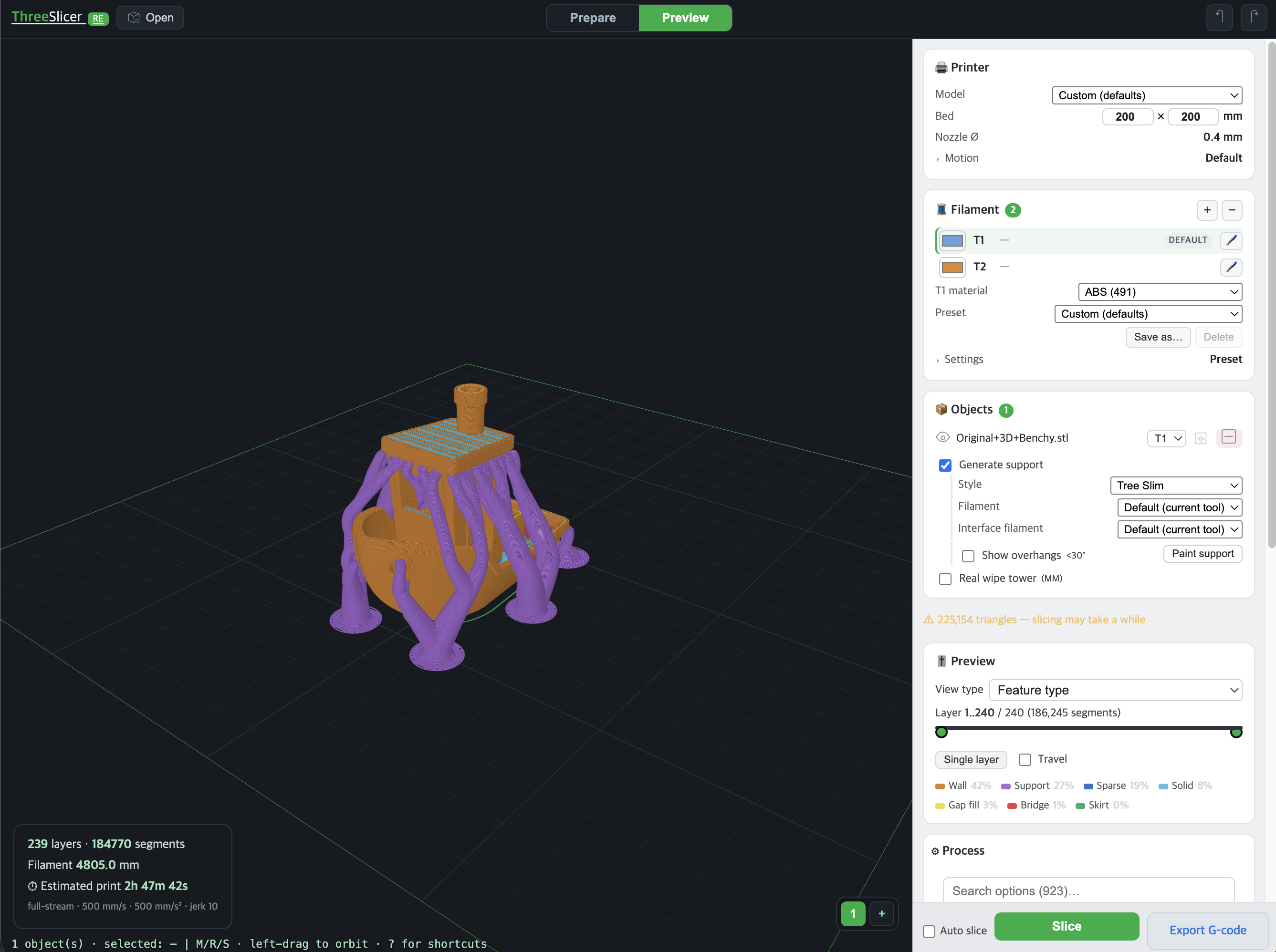
|
|
8
8
|
|
|
9
9
|
## Links
|
|
10
10
|
|
|
11
11
|
- Permissive viewer: [`three-slicer-viewer`](https://www.npmjs.com/package/three-slicer-viewer) (MIT) — the
|
|
12
|
-
viewer, the settings form, G-code parsing and toolpath rendering without the slicer.
|
|
13
|
-
kernel and OrcaSlicer's vendor presets into it
|
|
14
|
-
composition. Which code carries which licence, and why: [`PROVENANCE.md`](PROVENANCE.md).
|
|
12
|
+
viewer, the settings form, G-code parsing and toolpath rendering without the slicer. A host plugs this
|
|
13
|
+
package's kernel worker and OrcaSlicer's vendor presets into it (see the React quick starts below). Which code carries which licence, and why: [`PROVENANCE.md`](PROVENANCE.md).
|
|
15
14
|
|
|
16
15
|
- Package: [npmjs.com/package/three-slicer](https://www.npmjs.com/package/three-slicer)
|
|
17
16
|
- Source: [kimgh06/Three_Slicer](https://github.com/kimgh06/Three_Slicer)
|
|
@@ -26,7 +25,7 @@ reading whole; everything else is lookup.
|
|
|
26
25
|
| --- | --- | --- | --- |
|
|
27
26
|
| "Just the numbers" — quotes, farms, automation. No UI, no React | **Headless** | [Quick Start: Headless Slicing](#quick-start-headless-slicing) | [engine/README](engine/README.md) (134 lines), params via [PARAMS.md](engine/PARAMS.md) as lookup |
|
|
28
27
|
| A slicer inside your existing page | **Embed** | [Quick Start: React Viewer](#quick-start-react-viewer) | [viewer/README](../viewer-package/VIEWER.md) (330 lines — the props contracts live there) |
|
|
29
|
-
| The full slicer UI — viewport + settings panel | **Full UI** | [Full React Example](#full-react-example) | viewer/README + [
|
|
28
|
+
| The full slicer UI — viewport + settings panel | **Full UI** | [Full React Example](#full-react-example) | viewer/README + [COMPONENTS.md](../viewer-package/COMPONENTS.md) |
|
|
30
29
|
|
|
31
30
|
Whichever path: read [Before You Ship](#before-you-ship) before deploying — those traps return plausible
|
|
32
31
|
results instead of errors, and the first two never show up in `npm run dev`.
|
|
@@ -53,19 +52,21 @@ results instead of errors, and the first two never show up in `npm run dev`.
|
|
|
53
52
|
npm i three-slicer
|
|
54
53
|
```
|
|
55
54
|
|
|
56
|
-
|
|
57
|
-
|
|
58
|
-
|
|
55
|
+
Nothing in `three-slicer` needs React or three.js; a headless consumer installs neither. The React viewer and the
|
|
56
|
+
settings panel are [`three-slicer-viewer`](https://www.npmjs.com/package/three-slicer-viewer), which `three-slicer`
|
|
57
|
+
depends on at the same exact version. Import it by its own name, so list it in your own `package.json` at that
|
|
58
|
+
version, together with its optional peers:
|
|
59
59
|
|
|
60
60
|
```bash
|
|
61
|
-
npm i three-slicer react react-dom three
|
|
61
|
+
npm i three-slicer three-slicer-viewer@<same version> react react-dom three
|
|
62
62
|
```
|
|
63
63
|
|
|
64
64
|
| Import path | Needs react/three |
|
|
65
65
|
| --- | --- |
|
|
66
|
-
| `three-slicer`, `/settings`, `/toggle`, `/client`, `/worker`, `/wasm`, `/data
|
|
67
|
-
| `three-slicer
|
|
68
|
-
| `three-slicer/components` | react only |
|
|
66
|
+
| `three-slicer`, `/settings`, `/toggle`, `/client`, `/worker`, `/wasm`, `/data` | no |
|
|
67
|
+
| `three-slicer-viewer`, `/loaders` | yes |
|
|
68
|
+
| `three-slicer-viewer/components` | react only |
|
|
69
|
+
| `three-slicer-viewer/gcode`, `/toolpath` | no — `makeToolpath(THREE, data)` takes `three` as an argument |
|
|
69
70
|
|
|
70
71
|
## Quick Start: Headless Slicing
|
|
71
72
|
|
|
@@ -147,11 +148,19 @@ When `onLayer` is set, the returned result carries stats; assemble G-code from t
|
|
|
147
148
|
|
|
148
149
|
## Quick Start: React Viewer
|
|
149
150
|
|
|
150
|
-
Use `three-slicer
|
|
151
|
+
Use `three-slicer-viewer`'s `<Viewport/>` with this package's kernel worker and vendor presets plugged in when you
|
|
152
|
+
want a ready-made browser slicer viewport. Without the `slicer` and `catalog` props it loads, displays and exports,
|
|
153
|
+
but never starts a kernel and offers no presets.
|
|
151
154
|
|
|
152
155
|
```jsx
|
|
153
156
|
import { useState } from 'react'
|
|
154
|
-
import Viewport from 'three-slicer
|
|
157
|
+
import Viewport, { useSlicer } from 'three-slicer-viewer'
|
|
158
|
+
import { makeSlicerWorker } from 'three-slicer/client'
|
|
159
|
+
import { bundledCatalog } from 'three-slicer/settings'
|
|
160
|
+
|
|
161
|
+
// The slicing hook bound to the WASM kernel's worker. Module-level: it is called as a hook, so its identity
|
|
162
|
+
// must not change between renders.
|
|
163
|
+
const slicer = (deps) => useSlicer({ ...deps, makeWorker: makeSlicerWorker })
|
|
155
164
|
|
|
156
165
|
export default function App() {
|
|
157
166
|
const [settings, setSettings] = useState({})
|
|
@@ -159,6 +168,8 @@ export default function App() {
|
|
|
159
168
|
return (
|
|
160
169
|
<div style={{ position: 'relative', width: '100%', height: '100vh' }}>
|
|
161
170
|
<Viewport
|
|
171
|
+
slicer={slicer}
|
|
172
|
+
catalog={bundledCatalog}
|
|
162
173
|
settings={settings}
|
|
163
174
|
setSettings={setSettings}
|
|
164
175
|
/>
|
|
@@ -176,11 +187,18 @@ The viewer handles model loading, drag and drop, transform controls, multi-plate
|
|
|
176
187
|
|
|
177
188
|
## Quick Start: Settings Panel
|
|
178
189
|
|
|
179
|
-
Use `three-slicer/components`
|
|
190
|
+
Use `three-slicer-viewer/components`' `<SettingsPanel/>` with this package's schema, tab tree and toggle rules
|
|
191
|
+
plugged in when you want the OrcaSlicer-style settings UI without building the form yourself. Without them it labels
|
|
192
|
+
every field by its key and disables nothing.
|
|
180
193
|
|
|
181
194
|
```jsx
|
|
182
195
|
import { useState } from 'react'
|
|
183
|
-
import
|
|
196
|
+
import SettingsPanelCore from 'three-slicer-viewer/components'
|
|
197
|
+
import { schema, uiTree } from 'three-slicer/data'
|
|
198
|
+
import { makeCfg, disabledKeys } from 'three-slicer/toggle'
|
|
199
|
+
|
|
200
|
+
const toggle = { makeCfg, disabledKeys }
|
|
201
|
+
const SettingsPanel = (props) => <SettingsPanelCore schema={schema} uiTree={uiTree} toggle={toggle} {...props} />
|
|
184
202
|
|
|
185
203
|
export default function App() {
|
|
186
204
|
const [settings, setSettings] = useState({})
|
|
@@ -202,8 +220,19 @@ The viewer and settings panel are designed to share the same `settings` state.
|
|
|
202
220
|
|
|
203
221
|
```jsx
|
|
204
222
|
import { useState } from 'react'
|
|
205
|
-
import Viewport from 'three-slicer
|
|
206
|
-
import
|
|
223
|
+
import Viewport, { useSlicer } from 'three-slicer-viewer'
|
|
224
|
+
import { makeSlicerWorker } from 'three-slicer/client'
|
|
225
|
+
import { bundledCatalog } from 'three-slicer/settings'
|
|
226
|
+
|
|
227
|
+
// The slicing hook bound to the WASM kernel's worker. Module-level: it is called as a hook, so its identity
|
|
228
|
+
// must not change between renders.
|
|
229
|
+
const slicer = (deps) => useSlicer({ ...deps, makeWorker: makeSlicerWorker })
|
|
230
|
+
import SettingsPanelCore from 'three-slicer-viewer/components'
|
|
231
|
+
import { schema, uiTree } from 'three-slicer/data'
|
|
232
|
+
import { makeCfg, disabledKeys } from 'three-slicer/toggle'
|
|
233
|
+
|
|
234
|
+
const toggle = { makeCfg, disabledKeys }
|
|
235
|
+
const SettingsPanel = (props) => <SettingsPanelCore schema={schema} uiTree={uiTree} toggle={toggle} {...props} />
|
|
207
236
|
|
|
208
237
|
export default function App() {
|
|
209
238
|
const [settings, setSettings] = useState({})
|
|
@@ -211,6 +240,8 @@ export default function App() {
|
|
|
211
240
|
return (
|
|
212
241
|
<main style={{ display: 'flex', height: '100vh' }}>
|
|
213
242
|
<Viewport
|
|
243
|
+
slicer={slicer}
|
|
244
|
+
catalog={bundledCatalog}
|
|
214
245
|
settings={settings}
|
|
215
246
|
setSettings={setSettings}
|
|
216
247
|
/>
|
|
@@ -231,8 +262,7 @@ The same sparse settings map can feed the settings panel, the viewer, and `deriv
|
|
|
231
262
|
import { createSlicer, engineWorkerURL } from 'three-slicer'
|
|
232
263
|
import { deriveKernelParams } from 'three-slicer/settings'
|
|
233
264
|
import { disabledKeys, makeCfg } from 'three-slicer/toggle'
|
|
234
|
-
import
|
|
235
|
-
import SettingsPanel from 'three-slicer/components'
|
|
265
|
+
import { makeSlicerWorker } from 'three-slicer/client'
|
|
236
266
|
import { schema, uiTree } from 'three-slicer/data'
|
|
237
267
|
```
|
|
238
268
|
|
|
@@ -247,40 +277,33 @@ Available subpaths:
|
|
|
247
277
|
| `three-slicer/client` | `createSlicerClient()` — promises over that protocol |
|
|
248
278
|
| `three-slicer/wasm` | Single-threaded Emscripten WASM glue |
|
|
249
279
|
| `three-slicer/wasm-mt` | Multithreaded Emscripten WASM glue |
|
|
250
|
-
| `three-slicer/viewer` | React `<Viewport/>` |
|
|
251
|
-
| `three-slicer/viewer/toolpath` | GPU toolpath renderer utilities |
|
|
252
|
-
| `three-slicer/viewer/loaders` | Model loaders |
|
|
253
|
-
| `three-slicer/viewer/gcode` | `parseGcode(text)` — G-code back into the layer stream the renderer consumes |
|
|
254
|
-
| `three-slicer/components` | React `<SettingsPanel/>` |
|
|
255
280
|
| `three-slicer/data` | Named exports for extracted metadata |
|
|
256
281
|
| `three-slicer/data/*.json` | Extracted OrcaSlicer metadata |
|
|
257
282
|
|
|
258
283
|
## Architecture: How the Pieces Connect
|
|
259
284
|
|
|
260
|
-
One npm package,
|
|
261
|
-
←(data)← `data`, with `
|
|
262
|
-
|
|
263
|
-
settings map held by the host app.
|
|
285
|
+
One npm package, four modules, beside the separately published React half (`three-slicer-viewer`). The dependency
|
|
286
|
+
direction is one-way: `wasm-core` →(build)→ `engine` ←(data)← `data`, with `types` generating and gating the
|
|
287
|
+
contract from the side. The host composes the React half with the kernel worker, the vendor catalog and the schema —
|
|
288
|
+
and the glue at the top is always a single sparse settings map held by the host app.
|
|
264
289
|
|
|
265
290
|
| Module | Role | Published as | Depends on | Consumed by |
|
|
266
291
|
| --- | --- | --- | --- | --- |
|
|
267
292
|
| `wasm-core` | C++ kernel sources + vendored third_party | not published | (ported upstream sources) | `engine` — as build output only |
|
|
268
|
-
| `engine` | kernel SDK: direct handle, worker, client, settings derivation | `three-slicer` root + `/settings` `/toggle` `/client` `/worker` `/wasm(-mt)` `/data` | committed wasm-core output, `data`,
|
|
269
|
-
| `data` | extracted schema + catalogs (config-schema, printers, processes, filaments…) | `/data` | `extract_all.py` ← upstream | `engine`'s settings,
|
|
293
|
+
| `engine` | kernel SDK: direct handle, worker, client, the vendor catalog; re-exports the settings derivation and toggle evaluator from `three-slicer-viewer` | `three-slicer` root + `/settings` `/toggle` `/client` `/worker` `/wasm(-mt)` `/data` | committed wasm-core output, `data`, `three-slicer-viewer`'s `/settings` `/toggle` `/paint` | host apps, every consumer |
|
|
294
|
+
| `data` | extracted schema + catalogs (config-schema, printers, processes, filaments…) | `/data` | `extract_all.py` ← upstream | `engine`'s settings, host apps (passed to the React half as props) |
|
|
270
295
|
| `types` | every `.d.ts` + two generators | attached per subpath via the exports map's `types` fields | runs `engine` at generation time (probing), reads `data`'s schema | consumers' IDE/TS — no runtime dependency |
|
|
271
|
-
| `components` | `<SettingsPanel/>` (Shadow DOM) | `/components` | `data` (schema + UI tree), `engine`'s `/toggle` | host apps |
|
|
272
|
-
| `viewer` | `<Viewport/>` (three.js, Shadow DOM) | `/viewer` + `/viewer/toolpath` `/loaders` `/gcode` | `engine`'s `/settings`, the worker, `/data`; `three` (peer) | host apps |
|
|
273
296
|
|
|
274
297
|
Some of the connections are not imports, and knowing which is which explains most of the layout:
|
|
275
298
|
|
|
276
299
|
| Connection | Mechanism | Notes |
|
|
277
300
|
| --- | --- | --- |
|
|
278
301
|
| `wasm-core` → `engine` | `build.sh` (emscripten) commits its output into `engine/src/` | not an import — the golden byte-identical gate and the invariant suite verify kernel changes against the engine's output |
|
|
279
|
-
| `data` → `engine
|
|
302
|
+
| `data` → `engine`, host apps | `/data` subpath imports | the source of truth is `extract_all.py` over the upstream checkout |
|
|
280
303
|
| `types` → `engine` | the generator **executes** `deriveKernelParams` (probing) and writes `engine/PARAMS.md` + `../viewer-package/src/settings/kernel_setting_keys.js` back into the engine | `test_kernel_params.mjs` is the staleness gate |
|
|
281
304
|
| `types` → `data` | `gen_settings_types.mjs` generates `settings-keys.d.ts` (976 keys) from the schema | run automatically by the build |
|
|
282
|
-
| `
|
|
283
|
-
|
|
|
305
|
+
| `engine` → `three-slicer-viewer` | the host passes `makeSlicerWorker` (as `useSlicer`'s `makeWorker`) and `bundledCatalog` to `<Viewport/>`, and `schema`/`uiTree`/the bound toggle to `<SettingsPanel/>` | props, not imports — the React half ships without the kernel or upstream's data |
|
|
306
|
+
| `<Viewport/>` ↔ `<SettingsPanel/>` | **no direct link** | the host shares one settings map with both as props, and mounts `<SettingsPanel embedded/>` into the viewer's panel slots |
|
|
284
307
|
|
|
285
308
|
## TypeScript
|
|
286
309
|
|
|
@@ -331,7 +354,7 @@ const result = slicer.slice(stlArrayBuffer, params)
|
|
|
331
354
|
|
|
332
355
|
A slicer-written `.3mf` is a project, not a mesh file: `Metadata/project_settings.config` holds the flattened
|
|
333
356
|
preset its author sliced with. `<Viewport/>` reads all of it on import. The project parser/writer currently remain
|
|
334
|
-
viewer internals; there is no `three-slicer
|
|
357
|
+
viewer internals; there is no `three-slicer-viewer/project` public export yet. Hosts can normalize or serialize a
|
|
335
358
|
raw project settings object with the public settings helpers below, but should not import viewer source files.
|
|
336
359
|
|
|
337
360
|
**Every value in that file is a string**, and reading it raw is not a cosmetic problem — a disabled option is the
|
|
@@ -758,7 +781,9 @@ the layout by hand.
|
|
|
758
781
|
| `disabledKeys(cfg)` | Setting key → the `enable_if` expression that evaluated false |
|
|
759
782
|
| `evalEnableIf(expr, locals, cfg)` | Evaluates a single rule; `null` when it cannot be resolved |
|
|
760
783
|
|
|
761
|
-
### `three-slicer
|
|
784
|
+
### `three-slicer-viewer` (the React half)
|
|
785
|
+
|
|
786
|
+
Published separately (MIT); listed here because a slicer UI uses both packages.
|
|
762
787
|
|
|
763
788
|
| API | Description |
|
|
764
789
|
| --- | --- |
|
|
@@ -789,7 +814,7 @@ the layout by hand.
|
|
|
789
814
|
| Browser main thread | Headless slicing |
|
|
790
815
|
| Browser worker | Off-main-thread slicing and streaming |
|
|
791
816
|
| React | Viewer and settings panel |
|
|
792
|
-
| three.js | Required by `three-slicer
|
|
817
|
+
| three.js | Required by `three-slicer-viewer`'s `<Viewport/>` |
|
|
793
818
|
|
|
794
819
|
## Before You Ship
|
|
795
820
|
|
|
@@ -830,7 +855,7 @@ production while `npm run dev` passed. The no-argument form now emits a real wor
|
|
|
830
855
|
|
|
831
856
|
- `slice()` currently takes binary STL input at the engine API boundary.
|
|
832
857
|
- The viewer can import STL, OBJ, 3MF, AMF, and PLY, then converts them for slicing.
|
|
833
|
-
- `registerLoader(exts, fn)` from `three-slicer
|
|
858
|
+
- `registerLoader(exts, fn)` from `three-slicer-viewer/loaders` adds any other format. Formats needing a heavy dependency are kept out of the package so it stays runtime-dependency-free — see `web/viewer/src/step_loader.js` for a STEP loader built on `occt-import-js` (OCCT WASM).
|
|
834
859
|
- Not every OrcaSlicer schema key is wired into the WASM kernel yet.
|
|
835
860
|
- Some vector settings are simplified to their first element.
|
|
836
861
|
- One triangle selector serves both the support brush and the material brush (upstream's shared enum), so a support **blocker** paint and an Extruder 2 paint are the same mark — the two brushes cannot mark the same model independently.
|
|
@@ -839,7 +864,7 @@ production while `npm run dev` passed. The no-argument form now emits a real wor
|
|
|
839
864
|
- The `.sl1` export lives in the viewer (its masks need a canvas); there is no headless `.sl1` writer export yet.
|
|
840
865
|
- SLA mask edges are canvas anti-aliasing, not upstream's AGG rasterizer — same geometry, slightly different edge pixels.
|
|
841
866
|
- Multithreaded WASM requires cross-origin isolation.
|
|
842
|
-
- `three` is pinned as a peer dependency because viewer internals depend on the `TransformControls` API shape.
|
|
867
|
+
- `three` is pinned as a peer dependency of `three-slicer-viewer` because viewer internals depend on the `TransformControls` API shape.
|
|
843
868
|
|
|
844
869
|
## License
|
|
845
870
|
|
package/THIRD-PARTY-NOTICES.md
CHANGED
|
@@ -25,8 +25,8 @@ live under `packages/wasm-core/third_party/deps_src/`.
|
|
|
25
25
|
|
|
26
26
|
## The viewer and the settings panel
|
|
27
27
|
|
|
28
|
-
|
|
29
|
-
|
|
28
|
+
The viewer and the settings panel are `three-slicer-viewer` (MIT), a separate package with its own
|
|
29
|
+
`THIRD-PARTY-NOTICES.md`. This package bundles no viewer code of its own; since 0.4.0 it does not re-export it either.
|
|
30
30
|
|
|
31
31
|
## Bundled into the viewer/components builds (historical — see above)
|
|
32
32
|
|
package/data/README.md
CHANGED
|
@@ -1,6 +1,6 @@
|
|
|
1
1
|
# three-slicer/data
|
|
2
2
|
|
|
3
|
-
OrcaSlicer configuration metadata extracted from the original C++ sources, shipped inside the `three-slicer` package as its `/data` subpath. Used by `three-slicer` (defaults, settings mapping) and `three-slicer/components`
|
|
3
|
+
OrcaSlicer configuration metadata extracted from the original C++ sources, shipped inside the `three-slicer` package as its `/data` subpath. Used by `three-slicer` (defaults, settings mapping) and the settings UI (`three-slicer-viewer/components` takes the schema and UI tree as props), and usable standalone for building slicer UIs.
|
|
4
4
|
|
|
5
5
|
| File | Contents |
|
|
6
6
|
|---|---|
|
package/engine/PARAMS.md
CHANGED
|
@@ -230,7 +230,7 @@ same unit — `first_layer_height` comes from `initial_layer_print_height`, and
|
|
|
230
230
|
| `extruder_retract_speed` | `?` | `[]` | `filament_retraction_speed` | undefined |
|
|
231
231
|
| `extruder_z_hop` | `?` | `[]` | `filament_z_hop` | undefined |
|
|
232
232
|
| `extrusion_rate_slope_segment_length` | `number` | `1.0` | — | segment split length for the real PE (mm) |
|
|
233
|
-
| `filament_max_volumetric_speed` | `number[]` | `[]` | `filament_max_volumetric_speed` | mm³/s, per filament; empty = no cap (
|
|
233
|
+
| `filament_max_volumetric_speed` | `number[]` | `[]` | `filament_max_volumetric_speed` | mm³/s, per filament; empty = no cap (GcodeWriter::capped_feed) |
|
|
234
234
|
| `filter_out_gap_fill` | `number` | `0.0` | `filter_out_gap_fill` | filter_out_gap_fill (mm): gap fill shorter than this is dropped |
|
|
235
235
|
| `first_layer_bed_temp` | `number` | `-1.0` | `before_layer_change_gcode`, `change_filament_gcode`, `filament_end_gcode`, `filament_start_gcode`, `file_start_gcode`, `hot_plate_temp_initial_layer`, `layer_change_gcode`, `machine_end_gcode`, `machine_start_gcode`, `time_lapse_gcode` | the plate type's _initial_layer bed option (<0 = none sent) |
|
|
236
236
|
| `first_layer_flow_ratio` | `?` | — | `first_layer_flow_ratio` | undefined |
|
package/engine/README.md
CHANGED
|
@@ -2,7 +2,7 @@
|
|
|
2
2
|
|
|
3
3
|
Browser/WASM 3D-slicing kernel reverse-engineered from [OrcaSlicer](https://github.com/OrcaSlicer/OrcaSlicer). Slices binary STL to G-code entirely client-side (or in Node) — no server, no native binaries.
|
|
4
4
|
|
|
5
|
-
**No three.js dependency.** This is a headless SDK with zero runtime dependencies; the config metadata it reads ships inside the same package (`three-slicer/data`). For a ready-made React viewer see `three-slicer/
|
|
5
|
+
**No three.js dependency.** This is a headless SDK with zero runtime dependencies; the config metadata it reads ships inside the same package (`three-slicer/data`). For a ready-made React viewer see [`three-slicer-viewer`](../../viewer-package/VIEWER.md), which takes this package's kernel worker as a prop.
|
|
6
6
|
|
|
7
7
|
Ported from the original C++ sources: Clipper polygon ops, Arachne variable-width walls, real fill patterns (gyroid TPMS / honeycomb / 3D-honeycomb / crosshatch / concentric), tree supports, pressure equalizer, arc fitting (G2/G3), scarf seams, ironing, multi-material with prime tower. Kernel changes are gated by a 120+ invariant test suite and golden byte-identical G-code checks.
|
|
8
8
|
|
package/engine/src/client.js
CHANGED
|
@@ -41,8 +41,8 @@ const slaTransferables = (job) => job.objects.flatMap(object => [object, ...(obj
|
|
|
41
41
|
// keeps make_worker.js out of its own bundle. Do not factor this expression out.
|
|
42
42
|
/**
|
|
43
43
|
* The WASM kernel's worker, as a factory. This is the one thing a slicing viewer needs that the permissive
|
|
44
|
-
* package cannot ship: `three-slicer-viewer`'s `useSlicer` takes it as `deps.makeWorker`, and
|
|
45
|
-
*
|
|
44
|
+
* package cannot ship: `three-slicer-viewer`'s `useSlicer` takes it as `deps.makeWorker`, and a
|
|
45
|
+
* host binds it there. Written as the full literal expression for the same reason as below.
|
|
46
46
|
*/
|
|
47
47
|
export function makeSlicerWorker() {
|
|
48
48
|
return new Worker(new URL('./slicer.worker.js', import.meta.url), { type: 'module' })
|
|
@@ -3,11 +3,11 @@
|
|
|
3
3
|
// between the cut and the union.
|
|
4
4
|
//
|
|
5
5
|
// What runs here (WGSL: contour_front_shaders.js), every layer at once:
|
|
6
|
-
// cut per triangle, the layers it spans (exact z compares), each crossing in double-float, oriented as
|
|
6
|
+
// cut per triangle, the layers it spans (exact z compares), each crossing in double-float, oriented as intersect_triangle_with_plane
|
|
7
7
|
// cancel segments coinciding exactly in opposite directions removed in pairs (cancel_coincident), by a hash on place
|
|
8
|
-
// chain each end continues into the smallest unused segment starting at its 1e-3 mm key (
|
|
8
|
+
// chain each end continues into the smallest unused segment starting at its 1e-3 mm key (chain_polygons' greedy rule)
|
|
9
9
|
// loops pointer jumping for each loop's head and each segment's rank; tails that lead into a cycle stay out
|
|
10
|
-
// layout loops sorted by (layer, head), laid out as
|
|
10
|
+
// layout loops sorted by (layer, head), laid out as chain_polygons' n + 1 points, write_polygon's duplicates dropped
|
|
11
11
|
// tables layer origins and grids, polygon ranges, the cell-list size
|
|
12
12
|
//
|
|
13
13
|
// Measured (design report gpu-full-port-trial-2026-10-01.md section 3): 3.0M triangles, 420 layers in 30 ms (the kernel's
|
|
@@ -205,10 +205,10 @@ export async function makeContourFront(device) {
|
|
|
205
205
|
clear(loopStart, (headCount + 1) * 4)
|
|
206
206
|
run(LOOPS_SHADER, 'lengths', 'urrrrwwwwwr', bound(uniform([segmentCount, padded, layerCount, headCount])), headCount)
|
|
207
207
|
scan(loopStart, headCount + 1)
|
|
208
|
-
const [slotCount] = await readWords(loopStart, 1, headCount) // points of the closed loops,
|
|
208
|
+
const [slotCount] = await readWords(loopStart, 1, headCount) // points of the closed loops, chain_polygons' n + 1 each
|
|
209
209
|
run(LOOPS_SHADER, 'place', 'urrrrwwwwwr', bound(uniform([segmentCount, padded, layerCount, headCount])), segmentCount)
|
|
210
210
|
|
|
211
|
-
// the points write_polygon keeps, the polygons
|
|
211
|
+
// the points write_polygon keeps, the polygons chain_polygons keeps, the layer boxes
|
|
212
212
|
const kept = buffer('kept', (slotCount + 1) * 4), polygonKept = buffer('polygonKept', (headCount + 1) * 4)
|
|
213
213
|
const layerBox = buffer('layerBox', layerCount * 32), slotPolygon = buffer('slotPolygon', slotCount * 4)
|
|
214
214
|
const boxStart = new Int32Array(layerCount * 8)
|
|
@@ -1,4 +1,4 @@
|
|
|
1
|
-
// WGSL of the GPU front of PASS1 (contour_front_gpu.js):
|
|
1
|
+
// WGSL of the GPU front of PASS1 (contour_front_gpu.js): intersect_triangle_with_plane -> chain_polygons -> cancel_coincident ->
|
|
2
2
|
// build_gpu_input, every layer at once. Ported from the measured experiment (.omc/plans/gpu-work/fullport/gpu_slice.mjs,
|
|
3
3
|
// design report gpu-full-port-trial-2026-10-01.md section 3); edited only with a measurement beside it, as
|
|
4
4
|
// contour_gpu_shaders.js.
|
package/engine/src/settings.js
CHANGED
|
@@ -128,7 +128,7 @@ export function printerDefaultBedType(profileName) { return printerEntry(profile
|
|
|
128
128
|
|
|
129
129
|
// ---- The catalog as one object -------------------------------------------------------------------------------
|
|
130
130
|
// What `three-slicer-viewer`'s `<Viewport catalog>` takes: the ten lookups above, bundled. The permissive package
|
|
131
|
-
// ships no catalog (these are OrcaSlicer's profile bundles);
|
|
131
|
+
// ships no catalog (these are OrcaSlicer's profile bundles); a host passes this one.
|
|
132
132
|
export const bundledCatalog = Object.freeze({
|
|
133
133
|
printerKeys, printerSettings, printersByVendor, printerTechByVendor, printerDefaultPreset, printerDefaultBedType,
|
|
134
134
|
processPresets, filamentPresets, resinCatalog, resinSettingsFor,
|
|
@@ -5,7 +5,7 @@
|
|
|
5
5
|
//
|
|
6
6
|
// Stage 30 (OOM tolerance): set_layer_sink lets the kernel emit layers as it produces them; each is transferred to main
|
|
7
7
|
// immediately (Float32Array buffers moved -> the worker copy is released at once) and the kernel frees that layer buffer
|
|
8
|
-
// from the heap. The resident result (the full
|
|
8
|
+
// from the heap. The resident result (the full GcodeWriter::gcode + the full layersArray) disappears, so the WASM heap peak drops sharply
|
|
9
9
|
// -> large models avoid OOM. The final 'done' carries stats only.
|
|
10
10
|
// In economy mode (params.economy) only G-code chunks are emitted, without toolpaths (finishes without a preview).
|
|
11
11
|
// The MM / real-PE paths fall back to batch mode.
|
|
@@ -27,7 +27,10 @@ import { FILL_TOOLS } from 'three-slicer-viewer/paint'
|
|
|
27
27
|
// and createSlicerClient both take an object and stringify it for you. One object, two shapes, and the difference
|
|
28
28
|
// showed up only at the boundary. The worker now accepts either; the SLA branch always did, which is what made
|
|
29
29
|
// the split arbitrary rather than principled.
|
|
30
|
-
const paramsText = (params) =>
|
|
30
|
+
const paramsText = (params) => {
|
|
31
|
+
if (typeof params === 'string') return params
|
|
32
|
+
return JSON.stringify(params ?? {})
|
|
33
|
+
}
|
|
31
34
|
|
|
32
35
|
let quiet = false
|
|
33
36
|
const say = (level, ...args) => { if (!quiet) console[level](...args) }
|
|
@@ -120,7 +123,8 @@ const validatedPaintStates = (states) => {
|
|
|
120
123
|
// flow (viewer use_slicer.js) reads those two fields and nothing else.
|
|
121
124
|
const reportedPaintStates = (message, paintedState) => {
|
|
122
125
|
if (Array.isArray(message.states)) return validatedPaintStates(message.states)
|
|
123
|
-
|
|
126
|
+
if (paintedState === null) return null
|
|
127
|
+
return [paintedState]
|
|
124
128
|
}
|
|
125
129
|
|
|
126
130
|
// The state a paint message asks for: an explicit `state` wins, otherwise null meaning "use the legacy boolean path".
|
|
@@ -133,7 +137,10 @@ const explicitPaintState = (message) => {
|
|
|
133
137
|
|
|
134
138
|
// Brush cursor shape (selector_bridge.h CURSOR_*). Sent as a name because the message is a protocol a host writes
|
|
135
139
|
// by hand; the integer stays on this side of it. Anything unknown is the sphere the brush has always used.
|
|
136
|
-
const cursorShapeOf = (message) =>
|
|
140
|
+
const cursorShapeOf = (message) => {
|
|
141
|
+
if (message.cursor === 'circle') return 1
|
|
142
|
+
return 0
|
|
143
|
+
}
|
|
137
144
|
|
|
138
145
|
// The tools that are not the radius brush: upstream's Smart fill and Bucket fill, plus its single-triangle POINTER
|
|
139
146
|
// cursor — which is literally bucket fill with propagation off, so the three share one dispatch. None of them takes
|
|
@@ -150,8 +157,15 @@ const strokeFrom = (message) =>
|
|
|
150
157
|
// The fill modes the kernel's fill_preview takes (selector_bridge.h FILL_*), by the tool name the protocol uses.
|
|
151
158
|
const FILL_PREVIEW_MODE = { smart: 0, bucket: 1, triangle: 2 }
|
|
152
159
|
|
|
160
|
+
// A fill's angle limit in degrees, 30 when the message does not carry one. applyFill and the fill preview both
|
|
161
|
+
// read it here, so the preview selects what the fill will.
|
|
162
|
+
const fillAngleOf = (message) => {
|
|
163
|
+
if (Number.isFinite(message.angle)) return message.angle
|
|
164
|
+
return 30
|
|
165
|
+
}
|
|
166
|
+
|
|
153
167
|
const applyFill = (Module, message, state) => {
|
|
154
|
-
const angle =
|
|
168
|
+
const angle = fillAngleOf(message)
|
|
155
169
|
if (message.tool === 'smart') {
|
|
156
170
|
if (state === null) Module.selector_seed_fill_erase(message.facet, message.hx, message.hy, message.hz, angle)
|
|
157
171
|
else Module.selector_seed_fill(message.facet, message.hx, message.hy, message.hz, angle, state)
|
|
@@ -160,7 +174,8 @@ const applyFill = (Module, message, state) => {
|
|
|
160
174
|
// Upstream passes -1 as the angle when it is not propagating (GLGizmoPainterBase.cpp ~861): with a single facet
|
|
161
175
|
// there is no neighbour to measure an angle against, and -1 is how that call says "no angle limit".
|
|
162
176
|
const propagate = message.tool === 'bucket'
|
|
163
|
-
|
|
177
|
+
let bucketAngle = -1
|
|
178
|
+
if (propagate) bucketAngle = angle
|
|
164
179
|
if (state === null) Module.selector_bucket_fill_erase(message.facet, message.hx, message.hy, message.hz, bucketAngle, propagate)
|
|
165
180
|
else Module.selector_bucket_fill(message.facet, message.hx, message.hy, message.hz, bucketAngle, propagate, state)
|
|
166
181
|
}
|
|
@@ -276,7 +291,9 @@ const handleMessage = async (e) => {
|
|
|
276
291
|
// `keepPaint` says the mesh is the same model in a new place, so the marks carry over — the reply reports whether
|
|
277
292
|
// they actually did, since a face-count change makes the kernel fall back to a clean registration.
|
|
278
293
|
if (d.cmd === 'prepare') {
|
|
279
|
-
|
|
294
|
+
let kept = false
|
|
295
|
+
if (d.keepPaint) kept = Module.selector_reprepare(new Uint8Array(d.stl))
|
|
296
|
+
else Module.selector_prepare(new Uint8Array(d.stl))
|
|
280
297
|
reply({ type: 'prepared', facets: Module.selector_facet_count(), kept })
|
|
281
298
|
return
|
|
282
299
|
}
|
|
@@ -321,7 +338,8 @@ const handleMessage = async (e) => {
|
|
|
321
338
|
// A kernel built before this binding existed simply has no selector_import_paint; the reply says applied:0
|
|
322
339
|
// rather than throwing, because losing a 3mf's paint must not also lose its geometry.
|
|
323
340
|
if (d.cmd === 'importPaint') {
|
|
324
|
-
|
|
341
|
+
let applied = 0
|
|
342
|
+
if (Module.selector_import_paint) applied = Module.selector_import_paint(d.facets, d.hex ?? '')
|
|
325
343
|
const importedReply = paintedReply(Module, d, null)
|
|
326
344
|
importedReply.applied = applied
|
|
327
345
|
reply(importedReply); return
|
|
@@ -332,7 +350,8 @@ const handleMessage = async (e) => {
|
|
|
332
350
|
// which objects were merged in what order is the viewer's knowledge. A kernel built before the binding existed
|
|
333
351
|
// reports supported:false rather than throwing — the save then falls back to the paint it imported.
|
|
334
352
|
if (d.cmd === 'exportPaint') {
|
|
335
|
-
|
|
353
|
+
let exported = null
|
|
354
|
+
if (Module.selector_export_paint) exported = Module.selector_export_paint()
|
|
336
355
|
reply({ type: 'paintExport', supported: !!Module.selector_export_paint,
|
|
337
356
|
facets: exported?.facets ?? [], hex: exported?.hex ?? '' })
|
|
338
357
|
return
|
|
@@ -358,9 +377,11 @@ const handleMessage = async (e) => {
|
|
|
358
377
|
// enf/blk stay unconditional for the listener that predates the per-state map. When the request names states,
|
|
359
378
|
// they are the ONLY ones read, so building the other two would be pure waste on the hot path.
|
|
360
379
|
const wanted = states && !states.includes(PAINT_STATE_ENFORCER) && !states.includes(PAINT_STATE_BLOCKER)
|
|
361
|
-
const overlayReply = { type: 'overlay',
|
|
362
|
-
|
|
363
|
-
|
|
380
|
+
const overlayReply = { type: 'overlay', enf: EMPTY_OVERLAY, blk: EMPTY_OVERLAY }
|
|
381
|
+
if (!wanted) {
|
|
382
|
+
overlayReply.enf = Module.selector_overlay(true)
|
|
383
|
+
overlayReply.blk = Module.selector_overlay(false)
|
|
384
|
+
}
|
|
364
385
|
if (states) overlayReply.overlays = Object.fromEntries(states.map(state => [state, Module.selector_overlay_state(state)]))
|
|
365
386
|
const transfer = [overlayReply.enf, overlayReply.blk, ...Object.values(overlayReply.overlays ?? {})]
|
|
366
387
|
.filter(a => a?.buffer && a.byteLength > 0).map(a => a.buffer)
|
|
@@ -374,13 +395,15 @@ const handleMessage = async (e) => {
|
|
|
374
395
|
if (d.cmd === 'fillPreview') {
|
|
375
396
|
if (!Module.selector_fill_preview) { reply({ type: 'fillPreview', supported: false, tris: EMPTY_OVERLAY }); return }
|
|
376
397
|
if (d.clear) { Module.selector_fill_preview_clear(); reply({ type: 'fillPreview', supported: true, tris: EMPTY_OVERLAY }); return }
|
|
377
|
-
const angle = Number.isFinite(d.angle) ? d.angle : 30
|
|
378
398
|
const mode = FILL_PREVIEW_MODE[d.tool] ?? FILL_PREVIEW_MODE.smart
|
|
379
399
|
// Upstream's -1 for the non-propagating case, the same value applyFill sends: one facet has no neighbour to
|
|
380
400
|
// measure an angle against.
|
|
381
|
-
|
|
382
|
-
|
|
383
|
-
|
|
401
|
+
let previewAngle = fillAngleOf(d)
|
|
402
|
+
if (mode === FILL_PREVIEW_MODE.triangle) previewAngle = -1
|
|
403
|
+
const previewTriangles = Module.selector_fill_preview(d.facet, d.hx, d.hy, d.hz, previewAngle, mode)
|
|
404
|
+
const transfer = []
|
|
405
|
+
if (previewTriangles?.buffer && previewTriangles.byteLength > 0) transfer.push(previewTriangles.buffer)
|
|
406
|
+
reply({ type: 'fillPreview', supported: true, tris: previewTriangles }, transfer)
|
|
384
407
|
return
|
|
385
408
|
}
|
|
386
409
|
// paintMode: the brush-wide options upstream keeps on the gizmo — the overhang restriction and the section
|
|
Binary file
|
|
Binary file
|
package/package.json
CHANGED
|
@@ -1,6 +1,6 @@
|
|
|
1
1
|
{
|
|
2
2
|
"name": "three-slicer",
|
|
3
|
-
"version": "0.
|
|
3
|
+
"version": "0.4.0",
|
|
4
4
|
"description": "Browser/WASM 3D-printing slicer reverse-engineered from OrcaSlicer: slicing engine (Arachne walls, tree/grid supports, multi-material), SLA resin slicing with PrusaSlicer's ported support/pad chain and .sl1 export, React viewer with GPU toolpath preview, and schema-driven settings UI.",
|
|
5
5
|
"license": "AGPL-3.0-or-later",
|
|
6
6
|
"type": "module",
|
|
@@ -33,26 +33,6 @@
|
|
|
33
33
|
"types": "./types/wasm.d.ts",
|
|
34
34
|
"default": "./engine/src/slicer_core.mt.js"
|
|
35
35
|
},
|
|
36
|
-
"./viewer": {
|
|
37
|
-
"types": "./types/viewer.d.ts",
|
|
38
|
-
"default": "./viewer/dist/Viewport.js"
|
|
39
|
-
},
|
|
40
|
-
"./viewer/toolpath": {
|
|
41
|
-
"types": "./types/viewer-toolpath.d.ts",
|
|
42
|
-
"default": "./viewer/dist/toolpath_reexport.js"
|
|
43
|
-
},
|
|
44
|
-
"./viewer/loaders": {
|
|
45
|
-
"types": "./types/viewer-loaders.d.ts",
|
|
46
|
-
"default": "./viewer/dist/loaders_reexport.js"
|
|
47
|
-
},
|
|
48
|
-
"./viewer/gcode": {
|
|
49
|
-
"types": "./types/viewer-gcode.d.ts",
|
|
50
|
-
"default": "./viewer/dist/gcode_reexport.js"
|
|
51
|
-
},
|
|
52
|
-
"./components": {
|
|
53
|
-
"types": "./types/components.d.ts",
|
|
54
|
-
"default": "./components/dist/SettingsPanel.js"
|
|
55
|
-
},
|
|
56
36
|
"./data": {
|
|
57
37
|
"types": "./types/data.d.ts",
|
|
58
38
|
"default": "./engine/src/data.js"
|
|
@@ -65,25 +45,9 @@
|
|
|
65
45
|
},
|
|
66
46
|
"sideEffects": false,
|
|
67
47
|
"scripts": {
|
|
68
|
-
"build": "node types/gen_settings_types.mjs && node types/gen_kernel_params.mjs
|
|
48
|
+
"build": "node types/gen_settings_types.mjs && node types/gen_kernel_params.mjs",
|
|
69
49
|
"check": "bash pack_check.sh"
|
|
70
50
|
},
|
|
71
|
-
"peerDependencies": {
|
|
72
|
-
"react": ">=18",
|
|
73
|
-
"react-dom": ">=18",
|
|
74
|
-
"three": "^0.160.0"
|
|
75
|
-
},
|
|
76
|
-
"peerDependenciesMeta": {
|
|
77
|
-
"react": {
|
|
78
|
-
"optional": true
|
|
79
|
-
},
|
|
80
|
-
"react-dom": {
|
|
81
|
-
"optional": true
|
|
82
|
-
},
|
|
83
|
-
"three": {
|
|
84
|
-
"optional": true
|
|
85
|
-
}
|
|
86
|
-
},
|
|
87
51
|
"devDependencies": {
|
|
88
52
|
"typescript": "^5.6.0",
|
|
89
53
|
"vite": "^5.4.11"
|
|
@@ -93,8 +57,6 @@
|
|
|
93
57
|
"types",
|
|
94
58
|
"!**/tests/**",
|
|
95
59
|
"!types/gen_*.mjs",
|
|
96
|
-
"components/dist",
|
|
97
|
-
"viewer/dist",
|
|
98
60
|
"data",
|
|
99
61
|
"data/ui-tree-keys.json",
|
|
100
62
|
"data/config-schema-lean.json",
|
|
@@ -134,6 +96,6 @@
|
|
|
134
96
|
"clipping"
|
|
135
97
|
],
|
|
136
98
|
"dependencies": {
|
|
137
|
-
"three-slicer-viewer": "0.
|
|
99
|
+
"three-slicer-viewer": "0.4.0"
|
|
138
100
|
}
|
|
139
101
|
}
|
|
@@ -1,15 +0,0 @@
|
|
|
1
|
-
import r from "react";
|
|
2
|
-
import t from "three-slicer-viewer/components";
|
|
3
|
-
import { uiTree as o, schema as m } from "three-slicer/data";
|
|
4
|
-
import { schema as d, uiTree as h } from "three-slicer/data";
|
|
5
|
-
import { disabledKeys as a, makeCfg as i } from "three-slicer/toggle";
|
|
6
|
-
const f = { makeCfg: i, disabledKeys: a };
|
|
7
|
-
function l(e) {
|
|
8
|
-
return /* @__PURE__ */ r.createElement(t, { schema: m, uiTree: o, toggle: f, ...e });
|
|
9
|
-
}
|
|
10
|
-
export {
|
|
11
|
-
l as default,
|
|
12
|
-
d as schema,
|
|
13
|
-
f as toggle,
|
|
14
|
-
h as uiTree
|
|
15
|
-
};
|
package/types/components.d.ts
DELETED
package/types/viewer-gcode.d.ts
DELETED
|
@@ -1 +0,0 @@
|
|
|
1
|
-
export * from 'three-slicer-viewer/loaders'
|
package/types/viewer.d.ts
DELETED
|
@@ -1,7 +0,0 @@
|
|
|
1
|
-
// three-slicer/viewer — the permissive viewer (three-slicer-viewer, MIT) with the kernel plugged in.
|
|
2
|
-
export * from 'three-slicer-viewer'
|
|
3
|
-
import type { ViewportProps, SlicerHandle } from 'three-slicer-viewer'
|
|
4
|
-
/** The permissive `useSlicer` bound to the WASM kernel worker (three-slicer/client's makeSlicerWorker). */
|
|
5
|
-
export function useSlicer(deps: Record<string, unknown>): SlicerHandle
|
|
6
|
-
declare function Viewport(props: ViewportProps): JSX.Element
|
|
7
|
-
export default Viewport
|
package/viewer/dist/Viewport.js
DELETED
|
@@ -1,12 +0,0 @@
|
|
|
1
|
-
import t from "react";
|
|
2
|
-
import i, { useSlicer as m } from "three-slicer-viewer";
|
|
3
|
-
import { makeSlicerWorker as a } from "three-slicer/client";
|
|
4
|
-
import { bundledCatalog as c } from "three-slicer/settings";
|
|
5
|
-
const l = (e) => m({ ...e, makeWorker: a });
|
|
6
|
-
function p({ slicer: e, catalog: r, ...o }) {
|
|
7
|
-
return /* @__PURE__ */ t.createElement(i, { ...o, slicer: e ?? l, catalog: r === void 0 ? c : r });
|
|
8
|
-
}
|
|
9
|
-
export {
|
|
10
|
-
p as default,
|
|
11
|
-
l as useSlicer
|
|
12
|
-
};
|
|
@@ -1 +0,0 @@
|
|
|
1
|
-
export * from "three-slicer-viewer/gcode";
|
|
@@ -1 +0,0 @@
|
|
|
1
|
-
export * from "three-slicer-viewer/loaders";
|
|
@@ -1 +0,0 @@
|
|
|
1
|
-
export * from "three-slicer-viewer/toolpath";
|