sortie-dogs 0.1.11 → 0.2.2
This diff represents the content of publicly available package versions that have been released to one of the supported registries. The information contained in this diff is provided for informational purposes only and reflects changes between package versions as they appear in their respective public registries.
- package/README.md +348 -283
- package/dist/asset-version.d.ts +1 -1
- package/dist/asset-version.js +1 -1
- package/dist/cli/main.js +22 -14
- package/dist/core/validate-manifest.d.ts +3 -1
- package/dist/core/validate-manifest.js +2 -2
- package/dist/core/validate-schema.d.ts +6 -1
- package/dist/core/validate-schema.js +10 -0
- package/dist/index.d.ts +2 -0
- package/dist/index.js +5 -0
- package/dist/plugin/config.d.ts +21 -1
- package/dist/plugin/config.js +75 -4
- package/dist/plugin/continuation.d.ts +159 -0
- package/dist/plugin/continuation.js +403 -0
- package/dist/plugin/index.d.ts +42 -2
- package/dist/plugin/index.js +438 -86
- package/dist/plugin/model-routing-hook.d.ts +14 -2
- package/dist/plugin/model-routing-hook.js +100 -3
- package/dist/plugin/model-routing.d.ts +32 -1
- package/dist/plugin/model-routing.js +65 -2
- package/dist/plugin/opencode.d.ts +14 -0
- package/dist/plugin/opencode.js +13 -0
- package/dist/plugin/task-result-repair.d.ts +53 -0
- package/dist/plugin/task-result-repair.js +88 -0
- package/dist/runtime-assets.d.ts +9 -9
- package/dist/runtime-assets.js +701 -583
- package/package.json +66 -62
package/README.md
CHANGED
|
@@ -1,283 +1,348 @@
|
|
|
1
|
-
# Sortie-dogs
|
|
2
|
-
|
|
3
|
-
**Give OpenCode a task; get a bounded, validated implementation loop instead of an open-ended agent run.**
|
|
4
|
-
|
|
5
|
-
> **Project status: Experimental / unsupported.** No stability, compatibility,
|
|
6
|
-
> or support guarantees are provided. Mk2A2 remains the canonical internal workflow.
|
|
7
|
-
|
|
8
|
-
[](https://www.npmjs.com/package/sortie-dogs)
|
|
9
|
-
[](LICENSE)
|
|
10
|
-
[](https://www.npmjs.com/package/sortie-dogs)
|
|
11
|
-
|
|
12
|
-
|
|
13
|
-
|
|
14
|
-
Sortie-dogs is an opt-in OpenCode orchestration plugin. It turns a task into a
|
|
15
|
-
scoped plan, parallel investigation, dedicated implementation, canonical
|
|
16
|
-
validation, and evidence-backed completion—while preserving standard OpenCode
|
|
17
|
-
agents and settings.
|
|
18
|
-
|
|
19
|
-
Requirements: Node.js 22.6 or newer, npm, and OpenCode.
|
|
20
|
-
|
|
21
|
-
Guides: [日本語](docs/guide-ja.md) · [简体中文](docs/guide-zh-CN.md)
|
|
22
|
-
|
|
23
|
-
## Quick start
|
|
24
|
-
|
|
25
|
-
Install the public npm package in the project and generate the project-local
|
|
26
|
-
OpenCode runtime files:
|
|
27
|
-
|
|
28
|
-
```sh
|
|
29
|
-
npm install --save-dev sortie-dogs
|
|
30
|
-
npx sortie-dogs init .
|
|
31
|
-
```
|
|
32
|
-
|
|
33
|
-
Alternatively, install the CLI globally and initialize OpenCode's global
|
|
34
|
-
configuration:
|
|
35
|
-
|
|
36
|
-
```sh
|
|
37
|
-
npm install --global sortie-dogs
|
|
38
|
-
sortie-dogs init --global
|
|
39
|
-
```
|
|
40
|
-
|
|
41
|
-
This installs the canonical runtime assets in OpenCode's global configuration,
|
|
42
|
-
so `dog-coordinator` can be selected from other projects without project-local
|
|
43
|
-
initialization. Global initialization and project-local initialization are
|
|
44
|
-
separate: `sortie-dogs init .` still writes runtime files only into that
|
|
45
|
-
project. Project-local configuration and the plugin bridge below remain
|
|
46
|
-
available when a project needs its own settings or dependency.
|
|
47
|
-
|
|
48
|
-
|
|
49
|
-
|
|
50
|
-
|
|
51
|
-
|
|
52
|
-
|
|
53
|
-
|
|
54
|
-
|
|
55
|
-
|
|
56
|
-
|
|
57
|
-
|
|
58
|
-
|
|
59
|
-
|
|
60
|
-
|
|
61
|
-
|
|
62
|
-
|
|
63
|
-
|
|
64
|
-
|
|
65
|
-
|
|
66
|
-
|
|
67
|
-
|
|
68
|
-
|
|
69
|
-
|
|
70
|
-
|
|
71
|
-
|
|
72
|
-
|
|
73
|
-
|
|
74
|
-
|
|
75
|
-
|
|
76
|
-
|
|
77
|
-
|
|
78
|
-
|
|
79
|
-
|
|
80
|
-
|
|
81
|
-
|
|
82
|
-
|
|
83
|
-
|
|
84
|
-
|
|
85
|
-
|
|
86
|
-
|
|
87
|
-
|
|
88
|
-
|
|
89
|
-
```
|
|
90
|
-
|
|
91
|
-
|
|
92
|
-
|
|
93
|
-
|
|
94
|
-
|
|
95
|
-
|
|
96
|
-
|
|
97
|
-
```
|
|
98
|
-
|
|
99
|
-
|
|
100
|
-
|
|
101
|
-
|
|
102
|
-
|
|
103
|
-
|
|
104
|
-
|
|
105
|
-
|
|
106
|
-
|
|
107
|
-
|
|
108
|
-
|
|
109
|
-
|
|
110
|
-
|
|
111
|
-
|
|
112
|
-
|
|
113
|
-
|
|
114
|
-
|
|
115
|
-
|
|
116
|
-
|
|
117
|
-
|
|
118
|
-
|
|
119
|
-
|
|
120
|
-
|
|
121
|
-
|
|
122
|
-
- `
|
|
123
|
-
|
|
124
|
-
|
|
125
|
-
|
|
126
|
-
|
|
127
|
-
|
|
128
|
-
|
|
129
|
-
|
|
130
|
-
|
|
131
|
-
|
|
132
|
-
|
|
133
|
-
|
|
134
|
-
|
|
135
|
-
|
|
136
|
-
|
|
137
|
-
|
|
138
|
-
|
|
139
|
-
|
|
140
|
-
|
|
141
|
-
|
|
142
|
-
|
|
143
|
-
|
|
144
|
-
-
|
|
145
|
-
|
|
146
|
-
|
|
147
|
-
|
|
148
|
-
|
|
149
|
-
|
|
150
|
-
|
|
151
|
-
|
|
152
|
-
|
|
153
|
-
|
|
154
|
-
|
|
155
|
-
|
|
156
|
-
|
|
157
|
-
|
|
158
|
-
|
|
159
|
-
|
|
160
|
-
|
|
161
|
-
|
|
162
|
-
|
|
163
|
-
|
|
164
|
-
|
|
165
|
-
|
|
166
|
-
|
|
167
|
-
|
|
168
|
-
|
|
169
|
-
|
|
170
|
-
|
|
171
|
-
|
|
172
|
-
|
|
173
|
-
|
|
174
|
-
|
|
175
|
-
|
|
176
|
-
|
|
177
|
-
|
|
178
|
-
|
|
179
|
-
|
|
180
|
-
|
|
181
|
-
|
|
182
|
-
|
|
183
|
-
|
|
184
|
-
|
|
185
|
-
|
|
186
|
-
|
|
187
|
-
|
|
188
|
-
|
|
189
|
-
|
|
190
|
-
|
|
191
|
-
|
|
192
|
-
|
|
193
|
-
|
|
194
|
-
|
|
195
|
-
|
|
196
|
-
|
|
197
|
-
|
|
198
|
-
|
|
199
|
-
|
|
200
|
-
|
|
201
|
-
|
|
202
|
-
|
|
203
|
-
|
|
204
|
-
|
|
205
|
-
|
|
206
|
-
|
|
207
|
-
|
|
208
|
-
|
|
209
|
-
|
|
210
|
-
|
|
211
|
-
|
|
212
|
-
|
|
213
|
-
|
|
214
|
-
|
|
215
|
-
|
|
216
|
-
|
|
217
|
-
|
|
218
|
-
|
|
219
|
-
|
|
220
|
-
|
|
221
|
-
|
|
222
|
-
|
|
223
|
-
|
|
224
|
-
|
|
225
|
-
|
|
226
|
-
|
|
227
|
-
|
|
228
|
-
|
|
229
|
-
|
|
230
|
-
|
|
231
|
-
|
|
232
|
-
|
|
233
|
-
|
|
234
|
-
|
|
235
|
-
|
|
236
|
-
|
|
237
|
-
|
|
238
|
-
|
|
239
|
-
|
|
240
|
-
|
|
241
|
-
|
|
242
|
-
|
|
243
|
-
|
|
244
|
-
|
|
245
|
-
|
|
246
|
-
|
|
247
|
-
|
|
248
|
-
|
|
249
|
-
|
|
250
|
-
|
|
251
|
-
|
|
252
|
-
|
|
253
|
-
|
|
254
|
-
|
|
255
|
-
|
|
256
|
-
|
|
257
|
-
|
|
258
|
-
|
|
259
|
-
|
|
260
|
-
|
|
261
|
-
|
|
262
|
-
|
|
263
|
-
|
|
264
|
-
|
|
265
|
-
|
|
266
|
-
|
|
267
|
-
|
|
268
|
-
|
|
269
|
-
|
|
270
|
-
|
|
271
|
-
|
|
272
|
-
|
|
273
|
-
|
|
274
|
-
|
|
275
|
-
|
|
276
|
-
|
|
277
|
-
|
|
278
|
-
|
|
279
|
-
|
|
280
|
-
|
|
281
|
-
|
|
282
|
-
|
|
283
|
-
|
|
1
|
+
# Sortie-dogs
|
|
2
|
+
|
|
3
|
+
**Give OpenCode a task; get a bounded, validated implementation loop instead of an open-ended agent run.**
|
|
4
|
+
|
|
5
|
+
> **Project status: Experimental / unsupported.** No stability, compatibility,
|
|
6
|
+
> or support guarantees are provided. Mk2A2 remains the canonical internal workflow.
|
|
7
|
+
|
|
8
|
+
[](https://www.npmjs.com/package/sortie-dogs)
|
|
9
|
+
[](LICENSE)
|
|
10
|
+
[](https://www.npmjs.com/package/sortie-dogs)
|
|
11
|
+
|
|
12
|
+

|
|
13
|
+
|
|
14
|
+
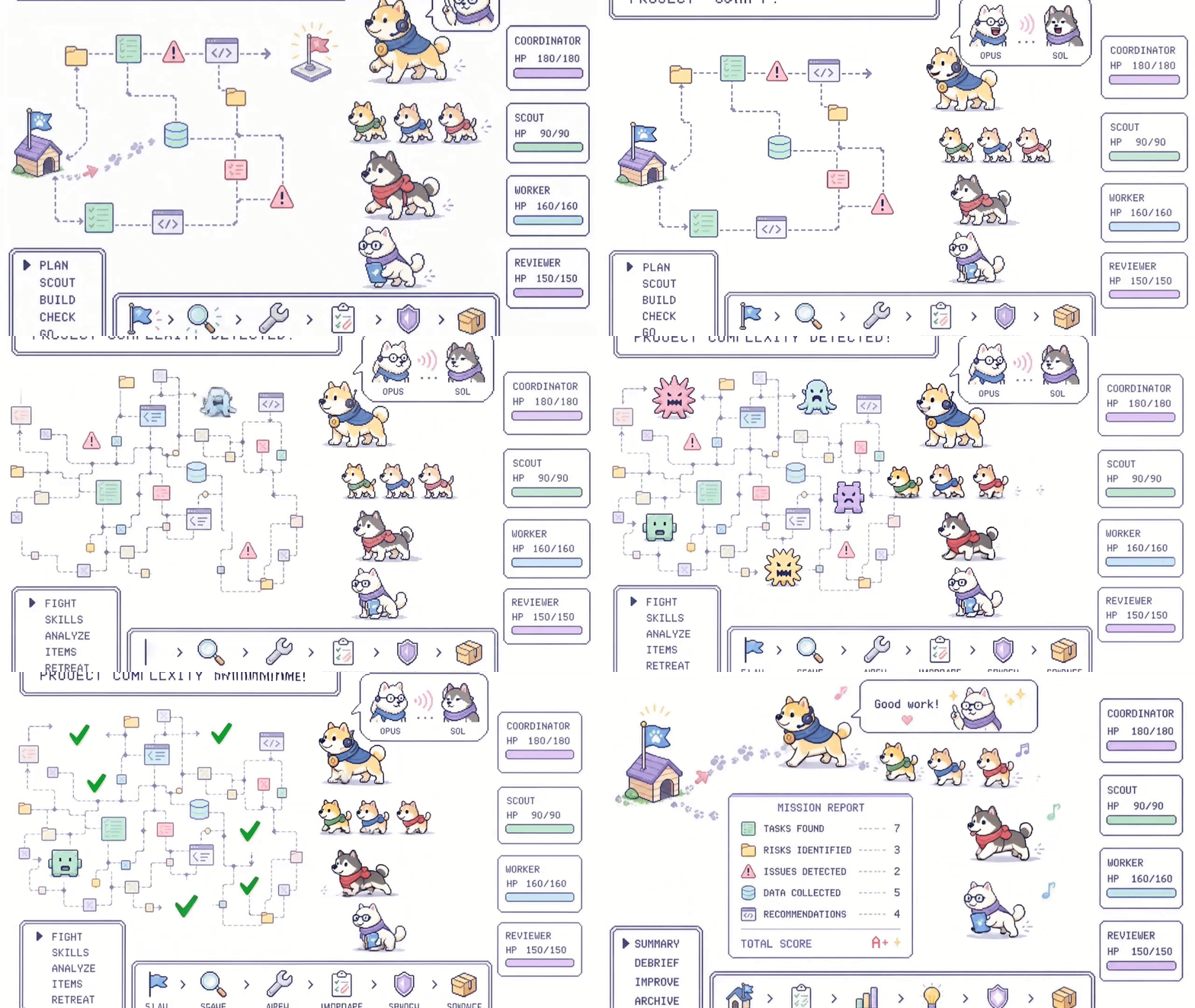
Sortie-dogs is an opt-in OpenCode orchestration plugin. It turns a task into a
|
|
15
|
+
scoped plan, parallel investigation, dedicated implementation, canonical
|
|
16
|
+
validation, and evidence-backed completion—while preserving standard OpenCode
|
|
17
|
+
agents and settings.
|
|
18
|
+
|
|
19
|
+
Requirements: Node.js 22.6 or newer, npm, and OpenCode.
|
|
20
|
+
|
|
21
|
+
Guides: [日本語](docs/guide-ja.md) · [简体中文](docs/guide-zh-CN.md)
|
|
22
|
+
|
|
23
|
+
## Quick start
|
|
24
|
+
|
|
25
|
+
Install the public npm package in the project and generate the project-local
|
|
26
|
+
OpenCode runtime files:
|
|
27
|
+
|
|
28
|
+
```sh
|
|
29
|
+
npm install --save-dev sortie-dogs
|
|
30
|
+
npx sortie-dogs init .
|
|
31
|
+
```
|
|
32
|
+
|
|
33
|
+
Alternatively, install the CLI globally and initialize OpenCode's global
|
|
34
|
+
configuration:
|
|
35
|
+
|
|
36
|
+
```sh
|
|
37
|
+
npm install --global sortie-dogs
|
|
38
|
+
sortie-dogs init --global
|
|
39
|
+
```
|
|
40
|
+
|
|
41
|
+
This installs the canonical runtime assets in OpenCode's global configuration,
|
|
42
|
+
so `dog-coordinator` can be selected from other projects without project-local
|
|
43
|
+
initialization. Global initialization and project-local initialization are
|
|
44
|
+
separate: `sortie-dogs init .` still writes runtime files only into that
|
|
45
|
+
project. Project-local configuration and the plugin bridge below remain
|
|
46
|
+
available when a project needs its own settings or dependency.
|
|
47
|
+
|
|
48
|
+
Installing the runtime assets does not load the plugin, and without the plugin
|
|
49
|
+
every role runs on whichever model the caller happened to use. Add the package
|
|
50
|
+
to the `plugin` array of the OpenCode configuration the agents run under —
|
|
51
|
+
`~/.config/opencode/opencode.json` for the global assets, or the project's
|
|
52
|
+
`.opencode/opencode.json`:
|
|
53
|
+
|
|
54
|
+
```json
|
|
55
|
+
{
|
|
56
|
+
"plugin": ["sortie-dogs"]
|
|
57
|
+
}
|
|
58
|
+
```
|
|
59
|
+
|
|
60
|
+
Restart OpenCode afterwards. A `plugin` entry must name the package, not a
|
|
61
|
+
subpath: `sortie-dogs/plugin` is an import specifier, not a plugin specifier.
|
|
62
|
+
|
|
63
|
+
`dog-coordinator` and `dog-scout` default to `openai/gpt-5.6-luna`. To use a
|
|
64
|
+
different model for both roles, save this as `.opencode/sortie-dogs.json`:
|
|
65
|
+
|
|
66
|
+
```json
|
|
67
|
+
{
|
|
68
|
+
"modelRouting": {
|
|
69
|
+
"dog-coordinator": {
|
|
70
|
+
"preferred": { "model": "provider/model" }
|
|
71
|
+
},
|
|
72
|
+
"dog-scout": {
|
|
73
|
+
"preferred": { "model": "provider/model" }
|
|
74
|
+
}
|
|
75
|
+
},
|
|
76
|
+
"modelCatalog": {
|
|
77
|
+
"project": [{ "model": "provider/model" }]
|
|
78
|
+
}
|
|
79
|
+
}
|
|
80
|
+
```
|
|
81
|
+
|
|
82
|
+
Replace `provider/model` with a model available to you.
|
|
83
|
+
|
|
84
|
+
A project that depends on the package can load it from
|
|
85
|
+
`.opencode/plugins/sortie-dogs.ts` instead of the `plugin` array:
|
|
86
|
+
|
|
87
|
+
```ts
|
|
88
|
+
export { SortieDogsPlugin } from "sortie-dogs/plugin";
|
|
89
|
+
```
|
|
90
|
+
|
|
91
|
+
OpenCode discovers that file automatically. Export the plugin and nothing else:
|
|
92
|
+
OpenCode calls every runtime export of a plugin module as a plugin factory, so
|
|
93
|
+
one extra export disables the whole module. Restart OpenCode, then start a task:
|
|
94
|
+
|
|
95
|
+
```text
|
|
96
|
+
/sortie <task>
|
|
97
|
+
```
|
|
98
|
+
|
|
99
|
+
Selecting `dog-coordinator` directly also activates the workflow.
|
|
100
|
+
|
|
101
|
+
## The write gate
|
|
102
|
+
|
|
103
|
+
The write gate is opt-in per project. Without `operation-manifest.json` in the
|
|
104
|
+
project root, the plugin stays passive and never denies a tool call. Creating
|
|
105
|
+
that file is how a project opts in, so the coordinator can always create it.
|
|
106
|
+
|
|
107
|
+
```json
|
|
108
|
+
{
|
|
109
|
+
"version": "0.1.0",
|
|
110
|
+
"task_id": "add-requested-behavior",
|
|
111
|
+
"read": ["src/feature.ts", "test/feature.test.ts"],
|
|
112
|
+
"write": ["src/feature.ts", "test/feature.test.ts"],
|
|
113
|
+
"validation": ["npm test"]
|
|
114
|
+
}
|
|
115
|
+
```
|
|
116
|
+
|
|
117
|
+
- `write` lists the only paths a bound worker may change. A listed directory
|
|
118
|
+
covers the files under it; every other entry is an exact path.
|
|
119
|
+
- `validation` lists the exact commands a bound worker may run. Build and test
|
|
120
|
+
commands cannot be classified by path, so a command is allowed only when it
|
|
121
|
+
matches a declared entry exactly. Anything else is denied as unclassified.
|
|
122
|
+
- `read` documents the intended reading scope; reads are never blocked.
|
|
123
|
+
|
|
124
|
+
`dog-coordinator` owns this file. A worker binds to it once per candidate with
|
|
125
|
+
`sortie_bind_write_gate`, and only after the coordinator's handoff has been
|
|
126
|
+
inspected. Coordinator sessions are never gated.
|
|
127
|
+
|
|
128
|
+
Both documents are schema-checked before inspection and binding, and every object
|
|
129
|
+
rejects unknown properties. A rejection always names the failing document, the
|
|
130
|
+
exact JSON pointer, and the failing rule, for example
|
|
131
|
+
`Defects: handoff /state/blocked/0 schema_type`, so the coordinator repairs that
|
|
132
|
+
pointer instead of resending an unchanged document. Check a handoff before
|
|
133
|
+
dispatch with the read-only `sortie_check_contract` tool, which reports the same
|
|
134
|
+
defects without inspecting or binding, or with `sortie-dogs lint <handoff.json>
|
|
135
|
+
--manifest <operation-manifest.json>`. The two most common defects are a
|
|
136
|
+
`state.blocked` list of strings instead of `{ reason, needed }` objects, and an
|
|
137
|
+
operation manifest that declares anything other than `version`, `task_id`,
|
|
138
|
+
`read`, `write`, and `validation`.
|
|
139
|
+
|
|
140
|
+
Optional settings in `.opencode/sortie-dogs.json`:
|
|
141
|
+
|
|
142
|
+
```json
|
|
143
|
+
{
|
|
144
|
+
"operationManifestPath": "operation-manifest.json",
|
|
145
|
+
"handoffPaths": ["handoff.json"],
|
|
146
|
+
"readOnlyTools": ["my_mcp_search"],
|
|
147
|
+
"dedicatedWorkerModel": { "model": "provider/model", "variant": "deep" },
|
|
148
|
+
"continuation": { "enabled": true, "maxAutoContinues": 3 }
|
|
149
|
+
}
|
|
150
|
+
```
|
|
151
|
+
|
|
152
|
+
- `operationManifestPath` moves the manifest; the path is project-relative.
|
|
153
|
+
- `handoffPaths` lists the handoff files the plugin inspects. A worker can only
|
|
154
|
+
bind after one of these files passes inspection, so an empty list disables
|
|
155
|
+
binding entirely. Relative entries are also candidate-relative in a nested
|
|
156
|
+
repository: a child candidate may use its own `handoff.json` while OpenCode is
|
|
157
|
+
opened at the parent workspace. For operational work the coordinator creates
|
|
158
|
+
that valid handoff before dispatch and sends its exact absolute path; the
|
|
159
|
+
binding child must use the built-in Read tool on it immediately before bind.
|
|
160
|
+
- `readOnlyTools` adds host-specific tool names that never change files, such as
|
|
161
|
+
MCP tools. Unknown tools are denied for a bound session by default.
|
|
162
|
+
- `dedicatedWorkerModel` selects the single model every worker role resolves to.
|
|
163
|
+
It defaults to `openai/gpt-5.6-sol` with variant `medium`; declare your own when
|
|
164
|
+
that model is unavailable or when you want a different worker effort. Worker
|
|
165
|
+
roles always resolve to this one target and cannot be routed per role.
|
|
166
|
+
- `continuation` bounds the batch loop. After a terminal unit and its checkpoint,
|
|
167
|
+
`dog-coordinator` calls `sortie_compact_and_continue`, which compacts the run
|
|
168
|
+
and resumes the same root session on the next independent unit. Only a root
|
|
169
|
+
`dog-coordinator` session is ever resumed: a child session is never promoted and
|
|
170
|
+
another coordinator is never adopted. Set `enabled` to `false` to keep every
|
|
171
|
+
batch manual, raise or lower `maxAutoContinues` (default `3`, maximum `10`) to
|
|
172
|
+
change the ceiling, and set `summarizeModel` to pin the compaction model when
|
|
173
|
+
the host default is unsuitable.
|
|
174
|
+
|
|
175
|
+
## Why Sortie-dogs
|
|
176
|
+
|
|
177
|
+
- **Focused when invited, invisible otherwise.** Activate it with `/sortie` or
|
|
178
|
+
select `dog-coordinator`; ordinary OpenCode sessions remain unchanged.
|
|
179
|
+
- **Parallel context without uncontrolled fan-out.** Every worker handoff uses
|
|
180
|
+
exactly three bounded scouts before implementation begins.
|
|
181
|
+
- **Writes stay inside the assignment.** Exact source or operation manifests
|
|
182
|
+
gate edits and handoffs.
|
|
183
|
+
- **One accountable implementation path.** A dedicated Sol worker handles
|
|
184
|
+
implementation, remediation, and blocker resolution.
|
|
185
|
+
- **Evidence before completion.** Canonical validation, risk-based review, and
|
|
186
|
+
terminal evidence gate coordinator-owned completion and commits.
|
|
187
|
+
- **Long work can recover.** Restart recovery and bounded compaction continue
|
|
188
|
+
from retained handoff context rather than silently starting over.
|
|
189
|
+
|
|
190
|
+
## Example run
|
|
191
|
+
|
|
192
|
+
An illustrative low-risk run stays bounded and reports its gates:
|
|
193
|
+
|
|
194
|
+
```text
|
|
195
|
+
You: /sortie Add the requested behavior
|
|
196
|
+
dog-coordinator: manifest confirmed
|
|
197
|
+
dog-scout ×3: investigation complete
|
|
198
|
+
dog-worker: implementation complete
|
|
199
|
+
validation: npm test — PASS
|
|
200
|
+
review: skipped — low risk
|
|
201
|
+
dog-coordinator: completion evidence accepted
|
|
202
|
+
```
|
|
203
|
+
|
|
204
|
+
## The workflow
|
|
205
|
+
|
|
206
|
+
1. **Brief and plan** — `dog-coordinator` turns the request into acceptance
|
|
207
|
+
criteria, a write manifest, and validation requirements.
|
|
208
|
+
2. **Exactly three scouts** — bounded, read-only investigation collects
|
|
209
|
+
complementary evidence without expanding the write scope.
|
|
210
|
+
3. **Dedicated worker** — the Sol worker implements only the approved manifest
|
|
211
|
+
and also owns scoped remediation or blocker resolution.
|
|
212
|
+
4. **Canonical validation** — the declared test or build command must produce
|
|
213
|
+
acceptable evidence.
|
|
214
|
+
5. **Risk-based review** — high-risk candidates receive independent review;
|
|
215
|
+
low-risk candidates can skip that extra pass after validation.
|
|
216
|
+
6. **Coordinator completion** — only the coordinator closes the loop and owns
|
|
217
|
+
any commit after manifest, validation, review, and evidence gates pass.
|
|
218
|
+
7. **Bounded continuation** — restart recovery and compaction handoffs preserve
|
|
219
|
+
progress; repeated batches remain bounded rather than becoming endless
|
|
220
|
+
delegation.
|
|
221
|
+
|
|
222
|
+
## A visual walkthrough
|
|
223
|
+
|
|
224
|
+
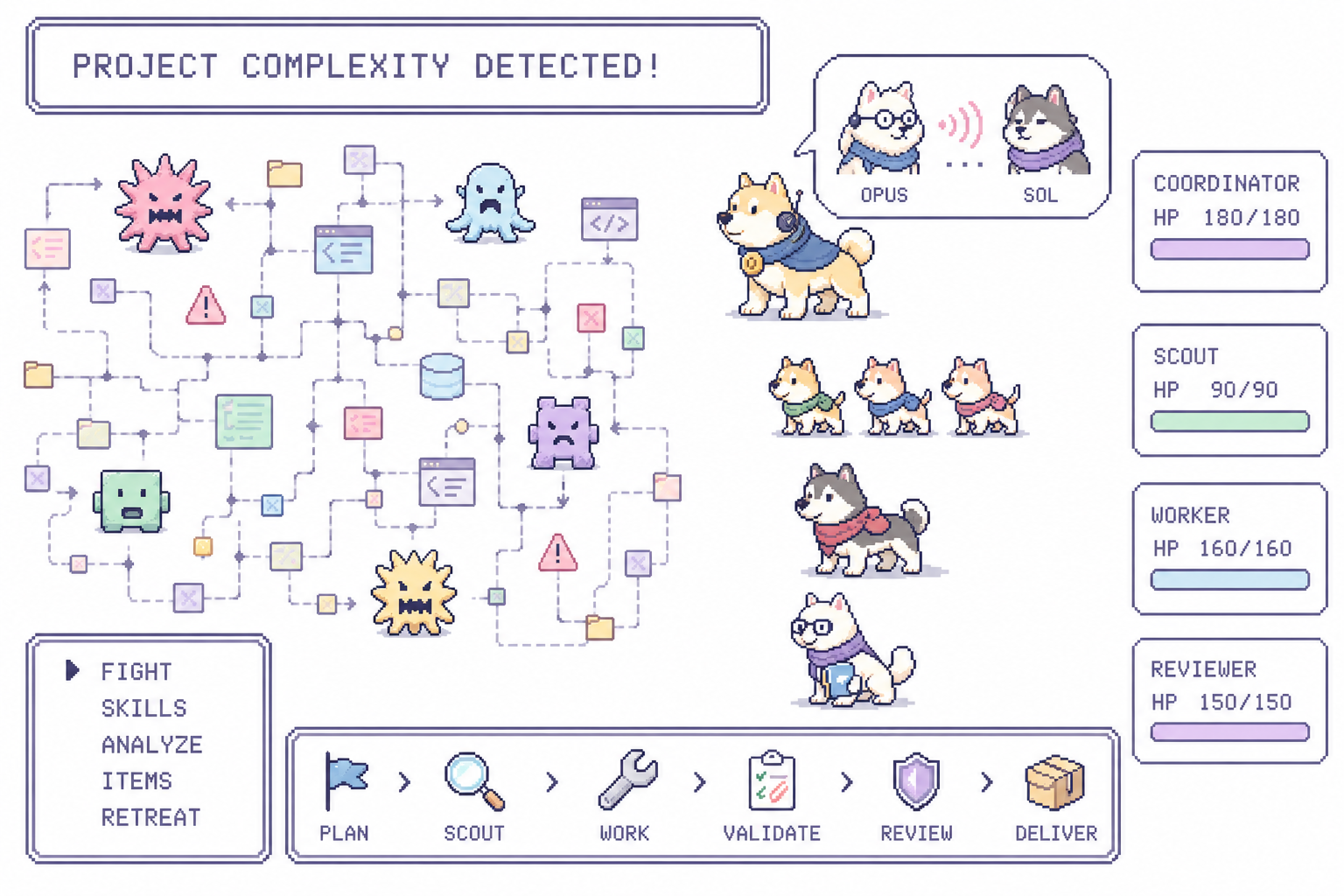
### Control complexity
|
|
225
|
+
|
|
226
|
+
|
|
227
|
+
|
|
228
|
+
The coordinator keeps investigation, implementation, validation, and review in
|
|
229
|
+
separate roles. Manifest gates keep their writes bounded even as the project
|
|
230
|
+
gets more complex.
|
|
231
|
+
|
|
232
|
+
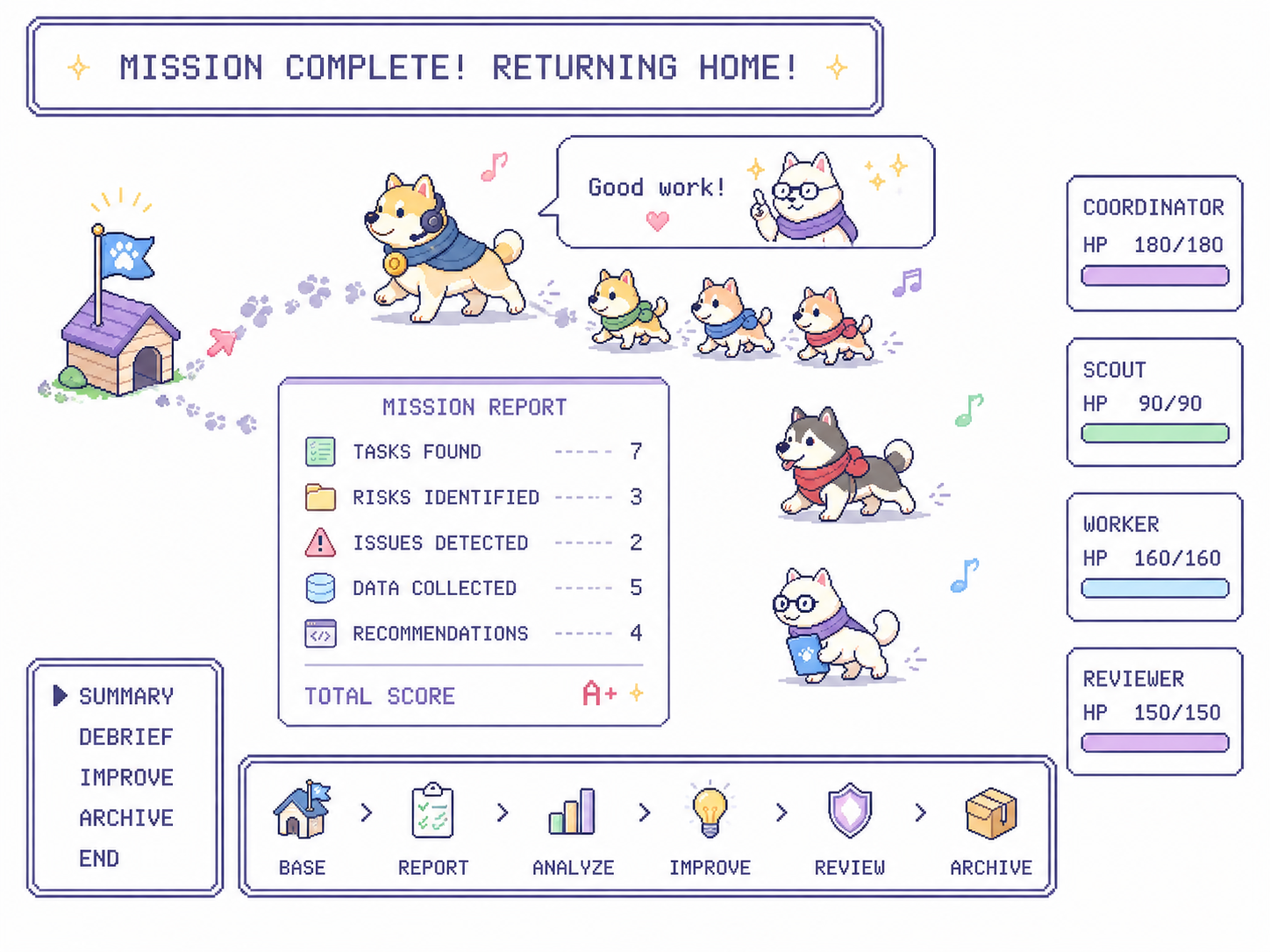
### Finish with evidence
|
|
233
|
+
|
|
234
|
+
|
|
235
|
+
|
|
236
|
+
Validation and risk-based review happen before coordinator-owned completion, so
|
|
237
|
+
the result returns with a concise record of what changed and how it was checked.
|
|
238
|
+
|
|
239
|
+
## Scope and session guarantees
|
|
240
|
+
|
|
241
|
+
The plugin is passive by default. It activates a session only when a message
|
|
242
|
+
uses `/sortie` or the selected agent is `dog-coordinator`. It validates exact
|
|
243
|
+
write scope through source or operation manifests and rejects invalid worker
|
|
244
|
+
handoffs. Standard OpenCode agents, roles, settings, and unrelated sessions are
|
|
245
|
+
preserved.
|
|
246
|
+
|
|
247
|
+
On `session.idle`, the final handoff is checked and the session is released. A
|
|
248
|
+
`session.deleted` event also releases it. A later request must activate the
|
|
249
|
+
workflow again.
|
|
250
|
+
|
|
251
|
+
One host defect is repaired in place. A subagent result is built from the last
|
|
252
|
+
text part of the child's final message, so a reasoning model that closes its
|
|
253
|
+
turn with an empty text part returns an empty result and the coordinator
|
|
254
|
+
re-dispatches work the worker already finished. When a completed `task` result
|
|
255
|
+
is empty, Sortie-dogs restores the last real assistant text from that child
|
|
256
|
+
session. Non-empty results, other tools, and unreadable child sessions are left
|
|
257
|
+
untouched.
|
|
258
|
+
|
|
259
|
+
## Model routing
|
|
260
|
+
|
|
261
|
+
`dog-coordinator` and `dog-scout` default to `openai/gpt-5.6-luna` with the
|
|
262
|
+
`xhigh` variant. This is the recommended balance: bounded prompts, concise
|
|
263
|
+
scout evidence, and fewer unnecessary context or tool turns can reduce token
|
|
264
|
+
use while preserving quality. Project-local routing can override either
|
|
265
|
+
default.
|
|
266
|
+
|
|
267
|
+
The `implementation`, `remediation`, `blocker-resolution`, and `dog-worker`
|
|
268
|
+
roles always use the dedicated worker target, `openai/gpt-5.6-sol` with the
|
|
269
|
+
`medium` variant. Worker effort is deliberately below review effort: source
|
|
270
|
+
review is mandatory for risky candidates and returns findings the worker must
|
|
271
|
+
remediate, so the loop already re-runs weak implementation work and top-of-range
|
|
272
|
+
first-attempt effort mostly buys accuracy the reviewer supplies anyway. Raise
|
|
273
|
+
`dedicatedWorkerModel` when you would rather pay for it up front. `modelRouting`
|
|
274
|
+
cannot replace those routes, and only `dedicatedWorkerModel` moves them. For other explicitly
|
|
275
|
+
routed roles, resolution is deterministic: Sortie-dogs tries the preferred
|
|
276
|
+
target, then ordered fallbacks. Roles without either a built-in default or an
|
|
277
|
+
explicit route keep OpenCode's already selected model.
|
|
278
|
+
|
|
279
|
+
`dog-reviewer` and `dog-advisor` must never inherit the caller's model, because
|
|
280
|
+
review and strategy lose their value when they run on the model that produced
|
|
281
|
+
the candidate. Both default to `anthropic/claude-opus-5` when the catalog
|
|
282
|
+
declares it, and otherwise fall back to `openai/gpt-5.6-sol` with the `xhigh`
|
|
283
|
+
variant, one effort step above the worker target. A host that redeclares
|
|
284
|
+
`dedicatedWorkerModel` keeps that target as its first fallback, since such a
|
|
285
|
+
host may not serve the shipped model at all. Nothing here requires a particular
|
|
286
|
+
vendor: both roles stay fully configurable, so declare whichever model you can
|
|
287
|
+
actually serve.
|
|
288
|
+
|
|
289
|
+
```json
|
|
290
|
+
{
|
|
291
|
+
"modelRouting": {
|
|
292
|
+
"dog-coordinator": {
|
|
293
|
+
"preferred": { "model": "openai/gpt-5.6-luna", "variant": "xhigh" }
|
|
294
|
+
},
|
|
295
|
+
"dog-scout": {
|
|
296
|
+
"preferred": { "model": "openai/gpt-5.6-luna", "variant": "xhigh" }
|
|
297
|
+
},
|
|
298
|
+
"dog-reviewer": {
|
|
299
|
+
"preferred": { "model": "anthropic/claude-opus-5" },
|
|
300
|
+
"fallback": [{ "model": "openai/gpt-5.6-sol", "variant": "xhigh" }]
|
|
301
|
+
},
|
|
302
|
+
"dog-advisor": {
|
|
303
|
+
"preferred": { "model": "openai/gpt-5.6-sol", "variant": "xhigh" }
|
|
304
|
+
}
|
|
305
|
+
},
|
|
306
|
+
"modelCatalog": {
|
|
307
|
+
"project": [
|
|
308
|
+
{ "model": "openai/gpt-5.6-sol", "variants": ["medium", "xhigh"] },
|
|
309
|
+
{ "model": "openai/gpt-5.6-luna", "variants": ["xhigh"] },
|
|
310
|
+
{ "model": "anthropic/claude-opus-5" }
|
|
311
|
+
]
|
|
312
|
+
}
|
|
313
|
+
}
|
|
314
|
+
```
|
|
315
|
+
|
|
316
|
+
Save project configuration as `.opencode/sortie-dogs.json`. `modelCatalog`
|
|
317
|
+
declares provider models and named variants that are actually available;
|
|
318
|
+
Sortie-dogs does not invent, probe, or translate variants. The built-in catalog
|
|
319
|
+
intentionally omits `anthropic/claude-opus-5`, so the preferred consultation
|
|
320
|
+
model applies only after you declare it. Resolution tries the preferred target
|
|
321
|
+
and then its fallbacks, rejecting an explicitly routed role when no candidate
|
|
322
|
+
appears in the catalog.
|
|
323
|
+
|
|
324
|
+
`dog-advisor` accepts bounded Strategy or SourceReview consultation from the
|
|
325
|
+
coordinator. `dog-reviewer` independently checks high-risk candidates after
|
|
326
|
+
canonical validation. Neither role implements, stages, commits, or acts as a
|
|
327
|
+
user-facing worker.
|
|
328
|
+
|
|
329
|
+
## Updates and migration
|
|
330
|
+
|
|
331
|
+
After replacing the dependency with a newer release asset, run:
|
|
332
|
+
|
|
333
|
+
```sh
|
|
334
|
+
npx sortie-dogs init .
|
|
335
|
+
```
|
|
336
|
+
|
|
337
|
+
`init` is idempotent. It updates files owned by Sortie-dogs, migrates recognized
|
|
338
|
+
older runtime files, and records the installed version in
|
|
339
|
+
`.opencode/sortie-dogs.version`. Conflicting or unrecognized files remain
|
|
340
|
+
untouched and initialization stops safely. User-owned configuration—including
|
|
341
|
+
`.opencode/sortie-dogs.json`—and standard OpenCode files are preserved.
|
|
342
|
+
|
|
343
|
+
## Safe manual removal
|
|
344
|
+
|
|
345
|
+
There is no supported Sortie-dogs uninstall command. Remove the npm dependency
|
|
346
|
+
separately, then follow the [safe manual removal guide](docs/uninstall.md) to
|
|
347
|
+
delete only Sortie-dogs-owned runtime files without affecting user files or
|
|
348
|
+
standard OpenCode agents.
|