resvg-napi 0.1.2 → 0.3.0
This diff represents the content of publicly available package versions that have been released to one of the supported registries. The information contained in this diff is provided for informational purposes only and reflects changes between package versions as they appear in their respective public registries.
- package/README.md +168 -35
- package/fit.d.mts +62 -0
- package/index.d.ts +234 -191
- package/index.js +61 -54
- package/package.json +37 -25
- package/resvg-napi.wasi-browser.js +7 -0
- package/resvg-napi.wasi.cjs +8 -1
- package/resvg-napi.wasi.d.cts +234 -191
package/README.md
CHANGED
|
@@ -1,11 +1,17 @@
|
|
|
1
|
-
#
|
|
1
|
+
# Render and inspect SVG
|
|
2
2
|
|
|
3
|
-
|
|
4
|
-
|
|
5
|
-
|
|
3
|
+
[](https://www.npmjs.com/package/resvg-napi)
|
|
4
|
+
[](#conformance)
|
|
5
|
+
[](#licence)
|
|
6
6
|
|
|
7
|
-
|
|
8
|
-
|
|
7
|
+
Render an SVG to PNG, and read back what the renderer made of the document — the
|
|
8
|
+
resolved tree, text metrics, paint, geometry. Node.js bindings for
|
|
9
|
+
[resvg](https://github.com/linebender/resvg) 0.48, generated from the upstream
|
|
10
|
+
Rust sources, so the TypeScript surface is usvg's own, names and doc comments
|
|
11
|
+
included.
|
|
12
|
+
|
|
13
|
+
**[Try it in the browser](https://p8nut.github.io/resvg-napi/)** — the same
|
|
14
|
+
bindings compiled to WASI, rendering in the page, nothing to install.
|
|
9
15
|
|
|
10
16
|
```bash
|
|
11
17
|
npm install resvg-napi
|
|
@@ -20,35 +26,58 @@ doc.renderRaw({ crop: doc.absLayerBoundingBox() }) // RGBA8, trimmed
|
|
|
20
26
|
await renderAsync(svg, options, { width: 1200 }) // off the event loop
|
|
21
27
|
```
|
|
22
28
|
|
|
23
|
-
|
|
29
|
+
`index.d.ts` is the reference — it is generated, so it cannot drift. What follows
|
|
30
|
+
is the map.
|
|
24
31
|
|
|
25
|
-
|
|
26
|
-
the map.
|
|
32
|
+
## Render SVG to PNG
|
|
27
33
|
|
|
28
|
-
|
|
29
|
-
|
|
34
|
+
Parse once with `new Resvg(svg, options?, fonts?, images?)`, then render as often
|
|
35
|
+
as you like.
|
|
30
36
|
|
|
31
37
|
| | |
|
|
32
38
|
|---|---|
|
|
33
39
|
| `renderPng(params?)` | `Buffer` |
|
|
34
40
|
| `renderRaw(params?)` | `RawImage`, un-premultiplied RGBA8 |
|
|
35
|
-
| `toString(opts?)` | the resolved tree, back as SVG |
|
|
41
|
+
| `toString(opts?)` | the resolved tree, back as SVG — text as paths unless `preserveText` |
|
|
36
42
|
| `renderPngAsync` · `renderRawAsync` · `toStringAsync` | the same, off the event loop, `AbortSignal`-aware |
|
|
37
43
|
|
|
38
44
|
`params` carries `width` / `height` / `scale`, a `background` colour and a
|
|
39
45
|
`crop` box. `Resvg.parseAsync` moves the parse off the loop too.
|
|
40
46
|
|
|
41
|
-
|
|
42
|
-
|
|
47
|
+
## Text as outlines
|
|
48
|
+
|
|
49
|
+
`toString()` hands back the resolved tree with **the text converted to paths** —
|
|
50
|
+
an SVG that draws the same where the font is not installed, which is what a
|
|
51
|
+
print or PDF pipeline needs from a template:
|
|
52
|
+
|
|
53
|
+
```js
|
|
54
|
+
const doc = new Resvg(svg, { fontFamily: 'DejaVu Sans' }, fonts)
|
|
55
|
+
doc.toString() // one <path> per glyph, no <text>
|
|
56
|
+
doc.toString({ preserveText: true }) // <text> kept, resolved but not outlined
|
|
57
|
+
```
|
|
58
|
+
|
|
59
|
+
The outlines come from the same layout `renderPng` draws, so a glyph sits where
|
|
60
|
+
the raster puts it — and `extent()` measured it before either.
|
|
61
|
+
|
|
62
|
+
## Inspect the usvg tree
|
|
63
|
+
|
|
64
|
+
`node(id)` and `children()` hand back `SvgNode`s, and each one knows what it is:
|
|
43
65
|
|
|
44
66
|
```js
|
|
45
67
|
const n = doc.node('surname')
|
|
46
68
|
n.kind // 'group' | 'path' | 'image' | 'text'
|
|
47
69
|
n.path() // geometry, fill, stroke — null unless it is a shape
|
|
48
|
-
n.text() // chunks, layouted spans, positioned glyphs
|
|
70
|
+
n.text() // chunks, layouted spans, positioned glyphs, decoration
|
|
49
71
|
n.renderPng() // that element alone, cropped to its own extent
|
|
50
72
|
```
|
|
51
73
|
|
|
74
|
+
A span carries what it is drawn with, down to the lines through it:
|
|
75
|
+
|
|
76
|
+
```js
|
|
77
|
+
const span = n.text().chunks[0].spans[0]
|
|
78
|
+
span.decoration.underline?.fill?.paint // …and .overline, .lineThrough
|
|
79
|
+
```
|
|
80
|
+
|
|
52
81
|
Paint is a discriminated union, so TypeScript narrows it:
|
|
53
82
|
|
|
54
83
|
```ts
|
|
@@ -57,23 +86,90 @@ if (paint?.type === 'color') paint.value // { red, green, blue }
|
|
|
57
86
|
else paint?.id // the gradient or pattern it names
|
|
58
87
|
```
|
|
59
88
|
|
|
60
|
-
|
|
61
|
-
|
|
62
|
-
|
|
89
|
+
## Measure text and geometry
|
|
90
|
+
|
|
91
|
+
Every node reports `boundingBox()`, `absBoundingBox()`, `strokeBoundingBox()`,
|
|
92
|
+
`absLayerBoundingBox()` and `extent()` — in the document's own units, which is
|
|
93
|
+
not the canvas. See [Fitting text to a width](#fitting-text-to-a-width) for why
|
|
63
94
|
that distinction bites.
|
|
64
95
|
|
|
65
|
-
|
|
66
|
-
|
|
67
|
-
|
|
68
|
-
|
|
96
|
+
## Fonts
|
|
97
|
+
|
|
98
|
+
`FontDatabase` is `fontdb` itself: `loadSystemFonts()`, `loadFontData(buffer)`,
|
|
99
|
+
`loadFontFile(path)`, `faces()`, `query()`, and the generic-family setters. A
|
|
100
|
+
face reports its `families`, `weight`, `style` (`'normal' | 'italic' |
|
|
101
|
+
'oblique'`) and whether it is `monospaced`. `pendingFonts()` on a parsed document
|
|
102
|
+
names the families it wanted and did not get; `pendingImages()` does the same for
|
|
103
|
+
hrefs.
|
|
104
|
+
|
|
105
|
+
`pendingFonts()` names the families nobody had. `faceOf(glyph)` names the face
|
|
106
|
+
that drew the text instead — the substitution a document-wide list cannot show,
|
|
107
|
+
and the one that survives to print:
|
|
108
|
+
|
|
109
|
+
```js
|
|
110
|
+
const text = doc.node('title').text()
|
|
111
|
+
text.chunks[0].spans[0].font.families // ['Brand Sans', 'DejaVu Sans'] — asked for
|
|
112
|
+
for (const glyph of text.layouted[0].positionedGlyphs) {
|
|
113
|
+
doc.faceOf(glyph)?.postScriptName // 'DejaVuSans' — what actually drew it
|
|
114
|
+
}
|
|
115
|
+
```
|
|
116
|
+
|
|
117
|
+
`faceOf` returns `null` only for a glyph from another document: the id a glyph
|
|
118
|
+
carries is a key into the font database its own document was parsed with.
|
|
119
|
+
|
|
120
|
+
## Paint servers
|
|
121
|
+
|
|
122
|
+
`linearGradients()`, `radialGradients()`, `patterns()`, `clipPaths()`, `masks()`,
|
|
123
|
+
`filters()` — the paint servers an element's `id` refers to.
|
|
124
|
+
|
|
125
|
+
## Examples
|
|
126
|
+
|
|
127
|
+
Four templates in [`demo/examples/`](demo/examples), each rendered by
|
|
128
|
+
`node demo/render.mjs <template.svg>`: Liquid fills the template from the JSON
|
|
129
|
+
file next to it, this binding rasterises the result. The images below are that
|
|
130
|
+
command's output.
|
|
131
|
+
|
|
132
|
+
### Roster — a table from a JSON array
|
|
133
|
+
|
|
134
|
+
|
|
135
|
+
|
|
136
|
+
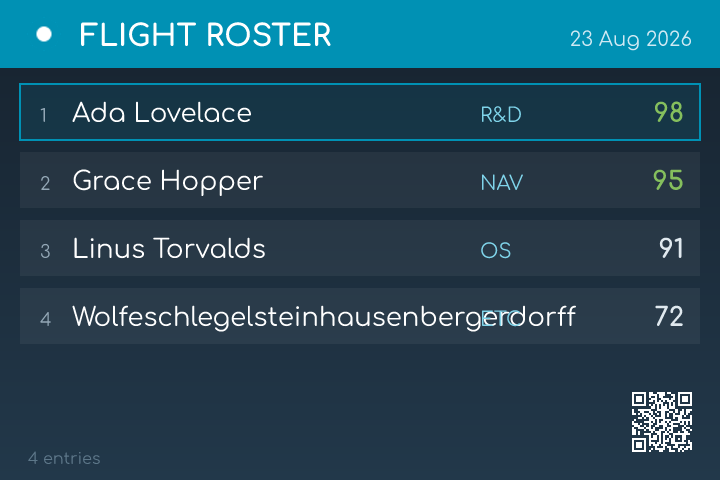
A `staff` array becomes rows, with an embedded logo and a QR code generated
|
|
137
|
+
during templating. The fourth name runs straight into the column beside it —
|
|
138
|
+
measuring that overflow, and compressing it away, is what [Fitting text to a
|
|
139
|
+
width](#fitting-text-to-a-width) below is for.
|
|
69
140
|
|
|
70
|
-
|
|
71
|
-
`clipPaths()`, `masks()`, `filters()` — the paint servers an element's `id`
|
|
72
|
-
refers to.
|
|
141
|
+
### Photo card — images and glyphs
|
|
73
142
|
|
|
74
|
-
|
|
75
|
-
|
|
76
|
-
and
|
|
143
|
+
|
|
144
|
+
|
|
145
|
+
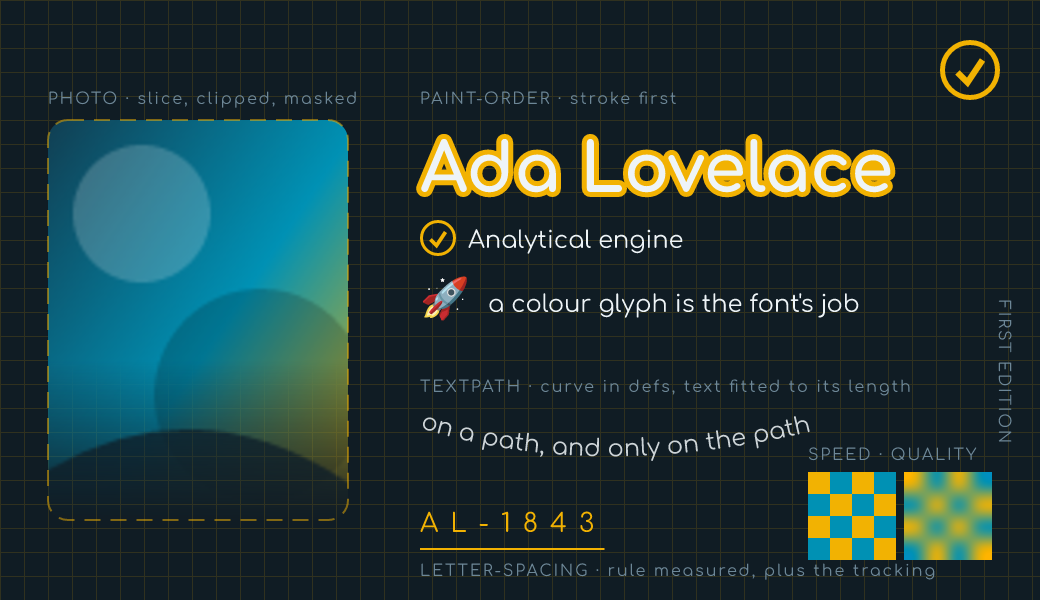
Everything a card does with raster images and type, and nothing it does with
|
|
146
|
+
data.
|
|
147
|
+
|
|
148
|
+
### Badge sheet — one template, stamped per record
|
|
149
|
+
|
|
150
|
+
|
|
151
|
+
|
|
152
|
+
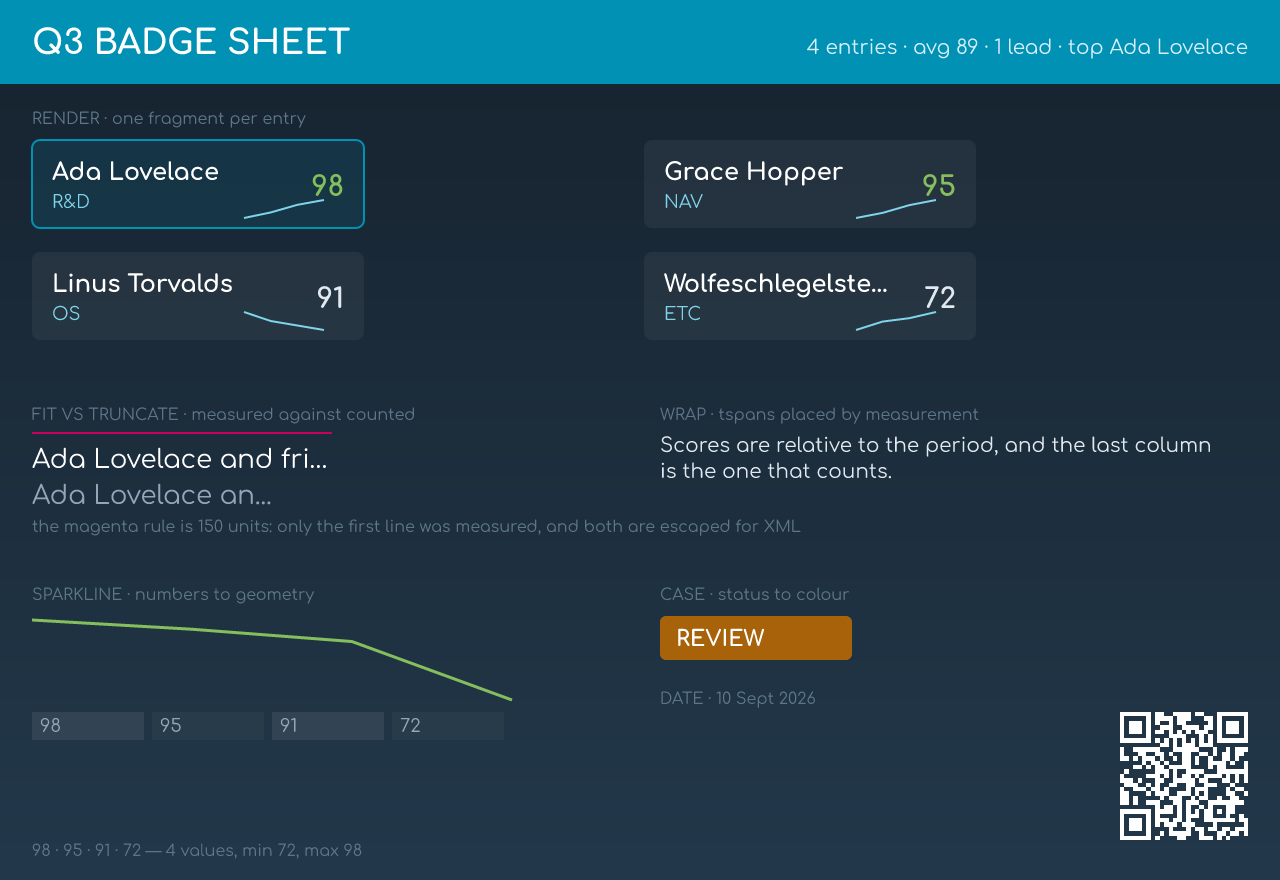
Pulls `badge.svg` in as a partial and repeats it. A guided tour, where every zone
|
|
153
|
+
of the page is one Liquid capability.
|
|
154
|
+
|
|
155
|
+
`sheet.svg` covers the data half — pagination, grouping, theming, and
|
|
156
|
+
`--lang fr` driving `<switch systemLanguage>`, which usvg picks nothing from
|
|
157
|
+
without a language.
|
|
158
|
+
|
|
159
|
+
## Conformance
|
|
160
|
+
|
|
161
|
+
resvg's own test corpus, rendered through these bindings: **1715 of 1715 match**
|
|
162
|
+
the reference PNGs upstream asserts on, within 1/255 per channel — a tolerance
|
|
163
|
+
measured rather than chosen, with the reason recorded in
|
|
164
|
+
[`scripts/conformance.mjs`](scripts/conformance.mjs).
|
|
165
|
+
|
|
166
|
+
```bash
|
|
167
|
+
npm run conformance:fetch # the corpus, at the tag Cargo.toml pins
|
|
168
|
+
npm run conformance # 15 seconds including the fetch
|
|
169
|
+
```
|
|
170
|
+
|
|
171
|
+
CI runs it on every pull request, so a resvg bump that changes a render shows up
|
|
172
|
+
as a diff rather than passing unnoticed.
|
|
77
173
|
|
|
78
174
|
## Platforms
|
|
79
175
|
|
|
@@ -112,7 +208,6 @@ generated shims and test run are a different code path. The other eleven build
|
|
|
112
208
|
on the merge, on a `v*` tag, on a manual dispatch, or on a pull request labelled
|
|
113
209
|
`full-matrix` when the proof is wanted before merging rather than after.
|
|
114
210
|
|
|
115
|
-
|
|
116
211
|
## Fitting text to a width
|
|
117
212
|
|
|
118
213
|
An Illustrator template says how wide a field may be on the element itself
|
|
@@ -147,7 +242,7 @@ left untouched, and a constraint that cannot be honoured says why: no `id` to
|
|
|
147
242
|
measure by, no visible extent, or an unusable width. It compresses glyphs rather
|
|
148
243
|
than reducing `font-size` — the choice the templates already made.
|
|
149
244
|
|
|
150
|
-
##
|
|
245
|
+
## Warnings and logs
|
|
151
246
|
|
|
152
247
|
usvg and resvg report every recoverable problem through the `log` crate —
|
|
153
248
|
unparsable values, skipped shapes, unmatched font families, images that could not
|
|
@@ -166,12 +261,50 @@ takeLogs()
|
|
|
166
261
|
`takeLogs()` drains the buffer, which is capped at 500 entries so a pathological
|
|
167
262
|
document cannot grow it without end.
|
|
168
263
|
|
|
169
|
-
##
|
|
264
|
+
## Troubleshooting
|
|
265
|
+
|
|
266
|
+
**A font family did not apply.** `pendingFonts()` on the parsed document names
|
|
267
|
+
the families it asked for and did not get, and `faceOf(glyph)` names the face
|
|
268
|
+
that was used in their place. Supply them with
|
|
269
|
+
`loadFontFile(path)` or `loadFontData(buffer)` before rendering. Under WASI,
|
|
270
|
+
`loadSystemFonts()` finds nothing inside the sandbox, so every face has to be
|
|
271
|
+
loaded by hand.
|
|
272
|
+
|
|
273
|
+
**An image did not appear.** `pendingImages()` names the hrefs that could not be
|
|
274
|
+
resolved.
|
|
275
|
+
|
|
276
|
+
**A measurement disagrees with the numbers in the file.** Bounding boxes are in
|
|
277
|
+
the document's own units and usvg normalises the tree, so they are not canvas
|
|
278
|
+
pixels. See [Fitting text to a width](#fitting-text-to-a-width) for the arithmetic.
|
|
279
|
+
|
|
280
|
+
**Something was dropped and nothing said so.** usvg reports it through the `log`
|
|
281
|
+
crate and nothing consumes that by default — see [Warnings and
|
|
282
|
+
logs](#warnings-and-logs).
|
|
283
|
+
|
|
284
|
+
**A member is missing from the TypeScript surface.** The generator keeps a report
|
|
285
|
+
of every upstream member it left alone, with the reason.
|
|
286
|
+
`RESVG_NAPI_CODEGEN_LOG=1 cargo build` prints it, and
|
|
287
|
+
[CONTRIBUTING.md](CONTRIBUTING.md) explains what the reasons mean.
|
|
288
|
+
|
|
289
|
+
## Demo
|
|
290
|
+
|
|
291
|
+
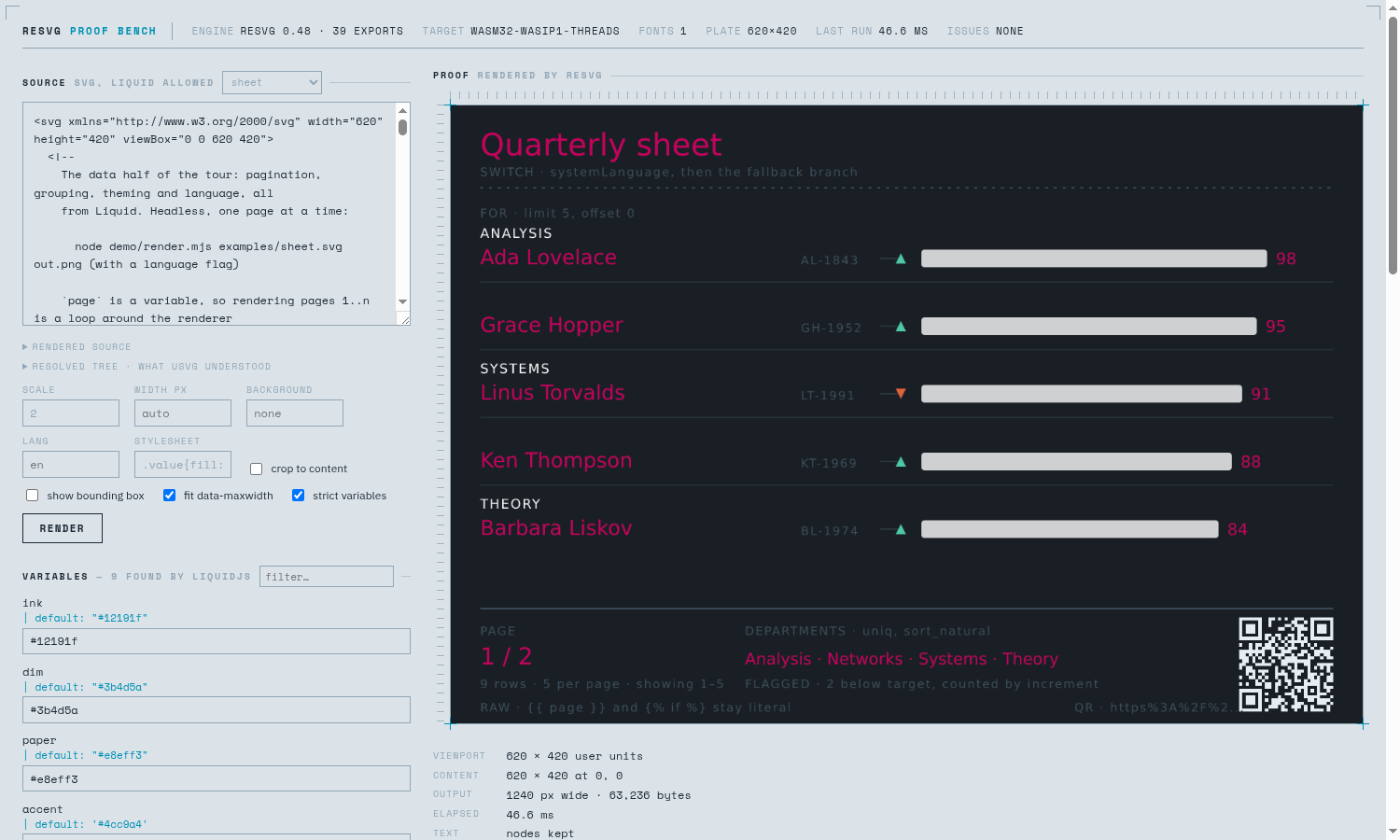
A browser proof bench for the same bindings compiled to WASI: Liquid templating,
|
|
292
|
+
an array editor, per-element export, live diagnostics. Deployed from `main` at
|
|
293
|
+
**[p8nut.github.io/resvg-napi](https://p8nut.github.io/resvg-napi/)**, and it
|
|
294
|
+
runs locally too:
|
|
295
|
+
|
|
296
|
+
```bash
|
|
297
|
+
npm run demo
|
|
298
|
+
```
|
|
299
|
+
|
|
300
|
+
|
|
301
|
+
|
|
302
|
+
[demo/README.md](demo/README.md) describes the page.
|
|
303
|
+
|
|
304
|
+
## Contributing
|
|
170
305
|
|
|
171
|
-
|
|
172
|
-
|
|
173
|
-
- **[CONTRIBUTING.md](CONTRIBUTING.md)** — how the bindings are generated, and
|
|
174
|
-
what to read before touching `build.rs`.
|
|
306
|
+
[CONTRIBUTING.md](CONTRIBUTING.md) — how the bindings are generated, and what to
|
|
307
|
+
read before touching the generator.
|
|
175
308
|
|
|
176
309
|
## Licence
|
|
177
310
|
|
package/fit.d.mts
ADDED
|
@@ -0,0 +1,62 @@
|
|
|
1
|
+
/**
|
|
2
|
+
* Horizontal text fitting, driven by `data-maxwidth`.
|
|
3
|
+
*
|
|
4
|
+
* Declarations for `fit.mjs`, which is JavaScript with JSDoc: written by hand,
|
|
5
|
+
* unlike `index.d.ts`, so they can drift. `npm run typecheck` reads them.
|
|
6
|
+
*/
|
|
7
|
+
|
|
8
|
+
/** A `Resvg` instance, however the caller chose to build one. */
|
|
9
|
+
type Renderer = {
|
|
10
|
+
node(id: string): { extent(): { width: number } | null } | null
|
|
11
|
+
}
|
|
12
|
+
|
|
13
|
+
/** One element carrying a width constraint, and what is needed to rewrite it. */
|
|
14
|
+
export interface WidthConstraint {
|
|
15
|
+
/** The element's opening tag, verbatim. */
|
|
16
|
+
tag: string
|
|
17
|
+
/** The tag name: `text`, `tspan`, ... */
|
|
18
|
+
name: string
|
|
19
|
+
/** The attribute text inside that tag, verbatim. */
|
|
20
|
+
attrs: string
|
|
21
|
+
/** The element's `id`, or null when it had none and one must be generated. */
|
|
22
|
+
id: string | null
|
|
23
|
+
/** The limit, in the document's own units -- not canvas pixels. */
|
|
24
|
+
max: number
|
|
25
|
+
/** Byte offset of the tag in the source string. */
|
|
26
|
+
index: number
|
|
27
|
+
}
|
|
28
|
+
|
|
29
|
+
/** One element that was compressed, and by how much. */
|
|
30
|
+
export interface Adjustment {
|
|
31
|
+
id: string
|
|
32
|
+
/** Measured width before, in the document's units. */
|
|
33
|
+
from: number
|
|
34
|
+
/** The limit it was fitted to. */
|
|
35
|
+
to: number
|
|
36
|
+
/** The horizontal scale applied: `to / from`. */
|
|
37
|
+
factor: number
|
|
38
|
+
/** Measured width after, as a check on the one-pass assumption. */
|
|
39
|
+
measured: number
|
|
40
|
+
}
|
|
41
|
+
|
|
42
|
+
export interface FitResult {
|
|
43
|
+
/** The source, with a `scale(k 1)` composed onto each fitted element. */
|
|
44
|
+
svg: string
|
|
45
|
+
adjustments: Adjustment[]
|
|
46
|
+
/** Constraints that could not be honoured, each saying why. */
|
|
47
|
+
problems: string[]
|
|
48
|
+
}
|
|
49
|
+
|
|
50
|
+
/** Elements carrying a width constraint, with the tag text needed to rewrite it. */
|
|
51
|
+
export function findWidthConstraints(svg: string): WidthConstraint[]
|
|
52
|
+
|
|
53
|
+
/**
|
|
54
|
+
* Fits every `data-maxwidth` element by compressing it horizontally.
|
|
55
|
+
*
|
|
56
|
+
* @param svg source, after any templating
|
|
57
|
+
* @param render `(svg) => Resvg`; supply fonts and options here
|
|
58
|
+
*/
|
|
59
|
+
export function fitTextWidths(
|
|
60
|
+
svg: string,
|
|
61
|
+
render: (svg: string) => Renderer,
|
|
62
|
+
): FitResult
|