reladraw 0.0.1 → 0.2.0
This diff represents the content of publicly available package versions that have been released to one of the supported registries. The information contained in this diff is provided for informational purposes only and reflects changes between package versions as they appear in their respective public registries.
- package/LICENSE +202 -0
- package/NOTICE +14 -0
- package/README.md +135 -2
- package/SYNTAX.md +617 -0
- package/dist/ast.d.ts +228 -0
- package/dist/ast.js +171 -0
- package/dist/cli.d.ts +2 -0
- package/dist/cli.js +72 -0
- package/dist/constants.d.ts +145 -0
- package/dist/constants.js +189 -0
- package/dist/constrain.d.ts +56 -0
- package/dist/constrain.js +95 -0
- package/dist/errors.d.ts +7 -0
- package/dist/errors.js +14 -0
- package/dist/grammar.d.ts +103 -0
- package/dist/grammar.js +215 -0
- package/dist/icons.d.ts +86 -0
- package/dist/icons.js +166 -0
- package/dist/index.d.ts +13 -0
- package/dist/index.js +16 -0
- package/dist/lexer.d.ts +25 -0
- package/dist/lexer.js +91 -0
- package/dist/measure.d.ts +38 -0
- package/dist/measure.js +66 -0
- package/dist/model.d.ts +78 -0
- package/dist/model.js +1 -0
- package/dist/parser.d.ts +3 -0
- package/dist/parser.js +459 -0
- package/dist/render.d.ts +31 -0
- package/dist/render.js +1180 -0
- package/dist/resolve.d.ts +22 -0
- package/dist/resolve.js +1130 -0
- package/package.json +42 -4
package/LICENSE
ADDED
|
@@ -0,0 +1,202 @@
|
|
|
1
|
+
|
|
2
|
+
Apache License
|
|
3
|
+
Version 2.0, January 2004
|
|
4
|
+
http://www.apache.org/licenses/
|
|
5
|
+
|
|
6
|
+
TERMS AND CONDITIONS FOR USE, REPRODUCTION, AND DISTRIBUTION
|
|
7
|
+
|
|
8
|
+
1. Definitions.
|
|
9
|
+
|
|
10
|
+
"License" shall mean the terms and conditions for use, reproduction,
|
|
11
|
+
and distribution as defined by Sections 1 through 9 of this document.
|
|
12
|
+
|
|
13
|
+
"Licensor" shall mean the copyright owner or entity authorized by
|
|
14
|
+
the copyright owner that is granting the License.
|
|
15
|
+
|
|
16
|
+
"Legal Entity" shall mean the union of the acting entity and all
|
|
17
|
+
other entities that control, are controlled by, or are under common
|
|
18
|
+
control with that entity. For the purposes of this definition,
|
|
19
|
+
"control" means (i) the power, direct or indirect, to cause the
|
|
20
|
+
direction or management of such entity, whether by contract or
|
|
21
|
+
otherwise, or (ii) ownership of fifty percent (50%) or more of the
|
|
22
|
+
outstanding shares, or (iii) beneficial ownership of such entity.
|
|
23
|
+
|
|
24
|
+
"You" (or "Your") shall mean an individual or Legal Entity
|
|
25
|
+
exercising permissions granted by this License.
|
|
26
|
+
|
|
27
|
+
"Source" form shall mean the preferred form for making modifications,
|
|
28
|
+
including but not limited to software source code, documentation
|
|
29
|
+
source, and configuration files.
|
|
30
|
+
|
|
31
|
+
"Object" form shall mean any form resulting from mechanical
|
|
32
|
+
transformation or translation of a Source form, including but
|
|
33
|
+
not limited to compiled object code, generated documentation,
|
|
34
|
+
and conversions to other media types.
|
|
35
|
+
|
|
36
|
+
"Work" shall mean the work of authorship, whether in Source or
|
|
37
|
+
Object form, made available under the License, as indicated by a
|
|
38
|
+
copyright notice that is included in or attached to the work
|
|
39
|
+
(an example is provided in the Appendix below).
|
|
40
|
+
|
|
41
|
+
"Derivative Works" shall mean any work, whether in Source or Object
|
|
42
|
+
form, that is based on (or derived from) the Work and for which the
|
|
43
|
+
editorial revisions, annotations, elaborations, or other modifications
|
|
44
|
+
represent, as a whole, an original work of authorship. For the purposes
|
|
45
|
+
of this License, Derivative Works shall not include works that remain
|
|
46
|
+
separable from, or merely link (or bind by name) to the interfaces of,
|
|
47
|
+
the Work and Derivative Works thereof.
|
|
48
|
+
|
|
49
|
+
"Contribution" shall mean any work of authorship, including
|
|
50
|
+
the original version of the Work and any modifications or additions
|
|
51
|
+
to that Work or Derivative Works thereof, that is intentionally
|
|
52
|
+
submitted to Licensor for inclusion in the Work by the copyright owner
|
|
53
|
+
or by an individual or Legal Entity authorized to submit on behalf of
|
|
54
|
+
the copyright owner. For the purposes of this definition, "submitted"
|
|
55
|
+
means any form of electronic, verbal, or written communication sent
|
|
56
|
+
to the Licensor or its representatives, including but not limited to
|
|
57
|
+
communication on electronic mailing lists, source code control systems,
|
|
58
|
+
and issue tracking systems that are managed by, or on behalf of, the
|
|
59
|
+
Licensor for the purpose of discussing and improving the Work, but
|
|
60
|
+
excluding communication that is conspicuously marked or otherwise
|
|
61
|
+
designated in writing by the copyright owner as "Not a Contribution."
|
|
62
|
+
|
|
63
|
+
"Contributor" shall mean Licensor and any individual or Legal Entity
|
|
64
|
+
on behalf of whom a Contribution has been received by Licensor and
|
|
65
|
+
subsequently incorporated within the Work.
|
|
66
|
+
|
|
67
|
+
2. Grant of Copyright License. Subject to the terms and conditions of
|
|
68
|
+
this License, each Contributor hereby grants to You a perpetual,
|
|
69
|
+
worldwide, non-exclusive, no-charge, royalty-free, irrevocable
|
|
70
|
+
copyright license to reproduce, prepare Derivative Works of,
|
|
71
|
+
publicly display, publicly perform, sublicense, and distribute the
|
|
72
|
+
Work and such Derivative Works in Source or Object form.
|
|
73
|
+
|
|
74
|
+
3. Grant of Patent License. Subject to the terms and conditions of
|
|
75
|
+
this License, each Contributor hereby grants to You a perpetual,
|
|
76
|
+
worldwide, non-exclusive, no-charge, royalty-free, irrevocable
|
|
77
|
+
(except as stated in this section) patent license to make, have made,
|
|
78
|
+
use, offer to sell, sell, import, and otherwise transfer the Work,
|
|
79
|
+
where such license applies only to those patent claims licensable
|
|
80
|
+
by such Contributor that are necessarily infringed by their
|
|
81
|
+
Contribution(s) alone or by combination of their Contribution(s)
|
|
82
|
+
with the Work to which such Contribution(s) was submitted. If You
|
|
83
|
+
institute patent litigation against any entity (including a
|
|
84
|
+
cross-claim or counterclaim in a lawsuit) alleging that the Work
|
|
85
|
+
or a Contribution incorporated within the Work constitutes direct
|
|
86
|
+
or contributory patent infringement, then any patent licenses
|
|
87
|
+
granted to You under this License for that Work shall terminate
|
|
88
|
+
as of the date such litigation is filed.
|
|
89
|
+
|
|
90
|
+
4. Redistribution. You may reproduce and distribute copies of the
|
|
91
|
+
Work or Derivative Works thereof in any medium, with or without
|
|
92
|
+
modifications, and in Source or Object form, provided that You
|
|
93
|
+
meet the following conditions:
|
|
94
|
+
|
|
95
|
+
(a) You must give any other recipients of the Work or
|
|
96
|
+
Derivative Works a copy of this License; and
|
|
97
|
+
|
|
98
|
+
(b) You must cause any modified files to carry prominent notices
|
|
99
|
+
stating that You changed the files; and
|
|
100
|
+
|
|
101
|
+
(c) You must retain, in the Source form of any Derivative Works
|
|
102
|
+
that You distribute, all copyright, patent, trademark, and
|
|
103
|
+
attribution notices from the Source form of the Work,
|
|
104
|
+
excluding those notices that do not pertain to any part of
|
|
105
|
+
the Derivative Works; and
|
|
106
|
+
|
|
107
|
+
(d) If the Work includes a "NOTICE" text file as part of its
|
|
108
|
+
distribution, then any Derivative Works that You distribute must
|
|
109
|
+
include a readable copy of the attribution notices contained
|
|
110
|
+
within such NOTICE file, excluding those notices that do not
|
|
111
|
+
pertain to any part of the Derivative Works, in at least one
|
|
112
|
+
of the following places: within a NOTICE text file distributed
|
|
113
|
+
as part of the Derivative Works; within the Source form or
|
|
114
|
+
documentation, if provided along with the Derivative Works; or,
|
|
115
|
+
within a display generated by the Derivative Works, if and
|
|
116
|
+
wherever such third-party notices normally appear. The contents
|
|
117
|
+
of the NOTICE file are for informational purposes only and
|
|
118
|
+
do not modify the License. You may add Your own attribution
|
|
119
|
+
notices within Derivative Works that You distribute, alongside
|
|
120
|
+
or as an addendum to the NOTICE text from the Work, provided
|
|
121
|
+
that such additional attribution notices cannot be construed
|
|
122
|
+
as modifying the License.
|
|
123
|
+
|
|
124
|
+
You may add Your own copyright statement to Your modifications and
|
|
125
|
+
may provide additional or different license terms and conditions
|
|
126
|
+
for use, reproduction, or distribution of Your modifications, or
|
|
127
|
+
for any such Derivative Works as a whole, provided Your use,
|
|
128
|
+
reproduction, and distribution of the Work otherwise complies with
|
|
129
|
+
the conditions stated in this License.
|
|
130
|
+
|
|
131
|
+
5. Submission of Contributions. Unless You explicitly state otherwise,
|
|
132
|
+
any Contribution intentionally submitted for inclusion in the Work
|
|
133
|
+
by You to the Licensor shall be under the terms and conditions of
|
|
134
|
+
this License, without any additional terms or conditions.
|
|
135
|
+
Notwithstanding the above, nothing herein shall supersede or modify
|
|
136
|
+
the terms of any separate license agreement you may have executed
|
|
137
|
+
with Licensor regarding such Contributions.
|
|
138
|
+
|
|
139
|
+
6. Trademarks. This License does not grant permission to use the trade
|
|
140
|
+
names, trademarks, service marks, or product names of the Licensor,
|
|
141
|
+
except as required for reasonable and customary use in describing the
|
|
142
|
+
origin of the Work and reproducing the content of the NOTICE file.
|
|
143
|
+
|
|
144
|
+
7. Disclaimer of Warranty. Unless required by applicable law or
|
|
145
|
+
agreed to in writing, Licensor provides the Work (and each
|
|
146
|
+
Contributor provides its Contributions) on an "AS IS" BASIS,
|
|
147
|
+
WITHOUT WARRANTIES OR CONDITIONS OF ANY KIND, either express or
|
|
148
|
+
implied, including, without limitation, any warranties or conditions
|
|
149
|
+
of TITLE, NON-INFRINGEMENT, MERCHANTABILITY, or FITNESS FOR A
|
|
150
|
+
PARTICULAR PURPOSE. You are solely responsible for determining the
|
|
151
|
+
appropriateness of using or redistributing the Work and assume any
|
|
152
|
+
risks associated with Your exercise of permissions under this License.
|
|
153
|
+
|
|
154
|
+
8. Limitation of Liability. In no event and under no legal theory,
|
|
155
|
+
whether in tort (including negligence), contract, or otherwise,
|
|
156
|
+
unless required by applicable law (such as deliberate and grossly
|
|
157
|
+
negligent acts) or agreed to in writing, shall any Contributor be
|
|
158
|
+
liable to You for damages, including any direct, indirect, special,
|
|
159
|
+
incidental, or consequential damages of any character arising as a
|
|
160
|
+
result of this License or out of the use or inability to use the
|
|
161
|
+
Work (including but not limited to damages for loss of goodwill,
|
|
162
|
+
work stoppage, computer failure or malfunction, or any and all
|
|
163
|
+
other commercial damages or losses), even if such Contributor
|
|
164
|
+
has been advised of the possibility of such damages.
|
|
165
|
+
|
|
166
|
+
9. Accepting Warranty or Additional Liability. While redistributing
|
|
167
|
+
the Work or Derivative Works thereof, You may choose to offer,
|
|
168
|
+
and charge a fee for, acceptance of support, warranty, indemnity,
|
|
169
|
+
or other liability obligations and/or rights consistent with this
|
|
170
|
+
License. However, in accepting such obligations, You may act only
|
|
171
|
+
on Your own behalf and on Your sole responsibility, not on behalf
|
|
172
|
+
of any other Contributor, and only if You agree to indemnify,
|
|
173
|
+
defend, and hold each Contributor harmless for any liability
|
|
174
|
+
incurred by, or claims asserted against, such Contributor by reason
|
|
175
|
+
of your accepting any such warranty or additional liability.
|
|
176
|
+
|
|
177
|
+
END OF TERMS AND CONDITIONS
|
|
178
|
+
|
|
179
|
+
APPENDIX: How to apply the Apache License to your work.
|
|
180
|
+
|
|
181
|
+
To apply the Apache License to your work, attach the following
|
|
182
|
+
boilerplate notice, with the fields enclosed by brackets "[]"
|
|
183
|
+
replaced with your own identifying information. (Don't include
|
|
184
|
+
the brackets!) The text should be enclosed in the appropriate
|
|
185
|
+
comment syntax for the file format. We also recommend that a
|
|
186
|
+
file or class name and description of purpose be included on the
|
|
187
|
+
same "printed page" as the copyright notice for easier
|
|
188
|
+
identification within third-party archives.
|
|
189
|
+
|
|
190
|
+
Copyright 2026 Joe Walsh
|
|
191
|
+
|
|
192
|
+
Licensed under the Apache License, Version 2.0 (the "License");
|
|
193
|
+
you may not use this file except in compliance with the License.
|
|
194
|
+
You may obtain a copy of the License at
|
|
195
|
+
|
|
196
|
+
http://www.apache.org/licenses/LICENSE-2.0
|
|
197
|
+
|
|
198
|
+
Unless required by applicable law or agreed to in writing, software
|
|
199
|
+
distributed under the License is distributed on an "AS IS" BASIS,
|
|
200
|
+
WITHOUT WARRANTIES OR CONDITIONS OF ANY KIND, either express or implied.
|
|
201
|
+
See the License for the specific language governing permissions and
|
|
202
|
+
limitations under the License.
|
package/NOTICE
ADDED
|
@@ -0,0 +1,14 @@
|
|
|
1
|
+
reladraw
|
|
2
|
+
Copyright 2026 Joe Walsh
|
|
3
|
+
|
|
4
|
+
This product includes software developed by Joe Walsh.
|
|
5
|
+
|
|
6
|
+
Licensed under the Apache License, Version 2.0 (the "License"); you may not use
|
|
7
|
+
this file except in compliance with the License. You may obtain a copy of the
|
|
8
|
+
License at http://www.apache.org/licenses/LICENSE-2.0
|
|
9
|
+
|
|
10
|
+
The License grants no rights to use the name "reladraw", the reladraw logo, or
|
|
11
|
+
any other trade names, trademarks, service marks, or product names of the
|
|
12
|
+
project, except as required for reasonable and customary use in describing the
|
|
13
|
+
origin of the work (see section 6 of the License). Forks and derived works are
|
|
14
|
+
welcome and must be distributed under a different name.
|
package/README.md
CHANGED
|
@@ -1,5 +1,138 @@
|
|
|
1
1
|
# reladraw
|
|
2
2
|
|
|
3
|
-
A
|
|
3
|
+
A text language for diagrams where **placement is stated, not computed**.
|
|
4
4
|
|
|
5
|
-
|
|
5
|
+
**[Try it in your browser →](https://reladraw.github.io/reladraw/)** — edit the source on the left, watch the layout re-solve on the right. Nothing to install.
|
|
6
|
+
|
|
7
|
+
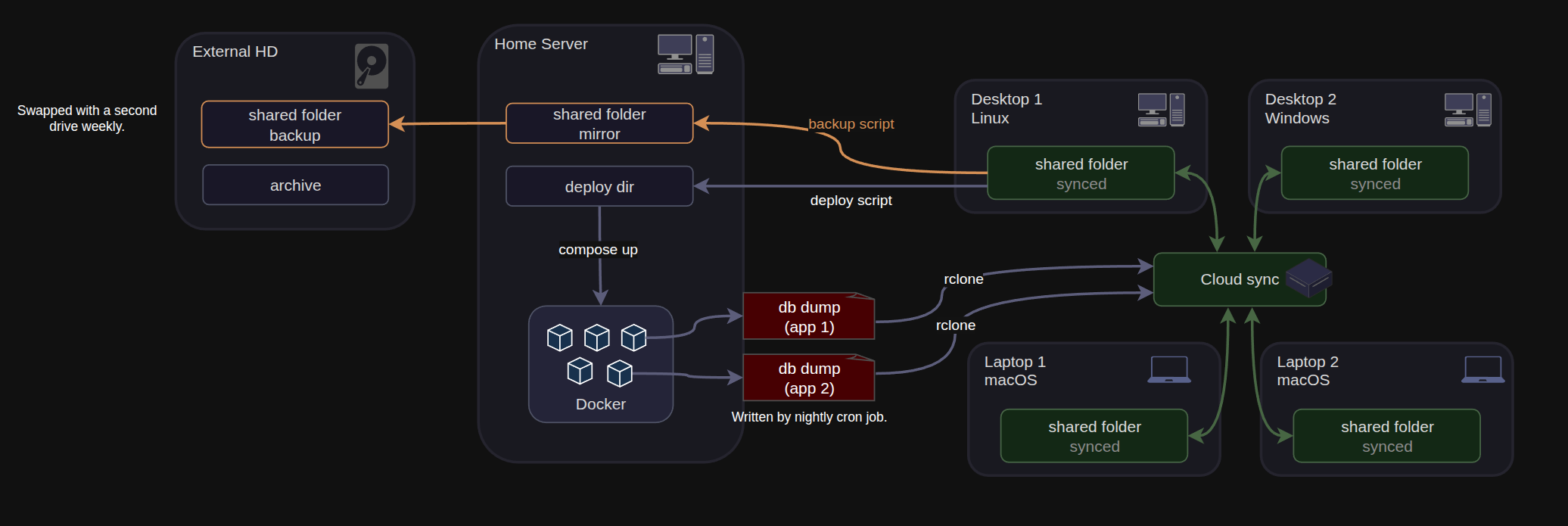
A diagram drawn by hand in draw.io:
|
|
8
|
+
|
|
9
|
+
|
|
10
|
+
|
|
11
|
+
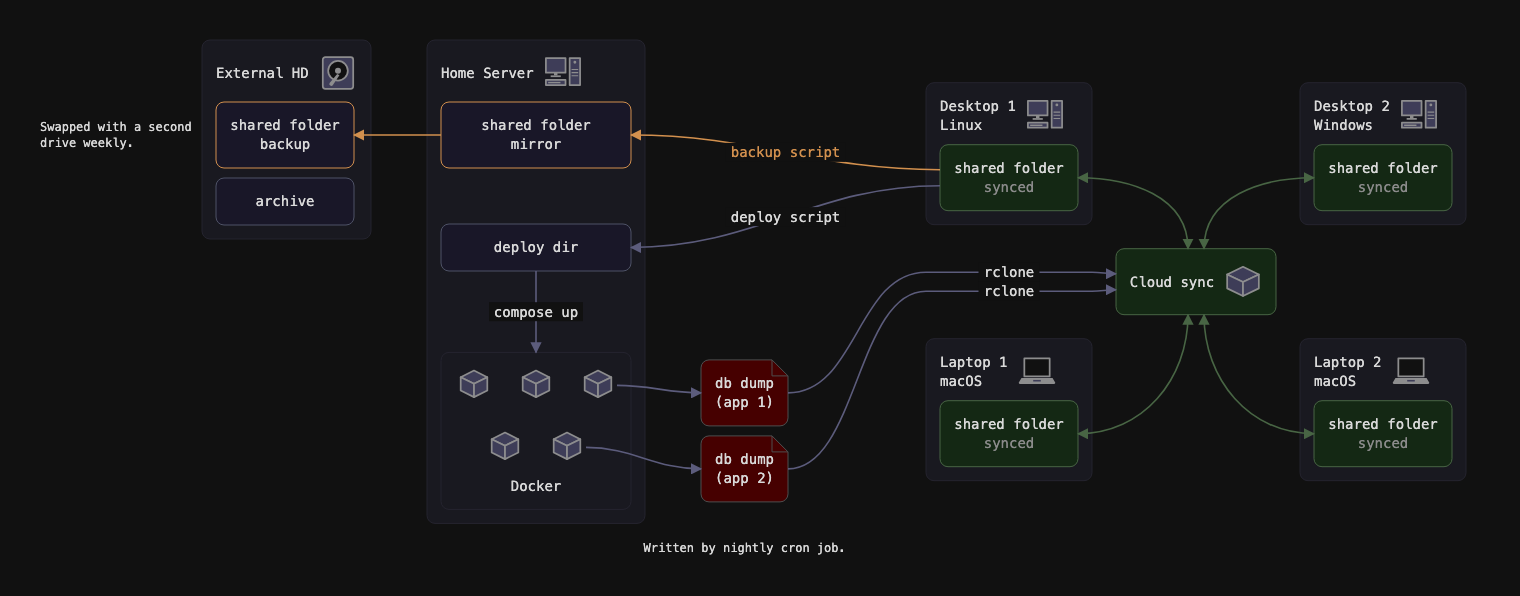
And the same diagram written down in reladraw and rendered from the text — [`examples/arch.reladraw`](examples/arch.reladraw), 56 statements, no coordinates anywhere in it:
|
|
12
|
+
|
|
13
|
+
|
|
14
|
+
|
|
15
|
+
Every distance in the second picture was worked out from statements like `above-left of dropbox` and `between computer1 and computer2`. Nothing chose the arrangement; the file states it.
|
|
16
|
+
|
|
17
|
+
## The gap
|
|
18
|
+
|
|
19
|
+
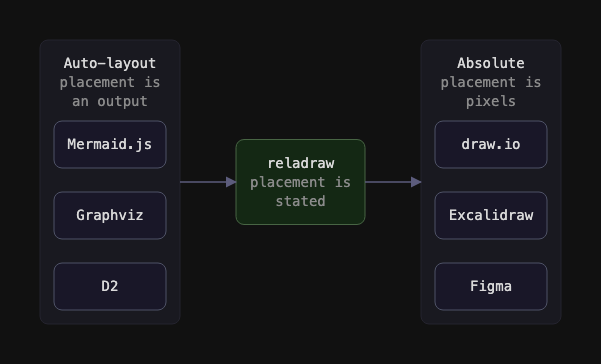
Mermaid, Graphviz and D2 have you declare entities and connections, and then place everything for you. That is a superpower, and for most diagrams it is the right one. It stops being the right one as soon as you have a particular picture in mind and care where things go. Say you are actively building your understanding of a system by diagramming it, and you want some module over to the right with its connections placed just so: the auto-layout languages have no way to say it.
|
|
20
|
+
|
|
21
|
+
On the other end of the spectrum are the absolute-positioning tools — draw.io, Excalidraw, Figma. They give you total control of placement, at the cost of making every edit to a complex diagram slow hand-work. And it is slow for a human but expensive for an agent, which has to work the picture out from the coordinates before it can decide which ones to change.
|
|
22
|
+
|
|
23
|
+
|
|
24
|
+
|
|
25
|
+
reladraw aims at the middle. Every position is stated relative to something else, and nothing in the file is a coordinate:
|
|
26
|
+
|
|
27
|
+
```
|
|
28
|
+
box app "Web app"
|
|
29
|
+
box app.ui "Interface"
|
|
30
|
+
box app.api "API" below app.ui
|
|
31
|
+
|
|
32
|
+
box store "Database" right of app level with app
|
|
33
|
+
|
|
34
|
+
link app.api -> store "queries" from: right to: left
|
|
35
|
+
```
|
|
36
|
+
|
|
37
|
+
Nothing is nested, so no line depends on another line's position or indentation.
|
|
38
|
+
|
|
39
|
+
The draft is in [SYNTAX.md](SYNTAX.md), with a worked example in [examples/](examples/).
|
|
40
|
+
|
|
41
|
+
## Why an agent needs this
|
|
42
|
+
|
|
43
|
+
The common case is not drawing a diagram, it is changing one. Ask for the auth service to move left and a queue to go behind it. With pixel coordinates, an agent has to rebuild the picture from the numbers before it can work out which numbers to change. With auto-layout there is nothing to read at all, because the arrangement was never written down — it can only reword the source and re-render. With stated placement the arrangement is in the file as sentences, and changing the picture is changing the sentence that says where the thing goes.
|
|
44
|
+
|
|
45
|
+
Writing has the same shape. An agent emitting Mermaid is guessing at a layout that an algorithm settles later, and its only way to find out is to render and look — a round trip that comes back as a picture rather than as a list of what is wrong.
|
|
46
|
+
|
|
47
|
+
Intent is confirmable, outcomes are not, and the difference is worth being precise about. An agent can re-read its own file and see that the database is under the API and all four machines hang off Dropbox. It cannot see that two clusters anchored to different things now overlap, that a label overflowed its box, or that an edge crosses four others — those are resolved from the statements rather than stated, so they need the diagnostics in the scope section below.
|
|
48
|
+
|
|
49
|
+
### Using it with an agent
|
|
50
|
+
|
|
51
|
+
reladraw is too new to be in any model's training data, so an agent has to be told the language before it can write it. This repository ships an [agent skill](https://agentskills.io) that does exactly that — the syntax, when to reach for the language, and what re-reading its own source can and cannot confirm.
|
|
52
|
+
|
|
53
|
+
```
|
|
54
|
+
npx skills add reladraw/reladraw -g
|
|
55
|
+
```
|
|
56
|
+
|
|
57
|
+
That installs it for whichever agent you use — Claude Code, Codex, Cursor, Copilot and others — each into its own skills directory. Drop the `-g` to install it into the current project instead.
|
|
58
|
+
|
|
59
|
+
It is [plain Markdown](.claude/skills/reladraw/SKILL.md) with the syntax reference beside it, so it is worth reading whatever you use, and copying the directory by hand works just as well.
|
|
60
|
+
|
|
61
|
+
## Status
|
|
62
|
+
|
|
63
|
+
Version 0.2.0. Early, but it runs: a parser, resolver and SVG renderer in TypeScript with no runtime dependencies, and a command-line tool that takes a text file and writes a standalone SVG. The comparison at the top of this page is that pipeline run on [`examples/arch.reladraw`](examples/arch.reladraw). What is still visibly off there is typography, not placement.
|
|
64
|
+
|
|
65
|
+
```
|
|
66
|
+
npm install -g reladraw
|
|
67
|
+
reladraw diagram.reladraw -o diagram.svg
|
|
68
|
+
```
|
|
69
|
+
|
|
70
|
+
Or from a clone, which also gets you the examples:
|
|
71
|
+
|
|
72
|
+
```
|
|
73
|
+
npm install && npm run build
|
|
74
|
+
node dist/cli.js examples/arch.reladraw -o out.svg
|
|
75
|
+
```
|
|
76
|
+
|
|
77
|
+
Not built yet, roughly in the order they are missed:
|
|
78
|
+
|
|
79
|
+
- **The diagnostics report.** The scope section below says what it is for. Today the tool either renders or fails; it will not tell you what is wrong with a picture it drew successfully.
|
|
80
|
+
- **Edge routing around boxes.** A link can be told which side of a box to leave and arrive on, and which gap to run down on the way. A link that says none of that is a straight line between two centers, and it will cut through whatever stands in the way.
|
|
81
|
+
- **More glyphs.** Icons and shapes are closed sets drawn from path data inside the tool, so a diagram wanting one that is not there has nowhere to go.
|
|
82
|
+
|
|
83
|
+
The language is not stable. Expect the syntax to change.
|
|
84
|
+
|
|
85
|
+
## How it works
|
|
86
|
+
|
|
87
|
+
A gap is a *minimum* distance, never an exact one. Say two things sit side by side, then say a third goes between them, and the first two are pushed apart by exactly what the third needs; delete the third and they close back up. That is the step an author otherwise does by hand — shove things apart to make room, then drag everything back so the diagram is not full of holes — and no number goes stale when a label grows.
|
|
88
|
+
|
|
89
|
+
So the resolver solves a system rather than walking a chain. Each axis is a set of minimum distances, and the tightest arrangement satisfying all of them is found by longest paths: one answer, no search, no arrangement ever tried and rejected. The engine works out distances; which side of what a thing sits on came from the file.
|
|
90
|
+
|
|
91
|
+
That is also what makes non-overlap affordable, so it holds for every pair of boxes without anyone writing it down. On its own "these two must not overlap" is a choice among four directions, which is the search this design refuses — but the file has usually settled it already: if your arrangement lets one box travel away from another and offers no way back, that is the only separation it permits. Where the file orders a pair on neither axis, the tool names them rather than guessing; where it orders them on both, the tie breaks toward the axis of least overlap, which is the smallest movement and the one place the tool decides something nobody wrote.
|
|
92
|
+
|
|
93
|
+
Nothing is nudged. Each round derives the separations the file already implied, adds them as ordinary minimum distances, and solves the whole thing again from scratch — repairing a solved layout in place is the thing being avoided.
|
|
94
|
+
|
|
95
|
+
## Scope for a first version
|
|
96
|
+
|
|
97
|
+
- Parser *(done)*
|
|
98
|
+
- Deterministic resolver: minimum distances in, tightest arrangement out *(done)*
|
|
99
|
+
- Static SVG renderer *(done)*
|
|
100
|
+
- A command-line tool: text file in, SVG out *(done)*
|
|
101
|
+
- A placement grammar that can say what a real diagram needs: several placements on one box, one thing between two others, exact edge-to-edge alignment *(done)*
|
|
102
|
+
- Boxes that do not overlap by default, with the separation direction derived from the stated arrangement *(done)*
|
|
103
|
+
- Minimal box-avoiding edge routing
|
|
104
|
+
- Machine-readable diagnostics from the solved geometry
|
|
105
|
+
|
|
106
|
+
Diagnostics are a real output rather than a debugging aid. What they cannot do is stand in for the grammar: a check catches only what the language genuinely leaves open, and "these must not overlap" rules arrangements out without naming one, so it can never place anything. Everything the source cannot tell you is computable once the geometry is solved, with no image involved: overlapping boxes, crossed edges, text exceeding its container, anything off-canvas, large dead regions. So the tool reports `dropbox overlaps machine3` and `edge auth->db crosses 4 edges`, and the fix is written in the same vocabulary as the source. An agent working this way reads a report about a text file it wrote and edits that text file — no rendering, no vision model, no pixel arithmetic.
|
|
107
|
+
|
|
108
|
+
A diagnostic never repairs a solved layout in place. That is the line the design holds: a checker allowed to nudge boxes is a layout algorithm with a bad search strategy, fixing one overlap into the next with no view of the whole. Deriving a constraint the file already implied and solving the whole system again is a different thing, and is how non-overlap works. What is left over — anything the source genuinely does not settle — is reported, naming the statement that was broken, and the author edits the source. Open, and it decides how far this goes: may a diagnostic describe a fix in words, or only name the symptom? Describing one means the tool has an opinion about layout, which is the auto-layout instinct coming back in through the side door.
|
|
109
|
+
|
|
110
|
+
Three design problems decide how much machinery this needs, and the first outranks the other two:
|
|
111
|
+
|
|
112
|
+
**Saying enough.** The benchmark contains arrangements the grammar cannot express at all, which is why some boxes land in the wrong place no matter how the file is written. So the work is adding statements, not restricting them. Expressiveness is not the danger; the engine *choosing* an arrangement is.
|
|
113
|
+
|
|
114
|
+
**What the engine is allowed to decide.** Auto-layout is refused, because a picture chosen by an algorithm is not predictable from its source, and that predictability is the entire point. Working out coordinates from an arrangement the author stated is a different thing and is simply the job. The test between them: the engine's freedom may affect distances and never relationships. If a default can change which side of something a box sits on, the language was short a statement and the tool should say so rather than guess.
|
|
115
|
+
|
|
116
|
+
**Overlap and edge routing.** Relative placement with default spacing collides as soon as two clusters grow toward each other. Stating placement and then routing edges afterward with no influence on them reproduces the exact failure this is meant to avoid, so minimal box-avoiding orthogonal routing belongs in the first version. Routing and diagnostics are complements, not substitutes: routing fixes what it can, and the diagnostics report what it could not.
|
|
117
|
+
|
|
118
|
+
## Prior art
|
|
119
|
+
|
|
120
|
+
Four things sit near this, and each answers a different part of the problem.
|
|
121
|
+
|
|
122
|
+
**[Archify](https://github.com/tt-a1i/archify).** Built for agents to write: an agent emits typed JSON, a validator checks it against a schema and lints the layout, and it compiles deterministically to a good-looking, self-contained HTML file, with stepped playback and nodes pinned to git-verified source lines. Its positioning is grid or free coordinates, though — auto-arrangement on one side, absolute pixels on the other — and a JSON template says nothing about where the picture will end up, so the loop is still emit, render, look, tweak.
|
|
123
|
+
|
|
124
|
+
**PIC and [pikchr](https://pikchr.org).** A text diagram format with no layout engine, where placement is stated and deterministic. But it is turtle graphics — a movable cursor that drops shapes and steps along — so a diagram is a sequence of pen movements rather than a set of stated relationships between named things. There is no group that reflows when a member is added.
|
|
125
|
+
|
|
126
|
+
**Graphviz `rank` and `cluster`.** Constraints on an auto-layout engine rather than a replacement for one, so output stays emergent and unpredictable from the source.
|
|
127
|
+
|
|
128
|
+
**Structurizr.** Has real manual layout, but is bound to the C4 model, which makes it a modeling notation with a renderer attached rather than a general placement language.
|
|
129
|
+
|
|
130
|
+
## License
|
|
131
|
+
|
|
132
|
+
Apache-2.0. This is a reusable primitive where adoption is the value, so restricting commercial use would defeat the purpose. See [LICENSE](LICENSE).
|
|
133
|
+
|
|
134
|
+
The license covers the code, not the name: it grants no rights to use "reladraw", the project logo, or the project's other marks. Forks are welcome and should carry a different name. See [NOTICE](NOTICE).
|
|
135
|
+
|
|
136
|
+
## Contributing
|
|
137
|
+
|
|
138
|
+
Issues are wanted — especially a diagram you tried to write and could not. Pull requests are read but not merged yet, for a reason explained in [CONTRIBUTING.md](CONTRIBUTING.md).
|