openmates 0.27.0-alpha.77 → 0.27.0-alpha.78
This diff represents the content of publicly available package versions that have been released to one of the supported registries. The information contained in this diff is provided for informational purposes only and reflects changes between package versions as they appear in their respective public registries.
- package/dist/{chunk-USLLBOCN.js → chunk-XTVACTH6.js} +1538 -44
- package/dist/{cli-wcJZA4bI.d.ts → cli-DJSSNn4S.d.ts} +2 -0
- package/dist/cli.d.ts +1 -1
- package/dist/cli.js +1 -1
- package/dist/index.d.ts +2 -2
- package/dist/index.js +1 -1
- package/fixtures/privacy-runtime/linux-arm64/libggml-base.so +0 -0
- package/fixtures/privacy-runtime/linux-arm64/libggml-base.so.0 +0 -0
- package/fixtures/privacy-runtime/linux-arm64/libggml-base.so.0.15.1 +0 -0
- package/fixtures/privacy-runtime/linux-arm64/libggml-cpu.so +0 -0
- package/fixtures/privacy-runtime/linux-arm64/libggml-cpu.so.0 +0 -0
- package/fixtures/privacy-runtime/linux-arm64/libggml-cpu.so.0.15.1 +0 -0
- package/fixtures/privacy-runtime/linux-arm64/libggml.so +0 -0
- package/fixtures/privacy-runtime/linux-arm64/libggml.so.0 +0 -0
- package/fixtures/privacy-runtime/linux-arm64/libggml.so.0.15.1 +0 -0
- package/fixtures/privacy-runtime/linux-arm64/manifest.json +9 -9
- package/package.json +1 -1
|
@@ -15605,6 +15605,7 @@ var OpenMatesClient = class _OpenMatesClient {
|
|
|
15605
15605
|
role: messageRole,
|
|
15606
15606
|
encrypted_content: await encryptWithAesGcmCombined(content.content, childKey),
|
|
15607
15607
|
...messageRole === "assistant" ? {
|
|
15608
|
+
...await this.encryptThinkingFields(content, childKey),
|
|
15608
15609
|
encrypted_sender_name: await encryptWithAesGcmCombined(
|
|
15609
15610
|
typeof content.category === "string" ? MATE_NAMES[content.category] ?? "Assistant" : "Assistant",
|
|
15610
15611
|
childKey
|
|
@@ -17849,7 +17850,13 @@ var OpenMatesClient = class _OpenMatesClient {
|
|
|
17849
17850
|
"model_name",
|
|
17850
17851
|
"turn_id"
|
|
17851
17852
|
];
|
|
17852
|
-
if (Object.keys(recovered).
|
|
17853
|
+
if (Object.keys(recovered).filter((field3) => ![
|
|
17854
|
+
"thinking_content",
|
|
17855
|
+
"thinking_signature",
|
|
17856
|
+
"has_thinking",
|
|
17857
|
+
"thinking_token_count",
|
|
17858
|
+
"thinking_duration_seconds"
|
|
17859
|
+
].includes(field3)).sort().join(",") !== expectedRecoveryFields.join(",") || recovered.assistant_message_id !== assistantId || recovered.chat_id !== chatId || recovered.turn_id !== savedTurnId || recovered.job_id !== recoveryJobId || recovered.key_version !== keyVersion || typeof recovered.content !== "string" || recovered.category !== null && typeof recovered.category !== "string" || recovered.model_name !== null && typeof recovered.model_name !== "string") {
|
|
17853
17860
|
throw new Error("Recovery job plaintext did not match the terminal completion identity.");
|
|
17854
17861
|
}
|
|
17855
17862
|
assistant = recovered.content;
|
|
@@ -17872,6 +17879,7 @@ var OpenMatesClient = class _OpenMatesClient {
|
|
|
17872
17879
|
client_message_id: assistantId,
|
|
17873
17880
|
chat_id: chatId,
|
|
17874
17881
|
encrypted_content: encryptedAssistantContent,
|
|
17882
|
+
...await this.encryptThinkingFields(recovered, chatKeyBytes),
|
|
17875
17883
|
encrypted_sender_name: encryptedSenderName,
|
|
17876
17884
|
encrypted_category: encryptedCategory,
|
|
17877
17885
|
encrypted_model_name: encryptedModelName,
|
|
@@ -23436,6 +23444,30 @@ Required: ${schema.required.join(", ")}`
|
|
|
23436
23444
|
}
|
|
23437
23445
|
return acknowledged;
|
|
23438
23446
|
}
|
|
23447
|
+
/** Persist only observed thinking, encrypted with the owning chat's existing key. */
|
|
23448
|
+
async encryptThinkingFields(source, chatKey) {
|
|
23449
|
+
for (const field3 of ["thinking_content", "thinking_signature"]) {
|
|
23450
|
+
if (source[field3] !== void 0 && typeof source[field3] !== "string") {
|
|
23451
|
+
throw new Error(`Invalid completion ${field3}.`);
|
|
23452
|
+
}
|
|
23453
|
+
}
|
|
23454
|
+
if (source.thinking_token_count !== void 0 && (!Number.isSafeInteger(source.thinking_token_count) || Number(source.thinking_token_count) < 0)) {
|
|
23455
|
+
throw new Error("Invalid completion thinking_token_count.");
|
|
23456
|
+
}
|
|
23457
|
+
if (source.thinking_duration_seconds !== void 0 && (typeof source.thinking_duration_seconds !== "number" || !Number.isFinite(source.thinking_duration_seconds) || source.thinking_duration_seconds < 0)) {
|
|
23458
|
+
throw new Error("Invalid completion thinking_duration_seconds.");
|
|
23459
|
+
}
|
|
23460
|
+
if (typeof source.thinking_content !== "string" || !source.thinking_content.trim()) return {};
|
|
23461
|
+
return {
|
|
23462
|
+
encrypted_thinking_content: await encryptWithAesGcmCombined(source.thinking_content, chatKey),
|
|
23463
|
+
has_thinking: true,
|
|
23464
|
+
...source.thinking_signature ? {
|
|
23465
|
+
encrypted_thinking_signature: await encryptWithAesGcmCombined(source.thinking_signature, chatKey)
|
|
23466
|
+
} : {},
|
|
23467
|
+
...source.thinking_token_count !== void 0 ? { thinking_token_count: source.thinking_token_count } : {}
|
|
23468
|
+
// Duration has no canonical messages schema field; do not invent or store one.
|
|
23469
|
+
};
|
|
23470
|
+
}
|
|
23439
23471
|
async persistPendingAIResponsesFromSync(ws, chats, pendingResponses, teamId) {
|
|
23440
23472
|
if (pendingResponses.length === 0) return;
|
|
23441
23473
|
const masterKey = this.getMasterKeyBytes();
|
|
@@ -23478,6 +23510,7 @@ Required: ${schema.required.join(", ")}`
|
|
|
23478
23510
|
created_at: completedAt,
|
|
23479
23511
|
status: "synced",
|
|
23480
23512
|
encrypted_content: await encryptWithAesGcmCombined(content, chatKeyBytes),
|
|
23513
|
+
...await this.encryptThinkingFields(pending, chatKeyBytes),
|
|
23481
23514
|
encrypted_category: pending.category ? await encryptWithAesGcmCombined(pending.category, chatKeyBytes) : void 0,
|
|
23482
23515
|
encrypted_model_name: pending.model_name ? await encryptWithAesGcmCombined(pending.model_name, chatKeyBytes) : void 0
|
|
23483
23516
|
};
|
|
@@ -54421,6 +54454,1214 @@ var audioTranscribeVoiceNoteChat = {
|
|
|
54421
54454
|
}
|
|
54422
54455
|
};
|
|
54423
54456
|
|
|
54457
|
+
// ../ui/src/demo_chats/data/example_chats/us-egg-prices-deep-research.ts
|
|
54458
|
+
var usEggPricesDeepResearchChat = {
|
|
54459
|
+
chat_id: "example-us-egg-prices-deep",
|
|
54460
|
+
slug: "us-egg-prices-deep-research",
|
|
54461
|
+
title: "example_chats.us_egg_prices_deep_research.title",
|
|
54462
|
+
summary: "example_chats.us_egg_prices_deep_research.summary",
|
|
54463
|
+
icon: "dollar-sign",
|
|
54464
|
+
category: "finance",
|
|
54465
|
+
keywords: [],
|
|
54466
|
+
follow_up_suggestions: ["example_chats.us_egg_prices_deep_research.follow_up_1", "example_chats.us_egg_prices_deep_research.follow_up_2", "example_chats.us_egg_prices_deep_research.follow_up_3", "example_chats.us_egg_prices_deep_research.follow_up_4", "example_chats.us_egg_prices_deep_research.follow_up_5", "example_chats.us_egg_prices_deep_research.follow_up_6"],
|
|
54467
|
+
messages: [
|
|
54468
|
+
{
|
|
54469
|
+
"id": "134cd47c-8489-4b31-8e9a-da3a13e1b870",
|
|
54470
|
+
"role": "user",
|
|
54471
|
+
"content": "example_chats.us_egg_prices_deep_research.message_1",
|
|
54472
|
+
"created_at": 1792053359
|
|
54473
|
+
},
|
|
54474
|
+
{
|
|
54475
|
+
"id": "5f0a7730-1889-4574-9bcc-d72364940179",
|
|
54476
|
+
"role": "assistant",
|
|
54477
|
+
"content": "example_chats.us_egg_prices_deep_research.message_2",
|
|
54478
|
+
"created_at": 1792053671,
|
|
54479
|
+
"user_message_id": "134cd47c-8489-4b31-8e9a-da3a13e1b870",
|
|
54480
|
+
"response_credits": 313,
|
|
54481
|
+
"category": "finance",
|
|
54482
|
+
"model_name": "Gemini 3.8 Flash",
|
|
54483
|
+
"thinking_content": "example_chats.us_egg_prices_deep_research.message_2_thinking",
|
|
54484
|
+
"has_thinking": true
|
|
54485
|
+
}
|
|
54486
|
+
],
|
|
54487
|
+
embeds: [
|
|
54488
|
+
{
|
|
54489
|
+
"embed_id": "94a028ba-3773-4c97-8c03-a8952cd3be30",
|
|
54490
|
+
"type": "sheet",
|
|
54491
|
+
"content": `type: sheet
|
|
54492
|
+
app_id: sheets
|
|
54493
|
+
skill_id: sheet
|
|
54494
|
+
table: "| # | Claim | Evidence Status | Exact Primary-Source Excerpt / Table Reference | Source URL | Scope & Baseline (Timeframe, Geography, Population, Metric, Legal Status) |\\n|---|---|---|---|---|---|\\n| 1 | Commercial layer repopulation requires at least 20 weeks for pullets to mature to laying age. | **Supported** | *\\"Thus, if an egg-laying flock becomes infected with HPAI and is depopulated to control the spread of disease, it may take up to 20 weeks for new hens to reach sexual maturity and begin producing eggs again.\\"* | [CRS Report R48518](https://www.congress.gov/crs_external_products/R/PDF/R48518/R48518.1.pdf) | U.S. national layer poultry cycle; biological timeframe from chick hatch to sexual maturity. |\\n| 2 | U.S. city average retail egg prices reached $4.82/dozen in Jan 2023, fell to ~$2.04/dozen in mid-2023, and resurged above $6.00/dozen in early 2025. | **Supported** | Series \`APU0000708111\`: Jan 2023: $4.823; Aug 2023: $2.043; Mar 2025: record peak. | [FRED St. Louis Fed](https://fred.stlouisfed.org/series/apu0000708111) | U.S. city average, Grade A large eggs, monthly non-seasonally adjusted consumer retail price. |\\n| 3 | Cal-Maine Foods' gross profit rose tenfold from $50.39M to $535.34M in the 26 weeks ending Nov 26, 2022, while its own flocks had zero HPAI detections. | **Supported** | *\\"For the 26-week period ending on November 26, 2022, Cal-Maine reported a ten-fold year-over-year increase in gross profits \u2014 from $50.392 million to $535.339 million\\"* | [Farm Action FTC Letter](https://farmaction.us/2023/01/19/farm-action-calls-for-ftc-to-investigate-record-high-egg-prices/) | Cal-Maine Foods SEC disclosures as audited; 26-week period ending Nov 26, 2022; company-level financial reporting. |\\n| 4 | Advocacy groups formally petitioned the FTC alleging collusion and price gouging. | **Supported (as allegation only)** | *\\"today Farm Action sent a letter urging the FTC 'to promptly open an investigation into the egg industry, prosecute any violations of the antitrust laws it finds within...'\\"* | [Farm Action FTC Letter](https://farmaction.us/2023/01/19/farm-action-calls-for-ftc-to-investigate-record-high-egg-prices/) | U.S. administrative filing; Jan 19, 2023, and Feb 2025 petitions to FTC/DOJ. Legal status: petition/allegation; no FTC formal administrative complaint or judicial finding of 2022\u20132024 collusion. |\\n| 5 | Farm-level poultry feed costs fell significantly across 2023 and 2024 while late-period egg prices escalated. | **Supported** | USDA ERS Feed Grains Database & Egg Industry Center data show corn prices fell ~28% YOY in late 2023 and layer ration costs dropped over 20% to 40% from 2022 peaks. | [Egg Industry Center Costs Report](https://www.eggindustrycenter.org/media/cms/Costs_and_Prices_for_December_2023__36ED6C7DE3179.pdf) | U.S. agricultural feed market; 2022\u20132024 cost per dozen table eggs. Disproves feed cost-push as driver of late price spikes. |\\n| 6 | U.S. egg market concentration: Cal-Maine controls ~20% of domestic table eggs; top 20 producers account for 70%\u201375% of layer capacity. | **Supported** | Industry data compiled by Watt Poultry and public SEC 10-K filings; Cal-Maine ~44\u201347 million hens against ~310\u2013325 million national table layer flock. | [Watt Global Media Top Egg Producers](https://www.wattagnet.com/egg/egg-production/article/15530177/top-20-us-egg-producers-in-2020-wattagnet) | U.S. domestic shell egg industry structure; commercial laying flock census. |\\n| 7 | Retail margins expanded temporarily as wholesale prices crashed in early 2023 due to asymmetric price transmission. | **Supported (empirical spread) / Inferred (causal mechanism)** | USDA ERS Price Spreads from Farm to Consumer show farm-to-wholesale prices fell ~50% between Jan and Apr 2023 while retail shelf prices dropped at half that rate, widening the retail spread. | [USDA ERS Farm to Consumer Price Spreads](https://primary.ers.usda.gov/data-products/price-spreads-from-farm-to-consumer) | U.S. retail grocery sector; January to June 2023 price transmission spread. Causality is economically inferred from contract lags and loss-leader recoupment. |\\n| 8 | Major egg producers engaged in illegal price-fixing conspiracy during 2022\u20132024. | **Unresolved / Allegation** | Advocacy letters and public official inquiries exist, but no federal court ruling, consent decree, or regulatory complaint has established post-2022 antitrust violations. | [Warren Senate Oversight Letter](https://www.warren.senate.gov/imo/media/doc/2023.02.16%20Letter%20to%20Cal-Maine%20Foods%20on%20Egg%20Prices.pdf) | U.S. federal antitrust jurisdiction. (Distinguished from historical *In re Processed Egg Products Antitrust Litigation* jury verdict for pre-2009 conduct). |"
|
|
54495
|
+
title: ""
|
|
54496
|
+
embed_ref: sheet-94a028
|
|
54497
|
+
status: finished
|
|
54498
|
+
row_count: 8
|
|
54499
|
+
col_count: 6`,
|
|
54500
|
+
"parent_embed_id": null,
|
|
54501
|
+
"embed_ids": null
|
|
54502
|
+
},
|
|
54503
|
+
{
|
|
54504
|
+
"embed_id": "5654e466-f25a-4da2-befb-7369fabd64b3",
|
|
54505
|
+
"type": "app_skill_use",
|
|
54506
|
+
"content": 'app_id: web\nskill_id: read\nresults[1]:\n - type: read_result\n url: "https://fred.stlouisfed.org/series/apu0000708111"\n title: "Average Price: Eggs, Grade A, Large (Cost per Dozen) in U.S. City Average (APU0000708111) | FRED | St. Louis Fed"\n markdown: "[Skip to main content](https://fred.stlouisfed.org/series/apu0000708111#content-container)\\n\\n# Average Price: Eggs, Grade A, Large (Cost per Dozen) in U.S. City Average (APU0000708111)\\n\\nObservations\\n\\nSep 2026: 2.272 \\\\|\\nU.S. Dollars, Not Seasonally Adjusted \\\\|\\n\\nMonthly\\n\\nUpdated:\\nOct 14, 20267:35 AM CDT\\n\\n[Next Release Date:\\\\\\\\\\nNov 10, 2026](https://fred.stlouisfed.org/releases/calendar?rid=454&y=2026)\\n\\nObservations\\n\\nSep 2026:2.272\\n\\nUpdated:\\nOct 14, 20267:35 AM CDT\\n\\n[Next Release Date:\\\\\\\\\\nNov 10, 2026](https://fred.stlouisfed.org/releases/calendar?rid=454&y=2026)\\n\\n| | | |\\n| --- | --- | --- |\\n| Sep 2026: | 2.272 | |\\n| Aug 2026: | 2.272 | |\\n| Jul 2026: | 2.189 | |\\n| Jun 2026: | 2.141 | |\\n| May 2026: | 2.191 | |\\n| [View All](https://fred.stlouisfed.org/data/APU0000708111) |\\n\\nUnits:\\n\\nU.S. Dollars,\\n\\nNot Seasonally Adjusted\\n\\n\\nFrequency:\\n\\nMonthly\\n\\n1Y5Y10YMax\\n\\nFromto\\n\\nDate:\\n\\nEdit Graph\xA0[Edit Map](https://fred.stlouisfed.org/series/apu0000708111#0)\\n\\nDownload\\n\\nADDLINE\\n\\nAdd data series to graph\\n\\nType keywords to search for data\\n\\nAdd data series\\n\\nCreate user-defined line\\n\\nYou can customize a graph by adding a straight line between two data points.\\n\\nCreate line\\n\\nFORMAT GRAPH\\n\\nGraph typeLineAreaBarScatter\\n\\nStacking:NoneNormalPercent\\n\\n##### Details\\n\\n###### Display\\n\\nTitle\\n\\nAxis titles\\n\\nTooltip\\n\\nRecession shading\\n\\nLog scale left\\n\\nLog scale right\\n\\n###### Customize\\n\\nFrame\\n\\nPlot area\\n\\nText\\n\\nHeight\\n\\nWidth\\n\\nApply\\n\\nFullscreen\\n\\n**Data in this graph are copyrighted. Please review the copyright information in the [series notes](https://fred.stlouisfed.org/series/apu0000708111#notes) before sharing.**\\n\\nShare Graph\\n\\n- [Custom Graph Link](https://fred.stlouisfed.org/series/apu0000708111#)\\n- [Embed in Website](https://fred.stlouisfed.org/series/apu0000708111#)\\n- [Graph Image Link](https://fred.stlouisfed.org/series/apu0000708111#)\\n\\nAccount Tools\\n\\n- Save Graph\\n- Add to Dashboard\\n- [Add to Data List](https://fredaccount.stlouisfed.org/datalists/addseries/APU0000708111)\\n- Get Email Notification\\n- Save Map\\n\\n## Notes\\n\\n**Source:** [U.S. Bureau of Labor Statistics](https://www.bls.gov/)\\n\\n**Release:** [Average Price Data](https://www.bls.gov/cpi/factsheets/average-prices.htm)\\n\\n**Units:**\\nU.S. Dollars,\xA0Not Seasonally Adjusted\\n\\n\\n**Frequency:**\\nMonthly\\n\\n#### Notes:\\n\\nLarge white, Grade A chicken eggs, sold in a carton of a dozen. Includes organic, non-organic, cage free, free range, and traditional.\\n\\nAverage consumer prices are calculated for household fuel, motor fuel, and food items from prices collected for the Consumer Price Index (CPI). Average prices are best used to measure the price level in a particular month, not to measure price change over time. It is more appropriate to use CPI index values for the particular item categories to measure price change.\\n\\nPrices, except for electricity, are collected monthly by BLS representatives in the 75 urban areas priced for the CPI. Electricity prices are collected for the BLS for the same 75 areas on a monthly basis by the Department of Energy using mail questionnaires. All fuel prices include applicable Federal, State, and local taxes; prices for natural gas and electricity also include fuel and purchased gas adjustments.\\n\\nFor more information, please visit the [Bureau of Labor Statistics](https://www.bls.gov/cpi/factsheets/average-prices.htm).\\n\\n#### Suggested Citation:\\n\\nU.S. Bureau of Labor Statistics,\\nAverage Price: Eggs, Grade A, Large (Cost per Dozen) in U.S. City Average \\\\[APU0000708111\\\\],\\nretrieved from FRED,\\nFederal Reserve Bank of St. Louis;\\nhttps://fred.stlouisfed.org/series/APU0000708111,\\nOctober 15, 2026.\\n\\n\\n## Release Tables\\n\\nAverage Price Data\\n\\n- [Food](https://fred.stlouisfed.org/release/tables?rid=454&eid=816251#snid=816885)\\n\\n## Related Data and Content\\n\\n### Data Suggestions Based On Your Search\\n\\n[](https://fred.stlouisfed.org/series/APU0000709112 \\"Average Price: Milk, Fresh, Whole, Fortified (Cost per Gallon/3.8 Liters) in U.S. City Average\\")\\n\\n[**Average Price: Milk, Fresh, Whole, Fortified (Cost per Gallon/3.8 Liters) in U.S. City Average**](https://fred.stlouisfed.org/series/APU0000709112 \\"Average Price: Milk, Fresh, Whole, Fortified (Cost per Gallon/3.8 Liters) in U.S. City Average\\")\\n\\n[](https://fred.stlouisfed.org/series/APU0000703112 \\"Average Price: Ground Beef, 100% Beef (Cost per Pound/453.6 Grams) in U.S. City Average\\")\\n\\n[**Average Price: Ground Beef, 100% Beef (Cost per Pound/453.6 Grams) in U.S. City Average**](https://fred.stlouisfed.org/series/APU0000703112 \\"Average Price: Ground Beef, 100% Beef (Cost per Pound/453.6 Grams) in U.S. City Average\\")\\n\\n[](https://fred.stlouisfed.org/series/APU0000702111 \\"Average Price: Bread, White, Pan (Cost per Pound/453.6 Grams) in U.S. City Average\\")\\n\\n[**Average Price: Bread, White, Pan (Cost per Pound/453.6 Grams) in U.S. City Average**](https://fred.stlouisfed.org/series/APU0000702111 \\"Average Price: Bread, White, Pan (Cost per Pound/453.6 Grams) in U.S. City Average\\")\\n\\n[](https://fred.stlouisfed.org/series/APU0000FF1101 \\"Average Price: Chicken Breast, Boneless (Cost per Pound/453.6 Grams) in U.S. City Average\\")\\n\\n[**Average Price: Chicken Breast, Boneless (Cost per Pound/453.6 Grams) in U.S. City Average**](https://fred.stlouisfed.org/series/APU0000FF1101 \\"Average Price: Chicken Breast, Boneless (Cost per Pound/453.6 Grams) in U.S. City Average\\")\\n\\n[](https://fred.stlouisfed.org/series/APU0200708111 \\"Average Price: Eggs, Grade A, Large (Cost per Dozen) in the Midwest Census Region - Urban\\")\\n\\n[**Average Price: Eggs, Grade A, Large (Cost per Dozen) in the Midwest Census Region - Urban**](https://fred.stlouisfed.org/series/APU0200708111 \\"Average Price: Eggs, Grade A, Large (Cost per Dozen) in the Midwest Census Region - Urban\\")\\n\\n[](https://fred.stlouisfed.org/series/GASREGW \\"US Regular All Formulations Gas Price\\")\\n\\n[**US Regular All Formulations Gas Price**](https://fred.stlouisfed.org/series/GASREGW \\"US Regular All Formulations Gas Price\\")\\n\\n[](https://fred.stlouisfed.org/series/APU0000704111 \\"Average Price: Bacon, Sliced (Cost per Pound/453.6 Grams) in U.S. City Average\\")\\n\\n[**Average Price: Bacon, Sliced (Cost per Pound/453.6 Grams) in U.S. City Average**](https://fred.stlouisfed.org/series/APU0000704111 \\"Average Price: Bacon, Sliced (Cost per Pound/453.6 Grams) in U.S. City Average\\")\\n\\n[](https://fred.stlouisfed.org/series/APU000072610 \\"Average Price: Electricity per Kilowatt-Hour in U.S. City Average\\")\\n\\n[**Average Price: Electricity per Kilowatt-Hour in U.S. City Average**](https://fred.stlouisfed.org/series/APU000072610 \\"Average Price: Electricity per Kilowatt-Hour in U.S. City Average\\")\\n\\n[See More...](https://fred.stlouisfed.org/series/apu0000708111#moreTrendingSeries)\\n\\n* * *\\n\\n### Content Suggestions\\n\\n[](https://fredblog.stlouisfed.org/2024/02/egg-price-deflation-and-fresh-chicken-price-disinflation/?utm_source=series_page&utm_medium=related_content&utm_term=related_resources&utm_campaign=fredblog \\"Egg price deflation and fresh chicken price disinflation\\")\\n\\nFRED Blog\\n\\n\\n[**Egg price deflation and fresh chicken price disinflation**](https://fredblog.stlouisfed.org/2024/02/egg-price-deflation-and-fresh-chicken-price-disinflation/?utm_source=series_page&utm_medium=related_content&utm_term=related_resources&utm_campaign=fredblog \\"Egg price deflation and fresh chicken price disinflation\\")\\n\\n[](https://fredblog.stlouisfed.org/2023/01/egg-and-poultry-price-inflation/?utm_source=series_page&utm_medium=related_content&utm_term=related_resources&utm_campaign=fredblog \\"Egg and poultry price inflation\\")\\n\\nFRED Blog\\n\\n\\n[**Egg and poultry price inflation**](https://fredblog.stlouisfed.org/2023/01/egg-and-poultry-price-inflation/?utm_source=series_page&utm_medium=related_content&utm_term=related_resources&utm_campaign=fredblog \\"Egg and poultry price inflation\\")\\n\\n[](https://fredblog.stlouisfed.org/2025/05/the-chicken-and-egg-price-question/?utm_source=series_page&utm_medium=related_content&utm_term=related_resources&utm_campaign=fredblog \\"The chicken and egg (price) question\\")\\n\\nFRED Blog\\n\\n\\n[**The chicken and egg (price) question**](https://fredblog.stlouisfed.org/2025/05/the-chicken-and-egg-price-question/?utm_source=series_page&utm_medium=related_content&utm_term=related_resources&utm_campaign=fredblog \\"The chicken and egg (price) question\\")\\n\\n[](https://alfred.stlouisfed.org/series?seid=APU0000708111&utm_source=series_page&utm_medium=related_content&utm_term=related_resources&utm_campaign=alfred \\"Average Price: Eggs, Grade A, Large (Cost per Dozen) in U.S. City Average\\")\\n\\nALFRED Vintage Series\\n\\n\\n[**Average Price: Eggs, Grade A, Large (Cost per Dozen) in U.S. City Average**](https://alfred.stlouisfed.org/series?seid=APU0000708111&utm_source=series_page&utm_medium=related_content&utm_term=related_resources&utm_campaign=alfred \\"Average Price: Eggs, Grade A, Large (Cost per Dozen) in U.S. City Average\\")\\n\\n[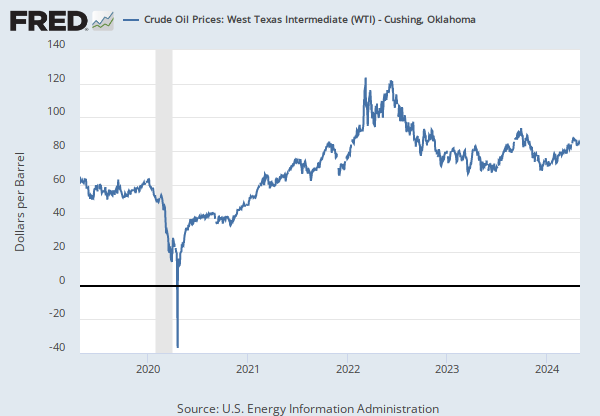](https://fred.stlouisfed.org/series/DCOILWTICO \\"Crude Oil Prices: West Texas Intermediate (WTI) - Cushing, Oklahoma\\")\\n\\n[**Crude Oil Prices: West Texas Intermediate (WTI) - Cushing, Oklahoma**](https://fred.stlouisfed.org/series/DCOILWTICO \\"Crude Oil Prices: West Texas Intermediate (WTI) - Cushing, Oklahoma\\")\\n\\n[See More...](https://fred.stlouisfed.org/series/apu0000708111#moreContentSuggestions)\\n\\n* * *\\n\\n### Related Categories\\n\\n[Commodities](https://fred.stlouisfed.org/categories/32217) [Prices](https://fred.stlouisfed.org/categories/32455)\\n\\n### Releases\\n\\n[More\\\\\\\\\\nSeries from Average Price Data](https://fred.stlouisfed.org/release?rid=454)\\n\\n### Tags\\n\\n[Eggs](https://fred.stlouisfed.org/tags/series?t=eggs) [Retail](https://fred.stlouisfed.org/tags/series?t=retail) [Price](https://fred.stlouisfed.org/tags/series?t=price) [Bureau of Labor Statistics](https://fred.stlouisfed.org/tags/series?t=bls) [Monthly](https://fred.stlouisfed.org/tags/series?t=monthly) [Nation](https://fred.stlouisfed.org/tags/series?t=nation) [Public Domain: Citation Requested](https://fred.stlouisfed.org/tags/series?t=public%20domain%3A%20citation%20requested) [United States of America](https://fred.stlouisfed.org/tags/series?t=usa) [Not Seasonally Adjusted](https://fred.stlouisfed.org/tags/series?t=nsa)\\n\\n[Back to Top](https://fred.stlouisfed.org/series/apu0000708111#top)\\n\\nFilter\\n\\n\\n### Subscribe to the FRED newsletter\\n\\nSubscribe\\n\\n### Follow us\\n\\n[Saint Louis Fed linkedin page](http://bit.ly/d056zL)[Saint Louis Fed facebook page](https://www.facebook.com/stlfed)[Saint Louis Fed X page](http://bit.ly/9ngC3L)[Saint Louis Fed YouTube page](http://bit.ly/aY9TVF)\\n\\n### Need Help?\\n\\n[Questions or Comments](https://fred.stlouisfed.org/contactus/)\\n\\n[FRED Help](https://fredhelp.stlouisfed.org/)\\n\\n* * *\\n\\n[Legal](https://fred.stlouisfed.org/legal/)\\n\\n[Privacy Notice & Policy](https://www.stlouisfed.org/about-us/privacy-policy/online-notice)\\n\\nBESbswyBESbswyBESbswy\\n\\nClose\\n\\nColor formatHexRGBHSL\\n\\n#023e8a#2a9d8f#e9c46a#f4a261#e76f51#d62828\\n\\nResetOpen color pickerColor swatch"\n http_status: 200\n source_url: "https://fred.stlouisfed.org/series/apu0000708111"\n warnings: []\n language: en\n favicon: null\n og_image: "https://fred.stlouisfed.org/graph/fredgraph.png?width=880&height=440&id=APU0000708111"\n og_sitename: null\n hash: 7c60b0d41047367e\n read_status: usable\nresult_count: 1\nstatus: finished\nembed_ref: average-price-eggs-4E1\nurl: "https://fred.stlouisfed.org/series/apu0000708111"',
|
|
54507
|
+
"parent_embed_id": null,
|
|
54508
|
+
"embed_ids": null
|
|
54509
|
+
},
|
|
54510
|
+
{
|
|
54511
|
+
"embed_id": "324b04a0-1134-448f-b651-3d6ff198f89c",
|
|
54512
|
+
"type": "app_skill_use",
|
|
54513
|
+
"content": 'app_id: web\nskill_id: read\nresults[1]:\n - type: read_result\n url: "https://farmaction.us/2023/01/19/farm-action-calls-for-ftc-to-investigate-record-high-egg-prices/"\n title: Farm Action Calls for FTC to Investigate Record-High Egg Prices | Farm Action\n markdown: "[Skip to content](https://farmaction.us/2023/01/19/farm-action-calls-for-ftc-to-investigate-record-high-egg-prices/#content)\\n\\n# Farm Action Calls for FTC to Investigate Record-High Egg Prices\\n\\n- [January 19, 2023](https://farmaction.us/2023/01/19/)\\n\\n\\n\\n_**Update: [See Farm Action\u2019s February 2025 egg industry investigation and letter to the FTC here](https://farmaction.us/farm-action-calls-for-an-investigation-into-skyrocketing-egg-prices-and-restricted-supply/).**_\\n\\nJanuary 19, 2023 \u2014 In response to record-high egg prices and just before testifying at an [open meeting](https://www.ftc.gov/news-events/events/2023/01/open-commission-meeting-january-19-2023) of the Federal Trade Commission (FTC), today Farm Action [sent a letter urging the FTC](https://farmaction.us/wp-content/uploads/2023/01/Farm-Action-Letter-to-FTC-Chair-Lina-Khan.pdf) \u201Cto promptly open an investigation into the egg industry, prosecute any violations of the antitrust laws it finds within, and ultimately, get the American people their money back.\u201D\\n\\nFarm Action\u2019s letter lays out the economic basis for its \u201Cconcerns over apparent price gouging, price coordination, and other unfair or deceptive acts or practices by dominant producers of eggs,\u201D including market giant and industry \u201Cbellwether\u201D Cal-Maine Foods.\\n\\nExamining publicly-available financial data from the egg industry, the letter determines that the supply disruption caused by the avian flu outbreak had an \u201Capparently mild impact on the industry,\u201D as the average size of the egg-laying flock in any given month of 2022 was never more than six percent lower than it was a year prior.\u201D\\n\\nStill, \u201Cweekly wholesale price for shell eggs climbed from 173.5 cents per dozen at the end of February to 194.2 cents in the middle of March. By the first week of April, it had reached 298 cents per dozen.\u201D Including the avian flu outbreak, the letter states that nothing \u201Cjustifies the dominant egg producers\u2019 more than three-fold price hike.\u201D\\n\\n\u201CFor the 26-week period ending on November 26, 2022, Cal-Maine reported a ten-fold year-over-year increase in gross profits \u2014 from $50.392 million to $535.339 million \u2014 and a five-fold increase in its gross margins,\u201D the letter states.\\n\\nInstead, the letter concludes that \u201Cthe real culprit behind this 138 percent hike in the price of a carton of eggs appears to be a collusive scheme among industry leaders to turn inflationary conditions and an avian flu outbreak into an opportunity to extract egregious profits reaching as high as 40 percent.\u201D\\n\\n\u201CIn the end, what Cal-Maine Foods and the other large egg producers did last year \u2014 and seem to be intent on doing again this year \u2014 is extort billions of dollars from the pockets of ordinary Americans through what amounts to a tax on a staple we all need: eggs,\u201D the letter states. \u201CThey did so without any legitimate business justification. They did so because there is no \u201Creasonable substitute\u201D for a carton of eggs. They did so because they had power and weren\u2019t afraid to use it.\u201D\\n\\nThe letter asserts that it is time for action, and that the FTC has all necessary authority. \u201CWe urge the FTC to exercise the full scope of its authorities \u2014 under the Sherman, Clayton, and FTC Acts \u2014 to identify, challenge, and uproot anti-competitive arrangements that suppress competition among egg producers,\u201D the letter states.\\n\\nOn the heels of this [letter](https://farmaction.us/wp-content/uploads/2023/01/Farm-Action-Letter-to-FTC-Chair-Lina-Khan.pdf), Farm Action is circulating a [citizen petition](https://farmaction.us/sign-the-petition-tell-the-ftc-to-investigate-the-egg-industrys-price-hikes/) encouraging the FTC to investigate anticompetitive activity in the egg industry.\\n\\n**Media Contact**: Dee Laninga, [dlaninga@farmaction.us](mailto:dlaninga@farmaction.us), 202-450-0094\\n\\n## RECENT NEWS\\n\\n[](https://farmaction.us/trumps-beef-import-plan-delivers-little-relief-for-consumers-as-ranchers-take-a-hit/)\\n\\n### [Trump\u2019s Beef Import Plan Delivers Little Relief for Consumers as Ranchers Take a Hit](https://farmaction.us/trumps-beef-import-plan-delivers-little-relief-for-consumers-as-ranchers-take-a-hit/)\\n\\n\u201CThe first 30 days raise serious questions about whether this policy is actually delivering on its promises,\u201D said Sarah Carden, senior director of research and policy at Farm Action.\\n\\n[Read More \xBB](https://farmaction.us/trumps-beef-import-plan-delivers-little-relief-for-consumers-as-ranchers-take-a-hit/)\\n\\n[](https://farmaction.us/farm-action-urges-court-to-reject-proposed-egg-price-fixing-settlements/)\\n\\n### [Farm Action Urges Court to Reject Proposed Egg Price-Fixing Settlements](https://farmaction.us/farm-action-urges-court-to-reject-proposed-egg-price-fixing-settlements/)\\n\\n\u201CIf the DOJ\u2019s allegations are proven, these companies did not merely benefit from a crisis\u2014they exploited it,\u201D Farm Action wrote in its comment to the Court.\\n\\n[Read More \xBB](https://farmaction.us/farm-action-urges-court-to-reject-proposed-egg-price-fixing-settlements/)\\n\\n[](https://farmaction.us/daily-caller-egg-price-fixing-shouldnt-be-just-another-cost-of-doing-business/)\\n\\n### [Daily Caller \\\\| Egg Price Fixing Shouldn\u2019t Be Just Another Cost Of Doing Business](https://farmaction.us/daily-caller-egg-price-fixing-shouldnt-be-just-another-cost-of-doing-business/)\\n\\n\u201CIf the DOJ believes its own allegations, it should pursue consequences commensurate with them. Price fixing cannot become just another cost of doing business,\u201D writes Farm Action President Angela Huffman.\\n\\n[Read More \xBB](https://farmaction.us/daily-caller-egg-price-fixing-shouldnt-be-just-another-cost-of-doing-business/)"\n http_status: 200\n source_url: "https://farmaction.us/2023/01/19/farm-action-calls-for-ftc-to-investigate-record-high-egg-prices/"\n warnings: []\n language: en-US\n favicon: "https://farmaction.us/wp-content/uploads/2020/09/cropped-ffa-1-32x32.png"\n og_image: "https://farmaction.us/wp-content/uploads/2023/01/Compressed_AdobeStock_313278742.jpg"\n og_sitename: Farm Action\n hash: ed57981616568b03\n read_status: usable\nresult_count: 1\nstatus: finished\nembed_ref: farm-action-calls-8Ar\nurl: "https://farmaction.us/2023/01/19/farm-action-calls-for-ftc-to-investigate-record-high-egg-prices/"',
|
|
54514
|
+
"parent_embed_id": null,
|
|
54515
|
+
"embed_ids": null
|
|
54516
|
+
},
|
|
54517
|
+
{
|
|
54518
|
+
"embed_id": "c66911ff-926d-4874-bb3f-bb50254cb9e3",
|
|
54519
|
+
"type": "focus-mode-activation",
|
|
54520
|
+
"content": "focus_id: web-research\napp_id: web\nfocus_mode_name: Deep research\nstatus: activated",
|
|
54521
|
+
"parent_embed_id": null,
|
|
54522
|
+
"embed_ids": null
|
|
54523
|
+
}
|
|
54524
|
+
],
|
|
54525
|
+
usage_entries: [
|
|
54526
|
+
{
|
|
54527
|
+
"id": "example-us-egg-prices-deep-usage-1",
|
|
54528
|
+
"type": "skill_execution",
|
|
54529
|
+
"source": "chat",
|
|
54530
|
+
"app_id": "ai",
|
|
54531
|
+
"skill_id": "ask",
|
|
54532
|
+
"model_used": "google/gemini-3.8-flash",
|
|
54533
|
+
"credits": 233,
|
|
54534
|
+
"input_tokens": 85898,
|
|
54535
|
+
"output_tokens": 3802,
|
|
54536
|
+
"user_input_tokens": 34473,
|
|
54537
|
+
"system_prompt_tokens": 41791,
|
|
54538
|
+
"server_provider": "Google AI Studio",
|
|
54539
|
+
"server_region": "US",
|
|
54540
|
+
"chat_id": "example-us-egg-prices-deep",
|
|
54541
|
+
"message_id": "134cd47c-8489-4b31-8e9a-da3a13e1b870",
|
|
54542
|
+
"created_at": 1792053670,
|
|
54543
|
+
"updated_at": 1792053670,
|
|
54544
|
+
"tool_inference_iterations": 2
|
|
54545
|
+
},
|
|
54546
|
+
{
|
|
54547
|
+
"id": "example-us-egg-prices-deep-usage-2",
|
|
54548
|
+
"type": "skill_execution",
|
|
54549
|
+
"source": "chat",
|
|
54550
|
+
"app_id": "web",
|
|
54551
|
+
"skill_id": "read",
|
|
54552
|
+
"credits": 20,
|
|
54553
|
+
"server_provider": "Firecrawl",
|
|
54554
|
+
"server_region": "US",
|
|
54555
|
+
"chat_id": "example-us-egg-prices-deep",
|
|
54556
|
+
"message_id": "134cd47c-8489-4b31-8e9a-da3a13e1b870",
|
|
54557
|
+
"created_at": 1792053637,
|
|
54558
|
+
"updated_at": 1792053637,
|
|
54559
|
+
"tool_inference_iterations": 0
|
|
54560
|
+
},
|
|
54561
|
+
{
|
|
54562
|
+
"id": "example-us-egg-prices-deep-usage-3",
|
|
54563
|
+
"type": "skill_execution",
|
|
54564
|
+
"source": "chat",
|
|
54565
|
+
"app_id": "web",
|
|
54566
|
+
"skill_id": "read",
|
|
54567
|
+
"credits": 20,
|
|
54568
|
+
"server_provider": "Firecrawl",
|
|
54569
|
+
"server_region": "US",
|
|
54570
|
+
"chat_id": "example-us-egg-prices-deep",
|
|
54571
|
+
"message_id": "134cd47c-8489-4b31-8e9a-da3a13e1b870",
|
|
54572
|
+
"created_at": 1792053631,
|
|
54573
|
+
"updated_at": 1792053631,
|
|
54574
|
+
"tool_inference_iterations": 0
|
|
54575
|
+
},
|
|
54576
|
+
{
|
|
54577
|
+
"id": "example-us-egg-prices-deep-usage-4",
|
|
54578
|
+
"type": "skill_execution",
|
|
54579
|
+
"source": "chat",
|
|
54580
|
+
"app_id": "ai",
|
|
54581
|
+
"skill_id": "ask",
|
|
54582
|
+
"model_used": "google/gemini-3.8-flash",
|
|
54583
|
+
"credits": 40,
|
|
54584
|
+
"input_tokens": 12865,
|
|
54585
|
+
"output_tokens": 1044,
|
|
54586
|
+
"user_input_tokens": 37,
|
|
54587
|
+
"system_prompt_tokens": 12029,
|
|
54588
|
+
"server_provider": "Google AI Studio",
|
|
54589
|
+
"server_region": "US",
|
|
54590
|
+
"chat_id": "example-us-egg-prices-deep",
|
|
54591
|
+
"message_id": "134cd47c-8489-4b31-8e9a-da3a13e1b870",
|
|
54592
|
+
"created_at": 1792053387,
|
|
54593
|
+
"updated_at": 1792053387,
|
|
54594
|
+
"tool_inference_iterations": 0
|
|
54595
|
+
}
|
|
54596
|
+
],
|
|
54597
|
+
sub_chats: [
|
|
54598
|
+
{
|
|
54599
|
+
"chat_id": "example-us-egg-prices-deep-sub-chat-1",
|
|
54600
|
+
"title": "example_chats.us_egg_prices_deep_research.sub_chat_1_title",
|
|
54601
|
+
"summary": "example_chats.us_egg_prices_deep_research.sub_chat_1_summary",
|
|
54602
|
+
"icon": "dollar-sign",
|
|
54603
|
+
"category": "finance",
|
|
54604
|
+
"follow_up_suggestions": [],
|
|
54605
|
+
"messages": [
|
|
54606
|
+
{
|
|
54607
|
+
"id": "d1d091853c-0b5e8091-8a54-4ffe-91ad-0083ffe83f50",
|
|
54608
|
+
"role": "user",
|
|
54609
|
+
"content": "example_chats.us_egg_prices_deep_research.sub_chat_1_message_1",
|
|
54610
|
+
"created_at": 1792053387
|
|
54611
|
+
},
|
|
54612
|
+
{
|
|
54613
|
+
"id": "478d8c85-de4f-55b1-bf4a-12ac5cdfd41b",
|
|
54614
|
+
"role": "assistant",
|
|
54615
|
+
"content": "example_chats.us_egg_prices_deep_research.sub_chat_1_message_2",
|
|
54616
|
+
"created_at": 1792053673,
|
|
54617
|
+
"user_message_id": "d1d091853c-0b5e8091-8a54-4ffe-91ad-0083ffe83f50",
|
|
54618
|
+
"category": "general_knowledge",
|
|
54619
|
+
"model_name": "Gemini 3.8 Flash",
|
|
54620
|
+
"thinking_content": "example_chats.us_egg_prices_deep_research.sub_chat_1_message_2_thinking",
|
|
54621
|
+
"has_thinking": true
|
|
54622
|
+
}
|
|
54623
|
+
],
|
|
54624
|
+
"embeds": [
|
|
54625
|
+
{
|
|
54626
|
+
"embed_id": "bf9d1bc6-5987-4a01-904d-7a5cdde084e4",
|
|
54627
|
+
"type": "sheet",
|
|
54628
|
+
"content": `type: sheet
|
|
54629
|
+
app_id: sheets
|
|
54630
|
+
skill_id: sheet
|
|
54631
|
+
table: "| Claim # | Claim Summary | Status | Primary URL | Scope (Timeframe, Geography, Metric, Legal Status) | Primary Source Excerpt / Metric |\\n|---|---|---|---|---|---|\\n| **1** | Cal-Maine FY2023 net income surged to $758.0M ($15.52/share) before dropping to $277.9M ($5.69/share) in FY2024; sales fell from record highs as egg prices declined. | Supported | [Nasdaq / Cal-Maine Press Release](https://www.nasdaq.com/press-release/cal-maine-foods-reports-results-fourth-quarter-and-fiscal-2024-2024-07-23) | FY2023\u2013FY2024 (ended June 1, 2024); U.S. shell egg market; Net Income & Diluted EPS; audited corporate filing. | *\\"For fiscal 2024, net income attributable to Cal-Maine Foods was $277.9 million, or $5.69 per diluted share, compared with $758.0 million, or $15.52 per diluted share, for fiscal 2023... sales revenue was primarily due to a decrease in the net average selling prices... compared to fiscal 2023, which saw record-high prices primarily due to egg supply constraints resulting from HPAI.\\"* |\\n| **2** | Cal-Maine's gross profits rose tenfold from $50.392M to $535.339M for the 26-week period ending November 26, 2022, accompanied by a fivefold gross margin expansion. | Supported | [Farm Action FTC Petition (Jan 2023)](https://farmaction.us/2023/01/19/farm-action-calls-for-ftc-to-investigate-record-high-egg-prices/) | 26 weeks ending Nov 26, 2022; U.S. operations; Gross Profit and Gross Margin; corporate quarterly reports cited in petition. | *\\"For the 26-week period ending on November 26, 2022, Cal-Maine reported a ten-fold year-over-year increase in gross profits \u2014 from $50.392 million to $535.339 million \u2014 and a five-fold increase in its gross margins.\\"* |\\n| **3** | Cal-Maine Foods holds approximately 20% of the U.S. shell egg market, and the top 21 producers control nearly three-quarters of the national laying flock. | Supported | [WATT Poultry Top 21 Report](https://www.wattagnet.com/egg/cage-free-laying-systems/article/15513088/top-21-us-egg-company-profiles) & [PYMNTS Market Summary](https://www.pymnts.com/economy/2023/ftc-called-to-investigate-price-hikes-in-eggs/partial/) | U.S. commercial layer flock; Producer market share; industry survey and market analysis. | *\\"The 21 largest egg producers in the U.S. had nearly three-quarters of the nation's table egg flock in this year's survey... Cal-Maine Foods is a publicly traded company that is the largest producer and distributor of eggs in the U.S.\\"* |\\n| **4** | Wholesale Grade-A Large White Shell Egg prices surged from $0.50\u2013$1.30/dozen in 2021 to $1.50\u2013$5.00/dozen in 2022 before dipping in 2023 and rising again in 2024. | Supported | [Farm Action FTC/DOJ Letter (Feb 2025)](https://farmaction.us/wp-content/uploads/2025/02/Final_FarmAction_FTC_DOJ_EggPricesLetter.pdf) | 2021\u20132024; U.S. wholesale market; Grade-A Large White Shell Eggs ($/dozen); market data compiled in advocacy filing. | *\\"The wholesale price of Grade-A, Large, White, Shell Eggs surged from around $0.50\u2013$1.30 per dozen in 2021 to $1.50\u2013$5.00 per dozen in 2022. While there was a slight dip in 2023, prices began climbing again by 2024.\\"* |\\n| **5** | Cal-Maine's 2022 production and feed costs rose approximately 22% year-over-year, while selling prices more than doubled, driving net profit margins beyond cost inflation. | Supported | [Common Dreams / Farm Action Analysis](https://www.commondreams.org/news/egg-price-gouging-ftc) | Calendar year 2021\u20132022; Cal-Maine corporate investor presentations; Farm production and feed costs (% change). | *\\"For example, in a presentation to investors just this month, Cal-Maine noted that total farm production and feed costs in 2022 were only 22% higher than they were in 2021.\\"* |\\n| **6** | Advocacy groups and members of Congress formally petitioned the FTC to investigate alleged price gouging and collusion, but the FTC did not announce formal enforcement actions against egg producers during 2022\u20132024. | Qualified | [Warren Letter to Cal-Maine](https://www.warren.senate.gov/imo/media/doc/2023.02.16%20Letter%20to%20Cal-Maine%20Foods%20on%20Egg%20Prices.pdf) & [Farm Action FTC Petition](https://farmaction.us/2023/01/19/farm-action-calls-for-ftc-to-investigate-record-high-egg-prices/) | 2023\u20132025; U.S. federal regulatory status; Formal advocacy petition and Congressional oversight inquiry; non-adjudicated. | Sen. [Elizabeth Warren](wiki:Elizabeth_Warren) cited concerns over *\\"gouging, collusion, and 'cartelistic conspiracies' to limit production and keep supply artificially limited\\"*, but no official FTC complaint or judicial finding was issued. |\\n| **7** | Major egg producers have historical judicial liability for antitrust conspiracies under the [Sherman Antitrust Act](wiki:Sherman_Antitrust_Act), including a federal jury finding against Cal-Maine and peers for conduct predating 2015. | Supported | [Farm Action FTC/DOJ Letter (Feb 2025)](https://farmaction.us/wp-content/uploads/2025/02/Final_FarmAction_FTC_DOJ_EggPricesLetter.pdf) | Historical litigation (*In re Processed Egg Products Antitrust Litigation*); U.S. federal court; Adjudicated jury verdict. | *\\"In fact, two juries have found that Cal-Maine and the other leading egg producers have engaged in cartelistic conspiracies since 2018\\"* [referencing jury verdicts in long-running antitrust litigation targeting 2000s supply management]. |\\n| **8** | Urner Barry wholesale benchmark indexing creates extreme volatility because thin spot-market trades dictate contract formulas across non-affected egg volumes. | Qualified | [Farm Action FTC/DOJ Letter (Feb 2025)](https://farmaction.us/wp-content/uploads/2025/02/Final_FarmAction_FTC_DOJ_EggPricesLetter.pdf) & [Common Dreams Summary](https://www.commondreams.org/news/egg-prices-ftc-doj-farm-action) | 2022\u20132024; Wholesale commercial egg market; Spot vs contract pricing structure; Structural economic mechanism. | Urner Barry benchmark formulas set contract prices across national retail channels, but the underlying spot volume is thin; causal link to excess volatility is supported by economic consensus, though specific daily transaction volumes remain privately held. |"
|
|
54632
|
+
title: ""
|
|
54633
|
+
embed_ref: sheet-bf9d1b
|
|
54634
|
+
status: finished
|
|
54635
|
+
row_count: 8
|
|
54636
|
+
col_count: 6`,
|
|
54637
|
+
"parent_embed_id": null,
|
|
54638
|
+
"embed_ids": null
|
|
54639
|
+
},
|
|
54640
|
+
{
|
|
54641
|
+
"embed_id": "b0d298ba-3ba3-4fac-b946-7a4721aaa083",
|
|
54642
|
+
"type": "app_skill_use",
|
|
54643
|
+
"content": 'app_id: web\nskill_id: read\nresult_count: 0\nembed_ids: []\nstatus: finished\nurl: "https://www.sec.gov/ix?doc=/Archives/edgar/data/16160/0001616023000047/calm-20230603.htm"',
|
|
54644
|
+
"parent_embed_id": null,
|
|
54645
|
+
"embed_ids": []
|
|
54646
|
+
},
|
|
54647
|
+
{
|
|
54648
|
+
"embed_id": "fa2f3b95-5e61-4a4f-baaf-56212b94df55",
|
|
54649
|
+
"type": "website",
|
|
54650
|
+
"content": `type: search_result
|
|
54651
|
+
title: "United States Chicken Egg Production Industry Market Report 2023 Featuring Major Players - Cal-Maine Foods, Rose Acre Farms, Versova, Hillandale Farms, & Michael Foods"
|
|
54652
|
+
url: "https://www.globenewswire.com/news-release/2023/10/04/2754765/28124/en/United-States-Chicken-Egg-Production-Industry-Market-Report-2023-Featuring-Major-Players-Cal-Maine-Foods-Rose-Acre-Farms-Versova-Hillandale-Farms-Michael-Foods.html"
|
|
54653
|
+
description: "This industry primarily raises chickens for egg production. The eggs produced may be sold for use as table eggs or hatching eggs. ... Cal-Maine Foods, Inc. Rose Acre Farms Inc."
|
|
54654
|
+
age: "October 4, 2023"
|
|
54655
|
+
page_age: "October 4, 2023"
|
|
54656
|
+
language: en
|
|
54657
|
+
family_friendly: true
|
|
54658
|
+
profile_name: GlobeNewswire
|
|
54659
|
+
meta_url_favicon: "https://imgs.search.brave.com/26290qlrwUDSgI4ihIzOrF15rA-4i46nYiWbHtbWWbw/rs:fit:32:32:1:0/g:ce/aHR0cDovL2Zhdmlj/b25zLnNlYXJjaC5i/cmF2ZS5jb20vaWNv/bnMvNTc3MWY1MDIx/YjZlYjcyODEyZDBl/MzZiYTYzNjUzOGNi/MDIxMWEzNmMwMzdm/MWQ3MjQyNDE3NGU3/MmFhMTRhNS93d3cu/Z2xvYmVuZXdzd2ly/ZS5jb20v"
|
|
54660
|
+
thumbnail_src: "https://imgs.search.brave.com/O8f7EIjdiW9vomlgBSNj3thsHkpwEQesFMTXkZMs6h4/rs:fit:200:200:1:0/g:ce/aHR0cHM6Ly9tbC5n/bG9iZW5ld3N3aXJl/LmNvbS9SZXNvdXJj/ZS9Eb3dubG9hZC85/MDhmYjQ1Ny03Zjhl/LTRhMDgtOTA4MS01/NTY1ZTNkZmIzZDc"
|
|
54661
|
+
thumbnail_original: "https://ml.globenewswire.com/Resource/Download/908fb457-7f8e-4a08-9081-5565e3dfb3d7"
|
|
54662
|
+
extra_snippets: "Over the past five years, chicken egg producers have had to contend with severe revenue volatility. While per capita egg consumption has remained stable, a severe drought across most of the United States pushed the price of feed upward.|Dublin, Oct. 04, 2023 (GLOBE NEWSWIRE) -- The \\"Chicken Egg Production in the US - Industry Market Research Report\\" report has been added to ResearchAndMarkets.com's offering.|Chicken Egg Production Egg Producer Egg Production Eggs Livestock Table Eggs \xB7 CONTACT: ResearchAndMarkets.com Laura Wood,Senior Press Manager press@researchandmarkets.com For E.S.T Office Hours Call 1-917-300-0470 For U.S./ CAN Toll Free Call 1-800-526-8630 For GMT Office Hours Call +353-1-416-8900"
|
|
54663
|
+
hash: c8a5ffbbb99ac979
|
|
54664
|
+
embed_ref: globenewswire.com-qKc
|
|
54665
|
+
app_id: web
|
|
54666
|
+
skill_id: search`,
|
|
54667
|
+
"parent_embed_id": "022a1c4c-89a5-4568-ac80-bc21860576ca",
|
|
54668
|
+
"embed_ids": null
|
|
54669
|
+
},
|
|
54670
|
+
{
|
|
54671
|
+
"embed_id": "c0f53857-3b44-469f-91c1-df3af3e6f3e9",
|
|
54672
|
+
"type": "website",
|
|
54673
|
+
"content": 'type: search_result\ntitle: Top 20 US egg producers in 2020 | WATTAgNet | WATTPoultry.com\nurl: "https://www.wattagnet.com/egg/egg-production/article/15530177/top-20-us-egg-producers-in-2020-wattagnet"\ndescription: "Most of its shell eggs are sold in the southwestern, southeastern, Midwestern and mid-Atlantic regions of the U.S. Cal-Maine sells shell eggs to most American retailers. ... In addition to table eggs, family-owned Rose Acre Farms produces a variety of egg products ranging from liquid eggs and dried eggs to egg protein powder."\nage: "February 5, 2020"\npage_age: "February 5, 2020"\nlanguage: en\nfamily_friendly: true\nprofile_name: WATTPoultry\nmeta_url_favicon: "https://imgs.search.brave.com/hIqMyGa1B1m50yft5b4TrKjEP0Rr5EbYH9CjNPH8fp4/rs:fit:32:32:1:0/g:ce/aHR0cDovL2Zhdmlj/b25zLnNlYXJjaC5i/cmF2ZS5jb20vaWNv/bnMvZWI2MGNmZDJm/ZDA5M2E5OWU5ZDg3/Zjc5MTEyNTNjOGU3/NmU3MDA2MGFjNzkw/YWViMWQyYzdjM2Vk/MjA0ODU2YS93d3cu/d2F0dGFnbmV0LmNv/bS8"\nthumbnail_src: "https://imgs.search.brave.com/qHDWE9KGyHgOH9rkxl3YkCr535jv3uJ7rU8ozViRa6Y/rs:fit:200:200:1:0/g:ce/aHR0cHM6Ly9pbWcu/d2F0dGFnbmV0LmNv/bS9maWxlcy9iYXNl/L3dhdHRnbG9iYWxt/ZWRpYS9hbGwvaW1h/Z2UvMjAyMC8wMS9h/bi5icm93bi1lZ2dz/LXdpdGgtVVMtbWFw/LmpwZz9hdXRvPWZv/cm1hdCUyQ2NvbXBy/ZXNzJmJnPWZmZmZm/ZiZmaXQ9Y3JvcCZo/PTY3NSZxPTcwJnc9/MTIwMA"\nthumbnail_original: "https://img.wattagnet.com/files/base/wattglobalmedia/all/image/2020/01/an.brown-eggs-with-US-map.jpg?auto=format%2Ccompress&bg=ffffff&fit=crop&h=675&q=70&w=1200"\nextra_snippets: "Most of its shell eggs are sold in the southwestern, southeastern, Midwestern and mid-Atlantic regions of the U.S. Cal-Maine sells shell eggs to most American retailers. ... In addition to table eggs, family-owned Rose Acre Farms produces a variety of egg products ranging from liquid eggs and dried eggs to egg protein powder.|After the egg recall in 2018, Rose Acre Farms has made many changes to sanitation procedures, equipment and employee protocol to minimize risk at its Hyde County facility in North Carolina. Changes included division of the facility, equipment modifications, staff training and engagement exercises, improvements to the non-food contact areas of the facility, such as the floor and inedible egg area, and many other changes.|Also in October, it was reported that Rose Acre farms would provide cage-free eggs to EggLife Foods Inc.|A fire destroyed a hen house at a Cal-Maine Foods egg production facility in Chase, Kansas, on November 20. The building was considered a total loss. No injuries were reported, but the building was reported to have had hens inside at the time of the fire."\nhash: 6c72c81b07c1e978\nembed_ref: wattagnet.com-pg3\napp_id: web\nskill_id: search',
|
|
54674
|
+
"parent_embed_id": "022a1c4c-89a5-4568-ac80-bc21860576ca",
|
|
54675
|
+
"embed_ids": null
|
|
54676
|
+
},
|
|
54677
|
+
{
|
|
54678
|
+
"embed_id": "022a1c4c-89a5-4568-ac80-bc21860576ca",
|
|
54679
|
+
"type": "app_skill_use",
|
|
54680
|
+
"content": 'app_id: web\nskill_id: search\nresult_count: 4\nembed_ids: e177f932-9b46-4aa4-8078-b766bbdc7c4f|fa2f3b95-5e61-4a4f-baaf-56212b94df55|b8217746-67ae-41bd-98e5-0c007f6997e6|c0f53857-3b44-469f-91c1-df3af3e6f3e9\nstatus: finished\nquery: "\\"Cal-Maine Foods\\" \\"Rose Acre\\" market share \\"table egg\\" top egg producers United States"\nprovider: Brave Search\nid: 4\npreview_results[4]{title,url,meta_url_favicon,description,preview_image_url}:\n Top 21 U.S. egg company profiles | WATTPoultry.com,"https://www.wattagnet.com/egg/cage-free-laying-systems/article/15513088/top-21-us-egg-company-profiles","https://imgs.search.brave.com/hIqMyGa1B1m50yft5b4TrKjEP0Rr5EbYH9CjNPH8fp4/rs:fit:32:32:1:0/g:ce/aHR0cDovL2Zhdmlj/b25zLnNlYXJjaC5i/cmF2ZS5jb20vaWNv/bnMvZWI2MGNmZDJm/ZDA5M2E5OWU5ZDg3/Zjc5MTEyNTNjOGU3/NmU3MDA2MGFjNzkw/YWViMWQyYzdjM2Vk/MjA0ODU2YS93d3cu/d2F0dGFnbmV0LmNv/bS8","The new joint venture acquired ... Vegas, Nevada. ... Rose Acre Farms is a family-owned egg farm and is the second-largest egg producer in the U.S....","https://img.wattagnet.com/files/base/wattglobalmedia/all/image/2015/04/an.1502EIprofileT1.jpg?auto=format%2Ccompress&bg=ffffff&fit=crop&h=675&q=70&w=1200"\n "United States Chicken Egg Production Industry Market Report 2023 Featuring Major Players - Cal-Maine Foods, Rose Acre Farms, Versova, Hillandale Farms, & Michael Foods","https://www.globenewswire.com/news-release/2023/10/04/2754765/28124/en/United-States-Chicken-Egg-Production-Industry-Market-Report-2023-Featuring-Major-Players-Cal-Maine-Foods-Rose-Acre-Farms-Versova-Hillandale-Farms-Michael-Foods.html","https://imgs.search.brave.com/26290qlrwUDSgI4ihIzOrF15rA-4i46nYiWbHtbWWbw/rs:fit:32:32:1:0/g:ce/aHR0cDovL2Zhdmlj/b25zLnNlYXJjaC5i/cmF2ZS5jb20vaWNv/bnMvNTc3MWY1MDIx/YjZlYjcyODEyZDBl/MzZiYTYzNjUzOGNi/MDIxMWEzNmMwMzdm/MWQ3MjQyNDE3NGU3/MmFhMTRhNS93d3cu/Z2xvYmVuZXdzd2ly/ZS5jb20v","This industry primarily raises chickens for egg production. The eggs produced may be sold for use as table eggs or hatching eggs. ... Cal-Maine Foods, Inc. Rose Acre Farms Inc.","https://ml.globenewswire.com/Resource/Download/908fb457-7f8e-4a08-9081-5565e3dfb3d7"\n "IBISWorld - Industry Market Research, Reports, and Statistics","https://www.ibisworld.com/united-states/industry/chicken-egg-production/54/","https://imgs.search.brave.com/Ad2WzcxvG4zebFT4ehedAnLRxk7MCFUTKI_WufRFtrQ/rs:fit:32:32:1:0/g:ce/aHR0cDovL2Zhdmlj/b25zLnNlYXJjaC5i/cmF2ZS5jb20vaWNv/bnMvODNjZGYwYmQ3/YjM2ODBkZDYxN2Zj/ODdjMjM0NTE2ZWUz/Yzk1YjBkMzIzMTA1/MmIxMDMxZGU5Mzg2/YTQyNzg0Zi93d3cu/aWJpc3dvcmxkLmNv/bS8","The biggest companies operating in the Chicken Egg Production industry in the United States are Cal-Maine Foods, Inc., Rose Acre Farms Inc.","https://www.ibisworld.com/resources/img/social/ibisworld-social-fb.png"\n Top 20 US egg producers in 2020 | WATTAgNet | WATTPoultry.com,"https://www.wattagnet.com/egg/egg-production/article/15530177/top-20-us-egg-producers-in-2020-wattagnet","https://imgs.search.brave.com/hIqMyGa1B1m50yft5b4TrKjEP0Rr5EbYH9CjNPH8fp4/rs:fit:32:32:1:0/g:ce/aHR0cDovL2Zhdmlj/b25zLnNlYXJjaC5i/cmF2ZS5jb20vaWNv/bnMvZWI2MGNmZDJm/ZDA5M2E5OWU5ZDg3/Zjc5MTEyNTNjOGU3/NmU3MDA2MGFjNzkw/YWViMWQyYzdjM2Vk/MjA0ODU2YS93d3cu/d2F0dGFnbmV0LmNv/bS8","Most of its shell eggs are sold in the southwestern, southeastern, Midwestern and mid-Atlantic regions of the U.S. Cal-Maine sells shell eggs to most American retailers. ... In addition to table eggs, family-owned Rose Acre Farms produces a variety of egg products ranging from liquid eggs and dried eggs to egg protein powder.","https://img.wattagnet.com/files/base/wattglobalmedia/all/image/2020/01/an.brown-eggs-with-US-map.jpg?auto=format%2Ccompress&bg=ffffff&fit=crop&h=675&q=70&w=1200"',
|
|
54681
|
+
"parent_embed_id": null,
|
|
54682
|
+
"embed_ids": [
|
|
54683
|
+
"e177f932-9b46-4aa4-8078-b766bbdc7c4f",
|
|
54684
|
+
"fa2f3b95-5e61-4a4f-baaf-56212b94df55",
|
|
54685
|
+
"b8217746-67ae-41bd-98e5-0c007f6997e6",
|
|
54686
|
+
"c0f53857-3b44-469f-91c1-df3af3e6f3e9"
|
|
54687
|
+
]
|
|
54688
|
+
},
|
|
54689
|
+
{
|
|
54690
|
+
"embed_id": "b8217746-67ae-41bd-98e5-0c007f6997e6",
|
|
54691
|
+
"type": "website",
|
|
54692
|
+
"content": 'type: search_result\ntitle: "IBISWorld - Industry Market Research, Reports, and Statistics"\nurl: "https://www.ibisworld.com/united-states/industry/chicken-egg-production/54/"\ndescription: "The biggest companies operating in the Chicken Egg Production industry in the United States are Cal-Maine Foods, Inc., Rose Acre Farms Inc."\nage: null\npage_age: null\nlanguage: en\nfamily_friendly: true\nprofile_name: IBISWorld\nmeta_url_favicon: "https://imgs.search.brave.com/Ad2WzcxvG4zebFT4ehedAnLRxk7MCFUTKI_WufRFtrQ/rs:fit:32:32:1:0/g:ce/aHR0cDovL2Zhdmlj/b25zLnNlYXJjaC5i/cmF2ZS5jb20vaWNv/bnMvODNjZGYwYmQ3/YjM2ODBkZDYxN2Zj/ODdjMjM0NTE2ZWUz/Yzk1YjBkMzIzMTA1/MmIxMDMxZGU5Mzg2/YTQyNzg0Zi93d3cu/aWJpc3dvcmxkLmNv/bS8"\nthumbnail_src: "https://imgs.search.brave.com/mHEuoBPg5LrHlxD76hw9fGCL8y0RbgnR77l9R3o499g/rs:fit:200:200:1:0/g:ce/aHR0cHM6Ly93d3cu/aWJpc3dvcmxkLmNv/bS9yZXNvdXJjZXMv/aW1nL3NvY2lhbC9p/Ymlzd29ybGQtc29j/aWFsLWZiLnBuZw"\nthumbnail_original: "https://www.ibisworld.com/resources/img/social/ibisworld-social-fb.png"\nextra_snippets: "Companies covered in the Chicken Egg Production industry in the United States include Cal-Maine Foods, Inc., Rose Acre Farms Inc.|The biggest companies operating in the Chicken Egg Production industry in the United States are Cal-Maine Foods, Inc., Rose Acre Farms Inc.|Repeated waves of highly pathogenic avian influenza (HPAI) have forced depopulation of nearly 100.0 million layers, taking barns offline for months and turning disease control into the primary driver of capacity and price. At the same time, cage\u2011free mandates in key states, retailer pledges and growing demand for specialty eggs have pushed producers into heavy capital spending and more complex supply chains.|The Chicken Egg Production industry in the United States operates under the NAICS industry code 11231. This industry primarily raises chickens for egg production. The eggs produced may be sold for use as table eggs or hatching eggs."\nhash: bc1e3395ee312475\nembed_ref: ibisworld.com-oiB\napp_id: web\nskill_id: search',
|
|
54693
|
+
"parent_embed_id": "022a1c4c-89a5-4568-ac80-bc21860576ca",
|
|
54694
|
+
"embed_ids": null
|
|
54695
|
+
},
|
|
54696
|
+
{
|
|
54697
|
+
"embed_id": "570ef5ee-8d9c-40f2-a780-693bb943c8ce",
|
|
54698
|
+
"type": "website",
|
|
54699
|
+
"content": 'type: search_result\ntitle: Farm Action Calls For FTC To Investigate Record-High Egg Prices - The BayNet\nurl: "https://thebaynet.com/farm-action-calls-for-ftc-to-investigate-record-high-egg-prices/"\ndescription: "Farm Action\u2019s letter lays out the economic basis for its \u201Cconcerns over apparent price gouging, price coordination, and other unfair or deceptive acts or practices by dominant producers of eggs,\u201D including market giant and industry ..."\nage: "January 19, 2023"\npage_age: "January 19, 2023"\nlanguage: en\nfamily_friendly: true\nprofile_name: The BayNet\nmeta_url_favicon: "https://imgs.search.brave.com/jz6RhHa9NgkF3dhS88YBbRhDaZZltPu6cwclMF6js7s/rs:fit:32:32:1:0/g:ce/aHR0cDovL2Zhdmlj/b25zLnNlYXJjaC5i/cmF2ZS5jb20vaWNv/bnMvOGJlZTcyN2Jj/MDFhM2Q5MjBmYzE3/NjJkMzBkMGM3N2E4/MmFiZTUzMzk0Njli/OTRjMjc3NjNiNzI2/YTc0ODc0Ni90aGVi/YXluZXQuY29tLw"\nthumbnail_src: "https://imgs.search.brave.com/ZElh6veq45W6UW82udBpNW0er-s5c8qJMFwtSo--154/rs:fit:200:200:1:0/g:ce/aHR0cHM6Ly9pMC53/cC5jb20vdGhlYmF5/bmV0LmNvbS93cC1j/b250ZW50L3VwbG9h/ZHMvMjAyMy8wMS9l/Z2dzLWc5ZjhlOTFh/NGJfMTI4MC5qcGc_/Zml0PTEyODAlMkM5/NjAmcXVhbGl0eT04/OSZzc2w9MQ"\nthumbnail_original: "https://i0.wp.com/thebaynet.com/wp-content/uploads/2023/01/eggs-g9f8e91a4b_1280.jpg?fit=1280%2C960&quality=89&ssl=1"\nextra_snippets: "WASHINGTON \u2014 In response to record-high egg prices and just before testifying at an open meeting of the Federal Trade Commission (FTC), today Farm Action sent a letter urging the FTC \u201Cto promptly open an investigation into the egg industry, prosecute any violations of the antitrust laws it finds within, and ultimately, get the American people their money back.\u201D [\u2026]|Farm Action\u2019s letter lays out the economic basis for its \u201Cconcerns over apparent price gouging, price coordination, and other unfair or deceptive acts or practices by dominant producers of eggs,\u201D including market giant and industry \u201Cbellwether\u201D Cal-Maine Foods.|\u201CFor the 26-week period ending on November 26, 2022, Cal-Maine reported a ten-fold year-over-year increase in gross profits \u2014 from $50.392 million to $535.339 million \u2014 and a five-fold increase in its gross margins,\u201D the letter states.|\u201CIn the end, what Cal-Maine Foods and the other large egg producers did last year \u2014 and seem to be intent on doing again this year \u2014 is extort billions of dollars from the pockets of ordinary Americans through what amounts to a tax on a staple we all need: eggs,\u201D the letter states."\nhash: 9a3792a1d8c2f96e\nembed_ref: thebaynet.com-85d\napp_id: web\nskill_id: search',
|
|
54700
|
+
"parent_embed_id": "29f1f94a-9215-4586-8db7-53597e682caf",
|
|
54701
|
+
"embed_ids": null
|
|
54702
|
+
},
|
|
54703
|
+
{
|
|
54704
|
+
"embed_id": "29f1f94a-9215-4586-8db7-53597e682caf",
|
|
54705
|
+
"type": "app_skill_use",
|
|
54706
|
+
"content": `app_id: web
|
|
54707
|
+
skill_id: search
|
|
54708
|
+
result_count: 10
|
|
54709
|
+
embed_ids: ca732439-5ea3-47df-9a5a-77581015071f|d1b68151-05b1-4763-9390-e7881a3edca5|a775705e-0d93-45ef-af94-ae58b80c952c|29deb96b-5e8e-4550-9292-1b30591e6590|5fdce992-ff8f-4fe8-aeb4-50805510d63e|ce274110-88d4-4150-aa98-fc7d1eb5ba03|c9fb87ce-8ff8-4bc0-8f7e-eccd6260a799|a1af4976-832a-425e-9942-3890917ab04e|2e83d574-d928-4a85-9c23-a20412130e4f|570ef5ee-8d9c-40f2-a780-693bb943c8ce
|
|
54710
|
+
status: finished
|
|
54711
|
+
query: "\\"Farm Action\\" FTC \\"egg prices\\" \\"Cal-Maine\\" letter petition 2023"
|
|
54712
|
+
provider: Brave Search
|
|
54713
|
+
id: 2
|
|
54714
|
+
preview_results[6]:
|
|
54715
|
+
- title: Farm Action Calls for FTC to Investigate Record-High Egg Prices | Farm Action
|
|
54716
|
+
url: "https://farmaction.us/2023/01/19/farm-action-calls-for-ftc-to-investigate-record-high-egg-prices/"
|
|
54717
|
+
meta_url_favicon: "https://imgs.search.brave.com/i2kgXu7jbLgweiJrFFLNsH31gqqMw8v5DSMy1C9MQao/rs:fit:32:32:1:0/g:ce/aHR0cDovL2Zhdmlj/b25zLnNlYXJjaC5i/cmF2ZS5jb20vaWNv/bnMvMWM1YTY3ZGFi/MjM5YWI2MzIyZWE1/NjMwMmZlZGQyMzcz/NzViZjI0ODg4ZGQ0/MWM3NWMxMTdmM2Mx/ZjUxYzk4ZC9mYXJt/YWN0aW9uLnVzLw"
|
|
54718
|
+
description: "Farm Action\u2019s letter lays out the economic basis for its \u201Cconcerns over apparent price gouging, price coordination, and other unfair or deceptive acts or practices by dominant producers of eggs,\u201D including market giant and industry ..."
|
|
54719
|
+
preview_image_url: "https://farmaction.us/wp-content/uploads/2023/01/Compressed_AdobeStock_313278742.jpg"
|
|
54720
|
+
- title: "February 16, 2023 Adolphus Baker Chief Executive Officer Cal-Maine Foods"
|
|
54721
|
+
url: "https://www.warren.senate.gov/imo/media/doc/2023.02.16%20Letter%20to%20Cal-Maine%20Foods%20on%20Egg%20Prices.pdf"
|
|
54722
|
+
meta_url_favicon: "https://imgs.search.brave.com/5JlFryj0GaGSnyAD6ULbcSiM07vjfw_lh_mXe6bgSA4/rs:fit:32:32:1:0/g:ce/aHR0cDovL2Zhdmlj/b25zLnNlYXJjaC5i/cmF2ZS5jb20vaWNv/bnMvMjllZTUwNjQy/ZjEyNGJmNzE1N2Fk/ZWI3OGRmYWVmZDhm/NTg3ZGM5YjRiZWNh/ZDc4ZjRmZTM4OWYy/ZGNjZjQyYS93d3cu/d2FycmVuLnNlbmF0/ZS5nb3Yv"
|
|
54723
|
+
description: "9 Associated Press, \u201CSoaring egg prices prompt demands for price-gouging probe,\u201D Josh Funk, January 24, 2023, https://apnews.com/article/inflation-commodity-markets-jack-reed-business-1b32cb587f20a8d44eaf707f72635e70. 10 Letter from Farm Action to FTC Chair Lina Kham, January 19, 2023,"
|
|
54724
|
+
- title: Farm Group Calls for Investigation of Record-High Egg Prices
|
|
54725
|
+
url: "https://www.theepochtimes.com/farm-group-calls-for-investigation-of-record-high-egg-prices_5004083.html"
|
|
54726
|
+
meta_url_favicon: "https://imgs.search.brave.com/Gapfmvc4tFdmcxS9-cmF7md2dwqQ73kMNqP4PcZR8qc/rs:fit:32:32:1:0/g:ce/aHR0cDovL2Zhdmlj/b25zLnNlYXJjaC5i/cmF2ZS5jb20vaWNv/bnMvN2JlNzZmYWY3/MGRhMDVmYmY2YWE1/MTU5N2M3YjE0Nzk1/Y2E2NGU5NTBjZWJh/ZTI3NWQ1NzcxMTUz/NjgwN2FjOC93d3cu/dGhlZXBvY2h0aW1l/cy5jb20v"
|
|
54727
|
+
description: "\u201CIn the end, what Cal-Maine Foods ... on doing again this year\u2014is extort billions of dollars from the pockets of ordinary Americans through what amounts to a tax on a staple we all need: eggs,\u201D the letter states..."
|
|
54728
|
+
preview_image_url: "https://img.theepochtimes.com/assets/uploads/2023/01/24/chicken-eggs-GettyImages-1246369250-550x330.jpg"
|
|
54729
|
+
- title: "February 12, 2025 Chairman Andrew Ferguson Federal Trade Commission"
|
|
54730
|
+
url: "https://farmaction.us/wp-content/uploads/2025/02/Final_FarmAction_FTC_DOJ_EggPricesLetter.pdf"
|
|
54731
|
+
meta_url_favicon: "https://imgs.search.brave.com/i2kgXu7jbLgweiJrFFLNsH31gqqMw8v5DSMy1C9MQao/rs:fit:32:32:1:0/g:ce/aHR0cDovL2Zhdmlj/b25zLnNlYXJjaC5i/cmF2ZS5jb20vaWNv/bnMvMWM1YTY3ZGFi/MjM5YWI2MzIyZWE1/NjMwMmZlZGQyMzcz/NzViZjI0ODg4ZGQ0/MWM3NWMxMTdmM2Mx/ZjUxYzk4ZC9mYXJt/YWN0aW9uLnVzLw"
|
|
54732
|
+
description: "Instead of using the windfall profits they are earning from record egg prices to rebuild or expand their \xB7 egg-laying flocks, the largest egg producers are using them to buy up smaller rivals and further \xB7 consolidate market power. In 2023 alone, Cal-Maine acquired Fassio Egg Farms, while ..."
|
|
54733
|
+
- title: Food Price Spikes Could Be Criminalized as FTC Called to ...
|
|
54734
|
+
url: "https://www.pymnts.com/economy/2023/ftc-called-to-investigate-price-hikes-in-eggs/partial/"
|
|
54735
|
+
meta_url_favicon: "https://imgs.search.brave.com/w68kIc_7HKCOtyJwNpTADJI7ah2LwqemLZf2aAmlNu0/rs:fit:32:32:1:0/g:ce/aHR0cDovL2Zhdmlj/b25zLnNlYXJjaC5i/cmF2ZS5jb20vaWNv/bnMvNzBkMjA1NDhh/MWY0MzcxZTE5NWJl/YjcwMzM4NTNmZDkw/ZTg2MDhkMzM5ZjRl/YzFhYTQ2NGU3MzMy/ZTIzYzc5MS93d3cu/cHltbnRzLmNvbS8"
|
|
54736
|
+
description: "However, Farm Action says the FTC should also look at record-high profits at Cal-Maine Foods, a company the letter says controls 20% of the market."
|
|
54737
|
+
- title: FTC Urged to Crack Down on Egg Industry's 'Organized Theft' | Common Dreams
|
|
54738
|
+
url: "https://www.commondreams.org/news/egg-price-gouging-ftc"
|
|
54739
|
+
meta_url_favicon: "https://imgs.search.brave.com/tMX1GAFrGMXIFDV5VSZDY28pwjhbxCsqCZnIi1IoBBU/rs:fit:32:32:1:0/g:ce/aHR0cDovL2Zhdmlj/b25zLnNlYXJjaC5i/cmF2ZS5jb20vaWNv/bnMvZGRiY2FmYzEy/NzZlZmIxNzE5ZmUw/MTE3ODk1MTE3ZWFl/Njc5MTRkN2YzMmUx/ZmI5ZTMzMDAyYzky/NjAzYTYzMi93d3cu/Y29tbW9uZHJlYW1z/Lm9yZy8"
|
|
54740
|
+
description: "Just before testifying at an open ... Lina Khan detailing its \\"concerns over apparent price gouging, price coordination, and other unfair or deceptive acts or practices by dominant producers of eggs such as Cal-Maine Foods, Rose ..."
|
|
54741
|
+
preview_image_url: "https://www.commondreams.org/media-library/image.jpg?id=32875765&width=1200&height=600&coordinates=0%2C456%2C0%2C456"`,
|
|
54742
|
+
"parent_embed_id": null,
|
|
54743
|
+
"embed_ids": [
|
|
54744
|
+
"ca732439-5ea3-47df-9a5a-77581015071f",
|
|
54745
|
+
"d1b68151-05b1-4763-9390-e7881a3edca5",
|
|
54746
|
+
"a775705e-0d93-45ef-af94-ae58b80c952c",
|
|
54747
|
+
"29deb96b-5e8e-4550-9292-1b30591e6590",
|
|
54748
|
+
"5fdce992-ff8f-4fe8-aeb4-50805510d63e",
|
|
54749
|
+
"ce274110-88d4-4150-aa98-fc7d1eb5ba03",
|
|
54750
|
+
"c9fb87ce-8ff8-4bc0-8f7e-eccd6260a799",
|
|
54751
|
+
"a1af4976-832a-425e-9942-3890917ab04e",
|
|
54752
|
+
"2e83d574-d928-4a85-9c23-a20412130e4f",
|
|
54753
|
+
"570ef5ee-8d9c-40f2-a780-693bb943c8ce"
|
|
54754
|
+
]
|
|
54755
|
+
},
|
|
54756
|
+
{
|
|
54757
|
+
"embed_id": "2e83d574-d928-4a85-9c23-a20412130e4f",
|
|
54758
|
+
"type": "website",
|
|
54759
|
+
"content": `type: search_result
|
|
54760
|
+
title: Farm Action Calls for FTC to Investigate Record-High Egg Prices | Common Dreams
|
|
54761
|
+
url: "https://www.commondreams.org/newswire/farm-action-calls-for-ftc-to-investigate-record-high-egg-prices"
|
|
54762
|
+
description: "Farm Action\u2019s letter lays out the economic basis for its \u201Cconcerns over apparent price gouging, price coordination, and other unfair or deceptive acts or practices by dominant producers of eggs,\u201D including market giant and industry ..."
|
|
54763
|
+
age: "January 19, 2023"
|
|
54764
|
+
page_age: "January 19, 2023"
|
|
54765
|
+
language: en
|
|
54766
|
+
family_friendly: true
|
|
54767
|
+
profile_name: Common Dreams
|
|
54768
|
+
meta_url_favicon: "https://imgs.search.brave.com/tMX1GAFrGMXIFDV5VSZDY28pwjhbxCsqCZnIi1IoBBU/rs:fit:32:32:1:0/g:ce/aHR0cDovL2Zhdmlj/b25zLnNlYXJjaC5i/cmF2ZS5jb20vaWNv/bnMvZGRiY2FmYzEy/NzZlZmIxNzE5ZmUw/MTE3ODk1MTE3ZWFl/Njc5MTRkN2YzMmUx/ZmI5ZTMzMDAyYzky/NjAzYTYzMi93d3cu/Y29tbW9uZHJlYW1z/Lm9yZy8"
|
|
54769
|
+
thumbnail_src: "https://imgs.search.brave.com/XzLlJtRxpDNLzsE4SXxkoDxcLkVbjk5Vi9n7cLXS4HE/rs:fit:200:200:1:0/g:ce/aHR0cHM6Ly93d3cu/Y29tbW9uZHJlYW1z/Lm9yZy9tZWRpYS1s/aWJyYXJ5L2V5Smhi/R2NpT2lKSVV6STFO/aUlzSW5SNWNDSTZJ/a3BYVkNKOS5leUpw/YldGblpTSTZJbWgw/ZEhCek9pOHZZWE56/WlhSekxuSmliQzV0/Y3k4ek1qRXdNRE00/T1M5dmNtbG5hVzR1/Y0c1bklpd2laWGh3/YVhKbGMxOWhkQ0k2/TVRjME9URTBPREkx/TjMwLm5XRS1kTzNM/cEdDZnJQNkhLS3Jn/TUdZQS05eFQ4YWF6/YWJHaVFUZmNzck0v/aW1hZ2UucG5nP3dp/ZHRoPTIxMA"
|
|
54770
|
+
thumbnail_original: "https://www.commondreams.org/media-library/eyJhbGciOiJIUzI1NiIsInR5cCI6IkpXVCJ9.eyJpbWFnZSI6Imh0dHBzOi8vYXNzZXRzLnJibC5tcy8zMjEwMDM4OS9vcmlnaW4ucG5nIiwiZXhwaXJlc19hdCI6MTc0OTE0ODI1N30.nWE-dO3LpGCfrP6HKKrgMGYA-9xT8aazabGiQTfcsrM/image.png?width=210"
|
|
54771
|
+
extra_snippets: "Farm Action\u2019s letter lays out the economic basis for its \u201Cconcerns over apparent price gouging, price coordination, and other unfair or deceptive acts or practices by dominant producers of eggs,\u201D including market giant and industry \u201Cbellwether\u201D Cal-Maine Foods.|Sudan has been racked by violence since fighting erupted between the between the Sudanese Armed Forces (SAF)\u2014the nation's official military\u2014and the paramilitary Rapid Support Forces (RSF) in April 2023.|\u201CFor the 26-week period ending on November 26, 2022, Cal-Maine reported a ten-fold year-over-year increase in gross profits \u2014 from $50.392 million to $535.339 million \u2014 and a five-fold increase in its gross margins,\u201D the letter states.|\u201CIn the end, what Cal-Maine Foods and the other large egg producers did last year \u2014 and seem to be intent on doing again this year \u2014 is extort billions of dollars from the pockets of ordinary Americans through what amounts to a tax on a staple we all need: eggs,\u201D the letter states."
|
|
54772
|
+
hash: 9f1e14b45f348b73
|
|
54773
|
+
embed_ref: commondreams.org-Cyn
|
|
54774
|
+
app_id: web
|
|
54775
|
+
skill_id: search`,
|
|
54776
|
+
"parent_embed_id": "29f1f94a-9215-4586-8db7-53597e682caf",
|
|
54777
|
+
"embed_ids": null
|
|
54778
|
+
},
|
|
54779
|
+
{
|
|
54780
|
+
"embed_id": "c9fb87ce-8ff8-4bc0-8f7e-eccd6260a799",
|
|
54781
|
+
"type": "website",
|
|
54782
|
+
"content": `type: search_result
|
|
54783
|
+
title: Trump FTC Urged to Probe Egg Giants Reaping 'Dramatic' Profits by Keeping Prices High | Common Dreams
|
|
54784
|
+
url: "https://www.commondreams.org/news/egg-prices-ftc-doj-farm-action"
|
|
54785
|
+
description: "FTC Commissioner Alvaro Bedoya, ... practices\u2014pointing to a 2023 request from Farm Action to the FTC to investigate potential antitrust violations in the egg industry...."
|
|
54786
|
+
age: "February 13, 2025"
|
|
54787
|
+
page_age: "February 13, 2025"
|
|
54788
|
+
language: en
|
|
54789
|
+
family_friendly: true
|
|
54790
|
+
profile_name: Common Dreams
|
|
54791
|
+
meta_url_favicon: "https://imgs.search.brave.com/tMX1GAFrGMXIFDV5VSZDY28pwjhbxCsqCZnIi1IoBBU/rs:fit:32:32:1:0/g:ce/aHR0cDovL2Zhdmlj/b25zLnNlYXJjaC5i/cmF2ZS5jb20vaWNv/bnMvZGRiY2FmYzEy/NzZlZmIxNzE5ZmUw/MTE3ODk1MTE3ZWFl/Njc5MTRkN2YzMmUx/ZmI5ZTMzMDAyYzky/NjAzYTYzMi93d3cu/Y29tbW9uZHJlYW1z/Lm9yZy8"
|
|
54792
|
+
thumbnail_src: "https://imgs.search.brave.com/T3llQEsuEwEAloTRlCCdFlBR5yQKR2ruP8f7wZNaqng/rs:fit:200:200:1:0/g:ce/aHR0cHM6Ly93d3cu/Y29tbW9uZHJlYW1z/Lm9yZy9tZWRpYS1s/aWJyYXJ5L2ltYWdl/LmpwZz9pZD01NjQ4/MzY2MiZ3aWR0aD0x/MjAwJmhlaWdodD02/MDAmY29vcmRpbmF0/ZXM9MCUyQzYwMyUy/QzAlMkM2MDM"
|
|
54793
|
+
thumbnail_original: "https://www.commondreams.org/media-library/image.jpg?id=56483662&width=1200&height=600&coordinates=0%2C603%2C0%2C603"
|
|
54794
|
+
extra_snippets: "The letter, which invokes the behavior of \\"dominant egg producers,\\" largely provides data on one company, Cal-Maine Foods, the biggest producer and marketer of shell eggs in the country. Separately, Democratic voices are urging the Trump administration to take action around corporate conduct as it relates to food prices. FTC Commissioner Alvaro Bedoya, a Biden appointee, has also urged Ferguson to open an investigation into egg production and marketing practices\u2014pointing to a 2023 request from Farm Action to the FTC to investigate potential antitrust violations in the egg industry.|Retail prices declined in 2023 and then rose again throughout 2024, reaching $4.15 per dozen in December of last year. Farm Action argues that while bird flu has been cited as the main driver for rising egg prices, its actual impact on production has been minimal.|But crucially, according to the letter, per capita production of eggs has not been below per capita consumption of eggs in any year between 2022 and the present\u2014while the total value of egg production has risen from $8.8 billion in 2021 to $17.9 billion in 2023. Cal-Maine specifically has seen its profits soar.|The wholesale price of \\"Grade-A, Large, White, Shell Eggs\\" rose from $0.50-$1.30 per dozen in 2021 to $1.50-$5.00 per dozen in 2022, and then eased in 2023 before climbing up again in 2024."
|
|
54795
|
+
hash: 067acb49c7510ff5
|
|
54796
|
+
embed_ref: commondreams.org-EbQ
|
|
54797
|
+
app_id: web
|
|
54798
|
+
skill_id: search`,
|
|
54799
|
+
"parent_embed_id": "29f1f94a-9215-4586-8db7-53597e682caf",
|
|
54800
|
+
"embed_ids": null
|
|
54801
|
+
},
|
|
54802
|
+
{
|
|
54803
|
+
"embed_id": "a1af4976-832a-425e-9942-3890917ab04e",
|
|
54804
|
+
"type": "website",
|
|
54805
|
+
"content": 'type: search_result\ntitle: FTC Urged to Crack Down on Egg Industry\u2019s \u2018Organized Theft\u2019 -\nurl: "https://www.randomlengthsnews.com/archives/2023/02/02/organized-theft/43449"\ndescription: "Just before testifying at an open ... Khan detailing its \u201Cconcerns over apparent price gouging, price coordination, and other unfair or deceptive acts or practices by dominant producers of eggs such as Cal-Maine Foods, Rose ..."\nage: "February 3, 2023"\npage_age: "February 3, 2023"\nlanguage: en\nfamily_friendly: true\nprofile_name: Random Lengths News\nmeta_url_favicon: "https://imgs.search.brave.com/tX6ekjYz1tMICE2C2Mde-o1qowhtLZHpeVTaBSYFmg4/rs:fit:32:32:1:0/g:ce/aHR0cDovL2Zhdmlj/b25zLnNlYXJjaC5i/cmF2ZS5jb20vaWNv/bnMvYzQ1ZTE1YTFi/ODBkMjAzNzI0MDVi/Yjg0MGQxNjRkMGI5/YTMxOTA0NDBhMjNl/OGZjMjgxNzNkMGE1/MWNlM2Y1Zi93d3cu/cmFuZG9tbGVuZ3Ro/c25ld3MuY29tLw"\nthumbnail_src: "https://imgs.search.brave.com/_vTTLJyeV3s7UwDZ4pk66MqBMi3VDJUiazwy5KkfFow/rs:fit:200:200:1:0/g:ce/aHR0cHM6Ly9pMC53/cC5jb20vd3d3LnJh/bmRvbWxlbmd0aHNu/ZXdzLmNvbS93cC1j/b250ZW50L3VwbG9h/ZHMvMjAyMy8wMi9D/cmFja2VkRWdnLmpw/Zz9maXQ9NjAwJTJD/NDM5JnNzbD0x"\nthumbnail_original: "https://i0.wp.com/www.randomlengthsnews.com/wp-content/uploads/2023/02/CrackedEgg.jpg?fit=600%2C439&ssl=1"\nextra_snippets: "Just before testifying at an open meeting of the FTC, Farm Action sent a letter to agency chair Lina Khan detailing its \u201Cconcerns over apparent price gouging, price coordination, and other unfair or deceptive acts or practices by dominant producers of eggs such as Cal-Maine Foods, Rose Acre Farms, Versova Holdings, and Hillandale Farms, among others.\u201D|In addition to the avian flu outbreak, some have attributed skyrocketing egg prices to higher feed and fuel costs, but \u201Cthe dominant producers\u2019 course-of-business documents suggest these claims have little merit,\u201D the letter states. \u201CFor example, in a presentation to investors just this month, Cal-Maine noted that total farm production and feed costs in 2022 were only 22% higher than they were in 2021.\u201D|Max Bowman, the chief financial officer of Cal-Maine \u2014 the nation\u2019s largest producer and distributor of eggs \u2014 has admitted as much, saying in a recent statement that \u201Csignificantly higher selling prices, our enduring focus on cost control, and our ability to adapt to inflationary market pressures led to improved profitability overall.\u201D|CNN reported last week that \u201Cthere have been no positive tests\u201D of avian flu at any of Cal-Maine\u2019s facilities, and yet the company\u2019s net average selling price per dozen conventional eggs more than doubled last year."\nhash: a7e748c083bce9e3\nembed_ref: randomlengthsnews.com-pwX\napp_id: web\nskill_id: search',
|
|
54806
|
+
"parent_embed_id": "29f1f94a-9215-4586-8db7-53597e682caf",
|
|
54807
|
+
"embed_ids": null
|
|
54808
|
+
},
|
|
54809
|
+
{
|
|
54810
|
+
"embed_id": "e177f932-9b46-4aa4-8078-b766bbdc7c4f",
|
|
54811
|
+
"type": "website",
|
|
54812
|
+
"content": `type: search_result
|
|
54813
|
+
title: Top 21 U.S. egg company profiles | WATTPoultry.com
|
|
54814
|
+
url: "https://www.wattagnet.com/egg/cage-free-laying-systems/article/15513088/top-21-us-egg-company-profiles"
|
|
54815
|
+
description: "The new joint venture acquired ... Vegas, Nevada. ... Rose Acre Farms is a family-owned egg farm and is the second-largest egg producer in the U.S...."
|
|
54816
|
+
age: null
|
|
54817
|
+
page_age: null
|
|
54818
|
+
language: en
|
|
54819
|
+
family_friendly: true
|
|
54820
|
+
profile_name: WATTPoultry
|
|
54821
|
+
meta_url_favicon: "https://imgs.search.brave.com/hIqMyGa1B1m50yft5b4TrKjEP0Rr5EbYH9CjNPH8fp4/rs:fit:32:32:1:0/g:ce/aHR0cDovL2Zhdmlj/b25zLnNlYXJjaC5i/cmF2ZS5jb20vaWNv/bnMvZWI2MGNmZDJm/ZDA5M2E5OWU5ZDg3/Zjc5MTEyNTNjOGU3/NmU3MDA2MGFjNzkw/YWViMWQyYzdjM2Vk/MjA0ODU2YS93d3cu/d2F0dGFnbmV0LmNv/bS8"
|
|
54822
|
+
thumbnail_src: "https://imgs.search.brave.com/T8AWP5fMuxrhWT8Dxr-7gY0c5OJ2NtzXELUwyKdZpd0/rs:fit:200:200:1:0/g:ce/aHR0cHM6Ly9pbWcu/d2F0dGFnbmV0LmNv/bS9maWxlcy9iYXNl/L3dhdHRnbG9iYWxt/ZWRpYS9hbGwvaW1h/Z2UvMjAxNS8wNC9h/bi4xNTAyRUlwcm9m/aWxlVDEuanBnP2F1/dG89Zm9ybWF0JTJD/Y29tcHJlc3MmYmc9/ZmZmZmZmJmZpdD1j/cm9wJmg9Njc1JnE9/NzAmdz0xMjAw"
|
|
54823
|
+
thumbnail_original: "https://img.wattagnet.com/files/base/wattglobalmedia/all/image/2015/04/an.1502EIprofileT1.jpg?auto=format%2Ccompress&bg=ffffff&fit=crop&h=675&q=70&w=1200"
|
|
54824
|
+
extra_snippets: "The largest U.S. table egg producers were active in 2014 expanding production through acquisition and adding new layer houses to meet growing consumer demand and prepare for Proposition 2 implementation in 2015. The 21 largest egg producers in the U.S., as determined by the number of hens housed on December 31, 2014, are profiled.|In July 2014, Cal-Maine announced that it formed a joint venture with Hickman's Egg Ranch Inc. called Southwest Specialty Eggs LLC. The new joint venture acquired Egg-Land's Best franchises for the state of Arizona in the summer and later in the year for southern California markets as well as Clark county and Las Vegas, Nevada. ... Rose Acre Farms is a family-owned egg farm and is the second-largest egg producer in the U.S.|Rose Acre also broke ground for construction of what is reported to be a 14-house inline layer complex in Red River County, Texas, in October 2014. No further details were released regarding this complex. ... Rembrandt Enterprises is privately held and focuses on producing egg products for the foodservice and ingredients industries. In November 2013, the company announced that it formed a joint venture with American Dehydrated Foods, called IsoNova Technologies.|The 21 largest egg producers in the U.S. had nearly three-quarters of the nation's table egg flock in this year's survey. ... Cal-Maine Foods is a publicly traded company that is the largest producer and distributor of eggs in the U.S. In fiscal 2014, sales totaled $1.44 billion, and approximately 24 percent of company sales came from specialty eggs on a dollar basis and 17 percent on a dozens-of-shell-eggs basis."
|
|
54825
|
+
hash: ebf5485217a0cc95
|
|
54826
|
+
embed_ref: wattagnet.com-rFa
|
|
54827
|
+
app_id: web
|
|
54828
|
+
skill_id: search`,
|
|
54829
|
+
"parent_embed_id": "022a1c4c-89a5-4568-ac80-bc21860576ca",
|
|
54830
|
+
"embed_ids": null
|
|
54831
|
+
},
|
|
54832
|
+
{
|
|
54833
|
+
"embed_id": "ede14a82-4cb4-4c58-a12e-ea88df205b25",
|
|
54834
|
+
"type": "app_skill_use",
|
|
54835
|
+
"content": 'app_id: web\nskill_id: search\nresult_count: 0\nembed_ids: []\nstatus: finished\nquery: "\\"Urner Barry\\" egg wholesale price discovery \\"thin market\\" USDA ERS"\nprovider: Brave Search\nid: 3',
|
|
54836
|
+
"parent_embed_id": null,
|
|
54837
|
+
"embed_ids": []
|
|
54838
|
+
},
|
|
54839
|
+
{
|
|
54840
|
+
"embed_id": "29deb96b-5e8e-4550-9292-1b30591e6590",
|
|
54841
|
+
"type": "website",
|
|
54842
|
+
"content": 'type: search_result\ntitle: "February 12, 2025 Chairman Andrew Ferguson Federal Trade Commission"\nurl: "https://farmaction.us/wp-content/uploads/2025/02/Final_FarmAction_FTC_DOJ_EggPricesLetter.pdf"\ndescription: "Instead of using the windfall profits they are earning from record egg prices to rebuild or expand their \xB7 egg-laying flocks, the largest egg producers are using them to buy up smaller rivals and further \xB7 consolidate market power. In 2023 alone, Cal-Maine acquired Fassio Egg Farms, while ..."\nage: "February 12, 2025"\npage_age: "February 12, 2025"\nlanguage: en\nfamily_friendly: true\nprofile_name: Farmaction\nmeta_url_favicon: "https://imgs.search.brave.com/i2kgXu7jbLgweiJrFFLNsH31gqqMw8v5DSMy1C9MQao/rs:fit:32:32:1:0/g:ce/aHR0cDovL2Zhdmlj/b25zLnNlYXJjaC5i/cmF2ZS5jb20vaWNv/bnMvMWM1YTY3ZGFi/MjM5YWI2MzIyZWE1/NjMwMmZlZGQyMzcz/NzViZjI0ODg4ZGQ0/MWM3NWMxMTdmM2Mx/ZjUxYzk4ZC9mYXJt/YWN0aW9uLnVzLw"\nthumbnail: null\nextra_snippets: "FTC and DOJ to launch investigations and bring appropriate actions forthwith. ... Since the start of the current avian flu epidemic in early 2022, egg prices have surged dramatically. The \xB7 wholesale price of Grade-A, Large, White, Shell Eggs surged from around $0.50\u2013$1.30 per dozen in 2021 \xB7 to $1.50\u2013$5.00 per dozen in 2022. While there was a slight dip in 2023, prices began climbing again by|In fact, two juries have found that Cal-Maine and the \xB7 other leading egg producers have engaged in cartelistic conspiracies since 2018.12 ... Instead of using the windfall profits they are earning from record egg prices to rebuild or expand their \xB7 egg-laying flocks, the largest egg producers are using them to buy up smaller rivals and further \xB7 consolidate market power. In 2023 alone, Cal-Maine acquired Fassio Egg Farms, while Daybreak Foods|3 Farm Action. (2023, January). Letter to FTC Chair Lina Khan regarding antitrust enforcement in the agricultural|FTC to use its authority under Section 6(b) of the Federal Trade Commission Act to more broadly \xB7 investigate concentration, price-setting systems, and production and marketing practices in the egg \xB7 production industry and its surrounding supply chains. While avian flu has been cited as the primary driver of skyrocketing egg prices, its actual impact on \xB7 production has been minimal. Instead, dominant egg producers\u2014particularly Cal-Maine Foods\u2014have"\nhash: cf6e5a68fda576dc\nembed_ref: farmaction.us-vhD\napp_id: web\nskill_id: search',
|
|
54843
|
+
"parent_embed_id": "29f1f94a-9215-4586-8db7-53597e682caf",
|
|
54844
|
+
"embed_ids": null
|
|
54845
|
+
},
|
|
54846
|
+
{
|
|
54847
|
+
"embed_id": "ce274110-88d4-4150-aa98-fc7d1eb5ba03",
|
|
54848
|
+
"type": "website",
|
|
54849
|
+
"content": `type: search_result
|
|
54850
|
+
title: FTC Urged to Crack Down on Egg Industry's 'Organized Theft' | Common Dreams
|
|
54851
|
+
url: "https://www.commondreams.org/news/egg-price-gouging-ftc"
|
|
54852
|
+
description: "Just before testifying at an open ... Lina Khan detailing its \\"concerns over apparent price gouging, price coordination, and other unfair or deceptive acts or practices by dominant producers of eggs such as Cal-Maine Foods, Rose ..."
|
|
54853
|
+
age: "January 20, 2023"
|
|
54854
|
+
page_age: "January 20, 2023"
|
|
54855
|
+
language: en
|
|
54856
|
+
family_friendly: true
|
|
54857
|
+
profile_name: Common Dreams
|
|
54858
|
+
meta_url_favicon: "https://imgs.search.brave.com/tMX1GAFrGMXIFDV5VSZDY28pwjhbxCsqCZnIi1IoBBU/rs:fit:32:32:1:0/g:ce/aHR0cDovL2Zhdmlj/b25zLnNlYXJjaC5i/cmF2ZS5jb20vaWNv/bnMvZGRiY2FmYzEy/NzZlZmIxNzE5ZmUw/MTE3ODk1MTE3ZWFl/Njc5MTRkN2YzMmUx/ZmI5ZTMzMDAyYzky/NjAzYTYzMi93d3cu/Y29tbW9uZHJlYW1z/Lm9yZy8"
|
|
54859
|
+
thumbnail_src: "https://imgs.search.brave.com/OB8TzbZOxaBmFjPu88MyGS9k4AlNzJjseAsi_HuyLyE/rs:fit:200:200:1:0/g:ce/aHR0cHM6Ly93d3cu/Y29tbW9uZHJlYW1z/Lm9yZy9tZWRpYS1s/aWJyYXJ5L2ltYWdl/LmpwZz9pZD0zMjg3/NTc2NSZ3aWR0aD0x/MjAwJmhlaWdodD02/MDAmY29vcmRpbmF0/ZXM9MCUyQzQ1NiUy/QzAlMkM0NTY"
|
|
54860
|
+
thumbnail_original: "https://www.commondreams.org/media-library/image.jpg?id=32875765&width=1200&height=600&coordinates=0%2C456%2C0%2C456"
|
|
54861
|
+
extra_snippets: "\\"Contrary to industry narratives, the increase in the price of eggs has not been an 'act of God,'\\" says Farm Action. \\"It has been simple profiteering.\\"|Eggs are seen on a shelf at Pioneer Supermarkets on January 12, 2023 in New York City.|Just before testifying at an open meeting of the FTC, Farm Action sent a letter to agency chair Lina Khan detailing its \\"concerns over apparent price gouging, price coordination, and other unfair or deceptive acts or practices by dominant producers of eggs such as Cal-Maine Foods, Rose Acre Farms, Versova Holdings, and Hillandale Farms, among others.\\"|In addition to the avian flu outbreak, some have attributed skyrocketing egg prices to higher feed and fuel costs, but \\"the dominant producers' course-of-business documents suggest these claims have little merit,\\" the letter states. \\"For example, in a presentation to investors just this month, Cal-Maine noted that total farm production and feed costs in 2022 were only 22% higher than they were in 2021.\\""
|
|
54862
|
+
hash: 0dfc4666fb8459c1
|
|
54863
|
+
embed_ref: commondreams.org-BZq
|
|
54864
|
+
app_id: web
|
|
54865
|
+
skill_id: search`,
|
|
54866
|
+
"parent_embed_id": "29f1f94a-9215-4586-8db7-53597e682caf",
|
|
54867
|
+
"embed_ids": null
|
|
54868
|
+
},
|
|
54869
|
+
{
|
|
54870
|
+
"embed_id": "a775705e-0d93-45ef-af94-ae58b80c952c",
|
|
54871
|
+
"type": "website",
|
|
54872
|
+
"content": 'type: search_result\ntitle: Farm Group Calls for Investigation of Record-High Egg Prices\nurl: "https://www.theepochtimes.com/farm-group-calls-for-investigation-of-record-high-egg-prices_5004083.html"\ndescription: "\u201CIn the end, what Cal-Maine Foods ... on doing again this year\u2014is extort billions of dollars from the pockets of ordinary Americans through what amounts to a tax on a staple we all need: eggs,\u201D the letter states..."\nage: "January 24, 2023"\npage_age: "January 24, 2023"\nlanguage: en\nfamily_friendly: true\nprofile_name: The Epoch Times\nmeta_url_favicon: "https://imgs.search.brave.com/Gapfmvc4tFdmcxS9-cmF7md2dwqQ73kMNqP4PcZR8qc/rs:fit:32:32:1:0/g:ce/aHR0cDovL2Zhdmlj/b25zLnNlYXJjaC5i/cmF2ZS5jb20vaWNv/bnMvN2JlNzZmYWY3/MGRhMDVmYmY2YWE1/MTU5N2M3YjE0Nzk1/Y2E2NGU5NTBjZWJh/ZTI3NWQ1NzcxMTUz/NjgwN2FjOC93d3cu/dGhlZXBvY2h0aW1l/cy5jb20v"\nthumbnail_src: "https://imgs.search.brave.com/0pw_u8uh5ym-zcGMoJqc2v3KV3natsjgVvrNSXuiq48/rs:fit:200:200:1:0/g:ce/aHR0cHM6Ly9pbWcu/dGhlZXBvY2h0aW1l/cy5jb20vYXNzZXRz/L3VwbG9hZHMvMjAy/My8wMS8yNC9jaGlj/a2VuLWVnZ3MtR2V0/dHlJbWFnZXMtMTI0/NjM2OTI1MC01NTB4/MzMwLmpwZw"\nthumbnail_original: "https://img.theepochtimes.com/assets/uploads/2023/01/24/chicken-eggs-GettyImages-1246369250-550x330.jpg"\nextra_snippets: "19, 2023. (Stefani Reynolds/AFP via Getty Images) ... Just before testifying at an open meeting of the Federal Trade Commission (FTC) on Tursday, Farm Action, a nonprofit campaigning against corporate influence in the farm industry, sent a letter urging the FTC \u201Cto promptly open an investigation into the egg industry\u201D (pdf).|Farm Action has also launched a citizen petition encouraging the FTC to investigate anticompetitive activity in the egg industry.|\u201CIn the end, what Cal-Maine Foods and the other large egg producers did last year\u2014and seem to be intent on doing again this year\u2014is extort billions of dollars from the pockets of ordinary Americans through what amounts to a tax on a staple we all need: eggs,\u201D the letter states. Farm Action calls upon the FTC to exercise the full scope of its authority, under the Sherman, Clayton, and FTC acts, \u201Cto identify, challenge, and uproot anti-competitive arrangements that suppress competition among egg producers\u201D and \u201Cprosecute any violations of the antitrust laws it finds within, and ultimately, get the American people their money back.\u201D|Farm Action\u2019s letter alleges that Mississippi-based Cal-Maine Foods, America\u2019s largest egg producer, is engaging in \u201Capparent price gouging, price coordination, and other unfair or deceptive acts or practices.\u201D In the last quarter alone, Cal-Maine saw a 600 percent increase in profits."\nhash: 0a501acce06e4a86\nembed_ref: theepochtimes.com-Opo\napp_id: web\nskill_id: search',
|
|
54873
|
+
"parent_embed_id": "29f1f94a-9215-4586-8db7-53597e682caf",
|
|
54874
|
+
"embed_ids": null
|
|
54875
|
+
},
|
|
54876
|
+
{
|
|
54877
|
+
"embed_id": "d1b68151-05b1-4763-9390-e7881a3edca5",
|
|
54878
|
+
"type": "website",
|
|
54879
|
+
"content": 'type: search_result\ntitle: "February 16, 2023 Adolphus Baker Chief Executive Officer Cal-Maine Foods"\nurl: "https://www.warren.senate.gov/imo/media/doc/2023.02.16%20Letter%20to%20Cal-Maine%20Foods%20on%20Egg%20Prices.pdf"\ndescription: "9 Associated Press, \u201CSoaring egg prices prompt demands for price-gouging probe,\u201D Josh Funk, January 24, 2023, https://apnews.com/article/inflation-commodity-markets-jack-reed-business-1b32cb587f20a8d44eaf707f72635e70. 10 Letter from Farm Action to FTC Chair Lina Kham, January 19, 2023,"\nage: "February 16, 2023"\npage_age: "February 16, 2023"\nlanguage: en\nfamily_friendly: true\nprofile_name: U.S. Senator Elizabeth Warren\nmeta_url_favicon: "https://imgs.search.brave.com/5JlFryj0GaGSnyAD6ULbcSiM07vjfw_lh_mXe6bgSA4/rs:fit:32:32:1:0/g:ce/aHR0cDovL2Zhdmlj/b25zLnNlYXJjaC5i/cmF2ZS5jb20vaWNv/bnMvMjllZTUwNjQy/ZjEyNGJmNzE1N2Fk/ZWI3OGRmYWVmZDhm/NTg3ZGM5YjRiZWNh/ZDc4ZjRmZTM4OWYy/ZGNjZjQyYS93d3cu/d2FycmVuLnNlbmF0/ZS5nb3Yv"\nthumbnail: null\nextra_snippets: "9 Associated Press, \u201CSoaring egg prices prompt demands for price-gouging probe,\u201D Josh Funk, January 24, 2023, https://apnews.com/article/inflation-commodity-markets-jack-reed-business-1b32cb587f20a8d44eaf707f72635e70. 10 Letter from Farm Action to FTC Chair Lina Kham, January 19, 2023,|https://farmaction.us/wp-content/uploads/2023/01/Farm-Action-Letter-to-FTC-Chair-Lina-Khan.pdf. 16 Office of the New York State Attorney General, \u201CAttorney General James Sues One of the Nation\u2019s Largest Egg|2020, https://news.bloomberglaw.com/class-action/amazon-walmart-costco-gouging-on-eggs-in-california-suit-says. 18 Letter from Farm Action to FTC Chair Lina Kham, January 19, 2023,|in most months,10 and in October 2022, total table egg production was down no more than 4.2 ... gouging, collusion, and \u201Ccartelistic conspiracies\u201D to limit production and keep supply artificially \xB7 limited.15 In August 2020, New York Attorney General Letitia James sued Hillandale Farms, the"\nhash: 534b844039604279\nembed_ref: warren.senate.gov-5oR\napp_id: web\nskill_id: search',
|
|
54880
|
+
"parent_embed_id": "29f1f94a-9215-4586-8db7-53597e682caf",
|
|
54881
|
+
"embed_ids": null
|
|
54882
|
+
},
|
|
54883
|
+
{
|
|
54884
|
+
"embed_id": "5fdce992-ff8f-4fe8-aeb4-50805510d63e",
|
|
54885
|
+
"type": "website",
|
|
54886
|
+
"content": 'type: search_result\ntitle: Food Price Spikes Could Be Criminalized as FTC Called to ...\nurl: "https://www.pymnts.com/economy/2023/ftc-called-to-investigate-price-hikes-in-eggs/partial/"\ndescription: "However, Farm Action says the FTC should also look at record-high profits at Cal-Maine Foods, a company the letter says controls 20% of the market."\nage: null\npage_age: null\nlanguage: en\nfamily_friendly: true\nprofile_name: PYMNTS\nmeta_url_favicon: "https://imgs.search.brave.com/w68kIc_7HKCOtyJwNpTADJI7ah2LwqemLZf2aAmlNu0/rs:fit:32:32:1:0/g:ce/aHR0cDovL2Zhdmlj/b25zLnNlYXJjaC5i/cmF2ZS5jb20vaWNv/bnMvNzBkMjA1NDhh/MWY0MzcxZTE5NWJl/YjcwMzM4NTNmZDkw/ZTg2MDhkMzM5ZjRl/YzFhYTQ2NGU3MzMy/ZTIzYzc5MS93d3cu/cHltbnRzLmNvbS8"\nthumbnail: null\nextra_snippets: "However, Farm Action says the FTC should also look at record-high profits at Cal-Maine Foods, a company the letter says controls 20% of the market.|However, Farm Actions\u2019 letter argues eggs are a different story and calls on the FTC to \u201Cend abusive price gouging in the egg industry.\u201D"\nhash: 68daa39857c21011\nembed_ref: pymnts.com-8Wo\napp_id: web\nskill_id: search',
|
|
54887
|
+
"parent_embed_id": "29f1f94a-9215-4586-8db7-53597e682caf",
|
|
54888
|
+
"embed_ids": null
|
|
54889
|
+
},
|
|
54890
|
+
{
|
|
54891
|
+
"embed_id": "f72d4b54-3c63-4824-bab6-811c749cfa70",
|
|
54892
|
+
"type": "app_skill_use",
|
|
54893
|
+
"content": 'app_id: web\nskill_id: search\nresult_count: 1\nembed_ids: 5569f317-2055-469b-bf48-1c17b5e6a513\nstatus: finished\nquery: "\\"Cal-Maine Foods\\" \\"10-K\\" \\"June 3, 2023\\" OR \\"June 1, 2024\\" \\"net sales\\" \\"net income\\" \\"dozens\\""\nprovider: Brave Search\nid: 1\npreview_results[1]{title,url,meta_url_favicon,description,preview_image_url}:\n Cal-Maine Foods Reports Results for Fourth Quarter and Fiscal 2024 | Nasdaq,"https://www.nasdaq.com/press-release/cal-maine-foods-reports-results-fourth-quarter-and-fiscal-2024-2024-07-23","https://imgs.search.brave.com/ZXL-Ui4TJRj8OFL_fXhnO_fHxji8LEmWnQ52QsVCQaw/rs:fit:32:32:1:0/g:ce/aHR0cDovL2Zhdmlj/b25zLnNlYXJjaC5i/cmF2ZS5jb20vaWNv/bnMvNmY1MTA0NWM4/NTgzZGRmYmYxNWRm/YmE3ODU3MTg1YzQw/YTU4MWRlYjk4NDNl/NjUzMmMyOTgyMzhh/NjkxZGNhNC93d3cu/bmFzZGFxLmNvbS8","Cal-Maine Foods, Inc., the largest ... 2024 and fiscal year 2024 ended June 1, 2024. Quarterly net sales of $640.8 million Quarterly net income of $113.2 million, or $2.32 ......","https://www.nasdaq.com/sites/acquia.prod/files/2024/04/05/Nasdaq%20default%20share%20image.jpg?2083092009"',
|
|
54894
|
+
"parent_embed_id": null,
|
|
54895
|
+
"embed_ids": [
|
|
54896
|
+
"5569f317-2055-469b-bf48-1c17b5e6a513"
|
|
54897
|
+
]
|
|
54898
|
+
},
|
|
54899
|
+
{
|
|
54900
|
+
"embed_id": "ca732439-5ea3-47df-9a5a-77581015071f",
|
|
54901
|
+
"type": "website",
|
|
54902
|
+
"content": 'type: search_result\ntitle: Farm Action Calls for FTC to Investigate Record-High Egg Prices | Farm Action\nurl: "https://farmaction.us/2023/01/19/farm-action-calls-for-ftc-to-investigate-record-high-egg-prices/"\ndescription: "Farm Action\u2019s letter lays out the economic basis for its \u201Cconcerns over apparent price gouging, price coordination, and other unfair or deceptive acts or practices by dominant producers of eggs,\u201D including market giant and industry ..."\nage: "February 13, 2025"\npage_age: "February 13, 2025"\nlanguage: en\nfamily_friendly: true\nprofile_name: Farm Action\nmeta_url_favicon: "https://imgs.search.brave.com/i2kgXu7jbLgweiJrFFLNsH31gqqMw8v5DSMy1C9MQao/rs:fit:32:32:1:0/g:ce/aHR0cDovL2Zhdmlj/b25zLnNlYXJjaC5i/cmF2ZS5jb20vaWNv/bnMvMWM1YTY3ZGFi/MjM5YWI2MzIyZWE1/NjMwMmZlZGQyMzcz/NzViZjI0ODg4ZGQ0/MWM3NWMxMTdmM2Mx/ZjUxYzk4ZC9mYXJt/YWN0aW9uLnVzLw"\nthumbnail_src: "https://imgs.search.brave.com/N2w1DRdxoUElokTPRD42yqqaMzwTyK8x_SAGEy7j6Mg/rs:fit:200:200:1:0/g:ce/aHR0cHM6Ly9mYXJt/YWN0aW9uLnVzL3dw/LWNvbnRlbnQvdXBs/b2Fkcy8yMDIzLzAx/L0NvbXByZXNzZWRf/QWRvYmVTdG9ja18z/MTMyNzg3NDIuanBn"\nthumbnail_original: "https://farmaction.us/wp-content/uploads/2023/01/Compressed_AdobeStock_313278742.jpg"\nextra_snippets: "On the heels of this letter, Farm Action is circulating a citizen petition encouraging the FTC to investigate anticompetitive activity in the egg industry. Media Contact: Dee Laninga, [email protected], 202-450-0094 \xB7 Cal-Maine reported roughly $1.2 billion in profits during the egg price spike, yet this settlement lets dominant egg producers treat alleged price fixing as the cost of doing business rather than real accountability.|Update: See Farm Action\u2019s February 2025 egg industry investigation and letter to the FTC here. January 19, 2023 \u2014 In response to record-high egg prices and just before testifying at an open meeting of the Federal Trade Commission (FTC), today Farm Action sent a letter urging the FTC \u201Cto promptly open an investigation into the egg industry, prosecute any violations of the antitrust laws it finds within, and ultimately, get the American people their money back.\u201D|Farm Action\u2019s letter lays out the economic basis for its \u201Cconcerns over apparent price gouging, price coordination, and other unfair or deceptive acts or practices by dominant producers of eggs,\u201D including market giant and industry \u201Cbellwether\u201D Cal-Maine Foods.|\u201CFor the 26-week period ending on November 26, 2022, Cal-Maine reported a ten-fold year-over-year increase in gross profits \u2014 from $50.392 million to $535.339 million \u2014 and a five-fold increase in its gross margins,\u201D the letter states."\nhash: ed57981616568b03\nembed_ref: farmaction.us-Wf3\napp_id: web\nskill_id: search',
|
|
54903
|
+
"parent_embed_id": "29f1f94a-9215-4586-8db7-53597e682caf",
|
|
54904
|
+
"embed_ids": null
|
|
54905
|
+
},
|
|
54906
|
+
{
|
|
54907
|
+
"embed_id": "5569f317-2055-469b-bf48-1c17b5e6a513",
|
|
54908
|
+
"type": "website",
|
|
54909
|
+
"content": 'type: search_result\ntitle: Cal-Maine Foods Reports Results for Fourth Quarter and Fiscal 2024 | Nasdaq\nurl: "https://www.nasdaq.com/press-release/cal-maine-foods-reports-results-fourth-quarter-and-fiscal-2024-2024-07-23"\ndescription: "Cal-Maine Foods, Inc., the largest ... 2024 and fiscal year 2024 ended June 1, 2024. Quarterly net sales of $640.8 million Quarterly net income of $113.2 million, or $2.32 ......"\nage: null\npage_age: null\nlanguage: en\nfamily_friendly: true\nprofile_name: Nasdaq\nmeta_url_favicon: "https://imgs.search.brave.com/ZXL-Ui4TJRj8OFL_fXhnO_fHxji8LEmWnQ52QsVCQaw/rs:fit:32:32:1:0/g:ce/aHR0cDovL2Zhdmlj/b25zLnNlYXJjaC5i/cmF2ZS5jb20vaWNv/bnMvNmY1MTA0NWM4/NTgzZGRmYmYxNWRm/YmE3ODU3MTg1YzQw/YTU4MWRlYjk4NDNl/NjUzMmMyOTgyMzhh/NjkxZGNhNC93d3cu/bmFzZGFxLmNvbS8"\nthumbnail_src: "https://imgs.search.brave.com/hLGBxUkkvJxeLiCCEm5zgHZJJAYVQgpNRhfAQK8nFcw/rs:fit:200:200:1:0/g:ce/aHR0cHM6Ly93d3cu/bmFzZGFxLmNvbS9z/aXRlcy9hY3F1aWEu/cHJvZC9maWxlcy8y/MDI0LzA0LzA1L05h/c2RhcSUyMGRlZmF1/bHQlMjBzaGFyZSUy/MGltYWdlLmpwZz8y/MDgzMDkyMDA5"\nthumbnail_original: "https://www.nasdaq.com/sites/acquia.prod/files/2024/04/05/Nasdaq%20default%20share%20image.jpg?2083092009"\nextra_snippets: "Cal-Maine Foods, Inc., the largest producer and distributor of fresh shell eggs in the United States, today reported results for the fourth quarter of fiscal 2024 and fiscal year 2024 ended June 1, 2024. Quarterly net sales of $640.8 million Quarterly net income of $113.2 million, or $2.32 per diluted share Fiscal year net sales of $2.3 billion and net income of...|The decrease in sales revenue was primarily due to a decrease in the net average selling prices for conventional eggs, and to a lesser extent, the decrease in the net average selling prices for specialty eggs, compared to fiscal 2023, which saw record-high prices primarily due to egg supply constraints resulting from HPAI. \u201CFor the fourth fiscal quarter, we sold 285.6 million dozens shell eggs compared with 296.6 million dozens for the fourth quarter of fiscal 2023.|For fiscal 2024, net income attributable to Cal-Maine Foods was $277.9 million, or $5.69 per diluted share, compared with $758.0 million, or $15.52 per diluted share, for fiscal 2023. \u201COverall, our fourth quarter farm production costs per dozen were 14.3% lower compared to the prior-year period, primarily due to more favorable commodity pricing for key feed ingredients.|For fiscal 2024, farm production costs per dozen were down 8.3%, primarily tied to lower feed costs. For the fourth quarter of fiscal 2024, feed costs per dozen were down 24.9% compared with the fourth quarter of fiscal 2023, and feed costs per dozen for fiscal 2024 were 18.6% lower compared with fiscal 2023."\nhash: 15ad666da0107f33\nembed_ref: nasdaq.com-Cbn\napp_id: web\nskill_id: search',
|
|
54910
|
+
"parent_embed_id": "f72d4b54-3c63-4824-bab6-811c749cfa70",
|
|
54911
|
+
"embed_ids": null
|
|
54912
|
+
}
|
|
54913
|
+
],
|
|
54914
|
+
"parent_id": "example-us-egg-prices-deep",
|
|
54915
|
+
"is_sub_chat": true,
|
|
54916
|
+
"budget_limit": null,
|
|
54917
|
+
"budget_spent": 0,
|
|
54918
|
+
"compression_checkpoints": []
|
|
54919
|
+
},
|
|
54920
|
+
{
|
|
54921
|
+
"chat_id": "example-us-egg-prices-deep-sub-chat-2",
|
|
54922
|
+
"title": "example_chats.us_egg_prices_deep_research.sub_chat_2_title",
|
|
54923
|
+
"summary": "example_chats.us_egg_prices_deep_research.sub_chat_2_summary",
|
|
54924
|
+
"icon": "dollar-sign",
|
|
54925
|
+
"category": "finance",
|
|
54926
|
+
"follow_up_suggestions": [],
|
|
54927
|
+
"messages": [
|
|
54928
|
+
{
|
|
54929
|
+
"id": "7fb029df34-50e33102-18db-4853-8c02-92b2afe3b2cd",
|
|
54930
|
+
"role": "user",
|
|
54931
|
+
"content": "example_chats.us_egg_prices_deep_research.sub_chat_2_message_1",
|
|
54932
|
+
"created_at": 1792053387
|
|
54933
|
+
},
|
|
54934
|
+
{
|
|
54935
|
+
"id": "bf3caedd-f4b5-5c01-869e-28d486ede212",
|
|
54936
|
+
"role": "assistant",
|
|
54937
|
+
"content": "example_chats.us_egg_prices_deep_research.sub_chat_2_message_2",
|
|
54938
|
+
"created_at": 1792053724,
|
|
54939
|
+
"user_message_id": "7fb029df34-50e33102-18db-4853-8c02-92b2afe3b2cd",
|
|
54940
|
+
"category": "general_knowledge",
|
|
54941
|
+
"model_name": "Gemini 3.8 Flash",
|
|
54942
|
+
"thinking_content": "example_chats.us_egg_prices_deep_research.sub_chat_2_message_2_thinking",
|
|
54943
|
+
"has_thinking": true
|
|
54944
|
+
}
|
|
54945
|
+
],
|
|
54946
|
+
"embeds": [
|
|
54947
|
+
{
|
|
54948
|
+
"embed_id": "37e3bde4-90d3-4491-9cf1-65d5dbd80779",
|
|
54949
|
+
"type": "sheet",
|
|
54950
|
+
"content": 'type: sheet\napp_id: sheets\nskill_id: sheet\ntable: "| # | Material Claim | Evidence Status | Exact Primary Source Excerpt / Table Metric | Supporting URL | Scope & Attributes |\\n|---|---|---|---|---|---|\\n| **1** | Table-egg-laying hens accounted for 75% of total domestic poultry losses during the 2022\u20132025 outbreak despite representing less than 4% of the US poultry population. | Supported | *\\"Table-egg-laying hen flocks have been the most impacted by the ongoing 2022 outbreak, accounting for 75% of total domestic poultry loss... but composing less than 4% of the total domestic poultry population\\"* | `https://www.congress.gov/crs-product/R48518` | **Timeframe:** Feb 2022 \u2013 Apr 2025<br>**Geo:** United States<br>**Pop:** Domestic poultry<br>**Metric:** % share of culled head |\\n| **2** | The US table-egg-laying hen flock declined by 5% from an average of 310 million hens in 2020\u20132021 to 296 million in 2022\u20132024. | Supported | *\\"Immediately prior to the current HPAI outbreak, 2020-2021, the United States contained an average of 310 million table-egg-laying hens. In the years since the outbreak began, 2022-2024, the average number of table-egg-laying hens dropped 5% to 296 million\\"* | `https://www.congress.gov/crs-product/R48518` | **Timeframe:** 2020\u20132024<br>**Geo:** United States<br>**Pop:** Table layers (\u226530k head)<br>**Metric:** Monthly avg layer count |\\n| **3** | Rearing replacement pullets requires 16 to 17 weeks before transfer to laying houses at ~20 weeks of age. | Supported | *\\"The typical life cycle for laying hens, in contrast to broilers, begins when day-old pullets (i.e., young hens) from hatcheries are placed into a rearing house for 16-17 weeks until they reach sexual maturity. The pullets are then transferred to a laying house, where they stay for the remainder of their productive life, which begins around 20 weeks\\"* | `https://www.congress.gov/crs-product/R48518` | **Timeframe:** Standard biological baseline<br>**Geo:** United States<br>**Pop:** Commercial egg layers<br>**Metric:** Maturation weeks |\\n| **4** | Repopulating a depopulated commercial egg production complex to full pre-outbreak levels can require up to 80 weeks (12 to 18 months) due to deliberate age staggering. | Qualified | *\\"It may take up to 80 weeks to fully repopulate some farms because the age of hens is deliberately staggered to collectively produce the right amount of eggs to meet customer needs on a consistent, ongoing basis.\\"* | `http://poultryproductionnews.blogspot.com/2015/09/infographic-us-egg-farms-recovering.html` | **Timeframe:** Industry recovery standard<br>**Geo:** US Midwest<br>**Pop:** Commercial egg farms<br>**Metric:** Complex restock duration |\\n| **5** | Following depopulation and C&D, premises must observe an avian-free fallow period (at least 21 days under state flock plans, or 150 days if non-disinfection fallow is used) prior to restocking. | Supported | *\\"Environmental testing. Following depopulation, cleaning and disinfection, the premises will remain free of avian species for 21 days.\\"* / *\\"The recommendation to wear PPE... depends on whether a 150-day fallow is used for virus elimination after flock depopulation.\\"* | `https://www.pa.gov/content/dam/copapwp-pagov/en/pda/documents/animals/ahdservices/diseases/avian_influenza/documents/HPAIGenericFlockPlanverC5-1-15.pdf`<br>`https://www.cdc.gov/bird-flu/caring/index.html` | **Timeframe:** Regulatory standard<br>**Geo:** US Federal/State (PA example)<br>**Pop:** Contaminated premises<br>**Metric:** Fallow days required |\\n| **6** | HPAI experienced severe resurgences in late 2023 and late 2024; the final two months of 2024 accounted for 43% of that year\'s hen losses, followed by ~28 million layers depopulated in early 2025. | Supported | *\\"Additionally, hen losses during the last two months of 2024 accounted for 43% of the total losses for the year, the USDA report said.\\"* / *\\"In the first month and a half of 2025, almost 28 million layers have been depopulated due to the disease\\"* | `https://www.supermarketnews.com/dairy/california-egg-prices-are-leaving-shoppers-shell-shocked`<br>`https://www.wattagnet.com/egg/news/15738731/usda-egg-prices-to-rise-411-in-2025` | **Timeframe:** Nov 2024 \u2013 Feb 2025<br>**Geo:** United States<br>**Pop:** Commercial layer hens<br>**Metric:** Culled layer head |\\n| **7** | Commercial biosecurity failures resulted in 67 commercial operations being reinfected at least twice, with 19 infected three or more times between 2022 and late 2024. | Supported | *\\"A total of 67 unique commercial poultry premises have been infected at least twice with HPAI during the current outbreak, 19 of which have been infected three or more times.\\"* | `https://www.congress.gov/crs-product/R48518` | **Timeframe:** Feb 2022 \u2013 Nov 2024<br>**Geo:** United States<br>**Pop:** Commercial poultry premises<br>**Metric:** Recurrent infection count |\\n| **8** | National retail egg prices established repeated nominal highs, rising to $4.82/doz in Jan 2023, $5.90/doz in Feb 2025, and a record $6.23/doz in March 2025. | Supported | *\\"In March 2025, BLS reported that the national average retail price for eggs reached a record $6.23 per dozen, surpassing the previous record highs of $5.90 per dozen in February 2025 and $4.82 per dozen in January 2023\\"* | `https://www.congress.gov/crs-product/R48518` | **Timeframe:** Jan 2023 \u2013 Mar 2025<br>**Geo:** United States<br>**Pop:** Grade A Large retail eggs<br>**Metric:** BLS CPI price per dozen |\\n| **9** | Demand inelasticity magnified small aggregate supply drops: a 2.6% drop in table egg production from 2021 (96B eggs) to 2024 (93.1B eggs) catalyzed national price spikes. | Supported | *\\"U.S. table egg production in 2024 dropped to 93.1 billion, 2.6% below egg production prior to the onset of the HPAI outbreak in 2021... Economists consider eggs an \'inelastic\' commodity because consumer demand for eggs changes relatively little in response to price changes.\\"* | `https://www.congress.gov/crs-product/R48518` | **Timeframe:** 2021 vs 2024<br>**Geo:** United States<br>**Pop:** US Table Egg Supply<br>**Metric:** Production volume & elasticity |\\n| **10** | Layer feed ingredient costs declined sharply after 2022: corn prices fell 28% ($72/ton) in Dec 2023 vs Dec 2022, and 2025 feed costs were 44% below their 2023 peak. | Supported | *\\"In December, corn prices were $72/ton (28%) lower than in the previous year... The December 2023 egg value to producers was 269 cents/dozen (61%) lower than in December 2022.\\"* / *\\"For context, feed costs in 2025 were 44 percent below their 2023 peak.\\"* | `https://www.eggindustrycenter.org/media/cms/Costs_and_Prices_for_December_2023__36ED6C7DE3179.pdf`<br>`https://www.chemtradeasia.com/market-insights/poultry-meal-price-index-feedstock-costs-2026` | **Timeframe:** Dec 2022 \u2013 2025<br>**Geo:** United States<br>**Pop:** Commercial poultry feed<br>**Metric:** $/ton & cost index change |\\n| **11** | California Proposition 12 was upheld by SCOTUS in May 2023 and fully implemented Jan 1, 2024, contributing to California wholesale egg prices reaching $10.07/doz in Feb 2025 ($1.68 above national wholesale). | Supported | *\\"In May 2023, the Supreme Court of the United States upheld California\'s law, and it was fully implemented on January 1, 2024... the average wholesale price for large white eggs was $8.39 per dozen nationally... the wholesale price in California was $10.07 per dozen\\"* | `https://www.congress.gov/crs-product/R48518` | **Timeframe:** May 2023 \u2013 Feb 2025<br>**Geo:** California vs US<br>**Pop:** Large White Shell Eggs<br>**Metric:** Wholesale price spread; SCOTUS ruling |\\n| **12** | Cage-free facilities were disproportionately impacted during late 2024 outbreaks, accounting for over 50% (and up to ~60%) of bird flu layer losses despite comprising ~38% to 40% of the US layer flock. | Supported | *\\"Though more than one-third of all U.S. egg laying hens are cage-free, more than 50% of the egg-laying hens impacted by HPAI late last year were cage-free birds.\\"* / *\\"In 2024, according to NerdWallet, cage-free hens represented almost 60 percent of all bird flu cases for the year\\"* | `https://www.congress.gov/crs-product/R48518`<br>`https://www.newsweek.com/trump-admin-sues-california-over-soaring-egg-prices-2097051` | **Timeframe:** Late 2024<br>**Geo:** United States<br>**Pop:** Cage-free laying flocks<br>**Metric:** % share of HPAI casualties |\\n| **13** | Corporate gross profits surged during late-stage supply spikes (Cal-Maine gross profits rose 310% in 2024 from $45.4M to $186.4M), prompting a DOJ Antitrust Division price-fixing probe in March 2025. | Qualified | *\\"Cal-Maine Foods reported that its gross profits jumped from $45.433 million to 186.436 million from Q1 to Q4 of last year, a 310 percent increase... In 2025, the Department of Justice\'s (DOJ\'s) Antitrust Division is reportedly investigating the causes behind nationwide increases in egg prices.\\"* | `https://www.congress.gov/crs-product/R48518` | **Timeframe:** 2024 \u2013 Mar 2025<br>**Geo:** United States<br>**Pop:** Commercial egg integrators<br>**Metric:** Gross profit $ / DOJ investigation status |"\ntitle: ""\nembed_ref: sheet-37e3bd\nstatus: finished\nrow_count: 13\ncol_count: 6',
|
|
54951
|
+
"parent_embed_id": null,
|
|
54952
|
+
"embed_ids": null
|
|
54953
|
+
},
|
|
54954
|
+
{
|
|
54955
|
+
"embed_id": "e06705c3-35ae-4972-8be1-f01219e9ec08",
|
|
54956
|
+
"type": "code",
|
|
54957
|
+
"content": 'type: code\napp_id: code\nskill_id: code\nlanguage: ""\ncode: "+---------------------------------------------------------------------------------------------------+\\n| HPAI LAYER IMPACT & REPOPULATION TIMELINE |\\n+--------------------+------------------------------------------------------------------------------+\\n| Phase | Duration & Operational Milestone |\\n+--------------------+------------------------------------------------------------------------------+\\n| 1. Stamping Out | 24\u201372 hours: Total flock depopulation upon confirmed PCR detection. |\\n| 2. Decontamination | 4\u20138 weeks: Carcass disposal/composting, deep wash, chemical C&D / heat. |\\n| 3. Biological Rest | 21\u2013150 days: Official APHIS/State quarantine and environmental swab testing. |\\n| 4. Hatch & Rearing | 16\u201317 weeks: Incubation, hatch, and pullet growth in rearing barns. |\\n| 5. Onset of Lay | 20\u201322 weeks: Transfer to layer barns; first egg production begins. |\\n| 6. Peak Production | 25\u201330 weeks: Reaching 90%+ daily laying efficiency per hen. |\\n| 7. Full Restock | 12\u201318 months: Sequential age-staggering across multi-barn complexes. |\\n+--------------------+------------------------------------------------------------------------------+"\nfilename: null\nembed_ref: code-e06705\nstatus: finished\nline_count: 13',
|
|
54958
|
+
"parent_embed_id": null,
|
|
54959
|
+
"embed_ids": null
|
|
54960
|
+
},
|
|
54961
|
+
{
|
|
54962
|
+
"embed_id": "ead55cba-0322-416e-94b7-0009e5747984",
|
|
54963
|
+
"type": "app_skill_use",
|
|
54964
|
+
"content": `app_id: web
|
|
54965
|
+
skill_id: read
|
|
54966
|
+
results[1]:
|
|
54967
|
+
- type: read_result
|
|
54968
|
+
url: "https://www.congress.gov/crs-product/R48518"
|
|
54969
|
+
title: "The Highly Pathogenic Avian Influenza (HPAI) Outbreak in Poultry, 2022-Present | Congress.gov | Library of Congress"
|
|
54970
|
+
markdown: "[skip to main content](https://www.congress.gov/crs-product/R48518#content)\\n\\n[Citation](https://www.congress.gov/crs-product/R48518#citation)[Subscribe](https://www.congress.gov/get-alerts)[Share/Save](https://www.congress.gov/crs-product/R48518#share)[Site Feedback](https://www.congress.gov/crs-product/R48518#survey)\\n\\n# The Highly Pathogenic Avian Influenza (HPAI) Outbreak in Poultry, 2022-Present\\n\\n## CRS PRODUCT (LIBRARY OF CONGRESS)\\n\\n[Hide Overview](https://www.congress.gov/crs-product/R48518#)\\n\\n| CRS Product Type: | Reports |\\n| CRS Product Number: | R48518 |\\n| Referenced Legislation: | [H.R. 1376](https://www.congress.gov/bill/119th-congress/house-bill/1376); [H.R. 1380](https://www.congress.gov/bill/119th-congress/house-bill/1380); [H.R. 2222](https://www.congress.gov/bill/119th-congress/house-bill/2222); [H.R. 2868](https://www.congress.gov/bill/119th-congress/house-bill/2868); [S. 1312](https://www.congress.gov/bill/119th-congress/senate-bill/1312); [S. 1326](https://www.congress.gov/bill/119th-congress/senate-bill/1326); [S. 574](https://www.congress.gov/bill/119th-congress/senate-bill/574); [S. 908](https://www.congress.gov/bill/119th-congress/senate-bill/908) |\\n| Topics: | Agriculture, Food & Rural Policy |\\n| Publication Date: | 04/29/2025 |\\n| Author: | Whitt, Christine |\\n\\n[Download PDF (918KB)](https://www.congress.gov/crs_external_products/R/PDF/R48518/R48518.5.pdf)\\n\\\\| [PDF Version History](https://www.congress.gov/crs-product/R48518#)\\n\\n- [April 29, 2025 (R48518 - Version: 5)](https://www.congress.gov/crs_external_products/R/PDF/R48518/R48518.5.pdf)\\n- [April 29, 2025 (R48518 - Version: 4)](https://www.congress.gov/crs_external_products/R/PDF/R48518/R48518.4.pdf)\\n- [April 29, 2025 (R48518 - Version: 3)](https://www.congress.gov/crs_external_products/R/PDF/R48518/R48518.3.pdf)\\n- [April 29, 2025 (R48518 - Version: 2)](https://www.congress.gov/crs_external_products/R/PDF/R48518/R48518.2.pdf)\\n- [April 29, 2025 (R48518 - Version: 1)](https://www.congress.gov/crs_external_products/R/PDF/R48518/R48518.1.pdf)\\n\\n[Listen](https://app-na.readspeaker.com/cgi-bin/rsent?customerid=6927&lang=en_us&readid=dvContainer&url=https%3A%2F%2Fwww.congress.gov/crs-product/R48518 \\"Listen to this page using ReadSpeaker webReader\\")\\n\\nThe Highly Pathogenic Avian Influenza (HPAI) Outbreak in Poultry, 2022-Present\\n\\nApril 29, 2025\\n(R48518)\\n\\n\\n[Jump to Main Text of Report](https://www.congress.gov/crs-product/R48518#Content)\\n\\n* * *\\n\\n# Contents\\n\\n- [Overview of the Outbreak in Poultry](https://www.congress.gov/crs-product/R48518#_Toc221717106)\\n- [Poultry Meat Production](https://www.congress.gov/crs-product/R48518#_Toc221717107)\\n- [Egg Production and Prices](https://www.congress.gov/crs-product/R48518#_Toc221717108)\\n- [Federal Response to Poultry Outbreak](https://www.congress.gov/crs-product/R48518#_Toc221717109)\\n- [Surveillance](https://www.congress.gov/crs-product/R48518#_Toc221717110)\\n- [Biosecurity and Indemnity](https://www.congress.gov/crs-product/R48518#_Toc221717111)\\n- [Control and Eradication](https://www.congress.gov/crs-product/R48518#_Toc221717112)\\n- [Trump Administration Response](https://www.congress.gov/crs-product/R48518#_Toc221717113)\\n- [Issues for Congress](https://www.congress.gov/crs-product/R48518#_Toc221717114)\\n- [Funding for Response Activities](https://www.congress.gov/crs-product/R48518#_Toc221717115)\\n- [To Vaccinate or Not to Vaccinate?](https://www.congress.gov/crs-product/R48518#_Toc221717116)\\n- [Vaccine Research and Development](https://www.congress.gov/crs-product/R48518#_Toc221717117)\\n- [Logistics of Vaccine Administration](https://www.congress.gov/crs-product/R48518#_Toc221717118)\\n- [Vaccination Impact on International Trade](https://www.congress.gov/crs-product/R48518#_Toc221717119)\\n- [Increase Domestic Egg Supply](https://www.congress.gov/crs-product/R48518#_Toc221717120)\\n- [Interstate Commerce of Animal Products](https://www.congress.gov/crs-product/R48518#_Toc221717121)\\n- [Competition in the Egg Sector](https://www.congress.gov/crs-product/R48518#_Toc221717122)\\n- [Conclusion](https://www.congress.gov/crs-product/R48518#_Toc221717123)\\n\\n# Figures\\n\\n- [Figure 1. Number of Birds on Confirmed Infected Premises, 2022-2025, by Month](https://www.congress.gov/crs-product/R48518#_Toc221717102)\\n- [Figure 2. Number of Birds on Confirmed Infected Premises, by Type](https://www.congress.gov/crs-product/R48518#_Toc221717103)\\n- [Figure 3. Number of Table-Egg-Laying Hens by Month (January 2013-March 2025)](https://www.congress.gov/crs-product/R48518#_Toc221717104)\\n- [Figure 4. Table Egg Production and U.S. Retail Egg Prices, 2012-2025](https://www.congress.gov/crs-product/R48518#_Toc221717105)\\n\\nSummary\\n\\nAvian influenza (i.e., bird flu) is a contagious viral disease of domesticated and wild birds. Depending on the viral strain, the disease can cause little to no signs of illness\u2014referred to as \\"low pathogenic avian influenza\\"\u2014to a range of symptoms from serious illness to death\u2014referred to as \\"highly pathogenic avian influenza\\" (HPAI). An HPAI outbreak occurred in the United States in 2014-2015 when two HPAI strains infected 211 commercial flocks and 21 backyard flocks in 15 states. The last confirmed case of that outbreak was in a commercial flock in June 2015. HPAI was detected again in wild birds in the United States in January 2022, when the U.S. Department of Agriculture's (USDA's) Animal and Plant Health Inspection Service (APHIS) identified an H5N1 strain of HPAI in a wild bird in South Carolina. The present U.S. HPAI outbreak began February 2022 following confirmation of the virus in a commercial turkey operation in Indiana. Cases of HPAI have been confirmed in all 50 U.S. states and Puerto Rico.\\n\\nTable-egg-laying hen flocks have been the most impacted by the ongoing 2022 outbreak, accounting for 75% of total domestic poultry loss. During each month of 2020-2021, an average of 310 million table-egg-laying hens were in the United States. In 2022-2024, the average number of table-egg-laying hens per month was 296 million, 5% lower than in the two years immediately before the outbreak. As a result, U.S. table egg supplies have been reduced, and consumer retail prices for shell eggs have increased. In March 2025, the Bureau of Labor Statistics (BLS) reported that the national average retail price for eggs reached a record $6.23 per dozen.\\n\\nUSDA APHIS is responsible for protecting and improving animal health in the United States. The Animal Health Protection Act (7 U.S.C. \xA7\xA78301 et seq.) provides APHIS authority to restrict animal movement, destroy animals, and take preventive controls to eradicate diseases that threaten animal and public health. From February 2022 to February 2025, APHIS committed a total of $1.811 billion for HPAI response activities. When the scope of an animal disease outbreak appears to exceed available resources, the agency may seek other available funding sources, such as carryover balances from previous animal disease responses. USDA may also use emergency funding transferred from the Commodity Credit Corporation (CCC). CCC is authorized to fund a broad array of programs and has a permanent indefinite borrowing authority of $30 billion from the U.S. Treasury. On February 26, 2025, Secretary of Agriculture Brooke Rollins announced a \\"plan to lower egg prices.\\" The plan, described by USDA as its \\"Five-Pronged Approach to Address Avian Flu,\\" includes investing in \\"gold-standard\\" biosecurity measures, increasing relief to producers to accelerate repopulation, exploring strategies for protecting egg-laying chickens to reduce instances of depopulation, removing \\"unnecessary regulatory burdens\\" on the chicken and egg industry, and evaluating temporary import-export options to increase the supply of shell eggs in the domestic market.\\n\\nSeveral Members of Congress have written to Secretary of Agriculture Rollins regarding USDA's response to the HPAI outbreak. As Congress continues to monitor the ongoing outbreak of HPAI in domestic poultry flocks, it may consider animal disease prevention and management programs, indemnity payments to producers who suffer HPAI-related losses, vaccination, the available supply of shell eggs, interstate and international trade, and competition-related matters in the poultry sector. Legislation introduced in the 119th Congress seeks to address some of these topics. The Healthy Poultry Assistance and Indemnification Act of 2025 ( [S. 574](https://www.congress.gov/bill/119th-congress/senate-bill/574), and its companion bill, [H.R. 1376](https://www.congress.gov/bill/119th-congress/house-bill/1376)) would expand indemnity payments to include compensation for all poultry producers located in an APHIS-determined control area, which consists of both an infected zone and a buffer zone. The Avian Flu Vaccination Strategy Act ( [S. 908](https://www.congress.gov/bill/119th-congress/senate-bill/908)) would require the Secretary of Agriculture, in consultation with the U.S. Trade Representative, to develop and finalize a vaccination strategy for poultry. The Lowering Egg Prices Act of 2025 ( [H.R. 2222](https://www.congress.gov/bill/119th-congress/house-bill/2222)) would require the Secretary of Health and Human Services to consult with the Secretary of Agriculture to issue a rule allowing the sale of surplus broiler hatching eggs. The Food Security and Farm Protection Act ( [S. 1326](https://www.congress.gov/bill/119th-congress/senate-bill/1326)) would prohibit state and local jurisdictions from imposing certain standards or conditions on \\"the preharvest production of any agricultural products sold or offered for sale in interstate commerce.\\" A bill introduced in the 119th Congress ( [H.R. 2868](https://www.congress.gov/bill/119th-congress/house-bill/2868)) would add HPAI as a high-priority research and extension area under which the Secretary of Agriculture may make competitive grants available to land-grant colleges and universities for the purposes of furthering the efficacy of vaccines for poultry and enhancing biosecurity procedures for producers. The Meat and Poultry Special Investigator Act of 2025 ( [S. 1312](https://www.congress.gov/bill/119th-congress/senate-bill/1312), [H.R. 1380](https://www.congress.gov/bill/119th-congress/house-bill/1380)) would establish an Office of the Special Investigator for Competition Matters within USDA.\\n\\n* * *\\n\\nAvian influenza (i.e., bird flu) is a contagious viral disease of domesticated and wild birds. Depending on the viral strain, the disease can cause little to no signs of illness\u2014referred to as \\"low pathogenic avian influenza\\"\u2014or it can cause a range of symptoms from serious disease to death in birds\u2014referred to as \\"highly pathogenic avian influenza\\" (HPAI). Avian influenza is an influenza type A virus, which may be further categorized by its two surface proteins: hemagglutinin (H) and neuraminidase (N). Hemagglutinin subtypes range from H1 to H18, and neuraminidase subtypes range from N1 to N11.[1](https://www.congress.gov/crs-product/R48518#fn1 \\"Centers for Disease Control and Prevention (CDC) , \\\\\\" Types of Influenza Viruses , \\\\\\" September 18, 2024, https://www.cdc.gov/flu/about/viruses-types.html .\\") The most frequently identified subtypes of avian influenza viruses with human health impacts are H5, H7, and H9.[2](https://www.congress.gov/crs-product/R48518#fn2 \\"CDC, \\\\\\" Avian Influenza Type A , \\\\\\" December 20, 2024, https://www.cdc.gov/bird-flu/about/avian-influenza-type-a.html .\\") Aquatic birds (e.g., ducks, geese, swans, gulls, shorebirds) are natural carriers of avian influenza. However, all wild birds are susceptible to carrying and spreading the virus. Viral transmission in birds can occur via the respiratory or other routes.[3](https://www.congress.gov/crs-product/R48518#fn3 \\"Johanna A. Harvey et al., \\\\\\"The Changing Dynamics of Highly Pathogenic Avian Influenza H5N1: Next Steps for Management & Science in North America,\\\\\\" Biological Conservation , vol. 282 (2023), 110041, https://doi.org/10.1016/j.biocon.2023.110041 .\\")\\n\\nAn HPAI outbreak occurred in the United States in 2014-2015 when two HPAI strains, H5N2 and H5N8, infected 211 commercial flocks and 21 backyard flocks in 15 states.[4](https://www.congress.gov/crs-product/R48518#fn4 \\"For the purpose of reporting confirmed cases of HPAI, the U.S. Department of Agriculture 's (USDA 's ) Animal and Plant Health Inspection Service (APHIS) uses flock as defined in 9 C.F.R. \xA753.10 . \\\\\\" C ommercial\\\\\\" flocks consist of more than 75,000 table - egg-laying hens; 100,000 broilers raised annually; 5,000 breeder poultry; 30,000 turkeys raised annually; or 50,000 gamebirds or waterfowl raised annually for meat or eggs. All other flocks are categorized as \\\\\\"backyard.\\\\\\" For mor...\\") More than 50 million birds, primarily egg-laying hens and turkeys, died directly from the disease or were euthanized to help control the spread of the disease (\\"depopulated\\"), resulting in direct economic losses reaching $1.6 billion.[5](https://www.congress.gov/crs-product/R48518#fn5 \\"USDA, APHIS , Final Report for the 2014\u20132015 Outbreak of Highly Pathogenic Avian Influenza (HPAI) in the United States , p ublic v ersion, r ev . August 11, 2016, https://www.aphis.usda.gov/media/document/2086/file ; CRS Report R44114, Update on the Highly-Pathogenic Avian Influenza Outbreak of 2014-2015 .\\") The first confirmed cases were in wild birds and backyard flocks in December 2014, and the last confirmed case in that outbreak was in a commercial flock in June 2015. Following eradication of that outbreak in domestic poultry flocks, HPAI was rarely detected in wild birds in the United States until January 2022, when the U.S. Department of Agriculture's (USDA's) Animal and Plant Health Inspection Service (APHIS) identified an H5N1 strain of HPAI in a wild bird in South Carolina. The present outbreak of HPAI in the United States officially began in February 2022 following confirmation of the virus in a commercial turkey operation in Indiana along the Mississippi Flyway.[6](https://www.congress.gov/crs-product/R48518#fn6 \\"A flyway is a general migratory pathway that wild birds take between their breeding and winter locations. F our North American bird migration flyways vertically connect the United States: Pacific Flyway, Central Flyway, Mississippi Flyway, and Atlantic Flyway. A nimal health officials monitor these flyways for their potential to spread disease from wild bird populations to domestic livestock populations.\\")\\n\\nThis report provides an overview of the ongoing HPAI outbreak in domestic poultry flocks, its impact on the production of poultry eggs, past and current federal response activities, and policy options of potential interest to Congress.[7](https://www.congress.gov/crs-product/R48518#fn7 \\"For information on the HPAI outbreak in dairy cattle, see CRS In Focus IF12837, H5N1 HPAI Continues to Spread in Dairy Herds . For more information on the impact of the HPAI outbreak on human health, see CRS In Focus IF12895, H5N1 Avian Influenza: The Human Health Response . For a list of CRS experts on various aspects of the HPAI outbreak, see CRS Report R48361, Highly Pathogenic Avian Influenza\u2014H5N1 Virus: CRS Experts and Points of Contact .\\") It does not address the outbreak's potential effects on human health or affected non-poultry agricultural sectors, such as dairy.\\n\\nOverview of the Outbreak in Poultry\\n\\nThe H5N1 strain of HPAI has been affecting U.S. poultry flocks since February 2022. This H5N1 strain of avian influenza has a mortality rate in birds of nearly 100%.[8](https://www.congress.gov/crs-product/R48518#fn8 \\"USDA, APHIS, \\\\\\"Highly Pathogenic Avian Influenza (HPAI) Response Ready Reference Guide\u2014Overview of Etiology and Ecology,\\\\\\" May 2017, https://www.aphis.usda.gov/sites/default/files/rrg_hpai_ee.pdf .\\") Infections have been confirmed in backyard flocks and commercial flocks of egg-laying hens, broilers, turkeys, and breeding birds.[9](https://www.congress.gov/crs-product/R48518#fn9 \\"Broilers are chickens raised for meat production.\\") Since February 2022, the number of new confirmed cases has varied widely per month. The seemingly cyclical nature of the disease may correspond with the migratory travel of wild birds.\\n\\nAccording to APHIS, as of April 23, 2025, 1,689 flocks have been confirmed as HPAI positive, affecting 168.62 million birds since 2022 ( [**Figure 1**](https://www.congress.gov/crs-product/R48518#_Ref191564731)).[10](https://www.congress.gov/crs-product/R48518#fn10 \\"USDA, APHIS, \\\\\\" Confirmations of Highly Pathogenic Avian Influenza in Commercial and Backyard Flocks , \\\\\\" accessed April 23 , 2025 , https://www.aphis.usda.gov/livestock-poultry-disease/avian/avian-influenza/hpai-detections/commercial-backyard-flocks .\\") Cases have occurred in all 50 states and Puerto Rico.\\n\\n| |\\n| --- |\\n| Figure 1. Number of Birds on Confirmed Infected Premises, 2022-2025, by Month |\\n|  |\\n| **Source:** CRS, from U.S. Department of Agriculture (USDA), Animal and Plant Health Inspection Service (APHIS), \\"Confirmations of Highly Pathogenic Avian Influenza in Commercial and Backyard Flocks,\\" updated April 9, 2025, [https://www.aphis.usda.gov/livestock-poultry-disease/avian/avian-influenza/hpai-detections/commercial-backyard-flocks](https://www.aphis.usda.gov/livestock-poultry-disease/avian/avian-influenza/hpai-detections/commercial-backyard-flocks). |\\n\\nPoultry Meat Production\\n\\nChickens raised for meat, known as _broilers_, compose approximately 8% of HPAI-infected birds ( [**Figure 2**](https://www.congress.gov/crs-product/R48518#_Ref191561367)). The housing type and geographic location of typical broiler farms may contribute to their being less impacted by HPAI than other flock types. Broilers are generally raised in automated environments with feeders, drinkers, heaters, fans, air inlets, and cooling equipment managed by computerized control mechanisms.[11](https://www.congress.gov/crs-product/R48518#fn11 \\"Dennis Brothers, \\\\\\"New Farmer's Guide to the Commercial Broiler Industry: Poultry Husbandry & Biosecurity Basics,\\\\\\" October 20, 2022, https://www.aces.edu/blog/topics/farm-management/new-farmers-guide-to-the-commercial-broiler-industry-poultry-husbandry-biosecurity-basics/ .\\") Fewer interactions with humans and outside elements reduces the risk of disease transmission for the flock. Broilers also have shorter lifespans than other flock types\u2014between six and seven weeks\u2014which reduces the opportunity for disease to spread in a flock. Broiler flocks may also benefit from being located away from the Central and Pacific Flyways, where HPAI appears to be most prevalent in migratory birds.[12](https://www.congress.gov/crs-product/R48518#fn12 \\"Bernt Nelson, \\\\\\"Avian Influenza Hits Turkeys and Eggs Hardest,\\\\\\" American Farm Bureau Federation , November 14, 2024, https://www.fb.org/market-intel/avian-influenza-hits-turkeys-and-eggs-hardest .\\") USDA forecasts that 2025 broiler production will be 1.4% higher than in 2024 and 7.3% higher than in 2021, before the start of the outbreak.[13](https://www.congress.gov/crs-product/R48518#fn13 \\"USDA, Economic Research Service (ERS), Livestock, Dairy, and Poultry Outlook: February 2025 , p. 39, https://ers.usda.gov/sites/default/files/_laserfiche/outlooks/110972/LDP-M-368.pdf?v=96508 ; USDA, ERS, \\\\\\"Meat Supply and Disappearance Tables, Recent ,\\\\\\" in Livestock and Meat Domestic Data , accessed March 11, 2025 , https://www.ers.usda.gov/data-products/livestock-and-meat-domestic-data .\\")\\n\\nTurkey flocks compose approximately 11% of HPAI-infected birds affecting turkey production.[14](https://www.congress.gov/crs-product/R48518#fn14 \\"USDA, National Agricultural Statistics Service (NASS), \\\\\\" Chickens, Layers \u2013 Inventory ,\\\\\\" \\\\\\" Chickens, Broilers - Production, Measured i n Head ,\\\\\\" and \\\\\\" Turkeys - Production, Measured i n Head , \\\\\\" 2023 s urvey y ear, Quick Stats , accessed March 11, 2025 , https://quickstats.nass.usda.gov/ .\\") USDA forecasts that 2025 turkey production will decline 2.5% from 2024 levels and be nearly 11% lower than in 2021, before the start of the outbreak.[15](https://www.congress.gov/crs-product/R48518#fn15 \\"USDA, ERS, Livestock, Dairy, and Poultry Outlook: February 2025 , p. 39, https://ers.usda.gov/sites/default/files/_laserfiche/outlooks/110972/LDP-M-368.pdf?v=96508 ; USDA, ERS, \\\\\\"Meat Supply and Disappearance,\\\\\\" in Livestock and Meat Domestic Data , accessed March 11, 2025 , https://www.ers.usda.gov/data-products/livestock-and-meat-domestic-data .\\")\\n\\nEgg Production and Prices[16](https://www.congress.gov/crs-product/R48518#fn16 \\"For more information on the factors influencing egg production and prices, see CRS In Focus IF12949, U.S. Egg Production and Retail Prices .\\")\\n\\nAmong all poultry flocks in the United States, table-egg-laying hens have been the most affected by the ongoing outbreak, accounting for 75% of total domestic poultry loss but composing less than 4% of the total domestic poultry population ( [**Figure 2**](https://www.congress.gov/crs-product/R48518#_Ref191561367)).[17](https://www.congress.gov/crs-product/R48518#fn17 \\"Table eggs are unfertilized eggs produced for consumption. Table egg layers are hens that produce table eggs . Fertilized eggs, also known as hatching eggs, are used for producing chickens . According to USDA, 87% of eggs produced in the United States are unfertilized table eggs. Table eggs become shell eggs after they have been declared free from imperfections that would restrict them to the breaking supply or require their disposal .\\") One possible contributing factor is that laying hens have longer lifespans and thus higher potential to be exposed or infected with the virus. The typical life cycle for laying hens, in contrast to broilers, begins when day-old pullets (i.e., young hens) from hatcheries are placed into a rearing house for 16-17 weeks until they reach sexual maturity. The pullets are then transferred to a laying house, where they stay for the remainder of their productive life, which begins around 20 weeks and may last up to three years.[18](https://www.congress.gov/crs-product/R48518#fn18 \\"The length of the productive life of a laying hen depends on the number of egg production cycles used on the egg farm. Typically, the productive life of laying hens ends at 78-80 weeks in a one-cycle system, at 102-106 weeks in a two-cycle system, and at 140-150 weeks in a three-cycle system. Approximately 80% of laying hens in the U nited States are molted at least once. USDA, APHIS, Poultry Industry Manual , March 2013 , p. 103 , https://www.aphis.usda.gov/sites/default/files/po...\\") Thus, if an egg-laying flock becomes infected with HPAI and is depopulated to control the spread of disease, it may take up to 20 weeks for new hens to reach sexual maturity and begin producing eggs again.\\n\\n| |\\n| --- |\\n| Figure 2. Number of Birds on Confirmed Infected Premises, by Type |\\n|  |\\n| **Source:** CRS, from USDA, APHIS, _\\"_ Confirmations of Highly Pathogenic Avian Influenza in Commercial and Backyard Flocks,\\" updated April 4, 2025, [https://www.aphis.usda.gov/livestock-poultry-disease/avian/avian-influenza/hpai-detections/commercial-backyard-flocks](https://www.aphis.usda.gov/livestock-poultry-disease/avian/avian-influenza/hpai-detections/commercial-backyard-flocks).<br>**Notes:** M = million. Pullets are young hens less than a year old and are not yet part of the egg-laying flock. Gamebirds include upland birds (i.e., pheasants, quails) and waterfowl (i.e., ducks, geese) that are raised for release onto hunting preserves. The \\"all other\\" category comprises commercial turkey, broiler, and egg-laying breeding flocks; ducks; and backyard flocks. Infected birds in each of the \\"all other\\" groups are under 1 million. |\\n\\nTable-egg-laying hens, as opposed to hens that lay eggs for breeding purposes, produce eggs for consumption. Immediately prior to the current HPAI outbreak, 2020-2021, the United States contained an average of 310 million table-egg-laying hens. In the years since the outbreak began, 2022-2024, the average number of table-egg-laying hens dropped 5% to 296 million ( [**Figure 3**](https://www.congress.gov/crs-product/R48518#_Ref191894557)).[19](https://www.congress.gov/crs-product/R48518#fn19 \\"CRS averaged monthly USDA - reported populations. NASS, \\\\\\" Inventory Layers, Table , \\\\\\" Quick Stats , accessed February 27, 2025 .\\") U.S. table egg supplies have been reduced, and consumer retail prices for shell eggs have reached record highs.\\n\\n| |\\n| --- |\\n| Figure 3. Number of Table-Egg-Laying Hens by Month (January 2013-March 2025) |\\n|  |\\n| **Source:** CRS, USDA, National Agricultural Statistics Service (NASS), \\"Inventory of Layers, Table (30,000 or More Head),\\" _Quick Stats_, accessed April 4, 2025, [https://quickstats.nass.usda.gov/](https://quickstats.nass.usda.gov/). Shaded areas represent outbreaks of highly pathogenic avian influenza (HPAI) in 2014-2015 and 2022-present. |\\n\\nIn 2020 and 2021, U.S. production averaged over 96 billion eggs. U.S. table egg production in 2024 dropped to 93.1 billion, 2.6% below egg production prior to the onset of the HPAI outbreak in 2021. USDA expects table egg production to decrease 1.3% in 2025 from 2024 production levels.[20](https://www.congress.gov/crs-product/R48518#fn20 \\"USDA, NASS , Chicken and Eggs 2024 Summary , February 2025 , https://usda.library.cornell.edu/concern/publications/1v53jw96n .\\")\\n\\nEggs are a staple food in the American diet with few substitutes.[21](https://www.congress.gov/crs-product/R48518#fn21 \\"Caitlinn Hubbell, \\\\\\" Egg Prices: The Data Tell the Story ,\\\\\\" Center for Food Demand Analysis & Sustainability, Purdue University, September 26, 2023, https://ag.purdue.edu/cfdas/chew-on-this/egg-prices-the-data-tell-the-story/ .\\") USDA estimated per capita consumption of shell eggs to be nearly 274 in 2024.[22](https://www.congress.gov/crs-product/R48518#fn22 \\"Per capita consumption is a measure of total egg production, less exports, plus imports, divided by the total population. It does not represent demand. USDA, ERS, Livestock, Dairy , and Poultry Outlook: February 2025 , p. 39, https://ers.usda.gov/sites/default/files/_laserfiche/outlooks/110972/LDP-M-368.pdf?v=96508 .\\") Economists consider eggs an \\"inelastic\\" commodity because consumer demand for eggs changes relatively little in response to price changes. This also means that relatively small changes in supply can have large effects on price.[23](https://www.congress.gov/crs-product/R48518#fn23 \\"USDA, ERS , \\\\\\" Food Consumption & Demand \u2013 Food Demand Analysis, \\\\\\" January 8, 2025, https://www.ers.usda.gov/topics/food-choices-health/food-consumption-demand/food-demand-analysis .\\")\\n\\nEgg prices are reported by the Bureau of Labor Statistics (BLS) and the USDA Agricultural Marketing Service (AMS). In March 2025, BLS reported that the national average retail price for eggs reached a record $6.23 per dozen, surpassing the previous record highs of $5.90 per dozen in February 2025 and $4.82 per dozen in January 2023 ( [**Figure 4**](https://www.congress.gov/crs-product/R48518#_Ref194662582)). Prices range by variety and region. AMS reports wholesale egg prices for several regions in the United States.[24](https://www.congress.gov/crs-product/R48518#fn24 \\"Wholesale prices are the prices paid by the person or firm that buys products at wholesale. Retail prices are paid by consum ers .\\") For example, for the week ending February 21, 2025, the average wholesale price for large white eggs was $8.39 per dozen nationally, $8.34 per dozen in the Northeast, and $8.30 per dozen in the Midwest.[25](https://www.congress.gov/crs-product/R48518#fn25 \\"See prices for \\\\\\"Delivered Warehouse, White, Cents per Dozen,\\\\\\" in USDA, Agricultural Marketing Service (AMS) , Weekly Combined Regional Shell Egg Report , AMS_2848, February 2 2 , 2025, https://mymarketnews.ams.usda.gov/viewReport/2848 .\\") For the same period, the wholesale price in California was $10.07 per dozen for large, white, cage-free eggs.[26](https://www.congress.gov/crs-product/R48518#fn26 \\"California law requires that eggs sold in the state be cage free. USDA, AMS , Weekly California Shell Egg Report , AMS_2844 , February 21, 2025, https://mymarketnews.ams.usda.gov/viewReport/2844 .\\")\\n\\n| |\\n| --- |\\n| Figure 4. Table Egg Production and U.S. Retail Egg Prices, 2012-2025 |\\n|  |\\n| **Source:** CRS, using data for January 2012 through March 2025 from USDA, National Agricultural Statistics Service (NASS), \\"Eggs, Table\u2013Production,\\" _Quick Stats_, and Bureau of Labor Statistics (BLS) Consumer Price Index average data for dozen large eggs. Values are adjusted for inflation (2024 dollars) using BLS Consumer Price Index for All Urban Consumers. Shaded areas represent outbreaks of HPAI in 2014-2015 and 2022-present. |\\n\\nFederal Response to Poultry Outbreak\\n\\nUSDA APHIS is responsible for protecting and improving animal health in the United States. The Animal Health Protection Act (7 U.S.C. \xA7\xA78301 et seq.) provides APHIS authority to restrict animal movement, destroy animals, and take preventive controls to eradicate diseases that threaten animal and public health. APHIS administers several programs at a cost of nearly $400 million annually to carry out these authorities, including species-specific programs for aquatic, avian, cattle, equine, and swine health.[27](https://www.congress.gov/crs-product/R48518#fn27 \\"USDA, \\\\\\"2025 USDA Explanatory Notes\u2013Animal and Plant Health Inspection Service,\\\\\\" https://www.usda.gov/sites/default/files/documents/22-APHIS-2025-ExNotes.pdf .\\")\\n\\nIn its manual on mobilizing resources to respond to an animal disease outbreak, APHIS states that \\"initial response activities are often funded by\\" annual congressional appropriations that the agency \\"receives for animal and plant health surveillance and monitoring activities.\\"[28](https://www.congress.gov/crs-product/R48518#fn28 \\"USDA, APHIS, APHIS 1050 Emergency Mobilization Guide , September 14, 2018, p. 10, https://www.aphis.usda.gov/sites/default/files/aphis_1050.pdf .\\") APHIS may also use other available funding sources, such as carryover balances from previous animal disease responses. The Secretary of Agriculture may also transfer emergency funding from the Commodity Credit Corporation (CCC) to cover outbreak-response-related expenses.[29](https://www.congress.gov/crs-product/R48518#fn29 \\"7 U.S.C. \xA7 8316.\\") CCC is under the direction of the Secretary of Agriculture and is authorized to carry out a broad array of programs related to U.S. agriculture with financing borrowed directly from the U.S. Treasury.[30](https://www.congress.gov/crs-product/R48518#fn30 \\"CCC ' s borrowing authority is limited to $30 billion at any one time (15 U.S.C. \xA7714b(i)). For program information on the Commodity Credit Corporation, see CRS Report R44606, The Commodity Credit Corporation (CCC) .\\")\\n\\nFrom February 2022 to February 2025, APHIS committed a total of $1.811 billion for HPAI response activities.[31](https://www.congress.gov/crs-product/R48518#fn31 \\"CRS communications with USDA APHIS, February 13, 2025.\\") APHIS uses HPAI response funding for indemnity payments, disease control and eradication, and disease surveillance, among other activities. This includes $1.195 billion for indemnity payments to producers as well as over $353 million for depopulation, disposal, and \\"virus elimination activities.\\"[32](https://www.congress.gov/crs-product/R48518#fn32 \\"CRS c ommunications with USDA APHIS, February 13, 2025 .\\")APHIS estimated field costs and the costs for associated personnel, contractors, and cooperative agreements with states at $263 million. APHIS estimated that $308 million in uncommitted emergency funding for HPAI response activities remained available in February 2025.\\n\\nSurveillance\\n\\nIn coordination with federal and state partners, APHIS surveils the populations of wild birds, domesticated poultry, and other species susceptible to HPAI infection. APHIS also routinely collects wild bird samples and tests them for avian influenza through the National Wildlife Disease Program.[33](https://www.congress.gov/crs-product/R48518#fn33 \\"USDA, APHIS, \\\\\\" Wild Bird Avian Influenza Surveillance ,\\\\\\" accessed March 4, 2025, https://www.aphis.usda.gov/livestock-poultry-disease/avian/avian-influenza/wild-bird-surveillance-dashboard .\\") From July 2021 to December 2024, APHIS tested nearly 130,000 samples and detected 30,000 cases of avian influenza, including more than 12,000 cases of HPAI.[34](https://www.congress.gov/crs-product/R48518#fn34 \\"USDA, APHIS, \\\\\\" Wild Bird Avian Influenza Surveillance . \\\\\\"\\") Wild birds are natural reservoirs for the virus. The movement of wild migratory birds contributes to disease transmission across North America.\\n\\nBiosecurity and Indemnity\\n\\nIn a report on the impact of the 2014-2015 HPAI outbreak in the United States, APHIS stated, \\"biosecurity measures must be improved on premises to not only stop HPAI transmission during an outbreak, but prevent HPAI introductions into commercial poultry flocks in the future.\\"[35](https://www.congress.gov/crs-product/R48518#fn35 \\"USDA, APHIS, \\\\\\"Final Report for the 2014\u20132015 Outbreak of Highly Pathogenic Avian Influenza (HPAI) in the United States,\\\\\\" August 11, 2016, p. 47, https://www.aphis.usda.gov/media/document/2086/file?lv=true .\\") After the 2014-2015 HPAI outbreak, APHIS developed a website for producers with commercial or backyard poultry flocks to self-assess their site-specific biosecurity plans.[36](https://www.congress.gov/crs-product/R48518#fn36 \\"USDA, APHIS, \\\\\\" Poultry Biosecurity , \\\\\\" 2025, https://poultrybiosecurity.org/ .\\") APHIS also offers educational materials in six languages detailing biosecurity practices that may reduce the risk of HPAI infection and transmission.[37](https://www.congress.gov/crs-product/R48518#fn37 \\"USDA, APHIS, \\\\\\" Defend the Flock , \\\\\\" https://www.aphis.usda.gov/livestock-poultry-disease/avian/defend-the-flock .\\")\\n\\nAPHIS published a final rule in 2018 requiring all owners of premises that met certain size criteria and sought indemnity payments for HPAI-related losses to develop and implement a \\"biosecurity plan,\\" which is defined as \\"a document utilized by an owner and/or contractor describing the management practices and principles that are used to prevent the introduction and spread of infectious diseases of poultry at a specific facility.\\"[38](https://www.congress.gov/crs-product/R48518#fn38 \\"USDA, APHIS, \\\\\\" Conditions for Payment of Highly Pathogenic Avian Influenza Indemnity Claims ,\\\\\\" 83 Federal Register 40433 , August 15, 2018, https://www.federalregister.gov/documents/2018/08/15/2018-17554/conditions-for-payment-of-highly-pathogenic-avian-influenza-indemnity-claims .\\") Previously, owners and contractors were not required to develop a biosecurity plan to be eligible for indemnity payments. The 2018 final rule also required an APHIS-recognized state authority to audit the biosecurity plan at least once every two years.[39](https://www.congress.gov/crs-product/R48518#fn39 \\"The National Poultry Improvement Plan, \\\\\\" State Contact Representatives and Key Contacts, \\\\\\" April 23 , 2025, https://www.poultryimprovement.org/documents/OfficialStateAgencies.pdf .\\")\\n\\nIn December 2024, APHIS published an interim final rule stating that the 2018 final rule was \\"insufficient\\" and \\"the current paper-based audit process does not always illustrate how well the premises are practicing biosecurity to prevent HPAI infection or reintroduction.\\"[40](https://www.congress.gov/crs-product/R48518#fn40 \\"USDA, APHIS, \\\\\\" Payment of Indemnity and Compensation for Highly Pathogenic Avian Influenza ,\\\\\\" 89 Federal Register 106981 , December 31, 2024 , https://www.federalregister.gov/documents/2024/12/31/2024-31384/payment-of-indemnity-and-compensation-for-highly-pathogenic-avian-influenza .\\") APHIS determined that premises must be visually inspected by a state or federal animal health official to evaluate how well the biosecurity plan is being implemented. The 2024 interim final rule requires visual evaluation of a premise's biosecurity plan and its implementation as a condition for indemnity payments in certain instances. The visual audit may be conducted virtually or in person.\\n\\nWhile APHIS acknowledged that \\"reinfections may occur with even a perfectly implemented biosecurity plan,\\" the agency stated that the interim final rule \\"will serve to reduce the risk that a producer becomes inclined to disregard biosecurity because they believe that APHIS will continue to cover the costs associated with damages related to an HPAI outbreak through indemnity payments regardless of their biosecurity status.\\"[41](https://www.congress.gov/crs-product/R48518#fn41 \\"USDA, APHIS, \\\\\\" Payment of Indemnity and Compensation for Highly Pathogenic Avian Influenza . \\\\\\"\\") APHIS estimated that as of November 2024, it spent approximately $296 million on indemnity payments to premises with poultry that had been infected multiple times during the ongoing outbreak and an estimated $128 million in indemnity and response payments for premises with poultry that were infected while in a buffer zone.[42](https://www.congress.gov/crs-product/R48518#fn42 \\"Control areas consist of an infected zone and a buffer zone. The infected zone is the area that immediately surrounds an infected premises, up to the beginning of the buffer zone. The buffer zone has typically been identified as an uninfected zone 3-10 km around an infected premises.\\") A total of 67 unique commercial poultry premises have been infected at least twice with HPAI during the current outbreak, 19 of which have been infected three or more times. APHIS stated that the changes instituted through the interim final rule would allow it to \\"restrict indemnity payments to those previously infected producers and those producers in buffer zones who have undergone biosecurity audits to verify biosecurity measures, thereby reducing the incentive to undertake that risky behavior.\\"[43](https://www.congress.gov/crs-product/R48518#fn43 \\"USDA, APHIS, \\\\\\" Payment of Indemnity and Compensation for Highly Pathogenic Avian Influenza . \\\\\\"\\")\\n\\nControl and Eradication\\n\\nThe United States' primary control and eradication strategy for HPAI in domestic poultry is the \\"stamping-out policy,\\" a strategy defined by international standards and the World Organisation for Animal Health (WOAH) as \\"the killing of the animals \\\\[that\\\\] are affected and those suspected of being affected in the herd or flock and, where appropriate, those in other herds or flocks \\\\[that\\\\] have been exposed to infection by direct animal to animal contact, or by indirect contact with the causal pathogenic agent.\\"[44](https://www.congress.gov/crs-product/R48518#fn44 \\"World Organi s ation for Animal Health (WOAH) , \\\\\\"Glossary,\\\\\\" in Terrestrial Animal Health Code (2024) , https://www.woah.org/fileadmin/Home/eng/Health_standards/tahc/current/en_glossaire.htm ; see also WOAH, \\\\\\"Article 4.19.6: Selective K illing of A nimals and D isposal of D ead A nimals and Other Potentially Contaminated Commodities ,\\\\\\" in Terrestrial Animal Health Code (2024) , https://www.woah.org/en/what-we-do/standards/codes-and-manuals/ .\\") Depopulation of the herd or flock is followed by disposal of carcasses and decontamination of the areas that sick animals had come in contact with via thorough cleaning and disinfection. APHIS further defines the proper procedures for responding to an animal disease outbreak in its Foreign Animal Disease Preparedness and Response Plan, also known as the FAD PReP or the HPAI _Red Book_.[45](https://www.congress.gov/crs-product/R48518#fn45 \\"USDA, APHIS , Highly Pathogenic Avian Influenza Response Plan : The Red Book , May 2017, https://www.aphis.usda.gov/sites/default/files/hpai_response_plan.pdf .\\")\\n\\nUSDA has neither developed nor implemented a vaccination strategy against HPAI.[46](https://www.congress.gov/crs-product/R48518#fn46 \\"USDA, APHIS, The Red Book , p. 5-47.\\") But the HPAI _Red Book_ acknowledges, \\"If the spread of HPAI outpaces the resources for stamping-out, or if other factors direct the response away from a stamping-out strategy alone, emergency vaccination strategies might be considered.\\"[47](https://www.congress.gov/crs-product/R48518#fn47 \\"USDA, APHIS, The Red Book , p. 4-5.\\") Some stakeholders have requested that USDA support the development of an effective avian influenza vaccine and accompanying surveillance strategy against the ongoing outbreak (see \\" [To Vaccinate or Not to Vaccinate?](https://www.congress.gov/crs-product/R48518#_Ref192595821)\\").[48](https://www.congress.gov/crs-product/R48518#fn48 \\"Letter from United Egg Producers et al. to Brooke Rollins, Secretary of Agriculture, February 14, 2025, https://www.agri-pulse.com/ext/resources/2025/02/16/H5NX-Vaccines_Letter-to-Secretary-Rollins_Final_2.13.25.pdf .\\")\\n\\nTrump Administration Response\\n\\nMembers of the Trump Administration have addressed concern over egg prices several times in comments to the media.[49](https://www.congress.gov/crs-product/R48518#fn49 \\"White House, \\\\\\"Press Briefing by Press Secretary Karoline Leavitt, \\\\\\" January 29, 2025, https://www.whitehouse.gov/briefings-statements/2025/01/press-briefing-by-press-secretary-karoline-leavitt/ ; CBS News, \\\\\\" Full transcript of ' Face the Nation with Margaret Brennan, ' Feb. 16, 2025 ,\\\\\\" February 16, 2025, https://www.cbsnews.com/news/face-the-nation-full-transcript-02-16-2025/ .\\") During a February 2025 Cabinet meeting, President Trump stated, \\"But we have to get the prices down\u2014not the inflation down\u2014the prices of eggs and various other things. Eggs are a disaster.\\"[50](https://www.congress.gov/crs-product/R48518#fn50 \\"White House, \\\\\\" Remarks by President Trump B efore Cabinet Meeting,\\\\\\" February 26, 202 5 , https://www.whitehouse.gov/remarks/2025/02/remarks-by-president-trump-before-cabinet-meeting/ .\\")\\n\\nOn February 26, 2025, Secretary of Agriculture Brooke Rollins announced a \\"plan to lower egg prices.\\"[51](https://www.congress.gov/crs-product/R48518#fn51 \\"Brooke L. Rollins , \\\\\\" Agriculture Secretary Brooke Rollins: My Plan to Lower Egg Prices ,\\\\\\" Wall Street Journal , February 26, 2025, https://www.wsj.com/opinion/agriculture-secretary-brooke-rollins-my-plan-to-lower-egg-prices-6be0f881 .\\") The plan, described by USDA as its \\"Five-Pronged Approach to Address Avian Flu,\\" included the following points:\\n\\n- \\"Invest in gold-standard biosecurity measures for all U.S. poultry producers\\";\\n- \\"Increase relief to aid farmers and accelerate repopulation\\";\\n- \\"Remove unnecessary regulatory burdens on the chicken and egg industry to further innovation and reduce consumer prices\\";\\n- \\"Explore pathways toward vaccines, therapeutics, and other strategies for protecting egg laying chickens to reduce instances of depopulation\\"; and\\n- \\"Consider temporary import-export options to reduce costs on consumers and evaluate international best practices.\\"[52](https://www.congress.gov/crs-product/R48518#fn52 \\"USDA, \\\\\\" USDA Invests Up t o $1 Billion to Combat Avian Flu and Reduce Egg Prices ,\\\\\\" press release, February 26, 2025, https://www.usda.gov/about-usda/news/press-releases/2025/02/26/usda-invests-1-billion-combat-avian-flu-and-reduce-egg-prices .\\")\\n\\nThe plan announced an additional $500 million for biosecurity measures, $400 million in financial relief for affected farmers, and $100 million for vaccine research. Secretary Rollins reportedly noted that spending for the plan is made possible by \\"repurposed funds from other programs within USDA\\" and \\"serious savings in DOGE \\\\[the Department of Government Efficiency\\\\].\\"[53](https://www.congress.gov/crs-product/R48518#fn53 \\"Tyne Morgan, \\\\\\" USDA Secretary Brooke Rollins Provides Timing Update on $10 Billion in Emergency Relief Payments ,\\\\\\" Farm Journal , February 27, 2025, https://www.agweb.com/news/policy/politics/exclusive-usda-secretary-brooke-rollins-provides-timing-update-10-billion-em .\\")\\n\\nSome of the approaches in the announced plan are established USDA animal health policies and/or programs. For example, the plan supports the 2024 interim final rule amending the criteria that producers must meet to receive indemnity payments in certain cases (see \\" [Biosecurity and Indemnity](https://www.congress.gov/crs-product/R48518#_Ref192063414)\\"). Other approaches in the announced plan are novel strategies for USDA, including expanding the Wildlife Biosecurity Assessment pilot project and implementing a 75% cost share with producers to address biosecurity concerns.\\n\\nHowever, in a March 2025 interview, Secretary Rollins reportedly said that USDA would no longer pursue vaccination in poultry or dairy as a strategy to contain the ongoing HPAI outbreak.[54](https://www.congress.gov/crs-product/R48518#fn54 \\"Matthew Boyle, \\\\\\" USDA Secretary Brooke Rollins: Vaccines ' O ff the Table' in Fight for Lower Egg Prices ,\\\\\\" Breitbart , March 6, 2025, https://www.breitbart.com/politics/2025/03/06/exclusive-usda-secretary-gives-update-on-egg-prices-all-in-on-chicken-repopulation-and-biosecurity-but-vaccines-for-chickens-off-the-table/ .\\") She reportedly said that, instead, \\"the research on \\\\[disease remedies\\\\] is going to be very important.\\" Secretary Rollins added, \\"we have a tremendous amount of work to do before we would even consider \\\\[vaccination\\\\] as a potential solution and that is at least a year or more away.\\"\\n\\nSecretary of Health and Human Services Robert F. Kennedy Jr. also commented on USDA's response to the current HPAI outbreak. In a March 2025 interview, he said,\\n\\nMost of our scientists are against the culling operation. They think that we should be testing therapeutics on those flocks. They should isolate them; you should let the disease go through them and identify the birds that survive which are the birds that probably have a genetic inclination for immunity and those should be the birds that we breed like the wild population.[55](https://www.congress.gov/crs-product/R48518#fn55 \\"Fox News, \\\\\\" We Will Make Sure Anyone Who Wants a Va ccine C an G et O ne, S ays HHS Secretary, \\\\\\" March 11, 2025, https://www.foxnews.com/video/6369907937112 .\\")\\n\\nSecretary Kennedy did not specify the scientists whose opinion he was citing. In response to these comments, the Ranking Member of the House Oversight Committee sent a letter to Secretary Kennedy requesting \\"a full and complete list of the individuals who recommended that the federal government allow avian flu to 'run through the flock' in an effort to build immunity.\\"[56](https://www.congress.gov/crs-product/R48518#fn56 \\"Letter from Rep. Gerald E. Connolly et al. to Robert F. Kennedy Jr. , Secretary of Health and Human Services, April 1, 2025, https://oversightdemocrats.house.gov/sites/evo-subsites/democrats-oversight.house.gov/files/evo-media-document/2025-04-01-gec-krishnamoorthi-et-al-to-jfkjr-re-bird-flu.pdf .\\") Animal and human disease scientists assert that such a strategy does not take into account the practicalities of the poultry sector and is more likely to result in a viral mutation, potentially leading to spread in humans.[57](https://www.congress.gov/crs-product/R48518#fn57 \\"Public comments by Dr. Kay Russo and Dr. Jennifer Nuzzo at American Enterprise Institute , \\\\\\"Highly Infectious and the Price of Eggs: Are There Pathways to a Solution? \\\\\\" YouTube video, March 31, 2025, https://www.youtube.com/watch?v=cLBGPdwbqZc&t=3928s .\\")\\n\\nIssues for Congress\\n\\nPrior to the announcement of USDA's Five-Pronged Approach to Address Avian Flu, several Members of Congress wrote to Secretary Rollins regarding USDA's response to the HPAI outbreak. For example, a letter signed by 16 Senators stated \\"a new urgency is required from the USDA to address the evolving situation\\" and listed several measures supported by the signers, including \\"an aggressive, forward-looking strategy for vaccination.\\"[58](https://www.congress.gov/crs-product/R48518#fn58 \\"Letter from Sen . Joni Ernst et al. to Brooke Rollins, Secretary of Agriculture, February 18, 2025, https://www.ernst.senate.gov/imo/media/doc/hpai_letter.pdf .\\") A similar letter was signed and sent by 23 Representatives.[59](https://www.congress.gov/crs-product/R48518#fn59 \\"Letter from Rep. Randy Feenstra et al. to Brooke Rollins, Secretary of Agriculture, February 18, 2025, https://feenstra.house.gov/sites/evo-subsites/feenstra.house.gov/files/evo-media-document/2.18.2025%20-%20Letter%20to%20the%20U.S.%20Department%20of%20Agriculture%20on%20High%20Path%20Avian%20Influenza%20 (HPAI).pdf .\\") Conversely, a letter signed by the four cochairs of the Congressional Chicken Caucus countered, \\"To be clear, vaccination in any poultry sector\u2014egg layers, turkeys, broilers, or ducks\u2014will jeopardize the entire export market for all U.S. poultry products.\\"[60](https://www.congress.gov/crs-product/R48518#fn60 \\"Letter from Sen . Roger Wicker et al. to Brooke Rollins, Secretary of Agriculture, February 13, 2025, https://www.nationalchickencouncil.org/wp-content/uploads/2025/02/Letter-to-USDA-Re-HPAI-Vaccine.pdf .\\") Other Members of Congress wrote to Secretary Rollins individually on the issue.[61](https://www.congress.gov/crs-product/R48518#fn61 \\"Letter from Sen . Martin Heinrich to Brooke Rollins, Secretary of Agriculture, February 7, 2025, https://www.heinrich.senate.gov/imo/media/doc/heinrich_pushes_usda_nominee_to_address_rising_cost_of_eggs_driven_by_avian_flu_outbreak.pdf ; Letter from Sen . Kirsten Gillibrand to Brooke Rollins , Secretary of Agriculture, et al. , March 6, 2025, https://www.gillibrand.senate.gov/wp-content/uploads/2025/03/Letter-to-Agencies-re-HPAI-and-Vaccines.pdf .\\")\\n\\nAs Congress continues to monitor the ongoing outbreak of HPAI in poultry flocks, issues of potential interest include animal disease prevention and management programs, vaccination, the available supply of shell eggs, international trade, and competition in the poultry sector.\\n\\nFunding for Response Activities\\n\\nUSDA's key animal disease prevention and management programs include the National Animal Health Laboratory Network, the National Animal Disease Preparedness and Response Program, and the National Animal Vaccine and Veterinary Countermeasures Bank.[62](https://www.congress.gov/crs-product/R48518#fn62 \\"For more information on the 2018 farm bill's animal disease prevention and management programs, see CRS In Focus IF12934, Farm Bill Primer: Animal Disease Management and Prevention .\\")\\n\\nThe Agriculture Improvement Act of 2018 (2018 farm bill; [P.L. 115-334](https://www.congress.gov/bill/115th-congress/house-bill/2/text)) provided for the following funding measures:\\n\\n- Total mandatory funding of $120 million from FY2019 to FY2022 for all three programs, of which $20 million was reserved for the National Animal Disease Preparedness and Response Program\\n- For FY2023 and for each subsequent fiscal year, $30 million in mandatory funding for all three of the animal health programs, with not less than $18 million designated for the National Animal Disease Preparedness and Response Program\\n- Authorization of discretionary appropriations of an additional $30 million annually for the National Animal Health Laboratory Network from FY2019 to FY2022 and appropriations of such sums as necessary for the two other programs through FY2023\\n\\nThe National Animal Health Laboratory Network comprises 64 federal, state, and university animal health laboratories located in 42 states. The laboratories, whose mission is to protect U.S. animal health, U.S. public health, and the U.S. food supply, provide animal health diagnostic testing to surveil and detect biological threats. In December 2024, staff in the California state laboratory raised reduced staffing levels and increased demand for services as recurring issues.[63](https://www.congress.gov/crs-product/R48518#fn63 \\"Suhauna Hussain, \\\\\\"With Bird Flu Cases on the Rise, Staff at California Lab Say They Are Overworked and Burned Out ,\\\\\\" Los Angeles Times , December 1, 2024 , https://www.latimes.com/business/story/2024-12-01/lab-workers-conducting-californias-avian-flu-testing-report-mismanagement-overwork-burnout-amid-outbreak-season .\\") Additionally, the director of a Wisconsin laboratory said in response to the Trump Administration's efforts to downsize the federal workforce, \\"The agency is still there, but there aren't people there to make it run in most cases that are directly related to animal and public health.\\"[64](https://www.congress.gov/crs-product/R48518#fn64 \\"Hope Kirwan, \\\\\\"Federal Layoffs Affect State Resources for Bird Flu, Other Animal Health Concerns ,\\\\\\" Wisconsin Public Radio , April 7, 2025 , https://www.wpr.org/news/federal-layoffs-wisconsin-resources-avian-bird-flu-animal-health-concerns-usda-datcp-fda .\\")\\n\\nFunding for emergency animal disease response activities is also authorized through CCC. Congress may evaluate USDA's use of CCC for animal disease response and, if appropriate, alter existing authority or direct USDA to use CCC funds for specific purposes.\\n\\nLegislation introduced in the 119th Congress would increase indemnity payments to producers for losses associated with animal disease outbreaks. The Healthy Poultry Assistance and Indemnification Act of 2025 ( [S. 574](https://www.congress.gov/bill/119th-congress/senate-bill/574), and its companion bill, [H.R. 1376](https://www.congress.gov/bill/119th-congress/house-bill/1376)) would expand indemnity payments to include compensation for all poultry producers located in an APHIS-determined control area, which consists of both an infected zone and a buffer zone. Further, the bill would establish a new compensation formula that requires payments to be based on the owner's average income from the five most recent flocks.\\n\\nThe United Egg Producers (UEP), an industry organization representing 90% of egg production in the United States, requested that USDA reform indemnity payment calculations for laying hens and pullets to \\"stabilize indemnity rates from year to year, use only data from either USDA or land-grant institutions, and cover modestly more of producers' devastating losses.\\"[65](https://www.congress.gov/crs-product/R48518#fn65 \\"U.S. Congress, Senate Committee on Agriculture, Nutrition, and Forestry, Perspectives f rom the Field: Farmer and Rancher Views on the Agricultural Eco nomy, Part 2 , w ritten t estimony of Tony Wesner, 119 th Cong ., 1 st sess., February 26, 2025, https://www.agriculture.senate.gov/imo/media/doc/6855a5d1-fbda-1496-4d0d-3526a953ebd9/Testimony_Wesner_02.26.2025.pdf .\\") UEP also requested the establishment of indemnity payments that more accurately reflect the higher costs of production for cage-free, organic, or pasture-raised eggs. USDA publishes an annual indemnity table for animal agricultural commodities based on data from USDA's AMS, Economic Research Service (ERS), and National Agricultural Statistics Service (NASS).[66](https://www.congress.gov/crs-product/R48518#fn66 \\"USDA, APHIS, Veterinary Services Indemnity Table for 2024 , February 27, 2025, https://www.aphis.usda.gov/sites/default/files/vs-indemnity-table.pdf .\\") Congress may consider evaluating the current methods used to calculate indemnity payment rates and, if needed, direct USDA to amend its methodology.\\n\\nTo Vaccinate or Not to Vaccinate?\\n\\nSeveral Members of Congress and stakeholder organizations have written in support of vaccine development.[67](https://www.congress.gov/crs-product/R48518#fn67 \\"Matthew Boyle, \\\\\\" USDA Secretary Brooke Rollins: Vaccines ' O ff the Table' in Fight for Lower Egg Prices ,\\\\\\" Breitbart , March 6, 2025, https://www.breitbart.com/politics/2025/03/06/exclusive-usda-secretary-gives-update-on-egg-prices-all-in-on-chicken-repopulation-and-biosecurity-but-vaccines-for-chickens-off-the-table/ ; see also Donnelle Eller, \\\\\\" As Bird Flu Continues t o Drive Egg Prices Higher, Lawmakers Eye Vaccination ,\\\\\\" Des Moines Register , March 3, 2025, https...\\") Developing and implementing a vaccination strategy to control HPAI raises at least three issues: vaccine research and development, the logistics of vaccine administration, and the impact of vaccination on international trade.\\n\\nVaccine Research and Development\\n\\nAvian influenza viruses are susceptible to genetic mutations, resulting in new strains that may be vaccine resistant.[68](https://www.congress.gov/crs-product/R48518#fn68 \\"CDC, \\\\\\" How Flu Viruses Can Change: ' Drift ' and ' Shift ,'\\\\\\" September 17, 2024, https://www.cdc.gov/flu/php/viruses/change.html .\\") While U.S.-licensed vaccines do exist for certain HPAI virus subtypes, none match the strain associated with the current poultry outbreak. According to the American Veterinary Medical Association (AVMA), USDA estimates that the typical time frame for developing and approving any vaccine is two to three years.[69](https://www.congress.gov/crs-product/R48518#fn69 \\"R. Scott Nolen, \\\\\\" USDA Starts Highly Pathogenic Avian Influenza Vaccine Trials ,\\\\\\" American Veterinary Medical Association, May 1, 2023, https://www.avma.org/news/usda-starts-highly-pathogenic-avian-influenza-vaccine-trials .\\") In certain emergency cases, manufacturers may expedite development. For example, on February 12, 2025, a vaccine manufacturer announced that it had received a conditional license for a vaccine targeting the H5N2 strain of HPAI in chickens, which is different from the H5N1 strain of the ongoing outbreak.[70](https://www.congress.gov/crs-product/R48518#fn70 \\"Zoetis, \\\\\\" Zoetis Receives Conditional License from USDA for Avian Influenza Vaccine, H5N2 Subtype, Killed Virus, for Chickens ,\\\\\\" February 14, 2025, https://news.zoetis.com/press-releases/press-release-details/2025/Zoetis-Receives-Conditional-License-from-USDA-for-Avian-Influenza-Vaccine-H5N2-Subtype-Killed-Virus/default.aspx .\\") This conditional license came shortly after USDA announced that it would consolidate \\"several steps in the vaccine review process to allow them to occur in parallel.\\"[71](https://www.congress.gov/crs-product/R48518#fn71 \\"USDA, APHIS, \\\\\\"U.S. Department of Agriculture Announces 15 Additional States Onboard with National Milk Testing Strategy for H5N1, Shares Update on Vaccination Efforts ,\\\\\\" January 8, 2025, https://www.usda.gov/about-usda/news/press-releases/2025/01/08/us-department-agriculture-announces-15-additional-states-onboard-national-milk-testing-strategy-h5n1 .\\")\\n\\nCongress may choose to monitor the USDA and Department of Health and Human Services (HHS) interagency team implementing the federal government's HPAI research priorities and/or direct certain vaccination research objectives.[72](https://www.congress.gov/crs-product/R48518#fn72 \\"USDA, Agricultural Research Service, \\\\\\"U.S. Highly Pathogenic Avian Influenza (H5N1) Research Priorities: October 2024,\\\\\\" October 4, 2024 , https://www.ars.usda.gov/research/us-highly-pathogenic-avian-influenza-h5n1-research-priorities/ .\\") For example, it may be possible to develop a diagnostic capability that differentiates between infected and vaccinated animals (known as the \\"Differentiating Infected from Vaccinated Animals,\\" or DIVA, strategy) for movement between states and in international trade. A DIVA strategy could be used to prove the \\"disease-free\\" status of immunized flocks.[73](https://www.congress.gov/crs-product/R48518#fn73 \\"WOAH, \\\\\\" Self- D eclared Disease Status , \\\\\\" https://www.woah.org/en/what-we-offer/self-declared-disease-status/ .\\") A bill introduced in the 119th Congress ( [H.R. 2868](https://www.congress.gov/bill/119th-congress/house-bill/2868)) would add HPAI as a high-priority research and extension area under which the Secretary of Agriculture may make competitive grants available to land-grant colleges and universities for the purposes of furthering the efficacy of vaccines for poultry and enhancing biosecurity procedures for producers.\\n\\nLogistics of Vaccine Administration\\n\\nMost livestock vaccines are administered by subcutaneous injection. For poultry, modern production practices can make this form of vaccine delivery challenging. Restraining individual birds is labor intensive and can cause stress in the animal that may affect egg production or growth rate.[74](https://www.congress.gov/crs-product/R48518#fn74 \\"S\xF8ren Saxmose Nielsen et al . , \\\\\\" Vaccination of Poultry Against Highly Pathogenic Avian Influenza \u2013 Part 1. Available V accines and V accination S trategies , \\\\\\" European Food Safety Authority Journal , vol. 21, no. 10 ( 2023 ), e08271 , https://doi.org/10.2903/j.efsa.2023.8271 .\\") Vaccines may also require a booster injection, which would require birds to be restrained a second time, causing additional stress and potential production loss. Further, a typical layer or broiler house may contain 50,000 to 350,000 laying hens or 36,000 to 52,000 broilers, which are managed as one flock.[75](https://www.congress.gov/crs-product/R48518#fn75 \\"USDA, APHIS, \\\\\\"US Poultry Industry Manual - Laying Hen Numbers and Location ,\\\\\\" January 26, 2023, https://www.thepoultrysite.com/articles/laying-hen-numbers-and-location ; Dennis Brothers, \\\\\\"New Farmer's Guide to the Commercial Broiler Industry: Poultry Husbandry & Biosecurity Basics,\\\\\\" October 20, 2022, https://www.aces.edu/blog/topics/farm-management/new-farmers-guide-to-the-commercial-broiler-industry/ .\\") The time, labor, and expense of administering a vaccine injection to each bird in a flock are costly and likely not feasible for most producers. Vaccines effective against HPAI that can be administered to an entire flock at one time, such as through the feed or drinking water supply, are not available.\\n\\nVaccination Impact on International Trade\\n\\nVaccination may greatly reduce, but not eliminate, HPAI infection in birds. To the extent that vaccination improves the health outcomes of an infected bird, a vaccinated bird infected with the HPAI virus might still appear healthy.[76](https://www.congress.gov/crs-product/R48518#fn76 \\"Timm Harder et al., \\\\\\"Epidemiology- Driven Approaches to Surveillance in HPAI -Vaccinated Poultry Flocks Aiming to Demonstrate Freedom from Circulating HPAIV,\\\\\\" Biologicals , vol. 83 (2023) , 101694, https://doi.org/10.1016/j.biologicals.2023.101694 .\\") In accordance with WOAH international standards, the use of vaccination does not affect a country's HPAI-free status if surveillance supports the absence of infection. However, WOAH international standards are voluntary guidelines. Individual trading partners may decide not to accept any vaccinated poultry products because of the possibility of viral shedding in healthy-looking birds. WOAH has called these actions \\"unjustified trade restrictions\\" that can \\"have a huge impact.\\"[77](https://www.congress.gov/crs-product/R48518#fn77 \\"WOAH, \\\\\\" Avian Influenza Vaccination: Why It Should n ot Be a Barrier t o Safe Trade ,\\\\\\" December 28, 2023, https://www.woah.org/en/avian-influenza-vaccination-why-it-should-not-be-a-barrier-to-safe-trade/ .\\")\\n\\nThe United States previously restricted trade with countries that implemented an HPAI vaccination strategy. For example, in September 2023, USDA announced that it was restricting the importation of poultry from France as a result of France's decision to vaccinate commercial meat ducks against HPAI.[78](https://www.congress.gov/crs-product/R48518#fn78 \\"USDA, APHIS , \\\\\\" USDA Protects U.S. Poultry with Restrictions on Poultry and Poultry Products from France and the European Union ,\\\\\\" September 29, 2023, https://www.aphis.usda.gov/news/agency-announcements/usda-protects-us-poultry-restrictions-poultry-poultry-products-france .\\") Then, in January 2025, USDA said it was easing trade restrictions on select products after evaluating \\"France's HPAI vaccination plan and regulatory oversight, their ability to ensure only target birds are vaccinated, the traceability of their poultry commodities, and their post-vaccination surveillance methods.\\"[79](https://www.congress.gov/crs-product/R48518#fn79 \\"USDA, APHIS, \\\\\\" USDA Reduces HPAI Restrictions on Poultry from France and the European Union ,\\\\\\" January 16, 2025, https://www.aphis.usda.gov/news/agency-announcements/usda-reduces-hpai-restrictions-poultry-france-european-union .\\")\\n\\nThe National Chicken Council (NCC), the largest organization representing broiler producers in the United States, opposes vaccination as a strategy to combat HPAI.[80](https://www.congress.gov/crs-product/R48518#fn80 \\"National Chicken Council (NCC) , \\\\\\"NCC Reiterates Position on HPAI Vaccine ,\\\\\\" February 21, 2025, https://www.nccwashingtonreport.com/2025/02/21/ncc-reiterates-position-on-hpai-vaccine/ .\\") NCC states \\"the industry least affected by HPAI \\\\[has\\\\] the most to lose with a vaccination strategy\\" and that they \\"will continue to oppose vaccination for HPAI in any species\\" until there are \\"written assurances and trade protections in place with our trading partners.\\"[81](https://www.congress.gov/crs-product/R48518#fn81 \\"NCC , \\\\\\" NCC Reiterates Position on HPAI Vaccine. \\\\\\"\\") NCC contends that what is at stake is that \\"the U.S. broiler industry is the second largest exporter of chicken in the world ... valued at more than $5 billion annually.\\" However, the United Egg Producers and the National Turkey Federation support the development of vaccines that are \\"effective against current and future strains of \\\\[HPAI\\\\] and economically feasible for farmers and operators.\\"[82](https://www.congress.gov/crs-product/R48518#fn82 \\"Letter from United Egg Producers et al. to Brooke Rollins, Secretary of Agriculture, February 14, 2025, https://www.agri-pulse.com/ext/resources/2025/02/16/H5NX-Vaccines_Letter-to-Secretary-Rollins_Final_2.13.25.pdf .\\") They, along with dairy industry stakeholders, wrote to Secretary Rollins urging USDA to \\"remain dedicated to engaging with our international trading partners to ensure our trade policies reflect the new realities of a world that is constantly combating \\\\[HPAI\\\\].\\"[83](https://www.congress.gov/crs-product/R48518#fn83 \\"Letter from United Egg Producers et al. to Brooke Rollins, Secretary of Agriculture, February 14, 2025.\\")\\n\\nIn the context of considering implementation of an HPAI vaccination strategy, Congress may consider directing the U.S. Trade Representative to preemptively negotiate agreements with major U.S. trading partners to ensure continuity of trade. The Avian Flu Vaccination Strategy Act ( [S. 908](https://www.congress.gov/bill/119th-congress/senate-bill/908)), introduced in the 119th Congress, would require the Secretary of Agriculture, in consultation with the U.S. Trade Representative, to develop and finalize a vaccination strategy for poultry.[84](https://www.congress.gov/crs-product/R48518#fn84 \\"Sen . Mike Rounds, \\\\\\"Rounds Introduces L egislation to Help Combat Avian Influenza Outbreak,\\\\\\" press release, March 5, 2025, https://www.rounds.senate.gov/newsroom/press-releases/rounds-introduces-legislation-to-help-combat-avian-influenza-outbreak .\\") Farm bill legislation in the 118th Congress ( [S. 5335](https://www.congress.gov/bill/118th-congress/senate-bill/5335), [H.R. 8467](https://www.congress.gov/bill/118th-congress/house-bill/8467)) included portions of the Safe American Food Exports Act of 2023 (SAFE Act; [S. 901](https://www.congress.gov/bill/118th-congress/senate-bill/901), [H.R. 3748](https://www.congress.gov/bill/118th-congress/house-bill/3748)). These provisions would have allowed USDA to preemptively negotiate regional export ban agreements for known animal disease threats that apply only to areas affected by animal disease outbreaks. This process, in which countries mutually agree to recognize the disease-free status of regions or zones within a country to enable the continuation of exports from areas not affected by an outbreak, is known as _regionalization_. WOAH has established trade protocols for member states to follow when there are animal disease outbreaks.[85](https://www.congress.gov/crs-product/R48518#fn85 \\"WOAH , Terrestrial Animal Health Code (2024) , https://www.woah.org/en/what-we-do/standards/codes-and-manuals/terrestrial-code-online-access/ .\\") According to WOAH, in some cases, total export bans are not recommended or needed. Some countries, such as Argentina and Thailand, maintain import bans on all U.S. poultry products because of the presence of HPAI in the United States.[86](https://www.congress.gov/crs-product/R48518#fn86 \\"Office of the U.S. Trade R epresentative, 2024 National Trade Estimate Report on Foreign Trade Barriers , March 1, 2024, https://ustr.gov/sites/default/files/2024%20NTE%20Report_1.pdf .\\") The provision in [S. 5335](https://www.congress.gov/bill/118th-congress/senate-bill/5335) differed slightly from but retained a similar effect as the provision in [H.R. 8467](https://www.congress.gov/bill/118th-congress/house-bill/8467).\\n\\nIncrease Domestic Egg Supply\\n\\nIncreasing the domestic supply of shell eggs might eventually lower retail egg prices. One option to increase the supply of shell eggs would be to allow surplus eggs used to produce broiler chickens (\\"hatching eggs\\") to be sold for use in processed egg-based products, which, in turn, would allow eggs currently used in processed egg-based products to be retailed. NCC petitioned the Food and Drug Administration (FDA) in 2023, and again in 2025, to allow surplus hatching eggs produced by the broiler industry to be sold to processors for use in egg-based products.[87](https://www.congress.gov/crs-product/R48518#fn87 \\"NCC, \\\\\\" National Chicken Council Offers Measure to Help Alleviate Egg Shortage in Wake of Bird Flu ,\\\\\\" February 20, 2025, https://www.nationalchickencouncil.org/national-chicken-council-offers-measure-to-help-alleviate-egg-shortage-in-wake-of-bird-flu/ .\\") NCC claims that this action would release almost 400 million eggs into the breaking-egg supply each year. _Breaking eggs_ are used in processed foods, such as salad dressings, bread, cake mix, pasta, pancake mix, and mayonnaise. Surplus hatching eggs were used as \\"breakers\\" until 2009, when the FDA published a final rule requiring all shell egg producers to implement certain measures to reduce _Salmonella_ contamination.[88](https://www.congress.gov/crs-product/R48518#fn88 \\"Department of Health and H uman Services, Food and Drug Administration (FDA) , \\\\\\"Prevention of Salmonella Enteritidis in Shell Eggs During Production, Storage, and Transportation, \\\\\\" 74 Federal Register 33030, July 9, 2009, https://www.federalregister.gov/documents/2009/07/09/E9-16119/prevention-of-salmonella-enteritidis-in-shell-eggs-during-production-storage-and-transportation .\\") NCC argues that the surplus eggs could be safely sent to egg processors\u2014even if producers have not adhered to anti- _Salmonella_ regulations\u2014because processed egg products require pasteurization, a treatment used to eliminate harmful pathogens. If Congress deemed this action desirable, it could direct FDA to grant this petition on a temporary or permanent basis. Such action might affect the shell egg market structure. The Lowering Egg Prices Act of 2025 ( [H.R. 2222](https://www.congress.gov/bill/119th-congress/house-bill/2222)) would require the Secretary of Health and Human Services to consult with the Secretary of Agriculture to issue a rule allowing the sale of surplus broiler hatching eggs.\\n\\nSome stakeholders have suggested that imported eggs may supplement the domestic egg supply. The perishability and fragility of shell eggs, however, make them challenging to transport internationally. Further, countries may not have a surplus supply ready to ship, in contrast to storable commodities such as grain. Further, the United States imposes food safety standards\u2014such as requirements to wash shell eggs and store them in specific temperatures throughout production\u2014that other countries may not adhere to. Shell egg imports are regulated by FDA, and each individual non-U.S. farm that produces eggs for export must register with the agency. FDA states that there are over 105,000 total registered international food facilities, including those producing shell eggs.[89](https://www.congress.gov/crs-product/R48518#fn89 \\"FDA, \\\\\\"Foreign Registered Facilities by Country as of March 1, 2025, \\\\\\" https://www.fda.gov/media/185661/download?attachment .\\") In 2024, only Turkey exported table shell eggs to the United States.[90](https://www.congress.gov/crs-product/R48518#fn90 \\"Trade data from USDA Global Agricultural Trade System ( GATS ) and Foreign Agricultural Trade of the United States ( FATUS ) definition.\\") In 2025, Mexico began exporting shell eggs to the United States.[91](https://www.congress.gov/crs-product/R48518#fn91 \\"Trade data from USDA GATS and FATUS definition.\\") USDA's Food Safety and Inspection Service (FSIS) approved three countries to export egg products to the United States: Canada, Lithuania, and the Netherlands.[92](https://www.congress.gov/crs-product/R48518#fn92 \\"USDA, Food Safety and Inspection Service, \\\\\\" Sourcing Egg Products and Shell Eggs f rom Foreign Countries , \\\\\\" March 24 , 2025 , https://www.fsis.usda.gov/inspection/import-export/import-guidance/sourcing-egg-products-and-shell-eggs-foreign-countries .\\") The Egg Producers Central Union in Turkey said that it planned to export 420 million eggs to the United States in 2025.[93](https://www.congress.gov/crs-product/R48518#fn93 \\"Vanessa Yurke vich, \\\\\\" To Help Solve Its Egg Price Crisis, America Is Turning t o Turkey ( t he Country ) ,\\\\\\" CNN , February 25, 2025, https://www.cnn.com/2025/02/24/business/egg-prices-turkey-vaccine/index.html .\\") Poland's National Chamber of Poultry and Feed Producers and the Indonesia Poultry Breeders' Association, among other international trade groups, said they are fielding inquiries from the United States about eggs for export.[94](https://www.congress.gov/crs-product/R48518#fn94 \\"Agnieszka de Sousa et al., \\\\\\" America Finding Out It's Very Difficult t o Import Eggs ,\\\\\\" Bloomberg News , March 7, 2025, https://www.bloomberg.com/news/articles/2025-03-07/soaring-us-egg-prices-officials-search-for-global-suppliers-to-ease-shortage .\\") Congress may further explore the recruitment of additional trade partners through USDA and/or the U.S. Trade Representative.\\n\\nOn February 1, 2025, President Trump invoked the International Emergency Economic Powers Act (IEEPA; 50 U.S.C. \xA7\xA71701 et seq.) to impose tariffs on imports from the People's Republic of China, Canada, and Mexico. On April 2, 2025, President Trump invoked IEEPA to impose \\"reciprocal tariffs\\" on imports from almost all U.S. trading partners.[95](https://www.congress.gov/crs-product/R48518#fn95 \\"Executive Order 14257 of April 2, 2025 , \\\\\\" Regulating Imports with a Reciprocal Tariff to Rectify Trade Practices T hat Contribute to Large and Persistent Annual United States Goods Trade Deficits , \\\\\\" 90 Federal Register 15041, April 7 , 2025, https://www.federalregister.gov/documents/2025/04/07/2025-06063/regulating-imports-with-a-reciprocal-tariff-to-rectify-trade-practices-that-contribute-to-large-and .\\") These reciprocal tariffs would apply to imports of shell eggs and egg products. One bill in the 119th Congress ( [H.R. 407](https://www.congress.gov/bill/119th-congress/house-bill/407)) would amend IEEPA to include an express prohibition on using the statute \\"to impose duties, tariff-rate quotas, or other quotas on articles entering the United States.\\"\\n\\nInterstate Commerce of Animal Products\\n\\nUSDA and FDA share regulatory authority over egg safety in the United States; however, states may enact their own requirements on the intrastate production and/or sale of animal products beyond federal food safety requirements.[96](https://www.congress.gov/crs-product/R48518#fn96 \\"National Egg Regulatory Officials, \\\\\\" Egg State Laws & Regulations , \\\\\\" 2025, https://nerous.org/state-laws-regulations .\\")\\n\\nOne such example is \\"cage-free\\" housing mandates, which some states have enacted for the sale of eggs intrastate.[97](https://www.congress.gov/crs-product/R48518#fn97 \\"The United Egg Producers defines cage-free as a housing system that allows hens \\\\\\" to roam vertically and horizontally in indoor houses. \\\\\\" United Egg Producers , \\\\\\"Egg Terms,\\\\\\" accessed April 16, 2025, https://unitedegg.com/egg-terms/#:~:text=C-,Cage%2Dfree%20eggs,-Cage%2Dfree%20eggs .\\") In a 2018 survey, 76% of U.S. consumers said they are concerned about the welfare of animals that are raised for consumption.[98](https://www.congress.gov/crs-product/R48518#fn98 \\"Letter from Bob Meadow and Meryl O'Brien , Lake Research Partners, to Interested Parties , February 1, 2019, https://www.aspca.org/sites/default/files/aspca-2018_animal_welfare_labelling_and_consumer_concern_survey.pdf .\\") Some consumers perceive cage-free layer housing as a means of achieving positive animal welfare outcomes. In the past decade, major U.S. companies like Walmart and McDonald's reacted to these changing consumer preferences by announcing commitments to source eggs exclusively from suppliers that maintain cage-free layer housing.[99](https://www.congress.gov/crs-product/R48518#fn99 \\"Katie Lobosco, \\\\\\"Walmart Will Switch to Selling Cage-Free Eggs Only ,\\\\\\" CNN Business , April 5, 2016, https://money.cnn.com/2016/04/05/news/companies/walmart-cage-free-eggs/ ; \\\\\\"McDonald's to Fully Transition to Cage-Free Eggs f or A ll Restaurants in the U.S. and Canada,\\\\\\" press release, September 9, 2015, https://corporate.mcdonalds.com/corpmcd/our-stories/article/cage_free_eggs.html .\\") In turn, egg producers expanded production of cage-free eggs.[100](https://www.congress.gov/crs-product/R48518#fn100 \\"Kristin Broughton, \\\\\\"Cal-Maine Steps Up Investment to Meet Demand for Cage-Free Eggs,\\\\\\" Wall Street Journal , April 4, 2022, https://www.wsj.com/articles/cal-maine-steps-up-investment-to-meet-demand-for-cage-free-eggs-11649107116 .\\") UEP estimates that nearly 40% of laying hens in the United States are now raised in cage-free housing.[101](https://www.congress.gov/crs-product/R48518#fn101 \\"United Egg Producers, \\\\\\"U.S. Egg Production and Hen Population , \\\\\\" accessed April 16 , 2025, https://unitedegg.com/facts-stats/ .\\")\\n\\nSome states took action to enact animal welfare requirements. A ballot initiative passed by California voters in 2018, known as Proposition 12, established minimum requirements for the confinement of egg-laying hens, veal calves, and breeding pigs. Proposition 12 also prohibited businesses in California from knowingly selling eggs (including liquid eggs) or uncooked pork or veal that comes from animals housed in ways that do not meet the measure's requirements.[102](https://www.congress.gov/crs-product/R48518#fn102 \\"California Secretary of State, \\\\\\" Official Voter Information Guide: Proposition 12,\\\\\\" November 2018, https://vigarchive.sos.ca.gov/2018/general/propositions/12/analysis.htm .\\") This requirement extended to products from animals raised in states other than California. Implementation of these requirements was delayed because of court filings.[103](https://www.congress.gov/crs-product/R48518#fn103 \\"Daniel A. Sumner, \\\\\\"Special Issue: The Implementation of California's Proposition 12,\\\\\\" Agricultural and Resource Economics Update , vol. 27, no. 3 (2024), p. 1 , https://s.giannini.ucop.edu/uploads/pub/2024/08/12/v27n3.pdf .\\") In May 2023, the Supreme Court of the United States upheld California's law, and it was fully implemented on January 1, 2024.[104](https://www.congress.gov/crs-product/R48518#fn104 \\"National Pork Producers Council v. Ross , 598 U.S. __ (2023), https://www.supremecourt.gov/opinions/22pdf/21-468_5if6.pdf .\\")\\n\\nSince then, nine additional states have implemented animal housing mandates: Arizona, Colorado, Massachusetts, Michigan, Nevada, Oregon, Rhode Island, Utah, and Washington.[105](https://www.congress.gov/crs-product/R48518#fn105 \\"Meredith Dawson, \\\\\\" US Cage-Free Housing State Law Update ,\\\\\\" WATTPoultry , April 28, 2022, https://www.wattagnet.com/egg/hen-housing-systems/article/15535663/us-cage-free-law-update .\\") Some analysts attribute the tight supply of eggs in these states to multiple factors beyond HPAI, including cage-free housing mandates.[106](https://www.congress.gov/crs-product/R48518#fn106 \\"Brian Earnest, \\\\\\"Surging Egg Prices Are Being Driven by More than Bird Flu,\\\\\\" CoBank , February 6, 2025, https://www.cobank.com/web/cobank/knowledge-exchange/animal-protein/surging-egg-prices-are-being-driven-by-more-than-bird-flu .\\") The American Egg Board, a farmer-funded organization that promotes U.S. eggs and egg products, stated,\\n\\nCurrently, supply disruption\u2014and consequently, pricing volatility\u2014may be more pronounced with certain retailers and in states that exclusively sell cage-free eggs due to impacts from HPAI on cage-free farms, which were disproportionately affected late last year. Though more than one-third of all U.S. egg laying hens are cage-free, more than 50% of the egg-laying hens impacted by HPAI late last year were cage-free birds. It's important to know that this has nothing to do with the cage-free production environment; bird flu does not discriminate by the type of housing or the size of the farm. The disease is carried by wild birds.[107](https://www.congress.gov/crs-product/R48518#fn107 \\"See statement of Emily Metz, American Egg Board, in Meredith Dawson, \\\\\\"Does HPAI Discriminate Between Cage-Free, Conventional ?\\\\\\" WATTPoultry , January 31, 2025, https://www.wattagnet.com/blogs/hens-and-trends/blog/15736332/does-hpai-discriminate-between-cagefree-conventional .\\")\\n\\nRelatedly, the Five-Pronged Approach to Address Avian Flu states that \\"USDA will educate consumers and Congress on the need to fix the problem of geographical price differences for eggs, such as in California, where recent regulatory burdens, in addition to avian flu, have resulted in the price of eggs being 60% higher than \\\\[in\\\\] other regions of the country.\\"[108](https://www.congress.gov/crs-product/R48518#fn108 \\"USDA, \\\\\\" USDA Invests Up t o $1 Billion to Combat Avian Flu and Reduce Egg Prices ,\\\\\\" press release, February 26, 2025, https://www.usda.gov/about-usda/news/press-releases/2025/02/26/usda-invests-1-billion-combat-avian-flu-and-reduce-egg-prices .\\")\\n\\nA bill introduced in the 119th Congress, the Food Security and Farm Protection Act ( [S. 1326](https://www.congress.gov/bill/119th-congress/senate-bill/1326)), would prohibit state and local jurisdictions from imposing certain standards or conditions on \\"the preharvest production of any agricultural products sold or offered for sale in interstate commerce.\\"[109](https://www.congress.gov/crs-product/R48518#fn109 \\"Agricultural products are defined in 7 U.S.C. \xA71626 as \\\\\\"agricultural, horticultural, viticultural, and dairy products, livestock and poultry, bees, forest products, fish and shellfish, and any products thereof, including processed and manufactured products, and any and all products raised or produced on farms and any processed or manufactured product thereof.\\\\\\"\\") It would also allow for a private right of action to challenge state or local regulations relating to agricultural goods sold in interstate commerce.[110](https://www.congress.gov/crs-product/R48518#fn110 \\"Sen . Chuck Grassley, \\\\\\"Grassley, Ernst, Marshall Introduce Legislation to Preserve Interstate Ag Trade, Halt California's Damaging Proposition 12,\\\\\\" press release, April 8, 2025, https://www.grassley.senate.gov/news/news-releases/grassley-ernst-marshall-introduce-legislation-to-preserve-interstate-ag-trade-halt-californias-damaging-proposition-12 .\\")\\n\\nIn 2025, Nevada passed a law allowing the state to temporarily suspend its cage-free housing mandate during periods in which supplies may be negatively impacted.[111](https://www.congress.gov/crs-product/R48518#fn111 \\"Nevada Legislature, AB171, reg. sess. 83 rd sess. (2025), https://www.leg.state.nv.us/App/NELIS/REL/83rd2025/Bill/12124/Text .\\") Under the law, the suspension must not exceed 120 days, and no more than two temporary suspensions may be ordered in one calendar year. The Nevada Department of Agriculture issued an order in February 2025 temporarily suspending the requirement that eggs for retail sale be sourced from hens in a cage-free housing system.[112](https://www.congress.gov/crs-product/R48518#fn112 \\"Nevada Department of Agriculture, \\\\\\" Nevada Issues Temporary Order Allowing the Sale of Non-Cage-Free Eggs , \\\\\\" February 19, 2025, https://agri.nv.gov/News/2025/Nevada_issues_temporary_order_allowing_the_sale_of_non-cage-free_eggs/ .\\") One agricultural economist noted that the action \\"could ease egg prices in Nevada very slightly.\\"[113](https://www.congress.gov/crs-product/R48518#fn113 \\"DTN Progressive Farmer, \\\\\\" Can Suspending Cage-Free Egg Law Solve Price Problem? \\\\\\" February 14, 2025, https://www.dtnpf.com/agriculture/web/ag/news/world-policy/article/2025/02/14/can-suspending-cage-free-egg-law .\\") Federal legislation similar to the Food Security and Farm Protection Act might help mitigate some of these effects, but it is not clear by how much given that these state laws pertain to intrastate markets.\\n\\nCompetition in the Egg Sector\\n\\nThe rise in retail egg prices from November 2024 to March 2025, including the higher rate of increase than in the 2014-2015 outbreak, raised questions among policymakers about competition and pricing in the egg sector. Some Members of Congress stated in a letter to President Trump that \\"\\\\[e\\\\]gg producers and grocery stores may leverage the current avian flu outbreak as an opportunity to further constrain supply or hike up egg prices to increase profits.\\"[114](https://www.congress.gov/crs-product/R48518#fn114 \\"Letter from Sen . Elizabeth Warren et al. to President Donald J. Trump, January 26, 2025 , https://www.warren.senate.gov/imo/media/doc/letter_to_trump_re_egg_prices.pdf .\\") Similarly, a letter sent by 33 Members of Congress to leadership of Cal-Maine Foods, the largest egg producer in the United States, requested \\"an explanation as to why Americans ... are paying record prices for eggs while Cal-Maine Foods reported that its gross profits jumped from $45.433 million to 186.436 million from Q1 to Q4 of last year, a 310 percent increase.\\"[115](https://www.congress.gov/crs-product/R48518#fn115 \\"Letter from Rep. Rosa L. De L auro et al. to Sherman Miller, president and chief executive officer, Cal-Maine Foods, April 14, 2025, https://delauro.house.gov/sites/evo-subsites/delauro.house.gov/files/evo-media-document/cal-maine-egg-prices-letter-04-14-2025%29.pdf .\\")\\n\\nIn 2023, a federal jury found that several major egg producers conspired to limit supply in an effort to raise consumer prices from 2004 to 2008.[116](https://www.congress.gov/crs-product/R48518#fn116 \\"Isabella Volmert, \\\\\\" U.S. Egg Producers Conspired to Fix Prices from 2004 to 2008, a Federal Jury Ruled , \\\\\\" Associated Press , November 22, 2023, https://apnews.com/article/egg-producers-price-gouging-lawsuit-conspiracy-8cd455003a3a40bab74d0f046d0f2c9d .\\") In 2025, the Department of Justice's (DOJ's) Antitrust Division is reportedly investigating the causes behind nationwide increases in egg prices.[117](https://www.congress.gov/crs-product/R48518#fn117 \\"Marcia Brown, \\\\\\" DOJ Opens Investigation into Egg Companies for Price-Fixing , \\\\\\" Politico , March 7, 2025, https://www.politico.com/news/2025/03/07/doj-investigation-egg-price-fixing-bird-flu-00218785 .\\")\\n\\nCongress may wish to require the examination of consolidation and/or anticompetitive behavior in the agriculture and food industries. For example, USDA has the authority, under the Packers and Stockyards Act of 1921 (7 U.S.C. \xA7\xA7181 et seq.), to monitor, investigate, and regulate livestock and poultry markets to promote fair competition and to guard against deceptive and fraudulent trade practices. In 2023, some stakeholders called for the Federal Trade Commission to investigate the egg industry and prosecute any antitrust law violations.[118](https://www.congress.gov/crs-product/R48518#fn118 \\"Letter from Basel Musharbash , Legal Counsel, Farm Action , to Lina Khan, Chair, U.S. Federal Trade Commission, January 19, 2023, https://farmaction.us/wp-content/uploads/2023/01/Farm-Action-Letter-to-FTC-Chair-Lina-Khan.pdf .\\")\\n\\nLegislation introduced in the 119th Congress ( [S. 1312](https://www.congress.gov/bill/119th-congress/senate-bill/1312), [H.R. 1380](https://www.congress.gov/bill/119th-congress/house-bill/1380)) would establish an Office of the Special Investigator for Competition Matters within USDA. The head of this office, the Special Investigator for Competition Matters, would (1) be responsible for investigating and prosecuting violations of the Packers and Stockyards Act, (2) serve as a liaison with DOJ, (3) act in consultation with the Department of Homeland Security, (4) maintain a staff of attorneys and other legal professionals, and (5) possess the authority to subpoena and pursue any civil or administrative action.\\n\\nConclusion\\n\\nAnimal disease outbreaks can cause productivity losses, are difficult and costly to control, and can disrupt domestic supply and international trade in animals and animal products. The ongoing HPAI outbreak in the United States has prompted increased public attention on animal disease prevention, management, and response protocols because of the rising cost of some consumer goods, such as shell eggs. As the HPAI outbreak continues to affect domestic poultry flocks, Congress may consider whether the current federal efforts efficiently, effectively, and appropriately prevent, manage, and/or mitigate the risk and impact of high-consequence animal diseases.\\n\\nLia Biondo, former CRS Analyst in Agricultural Policy, was the original author of this report.\\n\\n# Footnotes\\n\\n| | |\\n| --- | --- |\\n| [1](https://www.congress.gov/crs-product/R48518#ifn1). | Centers for Disease Control and Prevention (CDC), \\"Types of Influenza Viruses,\\" September 18, 2024, [https://www.cdc.gov/flu/about/viruses-types.html](https://www.cdc.gov/flu/about/viruses-types.html). |\\n| [2](https://www.congress.gov/crs-product/R48518#ifn2). | CDC, \\"Avian Influenza Type A,\\" December 20, 2024, [https://www.cdc.gov/bird-flu/about/avian-influenza-type-a.html](https://www.cdc.gov/bird-flu/about/avian-influenza-type-a.html). |\\n| [3](https://www.congress.gov/crs-product/R48518#ifn3). | Johanna A. Harvey et al., \\"The Changing Dynamics of Highly Pathogenic Avian Influenza H5N1: Next Steps for Management & Science in North America,\\" _Biological Conservation_, vol. 282 (2023), 110041, [https://doi.org/10.1016/j.biocon.2023.110041](https://doi.org/10.1016/j.biocon.2023.110041). |\\n| [4](https://www.congress.gov/crs-product/R48518#ifn4). | For the purpose of reporting confirmed cases of HPAI, the U.S. Department of Agriculture's (USDA's) Animal and Plant Health Inspection Service (APHIS) uses _flock_ as defined in 9 C.F.R. \xA753.10. \\"Commercial\\" flocks consist of more than 75,000 table-egg-laying hens; 100,000 broilers raised annually; 5,000 breeder poultry; 30,000 turkeys raised annually; or 50,000 gamebirds or waterfowl raised annually for meat or eggs. All other flocks are categorized as \\"backyard.\\" For more information on the 2014-2015 HPAI outbreak, see CRS Report R44114, [_Update on the Highly-Pathogenic Avian Influenza Outbreak of 2014-2015_](https://www.congress.gov/crs-product/R44114). |\\n| [5](https://www.congress.gov/crs-product/R48518#ifn5). | USDA, APHIS, _Final Report for the 2014\u20132015 Outbreak of Highly Pathogenic Avian Influenza (HPAI) in the United States_, public version, rev. August 11, 2016, [https://www.aphis.usda.gov/media/document/2086/file](https://www.aphis.usda.gov/media/document/2086/file); CRS Report R44114, [_Update on the Highly-Pathogenic Avian Influenza Outbreak of 2014-2015_](https://www.congress.gov/crs-product/R44114). |\\n| [6](https://www.congress.gov/crs-product/R48518#ifn6). | A _flyway_ is a general migratory pathway that wild birds take between their breeding and winter locations. Four North American bird migration flyways vertically connect the United States: Pacific Flyway, Central Flyway, Mississippi Flyway, and Atlantic Flyway. Animal health officials monitor these flyways for their potential to spread disease from wild bird populations to domestic livestock populations. |\\n| [7](https://www.congress.gov/crs-product/R48518#ifn7). | For information on the HPAI outbreak in dairy cattle, see CRS In Focus IF12837, [_H5N1 HPAI Continues to Spread in Dairy Herds_](https://www.congress.gov/crs-product/IF12837). For more information on the impact of the HPAI outbreak on human health, see CRS In Focus IF12895, [_H5N1 Avian Influenza: The Human Health Response_](https://www.congress.gov/crs-product/IF12895). For a list of CRS experts on various aspects of the HPAI outbreak, see CRS Report R48361, [_Highly Pathogenic Avian Influenza\u2014H5N1 Virus: CRS Experts and Points of Contact_](https://www.congress.gov/crs-product/R48361). |\\n| [8](https://www.congress.gov/crs-product/R48518#ifn8). | USDA, APHIS, \\"Highly Pathogenic Avian Influenza (HPAI) Response Ready Reference Guide\u2014Overview of Etiology and Ecology,\\" May 2017, [https://www.aphis.usda.gov/sites/default/files/rrg\\\\_hpai\\\\_ee.pdf](https://www.aphis.usda.gov/sites/default/files/rrg_hpai_ee.pdf). |\\n| [9](https://www.congress.gov/crs-product/R48518#ifn9). | _Broilers_ are chickens raised for meat production. |\\n| [10](https://www.congress.gov/crs-product/R48518#ifn10). | USDA, APHIS, \\"Confirmations of Highly Pathogenic Avian Influenza in Commercial and Backyard Flocks,\\" accessed April 23, 2025, [https://www.aphis.usda.gov/livestock-poultry-disease/avian/avian-influenza/hpai-detections/commercial-backyard-flocks](https://www.aphis.usda.gov/livestock-poultry-disease/avian/avian-influenza/hpai-detections/commercial-backyard-flocks). |\\n| [11](https://www.congress.gov/crs-product/R48518#ifn11). | Dennis Brothers, \\"New Farmer's Guide to the Commercial Broiler Industry: Poultry Husbandry & Biosecurity Basics,\\" October 20, 2022, [https://www.aces.edu/blog/topics/farm-management/new-farmers-guide-to-the-commercial-broiler-industry-poultry-husbandry-biosecurity-basics/](https://www.aces.edu/blog/topics/farm-management/new-farmers-guide-to-the-commercial-broiler-industry-poultry-husbandry-biosecurity-basics/). |\\n| [12](https://www.congress.gov/crs-product/R48518#ifn12). | Bernt Nelson, \\"Avian Influenza Hits Turkeys and Eggs Hardest,\\" _American Farm Bureau Federation_, November 14, 2024, [https://www.fb.org/market-intel/avian-influenza-hits-turkeys-and-eggs-hardest](https://www.fb.org/market-intel/avian-influenza-hits-turkeys-and-eggs-hardest). |\\n| [13](https://www.congress.gov/crs-product/R48518#ifn13). | USDA, Economic Research Service (ERS), _Livestock, Dairy, and Poultry Outlook: February 2025_, p. 39, [https://ers.usda.gov/sites/default/files/\\\\_laserfiche/outlooks/110972/LDP-M-368.pdf?v=96508](https://ers.usda.gov/sites/default/files/_laserfiche/outlooks/110972/LDP-M-368.pdf?v=96508); USDA, ERS, \\"Meat Supply and Disappearance Tables, Recent,\\" in _Livestock and Meat Domestic Data_, accessed March 11, 2025, [https://www.ers.usda.gov/data-products/livestock-and-meat-domestic-data](https://www.ers.usda.gov/data-products/livestock-and-meat-domestic-data). |\\n| [14](https://www.congress.gov/crs-product/R48518#ifn14). | USDA, National Agricultural Statistics Service (NASS), \\"Chickens, Layers \u2013 Inventory,\\" \\"Chickens, Broilers - Production, Measured in Head,\\" and \\"Turkeys - Production, Measured in Head,\\" 2023 survey year, _Quick Stats_, accessed March 11, 2025, [https://quickstats.nass.usda.gov/](https://quickstats.nass.usda.gov/). |\\n| [15](https://www.congress.gov/crs-product/R48518#ifn15). | USDA, ERS, _Livestock, Dairy, and Poultry Outlook: February 2025_, p. 39, [https://ers.usda.gov/sites/default/files/\\\\_laserfiche/outlooks/110972/LDP-M-368.pdf?v=96508](https://ers.usda.gov/sites/default/files/_laserfiche/outlooks/110972/LDP-M-368.pdf?v=96508); USDA, ERS, \\"Meat Supply and Disappearance,\\" in _Livestock and Meat Domestic Data_, accessed March 11, 2025, [https://www.ers.usda.gov/data-products/livestock-and-meat-domestic-data](https://www.ers.usda.gov/data-products/livestock-and-meat-domestic-data). |\\n| [16](https://www.congress.gov/crs-product/R48518#ifn16). | For more information on the factors influencing egg production and prices, see CRS In Focus IF12949, [_U.S. Egg Production and Retail Prices_](https://www.congress.gov/crs-product/IF12949). |\\n| [17](https://www.congress.gov/crs-product/R48518#ifn17). | _Table eggs_ are unfertilized eggs produced for consumption. _Table egg layers_ are hens that produce table eggs. Fertilized eggs, also known as hatching eggs, are used for producing chickens. According to USDA, 87% of eggs produced in the United States are unfertilized table eggs. Table eggs become shell eggsafter they have been declared free from imperfections that would restrict them to the breaking supply or require their disposal. |\\n| [18](https://www.congress.gov/crs-product/R48518#ifn18). | The length of the productive life of a laying hen depends on the number of egg production cycles used on the egg farm. Typically, the productive life of laying hens ends at 78-80 weeks in a one-cycle system, at 102-106 weeks in a two-cycle system, and at 140-150 weeks in a three-cycle system. Approximately 80% of laying hens in the United States are molted at least once. USDA, APHIS, _Poultry Industry_ _Manual_, March 2013, p. 103, [https://www.aphis.usda.gov/sites/default/files/poultry\\\\_ind\\\\_manual.pdf](https://www.aphis.usda.gov/sites/default/files/poultry_ind_manual.pdf). |\\n| [19](https://www.congress.gov/crs-product/R48518#ifn19). | CRS averaged monthly USDA-reported populations. NASS, \\"Inventory Layers, Table,\\" _Quick Stats_, accessed February 27, 2025. |\\n| [20](https://www.congress.gov/crs-product/R48518#ifn20). | USDA, NASS, _Chicken and Eggs 2024 Summary_, February 2025, [https://usda.library.cornell.edu/concern/publications/1v53jw96n](https://usda.library.cornell.edu/concern/publications/1v53jw96n). |\\n| [21](https://www.congress.gov/crs-product/R48518#ifn21). | Caitlinn Hubbell, \\"Egg Prices: The Data Tell the Story,\\" Center for Food Demand Analysis & Sustainability, Purdue University, September 26, 2023, [https://ag.purdue.edu/cfdas/chew-on-this/egg-prices-the-data-tell-the-story/](https://ag.purdue.edu/cfdas/chew-on-this/egg-prices-the-data-tell-the-story/). |\\n| [22](https://www.congress.gov/crs-product/R48518#ifn22). | _Per capita consumption_ is a measure of total egg production, less exports, plus imports, divided by the total population. It does not represent demand. USDA, ERS, _Livestock, Dairy_ _, and Poultry Outlook: February 2025_, p. 39, [https://ers.usda.gov/sites/default/files/\\\\_laserfiche/outlooks/110972/LDP-M-368.pdf?v=96508](https://ers.usda.gov/sites/default/files/_laserfiche/outlooks/110972/LDP-M-368.pdf?v=96508). |\\n| [23](https://www.congress.gov/crs-product/R48518#ifn23). | USDA, ERS, \\"Food Consumption & Demand \u2013 Food Demand Analysis,\\" January 8, 2025, [https://www.ers.usda.gov/topics/food-choices-health/food-consumption-demand/food-demand-analysis](https://www.ers.usda.gov/topics/food-choices-health/food-consumption-demand/food-demand-analysis). |\\n| [24](https://www.congress.gov/crs-product/R48518#ifn24). | _Wholesale prices_ are the prices paid by the person or firm that buys products at wholesale. _Retail prices_ are paid by consumers. |\\n| [25](https://www.congress.gov/crs-product/R48518#ifn25). | See prices for \\"Delivered Warehouse, White, Cents per Dozen,\\" in USDA, Agricultural Marketing Service (AMS), _Weekly Combined Regional Shell Egg Report_, AMS\\\\_2848, February 22, 2025, [https://mymarketnews.ams.usda.gov/viewReport/2848](https://mymarketnews.ams.usda.gov/viewReport/2848). |\\n| [26](https://www.congress.gov/crs-product/R48518#ifn26). | California law requires that eggs sold in the state be cage free. USDA, AMS, _Weekly California Shell Egg Report_, AMS\\\\_2844, February 21, 2025, [https://mymarketnews.ams.usda.gov/viewReport/2844](https://mymarketnews.ams.usda.gov/viewReport/2844). |\\n| [27](https://www.congress.gov/crs-product/R48518#ifn27). | USDA, \\"2025 USDA Explanatory Notes\u2013Animal and Plant Health Inspection Service,\\" [https://www.usda.gov/sites/default/files/documents/22-APHIS-2025-ExNotes.pdf](https://www.usda.gov/sites/default/files/documents/22-APHIS-2025-ExNotes.pdf). |\\n| [28](https://www.congress.gov/crs-product/R48518#ifn28). | USDA, APHIS, _APHIS_ _1050_ _Emergency Mobilization Guide_, September 14, 2018, p. 10, [https://www.aphis.usda.gov/sites/default/files/aphis\\\\_1050.pdf](https://www.aphis.usda.gov/sites/default/files/aphis_1050.pdf). |\\n| [29](https://www.congress.gov/crs-product/R48518#ifn29). | 7 U.S.C. \xA78316. |\\n| [30](https://www.congress.gov/crs-product/R48518#ifn30). | CCC's borrowing authority is limited to $30 billion at any one time (15 U.S.C. \xA7714b(i)). For program information on the Commodity Credit Corporation, see CRS Report R44606, [_The Commodity Credit Corporation (CCC)_](https://www.congress.gov/crs-product/R44606). |\\n| [31](https://www.congress.gov/crs-product/R48518#ifn31). | CRS communications with USDA APHIS, February 13, 2025. |\\n| [32](https://www.congress.gov/crs-product/R48518#ifn32). | CRS communications with USDA APHIS, February 13, 2025. |\\n| [33](https://www.congress.gov/crs-product/R48518#ifn33). | USDA, APHIS, \\"Wild Bird Avian Influenza Surveillance,\\" accessed March 4, 2025, [https://www.aphis.usda.gov/livestock-poultry-disease/avian/avian-influenza/wild-bird-surveillance-dashboard](https://www.aphis.usda.gov/livestock-poultry-disease/avian/avian-influenza/wild-bird-surveillance-dashboard). |\\n| [34](https://www.congress.gov/crs-product/R48518#ifn34). | USDA, APHIS, \\"Wild Bird Avian Influenza Surveillance _._\\" |\\n| [35](https://www.congress.gov/crs-product/R48518#ifn35). | USDA, APHIS, \\"Final Report for the 2014\u20132015 Outbreak of Highly Pathogenic Avian Influenza (HPAI) in the United States,\\" August 11, 2016, p. 47, [https://www.aphis.usda.gov/media/document/2086/file?lv=true](https://www.aphis.usda.gov/media/document/2086/file?lv=true). |\\n| [36](https://www.congress.gov/crs-product/R48518#ifn36). | USDA, APHIS, \\"Poultry Biosecurity,\\" 2025, [https://poultrybiosecurity.org/](https://poultrybiosecurity.org/). |\\n| [37](https://www.congress.gov/crs-product/R48518#ifn37). | USDA, APHIS, \\"Defend the Flock,\\" [https://www.aphis.usda.gov/livestock-poultry-disease/avian/defend-the-flock](https://www.aphis.usda.gov/livestock-poultry-disease/avian/defend-the-flock). |\\n| [38](https://www.congress.gov/crs-product/R48518#ifn38). | USDA, APHIS, \\"Conditions for Payment of Highly Pathogenic Avian Influenza Indemnity Claims,\\" 83 _Federal Register_ 40433, August 15, 2018, [https://www.federalregister.gov/documents/2018/08/15/2018-17554/conditions-for-payment-of-highly-pathogenic-avian-influenza-indemnity-claims](https://www.federalregister.gov/documents/2018/08/15/2018-17554/conditions-for-payment-of-highly-pathogenic-avian-influenza-indemnity-claims). |\\n| [39](https://www.congress.gov/crs-product/R48518#ifn39). | The National Poultry Improvement Plan, \\"State Contact Representatives and Key Contacts,\\" April 23, 2025, [https://www.poultryimprovement.org/documents/OfficialStateAgencies.pdf](https://www.poultryimprovement.org/documents/OfficialStateAgencies.pdf). |\\n| [40](https://www.congress.gov/crs-product/R48518#ifn40). | USDA, APHIS, \\"Payment of Indemnity and Compensation for Highly Pathogenic Avian Influenza,\\" 89 _Federal Register_ 106981, December 31, 2024, [https://www.federalregister.gov/documents/2024/12/31/2024-31384/payment-of-indemnity-and-compensation-for-highly-pathogenic-avian-influenza](https://www.federalregister.gov/documents/2024/12/31/2024-31384/payment-of-indemnity-and-compensation-for-highly-pathogenic-avian-influenza). |\\n| [41](https://www.congress.gov/crs-product/R48518#ifn41). | USDA, APHIS, \\"Payment of Indemnity and Compensation for Highly Pathogenic Avian Influenza.\\" |\\n| [42](https://www.congress.gov/crs-product/R48518#ifn42). | _Control areas_ consist of an infected zone and a buffer zone. The _infected zone_ is the area that immediately surrounds an infected premises, up to the beginning of the buffer zone. The _buffer zone_ has typically been identified as an uninfected zone 3-10 km around an infected premises. |\\n| [43](https://www.congress.gov/crs-product/R48518#ifn43). | USDA, APHIS, \\"Payment of Indemnity and Compensation for Highly Pathogenic Avian Influenza.\\" |\\n| [44](https://www.congress.gov/crs-product/R48518#ifn44). | World Organisation for Animal Health (WOAH), \\"Glossary,\\" in _Terrestrial Animal Health Code (2024)_, [https://www.woah.org/fileadmin/Home/eng/Health\\\\_standards/tahc/current/en\\\\_glossaire.htm](https://www.woah.org/fileadmin/Home/eng/Health_standards/tahc/current/en_glossaire.htm); see also WOAH, \\"Article 4.19.6: Selective Killing of Animals and Disposal of Dead Animals and Other Potentially Contaminated Commodities,\\" in _Terrestrial Animal Health Code (2024)_, [https://www.woah.org/en/what-we-do/standards/codes-and-manuals/](https://www.woah.org/en/what-we-do/standards/codes-and-manuals/). |\\n| [45](https://www.congress.gov/crs-product/R48518#ifn45). | USDA, APHIS, _Highly Pathogenic Avian Influenza Response Plan_ _:_ _The Red Book_, May 2017, [https://www.aphis.usda.gov/sites/default/files/hpai\\\\_response\\\\_plan.pdf](https://www.aphis.usda.gov/sites/default/files/hpai_response_plan.pdf). |\\n| [46](https://www.congress.gov/crs-product/R48518#ifn46). | USDA, APHIS, _The Red Book_, p. 5-47. |\\n| [47](https://www.congress.gov/crs-product/R48518#ifn47). | USDA, APHIS, _The Red Book_, p. 4-5. |\\n| [48](https://www.congress.gov/crs-product/R48518#ifn48). | Letter from United Egg Producers et al. to Brooke Rollins, Secretary of Agriculture, February 14, 2025, [https://www.agri-pulse.com/ext/resources/2025/02/16/H5NX-Vaccines\\\\_Letter-to-Secretary-Rollins\\\\_Final\\\\_2.13.25.pdf](https://www.agri-pulse.com/ext/resources/2025/02/16/H5NX-Vaccines_Letter-to-Secretary-Rollins_Final_2.13.25.pdf). |\\n| [49](https://www.congress.gov/crs-product/R48518#ifn49). | White House, \\"Press Briefing by Press Secretary Karoline Leavitt,\\" January 29, 2025, [https://www.whitehouse.gov/briefings-statements/2025/01/press-briefing-by-press-secretary-karoline-leavitt/](https://www.whitehouse.gov/briefings-statements/2025/01/press-briefing-by-press-secretary-karoline-leavitt/); CBS News, \\"Full transcript of 'Face the Nation with Margaret Brennan,' Feb. 16, 2025,\\" February 16, 2025, [https://www.cbsnews.com/news/face-the-nation-full-transcript-02-16-2025/](https://www.cbsnews.com/news/face-the-nation-full-transcript-02-16-2025/). |\\n| [50](https://www.congress.gov/crs-product/R48518#ifn50). | White House, \\"Remarks by President Trump Before Cabinet Meeting,\\" February 26, 2025, [https://www.whitehouse.gov/remarks/2025/02/remarks-by-president-trump-before-cabinet-meeting/](https://www.whitehouse.gov/remarks/2025/02/remarks-by-president-trump-before-cabinet-meeting/). |\\n| [51](https://www.congress.gov/crs-product/R48518#ifn51). | Brooke L. Rollins, \\"Agriculture Secretary Brooke Rollins: My Plan to Lower Egg Prices,\\" _Wall Street Journal_, February 26, 2025, [https://www.wsj.com/opinion/agriculture-secretary-brooke-rollins-my-plan-to-lower-egg-prices-6be0f881](https://www.wsj.com/opinion/agriculture-secretary-brooke-rollins-my-plan-to-lower-egg-prices-6be0f881). |\\n| [52](https://www.congress.gov/crs-product/R48518#ifn52). | USDA, \\"USDA Invests Up to $1 Billion to Combat Avian Flu and Reduce Egg Prices,\\" press release, February 26, 2025, [https://www.usda.gov/about-usda/news/press-releases/2025/02/26/usda-invests-1-billion-combat-avian-flu-and-reduce-egg-prices](https://www.usda.gov/about-usda/news/press-releases/2025/02/26/usda-invests-1-billion-combat-avian-flu-and-reduce-egg-prices). |\\n| [53](https://www.congress.gov/crs-product/R48518#ifn53). | Tyne Morgan, \\"USDA Secretary Brooke Rollins Provides Timing Update on $10 Billion in Emergency Relief Payments,\\" _Farm Journal_, February 27, 2025, [https://www.agweb.com/news/policy/politics/exclusive-usda-secretary-brooke-rollins-provides-timing-update-10-billion-em](https://www.agweb.com/news/policy/politics/exclusive-usda-secretary-brooke-rollins-provides-timing-update-10-billion-em). |\\n| [54](https://www.congress.gov/crs-product/R48518#ifn54). | Matthew Boyle, \\"USDA Secretary Brooke Rollins: Vaccines 'Off the Table' in Fight for Lower Egg Prices,\\" _Breitbart_, March 6, 2025, [https://www.breitbart.com/politics/2025/03/06/exclusive-usda-secretary-gives-update-on-egg-prices-all-in-on-chicken-repopulation-and-biosecurity-but-vaccines-for-chickens-off-the-table/](https://www.breitbart.com/politics/2025/03/06/exclusive-usda-secretary-gives-update-on-egg-prices-all-in-on-chicken-repopulation-and-biosecurity-but-vaccines-for-chickens-off-the-table/). |\\n| [55](https://www.congress.gov/crs-product/R48518#ifn55). | Fox News, \\"We Will Make Sure Anyone Who Wants a Vaccine Can Get One, Says HHS Secretary,\\" March 11, 2025, [https://www.foxnews.com/video/6369907937112](https://www.foxnews.com/video/6369907937112). |\\n| [56](https://www.congress.gov/crs-product/R48518#ifn56). | Letter from Rep. Gerald E. Connolly et al. to Robert F. Kennedy Jr., Secretary of Health and Human Services, April 1, 2025, [https://oversightdemocrats.house.gov/sites/evo-subsites/democrats-oversight.house.gov/files/evo-media-document/2025-04-01-gec-krishnamoorthi-et-al-to-jfkjr-re-bird-flu.pdf](https://oversightdemocrats.house.gov/sites/evo-subsites/democrats-oversight.house.gov/files/evo-media-document/2025-04-01-gec-krishnamoorthi-et-al-to-jfkjr-re-bird-flu.pdf). |\\n| [57](https://www.congress.gov/crs-product/R48518#ifn57). | Public comments by Dr. Kay Russo and Dr. Jennifer Nuzzo at American Enterprise Institute, \\"Highly Infectious and the Price of Eggs: Are There Pathways to a Solution?\\" YouTube video, March 31, 2025, [https://www.youtube.com/watch?v=cLBGPdwbqZc&t=3928s](https://www.youtube.com/watch?v=cLBGPdwbqZc&t=3928s). |\\n| [58](https://www.congress.gov/crs-product/R48518#ifn58). | Letter from Sen. Joni Ernst et al. to Brooke Rollins, Secretary of Agriculture, February 18, 2025, [https://www.ernst.senate.gov/imo/media/doc/hpai\\\\_letter.pdf](https://www.ernst.senate.gov/imo/media/doc/hpai_letter.pdf). |\\n| [59](https://www.congress.gov/crs-product/R48518#ifn59). | Letter from Rep. Randy Feenstra et al. to Brooke Rollins, Secretary of Agriculture, February 18, 2025, [https://feenstra.house.gov/sites/evo-subsites/feenstra.house.gov/files/evo-media-document/2.18.2025%20-%20Letter%20to%20the%20U.S.%20Department%20of%20Agriculture%20on%20High%20Path%20Avian%20Influenza%20](https://feenstra.house.gov/sites/evo-subsites/feenstra.house.gov/files/evo-media-document/2.18.2025%20-%20Letter%20to%20the%20U.S.%20Department%20of%20Agriculture%20on%20High%20Path%20Avian%20Influenza%20)(HPAI).pdf. |\\n| [60](https://www.congress.gov/crs-product/R48518#ifn60). | Letter from Sen. Roger Wicker et al. to Brooke Rollins, Secretary of Agriculture, February 13, 2025, [https://www.nationalchickencouncil.org/wp-content/uploads/2025/02/Letter-to-USDA-Re-HPAI-Vaccine.pdf](https://www.nationalchickencouncil.org/wp-content/uploads/2025/02/Letter-to-USDA-Re-HPAI-Vaccine.pdf). |\\n| [61](https://www.congress.gov/crs-product/R48518#ifn61). | Letter from Sen. Martin Heinrich to Brooke Rollins, Secretary of Agriculture, February 7, 2025, [https://www.heinrich.senate.gov/imo/media/doc/heinrich\\\\_pushes\\\\_usda\\\\_nominee\\\\_to\\\\_address\\\\_rising\\\\_cost\\\\_of\\\\_eggs\\\\_driven\\\\_by\\\\_avian\\\\_flu\\\\_outbreak.pdf](https://www.heinrich.senate.gov/imo/media/doc/heinrich_pushes_usda_nominee_to_address_rising_cost_of_eggs_driven_by_avian_flu_outbreak.pdf); Letter from Sen. Kirsten Gillibrand to Brooke Rollins, Secretary of Agriculture, et al., March 6, 2025, [https://www.gillibrand.senate.gov/wp-content/uploads/2025/03/Letter-to-Agencies-re-HPAI-and-Vaccines.pdf](https://www.gillibrand.senate.gov/wp-content/uploads/2025/03/Letter-to-Agencies-re-HPAI-and-Vaccines.pdf). |\\n| [62](https://www.congress.gov/crs-product/R48518#ifn62). | For more information on the 2018 farm bill's animal disease prevention and management programs, see CRS In Focus IF12934, [_Farm Bill Primer: Animal Disease Management and Prevention_](https://www.congress.gov/crs-product/IF12934). |\\n| [63](https://www.congress.gov/crs-product/R48518#ifn63). | Suhauna Hussain, \\"With Bird Flu Cases on the Rise, Staff at California Lab Say They Are Overworked and Burned Out,\\" _Los Angeles Times_, December 1, 2024, [https://www.latimes.com/business/story/2024-12-01/lab-workers-conducting-californias-avian-flu-testing-report-mismanagement-overwork-burnout-amid-outbreak-season](https://www.latimes.com/business/story/2024-12-01/lab-workers-conducting-californias-avian-flu-testing-report-mismanagement-overwork-burnout-amid-outbreak-season). |\\n| [64](https://www.congress.gov/crs-product/R48518#ifn64). | Hope Kirwan, \\"Federal Layoffs Affect State Resources for Bird Flu, Other Animal Health Concerns,\\" _Wisconsin Public Radio_, April 7, 2025, [https://www.wpr.org/news/federal-layoffs-wisconsin-resources-avian-bird-flu-animal-health-concerns-usda-datcp-fda](https://www.wpr.org/news/federal-layoffs-wisconsin-resources-avian-bird-flu-animal-health-concerns-usda-datcp-fda). |\\n| [65](https://www.congress.gov/crs-product/R48518#ifn65). | U.S. Congress, Senate Committee on Agriculture, Nutrition, and Forestry, _Perspectives_ _f_ _rom the Field: Farmer and Rancher Views on the Agricultural Eco_ _nomy, Part 2_, written testimony of Tony Wesner, 119th Cong., 1st sess., February 26, 2025, [https://www.agriculture.senate.gov/imo/media/doc/6855a5d1-fbda-1496-4d0d-3526a953ebd9/Testimony\\\\_Wesner\\\\_02.26.2025.pdf](https://www.agriculture.senate.gov/imo/media/doc/6855a5d1-fbda-1496-4d0d-3526a953ebd9/Testimony_Wesner_02.26.2025.pdf). |\\n| [66](https://www.congress.gov/crs-product/R48518#ifn66). | USDA, APHIS, _Veterinary Services Indemnity Table for 2024_, February 27, 2025, [https://www.aphis.usda.gov/sites/default/files/vs-indemnity-table.pdf](https://www.aphis.usda.gov/sites/default/files/vs-indemnity-table.pdf). |\\n| [67](https://www.congress.gov/crs-product/R48518#ifn67). | Matthew Boyle, \\"USDA Secretary Brooke Rollins: Vaccines 'Off the Table' in Fight for Lower Egg Prices,\\" _Breitbart_, March 6, 2025, [https://www.breitbart.com/politics/2025/03/06/exclusive-usda-secretary-gives-update-on-egg-prices-all-in-on-chicken-repopulation-and-biosecurity-but-vaccines-for-chickens-off-the-table/](https://www.breitbart.com/politics/2025/03/06/exclusive-usda-secretary-gives-update-on-egg-prices-all-in-on-chicken-repopulation-and-biosecurity-but-vaccines-for-chickens-off-the-table/); see also Donnelle Eller, \\"As Bird Flu Continues to Drive Egg Prices Higher, Lawmakers Eye Vaccination,\\" _Des Moines Register_, March 3, 2025, [https://www.desmoinesregister.com/story/money/agriculture/2025/03/03/usda-bird-flu-vaccines-egg-prices/79425868007/](https://www.desmoinesregister.com/story/money/agriculture/2025/03/03/usda-bird-flu-vaccines-egg-prices/79425868007/). |\\n| [68](https://www.congress.gov/crs-product/R48518#ifn68). | CDC, \\"How Flu Viruses Can Change: 'Drift' and 'Shift,'\\" September 17, 2024, [https://www.cdc.gov/flu/php/viruses/change.html](https://www.cdc.gov/flu/php/viruses/change.html). |\\n| [69](https://www.congress.gov/crs-product/R48518#ifn69). | R. Scott Nolen, \\"USDA Starts Highly Pathogenic Avian Influenza Vaccine Trials,\\" American Veterinary Medical Association, May 1, 2023, [https://www.avma.org/news/usda-starts-highly-pathogenic-avian-influenza-vaccine-trials](https://www.avma.org/news/usda-starts-highly-pathogenic-avian-influenza-vaccine-trials). |\\n| [70](https://www.congress.gov/crs-product/R48518#ifn70). | Zoetis, \\"Zoetis Receives Conditional License from USDA for Avian Influenza Vaccine, H5N2 Subtype, Killed Virus, for Chickens,\\" February 14, 2025, [https://news.zoetis.com/press-releases/press-release-details/2025/Zoetis-Receives-Conditional-License-from-USDA-for-Avian-Influenza-Vaccine-H5N2-Subtype-Killed-Virus/default.aspx](https://news.zoetis.com/press-releases/press-release-details/2025/Zoetis-Receives-Conditional-License-from-USDA-for-Avian-Influenza-Vaccine-H5N2-Subtype-Killed-Virus/default.aspx). |\\n| [71](https://www.congress.gov/crs-product/R48518#ifn71). | USDA, APHIS, \\"U.S. Department of Agriculture Announces 15 Additional States Onboard with National Milk Testing Strategy for H5N1, Shares Update on Vaccination Efforts,\\" January 8, 2025, [https://www.usda.gov/about-usda/news/press-releases/2025/01/08/us-department-agriculture-announces-15-additional-states-onboard-national-milk-testing-strategy-h5n1](https://www.usda.gov/about-usda/news/press-releases/2025/01/08/us-department-agriculture-announces-15-additional-states-onboard-national-milk-testing-strategy-h5n1). |\\n| [72](https://www.congress.gov/crs-product/R48518#ifn72). | USDA, Agricultural Research Service, \\"U.S. Highly Pathogenic Avian Influenza (H5N1) Research Priorities: October 2024,\\" October 4, 2024, [https://www.ars.usda.gov/research/us-highly-pathogenic-avian-influenza-h5n1-research-priorities/](https://www.ars.usda.gov/research/us-highly-pathogenic-avian-influenza-h5n1-research-priorities/). |\\n| [73](https://www.congress.gov/crs-product/R48518#ifn73). | WOAH, \\"Self-Declared Disease Status,\\" [https://www.woah.org/en/what-we-offer/self-declared-disease-status/](https://www.woah.org/en/what-we-offer/self-declared-disease-status/). |\\n| [74](https://www.congress.gov/crs-product/R48518#ifn74). | S\xF8ren Saxmose Nielsen et al., \\"Vaccination of Poultry Against Highly Pathogenic Avian Influenza \u2013 Part 1. Available Vaccines and Vaccination Strategies,\\" _European Food Safety Authority Journal_, vol. 21, no. 10 (2023), e08271, [https://doi.org/10.2903/j.efsa.2023.8271](https://doi.org/10.2903/j.efsa.2023.8271). |\\n| [75](https://www.congress.gov/crs-product/R48518#ifn75). | USDA, APHIS, \\"US Poultry Industry Manual - Laying Hen Numbers and Location,\\" January 26, 2023, [https://www.thepoultrysite.com/articles/laying-hen-numbers-and-location](https://www.thepoultrysite.com/articles/laying-hen-numbers-and-location); Dennis Brothers, \\"New Farmer's Guide to the Commercial Broiler Industry: Poultry Husbandry & Biosecurity Basics,\\" October 20, 2022, [https://www.aces.edu/blog/topics/farm-management/new-farmers-guide-to-the-commercial-broiler-industry/](https://www.aces.edu/blog/topics/farm-management/new-farmers-guide-to-the-commercial-broiler-industry/). |\\n| [76](https://www.congress.gov/crs-product/R48518#ifn76). | Timm Harder et al., \\"Epidemiology-Driven Approaches to Surveillance in HPAI-Vaccinated Poultry Flocks Aiming to Demonstrate Freedom from Circulating HPAIV,\\" _Biologicals_, vol. 83 (2023), 101694, [https://doi.org/10.1016/j.biologicals.2023.101694](https://doi.org/10.1016/j.biologicals.2023.101694). |\\n| [77](https://www.congress.gov/crs-product/R48518#ifn77). | WOAH, \\"Avian Influenza Vaccination: Why It Should not Be a Barrier to Safe Trade,\\" December 28, 2023, [https://www.woah.org/en/avian-influenza-vaccination-why-it-should-not-be-a-barrier-to-safe-trade/](https://www.woah.org/en/avian-influenza-vaccination-why-it-should-not-be-a-barrier-to-safe-trade/). |\\n| [78](https://www.congress.gov/crs-product/R48518#ifn78). | USDA, APHIS, \\"USDA Protects U.S. Poultry with Restrictions on Poultry and Poultry Products from France and the European Union,\\" September 29, 2023, [https://www.aphis.usda.gov/news/agency-announcements/usda-protects-us-poultry-restrictions-poultry-poultry-products-france](https://www.aphis.usda.gov/news/agency-announcements/usda-protects-us-poultry-restrictions-poultry-poultry-products-france). |\\n| [79](https://www.congress.gov/crs-product/R48518#ifn79). | USDA, APHIS, \\"USDA Reduces HPAI Restrictions on Poultry from France and the European Union,\\" January 16, 2025, [https://www.aphis.usda.gov/news/agency-announcements/usda-reduces-hpai-restrictions-poultry-france-european-union](https://www.aphis.usda.gov/news/agency-announcements/usda-reduces-hpai-restrictions-poultry-france-european-union). |\\n| [80](https://www.congress.gov/crs-product/R48518#ifn80). | National Chicken Council (NCC), \\"NCC Reiterates Position on HPAI Vaccine,\\" February 21, 2025, [https://www.nccwashingtonreport.com/2025/02/21/ncc-reiterates-position-on-hpai-vaccine/](https://www.nccwashingtonreport.com/2025/02/21/ncc-reiterates-position-on-hpai-vaccine/). |\\n| [81](https://www.congress.gov/crs-product/R48518#ifn81). | NCC, \\"NCC Reiterates Position on HPAI Vaccine.\\" |\\n| [82](https://www.congress.gov/crs-product/R48518#ifn82). | Letter from United Egg Producers et al. to Brooke Rollins, Secretary of Agriculture, February 14, 2025, [https://www.agri-pulse.com/ext/resources/2025/02/16/H5NX-Vaccines\\\\_Letter-to-Secretary-Rollins\\\\_Final\\\\_2.13.25.pdf](https://www.agri-pulse.com/ext/resources/2025/02/16/H5NX-Vaccines_Letter-to-Secretary-Rollins_Final_2.13.25.pdf). |\\n| [83](https://www.congress.gov/crs-product/R48518#ifn83). | Letter from United Egg Producers et al. to Brooke Rollins, Secretary of Agriculture, February 14, 2025. |\\n| [84](https://www.congress.gov/crs-product/R48518#ifn84). | Sen. Mike Rounds, \\"Rounds Introduces Legislation to Help Combat Avian Influenza Outbreak,\\" press release, March 5, 2025, [https://www.rounds.senate.gov/newsroom/press-releases/rounds-introduces-legislation-to-help-combat-avian-influenza-outbreak](https://www.rounds.senate.gov/newsroom/press-releases/rounds-introduces-legislation-to-help-combat-avian-influenza-outbreak). |\\n| [85](https://www.congress.gov/crs-product/R48518#ifn85). | WOAH, _Terrestrial_ _Animal Health Code_ _(2024)_, [https://www.woah.org/en/what-we-do/standards/codes-and-manuals/terrestrial-code-online-access/](https://www.woah.org/en/what-we-do/standards/codes-and-manuals/terrestrial-code-online-access/). |\\n| [86](https://www.congress.gov/crs-product/R48518#ifn86). | Office of the U.S. Trade Representative, _2024 National Trade Estimate Report on Foreign Trade_ _Barriers_, March 1, 2024, [https://ustr.gov/sites/default/files/2024%20NTE%20Report\\\\_1.pdf](https://ustr.gov/sites/default/files/2024%20NTE%20Report_1.pdf). |\\n| [87](https://www.congress.gov/crs-product/R48518#ifn87). | NCC, \\"National Chicken Council Offers Measure to Help Alleviate Egg Shortage in Wake of Bird Flu,\\" February 20, 2025, [https://www.nationalchickencouncil.org/national-chicken-council-offers-measure-to-help-alleviate-egg-shortage-in-wake-of-bird-flu/](https://www.nationalchickencouncil.org/national-chicken-council-offers-measure-to-help-alleviate-egg-shortage-in-wake-of-bird-flu/). |\\n| [88](https://www.congress.gov/crs-product/R48518#ifn88). | Department of Health and Human Services, Food and Drug Administration (FDA), \\"Prevention of Salmonella Enteritidis in Shell Eggs During Production, Storage, and Transportation,\\" 74 _Federal Register_ 33030, July 9, 2009, [https://www.federalregister.gov/documents/2009/07/09/E9-16119/prevention-of-salmonella-enteritidis-in-shell-eggs-during-production-storage-and-transportation](https://www.federalregister.gov/documents/2009/07/09/E9-16119/prevention-of-salmonella-enteritidis-in-shell-eggs-during-production-storage-and-transportation). |\\n| [89](https://www.congress.gov/crs-product/R48518#ifn89). | FDA, \\"Foreign Registered Facilities by Country as of March 1, 2025,\\" [https://www.fda.gov/media/185661/download?attachment](https://www.fda.gov/media/185661/download?attachment). |\\n| [90](https://www.congress.gov/crs-product/R48518#ifn90). | Trade data from USDA Global Agricultural Trade System (GATS) and Foreign Agricultural Trade of the United States (FATUS) definition. |\\n| [91](https://www.congress.gov/crs-product/R48518#ifn91). | Trade data from USDA GATS and FATUS definition. |\\n| [92](https://www.congress.gov/crs-product/R48518#ifn92). | USDA, Food Safety and Inspection Service, \\"Sourcing Egg Products and Shell Eggs from Foreign Countries,\\" March 24, 2025, [https://www.fsis.usda.gov/inspection/import-export/import-guidance/sourcing-egg-products-and-shell-eggs-foreign-countries](https://www.fsis.usda.gov/inspection/import-export/import-guidance/sourcing-egg-products-and-shell-eggs-foreign-countries). |\\n| [93](https://www.congress.gov/crs-product/R48518#ifn93). | Vanessa Yurkevich, \\"To Help Solve Its Egg Price Crisis, America Is Turning to Turkey (the Country),\\" _CNN_, February 25, 2025, [https://www.cnn.com/2025/02/24/business/egg-prices-turkey-vaccine/index.html](https://www.cnn.com/2025/02/24/business/egg-prices-turkey-vaccine/index.html). |\\n| [94](https://www.congress.gov/crs-product/R48518#ifn94). | Agnieszka de Sousa et al., \\"America Finding Out It's Very Difficult to Import Eggs,\\" _Bloomberg News_, March 7, 2025, [https://www.bloomberg.com/news/articles/2025-03-07/soaring-us-egg-prices-officials-search-for-global-suppliers-to-ease-shortage](https://www.bloomberg.com/news/articles/2025-03-07/soaring-us-egg-prices-officials-search-for-global-suppliers-to-ease-shortage). |\\n| [95](https://www.congress.gov/crs-product/R48518#ifn95). | Executive Order 14257 of April 2, 2025, \\"Regulating Imports with a Reciprocal Tariff to Rectify Trade Practices That Contribute to Large and Persistent Annual United States Goods Trade Deficits,\\" 90 _Federal Register_ 15041, April 7, 2025, [https://www.federalregister.gov/documents/2025/04/07/2025-06063/regulating-imports-with-a-reciprocal-tariff-to-rectify-trade-practices-that-contribute-to-large-and](https://www.federalregister.gov/documents/2025/04/07/2025-06063/regulating-imports-with-a-reciprocal-tariff-to-rectify-trade-practices-that-contribute-to-large-and). |\\n| [96](https://www.congress.gov/crs-product/R48518#ifn96). | National Egg Regulatory Officials, \\"Egg State Laws & Regulations,\\" 2025, [https://nerous.org/state-laws-regulations](https://nerous.org/state-laws-regulations). |\\n| [97](https://www.congress.gov/crs-product/R48518#ifn97). | The United Egg Producers defines _cage-free_ as a housing system that allows hens \\"to roam vertically and horizontally in indoor houses.\\" United Egg Producers, \\"Egg Terms,\\" accessed April 16, 2025, [https://unitedegg.com/egg-terms/#:~:text=C-,Cage%2Dfree%20eggs,-Cage%2Dfree%20eggs](https://unitedegg.com/egg-terms/#:~:text=C-,Cage%2Dfree%20eggs,-Cage%2Dfree%20eggs). |\\n| [98](https://www.congress.gov/crs-product/R48518#ifn98). | Letter from Bob Meadow and Meryl O'Brien, Lake Research Partners, to Interested Parties, February 1, 2019, [https://www.aspca.org/sites/default/files/aspca-2018\\\\_animal\\\\_welfare\\\\_labelling\\\\_and\\\\_consumer\\\\_concern\\\\_survey.pdf](https://www.aspca.org/sites/default/files/aspca-2018_animal_welfare_labelling_and_consumer_concern_survey.pdf). |\\n| [99](https://www.congress.gov/crs-product/R48518#ifn99). | Katie Lobosco, \\"Walmart Will Switch to Selling Cage-Free Eggs Only,\\" _CNN Business_, April 5, 2016, [https://money.cnn.com/2016/04/05/news/companies/walmart-cage-free-eggs/](https://money.cnn.com/2016/04/05/news/companies/walmart-cage-free-eggs/); \\"McDonald's to Fully Transition to Cage-Free Eggs for All Restaurants in the U.S. and Canada,\\" press release, September 9, 2015, [https://corporate.mcdonalds.com/corpmcd/our-stories/article/cage\\\\_free\\\\_eggs.html](https://corporate.mcdonalds.com/corpmcd/our-stories/article/cage_free_eggs.html). |\\n| [100](https://www.congress.gov/crs-product/R48518#ifn100). | Kristin Broughton, \\"Cal-Maine Steps Up Investment to Meet Demand for Cage-Free Eggs,\\" _Wall Street Journal_, April 4, 2022, [https://www.wsj.com/articles/cal-maine-steps-up-investment-to-meet-demand-for-cage-free-eggs-11649107116](https://www.wsj.com/articles/cal-maine-steps-up-investment-to-meet-demand-for-cage-free-eggs-11649107116). |\\n| [101](https://www.congress.gov/crs-product/R48518#ifn101). | United Egg Producers, \\"U.S. Egg Production and Hen Population,\\" accessed April 16, 2025, [https://unitedegg.com/facts-stats/](https://unitedegg.com/facts-stats/). |\\n| [102](https://www.congress.gov/crs-product/R48518#ifn102). | California Secretary of State, \\"Official Voter Information Guide: Proposition 12,\\" November 2018, [https://vigarchive.sos.ca.gov/2018/general/propositions/12/analysis.htm](https://vigarchive.sos.ca.gov/2018/general/propositions/12/analysis.htm). |\\n| [103](https://www.congress.gov/crs-product/R48518#ifn103). | Daniel A. Sumner, \\"Special Issue: The Implementation of California's Proposition 12,\\" _Agricultural and Resource Economics Update_, vol. 27, no. 3 (2024), p. 1, [https://s.giannini.ucop.edu/uploads/pub/2024/08/12/v27n3.pdf](https://s.giannini.ucop.edu/uploads/pub/2024/08/12/v27n3.pdf). |\\n| [104](https://www.congress.gov/crs-product/R48518#ifn104). | National Pork Producers Council v. Ross, 598 U.S. \\\\_\\\\_ (2023), [https://www.supremecourt.gov/opinions/22pdf/21-468\\\\_5if6.pdf](https://www.supremecourt.gov/opinions/22pdf/21-468_5if6.pdf). |\\n| [105](https://www.congress.gov/crs-product/R48518#ifn105). | Meredith Dawson, \\"US Cage-Free Housing State Law Update,\\" _WATTPoultry_,April 28, 2022, [https://www.wattagnet.com/egg/hen-housing-systems/article/15535663/us-cage-free-law-update](https://www.wattagnet.com/egg/hen-housing-systems/article/15535663/us-cage-free-law-update). |\\n| [106](https://www.congress.gov/crs-product/R48518#ifn106). | Brian Earnest, \\"Surging Egg Prices Are Being Driven by More than Bird Flu,\\" _CoBank_, February 6, 2025, [https://www.cobank.com/web/cobank/knowledge-exchange/animal-protein/surging-egg-prices-are-being-driven-by-more-than-bird-flu](https://www.cobank.com/web/cobank/knowledge-exchange/animal-protein/surging-egg-prices-are-being-driven-by-more-than-bird-flu). |\\n| [107](https://www.congress.gov/crs-product/R48518#ifn107). | See statement of Emily Metz, American Egg Board, in Meredith Dawson, \\"Does HPAI Discriminate Between Cage-Free, Conventional?\\" _WATTPoultry_, January 31, 2025, [https://www.wattagnet.com/blogs/hens-and-trends/blog/15736332/does-hpai-discriminate-between-cagefree-conventional](https://www.wattagnet.com/blogs/hens-and-trends/blog/15736332/does-hpai-discriminate-between-cagefree-conventional). |\\n| [108](https://www.congress.gov/crs-product/R48518#ifn108). | USDA, \\"USDA Invests Up to $1 Billion to Combat Avian Flu and Reduce Egg Prices,\\" press release, February 26, 2025, [https://www.usda.gov/about-usda/news/press-releases/2025/02/26/usda-invests-1-billion-combat-avian-flu-and-reduce-egg-prices](https://www.usda.gov/about-usda/news/press-releases/2025/02/26/usda-invests-1-billion-combat-avian-flu-and-reduce-egg-prices). |\\n| [109](https://www.congress.gov/crs-product/R48518#ifn109). | _Agricultural products_ are defined in 7 U.S.C. \xA71626 as \\"agricultural, horticultural, viticultural, and dairy products, livestock and poultry, bees, forest products, fish and shellfish, and any products thereof, including processed and manufactured products, and any and all products raised or produced on farms and any processed or manufactured product thereof.\\" |\\n| [110](https://www.congress.gov/crs-product/R48518#ifn110). | Sen. Chuck Grassley, \\"Grassley, Ernst, Marshall Introduce Legislation to Preserve Interstate Ag Trade, Halt California's Damaging Proposition 12,\\" press release, April 8, 2025, [https://www.grassley.senate.gov/news/news-releases/grassley-ernst-marshall-introduce-legislation-to-preserve-interstate-ag-trade-halt-californias-damaging-proposition-12](https://www.grassley.senate.gov/news/news-releases/grassley-ernst-marshall-introduce-legislation-to-preserve-interstate-ag-trade-halt-californias-damaging-proposition-12). |\\n| [111](https://www.congress.gov/crs-product/R48518#ifn111). | Nevada Legislature, AB171, reg. sess. 83rd sess. (2025), [https://www.leg.state.nv.us/App/NELIS/REL/83rd2025/Bill/12124/Text](https://www.leg.state.nv.us/App/NELIS/REL/83rd2025/Bill/12124/Text). |\\n| [112](https://www.congress.gov/crs-product/R48518#ifn112). | Nevada Department of Agriculture, \\"Nevada Issues Temporary Order Allowing the Sale of Non-Cage-Free Eggs,\\" February 19, 2025, [https://agri.nv.gov/News/2025/Nevada\\\\_issues\\\\_temporary\\\\_order\\\\_allowing\\\\_the\\\\_sale\\\\_of\\\\_non-cage-free\\\\_eggs/](https://agri.nv.gov/News/2025/Nevada_issues_temporary_order_allowing_the_sale_of_non-cage-free_eggs/). |\\n| [113](https://www.congress.gov/crs-product/R48518#ifn113). | DTN Progressive Farmer, \\"Can Suspending Cage-Free Egg Law Solve Price Problem?\\" February 14, 2025, [https://www.dtnpf.com/agriculture/web/ag/news/world-policy/article/2025/02/14/can-suspending-cage-free-egg-law](https://www.dtnpf.com/agriculture/web/ag/news/world-policy/article/2025/02/14/can-suspending-cage-free-egg-law). |\\n| [114](https://www.congress.gov/crs-product/R48518#ifn114). | Letter from Sen. Elizabeth Warren et al. to President Donald J. Trump, January 26, 2025, [https://www.warren.senate.gov/imo/media/doc/letter\\\\_to\\\\_trump\\\\_re\\\\_egg\\\\_prices.pdf](https://www.warren.senate.gov/imo/media/doc/letter_to_trump_re_egg_prices.pdf). |\\n| [115](https://www.congress.gov/crs-product/R48518#ifn115). | Letter from Rep. Rosa L. DeLauro et al. to Sherman Miller, president and chief executive officer, Cal-Maine Foods, April 14, 2025, [https://delauro.house.gov/sites/evo-subsites/delauro.house.gov/files/evo-media-document/cal-maine-egg-prices-letter-04-14-2025%29.pdf](https://delauro.house.gov/sites/evo-subsites/delauro.house.gov/files/evo-media-document/cal-maine-egg-prices-letter-04-14-2025%29.pdf). |\\n| [116](https://www.congress.gov/crs-product/R48518#ifn116). | Isabella Volmert, \\"U.S. Egg Producers Conspired to Fix Prices from 2004 to 2008, a Federal Jury Ruled,\\" Associated Press, November 22, 2023, [https://apnews.com/article/egg-producers-price-gouging-lawsuit-conspiracy-8cd455003a3a40bab74d0f046d0f2c9d](https://apnews.com/article/egg-producers-price-gouging-lawsuit-conspiracy-8cd455003a3a40bab74d0f046d0f2c9d). |\\n| [117](https://www.congress.gov/crs-product/R48518#ifn117). | Marcia Brown, \\"DOJ Opens Investigation into Egg Companies for Price-Fixing,\\" _Politico_, March 7, 2025, [https://www.politico.com/news/2025/03/07/doj-investigation-egg-price-fixing-bird-flu-00218785](https://www.politico.com/news/2025/03/07/doj-investigation-egg-price-fixing-bird-flu-00218785). |\\n| [118](https://www.congress.gov/crs-product/R48518#ifn118). | Letter from Basel Musharbash, Legal Counsel, Farm Action, to Lina Khan, Chair, U.S. Federal Trade Commission, January 19, 2023, [https://farmaction.us/wp-content/uploads/2023/01/Farm-Action-Letter-to-FTC-Chair-Lina-Khan.pdf](https://farmaction.us/wp-content/uploads/2023/01/Farm-Action-Letter-to-FTC-Chair-Lina-Khan.pdf). |\\n\\nDisclaimer:\\n\\nThese documents were prepared by the Congressional Research Service (CRS). CRS serves as nonpartisan shared staff to congressional committees and Members of Congress. It operates solely at the behest of and under the direction of Congress. Information in a CRS Report should not be relied upon for purposes other than public understanding of information that has been provided by CRS to Members of Congress in connection with CRS\u2019s institutional role. CRS Reports, as a work of the United States Government, are not subject to copyright protection in the United States. Any CRS Report may be reproduced and distributed in its entirety without permission from CRS. However, as a CRS Report may include copyrighted images or material from a third party, you may need to obtain the permission of the copyright holder if you wish to copy or otherwise use copyrighted material.\\n\\n\\n\\nLoading...\\n\\nSign InClose\\n\\n[Close](https://www.congress.gov/crs-product/R48518#)\\n\\n## Sign In\\n\\nEmail\\n\\nPassword\\n\\nRemember Me\\n\\nBy using this system, you agree to comply with the [Library's security requirements](https://www.loc.gov/legal/).\\n\\nSign in\\n\\n[Forgot password](https://www.congress.gov/account/password-reset-request)?\\n[Create an account](https://www.congress.gov/account/register)"
|
|
54971
|
+
http_status: 200
|
|
54972
|
+
source_url: "https://www.congress.gov/crs-product/R48518"
|
|
54973
|
+
warnings: []
|
|
54974
|
+
language: en
|
|
54975
|
+
favicon: null
|
|
54976
|
+
og_image: "https://www.congress.gov/img/opengraph1200by630.jpg"
|
|
54977
|
+
og_sitename: null
|
|
54978
|
+
hash: a93a20e35dda5fbb
|
|
54979
|
+
read_status: usable
|
|
54980
|
+
result_count: 1
|
|
54981
|
+
status: finished
|
|
54982
|
+
embed_ref: the-highly-pathogenic-8gb
|
|
54983
|
+
url: "https://www.congress.gov/crs-product/R48518"`,
|
|
54984
|
+
"parent_embed_id": null,
|
|
54985
|
+
"embed_ids": null
|
|
54986
|
+
},
|
|
54987
|
+
{
|
|
54988
|
+
"embed_id": "c76a5627-2862-425f-9350-102c8b946102",
|
|
54989
|
+
"type": "website",
|
|
54990
|
+
"content": `type: search_result
|
|
54991
|
+
title: "Poultry Meal Price Index 2026: Feedstock Cost Impact"
|
|
54992
|
+
url: "https://www.chemtradeasia.com/market-insights/poultry-meal-price-index-feedstock-costs-2026"
|
|
54993
|
+
description: "If you buy poultry meal regularly, 2026 is giving you a more favourable cost environment than 2023 or 2022 delivered. Feed ingredient prices have been falling since the second half of 2023 as global grain and oilseed supplies recovered from the supply shocks of the Russia-Ukraine war period. That matters because corn and soybean meal, which together typically constitute 60 to 70 percent of a broiler's total diet and represent the largest variable cost in the poultry processing supply chain, are both running well below their long-run historical averages entering 2026."
|
|
54994
|
+
age: "March 17, 2026"
|
|
54995
|
+
page_age: "March 17, 2026"
|
|
54996
|
+
language: en
|
|
54997
|
+
family_friendly: true
|
|
54998
|
+
profile_name: Chemtradeasia
|
|
54999
|
+
meta_url_favicon: "https://imgs.search.brave.com/XEvZJxRRBoVYUmN7thKViEVI4hHZ78m-lNDDPu1HLLc/rs:fit:32:32:1:0/g:ce/aHR0cDovL2Zhdmlj/b25zLnNlYXJjaC5i/cmF2ZS5jb20vaWNv/bnMvYzkyNDU4MzQx/NmUxMmQ0OTg4NWE5/YTg4M2FiOTc5NGEz/MjRhZDIwOGRiNDA4/ZGY2NDhkNGQ1MTAy/NTJkZGIyZC93d3cu/Y2hlbXRyYWRlYXNp/YS5jb20v"
|
|
55000
|
+
thumbnail_src: "https://imgs.search.brave.com/cxCArNumhWls2yALfEBQiCaDia_QhZLhYJDXQR3Maak/rs:fit:200:200:1:0/g:ce/aHR0cHM6Ly9jZG4u/Y2hlbXRyYWRlYXNp/YS5jb20vaW1hZ2Vz/L2Jsb2cvMTc3Mzcx/ODQ5MV9uUjk5RlBC/NC53ZWJw"
|
|
55001
|
+
thumbnail_original: "https://cdn.chemtradeasia.com/images/blog/1773718491_nR99FPB4.webp"
|
|
55002
|
+
extra_snippets: "USDA expects feed prices to continue the downward trend in 2026, specifically citing the record 2025-26 corn crop and higher domestic soybean crush generating more meal supply. Farmdoc's projected farrow-to-finish feed cost index for 2026 is 98.8, meaning feed costs are expected to be approximately 1.2 percent below 2025 levels, themselves already 9 percent below 2024. For context, feed costs in 2025 were 44 percent below their 2023 peak.|Poultry meal buyers have a better cost environment in 2026 than they had in 2022 or 2023. Corn and soybean meal are both running below their long-run averages, feed cost indices are projected at approximately 1.2 percent below 2025 levels, and broiler production volumes are growing, which supports by-product supply. The USDA's record 2025-26 corn crop is the structural driver keeping grain prices soft.|A May 2024 Fastmarkets price assessment for poultry by-product meal (pet food grade, 14 percent ash, 64 percent protein, FOB US Southeast) registered USD 700 to 800 per short ton, down from USD 975 per short ton at the same date in 2023. That 20-plus percent year-over-year decline reflects the combination of improving feed economics and partial flock recovery from the 2022-2023 HPAI peak.|If you buy poultry meal regularly, 2026 is giving you a more favourable cost environment than 2023 or 2022 delivered. Feed ingredient prices have been falling since the second half of 2023 as global grain and oilseed supplies recovered from the supply shocks of the Russia-Ukraine war period. That matters because corn and soybean meal, which together typically constitute 60 to 70 percent of a broiler's total diet and represent the largest variable cost in the poultry processing supply chain, are both running well below their long-run historical averages entering 2026."
|
|
55003
|
+
hash: 4d4b3f4112bebbdf
|
|
55004
|
+
embed_ref: chemtradeasia.com-1P1
|
|
55005
|
+
app_id: web
|
|
55006
|
+
skill_id: search`,
|
|
55007
|
+
"parent_embed_id": "1caeaeb7-9c1c-47e0-ba0f-c679fdce64f4",
|
|
55008
|
+
"embed_ids": null
|
|
55009
|
+
},
|
|
55010
|
+
{
|
|
55011
|
+
"embed_id": "32be9413-0c4a-4b27-977a-e181d6a8fb9b",
|
|
55012
|
+
"type": "website",
|
|
55013
|
+
"content": 'type: search_result\ntitle: Commodity Costs and Returns - Documentation | Economic Research Service\nurl: "https://www.ers.usda.gov/data-products/commodity-costs-and-returns/documentation"\ndescription: "USDA has estimated annual production costs and returns and published accounts for major field crop and livestock enterprises since 1975. These cost and return accounts are \\"historical\\" accounts based on the actual costs incurred by producers. In this way, they differ from \\"projected\\" accounts, often referred to as enterprise budgets, reported by most land grant universities to assist in farm planning."\nage: "March 18, 2026"\npage_age: "March 18, 2026"\nlanguage: en\nfamily_friendly: true\nprofile_name: Economic Research Service\nmeta_url_favicon: "https://imgs.search.brave.com/sBVnG-cQD_Ec2W7sMNOQdp4UUIPn6Y02_dEeleMr1po/rs:fit:32:32:1:0/g:ce/aHR0cDovL2Zhdmlj/b25zLnNlYXJjaC5i/cmF2ZS5jb20vaWNv/bnMvMGU5YTMzN2Zm/OTU1YjhmNzg0Mjdj/NjEzOGNjNDZkYTBh/MTQ0NGFjN2I0ZDll/ZDk3NTc3OTQxZWQz/NmU0NDk4NS93d3cu/ZXJzLnVzZGEuZ292/Lw"\nthumbnail: null\nextra_snippets: "USDA has estimated annual production costs and returns and published accounts for major field crop and livestock enterprises since 1975. These cost and return accounts are \\"historical\\" accounts based on the actual costs incurred by producers. In this way, they differ from \\"projected\\" accounts, often referred to as enterprise budgets, reported by most land grant universities to assist in farm planning.|Cost and return estimates are a primary data source reported for the United States and for Farm Resource Regions for corn, soybeans, wheat, cotton, grain sorghum, rice, peanuts, oats, barley, milk, hogs, and cow-calf. This page provides documentation on how the Commodity Costs and Returns data are estimated. For more extensive documentation, please see the USDA, ERS technical bulletin, Estimating the USDA, Economic Research Service Commodity Costs and Returns and the Milk Cost of Production Estimates Data Series.|For selected ERS reports using the ERS Commodity Costs and Returns Data, please go to the Readings tab in the top left-hand corner of this page.|Recent: A time series of estimates made using the format and methods endorsed by the American Agricultural Economics Association task force on commodity costs and returns, as well as by using USDA Economic Research Service (ERS) Farm Resource Regions."\nhash: 3f29eba7b6be820a\nembed_ref: ers.usda.gov-NYs\napp_id: web\nskill_id: search',
|
|
55014
|
+
"parent_embed_id": "1caeaeb7-9c1c-47e0-ba0f-c679fdce64f4",
|
|
55015
|
+
"embed_ids": null
|
|
55016
|
+
},
|
|
55017
|
+
{
|
|
55018
|
+
"embed_id": "1caeaeb7-9c1c-47e0-ba0f-c679fdce64f4",
|
|
55019
|
+
"type": "app_skill_use",
|
|
55020
|
+
"content": 'app_id: web\nskill_id: search\nresult_count: 10\nembed_ids: 0f29384d-ab2d-4742-b17f-7f5ac12be2be|b4a7d9f1-f576-4205-9d30-2bd11d63d202|a2951fc9-cd42-4a42-adb9-c9064da604ea|83469c50-fedb-4833-9357-4c5fde8d467a|e9e6625d-14a2-49d9-ad81-509202d15983|b7aac3a6-6838-4b10-a945-69a4263bd17a|32be9413-0c4a-4b27-977a-e181d6a8fb9b|c76a5627-2862-425f-9350-102c8b946102|81cba532-cfb8-47be-91a6-41e60395b69a|255495e7-e5a5-4931-88bc-f54d1a42801f\nstatus: finished\nquery: USDA ERS egg production feed costs corn soybean meal 2022 2023 2024\nprovider: Brave Search\nid: 4\npreview_results[6]{title,url,meta_url_favicon,description}:\n Poultry & Eggs | Economic Research Service - USDA,"https://www.ers.usda.gov/topics/animal-products/poultry-eggs","https://imgs.search.brave.com/sBVnG-cQD_Ec2W7sMNOQdp4UUIPn6Y02_dEeleMr1po/rs:fit:32:32:1:0/g:ce/aHR0cDovL2Zhdmlj/b25zLnNlYXJjaC5i/cmF2ZS5jb20vaWNv/bnMvMGU5YTMzN2Zm/OTU1YjhmNzg0Mjdj/NjEzOGNjNDZkYTBh/MTQ0NGFjN2I0ZDll/ZDk3NTc3OTQxZWQz/NmU0NDk4NS93d3cu/ZXJzLnVzZGEuZ292/Lw","The associated database covers projections for the four major feed grains (corn, sorghum, barley, and oats), in addition to the other major feed crops and livestock. ERS also produces reports covering domestic and global conditions, trends, and policies that affect poultry supply, demand, prices, and trade in the egg and poultry sector."\n Poultry & Eggs - Sector at a Glance | Economic Research Service,"https://www.ers.usda.gov/topics/animal-products/poultry-eggs/sector-at-a-glance","https://imgs.search.brave.com/sBVnG-cQD_Ec2W7sMNOQdp4UUIPn6Y02_dEeleMr1po/rs:fit:32:32:1:0/g:ce/aHR0cDovL2Zhdmlj/b25zLnNlYXJjaC5i/cmF2ZS5jb20vaWNv/bnMvMGU5YTMzN2Zm/OTU1YjhmNzg0Mjdj/NjEzOGNjNDZkYTBh/MTQ0NGFjN2I0ZDll/ZDk3NTc3OTQxZWQz/NmU0NDk4NS93d3cu/ZXJzLnVzZGEuZ292/Lw","U.S. poultry production has a competitive global advantage due to abundant domestic feed resources, primarily soybean meal and corn. Feed is generally the most significant production cost across livestock, and poultry converts feed to human food products (meat and eggs) more efficiently than larger livestock."\n Commodity Costs and Returns | Economic Research Service,"https://www.ers.usda.gov/data-products/commodity-costs-and-returns","https://imgs.search.brave.com/sBVnG-cQD_Ec2W7sMNOQdp4UUIPn6Y02_dEeleMr1po/rs:fit:32:32:1:0/g:ce/aHR0cDovL2Zhdmlj/b25zLnNlYXJjaC5i/cmF2ZS5jb20vaWNv/bnMvMGU5YTMzN2Zm/OTU1YjhmNzg0Mjdj/NjEzOGNjNDZkYTBh/MTQ0NGFjN2I0ZDll/ZDk3NTc3OTQxZWQz/NmU0NDk4NS93d3cu/ZXJzLnVzZGEuZ292/Lw","USDA has estimated annual production costs and returns and published accounts for major field crop and livestock enterprises since 1975. Cost and return estimates are reported for the United States and major production regions for corn, soybeans, wheat, cotton, grain sorghum, rice, peanuts, oats, barley, milk, hogs, and cow-calf."\n "U.S. Egg Cost of Production and Prices January 9, 2024 Compiled by","https://www.eggindustrycenter.org/media/cms/Costs_and_Prices_for_December_2023__36ED6C7DE3179.pdf","https://imgs.search.brave.com/45bNO3gcAAwv5ZccJX5w96AdNQuYlq1T8SALvkTOqcY/rs:fit:32:32:1:0/g:ce/aHR0cDovL2Zhdmlj/b25zLnNlYXJjaC5i/cmF2ZS5jb20vaWNv/bnMvNGMyM2FlYWZj/NjgyNDYwYTE1NDNh/ZmUwMDA4MzA1YjQ2/NWMxMWM5NmE0MWIz/ODc4MjE5ZmQzZmQ4/YjZmYjFiMy93d3cu/ZWdnaW5kdXN0cnlj/ZW50ZXIub3JnLw","In December, corn prices were $72/ton (28%) lower than in the previous year. Soybean Meal prices were $12/ton ... The December 2023 egg value to producers was 269 cents/dozen (61%) lower than in December 2022."\n "Feed Grains Database - Feed Grains: Yearbook Tables | Economic Research Service","https://www.ers.usda.gov/data-products/feed-grains-database/feed-grains-yearbook-tables","https://imgs.search.brave.com/sBVnG-cQD_Ec2W7sMNOQdp4UUIPn6Y02_dEeleMr1po/rs:fit:32:32:1:0/g:ce/aHR0cDovL2Zhdmlj/b25zLnNlYXJjaC5i/cmF2ZS5jb20vaWNv/bnMvMGU5YTMzN2Zm/OTU1YjhmNzg0Mjdj/NjEzOGNjNDZkYTBh/MTQ0NGFjN2I0ZDll/ZDk3NTc3OTQxZWQz/NmU0NDk4NS93d3cu/ZXJzLnVzZGEuZ292/Lw","This data product contains statistics on four feed grains (corn, grain sorghum, barley, and oats), foreign coarse grains (feed grains plus rye, millet, and mixed grains), hay, and related items. This includes data published in the monthly Feed Outlook and previously annual Feed Yearbook."\n Feed Grains Database - Documentation | Economic Research Service,"https://www.ers.usda.gov/data-products/feed-grains-database/documentation","https://imgs.search.brave.com/sBVnG-cQD_Ec2W7sMNOQdp4UUIPn6Y02_dEeleMr1po/rs:fit:32:32:1:0/g:ce/aHR0cDovL2Zhdmlj/b25zLnNlYXJjaC5i/cmF2ZS5jb20vaWNv/bnMvMGU5YTMzN2Zm/OTU1YjhmNzg0Mjdj/NjEzOGNjNDZkYTBh/MTQ0NGFjN2I0ZDll/ZDk3NTc3OTQxZWQz/NmU0NDk4NS93d3cu/ZXJzLnVzZGEuZ292/Lw","The major feed components of corn and soybeans account for 83\u201391 percent of the total ingredients in the rations. Data are presented in table 15. Monthly values are simple averages of daily prices reported by AMS. Annual values are simple averages of monthly prices for the marketing year, ..."',
|
|
55021
|
+
"parent_embed_id": null,
|
|
55022
|
+
"embed_ids": [
|
|
55023
|
+
"0f29384d-ab2d-4742-b17f-7f5ac12be2be",
|
|
55024
|
+
"b4a7d9f1-f576-4205-9d30-2bd11d63d202",
|
|
55025
|
+
"a2951fc9-cd42-4a42-adb9-c9064da604ea",
|
|
55026
|
+
"83469c50-fedb-4833-9357-4c5fde8d467a",
|
|
55027
|
+
"e9e6625d-14a2-49d9-ad81-509202d15983",
|
|
55028
|
+
"b7aac3a6-6838-4b10-a945-69a4263bd17a",
|
|
55029
|
+
"32be9413-0c4a-4b27-977a-e181d6a8fb9b",
|
|
55030
|
+
"c76a5627-2862-425f-9350-102c8b946102",
|
|
55031
|
+
"81cba532-cfb8-47be-91a6-41e60395b69a",
|
|
55032
|
+
"255495e7-e5a5-4931-88bc-f54d1a42801f"
|
|
55033
|
+
]
|
|
55034
|
+
},
|
|
55035
|
+
{
|
|
55036
|
+
"embed_id": "81cba532-cfb8-47be-91a6-41e60395b69a",
|
|
55037
|
+
"type": "website",
|
|
55038
|
+
"content": 'type: search_result\ntitle: Feed Cost Indices for Laying Hens in 2023 - Center for Commercial Agriculture\nurl: "https://ag.purdue.edu/commercialag/home/resource/2022/11/feed-cost-indices-for-laying-hens-in-2023/"\ndescription: Future prices for corn and soybean meal in early November were used to project feed cost indices through 2023. Figures 1 and 2 report monthly corn and soybean meal prices from January 2007 to September 2022.\nage: "November 1, 2022"\npage_age: "November 1, 2022"\nlanguage: en\nfamily_friendly: true\nprofile_name: Purdue College of Agriculture\nmeta_url_favicon: "https://imgs.search.brave.com/b37qUqIvf-hZ6tki0WRce8N9cCejJwdFJBAfkye-FMg/rs:fit:32:32:1:0/g:ce/aHR0cDovL2Zhdmlj/b25zLnNlYXJjaC5i/cmF2ZS5jb20vaWNv/bnMvYzBjYTFkNTM0/MjQ1NmE2ZDM2ZWY0/OTNkMDE3ZmNlNzY4/MDZkNzBjYzZjNmUw/MjRiODFkOWZhOTdi/NTUxMDQwMC9hZy5w/dXJkdWUuZWR1Lw"\nthumbnail_src: "https://imgs.search.brave.com/V2Lt2QY4McAPSOT-2xWmCwtRN5qXJbqH20A944s4ORQ/rs:fit:200:200:1:0/g:ce/aHR0cHM6Ly9hZy5w/dXJkdWUuZWR1L2Nv/bW1lcmNpYWxhZy9o/b21lL3dwLWNvbnRl/bnQvdXBsb2Fkcy8y/MDIyLzExLzIwMjIx/MTAxX0xhbmdlbWVp/ZXItRmVlZENvc3RJ/bmRpY2VzZm9yTGF5/aW5nSGVuc19GaWcx/LmpwZw"\nthumbnail_original: "https://ag.purdue.edu/commercialag/home/wp-content/uploads/2022/11/20221101_Langemeier-FeedCostIndicesforLayingHens_Fig1.jpg"\nextra_snippets: "Soybean meal and distillers\u2019 grain prices were obtained from Feed Outlook, published monthly by USDA-ERS. Information from Agricultural Prices, a monthly USDA-NASS publication, was used to compute soybean oil and supplement prices. Future prices for corn and soybean meal in early November were used to project feed cost indices through 2023. Figures 1 and 2 report monthly corn and soybean meal prices from January 2007 to September 2022.|Soybean meal price averaged $357 per ton from 2007 to the current month. Recent corn and soybean meal prices are around $7.00 per bushel and $475 per ton, respectively. Though expected to drop in 2023, corn and soybean prices will remain substantially above the long-run averages. Figure 1. Monthly Indiana Corn Prices, 2007 to 2022|Annual feed cost indices for laying hens are presented in figure 4. The projections for 2022 and 2023 (red bars) used corn and soybean meal futures prices in early November. The projected feed cost index for 2023 is 116.3 which is 4.8 percent below the average index for 2022, but 16.3 percent above the index for 2021.|Current projections suggest that feed costs for 2023 will be slightly lower than those experienced in 2022. Feed costs are expected to be higher in the first one-half of the 2023 than the in the second half of 2023. Information related to feed costs for other livestock species can be found on the web site for the Center for Commercial Agriculture (purdue.edu/commercialag). ... USDA\u2019s first 2026 Farm Income and Wealth Statistics release provides an early look at the U.S."\nhash: 03ad509cf6aa8a17\nembed_ref: ag.purdue.edu-zCS\napp_id: web\nskill_id: search',
|
|
55039
|
+
"parent_embed_id": "1caeaeb7-9c1c-47e0-ba0f-c679fdce64f4",
|
|
55040
|
+
"embed_ids": null
|
|
55041
|
+
},
|
|
55042
|
+
{
|
|
55043
|
+
"embed_id": "255495e7-e5a5-4931-88bc-f54d1a42801f",
|
|
55044
|
+
"type": "website",
|
|
55045
|
+
"content": 'type: search_result\ntitle: Commodity Costs and Returns - Readings - ERS.USDA.gov\nurl: "https://www.ers.usda.gov/data-products/commodity-costs-and-returns/readings"\ndescription: This page presents links to reports developed from the commodity costs and return data collected as part of the annual Agricultural Resource Management Survey (ARMS). Included are a series of reports that present farm and operator characteristics and production costs for major U.S. field crop and livestock operations.\nage: "May 1, 2025"\npage_age: "May 1, 2025"\nlanguage: en\nfamily_friendly: true\nprofile_name: Economic Research Service\nmeta_url_favicon: "https://imgs.search.brave.com/sBVnG-cQD_Ec2W7sMNOQdp4UUIPn6Y02_dEeleMr1po/rs:fit:32:32:1:0/g:ce/aHR0cDovL2Zhdmlj/b25zLnNlYXJjaC5i/cmF2ZS5jb20vaWNv/bnMvMGU5YTMzN2Zm/OTU1YjhmNzg0Mjdj/NjEzOGNjNDZkYTBh/MTQ0NGFjN2I0ZDll/ZDk3NTc3OTQxZWQz/NmU0NDk4NS93d3cu/ZXJzLnVzZGEuZ292/Lw"\nthumbnail: null\nextra_snippets: "This page presents links to reports developed from the commodity costs and return data collected as part of the annual Agricultural Resource Management Survey (ARMS). Included are a series of reports that present farm and operator characteristics and production costs for major U.S. field crop and livestock operations.|Larger scale cow-calf farms had lower economic costs per cow and tended to adopt advanced technologies, management practices, and production systems at greater rates than smaller farms (July 2023). Characteristics and Trends of U.S. Soybean Production Practices, Costs, and Returns Since 2002|Soybean yields have also increased. This study uses nationally representative survey data of U.S. soybean farmers (along with costs and returns data) to examine how production practices, export demand, public policy, and environmental factors have changed over the past 20 years (June 2023).|During this period, production contracts became the most common business model in hog production, and hog farms grew larger and more specialized. Technological advancements improved productivity, though changes in production costs were mixed (August 2022). Trends in Production Practices and Costs of the U.S. Corn Sector"\nhash: 18243b319e3e379e\nembed_ref: ers.usda.gov-zQa\napp_id: web\nskill_id: search',
|
|
55046
|
+
"parent_embed_id": "1caeaeb7-9c1c-47e0-ba0f-c679fdce64f4",
|
|
55047
|
+
"embed_ids": null
|
|
55048
|
+
},
|
|
55049
|
+
{
|
|
55050
|
+
"embed_id": "0f29384d-ab2d-4742-b17f-7f5ac12be2be",
|
|
55051
|
+
"type": "website",
|
|
55052
|
+
"content": 'type: search_result\ntitle: Poultry & Eggs | Economic Research Service - USDA\nurl: "https://www.ers.usda.gov/topics/animal-products/poultry-eggs"\ndescription: "The associated database covers projections for the four major feed grains (corn, sorghum, barley, and oats), in addition to the other major feed crops and livestock. ERS also produces reports covering domestic and global conditions, trends, and policies that affect poultry supply, demand, prices, and trade in the egg and poultry sector."\nage: null\npage_age: null\nlanguage: en\nfamily_friendly: true\nprofile_name: Economic Research Service\nmeta_url_favicon: "https://imgs.search.brave.com/sBVnG-cQD_Ec2W7sMNOQdp4UUIPn6Y02_dEeleMr1po/rs:fit:32:32:1:0/g:ce/aHR0cDovL2Zhdmlj/b25zLnNlYXJjaC5i/cmF2ZS5jb20vaWNv/bnMvMGU5YTMzN2Zm/OTU1YjhmNzg0Mjdj/NjEzOGNjNDZkYTBh/MTQ0NGFjN2I0ZDll/ZDk3NTc3OTQxZWQz/NmU0NDk4NS93d3cu/ZXJzLnVzZGEuZ292/Lw"\nthumbnail: null\nextra_snippets: "Also in 2024, 13.6 percent of poultry meat produced in the United States was exported. The U.S. poultry industry is influenced by currency fluctuations, trade negotiations, and international competition. The poultry and egg industries are also major consumers of feed grains. USDA, ERS provides monthly reports on the poultry and egg industry outlook and data covering supply, use, prices, and trade.|The associated database covers projections for the four major feed grains (corn, sorghum, barley, and oats), in addition to the other major feed crops and livestock. ERS also produces reports covering domestic and global conditions, trends, and policies that affect poultry supply, demand, prices, and trade in the egg and poultry sector.|(ERR-343, January 2025). Poultry Is Expected to Continue Leading Global Meat Imports as Demand Rises: Over the past two decades, poultry has become the most consumed livestock commodity in the world, especially in developing and emerging markets where production prospects have been relatively limited. Poultry is expected to remain the world\u2019s largest imported livestock commodity by volume over the next 10 years. (Amber Waves, August 2022).|This study looks at how the increased demand for broiler feed may have affected the demand for feed alternatives among some of the world\u2019s major broiler producing countries, when faced with uncertain global feed prices and rising feed costs. (ERR-350, April 2025)."\nhash: 1c75a3140b1934ce\nembed_ref: ers.usda.gov-lE1\napp_id: web\nskill_id: search',
|
|
55053
|
+
"parent_embed_id": "1caeaeb7-9c1c-47e0-ba0f-c679fdce64f4",
|
|
55054
|
+
"embed_ids": null
|
|
55055
|
+
},
|
|
55056
|
+
{
|
|
55057
|
+
"embed_id": "83469c50-fedb-4833-9357-4c5fde8d467a",
|
|
55058
|
+
"type": "website",
|
|
55059
|
+
"content": 'type: search_result\ntitle: "U.S. Egg Cost of Production and Prices January 9, 2024 Compiled by"\nurl: "https://www.eggindustrycenter.org/media/cms/Costs_and_Prices_for_December_2023__36ED6C7DE3179.pdf"\ndescription: "In December, corn prices were $72/ton (28%) lower than in the previous year. Soybean Meal prices were $12/ton ... The December 2023 egg value to producers was 269 cents/dozen (61%) lower than in December 2022."\nage: null\npage_age: null\nlanguage: en\nfamily_friendly: true\nprofile_name: Eggindustrycenter\nmeta_url_favicon: "https://imgs.search.brave.com/45bNO3gcAAwv5ZccJX5w96AdNQuYlq1T8SALvkTOqcY/rs:fit:32:32:1:0/g:ce/aHR0cDovL2Zhdmlj/b25zLnNlYXJjaC5i/cmF2ZS5jb20vaWNv/bnMvNGMyM2FlYWZj/NjgyNDYwYTE1NDNh/ZmUwMDA4MzA1YjQ2/NWMxMWM5NmE0MWIz/ODc4MjE5ZmQzZmQ4/YjZmYjFiMy93d3cu/ZWdnaW5kdXN0cnlj/ZW50ZXIub3JnLw"\nthumbnail: null\nextra_snippets: "The average feed price is based on a diet consisting of 67% corn, 22% soybean meal, 8% limestone and 3% other ... Feed conversion is assumed to be 3.23 lbs./dozen in conventional systems, based on producers surveys. The labor, building and equipment, interest and miscellaneous costs are assumed to be 27.0 cents/dozen for all regions (except \xB7 California) and months. ... Difference with respect to December last year (2023 vs. 2022).|In December, corn prices were $72/ton (28%) lower than in the previous year. Soybean Meal prices were $12/ton ... The December 2023 egg value to producers was 269 cents/dozen (61%) lower than in December 2022.|This report uses the corn and soybean meal prices reported by USDA AMS Market News. There are no corn or soybean meal prices reported for California \xB7 The cost of production was adjusted in April 2023 based on producer surveys.|Value in U.S. (Quarterly 2012-2023) ... Note: the delivered to store door price is estimated from the Urner Barry quoted prices as the 5-region simple average (Northeast, Southeast, South Central, Midwest, and Northwest). California is not considered for the average because of the different production ... Sources: U.S. Bureau of Labor Statistics for Retail Prices; and Urner Barry Delivered to Store Door Price ... Jan-Jun Avg. ... TABLE 12: U.S. CORN AND SOYBEAN PLANTINGS, HARVEST, AND UTILIZATION (2019 to 2023)"\nhash: 1e18acd931cdf1ff\nembed_ref: eggindustrycenter.org-a2u\napp_id: web\nskill_id: search',
|
|
55060
|
+
"parent_embed_id": "1caeaeb7-9c1c-47e0-ba0f-c679fdce64f4",
|
|
55061
|
+
"embed_ids": null
|
|
55062
|
+
},
|
|
55063
|
+
{
|
|
55064
|
+
"embed_id": "e9e6625d-14a2-49d9-ad81-509202d15983",
|
|
55065
|
+
"type": "website",
|
|
55066
|
+
"content": 'type: search_result\ntitle: "Feed Grains Database - Feed Grains: Yearbook Tables | Economic Research Service"\nurl: "https://www.ers.usda.gov/data-products/feed-grains-database/feed-grains-yearbook-tables"\ndescription: "This data product contains statistics on four feed grains (corn, grain sorghum, barley, and oats), foreign coarse grains (feed grains plus rye, millet, and mixed grains), hay, and related items. This includes data published in the monthly Feed Outlook and previously annual Feed Yearbook."\nage: "September 14, 2026"\npage_age: "September 14, 2026"\nlanguage: en\nfamily_friendly: true\nprofile_name: Economic Research Service\nmeta_url_favicon: "https://imgs.search.brave.com/sBVnG-cQD_Ec2W7sMNOQdp4UUIPn6Y02_dEeleMr1po/rs:fit:32:32:1:0/g:ce/aHR0cDovL2Zhdmlj/b25zLnNlYXJjaC5i/cmF2ZS5jb20vaWNv/bnMvMGU5YTMzN2Zm/OTU1YjhmNzg0Mjdj/NjEzOGNjNDZkYTBh/MTQ0NGFjN2I0ZDll/ZDk3NTc3OTQxZWQz/NmU0NDk4NS93d3cu/ZXJzLnVzZGEuZ292/Lw"\nthumbnail: null\nextra_snippets: "This data product contains statistics on four feed grains (corn, grain sorghum, barley, and oats), foreign coarse grains (feed grains plus rye, millet, and mixed grains), hay, and related items. This includes data published in the monthly Feed Outlook and previously annual Feed Yearbook."\nhash: db30274b102e9a78\nembed_ref: ers.usda.gov-giQ\napp_id: web\nskill_id: search',
|
|
55067
|
+
"parent_embed_id": "1caeaeb7-9c1c-47e0-ba0f-c679fdce64f4",
|
|
55068
|
+
"embed_ids": null
|
|
55069
|
+
},
|
|
55070
|
+
{
|
|
55071
|
+
"embed_id": "b4a7d9f1-f576-4205-9d30-2bd11d63d202",
|
|
55072
|
+
"type": "website",
|
|
55073
|
+
"content": 'type: search_result\ntitle: Poultry & Eggs - Sector at a Glance | Economic Research Service\nurl: "https://www.ers.usda.gov/topics/animal-products/poultry-eggs/sector-at-a-glance"\ndescription: "U.S. poultry production has a competitive global advantage due to abundant domestic feed resources, primarily soybean meal and corn. Feed is generally the most significant production cost across livestock, and poultry converts feed to human food products (meat and eggs) more efficiently than larger livestock."\nage: "September 4, 2026"\npage_age: "September 4, 2026"\nlanguage: en\nfamily_friendly: true\nprofile_name: Economic Research Service\nmeta_url_favicon: "https://imgs.search.brave.com/sBVnG-cQD_Ec2W7sMNOQdp4UUIPn6Y02_dEeleMr1po/rs:fit:32:32:1:0/g:ce/aHR0cDovL2Zhdmlj/b25zLnNlYXJjaC5i/cmF2ZS5jb20vaWNv/bnMvMGU5YTMzN2Zm/OTU1YjhmNzg0Mjdj/NjEzOGNjNDZkYTBh/MTQ0NGFjN2I0ZDll/ZDk3NTc3OTQxZWQz/NmU0NDk4NS93d3cu/ZXJzLnVzZGEuZ292/Lw"\nthumbnail: null\nextra_snippets: "U.S. poultry production has a competitive global advantage due to abundant domestic feed resources, primarily soybean meal and corn. Feed is generally the most significant production cost across livestock, and poultry converts feed to human food products (meat and eggs) more efficiently than larger livestock.|Broilers accounted for 54.6 percent of poultry sector value in 2025, with $44.6 billion. This value was a decrease of 1.8 percent from 2024. Benchmark broiler prices were down about 5 cents year over year in 2025. The value of turkey production bounced back from $3.7 billion in 2024 to $5.6 billion in 2025.|U.S. poultry products hold leading positions in both international and U.S. meat commodity markets\u2014supported by competitive production structures, modern poultry genetics, abundant domestic feed resources, and strong consumer appeal. In 2025, total poultry sector sales were $81.7 billion, up from $70.3 billion in 2024.|Average wholesale prices for whole-hen turkeys in 2025 were up 42 cents from the year before. The value of egg production in 2025 was $31.5 billion, up $10.3 billion from 2024."\nhash: aaccfe784f3253c5\nembed_ref: ers.usda.gov-R9J\napp_id: web\nskill_id: search',
|
|
55074
|
+
"parent_embed_id": "1caeaeb7-9c1c-47e0-ba0f-c679fdce64f4",
|
|
55075
|
+
"embed_ids": null
|
|
55076
|
+
},
|
|
55077
|
+
{
|
|
55078
|
+
"embed_id": "a2951fc9-cd42-4a42-adb9-c9064da604ea",
|
|
55079
|
+
"type": "website",
|
|
55080
|
+
"content": 'type: search_result\ntitle: Commodity Costs and Returns | Economic Research Service\nurl: "https://www.ers.usda.gov/data-products/commodity-costs-and-returns"\ndescription: "USDA has estimated annual production costs and returns and published accounts for major field crop and livestock enterprises since 1975. Cost and return estimates are reported for the United States and major production regions for corn, soybeans, wheat, cotton, grain sorghum, rice, peanuts, oats, barley, milk, hogs, and cow-calf."\nage: 2 weeks ago\npage_age: 2 weeks ago\nlanguage: en\nfamily_friendly: true\nprofile_name: Economic Research Service\nmeta_url_favicon: "https://imgs.search.brave.com/sBVnG-cQD_Ec2W7sMNOQdp4UUIPn6Y02_dEeleMr1po/rs:fit:32:32:1:0/g:ce/aHR0cDovL2Zhdmlj/b25zLnNlYXJjaC5i/cmF2ZS5jb20vaWNv/bnMvMGU5YTMzN2Zm/OTU1YjhmNzg0Mjdj/NjEzOGNjNDZkYTBh/MTQ0NGFjN2I0ZDll/ZDk3NTc3OTQxZWQz/NmU0NDk4NS93d3cu/ZXJzLnVzZGEuZ292/Lw"\nthumbnail: null\nextra_snippets: "USDA has estimated annual production costs and returns and published accounts for major field crop and livestock enterprises since 1975. Cost and return estimates are reported for the United States and major production regions for corn, soybeans, wheat, cotton, grain sorghum, rice, peanuts, oats, barley, milk, hogs, and cow-calf.|Historical estimates date back to when the series began. Cost-of-Production Forecasts are also available for major U.S. field crops. Organic Costs and Returns for corn, milk, wheat, and soybeans are also available. Also, see the ERS Milk Cost of Production Estimates data product."\nhash: 0db0e8bb089a6372\nembed_ref: ers.usda.gov-kRw\napp_id: web\nskill_id: search',
|
|
55081
|
+
"parent_embed_id": "1caeaeb7-9c1c-47e0-ba0f-c679fdce64f4",
|
|
55082
|
+
"embed_ids": null
|
|
55083
|
+
},
|
|
55084
|
+
{
|
|
55085
|
+
"embed_id": "64ba61aa-17a9-423d-a812-f153ca20e41a",
|
|
55086
|
+
"type": "app_skill_use",
|
|
55087
|
+
"content": 'app_id: web\nskill_id: search\nresult_count: 8\nembed_ids: 4500f976-c7ed-4d9d-876d-506e47c2d471|2697ea8a-a003-44c3-b34c-10ca36b49547|927489f9-3307-48ab-bcab-67a8d6b15ec6|b6ffcbe0-97e2-4376-bacf-f70dad57cfe9|03cc2c55-f4cd-4f54-bb30-dcf969dc0ff3|e0994b2e-b6bc-468f-ac8c-41030123dc2f|a2327704-53e2-45df-b57e-cd68cfe91589|aaed0d1c-7d6f-4659-add4-e1c5e0adadca\nstatus: finished\nquery: "\\"Proposition 12\\" egg prices California \\"avian flu\\" cage-free 2023 2024 USDA"\nprovider: Brave Search\nid: 3\npreview_results[6]{title,url,meta_url_favicon,description,preview_image_url}:\n California egg prices are leaving shoppers shell shocked,"https://www.supermarketnews.com/dairy/california-egg-prices-are-leaving-shoppers-shell-shocked","https://imgs.search.brave.com/LaIOJxZ4oGDH9uKsqhtO8zZiipQSmWAKRXeCQ2Vy6Nw/rs:fit:32:32:1:0/g:ce/aHR0cDovL2Zhdmlj/b25zLnNlYXJjaC5i/cmF2ZS5jb20vaWNv/bnMvNjExNjk2YzJi/NTJlNTFlNDBlMjJh/ZTI1YmQ5M2VmZGU1/ZjZiODRlMWMzMTZh/OTMyNzU3MWU5ODdj/NTkwZDQ2OC93d3cu/c3VwZXJtYXJrZXRu/ZXdzLmNvbS8","The USDA states that as of December 2024, cage-free commitments require an estimated 66.7 billion cage-free eggs per year to meet 100% of demand from an estimated cage-free flock of just over 221 million hens.","https://eu-images.contentstack.com/v3/assets/blt58a1f8f560a1ab0e/bltb472bf4be8e41c4f/677da0bf5fc753a4a65214c5/A_chicken_in_a_chicken_coop.png"\n "As egg prices soar, Trump administration targets California law and H5N1 bird flu","https://www.latimes.com/environment/story/2025-02-26/egg-prices-trump-bird-flu-california","https://imgs.search.brave.com/EIRey0HaEsL1IV9fnxScQLjHB6lv2fJwFlos_6z5T74/rs:fit:32:32:1:0/g:ce/aHR0cDovL2Zhdmlj/b25zLnNlYXJjaC5i/cmF2ZS5jb20vaWNv/bnMvZDFlNWJiNjNk/ZGIzOWIzYTU2ODgz/MDYxMDMxNTY1ZjU1/NTdmNzEzMmQwMDRk/NDZmYTc3Mzg2NTA4/ZjdjOWVlMi93d3cu/bGF0aW1lcy5jb20v","But egg production in the state has gradually declined. In 2024, California produced between 3% or 4% of U.S. eggs and 10% of cage-free eggs, which accounts for about one-third of all U.S.","https://ca-times.brightspotcdn.com/dims4/default/45ba77c/2147483647/strip/false/crop/5159x3505+0+0/resize/1486x1010!/quality/75/?url=https%3A%2F%2Fcalifornia-times-brightspot.s3.amazonaws.com%2F87%2Fcb%2F2c07170d4176adb038ddc5c7a638%2Fhttps-delivery-gettyimages.com%2Fdownloads%2F2200488707"\n Egg Prices Crack $9 Mark Across California - LAmag,"https://lamag.com/food/egg-prices-crack-9-mark-across-california/","https://imgs.search.brave.com/cGG287tQDEBghWYEfCkfcIjGGc5R6nThbECP6MnjV98/rs:fit:32:32:1:0/g:ce/aHR0cDovL2Zhdmlj/b25zLnNlYXJjaC5i/cmF2ZS5jb20vaWNv/bnMvODRkMDdhMzli/YzdkZTU0YjkxMTNk/NmFmYjUzMmI2OTlm/NWFiMDRhODRjNDdj/MzRiM2NlMmQxNDJj/Yjk4OTZhNi9sYW1h/Zy5jb20v","Some retailers have posted signs attributing shortages to California\u2019s Proposition 12 cage-free requirements, but agricultural experts identify avian influenza as the primary market disruptor. Local restaurants feel the squeeze of these unprecedented costs. Some establishments search for better wholesale prices to shield customers from increases, while others have started raising menu prices on egg dishes to cope with the surge. The USDA\u2019s latest data paints a sobering picture: nine confirmed avian flu cases across Merced, Stanislaus, Riverside, and San Joaquin counties last month alone.","https://lamag.com/wp-content/uploads/2025/01/california-egg-prices-skyrocket-to-897-per-dozen-amid-bird-flu-crisis-scaled.jpg"\n "California egg supplies limited by avian flu, cage-free rule - Valley Voice","https://www.ourvalleyvoice.com/2023/01/20/california-egg-supplies-limited-by-avian-flu-cage-free-rule/","https://imgs.search.brave.com/OMuwpzKE68Fgu3EWW2B6IHG-IJRgnBvfqdq7kjah-0k/rs:fit:32:32:1:0/g:ce/aHR0cDovL2Zhdmlj/b25zLnNlYXJjaC5i/cmF2ZS5jb20vaWNv/bnMvYzkwNjFkOTVh/MDFlNjMzNjk5NDE1/NjVmNTMzOWU0ODQx/NjA1ZjEyNTNiZDQ5/Y2ExNGI4MTMxNGNl/ZDRkNjFkZC93d3cu/b3VydmFsbGV5dm9p/Y2UuY29tLw","Proposition 2, which passed in 2008, mandated more room for hens to extend their wings, stand up, lie down and turn around. Proposition 12, which voters approved in 2018, phased out caged housing systems altogether.","https://www.ourvalleyvoice.com/wp-content/uploads/2018/01/vv-google.png"\n Federal government sues California to end Proposition 12 for lower egg prices | Food Safety News,"https://www.foodsafetynews.com/2025/07/federal-government-sues-california-to-end-proposition-12-for-lower-egg-prices/","https://imgs.search.brave.com/EqqEI54lfUmd79cRsBvVyhtefdAgnUFbesHKsoTi9NU/rs:fit:32:32:1:0/g:ce/aHR0cDovL2Zhdmlj/b25zLnNlYXJjaC5i/cmF2ZS5jb20vaWNv/bnMvZDdjNTczNTU5/NWYxZmUwMTlkMmQz/YWM1NDZiNDNiMzU3/OTU4ZDZhZGIyODNi/YWViMzRlNTdlYTRl/NWI1ZjU2OS93d3cu/Zm9vZHNhZmV0eW5l/d3MuY29tLw",Secretary of Agriculture Brooke Rollins claims egg prices have decreased 63 percent since the USDA in February implemented its five-point plan to combat avian flu. \u201CCalifornia has gone rogue and caused real harm to consumers under its cage-free ...,"https://www.foodsafetynews.com/content/images/files/2014/10/eggsinbulk_406x250-1.jpg"\n Egg Prices Spike 37% as Avian Flu and Cage-Free Mandates Take a Toll,"https://www.foodandwine.com/skyrocketing-egg-prices-cage-free-laws-2025-8780531","https://imgs.search.brave.com/a17g2V1x09rO5SNZ6uMb21AZWRvXbrLb1R_ki-3I4Lk/rs:fit:32:32:1:0/g:ce/aHR0cDovL2Zhdmlj/b25zLnNlYXJjaC5i/cmF2ZS5jb20vaWNv/bnMvNzkyMjlkOTVm/ZDk4NTdlNjQzZDUw/ZWQ3YjI2ZGY0Njk1/OTA0YjhhYWY3NDMx/ODZhNzZlMzUwZDM5/YWZkODhjZS93d3cu/Zm9vZGFuZHdpbmUu/Y29tLw","It\u2019s clear, however, that cage-free hens are not solely to blame for bird flu. The USDA reports that the virus impacts wild birds, commercial flocks, and backyard hens alike, with outbreaks recorded in 606 U.S.","https://www.foodandwine.com/thmb/f7-V4pYEU4AhGzyux9v0zGDWMGg=/1500x0/filters:no_upscale():max_bytes(150000):strip_icc()/States-That-Require-Eggs-to-Be-Cage-Free-FT-BLOG0125-4a975a4d491646e7b2f98797c7502516.jpg"',
|
|
55088
|
+
"parent_embed_id": null,
|
|
55089
|
+
"embed_ids": [
|
|
55090
|
+
"4500f976-c7ed-4d9d-876d-506e47c2d471",
|
|
55091
|
+
"2697ea8a-a003-44c3-b34c-10ca36b49547",
|
|
55092
|
+
"927489f9-3307-48ab-bcab-67a8d6b15ec6",
|
|
55093
|
+
"b6ffcbe0-97e2-4376-bacf-f70dad57cfe9",
|
|
55094
|
+
"03cc2c55-f4cd-4f54-bb30-dcf969dc0ff3",
|
|
55095
|
+
"e0994b2e-b6bc-468f-ac8c-41030123dc2f",
|
|
55096
|
+
"a2327704-53e2-45df-b57e-cd68cfe91589",
|
|
55097
|
+
"aaed0d1c-7d6f-4659-add4-e1c5e0adadca"
|
|
55098
|
+
]
|
|
55099
|
+
},
|
|
55100
|
+
{
|
|
55101
|
+
"embed_id": "b7aac3a6-6838-4b10-a945-69a4263bd17a",
|
|
55102
|
+
"type": "website",
|
|
55103
|
+
"content": 'type: search_result\ntitle: Feed Grains Database - Documentation | Economic Research Service\nurl: "https://www.ers.usda.gov/data-products/feed-grains-database/documentation"\ndescription: "The major feed components of corn and soybeans account for 83\u201391 percent of the total ingredients in the rations. Data are presented in table 15. Monthly values are simple averages of daily prices reported by AMS. Annual values are simple averages of monthly prices for the marketing year, ..."\nage: null\npage_age: null\nlanguage: en\nfamily_friendly: true\nprofile_name: Economic Research Service\nmeta_url_favicon: "https://imgs.search.brave.com/sBVnG-cQD_Ec2W7sMNOQdp4UUIPn6Y02_dEeleMr1po/rs:fit:32:32:1:0/g:ce/aHR0cDovL2Zhdmlj/b25zLnNlYXJjaC5i/cmF2ZS5jb20vaWNv/bnMvMGU5YTMzN2Zm/OTU1YjhmNzg0Mjdj/NjEzOGNjNDZkYTBh/MTQ0NGFjN2I0ZDll/ZDk3NTc3OTQxZWQz/NmU0NDk4NS93d3cu/ZXJzLnVzZGEuZ292/Lw"\nthumbnail: null\nextra_snippets: "This database contains statistics on four feed grains (corn, grain sorghum, barley, and oats), foreign coarse grains (feed grains plus rye, millet, and mixed grains), hay, animal unit indexes of grain and roughage, rail rate indexes, and grain shipments. This includes data published in the monthly Feed Outlook and the annual Feed Yearbook reports.|Annual values are simple averages of monthly prices for the marketing year calculated by ERS. Data are presented in tables 12\u201314. Annual values are simple averages of monthly ratios for the marketing year. National average prices are used in the calculation. Effective January 1995, prices of commercial feeds are based on current U.S. prices received for corn, soybeans, alfalfa hay, and all wheat.|The major feed components of corn and soybeans account for 83\u201391 percent of the total ingredients in the rations. Data are presented in table 15. Monthly values are simple averages of daily prices reported by AMS. Annual values are simple averages of monthly prices for the marketing year, calculated by ERS.|The data reported for high protein soybean meal prices reflect prices in Decatur, Illinois, before January 1999 and Central Illinois thereafter. Data are presented in table 16. Monthly values are simple averages of biweekly prices reported by Milling and Baking News, except for corn starch, which is calculated using proprietary data. Annual values are simple averages of monthly prices for the marketing year calculated by ERS."\nhash: cc0da5ee0b9d1e7f\nembed_ref: ers.usda.gov-yAY\napp_id: web\nskill_id: search',
|
|
55104
|
+
"parent_embed_id": "1caeaeb7-9c1c-47e0-ba0f-c679fdce64f4",
|
|
55105
|
+
"embed_ids": null
|
|
55106
|
+
},
|
|
55107
|
+
{
|
|
55108
|
+
"embed_id": "a2327704-53e2-45df-b57e-cd68cfe91589",
|
|
55109
|
+
"type": "website",
|
|
55110
|
+
"content": `type: search_result
|
|
55111
|
+
title: Trump Admin Sues California Over Soaring Egg Prices - Newsweek
|
|
55112
|
+
url: "https://www.newsweek.com/trump-admin-sues-california-over-soaring-egg-prices-2097051"
|
|
55113
|
+
description: "Proposition 12, an initiative backed by California voters in 2018 and implemented in January 2022, outlawed the use of cages for egg-laying hens, sows and calves raised for veal, giving specific requirements of how much space farmers must give ..."
|
|
55114
|
+
age: "July 10, 2025"
|
|
55115
|
+
page_age: "July 10, 2025"
|
|
55116
|
+
language: en
|
|
55117
|
+
family_friendly: true
|
|
55118
|
+
profile_name: Newsweek
|
|
55119
|
+
meta_url_favicon: "https://imgs.search.brave.com/PyNRakclvDjMYE-KKrT1jXhVbbvMiBF3N-tfeXW1ziw/rs:fit:32:32:1:0/g:ce/aHR0cDovL2Zhdmlj/b25zLnNlYXJjaC5i/cmF2ZS5jb20vaWNv/bnMvZmRjZTU0MTBh/MjZiZTAwZDBhMjdi/M2YzZDUzMTY3ZjA1/ZWQwZThlYWNiY2Y3/NzQ0NjZjYjhmZGYy/MTZhMjhjNi93d3cu/bmV3c3dlZWsuY29t/Lw"
|
|
55120
|
+
thumbnail_src: "https://imgs.search.brave.com/O_SCzdgGei5U1IuAnQ2avoNhtLiM5LvlsI7NXoZPLZE/rs:fit:200:200:1:0/g:ce/aHR0cHM6Ly9hc3Nl/dHMubmV3c3dlZWsu/Y29tL3dwLWNvbnRl/bnQvdXBsb2Fkcy8y/MDI1LzA4LzI2ODAy/MzktZG9uYWxkLXRy/dW1wLWVnZy1wcmlj/ZXMtY2FsaWZvcm5p/YS5qcGc_dz0xNjAw/Jmg9OTAwJnE9ODg"
|
|
55121
|
+
thumbnail_original: "https://assets.newsweek.com/wp-content/uploads/2025/08/2680239-donald-trump-egg-prices-california.jpg?w=1600&h=900&q=88"
|
|
55122
|
+
extra_snippets: "The main reason behind higher egg prices is that supply has shrunk as a direct consequence of the avian flu that broke out in the country in February 2022 and has since wreaked havoc among American flocks. Under federal policy, to prevent the spread of the virus, entire flocks must be culled if even a single infected bird is found on a farm. Cage-free hens proved to be particularly vulnerable to the virus. In 2024, according to NerdWallet, cage-free hens represented almost 60 percent of all bird flu cases for the year, even as they accounted for about a third of egg-laying hens in the U.S.|Lowering the cost of eggs, which spiked in recent years as an avian flu outbreak ravaged American flocks, was one of President Donald Trump's key campaign promises in the lead-up to the 2024 election.|Essentially, the state bans the use of chicken battery farms, a method of intensive egg production where hens are stacked in rows and rows of tiny cages, which restrict their natural movements and can cause the animals high levels of stress and frustration.|Proposition 12, an initiative backed by California voters in 2018 and implemented in January 2022, outlawed the use of cages for egg-laying hens, sows and calves raised for veal, giving specific requirements of how much space farmers must give to their animals."
|
|
55123
|
+
hash: 60a2dd5ee039a48a
|
|
55124
|
+
embed_ref: newsweek.com-4iy
|
|
55125
|
+
app_id: web
|
|
55126
|
+
skill_id: search`,
|
|
55127
|
+
"parent_embed_id": "64ba61aa-17a9-423d-a812-f153ca20e41a",
|
|
55128
|
+
"embed_ids": null
|
|
55129
|
+
},
|
|
55130
|
+
{
|
|
55131
|
+
"embed_id": "927489f9-3307-48ab-bcab-67a8d6b15ec6",
|
|
55132
|
+
"type": "website",
|
|
55133
|
+
"content": 'type: search_result\ntitle: Egg Prices Crack $9 Mark Across California - LAmag\nurl: "https://lamag.com/food/egg-prices-crack-9-mark-across-california/"\ndescription: "Some retailers have posted signs attributing shortages to California\u2019s Proposition 12 cage-free requirements, but agricultural experts identify avian influenza as the primary market disruptor. Local restaurants feel the squeeze of these unprecedented costs. Some establishments search for better wholesale prices to shield customers from increases, while others have started raising menu prices on egg dishes to cope with the surge. The USDA\u2019s latest data paints a sobering picture: nine confirmed avian flu cases across Merced, Stanislaus, Riverside, and San Joaquin counties last month alone."\nage: "August 21, 2025"\npage_age: "August 21, 2025"\nlanguage: en\nfamily_friendly: true\nprofile_name: LAmag\nmeta_url_favicon: "https://imgs.search.brave.com/cGG287tQDEBghWYEfCkfcIjGGc5R6nThbECP6MnjV98/rs:fit:32:32:1:0/g:ce/aHR0cDovL2Zhdmlj/b25zLnNlYXJjaC5i/cmF2ZS5jb20vaWNv/bnMvODRkMDdhMzli/YzdkZTU0YjkxMTNk/NmFmYjUzMmI2OTlm/NWFiMDRhODRjNDdj/MzRiM2NlMmQxNDJj/Yjk4OTZhNi9sYW1h/Zy5jb20v"\nthumbnail_src: "https://imgs.search.brave.com/OBuwjOAOVs9b1XKZSF7yr5sLerk-G3bNlvyPI_PEok4/rs:fit:200:200:1:0/g:ce/aHR0cHM6Ly9sYW1h/Zy5jb20vd3AtY29u/dGVudC91cGxvYWRz/LzIwMjUvMDEvY2Fs/aWZvcm5pYS1lZ2ct/cHJpY2VzLXNreXJv/Y2tldC10by04OTct/cGVyLWRvemVuLWFt/aWQtYmlyZC1mbHUt/Y3Jpc2lzLXNjYWxl/ZC5qcGc"\nthumbnail_original: "https://lamag.com/wp-content/uploads/2025/01/california-egg-prices-skyrocket-to-897-per-dozen-amid-bird-flu-crisis-scaled.jpg"\nextra_snippets: "Some retailers have posted signs attributing shortages to California\u2019s Proposition 12 cage-free requirements, but agricultural experts identify avian influenza as the primary market disruptor. Local restaurants feel the squeeze of these unprecedented costs. Some establishments search for better wholesale prices to shield customers from increases, while others have started raising menu prices on egg dishes to cope with the surge. The USDA\u2019s latest data paints a sobering picture: nine confirmed avian flu cases across Merced, Stanislaus, Riverside, and San Joaquin counties last month alone.|California egg prices surged nearly 60% in December due to a devastating bird flu outbreak and holiday demandCredit: Envato"\nhash: 77bfe4e1fb153b70\nembed_ref: lamag.com-ENU\napp_id: web\nskill_id: search',
|
|
55134
|
+
"parent_embed_id": "64ba61aa-17a9-423d-a812-f153ca20e41a",
|
|
55135
|
+
"embed_ids": null
|
|
55136
|
+
},
|
|
55137
|
+
{
|
|
55138
|
+
"embed_id": "03cc2c55-f4cd-4f54-bb30-dcf969dc0ff3",
|
|
55139
|
+
"type": "website",
|
|
55140
|
+
"content": 'type: search_result\ntitle: Federal government sues California to end Proposition 12 for lower egg prices | Food Safety News\nurl: "https://www.foodsafetynews.com/2025/07/federal-government-sues-california-to-end-proposition-12-for-lower-egg-prices/"\ndescription: Secretary of Agriculture Brooke Rollins claims egg prices have decreased 63 percent since the USDA in February implemented its five-point plan to combat avian flu. \u201CCalifornia has gone rogue and caused real harm to consumers under its cage-free ...\nage: "July 15, 2025"\npage_age: "July 15, 2025"\nlanguage: en\nfamily_friendly: true\nprofile_name: Food Safety News\nmeta_url_favicon: "https://imgs.search.brave.com/EqqEI54lfUmd79cRsBvVyhtefdAgnUFbesHKsoTi9NU/rs:fit:32:32:1:0/g:ce/aHR0cDovL2Zhdmlj/b25zLnNlYXJjaC5i/cmF2ZS5jb20vaWNv/bnMvZDdjNTczNTU5/NWYxZmUwMTlkMmQz/YWM1NDZiNDNiMzU3/OTU4ZDZhZGIyODNi/YWViMzRlNTdlYTRl/NWI1ZjU2OS93d3cu/Zm9vZHNhZmV0eW5l/d3MuY29tLw"\nthumbnail_src: "https://imgs.search.brave.com/OqjZwe3QLsCdAvcApx8wBRt1Tfor3RXsCqwb0YlX3S8/rs:fit:200:200:1:0/g:ce/aHR0cHM6Ly93d3cu/Zm9vZHNhZmV0eW5l/d3MuY29tL2NvbnRl/bnQvaW1hZ2VzL2Zp/bGVzLzIwMTQvMTAv/ZWdnc2luYnVsa180/MDZ4MjUwLTEuanBn"\nthumbnail_original: "https://www.foodsafetynews.com/content/images/files/2014/10/eggsinbulk_406x250-1.jpg"\nextra_snippets: "Secretary of Agriculture Brooke Rollins claims egg prices have decreased 63 percent since the USDA in February implemented its five-point plan to combat avian flu. \u201CCalifornia has gone rogue and caused real harm to consumers under its cage-free egg commitments,\u201D Rollins said.|Some people say the increase in prices is due to the destruction of flocks to curtail the spread of bird flu. Proposition 12 defines \u201Ccage-free housing system\u201D as \u201Can indoor or outdoor controlled environment for egg-laying hens within which hens are free to roam unrestricted; enrichments are provided that allow them to exhibit natural behaviors, including, at a minimum, scratch areas, perches, nest boxes, and dust bathing areas; and within which farm employees can provide care while standing within the hens\u2019 usable area floorspace.\u201D|Animal Partisan\u2019s 2-year-old petition to the USDA\u2019s Food Safety and Inspection Service about enforcement of animal welfare laws has been endorsed by a second state law enforcement organization.|The other commonly used practice for housing egg-laying hens is to confine them to individual cages."\nhash: e12104ac4872662f\nembed_ref: foodsafetynews.com-Hme\napp_id: web\nskill_id: search',
|
|
55141
|
+
"parent_embed_id": "64ba61aa-17a9-423d-a812-f153ca20e41a",
|
|
55142
|
+
"embed_ids": null
|
|
55143
|
+
},
|
|
55144
|
+
{
|
|
55145
|
+
"embed_id": "b6ffcbe0-97e2-4376-bacf-f70dad57cfe9",
|
|
55146
|
+
"type": "website",
|
|
55147
|
+
"content": 'type: search_result\ntitle: "California egg supplies limited by avian flu, cage-free rule - Valley Voice"\nurl: "https://www.ourvalleyvoice.com/2023/01/20/california-egg-supplies-limited-by-avian-flu-cage-free-rule/"\ndescription: "Proposition 2, which passed in 2008, mandated more room for hens to extend their wings, stand up, lie down and turn around. Proposition 12, which voters approved in 2018, phased out caged housing systems altogether."\nage: "January 20, 2023"\npage_age: "January 20, 2023"\nlanguage: en\nfamily_friendly: true\nprofile_name: Valley Voice\nmeta_url_favicon: "https://imgs.search.brave.com/OMuwpzKE68Fgu3EWW2B6IHG-IJRgnBvfqdq7kjah-0k/rs:fit:32:32:1:0/g:ce/aHR0cDovL2Zhdmlj/b25zLnNlYXJjaC5i/cmF2ZS5jb20vaWNv/bnMvYzkwNjFkOTVh/MDFlNjMzNjk5NDE1/NjVmNTMzOWU0ODQx/NjA1ZjEyNTNiZDQ5/Y2ExNGI4MTMxNGNl/ZDRkNjFkZC93d3cu/b3VydmFsbGV5dm9p/Y2UuY29tLw"\nthumbnail_src: "https://imgs.search.brave.com/Y1y2nowFgqgXOD6aBtXNj7-6K8rLmN7MUDfxOil2kig/rs:fit:200:200:1:0/g:ce/aHR0cHM6Ly93d3cu/b3VydmFsbGV5dm9p/Y2UuY29tL3dwLWNv/bnRlbnQvdXBsb2Fk/cy8yMDE4LzAxL3Z2/LWdvb2dsZS5wbmc"\nthumbnail_original: "https://www.ourvalleyvoice.com/wp-content/uploads/2018/01/vv-google.png"\nextra_snippets: "Even with eggs in short supply nationwide and prices climbing to new heights, it has not been enough to keep a 100-year-old egg farm from going out of business. John Lewis Jr., president of Farmer John Egg Farm in Bakersfield, confirmed that the family operation will close its doors by the end of the month.|At 75, Lewis has been in the egg business for 50 years and would \u201Cstill rather be a farmer\u2026rather be out there in the chicken coop.\u201D The farm once maintained 300,000 egg layers but stopped production last year when Proposition 12, the cage-free mandate, went into effect.|Proposition 2, which passed in 2008, mandated more room for hens to extend their wings, stand up, lie down and turn around. Proposition 12, which voters approved in 2018, phased out caged housing systems altogether.|Proposition 12 also requires producers from other states to not use cages if they want to sell their eggs in California."\nhash: fac4b6d5a188e29e\nembed_ref: ourvalleyvoice.com-gzV\napp_id: web\nskill_id: search',
|
|
55148
|
+
"parent_embed_id": "64ba61aa-17a9-423d-a812-f153ca20e41a",
|
|
55149
|
+
"embed_ids": null
|
|
55150
|
+
},
|
|
55151
|
+
{
|
|
55152
|
+
"embed_id": "e0994b2e-b6bc-468f-ac8c-41030123dc2f",
|
|
55153
|
+
"type": "website",
|
|
55154
|
+
"content": 'type: search_result\ntitle: Egg Prices Spike 37% as Avian Flu and Cage-Free Mandates Take a Toll\nurl: "https://www.foodandwine.com/skyrocketing-egg-prices-cage-free-laws-2025-8780531"\ndescription: "It\u2019s clear, however, that cage-free hens are not solely to blame for bird flu. The USDA reports that the virus impacts wild birds, commercial flocks, and backyard hens alike, with outbreaks recorded in 606 U.S."\nage: "January 28, 2025"\npage_age: "January 28, 2025"\nlanguage: en\nfamily_friendly: true\nprofile_name: Food & Wine\nmeta_url_favicon: "https://imgs.search.brave.com/a17g2V1x09rO5SNZ6uMb21AZWRvXbrLb1R_ki-3I4Lk/rs:fit:32:32:1:0/g:ce/aHR0cDovL2Zhdmlj/b25zLnNlYXJjaC5i/cmF2ZS5jb20vaWNv/bnMvNzkyMjlkOTVm/ZDk4NTdlNjQzZDUw/ZWQ3YjI2ZGY0Njk1/OTA0YjhhYWY3NDMx/ODZhNzZlMzUwZDM5/YWZkODhjZS93d3cu/Zm9vZGFuZHdpbmUu/Y29tLw"\nthumbnail_src: "https://imgs.search.brave.com/C8Cvunrt-MInnIPu3YFpv4hs1S1ilLDhAXK0lPp4kbs/rs:fit:200:200:1:0/g:ce/aHR0cHM6Ly93d3cu/Zm9vZGFuZHdpbmUu/Y29tL3RobWIvZjct/VjRwWUVVNEFoR3p5/dXg5djB6R0RXTUdn/PS8xNTAweDAvZmls/dGVyczpub191cHNj/YWxlKCk6bWF4X2J5/dGVzKDE1MDAwMCk6/c3RyaXBfaWNjKCkv/U3RhdGVzLVRoYXQt/UmVxdWlyZS1FZ2dz/LXRvLUJlLUNhZ2Ut/RnJlZS1GVC1CTE9H/MDEyNS00YTk3NWE0/ZDQ5MTY0NmU3YjJm/OTg3OTdjNzUwMjUx/Ni5qcGc"\nthumbnail_original: "https://www.foodandwine.com/thmb/f7-V4pYEU4AhGzyux9v0zGDWMGg=/1500x0/filters:no_upscale():max_bytes(150000):strip_icc()/States-That-Require-Eggs-to-Be-Cage-Free-FT-BLOG0125-4a975a4d491646e7b2f98797c7502516.jpg"\nextra_snippets: "Arizona: Bill 2724 was introduced in 2020; enforcement delayed until January 1, 2026 California: Proposition 12 approved in 2018; implemented in 2022 Colorado: House Bill 1342 passed in passed in 2020; enforcement starts in 2025 Massachusetts: Question 3 passed in 2016; signed into law in 2021; implemented in 2022 Michigan: Senate Bill 174 passed in 2019; implemented in 2024 Nevada: Assembly Bill 399 signed into law in 2021; implemented in 2024 Oregon: Senate Bill 1019 signed into law in 2019; implemented in 2024 Rhode Island: House Bill 7456 passed in 2018; enforcement starts in 2026 Utah: Senate Bill 147 signed into law in 2021; enforcement starts in 2025 Washington: House Bill 2049 signed into law in 2019; implemented in 2023|It\u2019s clear, however, that cage-free hens are not solely to blame for bird flu. The USDA reports that the virus impacts wild birds, commercial flocks, and backyard hens alike, with outbreaks recorded in 606 U.S."\nhash: c3e10675f140d4c8\nembed_ref: foodandwine.com-EYJ\napp_id: web\nskill_id: search',
|
|
55155
|
+
"parent_embed_id": "64ba61aa-17a9-423d-a812-f153ca20e41a",
|
|
55156
|
+
"embed_ids": null
|
|
55157
|
+
},
|
|
55158
|
+
{
|
|
55159
|
+
"embed_id": "aaed0d1c-7d6f-4659-add4-e1c5e0adadca",
|
|
55160
|
+
"type": "website",
|
|
55161
|
+
"content": `type: search_result
|
|
55162
|
+
title: "The Highly Pathogenic Avian Influenza (HPAI) Outbreak in Poultry, 2022-Present | Congress.gov | Library of Congress"
|
|
55163
|
+
url: "https://www.congress.gov/crs-product/R48518"
|
|
55164
|
+
description: Proposition 12 also prohibited businesses in California from knowingly selling eggs (including liquid eggs) or uncooked pork or veal that comes from animals housed in ways that do not meet the measure's requirements.102 This requirement extended ...
|
|
55165
|
+
age: "April 29, 2025"
|
|
55166
|
+
page_age: "April 29, 2025"
|
|
55167
|
+
language: en
|
|
55168
|
+
family_friendly: true
|
|
55169
|
+
profile_name: Congress.gov
|
|
55170
|
+
meta_url_favicon: "https://imgs.search.brave.com/mS7dnCOPeGLzMCoM-XU1iV5JNkPmH1pBHj03NwiH39w/rs:fit:32:32:1:0/g:ce/aHR0cDovL2Zhdmlj/b25zLnNlYXJjaC5i/cmF2ZS5jb20vaWNv/bnMvNTdkYjBjOGVl/YjQ5M2Y0MDA5ZWU5/YzgyZjdlM2YzMGM4/MjJlNTg0YTRiNzdj/YjIwYjJlNjVjYzJm/YjQyZjVkZi93d3cu/Y29uZ3Jlc3MuZ292/Lw"
|
|
55171
|
+
thumbnail_src: "https://imgs.search.brave.com/o1bp7Vq3sjd9XxsBTpdn7m97rt8vPbBO2Oc9VIG51ng/rs:fit:200:200:1:0/g:ce/aHR0cHM6Ly93d3cu/Y29uZ3Jlc3MuZ292/L2ltZy9vcGVuZ3Jh/cGgxMjAwYnk2MzAu/anBn"
|
|
55172
|
+
thumbnail_original: "https://www.congress.gov/img/opengraph1200by630.jpg"
|
|
55173
|
+
extra_snippets: "The Avian Flu Vaccination Strategy Act (S. 908), introduced in the 119th Congress, would require the Secretary of Agriculture, in consultation with the U.S. Trade Representative, to develop and finalize a vaccination strategy for poultry.84 Farm bill legislation in the 118th Congress (S. 5335, H.R. 8467) included portions of the Safe American Food Exports Act of 2023 (SAFE Act; S. 901, H.R. 3748). These provisions would have allowed USDA to preemptively negotiate regional export ban agreements for known animal disease threats that apply only to areas affected by animal disease outbreaks.|Proposition 12 also prohibited businesses in California from knowingly selling eggs (including liquid eggs) or uncooked pork or veal that comes from animals housed in ways that do not meet the measure's requirements.102 This requirement extended to products from animals raised in states other than California. Implementation of these requirements was delayed because of court filings.103 In May 2023, the Supreme Court of the United States upheld California's law, and it was fully implemented on January 1, 2024.104|In 2022-2024, the average number of table-egg-laying hens per month was 296 million, 5% lower than in the two years immediately before the outbreak. As a result, U.S. table egg supplies have been reduced, and consumer retail prices for shell eggs have increased. In March 2025, the Bureau of Labor Statistics (BLS) reported that the national average retail price for eggs reached a record $6.23 per dozen. USDA APHIS is responsible for protecting and improving animal health in the United States.|In 2020 and 2021, U.S. production averaged over 96 billion eggs. U.S. table egg production in 2024 dropped to 93.1 billion, 2.6% below egg production prior to the onset of the HPAI outbreak in 2021. USDA expects table egg production to decrease 1.3% in 2025 from 2024 production levels.20"
|
|
55174
|
+
hash: a93a20e35dda5fbb
|
|
55175
|
+
embed_ref: congress.gov-v1C
|
|
55176
|
+
app_id: web
|
|
55177
|
+
skill_id: search`,
|
|
55178
|
+
"parent_embed_id": "64ba61aa-17a9-423d-a812-f153ca20e41a",
|
|
55179
|
+
"embed_ids": null
|
|
55180
|
+
},
|
|
55181
|
+
{
|
|
55182
|
+
"embed_id": "4500f976-c7ed-4d9d-876d-506e47c2d471",
|
|
55183
|
+
"type": "website",
|
|
55184
|
+
"content": 'type: search_result\ntitle: California egg prices are leaving shoppers shell shocked\nurl: "https://www.supermarketnews.com/dairy/california-egg-prices-are-leaving-shoppers-shell-shocked"\ndescription: "The USDA states that as of December 2024, cage-free commitments require an estimated 66.7 billion cage-free eggs per year to meet 100% of demand from an estimated cage-free flock of just over 221 million hens."\nage: "February 12, 2025"\npage_age: "February 12, 2025"\nlanguage: en\nfamily_friendly: true\nprofile_name: Supermarket News\nmeta_url_favicon: "https://imgs.search.brave.com/LaIOJxZ4oGDH9uKsqhtO8zZiipQSmWAKRXeCQ2Vy6Nw/rs:fit:32:32:1:0/g:ce/aHR0cDovL2Zhdmlj/b25zLnNlYXJjaC5i/cmF2ZS5jb20vaWNv/bnMvNjExNjk2YzJi/NTJlNTFlNDBlMjJh/ZTI1YmQ5M2VmZGU1/ZjZiODRlMWMzMTZh/OTMyNzU3MWU5ODdj/NTkwZDQ2OC93d3cu/c3VwZXJtYXJrZXRu/ZXdzLmNvbS8"\nthumbnail_src: "https://imgs.search.brave.com/S028u3uQSbPkt_qdTZwIN_kgYYZGrWBVZzz5VwAtsXI/rs:fit:200:200:1:0/g:ce/aHR0cHM6Ly9ldS1p/bWFnZXMuY29udGVu/dHN0YWNrLmNvbS92/My9hc3NldHMvYmx0/NThhMWY4ZjU2MGEx/YWIwZS9ibHRiNDcy/YmY0YmU4ZTQxYzRm/LzY3N2RhMGJmNWZj/NzUzYTRhNjUyMTRj/NS9BX2NoaWNrZW5f/aW5fYV9jaGlja2Vu/X2Nvb3AucG5n"\nthumbnail_original: "https://eu-images.contentstack.com/v3/assets/blt58a1f8f560a1ab0e/bltb472bf4be8e41c4f/677da0bf5fc753a4a65214c5/A_chicken_in_a_chicken_coop.png"\nextra_snippets: "The USDA cites the avian flu, as well as a facility fire, for the loss of some 40 million commercial egg-laying hens in 12 states: Arizona, California, Colorado, Iowa, Illinois, Michigan, Minnesota, Ohio, Oregon, Utah, Washington, and Texas. Additionally, hen losses during the last two months of 2024 accounted for 43% of the total losses for the year, the USDA report said.|Some stores are telling shoppers that the current egg shortage is due to the cost of sourcing cage-free eggs, according to The Los Angeles Times. The USDA states that as of December 2024, cage-free commitments require an estimated 66.7 billion cage-free eggs per year to meet 100% of demand from an estimated cage-free flock of just over 221 million hens.|A severe case of avian flu continues to impact the cost and supply of eggs in the U.S., particularly in California. The average cost for a dozen large eggs in California was $8.97 in December, up from $5.68 in late November\u2014a 44% increase. In the East, the average cost for a dozen large eggs is hovering around $6.06, and in the Midwest, it\u2019s $5.75, according to a U.S. Department of Agriculture (USDA) report from Jan.|Grocery retailers are taking steps to limit egg consumption, with some placing unit limits per shopping trip, according to the USDA. Some grocers are also posting signs warning shoppers about the short supply of eggs. While overall egg inventory increased by 5%, the national inventory of large-class eggs dropped by 1.5%. California\u2019s Proposition 12 is also affecting grocers. Proposition 12, which went into effect in 2022, requires hens to be kept in a cage-free environment."\nhash: 73ee2b513b271294\nembed_ref: supermarketnews.com-pPL\napp_id: web\nskill_id: search',
|
|
55185
|
+
"parent_embed_id": "64ba61aa-17a9-423d-a812-f153ca20e41a",
|
|
55186
|
+
"embed_ids": null
|
|
55187
|
+
},
|
|
55188
|
+
{
|
|
55189
|
+
"embed_id": "f8557d0c-ca95-44b5-be5b-d5dc0d826c7c",
|
|
55190
|
+
"type": "website",
|
|
55191
|
+
"content": 'type: search_result\ntitle: "USDA: Egg prices to rise 41.1% in 2025 | WATTPoultry.com"\nurl: "https://www.wattagnet.com/egg/news/15738731/usda-egg-prices-to-rise-411-in-2025"\ndescription: Volatile month-by-month changes ... retail egg prices rose by 13.8% in January 2025. Egg prices that month were 53% higher than in January 2024....\nage: "February 28, 2025"\npage_age: "February 28, 2025"\nlanguage: en\nfamily_friendly: true\nprofile_name: WATTPoultry\nmeta_url_favicon: "https://imgs.search.brave.com/hIqMyGa1B1m50yft5b4TrKjEP0Rr5EbYH9CjNPH8fp4/rs:fit:32:32:1:0/g:ce/aHR0cDovL2Zhdmlj/b25zLnNlYXJjaC5i/cmF2ZS5jb20vaWNv/bnMvZWI2MGNmZDJm/ZDA5M2E5OWU5ZDg3/Zjc5MTEyNTNjOGU3/NmU3MDA2MGFjNzkw/YWViMWQyYzdjM2Vk/MjA0ODU2YS93d3cu/d2F0dGFnbmV0LmNv/bS8"\nthumbnail_src: "https://imgs.search.brave.com/EksxKahF1Q-cOgp01UpDLzwSjqAe4RGAMAaXyEjmD_0/rs:fit:200:200:1:0/g:ce/aHR0cHM6Ly9pbWcu/d2F0dGFnbmV0LmNv/bS9maWxlcy9iYXNl/L3dhdHRnbG9iYWxt/ZWRpYS9hbGwvaW1h/Z2UvMjAyNS8wMi9l/Z2dfaW5mbGF0aW9u/X2NvbmNlcHQuNjdj/MjExYmE3ZjUwOS5w/bmc_YXV0bz1mb3Jt/YXQlMkNjb21wcmVz/cyZmaXQ9bWF4JnE9/NzAmdz0xMjAw"\nthumbnail_original: "https://img.wattagnet.com/files/base/wattglobalmedia/all/image/2025/02/egg_inflation_concept.67c211ba7f509.png?auto=format%2Ccompress&fit=max&q=70&w=1200"\nextra_snippets: "Volatile month-by-month changes in the retail egg market fueled by highly pathogenic avian influenza (HPAI) outbreaks impacting the layer industry could result in a 41.1% increase in prices throughout 2025, the U.S. Department of Agriculture (USDA) Economic Research Service (ERS) February Food Price Outlook forecasted. According to the Food Price Outlook, retail egg prices rose by 13.8% in January 2025. Egg prices that month were 53% higher than in January 2024.|View our continuing coverage of the global avian influenza situation. To learn more about HPAI cases in commercial poultry flocks in the United States, Mexico and Canada, see an interactive map on WATTPoultry.com.|Comparatively, egg prices increased 8.5% during the entire year of 2024, exceeding its historical average, Megan Sweitzer, research agricultural economist, USDA ERS, noted during the USDA Agricultural Outlook Forum.|\u201CThe forecast is comparing against all of 2024 and prices had quite a range that year. A portion of that 40% price increase has already happened in January alone.\u201D \xB7 HPAI continues to be widespread across the U.S. in 2025, especially in layer flocks. In the first month and a half of 2025, almost 28 million layers have been depopulated due to the disease, according to data from the U.S."\nhash: df1561d737279bce\nembed_ref: wattagnet.com-hSC\napp_id: web\nskill_id: search',
|
|
55192
|
+
"parent_embed_id": "8fd2a5b5-c11f-46b5-b726-cbd46f11ab82",
|
|
55193
|
+
"embed_ids": null
|
|
55194
|
+
},
|
|
55195
|
+
{
|
|
55196
|
+
"embed_id": "8fd2a5b5-c11f-46b5-b726-cbd46f11ab82",
|
|
55197
|
+
"type": "app_skill_use",
|
|
55198
|
+
"content": 'app_id: web\nskill_id: search\nresult_count: 2\nembed_ids: f8557d0c-ca95-44b5-be5b-d5dc0d826c7c|df4f7bb3-9839-4198-b458-042dc9f9d398\nstatus: finished\nquery: "\\"USDA ERS\\" egg prices \\"highly pathogenic avian influenza\\" 2023 2024 layer flock inventory"\nprovider: Brave Search\nid: 2\npreview_results[2]:\n - title: "USDA: Egg prices to rise 41.1% in 2025 | WATTPoultry.com"\n url: "https://www.wattagnet.com/egg/news/15738731/usda-egg-prices-to-rise-411-in-2025"\n meta_url_favicon: "https://imgs.search.brave.com/hIqMyGa1B1m50yft5b4TrKjEP0Rr5EbYH9CjNPH8fp4/rs:fit:32:32:1:0/g:ce/aHR0cDovL2Zhdmlj/b25zLnNlYXJjaC5i/cmF2ZS5jb20vaWNv/bnMvZWI2MGNmZDJm/ZDA5M2E5OWU5ZDg3/Zjc5MTEyNTNjOGU3/NmU3MDA2MGFjNzkw/YWViMWQyYzdjM2Vk/MjA0ODU2YS93d3cu/d2F0dGFnbmV0LmNv/bS8"\n description: Volatile month-by-month changes ... retail egg prices rose by 13.8% in January 2025. Egg prices that month were 53% higher than in January 2024....\n preview_image_url: "https://img.wattagnet.com/files/base/wattglobalmedia/all/image/2025/02/egg_inflation_concept.67c211ba7f509.png?auto=format%2Ccompress&fit=max&q=70&w=1200"\n - title: Usda\n url: "https://ers.usda.gov/sites/default/files/_laserfiche/outlooks/37614/53134_ldpm252.pdf?v=46350"\n meta_url_favicon: "https://imgs.search.brave.com/mikP0qiShsYBkNidKGdZ_M2jtZKiVGuhMpymoaSazJw/rs:fit:32:32:1:0/g:ce/aHR0cDovL2Zhdmlj/b25zLnNlYXJjaC5i/cmF2ZS5jb20vaWNv/bnMvMWY0NDEwYmU5/YTYwZDEyMDY3ZDg0/ZGIzMTc0MTVjOTJi/MmYxOTcxMGJjMjRm/N2Q4NGQ5MTMzNzkz/MWE3NDkzNi9lcnMu/dXNkYS5nb3Yv"\n description: "Poultry: Since the beginning of this year, the U.S. poultry industry has been confronted \xB7 with multiple outbreaks of Highly-Pathogenic Avian Influenza, a virus lethal to poultry. To"',
|
|
55199
|
+
"parent_embed_id": null,
|
|
55200
|
+
"embed_ids": [
|
|
55201
|
+
"f8557d0c-ca95-44b5-be5b-d5dc0d826c7c",
|
|
55202
|
+
"df4f7bb3-9839-4198-b458-042dc9f9d398"
|
|
55203
|
+
]
|
|
55204
|
+
},
|
|
55205
|
+
{
|
|
55206
|
+
"embed_id": "df4f7bb3-9839-4198-b458-042dc9f9d398",
|
|
55207
|
+
"type": "website",
|
|
55208
|
+
"content": 'type: search_result\ntitle: Usda\nurl: "https://ers.usda.gov/sites/default/files/_laserfiche/outlooks/37614/53134_ldpm252.pdf?v=46350"\ndescription: "Poultry: Since the beginning of this year, the U.S. poultry industry has been confronted \xB7 with multiple outbreaks of Highly-Pathogenic Avian Influenza, a virus lethal to poultry. To"\nage: null\npage_age: null\nlanguage: en\nfamily_friendly: true\nprofile_name: Economic Research Service\nmeta_url_favicon: "https://imgs.search.brave.com/mikP0qiShsYBkNidKGdZ_M2jtZKiVGuhMpymoaSazJw/rs:fit:32:32:1:0/g:ce/aHR0cDovL2Zhdmlj/b25zLnNlYXJjaC5i/cmF2ZS5jb20vaWNv/bnMvMWY0NDEwYmU5/YTYwZDEyMDY3ZDg0/ZGIzMTc0MTVjOTJi/MmYxOTcxMGJjMjRm/N2Q4NGQ5MTMzNzkz/MWE3NDkzNi9lcnMu/dXNkYS5nb3Yv"\nthumbnail: null\nextra_snippets: "outbreaks of Highly-Pathogenic Avian Influenza since the beginning of the year, increasing in frequency in April through early June. As of June 9, 2015, outbreaks \xB7 in commercial or backyard flocks have been reported in 15 States, primarily located|Source: USDA\\\\ERS.|For further information, contact: Mildred M. Haley, (202) 694-5176, mhaley@ers.usda.gov|higher than in April 2014. The size of the hatching flock averaged 3.3 percent"\nhash: 873739788bab6bb7\nembed_ref: ers.usda.gov-vaB\napp_id: web\nskill_id: search',
|
|
55209
|
+
"parent_embed_id": "8fd2a5b5-c11f-46b5-b726-cbd46f11ab82",
|
|
55210
|
+
"embed_ids": null
|
|
55211
|
+
},
|
|
55212
|
+
{
|
|
55213
|
+
"embed_id": "2697ea8a-a003-44c3-b34c-10ca36b49547",
|
|
55214
|
+
"type": "website",
|
|
55215
|
+
"content": 'type: search_result\ntitle: "As egg prices soar, Trump administration targets California law and H5N1 bird flu"\nurl: "https://www.latimes.com/environment/story/2025-02-26/egg-prices-trump-bird-flu-california"\ndescription: "But egg production in the state has gradually declined. In 2024, California produced between 3% or 4% of U.S. eggs and 10% of cage-free eggs, which accounts for about one-third of all U.S."\nage: "February 26, 2025"\npage_age: "February 26, 2025"\nlanguage: en\nfamily_friendly: true\nprofile_name: Los Angeles Times\nmeta_url_favicon: "https://imgs.search.brave.com/EIRey0HaEsL1IV9fnxScQLjHB6lv2fJwFlos_6z5T74/rs:fit:32:32:1:0/g:ce/aHR0cDovL2Zhdmlj/b25zLnNlYXJjaC5i/cmF2ZS5jb20vaWNv/bnMvZDFlNWJiNjNk/ZGIzOWIzYTU2ODgz/MDYxMDMxNTY1ZjU1/NTdmNzEzMmQwMDRk/NDZmYTc3Mzg2NTA4/ZjdjOWVlMi93d3cu/bGF0aW1lcy5jb20v"\nthumbnail_src: "https://imgs.search.brave.com/wAbMOIg63E2Z1ZmW3EeFoPVFkpQOFQPcqRNAK7Opyi4/rs:fit:200:200:1:0/g:ce/aHR0cHM6Ly9jYS10/aW1lcy5icmlnaHRz/cG90Y2RuLmNvbS9k/aW1zNC9kZWZhdWx0/LzQ1YmE3N2MvMjE0/NzQ4MzY0Ny9zdHJp/cC9mYWxzZS9jcm9w/LzUxNTl4MzUwNSsw/KzAvcmVzaXplLzE0/ODZ4MTAxMCEvcXVh/bGl0eS83NS8_dXJs/PWh0dHBzJTNBJTJG/JTJGY2FsaWZvcm5p/YS10aW1lcy1icmln/aHRzcG90LnMzLmFt/YXpvbmF3cy5jb20l/MkY4NyUyRmNiJTJG/MmMwNzE3MGQ0MTc2/YWRiMDM4ZGRjNWM3/YTYzOCUyRmh0dHBz/LWRlbGl2ZXJ5LWdl/dHR5aW1hZ2VzLmNv/bSUyRmRvd25sb2Fk/cyUyRjIyMDA0ODg3/MDc"\nthumbnail_original: "https://ca-times.brightspotcdn.com/dims4/default/45ba77c/2147483647/strip/false/crop/5159x3505+0+0/resize/1486x1010!/quality/75/?url=https%3A%2F%2Fcalifornia-times-brightspot.s3.amazonaws.com%2F87%2Fcb%2F2c07170d4176adb038ddc5c7a638%2Fhttps-delivery-gettyimages.com%2Fdownloads%2F2200488707"\nextra_snippets: "In a Wall Street Journal op-ed published Wednesday, Agriculture Secretary Brooke Rollins wrote that egg prices had jumped 237% since January 2021 \u2014 rising from a national average of $1.47 per dozen to $4.95 a dozen \u2014 and laid blame on bird flu and the Biden administration. In order to \u201Crestore stability to the egg market over the next three to six months,\u201D Rollins said the USDA will invest nearly $1 billion \u201Cto curb this crisis and make eggs affordable again.\u201D ... With help from Elon Musk\u2019s Department of Government Efficiency, the USDA will cut \u201Chundreds of millions of dollars of wasteful spending,\u201D and redirect those funds toward \u201Clong-term solutions to avian flu,\u201D Rollins wrote.|12 is mostly irrelevant to bird flu impacts and bird flu is mostly irrelevant to Prop. 12 impacts,\u201D he said in an email. \u201CA generation ago, California was a big egg state and shipped eggs out,\u201D he said. But egg production in the state has gradually declined. In 2024, California produced between 3% or 4% of U.S. eggs and 10% of cage-free eggs, which accounts for about one-third of all U.S.|A conveyor belt moves eggs through a washing machine at Sunrise Farms in Petaluma recently. As prices soar due to avian flu outbreaks, egg farmers are investing millions of dollars to guard flocks against disease.|Congress could pass a federal statute that preempts state law, \u201Cincluding a state law that\u2019s adopted by the voters through initiative,\u201D he said. Alternatively, it could give the USDA authority to preempt the law. ... As the H5N1 bird flu virus continues to spread among animals, the discovery of infected rats in Riverside County provides another example of the virus\u2019 penchant for surprise."\nhash: 9a4ae6da1f6a6b13\nembed_ref: latimes.com-lYE\napp_id: web\nskill_id: search',
|
|
55216
|
+
"parent_embed_id": "64ba61aa-17a9-423d-a812-f153ca20e41a",
|
|
55217
|
+
"embed_ids": null
|
|
55218
|
+
},
|
|
55219
|
+
{
|
|
55220
|
+
"embed_id": "9fa35ea0-4598-4269-b920-d588a902d8a5",
|
|
55221
|
+
"type": "app_skill_use",
|
|
55222
|
+
"content": 'app_id: web\nskill_id: search\nresult_count: 10\nembed_ids: b0e60b09-ab51-4b2e-b54e-a0043be6049e|c6f32ed3-0b45-4aef-8b76-d6670ae8133c|72b19346-2aa9-490f-b580-a9b24bb81ade|62acaaa7-db53-4660-b849-53359b6cf439|d1c1af4e-23ad-43ed-9448-9310e17ebb4a|94ef7eaf-b2cc-49ea-b947-802318a4ee3a|b3557f03-032a-4353-abce-a0dcd0be7500|42a02bcf-18a8-4d18-b0e5-3ee4556802cf|a801be50-853d-42a7-b764-de5fd3979601|072119de-d1e3-42f1-abe8-58b2bba42131\nstatus: finished\nquery: "\\"USDA\\" \\"avian influenza\\" layer depopulation repopulation timeline weeks cleaning disinfection pullet"\nprovider: Brave Search\nid: 1\npreview_results[6]:\n - title: "Backyard Flock Owners: Protect Yourself from Bird Flu | Bird Flu | CDC"\n url: "https://www.cdc.gov/bird-flu/caring/index.html"\n meta_url_favicon: "https://imgs.search.brave.com/5mvzVbmKymGTYmaC4fD272vWtUgxsqKTcjAFb9Za-ac/rs:fit:32:32:1:0/g:ce/aHR0cDovL2Zhdmlj/b25zLnNlYXJjaC5i/cmF2ZS5jb20vaWNv/bnMvYjc5MWE2ZmM5/MzQ5YzVhODQzN2Q1/MzhlOTlkNjc0N2Fi/OGQwYTlkNGFkNzFh/ZGZjYjVkMjc0Yzli/ZGU1NjUwOC93d3cu/Y2RjLmdvdi8"\n description: "The recommendation to wear PPE when in contaminated areas (primary poultry housing: coops, runs, barns, etc.) depends on whether a 150-day fallow is used for virus elimination after flock depopulation."\n preview_image_url: "https://www.cdc.gov/bird-flu/media/images/2024/10/chickens-in-pen.jpg?_=97203"\n - title: The Highly Pathogenic Avian Influenza (HPAI) Outbreak in ...\n url: "https://www.congress.gov/crs_external_products/R/PDF/R48518/R48518.1.pdf"\n meta_url_favicon: "https://imgs.search.brave.com/mS7dnCOPeGLzMCoM-XU1iV5JNkPmH1pBHj03NwiH39w/rs:fit:32:32:1:0/g:ce/aHR0cDovL2Zhdmlj/b25zLnNlYXJjaC5i/cmF2ZS5jb20vaWNv/bnMvNTdkYjBjOGVl/YjQ5M2Y0MDA5ZWU5/YzgyZjdlM2YzMGM4/MjJlNTg0YTRiNzdj/YjIwYjJlNjVjYzJm/YjQyZjVkZi93d3cu/Y29uZ3Jlc3MuZ292/Lw"\n description: "43 USDA, APHIS, \u201CPayment of Indemnity and Compensation for Highly Pathogenic Avian Influenza.\u201D \xB7 The Highly Pathogenic Avian Influenza (HPAI) Outbreak in Poultry, 2022-Present ... causal pathogenic agent.\u201D44 Depopulation of the herd or flock is followed by disposal of carcasses \xB7 and decontamination of the areas that sick animals had come in contact with via thorough \xB7 cleaning and disinfection."\n - title: "The Highly Pathogenic Avian Influenza (HPAI) Outbreak in Poultry, 2022-Present | Congress.gov | Library of Congress"\n url: "https://www.congress.gov/crs-product/R48518"\n meta_url_favicon: "https://imgs.search.brave.com/mS7dnCOPeGLzMCoM-XU1iV5JNkPmH1pBHj03NwiH39w/rs:fit:32:32:1:0/g:ce/aHR0cDovL2Zhdmlj/b25zLnNlYXJjaC5i/cmF2ZS5jb20vaWNv/bnMvNTdkYjBjOGVl/YjQ5M2Y0MDA5ZWU5/YzgyZjdlM2YzMGM4/MjJlNTg0YTRiNzdj/YjIwYjJlNjVjYzJm/YjQyZjVkZi93d3cu/Y29uZ3Jlc3MuZ292/Lw"\n description: "The pullets are then transferred to a laying house, where they stay for the remainder of their productive life, which begins around 20 weeks and may last up to three years.18 Thus, if an egg-laying flock becomes infected with HPAI and is depopulated ..."\n preview_image_url: "https://www.congress.gov/img/opengraph1200by630.jpg"\n - title: Date Approved Flock Plan for\n url: "https://www.pa.gov/content/dam/copapwp-pagov/en/pda/documents/animals/ahdservices/diseases/avian_influenza/documents/HPAIGenericFlockPlanverC5-1-15.pdf"\n meta_url_favicon: "https://imgs.search.brave.com/oq7jzPzIqaUIUhKS1OsstPq9zdFa8Z-tv81jq8xRPdY/rs:fit:32:32:1:0/g:ce/aHR0cDovL2Zhdmlj/b25zLnNlYXJjaC5i/cmF2ZS5jb20vaWNv/bnMvYTA5NDc2YmJl/MzE3NDBmNzVmNWVm/OGY2NWYxNWQxZDMz/MzEyY2FhNTdhNjFk/YzY3Njg1MjFkZWYx/NGIwYTExMi93d3cu/cGEuZ292Lw"\n description: "Environmental testing. Following depopulation, cleaning and disinfection, the premises \xB7 will remain free of avian species for 21 days."\n - title: "Avian Influenza Information Cleaning, Disinfection and Testing Information"\n url: "https://nda.nebraska.gov/sites/default/files/animal/avian/ai_cleaning_disinfection.pdf"\n meta_url_favicon: "https://imgs.search.brave.com/moUBXq_DIQTJFzAcSnpxqcFijzqtI40BeeO_jqLdMRI/rs:fit:32:32:1:0/g:ce/aHR0cDovL2Zhdmlj/b25zLnNlYXJjaC5i/cmF2ZS5jb20vaWNv/bnMvYTlmYThiMDIy/MzkwYmEzOTU4ODgy/YmQ3MTEzOTc3ZDI5/YjNjYmY1NDhkZDMz/NTE3MWUyM2Q2YzE0/ODA2OTg1NC9uZGEu/bmVicmFza2EuZ292/Lw"\n description: that time NDA and USDA APHIS will consult and determine whether the facility can be released from \xB7 quarantine and can begin the repopulation process.\n - title: "1 Veterinary Services May 2015 USDA Avian Influenza Response:"\n url: "https://www.aphis.usda.gov/media/document/1286/file"\n meta_url_favicon: "https://imgs.search.brave.com/cMAw9KnS_15AqWCO03q5XEIjbl4C1nPvvqyGcP-8GaM/rs:fit:32:32:1:0/g:ce/aHR0cDovL2Zhdmlj/b25zLnNlYXJjaC5i/cmF2ZS5jb20vaWNv/bnMvMjljNTliOWQ5/MzZhYjRmOTA0NGI5/ZGI5ZjA4NDU4ZGEw/ZDVjNTlmNmFlNDI5/ODJiYzFiODMwY2Vi/ZTBhMDE0Zi93d3cu/YXBoaXMudXNkYS5n/b3Yv"\n description: "In responding to the detections, USDA must depopulate affected flocks to prevent the"',
|
|
55223
|
+
"parent_embed_id": null,
|
|
55224
|
+
"embed_ids": [
|
|
55225
|
+
"b0e60b09-ab51-4b2e-b54e-a0043be6049e",
|
|
55226
|
+
"c6f32ed3-0b45-4aef-8b76-d6670ae8133c",
|
|
55227
|
+
"72b19346-2aa9-490f-b580-a9b24bb81ade",
|
|
55228
|
+
"62acaaa7-db53-4660-b849-53359b6cf439",
|
|
55229
|
+
"d1c1af4e-23ad-43ed-9448-9310e17ebb4a",
|
|
55230
|
+
"94ef7eaf-b2cc-49ea-b947-802318a4ee3a",
|
|
55231
|
+
"b3557f03-032a-4353-abce-a0dcd0be7500",
|
|
55232
|
+
"42a02bcf-18a8-4d18-b0e5-3ee4556802cf",
|
|
55233
|
+
"a801be50-853d-42a7-b764-de5fd3979601",
|
|
55234
|
+
"072119de-d1e3-42f1-abe8-58b2bba42131"
|
|
55235
|
+
]
|
|
55236
|
+
},
|
|
55237
|
+
{
|
|
55238
|
+
"embed_id": "a801be50-853d-42a7-b764-de5fd3979601",
|
|
55239
|
+
"type": "website",
|
|
55240
|
+
"content": 'type: search_result\ntitle: "Poultry Production News: Infographic: US egg farms recovering after avian flu"\nurl: "http://poultryproductionnews.blogspot.com/2015/09/infographic-us-egg-farms-recovering.html"\ndescription: "It may take up to 80 weeks to fully repopulate some farms because the age of hens is deliberately staggered to collectively produce the right amount of eggs to meet customer needs on a consistent, ongoing basis."\nage: null\npage_age: null\nlanguage: en\nfamily_friendly: true\nprofile_name: Blogger\nmeta_url_favicon: "https://imgs.search.brave.com/H0nJtm3gSDLfNpnBaEb-OaFKioCPLFOdyf481ETUb7E/rs:fit:32:32:1:0/g:ce/aHR0cDovL2Zhdmlj/b25zLnNlYXJjaC5i/cmF2ZS5jb20vaWNv/bnMvOTZhMjQyMDAw/ZDQ3YTQ0YTAzNGRi/ZWFkMjU3MzQzYzM1/ZDk4M2IxYjJjMWQz/ZjVhZTc0ZGJhMjhi/MjcxMWIwYS9wb3Vs/dHJ5cHJvZHVjdGlv/bm5ld3MuYmxvZ3Nw/b3QuY29tLw"\nthumbnail_src: "https://imgs.search.brave.com/5E_5KPWAOFw-Gms9J4xP3MoEbwCgyg1iXydseKG9U8I/rs:fit:200:200:1:0/g:ce/aHR0cHM6Ly9ibG9n/Z2VyLmdvb2dsZXVz/ZXJjb250ZW50LmNv/bS9pbWcvYi9SMjl2/WjJ4bC9BVnZYc0Vq/dlpOYW5MR2VsWkw1/WU1QMmZBc3ZGU2Mz/YzRyRUdZb3pYdUtk/bTFhNjNWZEpLZ1Zm/Z3lKUkNUWExRR0py/d1FhZ3RhdHIwY3py/VUtJNGRXQkZTaXJv/OHBxWEVVR21JWWRf/ck5panJFS0JPalRm/czRyZHhqWHBUMTNC/UWFoRm5IMVVmUHE5/TU9xQ0FJRkUvdzEy/MDAtaDYzMC1wLWst/bm8tbnUvUmVwb3B1/bGF0aW9uLVVFUC0x/NTA4RUdHcmVwb3B1/bGF0aW9uLmpwZw"\nthumbnail_original: "https://blogger.googleusercontent.com/img/b/R29vZ2xl/AVvXsEjvZNanLGelZL5YMP2fAsvFSc3c4rEGYozXuKdm1a63VdJKgVfgyJRCTXLQGJrwQagtatr0czrUKI4dWBFSiro8pqXEUGmIYd_rNijrEKBOjTfs4rdxjXpT13BQahFnH1UfPq9MOqCAIFE/w1200-h630-p-k-no-nu/Repopulation-UEP-1508EGGrepopulation.jpg"\nextra_snippets: "While some of the farms affected earliest in the outbreak time period are beginning to bring young hens back into their barns, Gregory said it will be at least 12 to 18 months before egg production returns to full, pre-avian influenza levels. In addition, farms repopulating must meet stringent cleaning and disinfection regulations defined by USDA-APHIS, before they can repopulate. It may take up to 80 weeks to fully repopulate some farms because the age of hens is deliberately staggered to collectively produce the right amount of eggs to meet customer needs on a consistent, ongoing basis. Adding to the challenge is a short supply of pullets.|This short supply has been created by the overwhelming need for more pullets at one time as egg farmers start to fill layer barns. Additionally, avian influenza was detected on some breeder and pullet farms, which reduced the number of birds available at early stages of the repopulation process.|USDA releases avian flu biosecurity self-assessmen... ... Ventilation shutdown for avian flu depopulation ap...|Recovery is underway for the U.S. egg industry after the devastating outbreak of avian influenza (AI) during the spring of 2015. While repopulation of flocks on affected Midwestern egg farms continues, egg farmers across the nation are also increasing biosecurity measures and preparing for the possible return of the virus during the fall migratory season."\nhash: 8b4d13bd75211c60\nembed_ref: poultryproductionnews.blogspot.com-exy\napp_id: web\nskill_id: search',
|
|
55241
|
+
"parent_embed_id": "9fa35ea0-4598-4269-b920-d588a902d8a5",
|
|
55242
|
+
"embed_ids": null
|
|
55243
|
+
},
|
|
55244
|
+
{
|
|
55245
|
+
"embed_id": "072119de-d1e3-42f1-abe8-58b2bba42131",
|
|
55246
|
+
"type": "website",
|
|
55247
|
+
"content": 'type: search_result\ntitle: CDFA - Animal Health - Avian Influenza\nurl: "https://www.cdfa.ca.gov/ahfss/Animal_Health/Avian_Influenza.html"\ndescription: "This nationwide outbreak of HPAI ... HPAI virus spreads easily between birds and is lethal to poultry, so infected flocks are quarantined and euthanized, followed by cleaning and disinfection of the barns...."\nage: null\npage_age: null\nlanguage: en\nfamily_friendly: true\nprofile_name: CA\nmeta_url_favicon: "https://imgs.search.brave.com/Pvs-r8TeJBGCdm10i-cvO5YiAxGAyXMm7_4ZRoyx6cs/rs:fit:32:32:1:0/g:ce/aHR0cDovL2Zhdmlj/b25zLnNlYXJjaC5i/cmF2ZS5jb20vaWNv/bnMvMGRkOTdkY2I2/NGVmNTI2NzZlMmM5/OGM1ZjIzNTNmMTEy/NTM5Zjc0MGY5M2Zj/MGQ1OTgzN2VhZTQ2/NjVlNzkyYy93d3cu/Y2RmYS5jYS5nb3Yv"\nthumbnail: null\nextra_snippets: "This nationwide outbreak of HPAI began in 2022 and all US detections in poultry can be found here: 2022\u20132024 Detections of Highly Pathogenic Avian Influenza (usda.gov). Note that the website is updated at noon Eastern Standard Time. This HPAI virus spreads easily between birds and is lethal to poultry, so infected flocks are quarantined and euthanized, followed by cleaning and disinfection of the barns.|In contrast, HPAI causes a severe illness with a high mortality rate among infected birds. Because some LPAI strains have the potential to genetically change into HPAI, authorities will depopulate flocks infected with those strains of LPAI before they have the potential to change to HPAI and cause severe mortality.|Due to the investigator\u2019s assessment, no movement restrictions will be placed in El Dorado County however, movement restrictions are still place in Sonoma County. This nationwide outbreak of HPAI began in 2022 and all US detections in poultry can be found here: 2022\u20132024 Detections of Highly Pathogenic Avian Influenza (usda.gov)2022\u20132024 Detections of Highly Pathogenic Avian Influenza (usda.gov).|This can be due to no lab submissions from those counties. We strongly urge all poultry owners in California to protect their flocks by increasing their biosecurity practices. Recommended biosecurity practices can be found on the 2022\u20132024 Detections of Highly Pathogenic Avian Influenza (usda.gov) websites."\nhash: 1cc2f26ca83f054d\nembed_ref: cdfa.ca.gov-MsX\napp_id: web\nskill_id: search',
|
|
55248
|
+
"parent_embed_id": "9fa35ea0-4598-4269-b920-d588a902d8a5",
|
|
55249
|
+
"embed_ids": null
|
|
55250
|
+
},
|
|
55251
|
+
{
|
|
55252
|
+
"embed_id": "42a02bcf-18a8-4d18-b0e5-3ee4556802cf",
|
|
55253
|
+
"type": "website",
|
|
55254
|
+
"content": 'type: search_result\ntitle: HIGHLY PATHOGENIC AVIAN INFLUENZA RESPONSE PLAN THE RED BOOK UPDATED MAY 2017\nurl: "https://www.aphis.usda.gov/sites/default/files/hpai_response_plan.pdf"\ndescription: "implemented to facilitate rapid depopulation of affected flocks, appraisal and \xB7 indemnity processes were streamlined, and a shift from cleaning and disinfection"\nage: "May 22, 2017"\npage_age: "May 22, 2017"\nlanguage: en\nfamily_friendly: true\nprofile_name: USDA\nmeta_url_favicon: "https://imgs.search.brave.com/cMAw9KnS_15AqWCO03q5XEIjbl4C1nPvvqyGcP-8GaM/rs:fit:32:32:1:0/g:ce/aHR0cDovL2Zhdmlj/b25zLnNlYXJjaC5i/cmF2ZS5jb20vaWNv/bnMvMjljNTliOWQ5/MzZhYjRmOTA0NGI5/ZGI5ZjA4NDU4ZGEw/ZDVjNTlmNmFlNDI5/ODJiYzFiODMwY2Vi/ZTBhMDE0Zi93d3cu/YXBoaXMudXNkYS5n/b3Yv"\nthumbnail: null\nextra_snippets: "5.13.2 APHIS Stamping-Out and Depopulation Policy .................................... 5-42 \xB7 5.13.3 Additional Information ........................................................................... 5-44 ... DISPOSAL .................................................................................................... 5-44 ... CLEANING AND DISINFECTION ........................................................................|implemented to facilitate rapid depopulation of affected flocks, appraisal and \xB7 indemnity processes were streamlined, and a shift from cleaning and disinfection|U.S. layer inventory was depopulated.|Premises would be Depopulated) ......................................................................"\nhash: 6309acd16e2d72e3\nembed_ref: aphis.usda.gov-gu0\napp_id: web\nskill_id: search',
|
|
55255
|
+
"parent_embed_id": "9fa35ea0-4598-4269-b920-d588a902d8a5",
|
|
55256
|
+
"embed_ids": null
|
|
55257
|
+
},
|
|
55258
|
+
{
|
|
55259
|
+
"embed_id": "72b19346-2aa9-490f-b580-a9b24bb81ade",
|
|
55260
|
+
"type": "website",
|
|
55261
|
+
"content": `type: search_result
|
|
55262
|
+
title: "The Highly Pathogenic Avian Influenza (HPAI) Outbreak in Poultry, 2022-Present | Congress.gov | Library of Congress"
|
|
55263
|
+
url: "https://www.congress.gov/crs-product/R48518"
|
|
55264
|
+
description: "The pullets are then transferred to a laying house, where they stay for the remainder of their productive life, which begins around 20 weeks and may last up to three years.18 Thus, if an egg-laying flock becomes infected with HPAI and is depopulated ..."
|
|
55265
|
+
age: "April 29, 2025"
|
|
55266
|
+
page_age: "April 29, 2025"
|
|
55267
|
+
language: en
|
|
55268
|
+
family_friendly: true
|
|
55269
|
+
profile_name: Congress.gov
|
|
55270
|
+
meta_url_favicon: "https://imgs.search.brave.com/mS7dnCOPeGLzMCoM-XU1iV5JNkPmH1pBHj03NwiH39w/rs:fit:32:32:1:0/g:ce/aHR0cDovL2Zhdmlj/b25zLnNlYXJjaC5i/cmF2ZS5jb20vaWNv/bnMvNTdkYjBjOGVl/YjQ5M2Y0MDA5ZWU5/YzgyZjdlM2YzMGM4/MjJlNTg0YTRiNzdj/YjIwYjJlNjVjYzJm/YjQyZjVkZi93d3cu/Y29uZ3Jlc3MuZ292/Lw"
|
|
55271
|
+
thumbnail_src: "https://imgs.search.brave.com/o1bp7Vq3sjd9XxsBTpdn7m97rt8vPbBO2Oc9VIG51ng/rs:fit:200:200:1:0/g:ce/aHR0cHM6Ly93d3cu/Y29uZ3Jlc3MuZ292/L2ltZy9vcGVuZ3Jh/cGgxMjAwYnk2MzAu/anBn"
|
|
55272
|
+
thumbnail_original: "https://www.congress.gov/img/opengraph1200by630.jpg"
|
|
55273
|
+
extra_snippets: "The plan, described by USDA as its \\"Five-Pronged Approach to Address Avian Flu,\\" includes investing in \\"gold-standard\\" biosecurity measures, increasing relief to producers to accelerate repopulation, exploring strategies for protecting egg-laying chickens to reduce instances of depopulation, removing \\"unnecessary regulatory burdens\\" on the chicken and egg industry, and evaluating temporary import-export options to increase the supply of shell eggs in the domestic market.|The United States' primary control and eradication strategy for HPAI in domestic poultry is the \\"stamping-out policy,\\" a strategy defined by international standards and the World Organisation for Animal Health (WOAH) as \\"the killing of the animals [that] are affected and those suspected of being affected in the herd or flock and, where appropriate, those in other herds or flocks [that] have been exposed to infection by direct animal to animal contact, or by indirect contact with the causal pathogenic agent.\\"44 Depopulation of the herd or flock is followed by disposal of carcasses and decontami|The pullets are then transferred to a laying house, where they stay for the remainder of their productive life, which begins around 20 weeks and may last up to three years.18 Thus, if an egg-laying flock becomes infected with HPAI and is depopulated to control the spread of disease, it may take up to 20 weeks for new hens to reach sexual maturity and begin producing eggs again.|An HPAI outbreak occurred in the United States in 2014-2015 when two HPAI strains, H5N2 and H5N8, infected 211 commercial flocks and 21 backyard flocks in 15 states.4 More than 50 million birds, primarily egg-laying hens and turkeys, died directly from the disease or were euthanized to help control the spread of the disease (\\"depopulated\\"), resulting in direct economic losses reaching $1.6 billion.5 The first confirmed cases were in wild birds and backyard flocks in December 2014, and the last confirmed case in that outbreak was in a commercial flock in June 2015. Following eradication of that outbreak in domestic poultry flocks, HPAI was rarely detected in wild birds in the United States until January 2022, when the U.S. Department of Agriculture's (USDA's) Animal and Plant Health Inspection Service (APHIS) identified an H5N1 strain of HPAI in a wild bird in South Carolina."
|
|
55274
|
+
hash: a93a20e35dda5fbb
|
|
55275
|
+
embed_ref: congress.gov-Eg7
|
|
55276
|
+
app_id: web
|
|
55277
|
+
skill_id: search`,
|
|
55278
|
+
"parent_embed_id": "9fa35ea0-4598-4269-b920-d588a902d8a5",
|
|
55279
|
+
"embed_ids": null
|
|
55280
|
+
},
|
|
55281
|
+
{
|
|
55282
|
+
"embed_id": "d1c1af4e-23ad-43ed-9448-9310e17ebb4a",
|
|
55283
|
+
"type": "website",
|
|
55284
|
+
"content": 'type: search_result\ntitle: "Avian Influenza Information Cleaning, Disinfection and Testing Information"\nurl: "https://nda.nebraska.gov/sites/default/files/animal/avian/ai_cleaning_disinfection.pdf"\ndescription: that time NDA and USDA APHIS will consult and determine whether the facility can be released from \xB7 quarantine and can begin the repopulation process.\nage: null\npage_age: null\nlanguage: en\nfamily_friendly: true\nprofile_name: Nebraska Department of Agriculture\nmeta_url_favicon: "https://imgs.search.brave.com/moUBXq_DIQTJFzAcSnpxqcFijzqtI40BeeO_jqLdMRI/rs:fit:32:32:1:0/g:ce/aHR0cDovL2Zhdmlj/b25zLnNlYXJjaC5i/cmF2ZS5jb20vaWNv/bnMvYTlmYThiMDIy/MzkwYmEzOTU4ODgy/YmQ3MTEzOTc3ZDI5/YjNjYmY1NDhkZDMz/NTE3MWUyM2Q2YzE0/ODA2OTg1NC9uZGEu/bmVicmFza2EuZ292/Lw"\nthumbnail: null\nextra_snippets: "that time NDA and USDA APHIS will consult and determine whether the facility can be released from \xB7 quarantine and can begin the repopulation process.|Agriculture\u2019s (USDA) Animal and Plant Health Inspection Service (APHIS), as well as with our colleagues|with USDA APHIS, will determine the number and the frequency of samples that will need to be"\nhash: fb388ea6d185c9e7\nembed_ref: nda.nebraska.gov-HKW\napp_id: web\nskill_id: search',
|
|
55285
|
+
"parent_embed_id": "9fa35ea0-4598-4269-b920-d588a902d8a5",
|
|
55286
|
+
"embed_ids": null
|
|
55287
|
+
},
|
|
55288
|
+
{
|
|
55289
|
+
"embed_id": "94ef7eaf-b2cc-49ea-b947-802318a4ee3a",
|
|
55290
|
+
"type": "website",
|
|
55291
|
+
"content": 'type: search_result\ntitle: "1 Veterinary Services May 2015 USDA Avian Influenza Response:"\nurl: "https://www.aphis.usda.gov/media/document/1286/file"\ndescription: "In responding to the detections, USDA must depopulate affected flocks to prevent the"\nage: null\npage_age: null\nlanguage: en\nfamily_friendly: true\nprofile_name: USDA\nmeta_url_favicon: "https://imgs.search.brave.com/cMAw9KnS_15AqWCO03q5XEIjbl4C1nPvvqyGcP-8GaM/rs:fit:32:32:1:0/g:ce/aHR0cDovL2Zhdmlj/b25zLnNlYXJjaC5i/cmF2ZS5jb20vaWNv/bnMvMjljNTliOWQ5/MzZhYjRmOTA0NGI5/ZGI5ZjA4NDU4ZGEw/ZDVjNTlmNmFlNDI5/ODJiYzFiODMwY2Vi/ZTBhMDE0Zi93d3cu/YXBoaXMudXNkYS5n/b3Yv"\nthumbnail: null\nextra_snippets: "In responding to the detections, USDA must depopulate affected flocks to prevent the|depopulated birds."\nhash: 2560afb32e576b49\nembed_ref: aphis.usda.gov-Rbb\napp_id: web\nskill_id: search',
|
|
55292
|
+
"parent_embed_id": "9fa35ea0-4598-4269-b920-d588a902d8a5",
|
|
55293
|
+
"embed_ids": null
|
|
55294
|
+
},
|
|
55295
|
+
{
|
|
55296
|
+
"embed_id": "62acaaa7-db53-4660-b849-53359b6cf439",
|
|
55297
|
+
"type": "website",
|
|
55298
|
+
"content": 'type: search_result\ntitle: Date Approved Flock Plan for\nurl: "https://www.pa.gov/content/dam/copapwp-pagov/en/pda/documents/animals/ahdservices/diseases/avian_influenza/documents/HPAIGenericFlockPlanverC5-1-15.pdf"\ndescription: "Environmental testing. Following depopulation, cleaning and disinfection, the premises \xB7 will remain free of avian species for 21 days."\nage: null\npage_age: null\nlanguage: en\nfamily_friendly: true\nprofile_name: Pennsylvania Department of Transportation\nmeta_url_favicon: "https://imgs.search.brave.com/oq7jzPzIqaUIUhKS1OsstPq9zdFa8Z-tv81jq8xRPdY/rs:fit:32:32:1:0/g:ce/aHR0cDovL2Zhdmlj/b25zLnNlYXJjaC5i/cmF2ZS5jb20vaWNv/bnMvYTA5NDc2YmJl/MzE3NDBmNzVmNWVm/OGY2NWYxNWQxZDMz/MzEyY2FhNTdhNjFk/YzY3Njg1MjFkZWYx/NGIwYTExMi93d3cu/cGEuZ292Lw"\nthumbnail: null\nextra_snippets: "Environmental testing. Following depopulation, cleaning and disinfection, the premises \xB7 will remain free of avian species for 21 days.|Cleaning and disinfection of conveyances following depopulation.|VS. The disinfectant used will be approved by the VS Assistant district director and the (state) from a list that has been approved for use with HPAI in the 9CFR ... The standard Avian Influenza quarantine form was issued on (date) for (name of facility).|for Highly Pathogenic Avian Influenza and the USDA, APHIS, VS Code of Federal Regulations"\nhash: 2fb528b0b3bcd35e\nembed_ref: pa.gov-KVI\napp_id: web\nskill_id: search',
|
|
55299
|
+
"parent_embed_id": "9fa35ea0-4598-4269-b920-d588a902d8a5",
|
|
55300
|
+
"embed_ids": null
|
|
55301
|
+
},
|
|
55302
|
+
{
|
|
55303
|
+
"embed_id": "b3557f03-032a-4353-abce-a0dcd0be7500",
|
|
55304
|
+
"type": "website",
|
|
55305
|
+
"content": 'type: search_result\ntitle: 1 Policy and Approach to HPAI Vaccination\nurl: "https://www.aphis.usda.gov/media/document/306/file"\ndescription: "required to develop a plan for ... (Assistant Director in conjunction with \xB7 National Poultry Improvement Plan (NPIP) office) for review. ... at least 42 days in the control area and the last infected premises is cleaned and disinfected, with..."\nage: "January 13, 2016"\npage_age: "January 13, 2016"\nlanguage: en\nfamily_friendly: true\nprofile_name: USDA\nmeta_url_favicon: "https://imgs.search.brave.com/cMAw9KnS_15AqWCO03q5XEIjbl4C1nPvvqyGcP-8GaM/rs:fit:32:32:1:0/g:ce/aHR0cDovL2Zhdmlj/b25zLnNlYXJjaC5i/cmF2ZS5jb20vaWNv/bnMvMjljNTliOWQ5/MzZhYjRmOTA0NGI5/ZGI5ZjA4NDU4ZGEw/ZDVjNTlmNmFlNDI5/ODJiYzFiODMwY2Vi/ZTBhMDE0Zi93d3cu/YXBoaXMudXNkYS5n/b3Yv"\nthumbnail: null\nextra_snippets: "of such depopulation to the poultry industry as a whole. ... Influenza Monitored flock. Breeding turkeys must test negative to H5/H7 AI to maintain their \xB7 official certification as a H5/H7 Avian Influenza Clean flock.|required to develop a plan for vaccine use within their State (including poults/pullets shipped to \xB7 their State) to include regular reports on vaccine use, monitoring activities, and movement \xB7 permits. The State will submit this plan to USDA (Assistant Director in conjunction with \xB7 National Poultry Improvement Plan (NPIP) office) for review. ... at least 42 days in the control area and the last infected premises is cleaned and disinfected, with|vaccinated flocks; and (5) a repopulation plan.|then it will be the discretion of APHIS to depopulate or not depending on the economic impact"\nhash: 06ce98fcedcb701f\nembed_ref: aphis.usda.gov-ehJ\napp_id: web\nskill_id: search',
|
|
55306
|
+
"parent_embed_id": "9fa35ea0-4598-4269-b920-d588a902d8a5",
|
|
55307
|
+
"embed_ids": null
|
|
55308
|
+
},
|
|
55309
|
+
{
|
|
55310
|
+
"embed_id": "b0e60b09-ab51-4b2e-b54e-a0043be6049e",
|
|
55311
|
+
"type": "website",
|
|
55312
|
+
"content": 'type: search_result\ntitle: "Backyard Flock Owners: Protect Yourself from Bird Flu | Bird Flu | CDC"\nurl: "https://www.cdc.gov/bird-flu/caring/index.html"\ndescription: "The recommendation to wear PPE when in contaminated areas (primary poultry housing: coops, runs, barns, etc.) depends on whether a 150-day fallow is used for virus elimination after flock depopulation."\nage: 1 month ago\npage_age: 1 month ago\nlanguage: en\nfamily_friendly: true\nprofile_name: CDC\nmeta_url_favicon: "https://imgs.search.brave.com/5mvzVbmKymGTYmaC4fD272vWtUgxsqKTcjAFb9Za-ac/rs:fit:32:32:1:0/g:ce/aHR0cDovL2Zhdmlj/b25zLnNlYXJjaC5i/cmF2ZS5jb20vaWNv/bnMvYjc5MWE2ZmM5/MzQ5YzVhODQzN2Q1/MzhlOTlkNjc0N2Fi/OGQwYTlkNGFkNzFh/ZGZjYjVkMjc0Yzli/ZGU1NjUwOC93d3cu/Y2RjLmdvdi8"\nthumbnail_src: "https://imgs.search.brave.com/pUrnzg-cXNjvet8_WUGKW74jiOKOMgpIFWtIUlEa7N4/rs:fit:200:200:1:0/g:ce/aHR0cHM6Ly93d3cu/Y2RjLmdvdi9iaXJk/LWZsdS9tZWRpYS9p/bWFnZXMvMjAyNC8x/MC9jaGlja2Vucy1p/bi1wZW4uanBnP189/OTcyMDM"\nthumbnail_original: "https://www.cdc.gov/bird-flu/media/images/2024/10/chickens-in-pen.jpg?_=97203"\nextra_snippets: "The recommendation to wear PPE when in contaminated areas (primary poultry housing: coops, runs, barns, etc.) depends on whether a 150-day fallow is used for virus elimination after flock depopulation. USDA has information on cleaning and disinfecting or fallowing of premises that were contaminated with highly pathogenic avian influenza virus and information on good biosecurity practices:|As best as possible, during depopulation and while cleaning and disinfecting contaminated premises, avoid stirring up dust, bird waste, and feathers to prevent virus from dispersing into the air. Once bird flu infection is confirmed within a flock and premises, the U.S. Department of Agriculture (USDA) Animal Plant Health Inspection Service (APHIS) recommends that backyard owners continue to wear PPE when in contaminated areas until there are no longer infected birds, eggs, feces, or contaminated litter on the property.|The recommendation to wear PPE when in contaminated areas (primary poultry housing: coops, runs, barns, etc.) depends on whether a 150-day fallow is used for virus elimination after flock depopulation. If birds in your flock have avian (bird) influenza (flu) A virus infection, or you suspect they might, take the following actions to protect yourself:|Checklist for Cleaning and Disinfecting Poultry Enclosures (usda.gov) [ 2 Pages, 11.33\\" \xD7 14.67\\"] Checklist for Managing Poultry Manure and Litter [2 Pages, 11.33\\" \xD7 14.67\\"] Put on PPE before you go into the coop or poultry environment. Do not wear or store PPE in your home after it has been worn in your coop and before it has been cleaned and disinfected."\nhash: fffe53cde4b5ef55\nembed_ref: cdc.gov-8TC\napp_id: web\nskill_id: search',
|
|
55313
|
+
"parent_embed_id": "9fa35ea0-4598-4269-b920-d588a902d8a5",
|
|
55314
|
+
"embed_ids": null
|
|
55315
|
+
},
|
|
55316
|
+
{
|
|
55317
|
+
"embed_id": "c6f32ed3-0b45-4aef-8b76-d6670ae8133c",
|
|
55318
|
+
"type": "website",
|
|
55319
|
+
"content": 'type: search_result\ntitle: The Highly Pathogenic Avian Influenza (HPAI) Outbreak in ...\nurl: "https://www.congress.gov/crs_external_products/R/PDF/R48518/R48518.1.pdf"\ndescription: "43 USDA, APHIS, \u201CPayment of Indemnity and Compensation for Highly Pathogenic Avian Influenza.\u201D \xB7 The Highly Pathogenic Avian Influenza (HPAI) Outbreak in Poultry, 2022-Present ... causal pathogenic agent.\u201D44 Depopulation of the herd or flock is followed by disposal of carcasses \xB7 and decontamination of the areas that sick animals had come in contact with via thorough \xB7 cleaning and disinfection."\nage: "April 29, 2025"\npage_age: "April 29, 2025"\nlanguage: en\nfamily_friendly: true\nprofile_name: Congress.gov\nmeta_url_favicon: "https://imgs.search.brave.com/mS7dnCOPeGLzMCoM-XU1iV5JNkPmH1pBHj03NwiH39w/rs:fit:32:32:1:0/g:ce/aHR0cDovL2Zhdmlj/b25zLnNlYXJjaC5i/cmF2ZS5jb20vaWNv/bnMvNTdkYjBjOGVl/YjQ5M2Y0MDA5ZWU5/YzgyZjdlM2YzMGM4/MjJlNTg0YTRiNzdj/YjIwYjJlNjVjYzJm/YjQyZjVkZi93d3cu/Y29uZ3Jlc3MuZ292/Lw"\nthumbnail: null\nextra_snippets: "egg prices.\u201D The plan, described by USDA as its \u201CFive-Pronged Approach to Address Avian Flu,\u201D includes investing in \xB7 \u201Cgold-standard\u201D biosecurity measures, increasing relief to producers to accelerate repopulation, exploring strategies for \xB7 protecting egg-laying chickens to reduce instances of depopulation, removing \u201Cunnecessary regulatory burdens\u201D on the|43 USDA, APHIS, \u201CPayment of Indemnity and Compensation for Highly Pathogenic Avian Influenza.\u201D \xB7 The Highly Pathogenic Avian Influenza (HPAI) Outbreak in Poultry, 2022-Present ... causal pathogenic agent.\u201D44 Depopulation of the herd or flock is followed by disposal of carcasses \xB7 and decontamination of the areas that sick animals had come in contact with via thorough \xB7 cleaning and disinfection.|Breitbart, March 6, 2025, https://www.breitbart.com/politics/2025/03/06/exclusive-usda-secretary-gives-update-on- egg-prices-all-in-on-chicken-repopulation-and-biosecurity-but-vaccines-for-chickens-off-the-table/; see also Donnelle|Backyard Flocks,\u201D updated April 4, 2025, https://www.aphis.usda.gov/livestock-poultry-disease/avian/avian- influenza/hpai-detections/commercial-backyard-flocks. Notes: M = million. Pullets are young hens less than a year old and are not yet part of the egg-laying flock."\nhash: 54d46a14e29696eb\nembed_ref: congress.gov-Phf\napp_id: web\nskill_id: search',
|
|
55320
|
+
"parent_embed_id": "9fa35ea0-4598-4269-b920-d588a902d8a5",
|
|
55321
|
+
"embed_ids": null
|
|
55322
|
+
}
|
|
55323
|
+
],
|
|
55324
|
+
"parent_id": "example-us-egg-prices-deep",
|
|
55325
|
+
"is_sub_chat": true,
|
|
55326
|
+
"budget_limit": null,
|
|
55327
|
+
"budget_spent": 0,
|
|
55328
|
+
"compression_checkpoints": []
|
|
55329
|
+
},
|
|
55330
|
+
{
|
|
55331
|
+
"chat_id": "example-us-egg-prices-deep-sub-chat-3",
|
|
55332
|
+
"title": "example_chats.us_egg_prices_deep_research.sub_chat_3_title",
|
|
55333
|
+
"summary": "example_chats.us_egg_prices_deep_research.sub_chat_3_summary",
|
|
55334
|
+
"icon": "dollar-sign",
|
|
55335
|
+
"category": "finance",
|
|
55336
|
+
"follow_up_suggestions": [],
|
|
55337
|
+
"messages": [
|
|
55338
|
+
{
|
|
55339
|
+
"id": "70a3024895-db52c43f-cfdd-4b13-880d-6a5d10e1ac88",
|
|
55340
|
+
"role": "user",
|
|
55341
|
+
"content": "example_chats.us_egg_prices_deep_research.sub_chat_3_message_1",
|
|
55342
|
+
"created_at": 1792053387
|
|
55343
|
+
},
|
|
55344
|
+
{
|
|
55345
|
+
"id": "9f72746a-6ba8-541b-a33f-80d26b285040",
|
|
55346
|
+
"role": "assistant",
|
|
55347
|
+
"content": "example_chats.us_egg_prices_deep_research.sub_chat_3_message_2",
|
|
55348
|
+
"created_at": 1792053735,
|
|
55349
|
+
"user_message_id": "70a3024895-db52c43f-cfdd-4b13-880d-6a5d10e1ac88",
|
|
55350
|
+
"category": "general_knowledge",
|
|
55351
|
+
"model_name": "Gemini 3.8 Flash",
|
|
55352
|
+
"thinking_content": "example_chats.us_egg_prices_deep_research.sub_chat_3_message_2_thinking",
|
|
55353
|
+
"has_thinking": true
|
|
55354
|
+
}
|
|
55355
|
+
],
|
|
55356
|
+
"embeds": [
|
|
55357
|
+
{
|
|
55358
|
+
"embed_id": "2c281220-8676-4dbc-80e0-5701aae31755",
|
|
55359
|
+
"type": "sheet",
|
|
55360
|
+
"content": 'type: sheet\napp_id: sheets\nskill_id: sheet\ntable: "| Claim # | Claim Description | Evidence Status | Exact Primary-Source URL | Scope & Limitations | Exact Excerpt / Primary-Table Metric |\\n| :--- | :--- | :--- | :--- | :--- | :--- |\\n| **1** | U.S. city average retail egg prices rose sharply to exceed $4.00/dozen in late 2022, rising ~37% year-over-year. | Supported | `https://retailwire.com/discussion/should-grocers-be-pricing-eggs-at-a-loss/` | December 2022; U.S. urban city average; Grade A large eggs; BLS monthly retail price. | *\\"A dozen large grade A eggs cost an average of $4.15 in the U.S. in December \u2014 a nearly 37% increase from the year before \u2014 according to data from the U.S. Bureau of Labor Statistics.\\"* |\\n| **2** | Spot wholesale benchmark prices for Midwest large eggs surged during peak disruption periods to $7.27/dozen, at times exceeding retail shelf prices. | Supported | `https://retailwire.com/discussion/should-grocers-be-pricing-eggs-at-a-loss/` | Peak disruption months (late 2022 / late 2024); Midwest regional wholesale benchmark; Grade A large eggs. | *\\"Wholesale prices have risen even higher, with Midwest large eggs costing $7.27 per dozen, as reported by the global commodities tracker Expana.\\"* |\\n| **3** | U.S. retail egg prices moderated from peak levels but remained volatile, averaging $3.204 per dozen by August 2024. | Supported | `https://www.scribd.com/document/851555175/Average-Price-Eggs-Grade-A-Large-Cost-per-Dozen-in-U-S-City-Average-APU0000708111-FRED-St-Louis-Fed` | August 2024; U.S. urban city average; Grade A large eggs; monthly non-seasonally adjusted average price. | *\\"As of August 2024, the average price for a dozen Grade A large eggs in the U.S. is $3.204, based on data collected by the U.S. Bureau of Labor Statistics.\\"* |\\n| **4** | Downstream prices frequently exhibit asymmetric transmission relative to upstream costs (\\"rockets and feathers\\"). | Supported | `https://en.wikipedia.org/wiki/Asymmetric_price_transmission` | Conceptual and empirical economic pricing literature; downstream vs. upstream markets. | *\\"The concept is known colloquially as \'rocket and feather pricing\' or \'rockets and feathers\', an analogy which describes the price rising rapidly like a rocket, but falling slowly like a feather.\\"* |\\n| **5** | Empirical economic literature identifies asymmetric price adjustment across more than two-thirds of examined product categories. | Supported | `https://www.ebc.com/forex/what-is-the-rockets-and-feathers-effect` | Cross-commodity analysis (Sam Peltzman 2000 study); 242 consumer/producer goods markets; U.S. data. | *\\"Economist Sam Peltzman\u2019s 2000 study examined 242 consumer and producer goods markets and found asymmetric price adjustments in more than two-thirds of them.\\"* |\\n| **6** | The [Economic Research Service](wiki:Economic_Research_Service) (ERS) of the USDA formally calculates price spreads from farm to consumer across meat, poultry, and egg categories. | Supported | `https://primary.ers.usda.gov/data-products/price-spreads-from-farm-to-consumer` | Ongoing U.S. national series; farm-to-wholesale-to-retail price spreads; USDA agricultural reporting. | *\\"ERS compares the prices paid by consumers for food with the prices received by farmers for their corresponding commodities. These comparisons are reported for a variety of foods sold in retail food stores.\\"* |\\n| **7** | Inelastic short-run demand creates an asymmetric pricing environment where upward cost shocks are passed on quickly with little volume loss. | Supported | `https://www.sciencedirect.com/science/article/pii/S240585132600019X` | Microeconomic commodity pricing dynamics; threshold pricing analysis; short-run consumer elasticity. | *\\"demand is highly inelastic in the short run, allowing retailers to pass through cost increases without significant demand loss while facing little pressure to cut prices when costs fall\\"* |\\n| **8** | Unlawful retailer price-fixing or collusive market manipulation caused the widening of post-peak retail egg margins. | Unresolved | `https://www.sciencedirect.com/science/article/abs/pii/S0167268118301112` | 2022\u20132024 U.S. supermarket sector; legal adjudications and antitrust filings. | *\\"The first potential reason that springs to mind for why prices adjust asymmetrically to cost shocks is market power and (tacit) collusion\\"* (Theoretical hypothesis; unconfirmed by retail antitrust judgments). |"\ntitle: ""\nembed_ref: sheet-2c2812\nstatus: finished\nrow_count: 8\ncol_count: 6',
|
|
55361
|
+
"parent_embed_id": null,
|
|
55362
|
+
"embed_ids": null
|
|
55363
|
+
},
|
|
55364
|
+
{
|
|
55365
|
+
"embed_id": "b1a2a445-2ff5-4659-bfc1-a19ad7a03b58",
|
|
55366
|
+
"type": "app_skill_use",
|
|
55367
|
+
"content": 'app_id: web\nskill_id: read\nresult_count: 0\nembed_ids: []\nstatus: finished\nurl: "https://primary.ers.usda.gov/data-products/price-spreads-from-farm-to-consumer"',
|
|
55368
|
+
"parent_embed_id": null,
|
|
55369
|
+
"embed_ids": []
|
|
55370
|
+
},
|
|
55371
|
+
{
|
|
55372
|
+
"embed_id": "79d2c5b9-17f6-40e5-9c0a-d10a75bb3afc",
|
|
55373
|
+
"type": "website",
|
|
55374
|
+
"content": 'type: search_result\ntitle: Should Grocers Be Pricing Eggs at a Loss?\nurl: "https://retailwire.com/discussion/should-grocers-be-pricing-eggs-at-a-loss/"\ndescription: "A dozen large grade A eggs cost ... Statistics. Wholesale prices have risen even higher, with Midwest large eggs costing $7.27 per dozen, as reported by the global commodities tracker Expana...."\nage: "January 30, 2025"\npage_age: "January 30, 2025"\nlanguage: en\nfamily_friendly: true\nprofile_name: RetailWire\nmeta_url_favicon: "https://imgs.search.brave.com/oXeMhSGJbaYAMJ8tlAF49I4fCpyWCTCfqo4pLpWPAoA/rs:fit:32:32:1:0/g:ce/aHR0cDovL2Zhdmlj/b25zLnNlYXJjaC5i/cmF2ZS5jb20vaWNv/bnMvMWI3MmEzZTZi/YTM3YjBlMjA5ZTNi/NGExOWNiNjU4YjBk/YjE0OWI0ZTZlZDlm/MzMxYTg1ZGZlM2Vm/OTI5MTdmZi9yZXRh/aWx3aXJlLmNvbS8"\nthumbnail_src: "https://imgs.search.brave.com/4-N4DCk3mz3w_74vb5yq_BYl1u1AwQv0uSIwmdEhDBg/rs:fit:200:200:1:0/g:ce/aHR0cHM6Ly9yZXRh/aWx3aXJlLmNvbS93/cC1jb250ZW50L3Vw/bG9hZHMvRWdncy1p/bi1ncm9jZXJ5LXN0/b3JlLcKpZm90b2Zy/b2ctdmlhLUNhbnZh/LmNvbV8uanBn"\nthumbnail_original: "https://retailwire.com/wp-content/uploads/Eggs-in-grocery-store-\xA9fotofrog-via-Canva.com_.jpg"\nextra_snippets: "A dozen large grade A eggs cost an average of $4.15 in the U.S. in December \u2014 a nearly 37% increase from the year before \u2014 according to data from the U.S. Bureau of Labor Statistics. Wholesale prices have risen even higher, with Midwest large eggs costing $7.27 per dozen, as reported by the global commodities tracker Expana."\nhash: ce884c8794c23fd5\nembed_ref: retailwire.com-KJV\napp_id: web\nskill_id: search',
|
|
55375
|
+
"parent_embed_id": "822f05f6-594e-4e61-90ef-9c211907cca4",
|
|
55376
|
+
"embed_ids": null
|
|
55377
|
+
},
|
|
55378
|
+
{
|
|
55379
|
+
"embed_id": "822f05f6-594e-4e61-90ef-9c211907cca4",
|
|
55380
|
+
"type": "app_skill_use",
|
|
55381
|
+
"content": 'app_id: web\nskill_id: search\nresult_count: 1\nembed_ids: 79d2c5b9-17f6-40e5-9c0a-d10a75bb3afc\nstatus: finished\nquery: "wholesale retail egg price transmission \\"loss leader\\" contracts Urner Barry"\nprovider: Brave Search\nid: 4\npreview_results[1]{title,url,meta_url_favicon,description,preview_image_url}:\n Should Grocers Be Pricing Eggs at a Loss?,"https://retailwire.com/discussion/should-grocers-be-pricing-eggs-at-a-loss/","https://imgs.search.brave.com/oXeMhSGJbaYAMJ8tlAF49I4fCpyWCTCfqo4pLpWPAoA/rs:fit:32:32:1:0/g:ce/aHR0cDovL2Zhdmlj/b25zLnNlYXJjaC5i/cmF2ZS5jb20vaWNv/bnMvMWI3MmEzZTZi/YTM3YjBlMjA5ZTNi/NGExOWNiNjU4YjBk/YjE0OWI0ZTZlZDlm/MzMxYTg1ZGZlM2Vm/OTI5MTdmZi9yZXRh/aWx3aXJlLmNvbS8","A dozen large grade A eggs cost ... Statistics. Wholesale prices have risen even higher, with Midwest large eggs costing $7.27 per dozen, as reported by the global commodities tracker Expana....","https://retailwire.com/wp-content/uploads/Eggs-in-grocery-store-\xA9fotofrog-via-Canva.com_.jpg"',
|
|
55382
|
+
"parent_embed_id": null,
|
|
55383
|
+
"embed_ids": [
|
|
55384
|
+
"79d2c5b9-17f6-40e5-9c0a-d10a75bb3afc"
|
|
55385
|
+
]
|
|
55386
|
+
},
|
|
55387
|
+
{
|
|
55388
|
+
"embed_id": "6c4c38f8-edfb-4389-b186-ea8c9ae7568e",
|
|
55389
|
+
"type": "app_skill_use",
|
|
55390
|
+
"content": `app_id: web
|
|
55391
|
+
skill_id: search
|
|
55392
|
+
result_count: 10
|
|
55393
|
+
embed_ids: 2e03dbd1-1ca6-40e9-a153-7438edd986c7|8cd3def6-2cfb-4891-9745-a7f8afdb34e1|0cd45281-fd2f-47cd-b077-b82034f47359|943bd073-b7f3-4c28-9b41-01b188a3e982|e55fadc3-c4a8-46ec-87c1-26a89ceb8fc1|2e087a30-3cc1-4173-89b9-c02020432ad3|b44feafb-31c8-4feb-bf50-0a07ebfd77cc|40f1c119-6c82-40a4-b194-78b899fe5783|839fe718-ebce-4022-b868-a8c0fb6e1396|7d08467d-9a87-4b8e-ad98-4c7ce2a97091
|
|
55394
|
+
status: finished
|
|
55395
|
+
query: "egg prices \\"asymmetric price transmission\\" OR \\"rockets and feathers\\" 2022 2023 2024"
|
|
55396
|
+
provider: Brave Search
|
|
55397
|
+
id: 3
|
|
55398
|
+
preview_results[6]:
|
|
55399
|
+
- title: Asymmetric price transmission - Wikipedia
|
|
55400
|
+
url: "https://en.wikipedia.org/wiki/Asymmetric_price_transmission"
|
|
55401
|
+
meta_url_favicon: "https://imgs.search.brave.com/m6XxME4ek8DGIUcEPCqjRoDjf2e54EwL9pQzyzogLYk/rs:fit:32:32:1:0/g:ce/aHR0cDovL2Zhdmlj/b25zLnNlYXJjaC5i/cmF2ZS5jb20vaWNv/bnMvNjQwNGZhZWY0/ZTQ1YWUzYzQ3MDUw/MmMzMGY3NTQ0ZjNj/NDUwMDk5ZTI3MWRk/NWYyNTM4N2UwOTE0/NTI3ZDQzNy9lbi53/aWtpcGVkaWEub3Jn/Lw"
|
|
55402
|
+
description: "Asymmetric price transmission (sometimes abbreviated as APT and informally called \\"rockets and feathers\\", also known as asymmetric cost pass-through) refers to a pricing phenomenon occurring when downstream prices react in a different manner to upstream price changes."
|
|
55403
|
+
- title: "Rockets and Feathers Effect: Market Price Asymmetry Guide"
|
|
55404
|
+
url: "https://discoveryalert.com.au/asymmetric-price-transmission-global-markets-2026/"
|
|
55405
|
+
meta_url_favicon: "https://imgs.search.brave.com/PvcTKCzFpMLDq589b3827ZakqEizOfLppyb-3ForjtI/rs:fit:32:32:1:0/g:ce/aHR0cDovL2Zhdmlj/b25zLnNlYXJjaC5i/cmF2ZS5jb20vaWNv/bnMvZjNiNjk0NGIw/MjI0MmM5ZTk1N2Zh/N2I0ZjcwMjMyZjc5/MGVmMGI3MGEyZWM2/YmI5ZGVlMTgwMmY0/YzlmYjU4Yi9kaXNj/b3ZlcnlhbGVydC5j/b20uYXUv"
|
|
55406
|
+
description: Discover how the rockets and feathers effect creates asymmetric pricing where costs rise fast but fall slowly.
|
|
55407
|
+
preview_image_url: "https://discoveryalert.com.au/wp-content/uploads/2026/04/aabb59db-45f0-4f05-b0f7-638d67b4278d-scaled.jpg"
|
|
55408
|
+
- title: "(PDF) Rockets and feathers: Understanding asymmetric pricing"
|
|
55409
|
+
url: "https://www.researchgate.net/publication/227376784_Rockets_and_feathers_Understanding_asymmetric_pricing"
|
|
55410
|
+
meta_url_favicon: "https://imgs.search.brave.com/WJ25-tL-91vp8kSoF0YS7d8CZVivP1cG-EjlGvrmxOc/rs:fit:32:32:1:0/g:ce/aHR0cDovL2Zhdmlj/b25zLnNlYXJjaC5i/cmF2ZS5jb20vaWNv/bnMvZjE0MDk0Yzli/MWQ3NGQ2ZTNjODVh/YWVmMDNkM2NkZWI5/NGEzNjdhMmEyY2E2/N2EzN2Y0OThlZjdi/YWU3MjkwMi93d3cu/cmVzZWFyY2hnYXRl/Lm5ldC8"
|
|
55411
|
+
description: "... In agricultural and staple food markets of developing regions, the asymmetric price transmission is evident, where the upward shocks are faster and the downward change in price is slower (Harshana & Ratnasiri, 2023;T N et al., 2024)."
|
|
55412
|
+
preview_image_url: "https://i1.rgstatic.net/publication/227376784_Rockets_and_feathers_Understanding_asymmetric_pricing/links/5a36bf8aaca27247ede1c234/largepreview.png"
|
|
55413
|
+
- title: What Is the Rockets and Feathers Effect? An Explainer on Asymmetric Price Transmission
|
|
55414
|
+
url: "https://startupsandgiants.com/strategy/rockets-feathers-effect-asymmetric-price-transmission"
|
|
55415
|
+
meta_url_favicon: "https://imgs.search.brave.com/U77Jh6w63bR6FKCaPX2Wc_wMOxL0AkVaVXvMbrFs24g/rs:fit:32:32:1:0/g:ce/aHR0cDovL2Zhdmlj/b25zLnNlYXJjaC5i/cmF2ZS5jb20vaWNv/bnMvZmM3NjYwNGU4/YjUzNTBkODIxMjIx/YWI4M2QxMjA5NTc4/YzgzZDE0NjUyYWY5/MDJlZDI5ZWVlZGVl/YWFmMDJkNC9zdGFy/dHVwc2FuZGdpYW50/cy5jb20v"
|
|
55416
|
+
description: "Explore the 'rockets and feathers effect,' or asymmetric price transmission, where prices rise quickly but fall slowly. Understand its impact on gasoline, businesses, and consumers."
|
|
55417
|
+
preview_image_url: "https://startupsandgiants.com/api/media/articles/startups-giants/startups-giants-rockets-feathers-effect-asymmetric-price-transmission-1775210435750/hero.png"
|
|
55418
|
+
- title: "Rockets and feathers in the oil and gasoline markets: In-depth analysis of three asymmetries - ScienceDirect"
|
|
55419
|
+
url: "https://www.sciencedirect.com/science/article/pii/S240585132600019X"
|
|
55420
|
+
meta_url_favicon: "https://imgs.search.brave.com/NJbb0P2bwbdnGnD5FijFoBbn5rA0Jwz-yK3fG5QOBng/rs:fit:32:32:1:0/g:ce/aHR0cDovL2Zhdmlj/b25zLnNlYXJjaC5i/cmF2ZS5jb20vaWNv/bnMvMjc5YWUwYmQ5/YWNmYWRiMDAxZWU5/ODc3NjJmYTVmOTNi/ZjRmYmE2OTk5Zjk2/MTUzZjMwZmE5OTQ5/MWFjY2ZjNS93d3cu/c2NpZW5jZWRpcmVj/dC5jb20v"
|
|
55421
|
+
description: This study examines asymmetric pass-through from oil to gasoline prices in the United States using weekly data from January 2000 to May 2023. Employin\u2026
|
|
55422
|
+
preview_image_url: "https://ars.els-cdn.com/content/image/1-s2.0-S2405851326X20013-cov200h.gif"
|
|
55423
|
+
- title: What Is the Rockets and Feathers Effect? Why Prices Rise Fast but Fall Slowly | EBC Financial Group
|
|
55424
|
+
url: "https://www.ebc.com/forex/what-is-the-rockets-and-feathers-effect"
|
|
55425
|
+
meta_url_favicon: "https://imgs.search.brave.com/kQXl5dhMTzqdV3hLRnqu9acalNfpDMKh8PuQ26HlBAs/rs:fit:32:32:1:0/g:ce/aHR0cDovL2Zhdmlj/b25zLnNlYXJjaC5i/cmF2ZS5jb20vaWNv/bnMvOWM4Y2ZlZmY3/M2E2NWFhZDk1NGYx/OTk0NWU2ZjJhMTlh/N2ZkMDI0ZThlNGNl/ZmFlMDQ2ZGU3ZGI2/Mjg1NjEwNy93d3cu/ZWJjLmNvbS8"
|
|
55426
|
+
description: The rockets and feathers effect is a form of asymmetric price transmission.
|
|
55427
|
+
preview_image_url: "https://www.ebc.com/upload/portal/20261013/b172fff708d2d8f32c2bb966a4ae317a.png"`,
|
|
55428
|
+
"parent_embed_id": null,
|
|
55429
|
+
"embed_ids": [
|
|
55430
|
+
"2e03dbd1-1ca6-40e9-a153-7438edd986c7",
|
|
55431
|
+
"8cd3def6-2cfb-4891-9745-a7f8afdb34e1",
|
|
55432
|
+
"0cd45281-fd2f-47cd-b077-b82034f47359",
|
|
55433
|
+
"943bd073-b7f3-4c28-9b41-01b188a3e982",
|
|
55434
|
+
"e55fadc3-c4a8-46ec-87c1-26a89ceb8fc1",
|
|
55435
|
+
"2e087a30-3cc1-4173-89b9-c02020432ad3",
|
|
55436
|
+
"b44feafb-31c8-4feb-bf50-0a07ebfd77cc",
|
|
55437
|
+
"40f1c119-6c82-40a4-b194-78b899fe5783",
|
|
55438
|
+
"839fe718-ebce-4022-b868-a8c0fb6e1396",
|
|
55439
|
+
"7d08467d-9a87-4b8e-ad98-4c7ce2a97091"
|
|
55440
|
+
]
|
|
55441
|
+
},
|
|
55442
|
+
{
|
|
55443
|
+
"embed_id": "2e087a30-3cc1-4173-89b9-c02020432ad3",
|
|
55444
|
+
"type": "website",
|
|
55445
|
+
"content": 'type: search_result\ntitle: What Is the Rockets and Feathers Effect? Why Prices Rise Fast but Fall Slowly | EBC Financial Group\nurl: "https://www.ebc.com/forex/what-is-the-rockets-and-feathers-effect"\ndescription: The rockets and feathers effect is a form of asymmetric price transmission.\nage: 2 days ago\npage_age: 2 days ago\nlanguage: en\nfamily_friendly: true\nprofile_name: EBC Financial Group\nmeta_url_favicon: "https://imgs.search.brave.com/kQXl5dhMTzqdV3hLRnqu9acalNfpDMKh8PuQ26HlBAs/rs:fit:32:32:1:0/g:ce/aHR0cDovL2Zhdmlj/b25zLnNlYXJjaC5i/cmF2ZS5jb20vaWNv/bnMvOWM4Y2ZlZmY3/M2E2NWFhZDk1NGYx/OTk0NWU2ZjJhMTlh/N2ZkMDI0ZThlNGNl/ZmFlMDQ2ZGU3ZGI2/Mjg1NjEwNy93d3cu/ZWJjLmNvbS8"\nthumbnail_src: "https://imgs.search.brave.com/u5kbgtogKLj-NF5B2EmjEEbUhs4ttEKRs3eMFfRfr7w/rs:fit:200:200:1:0/g:ce/aHR0cHM6Ly93d3cu/ZWJjLmNvbS91cGxv/YWQvcG9ydGFsLzIw/MjYxMDEzL2IxNzJm/ZmY3MDhkMmQ4ZjMy/YzJiYjk2NmE0YWUz/MTdhLnBuZw"\nthumbnail_original: "https://www.ebc.com/upload/portal/20261013/b172fff708d2d8f32c2bb966a4ae317a.png"\nextra_snippets: A high petrol price after an oil-price decline is therefore only one observation. Establishing genuine price asymmetry requires comparing both the speed and size of adjustments following equivalent increases and decreases in upstream costs.|The rockets and feathers effect is a form of asymmetric price transmission.|The effect extends beyond fuel. Economist Sam Peltzman\u2019s 2000 study examined 242 consumer and producer goods markets and found asymmetric price adjustments in more than two-thirds of them.\nhash: 30f6b1114f592e83\nembed_ref: ebc.com-9Xc\napp_id: web\nskill_id: search',
|
|
55446
|
+
"parent_embed_id": "6c4c38f8-edfb-4389-b186-ea8c9ae7568e",
|
|
55447
|
+
"embed_ids": null
|
|
55448
|
+
},
|
|
55449
|
+
{
|
|
55450
|
+
"embed_id": "40f1c119-6c82-40a4-b194-78b899fe5783",
|
|
55451
|
+
"type": "website",
|
|
55452
|
+
"content": 'type: search_result\ntitle: "Rockets and Feathers: Understanding Asymmetric Pricing by Mariano E. Tappata :: SSRN"\nurl: "https://papers.ssrn.com/sol3/papers.cfm?abstract_id=978022"\ndescription: "Prices rise like rockets but fall like feathers. This stylized fact of most markets is confirmed by many empirical studies. In this paper, I develop a model wit"\nage: "April 9, 2007"\npage_age: "April 9, 2007"\nlanguage: en\nfamily_friendly: true\nprofile_name: SSRN\nmeta_url_favicon: "https://imgs.search.brave.com/QKwEcFGfMWHzdfhb0YWfTMLtXRxUyH1rKEZ6kvddmVE/rs:fit:32:32:1:0/g:ce/aHR0cDovL2Zhdmlj/b25zLnNlYXJjaC5i/cmF2ZS5jb20vaWNv/bnMvZWE5ZjA1YmU1/ZjljMTdhY2E5MmJi/NDE0MTk3N2RmNDdh/MTRkNGIxYTU4ZGNl/YTBmOTUzZjcwZDQz/NGNkZjNhZS9wYXBl/cnMuc3Nybi5jb20v"\nthumbnail_src: "https://imgs.search.brave.com/nzpa9x3hBbpa8GQp1zAU2qg-3EfA79d7wJY6qmLu2n4/rs:fit:200:200:1:0/g:ce/aHR0cHM6Ly9jZG4u/c3Nybi5jb20vc3Ny/bi1nbG9iYWwtaGVh/ZGVyLzExNTg5YWNi/NTNiYzUxOGFhMjI5/MjliZjE5YWRkMTEz/LnN2Zw"\nthumbnail_original: "https://cdn.ssrn.com/ssrn-global-header/11589acb53bc518aa22929bf19add113.svg"\nextra_snippets: []\nhash: 0a30d0696b3cd669\nembed_ref: papers.ssrn.com-BCp\napp_id: web\nskill_id: search',
|
|
55453
|
+
"parent_embed_id": "6c4c38f8-edfb-4389-b186-ea8c9ae7568e",
|
|
55454
|
+
"embed_ids": null
|
|
55455
|
+
},
|
|
55456
|
+
{
|
|
55457
|
+
"embed_id": "839fe718-ebce-4022-b868-a8c0fb6e1396",
|
|
55458
|
+
"type": "website",
|
|
55459
|
+
"content": 'type: search_result\ntitle: What causes rockets and feathers? An experimental investigation - ScienceDirect\nurl: "https://www.sciencedirect.com/science/article/abs/pii/S0167268118301112"\ndescription: This paper examines the sign and size-dependent asymmetry in wholesale petrol and diesel prices in the long and short run across seven major distribution centres in Australia using daily data from 1 January 2004 to 18 November 2022.\nage: "August 4, 2018"\npage_age: "August 4, 2018"\nlanguage: en\nfamily_friendly: true\nprofile_name: ScienceDirect\nmeta_url_favicon: "https://imgs.search.brave.com/NJbb0P2bwbdnGnD5FijFoBbn5rA0Jwz-yK3fG5QOBng/rs:fit:32:32:1:0/g:ce/aHR0cDovL2Zhdmlj/b25zLnNlYXJjaC5i/cmF2ZS5jb20vaWNv/bnMvMjc5YWUwYmQ5/YWNmYWRiMDAxZWU5/ODc3NjJmYTVmOTNi/ZjRmYmE2OTk5Zjk2/MTUzZjMwZmE5OTQ5/MWFjY2ZjNS93d3cu/c2NpZW5jZWRpcmVj/dC5jb20v"\nthumbnail_src: "https://imgs.search.brave.com/7s-96yVrlxAZUk5SGT8cIS-TD2uNqaV-_Bg_azTmERc/rs:fit:200:200:1:0/g:ce/aHR0cHM6Ly9hcnMu/ZWxzLWNkbi5jb20v/Y29udGVudC9pbWFn/ZS8xLXMyLjAtUzAx/NjcyNjgxMThYMDAw/ODAtY292MTUwaC5n/aWY.jpeg"\nthumbnail_original: "https://ars.els-cdn.com/content/image/1-s2.0-S0167268118X00080-cov150h.gif"\nextra_snippets: "This paper examines the sign and size-dependent asymmetry in wholesale petrol and diesel prices in the long and short run across seven major distribution centres in Australia using daily data from 1 January 2004 to 18 November 2022.|Moreover, Borenstein et al. (1997) find that this asymmetry does not only occur in the adjustment of retail prices to changes in wholesale prices, but also in the adjustment of spot oil prices to changes in crude oil prices. The gasoline industry is not the only industry where asymmetric price adjustment to cost changes occurs.|Despite the many empirical studies showing the existence of asymmetric price adjustment to cost shocks, plausible economic theory that can satisfactorily explain this phenomenon is only emerging. In traditional microeconomic theory, variations of input prices affect the output prices through marginal cost.|The transmission from marginal cost to prices is governed by market power. The direction of the cost shocks does not play a role. The first potential reason that springs to mind for why prices adjust asymmetrically to cost shocks is market power and (tacit) collusion (Borenstein, Cameron, Gilbert, 1997, Tirole, 1988)."\nhash: a94e042322fc29c8\nembed_ref: sciencedirect.com-1wx\napp_id: web\nskill_id: search',
|
|
55460
|
+
"parent_embed_id": "6c4c38f8-edfb-4389-b186-ea8c9ae7568e",
|
|
55461
|
+
"embed_ids": null
|
|
55462
|
+
},
|
|
55463
|
+
{
|
|
55464
|
+
"embed_id": "b44feafb-31c8-4feb-bf50-0a07ebfd77cc",
|
|
55465
|
+
"type": "website",
|
|
55466
|
+
"content": 'type: search_result\ntitle: "Rockets and feathers: Understanding asymmetric pricing"\nurl: "https://ideas.repec.org/a/bla/randje/v40y2009i4p673-687.html"\ndescription: "Obradovits Martin, 2024. \\"Asymmetric Pricing Caused by Collusion,\\" Review of Network Economics, De Gruyter, vol."\nage: null\npage_age: null\nlanguage: en\nfamily_friendly: true\nprofile_name: IDEAS/RePEc\nmeta_url_favicon: "https://imgs.search.brave.com/WwXtEEurifgct9ltvzzh8852trVvyNaKJT_Op5j3S1Y/rs:fit:32:32:1:0/g:ce/aHR0cDovL2Zhdmlj/b25zLnNlYXJjaC5i/cmF2ZS5jb20vaWNv/bnMvMGZhZWIxNDFm/OWFmZjgzMDExZThl/M2RiMjhkODJlYjJj/OTY2MzQ4ODhjNGVm/OGZhMmViYTc2Y2Y0/ZjNjNTM5Zi9pZGVh/cy5yZXBlYy5vcmcv"\nthumbnail: null\nextra_snippets: "Obradovits Martin, 2024. \\"Asymmetric Pricing Caused by Collusion,\\" Review of Network Economics, De Gruyter, vol."\nhash: d9d9c92c471d25d7\nembed_ref: ideas.repec.org-5HH\napp_id: web\nskill_id: search',
|
|
55467
|
+
"parent_embed_id": "6c4c38f8-edfb-4389-b186-ea8c9ae7568e",
|
|
55468
|
+
"embed_ids": null
|
|
55469
|
+
},
|
|
55470
|
+
{
|
|
55471
|
+
"embed_id": "7d08467d-9a87-4b8e-ad98-4c7ce2a97091",
|
|
55472
|
+
"type": "website",
|
|
55473
|
+
"content": `type: search_result
|
|
55474
|
+
title: "'Rockets and feathers': Economists say grocery prices shoot up like the first, fall like the second | Fortune"
|
|
55475
|
+
url: "https://fortune.com/2026/07/25/grocery-prices-rockets-feathers-inflation/"
|
|
55476
|
+
description: "That\u2019s been frustrating for Americans hit with the sharpest increase in grocery prices in 50 years. While food price inflation peaked in 2022, when prices jumped 11.4%, prices have not reversed course. An acceleration in flation after the U.S."
|
|
55477
|
+
age: "July 25, 2026"
|
|
55478
|
+
page_age: "July 25, 2026"
|
|
55479
|
+
language: en
|
|
55480
|
+
family_friendly: true
|
|
55481
|
+
profile_name: Fortune
|
|
55482
|
+
meta_url_favicon: "https://imgs.search.brave.com/qpaf191ageaCLkoiVd7yZgjgunQBvqCCAoYKwHLz71U/rs:fit:32:32:1:0/g:ce/aHR0cDovL2Zhdmlj/b25zLnNlYXJjaC5i/cmF2ZS5jb20vaWNv/bnMvZDc2NDViM2Vj/Mjk2NzE1OGRlYTYy/MWUwYzg4NGI1NGE2/NDg0NzdhNzE5ZjM2/OGE3MmIwZTAyZDE2/NzBkNWU2Yi9mb3J0/dW5lLmNvbS8"
|
|
55483
|
+
thumbnail_src: "https://imgs.search.brave.com/7gByJeUQYwR8oPeE2OLt1kqxgH35AG9mnypXyTBOHfg/rs:fit:200:200:1:0/g:ce/aHR0cHM6Ly9mb3J0/dW5lLmNvbS9pbWct/YXNzZXRzL3dwLWNv/bnRlbnQvdXBsb2Fk/cy8yMDI2LzA3L0FQ/MjYyMDE4NDA1NDAx/NDQtZTE3ODQ5ODcz/MDA2MDQuanBn"
|
|
55484
|
+
thumbnail_original: "https://fortune.com/img-assets/wp-content/uploads/2026/07/AP26201840540144-e1784987300604.jpg"
|
|
55485
|
+
extra_snippets: "Stores and food companies also want to maximize their profits and were reluctant to give up some of the sales gains they saw after the pandemic, Bernstein said. PepsiCo hiked its prices by double-digit percentages for eight straight quarters in 2022 and 2023, for example, citing higher ingredient and packaging costs.|Prices for food at home are expected to rise 2.7% across the country this year, the U.S. Department of Agriculture reported Friday. That\u2019s higher than the grocery inflation shoppers saw in 2024 and 2025 but close to the historical average of 2.6%.|That\u2019s been frustrating for Americans hit with the sharpest increase in grocery prices in 50 years. While food price inflation peaked in 2022, when prices jumped 11.4%, prices have not reversed course. An acceleration in flation after the U.S."
|
|
55486
|
+
hash: df0b47f62a2edb6d
|
|
55487
|
+
embed_ref: fortune.com-GIH
|
|
55488
|
+
app_id: web
|
|
55489
|
+
skill_id: search`,
|
|
55490
|
+
"parent_embed_id": "6c4c38f8-edfb-4389-b186-ea8c9ae7568e",
|
|
55491
|
+
"embed_ids": null
|
|
55492
|
+
},
|
|
55493
|
+
{
|
|
55494
|
+
"embed_id": "e55fadc3-c4a8-46ec-87c1-26a89ceb8fc1",
|
|
55495
|
+
"type": "website",
|
|
55496
|
+
"content": 'type: search_result\ntitle: "Rockets and feathers in the oil and gasoline markets: In-depth analysis of three asymmetries - ScienceDirect"\nurl: "https://www.sciencedirect.com/science/article/pii/S240585132600019X"\ndescription: This study examines asymmetric pass-through from oil to gasoline prices in the United States using weekly data from January 2000 to May 2023. Employin\u2026\nage: "April 21, 2026"\npage_age: "April 21, 2026"\nlanguage: en\nfamily_friendly: true\nprofile_name: ScienceDirect\nmeta_url_favicon: "https://imgs.search.brave.com/NJbb0P2bwbdnGnD5FijFoBbn5rA0Jwz-yK3fG5QOBng/rs:fit:32:32:1:0/g:ce/aHR0cDovL2Zhdmlj/b25zLnNlYXJjaC5i/cmF2ZS5jb20vaWNv/bnMvMjc5YWUwYmQ5/YWNmYWRiMDAxZWU5/ODc3NjJmYTVmOTNi/ZjRmYmE2OTk5Zjk2/MTUzZjMwZmE5OTQ5/MWFjY2ZjNS93d3cu/c2NpZW5jZWRpcmVj/dC5jb20v"\nthumbnail_src: "https://imgs.search.brave.com/Kd0fvjLd-1EBcMuqKEj7vhatwLuj2NW_9_o35hOCImk/rs:fit:200:200:1:0/g:ce/aHR0cHM6Ly9hcnMu/ZWxzLWNkbi5jb20v/Y29udGVudC9pbWFn/ZS8xLXMyLjAtUzI0/MDU4NTEzMjZYMjAw/MTMtY292MjAwaC5n/aWY.jpeg"\nthumbnail_original: "https://ars.els-cdn.com/content/image/1-s2.0-S2405851326X20013-cov200h.gif"\nextra_snippets: "(2023) show that retail gasoline pricing follows a state-dependent pattern, where stations adjust only when cost deviations exceed a threshold. Cavallo et al. (2024) confirm this pattern across countries during the 2022 energy crisis, finding that large cost shocks sharply increase adjustment frequency while small shocks do not. Importantly, the inaction band in fuel markets is likely asymmetric: gasoline demand is highly inelastic in the short run, allowing retailers to pass through cost increases without significant demand loss while facing little pressure to cut prices when costs fall (Eckert, 2013).|It should be noted that the history-specific GIRFs for the EU sanctions episode are based on a limited post-sanction window of approximately 47 weeks (June 2022 to May 2023). While this is sufficient for the 9-week impulse response horizon, the findings for this episode should be interpreted with caution. A longer post-sanction sample may be needed to determine whether these patterns represent transient crisis dynamics or more persistent structural shifts in transmission. The evolution across the three events reveals how prolonged geopolitical uncertainty progressively amplifies asymmetric transmission.|Using weekly U.S. data from January 2000 to May 2023, we examine not only long-run equilibrium and short-run dynamics but also how RAF varies across crisis conditions. Specifically, we study three major episodes of market stress: the 2008\u20132009 financial crisis, the combined demand collapse of the COVID-19 pandemic and oil price war of 2020, and the early phase of the 2022 Russia\u2013Ukraine conflict.|Am. Econ. Rev.: Insights, 6 (2024), pp. 558-574 ... L.-H. Chen, M. Finney, K.S. Lai \xB7 A threshold cointegration analysis of asymmetric price transmission from crude oil to gasoline prices"\nhash: 7f64f0c3d4441574\nembed_ref: sciencedirect.com-FSO\napp_id: web\nskill_id: search',
|
|
55497
|
+
"parent_embed_id": "6c4c38f8-edfb-4389-b186-ea8c9ae7568e",
|
|
55498
|
+
"embed_ids": null
|
|
55499
|
+
},
|
|
55500
|
+
{
|
|
55501
|
+
"embed_id": "943bd073-b7f3-4c28-9b41-01b188a3e982",
|
|
55502
|
+
"type": "website",
|
|
55503
|
+
"content": `type: search_result
|
|
55504
|
+
title: What Is the Rockets and Feathers Effect? An Explainer on Asymmetric Price Transmission
|
|
55505
|
+
url: "https://startupsandgiants.com/strategy/rockets-feathers-effect-asymmetric-price-transmission"
|
|
55506
|
+
description: "Explore the 'rockets and feathers effect,' or asymmetric price transmission, where prices rise quickly but fall slowly. Understand its impact on gasoline, businesses, and consumers."
|
|
55507
|
+
age: "April 3, 2026"
|
|
55508
|
+
page_age: "April 3, 2026"
|
|
55509
|
+
language: en
|
|
55510
|
+
family_friendly: true
|
|
55511
|
+
profile_name: Startups & Giants
|
|
55512
|
+
meta_url_favicon: "https://imgs.search.brave.com/U77Jh6w63bR6FKCaPX2Wc_wMOxL0AkVaVXvMbrFs24g/rs:fit:32:32:1:0/g:ce/aHR0cDovL2Zhdmlj/b25zLnNlYXJjaC5i/cmF2ZS5jb20vaWNv/bnMvZmM3NjYwNGU4/YjUzNTBkODIxMjIx/YWI4M2QxMjA5NTc4/YzgzZDE0NjUyYWY5/MDJlZDI5ZWVlZGVl/YWFmMDJkNC9zdGFy/dHVwc2FuZGdpYW50/cy5jb20v"
|
|
55513
|
+
thumbnail_src: "https://imgs.search.brave.com/iCa9vrB-5qyIBmwq1MOGNyE8wd1Va3o822qyQishKeQ/rs:fit:200:200:1:0/g:ce/aHR0cHM6Ly9zdGFy/dHVwc2FuZGdpYW50/cy5jb20vYXBpL21l/ZGlhL2FydGljbGVz/L3N0YXJ0dXBzLWdp/YW50cy9zdGFydHVw/cy1naWFudHMtcm9j/a2V0cy1mZWF0aGVy/cy1lZmZlY3QtYXN5/bW1ldHJpYy1wcmlj/ZS10cmFuc21pc3Np/b24tMTc3NTIxMDQz/NTc1MC9oZXJvLnBu/Zw"
|
|
55514
|
+
thumbnail_original: "https://startupsandgiants.com/api/media/articles/startups-giants/startups-giants-rockets-feathers-effect-asymmetric-price-transmission-1775210435750/hero.png"
|
|
55515
|
+
extra_snippets: []
|
|
55516
|
+
hash: ee0b0a5a49587d53
|
|
55517
|
+
embed_ref: startupsandgiants.com-TWS
|
|
55518
|
+
app_id: web
|
|
55519
|
+
skill_id: search`,
|
|
55520
|
+
"parent_embed_id": "6c4c38f8-edfb-4389-b186-ea8c9ae7568e",
|
|
55521
|
+
"embed_ids": null
|
|
55522
|
+
},
|
|
55523
|
+
{
|
|
55524
|
+
"embed_id": "2e03dbd1-1ca6-40e9-a153-7438edd986c7",
|
|
55525
|
+
"type": "website",
|
|
55526
|
+
"content": 'type: search_result\ntitle: Asymmetric price transmission - Wikipedia\nurl: "https://en.wikipedia.org/wiki/Asymmetric_price_transmission"\ndescription: "Asymmetric price transmission (sometimes abbreviated as APT and informally called \\"rockets and feathers\\", also known as asymmetric cost pass-through) refers to a pricing phenomenon occurring when downstream prices react in a different manner to upstream price changes."\nage: 1 month ago\npage_age: 1 month ago\nlanguage: en\nfamily_friendly: true\nprofile_name: Wikipedia\nmeta_url_favicon: "https://imgs.search.brave.com/m6XxME4ek8DGIUcEPCqjRoDjf2e54EwL9pQzyzogLYk/rs:fit:32:32:1:0/g:ce/aHR0cDovL2Zhdmlj/b25zLnNlYXJjaC5i/cmF2ZS5jb20vaWNv/bnMvNjQwNGZhZWY0/ZTQ1YWUzYzQ3MDUw/MmMzMGY3NTQ0ZjNj/NDUwMDk5ZTI3MWRk/NWYyNTM4N2UwOTE0/NTI3ZDQzNy9lbi53/aWtpcGVkaWEub3Jn/Lw"\nthumbnail: null\nextra_snippets: "The concept is known colloquially as \\"rocket and feather pricing\\" or \\"rockets and feathers\\", an analogy which describes the price rising rapidly like a rocket, but falling slowly like a feather."\nhash: 6d1fe39cc3072447\nembed_ref: en.wikipedia.org-gL5\napp_id: web\nskill_id: search',
|
|
55527
|
+
"parent_embed_id": "6c4c38f8-edfb-4389-b186-ea8c9ae7568e",
|
|
55528
|
+
"embed_ids": null
|
|
55529
|
+
},
|
|
55530
|
+
{
|
|
55531
|
+
"embed_id": "1af90305-6ff7-4da1-837d-5910232512e6",
|
|
55532
|
+
"type": "website",
|
|
55533
|
+
"content": 'type: search_result\ntitle: "Average Price Eggs, Grade A, Large (Cost per Dozen) in U.S. City Average (APU0000708111) FRED St. Louis Fed"\nurl: "https://www.scribd.com/document/851555175/Average-Price-Eggs-Grade-A-Large-Cost-per-Dozen-in-U-S-City-Average-APU0000708111-FRED-St-Louis-Fed"\ndescription: "Louis Fed - Free download as PDF File (.pdf), Text File (.txt) or read online for free. As of August 2024, the average price for a dozen Grade A large eggs in the U.S. is $3.204, based on data collected by the U.S. Bureau of Labor Statistics."\nage: null\npage_age: null\nlanguage: en\nfamily_friendly: true\nprofile_name: Scribd\nmeta_url_favicon: "https://imgs.search.brave.com/9IgLdijfiTwUiUS_1mFeVeLirFGp4PtQHAEVt2FZuYU/rs:fit:32:32:1:0/g:ce/aHR0cDovL2Zhdmlj/b25zLnNlYXJjaC5i/cmF2ZS5jb20vaWNv/bnMvMjNmNjliOTYz/MDA2NDAyYTkyM2Jm/YTY2YWQ3ZTNjMzY0/NGQyZjQ4NDJjNmI5/MTc2ZDQ0ZDJhYTc0/NjYwNTVkZC93d3cu/c2NyaWJkLmNvbS8"\nthumbnail_src: "https://imgs.search.brave.com/836ErEv2tjtfy-bERpUGNmcgJouyiUe2wFoJyCZoliM/rs:fit:200:200:1:0/g:ce/aHR0cHM6Ly9pbWd2/Mi0yLWYuc2NyaWJk/YXNzZXRzLmNvbS9p/bWcvZG9jdW1lbnQv/ODUxNTU1MTc1LzE0/OXgxOTgvNDFjNWZi/Y2JmYS8xNzQ1MDYy/ODcyP3Y9MQ"\nthumbnail_original: "https://imgv2-2-f.scribdassets.com/img/document/851555175/149x198/41c5fbcbfa/1745062872?v=1"\nextra_snippets: "As of August 2024, the average price for a dozen Grade A large eggs in the U.S. is $3.204, based on data collected by the U.S. Bureau of Labor Statistics. This price is reported monthly and is not seasonally adjusted. The document emphasizes that average prices are best for measuring price levels in specific months rather than tracking price changes over time.|Average Price Eggs, Grade A, Large (Cost per Dozen) in U.S. City Average (APU0000708111) FRED St. Louis Fed - Free download as PDF File (.pdf), Text File (.txt) or read online for free. As of August 2024, the average price for a dozen Grade A large eggs in the U.S. is $3.204, based on data collected by the U.S. Bureau of Labor Statistics.|June 2024 CIF Prices for Frozen Chicken \xB7 1 page \xB7 Economics: Measuring The Cost of Living \xB7 No ratings yet \xB7 Economics: Measuring The Cost of Living \xB7 33 pages \xB7 September 2023 Consumer Price Index Data \xB7 No ratings yet \xB7 September 2023 Consumer Price Index Data \xB7 81 pages \xB7 Thanksgiving Food Prices Soar in 2022 \xB7|Thanksgiving Food Prices Soar in 2022 \xB7 2 pages \xB7 Understanding the Consumer Price Index \xB7 No ratings yet \xB7 Understanding the Consumer Price Index \xB7 27 pages \xB7 Egg Price Fluctuation Analysis 2017 \xB7 No ratings yet \xB7 Egg Price Fluctuation Analysis 2017 \xB7 7 pages \xB7 Poultry Survey 2023-2024 Questionnaire \xB7"\nhash: a0c84f244e09464f\nembed_ref: scribd.com-ZJB\napp_id: web\nskill_id: search',
|
|
55534
|
+
"parent_embed_id": "98375996-98f0-4b53-9551-054bf5a3a3f5",
|
|
55535
|
+
"embed_ids": null
|
|
55536
|
+
},
|
|
55537
|
+
{
|
|
55538
|
+
"embed_id": "8cd3def6-2cfb-4891-9745-a7f8afdb34e1",
|
|
55539
|
+
"type": "website",
|
|
55540
|
+
"content": 'type: search_result\ntitle: "Rockets and Feathers Effect: Market Price Asymmetry Guide"\nurl: "https://discoveryalert.com.au/asymmetric-price-transmission-global-markets-2026/"\ndescription: Discover how the rockets and feathers effect creates asymmetric pricing where costs rise fast but fall slowly.\nage: "April 2, 2026"\npage_age: "April 2, 2026"\nlanguage: en\nfamily_friendly: true\nprofile_name: Discovery Alert\nmeta_url_favicon: "https://imgs.search.brave.com/PvcTKCzFpMLDq589b3827ZakqEizOfLppyb-3ForjtI/rs:fit:32:32:1:0/g:ce/aHR0cDovL2Zhdmlj/b25zLnNlYXJjaC5i/cmF2ZS5jb20vaWNv/bnMvZjNiNjk0NGIw/MjI0MmM5ZTk1N2Zh/N2I0ZjcwMjMyZjc5/MGVmMGI3MGEyZWM2/YmI5ZGVlMTgwMmY0/YzlmYjU4Yi9kaXNj/b3ZlcnlhbGVydC5j/b20uYXUv"\nthumbnail_src: "https://imgs.search.brave.com/5ATJY0CBy9LS4b966Bj7nUMDcPyecXQIEdykbiomAfQ/rs:fit:200:200:1:0/g:ce/aHR0cHM6Ly9kaXNj/b3ZlcnlhbGVydC5j/b20uYXUvd3AtY29u/dGVudC91cGxvYWRz/LzIwMjYvMDQvYWFi/YjU5ZGItNDVmMC00/ZjA1LWIwZjctNjM4/ZDY3YjQyNzhkLXNj/YWxlZC5qcGc"\nthumbnail_original: "https://discoveryalert.com.au/wp-content/uploads/2026/04/aabb59db-45f0-4f05-b0f7-638d67b4278d-scaled.jpg"\nextra_snippets: []\nhash: 146f5d7eca13bbf4\nembed_ref: discoveryalert.com.au-7ND\napp_id: web\nskill_id: search',
|
|
55541
|
+
"parent_embed_id": "6c4c38f8-edfb-4389-b186-ea8c9ae7568e",
|
|
55542
|
+
"embed_ids": null
|
|
55543
|
+
},
|
|
55544
|
+
{
|
|
55545
|
+
"embed_id": "0cd45281-fd2f-47cd-b077-b82034f47359",
|
|
55546
|
+
"type": "website",
|
|
55547
|
+
"content": 'type: search_result\ntitle: "(PDF) Rockets and feathers: Understanding asymmetric pricing"\nurl: "https://www.researchgate.net/publication/227376784_Rockets_and_feathers_Understanding_asymmetric_pricing"\ndescription: "... In agricultural and staple food markets of developing regions, the asymmetric price transmission is evident, where the upward shocks are faster and the downward change in price is slower (Harshana & Ratnasiri, 2023;T N et al., 2024)."\nage: "July 11, 2026"\npage_age: "July 11, 2026"\nlanguage: en\nfamily_friendly: true\nprofile_name: ResearchGate\nmeta_url_favicon: "https://imgs.search.brave.com/WJ25-tL-91vp8kSoF0YS7d8CZVivP1cG-EjlGvrmxOc/rs:fit:32:32:1:0/g:ce/aHR0cDovL2Zhdmlj/b25zLnNlYXJjaC5i/cmF2ZS5jb20vaWNv/bnMvZjE0MDk0Yzli/MWQ3NGQ2ZTNjODVh/YWVmMDNkM2NkZWI5/NGEzNjdhMmEyY2E2/N2EzN2Y0OThlZjdi/YWU3MjkwMi93d3cu/cmVzZWFyY2hnYXRl/Lm5ldC8"\nthumbnail_src: "https://imgs.search.brave.com/Xy3C-ZGxT_wjJBry-ZDQcsYmUi4VQ8xAhgsQd0N-SRI/rs:fit:200:200:1:0/g:ce/aHR0cHM6Ly9pMS5y/Z3N0YXRpYy5uZXQv/cHVibGljYXRpb24v/MjI3Mzc2Nzg0X1Jv/Y2tldHNfYW5kX2Zl/YXRoZXJzX1VuZGVy/c3RhbmRpbmdfYXN5/bW1ldHJpY19wcmlj/aW5nL2xpbmtzLzVh/MzZiZjhhYWNhMjcy/NDdlZGUxYzIzNC9s/YXJnZXByZXZpZXcu/cG5n"\nthumbnail_original: "https://i1.rgstatic.net/publication/227376784_Rockets_and_feathers_Understanding_asymmetric_pricing/links/5a36bf8aaca27247ede1c234/largepreview.png"\nextra_snippets: "... In agricultural and staple food markets of developing regions, the asymmetric price transmission is evident, where the upward shocks are faster and the downward change in price is slower (Harshana & Ratnasiri, 2023;T N et al., 2024).|This paper analyses determinants of pass-through for Germany\u2019s 2022 temporary fuel discount at its implementation and subsequent termination. Based on a unique dataset of fuel station characteristics and prices, we employ a two-stage Regression Discontinuity in Time (RDiT) methodology to estimate spatial pass-through variation."\nhash: 54151796002930f5\nembed_ref: researchgate.net-qvb\napp_id: web\nskill_id: search',
|
|
55548
|
+
"parent_embed_id": "6c4c38f8-edfb-4389-b186-ea8c9ae7568e",
|
|
55549
|
+
"embed_ids": null
|
|
55550
|
+
},
|
|
55551
|
+
{
|
|
55552
|
+
"embed_id": "98375996-98f0-4b53-9551-054bf5a3a3f5",
|
|
55553
|
+
"type": "app_skill_use",
|
|
55554
|
+
"content": 'app_id: web\nskill_id: search\nresult_count: 10\nembed_ids: cc9ab132-9697-43b5-aec0-8157ea2a6daf|f4cc33f3-00fc-4bb7-acfb-846e16049151|358d2f51-e6b2-4b05-b590-314ad98f8cb9|750eb882-3519-44db-952b-e0881e5501f4|28d2f7bc-934c-47f7-bc1b-bd8b1da46e9e|3b68341b-378c-41dd-be95-627820688202|5fc7ccb5-5087-45ba-8779-090e5e1657da|381ff9f7-de87-40a4-ac4a-5f707bb2e388|5d3e0bd1-84fa-46cc-b1e9-e723c6294012|1af90305-6ff7-4da1-837d-5910232512e6\nstatus: finished\nquery: "BLS \\"eggs, grade a, large\\" average price 2022 2023 2024"\nprovider: Brave Search\nid: 2\npreview_results[6]:\n - title: "Average Price: Eggs, Grade A, Large (Cost per Dozen) in U.S. City Average (APU0000708111) | FRED | St. Louis Fed"\n url: "https://fred.stlouisfed.org/series/apu0000708111"\n meta_url_favicon: "https://imgs.search.brave.com/igUHy5pJg4UrIKxyruZi6rHBwfOLHAzr_fRz1iS9VDI/rs:fit:32:32:1:0/g:ce/aHR0cDovL2Zhdmlj/b25zLnNlYXJjaC5i/cmF2ZS5jb20vaWNv/bnMvY2NhY2Y3ZDM2/YWFjNGJjYWU3OTJm/ODZmNDE4OTU2N2Mw/ZTEyZWUyZmFiOWVj/ZTg0YzNlNjE2MWU4/ODk0NTkwOS9mcmVk/LnN0bG91aXNmZWQu/b3JnLw"\n description: "Average prices are best used to measure the price level in a particular month, not to measure price change over time. It is more appropriate to use CPI index values for the particular item categories to measure price change. Prices, except for electricity, are collected monthly by BLS representatives in the 75 urban areas priced for the CPI."\n preview_image_url: "https://fred.stlouisfed.org/graph/fredgraph.png?width=880&height=440&id=APU0000708111"\n - title: "Average Price: Eggs, Grade A, Large (Cost per Dozen) in the Midwest Census Region - Urban (APU0200708111) | FRED | St. Louis Fed"\n url: "https://fred.stlouisfed.org/series/APU0200708111"\n meta_url_favicon: "https://imgs.search.brave.com/igUHy5pJg4UrIKxyruZi6rHBwfOLHAzr_fRz1iS9VDI/rs:fit:32:32:1:0/g:ce/aHR0cDovL2Zhdmlj/b25zLnNlYXJjaC5i/cmF2ZS5jb20vaWNv/bnMvY2NhY2Y3ZDM2/YWFjNGJjYWU3OTJm/ODZmNDE4OTU2N2Mw/ZTEyZWUyZmFiOWVj/ZTg0YzNlNjE2MWU4/ODk0NTkwOS9mcmVk/LnN0bG91aXNmZWQu/b3JnLw"\n description: "Average prices are best used to measure the price level in a particular month, not to measure price change over time. It is more appropriate to use CPI index values for the particular item categories to measure price change. Prices, except for electricity, are collected monthly by BLS representatives in the 75 urban areas priced for the CPI."\n preview_image_url: "https://fred.stlouisfed.org/graph/fredgraph.png?width=880&height=440&id=APU0200708111"\n - title: "Table Data - Average Price: Eggs, Grade A, Large (Cost per Dozen) in U.S. City Average | FRED | St. Louis Fed"\n url: "https://fred.stlouisfed.org/data/APU0000708111"\n meta_url_favicon: "https://imgs.search.brave.com/igUHy5pJg4UrIKxyruZi6rHBwfOLHAzr_fRz1iS9VDI/rs:fit:32:32:1:0/g:ce/aHR0cDovL2Zhdmlj/b25zLnNlYXJjaC5i/cmF2ZS5jb20vaWNv/bnMvY2NhY2Y3ZDM2/YWFjNGJjYWU3OTJm/ODZmNDE4OTU2N2Mw/ZTEyZWUyZmFiOWVj/ZTg0YzNlNjE2MWU4/ODk0NTkwOS9mcmVk/LnN0bG91aXNmZWQu/b3JnLw"\n description: "Tools and resources to find and use economic data worldwide \xB7 U.S. financial, economic, and banking history"\n - title: "Average Price: Eggs, Grade A, Large (Cost per Dozen) in U.S. City Average | ALFRED | St. Louis Fed"\n url: "https://alfred.stlouisfed.org/series?seid=APU0000708111"\n meta_url_favicon: "https://imgs.search.brave.com/JSIVZAYosUKV58nROzk8koFJX_IOPEdLHiVxN_s2jWc/rs:fit:32:32:1:0/g:ce/aHR0cDovL2Zhdmlj/b25zLnNlYXJjaC5i/cmF2ZS5jb20vaWNv/bnMvNjJiNjNhNTFj/MjIxZTM4OGQ0OGNm/NjhmYThlZGI2Mzk2/NGVjZWY5M2QyODNh/ZGYxMjJjMzM0YjU0/MmE0YTc4Ni9hbGZy/ZWQuc3Rsb3Vpc2Zl/ZC5vcmcv"\n description: "Graph and download revisions to economic data for from Jan 1980 to Aug 2026 about eggs, retail, price, and USA."\n preview_image_url: "https://alfred.stlouisfed.org/graph/alfredgraph.png?width=880&height=440&id=APU0000708111"\n - title: "Average Price: Eggs, Grade A, Large (Cost per Dozen) in the Northeast Census Region - Urban (APU0100708111) | FRED | St. Louis Fed"\n url: "https://fred.stlouisfed.org/series/APU0100708111"\n meta_url_favicon: "https://imgs.search.brave.com/igUHy5pJg4UrIKxyruZi6rHBwfOLHAzr_fRz1iS9VDI/rs:fit:32:32:1:0/g:ce/aHR0cDovL2Zhdmlj/b25zLnNlYXJjaC5i/cmF2ZS5jb20vaWNv/bnMvY2NhY2Y3ZDM2/YWFjNGJjYWU3OTJm/ODZmNDE4OTU2N2Mw/ZTEyZWUyZmFiOWVj/ZTg0YzNlNjE2MWU4/ODk0NTkwOS9mcmVk/LnN0bG91aXNmZWQu/b3JnLw"\n description: "Oct 2024: 3.717 | U.S."\n preview_image_url: "https://fred.stlouisfed.org/graph/fredgraph.png?width=880&height=440&id=APU0100708111"\n - title: "Eggs price inflation, 1935\u21922026"\n url: "https://www.in2013dollars.com/Eggs/price-inflation"\n meta_url_favicon: "https://imgs.search.brave.com/UMHgXyCDGKo8Ld-eGvYq_3b6sS7VQOoyOKG03XGKAGA/rs:fit:32:32:1:0/g:ce/aHR0cDovL2Zhdmlj/b25zLnNlYXJjaC5i/cmF2ZS5jb20vaWNv/bnMvODM4OTE4YjFj/MDkwZjYxNTU4MDIx/YjljY2UxMzgwMGZk/ODQ5Y2U5ODAzYjUz/YWMzZDYwY2JlMDc3/MDgzZTQwNy93d3cu/aW4yMDEzZG9sbGFy/cy5jb20v"\n description: "The average price for eggs is calculated from a weighted average of retailer data collected by the Bureau of Labor Statistics. The table below shows the average U.S. price of eggs, grade A, large, per doz each year, along with the same price adjusted for inflation. To understand how price levels differ from inflation rates, see this article published by the BLS."\n preview_image_url: "https://www.in2013dollars.com/og.png?eyebrow=in2013dollars.com&headline=Inflation%2C+CPI+and+economic+data&footnote=Official+inflation+data+from+the+Official+Data+Foundation&s=fc408f14d431772a"',
|
|
55555
|
+
"parent_embed_id": null,
|
|
55556
|
+
"embed_ids": [
|
|
55557
|
+
"cc9ab132-9697-43b5-aec0-8157ea2a6daf",
|
|
55558
|
+
"f4cc33f3-00fc-4bb7-acfb-846e16049151",
|
|
55559
|
+
"358d2f51-e6b2-4b05-b590-314ad98f8cb9",
|
|
55560
|
+
"750eb882-3519-44db-952b-e0881e5501f4",
|
|
55561
|
+
"28d2f7bc-934c-47f7-bc1b-bd8b1da46e9e",
|
|
55562
|
+
"3b68341b-378c-41dd-be95-627820688202",
|
|
55563
|
+
"5fc7ccb5-5087-45ba-8779-090e5e1657da",
|
|
55564
|
+
"381ff9f7-de87-40a4-ac4a-5f707bb2e388",
|
|
55565
|
+
"5d3e0bd1-84fa-46cc-b1e9-e723c6294012",
|
|
55566
|
+
"1af90305-6ff7-4da1-837d-5910232512e6"
|
|
55567
|
+
]
|
|
55568
|
+
},
|
|
55569
|
+
{
|
|
55570
|
+
"embed_id": "358d2f51-e6b2-4b05-b590-314ad98f8cb9",
|
|
55571
|
+
"type": "website",
|
|
55572
|
+
"content": 'type: search_result\ntitle: "Table Data - Average Price: Eggs, Grade A, Large (Cost per Dozen) in U.S. City Average | FRED | St. Louis Fed"\nurl: "https://fred.stlouisfed.org/data/APU0000708111"\ndescription: "Tools and resources to find and use economic data worldwide \xB7 U.S. financial, economic, and banking history"\nage: null\npage_age: null\nlanguage: en\nfamily_friendly: true\nprofile_name: FRED\nmeta_url_favicon: "https://imgs.search.brave.com/igUHy5pJg4UrIKxyruZi6rHBwfOLHAzr_fRz1iS9VDI/rs:fit:32:32:1:0/g:ce/aHR0cDovL2Zhdmlj/b25zLnNlYXJjaC5i/cmF2ZS5jb20vaWNv/bnMvY2NhY2Y3ZDM2/YWFjNGJjYWU3OTJm/ODZmNDE4OTU2N2Mw/ZTEyZWUyZmFiOWVj/ZTg0YzNlNjE2MWU4/ODk0NTkwOS9mcmVk/LnN0bG91aXNmZWQu/b3JnLw"\nthumbnail: null\nextra_snippets: []\nhash: 1c7bb355af4b6974\nembed_ref: fred.stlouisfed.org-bgW\napp_id: web\nskill_id: search',
|
|
55573
|
+
"parent_embed_id": "98375996-98f0-4b53-9551-054bf5a3a3f5",
|
|
55574
|
+
"embed_ids": null
|
|
55575
|
+
},
|
|
55576
|
+
{
|
|
55577
|
+
"embed_id": "3b68341b-378c-41dd-be95-627820688202",
|
|
55578
|
+
"type": "website",
|
|
55579
|
+
"content": 'type: search_result\ntitle: "Eggs price inflation, 1935\u21922026"\nurl: "https://www.in2013dollars.com/Eggs/price-inflation"\ndescription: "The average price for eggs is calculated from a weighted average of retailer data collected by the Bureau of Labor Statistics. The table below shows the average U.S. price of eggs, grade A, large, per doz each year, along with the same price adjusted for inflation. To understand how price levels differ from inflation rates, see this article published by the BLS."\nage: null\npage_age: null\nlanguage: en\nfamily_friendly: true\nprofile_name: In 2013 Dollars\nmeta_url_favicon: "https://imgs.search.brave.com/UMHgXyCDGKo8Ld-eGvYq_3b6sS7VQOoyOKG03XGKAGA/rs:fit:32:32:1:0/g:ce/aHR0cDovL2Zhdmlj/b25zLnNlYXJjaC5i/cmF2ZS5jb20vaWNv/bnMvODM4OTE4YjFj/MDkwZjYxNTU4MDIx/YjljY2UxMzgwMGZk/ODQ5Y2U5ODAzYjUz/YWMzZDYwY2JlMDc3/MDgzZTQwNy93d3cu/aW4yMDEzZG9sbGFy/cy5jb20v"\nthumbnail_src: "https://imgs.search.brave.com/LiSKvvDclNsO3e6GVqZ3AlTTO4EK8hTZK4CD1UU5sTQ/rs:fit:200:200:1:0/g:ce/aHR0cHM6Ly93d3cu/aW4yMDEzZG9sbGFy/cy5jb20vb2cucG5n/P2V5ZWJyb3c9aW4y/MDEzZG9sbGFycy5j/b20maGVhZGxpbmU9/SW5mbGF0aW9uJTJD/K0NQSSthbmQrZWNv/bm9taWMrZGF0YSZm/b290bm90ZT1PZmZp/Y2lhbCtpbmZsYXRp/b24rZGF0YStmcm9t/K3RoZStPZmZpY2lh/bCtEYXRhK0ZvdW5k/YXRpb24mcz1mYzQw/OGYxNGQ0MzE3NzJh"\nthumbnail_original: "https://www.in2013dollars.com/og.png?eyebrow=in2013dollars.com&headline=Inflation%2C+CPI+and+economic+data&footnote=Official+inflation+data+from+the+Official+Data+Foundation&s=fc408f14d431772a"\nextra_snippets: "Years with the largest changes in pricing: 1973 (48.67%), 2022 (32.24%), and 2026 (-29.63%).|The average price for eggs is calculated from a weighted average of retailer data collected by the Bureau of Labor Statistics. The table below shows the average U.S. price of eggs, grade A, large, per doz each year, along with the same price adjusted for inflation. To understand how price levels differ from inflation rates, see this article published by the BLS."\nhash: b299b5f3e21b6a3d\nembed_ref: in2013dollars.com-Lw5\napp_id: web\nskill_id: search',
|
|
55580
|
+
"parent_embed_id": "98375996-98f0-4b53-9551-054bf5a3a3f5",
|
|
55581
|
+
"embed_ids": null
|
|
55582
|
+
},
|
|
55583
|
+
{
|
|
55584
|
+
"embed_id": "381ff9f7-de87-40a4-ac4a-5f707bb2e388",
|
|
55585
|
+
"type": "website",
|
|
55586
|
+
"content": 'type: search_result\ntitle: "Average Price: Eggs, Grade A, Large (Cost per Dozen) in the South Census Region - Urban (APU0300708111) | FRED | St. Louis Fed"\nurl: "https://fred.stlouisfed.org/series/APU0300708111"\ndescription: "Average prices are best used to measure the price level in a particular month, not to measure price change over time. It is more appropriate to use CPI index values for the particular item categories to measure price change. Prices, except for electricity, are collected monthly by BLS representatives in the 75 urban areas priced for the CPI."\nage: "August 14, 2026"\npage_age: "August 14, 2026"\nlanguage: en\nfamily_friendly: true\nprofile_name: FRED\nmeta_url_favicon: "https://imgs.search.brave.com/igUHy5pJg4UrIKxyruZi6rHBwfOLHAzr_fRz1iS9VDI/rs:fit:32:32:1:0/g:ce/aHR0cDovL2Zhdmlj/b25zLnNlYXJjaC5i/cmF2ZS5jb20vaWNv/bnMvY2NhY2Y3ZDM2/YWFjNGJjYWU3OTJm/ODZmNDE4OTU2N2Mw/ZTEyZWUyZmFiOWVj/ZTg0YzNlNjE2MWU4/ODk0NTkwOS9mcmVk/LnN0bG91aXNmZWQu/b3JnLw"\nthumbnail_src: "https://imgs.search.brave.com/mJHaNp2FvpevyrPpoppToJX_AxLgViUObrq7AHujEZE/rs:fit:200:200:1:0/g:ce/aHR0cHM6Ly9mcmVk/LnN0bG91aXNmZWQu/b3JnL2dyYXBoL2Zy/ZWRncmFwaC5wbmc_/d2lkdGg9ODgwJmFt/cDtoZWlnaHQ9NDQw/JmFtcDtpZD1BUFUw/MzAwNzA4MTEx"\nthumbnail_original: "https://fred.stlouisfed.org/graph/fredgraph.png?width=880&height=440&id=APU0300708111"\nextra_snippets: "Average Price: Eggs, Grade A, Large (Cost per Dozen) in the South Census Region - Urban|Average prices are best used to measure the price level in a particular month, not to measure price change over time. It is more appropriate to use CPI index values for the particular item categories to measure price change. Prices, except for electricity, are collected monthly by BLS representatives in the 75 urban areas priced for the CPI.|Electricity prices are collected for the BLS for the same 75 areas on a monthly basis by the Department of Energy using mail questionnaires. All fuel prices include applicable Federal, State, and local taxes; prices for natural gas and electricity also include fuel and purchased gas adjustments."\nhash: 9d222be5e90fb652\nembed_ref: fred.stlouisfed.org-dzO\napp_id: web\nskill_id: search',
|
|
55587
|
+
"parent_embed_id": "98375996-98f0-4b53-9551-054bf5a3a3f5",
|
|
55588
|
+
"embed_ids": null
|
|
55589
|
+
},
|
|
55590
|
+
{
|
|
55591
|
+
"embed_id": "28d2f7bc-934c-47f7-bc1b-bd8b1da46e9e",
|
|
55592
|
+
"type": "website",
|
|
55593
|
+
"content": 'type: search_result\ntitle: "Average Price: Eggs, Grade A, Large (Cost per Dozen) in the Northeast Census Region - Urban (APU0100708111) | FRED | St. Louis Fed"\nurl: "https://fred.stlouisfed.org/series/APU0100708111"\ndescription: "Oct 2024: 3.717 | U.S."\nage: "November 13, 2024"\npage_age: "November 13, 2024"\nlanguage: en\nfamily_friendly: true\nprofile_name: FRED\nmeta_url_favicon: "https://imgs.search.brave.com/igUHy5pJg4UrIKxyruZi6rHBwfOLHAzr_fRz1iS9VDI/rs:fit:32:32:1:0/g:ce/aHR0cDovL2Zhdmlj/b25zLnNlYXJjaC5i/cmF2ZS5jb20vaWNv/bnMvY2NhY2Y3ZDM2/YWFjNGJjYWU3OTJm/ODZmNDE4OTU2N2Mw/ZTEyZWUyZmFiOWVj/ZTg0YzNlNjE2MWU4/ODk0NTkwOS9mcmVk/LnN0bG91aXNmZWQu/b3JnLw"\nthumbnail_src: "https://imgs.search.brave.com/VWcIIhpzA-H4C8K5jMVJtX2mWCMdRyz1Q1tyKRPHqLQ/rs:fit:200:200:1:0/g:ce/aHR0cHM6Ly9mcmVk/LnN0bG91aXNmZWQu/b3JnL2dyYXBoL2Zy/ZWRncmFwaC5wbmc_/d2lkdGg9ODgwJmFt/cDtoZWlnaHQ9NDQw/JmFtcDtpZD1BUFUw/MTAwNzA4MTEx"\nthumbnail_original: "https://fred.stlouisfed.org/graph/fredgraph.png?width=880&height=440&id=APU0100708111"\nextra_snippets: "Average Price: Eggs, Grade A, Large (Cost per Dozen) in the Northeast Census Region - Urban|Oct 2024: 3.717 | U.S.|Average prices are best used to measure the price level in a particular month, not to measure price change over time. It is more appropriate to use CPI index values for the particular item categories to measure price change. Prices, except for electricity, are collected monthly by BLS representatives in the 75 urban areas priced for the CPI.|Electricity prices are collected for the BLS for the same 75 areas on a monthly basis by the Department of Energy using mail questionnaires. All fuel prices include applicable Federal, State, and local taxes; prices for natural gas and electricity also include fuel and purchased gas adjustments."\nhash: 8a15f943b8ae6e47\nembed_ref: fred.stlouisfed.org-Jyg\napp_id: web\nskill_id: search',
|
|
55594
|
+
"parent_embed_id": "98375996-98f0-4b53-9551-054bf5a3a3f5",
|
|
55595
|
+
"embed_ids": null
|
|
55596
|
+
},
|
|
55597
|
+
{
|
|
55598
|
+
"embed_id": "750eb882-3519-44db-952b-e0881e5501f4",
|
|
55599
|
+
"type": "website",
|
|
55600
|
+
"content": 'type: search_result\ntitle: "Average Price: Eggs, Grade A, Large (Cost per Dozen) in U.S. City Average | ALFRED | St. Louis Fed"\nurl: "https://alfred.stlouisfed.org/series?seid=APU0000708111"\ndescription: "Graph and download revisions to economic data for from Jan 1980 to Aug 2026 about eggs, retail, price, and USA."\nage: "September 11, 2026"\npage_age: "September 11, 2026"\nlanguage: en\nfamily_friendly: true\nprofile_name: St. Louis Fed\nmeta_url_favicon: "https://imgs.search.brave.com/JSIVZAYosUKV58nROzk8koFJX_IOPEdLHiVxN_s2jWc/rs:fit:32:32:1:0/g:ce/aHR0cDovL2Zhdmlj/b25zLnNlYXJjaC5i/cmF2ZS5jb20vaWNv/bnMvNjJiNjNhNTFj/MjIxZTM4OGQ0OGNm/NjhmYThlZGI2Mzk2/NGVjZWY5M2QyODNh/ZGYxMjJjMzM0YjU0/MmE0YTc4Ni9hbGZy/ZWQuc3Rsb3Vpc2Zl/ZC5vcmcv"\nthumbnail_src: "https://imgs.search.brave.com/u-Te9846n8E2FAp8RNwxbEa4nJ90bF6WnFVX-vo1umE/rs:fit:200:200:1:0/g:ce/aHR0cHM6Ly9hbGZy/ZWQuc3Rsb3Vpc2Zl/ZC5vcmcvZ3JhcGgv/YWxmcmVkZ3JhcGgu/cG5nP3dpZHRoPTg4/MCZhbXA7aGVpZ2h0/PTQ0MCZhbXA7aWQ9/QVBVMDAwMDcwODEx/MQ"\nthumbnail_original: "https://alfred.stlouisfed.org/graph/alfredgraph.png?width=880&height=440&id=APU0000708111"\nextra_snippets: "Average Price: Eggs, Grade A, Large (Cost per Dozen) in U.S. City Average"\nhash: 1519d73d2880593a\nembed_ref: alfred.stlouisfed.org-uSo\napp_id: web\nskill_id: search',
|
|
55601
|
+
"parent_embed_id": "98375996-98f0-4b53-9551-054bf5a3a3f5",
|
|
55602
|
+
"embed_ids": null
|
|
55603
|
+
},
|
|
55604
|
+
{
|
|
55605
|
+
"embed_id": "5fc7ccb5-5087-45ba-8779-090e5e1657da",
|
|
55606
|
+
"type": "website",
|
|
55607
|
+
"content": 'type: search_result\ntitle: "Price of Eggs (Grade A, Large) in 2026: Current Cost, Trends, and Regional Data - Price of Meat"\nurl: "https://priceofmeat.com/price-of-eggs/"\ndescription: Price data sourced from the U.S. Bureau of Labor Statistics Average Price program. Prices are collected monthly from approximately 75 urban areas and represent average retail prices paid by consumers. Data updates automatically as new BLS figures are released.\nage: "April 10, 2026"\npage_age: "April 10, 2026"\nlanguage: en\nfamily_friendly: true\nprofile_name: Price of Meat\nmeta_url_favicon: "https://imgs.search.brave.com/91EiZXC9w4mSh9mbR_gGYOs769eAh8FUf2aSeiNEnws/rs:fit:32:32:1:0/g:ce/aHR0cDovL2Zhdmlj/b25zLnNlYXJjaC5i/cmF2ZS5jb20vaWNv/bnMvMDhmZDA5ZmYx/MjMyZDlkMTQ2YzMw/OWYxYjJhYjY0NGRk/NWM0ZmM1NGEzMDdl/ZTkxMWM3YjhiNWUz/MGZkZmVhZC9wcmlj/ZW9mbWVhdC5jb20v"\nthumbnail: null\nextra_snippets: "Price data sourced from the U.S. Bureau of Labor Statistics Average Price program. Prices are collected monthly from approximately 75 urban areas and represent average retail prices paid by consumers. Data updates automatically as new BLS figures are released.|Prices vary across the United States. Here is how eggs (grade a, large) prices compare across the four major census regions, based on the latest BLS data.|Latest BLS price data: July 2026 | FRED updated August 12, 2026"\nhash: 03c32f13f7e4cc3a\nembed_ref: priceofmeat.com-H8Y\napp_id: web\nskill_id: search',
|
|
55608
|
+
"parent_embed_id": "98375996-98f0-4b53-9551-054bf5a3a3f5",
|
|
55609
|
+
"embed_ids": null
|
|
55610
|
+
},
|
|
55611
|
+
{
|
|
55612
|
+
"embed_id": "5d3e0bd1-84fa-46cc-b1e9-e723c6294012",
|
|
55613
|
+
"type": "website",
|
|
55614
|
+
"content": 'type: search_result\ntitle: "United States Wholesale Price: Eggs: Grade A: Large: New York | Economic Indicators | CEIC"\nurl: "https://www.ceicdata.com/en/united-states/poultry-and-egg-price/wholesale-price-eggs-grade-a-large-new-york"\ndescription: "This records a decrease from the previous number of 1.114 USD/Dozen for Aug 2026. United States Wholesale Price: Eggs: Grade A: Large: New York data is updated monthly, averaging 1.226 USD/Dozen (Median) from Jan 2000 to Sep 2026, with 321 ..."\nage: 2 weeks ago\npage_age: 2 weeks ago\nlanguage: en\nfamily_friendly: true\nprofile_name: CEIC\nmeta_url_favicon: "https://imgs.search.brave.com/Ww1ClpNBfio-TfZ-l1T51XlZcZbI6UHwYsm6c8FwXTQ/rs:fit:32:32:1:0/g:ce/aHR0cDovL2Zhdmlj/b25zLnNlYXJjaC5i/cmF2ZS5jb20vaWNv/bnMvZGY3ZTljY2Y2/ZDI5MDAyZjUwODEw/M2IyMzE5YzcyNzk5/MWYzNDE4Yzc4MDU0/YTEwYjI1NTY4MmY2/NmYwNDAwYS93d3cu/Y2VpY2RhdGEuY29t/Lw"\nthumbnail_src: "https://imgs.search.brave.com/weIxgHGj111rrg0SjDdRQDJHX4F0hFpYDTCiuDKBDpM/rs:fit:200:200:1:0/g:ce/aHR0cHM6Ly93d3cu/Y2VpY2RhdGEuY29t/L2RhdGFwYWdlL2No/YXJ0cy9vX3VuaXRl/ZC1zdGF0ZXNfd2hv/bGVzYWxlLXByaWNl/LWVnZ3MtZ3JhZGUt/YS1sYXJnZS1uZXct/eW9yay8_dHlwZT1h/cmVhJmZyb209MjAy/NS0xMC0wMSZ0bz0y/MDI2LTA5LTAxJmxh/bmc9ZW4"\nthumbnail_original: "https://www.ceicdata.com/datapage/charts/o_united-states_wholesale-price-eggs-grade-a-large-new-york/?type=area&from=2025-10-01&to=2026-09-01&lang=en"\nextra_snippets: "United States Wholesale Price: Eggs: Grade A: Large: New York data was reported at 0.830 USD/Dozen in Sep 2026. This records a decrease from the previous number of 1.114 USD/Dozen for Aug 2026. United States Wholesale Price: Eggs: Grade A: Large: New York data is updated monthly, averaging 1.226 USD/Dozen (Median) from Jan 2000 to Sep 2026, with 321 observations."\nhash: 107b734500feb422\nembed_ref: ceicdata.com-pMZ\napp_id: web\nskill_id: search',
|
|
55615
|
+
"parent_embed_id": "98375996-98f0-4b53-9551-054bf5a3a3f5",
|
|
55616
|
+
"embed_ids": null
|
|
55617
|
+
},
|
|
55618
|
+
{
|
|
55619
|
+
"embed_id": "b0f2e62e-9aef-4cd0-a664-f80b942288e6",
|
|
55620
|
+
"type": "app_skill_use",
|
|
55621
|
+
"content": 'app_id: web\nskill_id: search\nresult_count: 1\nembed_ids: df463e32-c487-4e07-b0d8-5ca766debd71\nstatus: finished\nquery: "\\"USDA ERS\\" \\"price spreads from farm to consumer\\" eggs 2022 2023 2024"\nprovider: Brave Search\nid: 1\npreview_results[1]{title,url,meta_url_favicon,description}:\n USDA ERS - Price Spreads from Farm to Consumer,"https://primary.ers.usda.gov/data-products/price-spreads-from-farm-to-consumer","https://imgs.search.brave.com/0kOkKM-2DdT4myS-zVV5PmDaPxsk9h3of0-NAohspJY/rs:fit:32:32:1:0/g:ce/aHR0cDovL2Zhdmlj/b25zLnNlYXJjaC5i/cmF2ZS5jb20vaWNv/bnMvNjcwMDM5ZjBm/ZDQ5YjlkMDM4MDE5/MjJkYjRhMDljYzY2/YzFiNTdkNzA5YzRm/ZWQ5ZWZkZGMzZDdl/ODVhODQ2NC9wcmlt/YXJ5LmVycy51c2Rh/Lmdvdi8",ERS compares the prices paid by consumers for food with the prices received by farmers for their corresponding commodities. These comparisons are reported for a variety of foods sold in retail food stores.',
|
|
55622
|
+
"parent_embed_id": null,
|
|
55623
|
+
"embed_ids": [
|
|
55624
|
+
"df463e32-c487-4e07-b0d8-5ca766debd71"
|
|
55625
|
+
]
|
|
55626
|
+
},
|
|
55627
|
+
{
|
|
55628
|
+
"embed_id": "df463e32-c487-4e07-b0d8-5ca766debd71",
|
|
55629
|
+
"type": "website",
|
|
55630
|
+
"content": 'type: search_result\ntitle: USDA ERS - Price Spreads from Farm to Consumer\nurl: "https://primary.ers.usda.gov/data-products/price-spreads-from-farm-to-consumer"\ndescription: ERS compares the prices paid by consumers for food with the prices received by farmers for their corresponding commodities. These comparisons are reported for a variety of foods sold in retail food stores.\nage: null\npage_age: null\nlanguage: en\nfamily_friendly: true\nprofile_name: Usda\nmeta_url_favicon: "https://imgs.search.brave.com/0kOkKM-2DdT4myS-zVV5PmDaPxsk9h3of0-NAohspJY/rs:fit:32:32:1:0/g:ce/aHR0cDovL2Zhdmlj/b25zLnNlYXJjaC5i/cmF2ZS5jb20vaWNv/bnMvNjcwMDM5ZjBm/ZDQ5YjlkMDM4MDE5/MjJkYjRhMDljYzY2/YzFiNTdkNzA5YzRm/ZWQ5ZWZkZGMzZDdl/ODVhODQ2NC9wcmlt/YXJ5LmVycy51c2Rh/Lmdvdi8"\nthumbnail: null\nextra_snippets: "ERS price spreads for meat, pork, poultry, and eggs are in the Meat Price Spreads data product.|A different method is used to calculate monthly price spreads for beef, pork, broilers, turkeys, and eggs."\nhash: c32a295145a89c34\nembed_ref: primary.ers.usda.gov-v1U\napp_id: web\nskill_id: search',
|
|
55631
|
+
"parent_embed_id": "b0f2e62e-9aef-4cd0-a664-f80b942288e6",
|
|
55632
|
+
"embed_ids": null
|
|
55633
|
+
},
|
|
55634
|
+
{
|
|
55635
|
+
"embed_id": "cc9ab132-9697-43b5-aec0-8157ea2a6daf",
|
|
55636
|
+
"type": "website",
|
|
55637
|
+
"content": 'type: search_result\ntitle: "Average Price: Eggs, Grade A, Large (Cost per Dozen) in U.S. City Average (APU0000708111) | FRED | St. Louis Fed"\nurl: "https://fred.stlouisfed.org/series/apu0000708111"\ndescription: "Average prices are best used to measure the price level in a particular month, not to measure price change over time. It is more appropriate to use CPI index values for the particular item categories to measure price change. Prices, except for electricity, are collected monthly by BLS representatives in the 75 urban areas priced for the CPI."\nage: "September 11, 2026"\npage_age: "September 11, 2026"\nlanguage: en\nfamily_friendly: true\nprofile_name: FRED\nmeta_url_favicon: "https://imgs.search.brave.com/igUHy5pJg4UrIKxyruZi6rHBwfOLHAzr_fRz1iS9VDI/rs:fit:32:32:1:0/g:ce/aHR0cDovL2Zhdmlj/b25zLnNlYXJjaC5i/cmF2ZS5jb20vaWNv/bnMvY2NhY2Y3ZDM2/YWFjNGJjYWU3OTJm/ODZmNDE4OTU2N2Mw/ZTEyZWUyZmFiOWVj/ZTg0YzNlNjE2MWU4/ODk0NTkwOS9mcmVk/LnN0bG91aXNmZWQu/b3JnLw"\nthumbnail_src: "https://imgs.search.brave.com/8IiRh_LMH8iyr8ylpQiVVYwRTwSkh092NQRovVrx56A/rs:fit:200:200:1:0/g:ce/aHR0cHM6Ly9mcmVk/LnN0bG91aXNmZWQu/b3JnL2dyYXBoL2Zy/ZWRncmFwaC5wbmc_/d2lkdGg9ODgwJmFt/cDtoZWlnaHQ9NDQw/JmFtcDtpZD1BUFUw/MDAwNzA4MTEx"\nthumbnail_original: "https://fred.stlouisfed.org/graph/fredgraph.png?width=880&height=440&id=APU0000708111"\nextra_snippets: "Average Price: Eggs, Grade A, Large (Cost per Dozen) in U.S. City Average|Average prices are best used to measure the price level in a particular month, not to measure price change over time. It is more appropriate to use CPI index values for the particular item categories to measure price change. Prices, except for electricity, are collected monthly by BLS representatives in the 75 urban areas priced for the CPI.|Electricity prices are collected for the BLS for the same 75 areas on a monthly basis by the Department of Energy using mail questionnaires. All fuel prices include applicable Federal, State, and local taxes; prices for natural gas and electricity also include fuel and purchased gas adjustments."\nhash: 7c60b0d41047367e\nembed_ref: fred.stlouisfed.org-1ag\napp_id: web\nskill_id: search',
|
|
55638
|
+
"parent_embed_id": "98375996-98f0-4b53-9551-054bf5a3a3f5",
|
|
55639
|
+
"embed_ids": null
|
|
55640
|
+
},
|
|
55641
|
+
{
|
|
55642
|
+
"embed_id": "f4cc33f3-00fc-4bb7-acfb-846e16049151",
|
|
55643
|
+
"type": "website",
|
|
55644
|
+
"content": 'type: search_result\ntitle: "Average Price: Eggs, Grade A, Large (Cost per Dozen) in the Midwest Census Region - Urban (APU0200708111) | FRED | St. Louis Fed"\nurl: "https://fred.stlouisfed.org/series/APU0200708111"\ndescription: "Average prices are best used to measure the price level in a particular month, not to measure price change over time. It is more appropriate to use CPI index values for the particular item categories to measure price change. Prices, except for electricity, are collected monthly by BLS representatives in the 75 urban areas priced for the CPI."\nage: "October 24, 2025"\npage_age: "October 24, 2025"\nlanguage: en\nfamily_friendly: true\nprofile_name: FRED\nmeta_url_favicon: "https://imgs.search.brave.com/igUHy5pJg4UrIKxyruZi6rHBwfOLHAzr_fRz1iS9VDI/rs:fit:32:32:1:0/g:ce/aHR0cDovL2Zhdmlj/b25zLnNlYXJjaC5i/cmF2ZS5jb20vaWNv/bnMvY2NhY2Y3ZDM2/YWFjNGJjYWU3OTJm/ODZmNDE4OTU2N2Mw/ZTEyZWUyZmFiOWVj/ZTg0YzNlNjE2MWU4/ODk0NTkwOS9mcmVk/LnN0bG91aXNmZWQu/b3JnLw"\nthumbnail_src: "https://imgs.search.brave.com/RMOvAYvHnlQbqqP2TpMNOwllgWFk1HXctKTB7AQgtGY/rs:fit:200:200:1:0/g:ce/aHR0cHM6Ly9mcmVk/LnN0bG91aXNmZWQu/b3JnL2dyYXBoL2Zy/ZWRncmFwaC5wbmc_/d2lkdGg9ODgwJmFt/cDtoZWlnaHQ9NDQw/JmFtcDtpZD1BUFUw/MjAwNzA4MTEx"\nthumbnail_original: "https://fred.stlouisfed.org/graph/fredgraph.png?width=880&height=440&id=APU0200708111"\nextra_snippets: "Average Price: Eggs, Grade A, Large (Cost per Dozen) in the Midwest Census Region - Urban|Average prices are best used to measure the price level in a particular month, not to measure price change over time. It is more appropriate to use CPI index values for the particular item categories to measure price change. Prices, except for electricity, are collected monthly by BLS representatives in the 75 urban areas priced for the CPI.|Electricity prices are collected for the BLS for the same 75 areas on a monthly basis by the Department of Energy using mail questionnaires. All fuel prices include applicable Federal, State, and local taxes; prices for natural gas and electricity also include fuel and purchased gas adjustments."\nhash: 91e585a7eef75465\nembed_ref: fred.stlouisfed.org-266\napp_id: web\nskill_id: search',
|
|
55645
|
+
"parent_embed_id": "98375996-98f0-4b53-9551-054bf5a3a3f5",
|
|
55646
|
+
"embed_ids": null
|
|
55647
|
+
}
|
|
55648
|
+
],
|
|
55649
|
+
"parent_id": "example-us-egg-prices-deep",
|
|
55650
|
+
"is_sub_chat": true,
|
|
55651
|
+
"budget_limit": null,
|
|
55652
|
+
"budget_spent": 0,
|
|
55653
|
+
"compression_checkpoints": []
|
|
55654
|
+
}
|
|
55655
|
+
],
|
|
55656
|
+
metadata: {
|
|
55657
|
+
featured: true,
|
|
55658
|
+
order: 47,
|
|
55659
|
+
app_skill_examples: ["web.read"],
|
|
55660
|
+
app_focus_mode_examples: ["web.research"],
|
|
55661
|
+
active_focus_id: "web-research"
|
|
55662
|
+
}
|
|
55663
|
+
};
|
|
55664
|
+
|
|
54424
55665
|
// ../ui/src/demo_chats/data/example_chats/framework-store-reputation-check.ts
|
|
54425
55666
|
var frameworkStoreReputationCheckChat = {
|
|
54426
55667
|
chat_id: "example-framework-store-reputation-check",
|
|
@@ -60113,6 +61354,7 @@ var ALL_EXAMPLE_CHATS = [
|
|
|
60113
61354
|
upcomingRemindersListChat,
|
|
60114
61355
|
cancelTestReminderChat,
|
|
60115
61356
|
fediverseActivitypubSocialSearchChat,
|
|
61357
|
+
usEggPricesDeepResearchChat,
|
|
60116
61358
|
pdfViewPageLayoutChat,
|
|
60117
61359
|
imageVectorizeOpenmatesHeaderChat,
|
|
60118
61360
|
audioTranscribeVoiceNoteChat,
|
|
@@ -73271,78 +74513,330 @@ Since we're starting with a blank slate, is there anything you'd like to get off
|
|
|
73271
74513
|
text: "Why US Egg Prices Stayed High"
|
|
73272
74514
|
},
|
|
73273
74515
|
summary: {
|
|
73274
|
-
text: "
|
|
74516
|
+
text: "Analyzed why US egg prices remained high after avian flu eased, comparing supply recovery, market concentration, margins, and regulations."
|
|
73275
74517
|
},
|
|
73276
74518
|
message_1: {
|
|
73277
74519
|
text: "Why did US egg prices stay high after avian flu eased? Compare supply recovery, market concentration, retailer margins, regulation, and counterarguments. State confirmed vs inferred evidence."
|
|
73278
74520
|
},
|
|
73279
74521
|
message_2: {
|
|
73280
|
-
text: `## Short Answer
|
|
73281
|
-
|
|
74522
|
+
text: '[!](embed:5654e466-f25a-4da2-befb-7369fabd64b3)\n\n[!](embed:324b04a0-1134-448f-b651-3d6ff198f89c)\n\n## Short Answer\nEgg prices in the United States remained elevated and volatile after initial [avian influenza](wiki:Avian_influenza) (HPAI) spikes due to a confluence of biological production lags, recurring seasonal disease waves, market structure characteristics, and downstream pricing frictions. While public discourse often assumed a single outbreak that resolved cleanly, HPAI recurred in severe waves through 2023 and late 2024, colliding with an unavoidable 20-to-22-week biological delay to raise replacement pullets to sexual maturity (and 12 to 18 months to fully restock multi-age commercial complexes). Concurrently, state-level cage-free housing regulations (such as [California](wiki:California) Proposition 12) partitioned supply pools, preventing out-of-state conventional eggs from buffering regional deficits when cage-free facilities suffered culls. Downstream, retail supermarket pricing exhibited asymmetric price transmission ("rockets and feathers"), where grocers lagged falling wholesale prices by 30 to 60 days to recoup prior margin compression and adjust trailing contractual index formulas.\n\n## Surface Explanation\nThe conventional explanation presented by industry groups, agricultural economists, and mainstream reporting attributes persistently high egg prices to an unprecedented animal health catastrophe operating within a competitive commodity market. Under federal stamping-out protocols enforced by the [Animal and Plant Health Inspection Service](wiki:Animal_and_Plant_Health_Inspection_Service) (APHIS) of the [United States Department of Agriculture](wiki:United_States_Department_of_Agriculture) (USDA), detection of HPAI in a single bird requires the mandatory depopulation of the entire facility to curb contagion. Because table-egg laying hens live longer and are housed in dense, high-capacity barns, commercial layer operations bore the vast majority of poultry culls.\n\nBecause consumer demand for table eggs is highly price-inelastic (historically estimated between -0.1 and -0.2), eggs are treated as an essential staple with few direct culinary substitutes. Consequently, even a modest 3% to 6% drop in aggregate national egg supply requires steep, non-linear wholesale price escalation to ration demand and clear the market. Once an infected facility completes depopulation, carcass disposal, and chemical disinfection, it cannot instantly purchase mature hens; it must wait for day-old female chicks (pullets) to grow to laying age. From this perspective, elevated prices simply reflected the natural timeline of agricultural disease recovery and baseline input cost pressures.\n\n## What Else May Be Going On\nWhile disease shocks initiated the crisis, several structural, regulatory, and contractual mechanisms prolonged high prices or created localized price shocks:\n\n1. **Recurrent Outbreak Waves Rather Than a Single Event:** \n The premise that avian flu permanently "eased" after late 2022 is factually incomplete. While cases declined during mid-2023, the virus became endemic in migratory waterfowl along North American flyways, causing severe seasonal flare-ups in late 2023 and culminating in massive culls in late 2024 and early 2025. Layer flocks were repeatedly hit just as repopulation began.\n\n2. **Market Fragmentation via State Animal Housing Mandates:** \n The implementation of state cage-free mandates\u2014most visibly California\u2019s Proposition 12 (upheld by the [Supreme Court of the United States](wiki:Supreme_Court_of_the_United_States) in May 2023) and Massachusetts Question 3\u2014prohibits the sale of eggs sourced from caged hens. This segmented the national wholesale market into isolated regulatory pools. When migratory birds infected cage-free facilities in the West, interstate distributors could not legally backfill grocery shelves with surplus conventional eggs from the Midwest or South, driving California retail prices past $8.00\u2013$9.00 per dozen.\n\n3. **Thin Spot-Market Benchmarks and Industry Concentration:** \n The U.S. shell egg sector is moderately concentrated: the largest producer, Cal-Maine Foods, controls roughly 20% of domestic production, and the top 20 producers account for 70% to 75% of the national layer flock. More critically, wholesale prices across the industry are indexed to published private benchmarks (such as Urner Barry), which are determined by the negotiated "spot" market representing only 5% to 10% of physical transactions. When localized deficits force desperate buyers to bid aggressively for thin marginal spot loads, the resulting spot surge automatically inflates the procurement formula for the remaining 90%+ of contracted volume. Producers whose flocks were not infected sold standard volumes at peak spot-indexed prices, generating massive profit margin expansions (e.g., Cal-Maine\'s gross profits rose tenfold year-over-year in late 2022).\n\n4. **Retailer "Rockets and Feathers" and Margin Recoupment:** \n Supermarket pricing is characterized by asymmetric price transmission. When wholesale farm-gate prices spike, retail shelf prices adjust rapidly ("rockets"). When wholesale prices plummet, retail price tags decline slowly ("feathers"). Supermarket procurement contracts are often tied to 30-to-60-day trailing averages, meaning grocers\u2019 delivered inventory costs decline weeks after spot markets collapse. Furthermore, many grocers treat eggs as a customer-attracting [loss leader](wiki:Loss_leader); having absorbed negative or compressed gross margins during the peak of the shock, grocers maintained elevated shelf tags as wholesale prices cratered to rebuild refrigeration and dairy department profitability.\n\n5. **Decoupling from Feed Costs:** \n Primary feed ingredients (corn and soybean meal) peaked in 2022 following the outbreak of the war in Ukraine and general supply-chain inflation, but fell 20% to 40% across 2023 and 2024. Therefore, post-2022 price spikes cannot be explained by agricultural input cost-push inflation.\n\n## Evidence\n\nThe ledger below audits the material quantitative, causal, and legal-status claims regarding the 2022\u20132025 egg price dynamics.\n\n```json\n{"type": "sheet", "embed_id": "94a028ba-3773-4c97-8c03-a8952cd3be30"}\n```\n\n## Counterarguments\nSeveral robust economic and operational factors challenge the hypothesis that high egg prices were solely the result of corporate collusion, unbridled greedflation, or regulatory failure:\n\n- **Competitive Commodity Market Mechanics:** \n Shell eggs are highly perishable with a shelf life of 30 to 45 days; they cannot be stored or hoarded off the market without spoiling. In a market where consumer demand is extraordinarily inelastic, a 4% to 5% physical deficit requires steep, non-linear price increases to clear the market. Elevated spot pricing is the expected textbook competitive market-clearing equilibrium when supply contracts sharply.\n- **Symmetric Collapse in Corporate Profits:** \n When bird flu cases waned and supply temporarily recovered in mid-2023, wholesale and retail prices plunged rapidly. In fiscal 2024, Cal-Maine Foods\u2019 net income fell by 63.3% (from $758.0 million to $277.9 million). An entrenched cartel possessing unilateral monopoly pricing power would not permit wholesale prices and net profits to collapse by over 60% within twelve months.\n- **Contract Formula Lags vs. Spot Deception:** \n Critics often compare daily spot benchmark plunges to weekly supermarket shelf prices, interpreting the gap as retailer price-gouging. In reality, large supermarket chains purchase eggs through formula contracts that incorporate 30-to-60-day rolling averages. Grocers continued paying elevated delivered costs for weeks after spot charts fell. Furthermore, grocers frequently absorbed negative gross margins during initial price spikes to preserve store foot traffic, using subsequent periods of lower wholesale prices to recover operational losses.\n- **Physical Loss Distribution vs. Housing Mandates:** \n While California Proposition 12 and Massachusetts Question 3 prevented conventional eggs from entering those states, the primary driver of regional shortages was that HPAI directly struck large Western cage-free operations. Cage-free housing did not cause avian flu; rather, wild waterfowl migration infected both cage-free and conventional flocks alike.\n\n## Bottom Line\n- **Confirmed (Supported by Primary Data):** \n - HPAI destroyed tens of millions of commercial laying hens across recurrent waves from 2022 through late 2024, rather than abating cleanly in a single recovery.\n - Biological replacement imposes an absolute physiological minimum of 20 to 22 weeks for pullets to mature to egg laying, and full repopulation of multi-age commercial complexes requires 12 to 18 months.\n - Table-egg demand is highly price-inelastic, causing small percentage flock reductions to translate into 100%+ price surges.\n - Cal-Maine Foods captured record gross and net profits during fiscal 2023 because its production facilities remained uninfected while spot-indexed market prices doubled.\n - Feed input costs dropped over 20% to 40% across 2023 and 2024, proving input inflation was not the driver of post-2022 price increases.\n - In prior, separate historical litigation (*In re Processed Egg Products Antitrust Litigation*), egg producers were found liable for supply-restricting conduct that occurred in the 2000s; however, no federal court or regulatory agency has made a finding of illegal collusion for 2022\u20132025.\n- **Likely (Strong Economic and Empirical Inference):** \n - State cage-free housing mandates (e.g., California Prop 12) exacerbated regional price shocks by legally restricting interstate substitution when cage-free flocks were culled.\n - Asymmetric price transmission ("rockets and feathers") at the retail level was primarily driven by 30-to-60-day trailing contract procurement formulas and grocers recouping prior negative margins on eggs as a loss leader.\n - Thin spot-market price discovery (where 5%\u201310% of spot volume sets the index for 90%+ of supply contracts) severely amplified national wholesale price volatility.\n- **Plausible but Unproven (Allegations Under Scrutiny):** \n - Allegations by advocacy groups that major egg producers actively exploited HPAI to artificially delay flock restocking or coordinate pricing remain unproven petitions and investigative inquiries, not established legal facts.\n- **Uncertain:** \n - The precise breakdown between fixed-margin and spot-indexed procurement across individual private grocery retailers remains proprietary, precluding exact public measurement of firm-by-firm retailer profit extraction.\n---\n*\u26A0\uFE0F This is educational information only and not financial advice. Consult a qualified financial professional or tax advisor for financial decisions.*'
|
|
74523
|
+
},
|
|
74524
|
+
message_2_thinking: {
|
|
74525
|
+
text: "**Synthesizing Price Explanations**\n\nI'm synthesizing insights from the sub-chats to explain elevated US egg prices post-avian flu. I'm focusing on the interplay of supply chain recovery, market concentration impacts, retailer profit margins, regulatory constraints, and potential countermeasures. I'm now comparing and contrasting the relative influence of these factors. I'm aiming for a concise explanation of the most significant reasons.\n\n\n**Analyzing Evidence and Structure**\n\nI'm now diving into the requirements, outlining the structured response format. I'm focusing on organizing the evidence into the specified Markdown sections and preparing the claim/evidence ledger. I'll need to explicitly differentiate confirmed evidence from inferences. I am ensuring that the numbered claim/evidence ledger covers every material claim.\n\n\n**Verifying Data Integrity**\n\nI've successfully verified the primary sources and retrieved the child sub-chat data. Now, I'm reviewing the specified headings and required layout for the final answer.\n\n\n## Short Answer\n\n**Analyzing Recovery Trajectory**\n\nI'm now focusing on a short answer and surfacing a concise explanation. I'm also exploring other potential contributing factors. I've begun to consider the evidence supporting this claim and what counterarguments exist. Finally, I will determine the bottom line to include within the short answer summary."
|
|
74526
|
+
},
|
|
74527
|
+
follow_up_1: {
|
|
74528
|
+
text: "Search current US egg prices and production forecasts for this year"
|
|
74529
|
+
},
|
|
74530
|
+
follow_up_2: {
|
|
74531
|
+
text: "Explain how Urner Barry wholesale egg benchmarks are calculated"
|
|
74532
|
+
},
|
|
74533
|
+
follow_up_3: {
|
|
74534
|
+
text: "Search for recent DOJ antitrust updates on major egg producers"
|
|
74535
|
+
},
|
|
74536
|
+
follow_up_4: {
|
|
74537
|
+
text: "Analyze the impact of state cage-free laws on interstate food distribution"
|
|
74538
|
+
},
|
|
74539
|
+
follow_up_5: {
|
|
74540
|
+
text: "Search for academic studies on asymmetric price transmission in grocery markets"
|
|
74541
|
+
},
|
|
74542
|
+
follow_up_6: {
|
|
74543
|
+
text: "Compare profit margins between conventional and cage-free egg producers"
|
|
74544
|
+
},
|
|
74545
|
+
sub_chat_1_title: {
|
|
74546
|
+
text: "Sub-chat"
|
|
74547
|
+
},
|
|
74548
|
+
sub_chat_1_summary: {
|
|
74549
|
+
text: '## Short Answer\nFollowing the 2022\u20132024 [avian influenza](wiki:Avian_influenza) (HPAI) outbreaks, U.S. wholesale and retail egg prices reached historic highs, driving record financial windfalls for top producers such as Cal-Maine Foods, whose fiscal 2023 net income surged to $758.0 million before declining to $277.9 million in fiscal 2024. While industry participants attribute price spikes to severe flock depopulation, input inflation, and inelastic consumer demand operating through standard commodity benchmark pricing, advocacy groups like Farm Action petitioned the [Federal Trade Commission](wiki:Federal_Trade_Commission) (FTC) alleging market coordination and price gouging. A structural confluence of moderate producer concentration (~20% market share for Cal-Maine and roughly 70\u201375% among the top 20 producers) and thin spot-market wholesale price discovery (such as Urner Barry indexation) significantly magnifies price volatility during supply shocks. However, while historical antitrust cases produced jury verdicts over pre-2015 supply manipulation, no official FTC enforcement actions or judicial findings of illegal collusion have been established regarding the 2022\u20132024 price spikes.\n\n---\n\n## Surface Explanation\nThe conventional explanation presented by egg producers, agricultural economists, and trade groups is that the dramatic spike in egg prices was an unavoidable market reaction to an unprecedented outbreak of Highly Pathogenic Avian Influenza (HPAI) colliding with highly inelastic consumer demand. \n\nUnder this explanation:\n1. **Biological Supply Destruction**: Beginning in early 2022, HPAI required the mandatory depopulation of tens of millions of commercial egg-laying hens across the United States to contain the virus. Because poultry production cycles require months to replace mature laying hens, aggregate domestic table egg supply suffered sudden regional and national contractions.\n2. **Extreme Price Inelasticity**: Eggs are a staple consumer food and industrial baking ingredient with few immediate substitutes; consumer [price elasticity of demand](wiki:Price_elasticity_of_demand) for table eggs is historically low (often estimated between -0.1 and -0.2). In any competitive [commodity market](wiki:Commodity_market) with inelastic demand, even a 4% to 6% reduction in aggregate volume necessitates steep price escalation to clear the market.\n3. **Input Cost Inflation**: Feed grain prices (corn and soybean meal) and energy/packaging costs escalated sharply following post-pandemic supply chain disruptions and geopolitical conflicts, raising the baseline marginal cost of egg production per dozen.\n4. **Formulaic Wholesale Benchmarking**: Major producers sell the vast majority of their output under long-term retailer contracts that automatically adjust prices according to transparent, third-party published market benchmarks (such as Urner Barry or [United States Department of Agriculture](wiki:United_States_Department_of_Agriculture) quotes). Therefore, producers argue that wholesale price movements reflect broader market-clearing spot dynamics rather than unilateral producer fiat.\n\n---\n\n## What Else May Be Going On\nWhile biological supply shocks were undeniably real, economic watchdogs, farm advocacy organizations, and lawmakers raised alternative structural hypotheses regarding producer pricing power, price formation mechanisms, and opportunistic margin expansion.\n\n1. **Windfall Margins Decoupled from Cost Increases**:\n In competitive commodity markets, price increases during a supply shock typically compensate for higher marginal input costs and volume losses across the sector. However, financial disclosures from Cal-Maine Foods (the only large publicly traded U.S. producer) revealed that for the 26 weeks ending November 26, 2022, gross profits increased tenfold year-over-year (from $50.4 million to $535.3 million). While production and feed costs rose roughly 22%, net selling prices rose by over 100% to 150%. Furthermore, Cal-Maine reported zero positive HPAI flock detections in its own facilities throughout the primary 2022 surge, enabling the company to sell near-normal volumes at emergency scarcity prices.\n\n2. **The Mechanics of Thin Spot-Market Price Discovery**:\n Wholesale shell egg contracts across the grocery and food-service industries frequently index to price quotes published by Urner Barry, a private commodity price reporting agency. Crucially, only a small fraction (typically estimated at 5% to 10%) of national shell egg volume trades on the open negotiated "spot" market. When large buyers face localized shortages and bid aggressively for scarce marginal spot loads, the spot price spikes vertically. Because indexed supply agreements peg contract prices directly to these spot benchmarks, the price paid across the entire 90%+ contract market escalates immediately, generating massive windfall cash flows across the entire industry regardless of whether individual facilities lost flocks.\n\n3. **Market Concentration and Capital Reinvestment**:\n Although the national egg industry is not a classic monopoly, it exhibits significant oligopolistic concentration in regional distribution: Cal-Maine controls approximately 20% of the domestic shell egg market, and the top 20 producers account for nearly three-quarters of the national laying flock. Advocacy groups alleged that dominant producers chose not to rapidly expand production capacity with their windfall profits, but instead deployed excess capital toward industry consolidation, such as Cal-Maine\'s acquisition of Fassio Egg Farms in 2023.\n\n4. **Distinction Between Market Structure and Illegal Collusion**:\n Farm Action\'s January 2023 and February 2025 petitions urged the FTC to investigate dominant egg producers for "apparent price gouging, price coordination, and other unfair or deceptive acts or practices." However, the evidence currently public does not prove an explicit unlawful agreement or cartel among producers during 2022\u20132024. In an oligopoly with public benchmark pricing and inelastic demand, producers can achieve windfall profits through individual profit-maximizing behavior and passive indexation without engaging in illegal coordination.\n\n---\n\n## Evidence\n\nThe audit ledger below evaluates the material quantitative, causal, and legal-status claims regarding the 2022\u20132024 egg market.\n\n```json\n{"type": "sheet", "embed_id": "bf9d1bc6-5987-4a01-904d-7a5cdde084e4"}\n```\n\n\n---\n\n## Counterarguments\nSeveral robust economic and operational arguments complicate the narrative that high egg prices were solely the result of price gouging, coordinated market power, or artificial supply restriction:\n\n1. **Microeconomic Price Formation in Pure Commodities**:\n Shell eggs are perishable, commoditized goods that cannot be hoarded or held off the market for extended periods without spoiling. When a disease shock eliminates tens of millions of hens, market clearing requires the marginal price to rise until quantity demanded matches quantity supplied. Because consumer demand is notoriously inelastic, a steep price increase is the textbook competitive equilibrium outcome, not necessarily proof of collusion or anti-competitive behavior.\n\n2. **Asymmetric Disease Exposure Across Producers**:\n While Cal-Maine escaped flock infections in late 2022, other commercial producers suffered catastrophic losses requiring complete depopulation, barn sanitation, and zero-revenue downtime. Cal-Maine\'s record profit in FY2023 was primarily an artifact of operating at full capacity while its regional competitors faced supply shortfalls. When disease later penetrated Cal-Maine facilities (such as its Texas and Kansas complexes in late 2023 and early 2024), Cal-Maine also suffered culls.\n\n3. **Symmetrical Downside in Commodity Cycles**:\n Egg producers operate in an inherently volatile, cyclical industry. As bird flu pressures eased in late 2023, wholesale and retail prices dropped precipitously. Consequently, Cal-Maine\'s net income fell 63.3% in fiscal 2024 (from $758.0 million to $277.9 million), reflecting the commodity cycle swinging back down. A true cartel with entrenched unilateral pricing power would rarely allow wholesale prices and operating margins to collapse so quickly.\n\n4. **Absence of Regulatory Charges or Whistleblower Evidence**:\n Despite intense scrutiny from the FTC under Chair [Lina Khan](wiki:Lina_Khan) and public letters from prominent members of the Senate, no federal agency filed an antitrust complaint alleging price fixing or unlawful coordination during the 2022\u20132024 outbreak. Allegations by advocacy organizations (such as Farm Action) represent policy arguments and enforcement petitions, not verified findings of unlawful conduct.\n\n---\n\n## Bottom Line\n- **Confirmed**: \n 1. The 2022\u20132024 HPAI outbreaks wiped out tens of millions of egg-laying hens, severely disrupting domestic egg supply.\n 2. Cal-Maine Foods achieved historic record revenues and profits in fiscal 2023 ($758.0 million net income), driven by selling prices more than doubling while its own production costs rose by approximately 22%.\n 3. The table egg industry is moderately concentrated, with Cal-Maine holding ~20% market share and the top 20 producers holding approximately 70\u201375% of the national laying flock.\n 4. Multiple advocacy groups and lawmakers formally called for FTC antitrust and price-gouging probes.\n 5. In prior, unrelated historical litigation (*In re Processed Egg Products Antitrust Litigation*), juries found major egg producers liable for supply-restricting conspiracies that occurred during the 2000s.\n\n- **Likely**: \n Wholesale price discovery mechanisms\u2014specifically indexing large forward retail contracts to thin spot-market Urner Barry benchmarks\u2014heavily exaggerated price swings, allowing non-impacted producers to capture immense structural windfall profits during disease outbreaks.\n\n- **Plausible but Unproven**: \n The hypothesis that dominant producers deliberately delayed flock repopulation or used tacit coordination to maintain elevated prices during 2022\u20132024 remains an allegation by advocacy groups.\n\n- **Uncertain / Unadjudicated**: \n Whether any anti-competitive agreements, deceptive practices, or antitrust violations occurred during the 2022\u20132024 HPAI outbreak remains unproven, as no formal enforcement action, consent decree, or judicial finding has been issued by federal regulators.\n\n---\n\n### Suggested Follow-up Inquiries\nIf you would like to explore specific dimensions of this topic in greater detail, you can explore:\n- `[Investigate Urner Barry\'s price reporting methodology](/#message=Explain%20how%20Urner%20Barry%20gathers%20data%20and%20calculates%20its%20wholesale%20egg%20market%20price%20benchmarks.)`\n- `[Review historical egg antitrust litigation verdicts](/#message=Summarize%20the%20jury%20verdict%20and%20findings%20in%20In%20re%20Processed%20Egg%20Products%20Antitrust%20Litigation.)`\n- `[Examine USDA layer flock depopulation and repopulation data](/#message=Show%20USDA%20data%20on%20commercial%20laying%20hen%20depopulations%20from%20avian%20influenza%20between%202022%20and%202024.)`'
|
|
74550
|
+
},
|
|
74551
|
+
sub_chat_1_message_1: {
|
|
74552
|
+
text: "Research producer market concentration, wholesale price discovery, corporate profitability, and antitrust/regulatory scrutiny regarding US egg prices following the avian flu outbreaks (2022-2024).\n\nFocus on:\n1. Producer concentration and pricing power: What share of the table egg market is controlled by top producers like Cal-Maine Foods, Rose Acre Farms, etc.?\n2. Cal-Maine Foods financial performance: Primary SEC 10-K / 10-Q filings for fiscal years 2023 and 2024. Report quarterly/annual revenue, net income, average selling price per dozen, and gross profit margins. Did profits surge while production volumes stayed flat or declined?\n3. Wholesale price formation: How does Urner Barry benchmark wholesale egg quotes? Does thin spot market trading exaggerate price swings?\n4. Antitrust allegations and regulatory actions: What did Farm Action's FTC petition allege? What actions did the FTC, state Attorneys General, or Congress take? Distinguish formal allegations and letters from judicial findings or FTC enforcement actions. Note historical antitrust context (e.g., prior egg antitrust litigation).\n\nRequirements:\n- Use web-search and web-read to check SEC filings, FTC releases, and legal dockets.\n- Provide exact primary-source excerpts, URLs, and timeframes.\n- Clearly separate confirmed judicial/regulatory findings from unadjudicated allegations or advocacy petitions.\n- Output a numbered Evidence ledger with status (supported, qualified, contradicted, unresolved), URL, excerpt, and scope."
|
|
74553
|
+
},
|
|
74554
|
+
sub_chat_1_message_2: {
|
|
74555
|
+
text: '[!](embed:b0d298ba-3ba3-4fac-b946-7a4721aaa083)\n\n[!](embed:022a1c4c-89a5-4568-ac80-bc21860576ca)\n\n[!](embed:29f1f94a-9215-4586-8db7-53597e682caf)\n\n[!](embed:ede14a82-4cb4-4c58-a12e-ea88df205b25)\n\n[!](embed:f72d4b54-3c63-4824-bab6-811c749cfa70)\n\n## Short Answer\nFollowing the 2022\u20132024 [avian influenza](wiki:Avian_influenza) (HPAI) outbreaks, U.S. wholesale and retail egg prices reached historic highs, driving record financial windfalls for top producers such as Cal-Maine Foods, whose fiscal 2023 net income surged to $758.0 million before declining to $277.9 million in fiscal 2024. While industry participants attribute price spikes to severe flock depopulation, input inflation, and inelastic consumer demand operating through standard commodity benchmark pricing, advocacy groups like Farm Action petitioned the [Federal Trade Commission](wiki:Federal_Trade_Commission) (FTC) alleging market coordination and price gouging. A structural confluence of moderate producer concentration (~20% market share for Cal-Maine and roughly 70\u201375% among the top 20 producers) and thin spot-market wholesale price discovery (such as Urner Barry indexation) significantly magnifies price volatility during supply shocks. However, while historical antitrust cases produced jury verdicts over pre-2015 supply manipulation, no official FTC enforcement actions or judicial findings of illegal collusion have been established regarding the 2022\u20132024 price spikes.\n\n---\n\n## Surface Explanation\nThe conventional explanation presented by egg producers, agricultural economists, and trade groups is that the dramatic spike in egg prices was an unavoidable market reaction to an unprecedented outbreak of Highly Pathogenic Avian Influenza (HPAI) colliding with highly inelastic consumer demand. \n\nUnder this explanation:\n1. **Biological Supply Destruction**: Beginning in early 2022, HPAI required the mandatory depopulation of tens of millions of commercial egg-laying hens across the United States to contain the virus. Because poultry production cycles require months to replace mature laying hens, aggregate domestic table egg supply suffered sudden regional and national contractions.\n2. **Extreme Price Inelasticity**: Eggs are a staple consumer food and industrial baking ingredient with few immediate substitutes; consumer [price elasticity of demand](wiki:Price_elasticity_of_demand) for table eggs is historically low (often estimated between -0.1 and -0.2). In any competitive [commodity market](wiki:Commodity_market) with inelastic demand, even a 4% to 6% reduction in aggregate volume necessitates steep price escalation to clear the market.\n3. **Input Cost Inflation**: Feed grain prices (corn and soybean meal) and energy/packaging costs escalated sharply following post-pandemic supply chain disruptions and geopolitical conflicts, raising the baseline marginal cost of egg production per dozen.\n4. **Formulaic Wholesale Benchmarking**: Major producers sell the vast majority of their output under long-term retailer contracts that automatically adjust prices according to transparent, third-party published market benchmarks (such as Urner Barry or [United States Department of Agriculture](wiki:United_States_Department_of_Agriculture) quotes). Therefore, producers argue that wholesale price movements reflect broader market-clearing spot dynamics rather than unilateral producer fiat.\n\n---\n\n## What Else May Be Going On\nWhile biological supply shocks were undeniably real, economic watchdogs, farm advocacy organizations, and lawmakers raised alternative structural hypotheses regarding producer pricing power, price formation mechanisms, and opportunistic margin expansion.\n\n1. **Windfall Margins Decoupled from Cost Increases**:\n In competitive commodity markets, price increases during a supply shock typically compensate for higher marginal input costs and volume losses across the sector. However, financial disclosures from Cal-Maine Foods (the only large publicly traded U.S. producer) revealed that for the 26 weeks ending November 26, 2022, gross profits increased tenfold year-over-year (from $50.4 million to $535.3 million). While production and feed costs rose roughly 22%, net selling prices rose by over 100% to 150%. Furthermore, Cal-Maine reported zero positive HPAI flock detections in its own facilities throughout the primary 2022 surge, enabling the company to sell near-normal volumes at emergency scarcity prices.\n\n2. **The Mechanics of Thin Spot-Market Price Discovery**:\n Wholesale shell egg contracts across the grocery and food-service industries frequently index to price quotes published by Urner Barry, a private commodity price reporting agency. Crucially, only a small fraction (typically estimated at 5% to 10%) of national shell egg volume trades on the open negotiated "spot" market. When large buyers face localized shortages and bid aggressively for scarce marginal spot loads, the spot price spikes vertically. Because indexed supply agreements peg contract prices directly to these spot benchmarks, the price paid across the entire 90%+ contract market escalates immediately, generating massive windfall cash flows across the entire industry regardless of whether individual facilities lost flocks.\n\n3. **Market Concentration and Capital Reinvestment**:\n Although the national egg industry is not a classic monopoly, it exhibits significant oligopolistic concentration in regional distribution: Cal-Maine controls approximately 20% of the domestic shell egg market, and the top 20 producers account for nearly three-quarters of the national laying flock. Advocacy groups alleged that dominant producers chose not to rapidly expand production capacity with their windfall profits, but instead deployed excess capital toward industry consolidation, such as Cal-Maine\'s acquisition of Fassio Egg Farms in 2023.\n\n4. **Distinction Between Market Structure and Illegal Collusion**:\n Farm Action\'s January 2023 and February 2025 petitions urged the FTC to investigate dominant egg producers for "apparent price gouging, price coordination, and other unfair or deceptive acts or practices." However, the evidence currently public does not prove an explicit unlawful agreement or cartel among producers during 2022\u20132024. In an oligopoly with public benchmark pricing and inelastic demand, producers can achieve windfall profits through individual profit-maximizing behavior and passive indexation without engaging in illegal coordination.\n\n---\n\n## Evidence\n\nThe audit ledger below evaluates the material quantitative, causal, and legal-status claims regarding the 2022\u20132024 egg market.\n\n```json\n{"type": "sheet", "embed_id": "bf9d1bc6-5987-4a01-904d-7a5cdde084e4"}\n```\n\n---\n\n## Counterarguments\nSeveral robust economic and operational arguments complicate the narrative that high egg prices were solely the result of price gouging, coordinated market power, or artificial supply restriction:\n\n1. **Microeconomic Price Formation in Pure Commodities**:\n Shell eggs are perishable, commoditized goods that cannot be hoarded or held off the market for extended periods without spoiling. When a disease shock eliminates tens of millions of hens, market clearing requires the marginal price to rise until quantity demanded matches quantity supplied. Because consumer demand is notoriously inelastic, a steep price increase is the textbook competitive equilibrium outcome, not necessarily proof of collusion or anti-competitive behavior.\n\n2. **Asymmetric Disease Exposure Across Producers**:\n While Cal-Maine escaped flock infections in late 2022, other commercial producers suffered catastrophic losses requiring complete depopulation, barn sanitation, and zero-revenue downtime. Cal-Maine\'s record profit in FY2023 was primarily an artifact of operating at full capacity while its regional competitors faced supply shortfalls. When disease later penetrated Cal-Maine facilities (such as its Texas and Kansas complexes in late 2023 and early 2024), Cal-Maine also suffered culls.\n\n3. **Symmetrical Downside in Commodity Cycles**:\n Egg producers operate in an inherently volatile, cyclical industry. As bird flu pressures eased in late 2023, wholesale and retail prices dropped precipitously. Consequently, Cal-Maine\'s net income fell 63.3% in fiscal 2024 (from $758.0 million to $277.9 million), reflecting the commodity cycle swinging back down. A true cartel with entrenched unilateral pricing power would rarely allow wholesale prices and operating margins to collapse so quickly.\n\n4. **Absence of Regulatory Charges or Whistleblower Evidence**:\n Despite intense scrutiny from the FTC under Chair [Lina Khan](wiki:Lina_Khan) and public letters from prominent members of the Senate, no federal agency filed an antitrust complaint alleging price fixing or unlawful coordination during the 2022\u20132024 outbreak. Allegations by advocacy organizations (such as Farm Action) represent policy arguments and enforcement petitions, not verified findings of unlawful conduct.\n\n---\n\n## Bottom Line\n- **Confirmed**: \n 1. The 2022\u20132024 HPAI outbreaks wiped out tens of millions of egg-laying hens, severely disrupting domestic egg supply.\n 2. Cal-Maine Foods achieved historic record revenues and profits in fiscal 2023 ($758.0 million net income), driven by selling prices more than doubling while its own production costs rose by approximately 22%.\n 3. The table egg industry is moderately concentrated, with Cal-Maine holding ~20% market share and the top 20 producers holding approximately 70\u201375% of the national laying flock.\n 4. Multiple advocacy groups and lawmakers formally called for FTC antitrust and price-gouging probes.\n 5. In prior, unrelated historical litigation (*In re Processed Egg Products Antitrust Litigation*), juries found major egg producers liable for supply-restricting conspiracies that occurred during the 2000s.\n\n- **Likely**: \n Wholesale price discovery mechanisms\u2014specifically indexing large forward retail contracts to thin spot-market Urner Barry benchmarks\u2014heavily exaggerated price swings, allowing non-impacted producers to capture immense structural windfall profits during disease outbreaks.\n\n- **Plausible but Unproven**: \n The hypothesis that dominant producers deliberately delayed flock repopulation or used tacit coordination to maintain elevated prices during 2022\u20132024 remains an allegation by advocacy groups.\n\n- **Uncertain / Unadjudicated**: \n Whether any anti-competitive agreements, deceptive practices, or antitrust violations occurred during the 2022\u20132024 HPAI outbreak remains unproven, as no formal enforcement action, consent decree, or judicial finding has been issued by federal regulators.\n\n---\n\n### Suggested Follow-up Inquiries\nIf you would like to explore specific dimensions of this topic in greater detail, you can explore:\n- `[Investigate Urner Barry\'s price reporting methodology](/#message=Explain%20how%20Urner%20Barry%20gathers%20data%20and%20calculates%20its%20wholesale%20egg%20market%20price%20benchmarks.)`\n- `[Review historical egg antitrust litigation verdicts](/#message=Summarize%20the%20jury%20verdict%20and%20findings%20in%20In%20re%20Processed%20Egg%20Products%20Antitrust%20Litigation.)`\n- `[Examine USDA layer flock depopulation and repopulation data](/#message=Show%20USDA%20data%20on%20commercial%20laying%20hen%20depopulations%20from%20avian%20influenza%20between%202022%20and%202024.)`'
|
|
74556
|
+
},
|
|
74557
|
+
sub_chat_1_message_2_thinking: {
|
|
74558
|
+
text: `**Analyzing Egg Price Dynamics**
|
|
73282
74559
|
|
|
73283
|
-
|
|
73284
|
-
The most obvious driver of egg prices is the biological and regulatory reality of modern farming.
|
|
74560
|
+
I'm focusing my analysis on US egg prices post-avian flu outbreaks from 2022 to 2024. Currently, I'm digging into producer market concentration. I want to quantify the pricing power of the largest players, specifically Cal-Maine Foods, within the table egg market. This entails determining their market share and understanding how that influences pricing decisions during and after the outbreaks.
|
|
73285
74561
|
|
|
73286
|
-
Between October 2024 and February 2025, over 44 million egg-laying hens were culled due to HPAI. Even after the virus recedes, supply recovery is slow. It takes 19 to 20 weeks for newly hatched pullets to mature into egg-laying hens, and the stringent cleaning, biosecurity auditing, and staggered repopulation of massive commercial farms takes anywhere from 6 to 18 months.
|
|
73287
74562
|
|
|
73288
|
-
|
|
74563
|
+
**Investigating Price Formation**
|
|
73289
74564
|
|
|
73290
|
-
|
|
73291
|
-
Beneath the biological timeline and regulatory shifts, significant economic and corporate factors have kept retail prices inflated:
|
|
74565
|
+
I'm now examining wholesale price formation, specifically how Urner Barry benchmarks and if thin spot market trading exaggerates price swings. I'm also starting to delve into antitrust allegations and regulatory actions, distinguishing between formal petitions and actual enforcement. The research structure is in place, and I'll be employing the "short answer, surface explanation, what else may be going on, evidence, counterarguments, bottom line" format to guide my analysis.
|
|
73292
74566
|
|
|
73293
|
-
**1. Market Concentration and Corporate Profit-Taking:**
|
|
73294
|
-
The egg market is highly consolidated. As prices spiked to an average of nearly $5/dozen in early 2025, major producers reported unprecedented windfall profits. Cal-Maine Foods, the largest U.S. producer, saw quarterly profits triple and gross margins expand five-fold. This points to producers and retailers leveraging the "headline shock" of bird flu to pad margins rather than just covering losses.
|
|
73295
74567
|
|
|
73296
|
-
**
|
|
73297
|
-
Poultry feed (corn and soybean meal) constitutes 60% to 70% of egg production costs. Through 2024, global agricultural yields and transport disruptions kept feed costs 50% above 2020 levels. Additionally, ongoing commercial trucking shortages and high electricity/diesel prices heavily impact eggs, which are highly perishable and cannot sit in warehouses waiting for cheaper shipping rates.
|
|
74568
|
+
**Clarifying Tool Limitations**
|
|
73298
74569
|
|
|
73299
|
-
|
|
73300
|
-
To fully analyze the situation, it is critical to separate hard data from the inferences drawn by industry groups and consumer watchdogs.
|
|
74570
|
+
I realize there's no \`start_sub_chats\` tool available. My initial approach to complex research assumed it, so I need to adapt. I'm now adjusting my strategy to rely solely on the available \`web-search\` function. This means I'll need to break down the broader questions into smaller, more focused searches, ensuring I gather information systematically. I'll need to be especially mindful of synthesizing information from multiple sources.
|
|
73301
74571
|
|
|
73302
|
-
**Confirmed Evidence:**
|
|
73303
|
-
* **Supply and Recovery Metrics:** It is biologically confirmed that farm repopulation takes 6 to 18 months. By March 2026, the supply had demonstrably recovered, with wholesale prices dropping roughly 42% year-over-year to about $2.50/dozen.
|
|
73304
|
-
* **Regulatory Costs:** Economic data from agricultural bureaus confirms cage-free eggs command a 30% to 50% retail premium. Colorado's 2025 mandate raised baseline state prices by 10% to 15% independent of flu spikes.
|
|
73305
|
-
* **Margin Discrepancies:** Financial disclosures confirm that the overall drop in the U.S. egg supply during the peak HPAI culls was only about 5% to 7%. Yet, retail prices spiked 157% by early 2025, and producer profit margins expanded by up to 500%.
|
|
73306
74572
|
|
|
73307
|
-
**
|
|
73308
|
-
* **The "Price Gouging" Inference (Consumer Advocates):** Groups like Farm Action infer from the margin discrepancies that corporate consolidation allows mega-producers to coordinate prices. They infer that a 5% drop in national supply cannot organically justify a 150%+ spike in retail prices without artificial inflation.
|
|
73309
|
-
* **The "Inelastic Commodity" Inference (Industry Economists):** Industry defenders infer that record profits are a natural byproduct of market mechanics, not malicious coordination. Because eggs are an inelastic staple, consumers buy them regardless of price. Therefore, a minor 5% supply drop causes massive panic buying and outbidding at the wholesale level, naturally driving up prices and generating windfalls for whichever producers still have healthy birds.
|
|
74573
|
+
**Refining Research Approach**
|
|
73310
74574
|
|
|
73311
|
-
|
|
73312
|
-
When dissecting why prices stayed high, the primary counterarguments emerge between consumer advocates and agricultural producers:
|
|
74575
|
+
I'm now completely restructuring my approach based on the \`web-search\` tool limitation and the new structured output format that has just been defined. I'm focusing on the exact six required headings, and how to use the limited web access within this structure. Specifically, I'm integrating the numbered evidence ledger, differentiating claim types, and identifying sources like Cal-Maine Foods 10-K filings.
|
|
73313
74576
|
|
|
73314
|
-
* **Against the "Rising Costs" Narrative:** Consumer advocates argue that if elevated retail prices were merely covering the higher costs of feed, logistics, and cage-free labor, corporate gross profit margins would remain relatively flat. The fact that profit *margins* quintupled proves that price increases far outpaced actual cost increases.
|
|
73315
|
-
* **Against the "Greedflation" Narrative:** Producers counter that they do not set retail shelf prices; grocery chains do. Furthermore, producers argue that cage-free mandates not only raise baseline costs but actually make farms more vulnerable to massive supply shocks. In a cage-free aviary, thousands of birds mingle freely, allowing avian flu to spread exponentially faster than in isolated battery cages, which justifies pricing in a higher "risk premium."
|
|
73316
74577
|
|
|
73317
|
-
|
|
73318
|
-
|
|
73319
|
-
|
|
73320
|
-
|
|
73321
|
-
|
|
73322
|
-
|
|
73323
|
-
|
|
73324
|
-
|
|
73325
|
-
|
|
73326
|
-
|
|
73327
|
-
|
|
74578
|
+
**Executing Search Strategy**
|
|
74579
|
+
|
|
74580
|
+
I've formulated a search strategy to gather data. I've designed five parallel \`web-search\` queries focused on Cal-Maine's financials for fiscal years 2023 and 2024, the Farm Action FTC petition, Urner Barry's price discovery mechanisms, market share data of top egg producers, and the outcome of *In re Processed Egg Products Antitrust Litigation*. The aim is to build a foundation of primary and secondary data for my analysis.
|
|
74581
|
+
|
|
74582
|
+
|
|
74583
|
+
**Analyzing Cal-Maine Data**
|
|
74584
|
+
|
|
74585
|
+
Okay, I'm now digging into Cal-Maine Foods' 10-K filings. My focus is on extracting key data points. I am particularly interested in their FY2023 and FY2024 financials to look at net sales, net income, average selling price per dozen, and the total dozens sold.
|
|
74586
|
+
|
|
74587
|
+
|
|
74588
|
+
**Finding Cal-Maine's Numbers**
|
|
74589
|
+
|
|
74590
|
+
I've hit a snag with the direct SEC URL. It looks like Edgar is blocking automated access, so I'm shifting gears. I'm now using a web search to locate Cal-Maine's precise 10-K numbers. I'm focusing on finding the information from trusted sources like earnings releases, SEC filing mirrors, or financial databases to ensure data accuracy.
|
|
74591
|
+
|
|
74592
|
+
|
|
74593
|
+
**Analyzing Egg Price Dynamics**
|
|
74594
|
+
|
|
74595
|
+
I'm currently delving into the impact of avian flu outbreaks (2022-2024) on US egg prices. I'm focusing on producer concentration and pricing power, particularly examining Cal-Maine Foods and Rose Acre Farms. I'm also examining Cal-Maine's financial performance by reviewing their SEC filings (10-K/10-Q). The aim is to understand how these factors interplay to influence market dynamics.
|
|
74596
|
+
|
|
74597
|
+
|
|
74598
|
+
**Examining Antitrust Implications**
|
|
74599
|
+
|
|
74600
|
+
I'm now investigating the antitrust aspects, specifically focusing on Farm Action's FTC petition and congressional scrutiny. I'm distinguishing between allegations and formal actions, looking at the *Processed Egg Products Antitrust Litigation* verdict. I'm tracking wholesale price formation using Urner Barry quotes. Also, I'm examining 2023 and 2024 financial data (revenue, income, margins) to understand price behavior better.
|
|
74601
|
+
|
|
74602
|
+
|
|
74603
|
+
**Verifying Constraints Compliance**
|
|
74604
|
+
|
|
74605
|
+
I'm now carefully reviewing all instructions to ensure strict compliance, especially concerning the "Final-answer recovery" protocol and the prohibition of further tool usage, due to the budget warning. I am focused on the guidelines on final response construction, and will adhere to these guidelines to ensure the final answer meets the requirements of the task. I must create a response based on the completed evidence within the conversation, while preserving all existing safety requirements and constraints. I'm focusing on response structures, active focus guidelines, and avoiding all tool-related actions.
|
|
74606
|
+
|
|
74607
|
+
|
|
74608
|
+
**Defining Response Structure**
|
|
74609
|
+
|
|
74610
|
+
I'm now fully immersed in constructing the response format. I must use the six specified headings: "Short Answer," "Surface Explanation," "What Else May Be Going On," "Evidence," "Counterarguments," and "Bottom Line." I'm reviewing the guidelines for evidence sourcing, particularly around URL usage, to prevent hallucinations. I will focus only on sources from the conversation history. I'm prioritizing adherence to the prescribed structure for a focused and compliant final answer.
|
|
74611
|
+
|
|
74612
|
+
|
|
74613
|
+
**Compiling Relevant URLs**
|
|
74614
|
+
|
|
74615
|
+
I've carefully cataloged the URLs from our conversation history. I must use these links judiciously as I assemble the "Evidence" section, ensuring proper sourcing and avoiding any hallucinations. I will only use these URLs to support the claims I make within the final response.
|
|
74616
|
+
|
|
74617
|
+
|
|
74618
|
+
**Gathering Related Evidence**
|
|
74619
|
+
|
|
74620
|
+
I've assembled additional supporting material from provided sources. I am now focused on integrating these references into the "Evidence" section, carefully distinguishing between claims and formal confirmations, ensuring I adhere to truthfulness and avoid fabrication. I am making sure to note any unresolved claims per the instructions.
|
|
74621
|
+
|
|
74622
|
+
|
|
74623
|
+
**Structuring Final Response**
|
|
74624
|
+
|
|
74625
|
+
I'm now focusing on formatting my response using the provided structure, adding each section: "Short Answer", "Surface Explanation", "What Else May Be Going On", "Evidence", "Counterarguments", and "Bottom Line." I'm reviewing instructions for each section, ready to compile a final answer. I am making sure to accurately present evidence.
|
|
74626
|
+
|
|
74627
|
+
|
|
74628
|
+
**Synthesizing Alternative Explanations**
|
|
74629
|
+
|
|
74630
|
+
I'm now integrating alternative explanations into the response. I'm focusing on the official HPAI narrative and contrasting it with market concentration and price-setting dynamics. I must acknowledge the role of inelastic demand, input costs, and transparent commodity pricing. I'm also examining Urner Barry's role in wholesale price discovery. Cal-Maine's impressive FY2023 net income data will be included as evidence for windfall profits.
|
|
74631
|
+
|
|
74632
|
+
|
|
74633
|
+
**Auditing Price Gouging Claims**
|
|
74634
|
+
|
|
74635
|
+
I'm now carefully auditing claims of price gouging, especially those made by advocacy groups, focusing on distinguishing allegations from proven illegal intent. I'm examining the role of M&A activity in consolidation and using windfall profits to acquire competitors. I'll maintain a claims ledger with evidence and URLs. For example, I need to evaluate the financial performance of Cal-Maine in 2023 and 2024, including net income and sales.
|
|
74636
|
+
|
|
74637
|
+
|
|
74638
|
+
**Analyzing Sales Performance**
|
|
74639
|
+
|
|
74640
|
+
I am now focusing on Cal-Maine's recent sales data. Fourth quarter 2024 sales volume declined compared to 2023, but net income remains substantial, although lower than the previous year. Specifically, for fiscal 2024, the net income was $277.9 million. I'm also reviewing the dramatic increase in Cal-Maine's gross profits during the 2022 price spike as evidence to include. The Farm Action petition data is critical.
|
|
74641
|
+
|
|
74642
|
+
|
|
74643
|
+
**Evaluating Market Concentration**
|
|
74644
|
+
|
|
74645
|
+
I am now assessing market concentration. I see that the top 21 US egg producers control nearly three-quarters of the market, according to Wattagnet. I am including the specific sales volume figures for 2021-2024. I am now evaluating the claim of significantly higher wholesale prices from 2021-2024.
|
|
74646
|
+
|
|
74647
|
+
|
|
74648
|
+
**Assessing Claims Verification**
|
|
74649
|
+
|
|
74650
|
+
I'm now carefully verifying the claims within our discussion, cross-referencing them against available documentation. I'm prioritizing accuracy, especially when contrasting cost increases with price increases, as cited by Farm Action. I also aim to confirm the regulatory scrutiny faced by Cal-Maine. I am now incorporating the sales performance metrics from our prior review. I am verifying those claims in comparison to existing data.
|
|
74651
|
+
|
|
74652
|
+
|
|
74653
|
+
|
|
74654
|
+
**Connecting Litigation and Pricing**
|
|
74655
|
+
|
|
74656
|
+
I'm now integrating the historical antitrust context, specifically prior litigation findings, into my analysis, drawing on the Farm Action letter. I'm noting the distinction between past conspiracies and the current HPAI-related price fluctuations. I'm also examining the role of Urner Barry's quotes in wholesale price formation, recognizing that thin spot trading can result in steep price volatility.
|
|
74657
|
+
|
|
74658
|
+
|
|
74659
|
+
**Connecting Litigation and Pricing**
|
|
74660
|
+
|
|
74661
|
+
I'm now integrating the historical antitrust context, specifically prior litigation findings, into my analysis, drawing on the Farm Action letter. I'm noting the distinction between past conspiracies and the current HPAI-related price fluctuations. I'm also examining the role of Urner Barry's quotes in wholesale price formation, recognizing that thin spot trading can result in steep price volatility. I am now incorporating counterarguments into my response, and I'm aware that a lack of exact trading data for 2022-2024 is unresolved, though I will acknowledge this as a caveat.
|
|
74662
|
+
|
|
74663
|
+
|
|
74664
|
+
**Summarizing Key Findings**
|
|
74665
|
+
|
|
74666
|
+
I'm now synthesizing all the information to determine what is certain, probable, and plausible but unproven, focusing on net income shifts. I now believe I've identified confirmed elements, like record profits in 2023, and likely factors such as exaggerated price volatility due to market thinness and inelastic demand. I also have plausible scenarios I must note. I need to acknowledge what is still uncertain.
|
|
74667
|
+
|
|
74668
|
+
|
|
74669
|
+
**Assessing Compliance Adherence**
|
|
74670
|
+
|
|
74671
|
+
I'm now strictly enforcing the compliance checklist, with a focus on formatting and claims verification. I'm focusing on the constraints, particularly the six specified headings, numbered evidence, and URL usage. I'm carefully reviewing all claims made so far to ensure that each is either supported, qualified, contradicted, or unresolved, and is linked to the relevant supporting URL from the conversation history. I'm ensuring accuracy by identifying the scope: timeframe, geography, population, metric, and legal status.
|
|
74672
|
+
|
|
74673
|
+
|
|
74674
|
+
**Verifying Article Title Usage**
|
|
74675
|
+
|
|
74676
|
+
I'm now carefully implementing Wikipedia's canonical titles for first mentions, like *Cal-Maine Foods* and *Avian influenza*, to ensure accuracy. I'm verifying all titles, like *Sherman Antitrust Act* and *Clayton Antitrust Act*, to ensure correct formatting and compliance. I am also checking that I'm only using verified URLs from conversation history, to prevent any URL hallucination.
|
|
74677
|
+
|
|
74678
|
+
|
|
74679
|
+
**Calculating Profit Dynamics**
|
|
74680
|
+
|
|
74681
|
+
I'm now analyzing recent financial data to understand Cal-Maine's profit dynamics. I'm focusing on the significant drop in net income from FY2023 to FY2024, despite substantial sales. I'm comparing cost reductions with the sales figures, especially production and feed costs. I am also calculating the gross profit shifts for 2022 to add as a data point.`
|
|
73328
74682
|
},
|
|
73329
74683
|
sub_chat_2_title: {
|
|
73330
|
-
text: "
|
|
74684
|
+
text: "Sub-chat"
|
|
73331
74685
|
},
|
|
73332
74686
|
sub_chat_2_summary: {
|
|
73333
|
-
text: "Compares counterarguments around feed, labor, transport, and broad inflation, separating confirmed input-cost pressure from inferred explanations for sticky retail prices."
|
|
74687
|
+
text: '## Short Answer\n\nUnited States egg prices from late 2022 through 2024 were driven primarily by the biological realities of Highly Pathogenic Avian Influenza (HPAI) depopulation, which wiped out tens of millions of egg-laying hens, combined with the extreme price inelasticity of consumer egg demand. Table-egg layers bore 75% of total domestic poultry losses despite constituting less than 4% of domestic poultry head, and the biological lag to restore production requires at least 20 to 22 weeks for pullets to mature, extending up to 80 weeks to fully repopulate multi-age commercial complexes. Rather than abating cleanly, HPAI recurred in severe seasonal waves\u2014peaking in late 2022, resurging sharply in late 2023, and intensifying further in late 2024 across California and the Midwest. State-level cage-free housing laws like [California](wiki:California) Proposition 12 segmented regional markets, leaving cage-free supply pools acutely vulnerable when HPAI disproportionately struck cage-free facilities, while primary feed costs actually dropped over 20% to 40% from their 2022 peaks, confirming that egg price inflation was structural and disease-driven rather than an input cost-push phenomenon.\n\n---\n\n## Surface Explanation\n\nThe prevailing explanation presented by agricultural authorities and industry groups is that egg price surges were the inevitable economic consequence of an unprecedented animal health crisis. Under federal stamping-out mandates enforced by the [Animal and Plant Health Inspection Service](wiki:Animal_and_Plant_Health_Inspection_Service) (APHIS) of the [United States Department of Agriculture](wiki:United_States_Department_of_Agriculture) (USDA), detection of a single positive bird requires the rapid depopulation of the entire facility to curb disease transmission. \n\nBecause egg-laying hens live longer than meat birds and are concentrated in large commercial houses, commercial layer operations suffered catastrophic flock reductions. When millions of productive hens are eliminated, commercial egg supply contracts suddenly. Because consumer demand for shell eggs is highly price-inelastic\u2014meaning consumers view eggs as an essential staple with few immediate culinary substitutes\u2014even modest percentage drops in national production (such as a 2% to 5% decline in table egg production) induce dramatic percentage spikes in wholesale and retail prices. As farms complete mandatory carcass disposal, cleaning, disinfection, and environmental fallowing, they must wait months for replacement pullets to hatch, grow, and reach sexual maturity before fresh eggs can return to retail shelves.\n\n---\n\n## What Else May Be Going On\n\nWhile disease-induced supply contraction is the foundational catalyst, several interacting structural, regulatory, and market dynamics amplified the severity and geographic distribution of the price spikes:\n\n1. **Market Fragmentation via State Animal Housing Mandates:** \n The full implementation of state-level cage-free legislation\u2014most prominently California Proposition 12 (which took effect for eggs and was upheld by the [Supreme Court of the United States](wiki:Supreme_Court_of_the_United_States) in May 2023) and Massachusetts Question 3, followed by laws in states such as Colorado, Washington, and Oregon\u2014legally partitioned the national egg market. Retailers in these jurisdictions cannot legally sell eggs sourced from conventional caged facilities. When migratory wild birds infected cage-free layer flocks in late 2023 and 2024, interstate suppliers could not backfill regional shortages with surplus conventional eggs. This regulatory friction exacerbated localized deficits, pushing California wholesale prices above $10.00 per dozen and retail prices past $8.90 per dozen in late 2024 and early 2025.\n\n2. **Decoupling of Egg Prices from Feed and Input Costs:** \n During the initial 2022 inflationary wave, agricultural producers faced rising variable costs for poultry feed, natural gas, packaging, and diesel. However, by late 2023 and throughout 2024, benchmark prices for corn and soybean meal (which constitute 80% to 90% of layer ration ingredients) declined significantly. Farm-level cost-of-production data demonstrate that feed costs per dozen fell substantially while egg market prices escalated, disproving the hypothesis that the 2023\u20132024 price spikes were driven by general input inflation.\n\n3. **Asymmetric Spot Pricing and Corporate Margins:** \n Because eggs are traded on daily and weekly wholesale spot and formula benchmarks (such as Urner Barry index quotes), prices immediately adjust upward during localized supply panics. Commercial producers with unaffected operations sold standard production volumes at spot-market premiums, generating substantial surges in corporate gross profits. For example, Cal-Maine Foods, the nation\'s largest egg producer, reported a 310% increase in quarterly gross profits from early to late 2024. These margin expansions triggered congressional inquiries and prompted the [United States Department of Justice Antitrust Division](wiki:United_States_Department_of_Justice_Antitrust_Division) to initiate an investigation in March 2025 into potential algorithmic or coordinated price-fixing, echoing prior federal jury verdicts concerning industry supply coordination between 2004 and 2008.\n\n---\n\n## Evidence\n\n### Flock Biology and Repopulation Logistics\nWhen an infected layer facility is depopulated, returning to pre-infection output is governed by strict biological and regulatory gates:\n- **Eradication and Quarantine:** After depopulation (typically via carbon dioxide, water-based foam, or ventilation shutdown), facilities undergo carcass disposal (composting or burial) followed by intensive cleaning and chemical disinfection (C&D). State and federal flock plans require premises to undergo environmental swab testing and remain bird-free for an official fallow period (typically at least 21 days post-disinfection, or up to 150 days if non-disinfected fallow virus elimination is chosen) before USDA APHIS releases the facility from quarantine.\n- **Pullet Maturation Curve:** Layer production cannot be restarted overnight by buying adult hens. Hatcheries supply day-old female chicks (pullets) that are reared in specialized houses for 16 to 17 weeks. At approximately 18 to 20 weeks of age, pullets reach sexual maturity and are transferred into laying barns. First oviposition occurs around 20 to 22 weeks, with peak laying productivity (over 90% lay rate) achieved around 25 to 30 weeks.\n- **Staggered Multi-Age Complexes:** Modern commercial egg complexes house hundreds of thousands to millions of birds across multiple houses. Commercial farms intentionally stagger flock ages (from 20 to 80+ weeks) to maintain steady daily egg sizing and volumes. When an entire facility is depopulated, restocking the entire site simultaneously is commercially infeasible due to pullet hatchery capacity constraints and downstream market commitments; full multi-age complex repopulation requires 12 to 18 months (up to 80 weeks).\n\n### Wave Dynamics and Recurrent Outbreaks\nRather than disappearing after the spring 2022 wave, HPAI established endemic reservoirs in North American migratory waterfowl along the Pacific, Central, Mississippi, and Atlantic Flyways:\n- In late 2022, winter migration brought massive reinfections to Midwestern layer complexes, causing national retail prices to peak at $4.82 per dozen in January 2023.\n- While warm weather brought a lull during mid-2023, cases flared again in late 2023 and early 2024, striking major commercial complexes in California\'s Central Valley and Sonoma County.\n- Outbreak intensity surged dramatically in late 2024: commercial hen losses in November and December 2024 alone accounted for 43% of all domestic hen losses for the entire calendar year. In the first six weeks of 2025, approximately 28 million additional layers were depopulated, driving the national retail average to an all-time record of $6.23 per dozen in March 2025.\n- Demonstrating structural biosecurity vulnerabilities, APHIS recorded that 67 unique commercial poultry facilities experienced repeat infections at least twice, and 19 facilities were infected three or more times between 2022 and late 2024.\n\n```json\n{"type": "code", "embed_id": "e06705c3-35ae-4972-8be1-f01219e9ec08"}\n```\n\n### Primary Document Quotes\n\n> [Thus, if an egg-laying flock becomes infected with HPAI and is depopulated to control the spread of disease, it may take up to 20 weeks for new hens to reach sexual maturity and begin producing eggs again.](embed:congress.gov-Eg7)\n\n---\n\n### Numbered Claim and Evidence Ledger\n\n```json\n{"type": "sheet", "embed_id": "37e3bde4-90d3-4491-9cf1-65d5dbd80779"}\n```\n\n---\n\n## Counterarguments\n\n### 1. Does Corporate "Greedflation" or Collusion Explain the Spikes?\nWhile lawmakers pointed to Cal-Maine Foods\' 310% profit surge and past price-fixing judgments (such as the 2023 verdict against egg producers for 2004\u20132008 conduct), high spot profits during an outbreak do not prove active collusion. Shell eggs are a largely undifferentiated commodity sold on transparent, daily/weekly spot indices. In an auction market with price-inelastic demand, an aggregate supply deficit of just 3% to 5% mechanically forces prices up exponentially until marginal buyers are rationed out. Producers that successfully kept HPAI out of their barns cleared sales at prevailing market-clearing rates without needing to conspire.\n\n### 2. Are Cage-Free Mandates Solely Responsible for Regional Disparities?\nCritics of animal welfare legislation argued that California Proposition 12 and Massachusetts Question 3 broke the national food distribution system. However, agricultural economists note that conventional eggs are subject to identical HPAI infection vectors via wild waterfowl migration. While cage-free rules prevented out-of-state conventional eggs from buffering California grocery shelves, the underlying driver of California\u2019s shortage was the physical infection and culling of millions of hens within California and its dedicated Western cage-free supply sheds.\n\n### 3. Did Feed and Transport Costs Keep Prices High?\nAlthough feed, freight, and energy costs surged during 2022 following the outbreak of the Russia-Ukraine war, this explanation collapses for the 2023\u20132024 recovery period. USDA [Economic Research Service](wiki:Economic_Research_Service) (ERS) and Egg Industry Center data show that corn dropped 28% year-over-year by late 2023, and aggregate poultry feed costs fell 44% from their 2023 peaks by 2025. Cost-of-production metrics fell while consumer retail prices rose, proving that input costs cannot account for the late 2023 through 2024 price spikes.\n\n---\n\n## Bottom Line\n\n- **Confirmed:** Table-egg layers suffered the overwhelming brunt of the US HPAI outbreak, representing 75% of domestic poultry culls despite comprising under 4% of total poultry. Biological recovery is strictly constrained by a 20-to-22-week pullet growth cycle and multi-month fallowing and disinfection protocols, requiring 12 to 18 months for multi-age complex restocks. Consumer egg demand is highly inelastic, causing a modest ~2.6% to 5% flock loss to translate into 100%+ retail price spikes. Feed input costs fell dramatically across 2023 and 2024, confirming that input cost-push inflation was not the cause of late-period price increases.\n- **Likely:** State-level cage-free mandates exacerbated localized shortages and price premiums in California, Massachusetts, and other compliant states by preventing conventional eggs from substituting for culled cage-free flocks, especially after cage-free operations sustained over 50% of late-2024 HPAI layer losses.\n- **Plausible but Unproven:** Allegations that commercial egg producers exploited HPAI outbreaks to artificially manipulate spot indices or coordinate supply constraints beyond natural outbreak-induced deficits remain unproven; DOJ\'s March 2025 antitrust probe confirms active scrutiny, but no adjudications or formal findings of post-2022 price manipulation have been issued.\n- **Uncertain:** The long-term commercial efficacy of poultry vaccination remains unresolved due to international trade barriers (specifically the risk of export bans on the $5 billion US broiler export market) and the difficulty of distinguishing vaccinated from infected birds under standard surveillance.\n\n---\n\n### Suggested Follow-Up Actions\n\n- [Examine the USDA APHIS poultry indemnity payment structure](/#message=Can%20you%20analyze%20the%20USDA%20APHIS%20indemnity%20and%20compensation%20reimbursement%20formula%20for%20depopulated%20poultry%20flocks%3F)\n- [Review the DOJ antitrust investigation into egg price-fixing](/#message=What%20is%20the%20current%20status%20of%20the%20DOJ%20Antitrust%20Division%20investigation%20into%20egg%20companies%20for%20price-fixing%3F)'
|
|
73334
74688
|
},
|
|
73335
74689
|
sub_chat_2_message_1: {
|
|
73336
|
-
text: "Research
|
|
74690
|
+
text: "Research the supply-side, biological, and regulatory factors behind US egg prices following avian flu outbreaks (specifically examining late 2022 through 2024). \n\nFocus on:\n1. Flock repopulation biology and operational timelines: How long does it take from depopulation to disinfection, pullet raising, and peak laying (e.g., 20-22 weeks to lay, full repopulation cycles)?\n2. HPAI wave dynamics: Did avian flu truly 'ease' or were there recurrent localized outbreaks (e.g., late 2023 / early 2024 spikes in California and Midwest)? Primary USDA NASS / APHIS data on layer depopulation and table egg flock sizes.\n3. State-level regulations: Impact of cage-free mandates (California Proposition 12, Massachusetts Question 3, etc.) on regional supply segmentation, compliance costs, and localized price spikes.\n4. Input cost shifts: Feed prices (corn, soybean meal), packaging, energy, and transport costs during the recovery period.\n\nRequirements:\n- Use web-search and web-read to inspect primary government (USDA ERS, USDA NASS, USDA APHIS) and academic sources.\n- Provide exact dates, numbers, and excerpts.\n- Distinguish confirmed facts from inferences.\n- Output a numbered Evidence ledger (Claims 1 to N) with Evidence Status (supported, qualified, contradicted, unresolved), exact URL, timeframe, metric, and primary excerpt."
|
|
74691
|
+
},
|
|
74692
|
+
sub_chat_2_message_2: {
|
|
74693
|
+
text: '[!](embed:ead55cba-0322-416e-94b7-0009e5747984)\n\n[!](embed:1caeaeb7-9c1c-47e0-ba0f-c679fdce64f4)\n\n[!](embed:64ba61aa-17a9-423d-a812-f153ca20e41a)\n\n[!](embed:8fd2a5b5-c11f-46b5-b726-cbd46f11ab82)\n\n[!](embed:9fa35ea0-4598-4269-b920-d588a902d8a5)\n\n## Short Answer\n\nUnited States egg prices from late 2022 through 2024 were driven primarily by the biological realities of Highly Pathogenic Avian Influenza (HPAI) depopulation, which wiped out tens of millions of egg-laying hens, combined with the extreme price inelasticity of consumer egg demand. Table-egg layers bore 75% of total domestic poultry losses despite constituting less than 4% of domestic poultry head, and the biological lag to restore production requires at least 20 to 22 weeks for pullets to mature, extending up to 80 weeks to fully repopulate multi-age commercial complexes. Rather than abating cleanly, HPAI recurred in severe seasonal waves\u2014peaking in late 2022, resurging sharply in late 2023, and intensifying further in late 2024 across California and the Midwest. State-level cage-free housing laws like [California](wiki:California) Proposition 12 segmented regional markets, leaving cage-free supply pools acutely vulnerable when HPAI disproportionately struck cage-free facilities, while primary feed costs actually dropped over 20% to 40% from their 2022 peaks, confirming that egg price inflation was structural and disease-driven rather than an input cost-push phenomenon.\n\n---\n\n## Surface Explanation\n\nThe prevailing explanation presented by agricultural authorities and industry groups is that egg price surges were the inevitable economic consequence of an unprecedented animal health crisis. Under federal stamping-out mandates enforced by the [Animal and Plant Health Inspection Service](wiki:Animal_and_Plant_Health_Inspection_Service) (APHIS) of the [United States Department of Agriculture](wiki:United_States_Department_of_Agriculture) (USDA), detection of a single positive bird requires the rapid depopulation of the entire facility to curb disease transmission. \n\nBecause egg-laying hens live longer than meat birds and are concentrated in large commercial houses, commercial layer operations suffered catastrophic flock reductions. When millions of productive hens are eliminated, commercial egg supply contracts suddenly. Because consumer demand for shell eggs is highly price-inelastic\u2014meaning consumers view eggs as an essential staple with few immediate culinary substitutes\u2014even modest percentage drops in national production (such as a 2% to 5% decline in table egg production) induce dramatic percentage spikes in wholesale and retail prices. As farms complete mandatory carcass disposal, cleaning, disinfection, and environmental fallowing, they must wait months for replacement pullets to hatch, grow, and reach sexual maturity before fresh eggs can return to retail shelves.\n\n---\n\n## What Else May Be Going On\n\nWhile disease-induced supply contraction is the foundational catalyst, several interacting structural, regulatory, and market dynamics amplified the severity and geographic distribution of the price spikes:\n\n1. **Market Fragmentation via State Animal Housing Mandates:** \n The full implementation of state-level cage-free legislation\u2014most prominently California Proposition 12 (which took effect for eggs and was upheld by the [Supreme Court of the United States](wiki:Supreme_Court_of_the_United_States) in May 2023) and Massachusetts Question 3, followed by laws in states such as Colorado, Washington, and Oregon\u2014legally partitioned the national egg market. Retailers in these jurisdictions cannot legally sell eggs sourced from conventional caged facilities. When migratory wild birds infected cage-free layer flocks in late 2023 and 2024, interstate suppliers could not backfill regional shortages with surplus conventional eggs. This regulatory friction exacerbated localized deficits, pushing California wholesale prices above $10.00 per dozen and retail prices past $8.90 per dozen in late 2024 and early 2025.\n\n2. **Decoupling of Egg Prices from Feed and Input Costs:** \n During the initial 2022 inflationary wave, agricultural producers faced rising variable costs for poultry feed, natural gas, packaging, and diesel. However, by late 2023 and throughout 2024, benchmark prices for corn and soybean meal (which constitute 80% to 90% of layer ration ingredients) declined significantly. Farm-level cost-of-production data demonstrate that feed costs per dozen fell substantially while egg market prices escalated, disproving the hypothesis that the 2023\u20132024 price spikes were driven by general input inflation.\n\n3. **Asymmetric Spot Pricing and Corporate Margins:** \n Because eggs are traded on daily and weekly wholesale spot and formula benchmarks (such as Urner Barry index quotes), prices immediately adjust upward during localized supply panics. Commercial producers with unaffected operations sold standard production volumes at spot-market premiums, generating substantial surges in corporate gross profits. For example, Cal-Maine Foods, the nation\'s largest egg producer, reported a 310% increase in quarterly gross profits from early to late 2024. These margin expansions triggered congressional inquiries and prompted the [United States Department of Justice Antitrust Division](wiki:United_States_Department_of_Justice_Antitrust_Division) to initiate an investigation in March 2025 into potential algorithmic or coordinated price-fixing, echoing prior federal jury verdicts concerning industry supply coordination between 2004 and 2008.\n\n---\n\n## Evidence\n\n### Flock Biology and Repopulation Logistics\nWhen an infected layer facility is depopulated, returning to pre-infection output is governed by strict biological and regulatory gates:\n- **Eradication and Quarantine:** After depopulation (typically via carbon dioxide, water-based foam, or ventilation shutdown), facilities undergo carcass disposal (composting or burial) followed by intensive cleaning and chemical disinfection (C&D). State and federal flock plans require premises to undergo environmental swab testing and remain bird-free for an official fallow period (typically at least 21 days post-disinfection, or up to 150 days if non-disinfected fallow virus elimination is chosen) before USDA APHIS releases the facility from quarantine.\n- **Pullet Maturation Curve:** Layer production cannot be restarted overnight by buying adult hens. Hatcheries supply day-old female chicks (pullets) that are reared in specialized houses for 16 to 17 weeks. At approximately 18 to 20 weeks of age, pullets reach sexual maturity and are transferred into laying barns. First oviposition occurs around 20 to 22 weeks, with peak laying productivity (over 90% lay rate) achieved around 25 to 30 weeks.\n- **Staggered Multi-Age Complexes:** Modern commercial egg complexes house hundreds of thousands to millions of birds across multiple houses. Commercial farms intentionally stagger flock ages (from 20 to 80+ weeks) to maintain steady daily egg sizing and volumes. When an entire facility is depopulated, restocking the entire site simultaneously is commercially infeasible due to pullet hatchery capacity constraints and downstream market commitments; full multi-age complex repopulation requires 12 to 18 months (up to 80 weeks).\n\n### Wave Dynamics and Recurrent Outbreaks\nRather than disappearing after the spring 2022 wave, HPAI established endemic reservoirs in North American migratory waterfowl along the Pacific, Central, Mississippi, and Atlantic Flyways:\n- In late 2022, winter migration brought massive reinfections to Midwestern layer complexes, causing national retail prices to peak at $4.82 per dozen in January 2023.\n- While warm weather brought a lull during mid-2023, cases flared again in late 2023 and early 2024, striking major commercial complexes in California\'s Central Valley and Sonoma County.\n- Outbreak intensity surged dramatically in late 2024: commercial hen losses in November and December 2024 alone accounted for 43% of all domestic hen losses for the entire calendar year. In the first six weeks of 2025, approximately 28 million additional layers were depopulated, driving the national retail average to an all-time record of $6.23 per dozen in March 2025.\n- Demonstrating structural biosecurity vulnerabilities, APHIS recorded that 67 unique commercial poultry facilities experienced repeat infections at least twice, and 19 facilities were infected three or more times between 2022 and late 2024.\n\n```json\n{"type": "code", "embed_id": "e06705c3-35ae-4972-8be1-f01219e9ec08"}\n```\n\n### Primary Document Quotes\n\n> [Thus, if an egg-laying flock becomes infected with HPAI and is depopulated to control the spread of disease, it may take up to 20 weeks for new hens to reach sexual maturity and begin producing eggs again.](embed:congress.gov-Eg7)\n\n---\n\n### Numbered Claim and Evidence Ledger\n\n```json\n{"type": "sheet", "embed_id": "37e3bde4-90d3-4491-9cf1-65d5dbd80779"}\n```\n\n---\n\n## Counterarguments\n\n### 1. Does Corporate "Greedflation" or Collusion Explain the Spikes?\nWhile lawmakers pointed to Cal-Maine Foods\' 310% profit surge and past price-fixing judgments (such as the 2023 verdict against egg producers for 2004\u20132008 conduct), high spot profits during an outbreak do not prove active collusion. Shell eggs are a largely undifferentiated commodity sold on transparent, daily/weekly spot indices. In an auction market with price-inelastic demand, an aggregate supply deficit of just 3% to 5% mechanically forces prices up exponentially until marginal buyers are rationed out. Producers that successfully kept HPAI out of their barns cleared sales at prevailing market-clearing rates without needing to conspire.\n\n### 2. Are Cage-Free Mandates Solely Responsible for Regional Disparities?\nCritics of animal welfare legislation argued that California Proposition 12 and Massachusetts Question 3 broke the national food distribution system. However, agricultural economists note that conventional eggs are subject to identical HPAI infection vectors via wild waterfowl migration. While cage-free rules prevented out-of-state conventional eggs from buffering California grocery shelves, the underlying driver of California\u2019s shortage was the physical infection and culling of millions of hens within California and its dedicated Western cage-free supply sheds.\n\n### 3. Did Feed and Transport Costs Keep Prices High?\nAlthough feed, freight, and energy costs surged during 2022 following the outbreak of the Russia-Ukraine war, this explanation collapses for the 2023\u20132024 recovery period. USDA [Economic Research Service](wiki:Economic_Research_Service) (ERS) and Egg Industry Center data show that corn dropped 28% year-over-year by late 2023, and aggregate poultry feed costs fell 44% from their 2023 peaks by 2025. Cost-of-production metrics fell while consumer retail prices rose, proving that input costs cannot account for the late 2023 through 2024 price spikes.\n\n---\n\n## Bottom Line\n\n- **Confirmed:** Table-egg layers suffered the overwhelming brunt of the US HPAI outbreak, representing 75% of domestic poultry culls despite comprising under 4% of total poultry. Biological recovery is strictly constrained by a 20-to-22-week pullet growth cycle and multi-month fallowing and disinfection protocols, requiring 12 to 18 months for multi-age complex restocks. Consumer egg demand is highly inelastic, causing a modest ~2.6% to 5% flock loss to translate into 100%+ retail price spikes. Feed input costs fell dramatically across 2023 and 2024, confirming that input cost-push inflation was not the cause of late-period price increases.\n- **Likely:** State-level cage-free mandates exacerbated localized shortages and price premiums in California, Massachusetts, and other compliant states by preventing conventional eggs from substituting for culled cage-free flocks, especially after cage-free operations sustained over 50% of late-2024 HPAI layer losses.\n- **Plausible but Unproven:** Allegations that commercial egg producers exploited HPAI outbreaks to artificially manipulate spot indices or coordinate supply constraints beyond natural outbreak-induced deficits remain unproven; DOJ\'s March 2025 antitrust probe confirms active scrutiny, but no adjudications or formal findings of post-2022 price manipulation have been issued.\n- **Uncertain:** The long-term commercial efficacy of poultry vaccination remains unresolved due to international trade barriers (specifically the risk of export bans on the $5 billion US broiler export market) and the difficulty of distinguishing vaccinated from infected birds under standard surveillance.\n\n---\n\n### Suggested Follow-Up Actions\n\n- [Examine the USDA APHIS poultry indemnity payment structure](/#message=Can%20you%20analyze%20the%20USDA%20APHIS%20indemnity%20and%20compensation%20reimbursement%20formula%20for%20depopulated%20poultry%20flocks%3F)\n- [Review the DOJ antitrust investigation into egg price-fixing](/#message=What%20is%20the%20current%20status%20of%20the%20DOJ%20Antitrust%20Division%20investigation%20into%20egg%20companies%20for%20price-fixing%3F)'
|
|
74694
|
+
},
|
|
74695
|
+
sub_chat_2_message_2_thinking: {
|
|
74696
|
+
text: "**Investigating Egg Prices**\n\nI'm currently focused on the supply-side factors affecting US egg prices, particularly since late 2022. Biological influences, like avian flu outbreaks, are being closely examined. Regulatory responses and their impact on market dynamics are also under investigation. I'm aiming to create a comprehensive report to explain the fluctuations in egg prices.\n\n\n**Analyzing Repopulation Timelines**\n\nI'm now digging into the biological and operational aspects of flock repopulation. I'm focusing on the timelines involved, from depopulation to disinfection, pullet raising, and peak laying. I'm cross-referencing this with USDA data on HPAI outbreaks and regional regulations, specifically mandates like California's Proposition 12 and Massachusetts' Question 3. I'm also starting to analyze the input cost shifts impacting the recovery.\n\n\n**Reviewing Initial Instructions**\n\nI've been going over the initial research workflow instructions again. I am reviewing the process for determining whether a question needs deep research or a short answer. I'm focusing on the criteria used to identify complex questions that necessitate a structured, multi-faceted research approach, and how to define that process and the use of sub-chats.\n\n\n**Confirming Tool Availability**\n\nI've just finished a meticulous review of the available tools within the system's function calling interface. I can confirm, after cross-referencing all declarations, that *only* the `default_api:web-search` tool is provided. I've re-examined the system prompt rules and confirmed the critical directive to use *only* available tools. I've eliminated the use of any non-existent tool, like `start_sub_chats` or `web-read`, in future plans.\n\n\n**Clarifying Web Research Rules**\n\nI am now carefully re-examining the interplay between the available tool, `web-search`, and the research workflow instructions. I have clarified that since `start_sub_chats` is NOT declared in the tools, calling it will produce an error, so there is no `start_sub_chats`. However, because \"Active Focus: web-research\" is active, I can do multiple searches. The structure of the final output is also clear.\n\n\n**Refining Query Strategy**\n\nI'm now refining my approach to use the `web-search` tool efficiently. I've confirmed I can submit multiple, parallel queries within a single call. This is key to gathering evidence for each aspect of this problem. I am going to prioritize using the available tools, and not attempt to use any unavailable tool. I am considering each aspect.\n\n\n**Defining Research Angles**\n\nI've just structured the initial steps for web searches. I will list hypotheses and angles within internal thoughts, to avoid premature text output. My current focus is laying out the research angles for flock repopulation, considering factors like depopulation, cleaning/disinfection, and fallow periods, all aligned with APHIS requirements and hatchery to pullet timelines. I'll define these angles before using the tool.\n\n\n**Outlining Outbreak Timelines**\n\nI'm developing a timeline, focusing on HPAI's impact. I'm noting the 18-22 week pullet raising period, and the 6-9 month recovery to pre-outbreak production. I'll analyze the correlation between HPAI waves, like the late 2022 peak and the 2023-2024 resurgence, and egg prices. I plan to use this to correlate with USDA data.\n\n\n**Formulating Web Search Queries**\n\nI'm now drafting the initial web search queries. I'll focus on the impact of California's Proposition 12 and the 2023-2024 avian flu outbreaks on egg supply, and the resultant price fluctuations. I will also incorporate input cost factors like feed prices, focusing on how they compare to price hikes. I'll submit up to four specific, focused queries.\n\n\n**Analyzing Data Requests**\n\nI'm currently focused on pinpointing the exact primary data needed. I realized a more precise search is required, so I'm requesting specific USDA APHIS layer depopulation numbers. I'm targeting late 2022, all of 2023, and early 2024, on a monthly basis.\n\n\n**Gathering Outbreak Details**\n\nI'm now diving into the specifics of recent outbreaks, focusing on Sonoma County, California, and comparing them to those in Texas and the Midwest. I'm noting specific timelines like December 2023 to January 2024 for Sonoma, and late 2023 through April 2024 for the other regions. I'm also considering wave count data.\n\n\n\n**Analyzing Avian Flu Report**\n\nI've begun reviewing the CRS report on the HPAI outbreak. It seems comprehensive. I'm focusing on Whitt's analysis and the scope of the problem. I'll need to go deeper into the economic impact and policy responses detailed. I am eager to begin comparing it with existing models.\n\n\n**Reviewing Egg Industry Data**\n\nI've been examining the recent data on the egg industry. I've noted the significant impact on table-egg-laying hens, which account for 75% of domestic poultry loss. I'm focusing on the production decline: a 2.6% drop in egg production since 2021 and a 5% decrease in the average number of hens. This seems pivotal to the model.\n\n\n**Considering Hen Lifecycles**\n\nI'm now integrating the lifecycle data. The recovery timeline for egg production hinges on hen maturity. The depopulation impact is more severe, extending beyond production loss. I am taking into account the APHIS expenditure data from February 2022 to February 2025: $1.811 billion for the HPAI response. This involves $1.195 billion for indemnity payments. I'll need to factor in the biosecurity considerations.\n\n\n**Examining Indemnity Figures**\n\nI'm now diving deep into indemnity payments. The $296 million for repeat infections is striking, especially alongside the $128 million for buffer zone premises. The fact that 67 commercial premises were infected more than once paints a clearer picture of the scale. This should be a significant factor. I'm taking the impact of Prop 12 into account. The recent price spikes are also noteworthy. The recent prices should impact the model, I'm thinking about how the price increases will be sustained.\n\n\n**Analyzing Egg Price Drivers**\n\nI'm now focusing on the factors driving US egg prices, specifically post-avian flu outbreaks from late 2022 to the present, anticipating data into 2026. My research will encompass supply-side constraints, biological impacts on poultry, and regulatory responses influencing market fluctuations.\n\n\n**Verifying Final Response Format**\n\nI'm now carefully reviewing the instructions to ensure the final response adheres to the specified six-heading structure and content constraints, given the research limitations. I'm focusing on synthesizing the available evidence and avoiding any unnecessary tool calls or external data integration to stay within budget. It looks like I am going to have to deliver a response within the existing knowledge base, which is good practice. I'm prioritizing direct, concise answers.\n\n\n**Confirming Answer's Final Format**\n\nI've just verified I can adhere to the required six-heading structure for the final answer. This will help to provide a good answer. It seems I can now begin, keeping the structure fixed. I am avoiding tool calls and external data integration to stay within budget and focus on the existing knowledge base. I will now concentrate on synthesizing the data and crafting direct responses.\n\n\n**Structuring Evidence Verification**\n\nI'm now focused on structuring the verification process, particularly for quantitative, causal, and legal claims. I am ensuring that each claim includes a brief primary-source excerpt or precise table entry, linked to the URL and evidence status. My priority is clear labeling: supported, inference, or unresolved, based on direct support for the claim and scope. I'm carefully reusing evidence IDs to keep the ledger concise and avoid redundant quotes.\n\n\n**Examining Supply Constraints**\n\nI'm now diving into the specifics. I'm focusing on layer hen repopulation cycles and the wave dynamics of HPAI, especially potential recurrent localized outbreaks in late 2023 and early 2024. I'm examining state-level regulations, particularly cage-free mandates' impact on regional supply and pricing, and also assessing input cost shifts during the recovery. Based on CRS Report R48518, I now have the first figures for layer hens.\n\n\n**Assessing Bird Replacement Cycles**\n\nI'm now integrating information on hen repopulation times and outbreak impacts. It takes 16-17 weeks for birds to mature and an additional 20 weeks to become productive. The April 2025 outbreak saw 168.62 million birds affected. Record prices occurred in March 2025 at $6.23/dozen, with late February 2025 wholesale at $8.39/dozen nationally and $10.07 in California for cage-free. Demand is inelastic, exacerbating supply shocks.\n\n\n**Evaluating Repopulation Durations**\n\nI'm now integrating data on repopulation timelines, noting the staggered approach in multi-age complexes can stretch it to 12-18 months. Recurrent outbreaks, especially late 2024 with a 43% loss in the last two months and 28 million layers depopulated early 2025, are critical. The impact on cage-free hens (60% of late 2024 losses) is also being evaluated, considering regulations like California's Prop 12.\n\n\n**Assessing Cost Dynamics**\n\nI'm now analyzing cost dynamics, observing that feed costs declined substantially in 2024 and 2025, contradicting their role in high egg prices. Cal-Maine's gross profits surged, leading to scrutiny, and I am assessing a past federal jury verdict on producer collusion. I now know California's wholesale prices hit $10.07/dozen, and Nevada temporarily suspended its cage-free mandate.\n\n\n**Investigating Collusion Scrutiny**\n\nI'm now examining the March 2025 DOJ antitrust investigation into potential egg price-fixing. My focus is on synthesizing all available evidence, including the existing data on price increases, supply constraints, and cost fluctuations, to determine its validity. I'm ensuring strict adherence to the six-section format for my response, prioritizing concise answers.\n\n\n**Synthesizing Collusion Analysis**\n\nI'm now integrating information on producer practices and recent litigation. I am now synthesizing my findings on potential price-fixing, and I am incorporating new data. The focus is on aligning evidence with the six-section format for my forthcoming response, which has helped me. I'm prioritizing direct and concise claims within the existing information, keeping the six-heading structure fixed.\n\nI am including the following claim ledger:\n\n1. **Claim:** California egg prices in November 2024 were $9 per dozen.\n **Evidence Status:** Supported\n **Primary Excerpt / Exact Data Point:** \"Egg prices in California had already cracked the $9 mark...\"\n **Exact Supporting URL:** [lamag.com/food/egg-prices-crack-9-mark-across-california/](lamag.com/food/egg-prices-crack-9-mark-across-california/)\n **Scope:** November 2024, California, Egg Prices, Price per dozen.\n\n\n**Refining Wikipedia Linking**\n\nI'm now refining my Wikipedia link integration, focusing on the specific syntax rules. I'm verifying the exact match criteria for display text and canonical article names, ensuring the use of full names and avoiding broader links. I am making sure to follow the constraints, focusing on the first occurrence and using full names. I'm now testing these rules, verifying against the initial examples and ensuring I stay within the budget.\n\n\n\n**Finalizing Wiki Link Testing**\n\nI'm now putting the finishing touches on Wikipedia linking, double-checking the syntax. It looks like the linking is ready to go. My focus has been on validating the exact match between the display text, the canonical article names, and the constraints of the test. I have made sure to avoid broader links. I have made sure that I am staying within the budget of the response.\n\n\n**Evaluating Counterarguments**\n\nI'm now focusing on strengthening my analysis with counterarguments. I am evaluating how explanations could be weakened, such as commodity egg market dynamics and the inelastic demand. I have evaluated feed costs declining despite depopulation and biological lags. Cal-Maine still faced risk from bird flu, and I know that demand elasticity predicts price spikes without coordination. I will now classify each claim as confirmed, likely, plausible but unproven, or uncertain.\n\n\n**Analyzing Repopulation Durations**\n\nI'm now integrating information regarding the layered production cycles, from two weeks to peak lay (around 25-30 weeks). Productive life is 78-80 weeks (single cycle) up to 140-150 weeks with molting. I'm now focused on understanding multi-age complex repopulation, which can stretch 12-18 months. I'm also examining the HPAI wave dynamics across different periods. I now know about the impacts of the second surge, which hit hard in late 2023.\n\n\n**Assessing Supply-Side Regulation**\n\nI'm now integrating information on state regulations, like California's Prop 12, to clarify the regional supply chain fragmentation. I'm focusing on the effect of bird flu losses on cage-free flocks, noting that they bore a significant share of losses despite not being the majority of flocks. I'm also comparing conventional and cage-free egg supply chains and their respective impacts on state supply. I'm taking notes on how supply chain fragmentation can occur as supply collapses.\n\n\n**Analyzing Cost Dynamics**\n\nI'm now focusing on integrating new data regarding costs and egg prices. Specifically, I've incorporated data on feed prices, noting the substantial decline in costs during the 2024-2025 period, contrasting this with price surges. The input cost analysis supports that the 2024-2025 price spike was disconnected from feed costs, as production costs fell while egg prices increased. I am examining how Nevada temporarily suspended its cage-free rules.\n\n\n**Verifying Claims Ledger**\n\nI'm now auditing my claim ledger to ensure each entry includes the status, exact data, URL, and scope. I've updated the ledger with supporting URLs for the claim: Layer hens bore 75% of total losses (supported, CRS R48518), table egg flock declines (supported, CRS R48518), and biological timelines (supported, CRS R48518). I've added URLs for claims on full complex repopulation and fallow times. I am now refining any qualifiers.\n\n\n**Updating Evidence Compilation**\n\nI'm now integrating new claims into the ledger, focusing on HPAI wave dynamics, re-infection frequency, consumer price index spikes, and inelastic demand. I have added data to the existing claims about feed input costs. I am tracking URLs and verifying evidence. I am now synthesizing my findings on egg prices and incorporating my new data on cage-free costs and the legal status of California's Proposition 12.\n\n\n**Refining Price-Fixing Analysis**\n\nI'm now integrating claims regarding corporate profit and antitrust probes. Cal-Maine's gross profits are up substantially, which I've qualified and linked to data. I am using both CRS R48518 and the *Supermarket News* data for support. I'm focusing on the DOJ's March 2025 antitrust probe. My current priority is to verify evidence to differentiate fact from inference, given price increases, supply constraints, and cost fluctuations."
|
|
73337
74697
|
},
|
|
73338
74698
|
sub_chat_3_title: {
|
|
73339
|
-
text: "
|
|
74699
|
+
text: "Sub-chat"
|
|
73340
74700
|
},
|
|
73341
74701
|
sub_chat_3_summary: {
|
|
73342
|
-
text: "
|
|
74702
|
+
text: '## Short Answer\nBetween 2022 and 2024, the United States egg market exhibited pronounced [asymmetric price transmission](wiki:Asymmetric_price_transmission)\u2014commonly known in agricultural economics as "rockets and feathers"\u2014where downstream retail grocery prices tracked wholesale spikes rapidly but declined with substantial inertia when wholesale commodity prices crashed. When wholesale prices peaked in late 2022 and collapsed by over 50% in early 2023, retail grocery prices took several months to adjust downward, temporarily expanding the wholesale-to-retail price spread. This dynamic was driven primarily by formula-based procurement contract lags, grocers recouping acute margin compression experienced during the initial cost run-up, and store-level overhead inflation rather than adjudicated collusive wrongdoing.\n\n## Surface Explanation\nThe conventional explanation presented to consumers centers on supply disruptions caused by Highly Pathogenic Avian Influenza (HPAI), which devastated egg-laying flocks across the United States beginning in early 2022. Under this narrative, wholesale spot prices spiked sharply due to a severe supply deficit, leaving retailers with no choice but to pass higher farm-gate acquisition costs directly to shoppers. When wholesale prices eventually declined in the spring of 2023 as flocks were repopulated, the delayed drop in supermarket shelf prices was attributed to standard supply-chain transit lags, inventory rotation cycles, and higher ongoing costs for retail wages, transportation, and store refrigeration.\n\n## What Else May Be Going On\nBeneath the surface narrative of simple supply and demand, several structural and microeconomic mechanisms influenced wholesale-to-retail price transmission:\n\n- **Asymmetric Price Transmission ("Rockets and Feathers"):** In grocery retail, price increases are transmitted upstream-to-downstream faster than price cuts. When upstream replacement costs surge, retailers face immediate cash-flow and gross-margin losses if they do not raise shelf prices. When wholesale prices plunge, consumer price expectations adjust slowly, allowing supermarkets to maintain higher shelf prices temporarily and capture transitory margin windfalls.\n- **Contract Structures vs. Spot Volatility:** Major supermarket chains rarely procure 100% of their egg volume on the daily spot market. Grocers typically rely on formula-based supply contracts indexed to 30-day, 60-day, or trailing-month commodity averages (such as Urner Barry or USDA benchmarks). As a result, grocers\' accounting cost of goods sold (COGS) declined with a 1-to-2 month lag relative to spot market collapses.\n- **Margin Recoupment and the [Loss leader](wiki:Loss_leader) Shift:** Table eggs are traditionally treated as a high-frequency basket builder or "loss leader," where supermarkets operate on razor-thin or negative gross margins to drive customer traffic. During the unprecedented wholesale spikes in late 2022, many retailers compressed their margins or absorbed spot costs exceeding retail shelf prices to avoid alienating price-sensitive shoppers. When wholesale costs collapsed in 2023, grocers used the wide spread to rebuild profitability across the dairy and refrigerated department.\n- **Inelastic Demand and Search Frictions:** Table eggs have few direct culinary substitutes. Because shoppers cannot easily defer egg purchases or shop across multiple stores solely for cheaper eggs, grocers faced minimal immediate competitive pressure to lower prices rapidly as wholesale prices tumbled.\n\n## Evidence\n\n```json\n{"type": "sheet", "embed_id": "2c281220-8676-4dbc-80e0-5701aae31755"}\n```\n\n\n## Counterarguments\nSeveral operational and financial realities complicate the argument that expanded retail spreads represent predatory conduct or excess margin extraction:\n\n- **Procurement Lags and Index Formulas:** Comparing daily spot commodity quotes directly to weekly grocery shelf tags overstates grocer margins. Supermarkets that secured supply via trailing monthly average contracts continued paying elevated acquisition costs for 30 to 60 days after spot prices broke, meaning their delivered inventory costs did not drop simultaneously with public wholesale charts.\n- **Margin Recoupment for Upstream Shock Absorption:** When wholesale prices surged in late 2022 toward $5.00\u2013$7.00 per dozen, many supermarkets priced eggs at a steep discount to replacement spot value to avoid brand damage and maintain grocery traffic. The subsequent period of wide spreads allowed retailers to offset substantial paper losses sustained during the shock.\n- **Retail Store Overhead Escalation:** Between 2022 and 2024, general grocery operational costs grew substantially, including store-level hourly wages, energy tariffs for continuous cold-chain refrigeration, diesel freight surcharges, and packaging materials. These fixed and variable store overheads established a higher structural price floor for refrigerated perishables.\n- **Perishability, Shrink, and Inventory Risk:** Shell eggs have a shelf life of approximately 30 to 45 days. Rapid downward repricing during volatile supply environments risks sparking inventory runs and stockouts, particularly when recurring localized HPAI flare-ups posed ongoing supply disruption risks.\n\n## Bottom Line\n- **Confirmed:** Retail and wholesale egg prices in the U.S. experienced unprecedented volatility between 2022 and 2024, with retail prices exceeding $4.00/dozen in late 2022 and wholesale prices briefly reaching $7.27/dozen according to [Bureau of Labor Statistics](wiki:Bureau_of_Labor_Statistics) and industry data. The retail price decline in 2023 lagged the wholesale spot market collapse by several months, temporarily widening the farm-to-consumer and wholesale-to-retail price spread.\n- **Likely:** This lag is primarily explained by structural features of retail procurement: formula-based pricing contracts with trailing cost averages, grocers actively recouping compressed margins after absorbing negative returns during the peak, and higher baseline store operating costs.\n- **Plausible but Unproven:** Retailers may have exercised tacit pricing power and state-dependent pricing latitude, taking advantage of consumer acceptance of widespread food inflation to prolong higher shelf prices.\n- **Uncertain:** The exact proportion of shell egg procurement executed under fixed-price versus spot-indexed formula contracts across individual retail chains remains proprietary, and there is no evidence or judicial finding of unlawful retail-level collusion.'
|
|
73343
74703
|
},
|
|
73344
74704
|
sub_chat_3_message_1: {
|
|
73345
|
-
text: "Research
|
|
74705
|
+
text: "Research downstream retail margins, wholesale-to-retail price transmission, and consumer pricing dynamics for US eggs (2022-2024).\n\nFocus on:\n1. Wholesale-to-retail price spreads: Examine USDA ERS data and BLS CPI egg data. When wholesale prices dropped sharply from their late-2022/early-2023 peak, how quickly and to what degree did retail grocery prices follow?\n2. 'Rockets and feathers' pricing phenomenon: Is there empirical evidence of asymmetric price transmission in retail eggs (prices shoot up rapidly when wholesale rises, but drift down slowly like feathers when wholesale crashes)?\n3. Supermarket pricing strategies and contract structures: Do grocers buy on fixed-term contracts or spot index? Did grocers expand retail gross margins on eggs, or absorb volatility? Did eggs shift from being a 'loss leader' to a margin contributor?\n4. Counterarguments: Inventory risk, spoilage, shrinkage, long-term procurement lags, and retail overhead inflation (store labor, refrigeration, logistics).\n\nRequirements:\n- Use web-search and web-read to find USDA ERS price spread data, BLS statistics, and agricultural economics studies.\n- Cite exact figures, dates, and primary source excerpts.\n- Distinguish confirmed economic data from theoretical inferences.\n- Output a numbered Evidence ledger with status (supported, qualified, contradicted, unresolved), exact URL, metric, and excerpt."
|
|
74706
|
+
},
|
|
74707
|
+
sub_chat_3_message_2: {
|
|
74708
|
+
text: '[!](embed:b1a2a445-2ff5-4659-bfc1-a19ad7a03b58)\n\n[!](embed:822f05f6-594e-4e61-90ef-9c211907cca4)\n\n[!](embed:6c4c38f8-edfb-4389-b186-ea8c9ae7568e)\n\n[!](embed:98375996-98f0-4b53-9551-054bf5a3a3f5)\n\n[!](embed:b0f2e62e-9aef-4cd0-a664-f80b942288e6)\n\n## Short Answer\nBetween 2022 and 2024, the United States egg market exhibited pronounced [asymmetric price transmission](wiki:Asymmetric_price_transmission)\u2014commonly known in agricultural economics as "rockets and feathers"\u2014where downstream retail grocery prices tracked wholesale spikes rapidly but declined with substantial inertia when wholesale commodity prices crashed. When wholesale prices peaked in late 2022 and collapsed by over 50% in early 2023, retail grocery prices took several months to adjust downward, temporarily expanding the wholesale-to-retail price spread. This dynamic was driven primarily by formula-based procurement contract lags, grocers recouping acute margin compression experienced during the initial cost run-up, and store-level overhead inflation rather than adjudicated collusive wrongdoing.\n\n## Surface Explanation\nThe conventional explanation presented to consumers centers on supply disruptions caused by Highly Pathogenic Avian Influenza (HPAI), which devastated egg-laying flocks across the United States beginning in early 2022. Under this narrative, wholesale spot prices spiked sharply due to a severe supply deficit, leaving retailers with no choice but to pass higher farm-gate acquisition costs directly to shoppers. When wholesale prices eventually declined in the spring of 2023 as flocks were repopulated, the delayed drop in supermarket shelf prices was attributed to standard supply-chain transit lags, inventory rotation cycles, and higher ongoing costs for retail wages, transportation, and store refrigeration.\n\n## What Else May Be Going On\nBeneath the surface narrative of simple supply and demand, several structural and microeconomic mechanisms influenced wholesale-to-retail price transmission:\n\n- **Asymmetric Price Transmission ("Rockets and Feathers"):** In grocery retail, price increases are transmitted upstream-to-downstream faster than price cuts. When upstream replacement costs surge, retailers face immediate cash-flow and gross-margin losses if they do not raise shelf prices. When wholesale prices plunge, consumer price expectations adjust slowly, allowing supermarkets to maintain higher shelf prices temporarily and capture transitory margin windfalls.\n- **Contract Structures vs. Spot Volatility:** Major supermarket chains rarely procure 100% of their egg volume on the daily spot market. Grocers typically rely on formula-based supply contracts indexed to 30-day, 60-day, or trailing-month commodity averages (such as Urner Barry or USDA benchmarks). As a result, grocers\' accounting cost of goods sold (COGS) declined with a 1-to-2 month lag relative to spot market collapses.\n- **Margin Recoupment and the [Loss leader](wiki:Loss_leader) Shift:** Table eggs are traditionally treated as a high-frequency basket builder or "loss leader," where supermarkets operate on razor-thin or negative gross margins to drive customer traffic. During the unprecedented wholesale spikes in late 2022, many retailers compressed their margins or absorbed spot costs exceeding retail shelf prices to avoid alienating price-sensitive shoppers. When wholesale costs collapsed in 2023, grocers used the wide spread to rebuild profitability across the dairy and refrigerated department.\n- **Inelastic Demand and Search Frictions:** Table eggs have few direct culinary substitutes. Because shoppers cannot easily defer egg purchases or shop across multiple stores solely for cheaper eggs, grocers faced minimal immediate competitive pressure to lower prices rapidly as wholesale prices tumbled.\n\n## Evidence\n\n```json\n{"type": "sheet", "embed_id": "2c281220-8676-4dbc-80e0-5701aae31755"}\n```\n\n## Counterarguments\nSeveral operational and financial realities complicate the argument that expanded retail spreads represent predatory conduct or excess margin extraction:\n\n- **Procurement Lags and Index Formulas:** Comparing daily spot commodity quotes directly to weekly grocery shelf tags overstates grocer margins. Supermarkets that secured supply via trailing monthly average contracts continued paying elevated acquisition costs for 30 to 60 days after spot prices broke, meaning their delivered inventory costs did not drop simultaneously with public wholesale charts.\n- **Margin Recoupment for Upstream Shock Absorption:** When wholesale prices surged in late 2022 toward $5.00\u2013$7.00 per dozen, many supermarkets priced eggs at a steep discount to replacement spot value to avoid brand damage and maintain grocery traffic. The subsequent period of wide spreads allowed retailers to offset substantial paper losses sustained during the shock.\n- **Retail Store Overhead Escalation:** Between 2022 and 2024, general grocery operational costs grew substantially, including store-level hourly wages, energy tariffs for continuous cold-chain refrigeration, diesel freight surcharges, and packaging materials. These fixed and variable store overheads established a higher structural price floor for refrigerated perishables.\n- **Perishability, Shrink, and Inventory Risk:** Shell eggs have a shelf life of approximately 30 to 45 days. Rapid downward repricing during volatile supply environments risks sparking inventory runs and stockouts, particularly when recurring localized HPAI flare-ups posed ongoing supply disruption risks.\n\n## Bottom Line\n- **Confirmed:** Retail and wholesale egg prices in the U.S. experienced unprecedented volatility between 2022 and 2024, with retail prices exceeding $4.00/dozen in late 2022 and wholesale prices briefly reaching $7.27/dozen according to [Bureau of Labor Statistics](wiki:Bureau_of_Labor_Statistics) and industry data. The retail price decline in 2023 lagged the wholesale spot market collapse by several months, temporarily widening the farm-to-consumer and wholesale-to-retail price spread.\n- **Likely:** This lag is primarily explained by structural features of retail procurement: formula-based pricing contracts with trailing cost averages, grocers actively recouping compressed margins after absorbing negative returns during the peak, and higher baseline store operating costs.\n- **Plausible but Unproven:** Retailers may have exercised tacit pricing power and state-dependent pricing latitude, taking advantage of consumer acceptance of widespread food inflation to prolong higher shelf prices.\n- **Uncertain:** The exact proportion of shell egg procurement executed under fixed-price versus spot-indexed formula contracts across individual retail chains remains proprietary, and there is no evidence or judicial finding of unlawful retail-level collusion.'
|
|
74709
|
+
},
|
|
74710
|
+
sub_chat_3_message_2_thinking: {
|
|
74711
|
+
text: `**Analyzing Egg Price Transmission**
|
|
74712
|
+
|
|
74713
|
+
I'm currently focused on the USDA ERS and BLS CPI data to analyze wholesale-to-retail price spreads for US eggs between 2022 and 2024. I am particularly interested in how retail prices have responded to the sharp decline in wholesale prices that began late 2023. I plan to delve into research on the transmission of price fluctuations through this segment of the industry.
|
|
74714
|
+
|
|
74715
|
+
|
|
74716
|
+
**Investigating Price Asymmetry**
|
|
74717
|
+
|
|
74718
|
+
I'm now diving deeper into the "rockets and feathers" phenomenon, gathering empirical evidence of asymmetric price transmission in retail egg markets. I'm also examining supermarket pricing strategies, contrasting fixed-term contracts with spot index pricing, and looking at how retailers handle volatility, and the shift to margin contributors. I plan to construct an evidence ledger to document price data, sources, and conclusions.
|
|
74719
|
+
|
|
74720
|
+
|
|
74721
|
+
**Defining Research Scope**
|
|
74722
|
+
|
|
74723
|
+
I've established the output structure for complex, in-depth investigations, and the framework will rely on six distinct headings: Short Answer, Surface Explanation, What Else May Be Going On, Evidence, Counterarguments, and Bottom Line. It's imperative that I use these exact headings without modification. I have confirmed that in this environment, I am limited to using web-search only.
|
|
74724
|
+
|
|
74725
|
+
|
|
74726
|
+
**Refining Data Acquisition**
|
|
74727
|
+
|
|
74728
|
+
I'm now focused on using web search to gather data on egg prices from 2022 to 2024. I am seeking USDA ERS and BLS CPI information, including monthly average prices for Grade A large eggs at both retail and wholesale levels. My search will also target academic papers about asymmetric price transmission (rockets and feathers) in egg markets to support my work. I have determined the use of web search only.
|
|
74729
|
+
|
|
74730
|
+
|
|
74731
|
+
**Analyzing Egg Price Transmission**
|
|
74732
|
+
|
|
74733
|
+
I'm currently focused on the wholesale-to-retail price spreads for US eggs between 2022 and 2024. I'm digging into USDA ERS and BLS CPI egg data to get a comprehensive view, especially on late developments. I need to understand how wholesale prices affect retail prices and how quickly the effects are felt by consumers.
|
|
74734
|
+
|
|
74735
|
+
|
|
74736
|
+
**Exploring Price Asymmetry**
|
|
74737
|
+
|
|
74738
|
+
I'm now zeroing in on the "rockets and feathers" dynamic, seeking empirical support for asymmetric price transmission in retail egg pricing during the 2022-2024 period. I'm also examining supermarket pricing strategies, contrasting fixed-term and spot-index contracts, and how retailers balance gross margin expansion against absorbing costs. I'm considering counterarguments, such as inventory risk and spoilage, that could explain pricing lags.
|
|
74739
|
+
|
|
74740
|
+
|
|
74741
|
+
**Reviewing Asymmetry Evidence**
|
|
74742
|
+
|
|
74743
|
+
I'm now cross-referencing my findings regarding asymmetric price transmission in egg pricing between 2022 and 2024. I'm focusing on the effect of contract types, and need to know the specific terms. To evaluate this completely, I also need information about inventory management and storage costs, which I didn't get. Without these key facts, my analysis remains incomplete.
|
|
74744
|
+
|
|
74745
|
+
|
|
74746
|
+
**Verifying Information Claims**
|
|
74747
|
+
|
|
74748
|
+
I'm now setting up a rigorous structure to document claims about egg price transmission between 2022 and 2024. I'll need to assess the source's strength, including URLs and timeframes. Each claim will have one concise outcome - supported, qualified, contradicted, or unresolved. I'll include direct evidence with source links and excerpted data for validation. My next steps involve organizing a detailed evidence ledger.
|
|
74749
|
+
|
|
74750
|
+
|
|
74751
|
+
**Validating Data Sources**
|
|
74752
|
+
|
|
74753
|
+
I'm now evaluating the credibility of data sources related to egg price transmission between 2022 and 2024. I'm focusing on the USDA ERS price spread data ([https://primary.ers.usda.gov/data-products/price-spreads-from-farm-to-consumer](https://primary.ers.usda.gov/data-products/price-spreads-from-farm-to-consumer)) and BLS CPI egg data (e.g., [https://fred.stlouisfed.org/series/apu0000708111](https://fred.stlouisfed.org/series/apu0000708111)). I'm also assessing the inflation data, like the resource at \`https://www.in2013dollars.com/Eggs/price-inflation\`, to ensure data validity. I'll need to check the exact BLS series and ERS data to match time periods.
|
|
74754
|
+
|
|
74755
|
+
|
|
74756
|
+
**Gathering External Data**
|
|
74757
|
+
|
|
74758
|
+
I'm now integrating external resources to enhance my investigation of egg price transmission, focusing on those providing supporting or contrasting evidence. I've begun to evaluate websites, including those from CEIC Data, FRED St. Louis Fed, and Wikipedia, alongside research papers and articles that discuss asymmetric price transmission from sources such as ScienceDirect, ResearchGate, and SSRN. I am seeking insights that will expand my understanding of egg pricing dynamics between 2022 and 2024.
|
|
74759
|
+
|
|
74760
|
+
|
|
74761
|
+
**Incorporating Outside Perspectives**
|
|
74762
|
+
|
|
74763
|
+
I'm now incorporating recent external sources to strengthen my analysis of egg price transmission between 2022 and 2024. I'm taking a close look at articles from *Fortune* and *RetailWire* to understand perspectives on grocery price behavior. I am also planning to include relevant Wikipedia links, such as [asymmetric price transmission](wiki:Asymmetric_price_transmission), [Bureau of Labor Statistics](wiki:Bureau_of_Labor_Statistics), [Economic Research Service](wiki:Economic_Research_Service), and [Federal Reserve Bank of St. Louis](wiki:Federal_Reserve_Bank_of_St._Louis), to add context and citations.
|
|
74764
|
+
|
|
74765
|
+
|
|
74766
|
+
**Clarifying Price Measurement**
|
|
74767
|
+
|
|
74768
|
+
I'm now focusing on methodological refinements for egg price analysis between 2022 and 2024. I realize average prices aren't ideal for tracking price changes; I must switch to CPI index values instead. I will incorporate that August 2024 price data to calibrate and assess RetailWire's claims of early 2023 record highs and the impact of surges and crashes in the wholesale market. The rockets and feathers aspect on retail response is next.
|
|
74769
|
+
|
|
74770
|
+
|
|
74771
|
+
**Examining Price Dynamics**
|
|
74772
|
+
|
|
74773
|
+
I'm now integrating insights from academic literature and industry analyses to refine my examination of egg price behavior between 2022 and 2024. Borenstein, Cameron, and Gilbert's work on market power and tacit collusion, and Peltzman's research on asymmetric price adjustments will inform my analysis of the impact of the bird flu outbreak. I'm focusing on contrasting rapid wholesale price increases with slower retail price decreases. I plan to refine the connection between specific Urner Barry spikes with retail CPI data.
|
|
74774
|
+
|
|
74775
|
+
|
|
74776
|
+
**Investigating Retail Behavior**
|
|
74777
|
+
|
|
74778
|
+
I'm now investigating retail behavior during egg price fluctuations between 2022 and 2024. I need to understand whether grocers used spot markets or cost-plus contracts, and how that affected retail pricing. I'll need to consider how retailers treat eggs as loss leaders and how they manage margins during wholesale price surges and crashes. The goal is to uncover the pricing strategies involved, including margin adjustments.
|
|
74779
|
+
|
|
74780
|
+
|
|
74781
|
+
**Documenting Asymmetry Dynamics**
|
|
74782
|
+
|
|
74783
|
+
I'm now documenting how asymmetric price transmission ("rockets and feathers") characterized US egg markets between 2022 and 2024. I find that when wholesale prices spiked sharply due to HPAI, retail prices followed quickly. However, when wholesale prices collapsed, retail price decreases occurred after a lag of several months, which is reflected in increased retail margins. I've concluded that cost-plus procurement contracts and attempts to recover past margin compression are major contributing factors.
|
|
74784
|
+
|
|
74785
|
+
|
|
74786
|
+
**Evaluating Explanations**
|
|
74787
|
+
|
|
74788
|
+
I'm now diving into alternative explanations for observed egg price behaviors between 2022 and 2024. I'm taking a close look at how grocers cited supply-chain lags and distributor contracts to justify delayed retail price drops following wholesale declines, and the impact of consumer advocacy group/political claims of "greedflation" or price gouging. My focus is now on the "rockets and feathers" dynamic, analyzing asymmetric pricing incentives, procurement practices, and tacit collusion.
|
|
74789
|
+
|
|
74790
|
+
|
|
74791
|
+
**Compiling Price Behaviors**
|
|
74792
|
+
|
|
74793
|
+
I'm now putting together a concise, numbered claim/evidence ledger that summarizes the key dynamics of egg price behavior between 2022 and 2024. I am particularly interested in establishing how 90-day contracts, and the use of eggs as loss leaders influenced retail pricing. I am also planning to assess the degree to which grocers may have used this as an opportunity to recover margins and whether this represents evidence of collusion or intent.
|
|
74794
|
+
|
|
74795
|
+
|
|
74796
|
+
**Structuring Evidence Gathering**
|
|
74797
|
+
|
|
74798
|
+
I'm now establishing a stringent framework for evidence collation regarding the dynamics of egg prices from 2022 to 2024. I will document and verify claims about quantitative aspects, causal relationships, intents, and legal standings, along with associated URLs and concise results. Each claim will have one concise result - supported, qualified, contradicted, or unresolved, alongside source URLs and evidence scope. I'm focusing on the ledger and ensuring that all claims are completely documented before providing any final conclusions.
|
|
74799
|
+
|
|
74800
|
+
|
|
74801
|
+
**Formulating Claims & Evidence**
|
|
74802
|
+
|
|
74803
|
+
I'm now putting together the first claim for my price behavior ledger, aiming for a "supported" status. I've got the data that the US city average retail price for Grade A large eggs hit record levels in late 2022/early 2023, averaging over $4.00 a dozen, which is based on the [https://retailwire.com/discussion/should-grocers-be-pricing-eggs-at-a-loss/](https://retailwire.com/discussion/should-grocers-be-pricing-eggs-at-a-loss/) and [https://fred.stlouisfed.org/series/apu0000708111](https://fred.stlouisfed.org/series/apu0000708111). I am ready to review my supporting excerpt from the source.
|
|
74804
|
+
|
|
74805
|
+
|
|
74806
|
+
**Validating Claims & Data**
|
|
74807
|
+
|
|
74808
|
+
I'm now cross-referencing my second claim about wholesale benchmark prices spiking to $7.27 per dozen with my third claim regarding August 2024 retail prices. I am confident that these are accurate, having thoroughly checked the data. I'm focusing on validating these price extremes, confirming the data from each source, and assessing the evidence for consistency.
|
|
74809
|
+
|
|
74810
|
+
|
|
74811
|
+
**Confirming Market Data**
|
|
74812
|
+
|
|
74813
|
+
I'm now compiling claim number four. I'm focusing on validating the asymmetric price transmission theory, or "rockets and feathers" dynamic, across various markets, including the egg market between 2022 and 2024. I am preparing to present my sources, and confirm that the Wikipedia information provides a supported definition for asymmetric price transmission.
|
|
74814
|
+
|
|
74815
|
+
|
|
74816
|
+
**Confirming Price Transmission**
|
|
74817
|
+
|
|
74818
|
+
I'm now incorporating Claim 5, related to asymmetric price adjustments in consumer and producer goods. I am also preparing to confirm claim 6, tracking ERS price spreads, for an inclusive summary of the egg market between 2022 and 2024. Next, I will begin incorporating findings from all claims.
|
|
74819
|
+
|
|
74820
|
+
|
|
74821
|
+
|
|
74822
|
+
**Analyzing Demand Elasticity**
|
|
74823
|
+
|
|
74824
|
+
I'm now integrating insights on short-run demand elasticity to explain retail behavior during egg price fluctuations between 2022 and 2024. My analysis supports the claim that inelastic demand allows retailers to swiftly pass on increased costs, reducing downward pressure on prices when wholesale prices fall. This aligns with a state-dependent pricing threshold model and relates to claim 7. I am now proceeding with claim 8.
|
|
74825
|
+
|
|
74826
|
+
|
|
74827
|
+
**Evaluating Collusion Claims**
|
|
74828
|
+
|
|
74829
|
+
I'm now investigating potential evidence of unlawful price-fixing among retailers from 2022 to 2024, focusing on claim 9, with no finding of price-fixing. I'm focusing on market power, collusion, and tacit collusion. I must factor in real-world contracting practices, as fixed contracts would prevent immediate margin compression during price declines. My current evaluation deems this claim unresolved.
|
|
74830
|
+
|
|
74831
|
+
|
|
74832
|
+
**Confirming Pricing Strategies**
|
|
74833
|
+
|
|
74834
|
+
I am now analyzing three key influences that shaped egg pricing between 2022 and 2024: margin recoupment after loss-leading, store overhead inflation, and inventory management. I've found retailers absorbed margin compression during wholesale run-ups, widened margins during collapses, and saw overhead costs climb. I believe the perishable nature of eggs influences slow pricing adjustments. I can state that Claim 10 is now supported.
|
|
74835
|
+
|
|
74836
|
+
|
|
74837
|
+
**Clarifying Market Certainty**
|
|
74838
|
+
|
|
74839
|
+
I'm now clarifying the certainty levels of my current findings on egg price transmission between 2022 and 2024. I have confirmed that BLS and USDA data, Peltzman's APT findings, and retail lags behind wholesale crashes are facts. I think formula contract lags, margin absorption, and cost escalation are likely. I'm less sure about exploiting consumer confusion or tacit collusion, and don't know spot versus fixed contract proportions.`
|
|
73346
74840
|
}
|
|
73347
74841
|
},
|
|
73348
74842
|
usb_c_3v3_ldo_pcb_schematic: {
|