multi-tasks 3.5.0 → 3.5.2
This diff represents the content of publicly available package versions that have been released to one of the supported registries. The information contained in this diff is provided for informational purposes only and reflects changes between package versions as they appear in their respective public registries.
- package/README.md +14 -20
- package/bench-storage.svg +17 -0
- package/package.json +3 -2
package/README.md
CHANGED
|
@@ -4,7 +4,7 @@ Run large batches of tasks in parallel across multiple Node.js processes, with z
|
|
|
4
4
|
|
|
5
5
|
**New in 3.5.0 — `task_storage: 'memory'`**: keep all task state in the master process's memory instead of on disk. Same API, one config field — and ~17× faster on huge batches of small tasks. The trade-off: no resume. See [Task storage modes](#task-storage-modes).
|
|
6
6
|
|
|
7
|
-

|
|
7
|
+
|
|
8
8
|
|
|
9
9
|
### Install:
|
|
10
10
|
|
|
@@ -170,34 +170,26 @@ multiTasks({
|
|
|
170
170
|
taskRootFolder: './my-tasks',
|
|
171
171
|
taskId: 'demo',
|
|
172
172
|
task_storage: 'memory', //'file' (default) | 'memory'
|
|
173
|
+
onFinish: (report, helper) => {
|
|
174
|
+
helper.foreachResult((count, task, result, succeeded) => {
|
|
175
|
+
//collect / batch-insert / write out your results here
|
|
176
|
+
});
|
|
177
|
+
},
|
|
173
178
|
});
|
|
174
179
|
```
|
|
175
180
|
|
|
176
181
|
- **`file`** (default) — every state change hits disk immediately; resume anytime.
|
|
177
|
-
- **`memory`** — task states, results
|
|
178
|
-
|
|
179
|
-
Benchmark — 30,000 tiny tasks × 28 workers, average of 3 runs on the same machine (17–27× across repeated benchmark sessions):
|
|
180
|
-
|
|
181
|
-

|
|
182
|
+
- **`memory`** — task states, results and logs stay in the master's memory; nothing per-task is written to disk, so `onFinish(report, helper)` is the only exit for your results — collect them with `helper.foreachResult` (or `foreachSuccResult`/`foreachErrorResult`) as above; if you need per-task files, write them in bulk there. `resume`/`retry_fails`/`restart` throw — a killed run is simply gone.
|
|
182
183
|
|
|
183
|
-
|
|
184
|
-
|
|
185
|
-
```javascript
|
|
186
|
-
onFinish: (report, helper) => {
|
|
187
|
-
helper.foreachResult((count, task, result, succeeded) => {
|
|
188
|
-
//collect / batch-insert / write out — all results are here in memory
|
|
189
|
-
});
|
|
190
|
-
},
|
|
191
|
-
```
|
|
184
|
+
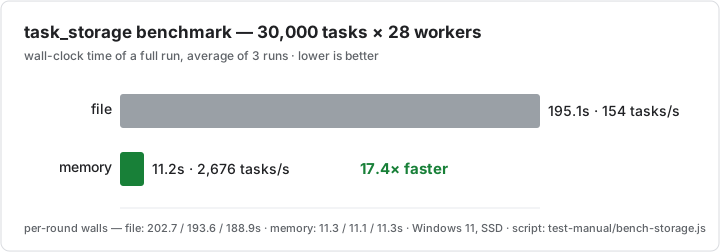
Benchmark — 30,000 tiny tasks × 28 workers:
|
|
192
185
|
|
|
193
|
-
|
|
186
|
+

|
|
194
187
|
|
|
195
188
|
Caveats of `memory` mode:
|
|
196
189
|
|
|
197
|
-
- **Monitoring**: [multi-tasks-monitor](#real-time-monitoring) reads the task folder, so it has nothing to show for a `memory` run
|
|
198
|
-
- **Worker crashes**: without `maxTaskRetries`, a crashed worker's in-flight task is
|
|
199
|
-
- **Dynamic tasks**:
|
|
200
|
-
- **Dynamic tasks with `autoCloseAfterCompletion`**: in `memory` mode the master pops straight from the in-memory queue — there is no on-disk re-read fallback like in `file` mode, and no settle delay before killing an idle worker. A task another worker just sent via `helper.createNewTasks` may still be in IPC transit when the master decides the queue is empty, so it can miss the dispatch window and the workers get closed. If your workers create tasks dynamically, keep `autoCloseAfterCompletion` at its default `false`.
|
|
190
|
+
- **Monitoring**: [multi-tasks-monitor](#real-time-monitoring) reads the task folder, so it has nothing to show for a `memory` run.
|
|
191
|
+
- **Worker crashes**: without `maxTaskRetries`, a crashed worker's in-flight task is lost for good (no `resume` to pick it up).
|
|
192
|
+
- **Dynamic tasks**: tasks sent via `helper.createNewTasks` but not yet applied are lost if the master is killed. And keep `autoCloseAfterCompletion` at its default `false` when workers create tasks dynamically — in-transit tasks can miss the dispatch window and the workers get closed early.
|
|
201
193
|
|
|
202
194
|
### Broadcasting events between workers:
|
|
203
195
|
|
|
@@ -297,6 +289,8 @@ npx multi-tasks-monitor --task-dir "D:\tasks\multitasks20260806..." --port 3777
|
|
|
297
289
|
|
|
298
290
|
### Changelog:
|
|
299
291
|
|
|
292
|
+
- 3.5.2 Fix Readme
|
|
293
|
+
- 3.5.1 Fix bench-storage.svg
|
|
300
294
|
- 3.5.0 Add `task_storage: 'memory'` mode (~17x faster, no resume)
|
|
301
295
|
- 3.4.1 Rewrite README: simpler structure, all examples verified by test cases
|
|
302
296
|
- 3.4.0 Show per-worker load (ELU/CPU/memory) under progressBar; stability fixes
|
|
@@ -0,0 +1,17 @@
|
|
|
1
|
+
<svg xmlns="http://www.w3.org/2000/svg" width="720" height="252" viewBox="0 0 720 252" font-family="Segoe UI, Helvetica, Arial, sans-serif">
|
|
2
|
+
<rect x="1" y="1" width="718" height="250" rx="8" fill="#ffffff" stroke="#dadce0"/>
|
|
3
|
+
<text x="24" y="38" font-size="17" font-weight="600" fill="#202124">task_storage benchmark — 30,000 tasks × 28 workers</text>
|
|
4
|
+
<text x="24" y="60" font-size="12" fill="#5f6368">wall-clock time of a full run, average of 3 runs · lower is better</text>
|
|
5
|
+
|
|
6
|
+
<text x="112" y="114" font-size="14" fill="#202124" text-anchor="end">file</text>
|
|
7
|
+
<rect x="120" y="94" width="420" height="34" rx="3" fill="#9aa0a6"/>
|
|
8
|
+
<text x="548" y="116" font-size="14" fill="#202124">195.1s · 154 tasks/s</text>
|
|
9
|
+
|
|
10
|
+
<text x="112" y="172" font-size="14" fill="#202124" text-anchor="end">memory</text>
|
|
11
|
+
<rect x="120" y="152" width="24" height="34" rx="3" fill="#188038"/>
|
|
12
|
+
<text x="152" y="174" font-size="14" fill="#202124">11.2s · 2,676 tasks/s</text>
|
|
13
|
+
<text x="360" y="174" font-size="15" font-weight="700" fill="#188038">17.4× faster</text>
|
|
14
|
+
|
|
15
|
+
<line x1="120" y1="208" x2="540" y2="208" stroke="#e8eaed"/>
|
|
16
|
+
<text x="24" y="232" font-size="11" fill="#5f6368">per-round walls — file: 202.7 / 193.6 / 188.9s · memory: 11.3 / 11.1 / 11.3s · Windows 11, SSD · script: test-manual/bench-storage.js</text>
|
|
17
|
+
</svg>
|
package/package.json
CHANGED
|
@@ -1,12 +1,13 @@
|
|
|
1
1
|
{
|
|
2
2
|
"name": "multi-tasks",
|
|
3
|
-
"version": "3.5.
|
|
3
|
+
"version": "3.5.2",
|
|
4
4
|
"description": "Multi-process task scheduling based on Node.js cluster, with crash resume and failed-task restart support",
|
|
5
5
|
"main": "index.js",
|
|
6
6
|
"files": [
|
|
7
7
|
"index.js",
|
|
8
8
|
"workers",
|
|
9
|
-
"utils/*.js"
|
|
9
|
+
"utils/*.js",
|
|
10
|
+
"bench-storage.svg"
|
|
10
11
|
],
|
|
11
12
|
"repository": {
|
|
12
13
|
"type": "git",
|