guard-my-design-system 1.0.0 → 1.0.2
This diff represents the content of publicly available package versions that have been released to one of the supported registries. The information contained in this diff is provided for informational purposes only and reflects changes between package versions as they appear in their respective public registries.
- package/README.md +89 -32
- package/package.json +11 -3
package/README.md
CHANGED
|
@@ -1,35 +1,51 @@
|
|
|
1
1
|
# guard-my-design-system
|
|
2
2
|
|
|
3
|
-
|
|
3
|
+
[](https://www.npmjs.com/package/guard-my-design-system) [](https://www.npmjs.com/package/guard-my-design-system) [](LICENSE) [](https://github.com/gregkozakiewicz/guard-my-design-system#what-makes-the-verdict-trustworthy) [](#on-a-pull-request)
|
|
4
4
|
|
|
5
|
-
|
|
6
|
-
a colour that's nearly the token, a spacing value that's off the scale, an
|
|
7
|
-
`!important` that seemed harmless on a Friday.
|
|
5
|
+
## Your design system dies one pull request at a time. This makes sure it doesn't.
|
|
8
6
|
|
|
9
|
-
|
|
10
|
-
|
|
11
|
-
|
|
12
|
-
are.
|
|
7
|
+
A pull request guard that checks **only the lines a change adds**, says nothing
|
|
8
|
+
about the past, and points each new sin at the on-system value the author
|
|
9
|
+
probably meant. Old wiring is not its business; new sparks are.
|
|
13
10
|
|
|
14
11
|
It learns your system by scanning your repo with the
|
|
15
12
|
[roast-my-design-system](https://github.com/gregkozakiewicz/roast-my-design-system)
|
|
16
|
-
engine, then judges the diff against what it learned. No config files, no
|
|
17
|
-
|
|
13
|
+
engine, then judges the diff against what it learned. No config files, no rules
|
|
14
|
+
to write, no tokens to register. Your codebase is the rulebook.
|
|
15
|
+
|
|
16
|
+
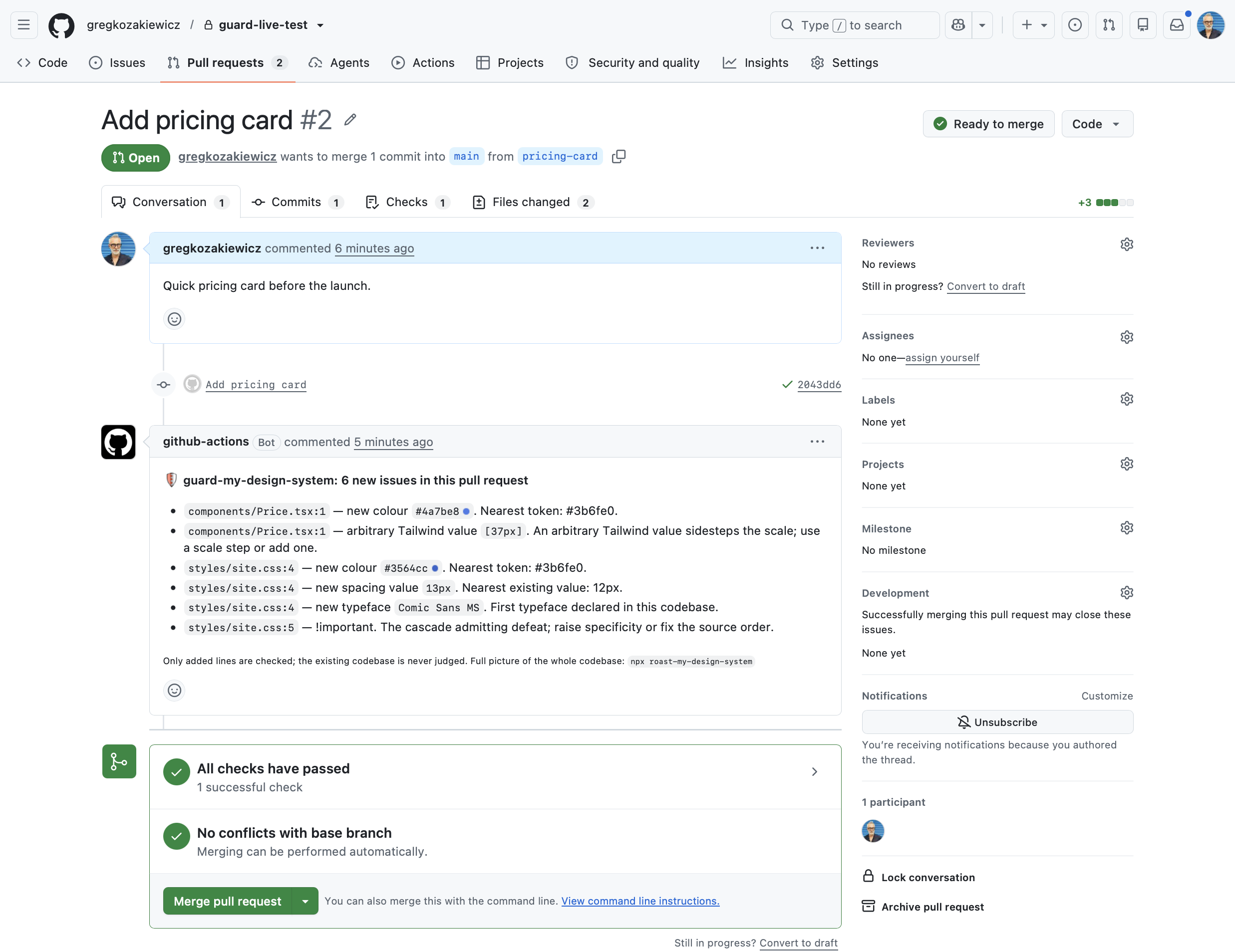
This is what a pull request sees, on real code, with the guard's own comment:
|
|
17
|
+
|
|
18
|
+
|
|
19
|
+
|
|
20
|
+
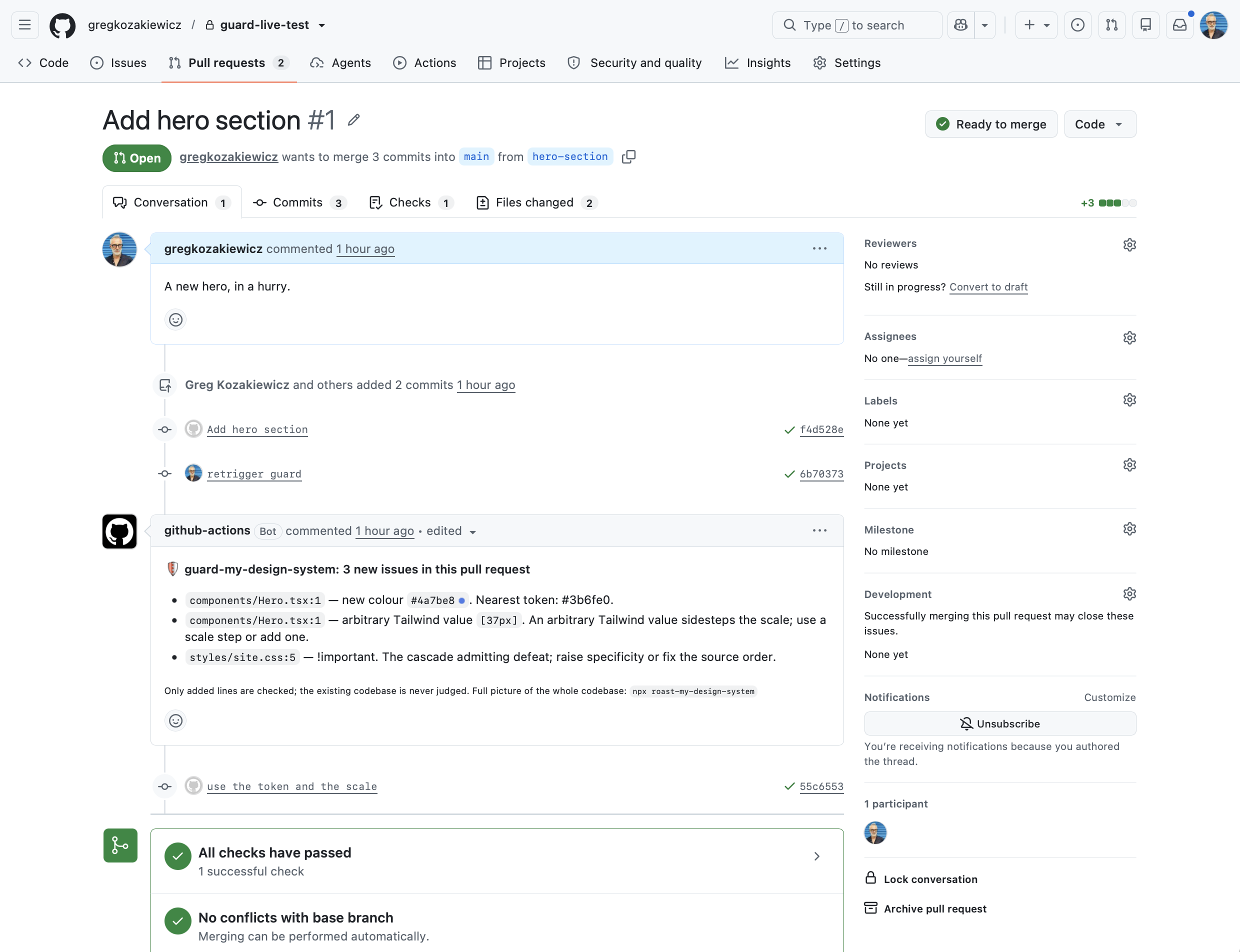
One comment per pull request, updated in place as the author fixes things. Push
|
|
21
|
+
a fix and the same comment counts down instead of piling up:
|
|
22
|
+
|
|
23
|
+
|
|
18
24
|
|
|
19
25
|
## What it catches
|
|
20
26
|
|
|
21
|
-
-
|
|
22
|
-
-
|
|
23
|
-
-
|
|
24
|
-
-
|
|
25
|
-
-
|
|
27
|
+
- **A hard-coded colour where a token exists**, with the nearest token named.
|
|
28
|
+
- **A spacing value the codebase has never used**, with the nearest step named.
|
|
29
|
+
- **A typeface the system does not declare.**
|
|
30
|
+
- **`!important`**, the cascade admitting defeat.
|
|
31
|
+
- **Arbitrary Tailwind values** (`w-[137px]`, `mt-[37px]`) that sidestep the scale.
|
|
26
32
|
|
|
27
33
|
And what it deliberately ignores: everything that was already there. Even if
|
|
28
|
-
the codebase carries years of mess, the guard
|
|
29
|
-
|
|
34
|
+
the codebase carries years of mess, the guard asks one question of a change:
|
|
35
|
+
does it make things worse?
|
|
36
|
+
|
|
37
|
+
## Why this exists
|
|
38
|
+
|
|
39
|
+
Nobody can win the argument "please go and clean up the codebase". Everyone can
|
|
40
|
+
win "let us at least stop digging". The guard makes not-digging automatic, and
|
|
41
|
+
it matters more now than ever: AI agents write a growing share of UI code, and
|
|
42
|
+
they drift off-system faster than review can catch. Rules files ask nicely; the
|
|
43
|
+
guard checks.
|
|
30
44
|
|
|
31
45
|
## On a pull request
|
|
32
46
|
|
|
47
|
+
Five minutes, once:
|
|
48
|
+
|
|
33
49
|
```yaml
|
|
34
50
|
# .github/workflows/guard.yml
|
|
35
51
|
name: guard
|
|
@@ -47,12 +63,7 @@ jobs:
|
|
|
47
63
|
- uses: gregkozakiewicz/guard-my-design-system@v1
|
|
48
64
|
```
|
|
49
65
|
|
|
50
|
-
|
|
51
|
-
|
|
52
|
-
> **🛡 guard-my-design-system: 2 new issues in this pull request**
|
|
53
|
-
>
|
|
54
|
-
> - `Card.tsx:24` — new colour `#4a7be8`. Nearest token: `#3b6fe0`.
|
|
55
|
-
> - `Card.tsx:31` — new spacing value `13px`. Nearest existing value: `12px`.
|
|
66
|
+
After that you forget it exists, which is the whole point of a smoke alarm.
|
|
56
67
|
|
|
57
68
|
Prefer a failed check over a comment? Strict mode is the one setting:
|
|
58
69
|
|
|
@@ -62,25 +73,71 @@ Prefer a failed check over a comment? Strict mode is the one setting:
|
|
|
62
73
|
strict: true
|
|
63
74
|
```
|
|
64
75
|
|
|
76
|
+
`exclude` keeps folders out of the system scan, same syntax as the CLI below.
|
|
77
|
+
|
|
65
78
|
## On your machine
|
|
66
79
|
|
|
67
80
|
Judge your uncommitted work before anyone else sees it:
|
|
68
81
|
|
|
69
82
|
```bash
|
|
70
|
-
npx guard-my-design-system
|
|
83
|
+
npx guard-my-design-system@latest
|
|
71
84
|
```
|
|
72
85
|
|
|
73
|
-
|
|
74
|
-
|
|
75
|
-
|
|
86
|
+
| Command | What you get |
|
|
87
|
+
|---|---|
|
|
88
|
+
| <code>npx guard-my-design-system@latest</code> | Your working tree's added lines judged against main, in the terminal |
|
|
89
|
+
| <code>npx guard-my-design-system@latest <path></code> | Judge a different repo than the current directory |
|
|
90
|
+
| <code>... --base <ref></code> | Diff against something other than main |
|
|
91
|
+
| `... --strict` | Exit 1 on findings, so it slots into scripts and hooks |
|
|
92
|
+
| `... --markdown` | The verdict as markdown, the same text the PR comment carries |
|
|
93
|
+
| `... --json` | Findings as JSON on stdout, for scripts and pipelines |
|
|
94
|
+
| <code>... --exclude lab/</code> | Leave folders out of the system scan (comma-separate for more). A `.roastignore` file at the repo root works too |
|
|
95
|
+
|
|
96
|
+
Requires Node 18+ and git.
|
|
97
|
+
|
|
98
|
+
## What makes the verdict trustworthy
|
|
99
|
+
|
|
100
|
+
- **Only added lines are checked.** The existing codebase is never judged,
|
|
101
|
+
never counted, never mentioned. Nobody rips out a smoke alarm because it
|
|
102
|
+
criticised their old wiring.
|
|
103
|
+
- **Deterministic, not AI sampling.** The same engine that powers
|
|
104
|
+
roast-my-design-system reads the diff and returns the same verdict every
|
|
105
|
+
run. No model, no sampling, no drift.
|
|
106
|
+
- **Read-only, no network, no telemetry.** The scan and the diff both happen
|
|
107
|
+
locally in your CI runner or terminal. Nothing about your code leaves the
|
|
108
|
+
machine it runs on.
|
|
109
|
+
- **Honest exemptions, inherited from roast.** Email and print styling must be
|
|
110
|
+
inline, so it is never flagged. Artwork files carry hex that is drawing, not
|
|
111
|
+
styling. Defining a new token is extending the system, not a sin.
|
|
112
|
+
- **Findings are blunt, advice starts from intent.** Every flag names the
|
|
113
|
+
on-system value the author probably meant, so the fix takes thirty seconds
|
|
114
|
+
and no meeting.
|
|
76
115
|
|
|
77
116
|
## The family
|
|
78
117
|
|
|
79
118
|
[roast-my-design-system](https://github.com/gregkozakiewicz/roast-my-design-system)
|
|
80
|
-
diagnoses the whole codebase
|
|
81
|
-
|
|
82
|
-
|
|
119
|
+
diagnoses the whole codebase: a health score against a 34-repo benchmark, the
|
|
120
|
+
receipts behind it, and the agent rules that keep AI-written UI on-system.
|
|
121
|
+
guard keeps new work from adding to the pile.
|
|
122
|
+
|
|
123
|
+
Roast diagnoses it. Guard protects it.
|
|
124
|
+
|
|
125
|
+
**Your design system dies one pull request at a time. This makes sure it doesn't.**
|
|
126
|
+
|
|
127
|
+
<a href="https://github.com/gregkozakiewicz/guard-my-design-system"><img src="https://img.shields.io/badge/If%20it%20caught%20something%20before%20review%20did%2C%20a%20star%20helps%20other%20people%20find%20it-a855f7?style=for-the-badge&logo=github&logoColor=white" alt="If it caught something before review did, a star helps other people find it"></a>
|
|
128
|
+
|
|
129
|
+
## License
|
|
130
|
+
|
|
131
|
+
MIT. The code is yours to fork, modify and redistribute; the copyright notice
|
|
132
|
+
travels with it.
|
|
133
|
+
|
|
134
|
+
If you build a report, summary or audit of your own from this tool's findings,
|
|
135
|
+
keep one line in it: *Built with
|
|
136
|
+
[guard-my-design-system](https://github.com/gregkozakiewicz/guard-my-design-system)
|
|
137
|
+
by Greg Kozakiewicz*.
|
|
83
138
|
|
|
84
|
-
|
|
139
|
+
**guard-my-design-system**™ and the GK mark are trademarks of Greg Kozakiewicz.
|
|
140
|
+
Forking is welcome, republishing under this name is not: see
|
|
141
|
+
[brand and attribution](https://gregkozakiewicz.github.io/roast-my-design-system/brand.html).
|
|
85
142
|
|
|
86
|
-
|
|
143
|
+
Built and designed by <a href="https://gregkozakiewicz.com"><picture><source media="(prefers-color-scheme: dark)" srcset="https://raw.githubusercontent.com/gregkozakiewicz/roast-my-design-system/main/assets/gk-mark-dark.png?v=3.10.1"><img src="https://raw.githubusercontent.com/gregkozakiewicz/roast-my-design-system/main/assets/gk-mark.png?v=3.10.1" height="15" alt="GK mark"></picture> Greg Kozakiewicz</a>.
|
package/package.json
CHANGED
|
@@ -1,7 +1,7 @@
|
|
|
1
1
|
{
|
|
2
2
|
"name": "guard-my-design-system",
|
|
3
|
-
"version": "1.0.
|
|
4
|
-
"description": "
|
|
3
|
+
"version": "1.0.2",
|
|
4
|
+
"description": "Your design system dies one pull request at a time. This makes sure it doesn't. A guard that judges only the lines a change adds, against the system the repo already has, and names the on-system value the author probably meant.",
|
|
5
5
|
"type": "module",
|
|
6
6
|
"bin": {
|
|
7
7
|
"guard-my-design-system": "index.mjs"
|
|
@@ -17,11 +17,19 @@
|
|
|
17
17
|
"design-system",
|
|
18
18
|
"design-tokens",
|
|
19
19
|
"lint",
|
|
20
|
+
"linter",
|
|
20
21
|
"ci",
|
|
21
22
|
"pull-request",
|
|
22
23
|
"code-review",
|
|
24
|
+
"github-action",
|
|
25
|
+
"design-drift",
|
|
26
|
+
"design-ops",
|
|
27
|
+
"code-quality",
|
|
28
|
+
"ai-agents",
|
|
23
29
|
"tailwind",
|
|
24
|
-
"css"
|
|
30
|
+
"css",
|
|
31
|
+
"style-guide",
|
|
32
|
+
"developer-tools"
|
|
25
33
|
],
|
|
26
34
|
"author": "Greg Kozakiewicz (https://gregkozakiewicz.com)",
|
|
27
35
|
"license": "MIT",
|