codecall 1.2.3 → 1.4.0
This diff represents the content of publicly available package versions that have been released to one of the supported registries. The information contained in this diff is provided for informational purposes only and reflects changes between package versions as they appear in their respective public registries.
- package/README.md +104 -207
- package/package.json +1 -1
- package/plugins/codecall/.claude-plugin/plugin.json +6 -2
- package/plugins/codecall/.codex-plugin/plugin.json +13 -4
- package/plugins/codecall/agents/codecall-planner.md +6 -1
- package/plugins/codecall/skills/codecall/SKILL.md +96 -95
- package/plugins/codecall/skills/codecall/references/backend-map/api.md +113 -0
- package/plugins/codecall/skills/codecall/references/backend-map/architecture.md +65 -0
- package/plugins/codecall/skills/codecall/references/backend-map/async.md +81 -0
- package/plugins/codecall/skills/codecall/references/backend-map/auth.md +97 -0
- package/plugins/codecall/skills/codecall/references/backend-map/caching.md +65 -0
- package/plugins/codecall/skills/codecall/references/backend-map/data.md +144 -0
- package/plugins/codecall/skills/codecall/references/backend-map/http.md +97 -0
- package/plugins/codecall/skills/codecall/references/backend-map/index.md +165 -0
- package/plugins/codecall/skills/codecall/references/backend-map/observability.md +65 -0
- package/plugins/codecall/skills/codecall/references/backend-map/ops.md +129 -0
- package/plugins/codecall/skills/codecall/references/backend-map/quality.md +81 -0
- package/plugins/codecall/skills/codecall/references/backend-map/realtime.md +65 -0
- package/plugins/codecall/skills/codecall/references/backend-map/reliability.md +65 -0
- package/plugins/codecall/skills/codecall/references/backend-map/scaling.md +81 -0
- package/plugins/codecall/skills/codecall/references/backend-map/security.md +97 -0
- package/plugins/codecall/skills/codecall/references/backend-map/storage.md +81 -0
- package/plugins/codecall/skills/codecall/references/receipt-template.html +71 -0
package/README.md
CHANGED
|
@@ -1,30 +1,44 @@
|
|
|
1
1
|
# codecall
|
|
2
2
|
|
|
3
|
-
|
|
3
|
+
`npx skills add GAURAV-1313/codecall` · Claude Code, Codex, Cursor, Gemini CLI, OpenCode, Kiro, Copilot · no API key, nothing uploaded
|
|
4
4
|
|
|
5
|
-
|
|
5
|
+
|
|
6
6
|
|
|
7
|
-
|
|
8
|
-
|
|
9
|
-
|
|
10
|
-
|
|
7
|
+
**codecall quizzes you on the code the agent just wrote.** When an
|
|
8
|
+
implementation lands, it offers a four-minute session: it teaches the 2 to 4
|
|
9
|
+
ideas behind the change using your actual code, checks each one with two
|
|
10
|
+
questions, and ends with a one-page receipt you can keep or post. No API key,
|
|
11
|
+
nothing uploaded, nothing remembered unless you keep the receipt.
|
|
11
12
|
|
|
12
|
-
|
|
13
|
-
understanding it. codecall closes that gap: right after something is built,
|
|
14
|
-
it teaches you the 2–4 key ideas behind it, asks a couple of simple questions
|
|
15
|
-
to check your understanding, and tells you what to double check before you
|
|
16
|
-
reuse the same pattern elsewhere.
|
|
13
|
+
## Install
|
|
17
14
|
|
|
18
|
-
|
|
19
|
-
|
|
15
|
+
```bash
|
|
16
|
+
npx skills add GAURAV-1313/codecall
|
|
17
|
+
```
|
|
20
18
|
|
|
21
|
-
|
|
19
|
+
Then type `/codecall` (or `$codecall` in Codex) after your agent finishes
|
|
20
|
+
something. You are always asked **Start Learning / Skip** first.
|
|
22
21
|
|
|
23
|
-
|
|
24
|
-
|
|
22
|
+
Want it to *offer* automatically after meaningful changes, not just when you
|
|
23
|
+
ask? Install the plugin instead; it adds a small local hook that reminds the
|
|
24
|
+
agent to check, and never decides for you:
|
|
25
25
|
|
|
26
26
|
```text
|
|
27
|
-
|
|
27
|
+
/plugin marketplace add https://github.com/GAURAV-1313/codecall
|
|
28
|
+
/plugin install codecall@codecall
|
|
29
|
+
```
|
|
30
|
+
|
|
31
|
+
(Codex: `codex plugin marketplace add https://github.com/GAURAV-1313/codecall`
|
|
32
|
+
then `codex plugin add codecall@codecall`. The plugin's command is
|
|
33
|
+
`/codecall:codecall` in Claude Code.) `npm install -g codecall` also works and
|
|
34
|
+
installs the skill for both Codex and Claude Code.
|
|
35
|
+
|
|
36
|
+
## What a session looks like
|
|
37
|
+
|
|
38
|
+
Say your agent just added login to your app.
|
|
39
|
+
|
|
40
|
+
```text
|
|
41
|
+
You: /codecall
|
|
28
42
|
|
|
29
43
|
codecall: Implementation completed.
|
|
30
44
|
Learning opportunity: this adds authentication middleware and a
|
|
@@ -42,223 +56,106 @@ You: Heard of it
|
|
|
42
56
|
|
|
43
57
|
codecall: Let's start with why every request now passes through a check
|
|
44
58
|
before reaching your account routes...
|
|
45
|
-
(explains the
|
|
59
|
+
(explains the idea in plain terms, using YOUR actual code)
|
|
46
60
|
|
|
47
61
|
Quick check: if someone sends a request without logging in,
|
|
48
62
|
what should happen?
|
|
49
|
-
[ multiple-choice answer ]
|
|
50
63
|
|
|
51
|
-
You: (
|
|
64
|
+
You: (answer)
|
|
52
65
|
|
|
53
|
-
codecall: (tells you if you're right, and why
|
|
66
|
+
codecall: (tells you if you're right, and why, then moves to the next idea)
|
|
54
67
|
|
|
55
68
|
...
|
|
56
69
|
|
|
57
|
-
codecall:
|
|
58
|
-
|
|
59
|
-
Remember: always check the token before touching user data.
|
|
60
|
-
Watch out for: forgetting this check on a new route you add later.
|
|
61
|
-
```
|
|
62
|
-
|
|
63
|
-
That's the whole product — a short, focused conversation about the code that
|
|
64
|
-
was just written, grounded in what actually happened, not a generic
|
|
65
|
-
tutorial.
|
|
66
|
-
|
|
67
|
-
### It's not just for auth
|
|
68
|
-
|
|
69
|
-
Say your assistant instead added retry logic with exponential backoff around
|
|
70
|
-
a flaky payment API call. codecall would recommend a session on *why* retries
|
|
71
|
-
need backoff and jitter instead of just trying again immediately, teach that
|
|
72
|
-
using your actual retry code, then check whether you can spot when retrying
|
|
73
|
-
is the wrong call (like after a non-idempotent request that already went
|
|
74
|
-
through). Same short format — a couple of ideas, a couple of questions, a
|
|
75
|
-
summary — just grounded in whatever you actually built.
|
|
76
|
-
|
|
77
|
-
Or say your assistant added a database index to speed up a slow query.
|
|
78
|
-
codecall would recommend a session on *why* that specific index helps — how
|
|
79
|
-
the query planner uses it, which column order matters, and when an index
|
|
80
|
-
actually hurts (like on a write-heavy table). It would teach that using your
|
|
81
|
-
real schema and query, then check whether you can predict which future queries
|
|
82
|
-
this index will and won't help. Same short format — a couple of ideas, a
|
|
83
|
-
couple of questions, a summary — grounded in the change you just made.
|
|
84
|
-
|
|
85
|
-
## Requirements
|
|
86
|
-
|
|
87
|
-
- Codex or Claude Code, already installed.
|
|
88
|
-
- No account, no signup, no API key, no internet access needed.
|
|
89
|
-
|
|
90
|
-
## Install it (pick one)
|
|
91
|
-
|
|
92
|
-
### If you use Codex
|
|
93
|
-
|
|
94
|
-
```bash
|
|
95
|
-
codex plugin marketplace add https://github.com/GAURAV-1313/codecall
|
|
96
|
-
codex plugin add codecall@codecall
|
|
97
|
-
```
|
|
98
|
-
|
|
99
|
-
Then restart Codex (or start a new task) and type `$codecall`.
|
|
100
|
-
|
|
101
|
-
### If you use Claude Code
|
|
102
|
-
|
|
103
|
-
```text
|
|
104
|
-
/plugin marketplace add https://github.com/GAURAV-1313/codecall
|
|
105
|
-
/plugin install codecall@codecall
|
|
106
|
-
/reload-plugins
|
|
107
|
-
```
|
|
108
|
-
|
|
109
|
-
Then type `/codecall:codecall`.
|
|
110
|
-
|
|
111
|
-
### Either tool, the simple way (no plugin store)
|
|
112
|
-
|
|
113
|
-
```bash
|
|
114
|
-
npm install -g codecall
|
|
115
|
-
```
|
|
116
|
-
|
|
117
|
-
This installs it for both Codex and Claude Code at once. In Codex, type
|
|
118
|
-
`$codecall`. In Claude Code, type `/codecall`.
|
|
119
|
-
|
|
120
|
-
> **Note:** codecall isn't in the searchable plugin list inside Codex or
|
|
121
|
-
> Claude Code yet — you have to install it with the command above, once.
|
|
122
|
-
> After that it works normally every time.
|
|
123
|
-
>
|
|
124
|
-
> **Note:** the plugin install (not the `npm install -g` path) includes a
|
|
125
|
-
> small local script that reminds the agent to check whether a session is
|
|
126
|
-
> worth offering, so you may see a one-time "this plugin can run code"
|
|
127
|
-
> review prompt during setup. It makes no network calls — see
|
|
128
|
-
> [Privacy](#privacy--the-short-version).
|
|
129
|
-
|
|
130
|
-
### How do I know it worked?
|
|
131
|
-
|
|
132
|
-
Type the command for whichever way you installed it. You should see
|
|
133
|
-
something like this:
|
|
134
|
-
|
|
135
|
-
```text
|
|
136
|
-
Implementation completed.
|
|
137
|
-
Learning opportunity: <a short reason>
|
|
138
|
-
Estimated learning time: <a few minutes>
|
|
139
|
-
|
|
140
|
-
Start Learning / Skip
|
|
70
|
+
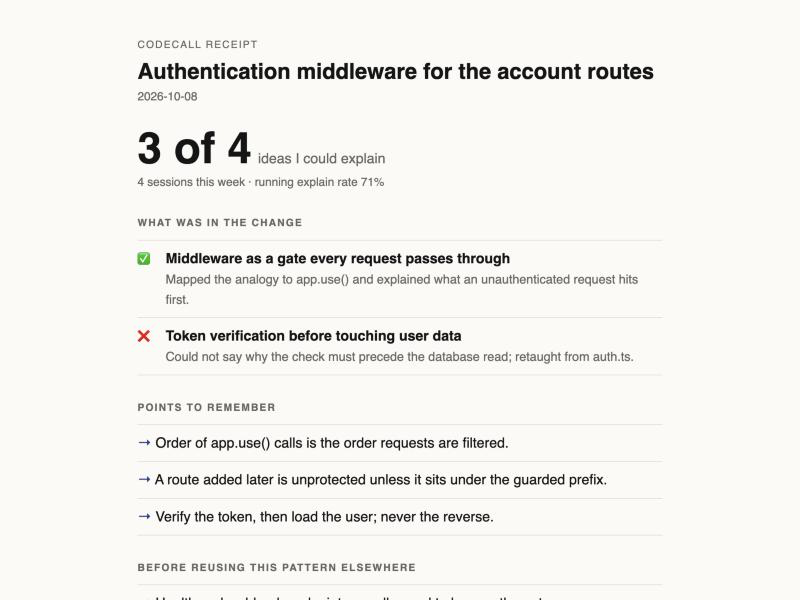
codecall: Receipt: ./codecall/0007-auth-middleware.html
|
|
71
|
+
Could explain 3 of 4. Keep it, print it, or post it.
|
|
141
72
|
```
|
|
142
73
|
|
|
143
|
-
|
|
144
|
-
|
|
145
|
-
|
|
146
|
-
|
|
147
|
-
|
|
148
|
-
|
|
149
|
-
|
|
150
|
-
|
|
151
|
-
|
|
152
|
-
|
|
153
|
-
|
|
154
|
-
|
|
155
|
-
|
|
156
|
-
|
|
157
|
-
|
|
158
|
-
|
|
159
|
-
|
|
160
|
-
|
|
161
|
-
|
|
162
|
-
|
|
163
|
-
|
|
164
|
-
|
|
165
|
-
|
|
166
|
-
|
|
167
|
-
|
|
168
|
-
|
|
169
|
-
|
|
170
|
-
|
|
171
|
-
|
|
172
|
-
|
|
173
|
-
|
|
174
|
-
|
|
175
|
-
|
|
176
|
-
|
|
177
|
-
|
|
178
|
-
|
|
179
|
-
|
|
180
|
-
|
|
181
|
-
|
|
182
|
-
|
|
183
|
-
|
|
184
|
-
|
|
185
|
-
|
|
186
|
-
-
|
|
187
|
-
|
|
188
|
-
-
|
|
189
|
-
|
|
190
|
-
-
|
|
191
|
-
|
|
192
|
-
|
|
193
|
-
- On the Claude Code plugin, some of the read-only "figure out if this is
|
|
194
|
-
worth teaching" work runs in an isolated helper (so it doesn't clutter your
|
|
195
|
-
main conversation) — it can only read files, never edit them, and it never
|
|
196
|
-
talks to you directly or teaches anything itself.
|
|
74
|
+
The receipt is one screen: the change in a line, each idea marked ✅ could
|
|
75
|
+
explain or ❌ could not, the score, three points to remember, and the edge
|
|
76
|
+
cases to check before you reuse the pattern somewhere else.
|
|
77
|
+
|
|
78
|
+
It is not just for auth. Retry logic with backoff, a new database index, a
|
|
79
|
+
cache layer, a webhook handler: anything with a *why* behind it gets the same
|
|
80
|
+
short format, grounded in what was actually built.
|
|
81
|
+
|
|
82
|
+
## Why it exists
|
|
83
|
+
|
|
84
|
+
It is easy to accept code from an AI assistant without fully understanding it.
|
|
85
|
+
Reading the diff back is not the same as being asked about it. codecall asks,
|
|
86
|
+
right after the change lands, while the reasons are still fresh, and leaves a
|
|
87
|
+
receipt you can return to.
|
|
88
|
+
|
|
89
|
+
## How the score is measured
|
|
90
|
+
|
|
91
|
+
Each session covers 2 to 4 ideas. An idea counts as *could explain* when you
|
|
92
|
+
answer both of its checks correctly without a reteach. The score is `N of M`
|
|
93
|
+
ideas, nothing else: no time-on-task, no mastery claim, no guess at what you
|
|
94
|
+
would have known anyway. Earlier receipts in `./codecall/` add a streak line
|
|
95
|
+
(sessions this week, running explain rate) and nothing more.
|
|
96
|
+
|
|
97
|
+
## Backend concept map
|
|
98
|
+
|
|
99
|
+
For server-side changes, codecall uses a small built-in map of about 80
|
|
100
|
+
backend concepts: HTTP, auth, databases, caching, queues, webhooks, real-time,
|
|
101
|
+
storage, testing and delivery. It gives concepts stable names, orders them by
|
|
102
|
+
what you need to know first, and supplies known misconceptions. You never see
|
|
103
|
+
the map. If a change matches nothing in it, codecall works exactly as before.
|
|
104
|
+
|
|
105
|
+
When you miss a mapped concept, the receipt adds one **Go deeper** line: the
|
|
106
|
+
matching chapter of Sriniously's free
|
|
107
|
+
[Backend from first principles](https://www.youtube.com/playlist?list=PLui3EUkuMTPgZcV0QhQrOcwMPcBCcd_Q1)
|
|
108
|
+
series, plus an official reference (MDN, OWASP, PostgreSQL and similar). The
|
|
109
|
+
map's wording is codecall's own and links to the videos; it does not copy
|
|
110
|
+
them. codecall is not affiliated with or endorsed by the series' creator.
|
|
111
|
+
|
|
112
|
+
## Privacy
|
|
113
|
+
|
|
114
|
+
- No API key, no account, no signup, no network call.
|
|
115
|
+
- It uses the agent and conversation you already have open. There is no
|
|
116
|
+
separate model call.
|
|
117
|
+
- The receipt is the only thing it writes, into `./codecall/` in your
|
|
118
|
+
project. Delete the folder to forget every session.
|
|
119
|
+
- The plugin's automatic-offer script runs entirely on your machine and only
|
|
120
|
+
ever adds a text reminder; it cannot edit files or run commands.
|
|
121
|
+
- On the Claude Code plugin, the read-only planning step runs in an isolated
|
|
122
|
+
helper so it does not fill your main conversation. It can only read files
|
|
123
|
+
and never talks to you.
|
|
197
124
|
|
|
198
125
|
## Troubleshooting
|
|
199
126
|
|
|
200
|
-
**
|
|
201
|
-
|
|
202
|
-
searching for it. Once installed, it works like any other plugin.
|
|
203
|
-
|
|
204
|
-
**Which command do I type?** `$codecall` in Codex. In Claude Code: `/codecall:codecall`
|
|
205
|
-
if you installed the plugin, or plain `/codecall` if you used `npm install -g codecall`.
|
|
206
|
-
|
|
207
|
-
**I installed it, but nothing happens.** Restart Codex/Claude Code, or start a
|
|
208
|
-
new task — an already-open session won't see a fresh install.
|
|
127
|
+
**Nothing happens after installing.** Restart the agent or start a new
|
|
128
|
+
session; an open session does not pick up a fresh install.
|
|
209
129
|
|
|
210
|
-
**
|
|
130
|
+
**Which command?** `/codecall` after `npx skills add` or `npm install -g`;
|
|
131
|
+
`/codecall:codecall` for the Claude Code plugin; `$codecall` in Codex.
|
|
211
132
|
|
|
212
|
-
**
|
|
213
|
-
the
|
|
214
|
-
|
|
215
|
-
still decline it — codecall still works, you'll just need to type the
|
|
216
|
-
command yourself instead of being offered it.
|
|
217
|
-
|
|
218
|
-
**What's the "helper" mentioned in Privacy — is that someone else reading my
|
|
219
|
-
code?** No — it's the same AI tool you're already using, just working in an
|
|
220
|
-
isolated scratch space so figuring out what's worth teaching doesn't fill up
|
|
221
|
-
your main conversation. You won't see it unless you go looking; it only
|
|
222
|
-
hands back a short plan.
|
|
133
|
+
**The plugin asked me to trust something.** That is the one-time review for
|
|
134
|
+
the small local hook behind the automatic offer. Decline it and codecall still
|
|
135
|
+
works; you type the command yourself.
|
|
223
136
|
|
|
224
137
|
## For developers
|
|
225
138
|
|
|
226
|
-
Want to build, test, or contribute? See [ARCHITECTURE.md](ARCHITECTURE.md)
|
|
227
|
-
for the full technical design.
|
|
228
|
-
|
|
229
139
|
```bash
|
|
230
140
|
npm install
|
|
231
141
|
npm run build
|
|
232
142
|
npm test
|
|
233
|
-
```
|
|
234
|
-
|
|
235
|
-
Validate the plugin before releasing:
|
|
236
|
-
|
|
237
|
-
```bash
|
|
238
143
|
claude plugin validate ./plugins/codecall
|
|
239
144
|
```
|
|
240
145
|
|
|
241
|
-
|
|
242
|
-
|
|
243
|
-
|
|
244
|
-
|
|
245
|
-
|
|
246
|
-
|
|
247
|
-
|
|
248
|
-
**Claude Code** — submit via the
|
|
249
|
-
[Plugin Directory Submission Form](https://clau.de/plugin-directory-submission).
|
|
250
|
-
The plugin `name` becomes permanent once accepted.
|
|
251
|
-
|
|
252
|
-
**Codex** — submit through `platform.openai.com/plugins`, which requires a
|
|
253
|
-
verified OpenAI Platform identity and at least five positive and three
|
|
254
|
-
negative test cases. Review is asynchronous with no fixed timeline.
|
|
146
|
+
The backend concept map lives in
|
|
147
|
+
`plugins/codecall/skills/codecall/references/backend-map/`, one Markdown file
|
|
148
|
+
per cluster. Edit those files, then run `node scripts/backend-map.mjs` to
|
|
149
|
+
validate them and regenerate `index.md`; `npm test` fails on a stale index, a
|
|
150
|
+
broken prerequisite, a timestamp that is not a real chapter start, or a link
|
|
151
|
+
outside the documentation allowlist.
|
|
255
152
|
|
|
256
|
-
|
|
153
|
+
The canonical skill lives in `plugins/codecall/skills/codecall/`. The
|
|
154
|
+
TypeScript runtime in `src/` is an offline, deterministic test harness for the
|
|
155
|
+
session state machine, not the product; see [ARCHITECTURE.md](ARCHITECTURE.md).
|
|
257
156
|
|
|
258
|
-
|
|
259
|
-
|
|
260
|
-
deterministic, offline demo/test runtime, not the AI-powered product
|
|
261
|
-
experience above. See [ARCHITECTURE.md](ARCHITECTURE.md) for the API.
|
|
157
|
+
Listings: Claude Code's [plugin directory submission form](https://clau.de/plugin-directory-submission);
|
|
158
|
+
Codex via `platform.openai.com/plugins`.
|
|
262
159
|
|
|
263
160
|
## License
|
|
264
161
|
|
package/package.json
CHANGED
|
@@ -1,6 +1,6 @@
|
|
|
1
1
|
{
|
|
2
2
|
"name": "codecall",
|
|
3
|
-
"version": "1.
|
|
3
|
+
"version": "1.4.0",
|
|
4
4
|
"description": "Adaptive implementation-grounded learning for Claude Code.",
|
|
5
5
|
"author": {
|
|
6
6
|
"name": "Gaurav",
|
|
@@ -9,5 +9,9 @@
|
|
|
9
9
|
"homepage": "https://www.npmjs.com/package/codecall",
|
|
10
10
|
"repository": "https://github.com/GAURAV-1313/codecall",
|
|
11
11
|
"license": "MIT",
|
|
12
|
-
"keywords": [
|
|
12
|
+
"keywords": [
|
|
13
|
+
"learning",
|
|
14
|
+
"developer-education",
|
|
15
|
+
"implementation"
|
|
16
|
+
]
|
|
13
17
|
}
|
|
@@ -1,6 +1,6 @@
|
|
|
1
1
|
{
|
|
2
2
|
"name": "codecall",
|
|
3
|
-
"version": "1.
|
|
3
|
+
"version": "1.4.0",
|
|
4
4
|
"description": "Adaptive implementation-grounded learning for Codex.",
|
|
5
5
|
"author": {
|
|
6
6
|
"name": "Gaurav",
|
|
@@ -9,7 +9,12 @@
|
|
|
9
9
|
"homepage": "https://www.npmjs.com/package/codecall",
|
|
10
10
|
"repository": "https://github.com/GAURAV-1313/codecall",
|
|
11
11
|
"license": "MIT",
|
|
12
|
-
"keywords": [
|
|
12
|
+
"keywords": [
|
|
13
|
+
"codex",
|
|
14
|
+
"claude-code",
|
|
15
|
+
"learning",
|
|
16
|
+
"developer-education"
|
|
17
|
+
],
|
|
13
18
|
"skills": "./skills/",
|
|
14
19
|
"interface": {
|
|
15
20
|
"displayName": "Codecall",
|
|
@@ -17,7 +22,11 @@
|
|
|
17
22
|
"longDescription": "A consent-first, adaptive learning skill grounded in completed implementation work.",
|
|
18
23
|
"developerName": "Gaurav",
|
|
19
24
|
"category": "Productivity",
|
|
20
|
-
"capabilities": [
|
|
21
|
-
|
|
25
|
+
"capabilities": [
|
|
26
|
+
"Interactive"
|
|
27
|
+
],
|
|
28
|
+
"defaultPrompt": [
|
|
29
|
+
"Teach me the implementation I just completed with Codecall."
|
|
30
|
+
]
|
|
22
31
|
}
|
|
23
32
|
}
|
|
@@ -40,6 +40,11 @@ your starting evidence — you were not part of the conversation that built it.
|
|
|
40
40
|
anti-patterns, architecture decisions, and misconceptions distinct. Order by
|
|
41
41
|
prerequisite. Do not reduce a multi-concept implementation to one
|
|
42
42
|
vocabulary item.
|
|
43
|
+
5. Only when the change touches server-side code, read the codecall skill's
|
|
44
|
+
`references/backend-map/index.md` and follow the skill's "Backend concept
|
|
45
|
+
map" rule: at most one map id per concept, only when it truly fits, never
|
|
46
|
+
forced. Order with the ids' `requires`. You may grep `./codecall/*.html`
|
|
47
|
+
for `codecall-concepts` meta tags to find ids missed in earlier sessions.
|
|
43
48
|
|
|
44
49
|
## Output
|
|
45
50
|
|
|
@@ -51,7 +56,7 @@ Judgment: recommend | optional | skip
|
|
|
51
56
|
Reason: <evidence-backed reason, citing the specific file/decision/signal>
|
|
52
57
|
Estimated minutes: <N>
|
|
53
58
|
Plan:
|
|
54
|
-
1. <concept> — <one-line why this matters here> [prerequisite: none|<concept>]
|
|
59
|
+
1. <concept> — <one-line why this matters here> [prerequisite: none|<concept>] [map: <id>|none]
|
|
55
60
|
2. ...
|
|
56
61
|
Evidence limits: <anything the given input didn't establish, if applicable>
|
|
57
62
|
```
|