@wardby/cli 0.2.0 → 0.2.1
This diff represents the content of publicly available package versions that have been released to one of the supported registries. The information contained in this diff is provided for informational purposes only and reflects changes between package versions as they appear in their respective public registries.
- package/README.md +142 -67
- package/dist/claude-coding-worker/driver.d.ts +1 -0
- package/dist/claude-coding-worker/driver.js +4 -1
- package/dist/claude-coding-worker/main.js +3 -2
- package/dist/coding/protocol.d.ts +28 -3
- package/dist/coding/protocol.js +53 -2
- package/dist/coding-worker/artifact.d.ts +12 -0
- package/dist/coding-worker/artifact.js +48 -6
- package/dist/coding-worker/driver.d.ts +1 -0
- package/dist/coding-worker/driver.js +4 -1
- package/dist/coding-worker/errors.d.ts +7 -0
- package/dist/coding-worker/errors.js +18 -0
- package/dist/coding-worker/main.js +3 -2
- package/dist/core/budget-groups.d.ts +1 -1
- package/dist/core/coding-queue.d.ts +1 -1
- package/dist/core/datastores.d.ts +1 -1
- package/dist/core/db.d.ts +36 -2
- package/dist/core/db.js +69 -2
- package/dist/core/dispatch.d.ts +16 -1
- package/dist/core/dispatch.js +33 -5
- package/dist/core/http-runtime.js +3 -4
- package/dist/core/lease.d.ts +1 -1
- package/dist/core/private-directory.d.ts +20 -0
- package/dist/core/private-directory.js +36 -0
- package/dist/core/reconciler.d.ts +1 -1
- package/dist/core/runner.d.ts +1 -1
- package/dist/core/scheduler.d.ts +1 -1
- package/dist/core/secrets.d.ts +1 -1
- package/dist/core/subagent-memory-tools.d.ts +1 -1
- package/dist/core/webhooks.d.ts +1 -1
- package/dist/generated/prisma/browser.d.ts +228 -0
- package/dist/generated/prisma/browser.js +17 -0
- package/dist/generated/prisma/client.d.ts +247 -0
- package/dist/generated/prisma/client.js +34 -0
- package/dist/generated/prisma/commonInputTypes.d.ts +809 -0
- package/dist/generated/prisma/commonInputTypes.js +10 -0
- package/dist/generated/prisma/enums.d.ts +53 -0
- package/dist/generated/prisma/enums.js +54 -0
- package/dist/generated/prisma/internal/class.d.ts +462 -0
- package/dist/generated/prisma/internal/class.js +49 -0
- package/dist/generated/prisma/internal/prismaNamespace.d.ts +3325 -0
- package/dist/generated/prisma/internal/prismaNamespace.js +455 -0
- package/dist/generated/prisma/internal/prismaNamespaceBrowser.d.ts +449 -0
- package/dist/generated/prisma/internal/prismaNamespaceBrowser.js +426 -0
- package/dist/generated/prisma/models/Agent.d.ts +3267 -0
- package/dist/generated/prisma/models/Agent.js +1 -0
- package/dist/generated/prisma/models/AgentDatastore.d.ts +1210 -0
- package/dist/generated/prisma/models/AgentDatastore.js +1 -0
- package/dist/generated/prisma/models/AgentMemory.d.ts +986 -0
- package/dist/generated/prisma/models/AgentMemory.js +1 -0
- package/dist/generated/prisma/models/AgentSecret.d.ts +1212 -0
- package/dist/generated/prisma/models/AgentSecret.js +1 -0
- package/dist/generated/prisma/models/AgentSubAgent.d.ts +1217 -0
- package/dist/generated/prisma/models/AgentSubAgent.js +1 -0
- package/dist/generated/prisma/models/AgentTool.d.ts +1309 -0
- package/dist/generated/prisma/models/AgentTool.js +1 -0
- package/dist/generated/prisma/models/AuthFormChallenge.d.ts +1298 -0
- package/dist/generated/prisma/models/AuthFormChallenge.js +1 -0
- package/dist/generated/prisma/models/AuthLoginKey.d.ts +1245 -0
- package/dist/generated/prisma/models/AuthLoginKey.js +1 -0
- package/dist/generated/prisma/models/AuthRateLimit.d.ts +979 -0
- package/dist/generated/prisma/models/AuthRateLimit.js +1 -0
- package/dist/generated/prisma/models/AuthSession.d.ts +1376 -0
- package/dist/generated/prisma/models/AuthSession.js +1 -0
- package/dist/generated/prisma/models/AuthUser.d.ts +1645 -0
- package/dist/generated/prisma/models/AuthUser.js +1 -0
- package/dist/generated/prisma/models/BudgetGroup.d.ts +1548 -0
- package/dist/generated/prisma/models/BudgetGroup.js +1 -0
- package/dist/generated/prisma/models/CodingAgentProfile.d.ts +1430 -0
- package/dist/generated/prisma/models/CodingAgentProfile.js +1 -0
- package/dist/generated/prisma/models/CodingProxyRequest.d.ts +1749 -0
- package/dist/generated/prisma/models/CodingProxyRequest.js +1 -0
- package/dist/generated/prisma/models/CodingProxySession.d.ts +1505 -0
- package/dist/generated/prisma/models/CodingProxySession.js +1 -0
- package/dist/generated/prisma/models/CodingRun.d.ts +2402 -0
- package/dist/generated/prisma/models/CodingRun.js +1 -0
- package/dist/generated/prisma/models/Datastore.d.ts +1434 -0
- package/dist/generated/prisma/models/Datastore.js +1 -0
- package/dist/generated/prisma/models/DatastoreEntry.d.ts +1314 -0
- package/dist/generated/prisma/models/DatastoreEntry.js +1 -0
- package/dist/generated/prisma/models/OAuthAuthorizationCode.d.ts +1526 -0
- package/dist/generated/prisma/models/OAuthAuthorizationCode.js +1 -0
- package/dist/generated/prisma/models/OAuthAuthorizationRequest.d.ts +1350 -0
- package/dist/generated/prisma/models/OAuthAuthorizationRequest.js +1 -0
- package/dist/generated/prisma/models/OAuthClient.d.ts +1289 -0
- package/dist/generated/prisma/models/OAuthClient.js +1 -0
- package/dist/generated/prisma/models/OAuthFamily.d.ts +1540 -0
- package/dist/generated/prisma/models/OAuthFamily.js +1 -0
- package/dist/generated/prisma/models/OAuthGrant.d.ts +1280 -0
- package/dist/generated/prisma/models/OAuthGrant.js +1 -0
- package/dist/generated/prisma/models/Principal.d.ts +1790 -0
- package/dist/generated/prisma/models/Principal.js +1 -0
- package/dist/generated/prisma/models/Run.d.ts +2281 -0
- package/dist/generated/prisma/models/Run.js +1 -0
- package/dist/generated/prisma/models/SchedulerLease.d.ts +970 -0
- package/dist/generated/prisma/models/SchedulerLease.js +1 -0
- package/dist/generated/prisma/models/Secret.d.ts +1399 -0
- package/dist/generated/prisma/models/Secret.js +1 -0
- package/dist/generated/prisma/models/SecretElicitationOutcome.d.ts +973 -0
- package/dist/generated/prisma/models/SecretElicitationOutcome.js +1 -0
- package/dist/generated/prisma/models/Task.d.ts +1176 -0
- package/dist/generated/prisma/models/Task.js +1 -0
- package/dist/generated/prisma/models/Tool.d.ts +1478 -0
- package/dist/generated/prisma/models/Tool.js +1 -0
- package/dist/generated/prisma/models/Webhook.d.ts +1386 -0
- package/dist/generated/prisma/models/Webhook.js +1 -0
- package/dist/generated/prisma/models.d.ts +32 -0
- package/dist/generated/prisma/models.js +1 -0
- package/dist/import/create.d.ts +1 -1
- package/dist/import/create.js +1 -1
- package/dist/import/index.d.ts +1 -1
- package/dist/mcp/auth/ownership.d.ts +19 -19
- package/dist/mcp/auth/principal.d.ts +1 -1
- package/dist/mcp/auth/resource-server.d.ts +1 -1
- package/dist/mcp/auth/self-hosted/browser.js +20 -6
- package/dist/mcp/auth/self-hosted/cli.d.ts +1 -1
- package/dist/mcp/auth/self-hosted/credentials.d.ts +1 -1
- package/dist/mcp/auth/self-hosted/rate-limit.d.ts +1 -1
- package/dist/mcp/auth/self-hosted/session.d.ts +1 -1
- package/dist/mcp/context.d.ts +1 -1
- package/dist/mcp/server.d.ts +1 -1
- package/dist/mcp/shared/page-style.d.ts +16 -0
- package/dist/mcp/shared/page-style.js +129 -0
- package/dist/mcp/tasks/manager.d.ts +1 -1
- package/dist/mcp/tools/agents.js +1 -1
- package/dist/mcp/tools/datastore.js +1 -1
- package/dist/mcp/tools/scheduling.js +1 -1
- package/dist/mcp/tools/secret-elicitation-form.d.ts +1 -1
- package/dist/mcp/tools/secret-elicitation-form.js +10 -28
- package/dist/mcp/tools/secret-elicitation.d.ts +1 -1
- package/dist/mcp/tools/subagents.js +1 -1
- package/dist/mcp/tools/tools.js +1 -1
- package/dist/mcp/transport/streamable-http.d.ts +1 -1
- package/dist/mcp/unattended-schedules.d.ts +1 -1
- package/dist/mcp/webhooks/ingress.d.ts +1 -1
- package/dist/providers/auth/index.d.ts +1 -1
- package/dist/providers/auth/self-hosted.d.ts +2 -2
- package/dist/providers/coding-proxy/prisma-ledger.d.ts +1 -1
- package/dist/providers/coding-proxy/runtime.d.ts +1 -1
- package/dist/providers/datastore/postgres.d.ts +1 -1
- package/dist/providers/executor/build.d.ts +1 -1
- package/dist/providers/executor/composition.d.ts +1 -1
- package/dist/providers/executor/container.d.ts +1 -1
- package/dist/providers/executor/container.js +10 -3
- package/dist/providers/executor/dbos.d.ts +1 -1
- package/dist/providers/jobs/docker.d.ts +11 -0
- package/dist/providers/jobs/docker.js +34 -18
- package/dist/providers/jobs/kubernetes.js +5 -10
- package/dist/providers/jobs/types.d.ts +2 -0
- package/dist/providers/memory/postgres.d.ts +1 -1
- package/dist/providers/vcs/git.js +2 -1
- package/dist/quickstart/index.js +22 -31
- package/dist/quickstart/migrate.d.ts +23 -0
- package/dist/quickstart/migrate.js +125 -0
- package/package.json +20 -10
- package/prisma/migrate.config.mjs +20 -0
- package/prisma/schema.prisma +10 -2
package/README.md
CHANGED
|
@@ -2,16 +2,17 @@
|
|
|
2
2
|
<img align="left" hspace="24" src="https://raw.githubusercontent.com/wardby/wardby/main/docs/assets/brand/wardby-mascot.png" alt="Wardby guardian robot protecting an agent budget" width="280">
|
|
3
3
|
<h3><big><big>Wardby</big></big> <small><em>(pronounced “WARD‑bee”)</em></small></h3>
|
|
4
4
|
<h3>Autonomous agents, bounded by design.</h3>
|
|
5
|
-
<p><strong>
|
|
5
|
+
<p><strong>Agent runners help a model complete a task. Wardby is the self-hosted control plane that governs the work around it: whether it may run, what it may access, what it may spend, and what reviewable outcome it may produce.</strong></p>
|
|
6
6
|
<br clear="left">
|
|
7
7
|
<p><strong>Budgets are enforced before spend: every model request must fit within a hard run limit before it reaches the provider.</strong></p>
|
|
8
|
+
<p><strong>Bring your providers. Keep your infrastructure. Govern agents in one place.</strong></p>
|
|
8
9
|
<p>
|
|
10
|
+
<a href="#get-started">Get started</a> ·
|
|
9
11
|
<a href="#why-wardby">Why Wardby</a> ·
|
|
10
|
-
<a href="#
|
|
12
|
+
<a href="#where-wardby-fits">Where it fits</a> ·
|
|
11
13
|
<a href="#a-full-cycle-agent-from-one-conversation">Full-cycle example</a> ·
|
|
12
14
|
<a href="#host-it-in-your-cloud">Deployments</a> ·
|
|
13
15
|
<a href="#bring-your-own-observability">Observability</a> ·
|
|
14
|
-
<a href="https://github.com/wardby/wardby/blob/main/docs/getting-started.md">Getting started</a> ·
|
|
15
16
|
<a href="#security-boundaries">Security</a>
|
|
16
17
|
</p>
|
|
17
18
|
</div>
|
|
@@ -37,50 +38,138 @@ there resolves against npmjs.com instead of this repository. -->
|
|
|
37
38
|
> and local observability stack are implemented and tested. Production
|
|
38
39
|
> readiness and cloud deployment coverage are still being expanded.
|
|
39
40
|
|
|
41
|
+
## Get started
|
|
42
|
+
|
|
43
|
+
### Run locally in five minutes
|
|
44
|
+
|
|
45
|
+
Requirements: Node.js 24 or newer, Docker, and an OpenAI or Anthropic API key.
|
|
46
|
+
You do not need to clone Wardby or install PostgreSQL.
|
|
47
|
+
|
|
48
|
+
1. From the project where you want to use Wardby, run:
|
|
49
|
+
|
|
50
|
+
```sh
|
|
51
|
+
npx --yes @wardby/cli@latest quickstart
|
|
52
|
+
```
|
|
53
|
+
|
|
54
|
+
2. Follow the prompts to choose a provider, start PostgreSQL, create a `$1`
|
|
55
|
+
demo agent, and optionally connect Codex or Claude Code through MCP.
|
|
56
|
+
|
|
57
|
+
3. Verify the installation:
|
|
58
|
+
|
|
59
|
+
```sh
|
|
60
|
+
npx --yes @wardby/cli@latest doctor
|
|
61
|
+
```
|
|
62
|
+
|
|
63
|
+
Quickstart keeps credentials and local state under `.wardby/` in the current
|
|
64
|
+
project. Read the [local getting-started guide](https://github.com/wardby/wardby/blob/main/docs/getting-started.md)
|
|
65
|
+
for unattended setup, lifecycle commands, MCP configuration, and cleanup.
|
|
66
|
+
|
|
67
|
+
### Develop Wardby from source
|
|
68
|
+
|
|
69
|
+
Clone the repository only when you want to contribute to Wardby, inspect its
|
|
70
|
+
deployment assets, or build images yourself:
|
|
71
|
+
|
|
72
|
+
```sh
|
|
73
|
+
git clone https://github.com/wardby/wardby.git
|
|
74
|
+
cd wardby
|
|
75
|
+
npm ci
|
|
76
|
+
npm run build
|
|
77
|
+
npm test
|
|
78
|
+
```
|
|
79
|
+
|
|
80
|
+
Continue with [CONTRIBUTING.md](https://github.com/wardby/wardby/blob/main/CONTRIBUTING.md)
|
|
81
|
+
for the development database, migrations, required checks, and contribution
|
|
82
|
+
expectations.
|
|
83
|
+
|
|
84
|
+
### Deploy for a team
|
|
85
|
+
|
|
86
|
+
- Follow the [GKE guide](https://github.com/wardby/wardby/blob/main/docs/getting-started-gke.md)
|
|
87
|
+
for the supported Google Cloud reference deployment.
|
|
88
|
+
- Start from the [portable production boundary](https://github.com/wardby/wardby/blob/main/deploy/production/README.md)
|
|
89
|
+
for another cloud, VM, or container platform.
|
|
90
|
+
- Follow [Bring your own identity provider](https://github.com/wardby/wardby/blob/main/docs/getting-started-identity-provider.md)
|
|
91
|
+
to protect remote MCP with your existing OAuth/OIDC provider.
|
|
92
|
+
|
|
40
93
|
## Why Wardby
|
|
41
94
|
|
|
42
95
|
AI agents are easy to demo and harder to operate. Once an agent can spend
|
|
43
96
|
money, use credentials, change a repository, or run without a person watching,
|
|
44
97
|
teams need more than a prompt and a cron job.
|
|
45
98
|
|
|
99
|
+
### One control plane instead of scattered automation
|
|
100
|
+
|
|
101
|
+
Teams often begin with Claude Code or Codex on developer machines,
|
|
102
|
+
repository-specific automation, and separate provider dashboards. As adoption
|
|
103
|
+
grows, agent definitions, ownership, credentials, budgets, schedules, and run
|
|
104
|
+
history become fragmented across tools and repositories.
|
|
105
|
+
|
|
106
|
+
Wardby gives every Wardby-managed agent one durable operational identity: who
|
|
107
|
+
owns it, why it exists, what it may access, when it runs, what it may spend,
|
|
108
|
+
and what outcome it produced.
|
|
109
|
+
|
|
46
110
|
Wardby provides the control plane around the model:
|
|
47
111
|
|
|
48
|
-
| For engineering leaders
|
|
49
|
-
|
|
|
50
|
-
|
|
|
51
|
-
|
|
|
52
|
-
|
|
|
53
|
-
|
|
|
112
|
+
| For engineering leaders | For developers |
|
|
113
|
+
| ---------------------------------------------------------------------------- | ------------------------------------------------------------------------------------------ |
|
|
114
|
+
| Keep an inventory of owned agents, purposes, schedules, limits, and results. | Create and manage agents from Claude or Codex through MCP. |
|
|
115
|
+
| See reserved budget and actual usage across Wardby-managed agents. | Choose OpenAI, Anthropic, or Bedrock-backed models per agent. |
|
|
116
|
+
| Keep execution, data, and credentials in infrastructure your team controls. | Switch approved models or builders without rewriting the governance contract. |
|
|
117
|
+
| Turn one-off experiments into scheduled, observable operating processes. | Attach scoped tools, secrets, schedules, memory, and sub-agents. |
|
|
118
|
+
| Keep approval and action authority explicit for consequential outcomes. | Run optional coding tasks in isolated Codex or Claude Code workers that produce draft PRs. |
|
|
54
119
|
|
|
55
120
|
The result is not another autonomous black box. It is a way to make agent work
|
|
56
121
|
repeatable, bounded, inspectable, and reviewable.
|
|
57
122
|
|
|
58
|
-
##
|
|
123
|
+
## Where Wardby fits
|
|
59
124
|
|
|
60
125
|
Agent tools solve different layers of the problem. Wardby does not need to
|
|
61
126
|
replace them: it provides the self-hosted operating boundary around agents and
|
|
62
127
|
the work they perform.
|
|
63
128
|
|
|
64
|
-
| Category
|
|
65
|
-
|
|
|
66
|
-
| **
|
|
67
|
-
| **
|
|
68
|
-
| **
|
|
69
|
-
| **
|
|
129
|
+
| Category | What it primarily helps you do | What Wardby adds |
|
|
130
|
+
| --------------------------- | ----------------------------------------------------------- | ------------------------------------------------------------------------------------------ |
|
|
131
|
+
| **Repository automation** | Run jobs for one repository in response to delivery events. | One agent catalog, budget model, and policy boundary across repositories and triggers. |
|
|
132
|
+
| **Agent frameworks** | Build reasoning loops, tool calls, and multi-agent logic. | Persistent ownership, schedules, budgets, credentials, run history, and lifecycle control. |
|
|
133
|
+
| **Coding agents** | Plan, edit, and test code for an interactive task. | Isolated managed workers, admission-time budgets, scoped access, and optional draft PRs. |
|
|
134
|
+
| **Provider dashboards** | Report usage and cost within one model provider. | Agent-owned budgets, capabilities, runs, and outcomes across approved providers. |
|
|
135
|
+
| **LLM gateways** | Route model requests, manage keys, and enforce quotas. | Budgets tied to named agents, owned runs, capabilities, schedules, and outcomes. |
|
|
136
|
+
| **Observability platforms** | Trace requests, evaluate quality, and explain cost. | Admission and execution controls applied before work occurs, plus a durable agent catalog. |
|
|
137
|
+
| **Vendor control planes** | Govern agents inside one provider or cloud ecosystem. | A self-hosted boundary spanning approved providers, builders, repositories, and clouds. |
|
|
138
|
+
| **Workflow orchestrators** | Make application jobs durable, retryable, and observable. | Agent-specific policy, model usage, capabilities, budgets, and MCP-native operations. |
|
|
139
|
+
|
|
140
|
+
The distinction is governed work, not just model calls or execution. Rather
|
|
141
|
+
than assembling a gateway, scheduler, agent catalog, budget service,
|
|
142
|
+
capability registry, and run database, Wardby provides one operating boundary.
|
|
143
|
+
It reserves spend before a run starts, grants only assigned capabilities,
|
|
144
|
+
records what happened, and keeps downstream action authority separate from the
|
|
145
|
+
worker that produced the result.
|
|
146
|
+
|
|
147
|
+
> **Scope:** Wardby's inventory and budget views cover work managed through
|
|
148
|
+
> Wardby. Provider reconciliation and unmanaged-agent discovery are required
|
|
149
|
+
> before those views can represent every AI agent or expense in an
|
|
150
|
+
> organization.
|
|
151
|
+
|
|
152
|
+
## One operational contract, the full lifecycle
|
|
153
|
+
|
|
154
|
+
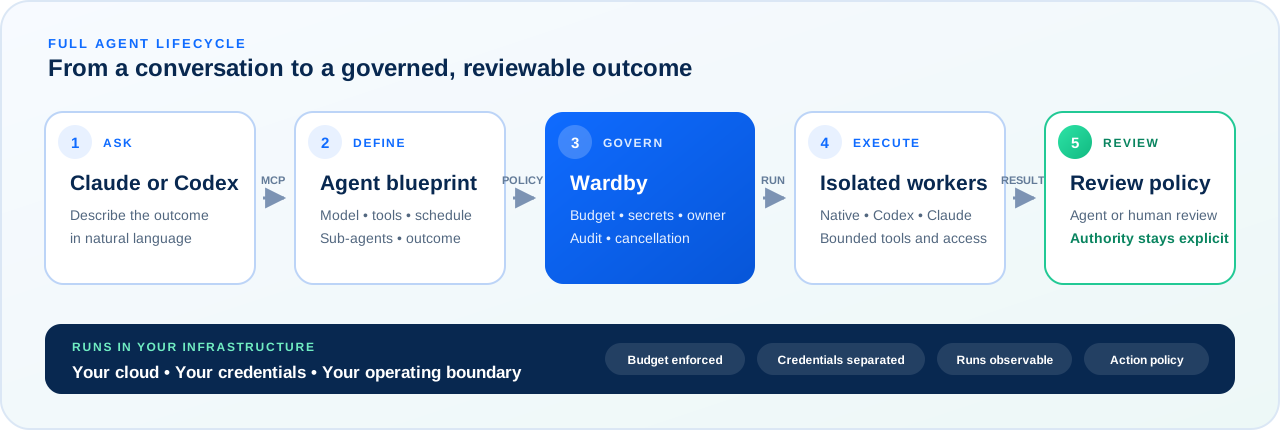
|
|
70
155
|
|
|
71
|
-
|
|
72
|
-
|
|
73
|
-
|
|
74
|
-
|
|
156
|
+
Claude and Codex are the operator experience. Wardby is the durable operating
|
|
157
|
+
boundary between intent and agent execution: it stores agent definitions,
|
|
158
|
+
triggers work, reserves budget, mediates tools and credentials, records
|
|
159
|
+
outcomes, and exposes run state through MCP. Nothing runs until identity,
|
|
160
|
+
policy, and available budget agree.
|
|
75
161
|
|
|
76
|
-
|
|
162
|
+
### Governed shared state for agent teams
|
|
77
163
|
|
|
78
|
-
|
|
164
|
+
Named Wardby datastores let related agents exchange persistent structured data
|
|
165
|
+
without sharing an unrestricted database credential. Datastores are owned and
|
|
166
|
+
attached to agents explicitly; each sandboxed tool can reach only approved
|
|
167
|
+
bound names and key prefixes.
|
|
79
168
|
|
|
80
|
-
|
|
81
|
-
|
|
82
|
-
|
|
83
|
-
|
|
169
|
+
A planner can publish a feature plan, a builder can record implementation
|
|
170
|
+
state, and a reviewer or QA agent can add findings to the same governed
|
|
171
|
+
workspace. Datastores provide bounded coordination state, not a replacement
|
|
172
|
+
for authoritative source systems or searchable agent memory.
|
|
84
173
|
|
|
85
174
|
## A full-cycle agent from one conversation
|
|
86
175
|
|
|
@@ -107,13 +196,17 @@ Claude or Codex can translate that request into Wardby MCP operations such as
|
|
|
107
196
|
|
|
108
197
|
The same agent can be updated, paused, triggered, inspected, or deleted from an
|
|
109
198
|
MCP conversation. The CLI remains available as the bootstrap and operations
|
|
110
|
-
floor.
|
|
199
|
+
floor. The result is autonomy with a receipt: an owned run with bounded spend,
|
|
200
|
+
assigned capabilities, durable status, and a reviewable outcome.
|
|
111
201
|
|
|
112
202
|
## Agent ecosystems you can compose
|
|
113
203
|
|
|
114
204
|
Wardby provides lifecycle primitives rather than prescribing one fixed catalog.
|
|
115
205
|
These are example systems a team can build and manage through MCP:
|
|
116
206
|
|
|
207
|
+
**Builders can vary. The controls do not.** Each system inherits the same
|
|
208
|
+
budget, capability, identity, evidence, and review contract.
|
|
209
|
+
|
|
117
210
|
| Agent system | Typical cycle | Governed outcome |
|
|
118
211
|
| ------------------------ | ------------------------------------------------------------------ | ------------------------------------ |
|
|
119
212
|
| **Delivery pipeline** | Work request → plan → implementation → tests → review | Optional draft feature or bug-fix PR |
|
|
@@ -129,9 +222,15 @@ own model, tools, schedule, and run history.
|
|
|
129
222
|
|
|
130
223
|
## Host it in your cloud
|
|
131
224
|
|
|
225
|
+
**Bring your providers. Keep your infrastructure. Govern agents in one place.**
|
|
226
|
+
|
|
132
227
|
The core does not import a cloud SDK. Jobs, model access, email, secrets,
|
|
133
228
|
authentication, and object storage sit behind provider interfaces so operators
|
|
134
|
-
can choose the infrastructure boundary that fits their environment.
|
|
229
|
+
can choose the infrastructure boundary that fits their environment. Models,
|
|
230
|
+
coding executors, cloud platforms, and observability systems can change
|
|
231
|
+
independently instead of defining the agent architecture. This reduces
|
|
232
|
+
control-plane lock-in without pretending that source control, model providers,
|
|
233
|
+
or monitoring systems disappear.
|
|
135
234
|
|
|
136
235
|
| Target | Current support |
|
|
137
236
|
| ------------------------------------ | ---------------------------------------------------------------------------------------------------------------- |
|
|
@@ -146,14 +245,10 @@ Start with [deployment targets](https://github.com/wardby/wardby/blob/main/deplo
|
|
|
146
245
|
[GKE getting-started guide](https://github.com/wardby/wardby/blob/main/docs/getting-started-gke.md). Reference deployments are examples,
|
|
147
246
|
not a requirement to use one vendor.
|
|
148
247
|
|
|
149
|
-
|
|
150
|
-
|
|
151
|
-
|
|
152
|
-
|
|
153
|
-
single-container deployment (Cloud Run, a lone VM) should run. Alternatively,
|
|
154
|
-
run `mcp` and `scheduler` as two processes, as `deploy/production/compose.yml`
|
|
155
|
-
does. Running `mcp` alone logs a startup warning if enabled schedules exist
|
|
156
|
-
that nothing will fire.
|
|
248
|
+
For a single-container deployment, run **`wardby serve`** to start MCP, the
|
|
249
|
+
scheduler, and reconciliation together. Split deployments can run `wardby mcp`
|
|
250
|
+
and `wardby scheduler` separately; `mcp` alone does not fire schedules. See the
|
|
251
|
+
deployment guides above for the complete process boundary.
|
|
157
252
|
|
|
158
253
|
## Bring your own observability
|
|
159
254
|
|
|
@@ -211,44 +306,24 @@ Review policy is designed to support designated agents as well as people.
|
|
|
211
306
|
Agent approvals will be recorded as workflow evidence; operators will decide
|
|
212
307
|
whether that evidence permits an automated action or still requires a person.
|
|
213
308
|
|
|
214
|
-
##
|
|
309
|
+
## Optional npm installation
|
|
215
310
|
|
|
216
|
-
|
|
217
|
-
|
|
218
|
-
|
|
219
|
-
```sh
|
|
220
|
-
npx --yes @wardby/cli@latest quickstart
|
|
221
|
-
```
|
|
222
|
-
|
|
223
|
-
The guided command checks prerequisites, creates private project-local
|
|
224
|
-
configuration, starts PostgreSQL in Docker, applies migrations, and offers to
|
|
225
|
-
run a small agent with a `$1` maximum budget. It can also register Wardby as a
|
|
226
|
-
local MCP server in Codex, Claude Code, or both.
|
|
227
|
-
|
|
228
|
-
Read the [Getting started guide](https://github.com/wardby/wardby/blob/main/docs/getting-started.md) for unattended setup,
|
|
229
|
-
MCP usage, lifecycle commands, and the boundary between the native demo and
|
|
230
|
-
isolated coding agents. For a shared cloud installation, follow the full
|
|
231
|
-
[GKE getting-started guide](https://github.com/wardby/wardby/blob/main/docs/getting-started-gke.md).
|
|
232
|
-
|
|
233
|
-
### Installing from npm
|
|
311
|
+
The `npx` quickstart above requires no installation. To pin Wardby as a local
|
|
312
|
+
project dependency instead:
|
|
234
313
|
|
|
235
314
|
```sh
|
|
236
315
|
npm install @wardby/cli
|
|
237
316
|
```
|
|
238
317
|
|
|
239
|
-
|
|
240
|
-
|
|
241
|
-
|
|
242
|
-
configuration, and Prisma has not patched it in the 6.x line. This repository
|
|
243
|
-
clears it with an override, but npm does not apply a package's overrides to the
|
|
244
|
-
projects that install it — so add the same entry to your own `package.json`:
|
|
245
|
-
|
|
246
|
-
```json
|
|
247
|
-
"overrides": { "deepmerge-ts": "8.0.2" }
|
|
248
|
-
```
|
|
318
|
+
That install is audit-clean: the published package carries no Prisma CLI,
|
|
319
|
+
`@prisma/config`, `deepmerge-ts`, or `mysql2`, so `npm audit` reports nothing
|
|
320
|
+
and no `overrides` entry is needed in your own `package.json`.
|
|
249
321
|
|
|
250
|
-
|
|
251
|
-
|
|
322
|
+
`wardby quickstart` and `wardby doctor` separately fetch the pinned Prisma CLI
|
|
323
|
+
(`prisma@7.10.0`) on demand via `npx` to run migrations, so the machine running
|
|
324
|
+
them needs npm registry access at that moment. See
|
|
325
|
+
[Images and dependencies](https://github.com/wardby/wardby/blob/main/docs/security-deployment.md#images-and-dependencies)
|
|
326
|
+
for the repository's own dependency-override policy.
|
|
252
327
|
|
|
253
328
|
## What is implemented
|
|
254
329
|
|
|
@@ -20,6 +20,7 @@ export declare const CLAUDE_OUTPUT_JSON_SCHEMA: {
|
|
|
20
20
|
};
|
|
21
21
|
readonly tag: {
|
|
22
22
|
readonly type: "string";
|
|
23
|
+
readonly description: "Optional short label shown in the pull request title, such as a ticket id. At most 32 characters: letters, digits, '.', '_', '/', '-', starting with a letter or digit, with no spaces. Example: \"add-jokes\". Omit it when there is no natural label.";
|
|
23
24
|
};
|
|
24
25
|
readonly tests: {
|
|
25
26
|
readonly type: "array";
|
|
@@ -13,7 +13,10 @@ export const CLAUDE_OUTPUT_JSON_SCHEMA = {
|
|
|
13
13
|
runId: { type: "string" },
|
|
14
14
|
outcome: { type: "string", enum: ["changes_ready", "no_changes", "budget_exhausted"] },
|
|
15
15
|
summary: { type: "string" },
|
|
16
|
-
tag: {
|
|
16
|
+
tag: {
|
|
17
|
+
type: "string",
|
|
18
|
+
description: "Optional short label shown in the pull request title, such as a ticket id. At most 32 characters: letters, digits, '.', '_', '/', '-', starting with a letter or digit, with no spaces. Example: \"add-jokes\". Omit it when there is no natural label.",
|
|
19
|
+
},
|
|
17
20
|
tests: {
|
|
18
21
|
type: "array",
|
|
19
22
|
maxItems: 64,
|
|
@@ -1,6 +1,6 @@
|
|
|
1
1
|
#!/usr/bin/env node
|
|
2
2
|
import { readCodingInput, writeCodingOutputAtomic } from "../coding-worker/artifact.js";
|
|
3
|
-
import { safeWorkerErrorCode } from "../coding-worker/errors.js";
|
|
3
|
+
import { safeOutputIssues, safeWorkerErrorCode } from "../coding-worker/errors.js";
|
|
4
4
|
import { runClaudeCodingWorker } from "./driver.js";
|
|
5
5
|
import { createClaudeSdkQuery } from "./sdk.js";
|
|
6
6
|
const INPUT_PATH = "/run/wardby/input/input.json";
|
|
@@ -36,6 +36,7 @@ catch (error) {
|
|
|
36
36
|
: safeCode === "worker_failed"
|
|
37
37
|
? `worker_${stage}_failed`
|
|
38
38
|
: safeCode;
|
|
39
|
-
|
|
39
|
+
const issues = code === "coding_output_invalid" ? safeOutputIssues(error) : undefined;
|
|
40
|
+
process.stderr.write(`${JSON.stringify({ error: code, ...(issues ? { issues } : {}) })}\n`);
|
|
40
41
|
process.exitCode = controller.signal.aborted ? 143 : 1;
|
|
41
42
|
}
|
|
@@ -6,10 +6,35 @@ export declare const MAX_CODING_SUMMARY_BYTES: number;
|
|
|
6
6
|
export declare const MAX_CODING_TESTS = 64;
|
|
7
7
|
export declare const MAX_CODING_TEST_COMMAND_BYTES: number;
|
|
8
8
|
export declare const MAX_TAG_BYTES = 32;
|
|
9
|
+
/**
|
|
10
|
+
* A worker's output-schema failure, reduced to where and how it failed, never
|
|
11
|
+
* what the model wrote: `<path>:<zod issue code>`, where the path is dot-joined
|
|
12
|
+
* schema keys and array indices (`$` for the root). Unrecognized keys the model
|
|
13
|
+
* invented are carried only as the `unrecognized_keys` code, never by name.
|
|
14
|
+
*/
|
|
15
|
+
export declare const MAX_CODING_OUTPUT_ISSUES = 8;
|
|
16
|
+
export declare const SAFE_CODING_OUTPUT_ISSUE: RegExp;
|
|
9
17
|
export declare function normalizeGitHubRepository(value: string): string;
|
|
10
18
|
export declare function normalizeGitRef(value: string): string;
|
|
11
19
|
export declare const CodingBaseRefSchema: z.ZodEffects<z.ZodEffects<z.ZodString, string, string>, string, string>;
|
|
12
20
|
export declare const CodingTaskOverrideSchema: z.ZodEffects<z.ZodEffects<z.ZodEffects<z.ZodString, string, string>, string, string>, string, string>;
|
|
21
|
+
/**
|
|
22
|
+
* A coding worker receives only its task text, so a coding agent's own
|
|
23
|
+
* instructions (its systemPrompt) travel inside that text, ahead of the
|
|
24
|
+
* request. Blank instructions leave the task unchanged. The combination must
|
|
25
|
+
* still fit MAX_CODING_TASK_BYTES; exceeding it is an error naming both parts
|
|
26
|
+
* rather than a silent truncation of either.
|
|
27
|
+
*/
|
|
28
|
+
export declare function composeCodingTask(instructions: string | null | undefined, task: string): string;
|
|
29
|
+
/**
|
|
30
|
+
* The tag only labels a pull request title, so a model's malformed tag must not
|
|
31
|
+
* sink an otherwise finished run. A tag that already passes is kept as-is; any
|
|
32
|
+
* other string becomes a lowercase slug (runs of disallowed characters to "-",
|
|
33
|
+
* no leading or trailing punctuation, at most MAX_TAG_BYTES), and one with
|
|
34
|
+
* nothing usable left, or a non-string, becomes null. GitHub finalization still
|
|
35
|
+
* re-validates whatever survives.
|
|
36
|
+
*/
|
|
37
|
+
export declare function normalizeCodingTag(value: unknown): string | null | undefined;
|
|
13
38
|
export declare const CodingTaskInputSchema: z.ZodEffects<z.ZodObject<{
|
|
14
39
|
schemaVersion: z.ZodLiteral<1>;
|
|
15
40
|
runId: z.ZodEffects<z.ZodEffects<z.ZodEffects<z.ZodEffects<z.ZodString, string, string>, string, string>, string, string>, string, string>;
|
|
@@ -103,7 +128,7 @@ export declare const CodingAgentOutputSchema: z.ZodEffects<z.ZodObject<{
|
|
|
103
128
|
command: string;
|
|
104
129
|
outcome: "passed" | "failed" | "skipped";
|
|
105
130
|
}>, "many">;
|
|
106
|
-
tag: z.ZodEffects<z.ZodOptional<z.ZodNullable<z.ZodString>>, string | undefined, string | null | undefined>;
|
|
131
|
+
tag: z.ZodEffects<z.ZodEffects<z.ZodOptional<z.ZodNullable<z.ZodString>>, string | undefined, string | null | undefined>, string | undefined, unknown>;
|
|
107
132
|
}, "strict", z.ZodTypeAny, {
|
|
108
133
|
outcome: "changes_ready" | "no_changes" | "budget_exhausted";
|
|
109
134
|
schemaVersion: 1;
|
|
@@ -123,7 +148,7 @@ export declare const CodingAgentOutputSchema: z.ZodEffects<z.ZodObject<{
|
|
|
123
148
|
command: string;
|
|
124
149
|
outcome: "passed" | "failed" | "skipped";
|
|
125
150
|
}[];
|
|
126
|
-
tag?:
|
|
151
|
+
tag?: unknown;
|
|
127
152
|
}>, {
|
|
128
153
|
tag?: string | undefined;
|
|
129
154
|
summary: string;
|
|
@@ -143,7 +168,7 @@ export declare const CodingAgentOutputSchema: z.ZodEffects<z.ZodObject<{
|
|
|
143
168
|
command: string;
|
|
144
169
|
outcome: "passed" | "failed" | "skipped";
|
|
145
170
|
}[];
|
|
146
|
-
tag?:
|
|
171
|
+
tag?: unknown;
|
|
147
172
|
}>;
|
|
148
173
|
export declare const CodingRunResultSchema: z.ZodEffects<z.ZodEffects<z.ZodObject<{
|
|
149
174
|
schemaVersion: z.ZodLiteral<1>;
|
package/dist/coding/protocol.js
CHANGED
|
@@ -6,6 +6,14 @@ export const MAX_CODING_SUMMARY_BYTES = 8 * 1024;
|
|
|
6
6
|
export const MAX_CODING_TESTS = 64;
|
|
7
7
|
export const MAX_CODING_TEST_COMMAND_BYTES = 2 * 1024;
|
|
8
8
|
export const MAX_TAG_BYTES = 32;
|
|
9
|
+
/**
|
|
10
|
+
* A worker's output-schema failure, reduced to where and how it failed, never
|
|
11
|
+
* what the model wrote: `<path>:<zod issue code>`, where the path is dot-joined
|
|
12
|
+
* schema keys and array indices (`$` for the root). Unrecognized keys the model
|
|
13
|
+
* invented are carried only as the `unrecognized_keys` code, never by name.
|
|
14
|
+
*/
|
|
15
|
+
export const MAX_CODING_OUTPUT_ISSUES = 8;
|
|
16
|
+
export const SAFE_CODING_OUTPUT_ISSUE = /^(?:\$|[a-z][A-Za-z]{0,31}(?:\.(?:[a-z][A-Za-z]{0,31}|\d{1,3})){0,7}):[a-z_]{1,32}$/;
|
|
9
17
|
const MAX_REPOSITORY_INPUT_BYTES = 512;
|
|
10
18
|
const MAX_REF_BYTES = 255;
|
|
11
19
|
const MAX_MODEL_BYTES = 128;
|
|
@@ -108,6 +116,24 @@ const repositorySchema = z
|
|
|
108
116
|
.transform(normalizeGitHubRepository);
|
|
109
117
|
export const CodingBaseRefSchema = z.string().refine(isGitRef, "must be a safe branch ref").transform(normalizeGitRef);
|
|
110
118
|
export const CodingTaskOverrideSchema = boundedText(MAX_CODING_TASK_BYTES);
|
|
119
|
+
/**
|
|
120
|
+
* A coding worker receives only its task text, so a coding agent's own
|
|
121
|
+
* instructions (its systemPrompt) travel inside that text, ahead of the
|
|
122
|
+
* request. Blank instructions leave the task unchanged. The combination must
|
|
123
|
+
* still fit MAX_CODING_TASK_BYTES; exceeding it is an error naming both parts
|
|
124
|
+
* rather than a silent truncation of either.
|
|
125
|
+
*/
|
|
126
|
+
export function composeCodingTask(instructions, task) {
|
|
127
|
+
const standing = instructions?.trim();
|
|
128
|
+
if (!standing)
|
|
129
|
+
return task;
|
|
130
|
+
const composed = `Standing instructions for this coding agent:\n${standing}\n\nRequest:\n${task}`;
|
|
131
|
+
if (byteLength(composed) > MAX_CODING_TASK_BYTES) {
|
|
132
|
+
throw new Error(`The coding agent's instructions (${byteLength(standing)} bytes) plus this task (${byteLength(task)} bytes) ` +
|
|
133
|
+
`exceed the ${MAX_CODING_TASK_BYTES}-byte coding task limit; shorten one of them.`);
|
|
134
|
+
}
|
|
135
|
+
return composed;
|
|
136
|
+
}
|
|
111
137
|
const runIdSchema = boundedText(MAX_RUN_ID_BYTES, true).refine((value) => /^[A-Za-z0-9][A-Za-z0-9_-]*$/.test(value), "must be an opaque identifier");
|
|
112
138
|
const modelSchema = boundedText(MAX_MODEL_BYTES, true).refine((value) => /^[A-Za-z0-9][A-Za-z0-9._:-]*$/.test(value), "must be a model identifier");
|
|
113
139
|
const usageSchema = z
|
|
@@ -117,6 +143,30 @@ const usageSchema = z
|
|
|
117
143
|
costUsd: z.number().finite().nonnegative().max(MAX_COST_USD),
|
|
118
144
|
})
|
|
119
145
|
.strict();
|
|
146
|
+
const SAFE_TAG = new RegExp(`^[A-Za-z0-9][A-Za-z0-9._/-]{0,${MAX_TAG_BYTES - 1}}$`);
|
|
147
|
+
/**
|
|
148
|
+
* The tag only labels a pull request title, so a model's malformed tag must not
|
|
149
|
+
* sink an otherwise finished run. A tag that already passes is kept as-is; any
|
|
150
|
+
* other string becomes a lowercase slug (runs of disallowed characters to "-",
|
|
151
|
+
* no leading or trailing punctuation, at most MAX_TAG_BYTES), and one with
|
|
152
|
+
* nothing usable left, or a non-string, becomes null. GitHub finalization still
|
|
153
|
+
* re-validates whatever survives.
|
|
154
|
+
*/
|
|
155
|
+
export function normalizeCodingTag(value) {
|
|
156
|
+
if (value === undefined || value === null)
|
|
157
|
+
return value;
|
|
158
|
+
if (typeof value !== "string")
|
|
159
|
+
return null;
|
|
160
|
+
if (SAFE_TAG.test(value))
|
|
161
|
+
return value;
|
|
162
|
+
const slug = value
|
|
163
|
+
.toLowerCase()
|
|
164
|
+
.replace(/[^a-z0-9._/-]+/g, "-")
|
|
165
|
+
.replace(/^[^a-z0-9]+/, "")
|
|
166
|
+
.slice(0, MAX_TAG_BYTES)
|
|
167
|
+
.replace(/[^a-z0-9]+$/, "");
|
|
168
|
+
return SAFE_TAG.test(slug) ? slug : null;
|
|
169
|
+
}
|
|
120
170
|
/**
|
|
121
171
|
* A short, caller-visible reference (e.g. a ticket ID) surfaced in the PR title. Never free text.
|
|
122
172
|
* Accepts null as well as undefined: OpenAI's strict Structured Outputs mode requires every
|
|
@@ -126,7 +176,7 @@ const usageSchema = z
|
|
|
126
176
|
*/
|
|
127
177
|
const tagSchema = z
|
|
128
178
|
.string()
|
|
129
|
-
.regex(
|
|
179
|
+
.regex(SAFE_TAG, "must be a short, safe tag")
|
|
130
180
|
.nullable()
|
|
131
181
|
.optional()
|
|
132
182
|
.transform((value) => value ?? undefined);
|
|
@@ -175,7 +225,8 @@ export const CodingAgentOutputSchema = z
|
|
|
175
225
|
outcome: z.enum(["changes_ready", "no_changes", "budget_exhausted"]),
|
|
176
226
|
summary: boundedText(MAX_CODING_SUMMARY_BYTES),
|
|
177
227
|
tests: z.array(testResultSchema).max(MAX_CODING_TESTS),
|
|
178
|
-
|
|
228
|
+
// Model-written, so normalized rather than rejected; see normalizeCodingTag.
|
|
229
|
+
tag: z.preprocess(normalizeCodingTag, tagSchema),
|
|
179
230
|
})
|
|
180
231
|
.strict()
|
|
181
232
|
.transform((value) => ({
|
|
@@ -1,4 +1,16 @@
|
|
|
1
1
|
import { type CodingAgentOutput } from "../coding/protocol.js";
|
|
2
|
+
/**
|
|
3
|
+
* Reads a regular file of at most `maxBytes`, refusing symlinks and anything
|
|
4
|
+
* that is not a regular file.
|
|
5
|
+
*
|
|
6
|
+
* Every check runs against the open handle, never against the path before
|
|
7
|
+
* opening it: an lstat followed by a read of the same path leaves a window in
|
|
8
|
+
* which the file can be swapped for a symlink or a larger file. O_NOFOLLOW
|
|
9
|
+
* refuses a symlink at open time, O_NONBLOCK keeps a FIFO from hanging the
|
|
10
|
+
* open, and fstat on the descriptor checks what was actually opened. The lstat
|
|
11
|
+
* afterwards covers platforms without O_NOFOLLOW: it must be the same inode.
|
|
12
|
+
*/
|
|
13
|
+
export declare function readBoundedRegularFile(path: string, maxBytes: number, errorCode: string): Promise<string>;
|
|
2
14
|
export declare function readCodingInput(path: string): Promise<{
|
|
3
15
|
repository: string;
|
|
4
16
|
schemaVersion: 1;
|
|
@@ -1,12 +1,54 @@
|
|
|
1
|
-
import {
|
|
1
|
+
import { constants } from "node:fs";
|
|
2
|
+
import { lstat, mkdir, open, rename, unlink } from "node:fs/promises";
|
|
2
3
|
import { dirname, join } from "node:path";
|
|
3
4
|
import { MAX_CODING_ARTIFACT_BYTES, parseCodingTaskInputJson } from "../coding/protocol.js";
|
|
4
|
-
|
|
5
|
-
|
|
6
|
-
|
|
7
|
-
|
|
5
|
+
/**
|
|
6
|
+
* Reads a regular file of at most `maxBytes`, refusing symlinks and anything
|
|
7
|
+
* that is not a regular file.
|
|
8
|
+
*
|
|
9
|
+
* Every check runs against the open handle, never against the path before
|
|
10
|
+
* opening it: an lstat followed by a read of the same path leaves a window in
|
|
11
|
+
* which the file can be swapped for a symlink or a larger file. O_NOFOLLOW
|
|
12
|
+
* refuses a symlink at open time, O_NONBLOCK keeps a FIFO from hanging the
|
|
13
|
+
* open, and fstat on the descriptor checks what was actually opened. The lstat
|
|
14
|
+
* afterwards covers platforms without O_NOFOLLOW: it must be the same inode.
|
|
15
|
+
*/
|
|
16
|
+
export async function readBoundedRegularFile(path, maxBytes, errorCode) {
|
|
17
|
+
let file;
|
|
18
|
+
try {
|
|
19
|
+
file = await open(path, constants.O_RDONLY | (constants.O_NOFOLLOW ?? 0) | (constants.O_NONBLOCK ?? 0));
|
|
20
|
+
}
|
|
21
|
+
catch (error) {
|
|
22
|
+
// ELOOP: the path is a symlink.
|
|
23
|
+
if (error.code === "ELOOP")
|
|
24
|
+
throw new Error(errorCode, { cause: error });
|
|
25
|
+
throw error;
|
|
26
|
+
}
|
|
27
|
+
try {
|
|
28
|
+
const metadata = await file.stat();
|
|
29
|
+
if (!metadata.isFile() || metadata.size > maxBytes)
|
|
30
|
+
throw new Error(errorCode);
|
|
31
|
+
const link = await lstat(path);
|
|
32
|
+
if (link.isSymbolicLink() || link.ino !== metadata.ino || link.dev !== metadata.dev)
|
|
33
|
+
throw new Error(errorCode);
|
|
34
|
+
const buffer = Buffer.alloc(maxBytes + 1);
|
|
35
|
+
let length = 0;
|
|
36
|
+
while (length < buffer.length) {
|
|
37
|
+
const { bytesRead } = await file.read(buffer, length, buffer.length - length, length);
|
|
38
|
+
if (bytesRead === 0)
|
|
39
|
+
break;
|
|
40
|
+
length += bytesRead;
|
|
41
|
+
}
|
|
42
|
+
if (length > maxBytes)
|
|
43
|
+
throw new Error(errorCode);
|
|
44
|
+
return buffer.subarray(0, length).toString("utf8");
|
|
45
|
+
}
|
|
46
|
+
finally {
|
|
47
|
+
await file.close();
|
|
8
48
|
}
|
|
9
|
-
|
|
49
|
+
}
|
|
50
|
+
export async function readCodingInput(path) {
|
|
51
|
+
return parseCodingTaskInputJson(await readBoundedRegularFile(path, MAX_CODING_ARTIFACT_BYTES, "coding_input_invalid_file"));
|
|
10
52
|
}
|
|
11
53
|
export async function writeCodingOutputAtomic(path, output) {
|
|
12
54
|
const directory = dirname(path);
|
|
@@ -20,6 +20,7 @@ export declare const CODING_OUTPUT_JSON_SCHEMA: {
|
|
|
20
20
|
};
|
|
21
21
|
readonly tag: {
|
|
22
22
|
readonly type: readonly ["string", "null"];
|
|
23
|
+
readonly description: "Optional short label shown in the pull request title, such as a ticket id. At most 32 characters: letters, digits, '.', '_', '/', '-', starting with a letter or digit, with no spaces. Example: \"add-jokes\". Use null when there is no natural label.";
|
|
23
24
|
};
|
|
24
25
|
readonly tests: {
|
|
25
26
|
readonly type: "array";
|
|
@@ -20,7 +20,10 @@ export const CODING_OUTPUT_JSON_SCHEMA = {
|
|
|
20
20
|
runId: { type: "string" },
|
|
21
21
|
outcome: { type: "string", enum: ["changes_ready", "no_changes", "budget_exhausted"] },
|
|
22
22
|
summary: { type: "string" },
|
|
23
|
-
tag: {
|
|
23
|
+
tag: {
|
|
24
|
+
type: ["string", "null"],
|
|
25
|
+
description: "Optional short label shown in the pull request title, such as a ticket id. At most 32 characters: letters, digits, '.', '_', '/', '-', starting with a letter or digit, with no spaces. Example: \"add-jokes\". Use null when there is no natural label.",
|
|
26
|
+
},
|
|
24
27
|
tests: {
|
|
25
28
|
type: "array",
|
|
26
29
|
maxItems: 64,
|
|
@@ -1 +1,8 @@
|
|
|
1
|
+
/**
|
|
2
|
+
* For `coding_output_invalid`, where the model's final answer failed the output
|
|
3
|
+
* schema: the failing schema paths and issue codes, so the operator log can say
|
|
4
|
+
* which field was wrong without ever carrying the value. Undefined when the
|
|
5
|
+
* cause is not a schema failure.
|
|
6
|
+
*/
|
|
7
|
+
export declare function safeOutputIssues(error: unknown): string[] | undefined;
|
|
1
8
|
export declare function safeWorkerErrorCode(error: unknown): string;
|
|
@@ -1,3 +1,5 @@
|
|
|
1
|
+
import { ZodError } from "zod";
|
|
2
|
+
import { MAX_CODING_OUTPUT_ISSUES, SAFE_CODING_OUTPUT_ISSUE } from "../coding/protocol.js";
|
|
1
3
|
const SAFE_WORKER_ERROR_CODES = new Set([
|
|
2
4
|
"wardby_proxy_url_missing",
|
|
3
5
|
"wardby_run_capability_missing",
|
|
@@ -13,6 +15,22 @@ const SAFE_WORKER_ERROR_CODES = new Set([
|
|
|
13
15
|
"coding_output_invalid",
|
|
14
16
|
"coding_output_run_mismatch",
|
|
15
17
|
]);
|
|
18
|
+
/**
|
|
19
|
+
* For `coding_output_invalid`, where the model's final answer failed the output
|
|
20
|
+
* schema: the failing schema paths and issue codes, so the operator log can say
|
|
21
|
+
* which field was wrong without ever carrying the value. Undefined when the
|
|
22
|
+
* cause is not a schema failure.
|
|
23
|
+
*/
|
|
24
|
+
export function safeOutputIssues(error) {
|
|
25
|
+
const cause = error instanceof Error ? error.cause : undefined;
|
|
26
|
+
if (!(cause instanceof ZodError))
|
|
27
|
+
return undefined;
|
|
28
|
+
const issues = cause.issues
|
|
29
|
+
.map((issue) => `${issue.path.length === 0 ? "$" : issue.path.join(".")}:${issue.code}`)
|
|
30
|
+
.filter((issue) => SAFE_CODING_OUTPUT_ISSUE.test(issue))
|
|
31
|
+
.slice(0, MAX_CODING_OUTPUT_ISSUES);
|
|
32
|
+
return issues.length > 0 ? issues : undefined;
|
|
33
|
+
}
|
|
16
34
|
export function safeWorkerErrorCode(error) {
|
|
17
35
|
if (!(error instanceof Error))
|
|
18
36
|
return "worker_failed";
|