@tlockney/cdp-kernel 0.8.0 → 0.9.0
This diff represents the content of publicly available package versions that have been released to one of the supported registries. The information contained in this diff is provided for informational purposes only and reflects changes between package versions as they appear in their respective public registries.
- package/README.md +4 -2
- package/dist/browser/kernel.js +9 -2
- package/dist/browser/kernel.js.map +2 -2
- package/dist/globals.d.ts +35 -4
- package/dist/kernel-core.js +3 -0
- package/dist/package.d.ts +2 -2
- package/dist/package.js +2 -2
- package/dist/transform.d.ts +10 -1
- package/dist/transform.js +20 -2
- package/package.json +1 -1
- package/runtime/comm.d.mts +87 -1
- package/runtime/display.d.mts +240 -5
- package/runtime/widget.d.mts +205 -6
package/dist/globals.d.ts
CHANGED
|
@@ -16,7 +16,7 @@ import type { Displayable, DisplayOptions, JupyterNamespace, MediaBundle } from
|
|
|
16
16
|
export type { Displayable, DisplayOptions, JupyterNamespace, MediaBundle };
|
|
17
17
|
/** Options for the notebook's `prompt()`. */
|
|
18
18
|
export interface PromptOptions {
|
|
19
|
-
/** Ask the frontend to hide what is typed. */
|
|
19
|
+
/** Ask the frontend to hide what is typed, for secrets. Default `false`. */
|
|
20
20
|
password?: boolean;
|
|
21
21
|
}
|
|
22
22
|
declare global {
|
|
@@ -27,10 +27,41 @@ declare global {
|
|
|
27
27
|
*/
|
|
28
28
|
var jupyter: JupyterNamespace;
|
|
29
29
|
/**
|
|
30
|
-
* Ask
|
|
31
|
-
*
|
|
30
|
+
* Ask for a line of input in the notebook: the frontend shows an input
|
|
31
|
+
* box under the cell, and the cell waits for the answer.
|
|
32
|
+
*
|
|
33
|
+
* @param message The question. Default `"Prompt"`. A non-empty
|
|
34
|
+
* `defaultValue` is shown after it, as `message [default]`.
|
|
35
|
+
* @param defaultValue Returned when the answer is empty. Default `""`.
|
|
36
|
+
* @param options `password: true` hides what is typed.
|
|
37
|
+
* @returns The typed text, `defaultValue` for an empty answer, or `null`
|
|
38
|
+
* when nothing can answer (the frontend allows no input, as in
|
|
39
|
+
* `nbconvert --execute`).
|
|
40
|
+
* @availability On workerd and celld it always returns `null`.
|
|
41
|
+
* @example
|
|
42
|
+
* ```ts
|
|
43
|
+
* const name = prompt("What's your name?", "world");
|
|
44
|
+
* `Hello, ${name}!`;
|
|
45
|
+
* ```
|
|
46
|
+
* @example
|
|
47
|
+
* ```ts
|
|
48
|
+
* const apiKey = prompt("API key", "", { password: true });
|
|
49
|
+
* ```
|
|
50
|
+
* @see jupyter-api.md#asking-for-input-prompt-and-confirm
|
|
32
51
|
*/
|
|
33
52
|
function prompt(message?: string, defaultValue?: string, options?: PromptOptions): string | null;
|
|
34
|
-
/**
|
|
53
|
+
/**
|
|
54
|
+
* Ask a yes/no question in the notebook. `[y/N]` is added to the message.
|
|
55
|
+
*
|
|
56
|
+
* @param message The question. Default `"Confirm"`.
|
|
57
|
+
* @returns `true` only for `y` or `Y`; `false` otherwise, and when
|
|
58
|
+
* nothing can answer.
|
|
59
|
+
* @availability On workerd and celld it always returns `false`.
|
|
60
|
+
* @example
|
|
61
|
+
* ```ts
|
|
62
|
+
* if (confirm("Delete the cache?")) console.log("deleting");
|
|
63
|
+
* ```
|
|
64
|
+
* @see jupyter-api.md#asking-for-input-prompt-and-confirm
|
|
65
|
+
*/
|
|
35
66
|
function confirm(message?: string): boolean;
|
|
36
67
|
}
|
package/dist/kernel-core.js
CHANGED
|
@@ -160,6 +160,9 @@ export class KernelCore {
|
|
|
160
160
|
// Transforms are synchronous, so the stripper loads before any cell.
|
|
161
161
|
if (typeof this.#typeStrip === "string")
|
|
162
162
|
await loadTypeStripper(this.#typeStrip);
|
|
163
|
+
// No shell or control reply until every port is bound: a client that
|
|
164
|
+
// has kernel_info_reply goes on to the heartbeat port (#438).
|
|
165
|
+
await this.#channels.ready;
|
|
163
166
|
await Promise.all([this.#readShell(), this.#runShell(this.#mainShell),
|
|
164
167
|
this.#loop("control", (m, p) => this.#handleControl(m, p)),
|
|
165
168
|
this.#loop("stdin", (m) => this.#handleStdin(m))]);
|
package/dist/package.d.ts
CHANGED
|
@@ -1,11 +1,11 @@
|
|
|
1
1
|
/** Kept equal to package.json and deno.jsonc by test/package.test.ts. */
|
|
2
|
-
export declare const VERSION = "0.
|
|
2
|
+
export declare const VERSION = "0.9.0";
|
|
3
3
|
/**
|
|
4
4
|
* The UTC day this version was released, set with VERSION. The publish
|
|
5
5
|
* workflow refuses a tag unless it's today or yesterday, so it can't go
|
|
6
6
|
* stale: see dependencyCutoff.
|
|
7
7
|
*/
|
|
8
|
-
export declare const RELEASE_DATE = "2026-11-
|
|
8
|
+
export declare const RELEASE_DATE = "2026-11-09";
|
|
9
9
|
/**
|
|
10
10
|
* Deno blocks packages less than 24 hours old (minimum dependency age), so
|
|
11
11
|
* a kernelspec relaunching a release from JSR would fail on release day. It
|
package/dist/package.js
CHANGED
|
@@ -14,13 +14,13 @@ import { join, sep } from "node:path";
|
|
|
14
14
|
import process from "node:process";
|
|
15
15
|
import { fileURLToPath } from "node:url";
|
|
16
16
|
/** Kept equal to package.json and deno.jsonc by test/package.test.ts. */
|
|
17
|
-
export const VERSION = "0.
|
|
17
|
+
export const VERSION = "0.9.0";
|
|
18
18
|
/**
|
|
19
19
|
* The UTC day this version was released, set with VERSION. The publish
|
|
20
20
|
* workflow refuses a tag unless it's today or yesterday, so it can't go
|
|
21
21
|
* stale: see dependencyCutoff.
|
|
22
22
|
*/
|
|
23
|
-
export const RELEASE_DATE = "2026-11-
|
|
23
|
+
export const RELEASE_DATE = "2026-11-09";
|
|
24
24
|
/**
|
|
25
25
|
* Deno blocks packages less than 24 hours old (minimum dependency age), so
|
|
26
26
|
* a kernelspec relaunching a release from JSR would fail on release day. It
|
package/dist/transform.d.ts
CHANGED
|
@@ -51,7 +51,16 @@ export declare function isTypeStripperName(value: unknown): value is TypeStrippe
|
|
|
51
51
|
* imported (#238).
|
|
52
52
|
*/
|
|
53
53
|
export declare function loadTypeStripper(name: TypeStripperName): Promise<TypeStripper>;
|
|
54
|
-
/**
|
|
54
|
+
/**
|
|
55
|
+
* Rewrites module-only syntax in plain JavaScript into script syntax.
|
|
56
|
+
*
|
|
57
|
+
* Top-level `const` becomes `let`, as do import bindings (#444). Under
|
|
58
|
+
* replMode a later evaluation may redeclare a top-level name only with the
|
|
59
|
+
* same kind of declaration: `const a` then `let a`, or `const a` then
|
|
60
|
+
* `import { a }`, fails with "already been declared" until a restart. With
|
|
61
|
+
* one kind, cells can be re-run and edited freely; the cost is that
|
|
62
|
+
* assigning to a top-level `const` from another cell doesn't throw.
|
|
63
|
+
*/
|
|
55
64
|
export declare function rewriteModuleSyntax(js: string): string;
|
|
56
65
|
export declare function transformCell(code: string, options?: CellTransformOptions): string;
|
|
57
66
|
/**
|
package/dist/transform.js
CHANGED
|
@@ -113,7 +113,9 @@ function rewriteImport(code, node, index) {
|
|
|
113
113
|
return `${local} = ${ns}`;
|
|
114
114
|
return `${local} = ${ns}[${JSON.stringify(importedName(spec))}]`;
|
|
115
115
|
});
|
|
116
|
-
|
|
116
|
+
// `let`, like top-level `const` (see toLet): replMode lets a later
|
|
117
|
+
// cell redeclare a name only with the same kind of declaration.
|
|
118
|
+
return `var ${ns} = ${load}; let ${bindings.join(", ")};`;
|
|
117
119
|
}
|
|
118
120
|
function parseCell(js) {
|
|
119
121
|
try {
|
|
@@ -128,10 +130,26 @@ function parseCell(js) {
|
|
|
128
130
|
throw new CellSyntaxError(err instanceof Error ? err.message : String(err));
|
|
129
131
|
}
|
|
130
132
|
}
|
|
131
|
-
/**
|
|
133
|
+
/**
|
|
134
|
+
* Rewrites module-only syntax in plain JavaScript into script syntax.
|
|
135
|
+
*
|
|
136
|
+
* Top-level `const` becomes `let`, as do import bindings (#444). Under
|
|
137
|
+
* replMode a later evaluation may redeclare a top-level name only with the
|
|
138
|
+
* same kind of declaration: `const a` then `let a`, or `const a` then
|
|
139
|
+
* `import { a }`, fails with "already been declared" until a restart. With
|
|
140
|
+
* one kind, cells can be re-run and edited freely; the cost is that
|
|
141
|
+
* assigning to a top-level `const` from another cell doesn't throw.
|
|
142
|
+
*/
|
|
132
143
|
export function rewriteModuleSyntax(js) {
|
|
133
144
|
const program = parseCell(js);
|
|
134
145
|
const edits = [];
|
|
146
|
+
for (const statement of program.body) {
|
|
147
|
+
const decl = statement.type === "ExportNamedDeclaration" ? statement.declaration : statement;
|
|
148
|
+
if (decl?.type === "VariableDeclaration" && decl.kind === "const") {
|
|
149
|
+
// Padded to `const`'s length, so columns stay where the debugger expects them.
|
|
150
|
+
edits.push({ start: decl.start, end: decl.start + "const".length, text: "let " });
|
|
151
|
+
}
|
|
152
|
+
}
|
|
135
153
|
let importIndex = 0;
|
|
136
154
|
full(program, (node) => {
|
|
137
155
|
switch (node.type) {
|
package/package.json
CHANGED
package/runtime/comm.d.mts
CHANGED
|
@@ -1,30 +1,116 @@
|
|
|
1
1
|
/** A comm message as a handler receives it. */
|
|
2
2
|
export interface CommMessage {
|
|
3
|
+
/** The message's JSON data. */
|
|
3
4
|
data: { [key: string]: unknown };
|
|
5
|
+
/** The message's metadata. */
|
|
4
6
|
metadata: { [key: string]: unknown };
|
|
7
|
+
/** Binary buffers sent with the message. */
|
|
5
8
|
buffers: Uint8Array[];
|
|
6
9
|
}
|
|
7
10
|
|
|
11
|
+
/** Options for sending, opening or closing a comm. */
|
|
8
12
|
export interface CommSendOptions {
|
|
13
|
+
/** Metadata for the message. Default `{}`. */
|
|
9
14
|
metadata?: { [key: string]: unknown };
|
|
15
|
+
/** Binary buffers sent with the message. Default `[]`. */
|
|
10
16
|
buffers?: Uint8Array[];
|
|
11
17
|
}
|
|
12
18
|
|
|
13
|
-
/** One end of a Jupyter comm channel. */
|
|
19
|
+
/** One end of a Jupyter comm channel, from `jupyter.comm.open` or a target handler. */
|
|
14
20
|
export interface Comm {
|
|
21
|
+
/** The comm id, shared with the frontend's end. */
|
|
15
22
|
readonly id: string;
|
|
23
|
+
/** The target the comm was opened on. */
|
|
16
24
|
readonly targetName: string;
|
|
25
|
+
/** Whether either end has closed the comm. */
|
|
17
26
|
readonly closed: boolean;
|
|
27
|
+
/**
|
|
28
|
+
* Send a message to the frontend's end. Does nothing once closed.
|
|
29
|
+
*
|
|
30
|
+
* @param data The message's JSON data. Default `{}`.
|
|
31
|
+
* @param options Metadata and binary buffers.
|
|
32
|
+
* @example
|
|
33
|
+
* ```ts
|
|
34
|
+
* const comm = jupyter.comm.open("my.target");
|
|
35
|
+
* comm.send({ ping: true }, { buffers: [new Uint8Array([1, 2, 3])] });
|
|
36
|
+
* ```
|
|
37
|
+
*/
|
|
18
38
|
send(data?: { [key: string]: unknown }, options?: CommSendOptions): void;
|
|
39
|
+
/**
|
|
40
|
+
* Close the comm and tell the frontend. Its `onClose` handlers start
|
|
41
|
+
* right away, without being awaited. Does nothing once closed.
|
|
42
|
+
*
|
|
43
|
+
* @param data Data sent with the close message. Default `{}`.
|
|
44
|
+
* @param options Metadata and binary buffers.
|
|
45
|
+
* @example
|
|
46
|
+
* ```ts
|
|
47
|
+
* const comm = jupyter.comm.open("my.target");
|
|
48
|
+
* comm.close({ reason: "done" });
|
|
49
|
+
* ```
|
|
50
|
+
*/
|
|
19
51
|
close(data?: { [key: string]: unknown }, options?: CommSendOptions): void;
|
|
52
|
+
/**
|
|
53
|
+
* Handle messages from the frontend's end. A handler runs like a cell:
|
|
54
|
+
* its output goes to the notebook, and an exception shows on stderr.
|
|
55
|
+
*
|
|
56
|
+
* @param handler Called with each message; may be async.
|
|
57
|
+
* @example
|
|
58
|
+
* ```ts
|
|
59
|
+
* const comm = jupyter.comm.open("my.target");
|
|
60
|
+
* comm.onMsg(({ data, buffers }) => console.log(data, buffers.length));
|
|
61
|
+
* ```
|
|
62
|
+
*/
|
|
20
63
|
onMsg(handler: (msg: CommMessage) => void | Promise<void>): void;
|
|
64
|
+
/**
|
|
65
|
+
* Handle the comm closing, from either end.
|
|
66
|
+
*
|
|
67
|
+
* @param handler Called with the close message; may be async.
|
|
68
|
+
* @example
|
|
69
|
+
* ```ts
|
|
70
|
+
* const comm = jupyter.comm.open("my.target");
|
|
71
|
+
* comm.onClose(() => console.log("closed"));
|
|
72
|
+
* ```
|
|
73
|
+
*/
|
|
21
74
|
onClose(handler: (msg: CommMessage) => void | Promise<void>): void;
|
|
22
75
|
}
|
|
23
76
|
|
|
24
77
|
/** `jupyter.comm`: open comms, and accept comms the frontend opens. */
|
|
25
78
|
export interface CommApi {
|
|
79
|
+
/**
|
|
80
|
+
* Open a comm to a target the frontend registered.
|
|
81
|
+
*
|
|
82
|
+
* @param targetName The frontend's target name.
|
|
83
|
+
* @param data Data sent with the open message. Default `{}`.
|
|
84
|
+
* @param options Metadata and binary buffers.
|
|
85
|
+
* @returns The kernel's end of the comm.
|
|
86
|
+
* @example
|
|
87
|
+
* ```ts
|
|
88
|
+
* const comm = jupyter.comm.open("my.target", { hello: 1 });
|
|
89
|
+
* comm.onMsg((m) => console.log(m.data));
|
|
90
|
+
* ```
|
|
91
|
+
*/
|
|
26
92
|
open(targetName: string, data?: { [key: string]: unknown }, options?: CommSendOptions): Comm;
|
|
93
|
+
/**
|
|
94
|
+
* Accept comms the frontend opens on `targetName`. Registering the same
|
|
95
|
+
* name again replaces the handler.
|
|
96
|
+
*
|
|
97
|
+
* @param targetName The target name the frontend opens comms on.
|
|
98
|
+
* @param handler Called with the new comm and its open message.
|
|
99
|
+
* @example
|
|
100
|
+
* ```ts
|
|
101
|
+
* jupyter.comm.registerTarget("echo", (comm) => comm.onMsg((m) => comm.send(m.data)));
|
|
102
|
+
* ```
|
|
103
|
+
*/
|
|
27
104
|
registerTarget(targetName: string, handler: (comm: Comm, msg: CommMessage) => void | Promise<void>): void;
|
|
105
|
+
/**
|
|
106
|
+
* Stop accepting new comms on `targetName`. Comms already open stay open.
|
|
107
|
+
*
|
|
108
|
+
* @param targetName The target to remove.
|
|
109
|
+
* @example
|
|
110
|
+
* ```ts
|
|
111
|
+
* jupyter.comm.unregisterTarget("echo");
|
|
112
|
+
* ```
|
|
113
|
+
*/
|
|
28
114
|
unregisterTarget(targetName: string): void;
|
|
29
115
|
}
|
|
30
116
|
|
package/runtime/display.d.mts
CHANGED
|
@@ -3,8 +3,18 @@ import type { Widget, WidgetOptions } from "./widget.d.mts";
|
|
|
3
3
|
|
|
4
4
|
export type { CommApi, Widget, WidgetOptions };
|
|
5
5
|
|
|
6
|
+
/**
|
|
7
|
+
* The symbol a class implements to choose how its instances appear. At
|
|
8
|
+
* runtime it is `Symbol.for("Jupyter.display")`, so a library can use that
|
|
9
|
+
* form without the `jupyter` global.
|
|
10
|
+
*/
|
|
6
11
|
export const $display: unique symbol;
|
|
7
12
|
|
|
13
|
+
/**
|
|
14
|
+
* A Jupyter MIME bundle: media type to content, such as
|
|
15
|
+
* `{ "text/plain": "42", "text/html": "<b>42</b>" }`. Binary images are
|
|
16
|
+
* base64 strings; JSON types (`application/json`, Vega-Lite) are objects.
|
|
17
|
+
*/
|
|
8
18
|
export type MediaBundle = { [mediaType: string]: unknown };
|
|
9
19
|
|
|
10
20
|
export interface DisplayHost {
|
|
@@ -15,37 +25,262 @@ export interface DisplayHost {
|
|
|
15
25
|
input: (prompt: string, password: boolean) => string | null;
|
|
16
26
|
}
|
|
17
27
|
|
|
28
|
+
/** Options for `jupyter.display`. */
|
|
18
29
|
export interface DisplayOptions {
|
|
30
|
+
/**
|
|
31
|
+
* Send a plain object as the MIME bundle itself instead of formatting
|
|
32
|
+
* it. Default `false`.
|
|
33
|
+
*/
|
|
19
34
|
raw?: boolean;
|
|
35
|
+
/**
|
|
36
|
+
* Replace every earlier output that has the same `display_id`, including
|
|
37
|
+
* one shown by an earlier cell, instead of adding an output. Needs
|
|
38
|
+
* `display_id`. Default `false`.
|
|
39
|
+
*/
|
|
20
40
|
update?: boolean;
|
|
41
|
+
/** An id that a later display with `update: true` can replace. */
|
|
21
42
|
display_id?: string;
|
|
22
43
|
}
|
|
23
44
|
|
|
45
|
+
/** A value that renders as rich output: it has a `[jupyter.$display]` method. */
|
|
24
46
|
export interface Displayable {
|
|
47
|
+
/** Returns the value's MIME bundle, or a promise of one. */
|
|
25
48
|
[$display]: () => MediaBundle | Promise<MediaBundle>;
|
|
26
49
|
}
|
|
27
50
|
|
|
51
|
+
/**
|
|
52
|
+
* The `jupyter` global: how values appear in the notebook. The same object
|
|
53
|
+
* as `Deno.jupyter` in `deno jupyter`.
|
|
54
|
+
*/
|
|
28
55
|
export interface JupyterNamespace {
|
|
56
|
+
/**
|
|
57
|
+
* Send a raw Jupyter message on the kernel's output channel (IOPub), as a
|
|
58
|
+
* reply to the running cell. The other helpers are built on it. It does
|
|
59
|
+
* not check the message: a wrong field is ignored or mishandled by the
|
|
60
|
+
* frontend.
|
|
61
|
+
*
|
|
62
|
+
* @param msgType An IOPub message type, such as `"clear_output"` or
|
|
63
|
+
* `"display_data"`.
|
|
64
|
+
* @param content The message content, as the messaging spec defines it
|
|
65
|
+
* for `msgType`.
|
|
66
|
+
* @param options `metadata` for the message, and binary `buffers`.
|
|
67
|
+
* @example
|
|
68
|
+
* ```ts
|
|
69
|
+
* // Count down in place: clear_output with wait avoids a flicker.
|
|
70
|
+
* for (const n of [3, 2, 1]) {
|
|
71
|
+
* jupyter.broadcast("clear_output", { wait: true });
|
|
72
|
+
* await jupyter.display(jupyter.md`Launching in **${n}**…`);
|
|
73
|
+
* await new Promise((resolve) => setTimeout(resolve, 1000));
|
|
74
|
+
* }
|
|
75
|
+
* ```
|
|
76
|
+
* @see jupyter-api.md#raw-messages-with-broadcast
|
|
77
|
+
*/
|
|
29
78
|
broadcast(
|
|
30
79
|
msgType: string,
|
|
31
80
|
content: object,
|
|
32
81
|
options?: { metadata?: object; buffers?: Uint8Array[] },
|
|
33
82
|
): void;
|
|
83
|
+
/**
|
|
84
|
+
* Show a value now, in the middle of a cell, or replace one shown
|
|
85
|
+
* earlier. The value can be anything a cell could end with: a template
|
|
86
|
+
* from `md`, `html` or `svg`, an image, a widget, an object with a
|
|
87
|
+
* `[jupyter.$display]` method, or a plain value, shown as text.
|
|
88
|
+
*
|
|
89
|
+
* @param obj The value to show.
|
|
90
|
+
* @param options `display_id` and `update` to replace an earlier output;
|
|
91
|
+
* `raw` to send a plain object as the MIME bundle itself.
|
|
92
|
+
* @returns Resolves once the output is sent. Without `await` the output
|
|
93
|
+
* still appears, but later output in the cell can appear before it.
|
|
94
|
+
* @example
|
|
95
|
+
* ```ts
|
|
96
|
+
* const bar = (pct: number) => jupyter.html`<progress value="${pct}" max="100"></progress>`;
|
|
97
|
+
* await jupyter.display(bar(0), { display_id: "download" });
|
|
98
|
+
* for (let pct = 25; pct <= 100; pct += 25) {
|
|
99
|
+
* await new Promise((resolve) => setTimeout(resolve, 500));
|
|
100
|
+
* await jupyter.display(bar(pct), { display_id: "download", update: true });
|
|
101
|
+
* }
|
|
102
|
+
* ```
|
|
103
|
+
* @example
|
|
104
|
+
* ```ts
|
|
105
|
+
* // A MIME bundle sent as is: JupyterLab renders it as a JSON tree.
|
|
106
|
+
* const user = { name: "Ada", active: true };
|
|
107
|
+
* await jupyter.display(
|
|
108
|
+
* { "application/json": user, "text/plain": JSON.stringify(user) },
|
|
109
|
+
* { raw: true },
|
|
110
|
+
* );
|
|
111
|
+
* ```
|
|
112
|
+
* @see jupyter-api.md#showing-output-with-display
|
|
113
|
+
*/
|
|
34
114
|
display(obj: unknown, options?: DisplayOptions): Promise<void>;
|
|
115
|
+
/**
|
|
116
|
+
* The MIME bundle that displaying a value would send, without showing
|
|
117
|
+
* anything. For plain values `text/plain` holds terminal color codes,
|
|
118
|
+
* as the notebook shows them.
|
|
119
|
+
*
|
|
120
|
+
* @param obj The value to format.
|
|
121
|
+
* @returns The bundle, for example `{ "text/plain": "\x1b[33m42\x1b[39m" }`
|
|
122
|
+
* for `42`.
|
|
123
|
+
* @example
|
|
124
|
+
* ```ts
|
|
125
|
+
* const bundle = await jupyter.format(jupyter.md`# Weekly report`);
|
|
126
|
+
* bundle["text/markdown"]; // "# Weekly report"
|
|
127
|
+
* ```
|
|
128
|
+
* @see jupyter-api.md#getting-a-bundle-with-format
|
|
129
|
+
*/
|
|
35
130
|
format(obj: unknown): Promise<MediaBundle>;
|
|
131
|
+
/**
|
|
132
|
+
* A tagged template that renders as Markdown. Interpolated values are
|
|
133
|
+
* inserted as is, without escaping.
|
|
134
|
+
*
|
|
135
|
+
* @returns A value that shows as `text/markdown` as a cell's result or
|
|
136
|
+
* through `display`.
|
|
137
|
+
* @example
|
|
138
|
+
* ```ts
|
|
139
|
+
* const scores = { Ada: 92, Grace: 88 };
|
|
140
|
+
* const rows = Object.entries(scores).map(([n, s]) => `| ${n} | ${s} |`).join("\n");
|
|
141
|
+
* jupyter.md`| Name | Score |
|
|
142
|
+
* | --- | --- |
|
|
143
|
+
* ${rows}`;
|
|
144
|
+
* ```
|
|
145
|
+
* @see jupyter-api.md#markdown
|
|
146
|
+
*/
|
|
36
147
|
md(strings: TemplateStringsArray, ...values: unknown[]): Displayable;
|
|
148
|
+
/**
|
|
149
|
+
* A tagged template that renders as HTML. Interpolated values are
|
|
150
|
+
* inserted as is, without escaping: escape text from users, files or
|
|
151
|
+
* the network yourself.
|
|
152
|
+
*
|
|
153
|
+
* @returns A value that shows as `text/html`.
|
|
154
|
+
* @example
|
|
155
|
+
* ```ts
|
|
156
|
+
* const escape = (s: string) => s.replace(/[&<>"']/g, (c) => `&#${c.charCodeAt(0)};`);
|
|
157
|
+
* const comment = "<script>alert(1)</script>";
|
|
158
|
+
* jupyter.html`<p>${escape(comment)}</p>`;
|
|
159
|
+
* ```
|
|
160
|
+
* @see jupyter-api.md#html
|
|
161
|
+
*/
|
|
37
162
|
html(strings: TemplateStringsArray, ...values: unknown[]): Displayable;
|
|
163
|
+
/**
|
|
164
|
+
* A tagged template that renders as SVG. Include the `xmlns` attribute.
|
|
165
|
+
* Interpolated values are inserted as is, without escaping.
|
|
166
|
+
*
|
|
167
|
+
* @returns A value that shows as `image/svg+xml`.
|
|
168
|
+
* @example
|
|
169
|
+
* ```ts
|
|
170
|
+
* const data = [4, 8, 15, 16];
|
|
171
|
+
* const bars = data.map((v, i) => `<rect x="${i * 20}" y="${40 - v * 2}" width="16" height="${v * 2}"/>`).join("");
|
|
172
|
+
* jupyter.svg`<svg xmlns="http://www.w3.org/2000/svg" width="80" height="40">${bars}</svg>`;
|
|
173
|
+
* ```
|
|
174
|
+
* @see jupyter-api.md#svg
|
|
175
|
+
*/
|
|
38
176
|
svg(strings: TemplateStringsArray, ...values: unknown[]): Displayable;
|
|
177
|
+
/**
|
|
178
|
+
* Show a PNG or JPEG. The format is read from the bytes, not the file
|
|
179
|
+
* name.
|
|
180
|
+
*
|
|
181
|
+
* @param obj A file path, relative to the notebook's directory, or the
|
|
182
|
+
* image's bytes.
|
|
183
|
+
* @returns A value that shows as `image/png` or `image/jpeg`.
|
|
184
|
+
* @throws {TypeError} The bytes are not PNG or JPEG, or the path can't
|
|
185
|
+
* be read.
|
|
186
|
+
* @availability Paths need a file system: on workerd and celld pass
|
|
187
|
+
* bytes.
|
|
188
|
+
* @example
|
|
189
|
+
* ```ts
|
|
190
|
+
* jupyter.image("./chart.png");
|
|
191
|
+
* ```
|
|
192
|
+
* @example
|
|
193
|
+
* ```ts
|
|
194
|
+
* const response = await fetch("https://www.python.org/static/img/python-logo.png");
|
|
195
|
+
* jupyter.image(new Uint8Array(await response.arrayBuffer()));
|
|
196
|
+
* ```
|
|
197
|
+
* @see jupyter-api.md#images
|
|
198
|
+
*/
|
|
39
199
|
image(obj: string | Uint8Array): Displayable;
|
|
200
|
+
/**
|
|
201
|
+
* The symbol a class implements to choose how its instances appear. The
|
|
202
|
+
* method returns a MIME bundle, or a promise of one. It is used for a
|
|
203
|
+
* cell's result, `display` and `format`, but not for objects nested in
|
|
204
|
+
* other values. At runtime it is `Symbol.for("Jupyter.display")`.
|
|
205
|
+
*
|
|
206
|
+
* @example
|
|
207
|
+
* ```ts
|
|
208
|
+
* class Temperature {
|
|
209
|
+
* celsius: number;
|
|
210
|
+
* constructor(celsius: number) {
|
|
211
|
+
* this.celsius = celsius;
|
|
212
|
+
* }
|
|
213
|
+
* [jupyter.$display]() {
|
|
214
|
+
* return { "text/plain": `${this.celsius}°C`, "text/html": `<b>${this.celsius}°C</b>` };
|
|
215
|
+
* }
|
|
216
|
+
* }
|
|
217
|
+
* new Temperature(21);
|
|
218
|
+
* ```
|
|
219
|
+
* @see jupyter-api.md#custom-display-for-your-own-classes
|
|
220
|
+
*/
|
|
40
221
|
$display: typeof $display;
|
|
41
|
-
/**
|
|
222
|
+
/**
|
|
223
|
+
* Jupyter comms: message channels to the frontend outside cell
|
|
224
|
+
* execution. Its methods are in the widgets and comms reference.
|
|
225
|
+
*
|
|
226
|
+
* @see widgets.md#comms
|
|
227
|
+
*/
|
|
42
228
|
comm: CommApi;
|
|
43
|
-
/**
|
|
229
|
+
/**
|
|
230
|
+
* Create an anywidget-compatible widget model. Display it (or end the
|
|
231
|
+
* cell with it) to show a view.
|
|
232
|
+
*
|
|
233
|
+
* @param options The view module, its CSS, and the initial state.
|
|
234
|
+
* @returns The model, synced with every view of it.
|
|
235
|
+
* @throws {TypeError} `options.esm` is not a string.
|
|
236
|
+
* @availability The frontend needs the anywidget extension.
|
|
237
|
+
* @example
|
|
238
|
+
* ```ts
|
|
239
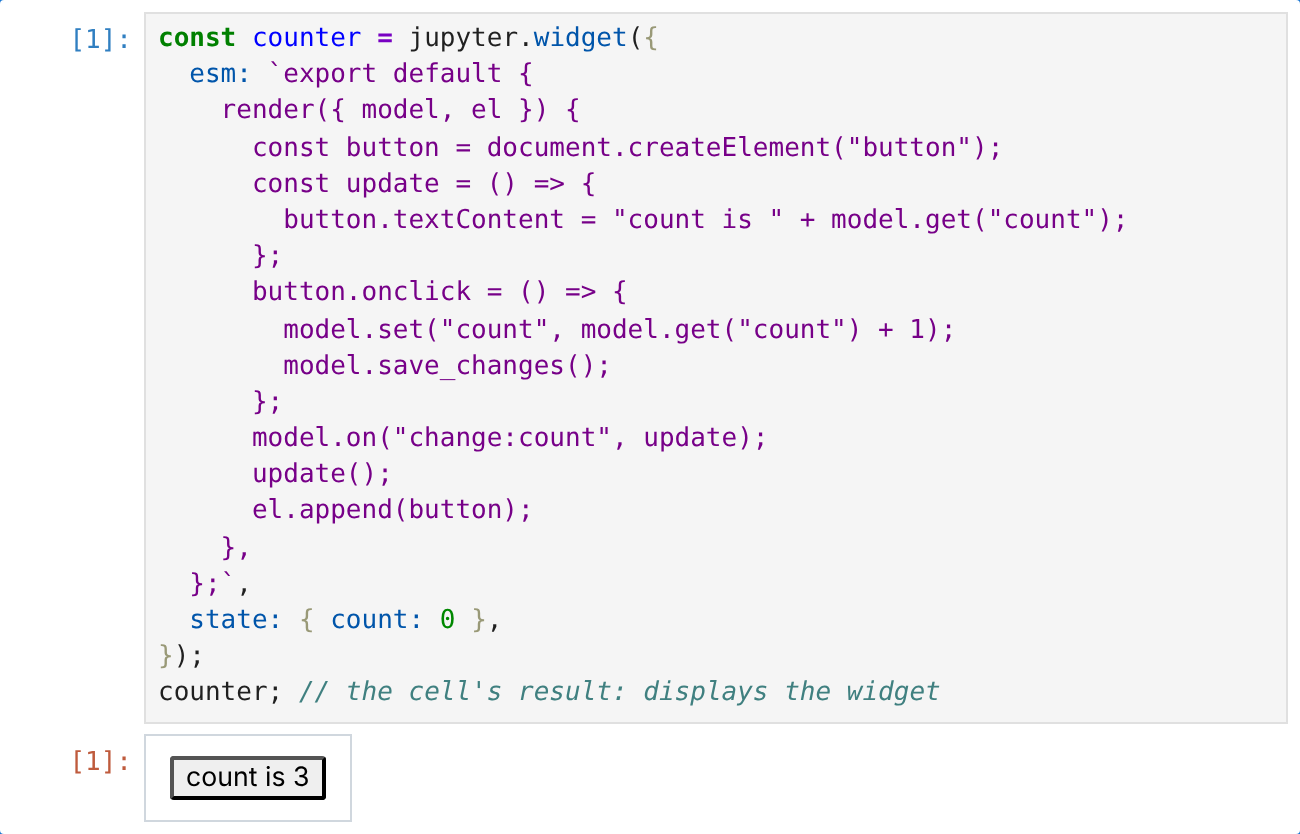
|
+
* const counter = jupyter.widget({
|
|
240
|
+
* esm: `export default {
|
|
241
|
+
* render({ model, el }) {
|
|
242
|
+
* const button = document.createElement("button");
|
|
243
|
+
* const update = () => {
|
|
244
|
+
* button.textContent = "count is " + model.get("count");
|
|
245
|
+
* };
|
|
246
|
+
* button.onclick = () => {
|
|
247
|
+
* model.set("count", model.get("count") + 1);
|
|
248
|
+
* model.save_changes();
|
|
249
|
+
* };
|
|
250
|
+
* model.on("change:count", update);
|
|
251
|
+
* update();
|
|
252
|
+
* el.append(button);
|
|
253
|
+
* },
|
|
254
|
+
* };`,
|
|
255
|
+
* state: { count: 0 },
|
|
256
|
+
* });
|
|
257
|
+
* counter; // the cell's result: displays the widget
|
|
258
|
+
* ```
|
|
259
|
+
* 
|
|
260
|
+
* @see widgets.md#a-first-widget-a-counter
|
|
261
|
+
*/
|
|
44
262
|
widget(options: WidgetOptions): Widget;
|
|
45
263
|
/**
|
|
46
|
-
*
|
|
47
|
-
*
|
|
48
|
-
*
|
|
264
|
+
* An `AbortSignal` that an interrupt aborts, so code waiting on something
|
|
265
|
+
* only it can end can stop and clean up. Each cell gets its own, as does
|
|
266
|
+
* a comm handler that starts while no cell runs. Read it once when the
|
|
267
|
+
* work starts: a later read gets the signal of whatever started last.
|
|
268
|
+
* The abort reason is a `DOMException` named `AbortError`.
|
|
269
|
+
*
|
|
270
|
+
* @example
|
|
271
|
+
* ```ts
|
|
272
|
+
* const response = await fetch("https://example.com/large.csv", { signal: jupyter.signal });
|
|
273
|
+
* ```
|
|
274
|
+
* @example
|
|
275
|
+
* ```ts
|
|
276
|
+
* const signal = jupyter.signal;
|
|
277
|
+
* const ask = jupyter.comm.open("my.app", { question: "ready?" });
|
|
278
|
+
* const answer = await new Promise((resolve, reject) => {
|
|
279
|
+
* ask.onMsg((m) => resolve(m.data));
|
|
280
|
+
* signal.addEventListener("abort", () => { ask.close(); reject(signal.reason); }, { once: true });
|
|
281
|
+
* });
|
|
282
|
+
* ```
|
|
283
|
+
* @see jupyter-api.md#stopping-on-interrupt-jupyter-signal
|
|
49
284
|
*/
|
|
50
285
|
readonly signal: AbortSignal;
|
|
51
286
|
}
|