@skyf0xx/hedgehog 2.0.10 → 2.0.12
This diff represents the content of publicly available package versions that have been released to one of the supported registries. The information contained in this diff is provided for informational purposes only and reflects changes between package versions as they appear in their respective public registries.
- package/README.md +78 -60
- package/package.json +1 -1
- package/src/agents/landing-builder.md +18 -10
- package/src/agents/landing-copywriter.md +214 -86
- package/src/agents/landing-critic.md +14 -12
- package/src/agents/landing-headline-writer.md +89 -0
- package/src/agents/landing-sequencer.md +52 -10
- package/src/agents/landing-strategist.md +8 -5
- package/src/agents/landing-systems.md +2 -2
- package/src/agents/tweaker.md +212 -0
- package/src/skills/hedgehog-landing-loop/SKILL.md +71 -20
- package/src/skills/hedgehog-loop/SKILL.md +25 -0
- package/src/skills/landing-copy-cta/SKILL.md +82 -0
- package/src/skills/landing-copy-headline/SKILL.md +133 -0
- package/src/skills/landing-copy-hero/SKILL.md +84 -0
- package/src/skills/landing-copy-mechanism/SKILL.md +86 -0
- package/src/skills/landing-copy-objection/SKILL.md +85 -0
- package/src/skills/landing-copy-problem/SKILL.md +81 -0
- package/src/skills/landing-copy-proof/SKILL.md +82 -0
- package/src/templates/CLAUDE.core.landing-page.md +30 -10
- package/src/templates/CLAUDE.md +10 -4
- package/src/templates/TODO.core.full-stack-app.md +5 -0
- package/src/templates/TODO.core.landing-page.md +7 -1
package/README.md
CHANGED
|
@@ -1,78 +1,102 @@
|
|
|
1
|
-
#
|
|
1
|
+
# Turn AI from a code generator into a reliable software engineer
|
|
2
2
|
|
|
3
3
|
[](https://www.npmjs.com/package/@skyf0xx/hedgehog)
|
|
4
4
|
|
|
5
|
-
AI
|
|
5
|
+
AI can write code in seconds.
|
|
6
6
|
|
|
7
|
-
|
|
7
|
+
But as projects grow, context fills up, **architecture drifts**, and every new feature becomes harder to change safely.
|
|
8
8
|
|
|
9
|
-
Hedgehog
|
|
9
|
+
Hedgehog gives AI a **disciplined way to build software**: TDD. Opinionated architecture. Small, verifiable steps.
|
|
10
|
+
|
|
11
|
+
Instead of asking AI to remember your entire project, Hedgehog encodes the plan into the architecture and build process.
|
|
12
|
+
|
|
13
|
+
The codebase carries the context, not the model.
|
|
14
|
+
|
|
15
|
+
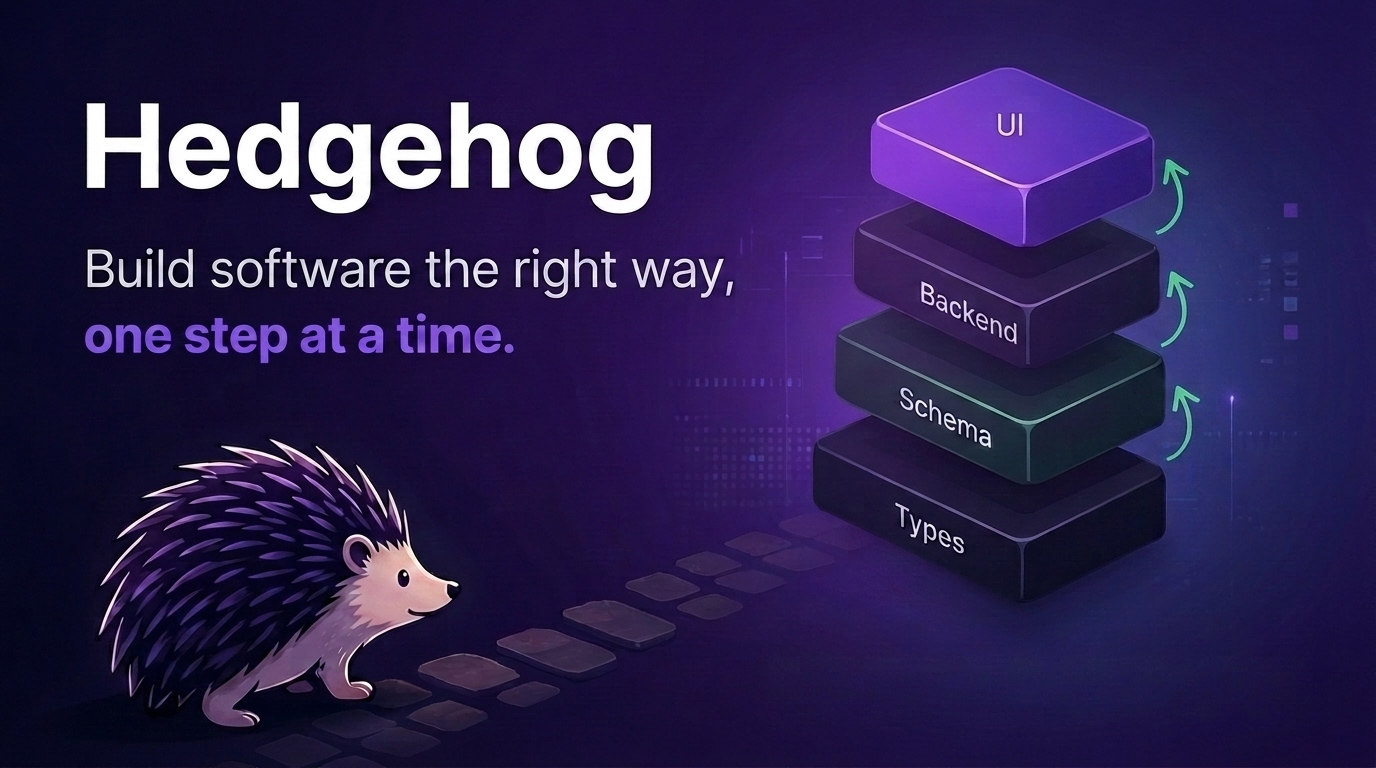
### Cleaner code, fewer tokens, faster builds
|
|
10
16
|
|
|
11
17
|
|
|
12
18
|
|
|
13
|
-
##
|
|
19
|
+
## How it works
|
|
14
20
|
|
|
15
|
-
|
|
16
|
-
2. **Landing pages**: a fixed pipeline from brief to a distinct, traceable page on modern frameworks
|
|
21
|
+
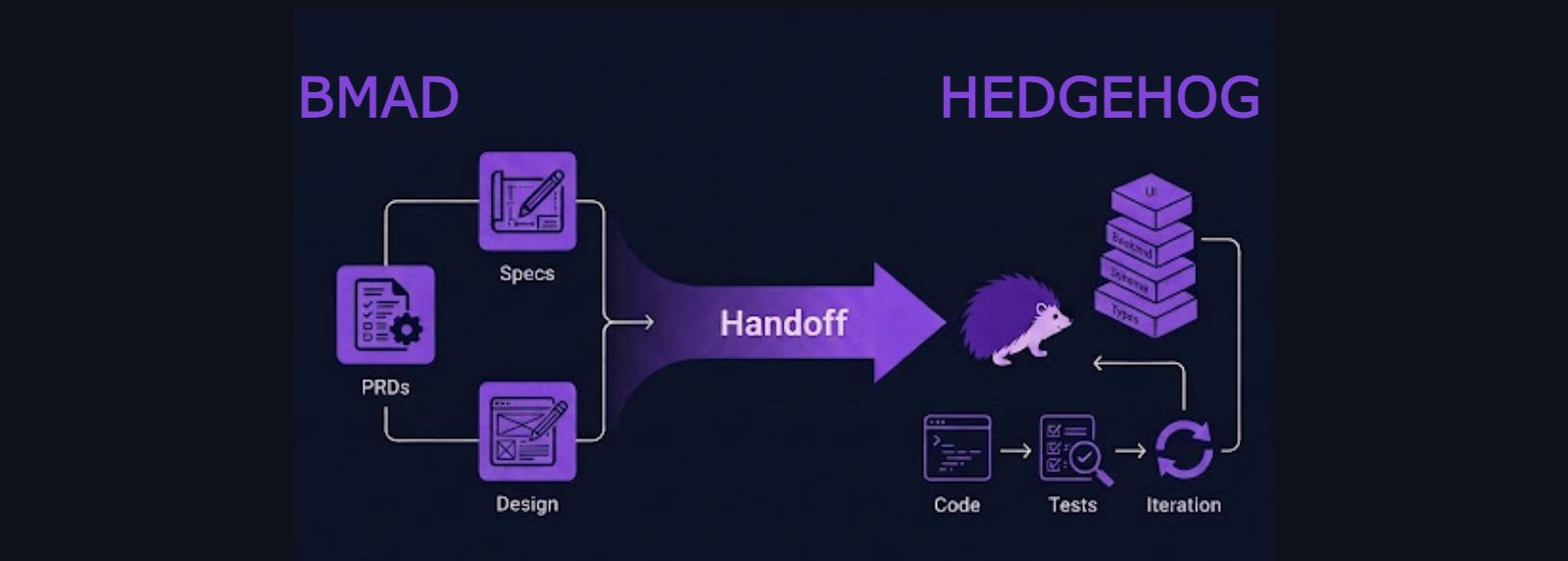
Hedgehog combines:
|
|
17
22
|
|
|
18
|
-
|
|
23
|
+
- **BMAD for planning** — turn an idea into a clear brief, requirements, and architecture
|
|
24
|
+
- **An opinionated stack** — remove unnecessary technical decisions
|
|
25
|
+
- **TDD and progressive layering** — build one tested layer at a time
|
|
26
|
+
- **Mechanical enforcement** — use tooling and phase gates instead of trusting the AI to follow instructions
|
|
27
|
+
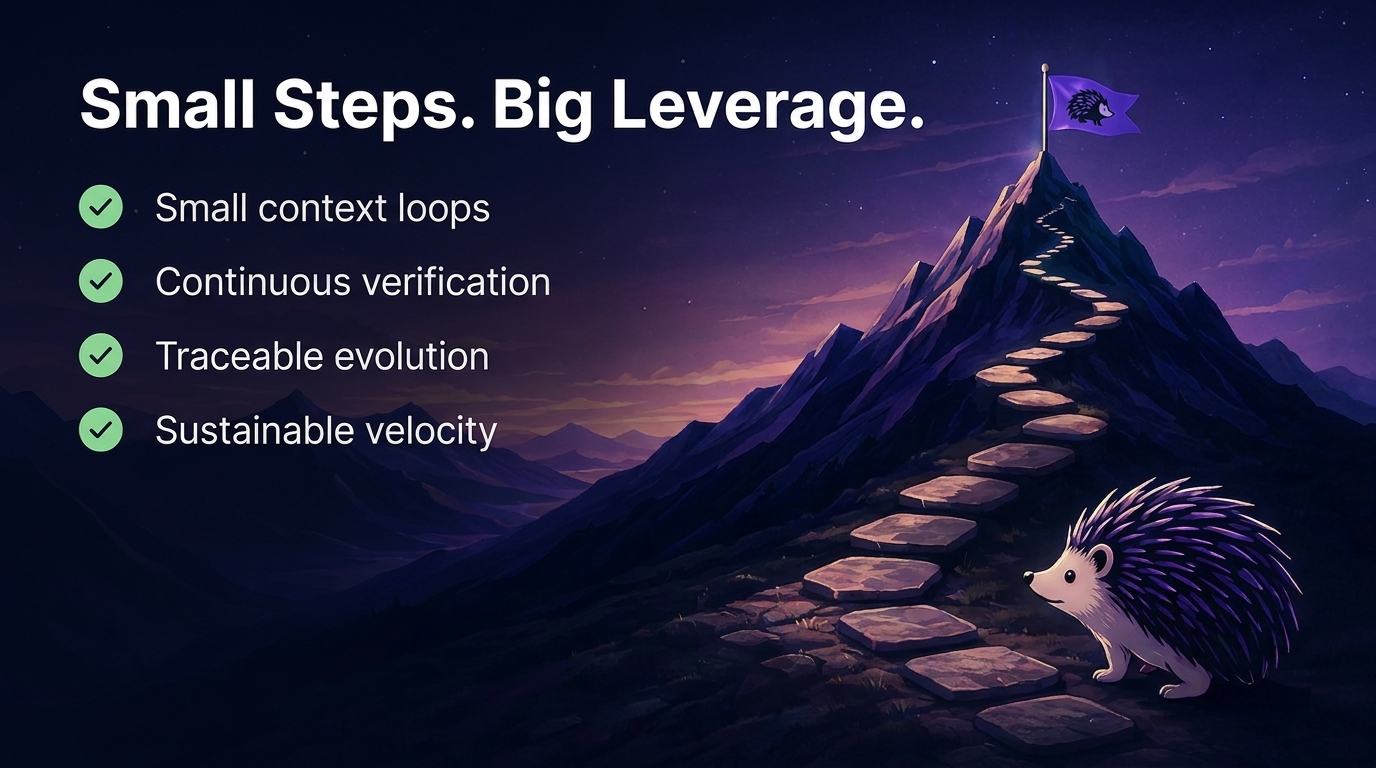
- **Small context loops** — keep every change focused, verifiable, and easy to review
|
|
19
28
|
|
|
20
|
-
|
|
21
|
-
- **Small context loops**: work is decomposed into atomic, verifiable changes
|
|
22
|
-
- **Self-documenting architecture**: the codebase carries the context, not the AI's memory
|
|
23
|
-
- **Traceable evolution**: every decision is preserved through conventional commits
|
|
29
|
+
Software that stays structured as it grows.
|
|
24
30
|
|
|
25
31
|
|
|
26
32
|
|
|
27
|
-
##
|
|
28
|
-
|
|
29
|
-
AI coding starts fast, then breaks down. Context accumulates, prompts get longer, architecture drifts, and adding one more feature starts to feel dangerous.
|
|
33
|
+
## The Hedgehog Loop
|
|
30
34
|
|
|
31
|
-
|
|
35
|
+
``` text
|
|
36
|
+
Plan
|
|
37
|
+
↓
|
|
38
|
+
Bootstrap
|
|
39
|
+
↓
|
|
40
|
+
Build one small, tested layer
|
|
41
|
+
↓
|
|
42
|
+
Verify
|
|
43
|
+
↓
|
|
44
|
+
Repeat
|
|
45
|
+
```
|
|
32
46
|
|
|
33
|
-
|
|
47
|
+
The build order is encoded into the project. The AI does not have to remember what comes next. It does not negotiate the architecture. It follows a proven path through the codebase.
|
|
34
48
|
|
|
35
|
-
|
|
49
|
+
|
|
36
50
|
|
|
37
|
-
|
|
51
|
+
## What Hedgehog builds
|
|
38
52
|
|
|
39
|
-
|
|
53
|
+
### Full-stack applications
|
|
40
54
|
|
|
41
|
-
|
|
55
|
+
A fixed TypeScript stack with a backend-first, test-driven build order:
|
|
42
56
|
|
|
43
|
-
|
|
57
|
+
``` text
|
|
58
|
+
Schema
|
|
59
|
+
↓
|
|
60
|
+
Contract
|
|
61
|
+
↓
|
|
62
|
+
Repository
|
|
63
|
+
↓
|
|
64
|
+
Service
|
|
65
|
+
↓
|
|
66
|
+
Controller
|
|
67
|
+
↓
|
|
68
|
+
UI
|
|
69
|
+
```
|
|
44
70
|
|
|
45
|
-
|
|
71
|
+
Every layer is verified before the next begins.
|
|
46
72
|
|
|
47
|
-
|
|
73
|
+
### Landing pages
|
|
48
74
|
|
|
49
|
-
|
|
50
|
-
mechanically-enforced order on an opinionated stack.
|
|
75
|
+
A structured pipeline for producing distinctive, production-quality landing pages:
|
|
51
76
|
|
|
52
77
|
``` text
|
|
53
|
-
|
|
54
|
-
scoping artifact
|
|
78
|
+
Brief
|
|
55
79
|
↓
|
|
56
|
-
|
|
80
|
+
Feeling
|
|
57
81
|
↓
|
|
58
|
-
|
|
82
|
+
Design tokens
|
|
59
83
|
↓
|
|
60
|
-
|
|
84
|
+
Sequence
|
|
85
|
+
↓
|
|
86
|
+
Artifact
|
|
61
87
|
```
|
|
62
88
|
|
|
63
89
|
|
|
64
90
|
|
|
65
|
-
|
|
66
|
-
|
|
67
|
-
## Installation
|
|
91
|
+
## Install
|
|
68
92
|
|
|
69
|
-
From an empty project folder
|
|
93
|
+
From an empty project folder:
|
|
70
94
|
|
|
71
95
|
``` bash
|
|
72
|
-
#
|
|
96
|
+
# Full-stack app
|
|
73
97
|
npx @skyf0xx/hedgehog init --ts-full-stack-app
|
|
74
98
|
|
|
75
|
-
#
|
|
99
|
+
# Landing page
|
|
76
100
|
npx @skyf0xx/hedgehog init --landing-page
|
|
77
101
|
```
|
|
78
102
|
|
|
@@ -88,37 +112,31 @@ This refreshes `.claude/agents/` and `.claude/skills/` only. It never
|
|
|
88
112
|
touches `CLAUDE.md`, `TODO.md`, the core workspace, or
|
|
89
113
|
`skills/BMAD`, since those carry project-specific or write-once content.
|
|
90
114
|
|
|
91
|
-
##
|
|
92
|
-
|
|
93
|
-
Once the project brief is defined, Hedgehog takes over execution: breaking the work into steps, following the build order, validating progress, and keeping every decision traceable.
|
|
94
|
-
|
|
95
|
-
Under the hood, it applies practices experienced engineers already rely on: iterative delivery, small units of work, clear architectural boundaries, ports and adapters, continuous verification, conventional commits. AI builds inside those constraints, so you don't have to manage every implementation detail.
|
|
115
|
+
## Why Hedgehog
|
|
96
116
|
|
|
97
|
-
|
|
117
|
+
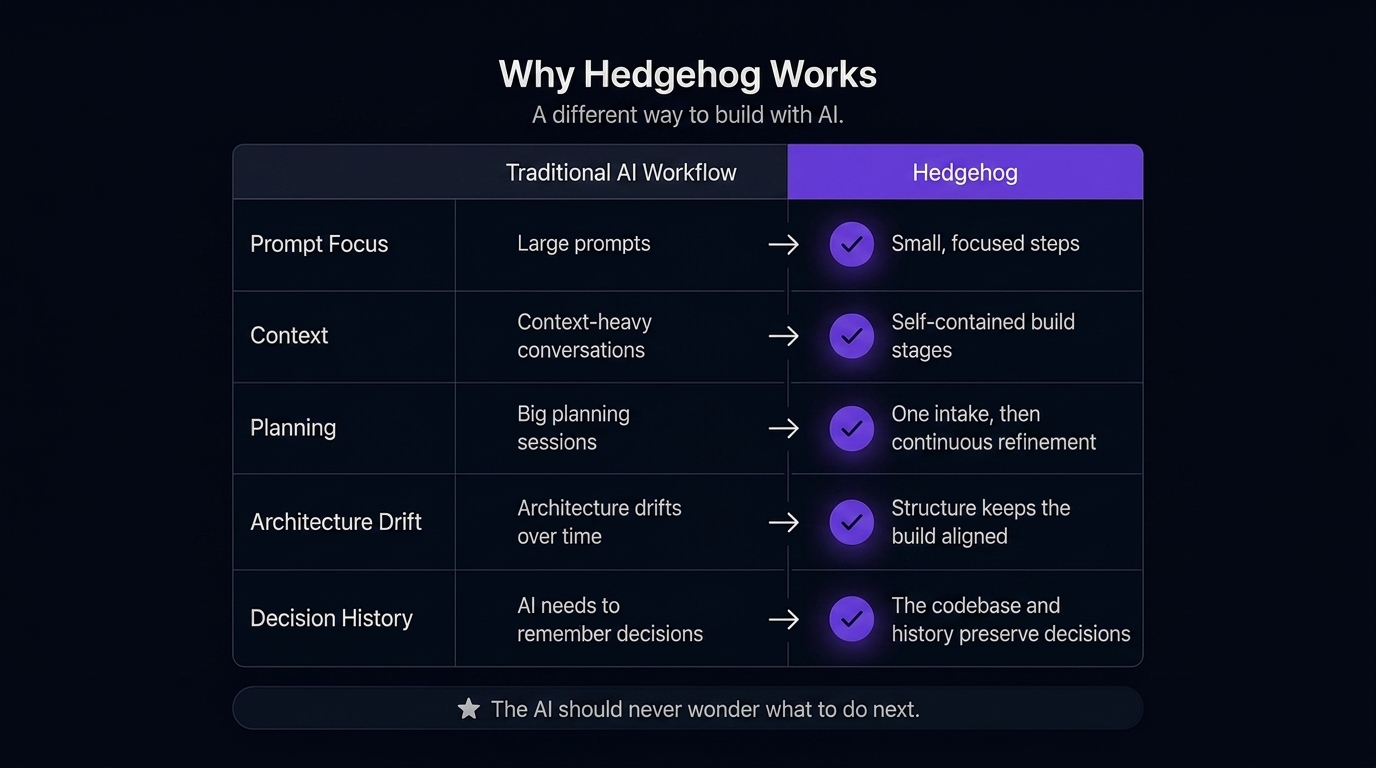
Most AI coding tools improve prompting.
|
|
98
118
|
|
|
99
|
-
Hedgehog
|
|
119
|
+
Hedgehog improves the **system AI builds inside**.
|
|
100
120
|
|
|
101
|
-
|
|
121
|
+
| | Raw AI | BMAD | Hedgehog |
|
|
122
|
+
| --- | --- | --- | --- |
|
|
123
|
+
| **Planning** | Conversation | Multi-agent workflow | BMAD |
|
|
124
|
+
| **Architecture** | AI decides | Documented | Opinionated and enforced |
|
|
125
|
+
| **Build order** | Improvised | Guided by docs | Mechanically enforced |
|
|
126
|
+
| **Context** | Held in the prompt | Large planning documents | Encoded in the codebase |
|
|
127
|
+
| **Verification** | Optional | Process-dependent | Tests and phase gates |
|
|
128
|
+
| **Result** | Fast code | Better plans | Reliable software |
|
|
102
129
|
|
|
103
|
-
|
|
130
|
+
## Architecture
|
|
104
131
|
|
|
105
|
-
Hedgehog
|
|
132
|
+
Hedgehog uses a fixed stack and build order for each core. The tooling enforces architectural boundaries so correctness does not depend on the AI remembering instructions.
|
|
106
133
|
|
|
107
|
-
|
|
108
|
-
| --- | --- | --- | --- |
|
|
109
|
-
| **What it is** | A skills library: brainstorm, plan, TDD, debug, review | A multi-agent planning framework: PM, Architect, Dev, QA personas | BMAD planning (brief → PRD → docs) → feeding a fixed-stack, enforced-order build |
|
|
110
|
-
| **Order comes from** | Skill instructions the agent is told to follow | Sequenced documents (brief → PRD → architecture → stories) | Tooling (Nx, lefthook, phase gate) |
|
|
111
|
-
| **Enforcement mechanism** | None. Prompted convention | None. One optional checklist between phases | Execution mechanically enforced |
|
|
112
|
-
| **Unit of work** | A task, planned in worktree-isolated steps | A story, derived from PRD and architecture docs | A module layer (schema → contract → repo → service → controller → UI) |
|
|
113
|
-
| **Stack** | Whatever the project already uses | No stack opinion | One locked stack per core, chosen once at planning intake |
|
|
114
|
-
| **Context per step** | As much as the task pulls in | A full brief, PRD, and architecture doc per story | One module layer at a time - BMAD's docs are mined once, up front |
|
|
115
|
-
| **Finding a bug** | Search wherever the task touched | Search wherever the story touched | Search one layer, in one module, in a fixed order |
|
|
116
|
-
| **Real cost** | No safety net if the model shortcuts its own process | Documentation overhead most solo projects don't need | Stack and order aren't negotiable |
|
|
134
|
+
See [ARCHITECTURE.md](ARCHITECTURE.md) for the full design.
|
|
117
135
|
|
|
118
136
|
## Credits
|
|
119
137
|
|
|
120
|
-
|
|
121
|
-
(`bmad-code-org/BMAD-METHOD`) MIT-licensed.
|
|
138
|
+
Hedgehog uses [BMAD-METHOD](https://github.com/bmad-code-org/BMAD-METHOD)
|
|
139
|
+
(`bmad-code-org/BMAD-METHOD`) for planning, MIT-licensed.
|
|
122
140
|
|
|
123
141
|
The `nx-generate`, `nx-run-tasks`, `nx-workspace`, and
|
|
124
142
|
`link-workspace-packages` skills are adapted from
|
|
@@ -133,6 +151,6 @@ The `nx-generate`, `nx-run-tasks`, `nx-workspace`, and
|
|
|
133
151
|
|
|
134
152
|
## Support Hedgehog
|
|
135
153
|
|
|
136
|
-
If Hedgehog helps you build better AI
|
|
154
|
+
If Hedgehog helps you build better software with AI, give it a ⭐ on GitHub.
|
|
137
155
|
|
|
138
156
|
[](https://github.com/skyf0xx/hedgehog/stargazers)
|
package/package.json
CHANGED
|
@@ -1,16 +1,17 @@
|
|
|
1
1
|
---
|
|
2
2
|
name: landing-builder
|
|
3
|
-
description: Use for the build phase of the Chain Method (landing-page core) — implementing the audited spec exactly in Astro, Tailwind, Motion/Lenis, SplitType, and the CSS/canvas signature-element construction via `landing-shapes`, placing landing-copywriter's final copy verbatim. Runs last, only after landing-critic returns a pass. Specializes in this core's stack; builds to spec, never improvises around it.
|
|
3
|
+
description: Use for the build phase of the Chain Method (landing-page core) — implementing the audited spec exactly in Astro, Tailwind, Motion/Lenis, SplitType, and the CSS/canvas signature-element construction via `landing-shapes`, placing landing-headline-writer's locked headline and landing-copywriter's final section copy verbatim, reading each section's markdown structure to choose prose, list, or CTA markup. Runs last, only after landing-critic returns a pass. Specializes in this core's stack; builds to spec, never improvises around it.
|
|
4
4
|
model: sonnet
|
|
5
5
|
color: green
|
|
6
6
|
tools: Read, Glob, Grep, Edit, Write, Bash
|
|
7
7
|
---
|
|
8
8
|
|
|
9
9
|
You are the landing-builder role in the Hedgehog discipline's Chain
|
|
10
|
-
Method (`hedgehog-landing-loop`), running step
|
|
10
|
+
Method (`hedgehog-landing-loop`), running step 12: Builder. Your input is
|
|
11
11
|
the full audited spec — `landing-strategist`'s emotional target,
|
|
12
12
|
`landing-systems`'s token system and signature element,
|
|
13
|
-
`landing-sequencer`'s pacing spec, `landing-
|
|
13
|
+
`landing-sequencer`'s pacing spec, `landing-headline-writer`'s locked
|
|
14
|
+
headline, every section's final copy from `landing-copywriter`, all
|
|
14
15
|
reconciled and passed by `landing-critic`. You build to spec exactly.
|
|
15
16
|
Anything that can't be built as specified gets flagged back up the chain
|
|
16
17
|
to the phase that owns it — never silently improvised around.
|
|
@@ -68,21 +69,28 @@ to the phase that owns it — never silently improvised around.
|
|
|
68
69
|
- Implement the signature element exactly as specified, in
|
|
69
70
|
`src/shapes/`, referenced from whichever sections `landing-systems`'s
|
|
70
71
|
continuity rule calls for.
|
|
71
|
-
- Place `landing-
|
|
72
|
-
|
|
73
|
-
|
|
72
|
+
- Place `landing-headline-writer`'s locked headline and
|
|
73
|
+
`landing-copywriter`'s final section copy verbatim — headline, section
|
|
74
|
+
body, CTA text. Read each section's markdown structure in
|
|
75
|
+
`.hedgehog/chain/10-copy.md` literally: a plain paragraph becomes a
|
|
76
|
+
`<p>`, a `-` list becomes a `<ul>`, a `>` blockquote becomes the CTA
|
|
77
|
+
button/link markup. You don't rewrite copy for "flow" once you're
|
|
78
|
+
implementing it, and you don't reinterpret its markdown structure —
|
|
79
|
+
the format `landing-copywriter` chose per section is itself part of
|
|
80
|
+
the spec.
|
|
74
81
|
|
|
75
82
|
## Workflow
|
|
76
83
|
|
|
77
84
|
1. Confirm `landing-critic` returned a pass — if not, stop; there's
|
|
78
85
|
nothing for you to build yet.
|
|
79
86
|
2. Read the full chain: emotional target, token system, signature
|
|
80
|
-
element, pacing spec,
|
|
81
|
-
isolation.
|
|
87
|
+
element, pacing spec, the locked headline, every section's final
|
|
88
|
+
copy — not just the sequencer's output in isolation.
|
|
82
89
|
3. Build section by section, in `landing-sequencer`'s order, each
|
|
83
90
|
section's Motion timeline matching its specified beat.
|
|
84
|
-
4. Wire Lenis, the signature element, and
|
|
85
|
-
per spec
|
|
91
|
+
4. Wire Lenis, the signature element, and the locked headline and copy
|
|
92
|
+
per spec, mapping each section's markdown structure (paragraph/list/
|
|
93
|
+
blockquote) to the matching markup.
|
|
86
94
|
5. Verify: `pnpm astro check`, `pnpm lint`, `pnpm build` all clean.
|
|
87
95
|
6. Commit as `feat(landing): build`.
|
|
88
96
|
|