@skyf0xx/hedgehog 2.0.0 → 2.0.1
This diff represents the content of publicly available package versions that have been released to one of the supported registries. The information contained in this diff is provided for informational purposes only and reflects changes between package versions as they appear in their respective public registries.
- package/README.md +31 -125
- package/bin/cli.mjs +41 -14
- package/package.json +1 -1
- package/src/skills/hedgehog-bootstrap-landing-page-core/SKILL.md +1 -1
package/README.md
CHANGED
|
@@ -23,18 +23,16 @@ Hedgehog pairs **BMAD's planning** with **disciplined execution**, in one workfl
|
|
|
23
23
|
2. An enforced build order
|
|
24
24
|
3. Agents and skills that make good engineering the default
|
|
25
25
|
|
|
26
|
-
Hedgehog
|
|
27
|
-
|
|
28
|
-
|
|
29
|
-
|
|
30
|
-
|
|
31
|
-
|
|
32
|
-
domain-module build order (see **The Chain Method**, below). Which core
|
|
33
|
-
applies is decided once, at planning intake, from what you describe.
|
|
26
|
+
Hedgehog currently builds:
|
|
27
|
+
|
|
28
|
+
1. **Full-stack TypeScript apps**: built module by module, backend
|
|
29
|
+
first, on a fixed stack
|
|
30
|
+
2. **Beautiful, unique landing pages**: a fixed pipeline from brief to
|
|
31
|
+
a traceable, distinct page built on modern frameworks
|
|
34
32
|
|
|
35
33
|
## Hedgehog's secret to great outcomes
|
|
36
34
|
|
|
37
|
-
- **Progressive layering:** each core builds one stable layer at a time
|
|
35
|
+
- **Progressive layering:** each core builds one stable layer at a time: types → schema → backend → UI on `full-stack-app`; brief → feeling → tokens → sequence → artifact on `landing-page`
|
|
38
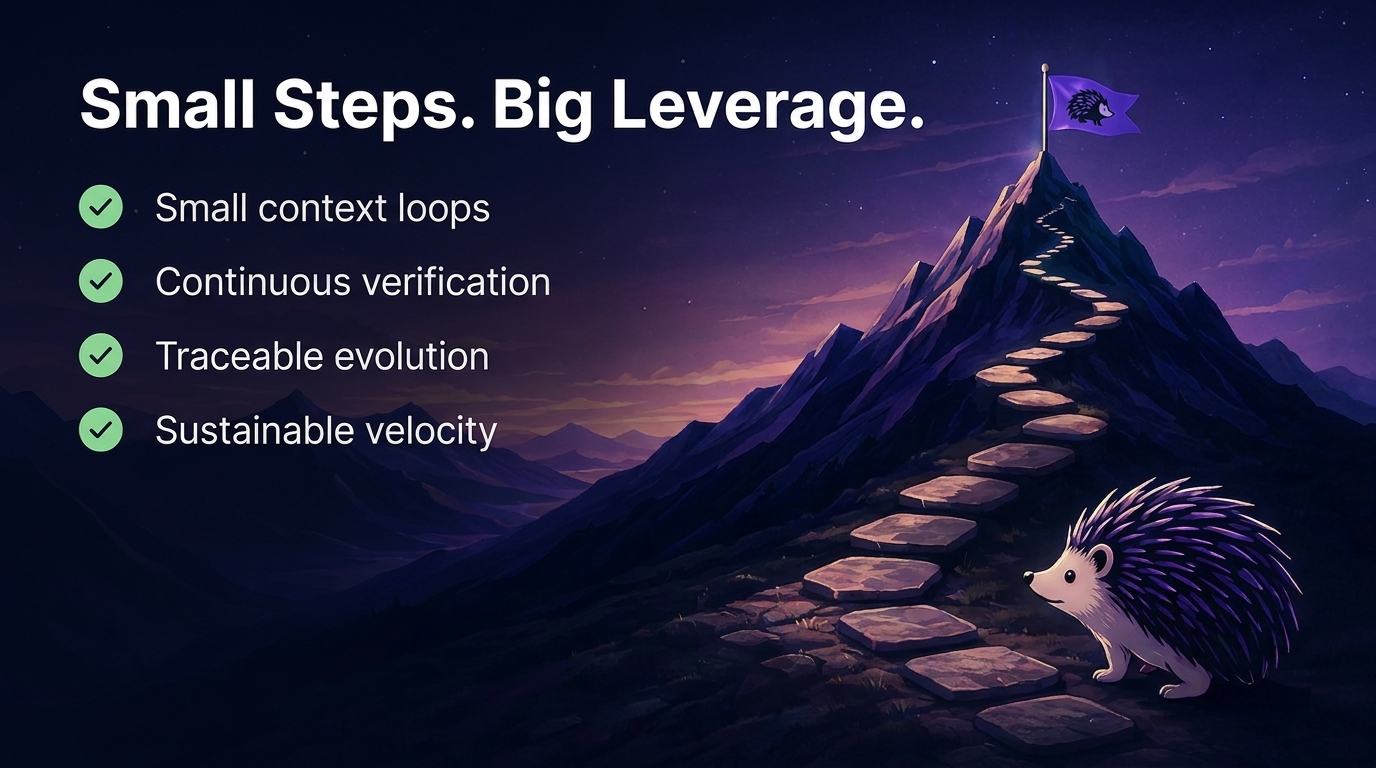
36
|
- **Small context loops:** decompose work into atomic, verifiable changes
|
|
39
37
|
- **Self-documenting architecture:** the codebase carries the context, not the AI
|
|
40
38
|
- **Traceable evolution:** decisions are preserved through conventional commits
|
|
@@ -45,9 +43,9 @@ applies is decided once, at planning intake, from what you describe.
|
|
|
45
43
|
|
|
46
44
|
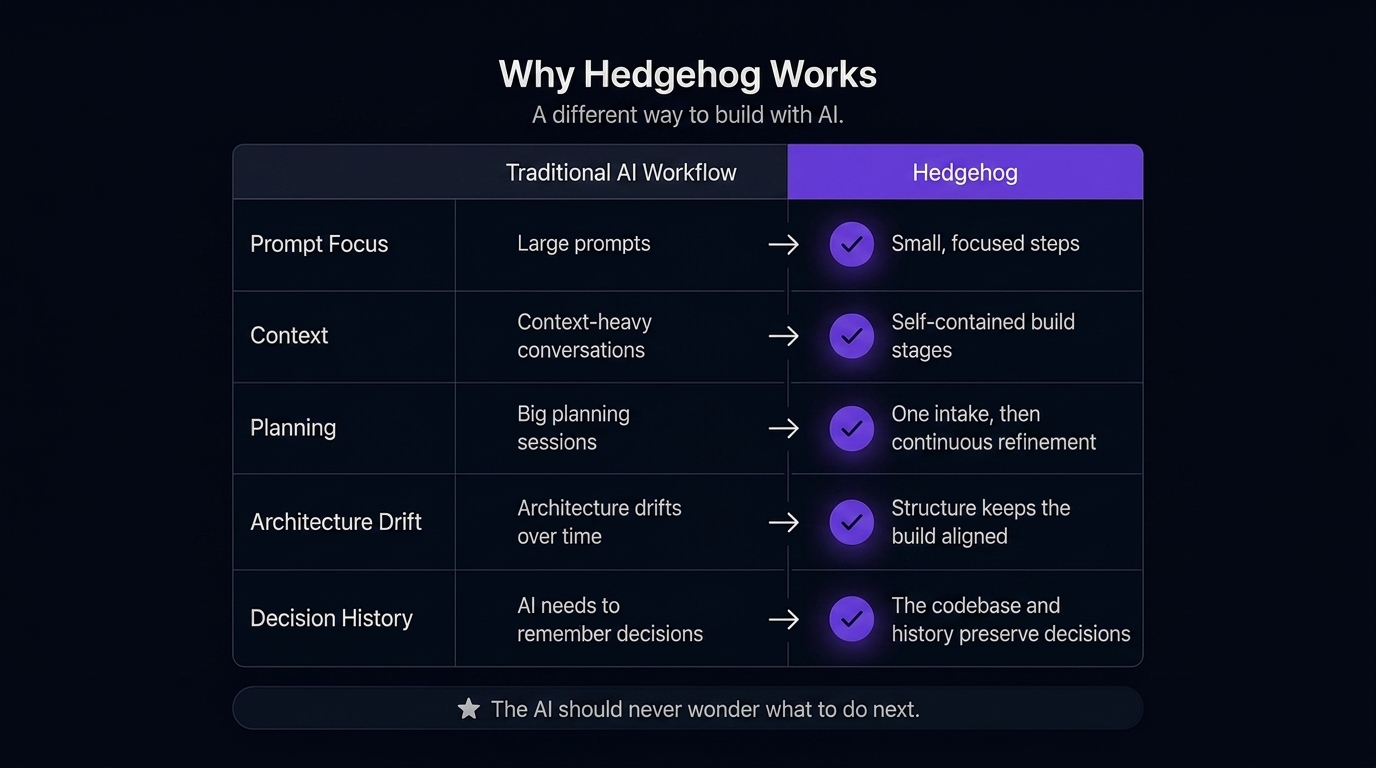
AI coding starts fast, then breaks down. Context accumulates, prompts get longer, architecture drifts. Eventually, adding one more feature feels dangerous.
|
|
47
45
|
|
|
48
|
-
Hedgehog
|
|
46
|
+
Hedgehog fixes this with guardrails instead of more discipline from the AI.
|
|
49
47
|
|
|
50
|
-
|
|
48
|
+
### Plans Expire. Structure Doesn't
|
|
51
49
|
|
|
52
50
|
Without a build order enforced mechanically, an AI (or a person) has to carry the whole plan in its head: architecture, sequencing, past decisions, etc. as an ever-growing prompt.
|
|
53
51
|
|
|
@@ -55,107 +53,57 @@ Hedgehog doesn't ask the AI to remember a plan. It makes the plan visible in the
|
|
|
55
53
|
|
|
56
54
|
### The AI should never wonder what to do next
|
|
57
55
|
|
|
58
|
-
Instead of asking AI to hold an entire application in context, Hedgehog turns the build into a sequence of small, deterministic steps. The exact sequence depends on the project's core
|
|
56
|
+
Instead of asking AI to hold an entire application in context, Hedgehog turns the build into a sequence of small, deterministic steps. The exact sequence depends on the project's core: a stateful app and a landing page don't share a build order, so they don't share an enforcement mechanism either. On the `full-stack-app` core:
|
|
59
57
|
|
|
60
58
|
Each module is built progressively: schema → contract → repository → service → controller. Every step is gated by tests and committed before the next begins.
|
|
61
59
|
|
|
62
60
|
Backend comes first. Every module gets a working, typed API before any screen is built. The frontend becomes a consumer of stable capabilities, not a parallel source of complexity.
|
|
63
61
|
|
|
64
|
-
The build order is not something you negotiate with the AI. It is encoded into the process
|
|
62
|
+
The build order is not something you negotiate with the AI. It is encoded into the process, per core (see **The Hedgehog Loop**, below).
|
|
65
63
|
|
|
66
64
|
|
|
67
65
|
|
|
68
|
-
## The Hedgehog Loop
|
|
66
|
+
## The Hedgehog Loop
|
|
67
|
+
|
|
68
|
+
Every core runs the same loop: plan, bootstrap, then build in a fixed,
|
|
69
|
+
mechanically-enforced order on an opinionated stack.
|
|
69
70
|
|
|
70
71
|
``` text
|
|
71
|
-
Planning intake - BMAD-METHOD's
|
|
72
|
-
|
|
73
|
-
↓
|
|
74
|
-
Bootstrap (once per project)
|
|
72
|
+
Planning intake - BMAD-METHOD's planning shelf, mined into this core's
|
|
73
|
+
scoping artifact
|
|
75
74
|
↓
|
|
76
|
-
|
|
75
|
+
Bootstrap
|
|
77
76
|
↓
|
|
78
|
-
|
|
77
|
+
Build in gated steps
|
|
79
78
|
↓
|
|
80
|
-
|
|
81
|
-
↓
|
|
82
|
-
Repeat for the next module or the next step
|
|
79
|
+
Repeat for the next step
|
|
83
80
|
```
|
|
84
81
|
|
|
85
|
-
|
|
86
82
|
|
|
87
83
|
|
|
88
|
-
|
|
89
|
-
|
|
90
|
-
A different shape gets a different loop, not a variant of this one —
|
|
91
|
-
there's no domain module to build, so the enforced order is a pipeline
|
|
92
|
-
instead of a layer sequence:
|
|
93
|
-
|
|
94
|
-
``` text
|
|
95
|
-
Planning intake - BMAD-METHOD's brief/PR-FAQ/PRD/UX spec, mined into a
|
|
96
|
-
subject/audience/single-job statement (planner agent)
|
|
97
|
-
↓
|
|
98
|
-
Bootstrap (once per project - Astro + Tailwind workspace)
|
|
99
|
-
↓
|
|
100
|
-
Strategy - subject statement → adjective pairs → visceral/behavioral/
|
|
101
|
-
reflective sort → top/heart/base note timing (landing-strategist)
|
|
102
|
-
↓
|
|
103
|
-
Systems - ingredient dials + copy voice (parallel) → token system →
|
|
104
|
-
signature motif (landing-systems)
|
|
105
|
-
↓
|
|
106
|
-
Sequence - per-section transitions, weight, pacing (landing-sequencer)
|
|
107
|
-
↓
|
|
108
|
-
Audit - traceability/distinctiveness + usability, reconciled to a pass
|
|
109
|
-
(landing-critic) - redlines route back to the phase that owns them
|
|
110
|
-
↓
|
|
111
|
-
Build - the artifact, in Astro (landing-builder)
|
|
112
|
-
```
|
|
113
|
-
|
|
114
|
-
Every choice traces back to a sentence in the subject statement, or it
|
|
115
|
-
gets cut — that traceability is what keeps the output from converging on
|
|
116
|
-
the same templated look every AI-generated page defaults to.
|
|
84
|
+
Each core defines its own build order and stack.
|
|
117
85
|
|
|
118
86
|
## Installation
|
|
119
87
|
|
|
120
88
|
From an empty project folder:
|
|
121
89
|
|
|
122
90
|
``` bash
|
|
123
|
-
|
|
124
|
-
|
|
125
|
-
|
|
126
|
-
This installs the `full-stack-app` core by default. For the landing-page
|
|
127
|
-
core instead:
|
|
91
|
+
# 1. Full-stack app (Nx, NestJS, Drizzle, ts-rest, Next.js)
|
|
92
|
+
npx @skyf0xx/hedgehog init --ts-full-stack-app
|
|
128
93
|
|
|
129
|
-
|
|
130
|
-
npx @skyf0xx/hedgehog init --
|
|
94
|
+
# 2. Landing page (Astro, Tailwind, GSAP)
|
|
95
|
+
npx @skyf0xx/hedgehog init --landing-page
|
|
131
96
|
```
|
|
132
97
|
|
|
133
|
-
Then open Claude Code and describe what you want to build.
|
|
134
|
-
`planner` agent decides which core actually applies (overriding the
|
|
135
|
-
installer's default if what you describe doesn't match it), then runs
|
|
136
|
-
that core's own planning intake — both cores run BMAD-METHOD's
|
|
137
|
-
brainstorming, brief, PR-FAQ, PRD, UX spec, and deep-recon in full;
|
|
138
|
-
`full-stack-app` mines that output into scope boundary and domain
|
|
139
|
-
vocabulary, `landing-page` mines it into a subject/audience/job
|
|
140
|
-
statement. Once you confirm, it scaffolds the project itself.
|
|
141
|
-
|
|
142
|
-
The chosen core's workspace - for `full-stack-app`: Nx, `packages/config`,
|
|
143
|
-
`packages/db`, `apps/api`, `apps/web`, and every enforcement file; for
|
|
144
|
-
`landing-page`: the Astro + Tailwind workspace and its animation library
|
|
145
|
-
set - lands instantly from a pre-verified template rather than being
|
|
146
|
-
generated live; bootstrap then verifies it (and, on `full-stack-app`,
|
|
147
|
-
runs whichever add-ons planning intake determined your project needs).
|
|
148
|
-
|
|
149
|
-
Or paste the repo URL to your Agent and have it install for you.
|
|
98
|
+
Then open Claude Code and describe what you want to build.
|
|
150
99
|
|
|
151
|
-
|
|
152
|
-
changes from a newer release with:
|
|
100
|
+
To update:
|
|
153
101
|
|
|
154
102
|
``` bash
|
|
155
103
|
npx @skyf0xx/hedgehog update
|
|
156
104
|
```
|
|
157
105
|
|
|
158
|
-
This refreshes `.claude/agents/` and `.claude/skills/` only
|
|
106
|
+
This refreshes `.claude/agents/` and `.claude/skills/` only. It never
|
|
159
107
|
touches `CLAUDE.md`, `TODO.md`, the core workspace, or
|
|
160
108
|
`skills/BMAD`, since those carry project-specific or write-once content.
|
|
161
109
|
|
|
@@ -175,59 +123,17 @@ Under the hood, it applies the practices experienced engineers rely on:
|
|
|
175
123
|
- continuous verification
|
|
176
124
|
- conventional commits
|
|
177
125
|
|
|
178
|
-
AI becomes the builder operating inside those constraints
|
|
126
|
+
AI becomes the builder operating inside those constraints, turning ideas into software without requiring you to manage every implementation detail.
|
|
179
127
|
|
|
180
128
|
## Architecture
|
|
181
129
|
|
|
182
|
-
Hedgehog is a package of agents and skills, built on an opinionated stack per core so the build order above is mechanical and enforced by the tooling itself.
|
|
183
|
-
|
|
184
|
-
### `full-stack-app` core
|
|
185
|
-
|
|
186
|
-
| Layer | Choice | Why |
|
|
187
|
-
| --- | --- | --- |
|
|
188
|
-
| Monorepo | Nx | Enforces module boundaries at compile time. |
|
|
189
|
-
| Package manager | pnpm | Prevents accidental cross-package dependencies. |
|
|
190
|
-
| Backend | NestJS | Modules naturally mirror Hedgehog's build progression. |
|
|
191
|
-
| ORM | Drizzle + drizzle-zod | Database schema is the single source of truth. |
|
|
192
|
-
| Database | PostgreSQL | Simple, relational, predictable. |
|
|
193
|
-
| Local infra | Docker Compose | Postgres/Redis run identically on every machine. |
|
|
194
|
-
| Platform | Railway | Infrastructure is available from the first commit. |
|
|
195
|
-
| API contract | ts-rest | Contracts are code, not documentation. |
|
|
196
|
-
| Validation | Zod | One schema for runtime and compile time. |
|
|
197
|
-
| Auth | Better Auth | Secure by default from day one. |
|
|
198
|
-
| Data fetching | TanStack Query | UI consumes typed APIs, never implementation details. |
|
|
199
|
-
| Web | Next.js + ShadCN + Tailwind | UI remains a thin presentation layer. |
|
|
200
|
-
| Mobile | Expo + RN Reusables | Shares contracts and design tokens with web. |
|
|
201
|
-
| Jobs | BullMQ + Redis | Async boundaries exist before they're needed. |
|
|
202
|
-
| Logging | Pino | Structured logs from the first feature. |
|
|
203
|
-
| Linting | ESLint + Prettier | One shared standard across every module. |
|
|
204
|
-
| Testing | Vitest + Playwright | Every step is verifiable before progressing. |
|
|
205
|
-
| Commits | Conventional Commits | Architectural decisions become permanent history. |
|
|
206
|
-
| Observability | Sentry | Failures map cleanly back to module boundaries. |
|
|
207
|
-
|
|
208
|
-
### `landing-page` core
|
|
209
|
-
|
|
210
|
-
Every choice below maps to a specific dial or phase in the Chain
|
|
211
|
-
Method — nothing here is a default reached for out of habit:
|
|
212
|
-
|
|
213
|
-
| Layer | Choice | Why |
|
|
214
|
-
| --- | --- | --- |
|
|
215
|
-
| Framework | Astro | Zero-JS-by-default shell; islands only where interaction is actually needed. |
|
|
216
|
-
| Styling | Tailwind (v4, CSS-first) | Config as token layer only — no component library pre-deciding how things look. |
|
|
217
|
-
| Animation | GSAP + ScrollTrigger | Owns per-section pacing and top/heart/base fade timing with real control. |
|
|
218
|
-
| Scroll feel | Lenis | The "weight and suspension" dial, instead of default browser scroll physics. |
|
|
219
|
-
| Copy reveal | SplitType | Line/word/char splitting — makes copy rhythm visible in motion, not just static text. |
|
|
220
|
-
| Motif | SVG-first + Paper.js | Hand-authored graphics; Paper.js for a motif that evolves (augmentation/inversion) across sections. |
|
|
221
|
-
| Motif transforms | GSAP MorphSVGPlugin | Ships free inside the `gsap` package — for a motif that physically transforms across sections. |
|
|
222
|
-
| Texture | Custom SVG noise/grain filter | Cheap materiality layer nothing else in the stack owns. |
|
|
223
|
-
| Design handoff | Figma MCP / Stitch MCP | Input only, at the Strategist/Builder boundaries — never allowed to set spacing/style defaults directly. |
|
|
224
|
-
| 3D (rare) | React Three Fiber | Only when the subject is genuinely spatial; skipped by default. |
|
|
130
|
+
Hedgehog is a package of agents and skills, built on an opinionated stack per core so the build order above is mechanical and enforced by the tooling itself. See [ARCHITECTURE.md](ARCHITECTURE.md) for details.
|
|
225
131
|
|
|
226
132
|
## How Hedgehog Compares
|
|
227
133
|
|
|
228
134
|
Superpowers and BMAD both improve on raw prompting: one gives the AI good habits, the other a planning process. Alone, either can still be broken by convention.
|
|
229
135
|
|
|
230
|
-
Hedgehog runs BMAD for planning on both cores
|
|
136
|
+
Hedgehog runs BMAD for planning on both cores (the same full shelf either way, mined differently per core's own shape), then enforces the build that follows with tooling, not convention: Nx boundaries, commit hooks, and phase gates on `full-stack-app`; a redline-gated pipeline on `landing-page`.
|
|
231
137
|
|
|
232
138
|
| | Superpowers | BMAD | Hedgehog + BMAD |
|
|
233
139
|
| --- | --- | --- | --- |
|
package/bin/cli.mjs
CHANGED
|
@@ -3,8 +3,8 @@
|
|
|
3
3
|
// into the current repo, so the discipline travels with the project.
|
|
4
4
|
//
|
|
5
5
|
// Usage:
|
|
6
|
-
// npx @skyf0xx/hedgehog init scaffold, full-stack-app core (default)
|
|
7
|
-
// npx @skyf0xx/hedgehog init --
|
|
6
|
+
// npx @skyf0xx/hedgehog init scaffold, ts-full-stack-app core (default)
|
|
7
|
+
// npx @skyf0xx/hedgehog init --landing-page scaffold the landing-page core instead
|
|
8
8
|
// npx @skyf0xx/hedgehog init --force overwrite files that already exist
|
|
9
9
|
// npx @skyf0xx/hedgehog update refresh .claude/agents + .claude/skills
|
|
10
10
|
// npx @skyf0xx/hedgehog --help
|
|
@@ -20,6 +20,16 @@ const DEST_ROOT = process.cwd();
|
|
|
20
20
|
const CORES_ROOT = join(PKG_ROOT, 'src/golden-cores');
|
|
21
21
|
const DEFAULT_CORE = 'full-stack-app';
|
|
22
22
|
|
|
23
|
+
// One install flag per core, named for what a user is asking to build
|
|
24
|
+
// rather than the internal src/golden-cores/<name> directory — the two
|
|
25
|
+
// diverge deliberately so the CLI's public surface can stay stable
|
|
26
|
+
// while cores are renamed or added underneath it. Adding a core means
|
|
27
|
+
// adding one entry here (and a matching src/golden-cores/<dir>).
|
|
28
|
+
const CORE_FLAGS = {
|
|
29
|
+
'--ts-full-stack-app': 'full-stack-app',
|
|
30
|
+
'--landing-page': 'landing-page',
|
|
31
|
+
};
|
|
32
|
+
|
|
23
33
|
// ── tiny ANSI helpers (no deps) ─────────────────────────────────────────
|
|
24
34
|
const useColor = process.stdout.isTTY && !process.env.NO_COLOR;
|
|
25
35
|
const paint = (code, s) => (useColor ? `\x1b[${code}m${s}\x1b[0m` : s);
|
|
@@ -148,16 +158,18 @@ CLAUDE.md / TODO.md templates into the repo root, so the discipline is
|
|
|
148
158
|
committed alongside your code.
|
|
149
159
|
|
|
150
160
|
${bold('Usage')}
|
|
151
|
-
npx @skyf0xx/hedgehog init
|
|
152
|
-
npx @skyf0xx/hedgehog init --
|
|
153
|
-
npx @skyf0xx/hedgehog init --
|
|
154
|
-
npx @skyf0xx/hedgehog
|
|
161
|
+
npx @skyf0xx/hedgehog init scaffold, ${DEFAULT_CORE} core (default)
|
|
162
|
+
npx @skyf0xx/hedgehog init --ts-full-stack-app scaffold the full-stack-app core explicitly
|
|
163
|
+
npx @skyf0xx/hedgehog init --landing-page scaffold the landing-page core instead
|
|
164
|
+
npx @skyf0xx/hedgehog init --force overwrite existing files
|
|
165
|
+
npx @skyf0xx/hedgehog update refresh .claude/agents + .claude/skills
|
|
155
166
|
npx @skyf0xx/hedgehog --help
|
|
156
167
|
|
|
157
168
|
Available cores: ${cores.join(', ')}
|
|
158
169
|
|
|
159
|
-
After it runs, commit the payload, open Claude Code, and
|
|
160
|
-
|
|
170
|
+
After it runs, commit the payload, open Claude Code, and describe what
|
|
171
|
+
you want to build — the planner agent runs planning intake, then hands
|
|
172
|
+
off to bootstrap.
|
|
161
173
|
|
|
162
174
|
${bold('update')} re-copies only .claude/agents and .claude/skills from the
|
|
163
175
|
installed Hedgehog version, so an already-bootstrapped project can pick up
|
|
@@ -226,14 +238,20 @@ async function init({ force, core }) {
|
|
|
226
238
|
console.log('Next steps:');
|
|
227
239
|
console.log(` 1. ${bold('git add -A && git commit -m "chore: install Hedgehog"')}`);
|
|
228
240
|
console.log(` 2. ${bold('pnpm install')}`);
|
|
229
|
-
console.log(` 3. Open Claude Code and
|
|
230
|
-
console.log(
|
|
241
|
+
console.log(` 3. Open Claude Code and describe what you want to build.`);
|
|
242
|
+
console.log(
|
|
243
|
+
dim(
|
|
244
|
+
` The ${bold('planner')} agent runs planning intake, then hands off to bootstrap.`,
|
|
245
|
+
),
|
|
246
|
+
);
|
|
247
|
+
console.log();
|
|
248
|
+
console.log(dim(`Core: ${bold(core)} (installer default — planner may override it).`));
|
|
231
249
|
console.log(
|
|
232
250
|
dim(
|
|
233
251
|
core === DEFAULT_CORE
|
|
234
252
|
? '(Nx, packages/config, packages/db, apps/api, apps/web) — bootstrap\n' +
|
|
235
|
-
'
|
|
236
|
-
: 'bootstrap
|
|
253
|
+
'runs whichever add-ons (Auth, Queue, Mobile) intake calls for.'
|
|
254
|
+
: 'bootstrap runs whichever add-on steps this core defines, if any.',
|
|
237
255
|
),
|
|
238
256
|
);
|
|
239
257
|
}
|
|
@@ -279,8 +297,17 @@ async function main() {
|
|
|
279
297
|
}
|
|
280
298
|
const cmd = args[0];
|
|
281
299
|
const force = args.includes('--force') || args.includes('-f');
|
|
282
|
-
const
|
|
283
|
-
|
|
300
|
+
const coreFlag = args.find((a) => a in CORE_FLAGS);
|
|
301
|
+
if (coreFlag === undefined && args.some((a) => a.startsWith('--core='))) {
|
|
302
|
+
const attempted = args.find((a) => a.startsWith('--core='));
|
|
303
|
+
console.error(
|
|
304
|
+
`${red('Unknown flag:')} ${attempted}\n\n` +
|
|
305
|
+
`Use an explicit core flag instead: ${Object.keys(CORE_FLAGS).join(', ')}\n`,
|
|
306
|
+
);
|
|
307
|
+
process.exitCode = 1;
|
|
308
|
+
return;
|
|
309
|
+
}
|
|
310
|
+
const core = coreFlag ? CORE_FLAGS[coreFlag] : DEFAULT_CORE;
|
|
284
311
|
|
|
285
312
|
if (cmd === 'init') {
|
|
286
313
|
await init({ force, core });
|
package/package.json
CHANGED
|
@@ -57,7 +57,7 @@ re-copy: patch the specific file at its source.
|
|
|
57
57
|
|
|
58
58
|
### 2. Land `src/golden-cores/landing-page/`
|
|
59
59
|
|
|
60
|
-
In the common case this is already done — `hedgehog init --
|
|
60
|
+
In the common case this is already done — `hedgehog init --landing-page`'s
|
|
61
61
|
installer copies `src/golden-cores/landing-page/` to the repo root at
|
|
62
62
|
install time, the same way it copies `src/agents` to `.claude/agents`.
|
|
63
63
|
Check whether the core files are already present (same check as step 1).
|