@raytrace-cli/cli 0.12.0 → 0.14.1
This diff represents the content of publicly available package versions that have been released to one of the supported registries. The information contained in this diff is provided for informational purposes only and reflects changes between package versions as they appear in their respective public registries.
- package/README.md +240 -498
- package/THIRD_PARTY_NOTICES.md +51 -0
- package/dist/dashboard/assets/index-CM-3AX0c.css +1 -0
- package/dist/dashboard/assets/index-DF_klLF4.js +38 -0
- package/dist/dashboard/favicon.svg +4 -6
- package/dist/dashboard/index.html +3 -3
- package/package.json +8 -2
- package/proxy/evidence-store.mjs +7 -2
- package/proxy/evidence-store.test.mjs +11 -0
- package/proxy/exec-narrative.mjs +21 -2
- package/proxy/exec-narrative.test.mjs +23 -0
- package/proxy/gvisor-forwarder.mjs +3 -1
- package/proxy/gvisor-forwarder.test.mjs +2 -0
- package/src/lima.mjs +5 -2
- package/worker/sandbox/SYSCALL_CATALOG.md +2 -2
- package/worker/sandbox/claude-hook.mjs +3 -4
- package/worker/sandbox/collector.py +99 -0
- package/worker/sandbox/engine.py +84 -11
- package/worker/sandbox/setup.py +9 -0
- package/worker/sandbox/test_capture.py +215 -0
- package/dist/dashboard/assets/index-DepcI8Fi.js +0 -38
- package/dist/dashboard/assets/index-H97VLD5l.css +0 -1
package/README.md
CHANGED
|
@@ -1,149 +1,117 @@
|
|
|
1
|
-
|
|
2
|
-
|
|
3
|
-
|
|
4
|
-
|
|
5
|
-
|
|
6
|
-
|
|
7
|
-
|
|
8
|
-
|
|
9
|
-
|
|
10
|
-
|
|
11
|
-
|
|
12
|
-
|
|
13
|
-
|
|
14
|
-
|
|
15
|
-
|
|
16
|
-
|
|
17
|
-
|
|
18
|
-
|
|
19
|
-
|
|
20
|
-
|
|
21
|
-
|
|
22
|
-
|
|
23
|
-
|
|
24
|
-
|
|
25
|
-
|
|
26
|
-
|
|
27
|
-
|
|
28
|
-
|
|
29
|
-
|
|
30
|
-
|
|
31
|
-
|
|
32
|
-
|
|
33
|
-
|
|
34
|
-
|
|
35
|
-
|
|
36
|
-
|
|
37
|
-
|
|
1
|
+
<p align="center">
|
|
2
|
+
<a href="https://www.raytracer.si/">
|
|
3
|
+
<img src="docs/images/logo-wordmark-white.svg" alt="RayTrace — Prompts, Tool calls, Sandbox evidence" width="560">
|
|
4
|
+
</a>
|
|
5
|
+
</p>
|
|
6
|
+
|
|
7
|
+
<h1 align="center">Eye of Sauron</h1>
|
|
8
|
+
|
|
9
|
+
<p align="center">
|
|
10
|
+
See what your coding agents did, rather than what they said they did.
|
|
11
|
+
</p>
|
|
12
|
+
|
|
13
|
+
<p align="center">
|
|
14
|
+
<img src="docs/images/watching-eye.gif" alt="The agent said it only read the file. The sandbox saw it wrote to ~/.bashrc, twice." width="560">
|
|
15
|
+
</p>
|
|
16
|
+
|
|
17
|
+
<p align="center">
|
|
18
|
+
<a href="https://app.raytracer.si/demo">Try the interactive demo — no install needed</a>
|
|
19
|
+
</p>
|
|
20
|
+
|
|
21
|
+
<p align="center">
|
|
22
|
+
<a href="https://www.raytracer.si/">Website</a> ·
|
|
23
|
+
<a href="https://www.npmjs.com/package/@raytrace-cli/cli">npm</a> ·
|
|
24
|
+
<a href="https://pypi.org/project/raytrace-cli/">PyPI</a> ·
|
|
25
|
+
<a href="docs/mcp.md">MCP</a> ·
|
|
26
|
+
<a href="CONTRIBUTING.md">Contributing</a> ·
|
|
27
|
+
<a href="https://github.com/Godcreatebugs/raytrace-cli/issues">Report an issue</a>
|
|
28
|
+
</p>
|
|
29
|
+
|
|
30
|
+
<p align="center">
|
|
31
|
+
<a href="https://www.npmjs.com/package/@raytrace-cli/cli"><img src="https://img.shields.io/npm/v/@raytrace-cli/cli?style=flat-square" alt="npm" /></a>
|
|
32
|
+
<a href="https://pypi.org/project/raytrace-cli/"><img src="https://img.shields.io/pypi/v/raytrace-cli?style=flat-square" alt="PyPI" /></a>
|
|
33
|
+
<a href="LICENSE"><img src="https://img.shields.io/badge/license-MIT-blue?style=flat-square" alt="MIT license" /></a>
|
|
34
|
+
<a href="https://www.raytracer.si/"><img src="https://img.shields.io/badge/website-raytracer.si-111315?style=flat-square" alt="raytracer.si" /></a>
|
|
35
|
+
</p>
|
|
36
|
+
|
|
37
|
+
## Why sandboxing matters
|
|
38
|
+
|
|
39
|
+
A coding agent doesn't just suggest edits. It runs commands, installs packages,
|
|
40
|
+
reads and writes files, and opens network connections — often with permission
|
|
41
|
+
to do all of that on your machine.
|
|
42
|
+
|
|
43
|
+
What it tells you afterwards is a claim. "Tests passed" is what the agent
|
|
44
|
+
reported. That report can miss a command that phoned home, a package you didn't
|
|
45
|
+
ask for, a file outside the task, or a test whose real exit code was not zero.
|
|
46
|
+
And if the agent is running on your laptop, it can reach everything else there:
|
|
47
|
+
secrets, private networks, and files that were never part of the work.
|
|
48
|
+
|
|
49
|
+
Sandboxing is how you change both of those problems. The agent works in an
|
|
50
|
+
isolated copy of the project, where it cannot see your machine. And the record
|
|
51
|
+
of what happened is taken from outside that sandbox, so the agent cannot turn
|
|
52
|
+
it off or edit it.
|
|
53
|
+
|
|
54
|
+
<video src="docs/videos/why-sandboxing.mp4" controls width="800" title="Why we built RayTrace">
|
|
55
|
+
<a href="docs/videos/why-sandboxing.mp4">Why we built RayTrace (1 min 47 sec)</a>
|
|
56
|
+
</video>
|
|
57
|
+
|
|
58
|
+
*Why we built RayTrace — the gap between what an agent reports and what actually ran.*
|
|
59
|
+
|
|
60
|
+
## How RayTrace sandboxes
|
|
61
|
+
|
|
62
|
+
RayTrace runs Claude Code or Codex in that isolated copy, records what actually
|
|
63
|
+
happened, and shows it in a dashboard.
|
|
64
|
+
|
|
65
|
+
Each local sandbox is a Docker container under [gVisor](https://gvisor.dev),
|
|
66
|
+
inside a Linux VM made with [Lima](https://lima-vm.io). It can't see your
|
|
67
|
+
machine's files or private networks. A collector outside the sandbox — which
|
|
68
|
+
the agent can't turn off — records every command, its real exit code, the files
|
|
69
|
+
it read or changed, and where it connected. Your own files are never changed.
|
|
70
|
+
Nothing is uploaded.
|
|
71
|
+
|
|
72
|
+
The dashboard has two layers. **Tool calls** are what the agent reported.
|
|
73
|
+
**Sandbox evidence** is what the machine saw. If those disagree, you can see
|
|
74
|
+
it, and take the file diffs home as a patch.
|
|
75
|
+
|
|
76
|
+
Local sandboxes are free, MIT licensed, and need no [RayTrace](https://www.raytracer.si/)
|
|
77
|
+
account. Cloud sandboxes are optional, for teams that want a shared dashboard
|
|
78
|
+
at [app.raytracer.si](https://app.raytracer.si).
|
|
38
79
|
|
|
39
80
|
---
|
|
40
81
|
|
|
41
|
-
##
|
|
42
|
-
|
|
43
|
-
`raytrace mcp` is an [MCP](https://modelcontextprotocol.io) server. Add it to
|
|
44
|
-
your editor once, and your agent can create, open, stop and destroy sandboxes
|
|
45
|
-
for you. There is nothing to install first: `npx` downloads the CLI on first use.
|
|
82
|
+
## Create a local sandbox
|
|
46
83
|
|
|
47
|
-
|
|
48
|
-
|
|
49
|
-
|
|
50
|
-
available in every project:
|
|
84
|
+
Install the CLI from [npm](https://www.npmjs.com/package/@raytrace-cli/cli) or
|
|
85
|
+
[PyPI](https://pypi.org/project/raytrace-cli/), then create a sandbox in any
|
|
86
|
+
Git repository. Nothing is uploaded.
|
|
51
87
|
|
|
52
88
|
```sh
|
|
53
|
-
|
|
54
|
-
|
|
55
|
-
|
|
56
|
-
Check it with `claude mcp list`, which should show `raytrace` as connected.
|
|
57
|
-
|
|
58
|
-
**Cursor.** Add to `~/.cursor/mcp.json` (every project) or `.cursor/mcp.json` (one project):
|
|
59
|
-
|
|
60
|
-
```json
|
|
61
|
-
{
|
|
62
|
-
"mcpServers": {
|
|
63
|
-
"raytrace": { "command": "npx", "args": ["-y", "@raytrace-cli/cli@latest", "mcp"] }
|
|
64
|
-
}
|
|
65
|
-
}
|
|
66
|
-
```
|
|
67
|
-
|
|
68
|
-
**VS Code.** Add to `.vscode/mcp.json` in the project, or run **MCP: Open User
|
|
69
|
-
Configuration** from the command palette for every project:
|
|
89
|
+
npm install -g @raytrace-cli/cli
|
|
90
|
+
# or: pip install raytrace-cli
|
|
91
|
+
# or: uv tool install raytrace-cli
|
|
70
92
|
|
|
71
|
-
|
|
72
|
-
|
|
73
|
-
|
|
74
|
-
|
|
75
|
-
}
|
|
76
|
-
}
|
|
93
|
+
cd your-project # any Git repository
|
|
94
|
+
raytrace sandbox create --local # first time: sets up the VM, a few minutes
|
|
95
|
+
raytrace connect your-project --claude # a terminal in it, with Claude Code running
|
|
96
|
+
# open the local dashboard at http://127.0.0.1:8797
|
|
77
97
|
```
|
|
78
98
|
|
|
79
|
-
|
|
80
|
-
|
|
81
|
-
|
|
82
|
-
|
|
83
|
-
`
|
|
84
|
-
|
|
85
|
-
|
|
86
|
-
> command instead of `npx`.
|
|
87
|
-
|
|
88
|
-
### 2. Ask for a sandbox
|
|
89
|
-
|
|
90
|
-
Open a Git project in your editor and ask your agent in plain words:
|
|
91
|
-
|
|
92
|
-
| You say | What happens |
|
|
93
|
-
|---|---|
|
|
94
|
-
| "Create a local sandbox and connect this repo" | a sandbox on your machine, then a terminal opens with Claude Code running in it |
|
|
95
|
-
| "Put this project in a cloud sandbox" | uploads the repo to RayTrace's cloud, then opens a terminal with Claude Code in it |
|
|
96
|
-
| "Open my sandbox with Codex" | a terminal connected to an existing sandbox, with Codex running in it |
|
|
97
|
-
| "List my sandboxes" / "Stop demo-box" / "Destroy it" | manages them; the agent asks you before it destroys anything |
|
|
98
|
-
| "Run `npm test` in the sandbox" | runs a command in a cloud sandbox and reports the result back in the chat |
|
|
99
|
-
|
|
100
|
-
**The first time:**
|
|
101
|
-
|
|
102
|
-
- **Cloud sandboxes** need a RayTrace sign-in. The agent shows you a short code
|
|
103
|
-
and opens a browser page. Approve it there (or create your account), and the
|
|
104
|
-
agent carries on. Local sandboxes need no account.
|
|
105
|
-
- **The first local sandbox** sets up a Linux VM, which takes a few minutes. If
|
|
106
|
-
[Lima](https://lima-vm.io) is missing, the agent asks before downloading it.
|
|
107
|
-
See [what you need](#what-you-need).
|
|
108
|
-
- **In each new sandbox**, Claude Code or Codex asks you to sign in to your
|
|
109
|
-
Anthropic or OpenAI account, as it would on your machine.
|
|
110
|
-
- **On macOS**, the first time a terminal is opened for you, macOS asks whether
|
|
111
|
-
your editor may control your terminal app. Allow it.
|
|
112
|
-
|
|
113
|
-
### 3. Work in the sandbox
|
|
114
|
-
|
|
115
|
-
The terminal opens where you work: a new tmux window if you're in tmux, a new
|
|
116
|
-
iTerm window or WezTerm tab, otherwise a new Terminal window on macOS (VS Code's
|
|
117
|
-
built-in terminal can't be opened from outside), your desktop's terminal on
|
|
118
|
-
Linux, or Windows Terminal. If none can be opened, the agent gives you the
|
|
119
|
-
command to paste instead, such as `raytrace connect demo-box --claude`.
|
|
120
|
-
|
|
121
|
-
Inside, the agent runs **without approval prompts**. The sandbox is what keeps
|
|
122
|
-
it contained, so there's no need to approve every command, and everything it
|
|
123
|
-
does is recorded. See [Working in a sandbox](#working-in-a-sandbox).
|
|
124
|
-
|
|
125
|
-
### MCP tools reference
|
|
126
|
-
|
|
127
|
-
| Tool | What it does |
|
|
128
|
-
|---|---|
|
|
129
|
-
| `login` | signs in to RayTrace (cloud only): shows a code to approve in the browser |
|
|
130
|
-
| `create_sandbox` | copies the open Git project into a new sandbox. `local: true` for one on your machine, `agent: "codex"` to open it with Codex, `connect: false` to skip opening a terminal |
|
|
131
|
-
| `connect_sandbox` | opens a terminal in an existing sandbox with Claude Code (default), Codex (`agent: "codex"`) or a plain shell (`agent: "none"`); starts it first if it's stopped |
|
|
132
|
-
| `list_sandboxes`, `sandbox_status` | your local and cloud sandboxes, and one sandbox's details or creation progress |
|
|
133
|
-
| `start_sandbox`, `stop_sandbox` | stopping keeps the files |
|
|
134
|
-
| `destroy_sandbox` | deletes a sandbox. Cloud: its traces go too, unless `keep_traces` (paid plans). Local: its logs are archived, unless `delete_logs` |
|
|
135
|
-
| `run_command`, `get_command_result`, `cancel_command` | run shell commands in a cloud sandbox from the chat: up to 4 at once, 120 s by default and at most 30 minutes, with the real exit code and output |
|
|
136
|
-
|
|
137
|
-
Local sandboxes are named by their name and cloud ones by their id (`rtp-…`).
|
|
138
|
-
Whatever a command prints is treated as data from your project, never as
|
|
139
|
-
instructions to the agent.
|
|
140
|
-
|
|
141
|
-
---
|
|
99
|
+
- The sandbox is named after the folder. Use `--name my-box` to choose the name.
|
|
100
|
+
- Use `--codex` instead of `--claude` to start Codex, or leave both off for a
|
|
101
|
+
plain shell where you run `claude` or `codex` yourself.
|
|
102
|
+
- `connect` prints a link to the dashboard showing only this sandbox's prompts.
|
|
103
|
+
The full local dashboard is at `http://127.0.0.1:8797` — open that in your
|
|
104
|
+
browser. If you set `RAYTACE_PORT` in `~/.raytrace/config.env`, the
|
|
105
|
+
dashboard is on that port instead.
|
|
142
106
|
|
|
143
|
-
|
|
107
|
+
The npm package needs **Node.js 22.13 or newer** (`node --version`) on macOS or
|
|
108
|
+
Linux. The PyPI package installs the same CLI with its own Node.js, so you
|
|
109
|
+
don't need Node on the machine. Windows is experimental. Where this page says
|
|
110
|
+
`npx -y @raytrace-cli/cli@latest`, use `uvx --from raytrace-cli raytrace`
|
|
111
|
+
instead.
|
|
144
112
|
|
|
145
|
-
|
|
146
|
-
|
|
113
|
+
Or skip the commands and ask your editor's agent: [set up MCP](docs/mcp.md),
|
|
114
|
+
then say "create a local sandbox and connect this repo".
|
|
147
115
|
|
|
148
116
|
### What you need
|
|
149
117
|
|
|
@@ -152,31 +120,11 @@ is uploaded. It is open source and needs no RayTrace account.
|
|
|
152
120
|
| **macOS 13.5 or later** | Nothing to install. RayTrace uses your [Lima](https://lima-vm.io) 2.0+ if you have it, or offers to download Lima into `~/.raytrace/lima` (no admin rights; checked against a pinned checksum) |
|
|
153
121
|
| **Older macOS** | QEMU too: `brew install qemu` |
|
|
154
122
|
| **Linux** | Lima, QEMU, and access to `/dev/kvm` (`sudo usermod -aG kvm $USER`, then log out and in) |
|
|
155
|
-
| **Windows** | experimental; RayTrace doesn't download Lima there |
|
|
123
|
+
| **Windows** | experimental; RayTrace doesn't download Lima there, so local sandboxes need WSL2 — see [docs/windows.md](docs/windows.md) for what works and the WSL2 and cloud paths |
|
|
156
124
|
| **Disk and memory** | the first setup downloads about 1 GB; the VM uses 4 GiB of memory while it runs |
|
|
157
125
|
|
|
158
126
|
`raytrace doctor` checks all of this and says how to fix anything missing.
|
|
159
127
|
|
|
160
|
-
### Set it up
|
|
161
|
-
|
|
162
|
-
```sh
|
|
163
|
-
npm install -g @raytrace-cli/cli
|
|
164
|
-
|
|
165
|
-
cd your-project # any Git repository
|
|
166
|
-
raytrace sandbox create --local # first time: sets up the VM, a few minutes
|
|
167
|
-
raytrace connect your-project --claude # a terminal in it, with Claude Code running
|
|
168
|
-
```
|
|
169
|
-
|
|
170
|
-
- The sandbox is named after the folder. Use `--name my-box` to choose the name.
|
|
171
|
-
- Use `--codex` instead of `--claude` to start Codex, or leave both off for a
|
|
172
|
-
plain shell where you run `claude` or `codex` yourself.
|
|
173
|
-
- `connect` prints a link to the dashboard showing only this sandbox's prompts.
|
|
174
|
-
`raytrace open` opens the full dashboard.
|
|
175
|
-
|
|
176
|
-
Or skip the commands and ask your editor's agent:
|
|
177
|
-
[set up MCP](#set-up-in-your-editor-mcp), then say "create a local sandbox and
|
|
178
|
-
connect this repo".
|
|
179
|
-
|
|
180
128
|
### Day to day
|
|
181
129
|
|
|
182
130
|
```sh
|
|
@@ -205,7 +153,7 @@ cloud, `raytrace upload logs --sandbox my-box` sends them to
|
|
|
205
153
|
[gVisor](https://gvisor.dev), inside a Linux VM made with
|
|
206
154
|
[Lima](https://lima-vm.io). It can't see your machine's files or private
|
|
207
155
|
networks. A copy of your project goes in (picked the same way as for
|
|
208
|
-
[cloud uploads](#what-is-uploaded)); your own files are never changed.
|
|
156
|
+
[cloud uploads](docs/cloud.md#what-is-uploaded)); your own files are never changed.
|
|
209
157
|
- **Resources:** each sandbox gets 2 GB of memory, 2 CPUs, 256 processes and a
|
|
210
158
|
512 MB `/tmp`. All sandboxes share the VM's 30 GiB disk.
|
|
211
159
|
- **Recording:** a collector outside the sandbox, which the agent can't turn
|
|
@@ -219,319 +167,185 @@ cloud, `raytrace upload logs --sandbox my-box` sends them to
|
|
|
219
167
|
optionally with a check such as `npm test`. Each rerun is a fork, a sandbox
|
|
220
168
|
of its own started from the snapshot just before that step.
|
|
221
169
|
|
|
222
|
-
|
|
223
|
-
|
|
224
|
-
## Cloud sandboxes
|
|
170
|
+
### Inside the sandbox
|
|
225
171
|
|
|
226
|
-
|
|
227
|
-
|
|
228
|
-
|
|
172
|
+
Claude Code and Codex are preinstalled. `--claude` starts Claude Code with
|
|
173
|
+
`--dangerously-skip-permissions`, and `--codex` starts Codex with
|
|
174
|
+
`--dangerously-bypass-approvals-and-sandbox`. The sandbox's own settings, which
|
|
175
|
+
the agent can't change, make this the default too, so typing `claude` or
|
|
176
|
+
`codex` yourself works the same way. The sandbox is what keeps the agent
|
|
177
|
+
contained, and every command is recorded.
|
|
229
178
|
|
|
230
|
-
|
|
231
|
-
|
|
232
|
-
|
|
233
|
-
|
|
234
|
-
|
|
235
|
-
raytrace connect <sandbox-id> --claude # a terminal in it, with Claude Code running
|
|
236
|
-
```
|
|
237
|
-
|
|
238
|
-
`auth login` prints a short code and opens the sign-in page; approve it there.
|
|
239
|
-
If you skip it, `sandbox create` and `connect` ask you to sign in first. With
|
|
240
|
-
one sandbox, `connect` needs no id. You can also create a sandbox in the web
|
|
241
|
-
dashboard by dropping a project folder on the **Sandboxes** page.
|
|
242
|
-
|
|
243
|
-
### What is uploaded
|
|
244
|
-
|
|
245
|
-
The files Git would track (including new files it doesn't ignore), **without**
|
|
246
|
-
`.git`, dependencies such as `node_modules`, build output, `.env*` files, private
|
|
247
|
-
keys (`.pem`, `.key`, `.p12`, `.pfx`) and common credential files (`.npmrc`,
|
|
248
|
-
`.netrc`, `id_rsa`, …). Check for secrets inside other files before you upload.
|
|
249
|
-
|
|
250
|
-
### Limits
|
|
251
|
-
|
|
252
|
-
- **Project size:** up to 200 MiB and 20,000 files, each file up to 25 MiB
|
|
253
|
-
(100 MiB once packed). A project over a limit is refused, with the files
|
|
254
|
-
named, and nothing is uploaded; add those files to `.gitignore`.
|
|
255
|
-
- **Sandboxes at a time:** Beta 1, Individual 5, Team & Enterprise 20.
|
|
256
|
-
Destroyed ones don't count.
|
|
257
|
-
- **Each sandbox:** 2 GB of memory, 2 CPUs, 256 processes, a 512 MB `/tmp`.
|
|
258
|
-
|
|
259
|
-
### When you are done
|
|
260
|
-
|
|
261
|
-
`raytrace sandbox stop` keeps the files. `raytrace sandbox destroy` deletes them
|
|
262
|
-
and any sign-in made inside, along with the recorded traces. To keep the traces,
|
|
263
|
-
use `--keep-traces` (paid plans).
|
|
264
|
-
|
|
265
|
-
---
|
|
179
|
+
Files a project's owner restricts in the dashboard (**Initial scan**) can't be
|
|
180
|
+
changed by the agent, whatever it tries. Sign in to Claude Code or Codex inside
|
|
181
|
+
the sandbox, as you would on your machine; the sign-in stays until you destroy
|
|
182
|
+
it. Exiting the agent drops you into the sandbox's shell, and exiting that
|
|
183
|
+
leaves the sandbox running. `raytrace connect` takes you back.
|
|
266
184
|
|
|
267
|
-
|
|
268
|
-
|
|
269
|
-
- **Claude Code and Codex are preinstalled** in every sandbox, local and cloud.
|
|
270
|
-
- **No approval prompts.** `--claude` starts Claude Code with
|
|
271
|
-
`--dangerously-skip-permissions`, and `--codex` starts Codex with
|
|
272
|
-
`--dangerously-bypass-approvals-and-sandbox`. The sandbox's own settings, which
|
|
273
|
-
the agent can't change, make this the default too, so typing `claude` or
|
|
274
|
-
`codex` yourself works the same way. The sandbox is what keeps the agent
|
|
275
|
-
contained, and every command is recorded.
|
|
276
|
-
- **Restricted files stay locked.** Files a project's owner restricts in the
|
|
277
|
-
dashboard (**Initial scan**) can't be changed by the agent, whatever it tries.
|
|
278
|
-
- **Signing in:** sign in to Claude Code or Codex inside the sandbox, as you
|
|
279
|
-
would on your machine. The sign-in stays in that sandbox until you destroy it.
|
|
280
|
-
- **Leaving:** exiting the agent drops you into the sandbox's shell, and exiting
|
|
281
|
-
that leaves the sandbox running. `raytrace connect` takes you back.
|
|
282
|
-
|
|
283
|
-
In local sandboxes, Codex's prompts don't reach the dashboard's **Prompts** page
|
|
284
|
-
yet. Its commands, file changes and network connections are recorded.
|
|
185
|
+
In local sandboxes, Codex's prompts don't reach the dashboard's **Prompts**
|
|
186
|
+
page yet. Its commands, file changes and network connections are recorded.
|
|
285
187
|
|
|
286
188
|
---
|
|
287
189
|
|
|
288
|
-
## What
|
|
190
|
+
## What a recorded session shows
|
|
289
191
|
|
|
290
|
-
Cloud sessions are at [app.raytracer.si](https://app.raytracer.si)
|
|
291
|
-
|
|
292
|
-
about one prompt, and they link to each other
|
|
293
|
-
ask" to "what actually ran" to "what if it had gone differently" in a couple of
|
|
294
|
-
clicks. The screenshots below are from the cloud dashboard, with a session in
|
|
295
|
-
the `raytrace-demo-shop` sandbox.
|
|
192
|
+
Cloud sessions are at [app.raytracer.si](https://app.raytracer.si). The local
|
|
193
|
+
dashboard is at `http://127.0.0.1:8797` — open that in your browser. Every
|
|
194
|
+
page is about one prompt, and they link to each other.
|
|
296
195
|
|
|
297
|
-
|
|
196
|
+
The dashboard has two layers. **Tool calls** are what the agent reported: the
|
|
197
|
+
path from your prompt to the answer, with the command, what the agent says came
|
|
198
|
+
back, and tokens, time and cost at each step. **Sandbox evidence** is what the
|
|
199
|
+
machine saw, recorded from outside the agent where it can't be turned off or
|
|
200
|
+
edited: every process, its real exit code, the files it read or changed, and
|
|
201
|
+
where it connected.
|
|
298
202
|
|
|
299
|
-
|
|
300
|
-
|
|
301
|
-
Every prompt you gave the agent, newest first, with
|
|
302
|
-
|
|
303
|
-
|
|
304
|
-
|
|
305
|
-
|
|
306
|
-
|
|
307
|
-
|
|
308
|
-
|
|
309
|
-
|
|
310
|
-
|
|
311
|
-
|
|
312
|
-
### Tool calls: how the agent got there
|
|
313
|
-
|
|
314
|
-
<!-- screenshot: the one at the top of this README (docs/images/tool-calls.jpg) -->
|
|
315
|
-
|
|
316
|
-
The path from your prompt to the answer: one divider for each round trip to the
|
|
317
|
-
model, one row for each tool call it proposed, with the command and what the
|
|
318
|
-
agent says came back, plus tokens, time and cost at each step.
|
|
319
|
-
|
|
320
|
-
- **Follow its reasoning step by step,** and see where it went in circles.
|
|
321
|
-
- **See where the tokens went:** which steps were the expensive ones.
|
|
322
|
-
|
|
323
|
-
### Sandbox evidence: what actually ran
|
|
203
|
+
| Feature | What it does |
|
|
204
|
+
|---|---|
|
|
205
|
+
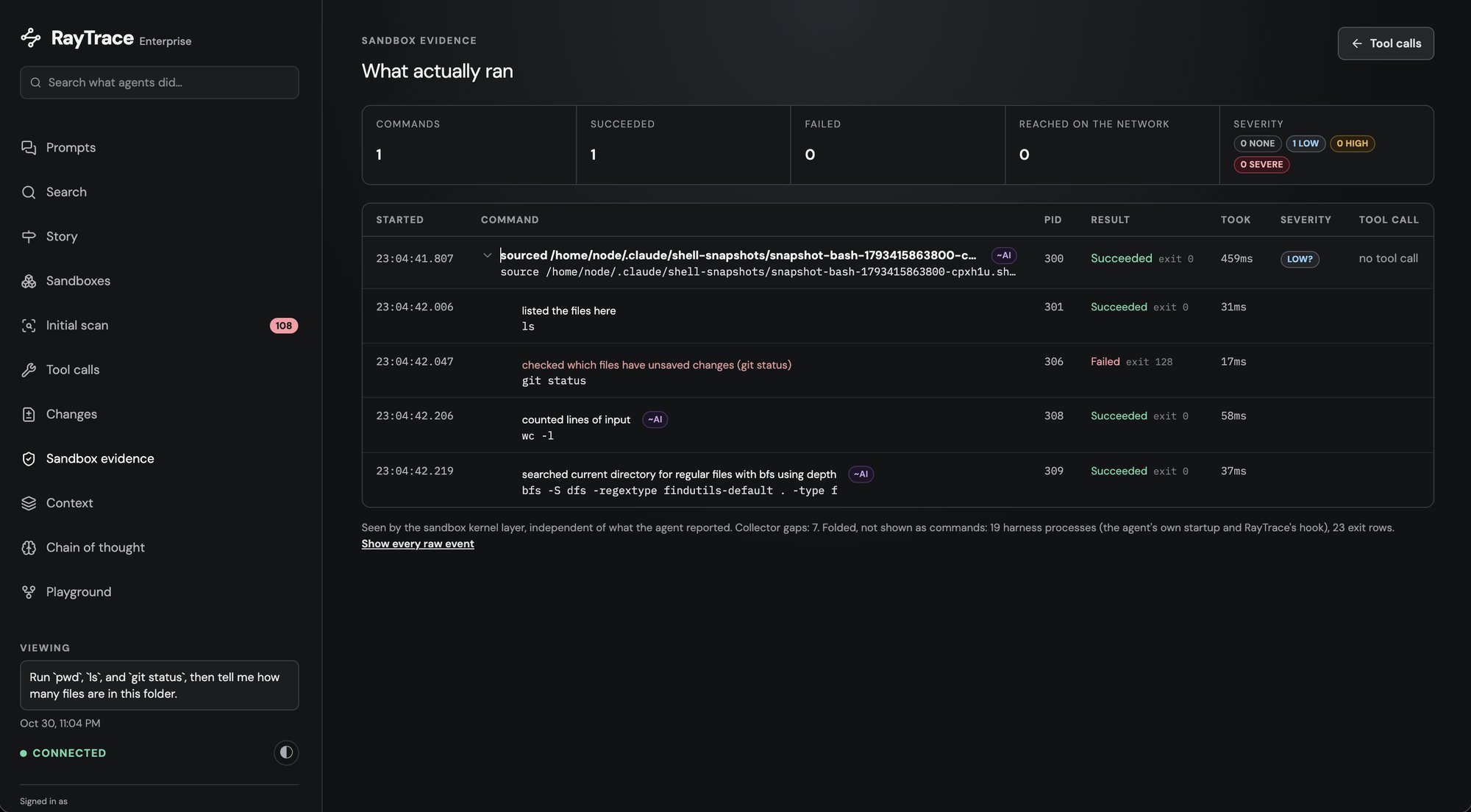
| **Prompts** | Every prompt you gave the agent, newest first, with where it ran (your machine, a local sandbox or a cloud sandbox), the model, how many tool calls it took and what it cost. Open one to read the answer and a short recap of the run. |
|
|
206
|
+
| **Tool calls** | The path from your prompt to the answer: one divider for each round trip to the model, one row for each tool call it proposed, with the command and what the agent says came back, plus tokens, time and cost at each step. |
|
|
207
|
+
| **Sandbox evidence** | What the sandbox itself saw, recorded from outside the agent. Every process in time order, with its real exit code, the files it read or changed, and where it connected — including anything no tool call accounts for. Use it to check "tests pass" against the real exit code, and to catch a script that phoned home or a package you didn't ask for. |
|
|
208
|
+
| **Changes** | Every file the prompt changed, with its diff, first for the whole prompt and then step by step. Download it all as one patch and apply it to your own checkout. The sandbox works on a copy; the patch is how you take the work home. |
|
|
209
|
+
| **Context** | What was in the model's context when it answered: what you said earlier, what the model brought in itself (earlier answers, and the files it read, with how much of each actually fit), and what the agent's harness adds to every request. Use it to see whether a wrong answer came from a file that was never read, or was cut off. |
|
|
210
|
+
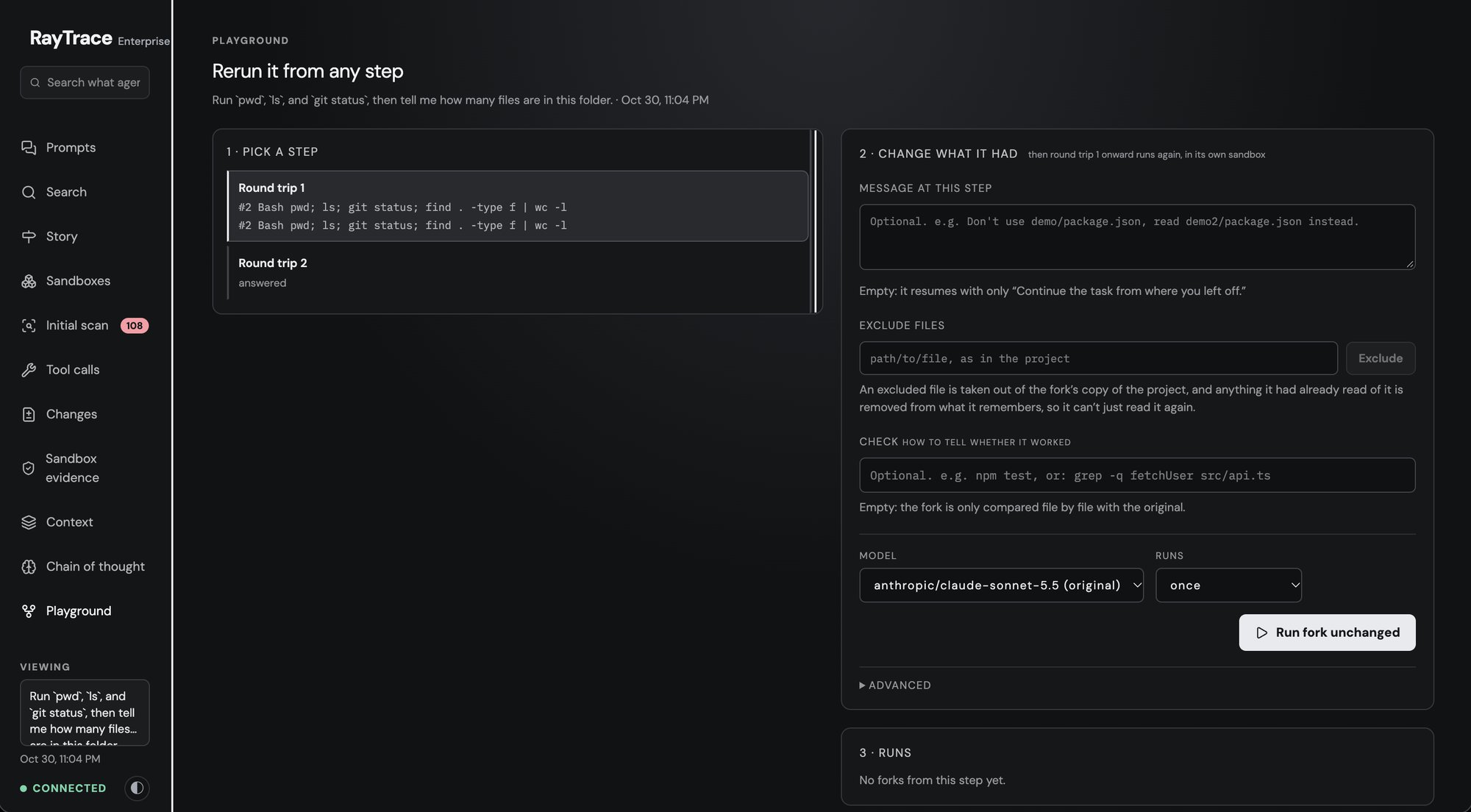
| **Playground** | Pick any step and rerun from there with something changed: a tool result, a file, the model, the message, or a time limit. Each rerun is a fork, a sandbox of its own started from the snapshot just before that step. Add a check such as `npm test` and every fork is graded pass or fail, so you can compare models or outcomes side by side. |
|
|
211
|
+
| **Story** | The short version of a long run: a timeline of only the steps that mattered, the single most consequential command pulled out at the top, and for each step what the agent could see, what it proposed, what really happened and what that led to. Worked out from the recording alone, nothing is rerun. |
|
|
212
|
+
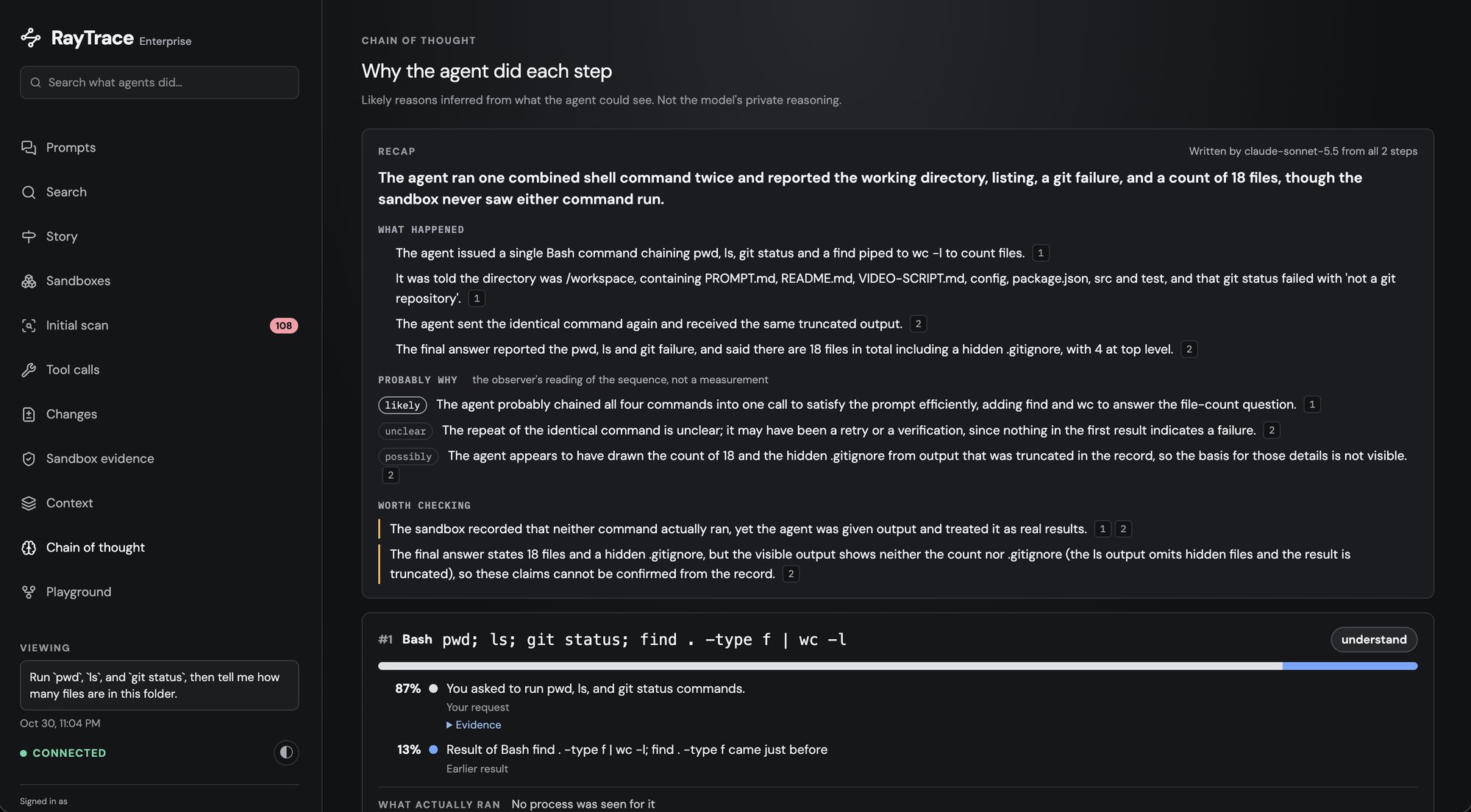
| **Chain of thought** | For each tool call, the likely causes among what the agent could see — your request, an earlier result, its own plan, or the project's instructions — each with a probability from [Jev](#limitations). Also worked out from the recording alone. |
|
|
213
|
+
| **Search** | Search every recorded session at once, failures first. Type free text, or use filters such as `outcome:failed tool:Bash exit:>=1 file:.env`, and summarise with a pipe, such as `stats count by tool`. With no query, it shows the most common failures lately. |
|
|
214
|
+
| **Initial scan** | When a project goes into a sandbox, every file is rated from 1 to 5 for how risky it is to change, with the reason. You can move any file up or down, choose which files to be alerted about, and **restrict** files so the agent can't change them at all. **Alerts** lists what the agent did to those files: changes, refused edits, reads, and commands that named them. |
|
|
215
|
+
| **Sandboxes** | Every sandbox, grouped by the machine it runs on, with what was asked in each. Destroyed sandboxes stay listed, because their evidence outlives them. |
|
|
324
216
|
|
|
325
217
|
|
|
326
218
|
|
|
327
|
-
What the agent *says* it ran is in Tool calls. This page is what the sandbox
|
|
328
|
-
itself saw, recorded from outside the agent where it can't be turned off or
|
|
329
|
-
edited. You get every process in time order, with its real exit code, the files
|
|
330
|
-
it read or changed, where it connected and what it installed. Each process is
|
|
331
|
-
tied to the tool call that started it, and anything no tool call accounts for
|
|
332
|
-
shows up too.
|
|
333
|
-
|
|
334
|
-
- **Check the agent's claims:** "tests pass" against the real exit code.
|
|
335
|
-
- **Catch side effects:** a script that phoned home, a package you didn't ask
|
|
336
|
-
for, a file outside the task that got changed.
|
|
337
|
-
|
|
338
|
-
### Changes: what the prompt left different
|
|
339
|
-
|
|
340
|
-
<!-- screenshot: docs/images/changes.png -->
|
|
341
|
-
|
|
342
|
-
Every file the prompt changed, with its diff, first for the whole prompt and
|
|
343
|
-
then step by step, so you see which tool call made which change. Download it all
|
|
344
|
-
as one patch and apply it to your own checkout.
|
|
345
|
-
|
|
346
|
-
- **Review the agent's work like a pull request,** before you take it.
|
|
347
|
-
- **Take the result home:** the sandbox works on a copy, and the patch brings
|
|
348
|
-
the changes back to your machine.
|
|
349
|
-
|
|
350
|
-
### Context: what the model could see
|
|
351
|
-
|
|
352
|
-
<!-- screenshot: docs/images/context.png -->
|
|
353
|
-
|
|
354
|
-
What was in the model's context when it answered, in three parts:
|
|
355
|
-
|
|
356
|
-
- what you said earlier in the conversation;
|
|
357
|
-
- what the model brought in itself: its earlier answers, and the files it read,
|
|
358
|
-
with how much of each actually fit;
|
|
359
|
-
- what the agent's harness adds to every request.
|
|
360
|
-
|
|
361
|
-
Use it to:
|
|
362
|
-
|
|
363
|
-
- **Understand a wrong answer:** was the right file never read, or cut off?
|
|
364
|
-
- **Test a hunch:** "Rerun without this" on any file opens the Playground with
|
|
365
|
-
that file removed.
|
|
366
|
-
|
|
367
|
-
### Playground: rerun it differently, and compare
|
|
368
|
-
|
|
369
219
|
|
|
370
220
|
|
|
371
|
-
|
|
372
|
-
earlier tool result removed or edited, a file in the project, the model, or the
|
|
373
|
-
time limit. Each rerun is a fork, a sandbox of its own started from a snapshot
|
|
374
|
-
taken just before that step, running in parallel with the others. Add a check
|
|
375
|
-
such as `npm test` and every fork is graded pass or fail. Run a change several
|
|
376
|
-
times and you get its pass rate, cost and steps, next to the same step rerun
|
|
377
|
-
unchanged.
|
|
378
|
-
|
|
379
|
-
- **Find out what actually mattered:** would it still have broken the build
|
|
380
|
-
without that misleading test output?
|
|
381
|
-
- **Compare models on your own task:** same step, same files, a different model.
|
|
382
|
-
- **Compare outcomes side by side:** each fork's answer, steps and files next to
|
|
383
|
-
the original's.
|
|
221
|
+
|
|
384
222
|
|
|
385
|
-
|
|
223
|
+
Chain of thought's probabilities, command severity ratings, and the
|
|
224
|
+
plain-English explanations of what each command did, need models you configure
|
|
225
|
+
yourself. See [Limitations](#limitations). Without those keys, the recorded
|
|
226
|
+
evidence and the rest of the dashboard still work.
|
|
386
227
|
|
|
387
|
-
|
|
228
|
+
`raytrace report <trace-id>` turns a run into a short pull-request comment:
|
|
229
|
+
commands with their exit codes, files changed, and cost. See
|
|
230
|
+
[Report a run on a pull request](docs/dashboard.md#report-a-run-on-a-pull-request).
|
|
388
231
|
|
|
389
|
-
|
|
390
|
-
|
|
391
|
-
top, and for each step what the agent could see, what it proposed, what really
|
|
392
|
-
happened and what that led to.
|
|
232
|
+
The fuller guide to every page, including optional AI recaps on your own
|
|
233
|
+
OpenRouter key, is in [docs/dashboard.md](docs/dashboard.md).
|
|
393
234
|
|
|
394
|
-
|
|
395
|
-
the agent could see: your request, an earlier result, its own plan, or the
|
|
396
|
-
project's instructions.
|
|
235
|
+
---
|
|
397
236
|
|
|
398
|
-
|
|
399
|
-
use [your own key](#ai-features-on-your-own-key).
|
|
237
|
+
## Cloud sandboxes
|
|
400
238
|
|
|
401
|
-
|
|
402
|
-
|
|
239
|
+
A cloud sandbox is the same isolated copy of your project, on RayTrace's
|
|
240
|
+
servers, with sessions recorded for your organization at
|
|
241
|
+
**[app.raytracer.si](https://app.raytracer.si)**. This is a preview.
|
|
403
242
|
|
|
404
|
-
|
|
243
|
+
```sh
|
|
244
|
+
npm install -g @raytrace-cli/cli
|
|
245
|
+
# or: pip install raytrace-cli
|
|
246
|
+
raytrace auth login # opens your browser: sign in, or create your account
|
|
247
|
+
cd your-project # any Git repository
|
|
248
|
+
raytrace sandbox create # uploads it and prints the sandbox id
|
|
249
|
+
raytrace connect <sandbox-id> --claude # a terminal in it, with Claude Code running
|
|
250
|
+
```
|
|
405
251
|
|
|
406
|
-
|
|
252
|
+
`auth login` prints a short code and opens the sign-in page; approve it there.
|
|
253
|
+
If you skip it, `sandbox create` and `connect` ask you to sign in first. With
|
|
254
|
+
one sandbox, `connect` needs no id. You can also create a sandbox in the web
|
|
255
|
+
dashboard by dropping a project folder on the **Sandboxes** page.
|
|
407
256
|
|
|
408
|
-
|
|
409
|
-
|
|
410
|
-
|
|
411
|
-
|
|
257
|
+
The upload is the files Git would track (including new files it doesn't ignore),
|
|
258
|
+
**without** `.git`, dependencies such as `node_modules`, build output, `.env*`
|
|
259
|
+
files, private keys and common credential files. Check for secrets inside other
|
|
260
|
+
files before you upload.
|
|
412
261
|
|
|
413
|
-
|
|
414
|
-
|
|
262
|
+
Limits, beta invites, and what happens when you destroy a cloud sandbox are in
|
|
263
|
+
[docs/cloud.md](docs/cloud.md).
|
|
415
264
|
|
|
416
|
-
|
|
265
|
+
---
|
|
417
266
|
|
|
418
|
-
|
|
267
|
+
## Set up in your editor (MCP)
|
|
419
268
|
|
|
420
|
-
|
|
421
|
-
|
|
422
|
-
|
|
423
|
-
|
|
424
|
-
at all, whatever it tries. **Alerts** lists what the agent did to those files:
|
|
425
|
-
changes, refused edits, reads, and commands that named them.
|
|
269
|
+
`raytrace mcp` is an [MCP](https://modelcontextprotocol.io) server. Add it to
|
|
270
|
+
your editor once, and your agent can create, open, stop and destroy sandboxes
|
|
271
|
+
for you. Setup for Claude Code, Cursor, VS Code and Codex, what to say to your
|
|
272
|
+
agent, and the tools the server exposes, are in [docs/mcp.md](docs/mcp.md).
|
|
426
273
|
|
|
427
|
-
|
|
428
|
-
off-limits.
|
|
274
|
+
---
|
|
429
275
|
|
|
430
|
-
|
|
431
|
-
- **Get told** when it touches what you care about.
|
|
276
|
+
## Contributing
|
|
432
277
|
|
|
433
|
-
|
|
278
|
+
The project is MIT licensed and still early. Useful places to help right now:
|
|
434
279
|
|
|
435
|
-
|
|
436
|
-
|
|
280
|
+
- Windows is experimental (Lima isn't downloaded there yet)
|
|
281
|
+
- Codex prompts don't appear on the Prompts page yet (commands and file/network
|
|
282
|
+
evidence already do)
|
|
283
|
+
- First-run setup of the local VM, and docs for new contributors
|
|
437
284
|
|
|
438
|
-
|
|
285
|
+
See [CONTRIBUTING.md](CONTRIBUTING.md) for how to set up a checkout, run the
|
|
286
|
+
tests, and open a pull request. [Issues](https://github.com/Godcreatebugs/raytrace-cli/issues)
|
|
287
|
+
are the place to start — look for `good first issue` and `help wanted`.
|
|
439
288
|
|
|
440
|
-
|
|
441
|
-
explain a run, using **your own OpenRouter key**, billed to your OpenRouter
|
|
442
|
-
account:
|
|
289
|
+
## Limitations
|
|
443
290
|
|
|
444
|
-
|
|
445
|
-
|
|
446
|
-
|
|
447
|
-
|
|
291
|
+
The recording itself — every command, its real exit code, file changes and
|
|
292
|
+
network connections — works with no extra keys. To get the **full experience**
|
|
293
|
+
of the dashboard (probabilities on Chain of thought, severity ratings, step
|
|
294
|
+
summaries and plain-English command explanations), you need to configure two
|
|
295
|
+
models on your own keys.
|
|
448
296
|
|
|
449
|
-
|
|
450
|
-
|
|
451
|
-
|
|
452
|
-
| Chain of thought: the likely reasons for each tool call | Chain of thought | `qwen/qwen3-coder` |
|
|
453
|
-
| Step summaries, and plain-English lines for commands no rule describes | Tool calls, Sandbox evidence | `openai/gpt-oss-120b` |
|
|
454
|
-
|
|
455
|
-
- **No key?** Those parts say so, and everything else works.
|
|
456
|
-
- **Cost:** each answer is kept, so opening the same prompt again is free.
|
|
457
|
-
Nothing is sent until you open a view that needs it.
|
|
458
|
-
- **What's sent:** only to OpenRouter, the parts of the run the feature reads.
|
|
459
|
-
Nothing goes to RayTrace.
|
|
460
|
-
- **Other models:** set `RAYTACE_OBSERVER_MODEL` (recap),
|
|
461
|
-
`RAYTACE_ATTRIBUTION_MODEL` (Chain of thought) or `RAYTACE_SUMMARY_MODEL`
|
|
462
|
-
(summaries) in `~/.raytrace/config.env`, then `raytrace stop && raytrace start`.
|
|
463
|
-
- **Optional:** `raytrace key typesafe` adds a [TypeSafe](https://typesafe.ai)
|
|
464
|
-
key, which ranks Chain of thought's reasons and rates how severe each command
|
|
465
|
-
was.
|
|
466
|
-
- `raytrace key openrouter --remove` removes a key.
|
|
467
|
-
|
|
468
|
-
## Report a run on a pull request
|
|
469
|
-
|
|
470
|
-
`raytrace report <trace-id>` turns one recorded run into a short Markdown
|
|
471
|
-
comment: the commands with their exit codes (failures first), the files changed
|
|
472
|
-
with lines added and removed, the cost and the trace id.
|
|
297
|
+
**[Jev](https://typesafe.ai/blog/introducing-system-one-models-and-jev)** is
|
|
298
|
+
[TypeSafe](https://typesafe.ai)'s decision model. It does not write prose: it
|
|
299
|
+
assigns calibrated probabilities. Configure it with:
|
|
473
300
|
|
|
474
301
|
```sh
|
|
475
|
-
raytrace
|
|
476
|
-
raytrace report <trace-id> --pr 42 # post it on PR 42 with the GitHub CLI, signed in as you
|
|
477
|
-
raytrace report <trace-id> --pr 42 --dry-run # show what would be posted
|
|
302
|
+
raytrace key typesafe
|
|
478
303
|
```
|
|
479
304
|
|
|
480
|
-
|
|
481
|
-
|
|
482
|
-
|
|
483
|
-
|
|
484
|
-
|
|
485
|
-
|
|
486
|
-
|
|
487
|
-
---
|
|
488
|
-
|
|
489
|
-
## Commands
|
|
305
|
+
Jev ranks the likely causes of each tool call in **Chain of thought** — your
|
|
306
|
+
request, an earlier result, the agent's own plan, or the project's instructions
|
|
307
|
+
— and gives each a probability. It also rates how severe each command was. The
|
|
308
|
+
default model is `jev-latest`. Without this key, those causes are listed but
|
|
309
|
+
unranked: no probability is shown that was not measured, and severity comes
|
|
310
|
+
only from rules on the command text.
|
|
490
311
|
|
|
491
|
-
|
|
492
|
-
|
|
493
|
-
|
|
494
|
-
|
|
495
|
-
| `raytrace connect [id or name] [--claude \| --codex]` | open a terminal in a sandbox, optionally with an agent running in it |
|
|
496
|
-
| `raytrace sandbox list [--local]` | your sandboxes |
|
|
497
|
-
| `raytrace sandbox start\|stop <id or name>` | start or stop one; stopping keeps its files |
|
|
498
|
-
| `raytrace sandbox destroy <id or name>` | delete one. Cloud: `--keep-traces` (paid plans). Local: `--delete-logs` or `--keep-logs` |
|
|
499
|
-
| `raytrace open` | open the local dashboard |
|
|
500
|
-
| `raytrace auth login\|status\|logout` | your RayTrace sign-in, for cloud sandboxes |
|
|
501
|
-
| `raytrace upload logs [--sandbox <name>]` | send a local sandbox's recorded logs to the cloud dashboard; `raytrace upload status` shows your storage |
|
|
502
|
-
| `raytrace share <trace-id> [--fork]` | a time-limited link to one recorded prompt; `--list`, `--revoke <share-id>` |
|
|
503
|
-
| `raytrace report <trace-id> [--pr <number>]` | a pull-request comment for one run: commands and exit codes, files changed, cost. Prints it, or posts it with `gh`; `--sandbox <rtp-id>` for a cloud run, `--link`, `--dry-run` |
|
|
504
|
-
| `raytrace export <trace-id> [--format json\|markdown] [--output <file>]` | export a recorded prompt to the terminal or a file, even with RayTrace stopped |
|
|
505
|
-
| `raytrace --code <code>` | redeem a beta invite code |
|
|
506
|
-
| `raytrace key [openrouter\|typesafe] [--remove]` | your keys for the dashboard's AI features |
|
|
507
|
-
| `raytrace doctor` | what this machine has and lacks |
|
|
508
|
-
|
|
509
|
-
`raytrace help` lists everything.
|
|
312
|
+
**A lower model** summarizes text and explains what each command did: step
|
|
313
|
+
summaries on Tool calls, and plain-English lines on Sandbox evidence for
|
|
314
|
+
commands no rule already describes. That is `openai/gpt-oss-120b` by default,
|
|
315
|
+
called through your own [OpenRouter](https://openrouter.ai/keys) key:
|
|
510
316
|
|
|
511
|
-
|
|
317
|
+
```sh
|
|
318
|
+
raytrace key openrouter
|
|
319
|
+
```
|
|
512
320
|
|
|
513
|
-
|
|
321
|
+
The same OpenRouter key also runs Chain of thought's cause proposals
|
|
322
|
+
(`qwen/qwen3-coder`) and the run recap (`anthropic/claude-sonnet-5.5`). Those
|
|
323
|
+
recaps are a reading of the run, not a measurement, and they are not allowed to
|
|
324
|
+
state a percentage. Calls are billed to your TypeSafe and OpenRouter accounts.
|
|
325
|
+
Nothing is sent until you open a view that needs it, and answers are kept, so
|
|
326
|
+
opening the same prompt again is free. What's sent goes to TypeSafe or
|
|
327
|
+
OpenRouter, not to RayTrace. `raytrace key` shows which keys are set;
|
|
328
|
+
`raytrace key openrouter --remove` (or `typesafe`) removes one.
|
|
514
329
|
|
|
515
|
-
|
|
330
|
+
You can pick different models in `~/.raytrace/config.env`:
|
|
331
|
+
`RAYTACE_OBSERVER_MODEL` (recap), `RAYTACE_ATTRIBUTION_MODEL` (Chain of thought
|
|
332
|
+
proposals), `RAYTACE_SUMMARY_MODEL` (summaries), or `RAYTACE_TYPESAFE_MODEL`
|
|
333
|
+
(Jev). Then `raytrace stop && raytrace start`.
|
|
516
334
|
|
|
517
|
-
|
|
518
|
-
raytrace auth login
|
|
519
|
-
raytrace --code <code>
|
|
520
|
-
raytrace sandbox create
|
|
521
|
-
```
|
|
335
|
+
Other known limits:
|
|
522
336
|
|
|
523
|
-
|
|
524
|
-
|
|
525
|
-
|
|
526
|
-
|
|
337
|
+
- **Windows** is experimental; RayTrace doesn't download Lima there.
|
|
338
|
+
- In local sandboxes, **Codex** prompts don't reach the Prompts page yet.
|
|
339
|
+
Commands, file changes and network connections are already recorded.
|
|
340
|
+
- **Cloud sandboxes** are a preview.
|
|
527
341
|
|
|
528
342
|
## Privacy
|
|
529
343
|
|
|
530
344
|
- **Local sandboxes** keep everything on your machine, in `~/.raytrace`, readable
|
|
531
345
|
only by you. The local dashboard's API needs the token in
|
|
532
346
|
`~/.raytrace/api-token`, so other accounts on the machine can't read your
|
|
533
|
-
traces.
|
|
534
|
-
- **Cloud sandboxes** upload your project ([what is uploaded](#what-is-uploaded))
|
|
347
|
+
traces. Opening the dashboard signs your browser in with a one-time link.
|
|
348
|
+
- **Cloud sandboxes** upload your project ([what is uploaded](docs/cloud.md#what-is-uploaded))
|
|
535
349
|
and record prompts, model requests and answers, tool calls and commands on
|
|
536
350
|
RayTrace's servers. Members of your organization can see them; other
|
|
537
351
|
organizations can't.
|
|
@@ -539,86 +353,14 @@ until then.
|
|
|
539
353
|
file only you can read where neither exists). `raytrace auth logout` removes
|
|
540
354
|
it. Cloud commands ask you to sign in again after 2 days without cloud use.
|
|
541
355
|
|
|
542
|
-
##
|
|
543
|
-
|
|
544
|
-
- **The MCP server doesn't show up in my editor:** restart the editor after
|
|
545
|
-
adding it. In Claude Code, `claude mcp list` shows whether it's connected.
|
|
546
|
-
Check that `node --version` is 22.13 or newer.
|
|
547
|
-
- **No terminal opened after "connect":** the agent's reply has the command to
|
|
548
|
-
paste, such as `raytrace connect my-box --claude`. On macOS, allow your editor
|
|
549
|
-
to control your terminal app in **System Settings → Privacy & Security →
|
|
550
|
-
Automation**.
|
|
551
|
-
- **The first local sandbox is taking long:** setting up the VM takes a few
|
|
552
|
-
minutes. Ask the agent for the sandbox status, or read
|
|
553
|
-
`~/.raytrace/logs/mcp-create-<name>-*.log`. The whole VM log is in
|
|
554
|
-
`~/.raytrace/logs/sandbox-vm.log`.
|
|
555
|
-
- **`sandbox create --local` says the machine isn't ready:** each line says
|
|
556
|
-
what's missing and how to fix it; `raytrace doctor` shows the same. Port 8798
|
|
557
|
-
in use usually means another Lima VM is running (`limactl list`).
|
|
558
|
-
- **A local sandbox's sessions don't show in the dashboard:** restart RayTrace
|
|
559
|
-
with `raytrace stop && raytrace start`.
|
|
560
|
-
- **The dashboard says this browser isn't signed in:** run `raytrace open`.
|
|
561
|
-
- **`Cannot reach RayTrace at https://api.raytracer.si`:** check your
|
|
562
|
-
connection. Networks that inspect HTTPS, such as some company Wi-Fi, can block
|
|
563
|
-
it.
|
|
564
|
-
- **A sandbox isn't found:** `raytrace auth status` shows which account you're
|
|
565
|
-
signed in as. Sandboxes belong to the account that made them.
|
|
566
|
-
|
|
567
|
-
## Uninstall
|
|
568
|
-
|
|
569
|
-
```sh
|
|
570
|
-
raytrace sandbox destroy <id or name> # any sandboxes you no longer need
|
|
571
|
-
raytrace uninstall --purge # local sandboxes: deletes the VM and ~/.raytrace
|
|
572
|
-
raytrace auth logout
|
|
573
|
-
npm uninstall -g @raytrace-cli/cli # or: pip uninstall raytrace-cli
|
|
574
|
-
claude mcp remove raytrace -s user # if you added the MCP server to Claude Code
|
|
575
|
-
```
|
|
576
|
-
|
|
577
|
-
Without `--purge`, remove the VM yourself with `limactl delete --force raytrace`.
|
|
578
|
-
|
|
579
|
-
## Developing
|
|
580
|
-
|
|
581
|
-
```sh
|
|
582
|
-
npm install
|
|
583
|
-
npm run build # dashboard -> dist/dashboard
|
|
584
|
-
npm run dashboard:dev # dashboard with hot reload, API from a running RayTrace
|
|
585
|
-
npm run typecheck
|
|
586
|
-
npm test
|
|
587
|
-
node bin/raytrace.mjs <command> # run the CLI from this folder
|
|
588
|
-
```
|
|
589
|
-
|
|
590
|
-
To use your checkout as the MCP server in Claude Code:
|
|
591
|
-
|
|
592
|
-
```sh
|
|
593
|
-
claude mcp add --scope user raytrace -- node /path/to/raytrace-cli/bin/raytrace.mjs mcp
|
|
594
|
-
```
|
|
595
|
-
|
|
596
|
-
To try it without touching your real setup, give it its own home and port:
|
|
597
|
-
|
|
598
|
-
```sh
|
|
599
|
-
mkdir -p /tmp/rt && echo RAYTACE_PORT=18797 > /tmp/rt/config.env
|
|
600
|
-
RAYTRACE_HOME=/tmp/rt node bin/raytrace.mjs setup --no-claude-code
|
|
601
|
-
```
|
|
602
|
-
|
|
603
|
-
### Publishing to pip
|
|
604
|
-
|
|
605
|
-
The pip package, `raytrace-cli` (PyPI does not allow `raytrace`), is the npm
|
|
606
|
-
package plus an official Node.js build, one wheel per platform. Each release
|
|
607
|
-
goes to both with the same version: bump it (`npm version x.y.z`), push the
|
|
608
|
-
`vx.y.z` tag, `npm publish`, then build the same version's wheels and upload them:
|
|
609
|
-
|
|
610
|
-
```sh
|
|
611
|
-
python3 python/build_wheels.py # all six platforms, into python/dist/
|
|
612
|
-
twine upload python/dist/*.whl
|
|
613
|
-
```
|
|
356
|
+
## Command reference, troubleshooting, uninstall
|
|
614
357
|
|
|
615
|
-
|
|
616
|
-
|
|
617
|
-
|
|
618
|
-
|
|
619
|
-
|
|
620
|
-
|
|
621
|
-
PyPI page's description (`python/README.md`) only changes with a new version.
|
|
358
|
+
- [Command reference](docs/commands.md)
|
|
359
|
+
- [Troubleshooting and uninstall](docs/troubleshooting.md)
|
|
360
|
+
- [Set up in your editor (MCP)](docs/mcp.md)
|
|
361
|
+
- [Dashboard](docs/dashboard.md)
|
|
362
|
+
- [Cloud sandboxes](docs/cloud.md)
|
|
363
|
+
- [Contributing](CONTRIBUTING.md)
|
|
622
364
|
|
|
623
365
|
## License
|
|
624
366
|
|