@orion-qa/orion 3.3.0 → 3.4.1
This diff represents the content of publicly available package versions that have been released to one of the supported registries. The information contained in this diff is provided for informational purposes only and reflects changes between package versions as they appear in their respective public registries.
- package/.claude/skills/appium/SKILL.md +2 -2
- package/.claude/skills/appium/templates/ci/github-actions-android.yml +1 -1
- package/.claude/skills/appium/templates/ci/github-actions-ios.yml +1 -1
- package/.claude/skills/appium/templates/ci/github-actions-windows.yml +1 -1
- package/.claude/skills/automation-implementation/SKILL.md +2 -2
- package/.claude/skills/automation-strategy/SKILL.md +1 -0
- package/.claude/skills/cicd-integration/SKILL.md +1 -1
- package/.claude/skills/code-review/SKILL.md +1 -1
- package/.claude/skills/code-review/references/pattern-rules.md +1 -0
- package/.claude/skills/csharp/SKILL.md +1 -0
- package/.claude/skills/documentation/SKILL.md +1 -1
- package/.claude/skills/execution/SKILL.md +8 -8
- package/.claude/skills/failure-analysis/SKILL.md +1 -0
- package/.claude/skills/failure-analysis/references/bug-report-standard.md +27 -0
- package/.claude/skills/httpclient/templates/ci/github-actions.yml +2 -2
- package/.claude/skills/java/SKILL.md +1 -0
- package/.claude/skills/javascript/SKILL.md +1 -0
- package/.claude/skills/junit5/SKILL.md +1 -1
- package/.claude/skills/k6/SKILL.md +1 -1
- package/.claude/skills/k6/templates/project/tests/load/products.js +1 -1
- package/.claude/skills/karate/SKILL.md +1 -1
- package/.claude/skills/karate/templates/ci/github-actions.yml +2 -2
- package/.claude/skills/newman/templates/ci/github-actions.yml +2 -2
- package/.claude/skills/newman/templates/collection/src/config/env.js +1 -1
- package/.claude/skills/nunit/SKILL.md +1 -1
- package/.claude/skills/orion/SKILL.md +1 -1
- package/.claude/skills/orion/references/assess-fix.md +1 -1
- package/.claude/skills/orion/references/batch.md +1 -1
- package/.claude/skills/orion/references/capabilities.md +1 -1
- package/.claude/skills/orion/references/conversation.md +4 -4
- package/.claude/skills/orion/references/modes.md +1 -1
- package/.claude/skills/orion/references/plain-language.md +3 -2
- package/.claude/skills/orion/references/recovery-loop.md +2 -2
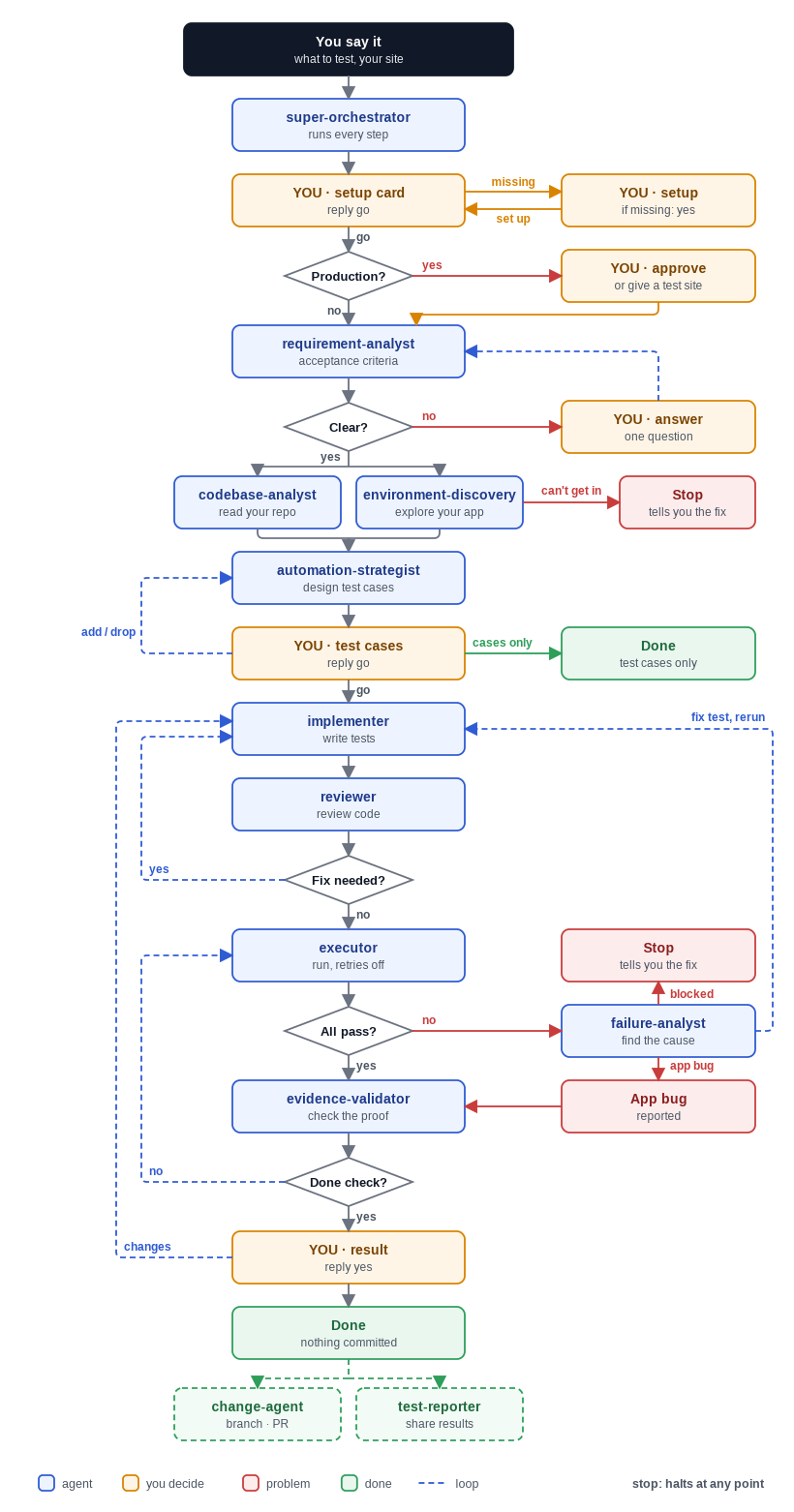
- package/.claude/skills/orion/references/setup-card.md +1 -1
- package/.claude/skills/orion/references/status-lines.md +4 -4
- package/.claude/skills/orion/references/task-brief.md +1 -1
- package/.claude/skills/orion/scripts/batch_state.mjs +1 -1
- package/.claude/skills/orion/scripts/done_check.mjs +7 -5
- package/.claude/skills/orion/scripts/quiet.mjs +1 -1
- package/.claude/skills/orion/templates/project-context/report.md +2 -2
- package/.claude/skills/pact/SKILL.md +1 -1
- package/.claude/skills/playwright/SKILL.md +2 -2
- package/.claude/skills/playwright/references/electron.md +1 -1
- package/.claude/skills/playwright/templates/README.md +1 -1
- package/.claude/skills/playwright/templates/ci/azure-pipelines.yml +1 -1
- package/.claude/skills/playwright/templates/ci/github-actions-dotnet.yml +2 -2
- package/.claude/skills/playwright/templates/ci/github-actions-javascript.yml +2 -2
- package/.claude/skills/playwright/templates/ci/github-actions-python.yml +2 -2
- package/.claude/skills/playwright/templates/ci/github-actions.yml +1 -1
- package/.claude/skills/playwright/templates/javascript/.prettierignore +6 -0
- package/.claude/skills/playwright/templates/javascript/.prettierrc.json +4 -0
- package/.claude/skills/playwright/templates/javascript/fixtures/index.js +56 -48
- package/.claude/skills/playwright/templates/javascript/package.json +4 -1
- package/.claude/skills/playwright/templates/javascript/pageObjects/basePage.js +5 -1
- package/.claude/skills/playwright/templates/javascript/playwright.config.js +6 -2
- package/.claude/skills/playwright/templates/javascript/reporters/summaryReporter.js +80 -17
- package/.claude/skills/playwright/templates/javascript/resources/desc/signIn.desc.js +10 -3
- package/.claude/skills/playwright/templates/javascript/src/config/env.js +12 -3
- package/.claude/skills/playwright/templates/javascript/src/config/flags.js +3 -1
- package/.claude/skills/playwright/templates/javascript/tests/api/session.spec.js +8 -4
- package/.claude/skills/playwright/templates/javascript/tests/unit/summaryReporter.test.js +30 -6
- package/.claude/skills/playwright/templates/javascript/utils/random.js +3 -1
- package/.claude/skills/playwright/templates/project/.prettierignore +6 -0
- package/.claude/skills/playwright/templates/project/.prettierrc.json +4 -0
- package/.claude/skills/playwright/templates/project/fixtures/index.ts +21 -15
- package/.claude/skills/playwright/templates/project/fixtures/session.ts +9 -2
- package/.claude/skills/playwright/templates/project/package.json +4 -1
- package/.claude/skills/playwright/templates/project/pageObjects/basePage.ts +5 -1
- package/.claude/skills/playwright/templates/project/playwright.config.ts +4 -2
- package/.claude/skills/playwright/templates/project/reporters/summaryReporter.ts +84 -17
- package/.claude/skills/playwright/templates/project/resources/desc/signIn.desc.ts +10 -3
- package/.claude/skills/playwright/templates/project/src/config/env.ts +15 -4
- package/.claude/skills/playwright/templates/project/src/services/apiClient.ts +5 -1
- package/.claude/skills/playwright/templates/project/tests/api/session.spec.ts +8 -4
- package/.claude/skills/playwright/templates/project/tests/unit/summaryReporter.test.ts +30 -6
- package/.claude/skills/playwright/templates/project/utils/formFill.ts +4 -1
- package/.claude/skills/playwright/templates/project/utils/random.ts +3 -1
- package/.claude/skills/playwright/templates/project/utils/redact.ts +4 -1
- package/.claude/skills/pytest/SKILL.md +1 -1
- package/.claude/skills/python/SKILL.md +1 -0
- package/.claude/skills/quality-checks/SKILL.md +1 -1
- package/.claude/skills/requests/templates/ci/github-actions.yml +2 -2
- package/.claude/skills/rest-assured/SKILL.md +2 -2
- package/.claude/skills/rest-assured/templates/ci/github-actions.yml +2 -2
- package/.claude/skills/selenium/SKILL.md +1 -1
- package/.claude/skills/selenium/templates/ci/github-actions-csharp.yml +2 -2
- package/.claude/skills/selenium/templates/ci/github-actions-java.yml +2 -2
- package/.claude/skills/selenium/templates/ci/github-actions-python.yml +2 -2
- package/.claude/skills/self-healing/SKILL.md +1 -1
- package/.claude/skills/test-design/SKILL.md +2 -1
- package/.claude/skills/test-design/references/test-case-standard.md +31 -0
- package/.claude/skills/test-reporting/references/report-levels.md +1 -1
- package/.claude/skills/test-reporting/references/tool-mapping.md +1 -1
- package/.claude/skills/testng/SKILL.md +1 -1
- package/.claude/skills/typescript/SKILL.md +1 -0
- package/.claude/skills/ui-observation/SKILL.md +2 -2
- package/.claude-plugin/plugin.json +1 -1
- package/README.md +8 -7
- package/assets/architecture.svg +1 -1
- package/assets/run-flow.svg +1 -1
- package/bin/orion.mjs +6 -6
- package/hosts/gemini-extension/gemini-extension.json +1 -1
- package/package.json +2 -2
|
@@ -9,21 +9,28 @@ import type { TestDescription } from '../../utils/titles';
|
|
|
9
9
|
/** The sign-in feature's test cases. */
|
|
10
10
|
export const SIGN_IN = {
|
|
11
11
|
'TS-0': {
|
|
12
|
-
id: 'TS-0',
|
|
12
|
+
id: 'TS-0',
|
|
13
|
+
ac: 'AC-0',
|
|
14
|
+
story: '{{STORY_KEY}}',
|
|
15
|
+
tags: ['@smoke'],
|
|
13
16
|
title: 'the test account signs in and the app greets the user',
|
|
14
17
|
preconditions: ['Signed in (the session the setup project saved)'],
|
|
15
18
|
steps: ['Open the home page'],
|
|
16
19
|
expected: 'The home page greets the user',
|
|
17
20
|
},
|
|
18
21
|
'TS-1': {
|
|
19
|
-
id: 'TS-1',
|
|
22
|
+
id: 'TS-1',
|
|
23
|
+
ac: 'AC-0',
|
|
24
|
+
story: '{{STORY_KEY}}',
|
|
20
25
|
title: 'a wrong password is refused with a message',
|
|
21
26
|
preconditions: ['Signed out'],
|
|
22
27
|
steps: ['Open the sign-in page', 'Enter the user name and a wrong password', 'Submit'],
|
|
23
28
|
expected: 'The form shows the wrong-password message',
|
|
24
29
|
},
|
|
25
30
|
'TS-2': {
|
|
26
|
-
id: 'TS-2',
|
|
31
|
+
id: 'TS-2',
|
|
32
|
+
ac: 'AC-0',
|
|
33
|
+
story: '{{STORY_KEY}}',
|
|
27
34
|
title: 'signing out returns to the sign-in page',
|
|
28
35
|
preconditions: ['Signed out (signs in on its own, so the shared session stays valid)'],
|
|
29
36
|
steps: ['Sign in', 'Open the account menu', 'Sign out'],
|
|
@@ -42,11 +42,20 @@ export function optional(name: string): string | undefined {
|
|
|
42
42
|
*/
|
|
43
43
|
function installedChannel(): 'chrome' | 'msedge' | undefined {
|
|
44
44
|
/** Whether a file or folder exists. */
|
|
45
|
-
const exists = (p: string): boolean => {
|
|
45
|
+
const exists = (p: string): boolean => {
|
|
46
|
+
try {
|
|
47
|
+
return fs.statSync(p).isFile() || fs.statSync(p).isDirectory();
|
|
48
|
+
} catch {
|
|
49
|
+
return false;
|
|
50
|
+
}
|
|
51
|
+
};
|
|
46
52
|
/** Whether one of the commands is on the PATH. */
|
|
47
|
-
const onPath = (names: string[]): boolean =>
|
|
53
|
+
const onPath = (names: string[]): boolean =>
|
|
54
|
+
(process.env.PATH || '').split(path.delimiter).some((d) => names.some((n) => exists(path.join(d, n))));
|
|
48
55
|
if (process.platform === 'win32') {
|
|
49
|
-
const roots = ['ProgramFiles', 'ProgramFiles(x86)', 'LOCALAPPDATA']
|
|
56
|
+
const roots = ['ProgramFiles', 'ProgramFiles(x86)', 'LOCALAPPDATA']
|
|
57
|
+
.map((v) => process.env[v])
|
|
58
|
+
.filter((r): r is string => Boolean(r));
|
|
50
59
|
if (roots.some((r) => exists(path.join(r, 'Google', 'Chrome', 'Application', 'chrome.exe')))) return 'chrome';
|
|
51
60
|
if (roots.some((r) => exists(path.join(r, 'Microsoft', 'Edge', 'Application', 'msedge.exe')))) return 'msedge';
|
|
52
61
|
return undefined;
|
|
@@ -56,7 +65,9 @@ function installedChannel(): 'chrome' | 'msedge' | undefined {
|
|
|
56
65
|
return exists('/Applications/Microsoft Edge.app') ? 'msedge' : undefined;
|
|
57
66
|
}
|
|
58
67
|
if (exists('/opt/google/chrome/chrome') || onPath(['google-chrome', 'google-chrome-stable'])) return 'chrome';
|
|
59
|
-
return exists('/opt/microsoft/msedge/msedge') || onPath(['microsoft-edge', 'microsoft-edge-stable'])
|
|
68
|
+
return exists('/opt/microsoft/msedge/msedge') || onPath(['microsoft-edge', 'microsoft-edge-stable'])
|
|
69
|
+
? 'msedge'
|
|
70
|
+
: undefined;
|
|
60
71
|
}
|
|
61
72
|
|
|
62
73
|
export const env = {
|
|
@@ -29,7 +29,11 @@ export class ApiClient {
|
|
|
29
29
|
* @returns The response.
|
|
30
30
|
* @throws AutomationError naming the call and the status that came back.
|
|
31
31
|
*/
|
|
32
|
-
async send(
|
|
32
|
+
async send(
|
|
33
|
+
method: 'GET' | 'POST' | 'PUT' | 'PATCH' | 'DELETE',
|
|
34
|
+
path: string,
|
|
35
|
+
options: CallOptions = {},
|
|
36
|
+
): Promise<APIResponse> {
|
|
33
37
|
const response = await this.request.fetch(path, { method, data: options.data, maxRedirects: options.maxRedirects });
|
|
34
38
|
const ok = options.expectStatus === undefined ? response.ok() : response.status() === options.expectStatus;
|
|
35
39
|
logger.debug(`${method} ${path} -> ${response.status()}`);
|
|
@@ -7,8 +7,12 @@ import { test, expect } from '../../fixtures';
|
|
|
7
7
|
*/
|
|
8
8
|
|
|
9
9
|
test.describe('{{STORY_KEY}} session over HTTP', () => {
|
|
10
|
-
test(
|
|
11
|
-
|
|
12
|
-
|
|
13
|
-
|
|
10
|
+
test(
|
|
11
|
+
'framework check, not a story case: the saved session opens the home page without a redirect to sign-in',
|
|
12
|
+
{ tag: ['@smoke'] },
|
|
13
|
+
async ({ apiClient }) => {
|
|
14
|
+
const response = await apiClient.get(ROUTES.home, { expectStatus: 200, maxRedirects: 0 });
|
|
15
|
+
expect(new URL(response.url()).pathname).not.toBe(new URL(ROUTES.login, response.url()).pathname);
|
|
16
|
+
},
|
|
17
|
+
);
|
|
14
18
|
});
|
|
@@ -6,12 +6,28 @@ import { renderSummary, parseTitle, verdictOf, type Row } from '../../reporters/
|
|
|
6
6
|
*/
|
|
7
7
|
|
|
8
8
|
/** A passed row; fields overridden per test. */
|
|
9
|
-
const row = (over: Partial<Row> = {}): Row => ({
|
|
10
|
-
|
|
9
|
+
const row = (over: Partial<Row> = {}): Row => ({
|
|
10
|
+
id: 'TS-1',
|
|
11
|
+
story: 'EA-10',
|
|
12
|
+
title: 'the user signs in',
|
|
13
|
+
acs: ['AC-1'],
|
|
14
|
+
project: 'regression',
|
|
15
|
+
file: 'tests/ui/signIn.spec.js:8',
|
|
16
|
+
outcome: 'passed',
|
|
17
|
+
durationMs: 1200,
|
|
18
|
+
attempts: 1,
|
|
19
|
+
error: '',
|
|
20
|
+
links: [],
|
|
21
|
+
...over,
|
|
22
|
+
});
|
|
11
23
|
|
|
12
24
|
test.describe('summary reporter', () => {
|
|
13
25
|
test('parseTitle splits the case id, story and behaviour', () => {
|
|
14
|
-
expect(parseTitle('TS-3 [EA-10] wrong password shows an error')).toEqual({
|
|
26
|
+
expect(parseTitle('TS-3 [EA-10] wrong password shows an error')).toEqual({
|
|
27
|
+
id: 'TS-3',
|
|
28
|
+
story: 'EA-10',
|
|
29
|
+
title: 'wrong password shows an error',
|
|
30
|
+
});
|
|
15
31
|
expect(parseTitle('a test without an id')).toEqual({ id: '', story: '', title: 'a test without an id' });
|
|
16
32
|
});
|
|
17
33
|
|
|
@@ -19,12 +35,20 @@ test.describe('summary reporter', () => {
|
|
|
19
35
|
expect(verdictOf([row(), row({ outcome: 'failed' })]).label).toBe('Failed');
|
|
20
36
|
expect(verdictOf([row(), row({ outcome: 'flaky' })]).label).toBe('Passed, with notes');
|
|
21
37
|
expect(verdictOf([row(), row()]).sentence).toBe('All 2 tests passed.');
|
|
22
|
-
expect(verdictOf([row()], [row({ project: 'setup', title: 'sign in', outcome: 'failed' })]).label).toBe(
|
|
38
|
+
expect(verdictOf([row()], [row({ project: 'setup', title: 'sign in', outcome: 'failed' })]).label).toBe(
|
|
39
|
+
'Setup failed',
|
|
40
|
+
);
|
|
23
41
|
});
|
|
24
42
|
|
|
25
43
|
test('renderSummary shows the verdict first, escapes text and keeps a failure next to its test', () => {
|
|
26
|
-
const html = renderSummary({
|
|
27
|
-
|
|
44
|
+
const html = renderSummary({
|
|
45
|
+
rows: [row(), row({ id: 'TS-2', title: 'shows <b>', outcome: 'failed', error: 'Expected "Welcome"' })],
|
|
46
|
+
support: [],
|
|
47
|
+
startedAt: new Date('2026-11-13T10:00:00Z'),
|
|
48
|
+
durationMs: 4200,
|
|
49
|
+
baseUrl: 'https://test.example',
|
|
50
|
+
projects: ['regression'],
|
|
51
|
+
});
|
|
28
52
|
expect(html.indexOf('❌ Failed')).toBeLessThan(html.indexOf('<section>'));
|
|
29
53
|
expect(html).toContain('shows <b>');
|
|
30
54
|
expect(html.indexOf('TS-2')).toBeLessThan(html.indexOf('TS-1'));
|
|
@@ -12,7 +12,10 @@ import type { Locator, Page } from '@playwright/test';
|
|
|
12
12
|
* @param scope The page or the form.
|
|
13
13
|
* @param values Field label → value.
|
|
14
14
|
*/
|
|
15
|
-
export async function fillForm(
|
|
15
|
+
export async function fillForm(
|
|
16
|
+
scope: Page | Locator,
|
|
17
|
+
values: Record<string, string | boolean | undefined>,
|
|
18
|
+
): Promise<void> {
|
|
16
19
|
for (const [label, value] of Object.entries(values)) {
|
|
17
20
|
if (value === undefined) continue;
|
|
18
21
|
const field = scope.getByLabel(label, { exact: true });
|
|
@@ -11,7 +11,9 @@ import { randomBytes } from 'node:crypto';
|
|
|
11
11
|
* @returns Lower-case letters and digits.
|
|
12
12
|
*/
|
|
13
13
|
export function uniqueSuffix(length = 6): string {
|
|
14
|
-
return randomBytes(Math.ceil(length / 2))
|
|
14
|
+
return randomBytes(Math.ceil(length / 2))
|
|
15
|
+
.toString('hex')
|
|
16
|
+
.slice(0, length);
|
|
15
17
|
}
|
|
16
18
|
|
|
17
19
|
/**
|
|
@@ -12,7 +12,10 @@ export const SECRET_NAME = /(PASSWORD|PASSWD|TOKEN|SECRET|API_KEY|COOKIE|SESSION
|
|
|
12
12
|
*/
|
|
13
13
|
function secretValues(): string[] {
|
|
14
14
|
return Object.entries(process.env)
|
|
15
|
-
.filter(
|
|
15
|
+
.filter(
|
|
16
|
+
(entry): entry is [string, string] =>
|
|
17
|
+
SECRET_NAME.test(entry[0]) && typeof entry[1] === 'string' && entry[1].length >= 4,
|
|
18
|
+
)
|
|
16
19
|
.map(([, value]) => value)
|
|
17
20
|
.sort((a, b) => b.length - a.length);
|
|
18
21
|
}
|
|
@@ -25,7 +25,7 @@ Adapter rules: holds only what differs from the capability skills; the project's
|
|
|
25
25
|
- pytest-playwright: `--browser chromium|firefox|webkit`, `--headed`, `--base-url <url>`, `--tracing retain-on-failure`, `--screenshot only-on-failure`, `--output test-results`.
|
|
26
26
|
|
|
27
27
|
## Repeat and flaky (platform rules)
|
|
28
|
-
- New tests: run the scoped command
|
|
28
|
+
- New tests: run the scoped command once; a stability check the user asks for runs it N times in a row (default 3; pytest has no built-in repeat), all N must agree. If pytest-rerunfailures is installed, pass `-p no:rerunfailures` so nothing is retried.
|
|
29
29
|
- Report tests that passed only on a rerun as flaky, never as passed.
|
|
30
30
|
|
|
31
31
|
## Failure signals
|
|
@@ -21,6 +21,7 @@ Adapter rules: holds only what differs from the capability skills; the project's
|
|
|
21
21
|
## Check
|
|
22
22
|
- Collect without running: `python -m pytest --collect-only -q` (import and syntax errors surface).
|
|
23
23
|
- The project's lint and type check if configured (`ruff check`, `flake8`, `mypy`); don't add new ones.
|
|
24
|
+
- Format the changed files with the project's formatter (`ruff format <files>` or `black <files>`); none configured → offered at Gate 4, never added silently.
|
|
24
25
|
|
|
25
26
|
## Failure signals
|
|
26
27
|
| Signal | Likely class |
|
|
@@ -33,7 +33,7 @@ Not offered yet (say so in one line if asked): contract testing (Pact), API fuzz
|
|
|
33
33
|
- GraphQL: the operation and the fields the test will check, with expected values from the requirement.
|
|
34
34
|
3. **Write the tests** from the add-on template for the project's language (`templates/playwright-js/` or `templates/playwright-ts/`, copied into the test project; it adds `pageObjects/scannedPage`, `src/checks/`, `src/services/graphqlClient`, `resources/desc/quality.desc`, `resources/testData/qualityData` and the specs in `tests/ui` and `tests/api`) with the user's answers in `resources/testData/qualityData`. Add `@axe-core/playwright` at the version pinned in the template README (the confirmed setup card covers installs in the test project).
|
|
35
35
|
4. **Visual baseline after approval only.** The starter's config sets `updateSnapshots: 'none'`, so a missing baseline fails instead of being saved unseen (measured: with the default, the first run writes it silently). After the user's yes: `npx playwright test --project=regression -g QC-5 --update-snapshots=missing` (that run reports the write as a failure; the next run is the check). Changing an approved baseline later is changing an expected value: ask first (H8). Baselines are per project and platform (`Home-regression-linux.png`): CI on another OS needs its own, approved the same way.
|
|
36
|
-
5. **Run and fail-check** like any new test (
|
|
36
|
+
5. **Run and fail-check** like any new test (1 counted run, retries off). Fail check per check: a page with a known problem, or a changed expected value, must fail on that check's assertion with a readable message.
|
|
37
37
|
6. **Report** each check in one line in the result, with what it found on the app (e.g. "Accessibility: 2 critical issues on Home reported as defects; test fails on critical/serious").
|
|
38
38
|
|
|
39
39
|
## Rules
|
|
@@ -2,7 +2,7 @@
|
|
|
2
2
|
# Python API tests (requests, pytest). Runs on PRs, pushes to the default branch, and on demand: the executor triggers it with
|
|
3
3
|
# actions_run_trigger (run_workflow) on the work branch and reads the result with get_job_logs.
|
|
4
4
|
# Actions are pinned to commit SHAs (tag in the comment, resolved 2026-10-15); update them with Dependabot.
|
|
5
|
-
# "repeat: 3" runs the selection three times with retries off (
|
|
5
|
+
# "repeat: 3" runs the selection three times with retries off (a stability check); any failing run fails the job.
|
|
6
6
|
name: api-tests
|
|
7
7
|
on:
|
|
8
8
|
pull_request:
|
|
@@ -22,7 +22,7 @@ on:
|
|
|
22
22
|
required: false
|
|
23
23
|
default: ""
|
|
24
24
|
repeat:
|
|
25
|
-
description: "Runs of the selection (3 for
|
|
25
|
+
description: "Runs of the selection (3 for a stability check)"
|
|
26
26
|
type: choice
|
|
27
27
|
options: ["1", "3"]
|
|
28
28
|
default: "1"
|
|
@@ -25,7 +25,7 @@ Adapter rules: holds only what differs from the capability skills; the project's
|
|
|
25
25
|
Copy [templates/java-testng](templates/README.md) (the suite architecture: one `ApiSpec` built once, token from `API_TOKEN`, `Authorization` masked; data in `testData.properties`, cases in `desc/`; select with `-Dgroups`), fill every `{{TOKEN}}`, run the health smoke test against the test environment. With JUnit 5 instead of TestNG, swap the runner dependency and annotations (junit5 adapter).
|
|
26
26
|
|
|
27
27
|
## Run
|
|
28
|
-
- The runner adapter's command (`mvn test -Dtest=<Class>`, `-Dgroups=…`; Gradle equivalents). New tests:
|
|
28
|
+
- The runner adapter's command (`mvn test -Dtest=<Class>`, `-Dgroups=…`; Gradle equivalents). New tests: 1 run with retries off (a stability check on request: N runs, all must agree).
|
|
29
29
|
- Where: the API named in the brief (`run_where` + base URL variable). If the suite starts the service itself, say so in the run record; if it needs a deployed API and none is reachable, NEEDS_ENVIRONMENT.
|
|
30
30
|
- Fail check: change the expected value of the main assertion, run the single test, confirm it fails with REST Assured's `Expected: … Actual: …`, restore.
|
|
31
31
|
- Evidence: Surefire/Gradle reports (`target/surefire-reports/`, `build/test-results/`) and the logged request/response of each failure, with secret headers shown as `[ BLACKLISTED ]`.
|
|
@@ -46,7 +46,7 @@ Copy [templates/java-testng](templates/README.md) (the suite architecture: one `
|
|
|
46
46
|
Fix a path, a payload field name or a JSON path to match the documented contract (same endpoint, same-target evidence: the API doc or a logged response); move a hard-coded value to config. Never change an expected status, value or schema to match what the API returned (that is H8), never add relaxed TLS, never swallow an exception.
|
|
47
47
|
|
|
48
48
|
## Repeat, data and login (platform rules)
|
|
49
|
-
- New tests:
|
|
49
|
+
- New tests: 1 run, retries off; a stability check on request runs N times and all N must agree.
|
|
50
50
|
- Test data per test with unique values, deleted in teardown even on failure.
|
|
51
51
|
- Credentials only from environment variables or CI secrets; never in code, specs, properties files or logs.
|
|
52
52
|
|
|
@@ -2,7 +2,7 @@
|
|
|
2
2
|
# REST Assured (Java, TestNG, Maven). Runs on PRs, pushes to the default branch, and on demand: the executor triggers it with
|
|
3
3
|
# actions_run_trigger (run_workflow) on the work branch and reads the result with get_job_logs.
|
|
4
4
|
# Actions are pinned to commit SHAs (tag in the comment, resolved 2026-10-15); update them with Dependabot.
|
|
5
|
-
# "repeat: 3" runs the selection three times with retries off (
|
|
5
|
+
# "repeat: 3" runs the selection three times with retries off (a stability check); any failing run fails the job.
|
|
6
6
|
name: api-tests
|
|
7
7
|
on:
|
|
8
8
|
pull_request:
|
|
@@ -22,7 +22,7 @@ on:
|
|
|
22
22
|
required: false
|
|
23
23
|
default: ""
|
|
24
24
|
repeat:
|
|
25
|
-
description: "Runs of the selection (3 for
|
|
25
|
+
description: "Runs of the selection (3 for a stability check)"
|
|
26
26
|
type: choice
|
|
27
27
|
options: ["1", "3"]
|
|
28
28
|
default: "1"
|
|
@@ -47,7 +47,7 @@ Copy the stack's folder from [templates/](templates/README.md) (Java + TestNG, P
|
|
|
47
47
|
Update locator in the page object (not the test); replace sleep with explicit wait; re-find stale elements.
|
|
48
48
|
|
|
49
49
|
## Repeat, data and login (platform rules)
|
|
50
|
-
- New tests: run them
|
|
50
|
+
- New tests: run them once with retries off; a stability check on request runs them N times (default 3), all N must agree.
|
|
51
51
|
- Test data is created per test with unique values and deleted in teardown (`@AfterMethod` / `afterEach`), even on failure.
|
|
52
52
|
- Login uses the project's pattern; credentials only from environment variables or CI secrets. An HTTP auth prompt or SSO: `ui-observation/references/login-methods.md` section 5 (Java `HasAuthentication`, C# `NetworkAuthenticationHandler`, Python on Chromium a DevTools `Authorization` header; never `user:pass@` in the URL).
|
|
53
53
|
|
|
@@ -2,7 +2,7 @@
|
|
|
2
2
|
# Selenium (C#, NUnit). Runs on PRs, pushes to the default branch, and on demand: the executor triggers it with
|
|
3
3
|
# actions_run_trigger (run_workflow) on the work branch and reads the result with get_job_logs.
|
|
4
4
|
# Actions are pinned to commit SHAs (tag in the comment, resolved 2026-10-15); update them with Dependabot.
|
|
5
|
-
# "repeat: 3" runs the selection three times with retries off (
|
|
5
|
+
# "repeat: 3" runs the selection three times with retries off (a stability check); any failing run fails the job.
|
|
6
6
|
name: e2e
|
|
7
7
|
on:
|
|
8
8
|
pull_request:
|
|
@@ -22,7 +22,7 @@ on:
|
|
|
22
22
|
required: false
|
|
23
23
|
default: ""
|
|
24
24
|
repeat:
|
|
25
|
-
description: "Runs of the selection (3 for
|
|
25
|
+
description: "Runs of the selection (3 for a stability check)"
|
|
26
26
|
type: choice
|
|
27
27
|
options: ["1", "3"]
|
|
28
28
|
default: "1"
|
|
@@ -2,7 +2,7 @@
|
|
|
2
2
|
# Selenium (Java, TestNG, Maven). Runs on PRs, pushes to the default branch, and on demand: the executor triggers it with
|
|
3
3
|
# actions_run_trigger (run_workflow) on the work branch and reads the result with get_job_logs.
|
|
4
4
|
# Actions are pinned to commit SHAs (tag in the comment, resolved 2026-10-15); update them with Dependabot.
|
|
5
|
-
# "repeat: 3" runs the selection three times with retries off (
|
|
5
|
+
# "repeat: 3" runs the selection three times with retries off (a stability check); any failing run fails the job.
|
|
6
6
|
name: e2e
|
|
7
7
|
on:
|
|
8
8
|
pull_request:
|
|
@@ -22,7 +22,7 @@ on:
|
|
|
22
22
|
required: false
|
|
23
23
|
default: ""
|
|
24
24
|
repeat:
|
|
25
|
-
description: "Runs of the selection (3 for
|
|
25
|
+
description: "Runs of the selection (3 for a stability check)"
|
|
26
26
|
type: choice
|
|
27
27
|
options: ["1", "3"]
|
|
28
28
|
default: "1"
|
|
@@ -2,7 +2,7 @@
|
|
|
2
2
|
# Selenium (Python, pytest). Runs on PRs, pushes to the default branch, and on demand: the executor triggers it with
|
|
3
3
|
# actions_run_trigger (run_workflow) on the work branch and reads the result with get_job_logs.
|
|
4
4
|
# Actions are pinned to commit SHAs (tag in the comment, resolved 2026-10-15); update them with Dependabot.
|
|
5
|
-
# "repeat: 3" runs the selection three times with retries off (
|
|
5
|
+
# "repeat: 3" runs the selection three times with retries off (a stability check); any failing run fails the job.
|
|
6
6
|
name: e2e
|
|
7
7
|
on:
|
|
8
8
|
pull_request:
|
|
@@ -22,7 +22,7 @@ on:
|
|
|
22
22
|
required: false
|
|
23
23
|
default: ""
|
|
24
24
|
repeat:
|
|
25
|
-
description: "Runs of the selection (3 for
|
|
25
|
+
description: "Runs of the selection (3 for a stability check)"
|
|
26
26
|
type: choice
|
|
27
27
|
options: ["1", "3"]
|
|
28
28
|
default: "1"
|
|
@@ -17,7 +17,7 @@ description: Proposes safe, minimal repairs for automation defects and test-data
|
|
|
17
17
|
3. Propose the smallest change that restores it: updated locator per project strategy, correct wait, fixed setup, fresh data. Change it where it is defined (the page object's locator or method, the shared fixture), so every test using it is fixed once; never add a second locator or a copy of the method.
|
|
18
18
|
3a. **Locator heals come from the live app.** Use the failing step's fresh capture (`ui-observation` `heal` mode: snapshot, screenshot, and for Playwright JS/TS the run's `error-context.md`). The new locator is generated from the live ref and, for Selenium, proven with a `css:light=` or `xpath=` target (one match, same ref; frames and shadow roots per [locator-conversion.md](../ui-observation/references/locator-conversion.md)); for Appium, `appium_find_elements` = 1. The proposal updates the UI map row, then the script changes from the map. Never derive a locator from the error message or an old DOM excerpt alone. No browser or device → confidence low, the locator is `unverified`, and the proposal says so.
|
|
19
19
|
4. Show the exact diff.
|
|
20
|
-
5. Rate confidence and risk; say how the rerun will confirm it: the failing test first, then its file or suite. A **new** test repeats
|
|
20
|
+
5. Rate confidence and risk; say how the rerun will confirm it: the failing test first, then its file or suite. A **new** test repeats its counted run with retries off (all N runs when the failure came from a stability check); if the heal changed a locator, wait or setup that an assertion reads, the fail check is repeated too.
|
|
21
21
|
6. State the attempt: 1 = same strategy repaired (e.g. new locator of the same type), 2 = controlled alternative (e.g. role locator instead of id, a wait on the right condition). No attempt 3: escalate.
|
|
22
22
|
7. **Same target.** For a locator change, show that the old and the new locator point to the same element: its role and accessible name or visible text from the failing run's trace, snapshot or DOM excerpt, before and after. No such evidence → confidence low and say so; never propose a locator that matches a different element just because it exists.
|
|
23
23
|
8. Self-check against the assertion guard (automation-review `references/assertion-guard.md`): the diff must leave the assertion inventory unchanged.
|
|
@@ -16,6 +16,7 @@ description: "Designs implementation-independent test scenarios from acceptance
|
|
|
16
16
|
2. Pick the technique that fits each AC and name it: equivalence partitioning (input classes), boundary values (limits, just inside/outside), decision table (combinations of rules), state transition (status flows, e.g. locked/unlocked), error guessing (empty, invalid, permissions, concurrency where relevant). Add the negative, boundary and edge scenarios the technique produces.
|
|
17
17
|
2a. **Mobile and desktop** ACs: also consider the conditions the platform adds where they affect the AC: permission prompts, the app going to the background and back, rotation or window resize, network loss, the keyboard covering input, focus after dialogs.
|
|
18
18
|
2b. **API** ACs: per endpoint the AC touches, consider the status codes it implies (success, 400/422 validation, 401/403 auth, 404, 409 conflict), required, missing and invalid fields (equivalence partitions and boundaries on the payload), and what a later GET must show after a write. Set data up and clean it up through the API. Add a schema or contract check only where the project has one or the AC is about the response shape.
|
|
19
|
+
2b2. **Case format.** Every case follows [references/test-case-standard.md](references/test-case-standard.md): an action-condition-outcome title, preconditions, numbered one-action steps, test data by name, an exact expected result for every check (a negative case checks the message and that nothing happened), postconditions.
|
|
19
20
|
2c. **Coverage checklist.** Pick the feature types the story touches from [references/coverage-catalogs.md](references/coverage-catalogs.md) (login, forms, search, tables, CRUD, upload, cart and checkout, API). Rows the coverage minimum (3e) needs and the live site shows are included without asking; the other rows that apply are listed under "Proposed (not included)" for the user to add later. The test-case table (ID · What it checks · Type · Priority · Expected) is shown with "Shall I write these?" and code waits for the reply (the second checkpoint, [conversation.md](../orion/references/conversation.md)). A login story normally ends with 12 or more scenarios.
|
|
20
21
|
2d. **Imported test cases** keep their source IDs: map each to an AC (or to a ticked checklist row), keep its steps and expected result when they are clear, and list a missing expected result under Questions instead of dropping the case.
|
|
21
22
|
2e. **Checked against the app.** Test cases are designed after the app was explored (Gate 2), so each scenario's steps are matched to the UI map: `observed` (the map's rows cover every step), `top-up` (a step or page the map lacks, e.g. a ticked checklist row the walk didn't reach; the implementer observes just that before writing), or a **difference** (an imported case or the story names a page, field, button or message the app doesn't show, or shows differently): list it under Questions, never adopt the observed text as the expected result (3a). No map (`not observed`): say so once; the scenarios are `not checked against the app`.
|
|
@@ -29,7 +30,7 @@ description: "Designs implementation-independent test scenarios from acceptance
|
|
|
29
30
|
5. **Data per scenario:** what it creates, how values stay unique per run, and how it is cleaned up afterwards. No scenario relies on another scenario's data or order.
|
|
30
31
|
6. Build the traceability matrix AC → TS.
|
|
31
32
|
7. Mark scenarios you recommend not automating and why (e.g. visual only).
|
|
32
|
-
7a. **Planned executions:** state the formula with numbers: scenarios or role variants × browser or device projects × repeats (e.g. 25 variants × 1 browser × 3 runs = 75). Never a count that hides one of the factors.
|
|
33
|
+
7a. **Planned executions:** state the formula with numbers: scenarios or role variants × browser or device projects × repeats (e.g. 25 variants × 1 browser × 1 run = 25; a stability check of 3 runs = 75). Never a count that hides one of the factors.
|
|
33
34
|
8. Non-functional checks (accessibility, performance, visual, and security testing such as penetration or vulnerability scans) are out of scope for this platform; functional checks of security features (masking, lockout, logout, session expiry, access to protected pages) are in scope; if an AC asks for one, list it under "Not automated" with the reason, so the user sees it.
|
|
34
35
|
|
|
35
36
|
## Output
|
|
@@ -0,0 +1,31 @@
|
|
|
1
|
+
# What a good test case looks like
|
|
2
|
+
|
|
3
|
+
Built on ISO/IEC/IEEE 29119-3 (test case specification), the ISTQB Foundation syllabus (test case design) and common tracker practice (Jira/Xray, TestRail, Zephyr). A manual tester must be able to run the case without asking anything, and two testers must reach the same verdict.
|
|
4
|
+
|
|
5
|
+
## Fields (every case)
|
|
6
|
+
| Field | Rule | Good | Bad |
|
|
7
|
+
|---|---|---|---|
|
|
8
|
+
| **ID** | `TS-n`, stable once shown | TS-6 | #6, 6a |
|
|
9
|
+
| **Title** | Action + condition + outcome, one behaviour, at most ~12 words | "Sign-in with a wrong password shows an error and stays signed out" | "Login test", "Verify login" |
|
|
10
|
+
| **Covers** | The AC id(s) it proves; a case with no AC says which checklist row it comes from | AC-4 | — |
|
|
11
|
+
| **Type** | positive · negative · boundary · edge (state, security, accessibility when chosen) | negative | — |
|
|
12
|
+
| **Priority** | High = breaks the main flow or security; Medium = a rule or message; Low = cosmetic. Say why in a few words | High: wrong accounts must never get in | — |
|
|
13
|
+
| **Preconditions** | Who is signed in (or signed out), fresh or reused session, the page, the data that must exist | Signed out, fresh browser, on the sign-in page | "User is ready" |
|
|
14
|
+
| **Test data** | Named values, synthetic, from the project's data file; secrets by variable name only | `E2E_USER`, wrong password `Wrong#123` | the real password |
|
|
15
|
+
| **Steps** | Numbered; one user action each; imperative; the UI's own words in **bold** | 1 Enter `E2E_USER` in **Email** · 2 Enter `Wrong#123` in **Password** · 3 Click **Login** | "Login with wrong data" |
|
|
16
|
+
| **Expected result** | Observable and exact: the text, the state, what changed and what didn't. Every check has a pass/fail answer | "Incorrect email or password." is shown (as seen on site); the form stays; Daily Work Summary doesn't open | "Error is shown", "works fine" |
|
|
17
|
+
| **Postconditions** | What the case leaves behind and how it is cleaned up | None: nothing is saved | — |
|
|
18
|
+
|
|
19
|
+
## Rules
|
|
20
|
+
1. **One behaviour per case.** Split "valid and invalid sign-in" into two cases.
|
|
21
|
+
2. **Every expected result is specific.** A negative case checks the message *and* that nothing happened (still signed out, nothing saved). "Stays signed out" alone is not enough when the page shows a message.
|
|
22
|
+
3. **Exact text: the story's, else the site's.** When the story states a text, use it. When it doesn't but the explorer saw one, use the seen text marked **(as seen on site)**; the test-case table shows the mark and the user's go approves it. A seen text that contradicts the story is a possible defect, never adopted.
|
|
23
|
+
4. **Independent and repeatable.** No case depends on another's result or order; data is unique per run and cleaned up; a case that would lock a shared account (repeated wrong passwords) says how often it runs.
|
|
24
|
+
5. **Plain words.** The UI's labels in **bold**, no code, no selectors, no "verify" without an object. A non-technical reviewer understands each step.
|
|
25
|
+
6. **Coverage beyond the happy path.** For each AC, add the negative, boundary and state cases the coverage catalog lists for that feature (`coverage-catalogs.md`), each marked as from the checklist, not from the story.
|
|
26
|
+
|
|
27
|
+
## In the chat (the test-case table)
|
|
28
|
+
`| ID | What it checks | Type | Priority | Expected result |`: *What it checks* is the case title; *Expected result* is the one-line exact outcome, with "(as seen on site)" where it applies. The full fields above show when the user asks for a case ("show me TS-6") and in every exported file.
|
|
29
|
+
|
|
30
|
+
## Sign-in (common catalog)
|
|
31
|
+
Valid sign-in lands on the signed-in page · wrong password: message, stays signed out · unknown email: same message (no hint which field was wrong) · empty fields: message or the button disabled · malformed email: the browser or app check, page doesn't move on · Enter in the password field submits · password hidden by default, show toggle reveals it · signed in after a reload · sign-out returns to sign-in and a reload stays signed out. Each is a case only when the user keeps it at the checkpoint.
|
|
@@ -29,7 +29,7 @@ Structure follows ISO/IEC/IEEE 29119-3 (test completion report) as a reference;
|
|
|
29
29
|
| Runs | count of run files with a start time in the period |
|
|
30
30
|
| Stories completed | runs with Gate 8 = ✓ |
|
|
31
31
|
| Tests added | sum of new tests in Gate 6 run records |
|
|
32
|
-
| First-run pass rate | new tests passing
|
|
32
|
+
| First-run pass rate | new tests passing their counted run on the first Gate 6 attempt ÷ new tests |
|
|
33
33
|
| Flaky rate | tests reported flaky ÷ tests run |
|
|
34
34
|
| Heals | heal proposals applied (run file log) |
|
|
35
35
|
| Application defects found | APPLICATION_DEFECT classifications |
|
|
@@ -22,7 +22,7 @@ Confluence (any team): one page per story or release with the TS table and trace
|
|
|
22
22
|
## Results (from validated Gate 6 run records)
|
|
23
23
|
| Runner result | Xray | Zephyr Scale | Azure Test Plans | TestRail |
|
|
24
24
|
|---|---|---|---|---|
|
|
25
|
-
| passed (
|
|
25
|
+
| passed (every counted run) | PASSED | Pass | Passed | Passed (1) |
|
|
26
26
|
| failed | FAILED + comment with class and evidence link | Fail | Failed | Failed (5) |
|
|
27
27
|
| flaky | FAILED + comment "flaky: N of 3" (never PASSED) | Fail + comment | Failed + comment | Retest (4) |
|
|
28
28
|
| skipped / not run | TODO / not executed | Not Executed | Not executed | Untested |
|
|
@@ -28,7 +28,7 @@ Adapter rules: holds only what differs from the capability skills; the project's
|
|
|
28
28
|
`SkipException` or config failure in `@Before*` → check setup (often NEEDS_ENVIRONMENT or TEST_DATA_ISSUE). "No tests were executed" → class not in suite (AUTOMATION_DEFECT).
|
|
29
29
|
|
|
30
30
|
## Repeat and flaky (platform rules)
|
|
31
|
-
- New tests: run the scoped command
|
|
31
|
+
- New tests: run the scoped command once with retries off (no `retryAnalyzer`, `-Dsurefire.rerunFailingTestsCount=0`); a stability check on request runs it N times, all N must agree.
|
|
32
32
|
- Report tests that passed only on a rerun as flaky, never as passed.
|
|
33
33
|
|
|
34
34
|
## Rules
|
|
@@ -19,6 +19,7 @@ Adapter rules: holds only what differs from the capability skills; the project's
|
|
|
19
19
|
## Check
|
|
20
20
|
- Type check: `npx tsc --noEmit` (or the project's `typecheck` script).
|
|
21
21
|
- Lint: the project's `lint` script; don't add new lint rules.
|
|
22
|
+
- Format: `npx prettier --write <changed files>` when the project has Prettier (the Playwright starters do); never the whole repo.
|
|
22
23
|
|
|
23
24
|
## Failure signals
|
|
24
25
|
`TS2304 Cannot find name`, `TS2339 Property … does not exist` → AUTOMATION_DEFECT in new code.
|
|
@@ -53,7 +53,7 @@ Never: `browser_take_screenshot` with a `filename` (an explicit name is written
|
|
|
53
53
|
1. **Start clean.** One isolated browser or app session per task. Web: `browser_navigate` to the test URL. Mobile: `select_device`, then `appium_session_management` `create` with the project's capabilities. `top-up` and `heal`: read the map first and go straight to the steps it lacks or the failing step.
|
|
54
54
|
2. **Sign in the way the app does.** Recognise the method from evidence and sign in per [references/login-methods.md](references/login-methods.md): form, dialog, two steps, iframe or popup by secret **names** (MCP: the server substitutes the values; runner route: the project's sign-in action reads them from config); an HTTP auth prompt through the project config's `httpCredentials` (runner route); a saved session from `.auth/session.json`; SSO only on the provider's test tenant. MFA, CAPTCHA or a magic link → the sign-in-once window; a client certificate or Windows sign-in → `needs_user` with the options in its section 4. At most 2 failed sign-ins per run. No account given and the site needs one → one question for it (it goes into the project's `.env`).
|
|
55
55
|
3. **Walk** (scope by mode, see Modes) the way a user would. After every action take a fresh `browser_snapshot` (or `appium_get_page_source`): refs change when the page changes. Use run-unique data; never delete or change records you didn't create.
|
|
56
|
-
3b. **What a step caused, not what was already there.** A message (alert, toast, banner, field error) counts as a step's result only if it wasn't in the snapshot taken just before the action: start each negative case from a freshly loaded page (navigate again, or wait until the earlier message is gone), then act. When the form doesn't submit at all (the browser's own check, such as `type="email"`, blocks it), record that: no app message, the field's `validationMessage` and `:invalid` state, and the URL unchanged. In a rehearsal on a real site, a malformed email was recorded with the empty-fields alert left over from the step before; the test built on it failed every run.
|
|
56
|
+
3b. **What a step caused, not what was already there.** A message (alert, toast, banner, field error) counts as a step's result only if it wasn't in the snapshot taken just before the action: start each negative case from a freshly loaded page (navigate again, or wait until the earlier message is gone), then act. When the form doesn't submit at all (the browser's own check, such as `type="email"`, blocks it), record that: no app message, the field's `validationMessage` and `:invalid` state, and the URL unchanged. The test then checks the field is invalid (Playwright: `await expect(field).toHaveJSProperty('validity.valid', false)`; elsewhere `:invalid`), its message is not empty, and the page didn't move on; never the browser's wording ("include an '@'"), which changes with the browser, its language and its version, unless the requirement states that text. In a rehearsal on a real site, a malformed email was recorded with the empty-fields alert left over from the step before; the test built on it failed every run.
|
|
57
57
|
3a. **Screenshots** (what the page looked like; the snapshot stays the source of locators): one `browser_take_screenshot` (no `filename`) or `appium_screenshot` per page or flow at its start, at each state an AC checks, and at any difference from the requirement or error. Not after every action. Never while a credential is visible: not with a password "show" toggle on, and not of a page that displays a token or key; take it after submitting the login form. The server saves it under `.ui-map/` and names the file in its reply; record that path.
|
|
58
58
|
4. **Every element a step or an AC touches** gets its locators from the live app, per [references/locator-conversion.md](references/locator-conversion.md):
|
|
59
59
|
- Web: the ref, the Playwright locator from `browser_generate_locator`, the element's attributes (from the strict-mode listing of a broader `css:light=` selector), and one **light selector** proven with `browser_snapshot` `target` = `css:light=…` or `xpath=…`: exactly one match, with the element's own ref. Inside an iframe or a shadow root, record that context and prove the chain (conversion reference, section 3).
|
|
@@ -61,7 +61,7 @@ Never: `browser_take_screenshot` with a `filename` (an explicit name is written
|
|
|
61
61
|
- An element the AC expects but the page doesn't show is a finding (possible defect or wrong navigation); don't invent a locator for it.
|
|
62
62
|
5. **Project locator.** When the project's framework is known (always in `top-up` and `heal`), write the locator in its language from the recorded forms, using the conversion tables only. Playwright in any language: syntax conversion of the generated locator. Selenium: the proven light selector (or the frame or shadow chain). Appium: the proven strategy in the client's syntax. A converted Selenium locator without a proof row is `unverified`.
|
|
63
63
|
6. **Existing page objects:** a reused locator counts as observed when the step that uses it succeeded in this walk, or when its tests passed in this run's baseline (`execution` baseline). Its row in the map says `reused, observed in <step>`.
|
|
64
|
-
7. **Observed text** (headings, messages) is recorded for navigation and as evidence. It
|
|
64
|
+
7. **Observed text** (headings, messages) is recorded for navigation and as evidence. It becomes an expected value only when the requirement states that text, or, where the requirement states none, marked **(as seen on site)** for the user to approve at the test-case checkpoint ([test-case-standard.md](../test-design/references/test-case-standard.md) rule 3); if it differs from the requirement, report it (possible defect or outdated story), don't adopt it.
|
|
65
65
|
8. **Data setup:** `browser_network_requests` (filter `/api/`) after a step that creates data shows the real endpoint and method the UI used; record method and path only (no headers or bodies). That is the evidence for API setup and cleanup.
|
|
66
66
|
9. **Screen keys.** Give each page or screen a short stable key from its route or title (`login`, `cart`, `product-detail`), the same key every story uses for that screen; the implementer fills `Page object` with the class that models it. A screen several stories use is kept once in `project-context/ui-maps/screens/<screen key>.md` and story maps refer to it, so it is explored once.
|
|
67
67
|
10. **Return the map** in full in the RESULT `Artifacts` (the orchestrator saves it as `project-context/ui-maps/<story>.md`; `top-up` and `heal` return only the new or changed rows with the date). Close the session (`browser_close`, session `delete`).
|
|
@@ -1,7 +1,7 @@
|
|
|
1
1
|
{
|
|
2
2
|
"name": "orion",
|
|
3
3
|
"displayName": "Orion",
|
|
4
|
-
"version": "3.
|
|
4
|
+
"version": "3.4.1",
|
|
5
5
|
"description": "Orion: AI test agents that work as one team. An orchestrator and 11 specialist agents, 42 skills and 8 quality gates that extend a project's existing test framework, with your approval at every write.",
|
|
6
6
|
"author": {
|
|
7
7
|
"name": "ahmad44980"
|
package/README.md
CHANGED
|
@@ -1,4 +1,4 @@
|
|
|
1
|
-
<p align="center"><img src="https://cdn.jsdelivr.net/npm/@orion-qa/orion@3.
|
|
1
|
+
<p align="center"><img src="https://cdn.jsdelivr.net/npm/@orion-qa/orion@3.4.1/assets/orion-banner.svg" alt="Orion: AI test agents, one team. 12 agents that explore, design, build and prove." width="720"></p>
|
|
2
2
|
|
|
3
3
|
# Orion
|
|
4
4
|
|
|
@@ -21,10 +21,11 @@ No commands to learn. Typos, half sentences and any language work; anything that
|
|
|
21
21
|
|
|
22
22
|
| You say | What you get |
|
|
23
23
|
|---|---|
|
|
24
|
-
| "write tests for login on …" | test cases to approve, then tests written, run
|
|
24
|
+
| "write tests for login on …" | test cases to approve, then tests written, run and proven |
|
|
25
25
|
| "just the test cases for PR-1" | the test cases only, in a table or as Excel, PDF, Word or a TestRail, Xray, Zephyr or Azure import |
|
|
26
26
|
| "show me the third one" · "drop the last one" | that case in full, or the table updated |
|
|
27
27
|
| "how good are our tests?" | an assessment of your suite with a fix plan |
|
|
28
|
+
| "are these tests stable?" | runs them several times; a flaky one is checked on the live page and fixed on your yes |
|
|
28
29
|
| "why did checkout fail?" | the cause, with evidence, and a defect draft for a real bug |
|
|
29
30
|
| "put them in Jira" | a preview first, then only on your yes |
|
|
30
31
|
| "where are we?" · "stop" | one status line · everything halts at once |
|
|
@@ -32,12 +33,12 @@ No commands to learn. Typos, half sentences and any language work; anything that
|
|
|
32
33
|
`/orion …` still works as a shortcut where your tool has commands.
|
|
33
34
|
|
|
34
35
|
## How a run goes
|
|
35
|
-
[![One Orion run, A to Z: you say what to test and answer the setup card; the agents read the story, explore your app and your code, design the test cases for you to approve, write and review the tests, run
|
|
36
|
+
[](https://cdn.jsdelivr.net/npm/@orion-qa/orion@3.4.1/assets/run-flow.svg)
|
|
36
37
|
|
|
37
38
|
1. **You ask**, and answer 8 quick setup questions (each has a default; reply **go**).
|
|
38
39
|
2. **Understand and explore:** the story becomes numbered acceptance criteria; the live app is explored in a real browser and every locator is proven.
|
|
39
40
|
3. **You approve the test cases**: change any of them in plain words first.
|
|
40
|
-
4. **Build and prove:** tests in your framework and style, reviewed, run
|
|
41
|
+
4. **Build and prove:** tests in your framework and style, formatted and reviewed, run with retries off, each shown to fail when its check is broken.
|
|
41
42
|
5. **Finish, checked by script:** a short result and a report; commits, pull requests and tracker writes only on your yes.
|
|
42
43
|
|
|
43
44
|
## Lean by design: lower cost, better tests
|
|
@@ -47,13 +48,13 @@ AI agents pay for every word they read, again on every turn. Orion keeps that sm
|
|
|
47
48
|
|---|---|---|
|
|
48
49
|
| **Quiet Runner** | Test output cut to the failures, warnings and counts; the full log is kept | a passing run 2.3 KB → 0.7 KB |
|
|
49
50
|
| **Code Map** | Your suite as one line per file, so agents open only what they change | a 13 KB suite → 1.6 KB |
|
|
50
|
-
| **Smart Reading** | Each step reads only the part of the rules it needs |
|
|
51
|
+
| **Smart Reading** | Each step reads only the part of the rules it needs | 15 KB → 1.5 KB |
|
|
51
52
|
| **Reuse Ladder** | Reuse, extend, combine, and only then write the smallest new code | copied code fails the finish check |
|
|
52
|
-
| **Done Check** | "Done" is a script's verdict: the command runs,
|
|
53
|
+
| **Done Check** | "Done" is a script's verdict: the command runs, a clean run with retries off, every requirement covered, the report checked | 7 checks |
|
|
53
54
|
| **Lean Guard** | Wasteful habits are blocked during a run | Claude Code, Cursor, GitHub Copilot, Codex, Gemini CLI, Grok Build, Windsurf |
|
|
54
55
|
|
|
55
56
|
## Built to be trusted
|
|
56
|
-
- **Proves, not just writes:**
|
|
57
|
+
- **Proves, not just writes:** a clean run with retries off, a deliberate failure check, and a separate agent that checks every claim against the logs.
|
|
57
58
|
- **Looks before it writes:** locators come from your live app, never from memory.
|
|
58
59
|
- **Never cheats to get green:** expected values don't change silently; a real bug is reported as a bug.
|
|
59
60
|
- **You decide every change:** commits, pushes, pull requests, production URLs and tracker writes each need your yes.
|
package/assets/architecture.svg
CHANGED
|
@@ -36,7 +36,7 @@
|
|
|
36
36
|
|
|
37
37
|
<rect x="508" y="294" width="206" height="118" rx="8" fill="#ffffff" stroke="#a5b4fc"/>
|
|
38
38
|
<text x="520" y="316" font-weight="700">Run and prove</text>
|
|
39
|
-
<text x="520" y="338">executor (
|
|
39
|
+
<text x="520" y="338">executor (run + fail check)</text>
|
|
40
40
|
<text x="520" y="358">failure-analyst</text>
|
|
41
41
|
<text x="520" y="378">evidence-validator</text>
|
|
42
42
|
<text x="520" y="398">test-reporter</text>
|