@lincoln504/pi-research 1.3.7 → 1.3.9
This diff represents the content of publicly available package versions that have been released to one of the supported registries. The information contained in this diff is provided for informational purposes only and reflects changes between package versions as they appear in their respective public registries.
- package/README.md +31 -19
- package/dist/cli.mjs +49 -31
- package/dist/thread-worker.mjs +37 -22
- package/docs/ARCHITECTURE.md +3 -3
- package/docs/CHANGELOG.md +56 -0
- package/docs/CONFIGURATION.md +4 -3
- package/docs/KNOWLEDGE-STORE.md +2 -2
- package/docs/PI-EXTENSION.md +2 -2
- package/docs/SDK.md +2 -2
- package/package.json +2 -2
- package/skills/pi-research/SKILL.md +1 -1
- package/src/cli.ts +5 -1
- package/src/constants.ts +0 -4
- package/src/core/pi-version.ts +2 -2
- package/src/index.ts +5 -3
- package/src/infrastructure/browser/thread-worker.mjs +37 -22
- package/src/knowledge/embedder-utils.ts +19 -9
- package/src/utils/log-utils.ts +45 -13
- package/src/utils/user-agent.ts +26 -15
- package/src/web-research/scraper-utils.ts +12 -0
- package/src/web-research/web-scraper.ts +6 -1
package/README.md
CHANGED
|
@@ -1,9 +1,9 @@
|
|
|
1
1
|
<p align="center">
|
|
2
|
-
<img src="https://raw.githubusercontent.com/Lincoln504/pi-research/main/docs/media/banner.jpg" alt="pi-research
|
|
2
|
+
<img src="https://raw.githubusercontent.com/Lincoln504/pi-research/main/docs/media/banner.jpg" alt="pi-research: free unlimited web search and knowledge store for agents" width="100%" />
|
|
3
3
|
</p>
|
|
4
4
|
|
|
5
5
|
<p align="center">
|
|
6
|
-
<strong>Free
|
|
6
|
+
<strong>Free unlimited web search & knowledge store for agents</strong>
|
|
7
7
|
</p>
|
|
8
8
|
|
|
9
9
|
<p align="center">
|
|
@@ -22,52 +22,64 @@
|
|
|
22
22
|
|
|
23
23
|
---
|
|
24
24
|
|
|
25
|
-
<a href="https://github.com/Lincoln504/pi-research/actions/workflows/ci.yml"><img alt="Build status" src="https://img.shields.io/github/actions/workflow/status/Lincoln504/pi-research/ci.yml?style=flat-square&branch=main" /></a
|
|
25
|
+
<a href="https://github.com/Lincoln504/pi-research/actions/workflows/ci.yml"><img alt="Build status" src="https://img.shields.io/github/actions/workflow/status/Lincoln504/pi-research/ci.yml?style=flat-square&branch=main" /></a><br />
|
|
26
|
+
<a href="https://www.npmjs.com/package/@lincoln504/pi-research"><img alt="npm version" src="https://img.shields.io/npm/v/@lincoln504/pi-research.svg?style=flat-square" /></a><br />
|
|
27
|
+
<a href="LICENSE"><img alt="License: MIT" src="https://img.shields.io/badge/license-MIT-97ca00?style=flat-square" /></a><br />
|
|
28
|
+
<a href="https://github.com/Lincoln504/pi-research"><img alt="GitHub repository" src="https://img.shields.io/badge/GitHub-Lincoln504%2Fpi--research-181717?style=flat-square&logo=github&logoColor=white" /></a>
|
|
26
29
|
|
|
27
|
-
Search and scraping run locally through a stealth browser
|
|
30
|
+
Search and scraping run locally through a stealth browser with no search provider and no monthly cap. You pay only for the LLM tokens you use.
|
|
28
31
|
|
|
29
32
|
### Install
|
|
30
33
|
|
|
34
|
+
As a [Pi](https://github.com/earendil-works/pi) Coding Agent extension:
|
|
35
|
+
|
|
31
36
|
```bash
|
|
32
37
|
pi install npm:@lincoln504/pi-research
|
|
33
38
|
```
|
|
34
39
|
|
|
35
|
-
|
|
40
|
+
Standalone, as an [agent skill](docs/AGENT-SKILL.md) for Claude Code, Codex, and OpenClaw:
|
|
41
|
+
|
|
42
|
+
```bash
|
|
43
|
+
npm install -g @lincoln504/pi-research
|
|
44
|
+
pi-research skill install
|
|
45
|
+
```
|
|
46
|
+
|
|
47
|
+
In pi it works out of the box on your session's model and pi's configuration. Standalone use ([agent skill](docs/AGENT-SKILL.md) or [SDK](docs/SDK.md)) needs a model configured. See [Configuration](docs/CONFIGURATION.md). The first install pulls the stealth browser engine, which takes a few minutes.
|
|
36
48
|
|
|
37
49
|
### How it works
|
|
38
50
|
|
|
39
|
-
A research run loops through agent teams: a coordinator plans and opens with a search, researcher agents scrape and read in parallel, and an evaluator decides whether to go another round or synthesize. The result is one cited Markdown report
|
|
51
|
+
A research run loops through agent teams: a coordinator plans and opens with a search, researcher agents scrape and read in parallel, and an evaluator decides whether to go another round or synthesize. The result is one cited Markdown report with findings optionally saved to the knowledge store.
|
|
40
52
|
|
|
41
|
-
Three depth levels
|
|
53
|
+
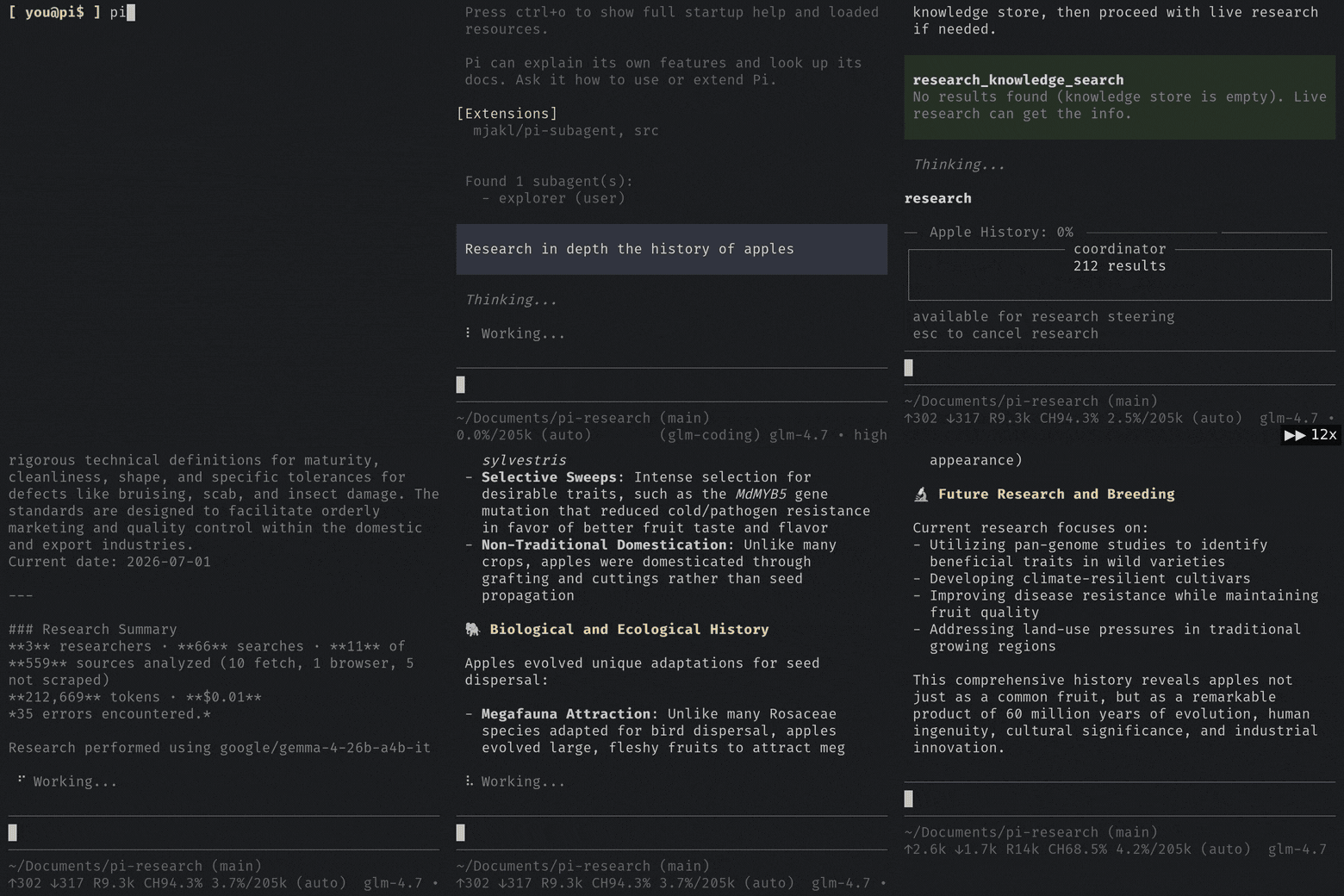
Three depth levels (normal, deep, ultra) set the team size and number of rounds. Ask in natural language and the tool picks the right one:
|
|
42
54
|
|
|
43
55
|
|
|
44
56
|
|
|
45
57
|
### Use cases
|
|
46
58
|
|
|
47
|
-
- Researching for your
|
|
48
|
-
- Researching from Claude Code, Codex, OpenClaw, or another coding agent
|
|
49
|
-
- Keeping a persistent
|
|
50
|
-
- Building agent systems that find and read web content
|
|
59
|
+
- Researching for your pi. Plug and play with no API key needed.
|
|
60
|
+
- Researching from Claude Code, Codex, OpenClaw, or another coding agent while a cheaper or local model drives the run so it doesn't spend your main agent's budget.
|
|
61
|
+
- Keeping a persistent and searchable knowledge store of findings, scoped globally or per project.
|
|
62
|
+
- Building agent systems that find and read web content or populating a dataset of web sources.
|
|
51
63
|
|
|
52
64
|
### Why pi-research
|
|
53
65
|
|
|
54
|
-
- **No quota
|
|
55
|
-
- **You own your index.** Every finding is written to a local [LanceDB](https://lancedb.com) knowledge store that seeds future runs, so repeat questions get faster
|
|
56
|
-
- **Cited reports
|
|
66
|
+
- **No quota and no monthly fee.** Most AI search providers cap free searches and then charge, with results served from their index on their servers. pi-research searches and scrapes locally through DuckDuckGo in a stealth browser.
|
|
67
|
+
- **You own your index.** Every finding is written to a local [LanceDB](https://lancedb.com) knowledge store that seeds future runs, so repeat questions get faster and cheaper answers.
|
|
68
|
+
- **Cited reports rather than raw dumps.** You get one sourced Markdown report instead of raw web content pasted into the conversation. Context efficient and easy to verify.
|
|
57
69
|
- **Read-only by design.** The research agent cannot run shell commands or write, edit, or delete anything. It can read and search files, so treat it as you would any read-only agent with access to your machine.
|
|
58
70
|
- **Search a little or a lot.** Depth levels span a quick pass to a large-scale investigation.
|
|
59
71
|
|
|
60
72
|
### Requirements / limitations
|
|
61
73
|
|
|
62
74
|
- Node.js >= 22.19.0
|
|
63
|
-
- An LLM with a 100k+ context window
|
|
64
|
-
- Internet access on a residential IP
|
|
65
|
-
- The
|
|
66
|
-
- Cloudflare and similar systems block scraping on some sites
|
|
75
|
+
- An LLM with a 100k+ context window (bring your own key or use a local model)
|
|
76
|
+
- Internet access on a residential IP, since search, scraping, and YouTube transcripts get bot-blocked from datacenter/VPS/cloud IPs
|
|
77
|
+
- The pi runtime. The pi extension uses the host's copy while the standalone CLI and agent skill install it as a dependency.
|
|
78
|
+
- Cloudflare and similar systems block scraping on some sites. A run flags pages it can't reach and compensates with a wide pool of search results to cite.
|
|
67
79
|
|
|
68
80
|
### Channels
|
|
69
81
|
|
|
70
|
-
npm (`npm:@lincoln504/pi-research`) is the stable channel
|
|
82
|
+
npm (`npm:@lincoln504/pi-research`) is the stable channel and is kept current with breaking pi changes. A git install is the development channel. It has the latest commits and breaks first.
|
|
71
83
|
|
|
72
84
|
### License
|
|
73
85
|
|
package/dist/cli.mjs
CHANGED
|
@@ -247,22 +247,36 @@ function redactSecrets(message) {
|
|
|
247
247
|
function stripTerminalEscapes(message) {
|
|
248
248
|
return message.replace(TERMINAL_ESCAPE_PATTERN, "").replace(CONTROL_CHARS_PATTERN, " ");
|
|
249
249
|
}
|
|
250
|
-
var logContextStorage, MAX_LOG_MESSAGE_LENGTH, ANSI_PATTERN, URL_CREDENTIALS_PATTERN, COOKIE_HEADER_PATTERN, SENSITIVE_KV_PATTERN, KNOWN_TOKEN_PATTERN, JWT_PATTERN, BASIC_AUTH_PATTERN, BEARER_AUTH_PATTERN, PROVIDER_TOKEN_PATTERN, LONG_HEX_SECRET_PATTERN, CONTROL_CHARS_PATTERN, REDACT_SCAN_LENGTH, TOKEN_CHAR_PATTERN, REDACT_SCAN_EXTENSION_MAX, TERMINAL_ESCAPE_PATTERN;
|
|
250
|
+
var logContextStorage, MAX_LOG_MESSAGE_LENGTH, ANSI_PATTERN, URL_CREDENTIALS_PATTERN, B_LEFT, B_RIGHT, COOKIE_HEADER_PATTERN, SENSITIVE_KV_PATTERN, KNOWN_TOKEN_PATTERN, JWT_PATTERN, BASIC_AUTH_PATTERN, BEARER_AUTH_PATTERN, PROVIDER_TOKEN_PATTERN, LONG_HEX_SECRET_PATTERN, CONTROL_CHARS_PATTERN, REDACT_SCAN_LENGTH, TOKEN_CHAR_PATTERN, REDACT_SCAN_EXTENSION_MAX, TERMINAL_ESCAPE_PATTERN;
|
|
251
251
|
var init_log_utils = __esm({
|
|
252
252
|
"src/utils/log-utils.ts"() {
|
|
253
253
|
"use strict";
|
|
254
254
|
logContextStorage = new AsyncLocalStorage2();
|
|
255
255
|
MAX_LOG_MESSAGE_LENGTH = 1e4;
|
|
256
256
|
ANSI_PATTERN = /\x1b\[[0-9;]*[A-Za-z]/g;
|
|
257
|
-
URL_CREDENTIALS_PATTERN = /([a-z][a-z0-9+.-]
|
|
258
|
-
|
|
259
|
-
|
|
260
|
-
|
|
261
|
-
|
|
262
|
-
|
|
263
|
-
|
|
264
|
-
|
|
265
|
-
|
|
257
|
+
URL_CREDENTIALS_PATTERN = /([a-z][a-z0-9+.-]{0,31}:\/\/)[^/\s:@]+:[^/\s:@]+@/gi;
|
|
258
|
+
B_LEFT = "(?<![A-Za-z0-9])";
|
|
259
|
+
B_RIGHT = "(?![A-Za-z0-9])";
|
|
260
|
+
COOKIE_HEADER_PATTERN = new RegExp(
|
|
261
|
+
`${B_LEFT}(set[_-]?cookie|cookie)${B_RIGHT}(["']?\\s*[:=]\\s*["']?)([^\\r\\n]+)`,
|
|
262
|
+
"gi"
|
|
263
|
+
);
|
|
264
|
+
SENSITIVE_KV_PATTERN = new RegExp(
|
|
265
|
+
`${B_LEFT}(api[_-]?key|apikey|access[_-]?token|auth[_-]?token|refresh[_-]?token|secret|client[_-]?secret|password|passwd|pwd|authorization|bearer|set[_-]?cookie|cookie|session[_-]?id|session|csrf[_-]?token|xsrf[_-]?token|private[_-]?key|key)${B_RIGHT}(["']?\\s*[:=]\\s*["']?)([^\\s"',&)]+)`,
|
|
266
|
+
"gi"
|
|
267
|
+
);
|
|
268
|
+
KNOWN_TOKEN_PATTERN = new RegExp(
|
|
269
|
+
`${B_LEFT}(sk-[A-Za-z0-9_-]{16,}|gh[posru]_[A-Za-z0-9]{16,}|github_pat_[A-Za-z0-9_]{20,}|AKIA[0-9A-Z]{16}|xox[baprs]-[A-Za-z0-9-]{10,})${B_RIGHT}`,
|
|
270
|
+
"g"
|
|
271
|
+
);
|
|
272
|
+
JWT_PATTERN = new RegExp(`${B_LEFT}eyJ[A-Za-z0-9_-]+\\.[A-Za-z0-9_-]+\\.[A-Za-z0-9_-]+`, "g");
|
|
273
|
+
BASIC_AUTH_PATTERN = new RegExp(`${B_LEFT}Basic\\s+[A-Za-z0-9+/]{16,}={0,2}`, "gi");
|
|
274
|
+
BEARER_AUTH_PATTERN = new RegExp(`${B_LEFT}Bearer\\s+[A-Za-z0-9._~+/-]+=*`, "gi");
|
|
275
|
+
PROVIDER_TOKEN_PATTERN = new RegExp(
|
|
276
|
+
`${B_LEFT}(AIza[0-9A-Za-z_-]{35}|ya29\\.[0-9A-Za-z_-]{20,}|[sp]k_(?:live|test)_[0-9A-Za-z]{16,})${B_RIGHT}`,
|
|
277
|
+
"g"
|
|
278
|
+
);
|
|
279
|
+
LONG_HEX_SECRET_PATTERN = new RegExp(`${B_LEFT}[0-9a-fA-F]{32,}${B_RIGHT}`, "g");
|
|
266
280
|
CONTROL_CHARS_PATTERN = /[\x00-\x1f\x7f]/g;
|
|
267
281
|
REDACT_SCAN_LENGTH = MAX_LOG_MESSAGE_LENGTH * 4;
|
|
268
282
|
TOKEN_CHAR_PATTERN = /[A-Za-z0-9_\-./+=]/;
|
|
@@ -5131,14 +5145,16 @@ function unregisterGlobalEmbedder() {
|
|
|
5131
5145
|
async function initializeDawnWebGPU() {
|
|
5132
5146
|
if (dawnInitialized) return true;
|
|
5133
5147
|
try {
|
|
5134
|
-
const
|
|
5135
|
-
|
|
5136
|
-
|
|
5137
|
-
|
|
5138
|
-
|
|
5139
|
-
|
|
5148
|
+
const adapter = await logger.runCapturingStderr(async () => {
|
|
5149
|
+
const { create, globals } = await import("webgpu");
|
|
5150
|
+
Object.assign(globalThis, globals);
|
|
5151
|
+
Object.defineProperty(globalThis, "navigator", {
|
|
5152
|
+
value: { gpu: create([]) },
|
|
5153
|
+
writable: true,
|
|
5154
|
+
configurable: true
|
|
5155
|
+
});
|
|
5156
|
+
return await globalThis.navigator.gpu.requestAdapter({ powerPreference: "high-performance" });
|
|
5140
5157
|
});
|
|
5141
|
-
const adapter = await globalThis.navigator.gpu.requestAdapter({ powerPreference: "high-performance" });
|
|
5142
5158
|
if (!adapter) {
|
|
5143
5159
|
logger.warn("[embedder] No WebGPU adapter available \u2014 using CPU.");
|
|
5144
5160
|
return false;
|
|
@@ -16808,21 +16824,21 @@ init_error_tracker();
|
|
|
16808
16824
|
|
|
16809
16825
|
// src/utils/user-agent.ts
|
|
16810
16826
|
var USER_AGENTS = [
|
|
16811
|
-
// Chrome on Windows
|
|
16812
|
-
"Mozilla/5.0 (Windows NT 10.0; Win64; x64) AppleWebKit/537.36 (KHTML, like Gecko) Chrome/
|
|
16813
|
-
"Mozilla/5.0 (Windows NT 10.0; Win64; x64) AppleWebKit/537.36 (KHTML, like Gecko) Chrome/
|
|
16827
|
+
// Chrome on Windows
|
|
16828
|
+
"Mozilla/5.0 (Windows NT 10.0; Win64; x64) AppleWebKit/537.36 (KHTML, like Gecko) Chrome/151.0.0.0 Safari/537.36",
|
|
16829
|
+
"Mozilla/5.0 (Windows NT 10.0; Win64; x64) AppleWebKit/537.36 (KHTML, like Gecko) Chrome/150.0.0.0 Safari/537.36",
|
|
16814
16830
|
// Chrome on macOS
|
|
16815
|
-
"Mozilla/5.0 (Macintosh; Intel Mac OS X 10_15_7) AppleWebKit/537.36 (KHTML, like Gecko) Chrome/
|
|
16816
|
-
"Mozilla/5.0 (Macintosh; Intel Mac OS X 10_15_7) AppleWebKit/537.36 (KHTML, like Gecko) Chrome/
|
|
16831
|
+
"Mozilla/5.0 (Macintosh; Intel Mac OS X 10_15_7) AppleWebKit/537.36 (KHTML, like Gecko) Chrome/151.0.0.0 Safari/537.36",
|
|
16832
|
+
"Mozilla/5.0 (Macintosh; Intel Mac OS X 10_15_7) AppleWebKit/537.36 (KHTML, like Gecko) Chrome/150.0.0.0 Safari/537.36",
|
|
16817
16833
|
// Chrome on Linux
|
|
16818
|
-
"Mozilla/5.0 (X11; Linux x86_64) AppleWebKit/537.36 (KHTML, like Gecko) Chrome/
|
|
16819
|
-
"Mozilla/5.0 (X11; Linux x86_64) AppleWebKit/537.36 (KHTML, like Gecko) Chrome/
|
|
16820
|
-
// Firefox on Windows
|
|
16821
|
-
"Mozilla/5.0 (Windows NT 10.0; Win64; x64; rv:
|
|
16822
|
-
"Mozilla/5.0 (Windows NT 10.0; Win64; x64; rv:
|
|
16834
|
+
"Mozilla/5.0 (X11; Linux x86_64) AppleWebKit/537.36 (KHTML, like Gecko) Chrome/151.0.0.0 Safari/537.36",
|
|
16835
|
+
"Mozilla/5.0 (X11; Linux x86_64) AppleWebKit/537.36 (KHTML, like Gecko) Chrome/150.0.0.0 Safari/537.36",
|
|
16836
|
+
// Firefox on Windows
|
|
16837
|
+
"Mozilla/5.0 (Windows NT 10.0; Win64; x64; rv:153.0) Gecko/20100101 Firefox/153.0",
|
|
16838
|
+
"Mozilla/5.0 (Windows NT 10.0; Win64; x64; rv:152.0) Gecko/20100101 Firefox/152.0",
|
|
16823
16839
|
// Firefox on macOS
|
|
16824
|
-
"Mozilla/5.0 (Macintosh; Intel Mac OS X 10.15; rv:
|
|
16825
|
-
"Mozilla/5.0 (Macintosh; Intel Mac OS X 10.15; rv:
|
|
16840
|
+
"Mozilla/5.0 (Macintosh; Intel Mac OS X 10.15; rv:153.0) Gecko/20100101 Firefox/153.0",
|
|
16841
|
+
"Mozilla/5.0 (Macintosh; Intel Mac OS X 10.15; rv:152.0) Gecko/20100101 Firefox/152.0"
|
|
16826
16842
|
];
|
|
16827
16843
|
|
|
16828
16844
|
// src/web-research/scraper-types.ts
|
|
@@ -17068,6 +17084,7 @@ function isPrivateIpv6(ip) {
|
|
|
17068
17084
|
if (normalized.startsWith("2002:")) return true;
|
|
17069
17085
|
if (/^2001:0{0,4}:/.test(normalized) || normalized.startsWith("2001::")) return true;
|
|
17070
17086
|
if (normalized.startsWith("64:ff9b:")) return true;
|
|
17087
|
+
if (/^::(?:\d{1,3}(?:\.\d{1,3}){3}|[0-9a-f]{1,4}(?::[0-9a-f]{1,4})?)$/.test(normalized)) return true;
|
|
17071
17088
|
if (normalized === "::" || normalized === "0:0:0:0:0:0:0:0") return true;
|
|
17072
17089
|
return false;
|
|
17073
17090
|
}
|
|
@@ -17296,12 +17313,13 @@ async function scrapeWithFetch(url, signal) {
|
|
|
17296
17313
|
const MAX_REDIRECTS = 10;
|
|
17297
17314
|
let currentUrl = url;
|
|
17298
17315
|
let response;
|
|
17316
|
+
const userAgent = getRandomUserAgent();
|
|
17299
17317
|
for (let hop = 0; hop <= MAX_REDIRECTS; hop++) {
|
|
17300
17318
|
response = await fetch(currentUrl, {
|
|
17301
17319
|
signal: controller.signal,
|
|
17302
17320
|
redirect: "manual",
|
|
17303
17321
|
headers: {
|
|
17304
|
-
"User-Agent":
|
|
17322
|
+
"User-Agent": userAgent,
|
|
17305
17323
|
"Accept": "text/html,application/xhtml+xml,application/pdf,*/*;q=0.8"
|
|
17306
17324
|
},
|
|
17307
17325
|
// RequestInit's standard type omits undici's `dispatcher`; cast to attach it.
|
|
@@ -25674,7 +25692,7 @@ function parseArgs(argv) {
|
|
|
25674
25692
|
}
|
|
25675
25693
|
if (a === "--depth") {
|
|
25676
25694
|
const v = rest[++i];
|
|
25677
|
-
const n = v
|
|
25695
|
+
const n = v !== void 0 && /^\d+$/.test(v.trim()) ? Number(v.trim()) : NaN;
|
|
25678
25696
|
if (isNaN(n) || n < 0 || n > 3) throw new UsageError("--depth must be an integer 0\u20133.");
|
|
25679
25697
|
depth = n;
|
|
25680
25698
|
} else if (a === "--model") {
|
package/dist/thread-worker.mjs
CHANGED
|
@@ -77,22 +77,36 @@ function redactSecrets(message) {
|
|
|
77
77
|
function stripTerminalEscapes(message) {
|
|
78
78
|
return message.replace(TERMINAL_ESCAPE_PATTERN, "").replace(CONTROL_CHARS_PATTERN, " ");
|
|
79
79
|
}
|
|
80
|
-
var logContextStorage, MAX_LOG_MESSAGE_LENGTH, ANSI_PATTERN, URL_CREDENTIALS_PATTERN, COOKIE_HEADER_PATTERN, SENSITIVE_KV_PATTERN, KNOWN_TOKEN_PATTERN, JWT_PATTERN, BASIC_AUTH_PATTERN, BEARER_AUTH_PATTERN, PROVIDER_TOKEN_PATTERN, LONG_HEX_SECRET_PATTERN, CONTROL_CHARS_PATTERN, REDACT_SCAN_LENGTH, TOKEN_CHAR_PATTERN, REDACT_SCAN_EXTENSION_MAX, TERMINAL_ESCAPE_PATTERN;
|
|
80
|
+
var logContextStorage, MAX_LOG_MESSAGE_LENGTH, ANSI_PATTERN, URL_CREDENTIALS_PATTERN, B_LEFT, B_RIGHT, COOKIE_HEADER_PATTERN, SENSITIVE_KV_PATTERN, KNOWN_TOKEN_PATTERN, JWT_PATTERN, BASIC_AUTH_PATTERN, BEARER_AUTH_PATTERN, PROVIDER_TOKEN_PATTERN, LONG_HEX_SECRET_PATTERN, CONTROL_CHARS_PATTERN, REDACT_SCAN_LENGTH, TOKEN_CHAR_PATTERN, REDACT_SCAN_EXTENSION_MAX, TERMINAL_ESCAPE_PATTERN;
|
|
81
81
|
var init_log_utils = __esm({
|
|
82
82
|
"src/utils/log-utils.ts"() {
|
|
83
83
|
"use strict";
|
|
84
84
|
logContextStorage = new AsyncLocalStorage();
|
|
85
85
|
MAX_LOG_MESSAGE_LENGTH = 1e4;
|
|
86
86
|
ANSI_PATTERN = /\x1b\[[0-9;]*[A-Za-z]/g;
|
|
87
|
-
URL_CREDENTIALS_PATTERN = /([a-z][a-z0-9+.-]
|
|
88
|
-
|
|
89
|
-
|
|
90
|
-
|
|
91
|
-
|
|
92
|
-
|
|
93
|
-
|
|
94
|
-
|
|
95
|
-
|
|
87
|
+
URL_CREDENTIALS_PATTERN = /([a-z][a-z0-9+.-]{0,31}:\/\/)[^/\s:@]+:[^/\s:@]+@/gi;
|
|
88
|
+
B_LEFT = "(?<![A-Za-z0-9])";
|
|
89
|
+
B_RIGHT = "(?![A-Za-z0-9])";
|
|
90
|
+
COOKIE_HEADER_PATTERN = new RegExp(
|
|
91
|
+
`${B_LEFT}(set[_-]?cookie|cookie)${B_RIGHT}(["']?\\s*[:=]\\s*["']?)([^\\r\\n]+)`,
|
|
92
|
+
"gi"
|
|
93
|
+
);
|
|
94
|
+
SENSITIVE_KV_PATTERN = new RegExp(
|
|
95
|
+
`${B_LEFT}(api[_-]?key|apikey|access[_-]?token|auth[_-]?token|refresh[_-]?token|secret|client[_-]?secret|password|passwd|pwd|authorization|bearer|set[_-]?cookie|cookie|session[_-]?id|session|csrf[_-]?token|xsrf[_-]?token|private[_-]?key|key)${B_RIGHT}(["']?\\s*[:=]\\s*["']?)([^\\s"',&)]+)`,
|
|
96
|
+
"gi"
|
|
97
|
+
);
|
|
98
|
+
KNOWN_TOKEN_PATTERN = new RegExp(
|
|
99
|
+
`${B_LEFT}(sk-[A-Za-z0-9_-]{16,}|gh[posru]_[A-Za-z0-9]{16,}|github_pat_[A-Za-z0-9_]{20,}|AKIA[0-9A-Z]{16}|xox[baprs]-[A-Za-z0-9-]{10,})${B_RIGHT}`,
|
|
100
|
+
"g"
|
|
101
|
+
);
|
|
102
|
+
JWT_PATTERN = new RegExp(`${B_LEFT}eyJ[A-Za-z0-9_-]+\\.[A-Za-z0-9_-]+\\.[A-Za-z0-9_-]+`, "g");
|
|
103
|
+
BASIC_AUTH_PATTERN = new RegExp(`${B_LEFT}Basic\\s+[A-Za-z0-9+/]{16,}={0,2}`, "gi");
|
|
104
|
+
BEARER_AUTH_PATTERN = new RegExp(`${B_LEFT}Bearer\\s+[A-Za-z0-9._~+/-]+=*`, "gi");
|
|
105
|
+
PROVIDER_TOKEN_PATTERN = new RegExp(
|
|
106
|
+
`${B_LEFT}(AIza[0-9A-Za-z_-]{35}|ya29\\.[0-9A-Za-z_-]{20,}|[sp]k_(?:live|test)_[0-9A-Za-z]{16,})${B_RIGHT}`,
|
|
107
|
+
"g"
|
|
108
|
+
);
|
|
109
|
+
LONG_HEX_SECRET_PATTERN = new RegExp(`${B_LEFT}[0-9a-fA-F]{32,}${B_RIGHT}`, "g");
|
|
96
110
|
CONTROL_CHARS_PATTERN = /[\x00-\x1f\x7f]/g;
|
|
97
111
|
REDACT_SCAN_LENGTH = MAX_LOG_MESSAGE_LENGTH * 4;
|
|
98
112
|
TOKEN_CHAR_PATTERN = /[A-Za-z0-9_\-./+=]/;
|
|
@@ -110,21 +124,21 @@ var init_user_agent = __esm({
|
|
|
110
124
|
"src/utils/user-agent.ts"() {
|
|
111
125
|
"use strict";
|
|
112
126
|
USER_AGENTS = [
|
|
113
|
-
// Chrome on Windows
|
|
114
|
-
"Mozilla/5.0 (Windows NT 10.0; Win64; x64) AppleWebKit/537.36 (KHTML, like Gecko) Chrome/
|
|
115
|
-
"Mozilla/5.0 (Windows NT 10.0; Win64; x64) AppleWebKit/537.36 (KHTML, like Gecko) Chrome/
|
|
127
|
+
// Chrome on Windows
|
|
128
|
+
"Mozilla/5.0 (Windows NT 10.0; Win64; x64) AppleWebKit/537.36 (KHTML, like Gecko) Chrome/151.0.0.0 Safari/537.36",
|
|
129
|
+
"Mozilla/5.0 (Windows NT 10.0; Win64; x64) AppleWebKit/537.36 (KHTML, like Gecko) Chrome/150.0.0.0 Safari/537.36",
|
|
116
130
|
// Chrome on macOS
|
|
117
|
-
"Mozilla/5.0 (Macintosh; Intel Mac OS X 10_15_7) AppleWebKit/537.36 (KHTML, like Gecko) Chrome/
|
|
118
|
-
"Mozilla/5.0 (Macintosh; Intel Mac OS X 10_15_7) AppleWebKit/537.36 (KHTML, like Gecko) Chrome/
|
|
131
|
+
"Mozilla/5.0 (Macintosh; Intel Mac OS X 10_15_7) AppleWebKit/537.36 (KHTML, like Gecko) Chrome/151.0.0.0 Safari/537.36",
|
|
132
|
+
"Mozilla/5.0 (Macintosh; Intel Mac OS X 10_15_7) AppleWebKit/537.36 (KHTML, like Gecko) Chrome/150.0.0.0 Safari/537.36",
|
|
119
133
|
// Chrome on Linux
|
|
120
|
-
"Mozilla/5.0 (X11; Linux x86_64) AppleWebKit/537.36 (KHTML, like Gecko) Chrome/
|
|
121
|
-
"Mozilla/5.0 (X11; Linux x86_64) AppleWebKit/537.36 (KHTML, like Gecko) Chrome/
|
|
122
|
-
// Firefox on Windows
|
|
123
|
-
"Mozilla/5.0 (Windows NT 10.0; Win64; x64; rv:
|
|
124
|
-
"Mozilla/5.0 (Windows NT 10.0; Win64; x64; rv:
|
|
134
|
+
"Mozilla/5.0 (X11; Linux x86_64) AppleWebKit/537.36 (KHTML, like Gecko) Chrome/151.0.0.0 Safari/537.36",
|
|
135
|
+
"Mozilla/5.0 (X11; Linux x86_64) AppleWebKit/537.36 (KHTML, like Gecko) Chrome/150.0.0.0 Safari/537.36",
|
|
136
|
+
// Firefox on Windows
|
|
137
|
+
"Mozilla/5.0 (Windows NT 10.0; Win64; x64; rv:153.0) Gecko/20100101 Firefox/153.0",
|
|
138
|
+
"Mozilla/5.0 (Windows NT 10.0; Win64; x64; rv:152.0) Gecko/20100101 Firefox/152.0",
|
|
125
139
|
// Firefox on macOS
|
|
126
|
-
"Mozilla/5.0 (Macintosh; Intel Mac OS X 10.15; rv:
|
|
127
|
-
"Mozilla/5.0 (Macintosh; Intel Mac OS X 10.15; rv:
|
|
140
|
+
"Mozilla/5.0 (Macintosh; Intel Mac OS X 10.15; rv:153.0) Gecko/20100101 Firefox/153.0",
|
|
141
|
+
"Mozilla/5.0 (Macintosh; Intel Mac OS X 10.15; rv:152.0) Gecko/20100101 Firefox/152.0"
|
|
128
142
|
];
|
|
129
143
|
}
|
|
130
144
|
});
|
|
@@ -1678,6 +1692,7 @@ function isPrivateIpv6(ip) {
|
|
|
1678
1692
|
if (normalized.startsWith("2002:")) return true;
|
|
1679
1693
|
if (/^2001:0{0,4}:/.test(normalized) || normalized.startsWith("2001::")) return true;
|
|
1680
1694
|
if (normalized.startsWith("64:ff9b:")) return true;
|
|
1695
|
+
if (/^::(?:\d{1,3}(?:\.\d{1,3}){3}|[0-9a-f]{1,4}(?::[0-9a-f]{1,4})?)$/.test(normalized)) return true;
|
|
1681
1696
|
if (normalized === "::" || normalized === "0:0:0:0:0:0:0:0") return true;
|
|
1682
1697
|
return false;
|
|
1683
1698
|
}
|
package/docs/ARCHITECTURE.md
CHANGED
|
@@ -3,8 +3,8 @@
|
|
|
3
3
|
pi-research is a pi TUI extension for multi-agent web research. It runs inside the pi
|
|
4
4
|
process, registers its tools and commands, and manages its own browser worker pool,
|
|
5
5
|
service registry, and local knowledge store. One engine backs every front-end: besides
|
|
6
|
-
the pi extension it is exposed as a standalone CLI, a portable agent skill
|
|
7
|
-
skill any skills-aware host runs, including OpenClaw
|
|
6
|
+
the pi extension it is exposed as a standalone CLI, a portable agent skill (the same
|
|
7
|
+
skill any skills-aware host runs, including OpenClaw) and a programmatic SDK
|
|
8
8
|
(`src/sdk.ts`).
|
|
9
9
|
|
|
10
10
|
```
|
|
@@ -318,7 +318,7 @@ other). This sits above `@lancedb/lancedb` 0.29's declared Arrow peer ceiling
|
|
|
318
318
|
whenever `@lancedb/lancedb` is upgraded.
|
|
319
319
|
|
|
320
320
|
Pinned validation library — `typebox` is pinned to the exact version the pi host packages
|
|
321
|
-
depend on (`@earendil-works/pi-ai` / `@earendil-works/pi-coding-agent` 0.
|
|
321
|
+
depend on (`@earendil-works/pi-ai` / `@earendil-works/pi-coding-agent` 0.84.2 pin `1.3.7`). Every
|
|
322
322
|
tool's parameter schema is built with TypeBox here and handed across the boundary to pi's
|
|
323
323
|
tool system, so the two must agree on `Value.Check`/`Convert` semantics. A floating `^1.1.38`
|
|
324
324
|
range let a fresh consumer install resolve pi-research to a newer TypeBox than pi's, shipping
|
package/docs/CHANGELOG.md
CHANGED
|
@@ -5,6 +5,62 @@ All notable changes to this project will be documented in this file.
|
|
|
5
5
|
The format is based on [Keep a Changelog](https://keepachangelog.com/en/1.0.0/),
|
|
6
6
|
and this project adheres to [Semantic Versioning](https://semver.org/spec/v2.0.0.html).
|
|
7
7
|
|
|
8
|
+
## [1.3.9] - 2026-08-14
|
|
9
|
+
|
|
10
|
+
A whole-tree audit sweep. Six defects, each found by looking at what the code
|
|
11
|
+
actually does at runtime rather than at what the last review changed: two of them
|
|
12
|
+
(the redaction boundary and the SSRF literal range) are further instances of bug
|
|
13
|
+
classes earlier releases fixed elsewhere but did not fully close, and one — the
|
|
14
|
+
quadratic backtracking in the redactor — surfaced only because the boundary fix
|
|
15
|
+
was benchmarked before being accepted. Every fix below carries a regression test
|
|
16
|
+
confirmed, by a local revert-and-rerun, to fail against the pre-fix code.
|
|
17
|
+
|
|
18
|
+
### Fixed
|
|
19
|
+
|
|
20
|
+
- **Redacting one large log message burned ~1.4 seconds of CPU.** `URL_CREDENTIALS_PATTERN` matched the URL scheme with an unbounded `[a-z0-9+.-]*`, so at every position inside a long alphanumeric run the engine consumed the rest of the input and then backtracked one character at a time looking for `://` — quadratic in the input length. `redactSecrets()` runs on **every** log message and deliberately scans a 40_000-character window, and the content it scans is largely untrusted: scraped pages and provider error bodies. A single page carrying one long unbroken token was enough, and the cost lands on the main thread. Bounding the scheme (RFC 3986 schemes are short; none approaches 32 characters) makes each start position O(32) instead of O(n) for identical matches — measured 1439 ms → 6.7 ms on a hostile 40k input, ~215x. Three pre-existing redaction tests dropped from 394/107/91 ms to 4/2/2 ms as a side effect, which is how long the cost had been sitting in plain sight. A regression test now pins the bound ~100x below the pre-fix cost, loose enough not to flake on a slow CI runner.
|
|
21
|
+
- **Log redaction masked `api_key=` but not `PI_RESEARCH_API_KEY=`.** `\b` is not a word boundary between `_` and a letter — both are word characters — so every secret whose key name carried an underscore-joined prefix passed through the redactor untouched and was written to the diagnostic log in the clear. That is the single most common way a credential is ever written down — this tool's own `PI_RESEARCH_API_KEY`, and every `OPENAI_API_KEY` / `ANTHROPIC_API_KEY` / `DB_PASSWORD` / `MY_SECRET` beside it — and it reaches the log by more than one route: `redactSecrets()` is the last-resort filter over *arbitrary* content, which for a research tool includes scraped pages and provider error bodies. The existing `PI_BROWSER_AUTH_SECRET=` coverage passed only because a 64-char run of `a` is also valid hex, so the long-hex pattern caught it and the key-name gap stayed hidden. All secret-name and opaque-token patterns now treat any non-alphanumeric character as the boundary, so a prefixed name matches while a name merely *containing* the word (`monkey=`, `keyboard=`, `passwordless=`) still does not.
|
|
22
|
+
- **SSRF: the deprecated IPv4-compatible `::/96` range was accepted.** `http://[::127.0.0.1]/` normalizes to `[::7f00:1]`, which matched none of the guards: it is not `::1`, carries no `fc`/`fd`/`fe8x` prefix, has no `::ffff:` prefix for the mapped-IPv4 decoder to read, and is none of the 6to4/Teredo/NAT64 tunnel prefixes that are already blocked whole-range. It was the last IPv4-in-IPv6 form still open, and whether it reaches the embedded address depends on the OS, an intervening proxy, and NAT64 translation — the same "depends on the path" property that made those other ranges whole-range blocks. Now blocked structurally (top 96 bits zero), which is why it cannot swallow the mapped `::ffff:0:0/96` range next to it.
|
|
23
|
+
- **Dawn printed WebGPU warnings onto the user's terminal.** onnxruntime-node's bundled Dawn writes its limit-clamping notices ("`maxDynamicUniformBuffersPerPipelineLayout artificially reduced from 1000000 to 16`") to FD 2 from native code the moment a WebGPU instance is created, so a plain `pi-research knowledge …` run emitted four of them onto the terminal — and for the agent skill they landed in the stderr an agent is instructed to read for *errors*. `loadPipelineWithTimeout` already builds its pipeline inside the FD-level stderr capture for exactly this reason; the adapter probe in `initializeDawnWebGPU` is the other native entry point and was missing it. Confirmed gone on a real run, not just in the test.
|
|
24
|
+
- **`--depth` accepted a value that only started with a valid integer.** `parseInt` scans a leading prefix, so `--depth 2x` ran depth 2 and `--depth 2.9` ran depth 2, silently, while the error text promised "an integer 0–3". Depth is the knob that decides how long a run takes and what it costs, so a typo picking a different one is not a harmless clamp. The whole token is now matched.
|
|
25
|
+
- **The fetch scrape path rotated its User-Agent per redirect hop.** The UA was picked inside the manual redirect loop, so one scrape could present as Chrome on Windows for the first hop and Firefox on macOS for the next — something no browser does, which turned the rotation meant to blend in into a distinctive signal, on exactly the multi-hop requests (consent gates, tracking redirectors) where bot detection is most attentive. One UA now covers the whole chain.
|
|
26
|
+
|
|
27
|
+
### Changed
|
|
28
|
+
|
|
29
|
+
- **User-Agent pool refreshed to current stable browsers.** It was pinned at Chrome 137/136 and Firefox 139/138 — around fourteen major versions behind on both, since each ships roughly every four weeks. A UA that stale is itself a bot signal, which is the thing rotating it exists to avoid. Now Chrome 151/150 and Firefox 153/152, verified against Chrome Releases (151 stable, 2026-07-28) and the Firefox release notes (153 stable, 2026-08-11), with the shelf life and the refresh procedure written down at the definition and a test guarding the *shape* of a future refresh (a `rv:`/`Firefox/` major mismatch, a missing Chrome minor triplet, an over-wide version spread) rather than a version floor that would go stale on the browsers' schedule.
|
|
30
|
+
- **pi 0.84.2.** Read the full (not grepped) 0.84.2 changelog: no breaking changes section, and its one dependency-visible change — the Mistral SDK transport replaced by a native HTTP stream — shows up here only as `@mistralai/mistralai`, `zod`, and `zod-to-json-schema` dropping out of the lockfile. `PI_TESTED_MAX_VERSION` moved to 0.84.2 to record what was actually exercised (full unit + integration suites, plus a live knowledge-store run). The supported floor is unchanged at 0.84.0.
|
|
31
|
+
- **Release workflow serializes.** Added the `concurrency: release` group the workflow's own TODO called for, with `cancel-in-progress: false` so a release already mid-publish is never cancelled by a newer tag. Closes one of the two documented hardening TODOs; SHA-pinning the actions remains open.
|
|
32
|
+
- **README wording.** Tagline and alt text read "for agents", the install label reads "As a Pi Coding Agent extension" with only "Pi" linked, the standalone list drops the CLI and links the agent-skill doc, and the italics and surplus links in the use-case and requirements bullets are gone.
|
|
33
|
+
- Removed the dead `REQUEST_DELAY_MS_NVD` / `REQUEST_DELAY_MS_OTHER` constants (no reader anywhere in the tree; the security clients carry their own throttles).
|
|
34
|
+
|
|
35
|
+
### Documentation
|
|
36
|
+
|
|
37
|
+
- **`PI_RESEARCH_ALLOW_LOOPBACK_SCRAPE` was documented as a wider hole than it is.** The table described it as permitting "loopback/private/internal addresses, bypassing SSRF protection". The flag is deliberately scoped to loopback only — link-local `169.254.0.0/16` (cloud metadata) and RFC1918 LAN ranges stay blocked with it set, at request time and at connect time, and a test pins that. Corrected, since an inaccurate description of a security control is worse than none.
|
|
38
|
+
- Documented `PI_RESEARCH_STRICT_SETUP` (read by `scripts/setup.cjs`; makes a failed browser download fail the install instead of deferring it to first use) in both `docs/CONFIGURATION.md` and `.env.example` — it was the only environment variable in the tree missing from either, and `.env.example` states outright that it is the exhaustive reference.
|
|
39
|
+
- Corrected two stale in-code comments that still named `>=0.80.8` as the declared `@earendil-works/*` range after the floor moved to 0.84.0 in 1.3.3, and the pi version cited in the ARCHITECTURE typebox pin rationale (0.84.1 → 0.84.2; the pinned typebox is still 1.3.7).
|
|
40
|
+
|
|
41
|
+
### Verified
|
|
42
|
+
|
|
43
|
+
- Full unit suite, the cross-group integration suite against a real Camoufox browser, lint, both type-checks, the architectural dependency rules, and the production audit gate — all green. Live end-to-end checks: all four security databases (NVD, CISA KEV, GitHub Advisories, OSV) answered with the expected shapes, and a knowledge-store run exercised the embedder, LanceDB, and the synthesis path. A live `research` run could not complete — the configured OpenRouter account is out of credits — but the engine reported that correctly: exit 70, the provider's own 402 surfaced as the cause, and no report fabricated from nothing.
|
|
44
|
+
- The single allowlisted advisory (GHSA-f88m-g3jw-g9cj, `sharp` via `@huggingface/transformers`, unreachable image path) still has no upstream fix; no new advisories. No open CodeQL alerts, issues, or pull requests.
|
|
45
|
+
- Swept the rest of the tree for the same backtracking shape rather than fixing only the instance that was measured. The remaining candidates are lazy or anchored, and the regexes that actually run over scraped content (`IMAGE_LINK_PATTERN`, `MARKDOWN_IMAGE_PATTERN`, the blank-line collapse) stay under 20 ms on 500_000-character hostile inputs — unbalanced brackets, unterminated parens, single-character runs — at the scrape cap. The redactor was the only instance.
|
|
46
|
+
- Environment-variable coverage is now exhaustive in both directions: every `PI_RESEARCH_*` name read anywhere in `src/` or `scripts/` appears in `docs/CONFIGURATION.md` and `.env.example`, and every documented name is read somewhere. The one deliberate omission is the `PI_RESEARCH_KNOWLEDGE_STORE_CACHE_TTL_DAYS` read-time alias, which exists only for backward compatibility and should not be advertised over the canonical `PI_RESEARCH_CACHE_TTL_DAYS`.
|
|
47
|
+
- Considered and rejected: the chunker's per-iteration `text.slice(0, start).match(/```/g)` is also quadratic in document length, but measured at 22 ms for a 500k-character document — the scrape cap — which does not justify changing code on the storage hot path. Measuring is what separated it from the redactor case above, where the same shape cost 1.4 s.
|
|
48
|
+
|
|
49
|
+
## [1.3.8] - 2026-08-13
|
|
50
|
+
|
|
51
|
+
Presentation and dependency maintenance only. No engine changes.
|
|
52
|
+
|
|
53
|
+
### Changed
|
|
54
|
+
|
|
55
|
+
- **README refined.** New tagline ("Free unlimited web search & knowledge store for coding agents"), MIT license and GitHub repository badges added with all four badges stacked vertically, both install paths (pi extension and standalone agent skill) shown up top, and a punctuation pass removing em dashes and surplus commas and semicolons from README and the npm description. The punctuation pass now also covers the intro paragraphs of the docs/ pages.
|
|
56
|
+
- **npm description compacted.** The no-search-API-key and no-quotas clause is covered by "free unlimited" and is gone.
|
|
57
|
+
- **docs/ARCHITECTURE.md** typebox pin rationale updated to cite the current pi host version (0.84.1, which still pins typebox 1.3.7).
|
|
58
|
+
- **In-range dependency refresh.** esbuild 0.28.2, undici 8.10.0, eslint 10.8.1, typescript-eslint 8.67.0. Deliberate exact pins (playwright-core 1.60.0, camoufox-js 0.10.x, lancedb 0.29.0, apache-arrow 21.1.0, transformers 4.2.0) unchanged per their documented rationale.
|
|
59
|
+
|
|
60
|
+
### Security
|
|
61
|
+
|
|
62
|
+
- Production audit gate re-verified. The single allowlisted advisory (GHSA-f88m-g3jw-g9cj, sharp via transformers, unreachable image path) still has no upstream fix; no new advisories.
|
|
63
|
+
|
|
8
64
|
## [1.3.7] - 2026-08-11
|
|
9
65
|
|
|
10
66
|
Discovery and packaging metadata only — no engine changes.
|
package/docs/CONFIGURATION.md
CHANGED
|
@@ -1,7 +1,7 @@
|
|
|
1
1
|
## Configuration
|
|
2
2
|
|
|
3
|
-
Every front-end (the pi extension, the standalone CLI / agent skill
|
|
4
|
-
|
|
3
|
+
Every front-end (the pi extension, the standalone CLI / agent skill that OpenClaw
|
|
4
|
+
and other skills-aware hosts run, and the SDK) shares one configuration
|
|
5
5
|
model. This document covers the
|
|
6
6
|
settings exposed in the `/research-config` TUI first, then the complete
|
|
7
7
|
environment-variable reference, and finally how the configuration layers resolve.
|
|
@@ -159,6 +159,7 @@ Diagnostics & platform
|
|
|
159
159
|
| `PLAYWRIGHT_BROWSERS_PATH` | _(user cache)_ | Standard Playwright variable, honoured here too: overrides where the camoufox binary is stored and looked up, and is passed through to browser workers. |
|
|
160
160
|
| `XDG_CACHE_HOME` | `~/.cache` | Standard XDG variable. When set, every `~/.cache/pi-research/...` path below is rooted at `$XDG_CACHE_HOME/pi-research/...` instead. |
|
|
161
161
|
| `PLAYWRIGHT_INSTALL_DEPS` | _(unset)_ | Linux only. Set `true` during `npm install` to also install system libraries via `npx playwright install-deps` (same as `npm run install:system-deps`). |
|
|
162
|
+
| `PI_RESEARCH_STRICT_SETUP` | _(unset)_ | Read by the bundled `scripts/setup.cjs` during `npm install`. Set `1`/`true` to make a failed browser download fail the install instead of deferring it to first use. |
|
|
162
163
|
| `PI_RESEARCH_CONFIG_DIR_NAME` | `.pi` | Override the host config-directory name under your home dir (advanced; e.g. set to share another harness's config root). |
|
|
163
164
|
|
|
164
165
|
Testing only — never enable in production
|
|
@@ -168,7 +169,7 @@ Testing only — never enable in production
|
|
|
168
169
|
| `PI_RESEARCH_MOCK_SEARCH` | Return fabricated search results instead of real web data. |
|
|
169
170
|
| `PI_RESEARCH_MOCK_SCRAPE` | Return fabricated scrape results instead of real page content. |
|
|
170
171
|
| `PI_RESEARCH_FORCE_READY` | Bypass readiness checks and run even when critical services failed to initialize. **pi extension only** — the CLI, agent skill and SDK do not consult it. |
|
|
171
|
-
| `PI_RESEARCH_ALLOW_LOOPBACK_SCRAPE` | Permit scraping loopback/
|
|
172
|
+
| `PI_RESEARCH_ALLOW_LOOPBACK_SCRAPE` | Permit scraping **loopback** addresses (`127.0.0.0/8`, `::1`, `*.localhost`, `::ffff:127.x`) so integration tests can drive the real browser and scrape pipeline against a local server. Deliberately scoped to loopback only: link-local `169.254.0.0/16` (cloud metadata) and RFC1918 LAN ranges stay blocked even with this set, at request time and at connect time. |
|
|
172
173
|
|
|
173
174
|
### How configuration is layered
|
|
174
175
|
|
package/docs/KNOWLEDGE-STORE.md
CHANGED
|
@@ -1,7 +1,7 @@
|
|
|
1
1
|
## Knowledge Store
|
|
2
2
|
|
|
3
|
-
The knowledge store is a local vector database of past research findings. It is
|
|
4
|
-
|
|
3
|
+
The knowledge store is a local vector database of past research findings. It is an
|
|
4
|
+
optional cache (research works without it) and is used in two distinct ways:
|
|
5
5
|
|
|
6
6
|
- **Knowledge-first answering (advisory).** The `research_knowledge_search` tool
|
|
7
7
|
answers a repeat or overlapping question directly from stored results. The agent is
|
package/docs/PI-EXTENSION.md
CHANGED
|
@@ -1,8 +1,8 @@
|
|
|
1
1
|
## Pi Extension
|
|
2
2
|
|
|
3
3
|
pi-research integrates as a [pi](https://github.com/earendil-works/pi)
|
|
4
|
-
extension (`src/index.ts`)
|
|
5
|
-
TUI
|
|
4
|
+
extension (`src/index.ts`), a multi-agent web research engine with a real-time
|
|
5
|
+
TUI registered directly in the pi process.
|
|
6
6
|
|
|
7
7
|
### Usage
|
|
8
8
|
|
package/docs/SDK.md
CHANGED
|
@@ -1,7 +1,7 @@
|
|
|
1
1
|
## SDK
|
|
2
2
|
|
|
3
|
-
The programmatic SDK for scripts, CI, and custom tooling. For configuration
|
|
4
|
-
layering model, the TUI settings, and every environment variable
|
|
3
|
+
The programmatic SDK for scripts, CI, and custom tooling. For configuration (the
|
|
4
|
+
layering model, the TUI settings, and every environment variable) see
|
|
5
5
|
[CONFIGURATION.md](CONFIGURATION.md).
|
|
6
6
|
|
|
7
7
|
### Install
|
package/package.json
CHANGED
|
@@ -1,7 +1,7 @@
|
|
|
1
1
|
{
|
|
2
2
|
"name": "@lincoln504/pi-research",
|
|
3
|
-
"version": "1.3.
|
|
4
|
-
"description": "Free
|
|
3
|
+
"version": "1.3.9",
|
|
4
|
+
"description": "Free unlimited web search and deep research for the Pi coding agent. Local knowledge store. Also works from Claude Code, Codex, and OpenClaw.",
|
|
5
5
|
"type": "module",
|
|
6
6
|
"private": false,
|
|
7
7
|
"main": "./src/index.ts",
|
|
@@ -2,7 +2,7 @@
|
|
|
2
2
|
name: pi-research
|
|
3
3
|
description: "Multi-agent web research for any coding agent. Use for anything requiring current information from the internet — news, trends, product/service/company facts, statistics, people, places, events, APIs, library behavior, or 'what is X / how does X work' questions. Also use to search a local knowledge store of previously researched findings before doing live research. Powered by the pi-research engine (search, stealth scraping, security databases, Stack Exchange). Not for reading local files, running project commands, or analyzing this repository's own source."
|
|
4
4
|
license: MIT
|
|
5
|
-
metadata: { "author": "Lincoln Deen", "version": "1.3.
|
|
5
|
+
metadata: { "author": "Lincoln Deen", "version": "1.3.9", "package": "@lincoln504/pi-research", "engine": "pi-research-sdk", "openclaw": { "requires": { "bins": ["node"] } } }
|
|
6
6
|
allowed-tools: Bash(node:*)
|
|
7
7
|
---
|
|
8
8
|
|
package/src/cli.ts
CHANGED
|
@@ -1360,7 +1360,11 @@ export function parseArgs(argv: string[]): ParsedArgs {
|
|
|
1360
1360
|
}
|
|
1361
1361
|
if (a === '--depth') {
|
|
1362
1362
|
const v = rest[++i];
|
|
1363
|
-
|
|
1363
|
+
// Match the WHOLE token, not parseInt's leading-prefix scan: parseInt
|
|
1364
|
+
// reads '2x' as 2 and '2.9' as 2, so a typo silently ran a different
|
|
1365
|
+
// depth — the one knob that decides how long a run takes and what it
|
|
1366
|
+
// costs — while the error text promised "an integer 0–3".
|
|
1367
|
+
const n = v !== undefined && /^\d+$/.test(v.trim()) ? Number(v.trim()) : NaN;
|
|
1364
1368
|
if (isNaN(n) || n < 0 || n > 3) throw new UsageError('--depth must be an integer 0–3.');
|
|
1365
1369
|
depth = n;
|
|
1366
1370
|
} else if (a === '--model') {
|
package/src/constants.ts
CHANGED
|
@@ -8,10 +8,6 @@ import { getConfig, type Config } from './config.ts';
|
|
|
8
8
|
|
|
9
9
|
// ==================== Time Constants ====================
|
|
10
10
|
|
|
11
|
-
/** Delay between API requests in milliseconds */
|
|
12
|
-
export const REQUEST_DELAY_MS_NVD = 6000;
|
|
13
|
-
export const REQUEST_DELAY_MS_OTHER = 1000;
|
|
14
|
-
|
|
15
11
|
/** Duration (ms) for a green (success) flash on a researcher column */
|
|
16
12
|
export const FLASH_GREEN_DURATION_MS = 400;
|
|
17
13
|
|
package/src/core/pi-version.ts
CHANGED
|
@@ -7,7 +7,7 @@
|
|
|
7
7
|
*
|
|
8
8
|
* - As a pi EXTENSION, the host supplies `@earendil-works/*`. Our package.json
|
|
9
9
|
* range never constrains it, so an in-process check is the only enforcement.
|
|
10
|
-
* - As a standalone CLI/SDK, the range is `>=0.
|
|
10
|
+
* - As a standalone CLI/SDK, the range is `>=0.84.0 <1` and published tarballs
|
|
11
11
|
* carry no lockfile, so every fresh install resolves the newest 0.x at that
|
|
12
12
|
* instant. pi is pre-1.0: a minor bump may break anything under semver, and
|
|
13
13
|
* already has (0.83.0 extended the ResourceLoader contract).
|
|
@@ -83,7 +83,7 @@ export const PI_MIN_VERSION: SemverParts = { major: 0, minor: 84, patch: 0 };
|
|
|
83
83
|
* Compared on MAJOR.MINOR only: a patch bump within a tested line is not a new
|
|
84
84
|
* surface, and warning on it would be noise.
|
|
85
85
|
*/
|
|
86
|
-
export const PI_TESTED_MAX_VERSION: SemverParts = { major: 0, minor: 84, patch:
|
|
86
|
+
export const PI_TESTED_MAX_VERSION: SemverParts = { major: 0, minor: 84, patch: 2 };
|
|
87
87
|
|
|
88
88
|
export type PiCompatibilityLevel = 'ok' | 'unparseable' | 'too-old' | 'untested';
|
|
89
89
|
|
package/src/index.ts
CHANGED
|
@@ -91,12 +91,14 @@ function extractResultText(result: AgentToolResult<unknown>): string {
|
|
|
91
91
|
* Pi Research Extension
|
|
92
92
|
*/
|
|
93
93
|
export default async function (pi: ExtensionAPI) {
|
|
94
|
-
// Runtime version check — must match the @earendil-works/* dependency minimum (>=0.
|
|
95
|
-
//
|
|
94
|
+
// Runtime version check — must match the @earendil-works/* dependency minimum (>=0.84.0).
|
|
95
|
+
// The floor is 0.84.0 because setRuntimeApiKey() lost its `allowNetwork` option there
|
|
96
|
+
// and only 0.84.0+ hardcodes the equivalent guard internally (see pi-version.ts). The
|
|
97
|
+
// APIs it rests on arrived in 0.80.8, which introduced ModelRuntime and removed
|
|
96
98
|
// AuthStorage/ModelRegistry.create(); buildModelRegistry (model-registry-factory.ts)
|
|
97
99
|
// unconditionally calls ModelRuntime.create(), and createAgentSession() is invoked
|
|
98
100
|
// without the removed `modelRegistry` option (researcher.ts), relying on the
|
|
99
|
-
//
|
|
101
|
+
// host auto-building its ModelRuntime. This in-host check is the real
|
|
100
102
|
// enforcement point: when running as an extension the host's version is NOT
|
|
101
103
|
// constrained by npm's resolution of our own package.json range.
|
|
102
104
|
// Two thresholds, not one — see src/core/pi-version.ts. Below the floor the APIs
|
|
@@ -77,22 +77,36 @@ function redactSecrets(message) {
|
|
|
77
77
|
function stripTerminalEscapes(message) {
|
|
78
78
|
return message.replace(TERMINAL_ESCAPE_PATTERN, "").replace(CONTROL_CHARS_PATTERN, " ");
|
|
79
79
|
}
|
|
80
|
-
var logContextStorage, MAX_LOG_MESSAGE_LENGTH, ANSI_PATTERN, URL_CREDENTIALS_PATTERN, COOKIE_HEADER_PATTERN, SENSITIVE_KV_PATTERN, KNOWN_TOKEN_PATTERN, JWT_PATTERN, BASIC_AUTH_PATTERN, BEARER_AUTH_PATTERN, PROVIDER_TOKEN_PATTERN, LONG_HEX_SECRET_PATTERN, CONTROL_CHARS_PATTERN, REDACT_SCAN_LENGTH, TOKEN_CHAR_PATTERN, REDACT_SCAN_EXTENSION_MAX, TERMINAL_ESCAPE_PATTERN;
|
|
80
|
+
var logContextStorage, MAX_LOG_MESSAGE_LENGTH, ANSI_PATTERN, URL_CREDENTIALS_PATTERN, B_LEFT, B_RIGHT, COOKIE_HEADER_PATTERN, SENSITIVE_KV_PATTERN, KNOWN_TOKEN_PATTERN, JWT_PATTERN, BASIC_AUTH_PATTERN, BEARER_AUTH_PATTERN, PROVIDER_TOKEN_PATTERN, LONG_HEX_SECRET_PATTERN, CONTROL_CHARS_PATTERN, REDACT_SCAN_LENGTH, TOKEN_CHAR_PATTERN, REDACT_SCAN_EXTENSION_MAX, TERMINAL_ESCAPE_PATTERN;
|
|
81
81
|
var init_log_utils = __esm({
|
|
82
82
|
"src/utils/log-utils.ts"() {
|
|
83
83
|
"use strict";
|
|
84
84
|
logContextStorage = new AsyncLocalStorage();
|
|
85
85
|
MAX_LOG_MESSAGE_LENGTH = 1e4;
|
|
86
86
|
ANSI_PATTERN = /\x1b\[[0-9;]*[A-Za-z]/g;
|
|
87
|
-
URL_CREDENTIALS_PATTERN = /([a-z][a-z0-9+.-]
|
|
88
|
-
|
|
89
|
-
|
|
90
|
-
|
|
91
|
-
|
|
92
|
-
|
|
93
|
-
|
|
94
|
-
|
|
95
|
-
|
|
87
|
+
URL_CREDENTIALS_PATTERN = /([a-z][a-z0-9+.-]{0,31}:\/\/)[^/\s:@]+:[^/\s:@]+@/gi;
|
|
88
|
+
B_LEFT = "(?<![A-Za-z0-9])";
|
|
89
|
+
B_RIGHT = "(?![A-Za-z0-9])";
|
|
90
|
+
COOKIE_HEADER_PATTERN = new RegExp(
|
|
91
|
+
`${B_LEFT}(set[_-]?cookie|cookie)${B_RIGHT}(["']?\\s*[:=]\\s*["']?)([^\\r\\n]+)`,
|
|
92
|
+
"gi"
|
|
93
|
+
);
|
|
94
|
+
SENSITIVE_KV_PATTERN = new RegExp(
|
|
95
|
+
`${B_LEFT}(api[_-]?key|apikey|access[_-]?token|auth[_-]?token|refresh[_-]?token|secret|client[_-]?secret|password|passwd|pwd|authorization|bearer|set[_-]?cookie|cookie|session[_-]?id|session|csrf[_-]?token|xsrf[_-]?token|private[_-]?key|key)${B_RIGHT}(["']?\\s*[:=]\\s*["']?)([^\\s"',&)]+)`,
|
|
96
|
+
"gi"
|
|
97
|
+
);
|
|
98
|
+
KNOWN_TOKEN_PATTERN = new RegExp(
|
|
99
|
+
`${B_LEFT}(sk-[A-Za-z0-9_-]{16,}|gh[posru]_[A-Za-z0-9]{16,}|github_pat_[A-Za-z0-9_]{20,}|AKIA[0-9A-Z]{16}|xox[baprs]-[A-Za-z0-9-]{10,})${B_RIGHT}`,
|
|
100
|
+
"g"
|
|
101
|
+
);
|
|
102
|
+
JWT_PATTERN = new RegExp(`${B_LEFT}eyJ[A-Za-z0-9_-]+\\.[A-Za-z0-9_-]+\\.[A-Za-z0-9_-]+`, "g");
|
|
103
|
+
BASIC_AUTH_PATTERN = new RegExp(`${B_LEFT}Basic\\s+[A-Za-z0-9+/]{16,}={0,2}`, "gi");
|
|
104
|
+
BEARER_AUTH_PATTERN = new RegExp(`${B_LEFT}Bearer\\s+[A-Za-z0-9._~+/-]+=*`, "gi");
|
|
105
|
+
PROVIDER_TOKEN_PATTERN = new RegExp(
|
|
106
|
+
`${B_LEFT}(AIza[0-9A-Za-z_-]{35}|ya29\\.[0-9A-Za-z_-]{20,}|[sp]k_(?:live|test)_[0-9A-Za-z]{16,})${B_RIGHT}`,
|
|
107
|
+
"g"
|
|
108
|
+
);
|
|
109
|
+
LONG_HEX_SECRET_PATTERN = new RegExp(`${B_LEFT}[0-9a-fA-F]{32,}${B_RIGHT}`, "g");
|
|
96
110
|
CONTROL_CHARS_PATTERN = /[\x00-\x1f\x7f]/g;
|
|
97
111
|
REDACT_SCAN_LENGTH = MAX_LOG_MESSAGE_LENGTH * 4;
|
|
98
112
|
TOKEN_CHAR_PATTERN = /[A-Za-z0-9_\-./+=]/;
|
|
@@ -110,21 +124,21 @@ var init_user_agent = __esm({
|
|
|
110
124
|
"src/utils/user-agent.ts"() {
|
|
111
125
|
"use strict";
|
|
112
126
|
USER_AGENTS = [
|
|
113
|
-
// Chrome on Windows
|
|
114
|
-
"Mozilla/5.0 (Windows NT 10.0; Win64; x64) AppleWebKit/537.36 (KHTML, like Gecko) Chrome/
|
|
115
|
-
"Mozilla/5.0 (Windows NT 10.0; Win64; x64) AppleWebKit/537.36 (KHTML, like Gecko) Chrome/
|
|
127
|
+
// Chrome on Windows
|
|
128
|
+
"Mozilla/5.0 (Windows NT 10.0; Win64; x64) AppleWebKit/537.36 (KHTML, like Gecko) Chrome/151.0.0.0 Safari/537.36",
|
|
129
|
+
"Mozilla/5.0 (Windows NT 10.0; Win64; x64) AppleWebKit/537.36 (KHTML, like Gecko) Chrome/150.0.0.0 Safari/537.36",
|
|
116
130
|
// Chrome on macOS
|
|
117
|
-
"Mozilla/5.0 (Macintosh; Intel Mac OS X 10_15_7) AppleWebKit/537.36 (KHTML, like Gecko) Chrome/
|
|
118
|
-
"Mozilla/5.0 (Macintosh; Intel Mac OS X 10_15_7) AppleWebKit/537.36 (KHTML, like Gecko) Chrome/
|
|
131
|
+
"Mozilla/5.0 (Macintosh; Intel Mac OS X 10_15_7) AppleWebKit/537.36 (KHTML, like Gecko) Chrome/151.0.0.0 Safari/537.36",
|
|
132
|
+
"Mozilla/5.0 (Macintosh; Intel Mac OS X 10_15_7) AppleWebKit/537.36 (KHTML, like Gecko) Chrome/150.0.0.0 Safari/537.36",
|
|
119
133
|
// Chrome on Linux
|
|
120
|
-
"Mozilla/5.0 (X11; Linux x86_64) AppleWebKit/537.36 (KHTML, like Gecko) Chrome/
|
|
121
|
-
"Mozilla/5.0 (X11; Linux x86_64) AppleWebKit/537.36 (KHTML, like Gecko) Chrome/
|
|
122
|
-
// Firefox on Windows
|
|
123
|
-
"Mozilla/5.0 (Windows NT 10.0; Win64; x64; rv:
|
|
124
|
-
"Mozilla/5.0 (Windows NT 10.0; Win64; x64; rv:
|
|
134
|
+
"Mozilla/5.0 (X11; Linux x86_64) AppleWebKit/537.36 (KHTML, like Gecko) Chrome/151.0.0.0 Safari/537.36",
|
|
135
|
+
"Mozilla/5.0 (X11; Linux x86_64) AppleWebKit/537.36 (KHTML, like Gecko) Chrome/150.0.0.0 Safari/537.36",
|
|
136
|
+
// Firefox on Windows
|
|
137
|
+
"Mozilla/5.0 (Windows NT 10.0; Win64; x64; rv:153.0) Gecko/20100101 Firefox/153.0",
|
|
138
|
+
"Mozilla/5.0 (Windows NT 10.0; Win64; x64; rv:152.0) Gecko/20100101 Firefox/152.0",
|
|
125
139
|
// Firefox on macOS
|
|
126
|
-
"Mozilla/5.0 (Macintosh; Intel Mac OS X 10.15; rv:
|
|
127
|
-
"Mozilla/5.0 (Macintosh; Intel Mac OS X 10.15; rv:
|
|
140
|
+
"Mozilla/5.0 (Macintosh; Intel Mac OS X 10.15; rv:153.0) Gecko/20100101 Firefox/153.0",
|
|
141
|
+
"Mozilla/5.0 (Macintosh; Intel Mac OS X 10.15; rv:152.0) Gecko/20100101 Firefox/152.0"
|
|
128
142
|
];
|
|
129
143
|
}
|
|
130
144
|
});
|
|
@@ -1678,6 +1692,7 @@ function isPrivateIpv6(ip) {
|
|
|
1678
1692
|
if (normalized.startsWith("2002:")) return true;
|
|
1679
1693
|
if (/^2001:0{0,4}:/.test(normalized) || normalized.startsWith("2001::")) return true;
|
|
1680
1694
|
if (normalized.startsWith("64:ff9b:")) return true;
|
|
1695
|
+
if (/^::(?:\d{1,3}(?:\.\d{1,3}){3}|[0-9a-f]{1,4}(?::[0-9a-f]{1,4})?)$/.test(normalized)) return true;
|
|
1681
1696
|
if (normalized === "::" || normalized === "0:0:0:0:0:0:0:0") return true;
|
|
1682
1697
|
return false;
|
|
1683
1698
|
}
|
|
@@ -254,16 +254,26 @@ export async function initializeDawnWebGPU(): Promise<boolean> {
|
|
|
254
254
|
if (dawnInitialized) return true;
|
|
255
255
|
|
|
256
256
|
try {
|
|
257
|
-
//
|
|
258
|
-
|
|
259
|
-
|
|
260
|
-
//
|
|
261
|
-
|
|
262
|
-
|
|
263
|
-
|
|
264
|
-
|
|
257
|
+
// Dawn writes its limit-clamping notices ("maxDynamicUniformBuffersPer-
|
|
258
|
+
// PipelineLayout artificially reduced from 1000000 to 16 …") straight to
|
|
259
|
+
// FD 2 from native code the moment create() spins up an instance, so they
|
|
260
|
+
// land on the user's terminal — and, for the agent skill, in the stderr an
|
|
261
|
+
// agent is told to read for ERRORS. loadPipelineWithTimeout already runs the
|
|
262
|
+
// pipeline construction inside this same FD-level capture for exactly this
|
|
263
|
+
// reason; the adapter probe below is the other native entry point and was
|
|
264
|
+
// missing it, which is why a plain `knowledge` run still printed them.
|
|
265
|
+
const adapter = await logger.runCapturingStderr(async () => {
|
|
266
|
+
// @ts-ignore — optional dependency
|
|
267
|
+
const { create, globals } = await import('webgpu');
|
|
268
|
+
Object.assign(globalThis, globals);
|
|
269
|
+
// Use Object.defineProperty — Node.js defines navigator as a configurable getter
|
|
270
|
+
Object.defineProperty(globalThis, 'navigator', {
|
|
271
|
+
value: { gpu: create([]) },
|
|
272
|
+
writable: true,
|
|
273
|
+
configurable: true,
|
|
274
|
+
});
|
|
275
|
+
return await (globalThis as any).navigator.gpu.requestAdapter({ powerPreference: 'high-performance' });
|
|
265
276
|
});
|
|
266
|
-
const adapter = await (globalThis as any).navigator.gpu.requestAdapter({ powerPreference: 'high-performance' });
|
|
267
277
|
|
|
268
278
|
if (!adapter) {
|
|
269
279
|
logger.warn('[embedder] No WebGPU adapter available — using CPU.');
|
package/src/utils/log-utils.ts
CHANGED
|
@@ -84,41 +84,73 @@ const MAX_LOG_MESSAGE_LENGTH = 10_000;
|
|
|
84
84
|
// separately for the console). Matching the ESC control byte is the point here.
|
|
85
85
|
// eslint-disable-next-line no-control-regex
|
|
86
86
|
const ANSI_PATTERN = /\x1b\[[0-9;]*[A-Za-z]/g;
|
|
87
|
-
// Credentials embedded in a URL userinfo component: scheme://user:pass@host
|
|
88
|
-
|
|
87
|
+
// Credentials embedded in a URL userinfo component: scheme://user:pass@host.
|
|
88
|
+
//
|
|
89
|
+
// The scheme is length-bounded, and that bound is load-bearing rather than
|
|
90
|
+
// cosmetic. With an unbounded `[a-z0-9+.-]*`, every position inside a long
|
|
91
|
+
// alphanumeric run greedily consumes the rest of the input and then backtracks
|
|
92
|
+
// one character at a time looking for `://` — quadratic in the input length. On
|
|
93
|
+
// the 40_000-character window redactSecrets scans that measured ~1.4 SECONDS of
|
|
94
|
+
// blocked event loop per call, on a function that runs for every single log
|
|
95
|
+
// message, over content that is largely untrusted (scraped pages, provider error
|
|
96
|
+
// bodies): a page carrying one long unbroken token was enough to trigger it. A
|
|
97
|
+
// bounded scheme makes each start position O(32) instead of O(n) — same matches
|
|
98
|
+
// (a longer run simply starts matching nearer the `://`), ~215x faster measured.
|
|
99
|
+
// RFC 3986 schemes are short; no registered scheme approaches 32 characters.
|
|
100
|
+
const URL_CREDENTIALS_PATTERN = /([a-z][a-z0-9+.-]{0,31}:\/\/)[^/\s:@]+:[^/\s:@]+@/gi;
|
|
101
|
+
// Left/right boundaries for secret key names and opaque token formats. `\b`
|
|
102
|
+
// is WRONG here: `_` is a word character, so `\b` finds no boundary between the
|
|
103
|
+
// prefix and the secret in the single most common credential shape there is —
|
|
104
|
+
// an env var like PI_RESEARCH_API_KEY=…, OPENAI_API_KEY=…, DB_PASSWORD=…. Every
|
|
105
|
+
// such line was written to the log in the clear while the unprefixed `api_key=`
|
|
106
|
+
// was masked. Treat `_` (and any other non-alphanumeric) as a boundary, so a
|
|
107
|
+
// prefixed name matches while a name merely CONTAINING the word does not
|
|
108
|
+
// ("monkey=1" must not read as "key=1").
|
|
109
|
+
const B_LEFT = '(?<![A-Za-z0-9])';
|
|
110
|
+
const B_RIGHT = '(?![A-Za-z0-9])';
|
|
89
111
|
// Cookie / Set-Cookie headers. The KV value class below stops at whitespace, so
|
|
90
112
|
// "Cookie: lang=en; SID=secret123" would mask only the first pair and leave every
|
|
91
113
|
// later one exposed. A cookie string is a ;-and-space separated list of secrets,
|
|
92
114
|
// not a single token — mask the ENTIRE header value to end-of-line.
|
|
93
|
-
const COOKIE_HEADER_PATTERN =
|
|
115
|
+
const COOKIE_HEADER_PATTERN = new RegExp(
|
|
116
|
+
`${B_LEFT}(set[_-]?cookie|cookie)${B_RIGHT}(["']?\\s*[:=]\\s*["']?)([^\\r\\n]+)`,
|
|
117
|
+
'gi',
|
|
118
|
+
);
|
|
94
119
|
// key=value / key: "value" pairs whose key names a secret. Includes bare
|
|
95
120
|
// `key` (not just `api_key`/`private_key`): several provider query-param
|
|
96
121
|
// APIs (e.g. StackExchange's `?key=<apikey>`) name the credential parameter
|
|
97
122
|
// with no qualifying prefix. Over-redacting an unrelated "key" field (a
|
|
98
123
|
// sort key, a map key) is the accepted trade-off — same one already made for
|
|
99
124
|
// the equally generic bare `session`/`cookie` entries below.
|
|
100
|
-
const SENSITIVE_KV_PATTERN =
|
|
101
|
-
|
|
125
|
+
const SENSITIVE_KV_PATTERN = new RegExp(
|
|
126
|
+
`${B_LEFT}(api[_-]?key|apikey|access[_-]?token|auth[_-]?token|refresh[_-]?token|secret|client[_-]?secret|password|passwd|pwd|authorization|bearer|set[_-]?cookie|cookie|session[_-]?id|session|csrf[_-]?token|xsrf[_-]?token|private[_-]?key|key)${B_RIGHT}` +
|
|
127
|
+
`(["']?\\s*[:=]\\s*["']?)([^\\s"',&)]+)`,
|
|
128
|
+
'gi',
|
|
129
|
+
);
|
|
102
130
|
// Well-known opaque credential formats (OpenAI, GitHub, AWS, Slack, Anthropic).
|
|
103
|
-
const KNOWN_TOKEN_PATTERN =
|
|
104
|
-
|
|
131
|
+
const KNOWN_TOKEN_PATTERN = new RegExp(
|
|
132
|
+
`${B_LEFT}(sk-[A-Za-z0-9_-]{16,}|gh[posru]_[A-Za-z0-9]{16,}|github_pat_[A-Za-z0-9_]{20,}|AKIA[0-9A-Z]{16}|xox[baprs]-[A-Za-z0-9-]{10,})${B_RIGHT}`,
|
|
133
|
+
'g',
|
|
134
|
+
);
|
|
105
135
|
// JSON Web Tokens — header.payload.signature, each a base64url segment.
|
|
106
|
-
const JWT_PATTERN =
|
|
136
|
+
const JWT_PATTERN = new RegExp(`${B_LEFT}eyJ[A-Za-z0-9_-]+\\.[A-Za-z0-9_-]+\\.[A-Za-z0-9_-]+`, 'g');
|
|
107
137
|
// HTTP Basic credentials: "Basic <base64>".
|
|
108
|
-
const BASIC_AUTH_PATTERN =
|
|
138
|
+
const BASIC_AUTH_PATTERN = new RegExp(`${B_LEFT}Basic\\s+[A-Za-z0-9+/]{16,}={0,2}`, 'gi');
|
|
109
139
|
// HTTP Bearer credentials: "Bearer <token>". The token is often opaque — many
|
|
110
140
|
// providers (e.g. GLM/zhipuai) use dotted keys that are NOT JWTs and carry no
|
|
111
141
|
// known prefix, so KNOWN_TOKEN_PATTERN/JWT_PATTERN miss them and the KV pass
|
|
112
142
|
// only masks the word "Bearer" (its value class stops at the space). Match the
|
|
113
143
|
// scheme and redact the whole RFC 6750 b64token that follows, whatever its shape.
|
|
114
|
-
const BEARER_AUTH_PATTERN =
|
|
144
|
+
const BEARER_AUTH_PATTERN = new RegExp(`${B_LEFT}Bearer\\s+[A-Za-z0-9._~+/-]+=*`, 'gi');
|
|
115
145
|
// Provider keys not covered by KNOWN_TOKEN_PATTERN: Google API/OAuth, Stripe.
|
|
116
|
-
const PROVIDER_TOKEN_PATTERN =
|
|
117
|
-
|
|
146
|
+
const PROVIDER_TOKEN_PATTERN = new RegExp(
|
|
147
|
+
`${B_LEFT}(AIza[0-9A-Za-z_-]{35}|ya29\\.[0-9A-Za-z_-]{20,}|[sp]k_(?:live|test)_[0-9A-Za-z]{16,})${B_RIGHT}`,
|
|
148
|
+
'g',
|
|
149
|
+
);
|
|
118
150
|
// Long opaque hex secrets (>=32 hex chars), e.g. the 64-hex browser auth secret
|
|
119
151
|
// or MD5/SHA-style tokens. Diagnostic logs may over-redact content hashes of
|
|
120
152
|
// this length; that trade-off favors not persisting credentials clear-text.
|
|
121
|
-
const LONG_HEX_SECRET_PATTERN =
|
|
153
|
+
const LONG_HEX_SECRET_PATTERN = new RegExp(`${B_LEFT}[0-9a-fA-F]{32,}${B_RIGHT}`, 'g');
|
|
122
154
|
// All C0 control characters plus DEL — newlines/carriage returns are the log/
|
|
123
155
|
// terminal-injection vector when written to a raw console line. Matching these
|
|
124
156
|
// control bytes is exactly the intent.
|
package/src/utils/user-agent.ts
CHANGED
|
@@ -1,28 +1,39 @@
|
|
|
1
1
|
/**
|
|
2
2
|
* Realistic User-Agent Strings for Browser Rotation
|
|
3
3
|
*
|
|
4
|
-
*
|
|
5
|
-
*
|
|
4
|
+
* Sent by the FETCH scrape path (web-scraper.ts); the stealth browser path
|
|
5
|
+
* supplies its own fingerprint-consistent UA via camoufox.
|
|
6
|
+
*
|
|
7
|
+
* These have a shelf life. Both browsers ship a major version roughly every
|
|
8
|
+
* four weeks, and a UA more than a few majors behind stable is itself a
|
|
9
|
+
* bot signal — the exact thing rotating them is meant to avoid. Refresh the
|
|
10
|
+
* two Chrome and two Firefox majors below when they drift; keep the platform
|
|
11
|
+
* tokens as-is (Chrome freezes the macOS token at 10_15_7 and zeroes the
|
|
12
|
+
* minor version triplet, Firefox mirrors its major in both `rv:` and the
|
|
13
|
+
* trailing `Firefox/` token).
|
|
14
|
+
*
|
|
15
|
+
* Last refreshed 2026-08-14 against Chrome 151 stable (Chrome Releases,
|
|
16
|
+
* 2026-07-28) and Firefox 153 stable (firefox.com release notes, 2026-08-11).
|
|
6
17
|
*/
|
|
7
18
|
|
|
8
19
|
export const USER_AGENTS = [
|
|
9
|
-
// Chrome on Windows
|
|
10
|
-
'Mozilla/5.0 (Windows NT 10.0; Win64; x64) AppleWebKit/537.36 (KHTML, like Gecko) Chrome/
|
|
11
|
-
'Mozilla/5.0 (Windows NT 10.0; Win64; x64) AppleWebKit/537.36 (KHTML, like Gecko) Chrome/
|
|
20
|
+
// Chrome on Windows
|
|
21
|
+
'Mozilla/5.0 (Windows NT 10.0; Win64; x64) AppleWebKit/537.36 (KHTML, like Gecko) Chrome/151.0.0.0 Safari/537.36',
|
|
22
|
+
'Mozilla/5.0 (Windows NT 10.0; Win64; x64) AppleWebKit/537.36 (KHTML, like Gecko) Chrome/150.0.0.0 Safari/537.36',
|
|
12
23
|
|
|
13
24
|
// Chrome on macOS
|
|
14
|
-
'Mozilla/5.0 (Macintosh; Intel Mac OS X 10_15_7) AppleWebKit/537.36 (KHTML, like Gecko) Chrome/
|
|
15
|
-
'Mozilla/5.0 (Macintosh; Intel Mac OS X 10_15_7) AppleWebKit/537.36 (KHTML, like Gecko) Chrome/
|
|
25
|
+
'Mozilla/5.0 (Macintosh; Intel Mac OS X 10_15_7) AppleWebKit/537.36 (KHTML, like Gecko) Chrome/151.0.0.0 Safari/537.36',
|
|
26
|
+
'Mozilla/5.0 (Macintosh; Intel Mac OS X 10_15_7) AppleWebKit/537.36 (KHTML, like Gecko) Chrome/150.0.0.0 Safari/537.36',
|
|
16
27
|
|
|
17
28
|
// Chrome on Linux
|
|
18
|
-
'Mozilla/5.0 (X11; Linux x86_64) AppleWebKit/537.36 (KHTML, like Gecko) Chrome/
|
|
19
|
-
'Mozilla/5.0 (X11; Linux x86_64) AppleWebKit/537.36 (KHTML, like Gecko) Chrome/
|
|
29
|
+
'Mozilla/5.0 (X11; Linux x86_64) AppleWebKit/537.36 (KHTML, like Gecko) Chrome/151.0.0.0 Safari/537.36',
|
|
30
|
+
'Mozilla/5.0 (X11; Linux x86_64) AppleWebKit/537.36 (KHTML, like Gecko) Chrome/150.0.0.0 Safari/537.36',
|
|
20
31
|
|
|
21
|
-
// Firefox on Windows
|
|
22
|
-
'Mozilla/5.0 (Windows NT 10.0; Win64; x64; rv:
|
|
23
|
-
'Mozilla/5.0 (Windows NT 10.0; Win64; x64; rv:
|
|
32
|
+
// Firefox on Windows
|
|
33
|
+
'Mozilla/5.0 (Windows NT 10.0; Win64; x64; rv:153.0) Gecko/20100101 Firefox/153.0',
|
|
34
|
+
'Mozilla/5.0 (Windows NT 10.0; Win64; x64; rv:152.0) Gecko/20100101 Firefox/152.0',
|
|
24
35
|
|
|
25
36
|
// Firefox on macOS
|
|
26
|
-
'Mozilla/5.0 (Macintosh; Intel Mac OS X 10.15; rv:
|
|
27
|
-
'Mozilla/5.0 (Macintosh; Intel Mac OS X 10.15; rv:
|
|
28
|
-
];
|
|
37
|
+
'Mozilla/5.0 (Macintosh; Intel Mac OS X 10.15; rv:153.0) Gecko/20100101 Firefox/153.0',
|
|
38
|
+
'Mozilla/5.0 (Macintosh; Intel Mac OS X 10.15; rv:152.0) Gecko/20100101 Firefox/152.0',
|
|
39
|
+
];
|
|
@@ -379,6 +379,18 @@ function isPrivateIpv6(ip: string): boolean {
|
|
|
379
379
|
// metadata service) — block the whole prefix regardless of what it wraps,
|
|
380
380
|
// same rationale as the 6to4/Teredo ranges just above.
|
|
381
381
|
if (normalized.startsWith('64:ff9b:')) return true;
|
|
382
|
+
// IPv4-COMPATIBLE ::/96 (RFC 4291 §2.5.5.1, deprecated) — the sibling of the
|
|
383
|
+
// ::ffff:0:0/96 mapped range decoded above, and the last IPv4-in-IPv6 form
|
|
384
|
+
// left open. `http://[::127.0.0.1]/` normalizes to `[::7f00:1]`, which matches
|
|
385
|
+
// none of the checks above: not `::1`, no `fc`/`fd`/`fe8x` prefix, no `::ffff:`
|
|
386
|
+
// prefix for extractMappedIpv4 to decode, and not one of the tunnel prefixes.
|
|
387
|
+
// Whether it reaches the embedded IPv4 depends on the OS, an intervening
|
|
388
|
+
// proxy, and NAT64 translation — the same "depends on the path" property that
|
|
389
|
+
// made 6to4/Teredo/NAT64 whole-range blocks the right call, so block the whole
|
|
390
|
+
// /96 rather than decode it. Deprecated with no legitimate scrape target.
|
|
391
|
+
// Matched structurally (top 96 bits zero => at most two groups after `::`),
|
|
392
|
+
// which is why it cannot swallow `::ffff:7f00:1` (three groups, ffff set).
|
|
393
|
+
if (/^::(?:\d{1,3}(?:\.\d{1,3}){3}|[0-9a-f]{1,4}(?::[0-9a-f]{1,4})?)$/.test(normalized)) return true;
|
|
382
394
|
// All-zeros (unspecified address)
|
|
383
395
|
if (normalized === '::' || normalized === '0:0:0:0:0:0:0:0') return true;
|
|
384
396
|
return false;
|
|
@@ -250,13 +250,18 @@ async function scrapeWithFetch(url: string, signal?: AbortSignal): Promise<Scrap
|
|
|
250
250
|
const MAX_REDIRECTS = 10;
|
|
251
251
|
let currentUrl = url;
|
|
252
252
|
let response!: Response;
|
|
253
|
+
// One UA for the whole redirect chain. Picked per hop, a request could
|
|
254
|
+
// present as Chrome on Windows and then as Firefox on macOS while following
|
|
255
|
+
// a single Location chain — a browser never does that, so the rotation meant
|
|
256
|
+
// to blend in was instead handing out a distinctive signal.
|
|
257
|
+
const userAgent = getRandomUserAgent();
|
|
253
258
|
|
|
254
259
|
for (let hop = 0; hop <= MAX_REDIRECTS; hop++) {
|
|
255
260
|
response = await fetch(currentUrl, {
|
|
256
261
|
signal: controller.signal,
|
|
257
262
|
redirect: 'manual',
|
|
258
263
|
headers: {
|
|
259
|
-
'User-Agent':
|
|
264
|
+
'User-Agent': userAgent,
|
|
260
265
|
'Accept': 'text/html,application/xhtml+xml,application/pdf,*/*;q=0.8',
|
|
261
266
|
},
|
|
262
267
|
// RequestInit's standard type omits undici's `dispatcher`; cast to attach it.
|