@limitry/cli 1.0.0-rc.15 → 1.0.0-rc.16
This diff represents the content of publicly available package versions that have been released to one of the supported registries. The information contained in this diff is provided for informational purposes only and reflects changes between package versions as they appear in their respective public registries.
- package/CHANGELOG.md +6 -0
- package/README.md +4 -0
- package/dist/limitry.mjs +9 -2
- package/package.json +2 -2
package/CHANGELOG.md
CHANGED
|
@@ -2,6 +2,12 @@
|
|
|
2
2
|
|
|
3
3
|
What changed in the Limitry CLI (`@limitry/cli`). Generated from the source on each release; newest first.
|
|
4
4
|
|
|
5
|
+
## 1.0.0-rc.16 (2026-11-17)
|
|
6
|
+
|
|
7
|
+
### Changed
|
|
8
|
+
|
|
9
|
+
- The package page (README, on GitHub, npm and PyPI) opens with a short animation of a $2 AI budget refusing a call, linked to the 45-second demo.
|
|
10
|
+
|
|
5
11
|
## 1.0.0-rc.15 (2026-11-14)
|
|
6
12
|
|
|
7
13
|
### Added
|
package/README.md
CHANGED
|
@@ -2,6 +2,10 @@
|
|
|
2
2
|
|
|
3
3
|
The Limitry CLI sets up your limits and checks them from a terminal, a script or an agent: create a limit, try a check, and see who is using what, in test before live.
|
|
4
4
|
|
|
5
|
+
[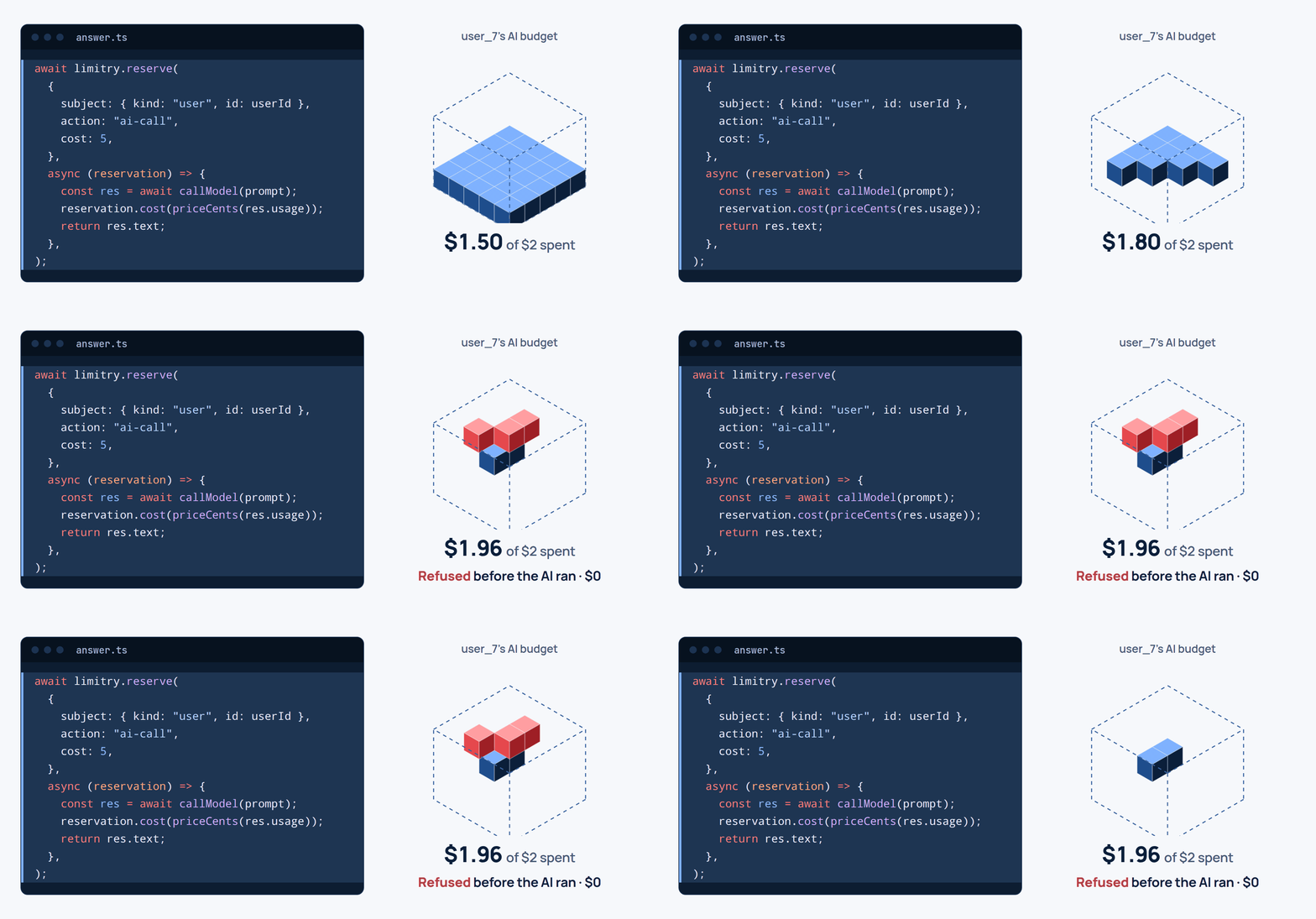](https://limitry.com/#demo)
|
|
6
|
+
|
|
7
|
+
[▶ Watch the 45-second demo](https://limitry.com/#demo)
|
|
8
|
+
|
|
5
9
|
Limitry is the limits, credits and budgets layer for the software you build: give each of your users, teams, tenants, API keys or agents an allowance, and before any costly request one call tells your code whether it may happen.
|
|
6
10
|
|
|
7
11
|
## Install
|
package/dist/limitry.mjs
CHANGED
|
@@ -21,6 +21,7 @@ var brand_default = {
|
|
|
21
21
|
domain: "limitry.com",
|
|
22
22
|
devDomain: "limitry.dev",
|
|
23
23
|
labs: ["lab"],
|
|
24
|
+
statusPage: true,
|
|
24
25
|
discordInvite: "https://discord.gg/Nb6QFd6ER4",
|
|
25
26
|
profiles: { x: "limitryhq", github: "limitry" },
|
|
26
27
|
summary: "Limitry is the limits, credits and budgets layer for the software you build: give each of your users, teams, tenants, API keys or agents an allowance, and before any costly request one call tells your code whether it may happen.",
|
|
@@ -167,8 +168,10 @@ var brand = {
|
|
|
167
168
|
summary: optional.summary ?? `${brand_default.productName} documentation and API.`,
|
|
168
169
|
/** Where vulnerability reports go — /.well-known/security.txt and /security publish it. Defaults to security@<domain>. */
|
|
169
170
|
securityContact: optional.securityContact ?? `security@${brand_default.domain}`,
|
|
170
|
-
/**
|
|
171
|
+
/** Where the Contact form's help topics go (Question, Bug, Billing). Never shown on a page. Defaults to support@<domain>. */
|
|
171
172
|
supportContact: optional.supportContact ?? `support@${brand_default.domain}`,
|
|
173
|
+
/** Where the Contact form's other topics go (Sales and enterprise, Something else; owner, 2026-11-15). Never shown on a page. Defaults to contact@<domain>. */
|
|
174
|
+
contactContact: optional.contactContact ?? `contact@${brand_default.domain}`,
|
|
172
175
|
/**
|
|
173
176
|
* Where operational alerts go (dead letters, failed crons, unhandled
|
|
174
177
|
* API errors, failed uptime probes — the worker's `sendOpsAlert`).
|
|
@@ -184,6 +187,10 @@ var brand = {
|
|
|
184
187
|
* (docs/deployment.md "Resetting product data"). False when absent.
|
|
185
188
|
*/
|
|
186
189
|
launched: optional.launched === true,
|
|
190
|
+
/** The launch date (brand.json `launchedAt`, YYYY-MM-DD): the public changelog starts here. */
|
|
191
|
+
launchedAt: optional.launchedAt ?? null,
|
|
192
|
+
/** The public status page's address, once brand.json `statusPage` says it is live; else null. */
|
|
193
|
+
statusPageUrl: optional.statusPage === true ? `https://status.${brand_default.domain}` : null,
|
|
187
194
|
/** True once the product has its own brand (brand.json `status: "ready"`), not the platform's placeholders. */
|
|
188
195
|
ready: brand_default.status === "ready"
|
|
189
196
|
};
|
|
@@ -8842,7 +8849,7 @@ function tokenEnvVar() {
|
|
|
8842
8849
|
function build(io) {
|
|
8843
8850
|
let actedIn = null;
|
|
8844
8851
|
let sending;
|
|
8845
|
-
const program2 = new Command().name(brand.name).description(`The ${brand.productName} CLI`).version("1.0.0-rc.
|
|
8852
|
+
const program2 = new Command().name(brand.name).description(`The ${brand.productName} CLI`).version("1.0.0-rc.16").addHelpText(
|
|
8846
8853
|
"after",
|
|
8847
8854
|
`
|
|
8848
8855
|
Token: \`${brand.name} login\` stores it in ~/.config/${brand.name}/; ${tokenEnvVar()} overrides.
|
package/package.json
CHANGED
|
@@ -1,6 +1,6 @@
|
|
|
1
1
|
{
|
|
2
2
|
"name": "@limitry/cli",
|
|
3
|
-
"version": "1.0.0-rc.
|
|
3
|
+
"version": "1.0.0-rc.16",
|
|
4
4
|
"description": "Limitry command line",
|
|
5
5
|
"keywords": [
|
|
6
6
|
"usage-limits",
|
|
@@ -26,7 +26,7 @@
|
|
|
26
26
|
"typecheck": "tsc --noEmit"
|
|
27
27
|
},
|
|
28
28
|
"devDependencies": {
|
|
29
|
-
"@limitry/sdk": "1.0.0-rc.
|
|
29
|
+
"@limitry/sdk": "1.0.0-rc.16",
|
|
30
30
|
"@types/node": "26.6.6",
|
|
31
31
|
"commander": "15.1.0",
|
|
32
32
|
"esbuild": "0.28.2",
|