@letterblack/lbe-exec 1.2.7 → 1.2.10
This diff represents the content of publicly available package versions that have been released to one of the supported registries. The information contained in this diff is provided for informational purposes only and reflects changes between package versions as they appear in their respective public registries.
- package/README.md +258 -255
- package/dist/cli.js +0 -0
- package/package.json +1 -1
package/README.md
CHANGED
|
@@ -1,255 +1,258 @@
|
|
|
1
|
-
# @letterblack/lbe-exec
|
|
2
|
-
|
|
3
|
-
**Local-first execution governance for AI agents.**
|
|
4
|
-
|
|
5
|
-
> Use `@letterblack/lbe-exec` if you want LBE to control agent actions in a workspace.
|
|
6
|
-
> Use `@letterblack/lbe-sdk` if you only need validation decisions inside your own tool.
|
|
7
|
-
|
|
8
|
-
Every action any agent proposes — file write, shell command, anything — passes
|
|
9
|
-
through a local validation gate before it can execute. One package, any agent,
|
|
10
|
-
zero cloud dependency, no daemon required.
|
|
11
|
-
|
|
12
|
-
---
|
|
13
|
-
|
|
14
|
-
## The problem
|
|
15
|
-
|
|
16
|
-
AI agents are capable. They can write files, invoke tools, and change state —
|
|
17
|
-
and they will, the moment they are given a reason to. The host is the only
|
|
18
|
-
thing standing between a plausible-looking request and irreversible damage.
|
|
19
|
-
|
|
20
|
-
That is not enough.
|
|
21
|
-
|
|
22
|
-
`@letterblack/lbe-exec` puts a deterministic local gate between what the agent
|
|
23
|
-
proposes and what the system actually executes — fully in-process, no cloud
|
|
24
|
-
dependency, no daemon required.
|
|
25
|
-
|
|
26
|
-
---
|
|
27
|
-
|
|
28
|
-
## How every request travels
|
|
29
|
-
|
|
30
|
-
|
|
31
|
-
|
|
32
|
-
Every request the agent produces enters a 7-gate pipeline. A failure at any
|
|
33
|
-
gate returns a structured denial — the remaining gates are not evaluated.
|
|
34
|
-
|
|
35
|
-
```
|
|
36
|
-
[1] Schema required fields and structural validity
|
|
37
|
-
↓
|
|
38
|
-
[2] Timestamp permitted clock-skew window (±10 minutes)
|
|
39
|
-
↓
|
|
40
|
-
[3] Key lifecycle trusted key, active, not expired
|
|
41
|
-
↓
|
|
42
|
-
[4] Signature Ed25519 request authenticity (signed locally, no network)
|
|
43
|
-
↓
|
|
44
|
-
[5] Rate limit per-requester sliding-window limit
|
|
45
|
-
↓
|
|
46
|
-
[6] Nonce single-use replay protection
|
|
47
|
-
↓
|
|
48
|
-
[7] Policy configured authorization (deny-wins)
|
|
49
|
-
↓
|
|
50
|
-
allow / deny / error — structured result returned to host
|
|
51
|
-
```
|
|
52
|
-
|
|
53
|
-
The executor signs every request with a host-held key before validation.
|
|
54
|
-
No key material leaves the process.
|
|
55
|
-
|
|
56
|
-
---
|
|
57
|
-
|
|
58
|
-
## When a request is approved
|
|
59
|
-
|
|
60
|
-
|
|
61
|
-
|
|
62
|
-
When a request clears every gate:
|
|
63
|
-
|
|
64
|
-
1. The agent calls a convenience method — `lbe.writeFile()`, `lbe.runShell()`, etc.
|
|
65
|
-
2. The executor constructs and signs the request locally with a host-held Ed25519 key.
|
|
66
|
-
3. All seven gates pass. The project policy approves the action.
|
|
67
|
-
4. The write or command executes inside the configured project root.
|
|
68
|
-
5. The audit chain is extended — every approved action appends a hash-linked
|
|
69
|
-
entry to `.lbe/audit.jsonl`, permanently verifiable, impossible to silently remove.
|
|
70
|
-
6. A structured result returns: whether it succeeded, which rules matched, and
|
|
71
|
-
the audit entry identifier.
|
|
72
|
-
|
|
73
|
-
The application stays in control. The executor decides whether the action was
|
|
74
|
-
permitted and hands the answer back.
|
|
75
|
-
|
|
76
|
-
---
|
|
77
|
-
|
|
78
|
-
## When a request is blocked
|
|
79
|
-
|
|
80
|
-
|
|
81
|
-
|
|
82
|
-
When a request fails any gate:
|
|
83
|
-
|
|
84
|
-
1. The agent attempts an action — whether by mistake, misconfiguration,
|
|
85
|
-
or a deliberate bypass attempt.
|
|
86
|
-
2. The policy gate closes immediately. The request is denied before any adapter
|
|
87
|
-
is reached.
|
|
88
|
-
3. The shell is untouched. The filesystem is unchanged. Nothing that should not
|
|
89
|
-
have happened, happened.
|
|
90
|
-
4. The denial is written to the immutable audit log — chain sealed, evidence
|
|
91
|
-
preserved.
|
|
92
|
-
5. The final state is clean, verifiable, and consistent.
|
|
93
|
-
|
|
94
|
-
No partial execution. No silent failures. Denial is a first-class outcome, not
|
|
95
|
-
an error.
|
|
96
|
-
|
|
97
|
-
---
|
|
98
|
-
|
|
99
|
-
## Policy — who writes the rules
|
|
100
|
-
|
|
101
|
-
Only the host application writes policy. Agents may propose a rule — the
|
|
102
|
-
proposal is returned as a plain object for the host to review. Until the host
|
|
103
|
-
explicitly accepts and writes it, the proposal has no effect on any gate.
|
|
104
|
-
|
|
105
|
-
This separation is intentional. An agent that can write its own policy rules
|
|
106
|
-
is an agent that can grant itself permission.
|
|
107
|
-
|
|
108
|
-
---
|
|
109
|
-
|
|
110
|
-
## What this covers
|
|
111
|
-
|
|
112
|
-
| Threat | Gate |
|
|
113
|
-
|---|---|
|
|
114
|
-
| Agent writes outside the project root | Scope — sandbox path check |
|
|
115
|
-
| Replayed or stale request | Identity — nonce and timestamp |
|
|
116
|
-
| Tampered or expired key | Identity — key lifecycle |
|
|
117
|
-
| Excessive requests | Identity — rate limit |
|
|
118
|
-
| Action not permitted by project policy | Policy — deny-wins evaluation |
|
|
119
|
-
| Unauthorized shell command | Scope — explicit command allowlist |
|
|
120
|
-
| Injected payload (eval, exec, __proto__) | Content scan before pipeline |
|
|
121
|
-
|
|
122
|
-
---
|
|
123
|
-
|
|
124
|
-
## Observer mode — start here
|
|
125
|
-
|
|
126
|
-
Not ready to block? Start in observer mode. Every request is fully validated
|
|
127
|
-
and logged exactly as it would be in enforcement — but nothing is blocked.
|
|
128
|
-
|
|
129
|
-
Watch what the agent is doing before you decide what to deny. Your rules take
|
|
130
|
-
effect the moment you switch to enforcement.
|
|
131
|
-
|
|
132
|
-
---
|
|
133
|
-
|
|
134
|
-
## Install
|
|
135
|
-
|
|
136
|
-
```bash
|
|
137
|
-
npm install @letterblack/lbe-exec
|
|
138
|
-
npx lbe-exec init
|
|
139
|
-
```
|
|
140
|
-
|
|
141
|
-
`npx lbe-exec init` scans the project, writes `lbe.policy.json` in observer
|
|
142
|
-
mode, generates `CLAUDE.md` and `.github/copilot-instructions.md` so every AI
|
|
143
|
-
agent automatically discovers and follows governance, and creates
|
|
144
|
-
`.lbe/AGENT_CONTRACT.md` as a machine-readable contract.
|
|
145
|
-
|
|
146
|
-
Requires Node.js ≥ 20.9.0.
|
|
147
|
-
|
|
148
|
-
---
|
|
149
|
-
|
|
150
|
-
## Use in agent code
|
|
151
|
-
|
|
152
|
-
```js
|
|
153
|
-
import { createLocalExecutor } from '@letterblack/lbe-exec';
|
|
154
|
-
|
|
155
|
-
const lbe = createLocalExecutor({ rootDir: process.cwd() });
|
|
156
|
-
|
|
157
|
-
// Every call routes through the full 7-gate pipeline
|
|
158
|
-
await lbe.writeFile('output/report.md', content);
|
|
159
|
-
await lbe.readFile('src/config.json');
|
|
160
|
-
await lbe.patchFile('src/index.js', patch);
|
|
161
|
-
await lbe.deleteFile('tmp/scratch.txt');
|
|
162
|
-
await lbe.runShell('node', ['scripts/build.js']);
|
|
163
|
-
|
|
164
|
-
// Result shape
|
|
165
|
-
const result = await lbe.writeFile('output/result.md', data);
|
|
166
|
-
// { ok: true, decision: 'allow', executed: true, auditId: '...' }
|
|
167
|
-
// { ok: false, decision: 'deny', executed: false, error: { code, message } }
|
|
168
|
-
```
|
|
169
|
-
|
|
170
|
-
No knowledge of the pipeline, request format, or policy internals required.
|
|
171
|
-
All signing, validation, and auditing happens automatically.
|
|
172
|
-
|
|
173
|
-
### Options
|
|
174
|
-
|
|
175
|
-
```js
|
|
176
|
-
const lbe = createLocalExecutor({
|
|
177
|
-
rootDir: process.cwd(), // sandbox root — no writes escape this path
|
|
178
|
-
mode: 'observe', // 'observe' (log only) or 'enforce' (block)
|
|
179
|
-
shell: {
|
|
180
|
-
allowCommands: ['node', 'npm'], // only these commands may run
|
|
181
|
-
denyCommands: ['rm', 'curl'], // always blocked regardless of policy
|
|
182
|
-
maxRequests: 20 // per-minute shell rate limit
|
|
183
|
-
}
|
|
184
|
-
});
|
|
185
|
-
```
|
|
186
|
-
|
|
187
|
-
### Policy management
|
|
188
|
-
|
|
189
|
-
```js
|
|
190
|
-
// Propose a rule — returns an object for the host to review, writes nothing
|
|
191
|
-
const proposal = lbe.policy.proposeRule({
|
|
192
|
-
effect: 'deny',
|
|
193
|
-
type: 'path',
|
|
194
|
-
pattern: 'secrets/**',
|
|
195
|
-
from: 'agent: these files should not be modified'
|
|
196
|
-
});
|
|
197
|
-
|
|
198
|
-
// Host accepts and writes the rule
|
|
199
|
-
lbe.policy.addRule(proposal);
|
|
200
|
-
|
|
201
|
-
// Read current policy
|
|
202
|
-
const policy = lbe.policy.read();
|
|
203
|
-
|
|
204
|
-
// Verify the audit chain has not been tampered with
|
|
205
|
-
lbe.audit.verify();
|
|
206
|
-
```
|
|
207
|
-
|
|
208
|
-
---
|
|
209
|
-
|
|
210
|
-
## CLI reference
|
|
211
|
-
|
|
212
|
-
```bash
|
|
213
|
-
npx lbe-exec init # create lbe.policy.json in observer mode
|
|
214
|
-
npx lbe-exec status # show mode, rule count, and audit entry count
|
|
215
|
-
npx lbe-exec enforce # switch to blocking
|
|
216
|
-
npx lbe-exec observe # switch back to advisory
|
|
217
|
-
npx lbe-exec policy # list active rules
|
|
218
|
-
```
|
|
219
|
-
|
|
220
|
-
| Command | Purpose |
|
|
221
|
-
|---|---|
|
|
222
|
-
| `npx lbe-exec init` | Bootstrap governance — policy, keys, agent files |
|
|
223
|
-
| `npx lbe-exec status` | Show mode, rule count, audit entry count |
|
|
224
|
-
| `npx lbe-exec policy` | List active rules |
|
|
225
|
-
| `npx lbe-exec observe` | Set advisory (log-only) mode |
|
|
226
|
-
| `npx lbe-exec enforce` | Set blocking mode |
|
|
227
|
-
| `npx lbe-exec execute` | Pipe a JSON request from stdin or `--input <file>` |
|
|
228
|
-
|
|
229
|
-
---
|
|
230
|
-
|
|
231
|
-
## What ships
|
|
232
|
-
|
|
233
|
-
```
|
|
234
|
-
dist/index.js
|
|
235
|
-
dist/cli.js
|
|
236
|
-
dist/lbe_engine.wasm
|
|
237
|
-
dist/wasm.lock.json
|
|
238
|
-
assets/lbe-gates.
|
|
239
|
-
assets/story-allow.
|
|
240
|
-
assets/story-deny.
|
|
241
|
-
assets/runtime-boundary.svg
|
|
242
|
-
|
|
243
|
-
|
|
244
|
-
|
|
245
|
-
|
|
246
|
-
|
|
247
|
-
|
|
248
|
-
|
|
249
|
-
|
|
250
|
-
|
|
251
|
-
|
|
252
|
-
|
|
253
|
-
|
|
254
|
-
|
|
255
|
-
|
|
1
|
+
# @letterblack/lbe-exec
|
|
2
|
+
|
|
3
|
+
**Local-first execution governance for AI agents.**
|
|
4
|
+
|
|
5
|
+
> Use `@letterblack/lbe-exec` if you want LBE to control agent actions in a workspace.
|
|
6
|
+
> Use `@letterblack/lbe-sdk` if you only need validation decisions inside your own tool.
|
|
7
|
+
|
|
8
|
+
Every action any agent proposes — file write, shell command, anything — passes
|
|
9
|
+
through a local validation gate before it can execute. One package, any agent,
|
|
10
|
+
zero cloud dependency, no daemon required.
|
|
11
|
+
|
|
12
|
+
---
|
|
13
|
+
|
|
14
|
+
## The problem
|
|
15
|
+
|
|
16
|
+
AI agents are capable. They can write files, invoke tools, and change state —
|
|
17
|
+
and they will, the moment they are given a reason to. The host is the only
|
|
18
|
+
thing standing between a plausible-looking request and irreversible damage.
|
|
19
|
+
|
|
20
|
+
That is not enough.
|
|
21
|
+
|
|
22
|
+
`@letterblack/lbe-exec` puts a deterministic local gate between what the agent
|
|
23
|
+
proposes and what the system actually executes — fully in-process, no cloud
|
|
24
|
+
dependency, no daemon required.
|
|
25
|
+
|
|
26
|
+
---
|
|
27
|
+
|
|
28
|
+
## How every request travels
|
|
29
|
+
|
|
30
|
+

|
|
31
|
+
|
|
32
|
+
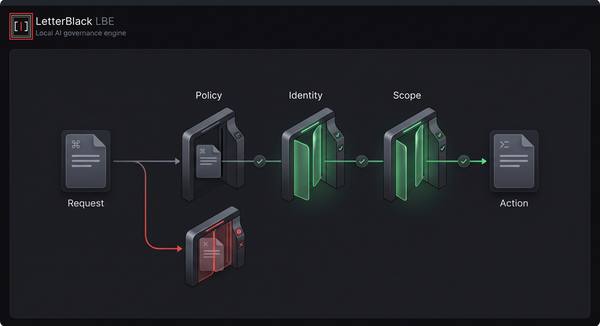
Every request the agent produces enters a 7-gate pipeline. A failure at any
|
|
33
|
+
gate returns a structured denial — the remaining gates are not evaluated.
|
|
34
|
+
|
|
35
|
+
```
|
|
36
|
+
[1] Schema required fields and structural validity
|
|
37
|
+
↓
|
|
38
|
+
[2] Timestamp permitted clock-skew window (±10 minutes)
|
|
39
|
+
↓
|
|
40
|
+
[3] Key lifecycle trusted key, active, not expired
|
|
41
|
+
↓
|
|
42
|
+
[4] Signature Ed25519 request authenticity (signed locally, no network)
|
|
43
|
+
↓
|
|
44
|
+
[5] Rate limit per-requester sliding-window limit
|
|
45
|
+
↓
|
|
46
|
+
[6] Nonce single-use replay protection
|
|
47
|
+
↓
|
|
48
|
+
[7] Policy configured authorization (deny-wins)
|
|
49
|
+
↓
|
|
50
|
+
allow / deny / error — structured result returned to host
|
|
51
|
+
```
|
|
52
|
+
|
|
53
|
+
The executor signs every request with a host-held key before validation.
|
|
54
|
+
No key material leaves the process.
|
|
55
|
+
|
|
56
|
+
---
|
|
57
|
+
|
|
58
|
+
## When a request is approved
|
|
59
|
+
|
|
60
|
+

|
|
61
|
+
|
|
62
|
+
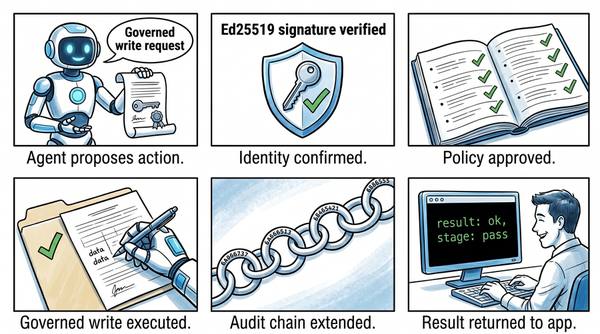
When a request clears every gate:
|
|
63
|
+
|
|
64
|
+
1. The agent calls a convenience method — `lbe.writeFile()`, `lbe.runShell()`, etc.
|
|
65
|
+
2. The executor constructs and signs the request locally with a host-held Ed25519 key.
|
|
66
|
+
3. All seven gates pass. The project policy approves the action.
|
|
67
|
+
4. The write or command executes inside the configured project root.
|
|
68
|
+
5. The audit chain is extended — every approved action appends a hash-linked
|
|
69
|
+
entry to `.lbe/audit.jsonl`, permanently verifiable, impossible to silently remove.
|
|
70
|
+
6. A structured result returns: whether it succeeded, which rules matched, and
|
|
71
|
+
the audit entry identifier.
|
|
72
|
+
|
|
73
|
+
The application stays in control. The executor decides whether the action was
|
|
74
|
+
permitted and hands the answer back.
|
|
75
|
+
|
|
76
|
+
---
|
|
77
|
+
|
|
78
|
+
## When a request is blocked
|
|
79
|
+
|
|
80
|
+

|
|
81
|
+
|
|
82
|
+
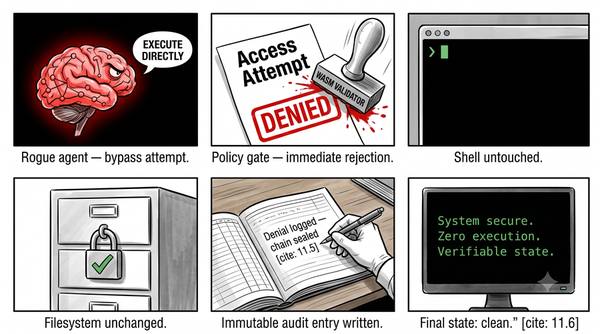
When a request fails any gate:
|
|
83
|
+
|
|
84
|
+
1. The agent attempts an action — whether by mistake, misconfiguration,
|
|
85
|
+
or a deliberate bypass attempt.
|
|
86
|
+
2. The policy gate closes immediately. The request is denied before any adapter
|
|
87
|
+
is reached.
|
|
88
|
+
3. The shell is untouched. The filesystem is unchanged. Nothing that should not
|
|
89
|
+
have happened, happened.
|
|
90
|
+
4. The denial is written to the immutable audit log — chain sealed, evidence
|
|
91
|
+
preserved.
|
|
92
|
+
5. The final state is clean, verifiable, and consistent.
|
|
93
|
+
|
|
94
|
+
No partial execution. No silent failures. Denial is a first-class outcome, not
|
|
95
|
+
an error.
|
|
96
|
+
|
|
97
|
+
---
|
|
98
|
+
|
|
99
|
+
## Policy — who writes the rules
|
|
100
|
+
|
|
101
|
+
Only the host application writes policy. Agents may propose a rule — the
|
|
102
|
+
proposal is returned as a plain object for the host to review. Until the host
|
|
103
|
+
explicitly accepts and writes it, the proposal has no effect on any gate.
|
|
104
|
+
|
|
105
|
+
This separation is intentional. An agent that can write its own policy rules
|
|
106
|
+
is an agent that can grant itself permission.
|
|
107
|
+
|
|
108
|
+
---
|
|
109
|
+
|
|
110
|
+
## What this covers
|
|
111
|
+
|
|
112
|
+
| Threat | Gate |
|
|
113
|
+
|---|---|
|
|
114
|
+
| Agent writes outside the project root | Scope — sandbox path check |
|
|
115
|
+
| Replayed or stale request | Identity — nonce and timestamp |
|
|
116
|
+
| Tampered or expired key | Identity — key lifecycle |
|
|
117
|
+
| Excessive requests | Identity — rate limit |
|
|
118
|
+
| Action not permitted by project policy | Policy — deny-wins evaluation |
|
|
119
|
+
| Unauthorized shell command | Scope — explicit command allowlist |
|
|
120
|
+
| Injected payload (eval, exec, __proto__) | Content scan before pipeline |
|
|
121
|
+
|
|
122
|
+
---
|
|
123
|
+
|
|
124
|
+
## Observer mode — start here
|
|
125
|
+
|
|
126
|
+
Not ready to block? Start in observer mode. Every request is fully validated
|
|
127
|
+
and logged exactly as it would be in enforcement — but nothing is blocked.
|
|
128
|
+
|
|
129
|
+
Watch what the agent is doing before you decide what to deny. Your rules take
|
|
130
|
+
effect the moment you switch to enforcement.
|
|
131
|
+
|
|
132
|
+
---
|
|
133
|
+
|
|
134
|
+
## Install
|
|
135
|
+
|
|
136
|
+
```bash
|
|
137
|
+
npm install @letterblack/lbe-exec
|
|
138
|
+
npx lbe-exec init
|
|
139
|
+
```
|
|
140
|
+
|
|
141
|
+
`npx lbe-exec init` scans the project, writes `lbe.policy.json` in observer
|
|
142
|
+
mode, generates `CLAUDE.md` and `.github/copilot-instructions.md` so every AI
|
|
143
|
+
agent automatically discovers and follows governance, and creates
|
|
144
|
+
`.lbe/AGENT_CONTRACT.md` as a machine-readable contract.
|
|
145
|
+
|
|
146
|
+
Requires Node.js ≥ 20.9.0.
|
|
147
|
+
|
|
148
|
+
---
|
|
149
|
+
|
|
150
|
+
## Use in agent code
|
|
151
|
+
|
|
152
|
+
```js
|
|
153
|
+
import { createLocalExecutor } from '@letterblack/lbe-exec';
|
|
154
|
+
|
|
155
|
+
const lbe = createLocalExecutor({ rootDir: process.cwd() });
|
|
156
|
+
|
|
157
|
+
// Every call routes through the full 7-gate pipeline
|
|
158
|
+
await lbe.writeFile('output/report.md', content);
|
|
159
|
+
await lbe.readFile('src/config.json');
|
|
160
|
+
await lbe.patchFile('src/index.js', patch);
|
|
161
|
+
await lbe.deleteFile('tmp/scratch.txt');
|
|
162
|
+
await lbe.runShell('node', ['scripts/build.js']);
|
|
163
|
+
|
|
164
|
+
// Result shape
|
|
165
|
+
const result = await lbe.writeFile('output/result.md', data);
|
|
166
|
+
// { ok: true, decision: 'allow', executed: true, auditId: '...' }
|
|
167
|
+
// { ok: false, decision: 'deny', executed: false, error: { code, message } }
|
|
168
|
+
```
|
|
169
|
+
|
|
170
|
+
No knowledge of the pipeline, request format, or policy internals required.
|
|
171
|
+
All signing, validation, and auditing happens automatically.
|
|
172
|
+
|
|
173
|
+
### Options
|
|
174
|
+
|
|
175
|
+
```js
|
|
176
|
+
const lbe = createLocalExecutor({
|
|
177
|
+
rootDir: process.cwd(), // sandbox root — no writes escape this path
|
|
178
|
+
mode: 'observe', // 'observe' (log only) or 'enforce' (block)
|
|
179
|
+
shell: {
|
|
180
|
+
allowCommands: ['node', 'npm'], // only these commands may run
|
|
181
|
+
denyCommands: ['rm', 'curl'], // always blocked regardless of policy
|
|
182
|
+
maxRequests: 20 // per-minute shell rate limit
|
|
183
|
+
}
|
|
184
|
+
});
|
|
185
|
+
```
|
|
186
|
+
|
|
187
|
+
### Policy management
|
|
188
|
+
|
|
189
|
+
```js
|
|
190
|
+
// Propose a rule — returns an object for the host to review, writes nothing
|
|
191
|
+
const proposal = lbe.policy.proposeRule({
|
|
192
|
+
effect: 'deny',
|
|
193
|
+
type: 'path',
|
|
194
|
+
pattern: 'secrets/**',
|
|
195
|
+
from: 'agent: these files should not be modified'
|
|
196
|
+
});
|
|
197
|
+
|
|
198
|
+
// Host accepts and writes the rule
|
|
199
|
+
lbe.policy.addRule(proposal);
|
|
200
|
+
|
|
201
|
+
// Read current policy
|
|
202
|
+
const policy = lbe.policy.read();
|
|
203
|
+
|
|
204
|
+
// Verify the audit chain has not been tampered with
|
|
205
|
+
lbe.audit.verify();
|
|
206
|
+
```
|
|
207
|
+
|
|
208
|
+
---
|
|
209
|
+
|
|
210
|
+
## CLI reference
|
|
211
|
+
|
|
212
|
+
```bash
|
|
213
|
+
npx lbe-exec init # create lbe.policy.json in observer mode
|
|
214
|
+
npx lbe-exec status # show mode, rule count, and audit entry count
|
|
215
|
+
npx lbe-exec enforce # switch to blocking
|
|
216
|
+
npx lbe-exec observe # switch back to advisory
|
|
217
|
+
npx lbe-exec policy # list active rules
|
|
218
|
+
```
|
|
219
|
+
|
|
220
|
+
| Command | Purpose |
|
|
221
|
+
|---|---|
|
|
222
|
+
| `npx lbe-exec init` | Bootstrap governance — policy, keys, agent files |
|
|
223
|
+
| `npx lbe-exec status` | Show mode, rule count, audit entry count |
|
|
224
|
+
| `npx lbe-exec policy` | List active rules |
|
|
225
|
+
| `npx lbe-exec observe` | Set advisory (log-only) mode |
|
|
226
|
+
| `npx lbe-exec enforce` | Set blocking mode |
|
|
227
|
+
| `npx lbe-exec execute` | Pipe a JSON request from stdin or `--input <file>` |
|
|
228
|
+
|
|
229
|
+
---
|
|
230
|
+
|
|
231
|
+
## What ships
|
|
232
|
+
|
|
233
|
+
```
|
|
234
|
+
dist/index.js In-process executor — createLocalExecutor()
|
|
235
|
+
dist/cli.js Local CLI (npx lbe-exec)
|
|
236
|
+
dist/lbe_engine.wasm Verified WASM runtime binary
|
|
237
|
+
dist/wasm.lock.json Runtime integrity lock (SHA-256 of wasm binary)
|
|
238
|
+
assets/lbe-gates.jpg Gate sequence diagram
|
|
239
|
+
assets/story-allow.jpg Approved-request storyboard
|
|
240
|
+
assets/story-deny.jpg Blocked-request storyboard
|
|
241
|
+
assets/runtime-boundary.svg Runtime boundary diagram
|
|
242
|
+
assets/lbe-gates.png Gate sequence diagram (full resolution)
|
|
243
|
+
assets/story-allow.png Approved-request storyboard (full resolution)
|
|
244
|
+
assets/story-deny.png Blocked-request storyboard (full resolution)
|
|
245
|
+
types.d.ts TypeScript declarations
|
|
246
|
+
```
|
|
247
|
+
|
|
248
|
+
Source code, tests, keys, and runtime state are not included.
|
|
249
|
+
|
|
250
|
+
---
|
|
251
|
+
|
|
252
|
+
## Limits
|
|
253
|
+
|
|
254
|
+
This package governs actions routed through its executor. It does not provide
|
|
255
|
+
kernel-level process isolation, network-egress control, multi-tenant separation,
|
|
256
|
+
or a hosted control plane.
|
|
257
|
+
|
|
258
|
+
For the raw WASM runtime without a controller, see `@letterblack/lbe-sdk`.
|
package/dist/cli.js
CHANGED
|
File without changes
|