@grundyjs/algiviz 0.6.0 → 0.7.1
This diff represents the content of publicly available package versions that have been released to one of the supported registries. The information contained in this diff is provided for informational purposes only and reflects changes between package versions as they appear in their respective public registries.
- package/CHANGELOG.md +16 -0
- package/README.md +80 -8
- package/dist/array/index.d.ts +4 -4
- package/dist/array/index.js +2 -2
- package/dist/array/player.d.ts +10 -0
- package/dist/{core → array}/player.js +2 -2
- package/dist/array/timeline.d.ts +8 -0
- package/dist/{core → array}/timeline.js +1 -1
- package/dist/canvas/index.d.ts +2 -2
- package/dist/playback/player.js +10 -3
- package/dist/playback/timeline.d.ts +1 -1
- package/dist/playback/timeline.js +2 -2
- package/dist/playback/types.d.ts +1 -0
- package/package.json +12 -10
- package/dist/compat/algorithms.d.ts +0 -2
- package/dist/compat/algorithms.js +0 -36
- package/dist/core/bubble-sort.d.ts +0 -4
- package/dist/core/bubble-sort.js +0 -5
- package/dist/core/index.d.ts +0 -7
- package/dist/core/index.js +0 -4
- package/dist/core/insertion-sort.d.ts +0 -4
- package/dist/core/insertion-sort.js +0 -5
- package/dist/core/player.d.ts +0 -10
- package/dist/core/timeline.d.ts +0 -8
- package/dist/core/types.d.ts +0 -1
- package/dist/core/types.js +0 -1
package/CHANGELOG.md
CHANGED
|
@@ -1,5 +1,21 @@
|
|
|
1
1
|
# Changelog
|
|
2
2
|
|
|
3
|
+
## 0.7.1 — 2026-10-15
|
|
4
|
+
|
|
5
|
+
- Update package description and keywords for custom algorithm visualizations.
|
|
6
|
+
- Improve the README introduction, demo links and standalone integration guide.
|
|
7
|
+
- Add a BFS GIF preview exported with CanvasTake, hosted on GitHub.
|
|
8
|
+
- No runtime API or behavior changes.
|
|
9
|
+
|
|
10
|
+
## 0.7.0 — 2026-10-15
|
|
11
|
+
|
|
12
|
+
- Breaking: remove the deprecated /core entry point and bundled insertion/bubble
|
|
13
|
+
algorithms. Application-owned examples use /array; playback adapters now live there.
|
|
14
|
+
|
|
15
|
+
- Preserve source step indices in generic timeline frames, matching generator playback.
|
|
16
|
+
- Preserve primary playback errors when iterator cleanup also fails; standalone
|
|
17
|
+
cleanup failures still propagate.
|
|
18
|
+
|
|
3
19
|
## 0.6.0 — 2026-10-14
|
|
4
20
|
|
|
5
21
|
- Add an application-owned graph BFS example with custom vertices, edges and queue
|
package/README.md
CHANGED
|
@@ -1,11 +1,56 @@
|
|
|
1
1
|
# AlgiViz
|
|
2
2
|
|
|
3
|
-
|
|
4
|
-
algorithm and define your objects; AlgiViz provides array operations, playback,
|
|
5
|
-
typed scene dispatch and a ready-made Canvas array renderer. No runtime dependencies.
|
|
6
|
-
Playback works without DOM, React or Next.js. ESM only, with TypeScript declarations.
|
|
3
|
+
**Your algorithms and objects. Step-by-step playback and custom rendering.**
|
|
7
4
|
|
|
8
|
-
|
|
5
|
+
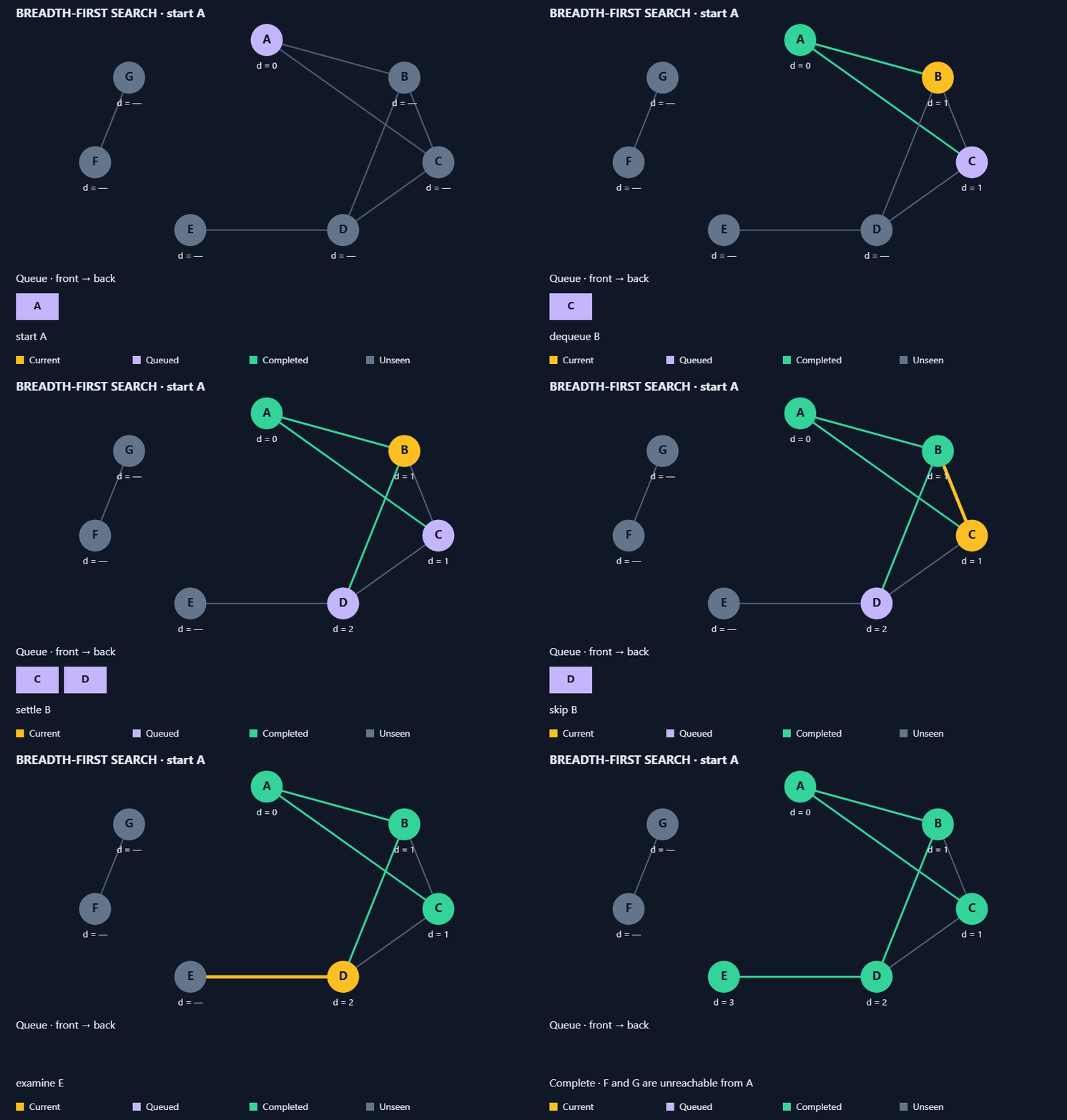
|
|
6
|
+
|
|
7
|
+
*An application-owned BFS algorithm with custom objects. Exported with
|
|
8
|
+
[CanvasTake](https://github.com/urffin/canvas-take) —
|
|
9
|
+
[try an interactive sorting demo](https://grundyjs.ru/algorithms/insertion-sort/)
|
|
10
|
+
or explore the [BFS source](https://github.com/urffin/algiviz/blob/master/examples/graph-demo.mjs).*
|
|
11
|
+
|
|
12
|
+
A TypeScript toolkit for building interactive algorithm explanations. Write your
|
|
13
|
+
algorithm as a generator, emit immutable states and choose how your objects look.
|
|
14
|
+
AlgiViz handles playback and scene matching; optional array operations and a Canvas
|
|
15
|
+
renderer help you get started.
|
|
16
|
+
|
|
17
|
+
[Live sorting demo](https://grundyjs.ru/algorithms/insertion-sort/) ·
|
|
18
|
+
[Library overview](https://grundyjs.ru/algiviz/) ·
|
|
19
|
+
[npm package](https://www.npmjs.com/package/@grundyjs/algiviz) ·
|
|
20
|
+
[Minimal example source](https://github.com/urffin/algiviz/blob/master/examples/minimal.mjs)
|
|
21
|
+
|
|
22
|
+
- **Your algorithm:** control the loops, conditions and order of operations.
|
|
23
|
+
- **Your objects:** define custom types and handlers for Canvas, SVG or another target.
|
|
24
|
+
- **Two playback modes:** retain history for seeking, or consume a generator with
|
|
25
|
+
only adjacent snapshots retained by the player.
|
|
26
|
+
- **No runtime dependencies:** ESM and TypeScript declarations; playback works
|
|
27
|
+
without DOM, React or Next.js.
|
|
28
|
+
|
|
29
|
+
Use it for educational demos, interactive articles and algorithm walkthroughs.
|
|
30
|
+
Algorithms and layouts belong to your application; AlgiViz provides the playback
|
|
31
|
+
and rendering API. This README describes version 0.7.1.
|
|
32
|
+
|
|
33
|
+
## Start with one custom object
|
|
34
|
+
|
|
35
|
+
The [standalone page](https://github.com/urffin/algiviz/blob/master/examples/minimal.html)
|
|
36
|
+
moves one token with a generator and a custom Canvas handler. It uses only public
|
|
37
|
+
package imports, without the shared demo controller. Copy its
|
|
38
|
+
[complete module](https://github.com/urffin/algiviz/blob/master/examples/minimal.mjs)
|
|
39
|
+
into your application and connect a canvas:
|
|
40
|
+
|
|
41
|
+
```js
|
|
42
|
+
import { createTokenPlayer } from './minimal.mjs';
|
|
43
|
+
|
|
44
|
+
const canvas = document.querySelector('canvas');
|
|
45
|
+
const player = createTokenPlayer(canvas.getContext('2d'));
|
|
46
|
+
player.advance(100); // Advance playback by 100 ms.
|
|
47
|
+
// Call advance(deltaMs) from your controls or animation loop.
|
|
48
|
+
// Call player.dispose() when removing the visualization.
|
|
49
|
+
```
|
|
50
|
+
|
|
51
|
+
[Follow the walkthrough](https://github.com/urffin/algiviz/blob/master/docs/minimal-example.md)
|
|
52
|
+
for local setup, snapshot ownership and lifecycle. For a larger custom-object
|
|
53
|
+
example, see the [graph BFS walkthrough](https://github.com/urffin/algiviz/blob/master/docs/custom-graph-example.md).
|
|
9
54
|
|
|
10
55
|
## Install
|
|
11
56
|
|
|
@@ -16,7 +61,7 @@ npm install @grundyjs/algiviz
|
|
|
16
61
|
There is no root entry point or CommonJS build. Import the modules you need:
|
|
17
62
|
`/array`, `/playback`, `/scene` and `/canvas`.
|
|
18
63
|
|
|
19
|
-
|
|
64
|
+
Algorithms live in application code and examples.
|
|
20
65
|
For new integrations, use the APIs below. Version 0.x may introduce breaking changes
|
|
21
66
|
in minor releases; consult [CHANGELOG.md](CHANGELOG.md) when updating.
|
|
22
67
|
|
|
@@ -123,6 +168,20 @@ Custom array events or tree/graph operations can use this contract and a custom
|
|
|
123
168
|
renderer. The scene API below dispatches individual objects; there is no built-in
|
|
124
169
|
graph/tree algorithm or operation set.
|
|
125
170
|
|
|
171
|
+
### Playback contracts
|
|
172
|
+
|
|
173
|
+
Playback retains application snapshots without cloning them; keep steps, state and
|
|
174
|
+
events immutable while they are in use. A timeline copies the input array only.
|
|
175
|
+
Timeline timing follows array position, and finite sample times are clamped to its
|
|
176
|
+
range. Generator playback requires an explicit terminal step; an early end throws.
|
|
177
|
+
`dispose()` closes the source at most once, keeps the last frame readable and
|
|
178
|
+
prevents further advancement. Restart uses a fresh source.
|
|
179
|
+
|
|
180
|
+
Version 0.7.0 makes timeline `stepIndex` preserve the source `step.index`,
|
|
181
|
+
matching the player. If source consumption, a terminal predicate or rendering
|
|
182
|
+
throws, cleanup is attempted without replacing that primary error. A standalone
|
|
183
|
+
cleanup error from disposal or normal completion still propagates.
|
|
184
|
+
|
|
126
185
|
### Step emission helper (since 0.6.0)
|
|
127
186
|
|
|
128
187
|
Version 0.6.0 adds `createStepEmitter` from `/playback`. It removes manual step numbering and freezes the step wrapper:
|
|
@@ -333,6 +392,7 @@ included in the npm archive.
|
|
|
333
392
|
| [Sorting lab](examples/index.html) | Insertion and bubble sort using the array operations and renderer |
|
|
334
393
|
| [Merge sort](examples/merge.html) | Custom state and a two-row scene for the main array and buffer |
|
|
335
394
|
| [Quick sort partitions](examples/quick.html) | Lomuto and three-way partitioning with custom state and scene |
|
|
395
|
+
| [Heap sort](examples/heap.html) | Max-heap construction and extraction with synchronized tree and array identities |
|
|
336
396
|
| [Graph BFS](examples/graph.html) | Cycles, disconnected components, shortest distances and an animated queue |
|
|
337
397
|
| [Tree traversal](examples/tree.html) | Custom nodes, edges and pointer with Canvas and retained SVG backends |
|
|
338
398
|
|
|
@@ -367,6 +427,18 @@ n(n−1)/2 checks with this Lomuto variant. Neither variant guarantees stability
|
|
|
367
427
|
Worst-case algorithm time is quadratic; recursion can use O(n) stack space.
|
|
368
428
|
Full snapshot history has a separate O(n³) space upper bound.
|
|
369
429
|
|
|
430
|
+
### Heap sort
|
|
431
|
+
|
|
432
|
+
The [algorithm](examples/heap-algorithm.mjs) owns immutable states and events.
|
|
433
|
+
The [scene](examples/heap-scene.mjs) assigns separate tree/array visual IDs to each
|
|
434
|
+
element and uses the public scene projector with viewport-independent endpoints.
|
|
435
|
+
Tree positions stay fixed as the heap shrinks. At most 15 array cells wrap on narrow
|
|
436
|
+
screens; larger arrays use a dense row and hide unreadable labels.
|
|
437
|
+
Bottom-up construction is O(n), worst-case sorting O(n log n), and the iterative
|
|
438
|
+
in-place algorithm uses O(1) auxiliary space. This demo copies input and retains
|
|
439
|
+
O(n) adjacent snapshot data in generator mode; full history can use O(n² log n).
|
|
440
|
+
It is not stable: [2a, 2b, 1] becomes [1, 2b, 2a].
|
|
441
|
+
|
|
370
442
|
### Tree traversal
|
|
371
443
|
|
|
372
444
|
The example defines its own `node`, `edge` and `pointer` types. The pointer follows
|
|
@@ -401,7 +473,7 @@ npm run test:package
|
|
|
401
473
|
`npm test` builds the library, checks TypeScript fixtures and runs the tests.
|
|
402
474
|
`npm run test:package` builds a tarball, installs it offline in an isolated temporary
|
|
403
475
|
consumer, compiles against the installed declarations and exercises public APIs,
|
|
404
|
-
including
|
|
476
|
+
including rejection of the removed `/core` export. The temporary consumer is removed afterward.
|
|
405
477
|
|
|
406
478
|
GitHub Actions runs both checks on pushes to `master` and pull requests, using
|
|
407
479
|
Node.js 22 and 24 on Linux and Windows. CI checks do not publish packages.
|
|
@@ -427,7 +499,7 @@ candidate commit.
|
|
|
427
499
|
|
|
428
500
|
The [publish workflow](.github/workflows/npm-publish.yml) runs when a stable GitHub
|
|
429
501
|
Release is published. Drafts, prereleases and tag pushes alone do not publish.
|
|
430
|
-
Use `v` followed by the exact package version, such as `v0.
|
|
502
|
+
Use `v` followed by the exact package version, such as `v0.7.1`, at the tested commit.
|
|
431
503
|
|
|
432
504
|
The workflow uses Node.js 24 and npm 11, checks the version and packed consumer,
|
|
433
505
|
then publishes with provenance through npm trusted publishing (OIDC).
|
package/dist/array/index.d.ts
CHANGED
|
@@ -1,7 +1,7 @@
|
|
|
1
1
|
export { createArrayTrace, defineArrayAlgorithm } from "./trace.js";
|
|
2
2
|
export type { ArrayTrace, ArrayAlgorithm, SortedRegions } from "./trace.js";
|
|
3
3
|
export type { Item, SortEvent as ArrayEvent, SortSnapshot as ArraySnapshot, SortStep as ArrayStep } from "./types.js";
|
|
4
|
-
export {
|
|
5
|
-
export {
|
|
6
|
-
export type {
|
|
7
|
-
export type {
|
|
4
|
+
export { createArrayPlayer } from "./player.js";
|
|
5
|
+
export { createArrayTimeline } from "./timeline.js";
|
|
6
|
+
export type { ArrayPlayer } from "./player.js";
|
|
7
|
+
export type { ArrayFrame, ArrayTimeline } from "./timeline.js";
|
package/dist/array/index.js
CHANGED
|
@@ -1,3 +1,3 @@
|
|
|
1
1
|
export { createArrayTrace, defineArrayAlgorithm } from "./trace.js";
|
|
2
|
-
export {
|
|
3
|
-
export {
|
|
2
|
+
export { createArrayPlayer } from "./player.js";
|
|
3
|
+
export { createArrayTimeline } from "./timeline.js";
|
|
@@ -0,0 +1,10 @@
|
|
|
1
|
+
import { type Player } from "../playback/index.js";
|
|
2
|
+
import type { SortStep, SortSnapshot, SortEvent } from "./types.js";
|
|
3
|
+
import type { ArrayFrame } from "./timeline.js";
|
|
4
|
+
export type ArrayPlayer = Player<SortSnapshot, SortEvent>;
|
|
5
|
+
/** Array playback adapter for array steps ending in done. */
|
|
6
|
+
export declare function createArrayPlayer(steps: Iterable<SortStep>, options: {
|
|
7
|
+
stepDurationMs: number;
|
|
8
|
+
finalHoldMs: number;
|
|
9
|
+
render?: (frame: ArrayFrame) => void;
|
|
10
|
+
}): ArrayPlayer;
|
|
@@ -1,5 +1,5 @@
|
|
|
1
1
|
import { createPlayer } from "../playback/index.js";
|
|
2
|
-
/**
|
|
3
|
-
export function
|
|
2
|
+
/** Array playback adapter for array steps ending in done. */
|
|
3
|
+
export function createArrayPlayer(steps, options) {
|
|
4
4
|
return createPlayer(steps, { ...options, isTerminal: step => step.event.type === "done" });
|
|
5
5
|
}
|
|
@@ -0,0 +1,8 @@
|
|
|
1
|
+
import { type Frame, type Timeline } from "../playback/index.js";
|
|
2
|
+
import type { SortEvent, SortSnapshot, SortStep } from "./types.js";
|
|
3
|
+
export type ArrayFrame = Frame<SortSnapshot, SortEvent>;
|
|
4
|
+
export type ArrayTimeline = Timeline<SortSnapshot, SortEvent>;
|
|
5
|
+
export declare function createArrayTimeline(steps: readonly SortStep[], options: {
|
|
6
|
+
stepDurationMs: number;
|
|
7
|
+
finalHoldMs: number;
|
|
8
|
+
}): ArrayTimeline;
|
package/dist/canvas/index.d.ts
CHANGED
|
@@ -1,5 +1,5 @@
|
|
|
1
|
-
import type { Item, SortSnapshot } from "../
|
|
2
|
-
import type { SortFrame } from "../
|
|
1
|
+
import type { Item, SortSnapshot } from "../array/types.js";
|
|
2
|
+
import type { ArrayFrame as SortFrame } from "../array/timeline.js";
|
|
3
3
|
import { type Scene } from "../scene/index.js";
|
|
4
4
|
export type ArrayObjects = {
|
|
5
5
|
bar: {
|
package/dist/playback/player.js
CHANGED
|
@@ -13,6 +13,13 @@ export function createPlayer(steps, options) {
|
|
|
13
13
|
iterator.return?.();
|
|
14
14
|
}
|
|
15
15
|
};
|
|
16
|
+
// A cleanup failure must not replace the source, predicate or render error.
|
|
17
|
+
const closeAfterFailure = () => {
|
|
18
|
+
try {
|
|
19
|
+
close();
|
|
20
|
+
}
|
|
21
|
+
catch { /* Preserve the error already being handled. */ }
|
|
22
|
+
};
|
|
16
23
|
let current;
|
|
17
24
|
try {
|
|
18
25
|
const first = iterator.next();
|
|
@@ -21,7 +28,7 @@ export function createPlayer(steps, options) {
|
|
|
21
28
|
current = first.value;
|
|
22
29
|
}
|
|
23
30
|
catch (error) {
|
|
24
|
-
|
|
31
|
+
closeAfterFailure();
|
|
25
32
|
throw error;
|
|
26
33
|
}
|
|
27
34
|
let previous = current;
|
|
@@ -46,7 +53,7 @@ export function createPlayer(steps, options) {
|
|
|
46
53
|
options.render?.(frame());
|
|
47
54
|
}
|
|
48
55
|
catch (error) {
|
|
49
|
-
|
|
56
|
+
closeAfterFailure();
|
|
50
57
|
throw error;
|
|
51
58
|
}
|
|
52
59
|
return Object.freeze({
|
|
@@ -85,7 +92,7 @@ export function createPlayer(steps, options) {
|
|
|
85
92
|
}
|
|
86
93
|
catch (error) {
|
|
87
94
|
disposed = true;
|
|
88
|
-
|
|
95
|
+
closeAfterFailure();
|
|
89
96
|
throw error;
|
|
90
97
|
}
|
|
91
98
|
},
|
|
@@ -1,5 +1,5 @@
|
|
|
1
1
|
import type { Step, Timeline } from "./types.js";
|
|
2
|
-
/**
|
|
2
|
+
/** The step at array position i is complete at i * stepDurationMs; the final state is held afterwards. */
|
|
3
3
|
export declare function createTimeline<S, E>(steps: readonly Step<S, E>[], options: {
|
|
4
4
|
stepDurationMs: number;
|
|
5
5
|
finalHoldMs: number;
|
|
@@ -1,4 +1,4 @@
|
|
|
1
|
-
/**
|
|
1
|
+
/** The step at array position i is complete at i * stepDurationMs; the final state is held afterwards. */
|
|
2
2
|
export function createTimeline(steps, options) {
|
|
3
3
|
if (!steps.length)
|
|
4
4
|
throw new RangeError("Timeline requires at least one step");
|
|
@@ -24,7 +24,7 @@ export function createTimeline(steps, options) {
|
|
|
24
24
|
const progress = previous === step ? 1 :
|
|
25
25
|
Math.min(1, (time - (index - 1) * stepDurationMs) / stepDurationMs);
|
|
26
26
|
return Object.freeze({ previous: previous.state, current: step.state,
|
|
27
|
-
progress, stepIndex: index, event: step.event });
|
|
27
|
+
progress, stepIndex: step.index, event: step.event });
|
|
28
28
|
}
|
|
29
29
|
});
|
|
30
30
|
}
|
package/dist/playback/types.d.ts
CHANGED
package/package.json
CHANGED
|
@@ -1,10 +1,13 @@
|
|
|
1
1
|
{
|
|
2
2
|
"name": "@grundyjs/algiviz",
|
|
3
|
-
"version": "0.
|
|
4
|
-
"description": "
|
|
3
|
+
"version": "0.7.1",
|
|
4
|
+
"description": "TypeScript toolkit for custom algorithm visualizations with step-by-step playback and extensible rendering",
|
|
5
5
|
"type": "module",
|
|
6
6
|
"files": [
|
|
7
|
-
"dist",
|
|
7
|
+
"dist/array",
|
|
8
|
+
"dist/playback",
|
|
9
|
+
"dist/scene",
|
|
10
|
+
"dist/canvas",
|
|
8
11
|
"README.md",
|
|
9
12
|
"LICENSE",
|
|
10
13
|
"CHANGELOG.md"
|
|
@@ -25,11 +28,6 @@
|
|
|
25
28
|
"import": "./dist/playback/index.js",
|
|
26
29
|
"default": "./dist/playback/index.js"
|
|
27
30
|
},
|
|
28
|
-
"./core": {
|
|
29
|
-
"types": "./dist/core/index.d.ts",
|
|
30
|
-
"import": "./dist/core/index.js",
|
|
31
|
-
"default": "./dist/core/index.js"
|
|
32
|
-
},
|
|
33
31
|
"./canvas": {
|
|
34
32
|
"types": "./dist/canvas/index.d.ts",
|
|
35
33
|
"import": "./dist/canvas/index.js",
|
|
@@ -54,10 +52,14 @@
|
|
|
54
52
|
},
|
|
55
53
|
"homepage": "https://grundyjs.ru/algiviz/",
|
|
56
54
|
"keywords": [
|
|
55
|
+
"algorithm-visualization",
|
|
57
56
|
"algorithms",
|
|
58
57
|
"visualization",
|
|
59
|
-
"
|
|
60
|
-
"
|
|
58
|
+
"animation",
|
|
59
|
+
"step-by-step",
|
|
60
|
+
"playback",
|
|
61
|
+
"data-structures",
|
|
62
|
+
"educational",
|
|
61
63
|
"canvas",
|
|
62
64
|
"typescript"
|
|
63
65
|
],
|
|
@@ -1,36 +0,0 @@
|
|
|
1
|
-
import { defineArrayAlgorithm } from "../array/trace.js";
|
|
2
|
-
// Legacy core exports only. New consumers provide algorithms like examples/algorithms.mjs.
|
|
3
|
-
export const insertion = defineArrayAlgorithm(function* (array) {
|
|
4
|
-
yield array.start({ sortedPrefixLength: Math.min(1, array.length) });
|
|
5
|
-
for (let i = 1; i < array.length; i++) {
|
|
6
|
-
const key = array.at(i);
|
|
7
|
-
yield array.select(i, { sortedPrefixLength: i });
|
|
8
|
-
let hole = i;
|
|
9
|
-
while (hole > 0) {
|
|
10
|
-
yield array.compare(hole - 1, 'held');
|
|
11
|
-
if (array.at(hole - 1).value <= key.value)
|
|
12
|
-
break;
|
|
13
|
-
yield array.shift(hole - 1, hole, { sortedPrefixLength: hole - 1 });
|
|
14
|
-
hole--;
|
|
15
|
-
}
|
|
16
|
-
yield array.insert(hole, { sortedPrefixLength: i + 1 });
|
|
17
|
-
}
|
|
18
|
-
yield array.done({ sortedPrefixLength: array.length });
|
|
19
|
-
});
|
|
20
|
-
export const bubble = defineArrayAlgorithm(function* (array) {
|
|
21
|
-
yield array.start({ sortedSuffixLength: array.length < 2 ? array.length : 0 });
|
|
22
|
-
for (let end = array.length - 1; end > 0; end--) {
|
|
23
|
-
let swapped = false;
|
|
24
|
-
for (let left = 0; left < end; left++) {
|
|
25
|
-
yield array.compare(left, left + 1);
|
|
26
|
-
if (array.at(left).value <= array.at(left + 1).value)
|
|
27
|
-
continue;
|
|
28
|
-
yield array.swap(left, left + 1);
|
|
29
|
-
swapped = true;
|
|
30
|
-
}
|
|
31
|
-
yield array.pass(end, { sortedSuffixLength: swapped ? array.length - end : array.length });
|
|
32
|
-
if (!swapped)
|
|
33
|
-
break;
|
|
34
|
-
}
|
|
35
|
-
yield array.done({ sortedSuffixLength: array.length });
|
|
36
|
-
});
|
|
@@ -1,4 +0,0 @@
|
|
|
1
|
-
/** @deprecated Define your algorithm with @grundyjs/algiviz/array. */
|
|
2
|
-
export declare const bubbleSortSteps: (values: readonly number[]) => readonly import("./types.js").SortStep[];
|
|
3
|
-
/** @deprecated Define your algorithm with @grundyjs/algiviz/array. */
|
|
4
|
-
export declare const iterateBubbleSortSteps: (values: readonly number[]) => Generator<import("./types.js").SortStep, void, unknown>;
|
package/dist/core/bubble-sort.js
DELETED
|
@@ -1,5 +0,0 @@
|
|
|
1
|
-
import { bubble } from "../compat/algorithms.js";
|
|
2
|
-
/** @deprecated Define your algorithm with @grundyjs/algiviz/array. */
|
|
3
|
-
export const bubbleSortSteps = bubble.steps;
|
|
4
|
-
/** @deprecated Define your algorithm with @grundyjs/algiviz/array. */
|
|
5
|
-
export const iterateBubbleSortSteps = bubble.iterate;
|
package/dist/core/index.d.ts
DELETED
|
@@ -1,7 +0,0 @@
|
|
|
1
|
-
export { insertionSortSteps, iterateInsertionSortSteps } from "./insertion-sort.js";
|
|
2
|
-
export { bubbleSortSteps, iterateBubbleSortSteps } from "./bubble-sort.js";
|
|
3
|
-
export type { Item, SortEvent, SortSnapshot, SortStep } from "./types.js";
|
|
4
|
-
export { createSortTimeline } from "./timeline.js";
|
|
5
|
-
export type { SortFrame, SortTimeline } from "./timeline.js";
|
|
6
|
-
export { createSortPlayer } from "./player.js";
|
|
7
|
-
export type { SortPlayer } from "./player.js";
|
package/dist/core/index.js
DELETED
|
@@ -1,4 +0,0 @@
|
|
|
1
|
-
/** @deprecated Define your algorithm with @grundyjs/algiviz/array. */
|
|
2
|
-
export declare const insertionSortSteps: (values: readonly number[]) => readonly import("./types.js").SortStep[];
|
|
3
|
-
/** @deprecated Define your algorithm with @grundyjs/algiviz/array. */
|
|
4
|
-
export declare const iterateInsertionSortSteps: (values: readonly number[]) => Generator<import("./types.js").SortStep, void, unknown>;
|
|
@@ -1,5 +0,0 @@
|
|
|
1
|
-
import { insertion } from "../compat/algorithms.js";
|
|
2
|
-
/** @deprecated Define your algorithm with @grundyjs/algiviz/array. */
|
|
3
|
-
export const insertionSortSteps = insertion.steps;
|
|
4
|
-
/** @deprecated Define your algorithm with @grundyjs/algiviz/array. */
|
|
5
|
-
export const iterateInsertionSortSteps = insertion.iterate;
|
package/dist/core/player.d.ts
DELETED
|
@@ -1,10 +0,0 @@
|
|
|
1
|
-
import { type Player } from "../playback/index.js";
|
|
2
|
-
import type { SortStep, SortSnapshot, SortEvent } from "./types.js";
|
|
3
|
-
import type { SortFrame } from "./timeline.js";
|
|
4
|
-
export type SortPlayer = Player<SortSnapshot, SortEvent>;
|
|
5
|
-
/** Compatibility adapter for array steps ending in done. */
|
|
6
|
-
export declare function createSortPlayer(steps: Iterable<SortStep>, options: {
|
|
7
|
-
stepDurationMs: number;
|
|
8
|
-
finalHoldMs: number;
|
|
9
|
-
render?: (frame: SortFrame) => void;
|
|
10
|
-
}): SortPlayer;
|
package/dist/core/timeline.d.ts
DELETED
|
@@ -1,8 +0,0 @@
|
|
|
1
|
-
import { type Frame, type Timeline } from "../playback/index.js";
|
|
2
|
-
import type { SortEvent, SortSnapshot, SortStep } from "./types.js";
|
|
3
|
-
export type SortFrame = Frame<SortSnapshot, SortEvent>;
|
|
4
|
-
export type SortTimeline = Timeline<SortSnapshot, SortEvent>;
|
|
5
|
-
export declare function createSortTimeline(steps: readonly SortStep[], options: {
|
|
6
|
-
stepDurationMs: number;
|
|
7
|
-
finalHoldMs: number;
|
|
8
|
-
}): SortTimeline;
|
package/dist/core/types.d.ts
DELETED
|
@@ -1 +0,0 @@
|
|
|
1
|
-
export type { Item, SortEvent, SortSnapshot, SortStep } from "../array/types.js";
|
package/dist/core/types.js
DELETED
|
@@ -1 +0,0 @@
|
|
|
1
|
-
export {};
|