@ddd-ts-kit/http 0.15.0 → 0.16.1
This diff represents the content of publicly available package versions that have been released to one of the supported registries. The information contained in this diff is provided for informational purposes only and reflects changes between package versions as they appear in their respective public registries.
- package/README.fr.md +1563 -0
- package/README.md +375 -48
- package/package.json +4 -4
package/README.md
CHANGED
|
@@ -1,3 +1,5 @@
|
|
|
1
|
+
**English** · [Français](README.fr.md)
|
|
2
|
+
|
|
1
3
|
# @ddd-ts-kit/http
|
|
2
4
|
|
|
3
5
|
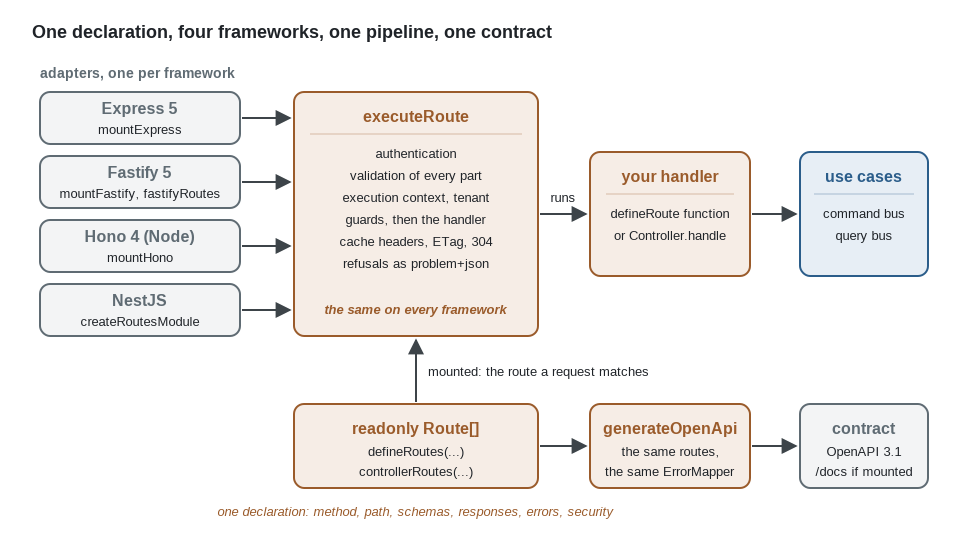
Declare a route once, without a framework. Mount it on Express 5, Fastify 5, Hono 4 (on Node)
|
|
@@ -6,13 +8,27 @@ or NestJS, and generate the OpenAPI 3.1 contract from the same declaration.
|
|
|
6
8
|
Every adapter goes through one pipeline (`executeRoute`): validation, handler, error mapping.
|
|
7
9
|
The behaviour is therefore the same on the four frameworks, and one test suite proves it.
|
|
8
10
|
|
|
11
|
+
|
|
12
|
+
|
|
13
|
+
The package lives in the presentation layer: it turns an HTTP request into a call of your
|
|
14
|
+
handler, and the answer of the handler (or its refusal) into an HTTP response. It decides
|
|
15
|
+
nothing about the business: the handler sends a command or a query to the application, and
|
|
16
|
+
the use case decides.
|
|
17
|
+
|
|
9
18
|
## Declare
|
|
10
19
|
|
|
20
|
+
<!-- checked sample -->
|
|
11
21
|
```ts
|
|
12
22
|
import { z } from 'zod';
|
|
23
|
+
import type { Actor } from '@ddd-ts-kit/kernel';
|
|
13
24
|
import { defineRoute, defineRoutes } from '@ddd-ts-kit/http';
|
|
14
25
|
import { zodSchema } from '@ddd-ts-kit/validation/zod';
|
|
15
26
|
|
|
27
|
+
/** The read side of the application, handed to the routes by the composition root. */
|
|
28
|
+
interface OrderQueries {
|
|
29
|
+
byId(orderId: string, actor: Actor): Promise<{ id: string; total: number }>;
|
|
30
|
+
}
|
|
31
|
+
|
|
16
32
|
const order = zodSchema(z.object({ id: z.string(), total: z.number() }), { io: 'output' });
|
|
17
33
|
|
|
18
34
|
export const orderRoutes = (orders: OrderQueries) =>
|
|
@@ -31,33 +47,74 @@ export const orderRoutes = (orders: OrderQueries) =>
|
|
|
31
47
|
},
|
|
32
48
|
async ({ params, context }) => ({
|
|
33
49
|
status: 200, // must be a declared status, and the body must match its schema
|
|
34
|
-
body: await orders.byId(params.orderId, context.
|
|
50
|
+
body: await orders.byId(params.orderId, context.execution.actor),
|
|
35
51
|
}),
|
|
36
52
|
),
|
|
37
53
|
);
|
|
38
54
|
```
|
|
39
55
|
|
|
40
56
|
- `params`, `query`, `headers` and `body` are typed from the schemas. Any `Schema` of
|
|
41
|
-
`@ddd-ts-kit/validation` works (zod, class-validator, Standard Schema).
|
|
57
|
+
`@ddd-ts-kit/validation` works (zod, class-validator, TypeBox, Standard Schema).
|
|
42
58
|
- Paths are literal segments and `:name` parameters, the form Express and Fastify share.
|
|
43
59
|
- Frameworks hand query values over as strings: coerce in the schema (`z.coerce.number()`).
|
|
44
|
-
- `context` is `{ requestId, execution, principal?, raw }`.
|
|
45
|
-
`ExecutionContext` of the request (see "The execution context of a
|
|
46
|
-
framework's request object
|
|
60
|
+
- `context` is `{ requestId, execution, principal?, rawHeaders?, raw, expectedVersion?, stream? }`.
|
|
61
|
+
`execution` is the kernel `ExecutionContext` of the request (see "The execution context of a
|
|
62
|
+
request"); `raw` is the framework's request object and `rawHeaders` the headers as they
|
|
63
|
+
arrived; `expectedVersion` is read from `If-Match` (see "Conditional requests") and `stream`
|
|
64
|
+
is the unparsed body of a route declared with `rawBody`.
|
|
47
65
|
- `security` is required: the names of the security schemes that apply, or `false` for a route
|
|
48
66
|
anybody may call. A route is never public by omission: leaving it out does not compile, and
|
|
49
67
|
`defineRoute` refuses an empty list, which would say the same as `false` without saying it.
|
|
50
68
|
- `defineRoutes` and every mount refuse a duplicate `operationId` or method and path.
|
|
51
69
|
- `prefixRoutes('/api', routes)` moves routes under a prefix, for the server and the contract.
|
|
52
70
|
|
|
71
|
+
A refusal is thrown, not returned. The handler answers only the success it declares; what can
|
|
72
|
+
go wrong is a code in `errors`, which the contract documents and the pipeline answers:
|
|
73
|
+
|
|
74
|
+
```ts
|
|
75
|
+
// Instead of: a 404 written by hand, a second shape of answer that every route invents again
|
|
76
|
+
responses: { 200: { description: 'The order.', body: order }, 404: { description: 'No such order.' } },
|
|
77
|
+
async ({ params }) => {
|
|
78
|
+
const found = await orders.find(params.orderId);
|
|
79
|
+
return found === undefined ? { status: 404 } : { status: 200, body: found };
|
|
80
|
+
},
|
|
81
|
+
|
|
82
|
+
// Write: the use case throws a refusal (NotFoundError, or a factory of a ConceptError) and the
|
|
83
|
+
// route lists its code; the answer is a problem document, the same on every route (see "Errors")
|
|
84
|
+
responses: { 200: { description: 'The order.', body: order } },
|
|
85
|
+
errors: ['NOT_FOUND'],
|
|
86
|
+
async ({ params, context }) => ({ status: 200, body: await orders.byId(params.orderId, context.execution.actor) }),
|
|
87
|
+
```
|
|
88
|
+
|
|
53
89
|
## Controllers, route groups and guards
|
|
54
90
|
|
|
55
91
|
A route may also be a class: one class per route, one method, `handle`. Its decorator is the
|
|
56
92
|
declaration, and the compiler holds `handle` to it: a part the schemas do not produce, or
|
|
57
93
|
another body than the declared response, is an error on the decorator.
|
|
58
94
|
|
|
95
|
+
<!-- checked sample -->
|
|
59
96
|
```ts
|
|
60
|
-
import {
|
|
97
|
+
import { z } from 'zod';
|
|
98
|
+
import { AuthorizedCommand, type Actor, type CommandBus } from '@ddd-ts-kit/kernel';
|
|
99
|
+
import { Authenticated, Controller, RouteGroup, controllerRoutes, type HttpRequest } from '@ddd-ts-kit/http';
|
|
100
|
+
import type { Infer } from '@ddd-ts-kit/validation';
|
|
101
|
+
import { zodSchema } from '@ddd-ts-kit/validation/zod';
|
|
102
|
+
|
|
103
|
+
/** The command of the use case, in the application layer (its @Requires permission left out here). */
|
|
104
|
+
class PlaceOrder extends AuthorizedCommand<string> {
|
|
105
|
+
constructor(
|
|
106
|
+
actor: Actor,
|
|
107
|
+
readonly customerId: string,
|
|
108
|
+
) {
|
|
109
|
+
super(actor);
|
|
110
|
+
}
|
|
111
|
+
}
|
|
112
|
+
|
|
113
|
+
const body = zodSchema(z.object({ customerId: z.string().min(1) }));
|
|
114
|
+
const placed = zodSchema(z.object({ id: z.string() }), { io: 'output' });
|
|
115
|
+
|
|
116
|
+
type PlaceOrderBody = Infer<typeof body>; // { customerId: string }
|
|
117
|
+
type Placed = Infer<typeof placed>; // { id: string }
|
|
61
118
|
|
|
62
119
|
@RouteGroup({ prefix: '/orders', tags: ['orders'], guards: [Authenticated], errors: ['FORBIDDEN'] })
|
|
63
120
|
export class OrdersRoutes {}
|
|
@@ -74,17 +131,24 @@ export class OrdersRoutes {}
|
|
|
74
131
|
export class PlaceOrderController {
|
|
75
132
|
constructor(private readonly commands: CommandBus) {}
|
|
76
133
|
|
|
77
|
-
async handle({ body, actor }: HttpRequest<{ body:
|
|
134
|
+
async handle({ body, actor }: HttpRequest<{ body: PlaceOrderBody }>): Promise<Placed> {
|
|
78
135
|
return { id: await this.commands.execute(new PlaceOrder(actor, body.customerId)) };
|
|
79
136
|
}
|
|
80
137
|
}
|
|
81
138
|
|
|
82
|
-
const
|
|
139
|
+
declare const application: { resolve<T>(target: abstract new (...args: never) => T): T };
|
|
140
|
+
|
|
141
|
+
export const routes = controllerRoutes([PlaceOrderController], { resolve: application.resolve });
|
|
83
142
|
```
|
|
84
143
|
|
|
144
|
+
The route of this controller is `POST /orders`: the prefix of its group, then its own path
|
|
145
|
+
(`/` is the prefix itself).
|
|
146
|
+
It answers 201 with `{ id }`, documents `OUT_OF_STOCK` (its own), `FORBIDDEN` (its group) and
|
|
147
|
+
`UNAUTHORIZED` (the `Authenticated` guard), and lets no anonymous caller reach `handle`.
|
|
148
|
+
|
|
85
149
|
| Export | What it is |
|
|
86
150
|
|---|---|
|
|
87
|
-
| `Controller(spec)` | the decorator of a controller: `group`, `method`, `path` (after the prefix of the group), `operationId` (the class name without `Controller` by default), `summary`, `description`, `tags`, `params`, `query`, `headers`, `body`, `response: { status, description?, body? }`, `errors`, `guards`, `deprecated`, `cache` and `ifMatch` (see "HTTP caching"), `produces` and `consumes` (see [Representations](#representations-json-xml-csv)), `form` (see [Forms described by the server](#forms-described-by-the-server)) |
|
|
151
|
+
| `Controller(spec)` | the decorator of a controller: `group`, `method`, `path` (after the prefix of the group), `operationId` (the class name without `Controller` by default), `summary`, `description`, `tags`, `params`, `query`, `headers`, `body`, `upload` (see "Uploads and files"), `response: { status, description?, body? }`, `errors`, `guards`, `deprecated`, `cache` and `ifMatch` (see "HTTP caching"), `produces` and `consumes` (see [Representations](#representations-json-xml-csv)), `form` (see [Forms described by the server](#forms-described-by-the-server)) |
|
|
88
152
|
| `RouteGroup({ parent, prefix, tags, guards, errors, cache })` | names a set of routes on an empty class; a child inherits from its `parent` and adds; the nearest `cache` wins |
|
|
89
153
|
| `Guard` | the interface `{ documents?, check(request: GuardRequest) }`, and the decorator of a guard class that takes dependencies |
|
|
90
154
|
| `Authenticated`, `Public`, `HasRole(...roles)`, `HasScope(...scopes)`, `TenantMember` | the guards the package ships, over the `Actor` and the `Session` of the request: 401 to the anonymous caller, 403 without one of the roles, without every scope named (`Session.scopes`, typed by the `SessionScopes` of the project) or outside the tenant of the request; `Public` lets everybody in and stands alone. A refusal of a guard is reported to `onGuardRefusal` |
|
|
@@ -103,6 +167,65 @@ in `DeclaredEdges`. A controller has one response and answers its body: a route
|
|
|
103
167
|
success statuses, response headers or a raw body stays a `defineRoute` function. The reasons
|
|
104
168
|
are on the [presentation layer](../../docs/concepts/presentation-layer.md) page.
|
|
105
169
|
|
|
170
|
+
## One request, step by step
|
|
171
|
+
|
|
172
|
+
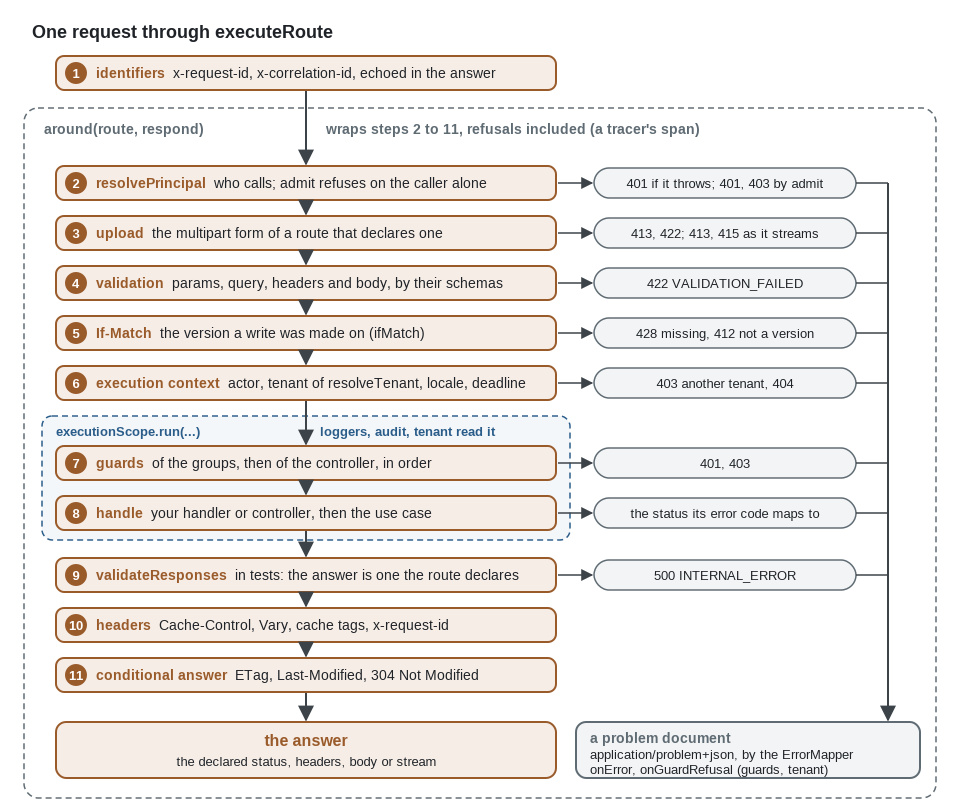
`executeRoute(route, request, options)` is the whole behaviour of the package: an adapter only
|
|
173
|
+
copies the request of its framework into a `RawRequest` (`params`, `query`, `headers`, `body`,
|
|
174
|
+
`raw`, and the body `stream`), calls it, and writes back the `RouteResponse` it returns.
|
|
175
|
+
|
|
176
|
+
|
|
177
|
+
|
|
178
|
+
The steps that are not needed are skipped: no upload, no `If-Match`, no guard, no validator.
|
|
179
|
+
The first refusal ends the request: a request that is not valid never reaches a guard, and a
|
|
180
|
+
caller a guard refuses never reaches `handle`. Guards run after validation, so they read typed
|
|
181
|
+
parameters; a credential that `resolvePrincipal` rejects is refused before anything else.
|
|
182
|
+
|
|
183
|
+
Since `executeRoute` needs no server, a spec of a route calls it directly, as the adapters do:
|
|
184
|
+
|
|
185
|
+
<!-- checked sample -->
|
|
186
|
+
```ts
|
|
187
|
+
import { z } from 'zod';
|
|
188
|
+
import { NotFoundError } from '@ddd-ts-kit/kernel';
|
|
189
|
+
import { defineRoute, executeRoute, type RawRequest } from '@ddd-ts-kit/http';
|
|
190
|
+
import { zodSchema } from '@ddd-ts-kit/validation/zod';
|
|
191
|
+
|
|
192
|
+
const orders = new Map([['7', { id: '7', total: 42 }]]);
|
|
193
|
+
|
|
194
|
+
const getOrder = defineRoute(
|
|
195
|
+
{
|
|
196
|
+
method: 'GET',
|
|
197
|
+
path: '/orders/:orderId',
|
|
198
|
+
operationId: 'getOrder',
|
|
199
|
+
summary: 'Read an order',
|
|
200
|
+
request: { params: zodSchema(z.object({ orderId: z.string().regex(/^\d+$/) })) },
|
|
201
|
+
responses: {
|
|
202
|
+
200: { description: 'The order.', body: zodSchema(z.object({ id: z.string(), total: z.number() }), { io: 'output' }) },
|
|
203
|
+
},
|
|
204
|
+
errors: ['NOT_FOUND'],
|
|
205
|
+
security: false,
|
|
206
|
+
},
|
|
207
|
+
async ({ params }) => {
|
|
208
|
+
const found = orders.get(params.orderId);
|
|
209
|
+
|
|
210
|
+
if (found === undefined) {
|
|
211
|
+
throw new NotFoundError(`Order ${params.orderId} does not exist.`);
|
|
212
|
+
}
|
|
213
|
+
|
|
214
|
+
return { status: 200, body: found };
|
|
215
|
+
},
|
|
216
|
+
);
|
|
217
|
+
|
|
218
|
+
const request = (orderId: string): RawRequest => ({ params: { orderId }, query: {}, headers: {}, body: undefined, raw: undefined });
|
|
219
|
+
|
|
220
|
+
export const found = await executeRoute(getOrder, request('7')); // 200, { id: '7', total: 42 }
|
|
221
|
+
export const missing = await executeRoute(getOrder, request('8')); // 404, a problem with the code NOT_FOUND
|
|
222
|
+
export const invalid = await executeRoute(getOrder, request('x')); // 422, VALIDATION_FAILED, one issue at params.orderId
|
|
223
|
+
```
|
|
224
|
+
|
|
225
|
+
Pass the options of the application as the third argument (`validateResponses: true` in
|
|
226
|
+
tests, `resolvePrincipal` to call as a given actor): the answer is the one the server would
|
|
227
|
+
send, headers included.
|
|
228
|
+
|
|
106
229
|
## HTTP caching
|
|
107
230
|
|
|
108
231
|
A read says how the caches on the way may keep its answer, on its controller, on its route
|
|
@@ -147,6 +270,21 @@ A policy that cannot stand is refused when the route is declared, with a `Declar
|
|
|
147
270
|
The ESLint rule `presentation/shared-cache-varies` reports the same declaration in the editor,
|
|
148
271
|
for what one file shows.
|
|
149
272
|
|
|
273
|
+
```ts
|
|
274
|
+
// Instead of: refused with a DeclarationError; a CDN would hand the agenda of one caller to the next
|
|
275
|
+
@RouteGroup({ prefix: '/me', guards: [Authenticated], cache: { scope: CacheScope.public, maxAge: '1m' } })
|
|
276
|
+
|
|
277
|
+
// Write: kept by the browser of the caller only
|
|
278
|
+
@RouteGroup({ prefix: '/me', guards: [Authenticated], cache: { scope: CacheScope.private, maxAge: '1m' } })
|
|
279
|
+
|
|
280
|
+
// Or, when a shared cache must keep it: one copy per credential
|
|
281
|
+
@RouteGroup({
|
|
282
|
+
prefix: '/me',
|
|
283
|
+
guards: [Authenticated],
|
|
284
|
+
cache: { scope: CacheScope.public, maxAge: '1m', vary: ['Authorization'] },
|
|
285
|
+
})
|
|
286
|
+
```
|
|
287
|
+
|
|
150
288
|
When the routes are mounted (`mountExpress`, `mountFastify`, `createRoutesModule`), the options of
|
|
151
289
|
the application are known, and a public answer is held to them with a `DeclarationError`:
|
|
152
290
|
|
|
@@ -275,11 +413,19 @@ the transaction of the command. A command that rolls back purges nothing; one th
|
|
|
275
413
|
purges even when the process stops right after the commit, since the row waits for the next
|
|
276
414
|
relay. The relay hands the requests to a `CachePurger` and every other event to the broker:
|
|
277
415
|
|
|
416
|
+
<!-- checked sample -->
|
|
278
417
|
```ts
|
|
279
|
-
import {
|
|
418
|
+
import { OutboxRelay, type OutboxStore } from '@ddd-ts-kit/events';
|
|
419
|
+
import { PurgingPublisher, type Clock, type IntegrationEventPublisher } from '@ddd-ts-kit/kernel';
|
|
280
420
|
import { VarnishCachePurger } from '@ddd-ts-kit/http/purgers';
|
|
281
421
|
|
|
282
|
-
const
|
|
422
|
+
declare const store: OutboxStore;
|
|
423
|
+
declare const broker: IntegrationEventPublisher;
|
|
424
|
+
declare const clock: Clock;
|
|
425
|
+
declare const varnishUrl: string;
|
|
426
|
+
declare const varnishPurgeKey: string;
|
|
427
|
+
|
|
428
|
+
export const relay = new OutboxRelay({
|
|
283
429
|
store,
|
|
284
430
|
publisher: new PurgingPublisher(new VarnishCachePurger({ url: varnishUrl, key: varnishPurgeKey }), broker),
|
|
285
431
|
clock,
|
|
@@ -318,66 +464,120 @@ A handler throws a `DomainError`; its `code` is mapped to a status in one place
|
|
|
318
464
|
"detail": "Order 7 does not exist.", "requestId": "..." }
|
|
319
465
|
```
|
|
320
466
|
|
|
467
|
+
|
|
468
|
+
|
|
321
469
|
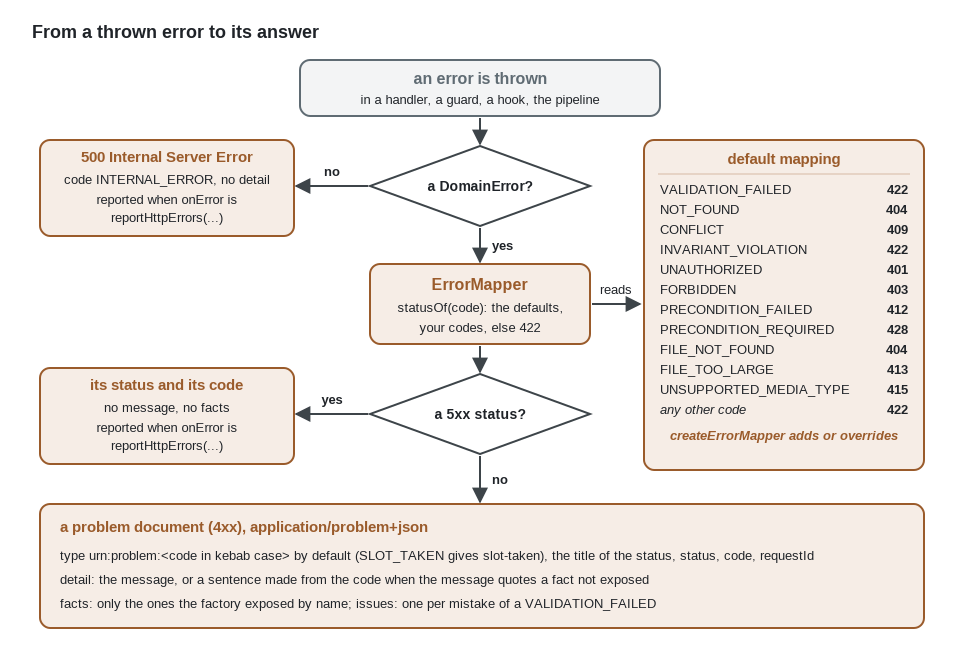
A refusal built by a factory of a `ConceptError` carries facts, and they are private: the
|
|
322
470
|
document holds, under `facts`, only the ones its factory exposed by name, and no `facts` member
|
|
323
471
|
when it exposed none.
|
|
324
472
|
|
|
473
|
+
<!-- checked sample -->
|
|
325
474
|
```ts
|
|
326
|
-
|
|
327
|
-
|
|
475
|
+
import { ConceptError } from '@ddd-ts-kit/kernel';
|
|
476
|
+
|
|
477
|
+
export class AppointmentError extends ConceptError {
|
|
478
|
+
static slotTaken(calendarId: string, startsAt: Date) {
|
|
479
|
+
return AppointmentError.refusal('SLOT_TAKEN', 'The slot is already held.', { calendarId, startsAt }).exposing('startsAt');
|
|
480
|
+
}
|
|
328
481
|
}
|
|
329
482
|
```
|
|
330
483
|
|
|
484
|
+
With `SLOT_TAKEN` mapped to 409 (`createErrorMapper({ SLOT_TAKEN: 409 })`, below), a handler
|
|
485
|
+
that throws `AppointmentError.slotTaken('c-1', startsAt)` answers:
|
|
486
|
+
|
|
331
487
|
```json
|
|
332
488
|
{ "type": "urn:problem:slot-taken", "title": "Conflict", "status": 409, "code": "SLOT_TAKEN",
|
|
333
489
|
"detail": "The slot is already held.", "facts": { "startsAt": "2026-03-02T09:00:00.000Z" }, "requestId": "..." }
|
|
334
490
|
```
|
|
335
491
|
|
|
492
|
+
`calendarId` stays in the process: the factory did not expose it.
|
|
493
|
+
|
|
336
494
|
`facts` is an optional object of the `Problem` schema of the OpenAPI document. A client
|
|
337
495
|
branches on `code` and reads data from `facts`, never from `detail`, which is a sentence for a
|
|
338
496
|
human and may change. The message is answered as it was written: it says nothing the caller
|
|
339
497
|
did not send, and nothing about another person. A refusal mapped to a 5xx answers neither its
|
|
340
498
|
message nor its facts.
|
|
341
499
|
|
|
500
|
+
<!-- checked sample -->
|
|
501
|
+
```ts
|
|
502
|
+
import type { Problem } from '@ddd-ts-kit/http';
|
|
503
|
+
|
|
504
|
+
// Instead of: data parsed out of the sentence, which breaks the day the sentence is reworded
|
|
505
|
+
export function startsAtFromDetail(problem: Problem): string | undefined {
|
|
506
|
+
return /held at (.+)\.$/.exec(problem.detail ?? '')?.[1];
|
|
507
|
+
}
|
|
508
|
+
|
|
509
|
+
// Write: branch on the stable code, read the fact the refusal exposed
|
|
510
|
+
export function startsAtOf(problem: Problem): string | undefined {
|
|
511
|
+
if (problem.code !== 'SLOT_TAKEN') {
|
|
512
|
+
return undefined;
|
|
513
|
+
}
|
|
514
|
+
|
|
515
|
+
const startsAt = problem.facts?.['startsAt'];
|
|
516
|
+
|
|
517
|
+
return typeof startsAt === 'string' ? startsAt : undefined;
|
|
518
|
+
}
|
|
519
|
+
```
|
|
520
|
+
|
|
342
521
|
Defaults: `VALIDATION_FAILED` 422 (with `issues`, paths prefixed by the part:
|
|
343
522
|
`body.items.0.sku`), `NOT_FOUND` 404, `CONFLICT` 409, `INVARIANT_VIOLATION` 422, `UNAUTHORIZED`
|
|
344
|
-
401, `FORBIDDEN` 403, `NOT_ACCEPTABLE` 406, `PRECONDITION_FAILED` 412, `UNSUPPORTED_MEDIA_TYPE` 415
|
|
345
|
-
|
|
523
|
+
401, `FORBIDDEN` 403, `NOT_ACCEPTABLE` 406, `PRECONDITION_FAILED` 412, `UNSUPPORTED_MEDIA_TYPE` 415
|
|
524
|
+
(a body or a file of a type the route does not take), `PRECONDITION_REQUIRED` 428, and for files
|
|
525
|
+
`FILE_NOT_FOUND` 404, `FILE_TOO_LARGE` 413. A domain code that is not mapped answers 422
|
|
526
|
+
(`fallbackStatus` of the second argument changes it).
|
|
346
527
|
|
|
528
|
+
<!-- checked sample -->
|
|
347
529
|
```ts
|
|
348
530
|
import { createErrorMapper } from '@ddd-ts-kit/http';
|
|
349
531
|
|
|
350
|
-
const errorMapper = createErrorMapper({ ORDER_ALREADY_SHIPPED: 409, QUOTA_EXCEEDED: 429 });
|
|
532
|
+
export const errorMapper = createErrorMapper({ ORDER_ALREADY_SHIPPED: 409, QUOTA_EXCEEDED: 429, SLOT_TAKEN: 409 });
|
|
533
|
+
|
|
534
|
+
errorMapper.statusOf('SLOT_TAKEN'); // 409, the code of the application
|
|
535
|
+
errorMapper.statusOf('NOT_FOUND'); // 404, a default
|
|
536
|
+
errorMapper.statusOf('INVALID_EMAIL'); // 422, a code not mapped
|
|
537
|
+
errorMapper.typeOf('SLOT_TAKEN'); // 'urn:problem:slot-taken', the type of its problem document
|
|
351
538
|
```
|
|
352
539
|
|
|
353
|
-
Anything that is not a `DomainError` answers 500 `Internal Server Error` with no detail
|
|
354
|
-
message of an unexpected error never leaves the process. Log it
|
|
355
|
-
report it to the error tracker with
|
|
356
|
-
answered 5xx goes to the kernel
|
|
357
|
-
|
|
358
|
-
4xx never does.
|
|
540
|
+
Anything that is not a `DomainError` answers 500 `Internal Server Error` with no detail (its
|
|
541
|
+
code is `INTERNAL_ERROR`): the message of an unexpected error never leaves the process. Log it
|
|
542
|
+
from the `onError` hook, and report it to the error tracker with
|
|
543
|
+
`onError: reportHttpErrors(errorReporter)`: every request answered 5xx goes to the kernel
|
|
544
|
+
`ErrorReporter`, once, with the correlation, actor and tenant ids of its execution context
|
|
545
|
+
(`context.execution`, present once the request got that far); a 4xx never does.
|
|
359
546
|
|
|
360
547
|
A refusal built by a factory (`ConceptError`) answers its message as `detail` unless the message
|
|
361
548
|
quotes a fact the factory did not expose: then the client reads a sentence made from the code
|
|
362
549
|
(`INVALID_EMAIL` gives `Invalid email.`) and the message stays in the logs and the error
|
|
363
550
|
reports. A fact is found in the message as a text, a number or an ISO instant; a fact written
|
|
364
|
-
another way (a formatted date, a
|
|
551
|
+
another way (a formatted date, a rounded number) is not seen, so expose what a client may
|
|
365
552
|
read and keep the rest out of the sentence.
|
|
366
553
|
|
|
367
554
|
## Options shared by the adapters
|
|
368
555
|
|
|
369
|
-
|
|
370
|
-
import type { ExecuteOptions } from '@ddd-ts-kit/http';
|
|
556
|
+
Every mount takes the same `ExecuteOptions`, a plain object built where the server starts:
|
|
371
557
|
|
|
372
|
-
|
|
373
|
-
|
|
558
|
+
<!-- checked sample -->
|
|
559
|
+
```ts
|
|
560
|
+
import { auditGuardRefusals } from '@ddd-ts-kit/audit';
|
|
561
|
+
import { CacheTagHeader, createErrorMapper, type ExecuteOptions } from '@ddd-ts-kit/http';
|
|
562
|
+
import type { AuditTrail, Clock, IdGenerator } from '@ddd-ts-kit/kernel';
|
|
563
|
+
import { tracedRoutes } from '@ddd-ts-kit/tracing';
|
|
564
|
+
|
|
565
|
+
declare function authenticate(raw: unknown): Promise<unknown>;
|
|
566
|
+
declare const logger: { error(fields: Record<string, unknown>): void };
|
|
567
|
+
declare const trail: AuditTrail;
|
|
568
|
+
declare const clock: Clock;
|
|
569
|
+
declare const ids: IdGenerator;
|
|
570
|
+
|
|
571
|
+
export const options: ExecuteOptions = {
|
|
572
|
+
errorMapper: createErrorMapper({ ORDER_ALREADY_SHIPPED: 409 }),
|
|
374
573
|
resolvePrincipal: (raw) => authenticate(raw), // throw UnauthorizedError to refuse
|
|
375
574
|
onError: (error, { requestId, correlationId, operationId, problem }) => {
|
|
376
575
|
if (problem.status >= 500) {
|
|
377
576
|
logger.error({ requestId, correlationId, operationId, error });
|
|
378
577
|
}
|
|
379
578
|
},
|
|
380
|
-
|
|
579
|
+
onGuardRefusal: auditGuardRefusals(trail, { clock, ids }), // the refusals at the edge, in the audit trail
|
|
580
|
+
validateResponses: process.env['NODE_ENV'] === 'test', // checks answers against the declaration
|
|
381
581
|
around: tracedRoutes(), // of @ddd-ts-kit/tracing: the span of the request, named by its route template
|
|
382
582
|
// the header the shared cache in front reads the tags from; honoursVary and perTenant: see HTTP caching
|
|
383
583
|
cacheTags: { header: CacheTagHeader.xkey },
|
|
@@ -416,10 +616,16 @@ as `context.execution`:
|
|
|
416
616
|
| `locale` | the locale of the session, else the preferred language of `Accept-Language` |
|
|
417
617
|
| `deadline` | arrival plus `requestTimeoutMs`, when the option is set |
|
|
418
618
|
|
|
619
|
+
<!-- checked sample -->
|
|
419
620
|
```ts
|
|
621
|
+
import { principalResolver, type Authenticator } from '@ddd-ts-kit/auth';
|
|
622
|
+
import type { ExecuteOptions } from '@ddd-ts-kit/http';
|
|
420
623
|
import { Clock, ExecutionScope } from '@ddd-ts-kit/kernel';
|
|
421
624
|
|
|
422
|
-
const
|
|
625
|
+
declare const authenticator: Authenticator;
|
|
626
|
+
declare const app: { resolve<T>(token: abstract new (...args: never) => T): T };
|
|
627
|
+
|
|
628
|
+
export const options: ExecuteOptions = {
|
|
423
629
|
resolvePrincipal: principalResolver(authenticator), // of @ddd-ts-kit/auth: answers a Session
|
|
424
630
|
executionScope: app.resolve(ExecutionScope), // the scope the application runs its use cases in
|
|
425
631
|
clock: app.resolve(Clock),
|
|
@@ -441,10 +647,11 @@ or `actorOf(context.principal)` of `@ddd-ts-kit/auth`, which reads the same acto
|
|
|
441
647
|
|
|
442
648
|
A multi-tenant application says where a request names its tenant with `resolveTenant`:
|
|
443
649
|
|
|
650
|
+
<!-- checked sample -->
|
|
444
651
|
```ts
|
|
445
|
-
import { firstTenantOf, tenantFromClaim, tenantFromSubdomain } from '@ddd-ts-kit/http';
|
|
652
|
+
import { firstTenantOf, tenantFromClaim, tenantFromSubdomain, type ExecuteOptions } from '@ddd-ts-kit/http';
|
|
446
653
|
|
|
447
|
-
const options: ExecuteOptions = {
|
|
654
|
+
export const options: ExecuteOptions = {
|
|
448
655
|
resolveTenant: firstTenantOf(tenantFromSubdomain('app.example.com'), tenantFromClaim()),
|
|
449
656
|
// or tenantFromHeader('x-tenant-id'), tenantFromPath('tenantId')
|
|
450
657
|
};
|
|
@@ -466,7 +673,16 @@ opens another tenant's data. An anonymous caller keeps the tenant it addressed,
|
|
|
466
673
|
routes of a tenant. The guard `TenantMember` puts a group of routes behind a tenant: 401 to the
|
|
467
674
|
anonymous caller, 403 to a request in no tenant or of another tenant. Platform staff do not pass
|
|
468
675
|
it: they reach tenants through an elevation of the kernel (`acrossTenants`), behind guards of their
|
|
469
|
-
own.
|
|
676
|
+
own. A tenant id that no tenant can have (`*`, a list, a `:`, outside the grammar of `isTenantId`)
|
|
677
|
+
is answered 404 before anything reads it, whoever calls.
|
|
678
|
+
|
|
679
|
+
| Caller | Tenant named by the request | Answer |
|
|
680
|
+
|---|---|---|
|
|
681
|
+
| anonymous | any | goes on, in the tenant it addressed; a `TenantMember` route answers 401 |
|
|
682
|
+
| member of `acme` | `acme` | goes on, `execution.tenantId` is `acme` |
|
|
683
|
+
| member of `acme` | `globex` | 403, before any guard or handler, reported to `onGuardRefusal` |
|
|
684
|
+
| member of `acme` | none | goes on in `acme`, the tenant of the actor |
|
|
685
|
+
| anybody | `*` or `a,b` | 404 |
|
|
470
686
|
|
|
471
687
|
## In the composition root
|
|
472
688
|
|
|
@@ -474,11 +690,14 @@ The package binds and resolves nothing: routes are a plain list and `ExecuteOpti
|
|
|
474
690
|
object, both built where the server starts. What it takes from the application are ports,
|
|
475
691
|
resolved by their class:
|
|
476
692
|
|
|
693
|
+
<!-- checked sample -->
|
|
477
694
|
```ts
|
|
478
|
-
import { createApplication, defineContextModule, kernelModule } from '@ddd-ts-kit/di';
|
|
695
|
+
import { createApplication, defineContextModule, kernelModule, type ContextModule } from '@ddd-ts-kit/di';
|
|
479
696
|
import { ErrorMapper, createErrorMapper, type ExecuteOptions } from '@ddd-ts-kit/http';
|
|
480
697
|
import { Clock, ExecutionScope } from '@ddd-ts-kit/kernel';
|
|
481
698
|
|
|
699
|
+
declare const orderingModule: ContextModule; // the module of a bounded context
|
|
700
|
+
|
|
482
701
|
const httpModule = defineContextModule({
|
|
483
702
|
name: 'http',
|
|
484
703
|
register(builder) {
|
|
@@ -488,7 +707,7 @@ const httpModule = defineContextModule({
|
|
|
488
707
|
|
|
489
708
|
const app = createApplication({ modules: [kernelModule(), httpModule, orderingModule] });
|
|
490
709
|
|
|
491
|
-
const options: ExecuteOptions = {
|
|
710
|
+
export const options: ExecuteOptions = {
|
|
492
711
|
errorMapper: app.resolve(ErrorMapper),
|
|
493
712
|
executionScope: app.resolve(ExecutionScope),
|
|
494
713
|
clock: app.resolve(Clock),
|
|
@@ -509,10 +728,25 @@ One query vocabulary and one answer for every search, on top of the kernel `Page
|
|
|
509
728
|
`Page`: `limit`, `offset` or `cursor`, and `sort` (`placedAt,-total`: comma-separated fields, a
|
|
510
729
|
leading `-` for descending).
|
|
511
730
|
|
|
731
|
+
<!-- checked sample -->
|
|
512
732
|
```ts
|
|
733
|
+
import { z } from 'zod';
|
|
734
|
+
import type { Page, PageRequest } from '@ddd-ts-kit/kernel';
|
|
513
735
|
import { defineRoute, pageQuerySchema, pageResponse, pageSchemaOf } from '@ddd-ts-kit/http';
|
|
736
|
+
import { zodSchema } from '@ddd-ts-kit/validation/zod';
|
|
514
737
|
|
|
515
|
-
|
|
738
|
+
interface Order {
|
|
739
|
+
readonly id: string;
|
|
740
|
+
readonly placedAt: Date;
|
|
741
|
+
readonly total: number;
|
|
742
|
+
}
|
|
743
|
+
|
|
744
|
+
declare const orders: { search(page: PageRequest<'placedAt' | 'total'>): Promise<Page<Order>> };
|
|
745
|
+
|
|
746
|
+
const order = zodSchema(z.object({ id: z.string(), placedAt: z.string(), total: z.number() }), { io: 'output' });
|
|
747
|
+
const toOrderDto = ({ id, placedAt, total }: Order) => ({ id, placedAt: placedAt.toISOString(), total });
|
|
748
|
+
|
|
749
|
+
export const searchOrders = defineRoute(
|
|
516
750
|
{
|
|
517
751
|
method: 'GET',
|
|
518
752
|
path: '/orders',
|
|
@@ -624,6 +858,8 @@ into the text of one media type, chosen per request by the `Accept` header among
|
|
|
624
858
|
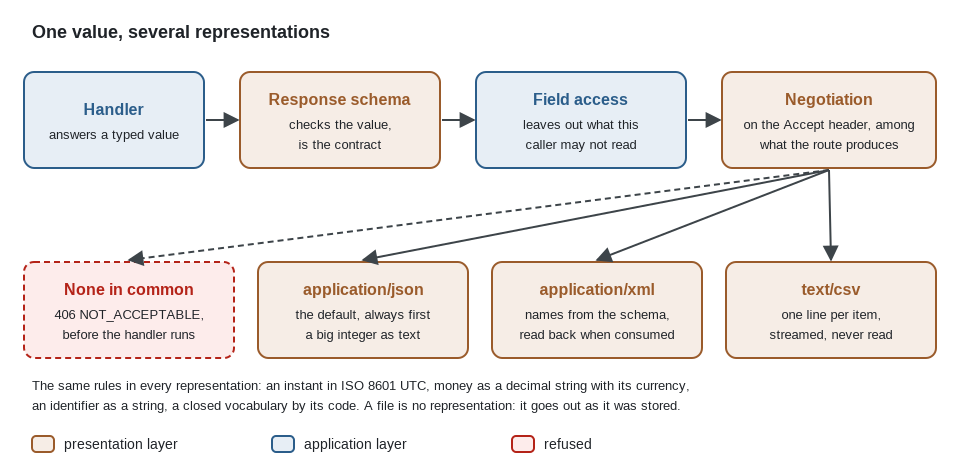
route declares. The application registers its representations once and gives the same set to
|
|
625
859
|
the adapters and to the contract generator:
|
|
626
860
|
|
|
861
|
+
|
|
862
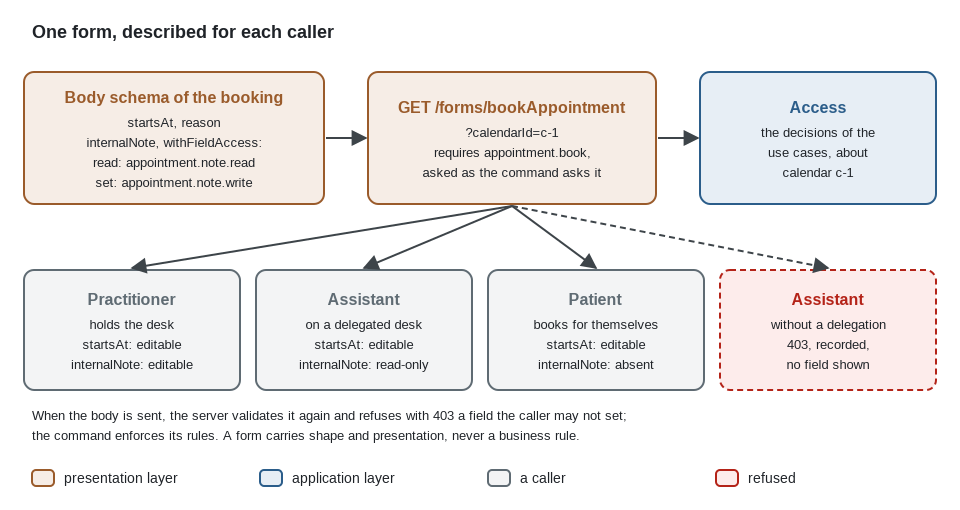
|
+
|
|
627
863
|
```ts
|
|
628
864
|
import { Representations, type ExecuteOptions } from '@ddd-ts-kit/http';
|
|
629
865
|
|
|
@@ -826,6 +1062,8 @@ A route that declares `form` is described as a form, from what it already declar
|
|
|
826
1062
|
body schema, the restricted fields of that schema, and a few presentation hints. `formRoutes`
|
|
827
1063
|
serves one `GET /forms/<operationId>` per such route, mounted and documented like any route:
|
|
828
1064
|
|
|
1065
|
+
|
|
1066
|
+
|
|
829
1067
|
```ts
|
|
830
1068
|
// presentation/http/appointments/book-appointment/book-appointment.controller.ts, next to its schemas
|
|
831
1069
|
const form = defineForm<Infer<typeof body>>({
|
|
@@ -900,36 +1138,52 @@ both formats, for the documentation: a project generated by the CLI writes them
|
|
|
900
1138
|
|
|
901
1139
|
## Express 5
|
|
902
1140
|
|
|
1141
|
+
<!-- checked sample -->
|
|
903
1142
|
```ts
|
|
904
1143
|
import express from 'express';
|
|
1144
|
+
import type { ExecuteOptions, Route } from '@ddd-ts-kit/http';
|
|
905
1145
|
import { mountExpress } from '@ddd-ts-kit/http/express';
|
|
906
1146
|
|
|
1147
|
+
declare const routes: readonly Route[]; // defineRoutes(...), controllerRoutes(...)
|
|
1148
|
+
declare const options: ExecuteOptions;
|
|
1149
|
+
|
|
907
1150
|
const app = express();
|
|
908
1151
|
app.use(express.json()); // required: the adapter does not parse bodies
|
|
909
|
-
mountExpress(app,
|
|
1152
|
+
mountExpress(app, routes, options); // an express.Router() works too
|
|
1153
|
+
app.listen(3000);
|
|
910
1154
|
```
|
|
911
1155
|
|
|
912
1156
|
## Fastify 5
|
|
913
1157
|
|
|
1158
|
+
<!-- checked sample -->
|
|
914
1159
|
```ts
|
|
915
1160
|
import Fastify from 'fastify';
|
|
1161
|
+
import type { ExecuteOptions, Route } from '@ddd-ts-kit/http';
|
|
916
1162
|
import { fastifyRoutes, mountFastify } from '@ddd-ts-kit/http/fastify';
|
|
917
1163
|
|
|
1164
|
+
declare const routes: readonly Route[];
|
|
1165
|
+
declare const options: ExecuteOptions;
|
|
1166
|
+
|
|
918
1167
|
const app = Fastify();
|
|
919
|
-
mountFastify(app,
|
|
1168
|
+
mountFastify(app, routes, options);
|
|
920
1169
|
// or, as a plugin:
|
|
921
|
-
await app.register(fastifyRoutes(
|
|
1170
|
+
await app.register(fastifyRoutes(routes, options), { prefix: '/api' });
|
|
922
1171
|
```
|
|
923
1172
|
|
|
924
1173
|
## Hono 4
|
|
925
1174
|
|
|
1175
|
+
<!-- checked sample -->
|
|
926
1176
|
```ts
|
|
927
1177
|
import { serve } from '@hono/node-server';
|
|
928
1178
|
import { Hono } from 'hono';
|
|
1179
|
+
import type { ExecuteOptions, Route } from '@ddd-ts-kit/http';
|
|
929
1180
|
import { mountHono } from '@ddd-ts-kit/http/hono';
|
|
930
1181
|
|
|
1182
|
+
declare const routes: readonly Route[];
|
|
1183
|
+
declare const options: ExecuteOptions;
|
|
1184
|
+
|
|
931
1185
|
const app = new Hono();
|
|
932
|
-
mountHono(app,
|
|
1186
|
+
mountHono(app, routes, { ...options, bodyLimit: 2 * 1024 * 1024 }); // bodyLimit: 1 MiB by default
|
|
933
1187
|
serve({ fetch: app.fetch, port: 3000 });
|
|
934
1188
|
```
|
|
935
1189
|
|
|
@@ -951,10 +1205,19 @@ Node with `@hono/node-server`, not Bun, Deno or an edge runtime.
|
|
|
951
1205
|
No decorator per route: a module mounts the routes on the underlying HTTP server at module
|
|
952
1206
|
init, whether Nest runs on Express or on Fastify. Handlers get their dependencies by closure.
|
|
953
1207
|
|
|
1208
|
+
<!-- checked sample: legacy-decorators -->
|
|
954
1209
|
```ts
|
|
955
1210
|
import { Module } from '@nestjs/common';
|
|
1211
|
+
import type { ExecuteOptions, Route } from '@ddd-ts-kit/http';
|
|
956
1212
|
import { createRoutesModule } from '@ddd-ts-kit/http/nest';
|
|
957
1213
|
|
|
1214
|
+
/** A token of the Nest application, exported by OrdersModule. */
|
|
1215
|
+
abstract class OrderQueries {}
|
|
1216
|
+
|
|
1217
|
+
declare class OrdersModule {}
|
|
1218
|
+
declare function orderRoutes(orders: OrderQueries): readonly Route[];
|
|
1219
|
+
declare const options: ExecuteOptions;
|
|
1220
|
+
|
|
958
1221
|
@Module({
|
|
959
1222
|
imports: [
|
|
960
1223
|
createRoutesModule(
|
|
@@ -972,14 +1235,19 @@ are those described above. Use `prefixRoutes` for a prefix.
|
|
|
972
1235
|
|
|
973
1236
|
## OpenAPI 3.1
|
|
974
1237
|
|
|
1238
|
+
<!-- checked sample -->
|
|
975
1239
|
```ts
|
|
976
1240
|
import { readFileSync, writeFileSync } from 'node:fs';
|
|
1241
|
+
import type { ErrorMapper, Route } from '@ddd-ts-kit/http';
|
|
977
1242
|
import { checkOpenApiDrift, generateOpenApi, stringifyOpenApi } from '@ddd-ts-kit/http/openapi';
|
|
978
1243
|
|
|
1244
|
+
declare const routes: readonly Route[]; // the very list the server mounts
|
|
1245
|
+
declare const errorMapper: ErrorMapper;
|
|
1246
|
+
|
|
979
1247
|
const document = generateOpenApi({
|
|
980
1248
|
info: { title: 'Orders', version: '1.0.0' },
|
|
981
1249
|
servers: [{ url: 'https://api.example.com' }],
|
|
982
|
-
routes
|
|
1250
|
+
routes,
|
|
983
1251
|
securitySchemes: { bearer: { type: 'http', scheme: 'bearer' } },
|
|
984
1252
|
errorMapper, // the one the server runs with
|
|
985
1253
|
});
|
|
@@ -1038,10 +1306,16 @@ Fields reserved by `withFieldAccess` stay reserved whichever of the two wraps th
|
|
|
1038
1306
|
|
|
1039
1307
|
## Serving the contract and its page
|
|
1040
1308
|
|
|
1309
|
+
<!-- checked sample -->
|
|
1041
1310
|
```ts
|
|
1311
|
+
import type { Route } from '@ddd-ts-kit/http';
|
|
1042
1312
|
import { openApiDocsRoutes } from '@ddd-ts-kit/http/docs';
|
|
1313
|
+
import type { OpenApiDocument } from '@ddd-ts-kit/http/openapi';
|
|
1314
|
+
|
|
1315
|
+
declare const orderRoutes: readonly Route[];
|
|
1316
|
+
declare const document: OpenApiDocument; // generateOpenApi(...) of orderRoutes
|
|
1043
1317
|
|
|
1044
|
-
const routes = [...orderRoutes
|
|
1318
|
+
export const routes = [...orderRoutes, ...openApiDocsRoutes(document, { ui: 'scalar' })];
|
|
1045
1319
|
```
|
|
1046
1320
|
|
|
1047
1321
|
Two public routes (`security: false`), mounted next to the application routes and absent
|
|
@@ -1055,10 +1329,14 @@ the UI chosen by `--docs-ui`, unless documentation is switched off by its config
|
|
|
1055
1329
|
|
|
1056
1330
|
## A contract split into documents
|
|
1057
1331
|
|
|
1332
|
+
<!-- checked sample -->
|
|
1058
1333
|
```ts
|
|
1334
|
+
import type { Route } from '@ddd-ts-kit/http';
|
|
1059
1335
|
import { openApiDocumentsRoutes } from '@ddd-ts-kit/http/docs';
|
|
1060
1336
|
import { generateOpenApi, routesByDocument } from '@ddd-ts-kit/http/openapi';
|
|
1061
1337
|
|
|
1338
|
+
declare const routes: readonly Route[];
|
|
1339
|
+
|
|
1062
1340
|
const documents = routesByDocument(routes, [
|
|
1063
1341
|
{ name: 'public', title: 'Booking API', groups: ['AppointmentRoutes'] },
|
|
1064
1342
|
{ name: 'back-office', title: 'Back office', tags: ['audit'], operations: ['openPractice'] },
|
|
@@ -1067,7 +1345,7 @@ const documents = routesByDocument(routes, [
|
|
|
1067
1345
|
document: generateOpenApi({ info: { title: title ?? 'API', version: '1.0.0' }, routes: selected }),
|
|
1068
1346
|
}));
|
|
1069
1347
|
|
|
1070
|
-
const served = [...routes, ...openApiDocumentsRoutes(documents, { ui: 'swagger' })];
|
|
1348
|
+
export const served = [...routes, ...openApiDocumentsRoutes(documents, { ui: 'swagger' })];
|
|
1071
1349
|
```
|
|
1072
1350
|
|
|
1073
1351
|
`routesByDocument` gives each document the routes of its route groups (a controller route
|
|
@@ -1086,22 +1364,62 @@ A controller that receives a file declares it, and the declaration is the contra
|
|
|
1086
1364
|
the most it may weigh and the media types it may be, which the OpenAPI document states
|
|
1087
1365
|
(`multipart/form-data`, `x-max-bytes`, `x-media-types`, the 413, 415 and 422 refusals).
|
|
1088
1366
|
|
|
1367
|
+
<!-- checked sample -->
|
|
1089
1368
|
```ts
|
|
1369
|
+
import { z } from 'zod';
|
|
1370
|
+
import { AuthorizedCommand, FileUpload, type Actor, type CommandBus, type ReceivedFile } from '@ddd-ts-kit/kernel';
|
|
1371
|
+
import {
|
|
1372
|
+
acceptedSchema,
|
|
1373
|
+
Authenticated,
|
|
1374
|
+
Controller,
|
|
1375
|
+
RouteGroup,
|
|
1376
|
+
type Accepted,
|
|
1377
|
+
type HttpRequest,
|
|
1378
|
+
type IncomingFile,
|
|
1379
|
+
} from '@ddd-ts-kit/http';
|
|
1380
|
+
import { zodSchema } from '@ddd-ts-kit/validation/zod';
|
|
1381
|
+
|
|
1382
|
+
/** The command carries the file: the bus stages it before the transaction opens. */
|
|
1383
|
+
class AttachDocument extends AuthorizedCommand<string> {
|
|
1384
|
+
readonly document: FileUpload;
|
|
1385
|
+
|
|
1386
|
+
constructor(
|
|
1387
|
+
actor: Actor,
|
|
1388
|
+
readonly appointmentId: string,
|
|
1389
|
+
file: ReceivedFile,
|
|
1390
|
+
) {
|
|
1391
|
+
super(actor);
|
|
1392
|
+
this.document = new FileUpload(file, 'appointment-documents');
|
|
1393
|
+
}
|
|
1394
|
+
}
|
|
1395
|
+
|
|
1396
|
+
@RouteGroup({ prefix: '/appointments', guards: [Authenticated] })
|
|
1397
|
+
export class AppointmentRoutes {}
|
|
1398
|
+
|
|
1399
|
+
const params = zodSchema(z.object({ appointmentId: z.string().min(1) }));
|
|
1400
|
+
const body = zodSchema(z.object({ note: z.string().max(200).optional() })); // the text fields, sent before the file
|
|
1401
|
+
|
|
1090
1402
|
@Controller({
|
|
1091
1403
|
group: AppointmentRoutes,
|
|
1092
1404
|
method: 'POST',
|
|
1093
1405
|
path: '/:appointmentId/document',
|
|
1094
1406
|
summary: 'Attach a document to an appointment',
|
|
1095
1407
|
params,
|
|
1096
|
-
body,
|
|
1408
|
+
body,
|
|
1097
1409
|
upload: { field: 'document', maxBytes: 10_000_000, mediaTypes: ['application/pdf', 'image/*'] },
|
|
1098
|
-
response: { status: 201, body:
|
|
1410
|
+
response: { status: 201, body: acceptedSchema },
|
|
1099
1411
|
})
|
|
1100
1412
|
export class AttachDocumentController {
|
|
1101
1413
|
constructor(private readonly commands: CommandBus) {}
|
|
1102
1414
|
|
|
1103
|
-
async handle({
|
|
1104
|
-
|
|
1415
|
+
async handle({
|
|
1416
|
+
params,
|
|
1417
|
+
upload,
|
|
1418
|
+
actor,
|
|
1419
|
+
}: HttpRequest<{ params: { appointmentId: string }; upload: IncomingFile }>): Promise<Accepted> {
|
|
1420
|
+
await this.commands.execute(new AttachDocument(actor, params.appointmentId, upload));
|
|
1421
|
+
|
|
1422
|
+
return { id: params.appointmentId };
|
|
1105
1423
|
}
|
|
1106
1424
|
}
|
|
1107
1425
|
```
|
|
@@ -1109,9 +1427,17 @@ export class AttachDocumentController {
|
|
|
1109
1427
|
The routes are mounted with an upload reader, `multipartUploads()` of `@ddd-ts-kit/http/uploads`
|
|
1110
1428
|
(on busboy, an optional peer: `npm i busboy`):
|
|
1111
1429
|
|
|
1430
|
+
<!-- checked sample -->
|
|
1112
1431
|
```ts
|
|
1432
|
+
import type { Express } from 'express';
|
|
1433
|
+
import type { ExecuteOptions, Route } from '@ddd-ts-kit/http';
|
|
1434
|
+
import { mountExpress } from '@ddd-ts-kit/http/express';
|
|
1113
1435
|
import { multipartUploads } from '@ddd-ts-kit/http/uploads';
|
|
1114
1436
|
|
|
1437
|
+
declare const app: Express;
|
|
1438
|
+
declare const routes: readonly Route[];
|
|
1439
|
+
declare const options: ExecuteOptions;
|
|
1440
|
+
|
|
1115
1441
|
mountExpress(app, routes, { ...options, uploads: multipartUploads() });
|
|
1116
1442
|
```
|
|
1117
1443
|
|
|
@@ -1145,8 +1471,9 @@ writes a file, and a route that declares no body schema is never refused 406.
|
|
|
1145
1471
|
|
|
1146
1472
|
## Limits
|
|
1147
1473
|
|
|
1148
|
-
-
|
|
1149
|
-
framework's own error handler, before the pipeline runs.
|
|
1474
|
+
- On Express, Fastify and NestJS, a body the framework itself refuses (malformed JSON, payload
|
|
1475
|
+
too large) is answered by the framework's own error handler, before the pipeline runs. The
|
|
1476
|
+
Hono adapter reads the body itself and answers both as problems (see "Hono 4").
|
|
1150
1477
|
- Routes are JSON first. A handler may answer a string, bytes or a stream by setting its own
|
|
1151
1478
|
`content-type` header, which no representation touches. A request body streams only as a
|
|
1152
1479
|
declared upload or a raw body (`rawBody`): server-sent events and WebSockets are written
|