@avantics/node-red-home-automation 3.0.1 → 4.0.1
This diff represents the content of publicly available package versions that have been released to one of the supported registries. The information contained in this diff is provided for informational purposes only and reflects changes between package versions as they appear in their respective public registries.
- package/README.md +278 -13
- package/dist/lib/activity-lighting-controller.d.ts +7 -1
- package/dist/lib/activity-lighting-controller.js +37 -3
- package/dist/lib/adopted-request.d.ts +26 -0
- package/dist/lib/adopted-request.js +44 -0
- package/dist/lib/avr-controller.d.ts +8 -1
- package/dist/lib/avr-controller.js +27 -3
- package/dist/lib/avr-publishing.d.ts +24 -0
- package/dist/lib/avr-publishing.js +80 -0
- package/dist/lib/backlighting-controller.d.ts +7 -1
- package/dist/lib/backlighting-controller.js +26 -3
- package/dist/lib/circadian.d.ts +1 -0
- package/dist/lib/circadian.js +3 -0
- package/dist/lib/cover-availability.d.ts +7 -0
- package/dist/lib/cover-availability.js +24 -0
- package/dist/lib/cover-controller.d.ts +13 -1
- package/dist/lib/cover-controller.js +145 -31
- package/dist/lib/cover-group.d.ts +62 -0
- package/dist/lib/cover-group.js +125 -0
- package/dist/lib/cover-models.d.ts +37 -0
- package/dist/lib/cover-models.js +83 -0
- package/dist/lib/cover-publishing.d.ts +40 -0
- package/dist/lib/cover-publishing.js +102 -0
- package/dist/lib/cover-requests.d.ts +21 -0
- package/dist/lib/cover-requests.js +49 -0
- package/dist/lib/display-mode-controller.d.ts +4 -0
- package/dist/lib/display-mode-controller.js +26 -2
- package/dist/lib/ha-discovery.d.ts +27 -0
- package/dist/lib/ha-discovery.js +91 -0
- package/dist/lib/house-schedule-publishing.d.ts +23 -0
- package/dist/lib/house-schedule-publishing.js +71 -0
- package/dist/lib/house-schedule.d.ts +23 -0
- package/dist/lib/house-schedule.js +29 -0
- package/dist/lib/motion-policy.d.ts +9 -0
- package/dist/lib/motion-policy.js +45 -11
- package/dist/lib/motion-publishing.d.ts +28 -0
- package/dist/lib/motion-publishing.js +92 -0
- package/dist/lib/occupancy-publishing.d.ts +10 -0
- package/dist/lib/occupancy-publishing.js +45 -0
- package/dist/lib/open-close-cover.d.ts +92 -0
- package/dist/lib/open-close-cover.js +287 -0
- package/dist/lib/publishing-node.d.ts +39 -0
- package/dist/lib/publishing-node.js +72 -0
- package/dist/lib/retained-topics.d.ts +10 -0
- package/dist/lib/retained-topics.js +19 -0
- package/dist/lib/room-controller.d.ts +9 -0
- package/dist/lib/room-controller.js +47 -56
- package/dist/lib/room-lighting-discovery.d.ts +20 -1
- package/dist/lib/room-lighting-discovery.js +135 -13
- package/dist/lib/room-publishing.d.ts +42 -0
- package/dist/lib/room-publishing.js +182 -0
- package/dist/lib/room-schedule.d.ts +8 -0
- package/dist/lib/room-schedule.js +41 -0
- package/dist/lib/settings.d.ts +2 -0
- package/dist/lib/settings.js +20 -0
- package/dist/lib/source-capability-controller.d.ts +8 -1
- package/dist/lib/source-capability-controller.js +29 -3
- package/dist/lib/theatre-activity-controller.d.ts +0 -1
- package/dist/lib/theatre-activity-controller.js +27 -24
- package/dist/lib/theatre-ha-discovery.d.ts +3 -4
- package/dist/lib/theatre-ha-discovery.js +46 -36
- package/dist/lib/theatre-state-contract.d.ts +6 -0
- package/dist/lib/theatre-state-contract.js +83 -47
- package/dist/lib/theatre-state.d.ts +1 -1
- package/dist/lib/theatre-state.js +1 -1
- package/dist/lib/topic-names.d.ts +4 -0
- package/dist/lib/topic-names.js +31 -0
- package/dist/nodes/activity-lighting-controller.js +5 -3
- package/dist/nodes/adapter.d.ts +6 -1
- package/dist/nodes/adapter.js +65 -1
- package/dist/nodes/avr-controller.html +59 -5
- package/dist/nodes/avr-controller.js +74 -4
- package/dist/nodes/backlighting-controller.js +5 -3
- package/dist/nodes/cover-controller.d.ts +3 -0
- package/dist/nodes/cover-controller.html +181 -0
- package/dist/nodes/cover-controller.js +178 -0
- package/dist/nodes/cover-group.d.ts +3 -0
- package/dist/nodes/cover-group.html +89 -0
- package/dist/nodes/cover-group.js +84 -0
- package/dist/nodes/flows-started.d.ts +4 -0
- package/dist/nodes/flows-started.js +39 -0
- package/dist/nodes/house-schedule-mqtt.d.ts +3 -0
- package/dist/nodes/house-schedule-mqtt.html +61 -0
- package/dist/nodes/house-schedule-mqtt.js +80 -0
- package/dist/nodes/house-schedule.d.ts +3 -0
- package/dist/nodes/house-schedule.html +31 -0
- package/dist/nodes/house-schedule.js +51 -0
- package/dist/nodes/motion-policy.html +81 -5
- package/dist/nodes/motion-policy.js +69 -8
- package/dist/nodes/occupancy-fusion.html +69 -14
- package/dist/nodes/occupancy-fusion.js +46 -4
- package/dist/nodes/publishing-lifecycle.d.ts +25 -0
- package/dist/nodes/publishing-lifecycle.js +38 -0
- package/dist/nodes/room-controller.html +49 -5
- package/dist/nodes/room-controller.js +67 -8
- package/dist/nodes/shared-schedule.d.ts +6 -0
- package/dist/nodes/shared-schedule.js +15 -0
- package/dist/nodes/source-capability-controller.js +5 -3
- package/dist/nodes/theatre-activity-controller.html +1 -3
- package/dist/nodes/theatre-activity-controller.js +1 -2
- package/dist/nodes/theatre-state-contract.html +28 -5
- package/dist/nodes/theatre-state-contract.js +22 -4
- package/examples/Cover control.json +380 -0
- package/examples/Cover pair.json +230 -0
- package/examples/Home theatre activity.json +4 -4
- package/examples/House schedule.json +164 -0
- package/examples/Room lighting.json +4 -3
- package/package.json +6 -2
package/README.md
CHANGED
|
@@ -10,6 +10,11 @@ State-aware Node-RED controllers for reliable lighting and home-theatre automati
|
|
|
10
10
|
|
|
11
11
|
Most home automations translate an event directly into a command. This package adds a deterministic control layer between them: it tracks desired and observed state, preserves manual control, confirms outcomes, retries bounded failures, and rejects stale work.
|
|
12
12
|
|
|
13
|
+
> [!NOTE]
|
|
14
|
+
> **Under active development.** This package is changing quickly. Versions follow semver, but an update can
|
|
15
|
+
> still change behaviour in ways that aren't marked as breaking. Read the release notes before updating, pin the
|
|
16
|
+
> version you run, and check your flows after each update.
|
|
17
|
+
|
|
13
18
|
## What it solves
|
|
14
19
|
|
|
15
20
|
- **Occupancy without flicker:** combine PIR motion with optional presence sensing before changing room state.
|
|
@@ -19,7 +24,7 @@ Most home automations translate an event directly into a command. This package a
|
|
|
19
24
|
- **Honest source readiness:** model controllable, externally controlled, and unavailable playback sources without claiming success from an input selection alone.
|
|
20
25
|
- **Owned theatre atmosphere:** apply activity lighting only to active, non-manual room lights and confirm TV backlighting independently.
|
|
21
26
|
- **Bounded receiver volume:** coordinate absolute and relative requests through one transport owner while preserving later physical adjustments.
|
|
22
|
-
- **Recoverable automation:** adopt one fresh, uniquely matching physical activity after lost state; otherwise
|
|
27
|
+
- **Recoverable automation:** adopt one fresh, uniquely matching physical activity after lost state; otherwise report the activity as unknown and leave the devices alone until the next request.
|
|
23
28
|
|
|
24
29
|
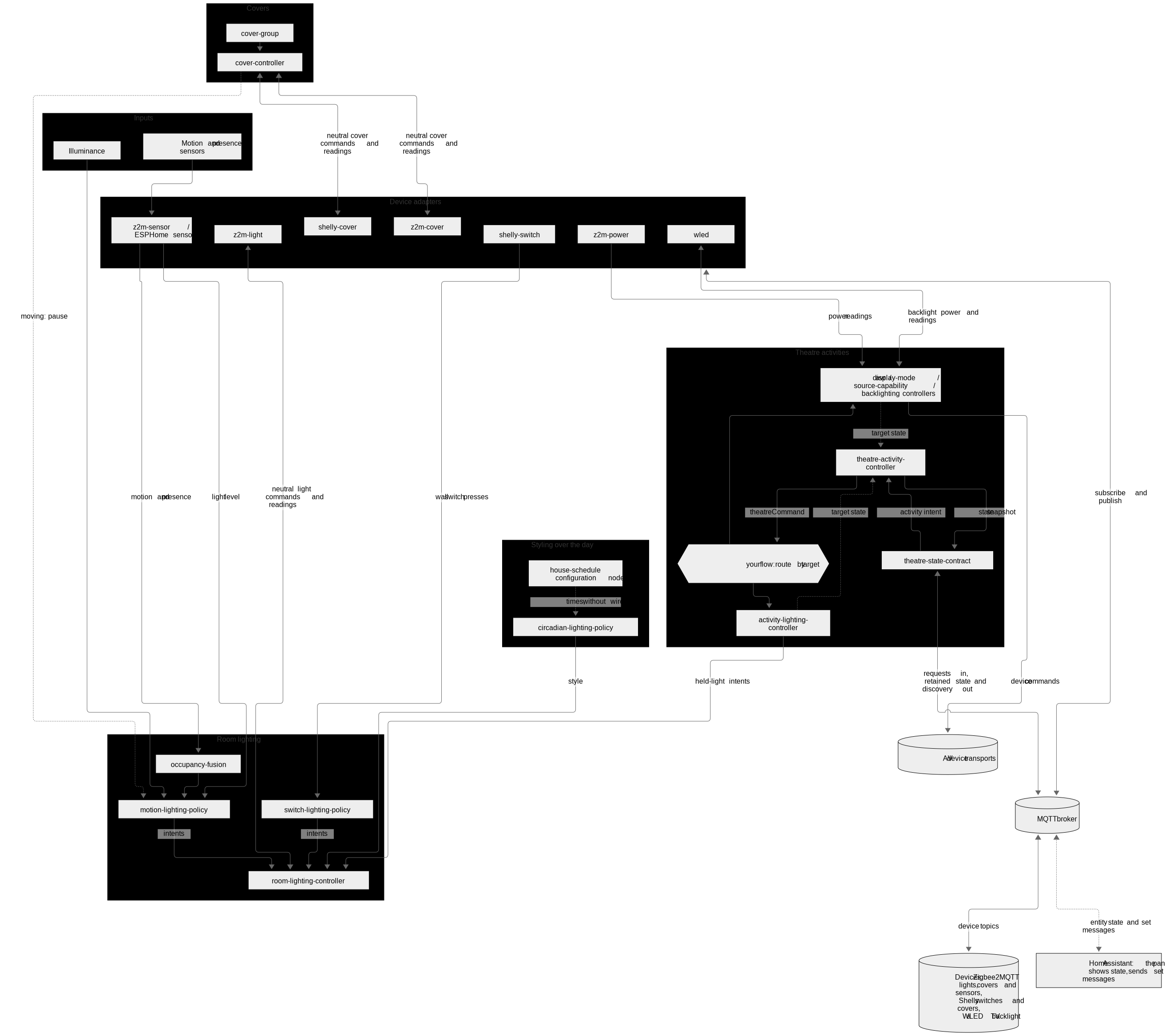
|
|
25
30
|
|
|
@@ -28,7 +33,7 @@ commands, and reports done only when fresh observations confirm them.
|
|
|
28
33
|
|
|
29
34
|
## Included nodes
|
|
30
35
|
|
|
31
|
-
The nodes come in
|
|
36
|
+
The nodes come in four groups. Each group has an importable example flow
|
|
32
37
|
(**Import → Examples** in the Node-RED editor).
|
|
33
38
|
|
|
34
39
|
### Room lighting
|
|
@@ -37,7 +42,12 @@ Motion, presence, illuminance and wall switches drive one room's lights, with
|
|
|
37
42
|
circadian styling and manual ownership. Wire occupancy fusion into the motion
|
|
38
43
|
policy, wall switches into the switch policy, and both policies into the room
|
|
39
44
|
controller. The room controller keeps a light a person set after the room went
|
|
40
|
-
vacant, so motion doesn't switch it straight off.
|
|
45
|
+
vacant, so motion doesn't switch it straight off. Without a Node-RED context
|
|
46
|
+
store, a motion node that restarts or is redeployed doesn't know whether the
|
|
47
|
+
room is occupied, so it counts the room as vacant from then: someone sitting
|
|
48
|
+
still in a lit room has the motion-lit lights switched off after the vacancy
|
|
49
|
+
delay unless motion is seen. After a restart the room has also forgotten which
|
|
50
|
+
lights a person set, so it doesn't keep those either. Circadian
|
|
41
51
|
levels follow the room controller's wake and bed times (default 07:00 and
|
|
42
52
|
23:00): they rise over the hour after waking, stay bright and cool through the
|
|
43
53
|
day, and wind down to the sleep settings over the three hours before bed. Times
|
|
@@ -62,6 +72,21 @@ way; other rewrites can still be misread.
|
|
|
62
72
|
| `home-switch-lighting-policy` | Converts raw edges or pre-classified button actions into lighting intent while exposing input freshness and availability. |
|
|
63
73
|
| `home-room-lighting-controller` | Owns the room's light commands, adaptive styling, manual and held lights, and lighting state. |
|
|
64
74
|
|
|
75
|
+
One house schedule can set the wake and bed times for many rooms. It is a
|
|
76
|
+
configuration node, like an MQTT broker: choose it as a room controller's
|
|
77
|
+
**Schedule** and the room follows it, hearing of every change without wires.
|
|
78
|
+
Those rooms then have no wake and bed time entities of their own in Home
|
|
79
|
+
Assistant. Rooms that need their own times (a child's room, say) choose none.
|
|
80
|
+
Deleting the house schedule in the editor returns its rooms to their own times.
|
|
81
|
+
The optional house schedule MQTT node publishes the schedule's times and Home
|
|
82
|
+
Assistant time entities, and takes changes from them.
|
|
83
|
+
Example: [`House schedule.json`](https://github.com/avantics-hq/node-red-home-automation/blob/main/examples/House%20schedule.json).
|
|
84
|
+
|
|
85
|
+
| Node | Purpose |
|
|
86
|
+
|---|---|
|
|
87
|
+
| `home-house-schedule` | A configuration node: one wake and bed time for every room that uses it. |
|
|
88
|
+
| `home-house-schedule-mqtt` | Publishes a house schedule for Home Assistant and changes it from Home Assistant. |
|
|
89
|
+
|
|
65
90
|
### Home theatre equipment
|
|
66
91
|
|
|
67
92
|
Each controller owns one kind of device. It accepts a generation-scoped intent,
|
|
@@ -102,6 +127,59 @@ Pure TypeScript policy modules live in `lib/`; thin Node-RED runtime and editor
|
|
|
102
127
|
|
|
103
128
|
Importable example flows for the Node-RED editor live in [`examples/`](https://github.com/avantics-hq/node-red-home-automation/tree/main/examples) (**Import → Examples**). Executable, deployment-neutral contract examples live in [`contract-examples/`](https://github.com/avantics-hq/node-red-home-automation/tree/main/contract-examples) and exercise the same reducers as the runtime adapters.
|
|
104
129
|
|
|
130
|
+
|
|
131
|
+
### Covers
|
|
132
|
+
|
|
133
|
+
One cover controller owns one position cover: a blind, shutter or curtain motor
|
|
134
|
+
that takes and reports a position from 0 (closed) to 100 (open). Send it
|
|
135
|
+
`"open"`, `"close"`, `"stop"`, a position, or the name of a preset such as
|
|
136
|
+
`partial`. It confirms a move from what the cover reports, retries a bounded
|
|
137
|
+
number of times, and leaves a cover a person moved where they put it. A move is
|
|
138
|
+
confirmed only once the cover has stopped at the target, from a `stopped`
|
|
139
|
+
motion report or the same position for the settle time (with or without
|
|
140
|
+
another report), so a transport that echoes the requested position at once
|
|
141
|
+
doesn't end the move early. Set the settle time to at least how often the
|
|
142
|
+
motor reports while it travels: otherwise an echo can be confirmed before the
|
|
143
|
+
first travel report arrives. An
|
|
144
|
+
automatic target, such as a position computed from the weather, sets
|
|
145
|
+
`msg.respectManual = true` so it waits while a person's move holds; a target
|
|
146
|
+
the cover is already at is confirmed without a command. A button can send
|
|
147
|
+
`msg.stopIfMoving = true` with `"open"` or `"close"` to stop the cover if it is
|
|
148
|
+
moving and do the request otherwise. The cover's availability report
|
|
149
|
+
(`{kind: "availability", online}`) keeps requests from going to an offline
|
|
150
|
+
device: they are answered `unavailable`, and the cover is read again when it is
|
|
151
|
+
back. A motor with no reliable position can be set to *open, close and
|
|
152
|
+
stop only*: it confirms a move from a reported end state, or from a move that
|
|
153
|
+
ran for its full travel time, and says when it could only judge by travel time
|
|
154
|
+
or could not confirm at all. Its third output says whether the cover is
|
|
155
|
+
moving, so other policies can react. To pause motion lighting while a blind
|
|
156
|
+
moves, send it to the motion policy's pause input
|
|
157
|
+
(`msg.source = "pause"`, `msg.payload` true or false, `msg.owner` naming the
|
|
158
|
+
cover), as the example does; a pause lasts at most the motion policy's
|
|
159
|
+
**Maximum pause** unless sent again; never its enable (`area-enabled`), which is the
|
|
160
|
+
user's own switch. Device commands come out in a neutral
|
|
161
|
+
shape (`set_position`, `stop` or `observe`); the example flow maps them to and
|
|
162
|
+
from a Zigbee2MQTT cover. Battery and charging status are kept as reported
|
|
163
|
+
facts and never acted on.
|
|
164
|
+
|
|
165
|
+
Switched on, a cover node publishes its state (and position) under
|
|
166
|
+
`home/<area>/cover/<name>/`, named by its **Name in topics** (no default: give
|
|
167
|
+
each cover in a room its own), and announces a Home Assistant cover entity. Its open,
|
|
168
|
+
close, stop and set position come back to the cover node on its own set topics
|
|
169
|
+
as requests like any other, carried out and confirmed as above; nothing
|
|
170
|
+
commands the device through Home Assistant. A cover group has no entity of its
|
|
171
|
+
own: Home Assistant can group the covers' entities itself.
|
|
172
|
+
|
|
173
|
+
A cover group moves several covers as one, such as the left and right of a
|
|
174
|
+
curtain: it sends each member the request on that member's own output, labelled
|
|
175
|
+
from its Members setting, and reports ready only when every member confirms,
|
|
176
|
+
or, if only some do, which did what.
|
|
177
|
+
|
|
178
|
+
| Node | Purpose |
|
|
179
|
+
|---|---|
|
|
180
|
+
| `home-cover-controller` | Owns one cover's moves (a position cover, or open, close and stop only), confirmed from what it reports, with presets, manual ownership and a moving signal. |
|
|
181
|
+
| `home-cover-group` | Moves several covers as one, with an honest result when only some confirm. |
|
|
182
|
+
|
|
105
183
|
## Requirements
|
|
106
184
|
|
|
107
185
|
- Node.js 22.9 or newer
|
|
@@ -122,11 +200,59 @@ also attaches the package tarball and its SHA-256 checksum. Install a downloaded
|
|
|
122
200
|
tarball through **Manage palette → Install → Upload module**, or with:
|
|
123
201
|
|
|
124
202
|
```sh
|
|
125
|
-
npm install /path/to/avantics-node-red-home-automation-
|
|
203
|
+
npm install /path/to/avantics-node-red-home-automation-4.0.1.tgz
|
|
126
204
|
```
|
|
127
205
|
|
|
128
206
|
Add the installed nodes from the **home automation** section of the Node-RED palette, then configure the room, device hosts, MQTT topics, source mappings, and timing limits for your deployment.
|
|
129
207
|
|
|
208
|
+
### 4.0.1
|
|
209
|
+
|
|
210
|
+
Fixes the cover controller ending a move too early when a transport echoes the
|
|
211
|
+
requested position as soon as the command is sent, before the motor moves: the
|
|
212
|
+
cover showed as stopped while it was still travelling, and the travel after it
|
|
213
|
+
was taken for a person's move. A move now confirms only once the cover has
|
|
214
|
+
stopped at the target, from a `stopped` motion report or the same position for
|
|
215
|
+
the settle time. Set the settle time to at least how often the motor reports
|
|
216
|
+
while it travels (see Covers).
|
|
217
|
+
|
|
218
|
+
### 4.0.0
|
|
219
|
+
|
|
220
|
+
Adds cover control, a house schedule, and Home Assistant entities for every
|
|
221
|
+
publishing node. Check these after upgrading from 3.0:
|
|
222
|
+
|
|
223
|
+
- **Breaking: theatre recovery never switches a running activity off.** After a
|
|
224
|
+
restart or redeploy with unclear evidence, the activity is reported as unknown
|
|
225
|
+
and the devices are left alone until the next request. The "Recovery Off
|
|
226
|
+
activity" setting is gone, and a saved value is ignored. The metric
|
|
227
|
+
`recoveriesSafeOff` is now `recoveriesUnknown` (in `<base>/metrics`, shown as
|
|
228
|
+
attributes of the "Transition latency" sensor), and the event
|
|
229
|
+
`recovery_safe_off` is now `recovery_unknown`. Update any dashboard, template
|
|
230
|
+
or flow that uses the old names.
|
|
231
|
+
- **Breaking: the theatre's readiness moved topics.** It is now on
|
|
232
|
+
`<base>/readiness`, and its Home Assistant sensor is "Readiness".
|
|
233
|
+
`<base>/availability` now carries `online` or `offline` (see "Availability"
|
|
234
|
+
below).
|
|
235
|
+
- **Breaking for areas that aren't identifiers:** a room or theatre contract whose
|
|
236
|
+
area has spaces or other characters now publishes under the lowercase form,
|
|
237
|
+
for example `home/living_room/…` instead of `home/Living Room/…` (see
|
|
238
|
+
"Discovery" below).
|
|
239
|
+
- **Without a context store, a restart or redeploy is gentler:** a room leaves
|
|
240
|
+
its lights alone until something names them, motion lighting starts its
|
|
241
|
+
vacancy countdown, and a theatre device re-learns its activity from the
|
|
242
|
+
theatre instead of being marked unresponsive. A [file context store](#recommended-setup-a-file-context-store) keeps state
|
|
243
|
+
across restarts instead.
|
|
244
|
+
- **A Catch node fires once per input error,** not twice.
|
|
245
|
+
- **New nodes:** a cover controller for blinds, shutters and curtains, a cover
|
|
246
|
+
group, a house schedule that sets many rooms' wake and bed times, and a house
|
|
247
|
+
schedule MQTT node for Home Assistant (see "Covers" and "Room lighting").
|
|
248
|
+
- **New outputs, off until you switch publishing on:** occupancy fusion and the
|
|
249
|
+
motion policy gain a second output, and the AVR controller a third, for their
|
|
250
|
+
MQTT state and Home Assistant entities. Saved nodes are unchanged.
|
|
251
|
+
- **Home Assistant:** availability, entity names that survive area renames, the
|
|
252
|
+
room's sleep switch and wake and bed times, receiver volume, and cleanup of a
|
|
253
|
+
deleted node's entities, described under "Upgrading from 2.x" below.
|
|
254
|
+
- **Other flows can pause motion lighting** without changing the user's enable.
|
|
255
|
+
|
|
130
256
|
### 3.0.1
|
|
131
257
|
|
|
132
258
|
Fixes the room lighting controller looping on its own commands when something
|
|
@@ -141,7 +267,7 @@ its commands to MQTT out unchanged (see Room lighting).
|
|
|
141
267
|
|
|
142
268
|
### Upgrading from 2.x
|
|
143
269
|
|
|
144
|
-
Version 3.0
|
|
270
|
+
Version 3.0 changed some behaviour, and later versions added to it. Check these after upgrading from 2.x, along with the notes above:
|
|
145
271
|
|
|
146
272
|
- **Wall switches go through the switch lighting policy node.** The motion lighting policy no longer handles them,
|
|
147
273
|
and ignores switch messages, so rewire any wall switch that feeds a motion node. The room lighting controller now
|
|
@@ -150,17 +276,76 @@ Version 3.0 changes some behaviour. Check these after upgrading:
|
|
|
150
276
|
minutes before. A redeploy with a changed vacancy delay or lux cutoff now takes effect.
|
|
151
277
|
- **Settings are checked when you deploy.** An emptied or unusable setting shows "invalid configuration", and the
|
|
152
278
|
node's log says which setting is wrong. A setting your flow saved before it existed still takes its default.
|
|
153
|
-
- **No node assumes a room.** An empty area is allowed
|
|
154
|
-
|
|
279
|
+
- **No node assumes a room.** An empty area is allowed. A node that publishes needs one where it names something:
|
|
280
|
+
the theatre state contract for its default base topic (`home/<area>/theatre`), and a room lighting controller for
|
|
281
|
+
the topics it publishes. A theatre state contract added from now on doesn't need one for Home Assistant
|
|
282
|
+
discovery: its entity IDs then come from its display name. With an area, it suggests that area to Home Assistant,
|
|
283
|
+
which creates it if no area of that name exists. One saved before needs an area for discovery, as before. A room
|
|
284
|
+
lighting controller with no area still controls its lights, but publishes no state or discovery.
|
|
155
285
|
- **MQTT state publishing and Home Assistant discovery are opt-in** on the room lighting controller and the theatre
|
|
156
286
|
state contract. New nodes start with them off. Nodes in a flow saved before 3.0 keep publishing until you untick
|
|
157
287
|
the setting. Switching discovery off removes the entities from Home Assistant.
|
|
288
|
+
- **Discovery** goes under the **Discovery prefix** setting (`homeassistant` by default, as in Home Assistant) on
|
|
289
|
+
both nodes, and every entry names this package and its version as its origin. Topics and IDs use the area in
|
|
290
|
+
lowercase, with each run of spaces or other characters (anything but letters, digits, `_` and `-`) as `_`:
|
|
291
|
+
"Living Room" publishes under `home/living_room/…`, and "living-room" is unchanged.
|
|
292
|
+
Names shown in Home Assistant keep the area as you typed it.
|
|
293
|
+
- **Entity names.** A room lighting controller or theatre state contract you add from now on names its Home
|
|
294
|
+
Assistant device, unique IDs and discovery topics after its Node-RED node ID (`nrha_<node id>…`), so renaming its
|
|
295
|
+
area or display name updates the same entities. Nodes in flows saved before this keep naming them after the area,
|
|
296
|
+
exactly as before, so nothing changes for them in Home Assistant. Either way, the entity ID Home Assistant first
|
|
297
|
+
gives an entity comes from the area, with `-` as `_`.
|
|
298
|
+
Importing or pasting a node in the editor keeps its saved settings, including its ID scheme and publishing, so
|
|
299
|
+
an older node restored from a backup keeps its area-named entities. Only a node added from the palette starts as
|
|
300
|
+
new.
|
|
301
|
+
- **Occupancy fusion can publish too**, off unless you switch it on: its occupancy as retained `ON`/`OFF` on
|
|
302
|
+
`home/<area>/occupancy/state`, with availability, and an occupancy binary sensor in Home Assistant. These go on its
|
|
303
|
+
new second output, so wire that to an MQTT out node; the first output still feeds the motion policy.
|
|
304
|
+
- **The motion lighting policy can publish too**, off unless you switch it on: whether this node's motion lighting
|
|
305
|
+
is enabled and its vacancy delay in seconds (`home/<area>/motion/enabled/state` and `…/delay/state`), which it also
|
|
306
|
+
takes from their `/set` topics, and a switch and a vacancy delay number in Home Assistant. These go on its new
|
|
307
|
+
second output; the shared global enable is not published.
|
|
308
|
+
- **The AVR controller can publish what the receiver reports**, off unless you switch it on: power, source and
|
|
309
|
+
volume, retained under `home/<area>/receiver/`, with availability, and Home Assistant power and source sensors
|
|
310
|
+
and a volume number (see "Receiver volume ownership"). These go on its new
|
|
311
|
+
third output, apart from the receiver commands and the theatre's state.
|
|
312
|
+
- **Topics no longer published are cleared.** Once the flows have started, and again at its startup message, a node
|
|
313
|
+
clears any retained topic it published before and no longer does, for example after an area, base topic,
|
|
314
|
+
discovery prefix or target change. It remembers what it published in its node context, which lasts across
|
|
315
|
+
deploys and restarts only with a context store configured (see "Recommended setup"). Without that record, an occupancy, motion, receiver or
|
|
316
|
+
house schedule MQTT node named after itself (node-based IDs) that publishes state still clears its own Home Assistant
|
|
317
|
+
entities it no longer publishes, such as after you switch discovery off; it never clears topics another node could
|
|
318
|
+
publish. Other old topics, after an area, base topic, discovery prefix or target change, or after you switch
|
|
319
|
+
publishing off entirely, are cleared only from the record. A node that never gets a startup message
|
|
320
|
+
keeps clearing its old topics at every start, so to move an area from one older room node to another, send the old
|
|
321
|
+
node a startup message, or delete it.
|
|
322
|
+
- **Send each publishing node a startup message once, a few seconds after deploy.** The example flows do this with an
|
|
323
|
+
inject node set to fire once after 3 seconds: by then the MQTT broker node has usually connected, and a message
|
|
324
|
+
sent before it connects is dropped, along with the discovery and state it carried.
|
|
325
|
+
- **Removing entities:** deleting a node clears its Home Assistant entities and retained state, but only when you
|
|
326
|
+
deploy with "Modified nodes" or "Modified flows". On a full deploy (the deploy button's default), Node-RED stops the
|
|
327
|
+
MQTT out node at the same moment, so the clearing never reaches the broker. Disabling a node or its flow keeps its
|
|
328
|
+
entities, so they come back unchanged when you enable it again. To remove a node's entities after a full deploy,
|
|
329
|
+
or to remove the entities of a flow you copied to another Node-RED (the copy's nodes have new IDs, so new
|
|
330
|
+
entities), delete the device in Home Assistant: Settings → Devices & services → Devices, open the device, then
|
|
331
|
+
Delete. Home Assistant then clears its retained discovery entry itself.
|
|
332
|
+
- **Availability:** each publishing node sends a retained `online` once the flows have started (and again at its
|
|
333
|
+
startup message) and `offline` when it stops, on `home/<area>/lighting/availability` (room) or
|
|
334
|
+
`<base>/availability` (theatre), and its Home Assistant entities follow it. These get through when the node is
|
|
335
|
+
deployed on its own ("Modified nodes" or "Modified flows"), while the MQTT connection stays up. On a full deploy, a
|
|
336
|
+
restart or a shutdown, Node-RED stops the MQTT out node at the same moment and reconnects to the broker afterwards,
|
|
337
|
+
so set the MQTT broker node's **Birth message** to `online`, and its **Close message** and **Will message** (which
|
|
338
|
+
covers crashes) to `offline`, all retained, on the same topic; with several publishing nodes, the broker can cover
|
|
339
|
+
one of them. The theatre's readiness (`unknown`, `available`, `degraded`
|
|
340
|
+
or `unavailable`), which used `<base>/availability` before, is now on `<base>/readiness`.
|
|
341
|
+
|
|
342
|
+
## Theatre MQTT contract
|
|
158
343
|
|
|
159
344
|
The whole-theatre MQTT contract uses non-retained requests at
|
|
160
345
|
`home/<area>/theatre/request`; every request supplies a unique `requestId` and an
|
|
161
346
|
explicit configured activity. Controller output is retained under `desired`,
|
|
162
|
-
`current`, `phase`, `
|
|
163
|
-
`health/<target>`. Metrics expose transition latency and outcome counts plus
|
|
347
|
+
`current`, `phase`, `transition` (when the latest transition started and finished, and which
|
|
348
|
+
targets it left degraded), `failure`, `readiness`, `metrics`, `slo`, and `health/<target>`. Metrics expose transition latency and outcome counts plus
|
|
164
349
|
per-target retry, fallback, confirmation-latency, failure, manual-override, and
|
|
165
350
|
availability evidence. The SLO evaluator keeps a bounded outcome window,
|
|
166
351
|
publishes success rate plus p50/p95 transition latency, and exposes an
|
|
@@ -187,10 +372,62 @@ second ahead of Node-RED's clock is treated as observed on receipt and traced as
|
|
|
187
372
|
|
|
188
373
|
Unsolicited display, AVR, source, and backlighting changes latch manual
|
|
189
374
|
ownership instead of issuing corrective commands. A newer explicit activity
|
|
190
|
-
request resumes automation.
|
|
375
|
+
request resumes automation. A target controller that starts with nothing
|
|
376
|
+
saved (a redeploy or restart without a context store) takes the activity's
|
|
377
|
+
wanted values from the activity controller's next refresh, which carries them
|
|
378
|
+
as the intent did, and only reads its device for it: it reports ready when
|
|
379
|
+
the device already matches, and a manual override (reason `adopted-mismatch`)
|
|
380
|
+
when it doesn't, sending no command until the next request.
|
|
381
|
+
Recovery adopts physical state only when fresh
|
|
191
382
|
display, AVR, source, and backlighting evidence matches exactly one configured
|
|
192
|
-
profile
|
|
193
|
-
|
|
383
|
+
profile. With missing or ambiguous startup evidence the activity is unknown,
|
|
384
|
+
and nothing is commanded until the next request: a redeploy or restart, which
|
|
385
|
+
starts the controller with nothing saved unless a context store is configured,
|
|
386
|
+
never switches a running activity off. While it is unknown, the theatre's
|
|
387
|
+
phase shows `idle` (the controller isn't working on anything) and its current
|
|
388
|
+
activity `unknown` until the next request, even if something is playing.
|
|
389
|
+
(Earlier versions ran a configured Off activity here; that setting is gone,
|
|
390
|
+
and a saved value is ignored.)
|
|
391
|
+
|
|
392
|
+
## Recommended setup: a file context store
|
|
393
|
+
|
|
394
|
+
The nodes keep what they are doing in Node-RED's node context. By default
|
|
395
|
+
Node-RED keeps context in memory and deletes a node's context whenever the
|
|
396
|
+
node stops: on a full deploy, on a "Modified flows" deploy of its flow (which
|
|
397
|
+
restarts every node in that flow, changed or not), on a "Modified nodes"
|
|
398
|
+
deploy of the node itself, and on every restart. Configure the file context
|
|
399
|
+
store so it survives. In `settings.js` in your Node-RED user directory, set:
|
|
400
|
+
|
|
401
|
+
```js
|
|
402
|
+
contextStorage: {
|
|
403
|
+
default: { module: "localfilesystem" }
|
|
404
|
+
},
|
|
405
|
+
```
|
|
406
|
+
|
|
407
|
+
then restart Node-RED. The file store writes changes to disk every 30 seconds
|
|
408
|
+
by default, so a change made just before Node-RED stops can still be lost.
|
|
409
|
+
|
|
410
|
+
Without a context store, after a node is redeployed or Node-RED restarts:
|
|
411
|
+
|
|
412
|
+
- **A room forgets which lights are held or manual:** every light an activity
|
|
413
|
+
held, or a person set by hand, is back under the room's control, so the next
|
|
414
|
+
refresh restyles an activity's lights and lights a person set.
|
|
415
|
+
- **Changes made at runtime go back to the node's settings:** for example motion
|
|
416
|
+
lighting's enable, vacancy delay and lux cutoff, a room's circadian lighting,
|
|
417
|
+
sleep, and wake and bed times, and the house schedule's times, set from Home
|
|
418
|
+
Assistant or a message.
|
|
419
|
+
- **The theatre starts its counts again:** its counters and operational SLO
|
|
420
|
+
samples restart, and the activity controller no longer knows the current
|
|
421
|
+
activity. At its next startup recovery it works it out from what the devices
|
|
422
|
+
report, and if no single activity matches, it switches to the recovery off
|
|
423
|
+
activity.
|
|
424
|
+
- **Work in progress is not recovered:** a motion off-timer that was running,
|
|
425
|
+
or a theatre device change still being confirmed. The node starts afresh
|
|
426
|
+
and goes by what it next observes.
|
|
427
|
+
- **Old retained topics are not cleared:** a node can't remember what it
|
|
428
|
+
published before, so after you change an area, base topic, discovery prefix
|
|
429
|
+
or targets, the old retained topics and Home Assistant entities stay until
|
|
430
|
+
you remove them yourself.
|
|
194
431
|
|
|
195
432
|
## Room light control
|
|
196
433
|
|
|
@@ -201,6 +438,16 @@ The room lighting controller gives each target one control state:
|
|
|
201
438
|
refresh and circadian changes leave it alone until it is released.
|
|
202
439
|
- `manual`: a person changed the light.
|
|
203
440
|
|
|
441
|
+
The control states live in the node's context. A room controller that starts
|
|
442
|
+
with nothing saved (its first deploy, or a redeploy or restart without a
|
|
443
|
+
context store) can't know which lights an activity held or a person set, so it
|
|
444
|
+
leaves every light as it is: the periodic refresh restyles a light again only
|
|
445
|
+
once an intent or release names it, someone switches it on with a bare ON, or
|
|
446
|
+
circadian lighting is switched on. A light that is on at that start and that
|
|
447
|
+
nothing names can keep its start-time style all day; to bring it back into step,
|
|
448
|
+
switch circadian lighting on (for example with the Home Assistant circadian
|
|
449
|
+
switch), or let motion or a wall switch name it.
|
|
450
|
+
|
|
204
451
|
Add `owner` to an intent to override the targets it switches on. With
|
|
205
452
|
`preserveManual: true`, manual lights are skipped:
|
|
206
453
|
|
|
@@ -253,7 +500,14 @@ Flows that filter that output by topic must pass the `/control` topics through.
|
|
|
253
500
|
It also publishes the circadian state on `home/<area>/circadian/state`, and
|
|
254
501
|
acts on ON or OFF sent to `home/<area>/circadian/set`, which is where the Home
|
|
255
502
|
Assistant circadian switch sends them: wire an MQTT in node subscribed to that
|
|
256
|
-
topic into the room controller.
|
|
503
|
+
topic into the room controller. In the same way it publishes and acts on sleep
|
|
504
|
+
(`home/<area>/sleep/state` and `/set`, ON or OFF) and the wake and bed times
|
|
505
|
+
(`home/<area>/wake-time/state` and `/set`, likewise `bed-time`, as `HH:MM:SS`);
|
|
506
|
+
subscribing to `home/<area>/+/set` covers all four. A time set from Home
|
|
507
|
+
Assistant lasts until the node is deployed with a different setting for it.
|
|
508
|
+
With discovery on, Home Assistant also gets a sleep switch, wake and bed time
|
|
509
|
+
entities (under the device's configuration), and a diagnostic sensor per light
|
|
510
|
+
showing its control state, with the owner as an attribute.
|
|
257
511
|
|
|
258
512
|
## Receiver volume ownership
|
|
259
513
|
|
|
@@ -277,6 +531,17 @@ Once confirmed, it releases the volume target; a later physical or external
|
|
|
277
531
|
adjustment becomes the new baseline instead of being corrected. A request still pending when Node-RED restarts is reported as
|
|
278
532
|
`volume_failed` with reason `restart`, not replayed.
|
|
279
533
|
|
|
534
|
+
With publishing and discovery on, Home Assistant gets a volume number. A
|
|
535
|
+
value set there arrives on `home/<area>/receiver/volume/set`; values arriving
|
|
536
|
+
within 0.3 seconds of each other are settled to the last, which becomes an
|
|
537
|
+
ordinary absolute request (`msg.avr = {kind: "volume", mode: "absolute", ...}`),
|
|
538
|
+
so it is bounded, sent and confirmed in the same way, and never sent to the
|
|
539
|
+
receiver directly. The number shows the confirmed volume. A theatre activity
|
|
540
|
+
owns the receiver's power and source, not its volume: a volume request made
|
|
541
|
+
while an activity is switching power or source waits until that is done, and
|
|
542
|
+
one made while the receiver is off (an activity's `off`, say) is rejected
|
|
543
|
+
with `receiver-not-ready`, as any request would be.
|
|
544
|
+
|
|
280
545
|
## Contract examples
|
|
281
546
|
|
|
282
547
|
Build and run all seven public contracts:
|
|
@@ -48,6 +48,7 @@ export interface ActivityLightingState {
|
|
|
48
48
|
pending: ActivityLightingPending | null;
|
|
49
49
|
failure: ActivityLightingFailure | null;
|
|
50
50
|
blockedGeneration: number | null;
|
|
51
|
+
adoptedGeneration: number | null;
|
|
51
52
|
}
|
|
52
53
|
export type ActivityLightingEvent = {
|
|
53
54
|
kind: "intent";
|
|
@@ -73,7 +74,12 @@ export type ActivityLightingEvent = {
|
|
|
73
74
|
kind: "tick";
|
|
74
75
|
generation: number;
|
|
75
76
|
} | {
|
|
76
|
-
kind: "startup"
|
|
77
|
+
kind: "startup";
|
|
78
|
+
} | {
|
|
79
|
+
kind: "refresh";
|
|
80
|
+
requestId?: string | null;
|
|
81
|
+
generation?: number;
|
|
82
|
+
profile?: string;
|
|
77
83
|
};
|
|
78
84
|
export interface ActivityLightingMessage {
|
|
79
85
|
activityLighting?: ActivityLightingEvent;
|
|
@@ -3,6 +3,7 @@ Object.defineProperty(exports, "__esModule", { value: true });
|
|
|
3
3
|
exports.normaliseLightingProfiles = normaliseLightingProfiles;
|
|
4
4
|
exports.normaliseActivityLightingConfig = normaliseActivityLightingConfig;
|
|
5
5
|
exports.transitionActivityLighting = transitionActivityLighting;
|
|
6
|
+
const adopted_request_1 = require("./adopted-request");
|
|
6
7
|
const settings_1 = require("./settings");
|
|
7
8
|
const observation_time_1 = require("./observation-time");
|
|
8
9
|
const target_state_1 = require("./target-state");
|
|
@@ -79,7 +80,8 @@ function initialState(saved = {}, profiles = {}) {
|
|
|
79
80
|
observed: Object.fromEntries(Object.entries(saved.observed || {}).map(([target, observation]) => [target, { ...observation }])),
|
|
80
81
|
pending: saved.pending && typeof saved.pending === "object" ? { ...saved.pending } : null,
|
|
81
82
|
failure: saved.failure && typeof saved.failure === "object" ? { ...saved.failure } : null,
|
|
82
|
-
blockedGeneration: Number.isInteger(saved.blockedGeneration) ? saved.blockedGeneration : null
|
|
83
|
+
blockedGeneration: Number.isInteger(saved.blockedGeneration) ? saved.blockedGeneration : null,
|
|
84
|
+
adoptedGeneration: (0, adopted_request_1.savedAdoptedGeneration)(saved)
|
|
83
85
|
};
|
|
84
86
|
}
|
|
85
87
|
function profileFor(state, config) {
|
|
@@ -179,6 +181,14 @@ function transitionActivityLighting(saved, msg, suppliedConfig = {}, nowValue =
|
|
|
179
181
|
continue;
|
|
180
182
|
}
|
|
181
183
|
if (!valuesMatch(profile.values, observation.values)) {
|
|
184
|
+
if ((0, adopted_request_1.isAdopted)(state)) {
|
|
185
|
+
// An adopted request the lights don't match: someone else's, and
|
|
186
|
+
// never re-applied.
|
|
187
|
+
state.pending = null;
|
|
188
|
+
state.phase = "manual_override";
|
|
189
|
+
trace("observation", "manual_override", adopted_request_1.ADOPTED_MISMATCH, { target });
|
|
190
|
+
return;
|
|
191
|
+
}
|
|
182
192
|
state.phase = "confirming";
|
|
183
193
|
return;
|
|
184
194
|
}
|
|
@@ -293,6 +303,19 @@ function transitionActivityLighting(saved, msg, suppliedConfig = {}, nowValue =
|
|
|
293
303
|
trace("observation", "accepted", null, { target: observation.target });
|
|
294
304
|
reconcile();
|
|
295
305
|
}
|
|
306
|
+
// A refresh with the activity's wanted values, reaching a node with
|
|
307
|
+
// nothing desired (it started with nothing saved): adopt them, and observe
|
|
308
|
+
// below as at startup (see adopted-request.ts). Which lights it held is
|
|
309
|
+
// unknown, so the next activity releases every light it holds.
|
|
310
|
+
const adoptable = event.kind === "refresh" ? (0, adopted_request_1.adoptableRefresh)(event, state) : null;
|
|
311
|
+
const adopted = adoptable !== null && event.kind === "refresh" && typeof event.profile === "string" && Object.hasOwn(config.profiles, event.profile);
|
|
312
|
+
if (adopted && event.kind === "refresh") {
|
|
313
|
+
state.desired = { ...adoptable, profile: event.profile, requestedAt: now.toISOString() };
|
|
314
|
+
state.generation = adoptable.generation;
|
|
315
|
+
state.adoptedGeneration = adoptable.generation;
|
|
316
|
+
state.applied = { profile: event.profile, targets: null };
|
|
317
|
+
trace("refresh", "adopted", "nothing-desired", { profile: event.profile, generation: adoptable.generation });
|
|
318
|
+
}
|
|
296
319
|
if (event.kind === "intent") {
|
|
297
320
|
acceptIntent(event);
|
|
298
321
|
}
|
|
@@ -336,7 +359,7 @@ function transitionActivityLighting(saved, msg, suppliedConfig = {}, nowValue =
|
|
|
336
359
|
state.phase = "confirming";
|
|
337
360
|
// After a restart nothing else would end an unanswered observe: give
|
|
338
361
|
// it a deadline, so it re-applies and then fails as a live request.
|
|
339
|
-
if (event.kind === "startup" && state.blockedGeneration !== state.generation) {
|
|
362
|
+
if ((event.kind === "startup" || adopted) && state.blockedGeneration !== state.generation) {
|
|
340
363
|
state.pending = { attempt: 0, deadlineAt: nowMs + config.confirmationTimeoutMs };
|
|
341
364
|
}
|
|
342
365
|
trace(event.kind, "observing", null, { profile: state.desired.profile });
|
|
@@ -349,12 +372,23 @@ function transitionActivityLighting(saved, msg, suppliedConfig = {}, nowValue =
|
|
|
349
372
|
else {
|
|
350
373
|
throw new Error("unknown activity lighting event kind");
|
|
351
374
|
}
|
|
375
|
+
// An adopted request only reads the lights (see adopted-request.ts): an
|
|
376
|
+
// apply means they aren't as wanted.
|
|
377
|
+
const held = (0, adopted_request_1.readsOnly)(state, commands, (command) => command.operation === "observe");
|
|
378
|
+
if (held.mismatch) {
|
|
379
|
+
commands.splice(0, commands.length, ...held.commands);
|
|
380
|
+
state.pending = null;
|
|
381
|
+
state.phase = "manual_override";
|
|
382
|
+
trace("command", "withheld", adopted_request_1.ADOPTED_MISMATCH);
|
|
383
|
+
}
|
|
352
384
|
if (state.desired) {
|
|
385
|
+
const manual = state.phase === "manual_override";
|
|
353
386
|
const theatre = (0, target_state_1.targetStateEvent)({
|
|
354
387
|
target: "lighting",
|
|
355
388
|
requestId: state.desired.requestId,
|
|
356
389
|
generation: state.generation,
|
|
357
|
-
status: (0, target_state_1.asTargetStatus)(state.phase, "confirming"),
|
|
390
|
+
status: manual ? "transitioning" : (0, target_state_1.asTargetStatus)(state.phase, "confirming"),
|
|
391
|
+
classification: manual ? "manual_override" : null,
|
|
358
392
|
observedAt: now.toISOString(),
|
|
359
393
|
details: {
|
|
360
394
|
profile: state.desired.profile,
|
|
@@ -0,0 +1,26 @@
|
|
|
1
|
+
export declare const ADOPTED_MISMATCH = "adopted-mismatch";
|
|
2
|
+
export interface AdoptedRequest {
|
|
3
|
+
requestId: string;
|
|
4
|
+
generation: number;
|
|
5
|
+
}
|
|
6
|
+
export declare function adoptableRefresh(event: {
|
|
7
|
+
kind: string;
|
|
8
|
+
requestId?: unknown;
|
|
9
|
+
generation?: unknown;
|
|
10
|
+
}, state: {
|
|
11
|
+
desired: unknown;
|
|
12
|
+
generation: number;
|
|
13
|
+
}): AdoptedRequest | null;
|
|
14
|
+
export interface AdoptableState {
|
|
15
|
+
generation: number;
|
|
16
|
+
adoptedGeneration: number | null;
|
|
17
|
+
phase: string;
|
|
18
|
+
}
|
|
19
|
+
export declare function savedAdoptedGeneration(saved: {
|
|
20
|
+
adoptedGeneration?: unknown;
|
|
21
|
+
}): number | null;
|
|
22
|
+
export declare function isAdopted(state: AdoptableState): boolean;
|
|
23
|
+
export declare function readsOnly<Command>(state: AdoptableState, commands: Command[], reads: (command: Command) => boolean): {
|
|
24
|
+
commands: Command[];
|
|
25
|
+
mismatch: boolean;
|
|
26
|
+
};
|
|
@@ -0,0 +1,44 @@
|
|
|
1
|
+
"use strict";
|
|
2
|
+
Object.defineProperty(exports, "__esModule", { value: true });
|
|
3
|
+
exports.ADOPTED_MISMATCH = void 0;
|
|
4
|
+
exports.adoptableRefresh = adoptableRefresh;
|
|
5
|
+
exports.savedAdoptedGeneration = savedAdoptedGeneration;
|
|
6
|
+
exports.isAdopted = isAdopted;
|
|
7
|
+
exports.readsOnly = readsOnly;
|
|
8
|
+
// A theatre device controller that starts with nothing saved (a redeploy or
|
|
9
|
+
// restart without a context store) adopts the request the theatre activity
|
|
10
|
+
// controller's refresh carries, with its wanted values, so it can report on
|
|
11
|
+
// it. It only ever reads the device for that request: a device found in the
|
|
12
|
+
// wanted state reports ready, and one that isn't is a manual override, with
|
|
13
|
+
// nothing commanded until a new explicit request. The five device reducers
|
|
14
|
+
// share these rules so they stay the same.
|
|
15
|
+
exports.ADOPTED_MISMATCH = "adopted-mismatch";
|
|
16
|
+
// The request a refresh carries, if this node can adopt it: it has nothing
|
|
17
|
+
// desired, and the generation isn't older than its own. Each reducer checks
|
|
18
|
+
// the wanted values itself.
|
|
19
|
+
function adoptableRefresh(event, state) {
|
|
20
|
+
if (event.kind !== "refresh" || state.desired)
|
|
21
|
+
return null;
|
|
22
|
+
if (typeof event.requestId !== "string" || event.requestId === "")
|
|
23
|
+
return null;
|
|
24
|
+
if (!Number.isInteger(event.generation) || event.generation < Math.max(1, state.generation))
|
|
25
|
+
return null;
|
|
26
|
+
return { requestId: event.requestId, generation: event.generation };
|
|
27
|
+
}
|
|
28
|
+
function savedAdoptedGeneration(saved) {
|
|
29
|
+
return Number.isInteger(saved.adoptedGeneration) ? saved.adoptedGeneration : null;
|
|
30
|
+
}
|
|
31
|
+
function isAdopted(state) {
|
|
32
|
+
return state.adoptedGeneration !== null && state.adoptedGeneration === state.generation;
|
|
33
|
+
}
|
|
34
|
+
// For an adopted request, keeps only the commands that read the device. Any
|
|
35
|
+
// other command means the reducer tried to bring the device to the wanted
|
|
36
|
+
// state, so it isn't in it: the result says so, and the caller records a
|
|
37
|
+
// manual override instead.
|
|
38
|
+
function readsOnly(state, commands, reads) {
|
|
39
|
+
if (!isAdopted(state))
|
|
40
|
+
return { commands, mismatch: false };
|
|
41
|
+
const kept = commands.filter(reads);
|
|
42
|
+
return { commands: kept, mismatch: kept.length !== commands.length };
|
|
43
|
+
}
|
|
44
|
+
//# sourceMappingURL=adopted-request.js.map
|
|
@@ -68,9 +68,16 @@ export interface AvrState {
|
|
|
68
68
|
recentVolumeRequestIds: string[];
|
|
69
69
|
volumeMetrics: AvrVolumeMetrics;
|
|
70
70
|
lastAttempt: number;
|
|
71
|
+
adoptedGeneration: number | null;
|
|
71
72
|
}
|
|
72
73
|
export type AvrInputEvent = {
|
|
73
|
-
kind: "startup"
|
|
74
|
+
kind: "startup";
|
|
75
|
+
} | {
|
|
76
|
+
kind: "refresh";
|
|
77
|
+
requestId?: string | null;
|
|
78
|
+
generation?: number;
|
|
79
|
+
power?: string;
|
|
80
|
+
source?: string | null;
|
|
74
81
|
} | {
|
|
75
82
|
kind: "observed";
|
|
76
83
|
line?: unknown;
|