@alicloud/ecs20140526 3.0.3 → 3.0.4
This diff represents the content of publicly available package versions that have been released to one of the supported registries. The information contained in this diff is provided for informational purposes only and reflects changes between package versions as they appear in their respective public registries.
- package/dist/client.d.ts +178 -880
- package/dist/client.js +198 -888
- package/dist/client.js.map +1 -1
- package/package.json +1 -1
- package/src/client.ts +205 -888
package/dist/client.d.ts
CHANGED
|
@@ -7574,6 +7574,7 @@ export declare class DescribeImageSharePermissionResponse extends $tea.Model {
|
|
|
7574
7574
|
});
|
|
7575
7575
|
}
|
|
7576
7576
|
export declare class DescribeImageSupportInstanceTypesRequest extends $tea.Model {
|
|
7577
|
+
actionType?: string;
|
|
7577
7578
|
filter?: DescribeImageSupportInstanceTypesRequestFilter[];
|
|
7578
7579
|
imageId?: string;
|
|
7579
7580
|
ownerId?: number;
|
|
@@ -17030,6 +17031,7 @@ export declare class RunInstancesRequest extends $tea.Model {
|
|
|
17030
17031
|
httpTokens?: string;
|
|
17031
17032
|
imageFamily?: string;
|
|
17032
17033
|
imageId?: string;
|
|
17034
|
+
imageOptions?: RunInstancesRequestImageOptions;
|
|
17033
17035
|
instanceChargeType?: string;
|
|
17034
17036
|
instanceName?: string;
|
|
17035
17037
|
instanceType?: string;
|
|
@@ -28245,6 +28247,18 @@ export declare class RunInstancesRequestDataDisk extends $tea.Model {
|
|
|
28245
28247
|
[key: string]: any;
|
|
28246
28248
|
});
|
|
28247
28249
|
}
|
|
28250
|
+
export declare class RunInstancesRequestImageOptions extends $tea.Model {
|
|
28251
|
+
loginAsNonRoot?: boolean;
|
|
28252
|
+
static names(): {
|
|
28253
|
+
[key: string]: string;
|
|
28254
|
+
};
|
|
28255
|
+
static types(): {
|
|
28256
|
+
[key: string]: any;
|
|
28257
|
+
};
|
|
28258
|
+
constructor(map?: {
|
|
28259
|
+
[key: string]: any;
|
|
28260
|
+
});
|
|
28261
|
+
}
|
|
28248
28262
|
export declare class RunInstancesRequestNetworkInterface extends $tea.Model {
|
|
28249
28263
|
description?: string;
|
|
28250
28264
|
instanceType?: string;
|
|
@@ -30678,22 +30692,7 @@ export default class Client extends OpenApi {
|
|
|
30678
30692
|
* @return DescribeDisksResponse
|
|
30679
30693
|
*/
|
|
30680
30694
|
describeDisks(request: DescribeDisksRequest): Promise<DescribeDisksResponse>;
|
|
30681
|
-
/**
|
|
30682
|
-
* * The full status information of an EBS device includes the lifecycle status provided by the `Status` parameter, health status provided by the `HealthStatus` parameter, and event type provided by the `EventType` parameter of the EBS device. You can filter the results based on these parameters.
|
|
30683
|
-
* * The release time, scheduled execution time, and actual execution time of each EBS device event are identical. If you specify a period of time by using the `EventTime.Start` and `EventTime.End` parameters, all events that occurred within this period are queried. You can query events that occurred within the last seven days.
|
|
30684
|
-
*
|
|
30685
|
-
* @param request DescribeDisksFullStatusRequest
|
|
30686
|
-
* @param runtime runtime options for this request RuntimeOptions
|
|
30687
|
-
* @return DescribeDisksFullStatusResponse
|
|
30688
|
-
*/
|
|
30689
30695
|
describeDisksFullStatusWithOptions(request: DescribeDisksFullStatusRequest, runtime: $Util.RuntimeOptions): Promise<DescribeDisksFullStatusResponse>;
|
|
30690
|
-
/**
|
|
30691
|
-
* * The full status information of an EBS device includes the lifecycle status provided by the `Status` parameter, health status provided by the `HealthStatus` parameter, and event type provided by the `EventType` parameter of the EBS device. You can filter the results based on these parameters.
|
|
30692
|
-
* * The release time, scheduled execution time, and actual execution time of each EBS device event are identical. If you specify a period of time by using the `EventTime.Start` and `EventTime.End` parameters, all events that occurred within this period are queried. You can query events that occurred within the last seven days.
|
|
30693
|
-
*
|
|
30694
|
-
* @param request DescribeDisksFullStatusRequest
|
|
30695
|
-
* @return DescribeDisksFullStatusResponse
|
|
30696
|
-
*/
|
|
30697
30696
|
describeDisksFullStatus(request: DescribeDisksFullStatusRequest): Promise<DescribeDisksFullStatusResponse>;
|
|
30698
30697
|
/**
|
|
30699
30698
|
* @deprecated
|
|
@@ -30848,20 +30847,7 @@ export default class Client extends OpenApi {
|
|
|
30848
30847
|
* @return DescribeImagePipelineExecutionsResponse
|
|
30849
30848
|
*/
|
|
30850
30849
|
describeImagePipelineExecutions(request: DescribeImagePipelineExecutionsRequest): Promise<DescribeImagePipelineExecutionsResponse>;
|
|
30851
|
-
/**
|
|
30852
|
-
* You can use `NextToken` to configure the query token. Set the value to the `NextToken` value that is returned in the last call to the `DescribeImagePipelines` operation. Then, use `MaxResults` to specify the maximum number of entries to return on each page.
|
|
30853
|
-
*
|
|
30854
|
-
* @param request DescribeImagePipelinesRequest
|
|
30855
|
-
* @param runtime runtime options for this request RuntimeOptions
|
|
30856
|
-
* @return DescribeImagePipelinesResponse
|
|
30857
|
-
*/
|
|
30858
30850
|
describeImagePipelinesWithOptions(request: DescribeImagePipelinesRequest, runtime: $Util.RuntimeOptions): Promise<DescribeImagePipelinesResponse>;
|
|
30859
|
-
/**
|
|
30860
|
-
* You can use `NextToken` to configure the query token. Set the value to the `NextToken` value that is returned in the last call to the `DescribeImagePipelines` operation. Then, use `MaxResults` to specify the maximum number of entries to return on each page.
|
|
30861
|
-
*
|
|
30862
|
-
* @param request DescribeImagePipelinesRequest
|
|
30863
|
-
* @return DescribeImagePipelinesResponse
|
|
30864
|
-
*/
|
|
30865
30851
|
describeImagePipelines(request: DescribeImagePipelinesRequest): Promise<DescribeImagePipelinesResponse>;
|
|
30866
30852
|
describeImageSharePermissionWithOptions(request: DescribeImageSharePermissionRequest, runtime: $Util.RuntimeOptions): Promise<DescribeImageSharePermissionResponse>;
|
|
30867
30853
|
describeImageSharePermission(request: DescribeImageSharePermissionRequest): Promise<DescribeImageSharePermissionResponse>;
|
|
@@ -31019,22 +31005,7 @@ export default class Client extends OpenApi {
|
|
|
31019
31005
|
* @return DescribeInstanceRamRoleResponse
|
|
31020
31006
|
*/
|
|
31021
31007
|
describeInstanceRamRole(request: DescribeInstanceRamRoleRequest): Promise<DescribeInstanceRamRoleResponse>;
|
|
31022
|
-
/**
|
|
31023
|
-
* * For information about the lifecycle states of an ECS instance, see [Instance states](~~25687~~).
|
|
31024
|
-
* * You can also call this operation to query the list of ECS instances.
|
|
31025
|
-
*
|
|
31026
|
-
* @param request DescribeInstanceStatusRequest
|
|
31027
|
-
* @param runtime runtime options for this request RuntimeOptions
|
|
31028
|
-
* @return DescribeInstanceStatusResponse
|
|
31029
|
-
*/
|
|
31030
31008
|
describeInstanceStatusWithOptions(request: DescribeInstanceStatusRequest, runtime: $Util.RuntimeOptions): Promise<DescribeInstanceStatusResponse>;
|
|
31031
|
-
/**
|
|
31032
|
-
* * For information about the lifecycle states of an ECS instance, see [Instance states](~~25687~~).
|
|
31033
|
-
* * You can also call this operation to query the list of ECS instances.
|
|
31034
|
-
*
|
|
31035
|
-
* @param request DescribeInstanceStatusRequest
|
|
31036
|
-
* @return DescribeInstanceStatusResponse
|
|
31037
|
-
*/
|
|
31038
31009
|
describeInstanceStatus(request: DescribeInstanceStatusRequest): Promise<DescribeInstanceStatusResponse>;
|
|
31039
31010
|
/**
|
|
31040
31011
|
* > The DescribeInstanceTopology operation is in invitational preview and is not commercially available.
|
|
@@ -31053,30 +31024,7 @@ export default class Client extends OpenApi {
|
|
|
31053
31024
|
describeInstanceTopology(request: DescribeInstanceTopologyRequest): Promise<DescribeInstanceTopologyResponse>;
|
|
31054
31025
|
describeInstanceTypeFamiliesWithOptions(request: DescribeInstanceTypeFamiliesRequest, runtime: $Util.RuntimeOptions): Promise<DescribeInstanceTypeFamiliesResponse>;
|
|
31055
31026
|
describeInstanceTypeFamilies(request: DescribeInstanceTypeFamiliesRequest): Promise<DescribeInstanceTypeFamiliesResponse>;
|
|
31056
|
-
/**
|
|
31057
|
-
* ## Description
|
|
31058
|
-
* Before you call this operation, take note of the following items:
|
|
31059
|
-
* * The MaxResults parameter specifies the maximum number of entries to return on each page. The maximum value of this parameter is changed from 1600 to 100. If you called this operation in 2022, you can continue to use 1600 as the maximum value of MaxResults until November 15, 2023. As of November 15, 2023, only 100 can be used as the maximum value of MaxResults. If you do not specify the NextToken parameter when you call the DescribeInstanceTypes operation, only the first page of results that contains up to 100 entries is returned. If you want to retrieve more results, specify the NextToken parameter to perform paged queries, or specify filter conditions to filter results. For information about the best practices for using DescribeInstanceTypes, see [Compare the specifications of instance types](https://help.aliyun.com/practice_detail/461278) .
|
|
31060
|
-
* * We recommend that you specify the MaxResults and NextToken parameters to perform paged queries. The first time you call the DescribeInstanceTypes operation, specify MaxResults to limit the maximum number of entries to return in the call. If the number of entries to return exceeds the specified value of MaxResults, the response includes a NextToken value. You can set NextToken to the return value and specify MaxResults in your next request to DescribeInstanceTypes to retrieve the next page of results.
|
|
31061
|
-
* * The DescribeInstanceTypes operation is used to query only the specifications and performance information of instance types. To query instance types that are available in a specific region, call the [DescribeAvailableResource](~~66186~~) operation.
|
|
31062
|
-
* * To use special instance types such as instance types that are unavailable for purchase, [submit a ticket](https://selfservice.console.aliyun.com/ticket/createIndex.htm).
|
|
31063
|
-
*
|
|
31064
|
-
* @param request DescribeInstanceTypesRequest
|
|
31065
|
-
* @param runtime runtime options for this request RuntimeOptions
|
|
31066
|
-
* @return DescribeInstanceTypesResponse
|
|
31067
|
-
*/
|
|
31068
31027
|
describeInstanceTypesWithOptions(request: DescribeInstanceTypesRequest, runtime: $Util.RuntimeOptions): Promise<DescribeInstanceTypesResponse>;
|
|
31069
|
-
/**
|
|
31070
|
-
* ## Description
|
|
31071
|
-
* Before you call this operation, take note of the following items:
|
|
31072
|
-
* * The MaxResults parameter specifies the maximum number of entries to return on each page. The maximum value of this parameter is changed from 1600 to 100. If you called this operation in 2022, you can continue to use 1600 as the maximum value of MaxResults until November 15, 2023. As of November 15, 2023, only 100 can be used as the maximum value of MaxResults. If you do not specify the NextToken parameter when you call the DescribeInstanceTypes operation, only the first page of results that contains up to 100 entries is returned. If you want to retrieve more results, specify the NextToken parameter to perform paged queries, or specify filter conditions to filter results. For information about the best practices for using DescribeInstanceTypes, see [Compare the specifications of instance types](https://help.aliyun.com/practice_detail/461278) .
|
|
31073
|
-
* * We recommend that you specify the MaxResults and NextToken parameters to perform paged queries. The first time you call the DescribeInstanceTypes operation, specify MaxResults to limit the maximum number of entries to return in the call. If the number of entries to return exceeds the specified value of MaxResults, the response includes a NextToken value. You can set NextToken to the return value and specify MaxResults in your next request to DescribeInstanceTypes to retrieve the next page of results.
|
|
31074
|
-
* * The DescribeInstanceTypes operation is used to query only the specifications and performance information of instance types. To query instance types that are available in a specific region, call the [DescribeAvailableResource](~~66186~~) operation.
|
|
31075
|
-
* * To use special instance types such as instance types that are unavailable for purchase, [submit a ticket](https://selfservice.console.aliyun.com/ticket/createIndex.htm).
|
|
31076
|
-
*
|
|
31077
|
-
* @param request DescribeInstanceTypesRequest
|
|
31078
|
-
* @return DescribeInstanceTypesResponse
|
|
31079
|
-
*/
|
|
31080
31028
|
describeInstanceTypes(request: DescribeInstanceTypesRequest): Promise<DescribeInstanceTypesResponse>;
|
|
31081
31029
|
/**
|
|
31082
31030
|
* @deprecated
|
|
@@ -31182,22 +31130,7 @@ export default class Client extends OpenApi {
|
|
|
31182
31130
|
* @return DescribeInstancesFullStatusResponse
|
|
31183
31131
|
*/
|
|
31184
31132
|
describeInstancesFullStatus(request: DescribeInstancesFullStatusRequest): Promise<DescribeInstancesFullStatusResponse>;
|
|
31185
|
-
/**
|
|
31186
|
-
* * After you run a command, the command may not succeed or return the expected results. You can call this operation to query the actual execution results.
|
|
31187
|
-
* * You can query information about command executions within the last four weeks. A maximum of 100,000 pieces of execution information can be retained.
|
|
31188
|
-
*
|
|
31189
|
-
* @param request DescribeInvocationResultsRequest
|
|
31190
|
-
* @param runtime runtime options for this request RuntimeOptions
|
|
31191
|
-
* @return DescribeInvocationResultsResponse
|
|
31192
|
-
*/
|
|
31193
31133
|
describeInvocationResultsWithOptions(request: DescribeInvocationResultsRequest, runtime: $Util.RuntimeOptions): Promise<DescribeInvocationResultsResponse>;
|
|
31194
|
-
/**
|
|
31195
|
-
* * After you run a command, the command may not succeed or return the expected results. You can call this operation to query the actual execution results.
|
|
31196
|
-
* * You can query information about command executions within the last four weeks. A maximum of 100,000 pieces of execution information can be retained.
|
|
31197
|
-
*
|
|
31198
|
-
* @param request DescribeInvocationResultsRequest
|
|
31199
|
-
* @return DescribeInvocationResultsResponse
|
|
31200
|
-
*/
|
|
31201
31134
|
describeInvocationResults(request: DescribeInvocationResultsRequest): Promise<DescribeInvocationResultsResponse>;
|
|
31202
31135
|
/**
|
|
31203
31136
|
* * After you run a command, the command may not succeed or return the expected results. You can call this operation to query the execution results.
|
|
@@ -31258,22 +31191,7 @@ export default class Client extends OpenApi {
|
|
|
31258
31191
|
describeNetworkInterfaceAttribute(request: DescribeNetworkInterfaceAttributeRequest): Promise<DescribeNetworkInterfaceAttributeResponse>;
|
|
31259
31192
|
describeNetworkInterfacePermissionsWithOptions(request: DescribeNetworkInterfacePermissionsRequest, runtime: $Util.RuntimeOptions): Promise<DescribeNetworkInterfacePermissionsResponse>;
|
|
31260
31193
|
describeNetworkInterfacePermissions(request: DescribeNetworkInterfacePermissionsRequest): Promise<DescribeNetworkInterfacePermissionsResponse>;
|
|
31261
|
-
/**
|
|
31262
|
-
* The `DescribeNetworkInterfaces` operation supports multiple pagination mechanisms. We recommend that you set `MaxResults` to specify the maximum number of entries to return in each request. The returned value of `NextToken` is a pagination token, which can be used in the next request to retrieve a new page of results. When you perform the next request, set `NextToken` to the `NextToken` value returned in the previous call and set `MaxResults` to specify the maximum number of entries to return in this call.
|
|
31263
|
-
* > If you specify `MaxResults` or `NextToken`, the system returns results based on the preceding pagination mechanism. Otherwise, the system paginates the results based on the `PageNumber` and `PageSize` parameters.
|
|
31264
|
-
*
|
|
31265
|
-
* @param request DescribeNetworkInterfacesRequest
|
|
31266
|
-
* @param runtime runtime options for this request RuntimeOptions
|
|
31267
|
-
* @return DescribeNetworkInterfacesResponse
|
|
31268
|
-
*/
|
|
31269
31194
|
describeNetworkInterfacesWithOptions(request: DescribeNetworkInterfacesRequest, runtime: $Util.RuntimeOptions): Promise<DescribeNetworkInterfacesResponse>;
|
|
31270
|
-
/**
|
|
31271
|
-
* The `DescribeNetworkInterfaces` operation supports multiple pagination mechanisms. We recommend that you set `MaxResults` to specify the maximum number of entries to return in each request. The returned value of `NextToken` is a pagination token, which can be used in the next request to retrieve a new page of results. When you perform the next request, set `NextToken` to the `NextToken` value returned in the previous call and set `MaxResults` to specify the maximum number of entries to return in this call.
|
|
31272
|
-
* > If you specify `MaxResults` or `NextToken`, the system returns results based on the preceding pagination mechanism. Otherwise, the system paginates the results based on the `PageNumber` and `PageSize` parameters.
|
|
31273
|
-
*
|
|
31274
|
-
* @param request DescribeNetworkInterfacesRequest
|
|
31275
|
-
* @return DescribeNetworkInterfacesResponse
|
|
31276
|
-
*/
|
|
31277
31195
|
describeNetworkInterfaces(request: DescribeNetworkInterfacesRequest): Promise<DescribeNetworkInterfacesResponse>;
|
|
31278
31196
|
/**
|
|
31279
31197
|
* @deprecated
|
|
@@ -31309,55 +31227,9 @@ export default class Client extends OpenApi {
|
|
|
31309
31227
|
describePrefixListAssociations(request: DescribePrefixListAssociationsRequest): Promise<DescribePrefixListAssociationsResponse>;
|
|
31310
31228
|
describePrefixListAttributesWithOptions(request: DescribePrefixListAttributesRequest, runtime: $Util.RuntimeOptions): Promise<DescribePrefixListAttributesResponse>;
|
|
31311
31229
|
describePrefixListAttributes(request: DescribePrefixListAttributesRequest): Promise<DescribePrefixListAttributesResponse>;
|
|
31312
|
-
/**
|
|
31313
|
-
* ## Description
|
|
31314
|
-
* You can specify the `AddressFamily`, `PrefixListId.N`, and `PrefixListName` request parameters to be queried. Specified parameters have logical AND relations. Only the specified parameters are included in the filter conditions.
|
|
31315
|
-
*
|
|
31316
|
-
* @param request DescribePrefixListsRequest
|
|
31317
|
-
* @param runtime runtime options for this request RuntimeOptions
|
|
31318
|
-
* @return DescribePrefixListsResponse
|
|
31319
|
-
*/
|
|
31320
31230
|
describePrefixListsWithOptions(request: DescribePrefixListsRequest, runtime: $Util.RuntimeOptions): Promise<DescribePrefixListsResponse>;
|
|
31321
|
-
/**
|
|
31322
|
-
* ## Description
|
|
31323
|
-
* You can specify the `AddressFamily`, `PrefixListId.N`, and `PrefixListName` request parameters to be queried. Specified parameters have logical AND relations. Only the specified parameters are included in the filter conditions.
|
|
31324
|
-
*
|
|
31325
|
-
* @param request DescribePrefixListsRequest
|
|
31326
|
-
* @return DescribePrefixListsResponse
|
|
31327
|
-
*/
|
|
31328
31231
|
describePrefixLists(request: DescribePrefixListsRequest): Promise<DescribePrefixListsResponse>;
|
|
31329
|
-
/**
|
|
31330
|
-
* ## Description
|
|
31331
|
-
* * The required parameters vary based on the types of resources whose prices you want to query.
|
|
31332
|
-
* * When the `ResourceType` parameter is set to instance, you must specify the `InstanceType` parameter.
|
|
31333
|
-
* * When the `ResourceType` parameter is set to disk, you must specify both the `DataDisk.1.Category` and `DataDisk.1.Size` parameters. When the `ResourceType` parameter is set to disk, only pay-as-you-go prices of cloud disks are returned. In this scenario, the `PriceUnit` parameter must be set to `Hour`.
|
|
31334
|
-
* * When the `ResourceType` parameter is set to ddh, you must specify the `DedicatedHostType` parameter.
|
|
31335
|
-
* * When the `ResourceType` parameter is set to ElasticityAssurance, you must specify the `InstanceType` parameter.
|
|
31336
|
-
* * When the `ResourceType` parameter is set to CapacityReservation, you must specify the `InstanceType` parameter.
|
|
31337
|
-
* * When the `ResourceType` parameter is set to bandwidth, only the pay-by-traffic (`PayByTraffic`) price for network usage is returned.
|
|
31338
|
-
* * When the `ResourceType` parameter is set to instance, the prices of up to four data disks can be queried.
|
|
31339
|
-
* * By default, the `ChargeType` parameter is set to `PostPaid`. You can specify the `PriceUnit` parameter to query the prices of ECS resources that have different billing cycles.
|
|
31340
|
-
*
|
|
31341
|
-
* @param request DescribePriceRequest
|
|
31342
|
-
* @param runtime runtime options for this request RuntimeOptions
|
|
31343
|
-
* @return DescribePriceResponse
|
|
31344
|
-
*/
|
|
31345
31232
|
describePriceWithOptions(request: DescribePriceRequest, runtime: $Util.RuntimeOptions): Promise<DescribePriceResponse>;
|
|
31346
|
-
/**
|
|
31347
|
-
* ## Description
|
|
31348
|
-
* * The required parameters vary based on the types of resources whose prices you want to query.
|
|
31349
|
-
* * When the `ResourceType` parameter is set to instance, you must specify the `InstanceType` parameter.
|
|
31350
|
-
* * When the `ResourceType` parameter is set to disk, you must specify both the `DataDisk.1.Category` and `DataDisk.1.Size` parameters. When the `ResourceType` parameter is set to disk, only pay-as-you-go prices of cloud disks are returned. In this scenario, the `PriceUnit` parameter must be set to `Hour`.
|
|
31351
|
-
* * When the `ResourceType` parameter is set to ddh, you must specify the `DedicatedHostType` parameter.
|
|
31352
|
-
* * When the `ResourceType` parameter is set to ElasticityAssurance, you must specify the `InstanceType` parameter.
|
|
31353
|
-
* * When the `ResourceType` parameter is set to CapacityReservation, you must specify the `InstanceType` parameter.
|
|
31354
|
-
* * When the `ResourceType` parameter is set to bandwidth, only the pay-by-traffic (`PayByTraffic`) price for network usage is returned.
|
|
31355
|
-
* * When the `ResourceType` parameter is set to instance, the prices of up to four data disks can be queried.
|
|
31356
|
-
* * By default, the `ChargeType` parameter is set to `PostPaid`. You can specify the `PriceUnit` parameter to query the prices of ECS resources that have different billing cycles.
|
|
31357
|
-
*
|
|
31358
|
-
* @param request DescribePriceRequest
|
|
31359
|
-
* @return DescribePriceResponse
|
|
31360
|
-
*/
|
|
31361
31233
|
describePrice(request: DescribePriceRequest): Promise<DescribePriceResponse>;
|
|
31362
31234
|
describeRecommendInstanceTypeWithOptions(request: DescribeRecommendInstanceTypeRequest, runtime: $Util.RuntimeOptions): Promise<DescribeRecommendInstanceTypeResponse>;
|
|
31363
31235
|
describeRecommendInstanceType(request: DescribeRecommendInstanceTypeRequest): Promise<DescribeRecommendInstanceTypeResponse>;
|
|
@@ -31376,28 +31248,7 @@ export default class Client extends OpenApi {
|
|
|
31376
31248
|
* @return DescribeRegionsResponse
|
|
31377
31249
|
*/
|
|
31378
31250
|
describeRegions(request: DescribeRegionsRequest): Promise<DescribeRegionsResponse>;
|
|
31379
|
-
/**
|
|
31380
|
-
* ## Description
|
|
31381
|
-
* * You can call this operation to query the price for renewing a subscription instance for a specific period of time or to a synchronized expiration date.
|
|
31382
|
-
* * Take note of the following items:
|
|
31383
|
-
* * If you set only the required parameters, the price for renewing a specified instance for one month is queried by default.
|
|
31384
|
-
* * The renewal period-related parameter pair (`Period` and `PeriodUnit`) and the synchronized expiration date-related parameter (`ExpectedRenewDay`) are mutually exclusive. You cannot set these parameters together to query the prices for renewing a specified instance for a period of time and to a synchronized expiration date at the same time.
|
|
31385
|
-
*
|
|
31386
|
-
* @param request DescribeRenewalPriceRequest
|
|
31387
|
-
* @param runtime runtime options for this request RuntimeOptions
|
|
31388
|
-
* @return DescribeRenewalPriceResponse
|
|
31389
|
-
*/
|
|
31390
31251
|
describeRenewalPriceWithOptions(request: DescribeRenewalPriceRequest, runtime: $Util.RuntimeOptions): Promise<DescribeRenewalPriceResponse>;
|
|
31391
|
-
/**
|
|
31392
|
-
* ## Description
|
|
31393
|
-
* * You can call this operation to query the price for renewing a subscription instance for a specific period of time or to a synchronized expiration date.
|
|
31394
|
-
* * Take note of the following items:
|
|
31395
|
-
* * If you set only the required parameters, the price for renewing a specified instance for one month is queried by default.
|
|
31396
|
-
* * The renewal period-related parameter pair (`Period` and `PeriodUnit`) and the synchronized expiration date-related parameter (`ExpectedRenewDay`) are mutually exclusive. You cannot set these parameters together to query the prices for renewing a specified instance for a period of time and to a synchronized expiration date at the same time.
|
|
31397
|
-
*
|
|
31398
|
-
* @param request DescribeRenewalPriceRequest
|
|
31399
|
-
* @return DescribeRenewalPriceResponse
|
|
31400
|
-
*/
|
|
31401
31252
|
describeRenewalPrice(request: DescribeRenewalPriceRequest): Promise<DescribeRenewalPriceResponse>;
|
|
31402
31253
|
describeReservedInstanceAutoRenewAttributeWithOptions(request: DescribeReservedInstanceAutoRenewAttributeRequest, runtime: $Util.RuntimeOptions): Promise<DescribeReservedInstanceAutoRenewAttributeResponse>;
|
|
31403
31254
|
describeReservedInstanceAutoRenewAttribute(request: DescribeReservedInstanceAutoRenewAttributeRequest): Promise<DescribeReservedInstanceAutoRenewAttributeResponse>;
|
|
@@ -31515,24 +31366,7 @@ export default class Client extends OpenApi {
|
|
|
31515
31366
|
* @return DescribeSnapshotGroupsResponse
|
|
31516
31367
|
*/
|
|
31517
31368
|
describeSnapshotGroups(request: DescribeSnapshotGroupsRequest): Promise<DescribeSnapshotGroupsResponse>;
|
|
31518
|
-
/**
|
|
31519
|
-
* When you call this operation, take note of the following items:
|
|
31520
|
-
* * You can specify multiple request parameters such as `RegionId`, `DiskIds`, and `InstanceId` to be queried. Specified parameters have logical AND relations.
|
|
31521
|
-
* * Only the specified parameters are used as filter conditions. If the `DiskIds` and `SnapshotLinkIds` parameters are set to empty JSON arrays, they are regarded as valid filter conditions and an empty result is returned.
|
|
31522
|
-
*
|
|
31523
|
-
* @param request DescribeSnapshotLinksRequest
|
|
31524
|
-
* @param runtime runtime options for this request RuntimeOptions
|
|
31525
|
-
* @return DescribeSnapshotLinksResponse
|
|
31526
|
-
*/
|
|
31527
31369
|
describeSnapshotLinksWithOptions(request: DescribeSnapshotLinksRequest, runtime: $Util.RuntimeOptions): Promise<DescribeSnapshotLinksResponse>;
|
|
31528
|
-
/**
|
|
31529
|
-
* When you call this operation, take note of the following items:
|
|
31530
|
-
* * You can specify multiple request parameters such as `RegionId`, `DiskIds`, and `InstanceId` to be queried. Specified parameters have logical AND relations.
|
|
31531
|
-
* * Only the specified parameters are used as filter conditions. If the `DiskIds` and `SnapshotLinkIds` parameters are set to empty JSON arrays, they are regarded as valid filter conditions and an empty result is returned.
|
|
31532
|
-
*
|
|
31533
|
-
* @param request DescribeSnapshotLinksRequest
|
|
31534
|
-
* @return DescribeSnapshotLinksResponse
|
|
31535
|
-
*/
|
|
31536
31370
|
describeSnapshotLinks(request: DescribeSnapshotLinksRequest): Promise<DescribeSnapshotLinksResponse>;
|
|
31537
31371
|
/**
|
|
31538
31372
|
* When you call this operation, take note of the following items:
|
|
@@ -31628,20 +31462,7 @@ export default class Client extends OpenApi {
|
|
|
31628
31462
|
describeStorageSetDetails(request: DescribeStorageSetDetailsRequest): Promise<DescribeStorageSetDetailsResponse>;
|
|
31629
31463
|
describeStorageSetsWithOptions(request: DescribeStorageSetsRequest, runtime: $Util.RuntimeOptions): Promise<DescribeStorageSetsResponse>;
|
|
31630
31464
|
describeStorageSets(request: DescribeStorageSetsRequest): Promise<DescribeStorageSetsResponse>;
|
|
31631
|
-
/**
|
|
31632
|
-
* If a tag key is specified and no tag values are specified, all tags that contain the tag key are returned. If a tag key-value pair is specified, only tags that exactly match the key-value pair are returned.
|
|
31633
|
-
*
|
|
31634
|
-
* @param request DescribeTagsRequest
|
|
31635
|
-
* @param runtime runtime options for this request RuntimeOptions
|
|
31636
|
-
* @return DescribeTagsResponse
|
|
31637
|
-
*/
|
|
31638
31465
|
describeTagsWithOptions(request: DescribeTagsRequest, runtime: $Util.RuntimeOptions): Promise<DescribeTagsResponse>;
|
|
31639
|
-
/**
|
|
31640
|
-
* If a tag key is specified and no tag values are specified, all tags that contain the tag key are returned. If a tag key-value pair is specified, only tags that exactly match the key-value pair are returned.
|
|
31641
|
-
*
|
|
31642
|
-
* @param request DescribeTagsRequest
|
|
31643
|
-
* @return DescribeTagsResponse
|
|
31644
|
-
*/
|
|
31645
31466
|
describeTags(request: DescribeTagsRequest): Promise<DescribeTagsResponse>;
|
|
31646
31467
|
describeTaskAttributeWithOptions(request: DescribeTaskAttributeRequest, runtime: $Util.RuntimeOptions): Promise<DescribeTaskAttributeResponse>;
|
|
31647
31468
|
describeTaskAttribute(request: DescribeTaskAttributeRequest): Promise<DescribeTaskAttributeResponse>;
|
|
@@ -31800,76 +31621,11 @@ export default class Client extends OpenApi {
|
|
|
31800
31621
|
detachDisk(request: DetachDiskRequest): Promise<DetachDiskResponse>;
|
|
31801
31622
|
detachInstanceRamRoleWithOptions(request: DetachInstanceRamRoleRequest, runtime: $Util.RuntimeOptions): Promise<DetachInstanceRamRoleResponse>;
|
|
31802
31623
|
detachInstanceRamRole(request: DetachInstanceRamRoleRequest): Promise<DetachInstanceRamRoleResponse>;
|
|
31803
|
-
/**
|
|
31804
|
-
* When you call this operation, take note of the following items:
|
|
31805
|
-
* * After you detach an SSH key pair from an instance, you must call the [RebootInstance](~~25502~~) operation to restart the instance for the detach operation to take effect.
|
|
31806
|
-
* * The username and password authentication method is automatically selected for an instance after you unbind an SSH key pair from the instance.
|
|
31807
|
-
*
|
|
31808
|
-
* @param request DetachKeyPairRequest
|
|
31809
|
-
* @param runtime runtime options for this request RuntimeOptions
|
|
31810
|
-
* @return DetachKeyPairResponse
|
|
31811
|
-
*/
|
|
31812
31624
|
detachKeyPairWithOptions(request: DetachKeyPairRequest, runtime: $Util.RuntimeOptions): Promise<DetachKeyPairResponse>;
|
|
31813
|
-
/**
|
|
31814
|
-
* When you call this operation, take note of the following items:
|
|
31815
|
-
* * After you detach an SSH key pair from an instance, you must call the [RebootInstance](~~25502~~) operation to restart the instance for the detach operation to take effect.
|
|
31816
|
-
* * The username and password authentication method is automatically selected for an instance after you unbind an SSH key pair from the instance.
|
|
31817
|
-
*
|
|
31818
|
-
* @param request DetachKeyPairRequest
|
|
31819
|
-
* @return DetachKeyPairResponse
|
|
31820
|
-
*/
|
|
31821
31625
|
detachKeyPair(request: DetachKeyPairRequest): Promise<DetachKeyPairResponse>;
|
|
31822
|
-
/**
|
|
31823
|
-
* ## Description
|
|
31824
|
-
* When you call this operation, take note of the following items:
|
|
31825
|
-
* * Primary ENIs cannot be detached from ECS instances.
|
|
31826
|
-
* * The ENI must be in the Detaching (Detaching) or InUse (InUse) state.
|
|
31827
|
-
* * The instance must be in the Running (Running) or Stopped (Stopped) state.
|
|
31828
|
-
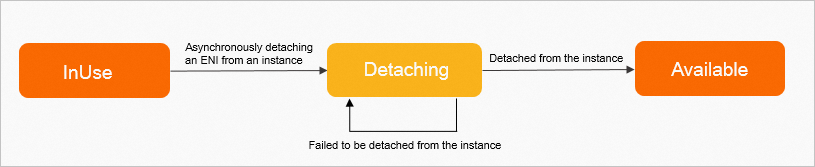
* * This operation is an asynchronous operation. After this operation is called to detach an ENI, you can check the state or events of the ENI to determine whether the ENI is detached. The following figure shows the transitions between the states of the ENI.
|
|
31829
|
-
* 
|
|
31830
|
-
* * If the ENI is in the Detaching state, the ENI detachment request is sent and the ENI is being detached from its associated instance.
|
|
31831
|
-
* * If the ENI is in the Available state, the ENI is detached from its associated instance.
|
|
31832
|
-
* * If the ENI is stuck in the Detaching state, the ENI may fail to be detached from the associated instance due to specific reasons. For example, the ENI may fail to be detached because the operating system did not respond to the ENI detachment request. If this occurs, you can re-initiate the request to detach the ENI. If the problem persists, restart the instance.
|
|
31833
|
-
* **For information about examples on how to call this operation, see **[Detach an ENI](~~471551~~).
|
|
31834
|
-
*
|
|
31835
|
-
* @param request DetachNetworkInterfaceRequest
|
|
31836
|
-
* @param runtime runtime options for this request RuntimeOptions
|
|
31837
|
-
* @return DetachNetworkInterfaceResponse
|
|
31838
|
-
*/
|
|
31839
31626
|
detachNetworkInterfaceWithOptions(request: DetachNetworkInterfaceRequest, runtime: $Util.RuntimeOptions): Promise<DetachNetworkInterfaceResponse>;
|
|
31840
|
-
/**
|
|
31841
|
-
* ## Description
|
|
31842
|
-
* When you call this operation, take note of the following items:
|
|
31843
|
-
* * Primary ENIs cannot be detached from ECS instances.
|
|
31844
|
-
* * The ENI must be in the Detaching (Detaching) or InUse (InUse) state.
|
|
31845
|
-
* * The instance must be in the Running (Running) or Stopped (Stopped) state.
|
|
31846
|
-
* * This operation is an asynchronous operation. After this operation is called to detach an ENI, you can check the state or events of the ENI to determine whether the ENI is detached. The following figure shows the transitions between the states of the ENI.
|
|
31847
|
-
* 
|
|
31848
|
-
* * If the ENI is in the Detaching state, the ENI detachment request is sent and the ENI is being detached from its associated instance.
|
|
31849
|
-
* * If the ENI is in the Available state, the ENI is detached from its associated instance.
|
|
31850
|
-
* * If the ENI is stuck in the Detaching state, the ENI may fail to be detached from the associated instance due to specific reasons. For example, the ENI may fail to be detached because the operating system did not respond to the ENI detachment request. If this occurs, you can re-initiate the request to detach the ENI. If the problem persists, restart the instance.
|
|
31851
|
-
* **For information about examples on how to call this operation, see **[Detach an ENI](~~471551~~).
|
|
31852
|
-
*
|
|
31853
|
-
* @param request DetachNetworkInterfaceRequest
|
|
31854
|
-
* @return DetachNetworkInterfaceResponse
|
|
31855
|
-
*/
|
|
31856
31627
|
detachNetworkInterface(request: DetachNetworkInterfaceRequest): Promise<DetachNetworkInterfaceResponse>;
|
|
31857
|
-
/**
|
|
31858
|
-
* ## Description
|
|
31859
|
-
* To prevent an activation code from being leaked, you can call the DisableActivation operation to disable the activation code. Disabled activation codes cannot be used to register new managed instances. However, managed instances that are already registered are not affected.
|
|
31860
|
-
*
|
|
31861
|
-
* @param request DisableActivationRequest
|
|
31862
|
-
* @param runtime runtime options for this request RuntimeOptions
|
|
31863
|
-
* @return DisableActivationResponse
|
|
31864
|
-
*/
|
|
31865
31628
|
disableActivationWithOptions(request: DisableActivationRequest, runtime: $Util.RuntimeOptions): Promise<DisableActivationResponse>;
|
|
31866
|
-
/**
|
|
31867
|
-
* ## Description
|
|
31868
|
-
* To prevent an activation code from being leaked, you can call the DisableActivation operation to disable the activation code. Disabled activation codes cannot be used to register new managed instances. However, managed instances that are already registered are not affected.
|
|
31869
|
-
*
|
|
31870
|
-
* @param request DisableActivationRequest
|
|
31871
|
-
* @return DisableActivationResponse
|
|
31872
|
-
*/
|
|
31873
31629
|
disableActivation(request: DisableActivationRequest): Promise<DisableActivationResponse>;
|
|
31874
31630
|
/**
|
|
31875
31631
|
* @deprecated
|
|
@@ -32039,45 +31795,9 @@ export default class Client extends OpenApi {
|
|
|
32039
31795
|
* @return ExportSnapshotResponse
|
|
32040
31796
|
*/
|
|
32041
31797
|
exportSnapshot(request: ExportSnapshotRequest): Promise<ExportSnapshotResponse>;
|
|
32042
|
-
/**
|
|
32043
|
-
* * ECS is a virtualized cloud-based service and cannot be connected to display devices. However, Alibaba Cloud caches system command outputs for the last start, restart, or shutdown of ECS instances. You can call the GetInstanceConsoleOutput operation to obtain the command outputs.
|
|
32044
|
-
* * The command outputs of instances that use the retired instance types cannot be obtained. For more information, see [Retired instance types](~~55263~~).
|
|
32045
|
-
* * The command outputs of Windows instances cannot be obtained.
|
|
32046
|
-
*
|
|
32047
|
-
* @param request GetInstanceConsoleOutputRequest
|
|
32048
|
-
* @param runtime runtime options for this request RuntimeOptions
|
|
32049
|
-
* @return GetInstanceConsoleOutputResponse
|
|
32050
|
-
*/
|
|
32051
31798
|
getInstanceConsoleOutputWithOptions(request: GetInstanceConsoleOutputRequest, runtime: $Util.RuntimeOptions): Promise<GetInstanceConsoleOutputResponse>;
|
|
32052
|
-
/**
|
|
32053
|
-
* * ECS is a virtualized cloud-based service and cannot be connected to display devices. However, Alibaba Cloud caches system command outputs for the last start, restart, or shutdown of ECS instances. You can call the GetInstanceConsoleOutput operation to obtain the command outputs.
|
|
32054
|
-
* * The command outputs of instances that use the retired instance types cannot be obtained. For more information, see [Retired instance types](~~55263~~).
|
|
32055
|
-
* * The command outputs of Windows instances cannot be obtained.
|
|
32056
|
-
*
|
|
32057
|
-
* @param request GetInstanceConsoleOutputRequest
|
|
32058
|
-
* @return GetInstanceConsoleOutputResponse
|
|
32059
|
-
*/
|
|
32060
31799
|
getInstanceConsoleOutput(request: GetInstanceConsoleOutputRequest): Promise<GetInstanceConsoleOutputResponse>;
|
|
32061
|
-
/**
|
|
32062
|
-
* ECS returns an instance screenshot that is in the JPG format and encoded in Base64. You must manually decode the screenshot. We recommend that you call this operation for troubleshooting and diagnosis. When you call this operation, take note of the following items:
|
|
32063
|
-
* * The instance must be in the Running state.
|
|
32064
|
-
* * You cannot obtain screenshots of instances whose instance types have been retired. For more information, see [Retired instance types](~~55263~~).
|
|
32065
|
-
* * If you want to call this operation on the same instance multiple times, you must wait at least 10 seconds between each call. Otherwise, the `Throttling` error code is returned.
|
|
32066
|
-
*
|
|
32067
|
-
* @param request GetInstanceScreenshotRequest
|
|
32068
|
-
* @param runtime runtime options for this request RuntimeOptions
|
|
32069
|
-
* @return GetInstanceScreenshotResponse
|
|
32070
|
-
*/
|
|
32071
31800
|
getInstanceScreenshotWithOptions(request: GetInstanceScreenshotRequest, runtime: $Util.RuntimeOptions): Promise<GetInstanceScreenshotResponse>;
|
|
32072
|
-
/**
|
|
32073
|
-
* ECS returns an instance screenshot that is in the JPG format and encoded in Base64. You must manually decode the screenshot. We recommend that you call this operation for troubleshooting and diagnosis. When you call this operation, take note of the following items:
|
|
32074
|
-
* * The instance must be in the Running state.
|
|
32075
|
-
* * You cannot obtain screenshots of instances whose instance types have been retired. For more information, see [Retired instance types](~~55263~~).
|
|
32076
|
-
* * If you want to call this operation on the same instance multiple times, you must wait at least 10 seconds between each call. Otherwise, the `Throttling` error code is returned.
|
|
32077
|
-
*
|
|
32078
|
-
* @param request GetInstanceScreenshotRequest
|
|
32079
|
-
* @return GetInstanceScreenshotResponse
|
|
32080
|
-
*/
|
|
32081
31801
|
getInstanceScreenshot(request: GetInstanceScreenshotRequest): Promise<GetInstanceScreenshotResponse>;
|
|
32082
31802
|
/**
|
|
32083
31803
|
* When you call this operation, take note of the following items:
|
|
@@ -32192,48 +31912,7 @@ export default class Client extends OpenApi {
|
|
|
32192
31912
|
* @return ImportImageResponse
|
|
32193
31913
|
*/
|
|
32194
31914
|
importImage(request: ImportImageRequest): Promise<ImportImageResponse>;
|
|
32195
|
-
/**
|
|
32196
|
-
* When you call this operation, take note of the following items:
|
|
32197
|
-
* * A maximum of 500 key pairs can be created in each region.
|
|
32198
|
-
* * The key pair that you wan to import must support one of the following encryption methods:
|
|
32199
|
-
* * rsa
|
|
32200
|
-
* * dsa
|
|
32201
|
-
* * ssh-rsa
|
|
32202
|
-
* * ssh-dss
|
|
32203
|
-
* * ecdsa
|
|
32204
|
-
* * ssh-rsa-cert-v00@openssh.com
|
|
32205
|
-
* * ssh-dss-cert-v00@openssh.com
|
|
32206
|
-
* * ssh-rsa-cert-v01@openssh.com
|
|
32207
|
-
* * ssh-dss-cert-v01@openssh.com
|
|
32208
|
-
* * ecdsa-sha2-nistp256-cert-v01@openssh.com
|
|
32209
|
-
* * ecdsa-sha2-nistp384-cert-v01@openssh.com
|
|
32210
|
-
* * ecdsa-sha2-nistp521-cert-v01@openssh.com
|
|
32211
|
-
*
|
|
32212
|
-
* @param request ImportKeyPairRequest
|
|
32213
|
-
* @param runtime runtime options for this request RuntimeOptions
|
|
32214
|
-
* @return ImportKeyPairResponse
|
|
32215
|
-
*/
|
|
32216
31915
|
importKeyPairWithOptions(request: ImportKeyPairRequest, runtime: $Util.RuntimeOptions): Promise<ImportKeyPairResponse>;
|
|
32217
|
-
/**
|
|
32218
|
-
* When you call this operation, take note of the following items:
|
|
32219
|
-
* * A maximum of 500 key pairs can be created in each region.
|
|
32220
|
-
* * The key pair that you wan to import must support one of the following encryption methods:
|
|
32221
|
-
* * rsa
|
|
32222
|
-
* * dsa
|
|
32223
|
-
* * ssh-rsa
|
|
32224
|
-
* * ssh-dss
|
|
32225
|
-
* * ecdsa
|
|
32226
|
-
* * ssh-rsa-cert-v00@openssh.com
|
|
32227
|
-
* * ssh-dss-cert-v00@openssh.com
|
|
32228
|
-
* * ssh-rsa-cert-v01@openssh.com
|
|
32229
|
-
* * ssh-dss-cert-v01@openssh.com
|
|
32230
|
-
* * ecdsa-sha2-nistp256-cert-v01@openssh.com
|
|
32231
|
-
* * ecdsa-sha2-nistp384-cert-v01@openssh.com
|
|
32232
|
-
* * ecdsa-sha2-nistp521-cert-v01@openssh.com
|
|
32233
|
-
*
|
|
32234
|
-
* @param request ImportKeyPairRequest
|
|
32235
|
-
* @return ImportKeyPairResponse
|
|
32236
|
-
*/
|
|
32237
31916
|
importKeyPair(request: ImportKeyPairRequest): Promise<ImportKeyPairResponse>;
|
|
32238
31917
|
/**
|
|
32239
31918
|
* @deprecated
|
|
@@ -32250,96 +31929,26 @@ export default class Client extends OpenApi {
|
|
|
32250
31929
|
* @return ImportSnapshotResponse
|
|
32251
31930
|
*/
|
|
32252
31931
|
importSnapshot(request: ImportSnapshotRequest): Promise<ImportSnapshotResponse>;
|
|
32253
|
-
installCloudAssistantWithOptions(request: InstallCloudAssistantRequest, runtime: $Util.RuntimeOptions): Promise<InstallCloudAssistantResponse>;
|
|
32254
|
-
installCloudAssistant(request: InstallCloudAssistantRequest): Promise<InstallCloudAssistantResponse>;
|
|
32255
31932
|
/**
|
|
32256
|
-
*
|
|
32257
|
-
* * The network type is virtual private cloud (VPC). For more information, see [What is a VPC?](~~34217~~)
|
|
32258
|
-
* * The instances are in the Running (`Running`) state.
|
|
32259
|
-
* * The Cloud Assistant client is installed on the instances. For more information, see [Install the Cloud Assistant client](~~64921~~).
|
|
32260
|
-
* * Before you run PowerShell commands, make sure that the PowerShell module is configured for the instances.
|
|
32261
|
-
* * If you set the `Timed` parameter to false, the command is run only once.
|
|
32262
|
-
* * If you set the `Timed` parameter to true, the command is run on a schedule.
|
|
32263
|
-
* * The schedule is specified by the `Frequency` parameter. The execution results of a command do not affect the next command execution.
|
|
32264
|
-
* * If you want to specify a schedule by using a cron expression, you can specify a time zone based on your business requirements. If you do not specify a time zone, the schedule is determined by the system time of the instance. Make sure that the time or time zone of the instance meets your business requirements. For more information, see [Configure the NTP service and time zone for Linux instances](~~92803~~) or [Configure the NTP service for Windows instances](~~51890~~).
|
|
32265
|
-
* To ensure that scheduled tasks can run as expected, make sure that the version of the Cloud Assistant client is not earlier than the following versions. A scheduled task can run a command at a specified interval, only once at a specified time, or at specific times based on a cron expression that includes a specific year or time zone. If the `ClientNeedUpgrade` error code is returned, you must update the Cloud Assistant client to the latest version. For more information, see [Upgrade or disable upgrades for the Cloud Assistant client](~~134383~~).
|
|
32266
|
-
* - Linux: 2.2.3.282
|
|
32267
|
-
* - Windows: 2.1.3.282
|
|
32268
|
-
* * Command executions may fail due to instance status exceptions, network exceptions, or exceptions on the Cloud Assistant client. If an execution fails, no execution information is generated.
|
|
32269
|
-
* * If you enable the custom parameter feature by setting the EnableParameter parameter to true when you create a command, you must specify custom parameters (`Parameters`) when you run the command.
|
|
31933
|
+
* After you call the InstallCloudAssistant operation and then the [RebootInstance](~~25502~~) operation, the Cloud Assistant client is installed and takes effect.
|
|
32270
31934
|
*
|
|
32271
|
-
* @param
|
|
31935
|
+
* @param request InstallCloudAssistantRequest
|
|
32272
31936
|
* @param runtime runtime options for this request RuntimeOptions
|
|
32273
|
-
* @return
|
|
31937
|
+
* @return InstallCloudAssistantResponse
|
|
32274
31938
|
*/
|
|
32275
|
-
|
|
31939
|
+
installCloudAssistantWithOptions(request: InstallCloudAssistantRequest, runtime: $Util.RuntimeOptions): Promise<InstallCloudAssistantResponse>;
|
|
32276
31940
|
/**
|
|
32277
|
-
*
|
|
32278
|
-
* * The network type is virtual private cloud (VPC). For more information, see [What is a VPC?](~~34217~~)
|
|
32279
|
-
* * The instances are in the Running (`Running`) state.
|
|
32280
|
-
* * The Cloud Assistant client is installed on the instances. For more information, see [Install the Cloud Assistant client](~~64921~~).
|
|
32281
|
-
* * Before you run PowerShell commands, make sure that the PowerShell module is configured for the instances.
|
|
32282
|
-
* * If you set the `Timed` parameter to false, the command is run only once.
|
|
32283
|
-
* * If you set the `Timed` parameter to true, the command is run on a schedule.
|
|
32284
|
-
* * The schedule is specified by the `Frequency` parameter. The execution results of a command do not affect the next command execution.
|
|
32285
|
-
* * If you want to specify a schedule by using a cron expression, you can specify a time zone based on your business requirements. If you do not specify a time zone, the schedule is determined by the system time of the instance. Make sure that the time or time zone of the instance meets your business requirements. For more information, see [Configure the NTP service and time zone for Linux instances](~~92803~~) or [Configure the NTP service for Windows instances](~~51890~~).
|
|
32286
|
-
* To ensure that scheduled tasks can run as expected, make sure that the version of the Cloud Assistant client is not earlier than the following versions. A scheduled task can run a command at a specified interval, only once at a specified time, or at specific times based on a cron expression that includes a specific year or time zone. If the `ClientNeedUpgrade` error code is returned, you must update the Cloud Assistant client to the latest version. For more information, see [Upgrade or disable upgrades for the Cloud Assistant client](~~134383~~).
|
|
32287
|
-
* - Linux: 2.2.3.282
|
|
32288
|
-
* - Windows: 2.1.3.282
|
|
32289
|
-
* * Command executions may fail due to instance status exceptions, network exceptions, or exceptions on the Cloud Assistant client. If an execution fails, no execution information is generated.
|
|
32290
|
-
* * If you enable the custom parameter feature by setting the EnableParameter parameter to true when you create a command, you must specify custom parameters (`Parameters`) when you run the command.
|
|
31941
|
+
* After you call the InstallCloudAssistant operation and then the [RebootInstance](~~25502~~) operation, the Cloud Assistant client is installed and takes effect.
|
|
32291
31942
|
*
|
|
32292
|
-
* @param request
|
|
32293
|
-
* @return
|
|
31943
|
+
* @param request InstallCloudAssistantRequest
|
|
31944
|
+
* @return InstallCloudAssistantResponse
|
|
32294
31945
|
*/
|
|
31946
|
+
installCloudAssistant(request: InstallCloudAssistantRequest): Promise<InstallCloudAssistantResponse>;
|
|
31947
|
+
invokeCommandWithOptions(tmpReq: InvokeCommandRequest, runtime: $Util.RuntimeOptions): Promise<InvokeCommandResponse>;
|
|
32295
31948
|
invokeCommand(request: InvokeCommandRequest): Promise<InvokeCommandResponse>;
|
|
32296
|
-
/**
|
|
32297
|
-
* A resource is a cloud service entity that you create in Alibaba Cloud, such as an ECS instance, elastic network interface (ENI), or image. A resource group is a collection of infrastructure for projects, environments, or stacks. In a resource group, you can manage resources and monitor and run tasks in a centralized manner without switching between Alibaba Cloud services.
|
|
32298
|
-
*
|
|
32299
|
-
* @param request JoinResourceGroupRequest
|
|
32300
|
-
* @param runtime runtime options for this request RuntimeOptions
|
|
32301
|
-
* @return JoinResourceGroupResponse
|
|
32302
|
-
*/
|
|
32303
31949
|
joinResourceGroupWithOptions(request: JoinResourceGroupRequest, runtime: $Util.RuntimeOptions): Promise<JoinResourceGroupResponse>;
|
|
32304
|
-
/**
|
|
32305
|
-
* A resource is a cloud service entity that you create in Alibaba Cloud, such as an ECS instance, elastic network interface (ENI), or image. A resource group is a collection of infrastructure for projects, environments, or stacks. In a resource group, you can manage resources and monitor and run tasks in a centralized manner without switching between Alibaba Cloud services.
|
|
32306
|
-
*
|
|
32307
|
-
* @param request JoinResourceGroupRequest
|
|
32308
|
-
* @return JoinResourceGroupResponse
|
|
32309
|
-
*/
|
|
32310
31950
|
joinResourceGroup(request: JoinResourceGroupRequest): Promise<JoinResourceGroupResponse>;
|
|
32311
|
-
/**
|
|
32312
|
-
* > This operation is not recommended. We recommend that you call the [ModifyInstanceAttribute](~~25503~~) operation to add instances to or remove instances from a security group, and call the [ModifyNetworkInterfaceAttribute](~~58513~~) operation to add ENIs to or remove ENIs from a security group.
|
|
32313
|
-
* When you call this operation, take note of the following items:
|
|
32314
|
-
* * Before you add an instance to a security group, the instance must be in the **Stopped** (Stopped) or **Running** (Running) state.
|
|
32315
|
-
* * An instance can be added to up to five security groups.
|
|
32316
|
-
* * To add an instance to more security groups, [submit a ticket](https://selfservice.console.aliyun.com/ticket/createIndex.htm). An instance can be added to up to 16 security groups.
|
|
32317
|
-
* *
|
|
32318
|
-
* * A basic security group can contain up to 2,000 instances. An advanced security group can contain up to 65,536 instances.
|
|
32319
|
-
* * The security group and the instance must belong to the same region.
|
|
32320
|
-
* * The security group and the instance must be of the same network type. If the network type is Virtual Private Cloud (VPC), the security group and the instance must be in the same VPC.
|
|
32321
|
-
* * An instance and an ENI cannot be added to a security group at the same time. You cannot specify the `InstanceId` and `NetworkInterfaceId` parameters at the same time.
|
|
32322
|
-
*
|
|
32323
|
-
* @param request JoinSecurityGroupRequest
|
|
32324
|
-
* @param runtime runtime options for this request RuntimeOptions
|
|
32325
|
-
* @return JoinSecurityGroupResponse
|
|
32326
|
-
*/
|
|
32327
31951
|
joinSecurityGroupWithOptions(request: JoinSecurityGroupRequest, runtime: $Util.RuntimeOptions): Promise<JoinSecurityGroupResponse>;
|
|
32328
|
-
/**
|
|
32329
|
-
* > This operation is not recommended. We recommend that you call the [ModifyInstanceAttribute](~~25503~~) operation to add instances to or remove instances from a security group, and call the [ModifyNetworkInterfaceAttribute](~~58513~~) operation to add ENIs to or remove ENIs from a security group.
|
|
32330
|
-
* When you call this operation, take note of the following items:
|
|
32331
|
-
* * Before you add an instance to a security group, the instance must be in the **Stopped** (Stopped) or **Running** (Running) state.
|
|
32332
|
-
* * An instance can be added to up to five security groups.
|
|
32333
|
-
* * To add an instance to more security groups, [submit a ticket](https://selfservice.console.aliyun.com/ticket/createIndex.htm). An instance can be added to up to 16 security groups.
|
|
32334
|
-
* *
|
|
32335
|
-
* * A basic security group can contain up to 2,000 instances. An advanced security group can contain up to 65,536 instances.
|
|
32336
|
-
* * The security group and the instance must belong to the same region.
|
|
32337
|
-
* * The security group and the instance must be of the same network type. If the network type is Virtual Private Cloud (VPC), the security group and the instance must be in the same VPC.
|
|
32338
|
-
* * An instance and an ENI cannot be added to a security group at the same time. You cannot specify the `InstanceId` and `NetworkInterfaceId` parameters at the same time.
|
|
32339
|
-
*
|
|
32340
|
-
* @param request JoinSecurityGroupRequest
|
|
32341
|
-
* @return JoinSecurityGroupResponse
|
|
32342
|
-
*/
|
|
32343
31952
|
joinSecurityGroup(request: JoinSecurityGroupRequest): Promise<JoinSecurityGroupResponse>;
|
|
32344
31953
|
/**
|
|
32345
31954
|
* > This operation is not recommended. We recommend that you call the [ModifyInstanceAttribute](~~25503~~) operation to add instances to or remove instances from a security group, and call the [ModifyNetworkInterfaceAttribute](~~58513~~) operation to add ENIs to or remove ENIs from a security group.
|
|
@@ -32364,70 +31973,11 @@ export default class Client extends OpenApi {
|
|
|
32364
31973
|
* @return LeaveSecurityGroupResponse
|
|
32365
31974
|
*/
|
|
32366
31975
|
leaveSecurityGroup(request: LeaveSecurityGroupRequest): Promise<LeaveSecurityGroupResponse>;
|
|
32367
|
-
/**
|
|
32368
|
-
* Before you call this operation to query the states of Cloud Assistant plug-ins on ECS instances, make sure that the versions of the Cloud Assistant client installed on the instances are not earlier than the following ones:
|
|
32369
|
-
* - 2.2.3.344 for Linux instances
|
|
32370
|
-
* - 2.1.3.344 for Windows instances
|
|
32371
|
-
*
|
|
32372
|
-
* @param request ListPluginStatusRequest
|
|
32373
|
-
* @param runtime runtime options for this request RuntimeOptions
|
|
32374
|
-
* @return ListPluginStatusResponse
|
|
32375
|
-
*/
|
|
32376
31976
|
listPluginStatusWithOptions(request: ListPluginStatusRequest, runtime: $Util.RuntimeOptions): Promise<ListPluginStatusResponse>;
|
|
32377
|
-
/**
|
|
32378
|
-
* Before you call this operation to query the states of Cloud Assistant plug-ins on ECS instances, make sure that the versions of the Cloud Assistant client installed on the instances are not earlier than the following ones:
|
|
32379
|
-
* - 2.2.3.344 for Linux instances
|
|
32380
|
-
* - 2.1.3.344 for Windows instances
|
|
32381
|
-
*
|
|
32382
|
-
* @param request ListPluginStatusRequest
|
|
32383
|
-
* @return ListPluginStatusResponse
|
|
32384
|
-
*/
|
|
32385
31977
|
listPluginStatus(request: ListPluginStatusRequest): Promise<ListPluginStatusResponse>;
|
|
32386
|
-
/**
|
|
32387
|
-
* Specify at least one of the following parameters or parameter pairs in a request to determine a query object:
|
|
32388
|
-
* * `ResourceId.N`
|
|
32389
|
-
* * `Tag.N` parameter pair (`Tag.N.Key` and `Tag.N.Value`)
|
|
32390
|
-
* * `TagFilter.N`
|
|
32391
|
-
* If one of the following sets of request parameters is specified as filter conditions, only ECS resources that meet all of the specified filter conditions are returned:
|
|
32392
|
-
* * Set 1: `Tag.N.Key, Tag.N.Value`, and `ResourceId.N`
|
|
32393
|
-
* * Set 2: `TagFilter.N.TagKey, TagFilter.N.TagValues.N`, and `ResourceId.N`
|
|
32394
|
-
*
|
|
32395
|
-
* @param request ListTagResourcesRequest
|
|
32396
|
-
* @param runtime runtime options for this request RuntimeOptions
|
|
32397
|
-
* @return ListTagResourcesResponse
|
|
32398
|
-
*/
|
|
32399
31978
|
listTagResourcesWithOptions(request: ListTagResourcesRequest, runtime: $Util.RuntimeOptions): Promise<ListTagResourcesResponse>;
|
|
32400
|
-
/**
|
|
32401
|
-
* Specify at least one of the following parameters or parameter pairs in a request to determine a query object:
|
|
32402
|
-
* * `ResourceId.N`
|
|
32403
|
-
* * `Tag.N` parameter pair (`Tag.N.Key` and `Tag.N.Value`)
|
|
32404
|
-
* * `TagFilter.N`
|
|
32405
|
-
* If one of the following sets of request parameters is specified as filter conditions, only ECS resources that meet all of the specified filter conditions are returned:
|
|
32406
|
-
* * Set 1: `Tag.N.Key, Tag.N.Value`, and `ResourceId.N`
|
|
32407
|
-
* * Set 2: `TagFilter.N.TagKey, TagFilter.N.TagValues.N`, and `ResourceId.N`
|
|
32408
|
-
*
|
|
32409
|
-
* @param request ListTagResourcesRequest
|
|
32410
|
-
* @return ListTagResourcesResponse
|
|
32411
|
-
*/
|
|
32412
31979
|
listTagResources(request: ListTagResourcesRequest): Promise<ListTagResourcesResponse>;
|
|
32413
|
-
/**
|
|
32414
|
-
* Before you call this operation, take note of the following items:
|
|
32415
|
-
* * If you modify the capacity or capacity-related settings of an auto provisioning group, the group executes the scheduling task once after the modification.
|
|
32416
|
-
* * You cannot modify an auto provisioning group when the group is being deleted.
|
|
32417
|
-
*
|
|
32418
|
-
* @param request ModifyAutoProvisioningGroupRequest
|
|
32419
|
-
* @param runtime runtime options for this request RuntimeOptions
|
|
32420
|
-
* @return ModifyAutoProvisioningGroupResponse
|
|
32421
|
-
*/
|
|
32422
31980
|
modifyAutoProvisioningGroupWithOptions(request: ModifyAutoProvisioningGroupRequest, runtime: $Util.RuntimeOptions): Promise<ModifyAutoProvisioningGroupResponse>;
|
|
32423
|
-
/**
|
|
32424
|
-
* Before you call this operation, take note of the following items:
|
|
32425
|
-
* * If you modify the capacity or capacity-related settings of an auto provisioning group, the group executes the scheduling task once after the modification.
|
|
32426
|
-
* * You cannot modify an auto provisioning group when the group is being deleted.
|
|
32427
|
-
*
|
|
32428
|
-
* @param request ModifyAutoProvisioningGroupRequest
|
|
32429
|
-
* @return ModifyAutoProvisioningGroupResponse
|
|
32430
|
-
*/
|
|
32431
31981
|
modifyAutoProvisioningGroup(request: ModifyAutoProvisioningGroupRequest): Promise<ModifyAutoProvisioningGroupResponse>;
|
|
32432
31982
|
/**
|
|
32433
31983
|
* @deprecated
|
|
@@ -32463,81 +32013,34 @@ export default class Client extends OpenApi {
|
|
|
32463
32013
|
modifyBandwidthPackageSpec(request: ModifyBandwidthPackageSpecRequest): Promise<ModifyBandwidthPackageSpecResponse>;
|
|
32464
32014
|
modifyCapacityReservationWithOptions(request: ModifyCapacityReservationRequest, runtime: $Util.RuntimeOptions): Promise<ModifyCapacityReservationResponse>;
|
|
32465
32015
|
modifyCapacityReservation(request: ModifyCapacityReservationRequest): Promise<ModifyCapacityReservationResponse>;
|
|
32466
|
-
/**
|
|
32467
|
-
* You can modify a command when it is being executed. After the command is modified, the new command content applies to subsequent executions.
|
|
32468
|
-
* You cannot modify the command type. For example, you cannot change a shell command (RunShellScript) to a batch command (RunBatScript).
|
|
32469
|
-
*
|
|
32470
|
-
* @param request ModifyCommandRequest
|
|
32471
|
-
* @param runtime runtime options for this request RuntimeOptions
|
|
32472
|
-
* @return ModifyCommandResponse
|
|
32473
|
-
*/
|
|
32474
32016
|
modifyCommandWithOptions(request: ModifyCommandRequest, runtime: $Util.RuntimeOptions): Promise<ModifyCommandResponse>;
|
|
32475
|
-
/**
|
|
32476
|
-
* You can modify a command when it is being executed. After the command is modified, the new command content applies to subsequent executions.
|
|
32477
|
-
* You cannot modify the command type. For example, you cannot change a shell command (RunShellScript) to a batch command (RunBatScript).
|
|
32478
|
-
*
|
|
32479
|
-
* @param request ModifyCommandRequest
|
|
32480
|
-
* @return ModifyCommandResponse
|
|
32481
|
-
*/
|
|
32482
32017
|
modifyCommand(request: ModifyCommandRequest): Promise<ModifyCommandResponse>;
|
|
32483
|
-
/**
|
|
32484
|
-
* ## Description
|
|
32485
|
-
* * All the Elastic Compute Service (ECS) instances that are hosted on a dedicated host must be in the Stopped (`Stopped`) state before you can modify the CPU overcommit ratio of the dedicated host.
|
|
32486
|
-
* * Modifications to the CPU overcommit ratio of a dedicated host do not affect the operation of the dedicated host. After the CPU overcommit ratio is modified, the number of allocated vCPUs on the dedicated host cannot exceed the new total number of vCPUs. Otherwise, ECS instances that use the excess vCPUs cannot start.
|
|
32487
|
-
*
|
|
32488
|
-
* @param request ModifyDedicatedHostAttributeRequest
|
|
32489
|
-
* @param runtime runtime options for this request RuntimeOptions
|
|
32490
|
-
* @return ModifyDedicatedHostAttributeResponse
|
|
32491
|
-
*/
|
|
32492
32018
|
modifyDedicatedHostAttributeWithOptions(request: ModifyDedicatedHostAttributeRequest, runtime: $Util.RuntimeOptions): Promise<ModifyDedicatedHostAttributeResponse>;
|
|
32493
|
-
/**
|
|
32494
|
-
* ## Description
|
|
32495
|
-
* * All the Elastic Compute Service (ECS) instances that are hosted on a dedicated host must be in the Stopped (`Stopped`) state before you can modify the CPU overcommit ratio of the dedicated host.
|
|
32496
|
-
* * Modifications to the CPU overcommit ratio of a dedicated host do not affect the operation of the dedicated host. After the CPU overcommit ratio is modified, the number of allocated vCPUs on the dedicated host cannot exceed the new total number of vCPUs. Otherwise, ECS instances that use the excess vCPUs cannot start.
|
|
32497
|
-
*
|
|
32498
|
-
* @param request ModifyDedicatedHostAttributeRequest
|
|
32499
|
-
* @return ModifyDedicatedHostAttributeResponse
|
|
32500
|
-
*/
|
|
32501
32019
|
modifyDedicatedHostAttribute(request: ModifyDedicatedHostAttributeRequest): Promise<ModifyDedicatedHostAttributeResponse>;
|
|
32502
|
-
/**
|
|
32503
|
-
* The pay-as-you-go dedicated host is automatically released at the specified time. Make sure that the dedicated host is no longer needed and that its data is backed up.
|
|
32504
|
-
*
|
|
32505
|
-
* @param request ModifyDedicatedHostAutoReleaseTimeRequest
|
|
32506
|
-
* @param runtime runtime options for this request RuntimeOptions
|
|
32507
|
-
* @return ModifyDedicatedHostAutoReleaseTimeResponse
|
|
32508
|
-
*/
|
|
32509
32020
|
modifyDedicatedHostAutoReleaseTimeWithOptions(request: ModifyDedicatedHostAutoReleaseTimeRequest, runtime: $Util.RuntimeOptions): Promise<ModifyDedicatedHostAutoReleaseTimeResponse>;
|
|
32510
|
-
/**
|
|
32511
|
-
* The pay-as-you-go dedicated host is automatically released at the specified time. Make sure that the dedicated host is no longer needed and that its data is backed up.
|
|
32512
|
-
*
|
|
32513
|
-
* @param request ModifyDedicatedHostAutoReleaseTimeRequest
|
|
32514
|
-
* @return ModifyDedicatedHostAutoReleaseTimeResponse
|
|
32515
|
-
*/
|
|
32516
32021
|
modifyDedicatedHostAutoReleaseTime(request: ModifyDedicatedHostAutoReleaseTimeRequest): Promise<ModifyDedicatedHostAutoReleaseTimeResponse>;
|
|
32517
|
-
/**
|
|
32518
|
-
* ## Description
|
|
32519
|
-
* * If you enable auto-renewal for your subscription dedicated host, the dedicated host is automatically renewed nine days before expiration. The renewal fees are automatically paid at 08:00:00 (UTC+8). If the fees are not paid, they are paid at the same point in time the next day. Automatic payment stops after the fees are paid or after the dedicated host expires and is locked. Make sure that you have sufficient balance within your account.
|
|
32520
|
-
* * Subscription dedicated hosts can be automatically renewed along with the subscription Elastic Compute Service (ECS) instances hosted on the dedicated hosts. For more information, see the description of the AutoRenewWithEcs parameter.
|
|
32521
|
-
*
|
|
32522
|
-
* @param request ModifyDedicatedHostAutoRenewAttributeRequest
|
|
32523
|
-
* @param runtime runtime options for this request RuntimeOptions
|
|
32524
|
-
* @return ModifyDedicatedHostAutoRenewAttributeResponse
|
|
32525
|
-
*/
|
|
32526
32022
|
modifyDedicatedHostAutoRenewAttributeWithOptions(request: ModifyDedicatedHostAutoRenewAttributeRequest, runtime: $Util.RuntimeOptions): Promise<ModifyDedicatedHostAutoRenewAttributeResponse>;
|
|
32527
|
-
/**
|
|
32528
|
-
* ## Description
|
|
32529
|
-
* * If you enable auto-renewal for your subscription dedicated host, the dedicated host is automatically renewed nine days before expiration. The renewal fees are automatically paid at 08:00:00 (UTC+8). If the fees are not paid, they are paid at the same point in time the next day. Automatic payment stops after the fees are paid or after the dedicated host expires and is locked. Make sure that you have sufficient balance within your account.
|
|
32530
|
-
* * Subscription dedicated hosts can be automatically renewed along with the subscription Elastic Compute Service (ECS) instances hosted on the dedicated hosts. For more information, see the description of the AutoRenewWithEcs parameter.
|
|
32531
|
-
*
|
|
32532
|
-
* @param request ModifyDedicatedHostAutoRenewAttributeRequest
|
|
32533
|
-
* @return ModifyDedicatedHostAutoRenewAttributeResponse
|
|
32534
|
-
*/
|
|
32535
32023
|
modifyDedicatedHostAutoRenewAttribute(request: ModifyDedicatedHostAutoRenewAttributeRequest): Promise<ModifyDedicatedHostAutoRenewAttributeResponse>;
|
|
32536
32024
|
modifyDedicatedHostClusterAttributeWithOptions(request: ModifyDedicatedHostClusterAttributeRequest, runtime: $Util.RuntimeOptions): Promise<ModifyDedicatedHostClusterAttributeResponse>;
|
|
32537
32025
|
modifyDedicatedHostClusterAttribute(request: ModifyDedicatedHostClusterAttributeRequest): Promise<ModifyDedicatedHostClusterAttributeResponse>;
|
|
32538
32026
|
modifyDedicatedHostsChargeTypeWithOptions(request: ModifyDedicatedHostsChargeTypeRequest, runtime: $Util.RuntimeOptions): Promise<ModifyDedicatedHostsChargeTypeResponse>;
|
|
32539
32027
|
modifyDedicatedHostsChargeType(request: ModifyDedicatedHostsChargeTypeRequest): Promise<ModifyDedicatedHostsChargeTypeResponse>;
|
|
32028
|
+
/**
|
|
32029
|
+
* You can call this operation to modify the demand information about instance types. Alibaba Cloud provides the requested resources based on your demand. You can file demands only for I/O optimized instance types and instances of the virtual private cloud (VPC) type. Parameters except `DemandName` and `DemandDescription` can be modified only for demands that are in the Rejected state.
|
|
32030
|
+
* > This operation is in internal preview and has not been officially released. We recommend that you do not use this operation.
|
|
32031
|
+
*
|
|
32032
|
+
* @param request ModifyDemandRequest
|
|
32033
|
+
* @param runtime runtime options for this request RuntimeOptions
|
|
32034
|
+
* @return ModifyDemandResponse
|
|
32035
|
+
*/
|
|
32540
32036
|
modifyDemandWithOptions(request: ModifyDemandRequest, runtime: $Util.RuntimeOptions): Promise<ModifyDemandResponse>;
|
|
32037
|
+
/**
|
|
32038
|
+
* You can call this operation to modify the demand information about instance types. Alibaba Cloud provides the requested resources based on your demand. You can file demands only for I/O optimized instance types and instances of the virtual private cloud (VPC) type. Parameters except `DemandName` and `DemandDescription` can be modified only for demands that are in the Rejected state.
|
|
32039
|
+
* > This operation is in internal preview and has not been officially released. We recommend that you do not use this operation.
|
|
32040
|
+
*
|
|
32041
|
+
* @param request ModifyDemandRequest
|
|
32042
|
+
* @return ModifyDemandResponse
|
|
32043
|
+
*/
|
|
32541
32044
|
modifyDemand(request: ModifyDemandRequest): Promise<ModifyDemandResponse>;
|
|
32542
32045
|
modifyDeploymentSetAttributeWithOptions(request: ModifyDeploymentSetAttributeRequest, runtime: $Util.RuntimeOptions): Promise<ModifyDeploymentSetAttributeResponse>;
|
|
32543
32046
|
modifyDeploymentSetAttribute(request: ModifyDeploymentSetAttributeRequest): Promise<ModifyDeploymentSetAttributeResponse>;
|
|
@@ -32560,38 +32063,40 @@ export default class Client extends OpenApi {
|
|
|
32560
32063
|
* @return ModifyDiskAttributeResponse
|
|
32561
32064
|
*/
|
|
32562
32065
|
modifyDiskAttribute(request: ModifyDiskAttributeRequest): Promise<ModifyDiskAttributeResponse>;
|
|
32066
|
+
modifyDiskChargeTypeWithOptions(request: ModifyDiskChargeTypeRequest, runtime: $Util.RuntimeOptions): Promise<ModifyDiskChargeTypeResponse>;
|
|
32067
|
+
modifyDiskChargeType(request: ModifyDiskChargeTypeRequest): Promise<ModifyDiskChargeTypeResponse>;
|
|
32563
32068
|
/**
|
|
32564
|
-
*
|
|
32069
|
+
* ## Description
|
|
32565
32070
|
* When you call this operation, take note of the following items:
|
|
32566
|
-
* *
|
|
32567
|
-
*
|
|
32568
|
-
*
|
|
32569
|
-
*
|
|
32570
|
-
*
|
|
32571
|
-
*
|
|
32572
|
-
* *
|
|
32573
|
-
*
|
|
32574
|
-
*
|
|
32071
|
+
* * To modify the performance level of an ESSD, take note of the following items:
|
|
32072
|
+
* * For a subscription ESSD, you can only upgrade its performance level.
|
|
32073
|
+
* * For a pay-as-you-go ESSD, You can upgrade or downgrade its performance level. However, you cannot downgrade the performance level to PL0.
|
|
32074
|
+
* * The ESSD must be in the **In Use** (In_Use) or **Unattached** (Available) state.
|
|
32075
|
+
* * If the ESSD is attached to an ECS instance, the instance must be in the **Running** (Running) or **Stopped** (Stopped) state. The instance cannot be in the Expired state or stopped due to an overdue payment.
|
|
32076
|
+
* * If you cannot upgrade the performance level of the ESSD due to its capacity, resize the ESSD by calling the [ResizeDisk](~~25522~~) operation and then try again. For more information, see [Enhanced SSDs](~~122389~~).
|
|
32077
|
+
* * For more information about the limits on changing the category of a disk, see the "Limits" section of the [Change the category of a disk](~~161980~~) topic.
|
|
32078
|
+
* The new disk category or performance level takes effect immediately after this operation is executed. Alibaba Cloud calculates the bill based on the new disk category and performance level.
|
|
32079
|
+
*
|
|
32080
|
+
* @param request ModifyDiskSpecRequest
|
|
32575
32081
|
* @param runtime runtime options for this request RuntimeOptions
|
|
32576
|
-
* @return
|
|
32082
|
+
* @return ModifyDiskSpecResponse
|
|
32577
32083
|
*/
|
|
32578
|
-
|
|
32084
|
+
modifyDiskSpecWithOptions(request: ModifyDiskSpecRequest, runtime: $Util.RuntimeOptions): Promise<ModifyDiskSpecResponse>;
|
|
32579
32085
|
/**
|
|
32580
|
-
*
|
|
32086
|
+
* ## Description
|
|
32581
32087
|
* When you call this operation, take note of the following items:
|
|
32582
|
-
* *
|
|
32583
|
-
*
|
|
32584
|
-
*
|
|
32585
|
-
*
|
|
32586
|
-
*
|
|
32587
|
-
*
|
|
32588
|
-
* *
|
|
32589
|
-
*
|
|
32590
|
-
*
|
|
32591
|
-
* @
|
|
32088
|
+
* * To modify the performance level of an ESSD, take note of the following items:
|
|
32089
|
+
* * For a subscription ESSD, you can only upgrade its performance level.
|
|
32090
|
+
* * For a pay-as-you-go ESSD, You can upgrade or downgrade its performance level. However, you cannot downgrade the performance level to PL0.
|
|
32091
|
+
* * The ESSD must be in the **In Use** (In_Use) or **Unattached** (Available) state.
|
|
32092
|
+
* * If the ESSD is attached to an ECS instance, the instance must be in the **Running** (Running) or **Stopped** (Stopped) state. The instance cannot be in the Expired state or stopped due to an overdue payment.
|
|
32093
|
+
* * If you cannot upgrade the performance level of the ESSD due to its capacity, resize the ESSD by calling the [ResizeDisk](~~25522~~) operation and then try again. For more information, see [Enhanced SSDs](~~122389~~).
|
|
32094
|
+
* * For more information about the limits on changing the category of a disk, see the "Limits" section of the [Change the category of a disk](~~161980~~) topic.
|
|
32095
|
+
* The new disk category or performance level takes effect immediately after this operation is executed. Alibaba Cloud calculates the bill based on the new disk category and performance level.
|
|
32096
|
+
*
|
|
32097
|
+
* @param request ModifyDiskSpecRequest
|
|
32098
|
+
* @return ModifyDiskSpecResponse
|
|
32592
32099
|
*/
|
|
32593
|
-
modifyDiskChargeType(request: ModifyDiskChargeTypeRequest): Promise<ModifyDiskChargeTypeResponse>;
|
|
32594
|
-
modifyDiskSpecWithOptions(request: ModifyDiskSpecRequest, runtime: $Util.RuntimeOptions): Promise<ModifyDiskSpecResponse>;
|
|
32595
32100
|
modifyDiskSpec(request: ModifyDiskSpecRequest): Promise<ModifyDiskSpecResponse>;
|
|
32596
32101
|
/**
|
|
32597
32102
|
* @deprecated
|
|
@@ -32696,52 +32201,7 @@ export default class Client extends OpenApi {
|
|
|
32696
32201
|
modifyImageSharePermission(request: ModifyImageSharePermissionRequest): Promise<ModifyImageSharePermissionResponse>;
|
|
32697
32202
|
modifyInstanceAttachmentAttributesWithOptions(request: ModifyInstanceAttachmentAttributesRequest, runtime: $Util.RuntimeOptions): Promise<ModifyInstanceAttachmentAttributesResponse>;
|
|
32698
32203
|
modifyInstanceAttachmentAttributes(request: ModifyInstanceAttachmentAttributesRequest): Promise<ModifyInstanceAttachmentAttributesResponse>;
|
|
32699
|
-
/**
|
|
32700
|
-
* If the response contains `{"OperationLocks": {"LockReason" : "security"}}` when you query the information of an instance, the instance is locked for security reasons and all operations are prohibited on it.
|
|
32701
|
-
* When you call this operation, take note of the following items:
|
|
32702
|
-
* * Modify the hostname (`HostName`): After the hostname is modified, you must restart the instance by performing the operations described in [Restart an instance](~~25440~~) in the ECS console or by calling the [RebootInstance](~~25502~~) operation for the new hostname to take effect. The new hostname does not take effect if you restart the instance from within the operating system.
|
|
32703
|
-
* * Reset the password (`Password`):
|
|
32704
|
-
* * The instance must not be in the **Starting** (`Starting`) state.
|
|
32705
|
-
* * After the password is reset, you must restart the instance by performing the operations described in [Restart an instance](~~25440~~) in the ECS console or by calling the [RebootInstance](~~25502~~) operation for the new password to take effect. The new password does not take effect if you restart the instance from within the operating system.
|
|
32706
|
-
* * Modify user data (`UserData`):
|
|
32707
|
-
* * The instance must be in the **Stopped** (`Stopped`) state.
|
|
32708
|
-
* * The instance must meet the conditions on user data. For more information, see [Overview of ECS instance user data](~~49121~~).
|
|
32709
|
-
* * Change the security group (`SecurityGroupIds.N`):
|
|
32710
|
-
* * You can move an instance to a security group of a different type. Before you move an instance to a security group of a different type, we recommend that you evaluate the differences in rule configurations of the two security group types. This helps prevent business continuity issues when you switch security groups.
|
|
32711
|
-
* * Security groups of instances in the classic network cannot be changed. For more information, see the description of the `SecurityGroupIds.N` parameter.
|
|
32712
|
-
* * Modify the number of queues supported by the primary elastic network interface (ENI) (`NetworkInterfaceQueueNumber`):
|
|
32713
|
-
* * The instance must be in the Stopped (`Stopped`) state.
|
|
32714
|
-
* * The value of this parameter cannot exceed the maximum number of queues per ENI allowed for the instance type.
|
|
32715
|
-
* * The total number of queues for all ENIs on the instance cannot exceed the queue quota for the instance type. To obtain the maximum number of queues per ENI and the queue quota for an instance type, you can call the [DescribeInstanceTypes](~~25620~~) operation to query the `MaximumQueueNumberPerEni` and `TotalEniQueueQuantity` parameters.
|
|
32716
|
-
* * If you set the NetworkInterfaceQueueNumber parameter to -1, the value is reset to the default value for the instance type. To obtain the default number of queues supported by the primary ENI for an instance type, you can call the [DescribeInstanceTypes](~~25620~~) operation to query the `PrimaryEniQueueNumber` parameter.
|
|
32717
|
-
*
|
|
32718
|
-
* @param request ModifyInstanceAttributeRequest
|
|
32719
|
-
* @param runtime runtime options for this request RuntimeOptions
|
|
32720
|
-
* @return ModifyInstanceAttributeResponse
|
|
32721
|
-
*/
|
|
32722
32204
|
modifyInstanceAttributeWithOptions(request: ModifyInstanceAttributeRequest, runtime: $Util.RuntimeOptions): Promise<ModifyInstanceAttributeResponse>;
|
|
32723
|
-
/**
|
|
32724
|
-
* If the response contains `{"OperationLocks": {"LockReason" : "security"}}` when you query the information of an instance, the instance is locked for security reasons and all operations are prohibited on it.
|
|
32725
|
-
* When you call this operation, take note of the following items:
|
|
32726
|
-
* * Modify the hostname (`HostName`): After the hostname is modified, you must restart the instance by performing the operations described in [Restart an instance](~~25440~~) in the ECS console or by calling the [RebootInstance](~~25502~~) operation for the new hostname to take effect. The new hostname does not take effect if you restart the instance from within the operating system.
|
|
32727
|
-
* * Reset the password (`Password`):
|
|
32728
|
-
* * The instance must not be in the **Starting** (`Starting`) state.
|
|
32729
|
-
* * After the password is reset, you must restart the instance by performing the operations described in [Restart an instance](~~25440~~) in the ECS console or by calling the [RebootInstance](~~25502~~) operation for the new password to take effect. The new password does not take effect if you restart the instance from within the operating system.
|
|
32730
|
-
* * Modify user data (`UserData`):
|
|
32731
|
-
* * The instance must be in the **Stopped** (`Stopped`) state.
|
|
32732
|
-
* * The instance must meet the conditions on user data. For more information, see [Overview of ECS instance user data](~~49121~~).
|
|
32733
|
-
* * Change the security group (`SecurityGroupIds.N`):
|
|
32734
|
-
* * You can move an instance to a security group of a different type. Before you move an instance to a security group of a different type, we recommend that you evaluate the differences in rule configurations of the two security group types. This helps prevent business continuity issues when you switch security groups.
|
|
32735
|
-
* * Security groups of instances in the classic network cannot be changed. For more information, see the description of the `SecurityGroupIds.N` parameter.
|
|
32736
|
-
* * Modify the number of queues supported by the primary elastic network interface (ENI) (`NetworkInterfaceQueueNumber`):
|
|
32737
|
-
* * The instance must be in the Stopped (`Stopped`) state.
|
|
32738
|
-
* * The value of this parameter cannot exceed the maximum number of queues per ENI allowed for the instance type.
|
|
32739
|
-
* * The total number of queues for all ENIs on the instance cannot exceed the queue quota for the instance type. To obtain the maximum number of queues per ENI and the queue quota for an instance type, you can call the [DescribeInstanceTypes](~~25620~~) operation to query the `MaximumQueueNumberPerEni` and `TotalEniQueueQuantity` parameters.
|
|
32740
|
-
* * If you set the NetworkInterfaceQueueNumber parameter to -1, the value is reset to the default value for the instance type. To obtain the default number of queues supported by the primary ENI for an instance type, you can call the [DescribeInstanceTypes](~~25620~~) operation to query the `PrimaryEniQueueNumber` parameter.
|
|
32741
|
-
*
|
|
32742
|
-
* @param request ModifyInstanceAttributeRequest
|
|
32743
|
-
* @return ModifyInstanceAttributeResponse
|
|
32744
|
-
*/
|
|
32745
32205
|
modifyInstanceAttribute(request: ModifyInstanceAttributeRequest): Promise<ModifyInstanceAttributeResponse>;
|
|
32746
32206
|
modifyInstanceAutoReleaseTimeWithOptions(request: ModifyInstanceAutoReleaseTimeRequest, runtime: $Util.RuntimeOptions): Promise<ModifyInstanceAutoReleaseTimeResponse>;
|
|
32747
32207
|
modifyInstanceAutoReleaseTime(request: ModifyInstanceAutoReleaseTimeRequest): Promise<ModifyInstanceAutoReleaseTimeResponse>;
|
|
@@ -32766,40 +32226,7 @@ export default class Client extends OpenApi {
|
|
|
32766
32226
|
* @return ModifyInstanceAutoRenewAttributeResponse
|
|
32767
32227
|
*/
|
|
32768
32228
|
modifyInstanceAutoRenewAttribute(request: ModifyInstanceAutoRenewAttributeRequest): Promise<ModifyInstanceAutoRenewAttributeResponse>;
|
|
32769
|
-
/**
|
|
32770
|
-
* Before you call this operation, make sure that you understand the billing methods and pricing schedule of ECS. For more information, see the [Elastic Compute Service](https://www.alibabacloud.com/product/ecs#pricing) product page.
|
|
32771
|
-
* When you call this operation, take note of the following items:
|
|
32772
|
-
* * The instances must be in the **Running** (`Running`) or **Stopped** (`Stopped`) state, and you have no overdue payments for them.
|
|
32773
|
-
* * After you change the billing method, automatic payment is enabled by default. Make sure that you have sufficient balance in your account. Otherwise, your order becomes invalid and is canceled. If your account balance is insufficient, you can set the `AutoPay` parameter to `false` to generate an unpaid order. Then, you can log on to the [ECS console](https://ecs.console.aliyun.com/) to pay for the order.
|
|
32774
|
-
* * **Change the billing method from subscription to pay-as-you-go**:
|
|
32775
|
-
* * Your ECS usage determines whether the billing method of an instance can be changed from subscription to pay-as-you-go.
|
|
32776
|
-
* * After you change the billing method of an instance from subscription to pay-as-you-go, the new billing method remains in effect for the remaining lifecycle of the instance. The price difference is refunded to the payment account that you used. Vouchers that have been redeemed are not refundable.
|
|
32777
|
-
* * **Refund rule**: You have a quota for the total refund amount each month, and unused balance of this quota is not carried forward into the next month. After you use up the refund quota of the current month, you can change the billing method only when the next month arrives. The refund amount incurred when you change the billing method is calculated based on the following formula: **Number of vCPUs × (Number of remaining days × 24 ± Number of remaining or elapsed hours)**.
|
|
32778
|
-
* * **Change the billing method from pay-as-you-go to subscription**:
|
|
32779
|
-
* * You can change the billing method of all data disks attached to an instance from pay-as-you-go to subscription.
|
|
32780
|
-
* * This operation cannot be called for a pay-as-you-go instance that has an automatic release time set.
|
|
32781
|
-
*
|
|
32782
|
-
* @param request ModifyInstanceChargeTypeRequest
|
|
32783
|
-
* @param runtime runtime options for this request RuntimeOptions
|
|
32784
|
-
* @return ModifyInstanceChargeTypeResponse
|
|
32785
|
-
*/
|
|
32786
32229
|
modifyInstanceChargeTypeWithOptions(request: ModifyInstanceChargeTypeRequest, runtime: $Util.RuntimeOptions): Promise<ModifyInstanceChargeTypeResponse>;
|
|
32787
|
-
/**
|
|
32788
|
-
* Before you call this operation, make sure that you understand the billing methods and pricing schedule of ECS. For more information, see the [Elastic Compute Service](https://www.alibabacloud.com/product/ecs#pricing) product page.
|
|
32789
|
-
* When you call this operation, take note of the following items:
|
|
32790
|
-
* * The instances must be in the **Running** (`Running`) or **Stopped** (`Stopped`) state, and you have no overdue payments for them.
|
|
32791
|
-
* * After you change the billing method, automatic payment is enabled by default. Make sure that you have sufficient balance in your account. Otherwise, your order becomes invalid and is canceled. If your account balance is insufficient, you can set the `AutoPay` parameter to `false` to generate an unpaid order. Then, you can log on to the [ECS console](https://ecs.console.aliyun.com/) to pay for the order.
|
|
32792
|
-
* * **Change the billing method from subscription to pay-as-you-go**:
|
|
32793
|
-
* * Your ECS usage determines whether the billing method of an instance can be changed from subscription to pay-as-you-go.
|
|
32794
|
-
* * After you change the billing method of an instance from subscription to pay-as-you-go, the new billing method remains in effect for the remaining lifecycle of the instance. The price difference is refunded to the payment account that you used. Vouchers that have been redeemed are not refundable.
|
|
32795
|
-
* * **Refund rule**: You have a quota for the total refund amount each month, and unused balance of this quota is not carried forward into the next month. After you use up the refund quota of the current month, you can change the billing method only when the next month arrives. The refund amount incurred when you change the billing method is calculated based on the following formula: **Number of vCPUs × (Number of remaining days × 24 ± Number of remaining or elapsed hours)**.
|
|
32796
|
-
* * **Change the billing method from pay-as-you-go to subscription**:
|
|
32797
|
-
* * You can change the billing method of all data disks attached to an instance from pay-as-you-go to subscription.
|
|
32798
|
-
* * This operation cannot be called for a pay-as-you-go instance that has an automatic release time set.
|
|
32799
|
-
*
|
|
32800
|
-
* @param request ModifyInstanceChargeTypeRequest
|
|
32801
|
-
* @return ModifyInstanceChargeTypeResponse
|
|
32802
|
-
*/
|
|
32803
32230
|
modifyInstanceChargeType(request: ModifyInstanceChargeTypeRequest): Promise<ModifyInstanceChargeTypeResponse>;
|
|
32804
32231
|
/**
|
|
32805
32232
|
* When you call this operation for an ECS instance, take note of the following items:
|
|
@@ -32828,24 +32255,7 @@ export default class Client extends OpenApi {
|
|
|
32828
32255
|
* @return ModifyInstanceDeploymentResponse
|
|
32829
32256
|
*/
|
|
32830
32257
|
modifyInstanceDeployment(request: ModifyInstanceDeploymentRequest): Promise<ModifyInstanceDeploymentResponse>;
|
|
32831
|
-
/**
|
|
32832
|
-
* This operation is used to modify the maintenance policy of an instance. The maintenance policy consists of the following maintenance attributes:
|
|
32833
|
-
* * Maintenance window: the time period that you specify for maintenance.
|
|
32834
|
-
* * Maintenance action: the action that you specify in response to instance shutdown.
|
|
32835
|
-
*
|
|
32836
|
-
* @param request ModifyInstanceMaintenanceAttributesRequest
|
|
32837
|
-
* @param runtime runtime options for this request RuntimeOptions
|
|
32838
|
-
* @return ModifyInstanceMaintenanceAttributesResponse
|
|
32839
|
-
*/
|
|
32840
32258
|
modifyInstanceMaintenanceAttributesWithOptions(request: ModifyInstanceMaintenanceAttributesRequest, runtime: $Util.RuntimeOptions): Promise<ModifyInstanceMaintenanceAttributesResponse>;
|
|
32841
|
-
/**
|
|
32842
|
-
* This operation is used to modify the maintenance policy of an instance. The maintenance policy consists of the following maintenance attributes:
|
|
32843
|
-
* * Maintenance window: the time period that you specify for maintenance.
|
|
32844
|
-
* * Maintenance action: the action that you specify in response to instance shutdown.
|
|
32845
|
-
*
|
|
32846
|
-
* @param request ModifyInstanceMaintenanceAttributesRequest
|
|
32847
|
-
* @return ModifyInstanceMaintenanceAttributesResponse
|
|
32848
|
-
*/
|
|
32849
32259
|
modifyInstanceMaintenanceAttributes(request: ModifyInstanceMaintenanceAttributesRequest): Promise<ModifyInstanceMaintenanceAttributesResponse>;
|
|
32850
32260
|
modifyInstanceMetadataOptionsWithOptions(request: ModifyInstanceMetadataOptionsRequest, runtime: $Util.RuntimeOptions): Promise<ModifyInstanceMetadataOptionsResponse>;
|
|
32851
32261
|
modifyInstanceMetadataOptions(request: ModifyInstanceMetadataOptionsRequest): Promise<ModifyInstanceMetadataOptionsResponse>;
|
|
@@ -32880,42 +32290,7 @@ export default class Client extends OpenApi {
|
|
|
32880
32290
|
* @return ModifyInstanceNetworkSpecResponse
|
|
32881
32291
|
*/
|
|
32882
32292
|
modifyInstanceNetworkSpec(request: ModifyInstanceNetworkSpecRequest): Promise<ModifyInstanceNetworkSpecResponse>;
|
|
32883
|
-
/**
|
|
32884
|
-
* ## Description
|
|
32885
|
-
* Before you call this operation, make sure that you understand the billing methods and pricing schedule of ECS. For more information, visit the [Elastic Compute Service](https://www.aliyun.com/price/product#/ecs/detail) product page.
|
|
32886
|
-
* For information about ECS SDK for Python used to change resource configurations, see [Query available resources for configuration changes](~~109517~~).
|
|
32887
|
-
* When you call this operation, take note of the following items:
|
|
32888
|
-
* * You must have no overdue payments in your account.
|
|
32889
|
-
* * You can adjust the public bandwidth of an instance only when the instance is in the **Running** (`Running`) or **Stopped** (`Stopped`) state.
|
|
32890
|
-
* * Before you change the instance type of a pay-as-you-go instance, you can call the [DescribeResourcesModification](~~66187~~) operation to query the instance types to which you can change.
|
|
32891
|
-
* * You can change the instance type of an instance only when the instance is in the **Stopped** (`Stopped`) state.
|
|
32892
|
-
* * The instance type and the public bandwidth of an instance cannot be changed together.
|
|
32893
|
-
* * As of November 27, 2020, the maximum bandwidth value available for you to create ECS instances or to change ECS instance configurations is subject to throttling policies for your account. To increase the maximum bandwidth value, submit a ticket. The following throttling policies apply:
|
|
32894
|
-
* * Within a single region, the sum of actual maximum bandwidths of all ECS instances that use the pay-by-traffic billing method for network usage cannot exceed 5 Gbit/s.
|
|
32895
|
-
* * Within a single region, the sum of actual maximum bandwidths of all ECS instances that use the pay-by-bandwidth billing method for network usage cannot exceed 50 Gbit/s.
|
|
32896
|
-
*
|
|
32897
|
-
* @param request ModifyInstanceSpecRequest
|
|
32898
|
-
* @param runtime runtime options for this request RuntimeOptions
|
|
32899
|
-
* @return ModifyInstanceSpecResponse
|
|
32900
|
-
*/
|
|
32901
32293
|
modifyInstanceSpecWithOptions(request: ModifyInstanceSpecRequest, runtime: $Util.RuntimeOptions): Promise<ModifyInstanceSpecResponse>;
|
|
32902
|
-
/**
|
|
32903
|
-
* ## Description
|
|
32904
|
-
* Before you call this operation, make sure that you understand the billing methods and pricing schedule of ECS. For more information, visit the [Elastic Compute Service](https://www.aliyun.com/price/product#/ecs/detail) product page.
|
|
32905
|
-
* For information about ECS SDK for Python used to change resource configurations, see [Query available resources for configuration changes](~~109517~~).
|
|
32906
|
-
* When you call this operation, take note of the following items:
|
|
32907
|
-
* * You must have no overdue payments in your account.
|
|
32908
|
-
* * You can adjust the public bandwidth of an instance only when the instance is in the **Running** (`Running`) or **Stopped** (`Stopped`) state.
|
|
32909
|
-
* * Before you change the instance type of a pay-as-you-go instance, you can call the [DescribeResourcesModification](~~66187~~) operation to query the instance types to which you can change.
|
|
32910
|
-
* * You can change the instance type of an instance only when the instance is in the **Stopped** (`Stopped`) state.
|
|
32911
|
-
* * The instance type and the public bandwidth of an instance cannot be changed together.
|
|
32912
|
-
* * As of November 27, 2020, the maximum bandwidth value available for you to create ECS instances or to change ECS instance configurations is subject to throttling policies for your account. To increase the maximum bandwidth value, submit a ticket. The following throttling policies apply:
|
|
32913
|
-
* * Within a single region, the sum of actual maximum bandwidths of all ECS instances that use the pay-by-traffic billing method for network usage cannot exceed 5 Gbit/s.
|
|
32914
|
-
* * Within a single region, the sum of actual maximum bandwidths of all ECS instances that use the pay-by-bandwidth billing method for network usage cannot exceed 50 Gbit/s.
|
|
32915
|
-
*
|
|
32916
|
-
* @param request ModifyInstanceSpecRequest
|
|
32917
|
-
* @return ModifyInstanceSpecResponse
|
|
32918
|
-
*/
|
|
32919
32294
|
modifyInstanceSpec(request: ModifyInstanceSpecRequest): Promise<ModifyInstanceSpecResponse>;
|
|
32920
32295
|
/**
|
|
32921
32296
|
* * The password must be six characters in length and can contain only uppercase letters, lowercase letters, and digits.
|
|
@@ -33026,69 +32401,9 @@ export default class Client extends OpenApi {
|
|
|
33026
32401
|
* @return ModifyPhysicalConnectionAttributeResponse
|
|
33027
32402
|
*/
|
|
33028
32403
|
modifyPhysicalConnectionAttribute(request: ModifyPhysicalConnectionAttributeRequest): Promise<ModifyPhysicalConnectionAttributeResponse>;
|
|
33029
|
-
/**
|
|
33030
|
-
* ## Description
|
|
33031
|
-
* * The specified CIDR block must be valid. For example, 10.0.0.0/8 is a valid CIDR block while 10.0.0.1/8 is not. For more information, see the [What is CIDR?](https://www.alibabacloud.com/help/doc-detail/40637.htm#section-jua-0tj-q5m) section in Network FAQ.
|
|
33032
|
-
* * When you add or delete an entry, you cannot specify duplicate CIDR blocks. Examples:
|
|
33033
|
-
* * For IPv4 CIDR blocks, you cannot specify the 10.0.0.0/8 CIDR block in two entries. You cannot specify the 10.0.0.1/32 CIDR block in one entry and the 10.0.0.1 CIDR block in another entry. These two CIDR blocks are the same.
|
|
33034
|
-
* * For IPv6 CIDR blocks, you cannot specify the 2001:fd01:0:0:0:0:0:0/32 CIDR block in one entry and the 2001:fd01::/32 CIDR block in another entry. These two CIDR blocks are the same.
|
|
33035
|
-
* * The CIDR block in an entry to be added cannot the same as that in an entry to be deleted. For example, when you add an entry in which the 10.0.0.0/8 CIDR block is specified, the entry to be deleted cannot have the 10.0.0.0/8 CIDR block specified.
|
|
33036
|
-
* * If you want to modify the description of an entry, you must specify the CIDR block (`AddEntry.N.Cidr`) and new description (`AddEntry.N.Description`) in the entry.
|
|
33037
|
-
*
|
|
33038
|
-
* @param request ModifyPrefixListRequest
|
|
33039
|
-
* @param runtime runtime options for this request RuntimeOptions
|
|
33040
|
-
* @return ModifyPrefixListResponse
|
|
33041
|
-
*/
|
|
33042
32404
|
modifyPrefixListWithOptions(request: ModifyPrefixListRequest, runtime: $Util.RuntimeOptions): Promise<ModifyPrefixListResponse>;
|
|
33043
|
-
/**
|
|
33044
|
-
* ## Description
|
|
33045
|
-
* * The specified CIDR block must be valid. For example, 10.0.0.0/8 is a valid CIDR block while 10.0.0.1/8 is not. For more information, see the [What is CIDR?](https://www.alibabacloud.com/help/doc-detail/40637.htm#section-jua-0tj-q5m) section in Network FAQ.
|
|
33046
|
-
* * When you add or delete an entry, you cannot specify duplicate CIDR blocks. Examples:
|
|
33047
|
-
* * For IPv4 CIDR blocks, you cannot specify the 10.0.0.0/8 CIDR block in two entries. You cannot specify the 10.0.0.1/32 CIDR block in one entry and the 10.0.0.1 CIDR block in another entry. These two CIDR blocks are the same.
|
|
33048
|
-
* * For IPv6 CIDR blocks, you cannot specify the 2001:fd01:0:0:0:0:0:0/32 CIDR block in one entry and the 2001:fd01::/32 CIDR block in another entry. These two CIDR blocks are the same.
|
|
33049
|
-
* * The CIDR block in an entry to be added cannot the same as that in an entry to be deleted. For example, when you add an entry in which the 10.0.0.0/8 CIDR block is specified, the entry to be deleted cannot have the 10.0.0.0/8 CIDR block specified.
|
|
33050
|
-
* * If you want to modify the description of an entry, you must specify the CIDR block (`AddEntry.N.Cidr`) and new description (`AddEntry.N.Description`) in the entry.
|
|
33051
|
-
*
|
|
33052
|
-
* @param request ModifyPrefixListRequest
|
|
33053
|
-
* @return ModifyPrefixListResponse
|
|
33054
|
-
*/
|
|
33055
32405
|
modifyPrefixList(request: ModifyPrefixListRequest): Promise<ModifyPrefixListResponse>;
|
|
33056
|
-
/**
|
|
33057
|
-
* Before you call this operation, make sure that you understand the billing methods, pricing schedule, and refund policies of [ECS](https://www.alibabacloud.com/product/ecs#pricing). For more information, see [Request a refund for the downgrade of resource specifications](~~201955~~).
|
|
33058
|
-
* Before you change the instance type of a subscription instance, you can call the [DescribeResourcesModification](~~66187~~) operation to query the supported instance types. You can use ECS SDK for Python to query the instance types to which you can change. For more information, see [Query available resources for configuration changes](~~109517~~).
|
|
33059
|
-
* When you call this operation, take note of the following item:
|
|
33060
|
-
* * You cannot change the instance type of an expired instance. Renew the instance and try again.
|
|
33061
|
-
* * When you downgrade the instance type of an instance, take note of the following items:
|
|
33062
|
-
* * The instance must be in the **Stopped** (`Stopped`) state.
|
|
33063
|
-
* * You must specify the operation type by setting the `OperatorType` parameter to downgrade.
|
|
33064
|
-
* * You can downgrade the configurations of an instance for up to three times. In this case, you can apply for up to three refunds for price differences for an instance. Downgrade operations include instance type downgrades, bandwidth configuration downgrades, and the change of the disk billing method from subscription to pay-as-you-go.
|
|
33065
|
-
* * The price difference is refunded to the payment account that you used to purchase the instance. You cannot apply for a refund for vouchers that you already redeemed.
|
|
33066
|
-
* * This operation is asynchronous. The system requires 5 to 10 seconds to change the instance type of an instance. For the instance type change to take effect, you must restart the instance in the ECS console or by calling the RebootInstance operation. If you restart only the operating system of the instance, the instance type change does not take effect.
|
|
33067
|
-
* * If the instance is in the **Stopped** state, you need to only start the instance. You do not need to restart the instance after it enters the Running state.
|
|
33068
|
-
* * If you set the `RebootWhenFinished` parameter to true for the instance, you do not need to restart the instance.
|
|
33069
|
-
*
|
|
33070
|
-
* @param request ModifyPrepayInstanceSpecRequest
|
|
33071
|
-
* @param runtime runtime options for this request RuntimeOptions
|
|
33072
|
-
* @return ModifyPrepayInstanceSpecResponse
|
|
33073
|
-
*/
|
|
33074
32406
|
modifyPrepayInstanceSpecWithOptions(request: ModifyPrepayInstanceSpecRequest, runtime: $Util.RuntimeOptions): Promise<ModifyPrepayInstanceSpecResponse>;
|
|
33075
|
-
/**
|
|
33076
|
-
* Before you call this operation, make sure that you understand the billing methods, pricing schedule, and refund policies of [ECS](https://www.alibabacloud.com/product/ecs#pricing). For more information, see [Request a refund for the downgrade of resource specifications](~~201955~~).
|
|
33077
|
-
* Before you change the instance type of a subscription instance, you can call the [DescribeResourcesModification](~~66187~~) operation to query the supported instance types. You can use ECS SDK for Python to query the instance types to which you can change. For more information, see [Query available resources for configuration changes](~~109517~~).
|
|
33078
|
-
* When you call this operation, take note of the following item:
|
|
33079
|
-
* * You cannot change the instance type of an expired instance. Renew the instance and try again.
|
|
33080
|
-
* * When you downgrade the instance type of an instance, take note of the following items:
|
|
33081
|
-
* * The instance must be in the **Stopped** (`Stopped`) state.
|
|
33082
|
-
* * You must specify the operation type by setting the `OperatorType` parameter to downgrade.
|
|
33083
|
-
* * You can downgrade the configurations of an instance for up to three times. In this case, you can apply for up to three refunds for price differences for an instance. Downgrade operations include instance type downgrades, bandwidth configuration downgrades, and the change of the disk billing method from subscription to pay-as-you-go.
|
|
33084
|
-
* * The price difference is refunded to the payment account that you used to purchase the instance. You cannot apply for a refund for vouchers that you already redeemed.
|
|
33085
|
-
* * This operation is asynchronous. The system requires 5 to 10 seconds to change the instance type of an instance. For the instance type change to take effect, you must restart the instance in the ECS console or by calling the RebootInstance operation. If you restart only the operating system of the instance, the instance type change does not take effect.
|
|
33086
|
-
* * If the instance is in the **Stopped** state, you need to only start the instance. You do not need to restart the instance after it enters the Running state.
|
|
33087
|
-
* * If you set the `RebootWhenFinished` parameter to true for the instance, you do not need to restart the instance.
|
|
33088
|
-
*
|
|
33089
|
-
* @param request ModifyPrepayInstanceSpecRequest
|
|
33090
|
-
* @return ModifyPrepayInstanceSpecResponse
|
|
33091
|
-
*/
|
|
33092
32407
|
modifyPrepayInstanceSpec(request: ModifyPrepayInstanceSpecRequest): Promise<ModifyPrepayInstanceSpecResponse>;
|
|
33093
32408
|
modifyReservedInstanceAttributeWithOptions(request: ModifyReservedInstanceAttributeRequest, runtime: $Util.RuntimeOptions): Promise<ModifyReservedInstanceAttributeResponse>;
|
|
33094
32409
|
modifyReservedInstanceAttribute(request: ModifyReservedInstanceAttributeRequest): Promise<ModifyReservedInstanceAttributeResponse>;
|
|
@@ -33130,26 +32445,7 @@ export default class Client extends OpenApi {
|
|
|
33130
32445
|
modifySecurityGroupAttribute(request: ModifySecurityGroupAttributeRequest): Promise<ModifySecurityGroupAttributeResponse>;
|
|
33131
32446
|
modifySecurityGroupEgressRuleWithOptions(request: ModifySecurityGroupEgressRuleRequest, runtime: $Util.RuntimeOptions): Promise<ModifySecurityGroupEgressRuleResponse>;
|
|
33132
32447
|
modifySecurityGroupEgressRule(request: ModifySecurityGroupEgressRuleRequest): Promise<ModifySecurityGroupEgressRuleResponse>;
|
|
33133
|
-
/**
|
|
33134
|
-
* When you call this operation, take note of the following items:
|
|
33135
|
-
* * When InnerAccessPolicy is set to Accept for a security group, the instances in the security group can communicate with each other. In this case, the Accept internal access control policy takes precedence over user-created security group rules to keep instances in the security group accessible to each other.
|
|
33136
|
-
* * When InnerAccessPolicy is set to Drop for a security group, the instances in the security group are isolated from each other. In this case, user-created security group rules take precedence over the Drop internal access control policy and can be used to allow access between the instances. For example, you can call the [AuthorizeSecurityGroup](~~25554~~) operation to create an inbound security group rule that allows the instances in the security group to communicate with each other.
|
|
33137
|
-
* * You can call the [DescribeSecurityGroupAttribute](~~25555~~) operation to query the internal access policy of a security group.
|
|
33138
|
-
*
|
|
33139
|
-
* @param request ModifySecurityGroupPolicyRequest
|
|
33140
|
-
* @param runtime runtime options for this request RuntimeOptions
|
|
33141
|
-
* @return ModifySecurityGroupPolicyResponse
|
|
33142
|
-
*/
|
|
33143
32448
|
modifySecurityGroupPolicyWithOptions(request: ModifySecurityGroupPolicyRequest, runtime: $Util.RuntimeOptions): Promise<ModifySecurityGroupPolicyResponse>;
|
|
33144
|
-
/**
|
|
33145
|
-
* When you call this operation, take note of the following items:
|
|
33146
|
-
* * When InnerAccessPolicy is set to Accept for a security group, the instances in the security group can communicate with each other. In this case, the Accept internal access control policy takes precedence over user-created security group rules to keep instances in the security group accessible to each other.
|
|
33147
|
-
* * When InnerAccessPolicy is set to Drop for a security group, the instances in the security group are isolated from each other. In this case, user-created security group rules take precedence over the Drop internal access control policy and can be used to allow access between the instances. For example, you can call the [AuthorizeSecurityGroup](~~25554~~) operation to create an inbound security group rule that allows the instances in the security group to communicate with each other.
|
|
33148
|
-
* * You can call the [DescribeSecurityGroupAttribute](~~25555~~) operation to query the internal access policy of a security group.
|
|
33149
|
-
*
|
|
33150
|
-
* @param request ModifySecurityGroupPolicyRequest
|
|
33151
|
-
* @return ModifySecurityGroupPolicyResponse
|
|
33152
|
-
*/
|
|
33153
32449
|
modifySecurityGroupPolicy(request: ModifySecurityGroupPolicyRequest): Promise<ModifySecurityGroupPolicyResponse>;
|
|
33154
32450
|
modifySecurityGroupRuleWithOptions(request: ModifySecurityGroupRuleRequest, runtime: $Util.RuntimeOptions): Promise<ModifySecurityGroupRuleResponse>;
|
|
33155
32451
|
modifySecurityGroupRule(request: ModifySecurityGroupRuleRequest): Promise<ModifySecurityGroupRuleResponse>;
|
|
@@ -33236,22 +32532,7 @@ export default class Client extends OpenApi {
|
|
|
33236
32532
|
* @return ModifyVpcAttributeResponse
|
|
33237
32533
|
*/
|
|
33238
32534
|
modifyVpcAttribute(request: ModifyVpcAttributeRequest): Promise<ModifyVpcAttributeResponse>;
|
|
33239
|
-
/**
|
|
33240
|
-
* * Before you call this operation, make sure that you are familiar with the billing method of reserved instances. For more information, see [Reserved instances](~~100371~~).
|
|
33241
|
-
* * Before you purchase a reserved instance, you can call the [DescribeAvailableResource](~~66186~~) operation to query available instance resources.
|
|
33242
|
-
*
|
|
33243
|
-
* @param request PurchaseReservedInstancesOfferingRequest
|
|
33244
|
-
* @param runtime runtime options for this request RuntimeOptions
|
|
33245
|
-
* @return PurchaseReservedInstancesOfferingResponse
|
|
33246
|
-
*/
|
|
33247
32535
|
purchaseReservedInstancesOfferingWithOptions(request: PurchaseReservedInstancesOfferingRequest, runtime: $Util.RuntimeOptions): Promise<PurchaseReservedInstancesOfferingResponse>;
|
|
33248
|
-
/**
|
|
33249
|
-
* * Before you call this operation, make sure that you are familiar with the billing method of reserved instances. For more information, see [Reserved instances](~~100371~~).
|
|
33250
|
-
* * Before you purchase a reserved instance, you can call the [DescribeAvailableResource](~~66186~~) operation to query available instance resources.
|
|
33251
|
-
*
|
|
33252
|
-
* @param request PurchaseReservedInstancesOfferingRequest
|
|
33253
|
-
* @return PurchaseReservedInstancesOfferingResponse
|
|
33254
|
-
*/
|
|
33255
32536
|
purchaseReservedInstancesOffering(request: PurchaseReservedInstancesOfferingRequest): Promise<PurchaseReservedInstancesOfferingResponse>;
|
|
33256
32537
|
purchaseStorageCapacityUnitWithOptions(request: PurchaseStorageCapacityUnitRequest, runtime: $Util.RuntimeOptions): Promise<PurchaseStorageCapacityUnitResponse>;
|
|
33257
32538
|
purchaseStorageCapacityUnit(request: PurchaseStorageCapacityUnitRequest): Promise<PurchaseStorageCapacityUnitResponse>;
|
|
@@ -33303,7 +32584,26 @@ export default class Client extends OpenApi {
|
|
|
33303
32584
|
* @return RebootInstanceResponse
|
|
33304
32585
|
*/
|
|
33305
32586
|
rebootInstance(request: RebootInstanceRequest): Promise<RebootInstanceResponse>;
|
|
32587
|
+
/**
|
|
32588
|
+
* * The ECS instances to which you want to restart are in the **Running** (`Running`) state.
|
|
32589
|
+
* * You can restart multiple instances at a time and use the `BatchOptimization` parameter to specify the batch operation mode.
|
|
32590
|
+
* * Instances can be forcefully restarted. A force restart (`ForceStop`) is equivalent to powering off traditional servers to restart them. This operation may lead to data loss if data in the instance operating system is not written to block storage devices.
|
|
32591
|
+
* * If the response contains `{"OperationLocks": {"LockReason" : "security"}}` when you query the information of the instance, the instance is locked for security reasons and all operations are prohibited on it.
|
|
32592
|
+
*
|
|
32593
|
+
* @param request RebootInstancesRequest
|
|
32594
|
+
* @param runtime runtime options for this request RuntimeOptions
|
|
32595
|
+
* @return RebootInstancesResponse
|
|
32596
|
+
*/
|
|
33306
32597
|
rebootInstancesWithOptions(request: RebootInstancesRequest, runtime: $Util.RuntimeOptions): Promise<RebootInstancesResponse>;
|
|
32598
|
+
/**
|
|
32599
|
+
* * The ECS instances to which you want to restart are in the **Running** (`Running`) state.
|
|
32600
|
+
* * You can restart multiple instances at a time and use the `BatchOptimization` parameter to specify the batch operation mode.
|
|
32601
|
+
* * Instances can be forcefully restarted. A force restart (`ForceStop`) is equivalent to powering off traditional servers to restart them. This operation may lead to data loss if data in the instance operating system is not written to block storage devices.
|
|
32602
|
+
* * If the response contains `{"OperationLocks": {"LockReason" : "security"}}` when you query the information of the instance, the instance is locked for security reasons and all operations are prohibited on it.
|
|
32603
|
+
*
|
|
32604
|
+
* @param request RebootInstancesRequest
|
|
32605
|
+
* @return RebootInstancesResponse
|
|
32606
|
+
*/
|
|
33307
32607
|
rebootInstances(request: RebootInstancesRequest): Promise<RebootInstancesResponse>;
|
|
33308
32608
|
/**
|
|
33309
32609
|
* @deprecated
|
|
@@ -33322,75 +32622,9 @@ export default class Client extends OpenApi {
|
|
|
33322
32622
|
recoverVirtualBorderRouter(request: RecoverVirtualBorderRouterRequest): Promise<RecoverVirtualBorderRouterResponse>;
|
|
33323
32623
|
redeployDedicatedHostWithOptions(request: RedeployDedicatedHostRequest, runtime: $Util.RuntimeOptions): Promise<RedeployDedicatedHostResponse>;
|
|
33324
32624
|
redeployDedicatedHost(request: RedeployDedicatedHostRequest): Promise<RedeployDedicatedHostResponse>;
|
|
33325
|
-
/**
|
|
33326
|
-
* RedeployInstance is an asynchronous operation. This operation migrates data before it restarts the instance. After the instance is redeployed, the instance enters the Running (`Running`) state. If the instance fails to be redeployed, the instance returns to the original physical server and the state before the redeployment.
|
|
33327
|
-
* When you call this operation, take note of the following items:
|
|
33328
|
-
* * The instance must be in the Running or Stopped state. After the instance is redeployed, the following changes occur to the status of the instance:
|
|
33329
|
-
* * If the instance is in the Running (`Running`) state, the instance enters the Stopping (`Stopping`) state.
|
|
33330
|
-
* * If the instance is in the Stopped (`Stopped`) state, the instance enters the Starting (`Starting`) state.
|
|
33331
|
-
* * If an instance is deployed on a dedicated host, you cannot redeploy the instance.
|
|
33332
|
-
* * If the `OperationLocks` parameter in the DescribeInstances response contains `"LockReason" : "security"` for an instance, the instance is locked for security reasons and cannot be redeployed.
|
|
33333
|
-
* * If you receive notifications about simulated events that are created by calling the CreateSimulatedSystemEvent operation for an instance, you cannot redeploy the instance.
|
|
33334
|
-
* * When you handle a local disk-related system event for an instance, if the damaged local disk is isolated but the **SystemMaintenance.RebootAndReInitErrorDisk** event is not sent, you can still call the RedeployInstance operation to redeploy the instance. The SystemMaintenance.RebootAndReInitErrorDisk event indicates that the instance is restarted and the damaged disks are reinitialized due to system maintenance. For more information, see [System events for ECS instances equipped with local disks](~~107693~~).
|
|
33335
|
-
* The following table describes the system events that you can handle by calling the RedeployInstance operation. The table also provides the possible event status.
|
|
33336
|
-
* |System event|Event status|
|
|
33337
|
-
* |---|---|
|
|
33338
|
-
* |Instance restart due to system maintenance (SystemMaintenance.Reboot)|Inquiring and Scheduled|
|
|
33339
|
-
* |Instance redeployment due to system maintenance (SystemMaintenance.Redeploy)|Inquiring and Scheduled|
|
|
33340
|
-
* |Instance restart and replacement of damaged disks due to system maintenance (SystemMaintenance.RebootAndIsolateErrorDisk)|Inquiring|
|
|
33341
|
-
* |Instance restart and re-initialization of damaged disks due to system maintenance (SystemMaintenance.RebootAndReInitErrorDisk)|Inquiring|
|
|
33342
|
-
* |Instance redeployment due to system errors (SystemFailure.Redeploy)|Inquiring and Scheduled|
|
|
33343
|
-
* |For ECS instances that use only local disks: instance restart due to a system error (SystemFailure.Reboot)|Executing|
|
|
33344
|
-
* |Isolation of damaged disks due to system maintenance (SystemMaintenance.IsolateErrorDisk)|Inquiring|
|
|
33345
|
-
* |Re-initialization of damaged disks due to system maintenance (SystemMaintenance.ReInitErrorDisk)|Inquiring|
|
|
33346
|
-
* **Note**When instances that use local disks are redeployed, the local disks are re-initialized and data in the local disks is cleared.
|
|
33347
|
-
*
|
|
33348
|
-
* @param request RedeployInstanceRequest
|
|
33349
|
-
* @param runtime runtime options for this request RuntimeOptions
|
|
33350
|
-
* @return RedeployInstanceResponse
|
|
33351
|
-
*/
|
|
33352
32625
|
redeployInstanceWithOptions(request: RedeployInstanceRequest, runtime: $Util.RuntimeOptions): Promise<RedeployInstanceResponse>;
|
|
33353
|
-
/**
|
|
33354
|
-
* RedeployInstance is an asynchronous operation. This operation migrates data before it restarts the instance. After the instance is redeployed, the instance enters the Running (`Running`) state. If the instance fails to be redeployed, the instance returns to the original physical server and the state before the redeployment.
|
|
33355
|
-
* When you call this operation, take note of the following items:
|
|
33356
|
-
* * The instance must be in the Running or Stopped state. After the instance is redeployed, the following changes occur to the status of the instance:
|
|
33357
|
-
* * If the instance is in the Running (`Running`) state, the instance enters the Stopping (`Stopping`) state.
|
|
33358
|
-
* * If the instance is in the Stopped (`Stopped`) state, the instance enters the Starting (`Starting`) state.
|
|
33359
|
-
* * If an instance is deployed on a dedicated host, you cannot redeploy the instance.
|
|
33360
|
-
* * If the `OperationLocks` parameter in the DescribeInstances response contains `"LockReason" : "security"` for an instance, the instance is locked for security reasons and cannot be redeployed.
|
|
33361
|
-
* * If you receive notifications about simulated events that are created by calling the CreateSimulatedSystemEvent operation for an instance, you cannot redeploy the instance.
|
|
33362
|
-
* * When you handle a local disk-related system event for an instance, if the damaged local disk is isolated but the **SystemMaintenance.RebootAndReInitErrorDisk** event is not sent, you can still call the RedeployInstance operation to redeploy the instance. The SystemMaintenance.RebootAndReInitErrorDisk event indicates that the instance is restarted and the damaged disks are reinitialized due to system maintenance. For more information, see [System events for ECS instances equipped with local disks](~~107693~~).
|
|
33363
|
-
* The following table describes the system events that you can handle by calling the RedeployInstance operation. The table also provides the possible event status.
|
|
33364
|
-
* |System event|Event status|
|
|
33365
|
-
* |---|---|
|
|
33366
|
-
* |Instance restart due to system maintenance (SystemMaintenance.Reboot)|Inquiring and Scheduled|
|
|
33367
|
-
* |Instance redeployment due to system maintenance (SystemMaintenance.Redeploy)|Inquiring and Scheduled|
|
|
33368
|
-
* |Instance restart and replacement of damaged disks due to system maintenance (SystemMaintenance.RebootAndIsolateErrorDisk)|Inquiring|
|
|
33369
|
-
* |Instance restart and re-initialization of damaged disks due to system maintenance (SystemMaintenance.RebootAndReInitErrorDisk)|Inquiring|
|
|
33370
|
-
* |Instance redeployment due to system errors (SystemFailure.Redeploy)|Inquiring and Scheduled|
|
|
33371
|
-
* |For ECS instances that use only local disks: instance restart due to a system error (SystemFailure.Reboot)|Executing|
|
|
33372
|
-
* |Isolation of damaged disks due to system maintenance (SystemMaintenance.IsolateErrorDisk)|Inquiring|
|
|
33373
|
-
* |Re-initialization of damaged disks due to system maintenance (SystemMaintenance.ReInitErrorDisk)|Inquiring|
|
|
33374
|
-
* **Note**When instances that use local disks are redeployed, the local disks are re-initialized and data in the local disks is cleared.
|
|
33375
|
-
*
|
|
33376
|
-
* @param request RedeployInstanceRequest
|
|
33377
|
-
* @return RedeployInstanceResponse
|
|
33378
|
-
*/
|
|
33379
32626
|
redeployInstance(request: RedeployInstanceRequest): Promise<RedeployInstanceResponse>;
|
|
33380
|
-
/**
|
|
33381
|
-
* When the release mode of an immediate capacity reservation is set to manual release, you can call this operation to release the capacity reservation.
|
|
33382
|
-
*
|
|
33383
|
-
* @param request ReleaseCapacityReservationRequest
|
|
33384
|
-
* @param runtime runtime options for this request RuntimeOptions
|
|
33385
|
-
* @return ReleaseCapacityReservationResponse
|
|
33386
|
-
*/
|
|
33387
32627
|
releaseCapacityReservationWithOptions(request: ReleaseCapacityReservationRequest, runtime: $Util.RuntimeOptions): Promise<ReleaseCapacityReservationResponse>;
|
|
33388
|
-
/**
|
|
33389
|
-
* When the release mode of an immediate capacity reservation is set to manual release, you can call this operation to release the capacity reservation.
|
|
33390
|
-
*
|
|
33391
|
-
* @param request ReleaseCapacityReservationRequest
|
|
33392
|
-
* @return ReleaseCapacityReservationResponse
|
|
33393
|
-
*/
|
|
33394
32628
|
releaseCapacityReservation(request: ReleaseCapacityReservationRequest): Promise<ReleaseCapacityReservationResponse>;
|
|
33395
32629
|
releaseDedicatedHostWithOptions(request: ReleaseDedicatedHostRequest, runtime: $Util.RuntimeOptions): Promise<ReleaseDedicatedHostResponse>;
|
|
33396
32630
|
releaseDedicatedHost(request: ReleaseDedicatedHostRequest): Promise<ReleaseDedicatedHostResponse>;
|
|
@@ -33430,7 +32664,26 @@ export default class Client extends OpenApi {
|
|
|
33430
32664
|
removeTags(request: RemoveTagsRequest): Promise<RemoveTagsResponse>;
|
|
33431
32665
|
renewDedicatedHostsWithOptions(request: RenewDedicatedHostsRequest, runtime: $Util.RuntimeOptions): Promise<RenewDedicatedHostsResponse>;
|
|
33432
32666
|
renewDedicatedHosts(request: RenewDedicatedHostsRequest): Promise<RenewDedicatedHostsResponse>;
|
|
32667
|
+
/**
|
|
32668
|
+
* * Before you call this operation, make sure that you are familiar with the billing methods and pricing schedule of ECS. For more information, see the [Elastic Compute Service](https://www.alibabacloud.com/product/ecs#pricing) product page.
|
|
32669
|
+
* * You can call this operation to renew a subscription ECS instance for a period of time or to a synchronized expiration date.
|
|
32670
|
+
* * You cannot renew a subscription instance for a specific period of time and to a synchronized expiration date at the same time by calling this operation. The parameter pair (`Period` and `PeriodUnit`) that is related to the renewal period and the `ExpectedRenewDay` parameter are mutually exclusive.
|
|
32671
|
+
* * Your account must have sufficient credits.
|
|
32672
|
+
*
|
|
32673
|
+
* @param request RenewInstanceRequest
|
|
32674
|
+
* @param runtime runtime options for this request RuntimeOptions
|
|
32675
|
+
* @return RenewInstanceResponse
|
|
32676
|
+
*/
|
|
33433
32677
|
renewInstanceWithOptions(request: RenewInstanceRequest, runtime: $Util.RuntimeOptions): Promise<RenewInstanceResponse>;
|
|
32678
|
+
/**
|
|
32679
|
+
* * Before you call this operation, make sure that you are familiar with the billing methods and pricing schedule of ECS. For more information, see the [Elastic Compute Service](https://www.alibabacloud.com/product/ecs#pricing) product page.
|
|
32680
|
+
* * You can call this operation to renew a subscription ECS instance for a period of time or to a synchronized expiration date.
|
|
32681
|
+
* * You cannot renew a subscription instance for a specific period of time and to a synchronized expiration date at the same time by calling this operation. The parameter pair (`Period` and `PeriodUnit`) that is related to the renewal period and the `ExpectedRenewDay` parameter are mutually exclusive.
|
|
32682
|
+
* * Your account must have sufficient credits.
|
|
32683
|
+
*
|
|
32684
|
+
* @param request RenewInstanceRequest
|
|
32685
|
+
* @return RenewInstanceResponse
|
|
32686
|
+
*/
|
|
33434
32687
|
renewInstance(request: RenewInstanceRequest): Promise<RenewInstanceResponse>;
|
|
33435
32688
|
renewReservedInstancesWithOptions(request: RenewReservedInstancesRequest, runtime: $Util.RuntimeOptions): Promise<RenewReservedInstancesResponse>;
|
|
33436
32689
|
renewReservedInstances(request: RenewReservedInstancesRequest): Promise<RenewReservedInstancesResponse>;
|
|
@@ -33440,20 +32693,7 @@ export default class Client extends OpenApi {
|
|
|
33440
32693
|
reportInstancesStatus(request: ReportInstancesStatusRequest): Promise<ReportInstancesStatusResponse>;
|
|
33441
32694
|
resetDiskWithOptions(request: ResetDiskRequest, runtime: $Util.RuntimeOptions): Promise<ResetDiskResponse>;
|
|
33442
32695
|
resetDisk(request: ResetDiskRequest): Promise<ResetDiskResponse>;
|
|
33443
|
-
/**
|
|
33444
|
-
* This operation will be removed in the future. We recommend that you call the [ResetDisk](~~25520~~) operation to roll back a disk.
|
|
33445
|
-
*
|
|
33446
|
-
* @param request ResetDisksRequest
|
|
33447
|
-
* @param runtime runtime options for this request RuntimeOptions
|
|
33448
|
-
* @return ResetDisksResponse
|
|
33449
|
-
*/
|
|
33450
32696
|
resetDisksWithOptions(request: ResetDisksRequest, runtime: $Util.RuntimeOptions): Promise<ResetDisksResponse>;
|
|
33451
|
-
/**
|
|
33452
|
-
* This operation will be removed in the future. We recommend that you call the [ResetDisk](~~25520~~) operation to roll back a disk.
|
|
33453
|
-
*
|
|
33454
|
-
* @param request ResetDisksRequest
|
|
33455
|
-
* @return ResetDisksResponse
|
|
33456
|
-
*/
|
|
33457
32697
|
resetDisks(request: ResetDisksRequest): Promise<ResetDisksResponse>;
|
|
33458
32698
|
resizeDiskWithOptions(request: ResizeDiskRequest, runtime: $Util.RuntimeOptions): Promise<ResizeDiskResponse>;
|
|
33459
32699
|
resizeDisk(request: ResizeDiskRequest): Promise<ResizeDiskResponse>;
|
|
@@ -33556,7 +32796,50 @@ export default class Client extends OpenApi {
|
|
|
33556
32796
|
* @return RevokeSecurityGroupEgressResponse
|
|
33557
32797
|
*/
|
|
33558
32798
|
revokeSecurityGroupEgress(request: RevokeSecurityGroupEgressRequest): Promise<RevokeSecurityGroupEgressResponse>;
|
|
32799
|
+
/**
|
|
32800
|
+
* Compared with the [CreateCommand](~~64844~~) and [InvokeCommand](~~64841~~) operations, you can call the RunCommand operation once to create and run a command.
|
|
32801
|
+
* When you call this operation, take note of the following items:
|
|
32802
|
+
* * The instances on which you want to run a command must reside in a virtual private cloud (VPC).
|
|
32803
|
+
* * The instances must be in the `Running` state.
|
|
32804
|
+
* * The Cloud Assistant client must be installed on the instances. For more information, see [InstallCloudAssistant](~~85916~~).
|
|
32805
|
+
* * Before you run a PowerShell command on a Windows instance, make sure that the PowerShell module is installed on the instance.
|
|
32806
|
+
* * If you want to specify a schedule by using a cron expression, you can specify a time zone based on your business requirements. If you do not specify a time zone, the schedule is determined by the system time of the instance. Make sure that the time or time zone of the instance meets your business requirements. For information about time zones, see [Configure the NTP service for ECS instances that run CentOS 6](~~92803~~) or [Configure the NTP service for Windows instances](~~51890~~).
|
|
32807
|
+
* * You can specify the `TimeOut` parameter to specify a timeout period for executions of the command on instances. If an execution times out, the Cloud Assistant client forcibly terminates the command process.
|
|
32808
|
+
* * If the one-time execution of a command times out, the execution state of the command changes to Failed. You can call the [InvokeRecordStatus](~~64845~~) operation to query the command execution state.
|
|
32809
|
+
* * For a scheduled task, the timeout period takes effect on each execution of the command. When a command execution times out, the subsequent executions of the command are not affected. If a scheduled execution of a command times out, the execution state of the command changes to Failed. You can call the [InvokeRecordStatus](~~64845~~) operation to query the command execution state.
|
|
32810
|
+
* To ensure that scheduled tasks can run as expected, make sure that the version of the Cloud Assistant client is not earlier than the following versions. A scheduled task can run a command at a specific interval, only once at a specific time, or at specific times based on a cron expression that includes a specific year or time zone. If the `ClientNeedUpgrade` error code is returned, you must update the Cloud Assistant client to the latest version. For more information, see [Upgrade or disable upgrades for the Cloud Assistant client](~~134383~~).
|
|
32811
|
+
* - Linux: 2.2.3.282
|
|
32812
|
+
* - Windows: 2.1.3.282
|
|
32813
|
+
* * Command executions may fail due to instance status exceptions, network exceptions, or exceptions on the Cloud Assistant client. If an execution fails, no execution information is generated.
|
|
32814
|
+
* * If you set the `EnableParameter` parameter to true, the custom parameter feature is enabled. If you specify the `CommandContent` parameter, you can specify custom parameters in the `{{parameter}}` format. After the command is run, the key-value pairs of the custom parameters are passed in.
|
|
32815
|
+
* * You can retain up to 500 to 10,000 Cloud Assistant commands in each region based on your ECS usage. You can call the [DescribeAccountAttribute](~~73772~~) operation to query quotas.
|
|
32816
|
+
*
|
|
32817
|
+
* @param tmpReq RunCommandRequest
|
|
32818
|
+
* @param runtime runtime options for this request RuntimeOptions
|
|
32819
|
+
* @return RunCommandResponse
|
|
32820
|
+
*/
|
|
33559
32821
|
runCommandWithOptions(tmpReq: RunCommandRequest, runtime: $Util.RuntimeOptions): Promise<RunCommandResponse>;
|
|
32822
|
+
/**
|
|
32823
|
+
* Compared with the [CreateCommand](~~64844~~) and [InvokeCommand](~~64841~~) operations, you can call the RunCommand operation once to create and run a command.
|
|
32824
|
+
* When you call this operation, take note of the following items:
|
|
32825
|
+
* * The instances on which you want to run a command must reside in a virtual private cloud (VPC).
|
|
32826
|
+
* * The instances must be in the `Running` state.
|
|
32827
|
+
* * The Cloud Assistant client must be installed on the instances. For more information, see [InstallCloudAssistant](~~85916~~).
|
|
32828
|
+
* * Before you run a PowerShell command on a Windows instance, make sure that the PowerShell module is installed on the instance.
|
|
32829
|
+
* * If you want to specify a schedule by using a cron expression, you can specify a time zone based on your business requirements. If you do not specify a time zone, the schedule is determined by the system time of the instance. Make sure that the time or time zone of the instance meets your business requirements. For information about time zones, see [Configure the NTP service for ECS instances that run CentOS 6](~~92803~~) or [Configure the NTP service for Windows instances](~~51890~~).
|
|
32830
|
+
* * You can specify the `TimeOut` parameter to specify a timeout period for executions of the command on instances. If an execution times out, the Cloud Assistant client forcibly terminates the command process.
|
|
32831
|
+
* * If the one-time execution of a command times out, the execution state of the command changes to Failed. You can call the [InvokeRecordStatus](~~64845~~) operation to query the command execution state.
|
|
32832
|
+
* * For a scheduled task, the timeout period takes effect on each execution of the command. When a command execution times out, the subsequent executions of the command are not affected. If a scheduled execution of a command times out, the execution state of the command changes to Failed. You can call the [InvokeRecordStatus](~~64845~~) operation to query the command execution state.
|
|
32833
|
+
* To ensure that scheduled tasks can run as expected, make sure that the version of the Cloud Assistant client is not earlier than the following versions. A scheduled task can run a command at a specific interval, only once at a specific time, or at specific times based on a cron expression that includes a specific year or time zone. If the `ClientNeedUpgrade` error code is returned, you must update the Cloud Assistant client to the latest version. For more information, see [Upgrade or disable upgrades for the Cloud Assistant client](~~134383~~).
|
|
32834
|
+
* - Linux: 2.2.3.282
|
|
32835
|
+
* - Windows: 2.1.3.282
|
|
32836
|
+
* * Command executions may fail due to instance status exceptions, network exceptions, or exceptions on the Cloud Assistant client. If an execution fails, no execution information is generated.
|
|
32837
|
+
* * If you set the `EnableParameter` parameter to true, the custom parameter feature is enabled. If you specify the `CommandContent` parameter, you can specify custom parameters in the `{{parameter}}` format. After the command is run, the key-value pairs of the custom parameters are passed in.
|
|
32838
|
+
* * You can retain up to 500 to 10,000 Cloud Assistant commands in each region based on your ECS usage. You can call the [DescribeAccountAttribute](~~73772~~) operation to query quotas.
|
|
32839
|
+
*
|
|
32840
|
+
* @param request RunCommandRequest
|
|
32841
|
+
* @return RunCommandResponse
|
|
32842
|
+
*/
|
|
33560
32843
|
runCommand(request: RunCommandRequest): Promise<RunCommandResponse>;
|
|
33561
32844
|
runInstancesWithOptions(request: RunInstancesRequest, runtime: $Util.RuntimeOptions): Promise<RunInstancesResponse>;
|
|
33562
32845
|
runInstances(request: RunInstancesRequest): Promise<RunInstancesResponse>;
|
|
@@ -33587,24 +32870,7 @@ export default class Client extends OpenApi {
|
|
|
33587
32870
|
startTerminalSession(request: StartTerminalSessionRequest): Promise<StartTerminalSessionResponse>;
|
|
33588
32871
|
stopInstanceWithOptions(request: StopInstanceRequest, runtime: $Util.RuntimeOptions): Promise<StopInstanceResponse>;
|
|
33589
32872
|
stopInstance(request: StopInstanceRequest): Promise<StopInstanceResponse>;
|
|
33590
|
-
/**
|
|
33591
|
-
* * If you call the DescribeInstances operation and the response contains `{"OperationLocks": {"LockReason" : "security"}}`, the instances are locked for security reasons and cannot be stopped.
|
|
33592
|
-
* * If the economical mode is enabled for pay-as-you-go instances, you can set `StoppedMode` to KeepCharging to enable the standard mode for the instances. Then, after the instances are stopped in standard mode, you continue to be charged for them, and their instance type resources and public IP addresses are retained.
|
|
33593
|
-
* * Batch operations are supported. You can use the `BatchOptimization` parameter to specify the batch operation mode.
|
|
33594
|
-
*
|
|
33595
|
-
* @param request StopInstancesRequest
|
|
33596
|
-
* @param runtime runtime options for this request RuntimeOptions
|
|
33597
|
-
* @return StopInstancesResponse
|
|
33598
|
-
*/
|
|
33599
32873
|
stopInstancesWithOptions(request: StopInstancesRequest, runtime: $Util.RuntimeOptions): Promise<StopInstancesResponse>;
|
|
33600
|
-
/**
|
|
33601
|
-
* * If you call the DescribeInstances operation and the response contains `{"OperationLocks": {"LockReason" : "security"}}`, the instances are locked for security reasons and cannot be stopped.
|
|
33602
|
-
* * If the economical mode is enabled for pay-as-you-go instances, you can set `StoppedMode` to KeepCharging to enable the standard mode for the instances. Then, after the instances are stopped in standard mode, you continue to be charged for them, and their instance type resources and public IP addresses are retained.
|
|
33603
|
-
* * Batch operations are supported. You can use the `BatchOptimization` parameter to specify the batch operation mode.
|
|
33604
|
-
*
|
|
33605
|
-
* @param request StopInstancesRequest
|
|
33606
|
-
* @return StopInstancesResponse
|
|
33607
|
-
*/
|
|
33608
32874
|
stopInstances(request: StopInstancesRequest): Promise<StopInstancesResponse>;
|
|
33609
32875
|
stopInvocationWithOptions(request: StopInvocationRequest, runtime: $Util.RuntimeOptions): Promise<StopInvocationResponse>;
|
|
33610
32876
|
stopInvocation(request: StopInvocationRequest): Promise<StopInvocationResponse>;
|
|
@@ -33640,9 +32906,41 @@ export default class Client extends OpenApi {
|
|
|
33640
32906
|
* @return TerminateVirtualBorderRouterResponse
|
|
33641
32907
|
*/
|
|
33642
32908
|
terminateVirtualBorderRouter(request: TerminateVirtualBorderRouterRequest): Promise<TerminateVirtualBorderRouterResponse>;
|
|
32909
|
+
/**
|
|
32910
|
+
* When you call this operation, take note of the following items:
|
|
32911
|
+
* * The ENI must be in the **Available** (Available) or **InUse** (InUse) state.
|
|
32912
|
+
* * If the ENI is a primary ENI, the Elastic Compute Service (ECS) instance to which the ENI is attached must be in the **Running** (Running) or **Stopped** (Stopped) state.
|
|
32913
|
+
*
|
|
32914
|
+
* @param request UnassignIpv6AddressesRequest
|
|
32915
|
+
* @param runtime runtime options for this request RuntimeOptions
|
|
32916
|
+
* @return UnassignIpv6AddressesResponse
|
|
32917
|
+
*/
|
|
33643
32918
|
unassignIpv6AddressesWithOptions(request: UnassignIpv6AddressesRequest, runtime: $Util.RuntimeOptions): Promise<UnassignIpv6AddressesResponse>;
|
|
32919
|
+
/**
|
|
32920
|
+
* When you call this operation, take note of the following items:
|
|
32921
|
+
* * The ENI must be in the **Available** (Available) or **InUse** (InUse) state.
|
|
32922
|
+
* * If the ENI is a primary ENI, the Elastic Compute Service (ECS) instance to which the ENI is attached must be in the **Running** (Running) or **Stopped** (Stopped) state.
|
|
32923
|
+
*
|
|
32924
|
+
* @param request UnassignIpv6AddressesRequest
|
|
32925
|
+
* @return UnassignIpv6AddressesResponse
|
|
32926
|
+
*/
|
|
33644
32927
|
unassignIpv6Addresses(request: UnassignIpv6AddressesRequest): Promise<UnassignIpv6AddressesResponse>;
|
|
32928
|
+
/**
|
|
32929
|
+
* * The ENI from which to unassign secondary private IP addresses must be in the **Available** (Available) or **InUse** (InUse) state.
|
|
32930
|
+
* * If the ENI is a primary ENI, the Elastic Compute Service (ECS) instance to which the ENI is attached must be in the **Running** (Running) or **Stopped** (Stopped) state.
|
|
32931
|
+
*
|
|
32932
|
+
* @param request UnassignPrivateIpAddressesRequest
|
|
32933
|
+
* @param runtime runtime options for this request RuntimeOptions
|
|
32934
|
+
* @return UnassignPrivateIpAddressesResponse
|
|
32935
|
+
*/
|
|
33645
32936
|
unassignPrivateIpAddressesWithOptions(request: UnassignPrivateIpAddressesRequest, runtime: $Util.RuntimeOptions): Promise<UnassignPrivateIpAddressesResponse>;
|
|
32937
|
+
/**
|
|
32938
|
+
* * The ENI from which to unassign secondary private IP addresses must be in the **Available** (Available) or **InUse** (InUse) state.
|
|
32939
|
+
* * If the ENI is a primary ENI, the Elastic Compute Service (ECS) instance to which the ENI is attached must be in the **Running** (Running) or **Stopped** (Stopped) state.
|
|
32940
|
+
*
|
|
32941
|
+
* @param request UnassignPrivateIpAddressesRequest
|
|
32942
|
+
* @return UnassignPrivateIpAddressesResponse
|
|
32943
|
+
*/
|
|
33646
32944
|
unassignPrivateIpAddresses(request: UnassignPrivateIpAddressesRequest): Promise<UnassignPrivateIpAddressesResponse>;
|
|
33647
32945
|
/**
|
|
33648
32946
|
* @deprecated
|