@a-t-h-i/bot-lobby 0.6.15 → 0.6.16
This diff represents the content of publicly available package versions that have been released to one of the supported registries. The information contained in this diff is provided for informational purposes only and reflects changes between package versions as they appear in their respective public registries.
- package/README.md +3 -3
- package/package.json +1 -1
- package/prompts/master.md +8 -5
- package/prompts/panel.md +10 -6
- package/prompts/planner.md +13 -10
- package/src/ask/tool.ts +2 -2
- package/src/classifier/triage.ts +4 -3
- package/src/lobby/ask.ts +2 -2
- package/src/lobby/planner.ts +4 -4
- package/src/lobby/split.ts +1 -1
- package/src/pi/tools.ts +1 -1
- package/webui/dist/assets/index-h1uo5XHE.js +92 -0
- package/webui/dist/assets/index-kCj0-8z_.css +2 -0
- package/webui/dist/build.json +77 -61
- package/webui/dist/index.html +7 -4
- package/webui/dist/manifest.webmanifest +9 -4
- package/webui/dist/assets/index-B1PnCyl2.css +0 -2
- package/webui/dist/assets/index-DI9Yq9IC.js +0 -90
package/README.md
CHANGED
|
@@ -302,7 +302,7 @@ and your comments on it.
|
|
|
302
302
|
|
|
303
303
|
|
|
304
304
|
|
|
305
|
-
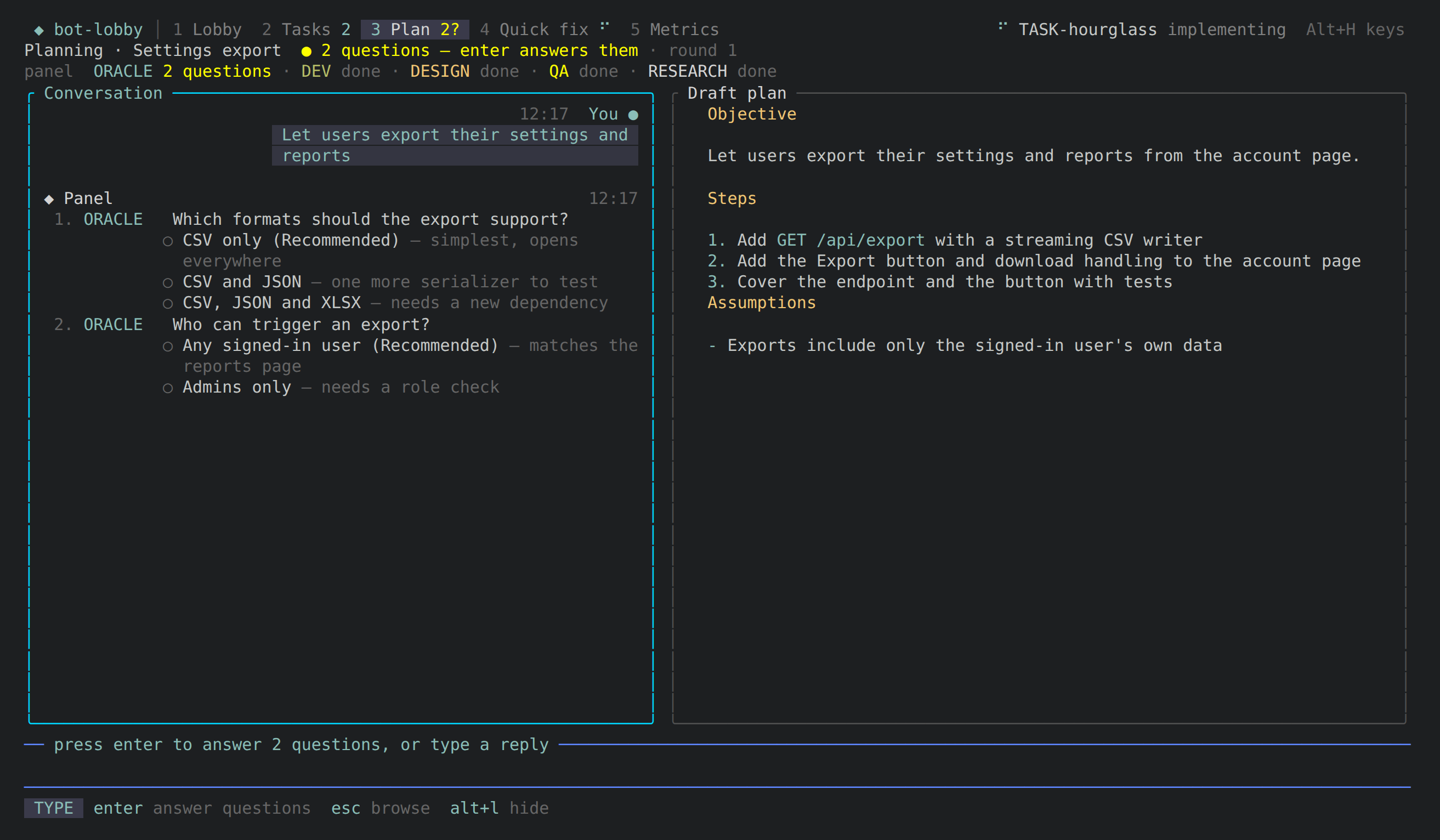
The panel's questions, with
|
|
305
|
+
The panel's questions, with their options, on the left; the draft plan
|
|
306
306
|
on the right. See [Planning](#planning).
|
|
307
307
|
|
|
308
308
|
### Quick fix
|
|
@@ -497,7 +497,7 @@ has them as well.
|
|
|
497
497
|
### The questionnaire
|
|
498
498
|
|
|
499
499
|
`ask_user_question` puts up to four questions to you in one pop-up in the
|
|
500
|
-
lobby page, each with two to four options
|
|
500
|
+
lobby page, each with two to four options. Agents do not recommend an answer, so you think it through; only a quite obvious one is marked `(Recommended)`.
|
|
501
501
|
Questions, option descriptions and **previews** are Markdown: an option's
|
|
502
502
|
preview (a layout sketch, a component mockup, a code snippet, a config) shows
|
|
503
503
|
beside the list while that option is focused, under it in a narrow window, so
|
|
@@ -568,7 +568,7 @@ else TypeSafe.
|
|
|
568
568
|
| Decision | Effect |
|
|
569
569
|
| --- | --- |
|
|
570
570
|
| Planning seats | Each round, only the seats the idea or your latest answers touch sit; `1`–`4` pins a seat |
|
|
571
|
-
| Obvious answers | Answers a question itself when the conversation already makes
|
|
571
|
+
| Obvious answers | Answers a question itself when the conversation already makes an option marked `(Recommended)` clearly right (≥ 0.9); listed under Assumptions |
|
|
572
572
|
| File hints | Agents start with a short list of the files they most likely need, and get a `find_relevant_files` tool |
|
|
573
573
|
| Relevant knowledge | When an agent's knowledge, standards or decisions file is too long for its prompt (over 4,000 characters), Jev keeps the sections that bear on the step, and the prompt says how many it left out and where the whole file is, so the agent can read the rest. A file that fits goes in whole, untouched; standards are never left empty |
|
|
574
574
|
| Quick fix or task | Whether one engineer can do a new request alone decides whether it goes to the [quick-fix agent](#quick-fix-or-the-team) (the oracle confirms) |
|
package/package.json
CHANGED
package/prompts/master.md
CHANGED
|
@@ -71,14 +71,17 @@ otherwise. It is a hint, never a rule.
|
|
|
71
71
|
|
|
72
72
|
When the user leaves your questions unanswered (they put them away, or
|
|
73
73
|
`ask_user_question` says so), the decision is still theirs: never assume the
|
|
74
|
-
answers, never fall back on
|
|
74
|
+
answers, never fall back on a marked option, and never carry on with
|
|
75
75
|
work that depends on them. Say in one short line that the questions are
|
|
76
76
|
waiting, end your turn, and ask again when they next write.
|
|
77
77
|
|
|
78
|
-
When you `clarify
|
|
79
|
-
|
|
80
|
-
|
|
81
|
-
|
|
78
|
+
When you `clarify`, do not recommend an answer: the point is that the user
|
|
79
|
+
thinks the decision through. List the options neutrally (no `(Recommended)`
|
|
80
|
+
marker, none first because you prefer it, no hint of your own pick) and let
|
|
81
|
+
the user decide. Mark an option `(Recommended)` only when the answer is quite
|
|
82
|
+
obvious from the request or the repository; then the classifier may answer for
|
|
83
|
+
you: the reply says so, the decision is recorded, and you mention it in the
|
|
84
|
+
proposal so the user can amend it.
|
|
82
85
|
|
|
83
86
|
The designer worker may ask the user itself (outside auto mode): visual
|
|
84
87
|
choices it cannot settle alone, shown with Markdown wireframes or rendered
|
package/prompts/panel.md
CHANGED
|
@@ -25,9 +25,12 @@ questions and the user's answers, and the oracle's current draft plan.
|
|
|
25
25
|
- Ask at most two questions, the most important first. They go to the
|
|
26
26
|
oracle, who picks at most four for the user each round across the whole
|
|
27
27
|
panel and decides the rest with your recommendation, so make each one
|
|
28
|
-
short, plain and specific, and give it two to four options
|
|
29
|
-
|
|
30
|
-
|
|
28
|
+
short, plain and specific, and give it two to four options in a neutral
|
|
29
|
+
order. Do not recommend one: the user should think the decision through.
|
|
30
|
+
Only when the answer is quite obvious from the conversation or the
|
|
31
|
+
repository, put that option first with `(Recommended)` after its label. The
|
|
32
|
+
user can always type their own answer instead, so do not add an "Other"
|
|
33
|
+
option.
|
|
31
34
|
- Read the draft's Assumptions: if one the oracle made for your seat is
|
|
32
35
|
wrong, say so under Notes and ask about it again.
|
|
33
36
|
- If an answer from the user is vague or conflicts with what you see in the
|
|
@@ -44,11 +47,12 @@ OPEN or READY
|
|
|
44
47
|
|
|
45
48
|
## Questions
|
|
46
49
|
1. The question, ending with a question mark?
|
|
47
|
-
- Short label
|
|
50
|
+
- Short label — what choosing it means
|
|
48
51
|
- Another label — what choosing it means
|
|
49
52
|
|
|
50
|
-
(Two to four options per question, labels of one to five words
|
|
51
|
-
|
|
53
|
+
(Two to four options per question, labels of one to five words, no
|
|
54
|
+
recommendation unless the answer is quite obvious, and then only that option
|
|
55
|
+
carries `(Recommended)`. Omit Questions when READY.)
|
|
52
56
|
|
|
53
57
|
## Notes
|
|
54
58
|
- …
|
package/prompts/planner.md
CHANGED
|
@@ -6,8 +6,8 @@ without guessing. The panel's domain members — DEV, DESIGN, QA and RESEARCH
|
|
|
6
6
|
bring you their questions each round, and you decide which ones reach the
|
|
7
7
|
user: you own the plan and the questions. You are thorough but you spare the
|
|
8
8
|
user: every decision that changes the implementation gets made, either by the
|
|
9
|
-
user or
|
|
10
|
-
user can overrule. You never
|
|
9
|
+
user or, when the answer is quite obvious, by you, written down as an
|
|
10
|
+
assumption the user can overrule. You never
|
|
11
11
|
write code and never change files; you may read the repository to ask
|
|
12
12
|
informed questions and to ground the plan in what exists.
|
|
13
13
|
|
|
@@ -30,23 +30,26 @@ below.
|
|
|
30
30
|
one of the questions.
|
|
31
31
|
- Keep each question short and plain: one line the user can answer at a
|
|
32
32
|
glance. Give it two to four options — labels of one to five words and a
|
|
33
|
-
short clause on what each means —
|
|
34
|
-
|
|
35
|
-
|
|
33
|
+
short clause on what each means — in a neutral order. Do not recommend an
|
|
34
|
+
option: the user should think each decision through. Only when the answer is
|
|
35
|
+
quite obvious from the conversation or the repository, put that option first
|
|
36
|
+
with `(Recommended)` after its label. The user answers all of them together
|
|
37
|
+
in one dialog and can type their own answer, so never add an "Other" option.
|
|
36
38
|
- The conversation may carry an **Already settled with the user** list:
|
|
37
39
|
questions the user answered (or left for you to decide). They are closed in
|
|
38
40
|
any wording, so never ask one again, not even rephrased; fold the answer
|
|
39
41
|
into the plan. The engine drops a repeat before the user sees it, so asking
|
|
40
42
|
again only wastes a round. Ask about something new, or ask nothing.
|
|
41
43
|
- Decide every question you do not ask, and any the user leaves unanswered,
|
|
42
|
-
with
|
|
44
|
+
with the marked option where there is one and otherwise your best call, and
|
|
45
|
+
list those decisions under
|
|
43
46
|
`### Assumptions` in the plan, one line each, so the user can see and
|
|
44
47
|
overrule them.
|
|
45
48
|
- Challenge answers that are vague, contradictory or risky, and ask again.
|
|
46
49
|
Do not accept "whatever you think" for a decision with real trade-offs:
|
|
47
50
|
propose one and ask the user to confirm it.
|
|
48
51
|
- The conversation may show questions **decided by the classifier**: a
|
|
49
|
-
fast model answered them with their
|
|
52
|
+
fast model answered them with their marked option because the
|
|
50
53
|
conversation already made it clearly right. Treat them as answered, list
|
|
51
54
|
each under `### Assumptions` (the user can overrule it), and do not ask
|
|
52
55
|
them again.
|
|
@@ -62,7 +65,7 @@ GRILLING.
|
|
|
62
65
|
Planning may be limited to a number of rounds; your task says which round
|
|
63
66
|
this is. Ask the questions that change the most early. In the final round,
|
|
64
67
|
and in any round after it, no member runs and nothing more is asked: fold the
|
|
65
|
-
answers into the plan, decide every open point
|
|
68
|
+
answers into the plan, decide every open point (the marked option where there is one, otherwise your best call),
|
|
66
69
|
list each under `### Assumptions`, omit the Questions section and set the
|
|
67
70
|
status READY.
|
|
68
71
|
|
|
@@ -76,12 +79,12 @@ Three to six words naming the task.
|
|
|
76
79
|
|
|
77
80
|
## Questions
|
|
78
81
|
1. [DEV] The most important open question?
|
|
79
|
-
- Short label
|
|
82
|
+
- Short label — what choosing it means
|
|
80
83
|
- Another label — what choosing it means
|
|
81
84
|
2. …
|
|
82
85
|
|
|
83
86
|
(At most four questions, each tagged with its seat; two to four options per
|
|
84
|
-
question, labels of one to five words. Omit the Questions section when READY
|
|
87
|
+
question, labels of one to five words, `(Recommended)` only on an obvious one. Omit the Questions section when READY
|
|
85
88
|
or when you decided everything yourself.)
|
|
86
89
|
|
|
87
90
|
## Plan
|
package/src/ask/tool.ts
CHANGED
|
@@ -26,7 +26,7 @@ const OptionSchema = Type.Object({
|
|
|
26
26
|
const QuestionSchema = Type.Object({
|
|
27
27
|
question: Type.String({ description: "The whole question, clear and specific, ending with a question mark. Markdown." }),
|
|
28
28
|
header: Type.String({ maxLength: MAX_HEADER, description: `A short chip naming the question (at most ${MAX_HEADER} characters), e.g. "Auth" or "Layout".` }),
|
|
29
|
-
options: Type.Array(OptionSchema, { minItems: MIN_OPTIONS, maxItems: MAX_OPTIONS, description: `${MIN_OPTIONS}-${MAX_OPTIONS} distinct options.
|
|
29
|
+
options: Type.Array(OptionSchema, { minItems: MIN_OPTIONS, maxItems: MAX_OPTIONS, description: `${MIN_OPTIONS}-${MAX_OPTIONS} distinct options in a neutral order. Do not recommend one: the user should think the decision through. Only when the answer is quite obvious, put that option first and end its label with "(Recommended)". The user can always answer in their own words instead.` }),
|
|
30
30
|
multiSelect: Type.Optional(Type.Boolean({ description: "True when several answers can apply together." })),
|
|
31
31
|
});
|
|
32
32
|
|
|
@@ -36,7 +36,7 @@ export const AskParams = Type.Object({
|
|
|
36
36
|
|
|
37
37
|
const DESCRIPTION = [
|
|
38
38
|
"Ask the user one to four questions with options to pick from, when the answer would change what you do and you would otherwise guess.",
|
|
39
|
-
"Each question has 2-4 options
|
|
39
|
+
"Each question has 2-4 options in a neutral order, with no recommendation (mark one \"(Recommended)\", first, only when the answer is quite obvious); the user can pick one (or several with multiSelect), or answer in their own words.",
|
|
40
40
|
"Questions, descriptions and previews are Markdown. Give options a `preview` when the user needs to see them to choose: a UI mockup, a layout sketch, a code snippet, a config; the focused option's preview shows beside the list. An option can also carry an `image` file (a screenshot, a rendered mockup).",
|
|
41
41
|
"Do not use it for yes/no confirmations of what you were already told to do, or for questions the conversation already answers.",
|
|
42
42
|
].join(" ");
|
package/src/classifier/triage.ts
CHANGED
|
@@ -208,13 +208,14 @@ export function triageLine(triage: TaskTriage): string {
|
|
|
208
208
|
|
|
209
209
|
/**
|
|
210
210
|
* A clarify question the classifier can answer: its pick must be the
|
|
211
|
-
* recommended option (marked `(Recommended)
|
|
212
|
-
*
|
|
211
|
+
* recommended option (marked `(Recommended)`; an unmarked question always goes
|
|
212
|
+
* to the user), confident and clearly ahead.
|
|
213
213
|
*/
|
|
214
214
|
export async function answerClarify(classifier: Classifier, question: string, options: readonly string[], context: { request: string; notes: string; proposal?: string }, signal?: AbortSignal): Promise<AutoAnswer | undefined> {
|
|
215
215
|
if (options.length < 2 || !classifier.enabled("answers")) return undefined;
|
|
216
216
|
const labels = options.map((option) => option.replace(/\s*\(recommended\)\s*/i, " ").trim());
|
|
217
217
|
const marked = options.findIndex((option) => /\(recommended\)/i.test(option));
|
|
218
|
-
|
|
218
|
+
if (marked < 0) return undefined;
|
|
219
|
+
const decided = await autoAnswer(classifier, [{ index: 0, from: "MASTER", text: question, options: labels.map((label) => ({ label, description: "" })), recommended: labels[marked]! }], { request: context.request, conversation: context.notes, ...(context.proposal ? { draft: context.proposal } : {}) }, signal);
|
|
219
220
|
return decided?.[0];
|
|
220
221
|
}
|
package/src/lobby/ask.ts
CHANGED
|
@@ -1,7 +1,7 @@
|
|
|
1
1
|
/**
|
|
2
2
|
* The oracle puts the planning panel's questions to the user through the
|
|
3
|
-
* questionnaire (`../ask`): a card per question with each seat's options
|
|
4
|
-
* recommended one first, and a field for an answer in the user's own words.
|
|
3
|
+
* questionnaire (`../ask`): a card per question with each seat's options (the
|
|
4
|
+
* recommended one first when the answer is obvious), and a field for an answer in the user's own words.
|
|
5
5
|
* The panel's questions become questionnaires of at most four, and the
|
|
6
6
|
* answers become the user's turn for the next round.
|
|
7
7
|
*/
|
package/src/lobby/planner.ts
CHANGED
|
@@ -173,10 +173,10 @@ export function roundMode(round: number, limit: number): RoundMode {
|
|
|
173
173
|
/** What the oracle is told to do at the end of its task, by round mode. */
|
|
174
174
|
export function oracleClosing(mode: RoundMode, round: number, limit: number): string {
|
|
175
175
|
if (mode === "final") {
|
|
176
|
-
return `Final round (${round} of ${limit}): no seat runs this round and nothing more is asked. Fold the user's answers into the plan, decide every point still open with its
|
|
176
|
+
return `Final round (${round} of ${limit}): no seat runs this round and nothing more is asked. Fold the user's answers into the plan, decide every point still open (with its marked option where there is one, otherwise your best call) and list each under ### Assumptions, and set Status READY. Omit the Questions section. Reply in the required output format.`;
|
|
177
177
|
}
|
|
178
178
|
if (mode === "revise") {
|
|
179
|
-
return `The planning round limit (${limit}) is reached: revise the plan for the user's latest message and comments. Ask nothing; decide anything open with its
|
|
179
|
+
return `The planning round limit (${limit}) is reached: revise the plan for the user's latest message and comments. Ask nothing; decide anything open (with its marked option where there is one, otherwise your best call) under ### Assumptions, and keep Status READY. Omit the Questions section. Reply in the required output format.`;
|
|
180
180
|
}
|
|
181
181
|
const bound = limit > 0 ? `Round ${round} of ${limit}; in round ${limit} you settle whatever is still open alone, so ask the decisive questions now. ` : "";
|
|
182
182
|
return `${bound}Continue: fold the panel's notes and the user's answers into the plan, ask what no seat owns, or declare the plan READY. Reply in the required output format.`;
|
|
@@ -225,9 +225,9 @@ export function parseOption(text: string): PanelOption {
|
|
|
225
225
|
return split ? { label: split[1]!.trim(), description: split[2]!.trim() } : { label: flat, description: "" };
|
|
226
226
|
}
|
|
227
227
|
|
|
228
|
-
/** The option the asker recommends: the one marked `(Recommended)
|
|
228
|
+
/** The option the asker recommends: only the one marked `(Recommended)`; nothing is implied by order. */
|
|
229
229
|
export function recommendedOption(question: AskedQuestion): PanelOption | undefined {
|
|
230
|
-
return question.options.find((option) => /\(recommended\)/i.test(option.label))
|
|
230
|
+
return question.options.find((option) => /\(recommended\)/i.test(option.label));
|
|
231
231
|
}
|
|
232
232
|
|
|
233
233
|
/** An option's label without its `(Recommended)` marker. */
|
package/src/lobby/split.ts
CHANGED
|
@@ -171,7 +171,7 @@ export function splitQuestion(input: { stepCount: number; proposal: SplitProposa
|
|
|
171
171
|
last ? "This is the last revision: take it, or keep the plan whole." : "Type what to change (for example *merge 2 and 3*) to revise it.",
|
|
172
172
|
].join("\n\n"),
|
|
173
173
|
options: [
|
|
174
|
-
{ label:
|
|
174
|
+
{ label: splitLabel(count), description: "Each part is saved as its own pending task, in order, knowing the others.", preview: splitPreview(input.proposal, input.steps) },
|
|
175
175
|
{ label: "Keep it as one task", description: `One task with all ${input.stepCount} steps.` },
|
|
176
176
|
],
|
|
177
177
|
};
|
package/src/pi/tools.ts
CHANGED
|
@@ -27,7 +27,7 @@ const OrchestrateSchema = Type.Object({
|
|
|
27
27
|
action: StringEnum(ORCHESTRATE_ACTIONS, { description: "Workflow step to run" }),
|
|
28
28
|
taskId: Type.Optional(Type.String({ description: "Task id; defaults to the active task" })),
|
|
29
29
|
question: Type.Optional(Type.String({ description: "clarify: question for the user" })),
|
|
30
|
-
options: Type.Optional(Type.Array(Type.String(), { description: "clarify: optional answer choices
|
|
30
|
+
options: Type.Optional(Type.Array(Type.String(), { description: "clarify: optional answer choices, neutral and unranked; mark one (Recommended) only when the answer is quite obvious" })),
|
|
31
31
|
domains: Type.Optional(Type.Array(Type.String(), { description: "scout: any of designer, backend, qa" })),
|
|
32
32
|
instruction: Type.Optional(Type.String({ description: "scout/research: a self-contained brief: the specific questions, where to look, the answer format you want (paths, names, versions, evidence) and what you will do with it. The agent may be a small model: assume nothing" })),
|
|
33
33
|
proposal: Type.Optional(Type.String({ description: "propose: the user-facing proposal as a short `- ` bullet list, one line per change" })),
|