webrecon-cli 0.2.1__tar.gz → 0.2.2__tar.gz
This diff represents the content of publicly available package versions that have been released to one of the supported registries. The information contained in this diff is provided for informational purposes only and reflects changes between package versions as they appear in their respective public registries.
- {webrecon_cli-0.2.1 → webrecon_cli-0.2.2}/PKG-INFO +10 -7
- {webrecon_cli-0.2.1 → webrecon_cli-0.2.2}/README.md +9 -6
- {webrecon_cli-0.2.1 → webrecon_cli-0.2.2}/tests/test_cli_main.py +50 -0
- {webrecon_cli-0.2.1 → webrecon_cli-0.2.2}/webrecon/__init__.py +1 -1
- {webrecon_cli-0.2.1 → webrecon_cli-0.2.2}/webrecon/cli.py +68 -11
- {webrecon_cli-0.2.1 → webrecon_cli-0.2.2}/webrecon/modules/report.py +2 -1
- {webrecon_cli-0.2.1 → webrecon_cli-0.2.2}/webrecon_cli.egg-info/PKG-INFO +10 -7
- {webrecon_cli-0.2.1 → webrecon_cli-0.2.2}/LICENSE +0 -0
- {webrecon_cli-0.2.1 → webrecon_cli-0.2.2}/pyproject.toml +0 -0
- {webrecon_cli-0.2.1 → webrecon_cli-0.2.2}/setup.cfg +0 -0
- {webrecon_cli-0.2.1 → webrecon_cli-0.2.2}/tests/test_cli.py +0 -0
- {webrecon_cli-0.2.1 → webrecon_cli-0.2.2}/tests/test_dns_io.py +0 -0
- {webrecon_cli-0.2.1 → webrecon_cli-0.2.2}/tests/test_http_io.py +0 -0
- {webrecon_cli-0.2.1 → webrecon_cli-0.2.2}/tests/test_packaging.py +0 -0
- {webrecon_cli-0.2.1 → webrecon_cli-0.2.2}/tests/test_parsing.py +0 -0
- {webrecon_cli-0.2.1 → webrecon_cli-0.2.2}/tests/test_ports_io.py +0 -0
- {webrecon_cli-0.2.1 → webrecon_cli-0.2.2}/tests/test_ratelimit.py +0 -0
- {webrecon_cli-0.2.1 → webrecon_cli-0.2.2}/tests/test_report.py +0 -0
- {webrecon_cli-0.2.1 → webrecon_cli-0.2.2}/tests/test_scanner.py +0 -0
- {webrecon_cli-0.2.1 → webrecon_cli-0.2.2}/tests/test_targets.py +0 -0
- {webrecon_cli-0.2.1 → webrecon_cli-0.2.2}/tests/test_tls_io.py +0 -0
- {webrecon_cli-0.2.1 → webrecon_cli-0.2.2}/webrecon/__main__.py +0 -0
- {webrecon_cli-0.2.1 → webrecon_cli-0.2.2}/webrecon/config.py +0 -0
- {webrecon_cli-0.2.1 → webrecon_cli-0.2.2}/webrecon/context.py +0 -0
- {webrecon_cli-0.2.1 → webrecon_cli-0.2.2}/webrecon/data/subdomains-small.txt +0 -0
- {webrecon_cli-0.2.1 → webrecon_cli-0.2.2}/webrecon/models.py +0 -0
- {webrecon_cli-0.2.1 → webrecon_cli-0.2.2}/webrecon/modules/__init__.py +0 -0
- {webrecon_cli-0.2.1 → webrecon_cli-0.2.2}/webrecon/modules/dns_enum.py +0 -0
- {webrecon_cli-0.2.1 → webrecon_cli-0.2.2}/webrecon/modules/http_probe.py +0 -0
- {webrecon_cli-0.2.1 → webrecon_cli-0.2.2}/webrecon/modules/port_scan.py +0 -0
- {webrecon_cli-0.2.1 → webrecon_cli-0.2.2}/webrecon/modules/security_headers.py +0 -0
- {webrecon_cli-0.2.1 → webrecon_cli-0.2.2}/webrecon/modules/tech_detect.py +0 -0
- {webrecon_cli-0.2.1 → webrecon_cli-0.2.2}/webrecon/modules/tls_info.py +0 -0
- {webrecon_cli-0.2.1 → webrecon_cli-0.2.2}/webrecon/py.typed +0 -0
- {webrecon_cli-0.2.1 → webrecon_cli-0.2.2}/webrecon/ratelimit.py +0 -0
- {webrecon_cli-0.2.1 → webrecon_cli-0.2.2}/webrecon/scanner.py +0 -0
- {webrecon_cli-0.2.1 → webrecon_cli-0.2.2}/webrecon/targets.py +0 -0
- {webrecon_cli-0.2.1 → webrecon_cli-0.2.2}/webrecon_cli.egg-info/SOURCES.txt +0 -0
- {webrecon_cli-0.2.1 → webrecon_cli-0.2.2}/webrecon_cli.egg-info/dependency_links.txt +0 -0
- {webrecon_cli-0.2.1 → webrecon_cli-0.2.2}/webrecon_cli.egg-info/entry_points.txt +0 -0
- {webrecon_cli-0.2.1 → webrecon_cli-0.2.2}/webrecon_cli.egg-info/requires.txt +0 -0
- {webrecon_cli-0.2.1 → webrecon_cli-0.2.2}/webrecon_cli.egg-info/top_level.txt +0 -0
|
@@ -1,6 +1,6 @@
|
|
|
1
1
|
Metadata-Version: 2.4
|
|
2
2
|
Name: webrecon-cli
|
|
3
|
-
Version: 0.2.
|
|
3
|
+
Version: 0.2.2
|
|
4
4
|
Summary: A small web reconnaissance scanner: DNS, subdomains, HTTP fingerprinting, TLS and ports.
|
|
5
5
|
License-Expression: MIT
|
|
6
6
|
Project-URL: Homepage, https://github.com/Just-Ipavon/web-recon
|
|
@@ -114,9 +114,12 @@ A small subdomain wordlist ships inside the package and is used by default;
|
|
|
114
114
|
# Default scan: DNS, subdomains, HTTP and TLS (asks you to confirm authorization)
|
|
115
115
|
webrecon example.com
|
|
116
116
|
|
|
117
|
-
# Everything, non-interactively, with JSON + HTML reports
|
|
118
|
-
|
|
119
|
-
|
|
117
|
+
# Everything, non-interactively, with JSON + HTML reports in reports/
|
|
118
|
+
# (reports/example.com.json and reports/example.com.html) and a live JSONL log
|
|
119
|
+
webrecon example.com -m all --i-have-authorization -o --html --jsonl results.jsonl
|
|
120
|
+
|
|
121
|
+
# Reports in a file of your choice
|
|
122
|
+
webrecon example.com -o scan.json --html scan.html
|
|
120
123
|
|
|
121
124
|
# 10 requests per second across all modules, 5 at a time, at most 10 minutes
|
|
122
125
|
webrecon example.com -r 10 -c 5 --max-time 600
|
|
@@ -169,8 +172,8 @@ time and the scope in the report.
|
|
|
169
172
|
| `--proxy URL` | HTTP(S) proxy for HTTP probes and crt.sh; DNS, TLS and port scans still connect directly. `HTTP(S)_PROXY` variables are ignored |
|
|
170
173
|
| `--user-agent` | User-Agent for HTTP requests |
|
|
171
174
|
| `--no-redact` | Keep `Set-Cookie` and `Authorization` values in reports |
|
|
172
|
-
| `-o, --output` | Write a JSON report |
|
|
173
|
-
| `--html` | Write a self-contained HTML report |
|
|
175
|
+
| `-o, --output [PATH]` | Write a JSON report. Without `PATH`: `reports/<target>.json`, one per target. A `PATH` ending in `/` (or an existing directory) gets one file per target; any other `PATH` is a single file with every target |
|
|
176
|
+
| `--html [PATH]` | Write a self-contained HTML report, with the same rules (`reports/<target>.html`) |
|
|
174
177
|
| `--jsonl` | Append each result to a JSONL file as soon as it is found |
|
|
175
178
|
| `--json` | Print the JSON report to stdout |
|
|
176
179
|
| `--force` | Overwrite existing report files |
|
|
@@ -209,7 +212,7 @@ The HTML report is a single self-contained file — no external stylesheets,
|
|
|
209
212
|
scripts or fonts — so it can be archived or attached to an engagement report
|
|
210
213
|
and still render years later:
|
|
211
214
|
|
|
212
|
-
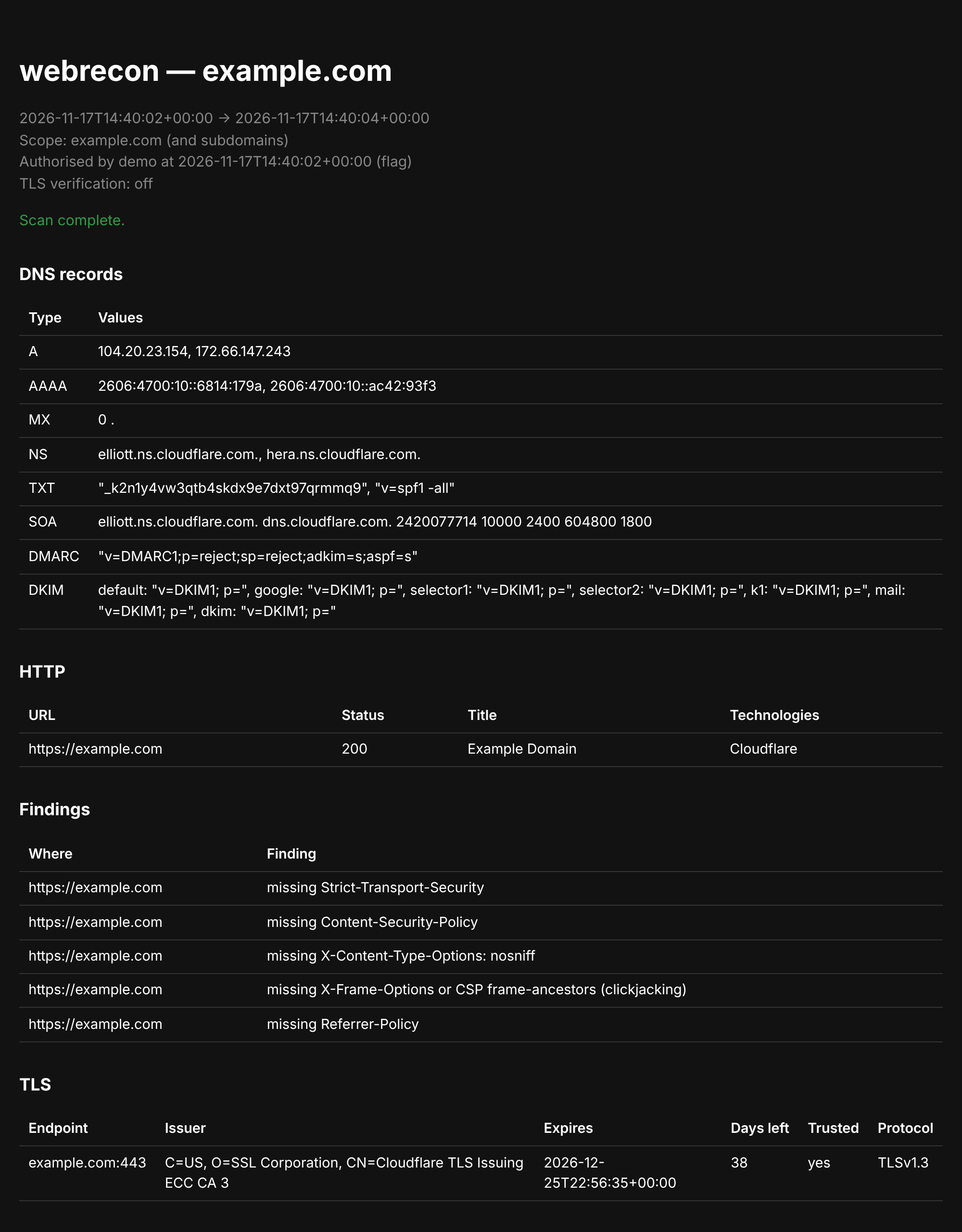
|
|
213
216
|
|
|
214
217
|
## Design notes
|
|
215
218
|
|
|
@@ -78,9 +78,12 @@ A small subdomain wordlist ships inside the package and is used by default;
|
|
|
78
78
|
# Default scan: DNS, subdomains, HTTP and TLS (asks you to confirm authorization)
|
|
79
79
|
webrecon example.com
|
|
80
80
|
|
|
81
|
-
# Everything, non-interactively, with JSON + HTML reports
|
|
82
|
-
|
|
83
|
-
|
|
81
|
+
# Everything, non-interactively, with JSON + HTML reports in reports/
|
|
82
|
+
# (reports/example.com.json and reports/example.com.html) and a live JSONL log
|
|
83
|
+
webrecon example.com -m all --i-have-authorization -o --html --jsonl results.jsonl
|
|
84
|
+
|
|
85
|
+
# Reports in a file of your choice
|
|
86
|
+
webrecon example.com -o scan.json --html scan.html
|
|
84
87
|
|
|
85
88
|
# 10 requests per second across all modules, 5 at a time, at most 10 minutes
|
|
86
89
|
webrecon example.com -r 10 -c 5 --max-time 600
|
|
@@ -133,8 +136,8 @@ time and the scope in the report.
|
|
|
133
136
|
| `--proxy URL` | HTTP(S) proxy for HTTP probes and crt.sh; DNS, TLS and port scans still connect directly. `HTTP(S)_PROXY` variables are ignored |
|
|
134
137
|
| `--user-agent` | User-Agent for HTTP requests |
|
|
135
138
|
| `--no-redact` | Keep `Set-Cookie` and `Authorization` values in reports |
|
|
136
|
-
| `-o, --output` | Write a JSON report |
|
|
137
|
-
| `--html` | Write a self-contained HTML report |
|
|
139
|
+
| `-o, --output [PATH]` | Write a JSON report. Without `PATH`: `reports/<target>.json`, one per target. A `PATH` ending in `/` (or an existing directory) gets one file per target; any other `PATH` is a single file with every target |
|
|
140
|
+
| `--html [PATH]` | Write a self-contained HTML report, with the same rules (`reports/<target>.html`) |
|
|
138
141
|
| `--jsonl` | Append each result to a JSONL file as soon as it is found |
|
|
139
142
|
| `--json` | Print the JSON report to stdout |
|
|
140
143
|
| `--force` | Overwrite existing report files |
|
|
@@ -173,7 +176,7 @@ The HTML report is a single self-contained file — no external stylesheets,
|
|
|
173
176
|
scripts or fonts — so it can be archived or attached to an engagement report
|
|
174
177
|
and still render years later:
|
|
175
178
|
|
|
176
|
-

|
|
177
180
|
|
|
178
181
|
## Design notes
|
|
179
182
|
|
|
@@ -177,3 +177,53 @@ class TestFailingHostMixedWithHealthyOne:
|
|
|
177
177
|
first, second = json.loads(capsys.readouterr().out)
|
|
178
178
|
assert first["http"][0]["reachable"] is False and first["http"][0]["error"]
|
|
179
179
|
assert second["http"][0]["title"] == "ok"
|
|
180
|
+
|
|
181
|
+
|
|
182
|
+
class TestReportLocation:
|
|
183
|
+
def test_bare_flags_write_one_file_per_target_under_reports(
|
|
184
|
+
self, http_server, tmp_path, monkeypatch, capsys
|
|
185
|
+
):
|
|
186
|
+
a = http_server({"/": response(200, "<title>a</title>")})
|
|
187
|
+
b = http_server({"/": response(200, "<title>b</title>")})
|
|
188
|
+
monkeypatch.chdir(tmp_path)
|
|
189
|
+
code = cli.main(
|
|
190
|
+
[f"http://127.0.0.1:{a.port}", f"http://127.0.0.1:{b.port}", "-m", "http",
|
|
191
|
+
*LOCAL, "-q", "-o", "--html"]
|
|
192
|
+
)
|
|
193
|
+
assert code == 0
|
|
194
|
+
reports = tmp_path / "reports"
|
|
195
|
+
for server, title in ((a, "a"), (b, "b")):
|
|
196
|
+
data = json.loads((reports / f"127.0.0.1_{server.port}.json").read_text())
|
|
197
|
+
assert data["http"][0]["title"] == title
|
|
198
|
+
assert (reports / f"127.0.0.1_{server.port}.html").exists()
|
|
199
|
+
assert stat.S_IMODE(os.stat(reports).st_mode) == 0o700
|
|
200
|
+
|
|
201
|
+
def test_a_trailing_slash_means_a_directory(self, http_server, tmp_path, capsys):
|
|
202
|
+
server = http_server({"/": response(200, "<title>x</title>")})
|
|
203
|
+
out = tmp_path / "out"
|
|
204
|
+
code = cli.main(
|
|
205
|
+
[f"http://127.0.0.1:{server.port}", "-m", "http", *LOCAL, "-q", "-o", f"{out}/"]
|
|
206
|
+
)
|
|
207
|
+
assert code == 0
|
|
208
|
+
assert (out / f"127.0.0.1_{server.port}.json").exists()
|
|
209
|
+
|
|
210
|
+
def test_an_existing_per_target_file_needs_force(self, tmp_path, monkeypatch, capsys):
|
|
211
|
+
monkeypatch.chdir(tmp_path)
|
|
212
|
+
(tmp_path / "reports").mkdir()
|
|
213
|
+
(tmp_path / "reports" / "example.com.json").write_text("{}")
|
|
214
|
+
with pytest.raises(SystemExit) as exc:
|
|
215
|
+
cli.main(["example.com", "-m", "dns", "-o"])
|
|
216
|
+
assert exc.value.code == 2
|
|
217
|
+
|
|
218
|
+
@pytest.mark.parametrize(
|
|
219
|
+
"raw,expected",
|
|
220
|
+
[
|
|
221
|
+
("example.com", "example.com.json"),
|
|
222
|
+
("https://example.com:8443", "example.com_8443.json"),
|
|
223
|
+
("2001:db8::1", "2001_db8__1.json"),
|
|
224
|
+
],
|
|
225
|
+
)
|
|
226
|
+
def test_file_names(self, raw, expected):
|
|
227
|
+
from webrecon.targets import parse_target
|
|
228
|
+
|
|
229
|
+
assert cli.report_filename(parse_target(raw), "json") == expected
|
|
@@ -34,6 +34,9 @@ EXIT_NOTHING_REACHABLE = 3
|
|
|
34
34
|
EXIT_INTERRUPTED = 130
|
|
35
35
|
|
|
36
36
|
MAX_PORT = 65535
|
|
37
|
+
|
|
38
|
+
# Where -o and --html write when given no path: one file per target.
|
|
39
|
+
DEFAULT_REPORT_DIR = "reports/"
|
|
37
40
|
_DIGITS = re.compile(r"^[0-9]{1,5}$")
|
|
38
41
|
_NUMBER = re.compile(r"^-?[0-9]+(?:\.[0-9]+)?$")
|
|
39
42
|
|
|
@@ -241,8 +244,15 @@ def build_parser() -> argparse.ArgumentParser:
|
|
|
241
244
|
)
|
|
242
245
|
|
|
243
246
|
output = parser.add_argument_group("output")
|
|
244
|
-
output.add_argument(
|
|
245
|
-
|
|
247
|
+
output.add_argument(
|
|
248
|
+
"-o", "--output", nargs="?", const=DEFAULT_REPORT_DIR, metavar="PATH",
|
|
249
|
+
help="write a JSON report: to PATH, or one file per target inside PATH when it is a "
|
|
250
|
+
"directory or ends with '/'; without PATH, to reports/<target>.json",
|
|
251
|
+
)
|
|
252
|
+
output.add_argument(
|
|
253
|
+
"--html", nargs="?", const=DEFAULT_REPORT_DIR, metavar="PATH",
|
|
254
|
+
help="write an HTML report, with the same rules as -o (reports/<target>.html)",
|
|
255
|
+
)
|
|
246
256
|
output.add_argument(
|
|
247
257
|
"--jsonl", type=Path, help="append each result to this JSONL file as it is found"
|
|
248
258
|
)
|
|
@@ -289,6 +299,48 @@ def _check_output(parser: argparse.ArgumentParser, path: Path | None, force: boo
|
|
|
289
299
|
parser.error(f"{path} already exists; use --force to overwrite it")
|
|
290
300
|
|
|
291
301
|
|
|
302
|
+
def report_filename(target: Target, extension: str) -> str:
|
|
303
|
+
"""File name for one target's report: ``example.com.json``, ``192.0.2.1_8443.html``."""
|
|
304
|
+
name = target.host.replace(":", "_") # IPv6 literals
|
|
305
|
+
if target.port:
|
|
306
|
+
name += f"_{target.port}"
|
|
307
|
+
return f"{name}.{extension}"
|
|
308
|
+
|
|
309
|
+
|
|
310
|
+
# Each entry: where to write, and the indexes of the targets whose reports go there.
|
|
311
|
+
OutputPlan = list[tuple[Path, list[int]]]
|
|
312
|
+
|
|
313
|
+
|
|
314
|
+
def plan_output(
|
|
315
|
+
parser: argparse.ArgumentParser,
|
|
316
|
+
value: str | None,
|
|
317
|
+
targets: list[Target],
|
|
318
|
+
extension: str,
|
|
319
|
+
force: bool,
|
|
320
|
+
) -> OutputPlan:
|
|
321
|
+
"""Decide the report files for -o or --html, failing before any scan starts.
|
|
322
|
+
|
|
323
|
+
A path that is an existing directory or ends with ``/`` (including the
|
|
324
|
+
default ``reports/``) gets one file per target; any other path is a single
|
|
325
|
+
file holding every target's report.
|
|
326
|
+
"""
|
|
327
|
+
if value is None:
|
|
328
|
+
return []
|
|
329
|
+
path = Path(value)
|
|
330
|
+
if value.endswith(("/", "\\")) or path.is_dir():
|
|
331
|
+
if path.exists() and not path.is_dir():
|
|
332
|
+
parser.error(f"{path} is not a directory")
|
|
333
|
+
plan: OutputPlan = []
|
|
334
|
+
for index, target in enumerate(targets):
|
|
335
|
+
file = path / report_filename(target, extension)
|
|
336
|
+
if file.exists() and not force:
|
|
337
|
+
parser.error(f"{file} already exists; use --force to overwrite it")
|
|
338
|
+
plan.append((file, [index]))
|
|
339
|
+
return plan
|
|
340
|
+
_check_output(parser, path, force)
|
|
341
|
+
return [(path, list(range(len(targets))))]
|
|
342
|
+
|
|
343
|
+
|
|
292
344
|
def _confirm(
|
|
293
345
|
console: Console, targets: list[Target], scope_entries: list[str], modules: set[str],
|
|
294
346
|
passive: bool,
|
|
@@ -366,8 +418,9 @@ def main(argv: list[str] | None = None) -> int:
|
|
|
366
418
|
wordlist = bundled_wordlist()
|
|
367
419
|
|
|
368
420
|
# ---- outputs
|
|
369
|
-
|
|
370
|
-
|
|
421
|
+
json_plan = plan_output(parser, args.output, targets, "json", args.force)
|
|
422
|
+
html_plan = plan_output(parser, args.html, targets, "html", args.force)
|
|
423
|
+
_check_output(parser, args.jsonl, args.force)
|
|
371
424
|
|
|
372
425
|
# ---- options that would silently do nothing
|
|
373
426
|
if args.ports is not None and "ports" not in modules:
|
|
@@ -465,14 +518,18 @@ def main(argv: list[str] | None = None) -> int:
|
|
|
465
518
|
payload = reports[0] if len(reports) == 1 else reports
|
|
466
519
|
sys.stdout.write(report_module.to_json(payload) + "\n")
|
|
467
520
|
|
|
468
|
-
single: ScanReport | list[ScanReport] = reports[0] if len(reports) == 1 else reports
|
|
469
521
|
try:
|
|
470
|
-
|
|
471
|
-
|
|
472
|
-
|
|
473
|
-
|
|
474
|
-
|
|
475
|
-
|
|
522
|
+
for kind, plan, write in (
|
|
523
|
+
("JSON", json_plan, report_module.write_json),
|
|
524
|
+
("HTML", html_plan, report_module.write_html),
|
|
525
|
+
):
|
|
526
|
+
for path, indexes in plan:
|
|
527
|
+
selected = [reports[i] for i in indexes if i < len(reports)]
|
|
528
|
+
if not selected:
|
|
529
|
+
continue # interrupted before this target was scanned
|
|
530
|
+
path.parent.mkdir(mode=0o700, parents=True, exist_ok=True)
|
|
531
|
+
write(selected[0] if len(selected) == 1 else selected, path, args.force)
|
|
532
|
+
console.print(f"[green]{kind} report written to[/green] {path}")
|
|
476
533
|
except OSError as exc:
|
|
477
534
|
console.print(f"[red]could not write report:[/red] {exc}")
|
|
478
535
|
return EXIT_ERROR
|
|
@@ -400,7 +400,8 @@ def to_html(reports: Reports) -> str:
|
|
|
400
400
|
th, td {{ text-align: left; padding: .4rem .6rem;
|
|
401
401
|
border-bottom: 1px solid rgba(128,128,128,.3); vertical-align: top; }}
|
|
402
402
|
th {{ font-weight: 600; white-space: nowrap; }}
|
|
403
|
-
td {{
|
|
403
|
+
td {{ overflow-wrap: anywhere; }}
|
|
404
|
+
td:first-child {{ white-space: nowrap; }}
|
|
404
405
|
hr {{ margin: 3rem 0; border: 0; border-top: 1px solid rgba(128,128,128,.4); }}
|
|
405
406
|
</style></head>
|
|
406
407
|
<body>
|
|
@@ -1,6 +1,6 @@
|
|
|
1
1
|
Metadata-Version: 2.4
|
|
2
2
|
Name: webrecon-cli
|
|
3
|
-
Version: 0.2.
|
|
3
|
+
Version: 0.2.2
|
|
4
4
|
Summary: A small web reconnaissance scanner: DNS, subdomains, HTTP fingerprinting, TLS and ports.
|
|
5
5
|
License-Expression: MIT
|
|
6
6
|
Project-URL: Homepage, https://github.com/Just-Ipavon/web-recon
|
|
@@ -114,9 +114,12 @@ A small subdomain wordlist ships inside the package and is used by default;
|
|
|
114
114
|
# Default scan: DNS, subdomains, HTTP and TLS (asks you to confirm authorization)
|
|
115
115
|
webrecon example.com
|
|
116
116
|
|
|
117
|
-
# Everything, non-interactively, with JSON + HTML reports
|
|
118
|
-
|
|
119
|
-
|
|
117
|
+
# Everything, non-interactively, with JSON + HTML reports in reports/
|
|
118
|
+
# (reports/example.com.json and reports/example.com.html) and a live JSONL log
|
|
119
|
+
webrecon example.com -m all --i-have-authorization -o --html --jsonl results.jsonl
|
|
120
|
+
|
|
121
|
+
# Reports in a file of your choice
|
|
122
|
+
webrecon example.com -o scan.json --html scan.html
|
|
120
123
|
|
|
121
124
|
# 10 requests per second across all modules, 5 at a time, at most 10 minutes
|
|
122
125
|
webrecon example.com -r 10 -c 5 --max-time 600
|
|
@@ -169,8 +172,8 @@ time and the scope in the report.
|
|
|
169
172
|
| `--proxy URL` | HTTP(S) proxy for HTTP probes and crt.sh; DNS, TLS and port scans still connect directly. `HTTP(S)_PROXY` variables are ignored |
|
|
170
173
|
| `--user-agent` | User-Agent for HTTP requests |
|
|
171
174
|
| `--no-redact` | Keep `Set-Cookie` and `Authorization` values in reports |
|
|
172
|
-
| `-o, --output` | Write a JSON report |
|
|
173
|
-
| `--html` | Write a self-contained HTML report |
|
|
175
|
+
| `-o, --output [PATH]` | Write a JSON report. Without `PATH`: `reports/<target>.json`, one per target. A `PATH` ending in `/` (or an existing directory) gets one file per target; any other `PATH` is a single file with every target |
|
|
176
|
+
| `--html [PATH]` | Write a self-contained HTML report, with the same rules (`reports/<target>.html`) |
|
|
174
177
|
| `--jsonl` | Append each result to a JSONL file as soon as it is found |
|
|
175
178
|
| `--json` | Print the JSON report to stdout |
|
|
176
179
|
| `--force` | Overwrite existing report files |
|
|
@@ -209,7 +212,7 @@ The HTML report is a single self-contained file — no external stylesheets,
|
|
|
209
212
|
scripts or fonts — so it can be archived or attached to an engagement report
|
|
210
213
|
and still render years later:
|
|
211
214
|
|
|
212
|
-

|
|
213
216
|
|
|
214
217
|
## Design notes
|
|
215
218
|
|
|
File without changes
|
|
File without changes
|
|
File without changes
|
|
File without changes
|
|
File without changes
|
|
File without changes
|
|
File without changes
|
|
File without changes
|
|
File without changes
|
|
File without changes
|
|
File without changes
|
|
File without changes
|
|
File without changes
|
|
File without changes
|
|
File without changes
|
|
File without changes
|
|
File without changes
|
|
File without changes
|
|
File without changes
|
|
File without changes
|
|
File without changes
|
|
File without changes
|
|
File without changes
|
|
File without changes
|
|
File without changes
|
|
File without changes
|
|
File without changes
|
|
File without changes
|
|
File without changes
|
|
File without changes
|
|
File without changes
|
|
File without changes
|
|
File without changes
|
|
File without changes
|
|
File without changes
|