visualkeras 0.2.0__tar.gz → 0.3.0__tar.gz
This diff represents the content of publicly available package versions that have been released to one of the supported registries. The information contained in this diff is provided for informational purposes only and reflects changes between package versions as they appear in their respective public registries.
- visualkeras-0.3.0/MANIFEST.in +1 -0
- visualkeras-0.3.0/PKG-INFO +253 -0
- visualkeras-0.3.0/README.md +211 -0
- {visualkeras-0.2.0 → visualkeras-0.3.0}/requirements-dev.txt +2 -0
- {visualkeras-0.2.0 → visualkeras-0.3.0}/setup.cfg +4 -4
- visualkeras-0.3.0/setup.py +44 -0
- visualkeras-0.3.0/tests/test_alpha_context.py +95 -0
- visualkeras-0.3.0/tests/test_caption_clearance.py +106 -0
- visualkeras-0.3.0/tests/test_end_to_end_file_output.py +56 -0
- visualkeras-0.3.0/tests/test_functional_helpers.py +1502 -0
- visualkeras-0.3.0/tests/test_functional_internal_integration.py +86 -0
- visualkeras-0.3.0/tests/test_functional_renderer.py +476 -0
- visualkeras-0.3.0/tests/test_functional_validation.py +127 -0
- visualkeras-0.3.0/tests/test_graph_helpers.py +288 -0
- visualkeras-0.3.0/tests/test_graph_renderer.py +308 -0
- visualkeras-0.3.0/tests/test_group_font_isolation.py +38 -0
- visualkeras-0.3.0/tests/test_group_selectors.py +28 -0
- visualkeras-0.3.0/tests/test_layer_utils_helpers.py +481 -0
- visualkeras-0.3.0/tests/test_layered_helpers.py +230 -0
- visualkeras-0.3.0/tests/test_layered_renderer.py +260 -0
- visualkeras-0.3.0/tests/test_lenet_helpers.py +503 -0
- visualkeras-0.3.0/tests/test_lenet_renderer.py +150 -0
- visualkeras-0.3.0/tests/test_logo_image_sources.py +29 -0
- visualkeras-0.3.0/tests/test_option_precedence.py +189 -0
- visualkeras-0.3.0/tests/test_option_validation.py +24 -0
- visualkeras-0.3.0/tests/test_options.py +429 -0
- visualkeras-0.3.0/tests/test_render_regressions.py +240 -0
- visualkeras-0.3.0/tests/test_renderer_advanced_paths.py +701 -0
- visualkeras-0.3.0/tests/test_shape_compatibility.py +69 -0
- visualkeras-0.3.0/tests/test_show.py +245 -0
- visualkeras-0.3.0/tests/test_structured_model_outputs.py +57 -0
- visualkeras-0.3.0/tests/test_utils_helpers.py +497 -0
- visualkeras-0.3.0/tests/test_version.py +30 -0
- {visualkeras-0.2.0 → visualkeras-0.3.0}/visualkeras/__init__.py +9 -0
- visualkeras-0.3.0/visualkeras/_version.py +1 -0
- visualkeras-0.3.0/visualkeras/functional.py +3480 -0
- visualkeras-0.3.0/visualkeras/graph.py +834 -0
- visualkeras-0.3.0/visualkeras/layer_utils.py +750 -0
- visualkeras-0.3.0/visualkeras/layered.py +1558 -0
- visualkeras-0.3.0/visualkeras/lenet.py +1681 -0
- visualkeras-0.3.0/visualkeras/options.py +421 -0
- visualkeras-0.3.0/visualkeras/show.py +116 -0
- visualkeras-0.3.0/visualkeras/utils.py +1025 -0
- visualkeras-0.3.0/visualkeras.egg-info/PKG-INFO +253 -0
- visualkeras-0.3.0/visualkeras.egg-info/SOURCES.txt +47 -0
- visualkeras-0.3.0/visualkeras.egg-info/requires.txt +12 -0
- visualkeras-0.2.0/.github/ISSUE_TEMPLATE/bug_report.md +0 -28
- visualkeras-0.2.0/.github/ISSUE_TEMPLATE/feature_request.md +0 -20
- visualkeras-0.2.0/.github/workflows/python-publish.yml +0 -36
- visualkeras-0.2.0/.github/workflows/stale.yml +0 -27
- visualkeras-0.2.0/.travis.yml +0 -14
- visualkeras-0.2.0/CITATION.cff +0 -22
- visualkeras-0.2.0/CONTRIBUTING.MD +0 -164
- visualkeras-0.2.0/PKG-INFO +0 -362
- visualkeras-0.2.0/README.md +0 -335
- visualkeras-0.2.0/changelog/CHANGELOG.md +0 -102
- visualkeras-0.2.0/examples/autoencoder.py +0 -25
- visualkeras-0.2.0/examples/dense.py +0 -11
- visualkeras-0.2.0/examples/generate_examples.py +0 -3
- visualkeras-0.2.0/examples/show_dimension.py +0 -84
- visualkeras-0.2.0/examples/usage_examples.md +0 -191
- visualkeras-0.2.0/examples/vgg16.py +0 -84
- visualkeras-0.2.0/figures/autoencoder.png +0 -0
- visualkeras-0.2.0/figures/basic_graph.png +0 -0
- visualkeras-0.2.0/figures/draw_shapes_1.png +0 -0
- visualkeras-0.2.0/figures/draw_shapes_2.png +0 -0
- visualkeras-0.2.0/figures/draw_shapes_3.png +0 -0
- visualkeras-0.2.0/figures/draw_text_callable.png +0 -0
- visualkeras-0.2.0/figures/encoder.png +0 -0
- visualkeras-0.2.0/figures/figure1_layered_basic.png +0 -0
- visualkeras-0.2.0/figures/figure2_layered_advanced.png +0 -0
- visualkeras-0.2.0/figures/figure3_graph_basic.png +0 -0
- visualkeras-0.2.0/figures/figure4_graph_advanced.png +0 -0
- visualkeras-0.2.0/figures/normal_view.png +0 -0
- visualkeras-0.2.0/figures/professional_diagram_sample.png +0 -0
- visualkeras-0.2.0/figures/reversed_view.png +0 -0
- visualkeras-0.2.0/figures/sizing_accurate.png +0 -0
- visualkeras-0.2.0/figures/sizing_balanced.png +0 -0
- visualkeras-0.2.0/figures/sizing_logarithmic.png +0 -0
- visualkeras-0.2.0/figures/sizing_relative_base_1.png +0 -0
- visualkeras-0.2.0/figures/vgg16.png +0 -0
- visualkeras-0.2.0/figures/vgg16_color_map.png +0 -0
- visualkeras-0.2.0/figures/vgg16_flat.png +0 -0
- visualkeras-0.2.0/figures/vgg16_legend.png +0 -0
- visualkeras-0.2.0/figures/vgg16_legend_show_dimension.png +0 -0
- visualkeras-0.2.0/figures/vgg16_scaling.png +0 -0
- visualkeras-0.2.0/figures/vgg16_spacing_layers.png +0 -0
- visualkeras-0.2.0/figures/vgg16_type_ignore.png +0 -0
- visualkeras-0.2.0/setup.py +0 -27
- visualkeras-0.2.0/tests/README.md +0 -72
- visualkeras-0.2.0/tests/conftest.py +0 -168
- visualkeras-0.2.0/tests/test_graph.py +0 -5
- visualkeras-0.2.0/tests/test_graph_inout_flag.py +0 -29
- visualkeras-0.2.0/tests/test_layer_utils.py +0 -47
- visualkeras-0.2.0/tests/test_layered.py +0 -5
- visualkeras-0.2.0/tests/test_utils.py +0 -84
- visualkeras-0.2.0/visualkeras/graph.py +0 -295
- visualkeras-0.2.0/visualkeras/layer_utils.py +0 -613
- visualkeras-0.2.0/visualkeras/layered.py +0 -583
- visualkeras-0.2.0/visualkeras/options.py +0 -228
- visualkeras-0.2.0/visualkeras/utils.py +0 -226
- visualkeras-0.2.0/visualkeras.egg-info/PKG-INFO +0 -362
- visualkeras-0.2.0/visualkeras.egg-info/SOURCES.txt +0 -19
- visualkeras-0.2.0/visualkeras.egg-info/requires.txt +0 -3
- {visualkeras-0.2.0 → visualkeras-0.3.0}/LICENSE +0 -0
- {visualkeras-0.2.0 → visualkeras-0.3.0}/visualkeras.egg-info/dependency_links.txt +0 -0
- {visualkeras-0.2.0 → visualkeras-0.3.0}/visualkeras.egg-info/top_level.txt +0 -0
|
@@ -0,0 +1 @@
|
|
|
1
|
+
include requirements-dev.txt
|
|
@@ -0,0 +1,253 @@
|
|
|
1
|
+
Metadata-Version: 2.4
|
|
2
|
+
Name: visualkeras
|
|
3
|
+
Version: 0.3.0
|
|
4
|
+
Summary: Architecture visualization of Keras models
|
|
5
|
+
Home-page: https://github.com/paulgavrikov/visualkeras
|
|
6
|
+
Author: Paul Gavrikov, Santosh Patapati
|
|
7
|
+
Author-email: Paul Gavrikov <paul.gavrikov@hs-offenburg.de>, Santosh Patapati <santosh.patapati@stonybrook.edu>
|
|
8
|
+
Classifier: Programming Language :: Python :: 3
|
|
9
|
+
Classifier: Programming Language :: Python :: 3.9
|
|
10
|
+
Classifier: Programming Language :: Python :: 3.10
|
|
11
|
+
Classifier: Programming Language :: Python :: 3.11
|
|
12
|
+
Classifier: Programming Language :: Python :: 3.12
|
|
13
|
+
Classifier: License :: OSI Approved :: MIT License
|
|
14
|
+
Classifier: Operating System :: POSIX :: Linux
|
|
15
|
+
Classifier: Operating System :: MacOS
|
|
16
|
+
Classifier: Operating System :: Microsoft :: Windows
|
|
17
|
+
Requires-Python: >=3.9
|
|
18
|
+
Description-Content-Type: text/markdown
|
|
19
|
+
License-File: LICENSE
|
|
20
|
+
Requires-Dist: pillow>=6.2.0
|
|
21
|
+
Requires-Dist: numpy>=1.18.1
|
|
22
|
+
Requires-Dist: aggdraw>=1.3.11
|
|
23
|
+
Provides-Extra: dev
|
|
24
|
+
Requires-Dist: pytest>=7.0; extra == "dev"
|
|
25
|
+
Requires-Dist: pytest-cov>=5.0; extra == "dev"
|
|
26
|
+
Requires-Dist: setuptools; extra == "dev"
|
|
27
|
+
Requires-Dist: black>=24.0; extra == "dev"
|
|
28
|
+
Requires-Dist: ruff>=0.5; extra == "dev"
|
|
29
|
+
Requires-Dist: isort>=5.12; extra == "dev"
|
|
30
|
+
Requires-Dist: pre-commit>=3.5; extra == "dev"
|
|
31
|
+
Dynamic: author
|
|
32
|
+
Dynamic: author-email
|
|
33
|
+
Dynamic: classifier
|
|
34
|
+
Dynamic: description
|
|
35
|
+
Dynamic: description-content-type
|
|
36
|
+
Dynamic: home-page
|
|
37
|
+
Dynamic: license-file
|
|
38
|
+
Dynamic: provides-extra
|
|
39
|
+
Dynamic: requires-dist
|
|
40
|
+
Dynamic: requires-python
|
|
41
|
+
Dynamic: summary
|
|
42
|
+
|
|
43
|
+
# visualkeras for Keras / TensorFlow
|
|
44
|
+
|
|
45
|
+
[](https://pypi.python.org/pypi/visualkeras)
|
|
46
|
+
[](https://pypi.python.org/pypi/visualkeras)
|
|
47
|
+
[](https://github.com/paulgavrikov/visualkeras/actions/workflows/ci.yaml)
|
|
48
|
+
[](https://visualkeras.readthedocs.io/en/latest/?badge=latest)
|
|
49
|
+
|
|
50
|
+
Visualkeras is a Python package for visualizing Keras and TensorFlow model architectures. It supports several rendering styles, such as classic layered CNN diagrams, node-based visualizations, and LeNet-style visualizations. It is very easy to get started with visualkeras (see Quickstart), but also highly customizable for advanced users. For help in citing this project, refer [here](#citation-header).
|
|
51
|
+
|
|
52
|
+
[Release notes](https://github.com/paulgavrikov/visualkeras/blob/master/changelog/CHANGELOG.md)
|
|
53
|
+
|
|
54
|
+
## Installation
|
|
55
|
+
|
|
56
|
+
Install the latest published release:
|
|
57
|
+
|
|
58
|
+
```bash
|
|
59
|
+
pip install visualkeras
|
|
60
|
+
```
|
|
61
|
+
|
|
62
|
+
Install the latest `master` branch (potentially unstable):
|
|
63
|
+
|
|
64
|
+
```bash
|
|
65
|
+
pip install git+https://github.com/paulgavrikov/visualkeras
|
|
66
|
+
```
|
|
67
|
+
|
|
68
|
+
## Quick Start
|
|
69
|
+
|
|
70
|
+
```python
|
|
71
|
+
import visualkeras
|
|
72
|
+
|
|
73
|
+
model = ...
|
|
74
|
+
|
|
75
|
+
visualkeras.layered_view(model).show()
|
|
76
|
+
visualkeras.layered_view(model, to_file="model.png")
|
|
77
|
+
```
|
|
78
|
+
|
|
79
|
+
The recommended high-level API is `show(...)`, which selects a renderer by mode:
|
|
80
|
+
|
|
81
|
+
```python
|
|
82
|
+
import visualkeras
|
|
83
|
+
from tensorflow.keras import layers
|
|
84
|
+
from visualkeras.options import FunctionalOptions
|
|
85
|
+
|
|
86
|
+
img = visualkeras.show(
|
|
87
|
+
model,
|
|
88
|
+
mode="functional",
|
|
89
|
+
options=FunctionalOptions(
|
|
90
|
+
collapse_enabled=True,
|
|
91
|
+
collapse_rules=[
|
|
92
|
+
{"kind": "layer", "selector": layers.Dense, "repeat_count": 4},
|
|
93
|
+
{
|
|
94
|
+
"kind": "block",
|
|
95
|
+
"selector": [layers.Dense, layers.Dropout],
|
|
96
|
+
"repeat_count": 2,
|
|
97
|
+
"annotation_position": "below",
|
|
98
|
+
},
|
|
99
|
+
],
|
|
100
|
+
),
|
|
101
|
+
)
|
|
102
|
+
```
|
|
103
|
+
|
|
104
|
+
`show(...)` supports these modes:
|
|
105
|
+
|
|
106
|
+
- `layered`
|
|
107
|
+
- `graph`
|
|
108
|
+
- `functional`
|
|
109
|
+
- `lenet`
|
|
110
|
+
|
|
111
|
+
## Renderers
|
|
112
|
+
|
|
113
|
+
| Renderer | Best for | Entry point |
|
|
114
|
+
|---|---|---|
|
|
115
|
+
| Layered view | Sequential CNN-style diagrams | `visualkeras.layered_view(model)` |
|
|
116
|
+
| Graph view | General node-based visualizations | `visualkeras.graph_view(model)` |
|
|
117
|
+
| Functional view | Functional Keras models with multiple modalities, inputs, outputs, streams, etc.; this is the most flexible option | `visualkeras.functional_view(model)` |
|
|
118
|
+
| LeNet view | Classic feature map stack diagrams; inspired by [LeNet](https://en.wikipedia.org/wiki/LeNet) | `visualkeras.lenet_view(model)` |
|
|
119
|
+
|
|
120
|
+
## Examples
|
|
121
|
+
|
|
122
|
+
We provide basic examples here. Explamples with various options and customizations are covered in **the documentation**: <https://visualkeras.readthedocs.io/>.
|
|
123
|
+
|
|
124
|
+
### Layered view
|
|
125
|
+
|
|
126
|
+
```python
|
|
127
|
+
import tensorflow as tf
|
|
128
|
+
from tensorflow import keras
|
|
129
|
+
import visualkeras
|
|
130
|
+
|
|
131
|
+
model = keras.Sequential([
|
|
132
|
+
keras.layers.Input(shape=(28, 28, 1)),
|
|
133
|
+
keras.layers.Conv2D(32, (3, 3), activation="relu"),
|
|
134
|
+
keras.layers.MaxPooling2D((2, 2)),
|
|
135
|
+
keras.layers.Conv2D(64, (3, 3), activation="relu"),
|
|
136
|
+
keras.layers.Flatten(),
|
|
137
|
+
keras.layers.Dense(10, activation="softmax"),
|
|
138
|
+
])
|
|
139
|
+
|
|
140
|
+
visualkeras.layered_view(model).show()
|
|
141
|
+
```
|
|
142
|
+
|
|
143
|
+
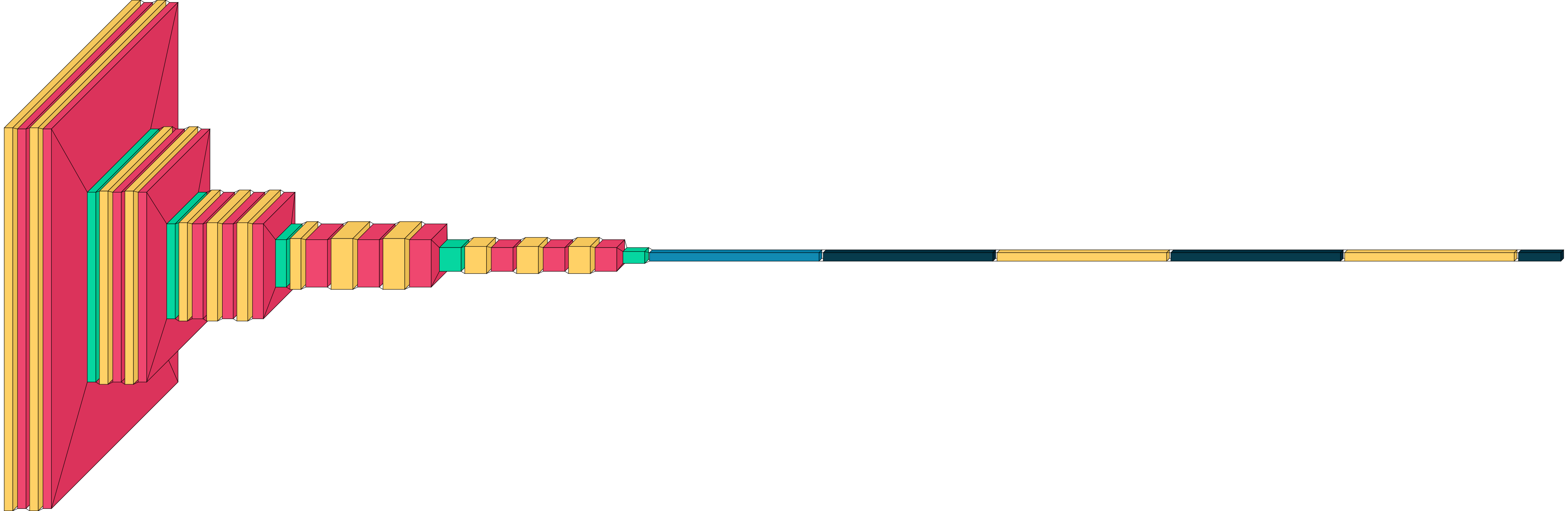
|
|
144
|
+
|
|
145
|
+
### Graph view
|
|
146
|
+
|
|
147
|
+
```python
|
|
148
|
+
import tensorflow as tf
|
|
149
|
+
from tensorflow import keras
|
|
150
|
+
import visualkeras
|
|
151
|
+
|
|
152
|
+
model = Sequential([
|
|
153
|
+
Conv2D(32, (3, 3), activation='relu', input_shape=(28, 28, 1)),
|
|
154
|
+
MaxPooling2D((2, 2)),
|
|
155
|
+
Dense(10, activation='softmax')
|
|
156
|
+
])
|
|
157
|
+
|
|
158
|
+
visualkeras.graph_view(model)
|
|
159
|
+
```
|
|
160
|
+
|
|
161
|
+

|
|
162
|
+
|
|
163
|
+
### Functional view
|
|
164
|
+
|
|
165
|
+
```python
|
|
166
|
+
import tensorflow as tf
|
|
167
|
+
from tensorflow import keras
|
|
168
|
+
import visualkeras
|
|
169
|
+
|
|
170
|
+
inputs = keras.Input(shape=(16,))
|
|
171
|
+
x = keras.layers.Dense(32, activation='relu')(inputs)
|
|
172
|
+
x = keras.layers.Dense(32, activation='relu')(x)
|
|
173
|
+
outputs = keras.layers.Dense(10, activation='softmax')(x)
|
|
174
|
+
|
|
175
|
+
model = keras.Model(inputs=inputs, outputs=outputs)
|
|
176
|
+
|
|
177
|
+
visualkeras.functional_view(model)
|
|
178
|
+
```
|
|
179
|
+
|
|
180
|
+

|
|
181
|
+
|
|
182
|
+
### LeNet view
|
|
183
|
+
|
|
184
|
+
```python
|
|
185
|
+
import tensorflow as tf
|
|
186
|
+
from tensorflow import keras
|
|
187
|
+
import visualkeras
|
|
188
|
+
|
|
189
|
+
model = keras.Sequential([
|
|
190
|
+
keras.layers.Input(shape=(28, 28, 1)),
|
|
191
|
+
keras.layers.Conv2D(6, (5, 5), activation='tanh'),
|
|
192
|
+
keras.layers.MaxPooling2D((2, 2)),
|
|
193
|
+
keras.layers.Conv2D(16, (5, 5), activation='tanh'),
|
|
194
|
+
keras.layers.MaxPooling2D((2, 2)),
|
|
195
|
+
keras.layers.Flatten(),
|
|
196
|
+
keras.layers.Dense(120, activation='tanh'),
|
|
197
|
+
keras.layers.Dense(84, activation='tanh'),
|
|
198
|
+
keras.layers.Dense(10, activation='softmax')
|
|
199
|
+
])
|
|
200
|
+
|
|
201
|
+
visualkeras.lenet_view(model)
|
|
202
|
+
```
|
|
203
|
+
|
|
204
|
+

|
|
205
|
+
|
|
206
|
+
## Documentation
|
|
207
|
+
|
|
208
|
+
Detailed documentation can be found in the documentation website: <https://visualkeras.readthedocs.io/>.
|
|
209
|
+
|
|
210
|
+
Particularly useful sections include:
|
|
211
|
+
|
|
212
|
+
- Quickstart: <https://visualkeras.readthedocs.io/en/latest/quickstart.html>
|
|
213
|
+
- Tutorials: <https://visualkeras.readthedocs.io/en/latest/tutorials/index.html>
|
|
214
|
+
- Examples: <https://visualkeras.readthedocs.io/en/latest/examples/index.html>
|
|
215
|
+
- API reference: <https://visualkeras.readthedocs.io/en/latest/api/index.html>
|
|
216
|
+
- Architecture guide: [ARCHITECTURE.md](ARCHITECTURE.md)
|
|
217
|
+
|
|
218
|
+
## Compatibility
|
|
219
|
+
|
|
220
|
+
| Scope | Status | Notes |
|
|
221
|
+
|---|---|---|
|
|
222
|
+
| Core package | Supported | Python 3.9+ |
|
|
223
|
+
| `tf.keras` workflows | Supported | Suggested usage |
|
|
224
|
+
| Standalone `keras` | Mostly supported | May vary by backend setup; fully supported with TensorFlow backend |
|
|
225
|
+
|
|
226
|
+
## Citation
|
|
227
|
+
|
|
228
|
+
If you find this project helpful for your research, please cite it:
|
|
229
|
+
|
|
230
|
+
```bibtex
|
|
231
|
+
@misc{Gavrikov2020VisualKeras,
|
|
232
|
+
author = {Gavrikov, Paul and Patapati, Santosh},
|
|
233
|
+
title = {visualkeras},
|
|
234
|
+
year = {2020},
|
|
235
|
+
publisher = {GitHub},
|
|
236
|
+
journal = {GitHub repository},
|
|
237
|
+
howpublished = {\url{https://github.com/paulgavrikov/visualkeras}},
|
|
238
|
+
}
|
|
239
|
+
```
|
|
240
|
+
|
|
241
|
+
## Contributing
|
|
242
|
+
|
|
243
|
+
- Issues: <https://github.com/paulgavrikov/visualkeras/issues>
|
|
244
|
+
- Contributing guide: `CONTRIBUTING.MD`
|
|
245
|
+
- Architecture guide: `ARCHITECTURE.md`
|
|
246
|
+
|
|
247
|
+
## Stay Updated
|
|
248
|
+
|
|
249
|
+
Sign up for the visualkeras mailing list here: <https://forms.gle/7eBZ1jCJ7Xsm6RvA7>
|
|
250
|
+
|
|
251
|
+
## License
|
|
252
|
+
|
|
253
|
+
Visualkeras is licensed under the MIT License. See `LICENSE`.
|
|
@@ -0,0 +1,211 @@
|
|
|
1
|
+
# visualkeras for Keras / TensorFlow
|
|
2
|
+
|
|
3
|
+
[](https://pypi.python.org/pypi/visualkeras)
|
|
4
|
+
[](https://pypi.python.org/pypi/visualkeras)
|
|
5
|
+
[](https://github.com/paulgavrikov/visualkeras/actions/workflows/ci.yaml)
|
|
6
|
+
[](https://visualkeras.readthedocs.io/en/latest/?badge=latest)
|
|
7
|
+
|
|
8
|
+
Visualkeras is a Python package for visualizing Keras and TensorFlow model architectures. It supports several rendering styles, such as classic layered CNN diagrams, node-based visualizations, and LeNet-style visualizations. It is very easy to get started with visualkeras (see Quickstart), but also highly customizable for advanced users. For help in citing this project, refer [here](#citation-header).
|
|
9
|
+
|
|
10
|
+
[Release notes](https://github.com/paulgavrikov/visualkeras/blob/master/changelog/CHANGELOG.md)
|
|
11
|
+
|
|
12
|
+
## Installation
|
|
13
|
+
|
|
14
|
+
Install the latest published release:
|
|
15
|
+
|
|
16
|
+
```bash
|
|
17
|
+
pip install visualkeras
|
|
18
|
+
```
|
|
19
|
+
|
|
20
|
+
Install the latest `master` branch (potentially unstable):
|
|
21
|
+
|
|
22
|
+
```bash
|
|
23
|
+
pip install git+https://github.com/paulgavrikov/visualkeras
|
|
24
|
+
```
|
|
25
|
+
|
|
26
|
+
## Quick Start
|
|
27
|
+
|
|
28
|
+
```python
|
|
29
|
+
import visualkeras
|
|
30
|
+
|
|
31
|
+
model = ...
|
|
32
|
+
|
|
33
|
+
visualkeras.layered_view(model).show()
|
|
34
|
+
visualkeras.layered_view(model, to_file="model.png")
|
|
35
|
+
```
|
|
36
|
+
|
|
37
|
+
The recommended high-level API is `show(...)`, which selects a renderer by mode:
|
|
38
|
+
|
|
39
|
+
```python
|
|
40
|
+
import visualkeras
|
|
41
|
+
from tensorflow.keras import layers
|
|
42
|
+
from visualkeras.options import FunctionalOptions
|
|
43
|
+
|
|
44
|
+
img = visualkeras.show(
|
|
45
|
+
model,
|
|
46
|
+
mode="functional",
|
|
47
|
+
options=FunctionalOptions(
|
|
48
|
+
collapse_enabled=True,
|
|
49
|
+
collapse_rules=[
|
|
50
|
+
{"kind": "layer", "selector": layers.Dense, "repeat_count": 4},
|
|
51
|
+
{
|
|
52
|
+
"kind": "block",
|
|
53
|
+
"selector": [layers.Dense, layers.Dropout],
|
|
54
|
+
"repeat_count": 2,
|
|
55
|
+
"annotation_position": "below",
|
|
56
|
+
},
|
|
57
|
+
],
|
|
58
|
+
),
|
|
59
|
+
)
|
|
60
|
+
```
|
|
61
|
+
|
|
62
|
+
`show(...)` supports these modes:
|
|
63
|
+
|
|
64
|
+
- `layered`
|
|
65
|
+
- `graph`
|
|
66
|
+
- `functional`
|
|
67
|
+
- `lenet`
|
|
68
|
+
|
|
69
|
+
## Renderers
|
|
70
|
+
|
|
71
|
+
| Renderer | Best for | Entry point |
|
|
72
|
+
|---|---|---|
|
|
73
|
+
| Layered view | Sequential CNN-style diagrams | `visualkeras.layered_view(model)` |
|
|
74
|
+
| Graph view | General node-based visualizations | `visualkeras.graph_view(model)` |
|
|
75
|
+
| Functional view | Functional Keras models with multiple modalities, inputs, outputs, streams, etc.; this is the most flexible option | `visualkeras.functional_view(model)` |
|
|
76
|
+
| LeNet view | Classic feature map stack diagrams; inspired by [LeNet](https://en.wikipedia.org/wiki/LeNet) | `visualkeras.lenet_view(model)` |
|
|
77
|
+
|
|
78
|
+
## Examples
|
|
79
|
+
|
|
80
|
+
We provide basic examples here. Explamples with various options and customizations are covered in **the documentation**: <https://visualkeras.readthedocs.io/>.
|
|
81
|
+
|
|
82
|
+
### Layered view
|
|
83
|
+
|
|
84
|
+
```python
|
|
85
|
+
import tensorflow as tf
|
|
86
|
+
from tensorflow import keras
|
|
87
|
+
import visualkeras
|
|
88
|
+
|
|
89
|
+
model = keras.Sequential([
|
|
90
|
+
keras.layers.Input(shape=(28, 28, 1)),
|
|
91
|
+
keras.layers.Conv2D(32, (3, 3), activation="relu"),
|
|
92
|
+
keras.layers.MaxPooling2D((2, 2)),
|
|
93
|
+
keras.layers.Conv2D(64, (3, 3), activation="relu"),
|
|
94
|
+
keras.layers.Flatten(),
|
|
95
|
+
keras.layers.Dense(10, activation="softmax"),
|
|
96
|
+
])
|
|
97
|
+
|
|
98
|
+
visualkeras.layered_view(model).show()
|
|
99
|
+
```
|
|
100
|
+
|
|
101
|
+

|
|
102
|
+
|
|
103
|
+
### Graph view
|
|
104
|
+
|
|
105
|
+
```python
|
|
106
|
+
import tensorflow as tf
|
|
107
|
+
from tensorflow import keras
|
|
108
|
+
import visualkeras
|
|
109
|
+
|
|
110
|
+
model = Sequential([
|
|
111
|
+
Conv2D(32, (3, 3), activation='relu', input_shape=(28, 28, 1)),
|
|
112
|
+
MaxPooling2D((2, 2)),
|
|
113
|
+
Dense(10, activation='softmax')
|
|
114
|
+
])
|
|
115
|
+
|
|
116
|
+
visualkeras.graph_view(model)
|
|
117
|
+
```
|
|
118
|
+
|
|
119
|
+

|
|
120
|
+
|
|
121
|
+
### Functional view
|
|
122
|
+
|
|
123
|
+
```python
|
|
124
|
+
import tensorflow as tf
|
|
125
|
+
from tensorflow import keras
|
|
126
|
+
import visualkeras
|
|
127
|
+
|
|
128
|
+
inputs = keras.Input(shape=(16,))
|
|
129
|
+
x = keras.layers.Dense(32, activation='relu')(inputs)
|
|
130
|
+
x = keras.layers.Dense(32, activation='relu')(x)
|
|
131
|
+
outputs = keras.layers.Dense(10, activation='softmax')(x)
|
|
132
|
+
|
|
133
|
+
model = keras.Model(inputs=inputs, outputs=outputs)
|
|
134
|
+
|
|
135
|
+
visualkeras.functional_view(model)
|
|
136
|
+
```
|
|
137
|
+
|
|
138
|
+

|
|
139
|
+
|
|
140
|
+
### LeNet view
|
|
141
|
+
|
|
142
|
+
```python
|
|
143
|
+
import tensorflow as tf
|
|
144
|
+
from tensorflow import keras
|
|
145
|
+
import visualkeras
|
|
146
|
+
|
|
147
|
+
model = keras.Sequential([
|
|
148
|
+
keras.layers.Input(shape=(28, 28, 1)),
|
|
149
|
+
keras.layers.Conv2D(6, (5, 5), activation='tanh'),
|
|
150
|
+
keras.layers.MaxPooling2D((2, 2)),
|
|
151
|
+
keras.layers.Conv2D(16, (5, 5), activation='tanh'),
|
|
152
|
+
keras.layers.MaxPooling2D((2, 2)),
|
|
153
|
+
keras.layers.Flatten(),
|
|
154
|
+
keras.layers.Dense(120, activation='tanh'),
|
|
155
|
+
keras.layers.Dense(84, activation='tanh'),
|
|
156
|
+
keras.layers.Dense(10, activation='softmax')
|
|
157
|
+
])
|
|
158
|
+
|
|
159
|
+
visualkeras.lenet_view(model)
|
|
160
|
+
```
|
|
161
|
+
|
|
162
|
+

|
|
163
|
+
|
|
164
|
+
## Documentation
|
|
165
|
+
|
|
166
|
+
Detailed documentation can be found in the documentation website: <https://visualkeras.readthedocs.io/>.
|
|
167
|
+
|
|
168
|
+
Particularly useful sections include:
|
|
169
|
+
|
|
170
|
+
- Quickstart: <https://visualkeras.readthedocs.io/en/latest/quickstart.html>
|
|
171
|
+
- Tutorials: <https://visualkeras.readthedocs.io/en/latest/tutorials/index.html>
|
|
172
|
+
- Examples: <https://visualkeras.readthedocs.io/en/latest/examples/index.html>
|
|
173
|
+
- API reference: <https://visualkeras.readthedocs.io/en/latest/api/index.html>
|
|
174
|
+
- Architecture guide: [ARCHITECTURE.md](ARCHITECTURE.md)
|
|
175
|
+
|
|
176
|
+
## Compatibility
|
|
177
|
+
|
|
178
|
+
| Scope | Status | Notes |
|
|
179
|
+
|---|---|---|
|
|
180
|
+
| Core package | Supported | Python 3.9+ |
|
|
181
|
+
| `tf.keras` workflows | Supported | Suggested usage |
|
|
182
|
+
| Standalone `keras` | Mostly supported | May vary by backend setup; fully supported with TensorFlow backend |
|
|
183
|
+
|
|
184
|
+
## Citation
|
|
185
|
+
|
|
186
|
+
If you find this project helpful for your research, please cite it:
|
|
187
|
+
|
|
188
|
+
```bibtex
|
|
189
|
+
@misc{Gavrikov2020VisualKeras,
|
|
190
|
+
author = {Gavrikov, Paul and Patapati, Santosh},
|
|
191
|
+
title = {visualkeras},
|
|
192
|
+
year = {2020},
|
|
193
|
+
publisher = {GitHub},
|
|
194
|
+
journal = {GitHub repository},
|
|
195
|
+
howpublished = {\url{https://github.com/paulgavrikov/visualkeras}},
|
|
196
|
+
}
|
|
197
|
+
```
|
|
198
|
+
|
|
199
|
+
## Contributing
|
|
200
|
+
|
|
201
|
+
- Issues: <https://github.com/paulgavrikov/visualkeras/issues>
|
|
202
|
+
- Contributing guide: `CONTRIBUTING.MD`
|
|
203
|
+
- Architecture guide: `ARCHITECTURE.md`
|
|
204
|
+
|
|
205
|
+
## Stay Updated
|
|
206
|
+
|
|
207
|
+
Sign up for the visualkeras mailing list here: <https://forms.gle/7eBZ1jCJ7Xsm6RvA7>
|
|
208
|
+
|
|
209
|
+
## License
|
|
210
|
+
|
|
211
|
+
Visualkeras is licensed under the MIT License. See `LICENSE`.
|
|
@@ -1,4 +1,4 @@
|
|
|
1
|
-
[egg_info]
|
|
2
|
-
tag_build =
|
|
3
|
-
tag_date = 0
|
|
4
|
-
|
|
1
|
+
[egg_info]
|
|
2
|
+
tag_build =
|
|
3
|
+
tag_date = 0
|
|
4
|
+
|
|
@@ -0,0 +1,44 @@
|
|
|
1
|
+
import setuptools
|
|
2
|
+
from pathlib import Path
|
|
3
|
+
from runpy import run_path
|
|
4
|
+
|
|
5
|
+
ROOT = Path(__file__).resolve().parent
|
|
6
|
+
long_description = (ROOT / "README.md").read_text(encoding="utf-8")
|
|
7
|
+
development_requires = [
|
|
8
|
+
line.strip()
|
|
9
|
+
for line in (ROOT / "requirements-dev.txt").read_text(encoding="utf-8").splitlines()
|
|
10
|
+
if line.strip() and not line.lstrip().startswith("#")
|
|
11
|
+
]
|
|
12
|
+
|
|
13
|
+
setuptools.setup(
|
|
14
|
+
name="visualkeras",
|
|
15
|
+
version=run_path(str(ROOT / "visualkeras" / "_version.py"))["__version__"],
|
|
16
|
+
author="Paul Gavrikov, Santosh Patapati",
|
|
17
|
+
author_email=(
|
|
18
|
+
"Paul Gavrikov <paul.gavrikov@hs-offenburg.de>, "
|
|
19
|
+
"Santosh Patapati <santosh.patapati@stonybrook.edu>"
|
|
20
|
+
),
|
|
21
|
+
description="Architecture visualization of Keras models",
|
|
22
|
+
long_description=long_description,
|
|
23
|
+
long_description_content_type="text/markdown",
|
|
24
|
+
url="https://github.com/paulgavrikov/visualkeras",
|
|
25
|
+
packages=setuptools.find_packages(),
|
|
26
|
+
classifiers=[
|
|
27
|
+
"Programming Language :: Python :: 3",
|
|
28
|
+
"Programming Language :: Python :: 3.9",
|
|
29
|
+
"Programming Language :: Python :: 3.10",
|
|
30
|
+
"Programming Language :: Python :: 3.11",
|
|
31
|
+
"Programming Language :: Python :: 3.12",
|
|
32
|
+
"License :: OSI Approved :: MIT License",
|
|
33
|
+
"Operating System :: POSIX :: Linux",
|
|
34
|
+
"Operating System :: MacOS",
|
|
35
|
+
"Operating System :: Microsoft :: Windows",
|
|
36
|
+
],
|
|
37
|
+
install_requires=[
|
|
38
|
+
'pillow>=6.2.0',
|
|
39
|
+
'numpy>=1.18.1',
|
|
40
|
+
'aggdraw>=1.3.11'
|
|
41
|
+
],
|
|
42
|
+
extras_require={"dev": development_requires},
|
|
43
|
+
python_requires='>=3.9',
|
|
44
|
+
)
|
|
@@ -0,0 +1,95 @@
|
|
|
1
|
+
from collections import Counter
|
|
2
|
+
|
|
3
|
+
import aggdraw
|
|
4
|
+
import pytest
|
|
5
|
+
from PIL import Image
|
|
6
|
+
|
|
7
|
+
from visualkeras import utils
|
|
8
|
+
|
|
9
|
+
|
|
10
|
+
@pytest.mark.parametrize("mode", ["lenet", "layered", "graph", "functional"])
|
|
11
|
+
@pytest.mark.parametrize("background", [(0, 0, 0, 0), (37, 53, 97, 0)])
|
|
12
|
+
def test_public_translucent_fills_keep_straight_alpha_colors(mode, background):
|
|
13
|
+
tf = pytest.importorskip("tensorflow")
|
|
14
|
+
import visualkeras
|
|
15
|
+
|
|
16
|
+
inputs = tf.keras.Input((8, 8, 1), name="in")
|
|
17
|
+
model = tf.keras.Model(inputs, tf.keras.layers.Conv2D(1, 1, name="out")(inputs))
|
|
18
|
+
settings = {"draw_connections": False, "draw_patches": False, "top_label": False, "bottom_label": False}
|
|
19
|
+
if mode == "layered":
|
|
20
|
+
settings = {"draw_volume": False, "draw_funnel": False}
|
|
21
|
+
elif mode == "functional":
|
|
22
|
+
settings = {"draw_volume": False, "connector_fill": (0, 0, 0, 0)}
|
|
23
|
+
elif mode == "graph":
|
|
24
|
+
settings = {"show_neurons": False, "connector_fill": (0, 0, 0, 0)}
|
|
25
|
+
image = visualkeras.show(
|
|
26
|
+
model, mode=mode, padding=20, background_fill=background,
|
|
27
|
+
styles={object: {"fill": (0, 0, 255, 128), "outline": (0, 0, 255, 128)}}, **settings,
|
|
28
|
+
)
|
|
29
|
+
pixels = Counter(pixel for pixel in image.getdata() if pixel[3] > 0 and pixel[2] > pixel[0] + pixel[1])
|
|
30
|
+
assert pixels
|
|
31
|
+
interior = pixels.most_common(1)[0][0]
|
|
32
|
+
assert interior[:3] == (0, 0, 255)
|
|
33
|
+
assert 0 < interior[3] < 255
|
|
34
|
+
assert image.getpixel((0, 0)) == background
|
|
35
|
+
|
|
36
|
+
|
|
37
|
+
def test_alpha_context_preserves_untouched_pixels_and_repeated_flushes():
|
|
38
|
+
image = Image.new("RGBA", (40, 32), (37, 53, 97, 0))
|
|
39
|
+
draw = utils._aggdraw_context(image)
|
|
40
|
+
draw.rectangle((8, 8, 24, 24), None, aggdraw.Brush((0, 0, 255, 128)))
|
|
41
|
+
draw.flush()
|
|
42
|
+
assert image.getpixel((16, 16))[:3] == (0, 0, 255)
|
|
43
|
+
assert image.getpixel((0, 0)) == (37, 53, 97, 0)
|
|
44
|
+
first = image.tobytes()
|
|
45
|
+
draw.flush()
|
|
46
|
+
assert image.tobytes() == first
|
|
47
|
+
draw.rectangle((16, 8, 32, 24), None, aggdraw.Brush((255, 0, 0, 128)))
|
|
48
|
+
draw.flush()
|
|
49
|
+
overlap = image.getpixel((20, 16))
|
|
50
|
+
assert overlap[0] > 0 and overlap[2] > 0 and sum(overlap[:3]) >= 250
|
|
51
|
+
assert image.getpixel((0, 0)) == (37, 53, 97, 0)
|
|
52
|
+
|
|
53
|
+
|
|
54
|
+
@pytest.mark.parametrize("mode", ["RGB", "RGBA"])
|
|
55
|
+
def test_opaque_alpha_context_matches_native_aggdraw_exactly(mode):
|
|
56
|
+
image = Image.new(mode, (40, 32), "white")
|
|
57
|
+
reference = image.copy()
|
|
58
|
+
for draw in [utils._aggdraw_context(image), aggdraw.Draw(reference)]:
|
|
59
|
+
draw.ellipse((4, 3, 29, 26), aggdraw.Pen((10, 20, 30, 120), 2), aggdraw.Brush((210, 80, 35, 128)))
|
|
60
|
+
draw.line((2, 25, 35, 4), aggdraw.Pen((100, 210, 40, 90), 3))
|
|
61
|
+
draw.flush()
|
|
62
|
+
assert image.tobytes() == reference.tobytes()
|
|
63
|
+
|
|
64
|
+
|
|
65
|
+
def test_layered_translucent_legend_keeps_straight_alpha_colors():
|
|
66
|
+
tf = pytest.importorskip("tensorflow")
|
|
67
|
+
import visualkeras
|
|
68
|
+
|
|
69
|
+
inputs = tf.keras.Input((4,), name="in")
|
|
70
|
+
model = tf.keras.Model(inputs, tf.keras.layers.Dense(4, name="out")(inputs))
|
|
71
|
+
settings = {"background_fill": (0, 0, 0, 0), "draw_volume": False, "draw_funnel": False,
|
|
72
|
+
"styles": {object: {"fill": (0, 0, 255, 128), "outline": (0, 0, 255, 128)}}}
|
|
73
|
+
base = visualkeras.layered_view(model, **settings)
|
|
74
|
+
image = visualkeras.layered_view(model, legend=True, **settings)
|
|
75
|
+
legend = image.crop((0, base.height, image.width, image.height))
|
|
76
|
+
blue = [pixel for pixel in legend.getdata() if pixel[0] == pixel[1] == 0 and pixel[2] > 0 and pixel[3] > 0]
|
|
77
|
+
assert blue
|
|
78
|
+
assert Counter(blue).most_common(1)[0][0][:3] == (0, 0, 255)
|
|
79
|
+
|
|
80
|
+
|
|
81
|
+
def test_alpha_context_blends_over_partially_transparent_destination():
|
|
82
|
+
image = Image.new("RGBA", (40, 32), (0, 128, 0, 128))
|
|
83
|
+
mask = Image.new("RGBA", image.size, (0, 0, 0, 0))
|
|
84
|
+
native = aggdraw.Draw(mask)
|
|
85
|
+
native.rectangle((8, 8, 24, 24), None, aggdraw.Brush((255, 255, 255, 128)))
|
|
86
|
+
native.flush()
|
|
87
|
+
foreground = Image.new("RGBA", image.size, "blue")
|
|
88
|
+
foreground.putalpha(mask.getchannel("A"))
|
|
89
|
+
expected = Image.alpha_composite(image, foreground)
|
|
90
|
+
draw = utils._aggdraw_context(image)
|
|
91
|
+
draw.rectangle((8, 8, 24, 24), None, aggdraw.Brush((0, 0, 255, 128)))
|
|
92
|
+
draw.flush()
|
|
93
|
+
# An 8-bit premultiplied buffer can round a color channel by one unit.
|
|
94
|
+
assert all(abs(a - b) <= 1 for a, b in zip(image.getpixel((16, 16)), expected.getpixel((16, 16))))
|
|
95
|
+
assert image.getpixel((0, 0)) == (0, 128, 0, 128)
|