types-array-api 1.1.2__tar.gz → 1.1.4__tar.gz
This diff represents the content of publicly available package versions that have been released to one of the supported registries. The information contained in this diff is provided for informational purposes only and reflects changes between package versions as they appear in their respective public registries.
- {types_array_api-1.1.2/src/types_array_api.egg-info → types_array_api-1.1.4}/PKG-INFO +62 -9
- {types_array_api-1.1.2 → types_array_api-1.1.4}/README.md +61 -8
- {types_array_api-1.1.2 → types_array_api-1.1.4}/pyproject.toml +2 -1
- {types_array_api-1.1.2 → types_array_api-1.1.4}/src/array_api/_2022_12.py +420 -31
- {types_array_api-1.1.2 → types_array_api-1.1.4}/src/array_api/_2023_12.py +425 -36
- {types_array_api-1.1.2 → types_array_api-1.1.4}/src/array_api/_2024_12.py +409 -37
- types_array_api-1.1.4/src/array_api/__init__.py +1 -0
- {types_array_api-1.1.2 → types_array_api-1.1.4}/src/array_api/_draft.py +413 -39
- {types_array_api-1.1.2 → types_array_api-1.1.4}/src/array_api/cli/_main.py +50 -3
- {types_array_api-1.1.2 → types_array_api-1.1.4/src/types_array_api.egg-info}/PKG-INFO +62 -9
- {types_array_api-1.1.2 → types_array_api-1.1.4}/src/types_array_api.egg-info/entry_points.txt +1 -0
- types_array_api-1.1.4/tests/test_main.py +42 -0
- types_array_api-1.1.2/src/array_api/__init__.py +0 -1
- types_array_api-1.1.2/tests/test_main.py +0 -25
- {types_array_api-1.1.2 → types_array_api-1.1.4}/LICENSE +0 -0
- {types_array_api-1.1.2 → types_array_api-1.1.4}/LICENSE-MIT +0 -0
- {types_array_api-1.1.2 → types_array_api-1.1.4}/setup.cfg +0 -0
- {types_array_api-1.1.2 → types_array_api-1.1.4}/setup.py +0 -0
- {types_array_api-1.1.2 → types_array_api-1.1.4}/src/array_api/__main__.py +0 -0
- {types_array_api-1.1.2 → types_array_api-1.1.4}/src/array_api/cli/__init__.py +0 -0
- {types_array_api-1.1.2 → types_array_api-1.1.4}/src/array_api/cli/cli.py +0 -0
- {types_array_api-1.1.2 → types_array_api-1.1.4}/src/array_api/py.typed +0 -0
- {types_array_api-1.1.2 → types_array_api-1.1.4}/src/array_api_compat/__init__.pyi +0 -0
- {types_array_api-1.1.2 → types_array_api-1.1.4}/src/types_array_api.egg-info/SOURCES.txt +0 -0
- {types_array_api-1.1.2 → types_array_api-1.1.4}/src/types_array_api.egg-info/dependency_links.txt +0 -0
- {types_array_api-1.1.2 → types_array_api-1.1.4}/src/types_array_api.egg-info/requires.txt +0 -0
- {types_array_api-1.1.2 → types_array_api-1.1.4}/src/types_array_api.egg-info/top_level.txt +0 -0
- {types_array_api-1.1.2 → types_array_api-1.1.4}/tests/test_cli.py +0 -0
- {types_array_api-1.1.2 → types_array_api-1.1.4}/tests/test_dunder_main.py +0 -0
|
@@ -1,6 +1,6 @@
|
|
|
1
1
|
Metadata-Version: 2.4
|
|
2
2
|
Name: types-array-api
|
|
3
|
-
Version: 1.1.
|
|
3
|
+
Version: 1.1.4
|
|
4
4
|
Summary: Typing for array API and array-api-compat
|
|
5
5
|
Author-email: 34j <34j.95a2p@simplelogin.com>
|
|
6
6
|
License-Expression: MIT AND Apache-2.0
|
|
@@ -83,7 +83,7 @@ pip install types-array-api
|
|
|
83
83
|
|
|
84
84
|
### Type stubs
|
|
85
85
|
|
|
86
|
-
|
|
86
|
+
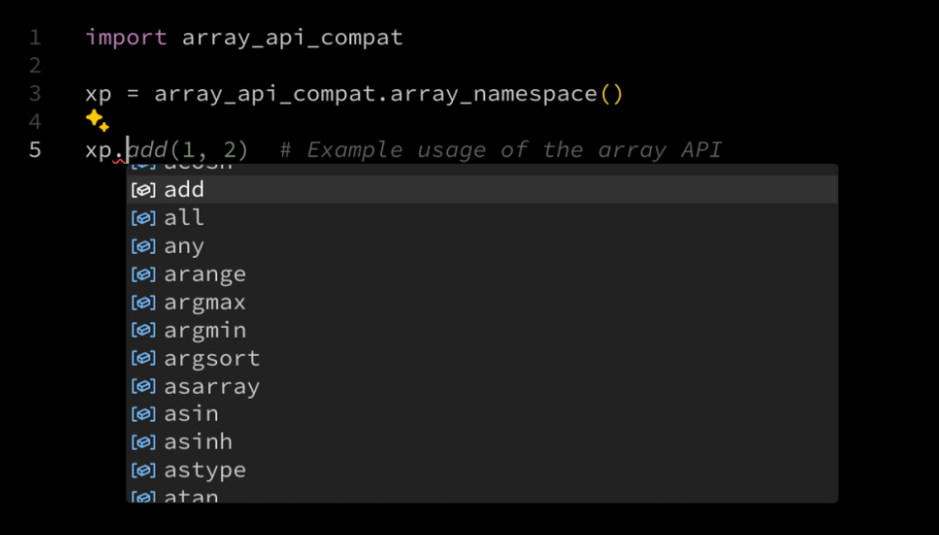
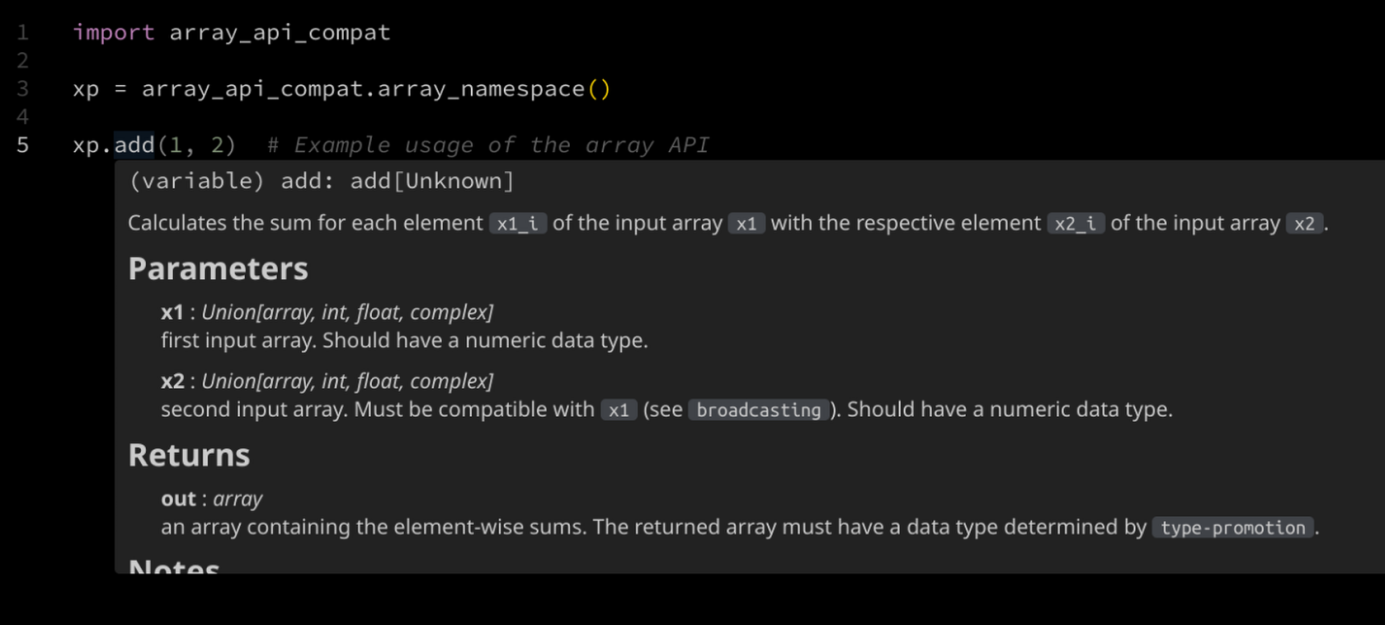
Autocompletion for [`array-api-compat`](https://data-apis.org/array-api-compat/) is available in your IDE **just by installing** this package.
|
|
87
87
|
|
|
88
88
|
```python
|
|
89
89
|
import array_api_compat
|
|
@@ -94,19 +94,31 @@ xp = array_api_compat.array_namespace(x)
|
|
|
94
94
|
|
|
95
95
|
|
|
96
96
|
|
|
97
|
-
### Array
|
|
97
|
+
### Typing functions using `Array`
|
|
98
98
|
|
|
99
|
-
|
|
100
|
-
from array_api._2024_12 import Array
|
|
99
|
+
There are multiple ways to type functions:
|
|
101
100
|
|
|
101
|
+
- ```python
|
|
102
|
+
from array_api._2024_12 import Array
|
|
102
103
|
|
|
103
|
-
def
|
|
104
|
-
|
|
105
|
-
```
|
|
104
|
+
def simple(x: Array) -> Array:
|
|
105
|
+
return x + 1
|
|
106
|
+
```
|
|
107
|
+
|
|
108
|
+
The simplest way to enjoy autocompletion for `Array`. This should be enough for most use cases.
|
|
109
|
+
|
|
110
|
+
- To make sure that the same type of array is returned (`ndarray`→`ndarray`, `Tensor`→`Tensor`), a `TypeVar` bound to `Array` can be used:
|
|
111
|
+
|
|
112
|
+
```python
|
|
113
|
+
def generic[TArray: Array](x: TArray) -> TArray:
|
|
114
|
+
return x + 1
|
|
115
|
+
```
|
|
116
|
+
|
|
117
|
+
## Advanced Usage
|
|
106
118
|
|
|
107
119
|
### Namespace Type
|
|
108
120
|
|
|
109
|
-
You can test if an object matches the Protocol
|
|
121
|
+
You can test if an object matches the Protocol as they are [`runtime-checkable`](https://docs.python.org/3/library/typing.html#typing.runtime_checkable):
|
|
110
122
|
|
|
111
123
|
```python
|
|
112
124
|
import array_api_strict
|
|
@@ -120,6 +132,47 @@ assert isinstance(array_api_strict, ArrayNamespace)
|
|
|
120
132
|
assert not isinstance(array_api_strict, ArrayNamespaceFull)
|
|
121
133
|
```
|
|
122
134
|
|
|
135
|
+
### Shape Typing
|
|
136
|
+
|
|
137
|
+
- To clarify the input and output shapes, `ShapedArray` and `ShapedAnyArray` can be used:
|
|
138
|
+
|
|
139
|
+
```python
|
|
140
|
+
from array_api._2024_12 import ShapedAnyArray as Array
|
|
141
|
+
|
|
142
|
+
def sum_last_axis[*TShape](x: Array[*TShape, Any]) -> Array[*TShape]:
|
|
143
|
+
return xp.sum(x, axis=-1)
|
|
144
|
+
```
|
|
145
|
+
|
|
146
|
+
More complex example using [NewType](https://docs.python.org/3/library/typing.html#newtype) or [type aliases](https://docs.python.org/3/library/typing.html#type-aliases):
|
|
147
|
+
|
|
148
|
+
```python
|
|
149
|
+
RTheta = NewType("RTheta", int)
|
|
150
|
+
XY = NewType("XY", int)
|
|
151
|
+
def polar_coordinates[*TShape](randtheta: Array[*TShape, RTheta]) -> Array[*TShape, XY]:
|
|
152
|
+
"""Convert polar coordinates to Cartesian coordinates."""
|
|
153
|
+
r = randtheta[..., 0]
|
|
154
|
+
theta = randtheta[..., 1]
|
|
155
|
+
x = r * xp.cos(theta)
|
|
156
|
+
y = r * xp.sin(theta)
|
|
157
|
+
return xp.stack((x, y), axis=-1)
|
|
158
|
+
```
|
|
159
|
+
|
|
160
|
+
Note that `ShapedAnyArray` exists only for **documentation purposes** and internally it is treated as `Array`.
|
|
161
|
+
Using both generic and shaped are impossible due to [python/typing#548](https://github.com/python/typing/issues/548).
|
|
162
|
+
|
|
163
|
+
- Note that the below example is ideal but impossible due to Python specification.
|
|
164
|
+
|
|
165
|
+
```python
|
|
166
|
+
def impossible[
|
|
167
|
+
TDtype,
|
|
168
|
+
TDevice,
|
|
169
|
+
*TShapeFormer: int,
|
|
170
|
+
*TShapeLatter: int,
|
|
171
|
+
TArray: Array
|
|
172
|
+
](x: TArray[*TShapeFormer, *TShapeLatter | Literal[1], TDtype, TDevice], y: TArray[*TShapeLatter | Literal[1], TDtype, TDevice]) -> TArray[*TShapeFormer, *TShapeLatter, TDtype, TDevice]:
|
|
173
|
+
return x + y # broadcasting
|
|
174
|
+
```
|
|
175
|
+
|
|
123
176
|
## Contributors ✨
|
|
124
177
|
|
|
125
178
|
Thanks goes to these wonderful people ([emoji key](https://allcontributors.org/docs/en/emoji-key)):
|
|
@@ -52,7 +52,7 @@ pip install types-array-api
|
|
|
52
52
|
|
|
53
53
|
### Type stubs
|
|
54
54
|
|
|
55
|
-
|
|
55
|
+
Autocompletion for [`array-api-compat`](https://data-apis.org/array-api-compat/) is available in your IDE **just by installing** this package.
|
|
56
56
|
|
|
57
57
|
```python
|
|
58
58
|
import array_api_compat
|
|
@@ -63,19 +63,31 @@ xp = array_api_compat.array_namespace(x)
|
|
|
63
63
|

|
|
64
64
|

|
|
65
65
|
|
|
66
|
-
### Array
|
|
66
|
+
### Typing functions using `Array`
|
|
67
67
|
|
|
68
|
-
|
|
69
|
-
from array_api._2024_12 import Array
|
|
68
|
+
There are multiple ways to type functions:
|
|
70
69
|
|
|
70
|
+
- ```python
|
|
71
|
+
from array_api._2024_12 import Array
|
|
71
72
|
|
|
72
|
-
def
|
|
73
|
-
|
|
74
|
-
```
|
|
73
|
+
def simple(x: Array) -> Array:
|
|
74
|
+
return x + 1
|
|
75
|
+
```
|
|
76
|
+
|
|
77
|
+
The simplest way to enjoy autocompletion for `Array`. This should be enough for most use cases.
|
|
78
|
+
|
|
79
|
+
- To make sure that the same type of array is returned (`ndarray`→`ndarray`, `Tensor`→`Tensor`), a `TypeVar` bound to `Array` can be used:
|
|
80
|
+
|
|
81
|
+
```python
|
|
82
|
+
def generic[TArray: Array](x: TArray) -> TArray:
|
|
83
|
+
return x + 1
|
|
84
|
+
```
|
|
85
|
+
|
|
86
|
+
## Advanced Usage
|
|
75
87
|
|
|
76
88
|
### Namespace Type
|
|
77
89
|
|
|
78
|
-
You can test if an object matches the Protocol
|
|
90
|
+
You can test if an object matches the Protocol as they are [`runtime-checkable`](https://docs.python.org/3/library/typing.html#typing.runtime_checkable):
|
|
79
91
|
|
|
80
92
|
```python
|
|
81
93
|
import array_api_strict
|
|
@@ -89,6 +101,47 @@ assert isinstance(array_api_strict, ArrayNamespace)
|
|
|
89
101
|
assert not isinstance(array_api_strict, ArrayNamespaceFull)
|
|
90
102
|
```
|
|
91
103
|
|
|
104
|
+
### Shape Typing
|
|
105
|
+
|
|
106
|
+
- To clarify the input and output shapes, `ShapedArray` and `ShapedAnyArray` can be used:
|
|
107
|
+
|
|
108
|
+
```python
|
|
109
|
+
from array_api._2024_12 import ShapedAnyArray as Array
|
|
110
|
+
|
|
111
|
+
def sum_last_axis[*TShape](x: Array[*TShape, Any]) -> Array[*TShape]:
|
|
112
|
+
return xp.sum(x, axis=-1)
|
|
113
|
+
```
|
|
114
|
+
|
|
115
|
+
More complex example using [NewType](https://docs.python.org/3/library/typing.html#newtype) or [type aliases](https://docs.python.org/3/library/typing.html#type-aliases):
|
|
116
|
+
|
|
117
|
+
```python
|
|
118
|
+
RTheta = NewType("RTheta", int)
|
|
119
|
+
XY = NewType("XY", int)
|
|
120
|
+
def polar_coordinates[*TShape](randtheta: Array[*TShape, RTheta]) -> Array[*TShape, XY]:
|
|
121
|
+
"""Convert polar coordinates to Cartesian coordinates."""
|
|
122
|
+
r = randtheta[..., 0]
|
|
123
|
+
theta = randtheta[..., 1]
|
|
124
|
+
x = r * xp.cos(theta)
|
|
125
|
+
y = r * xp.sin(theta)
|
|
126
|
+
return xp.stack((x, y), axis=-1)
|
|
127
|
+
```
|
|
128
|
+
|
|
129
|
+
Note that `ShapedAnyArray` exists only for **documentation purposes** and internally it is treated as `Array`.
|
|
130
|
+
Using both generic and shaped are impossible due to [python/typing#548](https://github.com/python/typing/issues/548).
|
|
131
|
+
|
|
132
|
+
- Note that the below example is ideal but impossible due to Python specification.
|
|
133
|
+
|
|
134
|
+
```python
|
|
135
|
+
def impossible[
|
|
136
|
+
TDtype,
|
|
137
|
+
TDevice,
|
|
138
|
+
*TShapeFormer: int,
|
|
139
|
+
*TShapeLatter: int,
|
|
140
|
+
TArray: Array
|
|
141
|
+
](x: TArray[*TShapeFormer, *TShapeLatter | Literal[1], TDtype, TDevice], y: TArray[*TShapeLatter | Literal[1], TDtype, TDevice]) -> TArray[*TShapeFormer, *TShapeLatter, TDtype, TDevice]:
|
|
142
|
+
return x + y # broadcasting
|
|
143
|
+
```
|
|
144
|
+
|
|
92
145
|
## Contributors ✨
|
|
93
146
|
|
|
94
147
|
Thanks goes to these wonderful people ([emoji key](https://allcontributors.org/docs/en/emoji-key)):
|
|
@@ -4,7 +4,7 @@ requires = [ "setuptools" ]
|
|
|
4
4
|
|
|
5
5
|
[project]
|
|
6
6
|
name = "types-array-api"
|
|
7
|
-
version = "1.1.
|
|
7
|
+
version = "1.1.4"
|
|
8
8
|
description = "Typing for array API and array-api-compat"
|
|
9
9
|
readme = "README.md"
|
|
10
10
|
license = "MIT AND Apache-2.0"
|
|
@@ -38,6 +38,7 @@ urls.Changelog = "https://github.com/34j/types-array-api/blob/main/CHANGELOG.md"
|
|
|
38
38
|
urls.documentation = "https://array-api.readthedocs.io"
|
|
39
39
|
urls.repository = "https://github.com/34j/types-array-api"
|
|
40
40
|
scripts.array-api = "array_api.cli:app"
|
|
41
|
+
scripts.types-array-api = "array_api.cli:app"
|
|
41
42
|
|
|
42
43
|
[dependency-groups]
|
|
43
44
|
dev = [
|