treeig 0.2.1__tar.gz → 0.2.2__tar.gz
This diff represents the content of publicly available package versions that have been released to one of the supported registries. The information contained in this diff is provided for informational purposes only and reflects changes between package versions as they appear in their respective public registries.
- treeig-0.2.2/CHANGELOG.md +33 -0
- {treeig-0.2.1 → treeig-0.2.2}/PKG-INFO +61 -24
- {treeig-0.2.1 → treeig-0.2.2}/README.md +61 -25
- {treeig-0.2.1 → treeig-0.2.2}/docs/api.md +6 -0
- {treeig-0.2.1 → treeig-0.2.2}/docs/baselines.md +15 -6
- {treeig-0.2.1 → treeig-0.2.2}/docs/building.md +17 -0
- {treeig-0.2.1 → treeig-0.2.2}/docs/concepts.md +6 -0
- {treeig-0.2.1 → treeig-0.2.2}/docs/conf.py +7 -1
- {treeig-0.2.1 → treeig-0.2.2}/docs/examples.md +6 -0
- {treeig-0.2.1 → treeig-0.2.2}/docs/explanations.md +10 -2
- {treeig-0.2.1 → treeig-0.2.2}/docs/getting-started.md +6 -0
- {treeig-0.2.1 → treeig-0.2.2}/docs/ig-stack.md +7 -1
- treeig-0.2.2/docs/index.md +106 -0
- {treeig-0.2.1 → treeig-0.2.2}/docs/models.md +6 -0
- {treeig-0.2.1 → treeig-0.2.2}/docs/numeric.md +22 -5
- treeig-0.2.2/docs/publishing.md +28 -0
- {treeig-0.2.1 → treeig-0.2.2}/docs/requirements.txt +1 -0
- {treeig-0.2.1 → treeig-0.2.2}/pyproject.toml +2 -1
- treeig-0.2.2/tests/test_release_version.py +23 -0
- {treeig-0.2.1 → treeig-0.2.2}/tests/test_treeig_numeric.py +62 -5
- {treeig-0.2.1 → treeig-0.2.2}/treeig/numeric.py +18 -12
- {treeig-0.2.1 → treeig-0.2.2}/treeig.egg-info/PKG-INFO +61 -24
- {treeig-0.2.1 → treeig-0.2.2}/treeig.egg-info/SOURCES.txt +2 -0
- {treeig-0.2.1 → treeig-0.2.2}/treeig.egg-info/requires.txt +1 -0
- treeig-0.2.1/CHANGELOG.md +0 -16
- treeig-0.2.1/docs/index.md +0 -64
- {treeig-0.2.1 → treeig-0.2.2}/CITATION.cff +0 -0
- {treeig-0.2.1 → treeig-0.2.2}/LICENSE +0 -0
- {treeig-0.2.1 → treeig-0.2.2}/MANIFEST.in +0 -0
- {treeig-0.2.1 → treeig-0.2.2}/benchmarks/README.md +0 -0
- {treeig-0.2.1 → treeig-0.2.2}/benchmarks/catboost_adaptive.py +0 -0
- {treeig-0.2.1 → treeig-0.2.2}/benchmarks/cuda_prediction.py +0 -0
- {treeig-0.2.1 → treeig-0.2.2}/benchmarks/probability_forests.py +0 -0
- {treeig-0.2.1 → treeig-0.2.2}/benchmarks/treeig_vs_treeshap.py +0 -0
- {treeig-0.2.1 → treeig-0.2.2}/benchmarks/weighted_baselines_cpu.py +0 -0
- {treeig-0.2.1 → treeig-0.2.2}/docs/Figure_BoundaryCrossings.svg +0 -0
- {treeig-0.2.1 → treeig-0.2.2}/docs/Figure_TreeGradient.svg +0 -0
- {treeig-0.2.1 → treeig-0.2.2}/docs/_templates/documentation-nav.html +0 -0
- {treeig-0.2.1 → treeig-0.2.2}/docs/comparison.md +0 -0
- {treeig-0.2.1 → treeig-0.2.2}/docs/gpu-benchmarks.md +0 -0
- {treeig-0.2.1 → treeig-0.2.2}/docs/gpu.md +0 -0
- {treeig-0.2.1 → treeig-0.2.2}/docs/loss.md +0 -0
- {treeig-0.2.1 → treeig-0.2.2}/docs/performance.md +0 -0
- {treeig-0.2.1 → treeig-0.2.2}/docs/references.md +0 -0
- {treeig-0.2.1 → treeig-0.2.2}/setup.cfg +0 -0
- {treeig-0.2.1 → treeig-0.2.2}/tests/test_binsearch.py +0 -0
- {treeig-0.2.1 → treeig-0.2.2}/tests/test_cuda_backend.py +0 -0
- {treeig-0.2.1 → treeig-0.2.2}/tests/test_explanation.py +0 -0
- {treeig-0.2.1 → treeig-0.2.2}/tests/test_optional_cuda.py +0 -0
- {treeig-0.2.1 → treeig-0.2.2}/tests/test_treeig.py +0 -0
- {treeig-0.2.1 → treeig-0.2.2}/treeig/__init__.py +0 -0
- {treeig-0.2.1 → treeig-0.2.2}/treeig/api.py +0 -0
- {treeig-0.2.1 → treeig-0.2.2}/treeig/core.py +0 -0
- {treeig-0.2.1 → treeig-0.2.2}/treeig/cuda_backend.py +0 -0
- {treeig-0.2.1 → treeig-0.2.2}/treeig/dispatch.py +0 -0
- {treeig-0.2.1 → treeig-0.2.2}/treeig/explanation.py +0 -0
- {treeig-0.2.1 → treeig-0.2.2}/treeig/gpu.py +0 -0
- {treeig-0.2.1 → treeig-0.2.2}/treeig/lightgbm_backend.py +0 -0
- {treeig-0.2.1 → treeig-0.2.2}/treeig/sklearn_backend.py +0 -0
- {treeig-0.2.1 → treeig-0.2.2}/treeig/utils.py +0 -0
- {treeig-0.2.1 → treeig-0.2.2}/treeig/xgboost_backend.py +0 -0
- {treeig-0.2.1 → treeig-0.2.2}/treeig.egg-info/dependency_links.txt +0 -0
- {treeig-0.2.1 → treeig-0.2.2}/treeig.egg-info/top_level.txt +0 -0
|
@@ -0,0 +1,33 @@
|
|
|
1
|
+
# Changelog
|
|
2
|
+
|
|
3
|
+
## 0.2.2
|
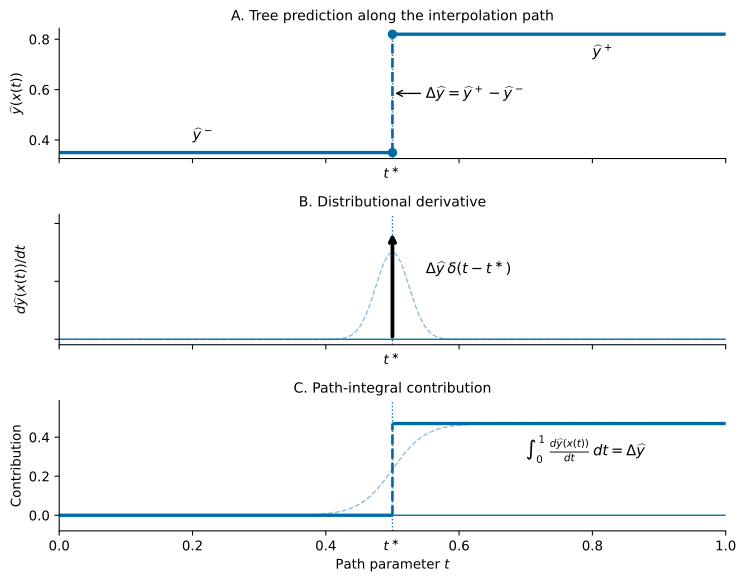
|
4
|
+
|
|
5
|
+
- Change `TreeIGNumeric` and `make_scalar_fn` to derive classification scores
|
|
6
|
+
by default when no native margin exists: binary log odds or centered
|
|
7
|
+
multiclass log probabilities. `compute_numeric` inherits this default.
|
|
8
|
+
Callers requiring the former class-probability output must explicitly set
|
|
9
|
+
`probability_to_score=False`. Zero probabilities require an explicit
|
|
10
|
+
`probability_floor` for finite scores; no floor is chosen silently.
|
|
11
|
+
|
|
12
|
+
- Add an agent documentation index, sitemap, canonical URLs, page descriptions,
|
|
13
|
+
and build checks for documentation discovery. Clarify exact versus numerical
|
|
14
|
+
model support, baseline guarantees, and related-project links.
|
|
15
|
+
- Lead the README and documentation landing page with the piecewise-constant
|
|
16
|
+
gradient argument, and move the derivative-impulse figure above the fold.
|
|
17
|
+
- State completeness precision relative to the fitted model's own arithmetic
|
|
18
|
+
rather than unqualified floating-point precision.
|
|
19
|
+
|
|
20
|
+
## 0.2.1
|
|
21
|
+
|
|
22
|
+
- Separate numerical jump-detection tolerance from absolute and relative completeness-warning tolerances; retain raw residual diagnostics.
|
|
23
|
+
- Clarify jump-based fallback behavior, bundled-event completeness, and XGBoost prediction precision.
|
|
24
|
+
- Check numeric regression tests with unexpected runtime warnings treated as errors in CI.
|
|
25
|
+
|
|
26
|
+
## 0.2.0
|
|
27
|
+
|
|
28
|
+
- Add optional `treeig.GPUTreeIG` prediction attribution with persistent CUDA model and weighted-baseline state and reusable observation buffers.
|
|
29
|
+
- Keep CPU `TreeIG` as the default; load CUDA only when constructing `GPUTreeIG`.
|
|
30
|
+
- Add the `cuda` installation extra, simulator equivalence tests, and GPU usage and benchmark documentation.
|
|
31
|
+
- Correct GitHub project links and restrict release publishing to version tags.
|
|
32
|
+
|
|
33
|
+
GPUTreeIG is part of `treeig`, not a separate distribution. GPU performance depends on the workload; existing T4 measurements are examples rather than guarantees.
|
|
@@ -1,6 +1,6 @@
|
|
|
1
1
|
Metadata-Version: 2.4
|
|
2
2
|
Name: treeig
|
|
3
|
-
Version: 0.2.
|
|
3
|
+
Version: 0.2.2
|
|
4
4
|
Summary: Exact Integrated Gradients for tree ensembles.
|
|
5
5
|
Author: Ludger Hentschel
|
|
6
6
|
License-Expression: BSD-3-Clause
|
|
@@ -26,6 +26,7 @@ Requires-Dist: numpy>=1.24
|
|
|
26
26
|
Requires-Dist: numba>=0.58
|
|
27
27
|
Provides-Extra: docs
|
|
28
28
|
Requires-Dist: sphinx<9,>=7; extra == "docs"
|
|
29
|
+
Requires-Dist: sphinx-sitemap<3,>=2.6; extra == "docs"
|
|
29
30
|
Requires-Dist: myst-parser<5,>=3; extra == "docs"
|
|
30
31
|
Requires-Dist: pydata-sphinx-theme<0.17,>=0.16; extra == "docs"
|
|
31
32
|
Provides-Extra: cuda
|
|
@@ -62,36 +63,49 @@ Dynamic: license-file
|
|
|
62
63
|
[](https://pypi.org/project/treeig/)
|
|
63
64
|
[](https://ludgerhentschel.github.io/treeig/)
|
|
64
65
|
|
|
65
|
-
TreeIG
|
|
66
|
-
|
|
67
|
-
|
|
66
|
+
TreeIG is a Python package for Integrated Gradients feature attribution on
|
|
67
|
+
supported numeric tree models. Install and import it as `treeig`. Given a fitted
|
|
68
|
+
model, a baseline point or weighted background, and evaluation rows, `TreeIG`
|
|
69
|
+
returns feature contributions and completeness diagnostics.
|
|
68
70
|
|
|
69
|
-
|
|
71
|
+
**TreeIG computes exact Integrated Gradients for supported numeric tree models.
|
|
72
|
+
A tree's gradient is zero almost everywhere; its integrated gradient is not.**
|
|
70
73
|
|
|
71
|
-
|
|
72
|
-
|
|
73
|
-
|
|
74
|
+
Check [supported models](https://ludgerhentschel.github.io/treeig/models.html) before choosing an interface.
|
|
75
|
+
`TreeIG` uses exact structural split crossings; [TreeIGNumeric](https://ludgerhentschel.github.io/treeig/numeric.html)
|
|
76
|
+
is a separately selected numerical fallback. Exact classification explains raw
|
|
77
|
+
margins or logits. Exact parsing requires finite numeric inputs and does not
|
|
78
|
+
support categorical splits or missing-value routing. Installing the CatBoost
|
|
79
|
+
extra does not add an exact CatBoost backend.
|
|
74
80
|
|
|
75
|
-
|
|
76
|
-
|
|
77
|
-
|
|
78
|
-
|
|
79
|
-
|
|
80
|
-
## Why Integrated Gradients works for trees
|
|
81
|
+
Tree ensembles are piecewise constant, so $\nabla F = 0$ except on a
|
|
82
|
+
measure-zero set of split boundaries. Numerical Integrated Gradients therefore
|
|
83
|
+
recovers approximately nothing, which is why IG has largely been confined to
|
|
84
|
+
differentiable models.
|
|
81
85
|
|
|
82
|
-
|
|
83
|
-
|
|
84
|
-
|
|
85
|
-
distributional interpretation, each jump is an impulse whose integral equals
|
|
86
|
-
the jump's height.
|
|
86
|
+
The pointwise gradient is not the full derivative. In the distributional sense,
|
|
87
|
+
$F'$ carries an impulse at each split boundary whose integral equals the
|
|
88
|
+
prediction jump there.
|
|
87
89
|
|
|
88
90
|
|
|
89
91
|
|
|
90
92
|
The top panel shows a single prediction step; the middle shows its derivative
|
|
91
93
|
as an impulse at the split; the bottom shows the accumulated contribution.
|
|
92
|
-
Integrating across the split recovers the prediction change.
|
|
93
|
-
|
|
94
|
-
|
|
94
|
+
Integrating across the split recovers the prediction change.
|
|
95
|
+
|
|
96
|
+
TreeIG enumerates the boundaries crossed by the straight-line path from baseline
|
|
97
|
+
to observation, assigns each jump to its split feature, and sums across trees.
|
|
98
|
+
No quadrature and no sampling are involved, and completeness
|
|
99
|
+
|
|
100
|
+
$$\sum_j \phi_j = F(x) - F(x_0)$$
|
|
101
|
+
|
|
102
|
+
holds to the floating-point precision of the fitted model's own arithmetic.
|
|
103
|
+
Weighted baseline distributions are supported directly.
|
|
104
|
+
|
|
105
|
+
The method is developed in Ludger Hentschel's
|
|
106
|
+
[**TreeIG: Exact Integrated Gradients for Tree-Based Models**](https://www.ludgerhentschel.com/PDFs/Hentschel%20'26g.pdf).
|
|
107
|
+
It builds on Integrated Gradients introduced by Sundararajan, Taly, and Yan in
|
|
108
|
+
[**Axiomatic Attribution for Deep Networks** (ICML 2017)](https://proceedings.mlr.press/v70/sundararajan17a.html).
|
|
95
109
|
|
|
96
110
|
## Installation
|
|
97
111
|
|
|
@@ -105,7 +119,9 @@ for plotting. The first attribution call includes Numba compilation.
|
|
|
105
119
|
|
|
106
120
|
## Quickstart
|
|
107
121
|
|
|
108
|
-
|
|
122
|
+
This snippet assumes a fitted supported model and numeric evaluation data.
|
|
123
|
+
For a standalone example that creates data, fits a model, and checks prediction
|
|
124
|
+
reconstruction, start with [the complete quickstart](https://ludgerhentschel.github.io/treeig/getting-started.html).
|
|
109
125
|
|
|
110
126
|
```python
|
|
111
127
|
from treeig import TreeIG
|
|
@@ -136,7 +152,11 @@ splits and missing-value routing are not supported by the exact parser.
|
|
|
136
152
|
|
|
137
153
|
`TreeIGNumeric` provides a numerical fallback for other piecewise-constant models,
|
|
138
154
|
including numeric-input CatBoost and probability-only classifiers. Its resolution
|
|
139
|
-
requires care.
|
|
155
|
+
requires care. For probability-only classifiers, it defaults to binary log odds
|
|
156
|
+
or centered multiclass log scores; class probabilities require explicit
|
|
157
|
+
`probability_to_score=False`. Zero probabilities require an explicit
|
|
158
|
+
`probability_floor` for score conversion. A small completeness
|
|
159
|
+
residual alone does not establish accurate individual feature allocations. See [supported models](https://ludgerhentschel.github.io/treeig/models.html)
|
|
140
160
|
and [the numerical guide](https://ludgerhentschel.github.io/treeig/numeric.html).
|
|
141
161
|
|
|
142
162
|
TreeIG and TreeSHAP answer different attribution questions. TreeIG can be fast
|
|
@@ -146,6 +166,9 @@ explain the distinction and report measured examples.
|
|
|
146
166
|
|
|
147
167
|
## Documentation
|
|
148
168
|
|
|
169
|
+
For automated readers, [llms.txt](https://ludgerhentschel.github.io/treeig/llms.txt)
|
|
170
|
+
maps the guides, complete examples, and rendered API reference.
|
|
171
|
+
|
|
149
172
|
The [user guide](https://ludgerhentschel.github.io/treeig/)
|
|
150
173
|
covers a complete runnable example, baseline distributions, classification,
|
|
151
174
|
plots, loss attribution, numerical conventions, and performance. The Sphinx
|
|
@@ -161,6 +184,18 @@ the reported workloads. Performance depends on the problem. See
|
|
|
161
184
|
[GPU documentation](https://ludgerhentschel.github.io/treeig/gpu.html)
|
|
162
185
|
for installation and limitations.
|
|
163
186
|
|
|
187
|
+
## Related projects
|
|
188
|
+
|
|
189
|
+
| Package | When to use it |
|
|
190
|
+
|---|---|
|
|
191
|
+
| [UnifiedIG](https://ludgerhentschel.github.io/unifiedig/) (`unifiedig`) | A common Integrated Gradients interface across supported tree and smooth model families. |
|
|
192
|
+
| [CBaseline](https://ludgerhentschel.github.io/cbaseline/) (`cbaseline`) | Construct empirical reference distributions; TreeIG accepts its backgrounds with their weights directly. |
|
|
193
|
+
| [skgrad](https://ludgerhentschel.github.io/skgrad/) (`skgrad`) | Obtain analytic input gradients and Jacobians for supported smooth scikit-learn models. |
|
|
194
|
+
|
|
195
|
+
Use TreeIG directly when you need its tree-specific attribution interface.
|
|
196
|
+
See [the Integrated Gradients stack](https://ludgerhentschel.github.io/treeig/ig-stack.html)
|
|
197
|
+
for how the packages compose and why output scales must agree.
|
|
198
|
+
|
|
164
199
|
## Citation and license
|
|
165
200
|
|
|
166
201
|
If you use TreeIG in your work, please cite the
|
|
@@ -176,3 +211,5 @@ If you use TreeIG in your work, please cite the
|
|
|
176
211
|
```
|
|
177
212
|
|
|
178
213
|
Released under the [BSD-3-Clause license](https://github.com/LudgerHentschel/treeig/blob/main/LICENSE).
|
|
214
|
+
|
|
215
|
+
Release maintainers: see [Publishing releases](docs/publishing.md).
|
|
@@ -3,37 +3,50 @@
|
|
|
3
3
|
[](https://pypi.org/project/treeig/)
|
|
4
4
|
[](https://ludgerhentschel.github.io/treeig/)
|
|
5
5
|
|
|
6
|
-
TreeIG
|
|
7
|
-
|
|
8
|
-
|
|
6
|
+
TreeIG is a Python package for Integrated Gradients feature attribution on
|
|
7
|
+
supported numeric tree models. Install and import it as `treeig`. Given a fitted
|
|
8
|
+
model, a baseline point or weighted background, and evaluation rows, `TreeIG`
|
|
9
|
+
returns feature contributions and completeness diagnostics.
|
|
10
|
+
|
|
11
|
+
**TreeIG computes exact Integrated Gradients for supported numeric tree models.
|
|
12
|
+
A tree's gradient is zero almost everywhere; its integrated gradient is not.**
|
|
13
|
+
|
|
14
|
+
Check [supported models](https://ludgerhentschel.github.io/treeig/models.html) before choosing an interface.
|
|
15
|
+
`TreeIG` uses exact structural split crossings; [TreeIGNumeric](https://ludgerhentschel.github.io/treeig/numeric.html)
|
|
16
|
+
is a separately selected numerical fallback. Exact classification explains raw
|
|
17
|
+
margins or logits. Exact parsing requires finite numeric inputs and does not
|
|
18
|
+
support categorical splits or missing-value routing. Installing the CatBoost
|
|
19
|
+
extra does not add an exact CatBoost backend.
|
|
20
|
+
|
|
21
|
+
Tree ensembles are piecewise constant, so $\nabla F = 0$ except on a
|
|
22
|
+
measure-zero set of split boundaries. Numerical Integrated Gradients therefore
|
|
23
|
+
recovers approximately nothing, which is why IG has largely been confined to
|
|
24
|
+
differentiable models.
|
|
25
|
+
|
|
26
|
+
The pointwise gradient is not the full derivative. In the distributional sense,
|
|
27
|
+
$F'$ carries an impulse at each split boundary whose integral equals the
|
|
28
|
+
prediction jump there.
|
|
9
29
|
|
|
10
|
-
|
|
30
|
+

|
|
31
|
+
|
|
32
|
+
The top panel shows a single prediction step; the middle shows its derivative
|
|
33
|
+
as an impulse at the split; the bottom shows the accumulated contribution.
|
|
34
|
+
Integrating across the split recovers the prediction change.
|
|
35
|
+
|
|
36
|
+
TreeIG enumerates the boundaries crossed by the straight-line path from baseline
|
|
37
|
+
to observation, assigns each jump to its split feature, and sums across trees.
|
|
38
|
+
No quadrature and no sampling are involved, and completeness
|
|
11
39
|
|
|
12
|
-
|
|
13
|
-
|
|
14
|
-
|
|
40
|
+
$$\sum_j \phi_j = F(x) - F(x_0)$$
|
|
41
|
+
|
|
42
|
+
holds to the floating-point precision of the fitted model's own arithmetic.
|
|
43
|
+
Weighted baseline distributions are supported directly.
|
|
15
44
|
|
|
16
45
|
The method is developed in Ludger Hentschel's
|
|
17
46
|
[**TreeIG: Exact Integrated Gradients for Tree-Based Models**](https://www.ludgerhentschel.com/PDFs/Hentschel%20'26g.pdf).
|
|
18
47
|
It builds on Integrated Gradients introduced by Sundararajan, Taly, and Yan in
|
|
19
48
|
[**Axiomatic Attribution for Deep Networks** (ICML 2017)](https://proceedings.mlr.press/v70/sundararajan17a.html).
|
|
20
49
|
|
|
21
|
-
## Why Integrated Gradients works for trees
|
|
22
|
-
|
|
23
|
-
A tree prediction is constant between splits, so its ordinary gradient is zero
|
|
24
|
-
almost everywhere. But the prediction jumps at split boundaries. Those jumps
|
|
25
|
-
are the contribution that an ordinary pointwise gradient misses: in the
|
|
26
|
-
distributional interpretation, each jump is an impulse whose integral equals
|
|
27
|
-
the jump's height.
|
|
28
|
-
|
|
29
|
-

|
|
30
|
-
|
|
31
|
-
The top panel shows a single prediction step; the middle shows its derivative
|
|
32
|
-
as an impulse at the split; the bottom shows the accumulated contribution.
|
|
33
|
-
Integrating across the split recovers the prediction change. TreeIG applies
|
|
34
|
-
this idea along the path from a baseline to an observation, assigning each
|
|
35
|
-
crossing's jump to its split feature and summing across trees.
|
|
36
|
-
|
|
37
50
|
## Installation
|
|
38
51
|
|
|
39
52
|
```bash
|
|
@@ -46,7 +59,9 @@ for plotting. The first attribution call includes Numba compilation.
|
|
|
46
59
|
|
|
47
60
|
## Quickstart
|
|
48
61
|
|
|
49
|
-
|
|
62
|
+
This snippet assumes a fitted supported model and numeric evaluation data.
|
|
63
|
+
For a standalone example that creates data, fits a model, and checks prediction
|
|
64
|
+
reconstruction, start with [the complete quickstart](https://ludgerhentschel.github.io/treeig/getting-started.html).
|
|
50
65
|
|
|
51
66
|
```python
|
|
52
67
|
from treeig import TreeIG
|
|
@@ -77,7 +92,11 @@ splits and missing-value routing are not supported by the exact parser.
|
|
|
77
92
|
|
|
78
93
|
`TreeIGNumeric` provides a numerical fallback for other piecewise-constant models,
|
|
79
94
|
including numeric-input CatBoost and probability-only classifiers. Its resolution
|
|
80
|
-
requires care.
|
|
95
|
+
requires care. For probability-only classifiers, it defaults to binary log odds
|
|
96
|
+
or centered multiclass log scores; class probabilities require explicit
|
|
97
|
+
`probability_to_score=False`. Zero probabilities require an explicit
|
|
98
|
+
`probability_floor` for score conversion. A small completeness
|
|
99
|
+
residual alone does not establish accurate individual feature allocations. See [supported models](https://ludgerhentschel.github.io/treeig/models.html)
|
|
81
100
|
and [the numerical guide](https://ludgerhentschel.github.io/treeig/numeric.html).
|
|
82
101
|
|
|
83
102
|
TreeIG and TreeSHAP answer different attribution questions. TreeIG can be fast
|
|
@@ -87,6 +106,9 @@ explain the distinction and report measured examples.
|
|
|
87
106
|
|
|
88
107
|
## Documentation
|
|
89
108
|
|
|
109
|
+
For automated readers, [llms.txt](https://ludgerhentschel.github.io/treeig/llms.txt)
|
|
110
|
+
maps the guides, complete examples, and rendered API reference.
|
|
111
|
+
|
|
90
112
|
The [user guide](https://ludgerhentschel.github.io/treeig/)
|
|
91
113
|
covers a complete runnable example, baseline distributions, classification,
|
|
92
114
|
plots, loss attribution, numerical conventions, and performance. The Sphinx
|
|
@@ -102,6 +124,18 @@ the reported workloads. Performance depends on the problem. See
|
|
|
102
124
|
[GPU documentation](https://ludgerhentschel.github.io/treeig/gpu.html)
|
|
103
125
|
for installation and limitations.
|
|
104
126
|
|
|
127
|
+
## Related projects
|
|
128
|
+
|
|
129
|
+
| Package | When to use it |
|
|
130
|
+
|---|---|
|
|
131
|
+
| [UnifiedIG](https://ludgerhentschel.github.io/unifiedig/) (`unifiedig`) | A common Integrated Gradients interface across supported tree and smooth model families. |
|
|
132
|
+
| [CBaseline](https://ludgerhentschel.github.io/cbaseline/) (`cbaseline`) | Construct empirical reference distributions; TreeIG accepts its backgrounds with their weights directly. |
|
|
133
|
+
| [skgrad](https://ludgerhentschel.github.io/skgrad/) (`skgrad`) | Obtain analytic input gradients and Jacobians for supported smooth scikit-learn models. |
|
|
134
|
+
|
|
135
|
+
Use TreeIG directly when you need its tree-specific attribution interface.
|
|
136
|
+
See [the Integrated Gradients stack](https://ludgerhentschel.github.io/treeig/ig-stack.html)
|
|
137
|
+
for how the packages compose and why output scales must agree.
|
|
138
|
+
|
|
105
139
|
## Citation and license
|
|
106
140
|
|
|
107
141
|
If you use TreeIG in your work, please cite the
|
|
@@ -117,3 +151,5 @@ If you use TreeIG in your work, please cite the
|
|
|
117
151
|
```
|
|
118
152
|
|
|
119
153
|
Released under the [BSD-3-Clause license](https://github.com/LudgerHentschel/treeig/blob/main/LICENSE).
|
|
154
|
+
|
|
155
|
+
Release maintainers: see [Publishing releases](docs/publishing.md).
|
|
@@ -1,3 +1,9 @@
|
|
|
1
|
+
---
|
|
2
|
+
myst:
|
|
3
|
+
html_meta:
|
|
4
|
+
description: "Choose TreeIG baseline points or weighted reference distributions, including CBaseline backgrounds."
|
|
5
|
+
---
|
|
6
|
+
|
|
1
7
|
# Choosing baselines and batching
|
|
2
8
|
|
|
3
9
|
The baseline determines the question an attribution answers. With one baseline,
|
|
@@ -14,15 +20,18 @@ model need not satisfy $F(\sum_k w_k b_k)=\sum_k w_k F(b_k)$.
|
|
|
14
20
|
|
|
15
21
|
For Integrated Gradients, the baseline determines the prediction contrast
|
|
16
22
|
being explained. **[CBaseline](https://github.com/LudgerHentschel/cbaseline) is the
|
|
17
|
-
preferred way to construct TreeIG baselines.**
|
|
18
|
-
|
|
19
|
-
|
|
20
|
-
|
|
21
|
-
|
|
23
|
+
preferred way to construct TreeIG baselines.** Its calibrated mode produces
|
|
24
|
+
empirical baseline *distributions* whose weighted mean model output meets the
|
|
25
|
+
chosen reference prediction within numerical tolerances, or raises on failure.
|
|
26
|
+
Equal-weight selections approximate neutrality and report their residual.
|
|
27
|
+
TreeIG explains the model prediction relative to the **achieved weighted mean**,
|
|
28
|
+
so preserve both the rows and weights when passing a background.
|
|
22
29
|
|
|
23
30
|
TreeIG accepts a CBaseline `Background` directly and evaluates its weighted
|
|
24
31
|
baseline paths efficiently. See CBaseline for construction choices and the
|
|
25
|
-
interpretation of the reference prediction `f0
|
|
32
|
+
interpretation of the reference prediction `f0`: start with
|
|
33
|
+
[background modes](https://ludgerhentschel.github.io/cbaseline/backgrounds.html)
|
|
34
|
+
and [diagnostics](https://ludgerhentschel.github.io/cbaseline/diagnostics.html).
|
|
26
35
|
|
|
27
36
|
A single representative observation, domain-specific neutral input, or fixed
|
|
28
37
|
benchmark case is also supported. A sample mean is convenient for a first
|
|
@@ -9,6 +9,7 @@ From the repository root, using Python 3.11 or later:
|
|
|
9
9
|
```bash
|
|
10
10
|
python -m pip install -e ".[docs]"
|
|
11
11
|
python -m sphinx -W --keep-going -b html docs docs/_build/html
|
|
12
|
+
python scripts/check_docs_discovery.py
|
|
12
13
|
```
|
|
13
14
|
|
|
14
15
|
Open `docs/_build/html/index.html` in a browser. Documentation dependencies are
|
|
@@ -26,3 +27,19 @@ job publishes the site. No package version change or release tag is required.
|
|
|
26
27
|
Edit the topic pages under `docs/`; keep the README focused on installation,
|
|
27
28
|
a first example, and links into the guide. Version information comes from
|
|
28
29
|
`pyproject.toml`. Generated HTML should not be committed.
|
|
30
|
+
|
|
31
|
+
## Discovery files
|
|
32
|
+
|
|
33
|
+
Maintain the repository-root `llms.txt` as an annotated map to the published
|
|
34
|
+
site. Sphinx copies this single source through `html_extra_path`. Link to
|
|
35
|
+
rendered API pages so readers receive expanded signatures and docstrings,
|
|
36
|
+
rather than the autodoc instructions in raw Sphinx sources.
|
|
37
|
+
|
|
38
|
+
`sphinx-sitemap` generates `sitemap.xml` using `html_baseurl`, which also supplies
|
|
39
|
+
canonical page URLs. Important pages define descriptions in `myst.html_meta`
|
|
40
|
+
YAML front matter. Keep `docs/requirements.txt` and the `docs` extra synchronized.
|
|
41
|
+
|
|
42
|
+
The discovery check runs after the HTML build in CI. It checks the index copy,
|
|
43
|
+
local targets, sitemap URLs, canonical links, descriptions, and expanded API and
|
|
44
|
+
example content. After deployment, check the public `/treeig/llms.txt` and
|
|
45
|
+
`/treeig/sitemap.xml` endpoints and external links in the index.
|
|
@@ -8,7 +8,7 @@ project = "TreeIG"
|
|
|
8
8
|
author = "Ludger Hentschel"
|
|
9
9
|
copyright = "2026, Ludger Hentschel"
|
|
10
10
|
release = tomllib.loads((ROOT / "pyproject.toml").read_text())["project"]["version"]
|
|
11
|
-
extensions = ["myst_parser", "sphinx.ext.autodoc", "sphinx.ext.napoleon", "sphinx.ext.mathjax"]
|
|
11
|
+
extensions = ["myst_parser", "sphinx.ext.autodoc", "sphinx.ext.napoleon", "sphinx.ext.mathjax", "sphinx_sitemap"]
|
|
12
12
|
myst_enable_extensions = ["dollarmath"]
|
|
13
13
|
myst_heading_anchors = 3
|
|
14
14
|
exclude_patterns = ["_build"]
|
|
@@ -21,3 +21,9 @@ napoleon_google_docstring = False
|
|
|
21
21
|
|
|
22
22
|
templates_path = ["_templates"]
|
|
23
23
|
html_sidebars = {"**": ["documentation-nav.html"]}
|
|
24
|
+
|
|
25
|
+
html_baseurl = "https://ludgerhentschel.github.io/treeig/"
|
|
26
|
+
# Publish the single maintained repository index with the documentation.
|
|
27
|
+
html_extra_path = ["../llms.txt"]
|
|
28
|
+
sitemap_url_scheme = "{link}"
|
|
29
|
+
sitemap_excludes = ["search.html", "genindex.html", "py-modindex.html"]
|
|
@@ -1,3 +1,9 @@
|
|
|
1
|
+
---
|
|
2
|
+
myst:
|
|
3
|
+
html_meta:
|
|
4
|
+
description: "Interpret TreeIG feature contributions, classification targets, result shapes, and completeness diagnostics."
|
|
5
|
+
---
|
|
6
|
+
|
|
1
7
|
# Reading and plotting results
|
|
2
8
|
|
|
3
9
|
## Explanation objects and SHAP plots
|
|
@@ -78,8 +84,10 @@ ig = tig.TreeIG(model, baseline=x0, target=2)
|
|
|
78
84
|
phi_class_2 = ig.attribute(X_eval)
|
|
79
85
|
```
|
|
80
86
|
|
|
81
|
-
Exact TreeIG attributes raw class margins.
|
|
82
|
-
|
|
87
|
+
Exact TreeIG attributes raw class margins. When no native margin exists,
|
|
88
|
+
TreeIGNumeric defaults to binary log odds or centered multiclass log scores
|
|
89
|
+
derived from probabilities. See [numerical classification conventions](numeric.md)
|
|
90
|
+
for explicit floors at zero and the opt-in class-probability mode.
|
|
83
91
|
|
|
84
92
|
## Functional interface
|
|
85
93
|
|
|
@@ -1,3 +1,9 @@
|
|
|
1
|
+
---
|
|
2
|
+
myst:
|
|
3
|
+
html_meta:
|
|
4
|
+
description: "Choose between TreeIG, UnifiedIG, CBaseline, and skgrad for tree paths, attribution, reference distributions, and input derivatives."
|
|
5
|
+
---
|
|
6
|
+
|
|
1
7
|
# The Integrated Gradients Stack
|
|
2
8
|
|
|
3
9
|
| Package | Responsibility |
|
|
@@ -29,5 +35,5 @@ combine a score gradient with a probability-valued baseline prediction.
|
|
|
29
35
|
evaluate analytic gradients, including supported preprocessing pipelines.
|
|
30
36
|
- [TreeIG documentation](https://ludgerhentschel.github.io/treeig/):
|
|
31
37
|
compute Integrated Gradients for supported tree models.
|
|
32
|
-
- [UnifiedIG guide](https://github.
|
|
38
|
+
- [UnifiedIG guide](https://ludgerhentschel.github.io/unifiedig/how-it-works.html):
|
|
33
39
|
select the attribution backend through a common interface.
|
|
@@ -0,0 +1,106 @@
|
|
|
1
|
+
---
|
|
2
|
+
myst:
|
|
3
|
+
html_meta:
|
|
4
|
+
description: "TreeIG computes exact Integrated Gradients for supported numeric tree models, with weighted baselines and a separate numerical fallback."
|
|
5
|
+
---
|
|
6
|
+
|
|
7
|
+
# TreeIG documentation
|
|
8
|
+
|
|
9
|
+
TreeIG is a Python package for Integrated Gradients feature attribution on
|
|
10
|
+
supported numeric tree models. Install and import it as `treeig`. Given a fitted
|
|
11
|
+
model, a baseline point or weighted background, and evaluation rows, `TreeIG`
|
|
12
|
+
returns feature contributions and completeness diagnostics.
|
|
13
|
+
|
|
14
|
+
**TreeIG computes exact Integrated Gradients for supported numeric tree models.
|
|
15
|
+
A tree's gradient is zero almost everywhere; its integrated gradient is not.**
|
|
16
|
+
|
|
17
|
+
Check [supported models](models.md) before choosing an interface.
|
|
18
|
+
`TreeIG` uses exact structural split crossings; [TreeIGNumeric](numeric.md)
|
|
19
|
+
is a separately selected numerical fallback. Exact classification explains raw
|
|
20
|
+
margins or logits. Exact parsing requires finite numeric inputs and does not
|
|
21
|
+
support categorical splits or missing-value routing. Installing the CatBoost
|
|
22
|
+
extra does not add an exact CatBoost backend.
|
|
23
|
+
|
|
24
|
+
Tree ensembles are piecewise constant, so $\nabla F = 0$ except on a
|
|
25
|
+
measure-zero set of split boundaries. Numerical Integrated Gradients therefore
|
|
26
|
+
recovers approximately nothing, which is why IG has largely been confined to
|
|
27
|
+
differentiable models.
|
|
28
|
+
|
|
29
|
+
The pointwise gradient is not the full derivative. In the distributional sense,
|
|
30
|
+
$F'$ carries an impulse at each split boundary whose integral equals the
|
|
31
|
+
prediction jump there.
|
|
32
|
+
|
|
33
|
+

|
|
34
|
+
|
|
35
|
+
The top panel shows a single prediction step; the middle shows its derivative
|
|
36
|
+
as an impulse at the split; the bottom shows the accumulated contribution.
|
|
37
|
+
Integrating across the split recovers the prediction change.
|
|
38
|
+
|
|
39
|
+
TreeIG enumerates the boundaries crossed by the straight-line path from baseline
|
|
40
|
+
to observation, assigns each jump to its split feature, and sums across trees.
|
|
41
|
+
No quadrature and no sampling are involved, and completeness
|
|
42
|
+
|
|
43
|
+
$$\sum_j \phi_j = F(x) - F(x_0)$$
|
|
44
|
+
|
|
45
|
+
holds to the floating-point precision of the fitted model's own arithmetic.
|
|
46
|
+
Weighted baseline distributions are supported directly.
|
|
47
|
+
|
|
48
|
+
The CPU `TreeIG` class is the main interface. Start with a runnable example,
|
|
49
|
+
then choose the baseline distribution and output scale that express the
|
|
50
|
+
comparison you want to explain.
|
|
51
|
+
|
|
52
|
+
The method is developed in Ludger Hentschel's
|
|
53
|
+
[**TreeIG: Exact Integrated Gradients for Tree-Based Models**](https://www.ludgerhentschel.com/PDFs/Hentschel%20'26g.pdf).
|
|
54
|
+
It builds on Integrated Gradients introduced by Sundararajan, Taly, and Yan in
|
|
55
|
+
[**Axiomatic Attribution for Deep Networks** (ICML 2017)](https://proceedings.mlr.press/v70/sundararajan17a.html).
|
|
56
|
+
|
|
57
|
+
## Explore the guide
|
|
58
|
+
|
|
59
|
+
For automated readers, [llms.txt](https://ludgerhentschel.github.io/treeig/llms.txt)
|
|
60
|
+
maps the guides, complete examples, and rendered API reference.
|
|
61
|
+
|
|
62
|
+
Read [getting started](getting-started.md), [baselines](baselines.md),
|
|
63
|
+
[supported models](models.md), and [worked examples](examples.md) first.
|
|
64
|
+
For more detail, see [results and plotting](explanations.md),
|
|
65
|
+
[loss attribution](loss.md), [numerical conventions](concepts.md),
|
|
66
|
+
[TreeIGNumeric](numeric.md), and [performance](performance.md).
|
|
67
|
+
|
|
68
|
+
## Related projects
|
|
69
|
+
|
|
70
|
+
| Package | When to use it |
|
|
71
|
+
|---|---|
|
|
72
|
+
| [UnifiedIG](https://ludgerhentschel.github.io/unifiedig/) (`unifiedig`) | A common Integrated Gradients interface across supported tree and smooth model families. |
|
|
73
|
+
| [CBaseline](https://ludgerhentschel.github.io/cbaseline/) (`cbaseline`) | Construct empirical reference distributions; TreeIG accepts its backgrounds with their weights directly. |
|
|
74
|
+
| [skgrad](https://ludgerhentschel.github.io/skgrad/) (`skgrad`) | Obtain analytic input gradients and Jacobians for supported smooth scikit-learn models. |
|
|
75
|
+
|
|
76
|
+
Use TreeIG directly when you need its tree-specific attribution interface.
|
|
77
|
+
See [the Integrated Gradients stack](https://ludgerhentschel.github.io/treeig/ig-stack.html)
|
|
78
|
+
for how the packages compose and why output scales must agree.
|
|
79
|
+
|
|
80
|
+
```{toctree}
|
|
81
|
+
:maxdepth: 2
|
|
82
|
+
:caption: User guide
|
|
83
|
+
|
|
84
|
+
getting-started
|
|
85
|
+
examples
|
|
86
|
+
baselines
|
|
87
|
+
models
|
|
88
|
+
explanations
|
|
89
|
+
loss
|
|
90
|
+
concepts
|
|
91
|
+
numeric
|
|
92
|
+
performance
|
|
93
|
+
comparison
|
|
94
|
+
gpu
|
|
95
|
+
ig-stack
|
|
96
|
+
```
|
|
97
|
+
|
|
98
|
+
```{toctree}
|
|
99
|
+
:maxdepth: 1
|
|
100
|
+
:caption: Reference
|
|
101
|
+
|
|
102
|
+
api
|
|
103
|
+
references
|
|
104
|
+
building
|
|
105
|
+
publishing
|
|
106
|
+
```
|
|
@@ -1,3 +1,9 @@
|
|
|
1
|
+
---
|
|
2
|
+
myst:
|
|
3
|
+
html_meta:
|
|
4
|
+
description: "Use TreeIGNumeric for explicit numerical jump detection and understand probability outputs, score conversion, and resolution limits."
|
|
5
|
+
---
|
|
6
|
+
|
|
1
7
|
# TreeIGNumeric
|
|
2
8
|
|
|
3
9
|
TreeIGNumeric is a model-agnostic fallback that recovers the crossing-sum
|
|
@@ -36,10 +42,10 @@ Two caveats on coverage:
|
|
|
36
42
|
feature along the straight-line path is not meaningful, which is a property of
|
|
37
43
|
Integrated Gradients itself, not of the implementation. TreeIGNumeric works on
|
|
38
44
|
CatBoost (and similar) models with numeric or one-hot-encoded inputs.
|
|
39
|
-
- **Probability-averaging classifiers.** By default, TreeIGNumeric
|
|
40
|
-
|
|
41
|
-
`probability_to_score=True
|
|
42
|
-
|
|
45
|
+
- **Probability-averaging classifiers.** By default, TreeIGNumeric explains
|
|
46
|
+
binary log odds or a centered multiclass log score derived from the complete
|
|
47
|
+
probability vector (`probability_to_score=True`). Class-probability
|
|
48
|
+
attribution requires explicit `probability_to_score=False`. Zero probabilities require an explicit
|
|
43
49
|
`probability_floor`; TreeIGNumeric never clips them silently.
|
|
44
50
|
|
|
45
51
|
```python
|
|
@@ -60,7 +66,7 @@ ig = tig.TreeIGNumeric(
|
|
|
60
66
|
model,
|
|
61
67
|
baseline=x0,
|
|
62
68
|
target=2, # omit for binary positive-class log odds
|
|
63
|
-
|
|
69
|
+
# Score conversion is the default when no native margin exists.
|
|
64
70
|
probability_floor=1e-6, # explicit because tree probabilities may be 0
|
|
65
71
|
)
|
|
66
72
|
phi = ig.attribute(X_eval)
|
|
@@ -102,3 +108,14 @@ Bundling may change the feature allocation, and offsetting jumps inside a cell
|
|
|
102
108
|
can remain invisible even with a zero residual. These are allocation limitations,
|
|
103
109
|
not reasons to require exhaustive refinement or replace event detection with
|
|
104
110
|
generic numerical Integrated Gradients.
|
|
111
|
+
|
|
112
|
+
## Compatibility with earlier releases
|
|
113
|
+
|
|
114
|
+
Previously, probability-only classifiers defaulted to class-probability
|
|
115
|
+
attribution. The default now explains scores. Existing callers that require the
|
|
116
|
+
previous probability-valued result must pass `probability_to_score=False`
|
|
117
|
+
explicitly. This option affects only classifiers without a native margin;
|
|
118
|
+
models exposing native scores continue to explain those scores. Zero class
|
|
119
|
+
probabilities now raise by default during score evaluation unless an explicit
|
|
120
|
+
`probability_floor` defines finite scores. Reconstruct background reference
|
|
121
|
+
outputs on the same scale as the explainer before comparing attributions.
|