termigent 0.1.0__tar.gz → 0.2.0__tar.gz
This diff represents the content of publicly available package versions that have been released to one of the supported registries. The information contained in this diff is provided for informational purposes only and reflects changes between package versions as they appear in their respective public registries.
- {termigent-0.1.0 → termigent-0.2.0}/LICENSE +1 -1
- termigent-0.2.0/PKG-INFO +156 -0
- termigent-0.2.0/README.md +123 -0
- termigent-0.2.0/assets/terminal.png +0 -0
- {termigent-0.1.0 → termigent-0.2.0}/pyproject.toml +6 -0
- termigent-0.2.0/termigent/auth.py +274 -0
- termigent-0.2.0/termigent/cli.py +150 -0
- termigent-0.2.0/termigent/server.py +266 -0
- termigent-0.2.0/termigent/tls.py +385 -0
- termigent-0.2.0/termigent.egg-info/PKG-INFO +156 -0
- {termigent-0.1.0 → termigent-0.2.0}/termigent.egg-info/SOURCES.txt +3 -0
- {termigent-0.1.0 → termigent-0.2.0}/termigent.egg-info/requires.txt +1 -0
- {termigent-0.1.0 → termigent-0.2.0}/termigent.egg-info/scm_file_list.json +4 -1
- termigent-0.2.0/termigent.egg-info/scm_version.json +8 -0
- termigent-0.1.0/PKG-INFO +0 -136
- termigent-0.1.0/README.md +0 -107
- termigent-0.1.0/termigent/cli.py +0 -93
- termigent-0.1.0/termigent/server.py +0 -50
- termigent-0.1.0/termigent.egg-info/PKG-INFO +0 -136
- termigent-0.1.0/termigent.egg-info/scm_version.json +0 -8
- {termigent-0.1.0 → termigent-0.2.0}/.gitignore +0 -0
- {termigent-0.1.0 → termigent-0.2.0}/setup.cfg +0 -0
- {termigent-0.1.0 → termigent-0.2.0}/termigent/__init__.py +0 -0
- {termigent-0.1.0 → termigent-0.2.0}/termigent/__main__.py +0 -0
- {termigent-0.1.0 → termigent-0.2.0}/termigent.egg-info/dependency_links.txt +0 -0
- {termigent-0.1.0 → termigent-0.2.0}/termigent.egg-info/entry_points.txt +0 -0
- {termigent-0.1.0 → termigent-0.2.0}/termigent.egg-info/top_level.txt +0 -0
termigent-0.2.0/PKG-INFO
ADDED
|
@@ -0,0 +1,156 @@
|
|
|
1
|
+
Metadata-Version: 2.4
|
|
2
|
+
Name: termigent
|
|
3
|
+
Version: 0.2.0
|
|
4
|
+
Summary: Universal MCP server that exposes a system terminal over SSE.
|
|
5
|
+
Author: Fortune
|
|
6
|
+
License-Expression: MIT
|
|
7
|
+
Project-URL: Homepage, https://github.com/Re4lLife/Termigent
|
|
8
|
+
Project-URL: Repository, https://github.com/Re4lLife/Termigent
|
|
9
|
+
Project-URL: Issues, https://github.com/Re4lLife/Termigent/issues
|
|
10
|
+
Keywords: mcp,model-context-protocol,sse,terminal,shell,ai,llm
|
|
11
|
+
Classifier: Development Status :: 4 - Beta
|
|
12
|
+
Classifier: Environment :: Console
|
|
13
|
+
Classifier: Intended Audience :: Developers
|
|
14
|
+
Classifier: Programming Language :: Python :: 3
|
|
15
|
+
Classifier: Programming Language :: Python :: 3 :: Only
|
|
16
|
+
Classifier: Programming Language :: Python :: 3.10
|
|
17
|
+
Classifier: Programming Language :: Python :: 3.11
|
|
18
|
+
Classifier: Programming Language :: Python :: 3.12
|
|
19
|
+
Classifier: Programming Language :: Python :: 3.13
|
|
20
|
+
Classifier: Programming Language :: Python :: 3.14
|
|
21
|
+
Classifier: Topic :: System :: Shells
|
|
22
|
+
Requires-Python: >=3.10
|
|
23
|
+
Description-Content-Type: text/markdown
|
|
24
|
+
License-File: LICENSE
|
|
25
|
+
Requires-Dist: fastapi>=0.110
|
|
26
|
+
Requires-Dist: uvicorn>=0.27
|
|
27
|
+
Requires-Dist: mcp<2,>=1.2
|
|
28
|
+
Requires-Dist: cryptography>=42
|
|
29
|
+
Provides-Extra: dev
|
|
30
|
+
Requires-Dist: build>=1.0; extra == "dev"
|
|
31
|
+
Requires-Dist: twine>=5.0; extra == "dev"
|
|
32
|
+
Dynamic: license-file
|
|
33
|
+
|
|
34
|
+
# Termigent
|
|
35
|
+
|
|
36
|
+
A universal [Model Context Protocol](https://modelcontextprotocol.io) (MCP) server that exposes a system terminal over Server-Sent Events (SSE).
|
|
37
|
+
|
|
38
|
+
## Who it is for
|
|
39
|
+
|
|
40
|
+
Termigent is for people who prefer to stay in a graphical MCP client such as the Claude Desktop app and still want the assistant to run real shell commands, either on the local machine or on a remote server.
|
|
41
|
+
|
|
42
|
+
- **Local execution** — run `termigent` next to Claude Desktop and let Claude inspect files, run tools, and automate tasks on that machine.
|
|
43
|
+
- **Remote execution** — install `termigent` on a remote host, start it with `--host 0.0.0.0`, and let Claude operate that server through the same GUI.
|
|
44
|
+
|
|
45
|
+
|
|
46
|
+
Any GUI MCP client that supports remote SSE, or a stdio bridge such as `mcp-remote`, can use it.
|
|
47
|
+
|
|
48
|
+
## Requirements
|
|
49
|
+
|
|
50
|
+
- Python 3.10+
|
|
51
|
+
|
|
52
|
+
## Install
|
|
53
|
+
|
|
54
|
+
```bash
|
|
55
|
+
pip install termigent
|
|
56
|
+
```
|
|
57
|
+
|
|
58
|
+
|
|
59
|
+
## Usage
|
|
60
|
+
|
|
61
|
+
```bash
|
|
62
|
+
termigent # http://127.0.0.1:8000
|
|
63
|
+
termigent --port 3000
|
|
64
|
+
termigent --host 0.0.0.0 --port 8000 # HTTPS is set up automatically
|
|
65
|
+
```
|
|
66
|
+
|
|
67
|
+
| Flag | Default | Description |
|
|
68
|
+
| --- | --- | --- |
|
|
69
|
+
| `--host` | `127.0.0.1` | Interface to bind |
|
|
70
|
+
| `--port` | `8000` | Port to listen on |
|
|
71
|
+
| `--tls` | `auto` | Beyond loopback: `auto` (free trusted Let's Encrypt certificate for the public IP, else self-signed), `acme`, `self-signed`, or `off` (plain HTTP behind your own proxy) |
|
|
72
|
+
| `--public-url` | detected | URL clients use. Only needed behind a reverse proxy, with `--tls off`, or to use a domain name |
|
|
73
|
+
| `--version` | | Print version |
|
|
74
|
+
|
|
75
|
+
The MCP endpoint is `http://<host>:<port>/mcp` (Streamable HTTP). The legacy SSE endpoint `/sse` is still served.
|
|
76
|
+
|
|
77
|
+
## Preview
|
|
78
|
+
|
|
79
|
+
|
|
80
|
+
|
|
81
|
+
## Tools
|
|
82
|
+
|
|
83
|
+
- `run_command(command)` — runs the command with the shell and returns combined stdout/stderr. A non-zero exit status is appended as `[exit code: N]`.
|
|
84
|
+
- `command_output(job_id, wait=45)` — commands run as background jobs, so there is no time limit. If a command is still running after ~45 s, `run_command` returns the output so far plus a `job_id`; call `command_output` until it finishes. This keeps every MCP request well under client timeouts.
|
|
85
|
+
- `kill_command(job_id)` — stop a running command.
|
|
86
|
+
|
|
87
|
+
Set `TERMIGENT_WAIT` (seconds, default `45`; keep it under your client's tool timeout, e.g. Codex defaults to 60 s) to change how long one call waits.
|
|
88
|
+
|
|
89
|
+
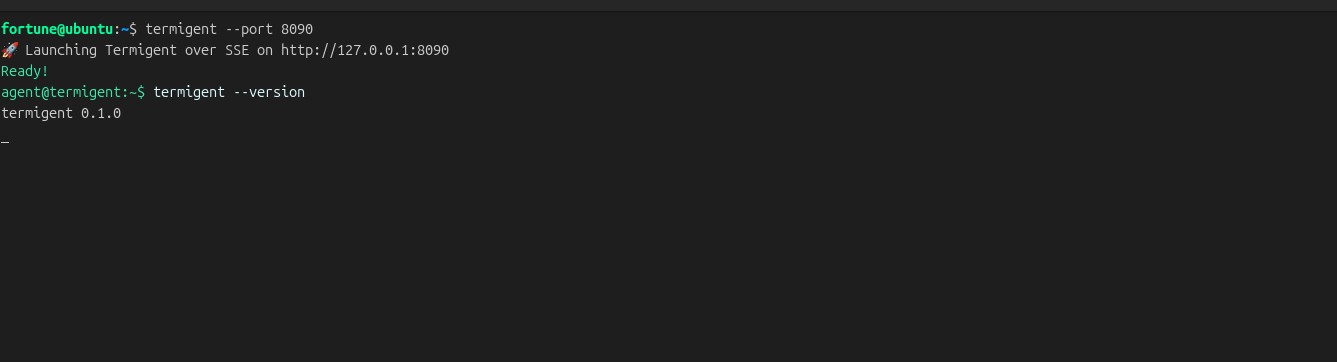
In the server terminal, each call is shown as a green `agent@termigent:~$` prompt, a white command, and light-gray output:
|
|
90
|
+
|
|
91
|
+
```
|
|
92
|
+
agent@termigent:~$ pwd
|
|
93
|
+
/home/user
|
|
94
|
+
```
|
|
95
|
+
|
|
96
|
+
|
|
97
|
+
## Connect Claude Desktop
|
|
98
|
+
|
|
99
|
+
Claude Desktop brokers remote connectors through Anthropic's cloud, so a connector URL cannot reach your loopback address. Bridge the endpoint through `mcp-remote` in the Desktop config instead. This requires Node.js, which provides `npx`.
|
|
100
|
+
|
|
101
|
+
**On the local machine** — start `termigent`, then add this to `claude_desktop_config.json`:
|
|
102
|
+
|
|
103
|
+
```json
|
|
104
|
+
{
|
|
105
|
+
"mcpServers": {
|
|
106
|
+
"termigent": {
|
|
107
|
+
"command": "npx",
|
|
108
|
+
"args": ["-y", "mcp-remote", "http://127.0.0.1:8000/mcp"]
|
|
109
|
+
}
|
|
110
|
+
}
|
|
111
|
+
}
|
|
112
|
+
```
|
|
113
|
+
|
|
114
|
+
**On a remote server** — install termigent there and bind it to all interfaces:
|
|
115
|
+
|
|
116
|
+
```bash
|
|
117
|
+
termigent --host 0.0.0.0 --port 8000
|
|
118
|
+
```
|
|
119
|
+
|
|
120
|
+
It prints the endpoint, e.g. `https://SERVER_IP:8000/mcp`. Then, on the machine running Claude Desktop, point the bridge at the server:
|
|
121
|
+
|
|
122
|
+
```json
|
|
123
|
+
{
|
|
124
|
+
"mcpServers": {
|
|
125
|
+
"termigent": {
|
|
126
|
+
"command": "npx",
|
|
127
|
+
"args": ["-y", "mcp-remote", "https://SERVER_IP:8000/mcp"]
|
|
128
|
+
}
|
|
129
|
+
}
|
|
130
|
+
}
|
|
131
|
+
```
|
|
132
|
+
|
|
133
|
+
|
|
134
|
+
Restart Claude Desktop after changing its config so it initializes a new MCP session.
|
|
135
|
+
|
|
136
|
+
## Security
|
|
137
|
+
|
|
138
|
+
Termigent runs commands with the privileges of the user that started it, so every connection must be paired. Pairing is automatic; there is no key to generate or paste into a config.
|
|
139
|
+
|
|
140
|
+
1. A client connects. `mcp-remote` opens a browser page (OAuth with dynamic client registration and PKCE).
|
|
141
|
+
2. Termigent prints a one-time pairing code in its terminal (`🔐 Pairing request ... Code: 1234-5678`).
|
|
142
|
+
3. Type the code into the page. Done: the client stores its token and reconnects (and refreshes) silently, including after restarts.
|
|
143
|
+
|
|
144
|
+
Requests without a valid token get `401`. Codes expire after 5 minutes and are cancelled after 5 wrong attempts. Tokens are stored hashed in `~/.termigent/auth.json` (mode `0600`; override the directory with `TERMIGENT_HOME`). To revoke all clients, delete that file.
|
|
145
|
+
|
|
146
|
+
- **Encryption:** beyond loopback Termigent serves HTTPS automatically. It generates a fresh key, obtains a free, publicly trusted [Let's Encrypt IP-address certificate](https://letsencrypt.org/2026/01/15/6day-and-ip-general-availability.html) (6-day, renewed in the background) and reloads it without restarting, so clients trust it with no setup. This needs inbound ports 80 (certificate challenge) and your Termigent port, and permission to bind port 80 (root, or `sudo sysctl net.ipv4.ip_unprivileged_port_start=80`).
|
|
147
|
+
- **Fallback:** if a trusted certificate can't be obtained (NAT, closed ports), Termigent falls back to an ephemeral self-signed certificate and prints its fingerprint; clients must trust it (e.g. `NODE_EXTRA_CA_CERTS`). Alternatively keep the loopback bind and use an SSH tunnel: `ssh -N -L 8000:127.0.0.1:8000 user@server`.
|
|
148
|
+
- **Headless servers:** no GUI is needed on the server. The pairing page opens on the machine running the MCP client; the server only prints the code.
|
|
149
|
+
- Keep the default loopback bind for local use.
|
|
150
|
+
- Termigent is not a sandbox; commands can read, modify, and delete anything the host user can.
|
|
151
|
+
|
|
152
|
+
Only run it on systems you control and with clients you trust.
|
|
153
|
+
|
|
154
|
+
## License
|
|
155
|
+
|
|
156
|
+
MIT
|
|
@@ -0,0 +1,123 @@
|
|
|
1
|
+
# Termigent
|
|
2
|
+
|
|
3
|
+
A universal [Model Context Protocol](https://modelcontextprotocol.io) (MCP) server that exposes a system terminal over Server-Sent Events (SSE).
|
|
4
|
+
|
|
5
|
+
## Who it is for
|
|
6
|
+
|
|
7
|
+
Termigent is for people who prefer to stay in a graphical MCP client such as the Claude Desktop app and still want the assistant to run real shell commands, either on the local machine or on a remote server.
|
|
8
|
+
|
|
9
|
+
- **Local execution** — run `termigent` next to Claude Desktop and let Claude inspect files, run tools, and automate tasks on that machine.
|
|
10
|
+
- **Remote execution** — install `termigent` on a remote host, start it with `--host 0.0.0.0`, and let Claude operate that server through the same GUI.
|
|
11
|
+
|
|
12
|
+
|
|
13
|
+
Any GUI MCP client that supports remote SSE, or a stdio bridge such as `mcp-remote`, can use it.
|
|
14
|
+
|
|
15
|
+
## Requirements
|
|
16
|
+
|
|
17
|
+
- Python 3.10+
|
|
18
|
+
|
|
19
|
+
## Install
|
|
20
|
+
|
|
21
|
+
```bash
|
|
22
|
+
pip install termigent
|
|
23
|
+
```
|
|
24
|
+
|
|
25
|
+
|
|
26
|
+
## Usage
|
|
27
|
+
|
|
28
|
+
```bash
|
|
29
|
+
termigent # http://127.0.0.1:8000
|
|
30
|
+
termigent --port 3000
|
|
31
|
+
termigent --host 0.0.0.0 --port 8000 # HTTPS is set up automatically
|
|
32
|
+
```
|
|
33
|
+
|
|
34
|
+
| Flag | Default | Description |
|
|
35
|
+
| --- | --- | --- |
|
|
36
|
+
| `--host` | `127.0.0.1` | Interface to bind |
|
|
37
|
+
| `--port` | `8000` | Port to listen on |
|
|
38
|
+
| `--tls` | `auto` | Beyond loopback: `auto` (free trusted Let's Encrypt certificate for the public IP, else self-signed), `acme`, `self-signed`, or `off` (plain HTTP behind your own proxy) |
|
|
39
|
+
| `--public-url` | detected | URL clients use. Only needed behind a reverse proxy, with `--tls off`, or to use a domain name |
|
|
40
|
+
| `--version` | | Print version |
|
|
41
|
+
|
|
42
|
+
The MCP endpoint is `http://<host>:<port>/mcp` (Streamable HTTP). The legacy SSE endpoint `/sse` is still served.
|
|
43
|
+
|
|
44
|
+
## Preview
|
|
45
|
+
|
|
46
|
+

|
|
47
|
+
|
|
48
|
+
## Tools
|
|
49
|
+
|
|
50
|
+
- `run_command(command)` — runs the command with the shell and returns combined stdout/stderr. A non-zero exit status is appended as `[exit code: N]`.
|
|
51
|
+
- `command_output(job_id, wait=45)` — commands run as background jobs, so there is no time limit. If a command is still running after ~45 s, `run_command` returns the output so far plus a `job_id`; call `command_output` until it finishes. This keeps every MCP request well under client timeouts.
|
|
52
|
+
- `kill_command(job_id)` — stop a running command.
|
|
53
|
+
|
|
54
|
+
Set `TERMIGENT_WAIT` (seconds, default `45`; keep it under your client's tool timeout, e.g. Codex defaults to 60 s) to change how long one call waits.
|
|
55
|
+
|
|
56
|
+
In the server terminal, each call is shown as a green `agent@termigent:~$` prompt, a white command, and light-gray output:
|
|
57
|
+
|
|
58
|
+
```
|
|
59
|
+
agent@termigent:~$ pwd
|
|
60
|
+
/home/user
|
|
61
|
+
```
|
|
62
|
+
|
|
63
|
+
|
|
64
|
+
## Connect Claude Desktop
|
|
65
|
+
|
|
66
|
+
Claude Desktop brokers remote connectors through Anthropic's cloud, so a connector URL cannot reach your loopback address. Bridge the endpoint through `mcp-remote` in the Desktop config instead. This requires Node.js, which provides `npx`.
|
|
67
|
+
|
|
68
|
+
**On the local machine** — start `termigent`, then add this to `claude_desktop_config.json`:
|
|
69
|
+
|
|
70
|
+
```json
|
|
71
|
+
{
|
|
72
|
+
"mcpServers": {
|
|
73
|
+
"termigent": {
|
|
74
|
+
"command": "npx",
|
|
75
|
+
"args": ["-y", "mcp-remote", "http://127.0.0.1:8000/mcp"]
|
|
76
|
+
}
|
|
77
|
+
}
|
|
78
|
+
}
|
|
79
|
+
```
|
|
80
|
+
|
|
81
|
+
**On a remote server** — install termigent there and bind it to all interfaces:
|
|
82
|
+
|
|
83
|
+
```bash
|
|
84
|
+
termigent --host 0.0.0.0 --port 8000
|
|
85
|
+
```
|
|
86
|
+
|
|
87
|
+
It prints the endpoint, e.g. `https://SERVER_IP:8000/mcp`. Then, on the machine running Claude Desktop, point the bridge at the server:
|
|
88
|
+
|
|
89
|
+
```json
|
|
90
|
+
{
|
|
91
|
+
"mcpServers": {
|
|
92
|
+
"termigent": {
|
|
93
|
+
"command": "npx",
|
|
94
|
+
"args": ["-y", "mcp-remote", "https://SERVER_IP:8000/mcp"]
|
|
95
|
+
}
|
|
96
|
+
}
|
|
97
|
+
}
|
|
98
|
+
```
|
|
99
|
+
|
|
100
|
+
|
|
101
|
+
Restart Claude Desktop after changing its config so it initializes a new MCP session.
|
|
102
|
+
|
|
103
|
+
## Security
|
|
104
|
+
|
|
105
|
+
Termigent runs commands with the privileges of the user that started it, so every connection must be paired. Pairing is automatic; there is no key to generate or paste into a config.
|
|
106
|
+
|
|
107
|
+
1. A client connects. `mcp-remote` opens a browser page (OAuth with dynamic client registration and PKCE).
|
|
108
|
+
2. Termigent prints a one-time pairing code in its terminal (`🔐 Pairing request ... Code: 1234-5678`).
|
|
109
|
+
3. Type the code into the page. Done: the client stores its token and reconnects (and refreshes) silently, including after restarts.
|
|
110
|
+
|
|
111
|
+
Requests without a valid token get `401`. Codes expire after 5 minutes and are cancelled after 5 wrong attempts. Tokens are stored hashed in `~/.termigent/auth.json` (mode `0600`; override the directory with `TERMIGENT_HOME`). To revoke all clients, delete that file.
|
|
112
|
+
|
|
113
|
+
- **Encryption:** beyond loopback Termigent serves HTTPS automatically. It generates a fresh key, obtains a free, publicly trusted [Let's Encrypt IP-address certificate](https://letsencrypt.org/2026/01/15/6day-and-ip-general-availability.html) (6-day, renewed in the background) and reloads it without restarting, so clients trust it with no setup. This needs inbound ports 80 (certificate challenge) and your Termigent port, and permission to bind port 80 (root, or `sudo sysctl net.ipv4.ip_unprivileged_port_start=80`).
|
|
114
|
+
- **Fallback:** if a trusted certificate can't be obtained (NAT, closed ports), Termigent falls back to an ephemeral self-signed certificate and prints its fingerprint; clients must trust it (e.g. `NODE_EXTRA_CA_CERTS`). Alternatively keep the loopback bind and use an SSH tunnel: `ssh -N -L 8000:127.0.0.1:8000 user@server`.
|
|
115
|
+
- **Headless servers:** no GUI is needed on the server. The pairing page opens on the machine running the MCP client; the server only prints the code.
|
|
116
|
+
- Keep the default loopback bind for local use.
|
|
117
|
+
- Termigent is not a sandbox; commands can read, modify, and delete anything the host user can.
|
|
118
|
+
|
|
119
|
+
Only run it on systems you control and with clients you trust.
|
|
120
|
+
|
|
121
|
+
## License
|
|
122
|
+
|
|
123
|
+
MIT
|
|
Binary file
|
|
@@ -29,11 +29,17 @@ dependencies = [
|
|
|
29
29
|
"fastapi>=0.110",
|
|
30
30
|
"uvicorn>=0.27",
|
|
31
31
|
"mcp>=1.2,<2",
|
|
32
|
+
"cryptography>=42",
|
|
32
33
|
]
|
|
33
34
|
|
|
34
35
|
[project.optional-dependencies]
|
|
35
36
|
dev = ["build>=1.0", "twine>=5.0"]
|
|
36
37
|
|
|
38
|
+
[project.urls]
|
|
39
|
+
Homepage = "https://github.com/Re4lLife/Termigent"
|
|
40
|
+
Repository = "https://github.com/Re4lLife/Termigent"
|
|
41
|
+
Issues = "https://github.com/Re4lLife/Termigent/issues"
|
|
42
|
+
|
|
37
43
|
[project.scripts]
|
|
38
44
|
termigent = "termigent.cli:main"
|
|
39
45
|
|
|
@@ -0,0 +1,274 @@
|
|
|
1
|
+
"""Zero-config pairing auth for Termigent.
|
|
2
|
+
|
|
3
|
+
Termigent acts as a minimal OAuth 2.1 authorization server (dynamic client
|
|
4
|
+
registration + PKCE). MCP clients/bridges that support OAuth (e.g. mcp-remote)
|
|
5
|
+
run the flow automatically: the first connection opens a browser page asking
|
|
6
|
+
for a pairing code that is printed in the Termigent terminal. After pairing,
|
|
7
|
+
tokens are stored by the client and reused (and refreshed) with no user action.
|
|
8
|
+
Nobody has to generate or copy a key into a config file.
|
|
9
|
+
"""
|
|
10
|
+
|
|
11
|
+
import hashlib
|
|
12
|
+
import hmac
|
|
13
|
+
import html
|
|
14
|
+
import json
|
|
15
|
+
import os
|
|
16
|
+
import secrets
|
|
17
|
+
import time
|
|
18
|
+
from pathlib import Path
|
|
19
|
+
from urllib.parse import parse_qs
|
|
20
|
+
|
|
21
|
+
from mcp.server.auth.provider import (
|
|
22
|
+
AccessToken,
|
|
23
|
+
AuthorizationCode,
|
|
24
|
+
AuthorizationParams,
|
|
25
|
+
AuthorizeError,
|
|
26
|
+
RefreshToken,
|
|
27
|
+
TokenError,
|
|
28
|
+
construct_redirect_uri,
|
|
29
|
+
)
|
|
30
|
+
from mcp.shared.auth import OAuthClientInformationFull, OAuthToken
|
|
31
|
+
from starlette.requests import Request
|
|
32
|
+
from starlette.responses import HTMLResponse, RedirectResponse, Response
|
|
33
|
+
|
|
34
|
+
ACCESS_TTL = 7 * 24 * 3600
|
|
35
|
+
REFRESH_TTL = 90 * 24 * 3600
|
|
36
|
+
CODE_TTL = 300
|
|
37
|
+
PAIR_TTL = 300
|
|
38
|
+
MAX_ATTEMPTS = 5
|
|
39
|
+
MAX_PENDING = 10
|
|
40
|
+
MAX_CLIENTS = 100
|
|
41
|
+
|
|
42
|
+
YELLOW = "\033[33m"
|
|
43
|
+
GREEN = "\033[32m"
|
|
44
|
+
RESET = "\033[0m"
|
|
45
|
+
|
|
46
|
+
|
|
47
|
+
def _h(token: str) -> str:
|
|
48
|
+
return hashlib.sha256(token.encode()).hexdigest()
|
|
49
|
+
|
|
50
|
+
|
|
51
|
+
def _clean(text: str, limit: int = 60) -> str:
|
|
52
|
+
return "".join(c for c in text if c.isprintable())[:limit] or "unknown client"
|
|
53
|
+
|
|
54
|
+
|
|
55
|
+
def _state_path() -> Path:
|
|
56
|
+
base = os.environ.get("TERMIGENT_HOME") or str(Path.home() / ".termigent")
|
|
57
|
+
return Path(base) / "auth.json"
|
|
58
|
+
|
|
59
|
+
|
|
60
|
+
class _Pending:
|
|
61
|
+
def __init__(self, client, params, code):
|
|
62
|
+
self.client = client
|
|
63
|
+
self.params = params
|
|
64
|
+
self.code = code
|
|
65
|
+
self.attempts = 0
|
|
66
|
+
self.expires = time.time() + PAIR_TTL
|
|
67
|
+
|
|
68
|
+
|
|
69
|
+
class PairingProvider:
|
|
70
|
+
def __init__(self, public_url: str, path: Path | None = None):
|
|
71
|
+
self.public_url = public_url
|
|
72
|
+
self._path = path or _state_path()
|
|
73
|
+
self._pending: dict[str, _Pending] = {}
|
|
74
|
+
self._codes: dict[str, AuthorizationCode] = {}
|
|
75
|
+
self._s = {"clients": {}, "access": {}, "refresh": {}}
|
|
76
|
+
try:
|
|
77
|
+
data = json.loads(self._path.read_text())
|
|
78
|
+
for k in self._s:
|
|
79
|
+
self._s[k] = data.get(k, {})
|
|
80
|
+
except (OSError, ValueError):
|
|
81
|
+
pass
|
|
82
|
+
|
|
83
|
+
# ---- persistence -------------------------------------------------
|
|
84
|
+
def _save(self) -> None:
|
|
85
|
+
now = time.time()
|
|
86
|
+
for kind in ("access", "refresh"):
|
|
87
|
+
self._s[kind] = {
|
|
88
|
+
k: v for k, v in self._s[kind].items() if v["expires_at"] > now
|
|
89
|
+
}
|
|
90
|
+
self._path.parent.mkdir(parents=True, exist_ok=True)
|
|
91
|
+
tmp = self._path.with_suffix(".tmp")
|
|
92
|
+
fd = os.open(tmp, os.O_WRONLY | os.O_CREAT | os.O_TRUNC, 0o600)
|
|
93
|
+
with os.fdopen(fd, "w") as f:
|
|
94
|
+
json.dump(self._s, f)
|
|
95
|
+
os.replace(tmp, self._path)
|
|
96
|
+
|
|
97
|
+
def _expire(self) -> None:
|
|
98
|
+
now = time.time()
|
|
99
|
+
self._pending = {k: v for k, v in self._pending.items() if v.expires > now}
|
|
100
|
+
self._codes = {k: v for k, v in self._codes.items() if v.expires_at > now}
|
|
101
|
+
|
|
102
|
+
# ---- client registration ----------------------------------------
|
|
103
|
+
async def get_client(self, client_id: str):
|
|
104
|
+
data = self._s["clients"].get(client_id)
|
|
105
|
+
return OAuthClientInformationFull(**data) if data else None
|
|
106
|
+
|
|
107
|
+
async def register_client(self, client_info: OAuthClientInformationFull) -> None:
|
|
108
|
+
clients = self._s["clients"]
|
|
109
|
+
clients[client_info.client_id] = client_info.model_dump(
|
|
110
|
+
mode="json", exclude_none=True
|
|
111
|
+
)
|
|
112
|
+
while len(clients) > MAX_CLIENTS:
|
|
113
|
+
clients.pop(next(iter(clients)))
|
|
114
|
+
self._save()
|
|
115
|
+
|
|
116
|
+
# ---- authorization (pairing) ------------------------------------
|
|
117
|
+
async def authorize(self, client, params: AuthorizationParams) -> str:
|
|
118
|
+
self._expire()
|
|
119
|
+
if len(self._pending) >= MAX_PENDING:
|
|
120
|
+
raise AuthorizeError(
|
|
121
|
+
"temporarily_unavailable", "Too many pending pairing requests"
|
|
122
|
+
)
|
|
123
|
+
pid = secrets.token_urlsafe(24)
|
|
124
|
+
code = f"{secrets.randbelow(10**8):08d}"
|
|
125
|
+
self._pending[pid] = _Pending(client, params, code)
|
|
126
|
+
name = _clean(client.client_name or "")
|
|
127
|
+
print(
|
|
128
|
+
f"{YELLOW}🔐 Pairing request from \"{name}\". "
|
|
129
|
+
f"Code: {code[:4]}-{code[4:]} (valid {PAIR_TTL // 60} min){RESET}",
|
|
130
|
+
flush=True,
|
|
131
|
+
)
|
|
132
|
+
return f"{self.public_url}/approve?pid={pid}"
|
|
133
|
+
|
|
134
|
+
async def approve(self, request: Request) -> Response:
|
|
135
|
+
self._expire()
|
|
136
|
+
if request.method == "POST":
|
|
137
|
+
body = parse_qs((await request.body()).decode(errors="ignore"))
|
|
138
|
+
pid = (body.get("pid") or [""])[0]
|
|
139
|
+
entered = "".join(c for c in (body.get("code") or [""])[0] if c.isdigit())
|
|
140
|
+
else:
|
|
141
|
+
pid = request.query_params.get("pid", "")
|
|
142
|
+
entered = None
|
|
143
|
+
pending = self._pending.get(pid)
|
|
144
|
+
if pending is None:
|
|
145
|
+
return _page("Request expired", "<p>Start the connection again from your client.</p>", 410)
|
|
146
|
+
|
|
147
|
+
name = html.escape(_clean(pending.client.client_name or ""))
|
|
148
|
+
if entered is not None:
|
|
149
|
+
pending.attempts += 1
|
|
150
|
+
if hmac.compare_digest(entered, pending.code):
|
|
151
|
+
del self._pending[pid]
|
|
152
|
+
return self._grant(pending)
|
|
153
|
+
if pending.attempts >= MAX_ATTEMPTS:
|
|
154
|
+
del self._pending[pid]
|
|
155
|
+
print(f"{YELLOW}Pairing request cancelled: too many wrong codes.{RESET}", flush=True)
|
|
156
|
+
return _page("Cancelled", "<p>Too many wrong codes. Start again from your client.</p>", 403)
|
|
157
|
+
err = "<p style='color:#b00'>Wrong code, try again.</p>"
|
|
158
|
+
else:
|
|
159
|
+
err = ""
|
|
160
|
+
form = (
|
|
161
|
+
f"<p><b>{name}</b> wants to run shell commands on this machine.</p>"
|
|
162
|
+
"<p>Enter the pairing code shown in the Termigent terminal.</p>"
|
|
163
|
+
f"{err}<form method='post'><input type='hidden' name='pid' value='{html.escape(pid)}'>"
|
|
164
|
+
"<input name='code' inputmode='numeric' autocomplete='off' autofocus "
|
|
165
|
+
"style='font-size:1.4em;width:9em'> <button style='font-size:1.2em'>Pair</button></form>"
|
|
166
|
+
)
|
|
167
|
+
return _page("Pair with Termigent", form)
|
|
168
|
+
|
|
169
|
+
def _grant(self, p: _Pending) -> Response:
|
|
170
|
+
code = secrets.token_urlsafe(32)
|
|
171
|
+
self._codes[code] = AuthorizationCode(
|
|
172
|
+
code=code,
|
|
173
|
+
scopes=p.params.scopes or [],
|
|
174
|
+
expires_at=time.time() + CODE_TTL,
|
|
175
|
+
client_id=p.client.client_id,
|
|
176
|
+
code_challenge=p.params.code_challenge,
|
|
177
|
+
redirect_uri=p.params.redirect_uri,
|
|
178
|
+
redirect_uri_provided_explicitly=p.params.redirect_uri_provided_explicitly,
|
|
179
|
+
resource=p.params.resource,
|
|
180
|
+
)
|
|
181
|
+
print(f"{GREEN}✅ Paired with \"{_clean(p.client.client_name or '')}\"{RESET}", flush=True)
|
|
182
|
+
url = construct_redirect_uri(
|
|
183
|
+
str(p.params.redirect_uri), code=code, state=p.params.state
|
|
184
|
+
)
|
|
185
|
+
return RedirectResponse(url, status_code=302, headers={"Cache-Control": "no-store"})
|
|
186
|
+
|
|
187
|
+
# ---- code / token exchange --------------------------------------
|
|
188
|
+
async def load_authorization_code(self, client, authorization_code: str):
|
|
189
|
+
self._expire()
|
|
190
|
+
c = self._codes.get(authorization_code)
|
|
191
|
+
return c if c and c.client_id == client.client_id else None
|
|
192
|
+
|
|
193
|
+
def _issue(self, client_id: str, scopes: list[str], resource: str | None) -> OAuthToken:
|
|
194
|
+
gid = secrets.token_hex(8)
|
|
195
|
+
access, refresh = secrets.token_urlsafe(32), secrets.token_urlsafe(32)
|
|
196
|
+
now = time.time()
|
|
197
|
+
base = {"client_id": client_id, "scopes": scopes, "resource": resource, "gid": gid}
|
|
198
|
+
self._s["access"][_h(access)] = {**base, "expires_at": int(now + ACCESS_TTL)}
|
|
199
|
+
self._s["refresh"][_h(refresh)] = {**base, "expires_at": int(now + REFRESH_TTL)}
|
|
200
|
+
self._save()
|
|
201
|
+
return OAuthToken(
|
|
202
|
+
access_token=access,
|
|
203
|
+
token_type="Bearer",
|
|
204
|
+
expires_in=ACCESS_TTL,
|
|
205
|
+
scope=" ".join(scopes) or None,
|
|
206
|
+
refresh_token=refresh,
|
|
207
|
+
)
|
|
208
|
+
|
|
209
|
+
def _drop_gid(self, gid: str) -> None:
|
|
210
|
+
for kind in ("access", "refresh"):
|
|
211
|
+
self._s[kind] = {k: v for k, v in self._s[kind].items() if v["gid"] != gid}
|
|
212
|
+
|
|
213
|
+
async def exchange_authorization_code(self, client, authorization_code) -> OAuthToken:
|
|
214
|
+
self._codes.pop(authorization_code.code, None)
|
|
215
|
+
return self._issue(client.client_id, authorization_code.scopes, authorization_code.resource)
|
|
216
|
+
|
|
217
|
+
async def load_refresh_token(self, client, refresh_token: str):
|
|
218
|
+
e = self._s["refresh"].get(_h(refresh_token))
|
|
219
|
+
if not e or e["client_id"] != client.client_id or e["expires_at"] <= time.time():
|
|
220
|
+
return None
|
|
221
|
+
return RefreshToken(
|
|
222
|
+
token=refresh_token,
|
|
223
|
+
client_id=e["client_id"],
|
|
224
|
+
scopes=e["scopes"],
|
|
225
|
+
expires_at=e["expires_at"],
|
|
226
|
+
resource=e["resource"],
|
|
227
|
+
)
|
|
228
|
+
|
|
229
|
+
async def exchange_refresh_token(self, client, refresh_token, scopes: list[str]) -> OAuthToken:
|
|
230
|
+
e = self._s["refresh"].get(_h(refresh_token.token))
|
|
231
|
+
if not e:
|
|
232
|
+
raise TokenError("invalid_grant", "unknown refresh token")
|
|
233
|
+
self._drop_gid(e["gid"])
|
|
234
|
+
granted = [s for s in scopes if s in refresh_token.scopes] or refresh_token.scopes
|
|
235
|
+
return self._issue(client.client_id, granted, refresh_token.resource)
|
|
236
|
+
|
|
237
|
+
async def load_access_token(self, token: str):
|
|
238
|
+
e = self._s["access"].get(_h(token))
|
|
239
|
+
if not e or e["expires_at"] <= time.time():
|
|
240
|
+
return None
|
|
241
|
+
return AccessToken(
|
|
242
|
+
token=token,
|
|
243
|
+
client_id=e["client_id"],
|
|
244
|
+
scopes=e["scopes"],
|
|
245
|
+
expires_at=e["expires_at"],
|
|
246
|
+
resource=e["resource"],
|
|
247
|
+
)
|
|
248
|
+
|
|
249
|
+
async def revoke_token(self, token) -> None:
|
|
250
|
+
h = _h(token.token)
|
|
251
|
+
for kind in ("access", "refresh"):
|
|
252
|
+
e = self._s[kind].get(h)
|
|
253
|
+
if e:
|
|
254
|
+
self._drop_gid(e["gid"])
|
|
255
|
+
break
|
|
256
|
+
self._save()
|
|
257
|
+
|
|
258
|
+
|
|
259
|
+
def _page(title: str, body: str, status: int = 200) -> HTMLResponse:
|
|
260
|
+
doc = (
|
|
261
|
+
f"<!doctype html><meta charset=utf-8><meta name=viewport content='width=device-width'>"
|
|
262
|
+
f"<title>{html.escape(title)}</title>"
|
|
263
|
+
f"<body style='font-family:sans-serif;max-width:32em;margin:3em auto;padding:0 1em'>"
|
|
264
|
+
f"<h2>{html.escape(title)}</h2>{body}</body>"
|
|
265
|
+
)
|
|
266
|
+
return HTMLResponse(
|
|
267
|
+
doc,
|
|
268
|
+
status_code=status,
|
|
269
|
+
headers={
|
|
270
|
+
"Cache-Control": "no-store",
|
|
271
|
+
"X-Frame-Options": "DENY",
|
|
272
|
+
"Content-Security-Policy": "default-src 'none'; style-src 'unsafe-inline'; frame-ancestors 'none'",
|
|
273
|
+
},
|
|
274
|
+
)
|