spanmark 0.1.0__tar.gz → 0.2.0__tar.gz
This diff represents the content of publicly available package versions that have been released to one of the supported registries. The information contained in this diff is provided for informational purposes only and reflects changes between package versions as they appear in their respective public registries.
- spanmark-0.2.0/.copier-answers.yml +37 -0
- {spanmark-0.1.0 → spanmark-0.2.0}/.gitignore +4 -2
- {spanmark-0.1.0 → spanmark-0.2.0}/.pre-commit-config.yaml +12 -5
- spanmark-0.2.0/AGENTS.md +3 -0
- {spanmark-0.1.0 → spanmark-0.2.0}/PKG-INFO +60 -47
- {spanmark-0.1.0 → spanmark-0.2.0}/README.md +55 -42
- spanmark-0.2.0/docs/CHANGELOG.md +36 -0
- spanmark-0.2.0/docs/CONTRIBUTING.md +262 -0
- {spanmark-0.1.0 → spanmark-0.2.0}/pyproject.toml +131 -99
- spanmark-0.2.0/release-notes/notes.md +25 -0
- {spanmark-0.1.0 → spanmark-0.2.0}/src/spanmark/__init__.py +1 -1
- {spanmark-0.1.0 → spanmark-0.2.0}/src/spanmark/_session.py +1 -2
- {spanmark-0.1.0 → spanmark-0.2.0}/src/spanmark/_version.py +2 -2
- spanmark-0.2.0/src/spanmark/py.typed +0 -0
- spanmark-0.2.0/tests/test_package.py +2 -0
- spanmark-0.1.0/docs/CHANGELOG.md +0 -12
- spanmark-0.1.0/docs/CONTRIBUTING.md +0 -87
- {spanmark-0.1.0 → spanmark-0.2.0}/LICENSE +0 -0
- {spanmark-0.1.0 → spanmark-0.2.0}/assets/screenshot.png +0 -0
- {spanmark-0.1.0 → spanmark-0.2.0}/src/spanmark/_autosave.py +0 -0
- {spanmark-0.1.0 → spanmark-0.2.0}/src/spanmark/_model.py +0 -0
- {spanmark-0.1.0 → spanmark-0.2.0}/src/spanmark/_source.py +0 -0
- {spanmark-0.1.0 → spanmark-0.2.0}/src/spanmark/_storage.py +0 -0
- {spanmark-0.1.0 → spanmark-0.2.0}/src/spanmark/_widget.py +0 -0
- {spanmark-0.1.0 → spanmark-0.2.0}/src/spanmark/static/widget.css +0 -0
- {spanmark-0.1.0 → spanmark-0.2.0}/src/spanmark/static/widget.js +0 -0
- {spanmark-0.1.0 → spanmark-0.2.0}/tests/test_autosave.py +0 -0
- {spanmark-0.1.0 → spanmark-0.2.0}/tests/test_model.py +0 -0
- {spanmark-0.1.0 → spanmark-0.2.0}/tests/test_session.py +0 -0
- {spanmark-0.1.0 → spanmark-0.2.0}/tests/test_source.py +0 -0
- {spanmark-0.1.0 → spanmark-0.2.0}/tests/test_storage.py +0 -0
- {spanmark-0.1.0 → spanmark-0.2.0}/tests/test_widget.py +0 -0
|
@@ -0,0 +1,37 @@
|
|
|
1
|
+
# Changes here will be overwritten by Copier; NEVER EDIT MANUALLY
|
|
2
|
+
_commit: 16ecf4e
|
|
3
|
+
_src_path: gh:pdhall99/python-project-template
|
|
4
|
+
author_email: 20580126+pdhall99@users.noreply.github.com
|
|
5
|
+
author_name: PD Hall
|
|
6
|
+
copyright_year: 2026
|
|
7
|
+
docs_enabled: false
|
|
8
|
+
github_owner: pdhall99
|
|
9
|
+
keywords:
|
|
10
|
+
- annotation
|
|
11
|
+
- anywidget
|
|
12
|
+
- data labeling
|
|
13
|
+
- data labelling
|
|
14
|
+
- human in the loop
|
|
15
|
+
- information extraction
|
|
16
|
+
- jupyter
|
|
17
|
+
- named entity recognition
|
|
18
|
+
- ner
|
|
19
|
+
- nlp
|
|
20
|
+
- notebook
|
|
21
|
+
- sequence labeling
|
|
22
|
+
- sequence labelling
|
|
23
|
+
- span annotation
|
|
24
|
+
- text annotation
|
|
25
|
+
- text labeling
|
|
26
|
+
- text labelling
|
|
27
|
+
- widget
|
|
28
|
+
package_name: spanmark
|
|
29
|
+
project_description: Annotate text datasets with labelled spans in Jupyter and other
|
|
30
|
+
notebook environments
|
|
31
|
+
project_name: spanmark
|
|
32
|
+
python_support: eol
|
|
33
|
+
runtime_dependencies:
|
|
34
|
+
- anywidget
|
|
35
|
+
- filelock>=3.16
|
|
36
|
+
- ipython
|
|
37
|
+
- traitlets
|
|
@@ -47,6 +47,7 @@ nosetests.xml
|
|
|
47
47
|
coverage.xml
|
|
48
48
|
*.cover
|
|
49
49
|
*.py.cover
|
|
50
|
+
*.lcov
|
|
50
51
|
.hypothesis/
|
|
51
52
|
.pytest_cache/
|
|
52
53
|
cover/
|
|
@@ -122,13 +123,14 @@ ipython_config.py
|
|
|
122
123
|
# pixi.lock
|
|
123
124
|
# Pixi creates a virtual environment in the .pixi directory, just like venv module creates one
|
|
124
125
|
# in the .venv directory. It is recommended not to include this directory in version control.
|
|
125
|
-
.pixi
|
|
126
|
+
.pixi/*
|
|
127
|
+
!.pixi/config.toml
|
|
126
128
|
|
|
127
129
|
# PEP 582; used by e.g. github.com/David-OConnor/pyflow and github.com/pdm-project/pdm
|
|
128
130
|
__pypackages__/
|
|
129
131
|
|
|
130
132
|
# Celery stuff
|
|
131
|
-
celerybeat-schedule
|
|
133
|
+
celerybeat-schedule*
|
|
132
134
|
celerybeat.pid
|
|
133
135
|
|
|
134
136
|
# Redis
|
|
@@ -1,5 +1,5 @@
|
|
|
1
1
|
default_language_version:
|
|
2
|
-
python: python3.
|
|
2
|
+
python: python3.11
|
|
3
3
|
|
|
4
4
|
repos:
|
|
5
5
|
- repo: https://github.com/pre-commit/pre-commit-hooks
|
|
@@ -18,19 +18,26 @@ repos:
|
|
|
18
18
|
- id: mixed-line-ending
|
|
19
19
|
- id: name-tests-test
|
|
20
20
|
args: [--pytest-test-first]
|
|
21
|
+
# Test helper modules start with an underscore
|
|
22
|
+
exclude: ^tests/(.*/)?_[^/]*\.py$
|
|
21
23
|
- id: trailing-whitespace
|
|
22
24
|
args: [--markdown-linebreak-ext=md]
|
|
23
25
|
|
|
26
|
+
- repo: https://github.com/tox-dev/pyproject-fmt
|
|
27
|
+
rev: v2.31.2
|
|
28
|
+
hooks:
|
|
29
|
+
- id: pyproject-fmt
|
|
30
|
+
|
|
24
31
|
- repo: https://github.com/astral-sh/ruff-pre-commit
|
|
25
|
-
rev: v0.
|
|
32
|
+
rev: v0.17.6 # keep consistent with hatch config
|
|
26
33
|
hooks:
|
|
27
34
|
# Run the linter
|
|
28
35
|
- id: ruff-check
|
|
29
|
-
types_or: [python, pyi, jupyter]
|
|
36
|
+
types_or: [python, pyi, jupyter, markdown]
|
|
30
37
|
args: [--fix, --config=pyproject.toml]
|
|
31
38
|
# Run the formatter
|
|
32
39
|
- id: ruff-format
|
|
33
|
-
types_or: [python, pyi, jupyter]
|
|
40
|
+
types_or: [python, pyi, jupyter, markdown]
|
|
34
41
|
args: [--config=pyproject.toml]
|
|
35
42
|
|
|
36
43
|
- repo: https://github.com/rhysd/actionlint
|
|
@@ -39,7 +46,7 @@ repos:
|
|
|
39
46
|
- id: actionlint
|
|
40
47
|
|
|
41
48
|
- repo: https://github.com/zizmorcore/zizmor-pre-commit
|
|
42
|
-
rev: v1.
|
|
49
|
+
rev: v1.33.1
|
|
43
50
|
hooks:
|
|
44
51
|
- id: zizmor
|
|
45
52
|
|
spanmark-0.2.0/AGENTS.md
ADDED
|
@@ -1,7 +1,8 @@
|
|
|
1
1
|
Metadata-Version: 2.5
|
|
2
2
|
Name: spanmark
|
|
3
|
-
Version: 0.
|
|
4
|
-
|
|
3
|
+
Version: 0.2.0
|
|
4
|
+
Import-Name: spanmark
|
|
5
|
+
Summary: Annotate text datasets with labelled spans in Jupyter and other notebook environments
|
|
5
6
|
Project-URL: Homepage, https://github.com/pdhall99/spanmark
|
|
6
7
|
Project-URL: Documentation, https://github.com/pdhall99/spanmark/blob/main/README.md
|
|
7
8
|
Project-URL: Source, https://github.com/pdhall99/spanmark
|
|
@@ -17,42 +18,74 @@ Classifier: Operating System :: OS Independent
|
|
|
17
18
|
Classifier: Programming Language :: Python
|
|
18
19
|
Classifier: Programming Language :: Python :: 3
|
|
19
20
|
Classifier: Programming Language :: Python :: 3 :: Only
|
|
20
|
-
Classifier: Programming Language :: Python :: 3.10
|
|
21
21
|
Classifier: Programming Language :: Python :: 3.11
|
|
22
22
|
Classifier: Programming Language :: Python :: 3.12
|
|
23
23
|
Classifier: Programming Language :: Python :: 3.13
|
|
24
24
|
Classifier: Programming Language :: Python :: 3.14
|
|
25
|
+
Classifier: Programming Language :: Python :: 3.15
|
|
25
26
|
Classifier: Typing :: Typed
|
|
26
|
-
Requires-Python: >=3.
|
|
27
|
+
Requires-Python: >=3.11
|
|
27
28
|
Requires-Dist: anywidget
|
|
28
29
|
Requires-Dist: filelock>=3.16
|
|
29
30
|
Requires-Dist: ipython
|
|
30
31
|
Requires-Dist: traitlets
|
|
31
|
-
Requires-Dist: typing-extensions
|
|
32
32
|
Description-Content-Type: text/markdown
|
|
33
33
|
|
|
34
34
|
# spanmark
|
|
35
35
|
|
|
36
|
-
|
|
36
|
+
[](https://github.com/pdhall99/spanmark/actions/workflows/ci.yml)
|
|
37
|
+
[](https://pypi.org/project/spanmark/)
|
|
38
|
+
[](https://pypi.org/project/spanmark/)
|
|
39
|
+
[](https://github.com/pdhall99/spanmark/blob/main/LICENSE)
|
|
37
40
|
|
|
38
|
-
|
|
41
|
+
Annotate text datasets with labelled spans in Jupyter and other notebook environments.
|
|
39
42
|
|
|
40
|
-
|
|
43
|
+
spanmark shows one document at a time, allowing you to add, remove, or relabel spans and then accept, reject, or ignore the document.
|
|
44
|
+
Every change is autosaved to JSONL, so annotation can stop and resume across sessions without losing work.
|
|
45
|
+
It runs in Jupyter Notebook, JupyterLab, VS Code, Google Colab, marimo, and other [anywidget](https://anywidget.dev/)-compatible environments.
|
|
46
|
+
|
|
47
|
+
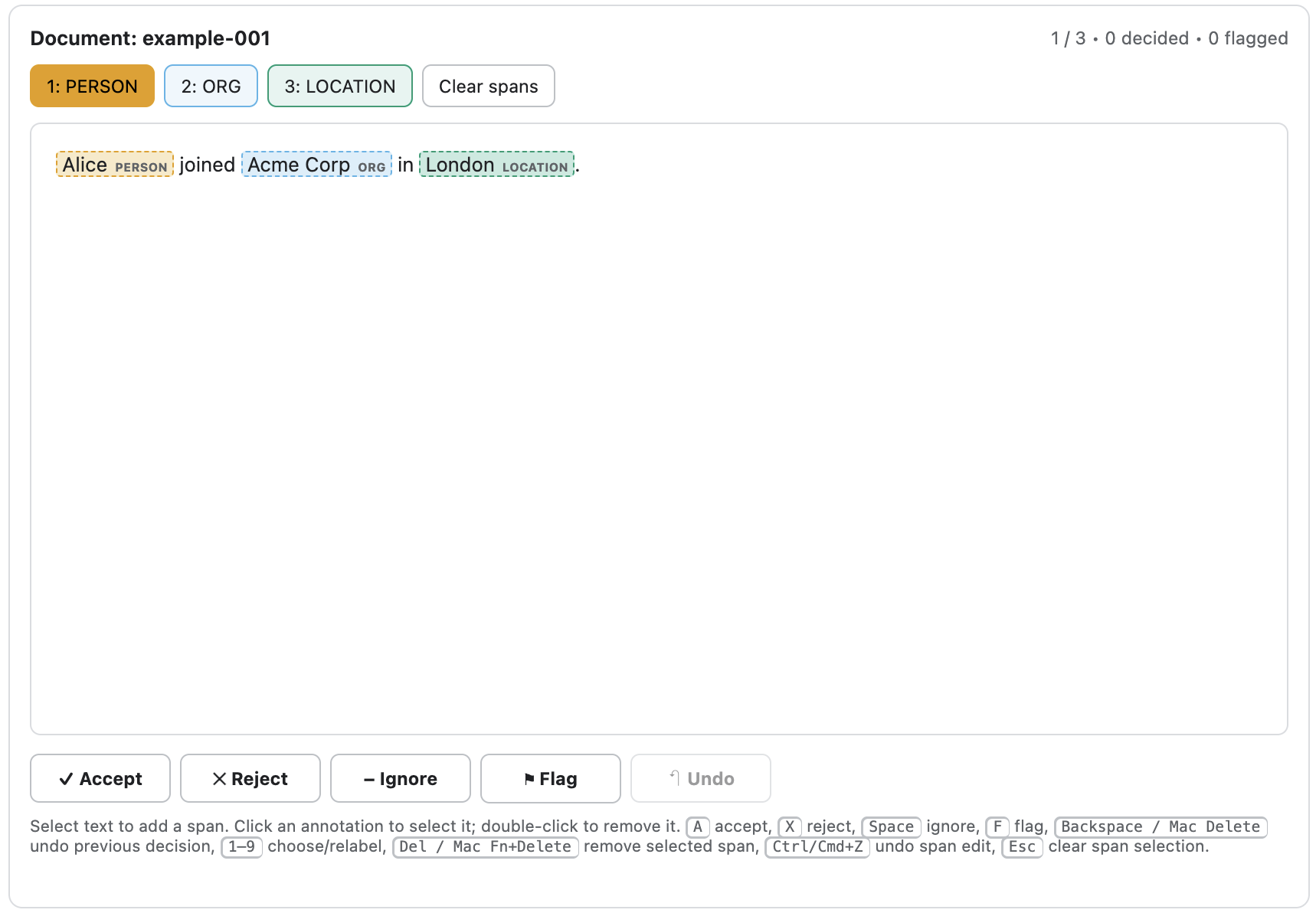
|
|
41
48
|
|
|
42
49
|
## Table of contents
|
|
43
50
|
|
|
51
|
+
- [Background](#background)
|
|
44
52
|
- [Installation](#installation)
|
|
45
53
|
- [Usage](#usage)
|
|
46
|
-
- [Use cases](#use-cases)
|
|
47
|
-
- [Related tools](#related-tools)
|
|
48
54
|
- [Compatibility and versioning](#compatibility-and-versioning)
|
|
49
55
|
- [Acknowledgements](#acknowledgements)
|
|
50
56
|
- [Contributing](#contributing)
|
|
51
57
|
- [License](#license)
|
|
52
58
|
|
|
59
|
+
## Background
|
|
60
|
+
|
|
61
|
+
Human-verified datasets of labelled, character-based spans over document text are needed for the training and evaluation of **span recognition** tasks such as
|
|
62
|
+
|
|
63
|
+
- **Named entity recognition (NER)** — people, organizations, locations, products, dates, and other entity mentions
|
|
64
|
+
- **PII and sensitive-data annotation** — names, addresses, account identifiers, phone numbers, email addresses, and spans for redaction datasets
|
|
65
|
+
- **Keyphrase, terminology, and concept extraction** — domain terms in technical, legal, biomedical, financial, or product text
|
|
66
|
+
- **Slot and field extraction** — destinations, dates, quantities, order numbers, product names, and similar values in conversational or transactional text
|
|
67
|
+
- **Event-trigger and mention detection** — the exact text that expresses an event or concept
|
|
68
|
+
|
|
69
|
+
But most established tools for making such annotations are full web applications.
|
|
70
|
+
Using one usually means installing and running a server, setting up a project, converting your documents into its import format, and converting its exports back again afterwards.
|
|
71
|
+
That overhead suits a large team project, but it is heavy for someone who wants to review a few hundred model outputs or build a small evaluation set.
|
|
72
|
+
|
|
73
|
+
spanmark is a span-annotation widget that runs in notebook environments such as Jupyter.
|
|
74
|
+
Annotations can be made from scratch, or model suggestions can be preloaded to be accepted, removed, relabelled, or added to.
|
|
75
|
+
It installs with pip into the notebook's environment and needs no server, database, or user accounts.
|
|
76
|
+
Documents go in as Python dictionaries or JSONL, and annotations come out as JSONL with the original records preserved.
|
|
77
|
+
|
|
78
|
+
### Related tools
|
|
79
|
+
|
|
80
|
+
- [Label Studio](https://labelstud.io/) is a general-purpose data labelling platform across text and other modalities
|
|
81
|
+
- [doccano](https://github.com/doccano/doccano) is an open-source collaborative text annotation tool for tasks including text classification and named entity recognition
|
|
82
|
+
- [INCEpTION](https://inception-project.github.io/) is a collaborative text annotation platform with configurable span, relation, and chain layers plus curation workflows
|
|
83
|
+
- [brat](https://brat.nlplab.org/) is a web-based tool for structured text annotation for spans, relations, events, and attributes
|
|
84
|
+
- [Prodigy](https://prodi.gy/) is commercial NLP annotation software with named-entity, overlapping-span, classification, relation, and model-assisted workflows
|
|
85
|
+
|
|
53
86
|
## Installation
|
|
54
87
|
|
|
55
|
-
`spanmark` requires Python 3.
|
|
88
|
+
`spanmark` requires Python 3.11 or later (see [compatibility and versioning](#compatibility-and-versioning)).
|
|
56
89
|
|
|
57
90
|
Install the latest release from [PyPI](https://pypi.org/project/spanmark/):
|
|
58
91
|
|
|
@@ -175,19 +208,19 @@ Prepare a sequence of documents:
|
|
|
175
208
|
|
|
176
209
|
```python
|
|
177
210
|
{
|
|
178
|
-
|
|
179
|
-
|
|
180
|
-
|
|
181
|
-
|
|
182
|
-
|
|
183
|
-
|
|
184
|
-
|
|
185
|
-
|
|
186
|
-
|
|
187
|
-
|
|
188
|
-
|
|
189
|
-
|
|
190
|
-
|
|
211
|
+
"id": "doc-1",
|
|
212
|
+
"text": "Alice joined Acme.",
|
|
213
|
+
"meta": {
|
|
214
|
+
"source": "demo",
|
|
215
|
+
},
|
|
216
|
+
"suggestions": [
|
|
217
|
+
{
|
|
218
|
+
"start": 0,
|
|
219
|
+
"end": 5,
|
|
220
|
+
"label": "PERSON",
|
|
221
|
+
"score": 0.97,
|
|
222
|
+
}
|
|
223
|
+
],
|
|
191
224
|
}
|
|
192
225
|
```
|
|
193
226
|
|
|
@@ -289,7 +322,7 @@ The output JSONL contains one document record per line, for example:
|
|
|
289
322
|
{"start": 13, "end": 17, "label": "ORG", "source": "user"}
|
|
290
323
|
],
|
|
291
324
|
"answer": "accept",
|
|
292
|
-
"flagged": false
|
|
325
|
+
"flagged": false,
|
|
293
326
|
}
|
|
294
327
|
}
|
|
295
328
|
```
|
|
@@ -377,26 +410,6 @@ session.save()
|
|
|
377
410
|
Normal session close and workflow completion also checkpoint.
|
|
378
411
|
If the process is interrupted before that happens, keep the hidden autosave file beside the JSONL so spanmark can recover it on the next open.
|
|
379
412
|
|
|
380
|
-
## Use cases
|
|
381
|
-
|
|
382
|
-
spanmark helps you to make a human-verified dataset of labelled, character-based spans over document text.
|
|
383
|
-
Such datasets are needed for the training and evaluation of **span recognition** tasks such as
|
|
384
|
-
|
|
385
|
-
- **Named entity recognition (NER)** — people, organizations, locations, products, dates, and other entity mentions
|
|
386
|
-
- **PII and sensitive-data annotation** — names, addresses, account identifiers, phone numbers, email addresses, and spans for redaction datasets
|
|
387
|
-
- **Keyphrase, terminology, and concept extraction** — domain terms in technical, legal, biomedical, financial, or product text
|
|
388
|
-
- **Slot and field extraction** — destinations, dates, quantities, order numbers, product names, and similar values in conversational or transactional text
|
|
389
|
-
- **Event-trigger and mention detection** — the exact text that expresses an event or concept
|
|
390
|
-
- **Model correction and human-in-the-loop review** — preload model suggestions, then accept, remove, relabel, or supplement them
|
|
391
|
-
|
|
392
|
-
## Related tools
|
|
393
|
-
|
|
394
|
-
- [Label Studio](https://labelstud.io/) is a general-purpose data labeling across text and other modalities
|
|
395
|
-
- [doccano](https://github.com/doccano/doccano) is an open-source collaborative text annotation for tasks including text classification and named entity recognition
|
|
396
|
-
- [INCEpTION](https://inception-project.github.io/) is a collaborative text annotation with configurable span, relation, and chain layers plus curation workflows
|
|
397
|
-
- [brat](https://brat.nlplab.org/) is a web-based structured text annotation for spans, relations, events, and attributes
|
|
398
|
-
- [Prodigy](https://prodi.gy/) is a commercial NLP annotation software with named-entity, overlapping-span, classification, relation, and model-assisted workflows
|
|
399
|
-
|
|
400
413
|
## Compatibility and versioning
|
|
401
414
|
|
|
402
415
|
### Package versioning
|
|
@@ -414,13 +427,13 @@ For releases before `1.0.0`, the public API should be considered under developme
|
|
|
414
427
|
|
|
415
428
|
### Python-version compatibility
|
|
416
429
|
|
|
417
|
-
This project supports Python feature releases from their official final release until their official end-of-life
|
|
430
|
+
This project supports Python feature releases from their official final release until their [official end-of-life](https://devguide.python.org/versions/).
|
|
418
431
|
|
|
419
432
|
Support for a new Python feature release is generally introduced in the first minor release of this project following the upstream Python release.
|
|
420
433
|
Python feature releases may be dropped once they reach the end of their upstream support cycle.
|
|
421
434
|
The currently supported Python versions are declared in the package metadata.
|
|
422
435
|
|
|
423
|
-
Dropping an
|
|
436
|
+
Dropping an end-of-life Python version is considered a change to the supported runtime environment rather than a backwards-incompatible change to this project's public API, and therefore does not by itself require a new major release.
|
|
424
437
|
|
|
425
438
|
## Acknowledgements
|
|
426
439
|
|
|
@@ -1,25 +1,58 @@
|
|
|
1
1
|
# spanmark
|
|
2
2
|
|
|
3
|
-
|
|
3
|
+
[](https://github.com/pdhall99/spanmark/actions/workflows/ci.yml)
|
|
4
|
+
[](https://pypi.org/project/spanmark/)
|
|
5
|
+
[](https://pypi.org/project/spanmark/)
|
|
6
|
+
[](https://github.com/pdhall99/spanmark/blob/main/LICENSE)
|
|
4
7
|
|
|
5
|
-
|
|
8
|
+
Annotate text datasets with labelled spans in Jupyter and other notebook environments.
|
|
6
9
|
|
|
7
|
-
|
|
10
|
+
spanmark shows one document at a time, allowing you to add, remove, or relabel spans and then accept, reject, or ignore the document.
|
|
11
|
+
Every change is autosaved to JSONL, so annotation can stop and resume across sessions without losing work.
|
|
12
|
+
It runs in Jupyter Notebook, JupyterLab, VS Code, Google Colab, marimo, and other [anywidget](https://anywidget.dev/)-compatible environments.
|
|
13
|
+
|
|
14
|
+

|
|
8
15
|
|
|
9
16
|
## Table of contents
|
|
10
17
|
|
|
18
|
+
- [Background](#background)
|
|
11
19
|
- [Installation](#installation)
|
|
12
20
|
- [Usage](#usage)
|
|
13
|
-
- [Use cases](#use-cases)
|
|
14
|
-
- [Related tools](#related-tools)
|
|
15
21
|
- [Compatibility and versioning](#compatibility-and-versioning)
|
|
16
22
|
- [Acknowledgements](#acknowledgements)
|
|
17
23
|
- [Contributing](#contributing)
|
|
18
24
|
- [License](#license)
|
|
19
25
|
|
|
26
|
+
## Background
|
|
27
|
+
|
|
28
|
+
Human-verified datasets of labelled, character-based spans over document text are needed for the training and evaluation of **span recognition** tasks such as
|
|
29
|
+
|
|
30
|
+
- **Named entity recognition (NER)** — people, organizations, locations, products, dates, and other entity mentions
|
|
31
|
+
- **PII and sensitive-data annotation** — names, addresses, account identifiers, phone numbers, email addresses, and spans for redaction datasets
|
|
32
|
+
- **Keyphrase, terminology, and concept extraction** — domain terms in technical, legal, biomedical, financial, or product text
|
|
33
|
+
- **Slot and field extraction** — destinations, dates, quantities, order numbers, product names, and similar values in conversational or transactional text
|
|
34
|
+
- **Event-trigger and mention detection** — the exact text that expresses an event or concept
|
|
35
|
+
|
|
36
|
+
But most established tools for making such annotations are full web applications.
|
|
37
|
+
Using one usually means installing and running a server, setting up a project, converting your documents into its import format, and converting its exports back again afterwards.
|
|
38
|
+
That overhead suits a large team project, but it is heavy for someone who wants to review a few hundred model outputs or build a small evaluation set.
|
|
39
|
+
|
|
40
|
+
spanmark is a span-annotation widget that runs in notebook environments such as Jupyter.
|
|
41
|
+
Annotations can be made from scratch, or model suggestions can be preloaded to be accepted, removed, relabelled, or added to.
|
|
42
|
+
It installs with pip into the notebook's environment and needs no server, database, or user accounts.
|
|
43
|
+
Documents go in as Python dictionaries or JSONL, and annotations come out as JSONL with the original records preserved.
|
|
44
|
+
|
|
45
|
+
### Related tools
|
|
46
|
+
|
|
47
|
+
- [Label Studio](https://labelstud.io/) is a general-purpose data labelling platform across text and other modalities
|
|
48
|
+
- [doccano](https://github.com/doccano/doccano) is an open-source collaborative text annotation tool for tasks including text classification and named entity recognition
|
|
49
|
+
- [INCEpTION](https://inception-project.github.io/) is a collaborative text annotation platform with configurable span, relation, and chain layers plus curation workflows
|
|
50
|
+
- [brat](https://brat.nlplab.org/) is a web-based tool for structured text annotation for spans, relations, events, and attributes
|
|
51
|
+
- [Prodigy](https://prodi.gy/) is commercial NLP annotation software with named-entity, overlapping-span, classification, relation, and model-assisted workflows
|
|
52
|
+
|
|
20
53
|
## Installation
|
|
21
54
|
|
|
22
|
-
`spanmark` requires Python 3.
|
|
55
|
+
`spanmark` requires Python 3.11 or later (see [compatibility and versioning](#compatibility-and-versioning)).
|
|
23
56
|
|
|
24
57
|
Install the latest release from [PyPI](https://pypi.org/project/spanmark/):
|
|
25
58
|
|
|
@@ -142,19 +175,19 @@ Prepare a sequence of documents:
|
|
|
142
175
|
|
|
143
176
|
```python
|
|
144
177
|
{
|
|
145
|
-
|
|
146
|
-
|
|
147
|
-
|
|
148
|
-
|
|
149
|
-
|
|
150
|
-
|
|
151
|
-
|
|
152
|
-
|
|
153
|
-
|
|
154
|
-
|
|
155
|
-
|
|
156
|
-
|
|
157
|
-
|
|
178
|
+
"id": "doc-1",
|
|
179
|
+
"text": "Alice joined Acme.",
|
|
180
|
+
"meta": {
|
|
181
|
+
"source": "demo",
|
|
182
|
+
},
|
|
183
|
+
"suggestions": [
|
|
184
|
+
{
|
|
185
|
+
"start": 0,
|
|
186
|
+
"end": 5,
|
|
187
|
+
"label": "PERSON",
|
|
188
|
+
"score": 0.97,
|
|
189
|
+
}
|
|
190
|
+
],
|
|
158
191
|
}
|
|
159
192
|
```
|
|
160
193
|
|
|
@@ -256,7 +289,7 @@ The output JSONL contains one document record per line, for example:
|
|
|
256
289
|
{"start": 13, "end": 17, "label": "ORG", "source": "user"}
|
|
257
290
|
],
|
|
258
291
|
"answer": "accept",
|
|
259
|
-
"flagged": false
|
|
292
|
+
"flagged": false,
|
|
260
293
|
}
|
|
261
294
|
}
|
|
262
295
|
```
|
|
@@ -344,26 +377,6 @@ session.save()
|
|
|
344
377
|
Normal session close and workflow completion also checkpoint.
|
|
345
378
|
If the process is interrupted before that happens, keep the hidden autosave file beside the JSONL so spanmark can recover it on the next open.
|
|
346
379
|
|
|
347
|
-
## Use cases
|
|
348
|
-
|
|
349
|
-
spanmark helps you to make a human-verified dataset of labelled, character-based spans over document text.
|
|
350
|
-
Such datasets are needed for the training and evaluation of **span recognition** tasks such as
|
|
351
|
-
|
|
352
|
-
- **Named entity recognition (NER)** — people, organizations, locations, products, dates, and other entity mentions
|
|
353
|
-
- **PII and sensitive-data annotation** — names, addresses, account identifiers, phone numbers, email addresses, and spans for redaction datasets
|
|
354
|
-
- **Keyphrase, terminology, and concept extraction** — domain terms in technical, legal, biomedical, financial, or product text
|
|
355
|
-
- **Slot and field extraction** — destinations, dates, quantities, order numbers, product names, and similar values in conversational or transactional text
|
|
356
|
-
- **Event-trigger and mention detection** — the exact text that expresses an event or concept
|
|
357
|
-
- **Model correction and human-in-the-loop review** — preload model suggestions, then accept, remove, relabel, or supplement them
|
|
358
|
-
|
|
359
|
-
## Related tools
|
|
360
|
-
|
|
361
|
-
- [Label Studio](https://labelstud.io/) is a general-purpose data labeling across text and other modalities
|
|
362
|
-
- [doccano](https://github.com/doccano/doccano) is an open-source collaborative text annotation for tasks including text classification and named entity recognition
|
|
363
|
-
- [INCEpTION](https://inception-project.github.io/) is a collaborative text annotation with configurable span, relation, and chain layers plus curation workflows
|
|
364
|
-
- [brat](https://brat.nlplab.org/) is a web-based structured text annotation for spans, relations, events, and attributes
|
|
365
|
-
- [Prodigy](https://prodi.gy/) is a commercial NLP annotation software with named-entity, overlapping-span, classification, relation, and model-assisted workflows
|
|
366
|
-
|
|
367
380
|
## Compatibility and versioning
|
|
368
381
|
|
|
369
382
|
### Package versioning
|
|
@@ -381,13 +394,13 @@ For releases before `1.0.0`, the public API should be considered under developme
|
|
|
381
394
|
|
|
382
395
|
### Python-version compatibility
|
|
383
396
|
|
|
384
|
-
This project supports Python feature releases from their official final release until their official end-of-life
|
|
397
|
+
This project supports Python feature releases from their official final release until their [official end-of-life](https://devguide.python.org/versions/).
|
|
385
398
|
|
|
386
399
|
Support for a new Python feature release is generally introduced in the first minor release of this project following the upstream Python release.
|
|
387
400
|
Python feature releases may be dropped once they reach the end of their upstream support cycle.
|
|
388
401
|
The currently supported Python versions are declared in the package metadata.
|
|
389
402
|
|
|
390
|
-
Dropping an
|
|
403
|
+
Dropping an end-of-life Python version is considered a change to the supported runtime environment rather than a backwards-incompatible change to this project's public API, and therefore does not by itself require a new major release.
|
|
391
404
|
|
|
392
405
|
## Acknowledgements
|
|
393
406
|
|
|
@@ -0,0 +1,36 @@
|
|
|
1
|
+
# Changelog
|
|
2
|
+
|
|
3
|
+
## [Unreleased]
|
|
4
|
+
|
|
5
|
+
## [0.2.0] - 2026-11-24
|
|
6
|
+
|
|
7
|
+
### Added
|
|
8
|
+
|
|
9
|
+
- Support for Python 3.15
|
|
10
|
+
- `Import-Name` package metadata ([PEP 794](https://peps.python.org/pep-0794/)), declaring `spanmark` as the import name
|
|
11
|
+
- `py.typed` marker, so type checkers use the package's type annotations
|
|
12
|
+
|
|
13
|
+
### Changed
|
|
14
|
+
|
|
15
|
+
- Package description and README
|
|
16
|
+
|
|
17
|
+
### Removed
|
|
18
|
+
|
|
19
|
+
- Support for Python 3.10, making Python 3.11 the minimum supported version
|
|
20
|
+
|
|
21
|
+
## [0.1.1] - 2026-09-10
|
|
22
|
+
|
|
23
|
+
### Fixed
|
|
24
|
+
|
|
25
|
+
- Image in PyPI README
|
|
26
|
+
|
|
27
|
+
## [0.1.0] - 2026-09-10
|
|
28
|
+
|
|
29
|
+
### Added
|
|
30
|
+
|
|
31
|
+
- Initial public release
|
|
32
|
+
|
|
33
|
+
[Unreleased]: https://github.com/pdhall99/spanmark/compare/0.2.0...HEAD
|
|
34
|
+
[0.2.0]: https://github.com/pdhall99/spanmark/compare/0.1.1...0.2.0
|
|
35
|
+
[0.1.1]: https://github.com/pdhall99/spanmark/compare/0.1.0...0.1.1
|
|
36
|
+
[0.1.0]: https://github.com/pdhall99/spanmark/releases/tag/0.1.0
|