s3rds 0.2.0__tar.gz → 0.3.0__tar.gz
This diff represents the content of publicly available package versions that have been released to one of the supported registries. The information contained in this diff is provided for informational purposes only and reflects changes between package versions as they appear in their respective public registries.
- {s3rds-0.2.0 → s3rds-0.3.0}/PKG-INFO +50 -12
- {s3rds-0.2.0 → s3rds-0.3.0}/README.md +44 -9
- {s3rds-0.2.0 → s3rds-0.3.0}/pyproject.toml +10 -5
- {s3rds-0.2.0 → s3rds-0.3.0}/s3rds/__init__.py +4 -2
- s3rds-0.3.0/s3rds/psycopg2/__init__.py +276 -0
- s3rds-0.3.0/s3rds/psycopg2/errors.py +31 -0
- s3rds-0.3.0/s3rds/psycopg2/extensions.py +19 -0
- s3rds-0.3.0/s3rds/psycopg2/extras.py +53 -0
- {s3rds-0.2.0 → s3rds-0.3.0}/s3rds/pymysql.py +3 -0
- s3rds-0.2.0/s3rds/sqlite.py → s3rds-0.3.0/s3rds/sqlite/__init__.py +100 -46
- s3rds-0.3.0/s3rds/sqlite/base.py +248 -0
- {s3rds-0.2.0 → s3rds-0.3.0}/s3rds.egg-info/PKG-INFO +50 -12
- {s3rds-0.2.0 → s3rds-0.3.0}/s3rds.egg-info/SOURCES.txt +7 -3
- {s3rds-0.2.0 → s3rds-0.3.0}/s3rds.egg-info/requires.txt +3 -0
- s3rds-0.2.0/s3rds/psycopg2.py +0 -22
- {s3rds-0.2.0 → s3rds-0.3.0}/s3rds.egg-info/dependency_links.txt +0 -0
- {s3rds-0.2.0 → s3rds-0.3.0}/s3rds.egg-info/entry_points.txt +0 -0
- {s3rds-0.2.0 → s3rds-0.3.0}/s3rds.egg-info/top_level.txt +0 -0
- {s3rds-0.2.0 → s3rds-0.3.0}/setup.cfg +0 -0
|
@@ -1,7 +1,7 @@
|
|
|
1
1
|
Metadata-Version: 2.4
|
|
2
2
|
Name: s3rds
|
|
3
|
-
Version: 0.
|
|
4
|
-
Summary: A truly serverless RDS on your own AWS account: Lambda URL endpoint, SQLite on S3, ≈ $0 when idle. Drivers named after the standard clients: s3rds.sqlite, s3rds.pymysql; SQLAlchemy via sqlite+s3rds
|
|
3
|
+
Version: 0.3.0
|
|
4
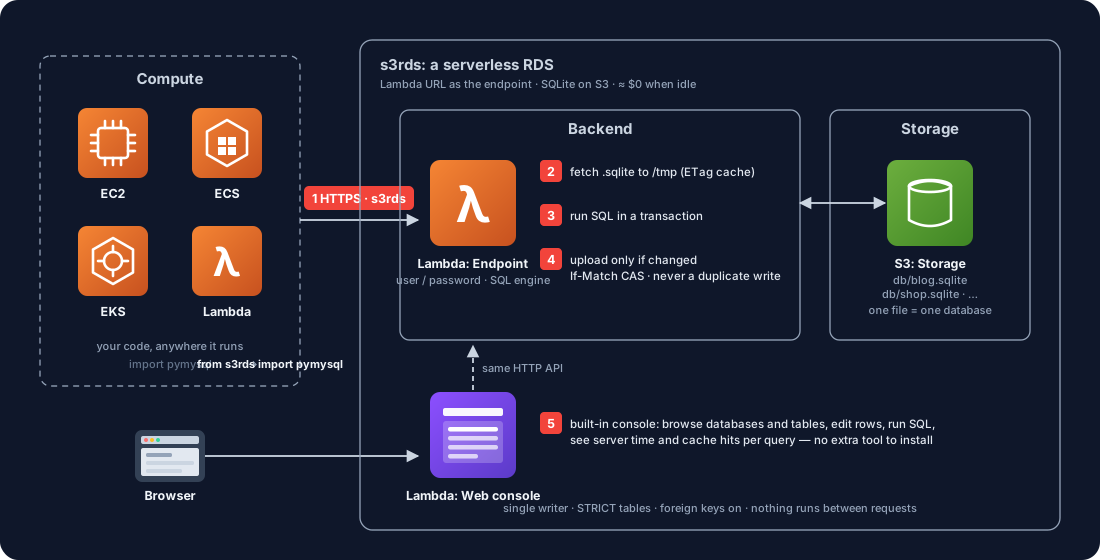
|
+
Summary: A truly serverless RDS on your own AWS account: Lambda URL endpoint, SQLite on S3, ≈ $0 when idle. Drivers named after the standard clients: s3rds.sqlite, s3rds.pymysql, s3rds.psycopg2; SQLAlchemy via sqlite+s3rds://, Django via ENGINE s3rds.sqlite.
|
|
5
5
|
Author: Frank Zhang
|
|
6
6
|
License: MIT
|
|
7
7
|
Project-URL: Homepage, https://github.com/cloudformer/s3rds
|
|
@@ -10,13 +10,14 @@ Project-URL: Deploy, https://github.com/cloudformer/s3rds#quick-start
|
|
|
10
10
|
Project-URL: Compatibility, https://github.com/cloudformer/s3rds/blob/main/tests/compat/REPORT.md
|
|
11
11
|
Project-URL: Changelog, https://github.com/cloudformer/s3rds/blob/main/CHANGELOG.md
|
|
12
12
|
Project-URL: Issues, https://github.com/cloudformer/s3rds/issues
|
|
13
|
-
Keywords: serverless,rds,sqlite,s3,lambda,database,pymysql,dbapi,sqlalchemy
|
|
13
|
+
Keywords: serverless,rds,sqlite,s3,lambda,database,pymysql,psycopg2,postgresql,dbapi,sqlalchemy,django
|
|
14
14
|
Classifier: Development Status :: 3 - Alpha
|
|
15
15
|
Classifier: Intended Audience :: Developers
|
|
16
16
|
Classifier: License :: OSI Approved :: MIT License
|
|
17
17
|
Classifier: Programming Language :: Python :: 3
|
|
18
18
|
Classifier: Programming Language :: Python :: 3.9
|
|
19
19
|
Classifier: Programming Language :: Python :: 3.13
|
|
20
|
+
Classifier: Framework :: Django
|
|
20
21
|
Classifier: Topic :: Database
|
|
21
22
|
Classifier: Topic :: Database :: Front-Ends
|
|
22
23
|
Requires-Python: >=3.9
|
|
@@ -25,19 +26,42 @@ Requires-Dist: sqlglot<31,>=30.24
|
|
|
25
26
|
Provides-Extra: mysql
|
|
26
27
|
Provides-Extra: sqlalchemy
|
|
27
28
|
Requires-Dist: SQLAlchemy<2.1,>=2.0; extra == "sqlalchemy"
|
|
29
|
+
Provides-Extra: django
|
|
30
|
+
Requires-Dist: Django<6.2,>=6.1; extra == "django"
|
|
28
31
|
|
|
29
32
|
# s3rds
|
|
30
33
|
|
|
34
|
+
|
|
35
|
+
|
|
36
|
+
### Switch to s3rds — the only change
|
|
37
|
+
|
|
38
|
+
| Your code uses | Before | With s3rds — **the only change** | What really differs |
|
|
39
|
+
|---|---|---|---|
|
|
40
|
+
| **sqlite3** | `import sqlite3`<br>`sqlite3.connect("app.db")` | `from s3rds import sqlite`<br>`sqlite.connect(host=URL, user=…, password=…, database="app")` | the file lives on S3 behind HTTPS; `create_function` is refused |
|
|
41
|
+
| **pymysql** | `import pymysql` | `from s3rds import pymysql` | MySQL is translated to SQLite on the client; no locks, procedures, triggers |
|
|
42
|
+
| **SQLAlchemy** | `create_engine("sqlite:///app.db")` | `create_engine("sqlite+s3rds://user:pw@URL/app")` | Core and ORM unchanged; `regexp_match` is refused |
|
|
43
|
+
| **Django** | `"ENGINE": "django.db.backends.sqlite3"` | `"ENGINE": "s3rds.sqlite"` + `HOST` / `USER` / `PASSWORD` | `__regex`, time-zone conversion in queries, `order_by("?")` are refused; run tests on sqlite3 |
|
|
44
|
+
| **psycopg2** | `import psycopg2` | `from s3rds import psycopg2` | PostgreSQL is translated to SQLite on the client; `.extras` / `.errors` as psycopg2's; no locks, functions, sequences, arrays; BOOLEAN comes back as 1 / 0 |
|
|
45
|
+
|
|
46
|
+
Everything else stays: models, queries, cursors, transactions. For all of them: one writer at a time, every commit
|
|
47
|
+
uploads the whole file (a few hundred ms), so keep a database under ~20 MB. Moving to RDS later is the same change
|
|
48
|
+
backwards (`import pymysql`, `mysql+pymysql://`, `django.db.backends.mysql`). Refused features raise
|
|
49
|
+
`NotSupportedError` — never silently different.
|
|
50
|
+
|
|
51
|
+
### The server: deploy once, ≈ $0 when idle
|
|
52
|
+
|
|
53
|
+
You need an s3rds server in your own AWS account — a Lambda Function URL and an S3 bucket, nothing running
|
|
54
|
+
while nobody uses it. Deploy it once with Terraform or CloudFormation from the
|
|
55
|
+
[main repository](https://github.com/cloudformer/s3rds#quick-start). Same as any driver needs its database.
|
|
56
|
+
|
|
31
57
|
**Python drivers for [s3rds](https://github.com/cloudformer/s3rds) — a truly serverless RDS:
|
|
32
58
|
a Lambda URL as your database endpoint, SQLite on S3, ≈ $0 when idle.**
|
|
33
59
|
|
|
34
|
-

|
|
35
|
-
|
|
36
60
|
One install, one dependency (sqlglot, used only by `s3rds.pymysql`). Each driver is a submodule **named after the standard
|
|
37
61
|
client it mirrors**, so moving to a real database is a one-line import change and nothing else:
|
|
38
62
|
|
|
39
63
|
```bash
|
|
40
|
-
pip install s3rds # s3rds.sqlite, s3rds.pymysql, sqlite+s3rds:// for SQLAlchemy
|
|
64
|
+
pip install s3rds # s3rds.sqlite, s3rds.pymysql, sqlite+s3rds:// for SQLAlchemy, ENGINE s3rds.sqlite for Django
|
|
41
65
|
```
|
|
42
66
|
|
|
43
67
|
```python
|
|
@@ -66,8 +90,9 @@ conn.transaction([ # all-or-nothing, single S3 w
|
|
|
66
90
|
|---|---|---|---|
|
|
67
91
|
| `s3rds.sqlite` | SQLite (no translation) | pymysql-shaped API | available |
|
|
68
92
|
| `s3rds.pymysql` | MySQL, translated on the client | pymysql | available |
|
|
69
|
-
| `s3rds.psycopg2` | PostgreSQL | psycopg2
|
|
93
|
+
| `s3rds.psycopg2` | PostgreSQL, translated on the client | psycopg2 (`extras`, `errors`, `extensions`) | available |
|
|
70
94
|
| `sqlite+s3rds://` | SQLite, written by SQLAlchemy | SQLAlchemy Core / ORM | available — the URL is the only change |
|
|
95
|
+
| `ENGINE: "s3rds.sqlite"` | SQLite, written by Django | Django's SQLite backend | available — the database settings are the only change |
|
|
71
96
|
|
|
72
97
|
**SQLAlchemy** (Core and ORM): only the URL changes — SQLAlchemy's own SQLite dialect writes the SQL,
|
|
73
98
|
`s3rds.sqlite` replaces the standard library's `sqlite3` underneath.
|
|
@@ -76,6 +101,21 @@ conn.transaction([ # all-or-nothing, single S3 w
|
|
|
76
101
|
engine = create_engine("sqlite+s3rds://admin:...@xxxx.lambda-url.us-east-2.on.aws/blog")
|
|
77
102
|
```
|
|
78
103
|
|
|
104
|
+
**Django**: Django's own SQLite backend writes the SQL; `atomic()`, savepoints and `migrate` work.
|
|
105
|
+
|
|
106
|
+
```python
|
|
107
|
+
DATABASES = {"default": {
|
|
108
|
+
"ENGINE": "s3rds.sqlite", # was "django.db.backends.sqlite3"
|
|
109
|
+
"NAME": "blog", "HOST": "xxxx.lambda-url.us-east-2.on.aws", "USER": "admin", "PASSWORD": "...",
|
|
110
|
+
}}
|
|
111
|
+
```
|
|
112
|
+
|
|
113
|
+
Django's SQLite backend registers Python functions on the connection; its date functions (`__year`, `__date`,
|
|
114
|
+
`Trunc`, `Extract`) are written in SQLite's `strftime()` instead, the rest raise `NotSupportedError`: time-zone
|
|
115
|
+
conversion in queries (keep `TIME_ZONE` equal to the connection's), `__regex`, `MD5` / `SHA*`, `LPad` / `Repeat` /
|
|
116
|
+
`Reverse`, `order_by("?")`, `StdDev` / `Variance`, date arithmetic in the query. Run `manage.py test` on
|
|
117
|
+
`django.db.backends.sqlite3`.
|
|
118
|
+
|
|
79
119
|
## Semantics
|
|
80
120
|
|
|
81
121
|
- **Transactions**: by default each `execute()` is its own transaction and is durable in S3 when it
|
|
@@ -83,7 +123,8 @@ engine = create_engine("sqlite+s3rds://admin:...@xxxx.lambda-url.us-east-2.on.aw
|
|
|
83
123
|
ran** — it warns if anything was written since the last `commit()` (and stays silent otherwise, so
|
|
84
124
|
pools may call it freely). For all-or-nothing writes use `transaction([...])`, which runs several
|
|
85
125
|
statements as one commit and one S3 write.
|
|
86
|
-
- `s3rds.sqlite.connect(..., autocommit=False)` (what SQLAlchemy uses)
|
|
126
|
+
- `s3rds.sqlite.connect(..., autocommit=False)` (what SQLAlchemy uses) and a `BEGIN` statement (Django's
|
|
127
|
+
`atomic()`) give sqlite3's transactions: reads see
|
|
87
128
|
the transaction's own uncommitted writes, `commit()` writes S3 once, `rollback()` discards. If another
|
|
88
129
|
writer commits first, the transaction raises `OperationalError` instead of overwriting: run it again.
|
|
89
130
|
Keep transactions short — each statement replays the writes before it on the server.
|
|
@@ -105,9 +146,6 @@ What the report was verified with; the full report: [REPORT.md](https://github.c
|
|
|
105
146
|
| SQLite (server engine) | 3.50.4, shipped in the Lambda zip (the runtime's own is 3.40.0) | `src/db/requirements.txt`: `sqlean.py==3.50.4.5` |
|
|
106
147
|
| sqlglot (MySQL translation) | 30.24 | dependency `sqlglot>=30.24,<31` |
|
|
107
148
|
| SQLAlchemy | 2.0, tested on 2.0.55 | extra `pip install "s3rds[sqlalchemy]"` = `SQLAlchemy>=2.0,<2.1` |
|
|
149
|
+
| Django | 6.1, tested on 6.1.2 (Python ≥ 3.12) | extra `pip install "s3rds[django]"` = `Django>=6.1,<6.2` |
|
|
108
150
|
| MySQL (reference) | 8.0.46 in Docker | `tests/compat/docker-compose.yml`: `mysql:8.0.46` |
|
|
109
151
|
|
|
110
|
-
## Server
|
|
111
|
-
|
|
112
|
-
You need an s3rds server in your own AWS account — deploy it once with Terraform or CloudFormation
|
|
113
|
-
from the [main repository](https://github.com/cloudformer/s3rds). Same as any driver needs its database.
|
|
@@ -1,15 +1,36 @@
|
|
|
1
1
|
# s3rds
|
|
2
2
|
|
|
3
|
+

|
|
4
|
+
|
|
5
|
+
### Switch to s3rds — the only change
|
|
6
|
+
|
|
7
|
+
| Your code uses | Before | With s3rds — **the only change** | What really differs |
|
|
8
|
+
|---|---|---|---|
|
|
9
|
+
| **sqlite3** | `import sqlite3`<br>`sqlite3.connect("app.db")` | `from s3rds import sqlite`<br>`sqlite.connect(host=URL, user=…, password=…, database="app")` | the file lives on S3 behind HTTPS; `create_function` is refused |
|
|
10
|
+
| **pymysql** | `import pymysql` | `from s3rds import pymysql` | MySQL is translated to SQLite on the client; no locks, procedures, triggers |
|
|
11
|
+
| **SQLAlchemy** | `create_engine("sqlite:///app.db")` | `create_engine("sqlite+s3rds://user:pw@URL/app")` | Core and ORM unchanged; `regexp_match` is refused |
|
|
12
|
+
| **Django** | `"ENGINE": "django.db.backends.sqlite3"` | `"ENGINE": "s3rds.sqlite"` + `HOST` / `USER` / `PASSWORD` | `__regex`, time-zone conversion in queries, `order_by("?")` are refused; run tests on sqlite3 |
|
|
13
|
+
| **psycopg2** | `import psycopg2` | `from s3rds import psycopg2` | PostgreSQL is translated to SQLite on the client; `.extras` / `.errors` as psycopg2's; no locks, functions, sequences, arrays; BOOLEAN comes back as 1 / 0 |
|
|
14
|
+
|
|
15
|
+
Everything else stays: models, queries, cursors, transactions. For all of them: one writer at a time, every commit
|
|
16
|
+
uploads the whole file (a few hundred ms), so keep a database under ~20 MB. Moving to RDS later is the same change
|
|
17
|
+
backwards (`import pymysql`, `mysql+pymysql://`, `django.db.backends.mysql`). Refused features raise
|
|
18
|
+
`NotSupportedError` — never silently different.
|
|
19
|
+
|
|
20
|
+
### The server: deploy once, ≈ $0 when idle
|
|
21
|
+
|
|
22
|
+
You need an s3rds server in your own AWS account — a Lambda Function URL and an S3 bucket, nothing running
|
|
23
|
+
while nobody uses it. Deploy it once with Terraform or CloudFormation from the
|
|
24
|
+
[main repository](https://github.com/cloudformer/s3rds#quick-start). Same as any driver needs its database.
|
|
25
|
+
|
|
3
26
|
**Python drivers for [s3rds](https://github.com/cloudformer/s3rds) — a truly serverless RDS:
|
|
4
27
|
a Lambda URL as your database endpoint, SQLite on S3, ≈ $0 when idle.**
|
|
5
28
|
|
|
6
|
-

|
|
7
|
-
|
|
8
29
|
One install, one dependency (sqlglot, used only by `s3rds.pymysql`). Each driver is a submodule **named after the standard
|
|
9
30
|
client it mirrors**, so moving to a real database is a one-line import change and nothing else:
|
|
10
31
|
|
|
11
32
|
```bash
|
|
12
|
-
pip install s3rds # s3rds.sqlite, s3rds.pymysql, sqlite+s3rds:// for SQLAlchemy
|
|
33
|
+
pip install s3rds # s3rds.sqlite, s3rds.pymysql, sqlite+s3rds:// for SQLAlchemy, ENGINE s3rds.sqlite for Django
|
|
13
34
|
```
|
|
14
35
|
|
|
15
36
|
```python
|
|
@@ -38,8 +59,9 @@ conn.transaction([ # all-or-nothing, single S3 w
|
|
|
38
59
|
|---|---|---|---|
|
|
39
60
|
| `s3rds.sqlite` | SQLite (no translation) | pymysql-shaped API | available |
|
|
40
61
|
| `s3rds.pymysql` | MySQL, translated on the client | pymysql | available |
|
|
41
|
-
| `s3rds.psycopg2` | PostgreSQL | psycopg2
|
|
62
|
+
| `s3rds.psycopg2` | PostgreSQL, translated on the client | psycopg2 (`extras`, `errors`, `extensions`) | available |
|
|
42
63
|
| `sqlite+s3rds://` | SQLite, written by SQLAlchemy | SQLAlchemy Core / ORM | available — the URL is the only change |
|
|
64
|
+
| `ENGINE: "s3rds.sqlite"` | SQLite, written by Django | Django's SQLite backend | available — the database settings are the only change |
|
|
43
65
|
|
|
44
66
|
**SQLAlchemy** (Core and ORM): only the URL changes — SQLAlchemy's own SQLite dialect writes the SQL,
|
|
45
67
|
`s3rds.sqlite` replaces the standard library's `sqlite3` underneath.
|
|
@@ -48,6 +70,21 @@ conn.transaction([ # all-or-nothing, single S3 w
|
|
|
48
70
|
engine = create_engine("sqlite+s3rds://admin:...@xxxx.lambda-url.us-east-2.on.aws/blog")
|
|
49
71
|
```
|
|
50
72
|
|
|
73
|
+
**Django**: Django's own SQLite backend writes the SQL; `atomic()`, savepoints and `migrate` work.
|
|
74
|
+
|
|
75
|
+
```python
|
|
76
|
+
DATABASES = {"default": {
|
|
77
|
+
"ENGINE": "s3rds.sqlite", # was "django.db.backends.sqlite3"
|
|
78
|
+
"NAME": "blog", "HOST": "xxxx.lambda-url.us-east-2.on.aws", "USER": "admin", "PASSWORD": "...",
|
|
79
|
+
}}
|
|
80
|
+
```
|
|
81
|
+
|
|
82
|
+
Django's SQLite backend registers Python functions on the connection; its date functions (`__year`, `__date`,
|
|
83
|
+
`Trunc`, `Extract`) are written in SQLite's `strftime()` instead, the rest raise `NotSupportedError`: time-zone
|
|
84
|
+
conversion in queries (keep `TIME_ZONE` equal to the connection's), `__regex`, `MD5` / `SHA*`, `LPad` / `Repeat` /
|
|
85
|
+
`Reverse`, `order_by("?")`, `StdDev` / `Variance`, date arithmetic in the query. Run `manage.py test` on
|
|
86
|
+
`django.db.backends.sqlite3`.
|
|
87
|
+
|
|
51
88
|
## Semantics
|
|
52
89
|
|
|
53
90
|
- **Transactions**: by default each `execute()` is its own transaction and is durable in S3 when it
|
|
@@ -55,7 +92,8 @@ engine = create_engine("sqlite+s3rds://admin:...@xxxx.lambda-url.us-east-2.on.aw
|
|
|
55
92
|
ran** — it warns if anything was written since the last `commit()` (and stays silent otherwise, so
|
|
56
93
|
pools may call it freely). For all-or-nothing writes use `transaction([...])`, which runs several
|
|
57
94
|
statements as one commit and one S3 write.
|
|
58
|
-
- `s3rds.sqlite.connect(..., autocommit=False)` (what SQLAlchemy uses)
|
|
95
|
+
- `s3rds.sqlite.connect(..., autocommit=False)` (what SQLAlchemy uses) and a `BEGIN` statement (Django's
|
|
96
|
+
`atomic()`) give sqlite3's transactions: reads see
|
|
59
97
|
the transaction's own uncommitted writes, `commit()` writes S3 once, `rollback()` discards. If another
|
|
60
98
|
writer commits first, the transaction raises `OperationalError` instead of overwriting: run it again.
|
|
61
99
|
Keep transactions short — each statement replays the writes before it on the server.
|
|
@@ -77,9 +115,6 @@ What the report was verified with; the full report: [REPORT.md](https://github.c
|
|
|
77
115
|
| SQLite (server engine) | 3.50.4, shipped in the Lambda zip (the runtime's own is 3.40.0) | `src/db/requirements.txt`: `sqlean.py==3.50.4.5` |
|
|
78
116
|
| sqlglot (MySQL translation) | 30.24 | dependency `sqlglot>=30.24,<31` |
|
|
79
117
|
| SQLAlchemy | 2.0, tested on 2.0.55 | extra `pip install "s3rds[sqlalchemy]"` = `SQLAlchemy>=2.0,<2.1` |
|
|
118
|
+
| Django | 6.1, tested on 6.1.2 (Python ≥ 3.12) | extra `pip install "s3rds[django]"` = `Django>=6.1,<6.2` |
|
|
80
119
|
| MySQL (reference) | 8.0.46 in Docker | `tests/compat/docker-compose.yml`: `mysql:8.0.46` |
|
|
81
120
|
|
|
82
|
-
## Server
|
|
83
|
-
|
|
84
|
-
You need an s3rds server in your own AWS account — deploy it once with Terraform or CloudFormation
|
|
85
|
-
from the [main repository](https://github.com/cloudformer/s3rds). Same as any driver needs its database.
|
|
@@ -4,13 +4,13 @@ build-backend = "setuptools.build_meta"
|
|
|
4
4
|
|
|
5
5
|
[project]
|
|
6
6
|
name = "s3rds"
|
|
7
|
-
version = "0.
|
|
8
|
-
description = "A truly serverless RDS on your own AWS account: Lambda URL endpoint, SQLite on S3, ≈ $0 when idle. Drivers named after the standard clients: s3rds.sqlite, s3rds.pymysql; SQLAlchemy via sqlite+s3rds
|
|
7
|
+
version = "0.3.0"
|
|
8
|
+
description = "A truly serverless RDS on your own AWS account: Lambda URL endpoint, SQLite on S3, ≈ $0 when idle. Drivers named after the standard clients: s3rds.sqlite, s3rds.pymysql, s3rds.psycopg2; SQLAlchemy via sqlite+s3rds://, Django via ENGINE s3rds.sqlite."
|
|
9
9
|
readme = "README.md"
|
|
10
10
|
requires-python = ">=3.9"
|
|
11
11
|
license = { text = "MIT" }
|
|
12
12
|
authors = [{ name = "Frank Zhang" }]
|
|
13
|
-
keywords = ["serverless", "rds", "sqlite", "s3", "lambda", "database", "pymysql", "dbapi", "sqlalchemy"]
|
|
13
|
+
keywords = ["serverless", "rds", "sqlite", "s3", "lambda", "database", "pymysql", "psycopg2", "postgresql", "dbapi", "sqlalchemy", "django"]
|
|
14
14
|
classifiers = [
|
|
15
15
|
"Development Status :: 3 - Alpha",
|
|
16
16
|
"Intended Audience :: Developers",
|
|
@@ -18,10 +18,11 @@ classifiers = [
|
|
|
18
18
|
"Programming Language :: Python :: 3",
|
|
19
19
|
"Programming Language :: Python :: 3.9",
|
|
20
20
|
"Programming Language :: Python :: 3.13",
|
|
21
|
+
"Framework :: Django",
|
|
21
22
|
"Topic :: Database",
|
|
22
23
|
"Topic :: Database :: Front-Ends",
|
|
23
24
|
]
|
|
24
|
-
# one install for every driver. sqlglot: s3rds.pymysql's MySQL -> SQLite translation, imported only when a MySQL
|
|
25
|
+
# one install for every driver. sqlglot: s3rds.pymysql's / s3rds.psycopg2's MySQL / PostgreSQL -> SQLite translation, imported only when a MySQL
|
|
25
26
|
# statement is translated; pinned to the release the compatibility report was verified with (translations
|
|
26
27
|
# change between releases). SQLAlchemy is not a dependency: the applications that use sqlite+s3rds:// have it.
|
|
27
28
|
dependencies = ["sqlglot>=30.24,<31"]
|
|
@@ -29,6 +30,7 @@ dependencies = ["sqlglot>=30.24,<31"]
|
|
|
29
30
|
[project.optional-dependencies]
|
|
30
31
|
mysql = [] # kept so that pip install "s3rds[mysql]" from 0.1.x keeps working
|
|
31
32
|
sqlalchemy = ["SQLAlchemy>=2.0,<2.1"] # the series the compatibility report verified; pip install "s3rds[sqlalchemy]"
|
|
33
|
+
django = ["Django>=6.1,<6.2"] # the same for Django (ENGINE "s3rds.sqlite"); Django 6.1 needs Python >= 3.12
|
|
32
34
|
|
|
33
35
|
[project.entry-points."sqlalchemy.dialects"]
|
|
34
36
|
"sqlite.s3rds" = "s3rds.sqlite:SQLAlchemyDialect"
|
|
@@ -42,7 +44,7 @@ Changelog = "https://github.com/cloudformer/s3rds/blob/main/CHANGELOG.md"
|
|
|
42
44
|
Issues = "https://github.com/cloudformer/s3rds/issues"
|
|
43
45
|
|
|
44
46
|
[tool.setuptools]
|
|
45
|
-
packages = ["s3rds"]
|
|
47
|
+
packages = ["s3rds", "s3rds.sqlite", "s3rds.psycopg2"]
|
|
46
48
|
|
|
47
49
|
# The versions tests/compat/REPORT.md was verified with; README.md, README.zh.md and client/README.md state the same.
|
|
48
50
|
[tool.s3rds.verified]
|
|
@@ -52,4 +54,7 @@ sqlite = "3.50.4" # the server's engine, shipped in the Lambda
|
|
|
52
54
|
sqlean = "3.50.4.5" # sqlean.py, which carries it (src/db/requirements.txt)
|
|
53
55
|
sqlglot = "30.24.0"
|
|
54
56
|
sqlalchemy = "2.0.55"
|
|
57
|
+
django = "6.1.2"
|
|
55
58
|
mysql_reference = "8.0.46" # tests/compat/docker-compose.yml
|
|
59
|
+
postgres_reference = "16.4" # the same
|
|
60
|
+
psycopg2 = "2.9.12" # the reference client (psycopg2-binary)
|
|
@@ -7,14 +7,16 @@ real database you change one import line and nothing else:
|
|
|
7
7
|
import pymysql # later: a real RDS MySQL -- pymysql.connect(...), pymysql.cursors, errors all unchanged
|
|
8
8
|
|
|
9
9
|
from s3rds import sqlite # SQLite dialect, no translation, standard library only
|
|
10
|
-
from s3rds import psycopg2 # PostgreSQL dialect
|
|
10
|
+
from s3rds import psycopg2 # PostgreSQL dialect; s3rds.psycopg2.extras / .errors / .extensions as psycopg2's
|
|
11
11
|
|
|
12
12
|
SQLAlchemy (Core / ORM) needs no import: create_engine("sqlite+s3rds://user:password@<lambda-url>/<db>")
|
|
13
13
|
uses SQLAlchemy's SQLite dialect with s3rds.sqlite as its driver; on RDS the URL becomes mysql+pymysql://.
|
|
14
|
+
Django needs no import either: DATABASES ENGINE "s3rds.sqlite" (s3rds/sqlite/base.py) is Django's SQLite
|
|
15
|
+
backend on s3rds.sqlite; on RDS the ENGINE becomes django.db.backends.mysql.
|
|
14
16
|
"""
|
|
15
17
|
from . import sqlite # noqa: F401
|
|
16
18
|
from . import pymysql # noqa: F401 (sqlglot is only needed when a MySQL statement is actually translated)
|
|
17
|
-
from . import psycopg2 # noqa: F401
|
|
19
|
+
from . import psycopg2 # noqa: F401
|
|
18
20
|
|
|
19
21
|
__all__ = ["sqlite", "pymysql", "psycopg2"]
|
|
20
22
|
__version__ = sqlite.__version__
|
|
@@ -0,0 +1,276 @@
|
|
|
1
|
+
"""s3rds.psycopg2 — the PostgreSQL-dialect driver for s3rds. Write PostgreSQL; it runs on the s3rds endpoint (SQLite engine).
|
|
2
|
+
|
|
3
|
+
from s3rds import psycopg2 # later: `import psycopg2` on a real RDS, nothing else changes
|
|
4
|
+
from s3rds.psycopg2.extras import RealDictCursor
|
|
5
|
+
conn = psycopg2.connect(host="xxx.lambda-url.us-east-2.on.aws", dbname="blog", user="admin", password="...")
|
|
6
|
+
with conn, conn.cursor(cursor_factory=RealDictCursor) as cur: # `with conn`: commit, or rollback on error
|
|
7
|
+
cur.execute("CREATE TABLE users (id SERIAL PRIMARY KEY, name VARCHAR(50) NOT NULL)")
|
|
8
|
+
cur.execute("INSERT INTO users (name) VALUES (%s) RETURNING id", ["alice"])
|
|
9
|
+
cur.execute("SELECT * FROM users WHERE name = %(n)s", {"n": "alice"})
|
|
10
|
+
|
|
11
|
+
Translated by sqlglot (client side, cached per statement), plus: SERIAL / IDENTITY PRIMARY KEY -> INTEGER PRIMARY KEY
|
|
12
|
+
AUTOINCREMENT, declared column types kept (DATE / TIMESTAMP / NUMERIC come back as date / datetime / Decimal),
|
|
13
|
+
TRUNCATE, START TRANSACTION. Errors are psycopg2's classes with the SQLSTATE in pgcode (s3rds.psycopg2.errors).
|
|
14
|
+
Transactions as psycopg2: autocommit=False by default, commit() / rollback(); a transaction opens at the first write.
|
|
15
|
+
|
|
16
|
+
Not supported, raised as NotSupportedError: functions / procedures / triggers, LISTEN / NOTIFY, COPY, row and table
|
|
17
|
+
locks, roles / GRANT, sequences, arrays, extensions, temporary tables. Known gaps: tests/compat/TASKS.md.
|
|
18
|
+
"""
|
|
19
|
+
import functools
|
|
20
|
+
import re
|
|
21
|
+
|
|
22
|
+
from .. import sqlite as _sqlite
|
|
23
|
+
from ..sqlite import Cursor
|
|
24
|
+
|
|
25
|
+
try:
|
|
26
|
+
import sqlglot
|
|
27
|
+
from sqlglot import exp
|
|
28
|
+
from sqlglot.errors import ParseError
|
|
29
|
+
except ImportError: # the error surfaces on first query, with install instructions
|
|
30
|
+
sqlglot = None
|
|
31
|
+
|
|
32
|
+
__version__ = _sqlite.__version__
|
|
33
|
+
apilevel = "2.0"
|
|
34
|
+
threadsafety = 1
|
|
35
|
+
paramstyle = "pyformat"
|
|
36
|
+
|
|
37
|
+
|
|
38
|
+
# ---------------- exceptions: psycopg2's classes, pgcode = SQLSTATE ----------------
|
|
39
|
+
|
|
40
|
+
class Warning(Exception): # noqa: A001 (DB-API name)
|
|
41
|
+
pass
|
|
42
|
+
|
|
43
|
+
|
|
44
|
+
class Error(Exception):
|
|
45
|
+
sqlstate = None
|
|
46
|
+
|
|
47
|
+
def __init__(self, message=""):
|
|
48
|
+
super().__init__(message)
|
|
49
|
+
self.pgcode = self.sqlstate
|
|
50
|
+
self.pgerror = f"ERROR: {message}\n"
|
|
51
|
+
|
|
52
|
+
|
|
53
|
+
class InterfaceError(Error): pass
|
|
54
|
+
class DatabaseError(Error): pass
|
|
55
|
+
class DataError(DatabaseError): pass
|
|
56
|
+
class OperationalError(DatabaseError): pass
|
|
57
|
+
class IntegrityError(DatabaseError): pass
|
|
58
|
+
class InternalError(DatabaseError): pass
|
|
59
|
+
class ProgrammingError(DatabaseError): pass
|
|
60
|
+
class NotSupportedError(DatabaseError): pass
|
|
61
|
+
|
|
62
|
+
|
|
63
|
+
from . import errors, extensions, extras # noqa: E402,F401 (errors needs the classes above)
|
|
64
|
+
|
|
65
|
+
# server message -> the psycopg2.errors class PostgreSQL would have raised (its sqlstate is the pgcode)
|
|
66
|
+
_SQLITE_TO_PG = [
|
|
67
|
+
(r"UNIQUE constraint failed", errors.UniqueViolation),
|
|
68
|
+
(r"NOT NULL constraint failed", errors.NotNullViolation),
|
|
69
|
+
(r"FOREIGN KEY constraint failed", errors.ForeignKeyViolation),
|
|
70
|
+
(r"CHECK constraint failed", errors.CheckViolation),
|
|
71
|
+
(r"no such table", errors.UndefinedTable),
|
|
72
|
+
(r"no such column", errors.UndefinedColumn),
|
|
73
|
+
(r"already exists", errors.DuplicateTable),
|
|
74
|
+
(r"no such function", errors.UndefinedFunction),
|
|
75
|
+
(r"syntax error|incomplete input", errors.SyntaxError),
|
|
76
|
+
(r"readonly|read-only", errors.ReadOnlySqlTransaction),
|
|
77
|
+
]
|
|
78
|
+
|
|
79
|
+
|
|
80
|
+
def _map_error(e):
|
|
81
|
+
"""s3rds.sqlite.Error (HTTP status + server message) -> psycopg2-style exception."""
|
|
82
|
+
msg = e.message or str(e)
|
|
83
|
+
if e.status == 0:
|
|
84
|
+
return OperationalError(f"server closed the connection: {msg}")
|
|
85
|
+
if e.status == 401:
|
|
86
|
+
return OperationalError("password authentication failed")
|
|
87
|
+
if e.status == 404 and "database" in msg:
|
|
88
|
+
return errors.InvalidCatalogName(msg)
|
|
89
|
+
if e.status == 409:
|
|
90
|
+
return errors.SerializationFailure(f"could not serialize access due to concurrent update ({msg})")
|
|
91
|
+
for pattern, cls in _SQLITE_TO_PG:
|
|
92
|
+
if re.search(pattern, msg, re.I):
|
|
93
|
+
return cls(msg)
|
|
94
|
+
return InternalError(msg)
|
|
95
|
+
|
|
96
|
+
|
|
97
|
+
# ---------------- placeholders: %s / %(name)s -> ? (psycopg2 formats the whole string, quotes included) ----------------
|
|
98
|
+
|
|
99
|
+
def _bind(sql, params):
|
|
100
|
+
if not params:
|
|
101
|
+
return sql, []
|
|
102
|
+
names = []
|
|
103
|
+
|
|
104
|
+
def sub(m):
|
|
105
|
+
if m.group(0) == "%%":
|
|
106
|
+
return "%"
|
|
107
|
+
names.append(m.group(1))
|
|
108
|
+
return "?"
|
|
109
|
+
out = re.sub(r"%%|%\((\w+)\)s|%s", sub, sql)
|
|
110
|
+
if isinstance(params, dict):
|
|
111
|
+
return out, [params[k] for k in names]
|
|
112
|
+
params = list(params)
|
|
113
|
+
if len(params) != len(names):
|
|
114
|
+
raise TypeError("not all arguments converted during string formatting" if len(params) > len(names)
|
|
115
|
+
else "not enough arguments for format string")
|
|
116
|
+
return out, params
|
|
117
|
+
|
|
118
|
+
|
|
119
|
+
# ---------------- translation: sqlglot postgres -> sqlite, plus what it does not do ----------------
|
|
120
|
+
|
|
121
|
+
_UNSUPPORTED = [
|
|
122
|
+
(r"^\s*CREATE\s+(OR\s+REPLACE\s+)?(FUNCTION|PROCEDURE|TRIGGER|RULE)\b|^\s*(DO|CALL)\b", "functions / procedures / triggers"),
|
|
123
|
+
(r"^\s*(LISTEN|NOTIFY|UNLISTEN)\b", "LISTEN / NOTIFY"),
|
|
124
|
+
(r"^\s*COPY\b", "COPY"),
|
|
125
|
+
(r"^\s*LOCK\b|\bFOR\s+(NO\s+KEY\s+)?(UPDATE|SHARE)\b", "row and table locks"),
|
|
126
|
+
(r"^\s*(GRANT|REVOKE)\b|^\s*(CREATE|ALTER|DROP)\s+(ROLE|USER|GROUP)\b", "roles / GRANT / REVOKE"),
|
|
127
|
+
(r"^\s*(CREATE|ALTER|DROP)\s+(SEQUENCE|EXTENSION|SCHEMA|TYPE|DOMAIN|DATABASE)\b|\b(nextval|currval|setval)\s*\(",
|
|
128
|
+
"sequences / extensions / schemas / types"),
|
|
129
|
+
(r"^\s*CREATE\s+(TEMP|TEMPORARY|UNLOGGED)\b", "temporary tables"),
|
|
130
|
+
(r"\bARRAY\s*\[|\w\s*\[\]", "arrays"),
|
|
131
|
+
]
|
|
132
|
+
_STATEMENTS = ("Select", "Union", "Intersect", "Except", "Insert", "Update", "Delete", "Create", "Drop", "Alter")
|
|
133
|
+
_TX = re.compile(r"^\s*(BEGIN|START\s+TRANSACTION|COMMIT|END|ROLLBACK|ABORT|SAVEPOINT|RELEASE)\b", re.I)
|
|
134
|
+
_TRUNCATE = re.compile(r"^\s*TRUNCATE\s+(?:TABLE\s+)?(?:ONLY\s+)?([\w\s,\"]+?)(\s+RESTART\s+IDENTITY)?"
|
|
135
|
+
r"(?:\s+CONTINUE\s+IDENTITY)?\s*$", re.I)
|
|
136
|
+
_SERIAL = {"SERIAL", "BIGSERIAL", "SMALLSERIAL"}
|
|
137
|
+
|
|
138
|
+
|
|
139
|
+
def _fix(node):
|
|
140
|
+
if isinstance(node, exp.ColumnDef) and node.args.get("kind") is not None:
|
|
141
|
+
kind, constraints = node.args["kind"], node.args.get("constraints") or []
|
|
142
|
+
if kind.this.name in _SERIAL or any(isinstance(c.kind, exp.GeneratedAsIdentityColumnConstraint) for c in constraints):
|
|
143
|
+
if not any(isinstance(c.kind, exp.PrimaryKeyColumnConstraint) for c in constraints):
|
|
144
|
+
raise errors.FeatureNotSupported("SERIAL / IDENTITY on a column that is not its PRIMARY KEY")
|
|
145
|
+
node.set("kind", exp.DataType.build("INTEGER"))
|
|
146
|
+
others = [c for c in constraints if not isinstance(
|
|
147
|
+
c.kind, (exp.PrimaryKeyColumnConstraint, exp.GeneratedAsIdentityColumnConstraint))]
|
|
148
|
+
node.set("constraints", others + [exp.ColumnConstraint(kind=exp.PrimaryKeyColumnConstraint()),
|
|
149
|
+
exp.ColumnConstraint(kind=exp.AutoIncrementColumnConstraint())])
|
|
150
|
+
else: # keep the declared type: the server returns DATE / TIMESTAMP / NUMERIC columns typed by it
|
|
151
|
+
node.set("kind", exp.DataType(this=exp.DataType.Type.USERDEFINED, kind=kind.sql(dialect="postgres")))
|
|
152
|
+
elif isinstance(node, exp.OnConflict): # sqlglot writes ON CONFLICT (a NULLS LAST), which SQLite rejects
|
|
153
|
+
node.set("conflict_keys", [k.this if isinstance(k, exp.Ordered) else k for k in node.args.get("conflict_keys") or []])
|
|
154
|
+
elif isinstance(node, exp.Table) and node.db == "public":
|
|
155
|
+
node.set("db", None)
|
|
156
|
+
return node
|
|
157
|
+
|
|
158
|
+
|
|
159
|
+
@functools.lru_cache(maxsize=1024)
|
|
160
|
+
def _translate(sql):
|
|
161
|
+
"""PostgreSQL statement -> tuple of SQLite statements."""
|
|
162
|
+
for pattern, what in _UNSUPPORTED:
|
|
163
|
+
if re.search(pattern, sql, re.I | re.S):
|
|
164
|
+
raise errors.FeatureNotSupported(f"{what} need a real PostgreSQL - move to RDS when you do")
|
|
165
|
+
if _TX.match(sql):
|
|
166
|
+
sql = re.sub(r"^\s*ABORT\b", "ROLLBACK", sql, flags=re.I)
|
|
167
|
+
return (re.sub(r"^\s*(START\s+TRANSACTION|BEGIN)\b.*", "BEGIN", sql, flags=re.I | re.S),)
|
|
168
|
+
m = _TRUNCATE.match(sql)
|
|
169
|
+
if m:
|
|
170
|
+
tables = [t.strip().strip('"') for t in m.group(1).split(",")]
|
|
171
|
+
return tuple([f'DELETE FROM "{t}"' for t in tables]
|
|
172
|
+
+ ([f"DELETE FROM sqlite_sequence WHERE name = '{t}'" for t in tables] if m.group(2) else []))
|
|
173
|
+
if sqlglot is None:
|
|
174
|
+
raise NotSupportedError("the PostgreSQL dialect needs sqlglot (an s3rds dependency): pip install s3rds")
|
|
175
|
+
try:
|
|
176
|
+
tree = sqlglot.parse_one(sql, read="postgres")
|
|
177
|
+
except ParseError as e:
|
|
178
|
+
raise errors.SyntaxError(f"syntax error ({e})") from None
|
|
179
|
+
if type(tree).__name__ not in _STATEMENTS:
|
|
180
|
+
raise errors.FeatureNotSupported(f"{type(tree).__name__} statements are not supported by s3rds.psycopg2")
|
|
181
|
+
return (tree.transform(_fix).sql(dialect="sqlite"),)
|
|
182
|
+
|
|
183
|
+
|
|
184
|
+
# ---------------- connection ----------------
|
|
185
|
+
|
|
186
|
+
class Connection(_sqlite.Connection):
|
|
187
|
+
_typed = True # the server marks DATE / TIME / TIMESTAMP / NUMERIC columns by their declared type
|
|
188
|
+
_closed = False
|
|
189
|
+
|
|
190
|
+
@property
|
|
191
|
+
def autocommit(self):
|
|
192
|
+
return self._autocommit
|
|
193
|
+
|
|
194
|
+
@autocommit.setter
|
|
195
|
+
def autocommit(self, value):
|
|
196
|
+
if self._tx is not None:
|
|
197
|
+
raise ProgrammingError("set_session cannot be used inside a transaction")
|
|
198
|
+
self._autocommit = bool(value)
|
|
199
|
+
|
|
200
|
+
@property
|
|
201
|
+
def closed(self):
|
|
202
|
+
return int(self._closed)
|
|
203
|
+
|
|
204
|
+
def cursor(self, name=None, cursor_factory=None, **_ignored):
|
|
205
|
+
if self._closed:
|
|
206
|
+
raise InterfaceError("connection already closed")
|
|
207
|
+
return (cursor_factory or self.cursorclass)(self)
|
|
208
|
+
|
|
209
|
+
def close(self):
|
|
210
|
+
self._closed = True
|
|
211
|
+
super().close()
|
|
212
|
+
|
|
213
|
+
def __exit__(self, exc_type, *exc): # psycopg2: `with conn` ends the transaction, it does not close
|
|
214
|
+
if exc_type is None:
|
|
215
|
+
self.commit()
|
|
216
|
+
else:
|
|
217
|
+
self.rollback()
|
|
218
|
+
|
|
219
|
+
def rollback(self):
|
|
220
|
+
self._written = False # no warning: PostgreSQL cannot undo autocommitted statements either
|
|
221
|
+
super().rollback()
|
|
222
|
+
|
|
223
|
+
def execute(self, sql, params=()):
|
|
224
|
+
if self._closed:
|
|
225
|
+
raise InterfaceError("connection already closed")
|
|
226
|
+
sql = sql.decode() if isinstance(sql, bytes) else sql
|
|
227
|
+
stmts, args = self._prepare(sql, params)
|
|
228
|
+
try:
|
|
229
|
+
if len(stmts) == 1:
|
|
230
|
+
r = super().execute(stmts[0], args)
|
|
231
|
+
elif self._tx is not None or not self._autocommit:
|
|
232
|
+
self._tx = self._tx or {"log": [], "base": None}
|
|
233
|
+
r = self._tx_run([(s, []) for s in stmts])[0]
|
|
234
|
+
else:
|
|
235
|
+
r = self.transaction([(s, []) for s in stmts])[0]
|
|
236
|
+
except _sqlite.Error as e:
|
|
237
|
+
raise _map_error(e) from None
|
|
238
|
+
r["lastrowid"] = 0 # psycopg2: the OID, 0 without OIDs; use INSERT ... RETURNING
|
|
239
|
+
if r.get("columns"):
|
|
240
|
+
r["rowcount"] = len(r.get("rows") or [])
|
|
241
|
+
elif len(stmts) > 1 or _TX.match(sql):
|
|
242
|
+
r["rowcount"] = -1 # TRUNCATE and transaction statements report no row count
|
|
243
|
+
return r
|
|
244
|
+
|
|
245
|
+
def _prepare(self, sql, params):
|
|
246
|
+
qmark, args = _bind(sql.strip().rstrip(";"), params)
|
|
247
|
+
return _translate(qmark), args
|
|
248
|
+
|
|
249
|
+
def _executemany(self, sql, seq_of_params):
|
|
250
|
+
prepared = []
|
|
251
|
+
for params in seq_of_params:
|
|
252
|
+
stmts, args = self._prepare(sql, params)
|
|
253
|
+
prepared += [(stmts[0], args)] + [(s, []) for s in stmts[1:]]
|
|
254
|
+
if not prepared:
|
|
255
|
+
return []
|
|
256
|
+
try:
|
|
257
|
+
if self._tx is None and (self._autocommit or not _sqlite._IMPLICIT_BEGIN.match(prepared[0][0])):
|
|
258
|
+
return self.transaction(prepared)
|
|
259
|
+
self._tx = self._tx or {"log": [], "base": None}
|
|
260
|
+
return self._tx_run(prepared)
|
|
261
|
+
except _sqlite.Error as e:
|
|
262
|
+
raise _map_error(e) from None
|
|
263
|
+
|
|
264
|
+
|
|
265
|
+
def connect(dsn=None, connection_factory=None, cursor_factory=None, **kwargs):
|
|
266
|
+
"""psycopg2.connect: a DSN ("host=... dbname=..." or postgresql://user:password@host/dbname) and/or keywords.
|
|
267
|
+
host is the Lambda Function URL; port, sslmode and the other libpq options are accepted and ignored."""
|
|
268
|
+
params = extensions.parse_dsn(dsn) if dsn else {}
|
|
269
|
+
params.update({k: v for k, v in kwargs.items() if v is not None})
|
|
270
|
+
host = params.get("host")
|
|
271
|
+
if not host:
|
|
272
|
+
raise OperationalError("s3rds.psycopg2 needs host=<lambda-url>")
|
|
273
|
+
url = host if host.startswith("http") else "https://" + host
|
|
274
|
+
return Connection(url, params.get("dbname") or params.get("database", ""), params.get("user", ""),
|
|
275
|
+
params.get("password", ""), int(params.get("connect_timeout") or 30),
|
|
276
|
+
cursor_factory or Cursor, bool(params.get("autocommit", False)), "qmark")
|
|
@@ -0,0 +1,31 @@
|
|
|
1
|
+
"""s3rds.psycopg2.errors — psycopg2.errors: one class per SQLSTATE, under the DB-API classes (only those s3rds raises)."""
|
|
2
|
+
from . import (DataError, Error, IntegrityError, InternalError, NotSupportedError, OperationalError,
|
|
3
|
+
ProgrammingError)
|
|
4
|
+
|
|
5
|
+
|
|
6
|
+
class TransactionRollbackError(OperationalError): pass
|
|
7
|
+
|
|
8
|
+
|
|
9
|
+
class UniqueViolation(IntegrityError): sqlstate = "23505"
|
|
10
|
+
class NotNullViolation(IntegrityError): sqlstate = "23502"
|
|
11
|
+
class ForeignKeyViolation(IntegrityError): sqlstate = "23503"
|
|
12
|
+
class CheckViolation(IntegrityError): sqlstate = "23514"
|
|
13
|
+
class InvalidTextRepresentation(DataError): sqlstate = "22P02"
|
|
14
|
+
class UndefinedTable(ProgrammingError): sqlstate = "42P01"
|
|
15
|
+
class UndefinedColumn(ProgrammingError): sqlstate = "42703"
|
|
16
|
+
class DuplicateTable(ProgrammingError): sqlstate = "42P07"
|
|
17
|
+
class UndefinedFunction(ProgrammingError): sqlstate = "42883"
|
|
18
|
+
class SyntaxError(ProgrammingError): sqlstate = "42601" # noqa: A001 (psycopg2's name)
|
|
19
|
+
class InvalidCatalogName(ProgrammingError): sqlstate = "3D000"
|
|
20
|
+
class FeatureNotSupported(NotSupportedError): sqlstate = "0A000"
|
|
21
|
+
class ReadOnlySqlTransaction(InternalError): sqlstate = "25006"
|
|
22
|
+
class SerializationFailure(TransactionRollbackError): sqlstate = "40001"
|
|
23
|
+
|
|
24
|
+
|
|
25
|
+
_BY_CODE = {c.sqlstate: c for c in list(globals().values())
|
|
26
|
+
if isinstance(c, type) and issubclass(c, Error) and c.sqlstate}
|
|
27
|
+
|
|
28
|
+
|
|
29
|
+
def lookup(code):
|
|
30
|
+
"""The class for a SQLSTATE, as psycopg2.errors.lookup."""
|
|
31
|
+
return _BY_CODE[code]
|
|
@@ -0,0 +1,19 @@
|
|
|
1
|
+
"""s3rds.psycopg2.extensions — psycopg2.extensions: isolation level constants and parse_dsn."""
|
|
2
|
+
import re
|
|
3
|
+
import urllib.parse
|
|
4
|
+
|
|
5
|
+
ISOLATION_LEVEL_AUTOCOMMIT = 0
|
|
6
|
+
ISOLATION_LEVEL_READ_COMMITTED = 1
|
|
7
|
+
ISOLATION_LEVEL_REPEATABLE_READ = 2
|
|
8
|
+
ISOLATION_LEVEL_SERIALIZABLE = 3 # what s3rds transactions are: a concurrent commit makes them fail
|
|
9
|
+
|
|
10
|
+
|
|
11
|
+
def parse_dsn(dsn):
|
|
12
|
+
""""host=... dbname=..." or postgresql://user:password@host/dbname -> dict."""
|
|
13
|
+
if re.match(r"postgres(ql)?://", dsn):
|
|
14
|
+
u = urllib.parse.urlparse(dsn)
|
|
15
|
+
out = {"host": u.hostname, "user": urllib.parse.unquote(u.username or ""),
|
|
16
|
+
"password": urllib.parse.unquote(u.password or ""), "dbname": u.path.lstrip("/")}
|
|
17
|
+
out.update(urllib.parse.parse_qsl(u.query))
|
|
18
|
+
return {k: v for k, v in out.items() if v}
|
|
19
|
+
return {k: v.strip("'") for k, v in re.findall(r"(\w+)\s*=\s*('[^']*'|\S+)", dsn)}
|