reqdeck 0.1.0__tar.gz
This diff represents the content of publicly available package versions that have been released to one of the supported registries. The information contained in this diff is provided for informational purposes only and reflects changes between package versions as they appear in their respective public registries.
- reqdeck-0.1.0/.gitignore +4 -0
- reqdeck-0.1.0/LICENSE +21 -0
- reqdeck-0.1.0/PKG-INFO +305 -0
- reqdeck-0.1.0/README.md +278 -0
- reqdeck-0.1.0/examples/tick/.reqdeck.toml +55 -0
- reqdeck-0.1.0/examples/tick/README.md +29 -0
- reqdeck-0.1.0/examples/tick/Sources/ReminderScheduler.swift +35 -0
- reqdeck-0.1.0/examples/tick/Sources/TaskItem.swift +26 -0
- reqdeck-0.1.0/examples/tick/Tests/ReminderSchedulerTests.swift +31 -0
- reqdeck-0.1.0/examples/tick/docs/OPEN-QUESTIONS.md +97 -0
- reqdeck-0.1.0/examples/tick/docs/product-brief.md +15 -0
- reqdeck-0.1.0/examples/tick/docs/requirements/app.csv +9 -0
- reqdeck-0.1.0/examples/tick/docs/requirements/app.toml +27 -0
- reqdeck-0.1.0/examples/tick/docs/requirements/if-sync.csv +4 -0
- reqdeck-0.1.0/examples/tick/docs/requirements/if-sync.details.md +20 -0
- reqdeck-0.1.0/examples/tick/docs/requirements/if-sync.toml +15 -0
- reqdeck-0.1.0/examples/tick/docs/requirements/stories.csv +9 -0
- reqdeck-0.1.0/examples/tick/docs/requirements/stories.toml +14 -0
- reqdeck-0.1.0/examples/tick/docs/requirements/system.csv +10 -0
- reqdeck-0.1.0/examples/tick/docs/requirements/system.toml +27 -0
- reqdeck-0.1.0/examples/tick/docs/requirements/widget.csv +4 -0
- reqdeck-0.1.0/examples/tick/docs/requirements/widget.toml +15 -0
- reqdeck-0.1.0/pyproject.toml +52 -0
- reqdeck-0.1.0/reqdeck/__init__.py +3 -0
- reqdeck-0.1.0/reqdeck/__main__.py +7 -0
- reqdeck-0.1.0/reqdeck/cli.py +706 -0
- reqdeck-0.1.0/reqdeck/config.py +185 -0
- reqdeck-0.1.0/reqdeck/editor.py +51 -0
- reqdeck-0.1.0/reqdeck/init.py +317 -0
- reqdeck-0.1.0/reqdeck/markers.py +65 -0
- reqdeck-0.1.0/reqdeck/model.py +393 -0
- reqdeck-0.1.0/reqdeck/ops.py +124 -0
- reqdeck-0.1.0/reqdeck/questions.py +62 -0
- reqdeck-0.1.0/reqdeck/render.py +140 -0
- reqdeck-0.1.0/reqdeck/store.py +186 -0
- reqdeck-0.1.0/reqdeck/templates/OPEN-QUESTIONS.md +23 -0
- reqdeck-0.1.0/reqdeck/themes/README.md +31 -0
- reqdeck-0.1.0/reqdeck/themes/__init__.py +73 -0
- reqdeck-0.1.0/reqdeck/themes/atom-one-dark.toml +27 -0
- reqdeck-0.1.0/reqdeck/themes/atom-one-light.toml +27 -0
- reqdeck-0.1.0/reqdeck/themes/catppuccin-frappe.toml +27 -0
- reqdeck-0.1.0/reqdeck/themes/catppuccin-latte.toml +27 -0
- reqdeck-0.1.0/reqdeck/themes/catppuccin-macchiato.toml +27 -0
- reqdeck-0.1.0/reqdeck/themes/catppuccin-mocha.toml +27 -0
- reqdeck-0.1.0/reqdeck/themes/dracula.toml +27 -0
- reqdeck-0.1.0/reqdeck/themes/flexoki.toml +27 -0
- reqdeck-0.1.0/reqdeck/themes/gruvbox.toml +27 -0
- reqdeck-0.1.0/reqdeck/themes/monokai.toml +27 -0
- reqdeck-0.1.0/reqdeck/themes/nord.toml +27 -0
- reqdeck-0.1.0/reqdeck/themes/rose-pine-dawn.toml +27 -0
- reqdeck-0.1.0/reqdeck/themes/rose-pine-moon.toml +27 -0
- reqdeck-0.1.0/reqdeck/themes/rose-pine.toml +27 -0
- reqdeck-0.1.0/reqdeck/themes/solarized-dark.toml +27 -0
- reqdeck-0.1.0/reqdeck/themes/solarized-light.toml +27 -0
- reqdeck-0.1.0/reqdeck/themes/textual-dark.toml +27 -0
- reqdeck-0.1.0/reqdeck/themes/textual-light.toml +27 -0
- reqdeck-0.1.0/reqdeck/themes/tokyo-night.toml +27 -0
- reqdeck-0.1.0/reqdeck/viewer.py +1452 -0
- reqdeck-0.1.0/skills/reqdeck-cli/SKILL.md +166 -0
- reqdeck-0.1.0/skills/reqdeck-method/SKILL.md +166 -0
- reqdeck-0.1.0/skills/reqdeck-method/references/markers.md +92 -0
- reqdeck-0.1.0/skills/reqdeck-method/references/writing-requirements.md +125 -0
- reqdeck-0.1.0/tests/test_init.py +215 -0
- reqdeck-0.1.0/tests/test_reqdeck.py +338 -0
- reqdeck-0.1.0/tests/test_tui.py +366 -0
reqdeck-0.1.0/.gitignore
ADDED
reqdeck-0.1.0/LICENSE
ADDED
|
@@ -0,0 +1,21 @@
|
|
|
1
|
+
MIT License
|
|
2
|
+
|
|
3
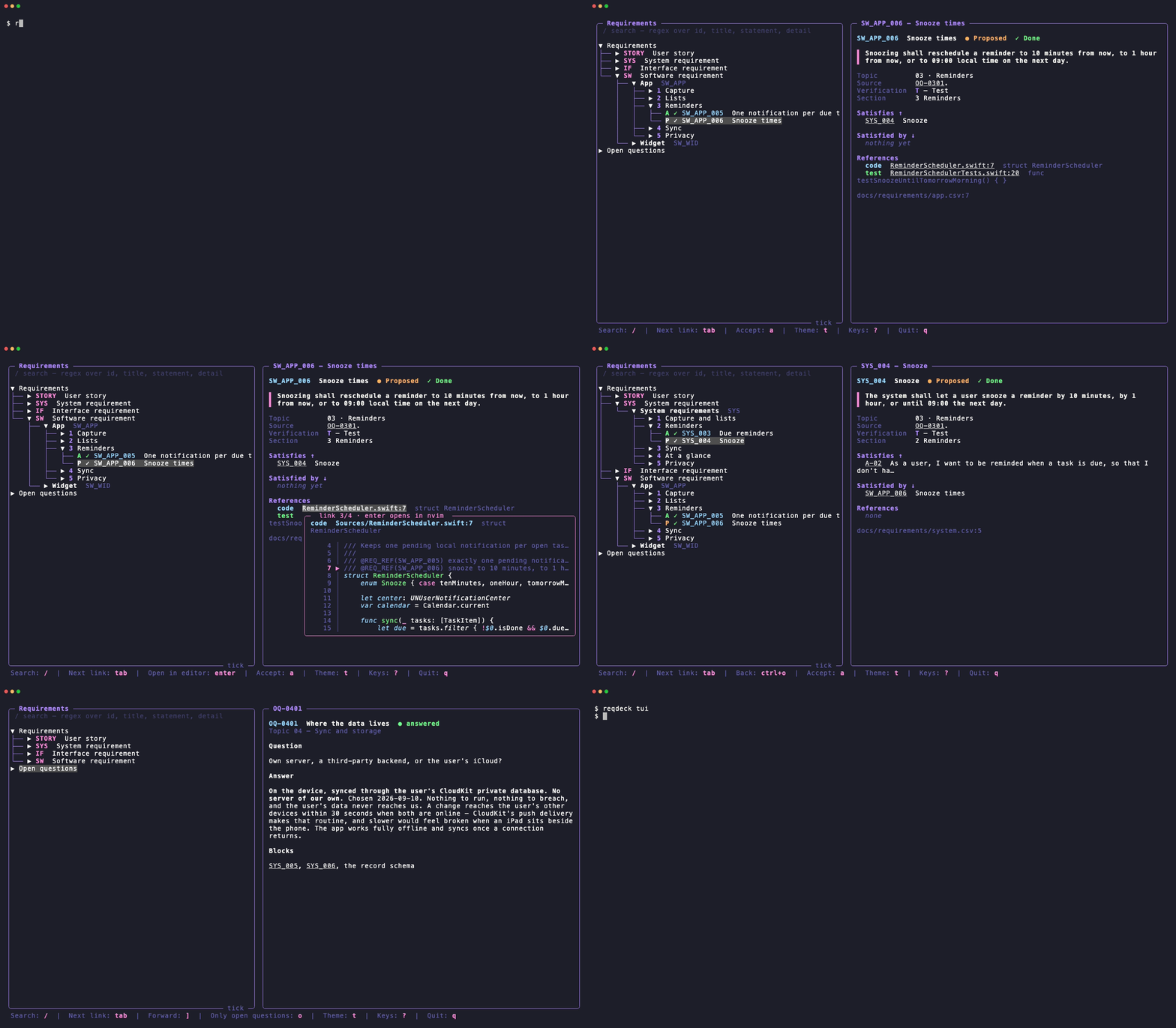
|
+
Copyright (c) 2026 Daniel Riege
|
|
4
|
+
|
|
5
|
+
Permission is hereby granted, free of charge, to any person obtaining a copy
|
|
6
|
+
of this software and associated documentation files (the "Software"), to deal
|
|
7
|
+
in the Software without restriction, including without limitation the rights
|
|
8
|
+
to use, copy, modify, merge, publish, distribute, sublicense, and/or sell
|
|
9
|
+
copies of the Software, and to permit persons to whom the Software is
|
|
10
|
+
furnished to do so, subject to the following conditions:
|
|
11
|
+
|
|
12
|
+
The above copyright notice and this permission notice shall be included in all
|
|
13
|
+
copies or substantial portions of the Software.
|
|
14
|
+
|
|
15
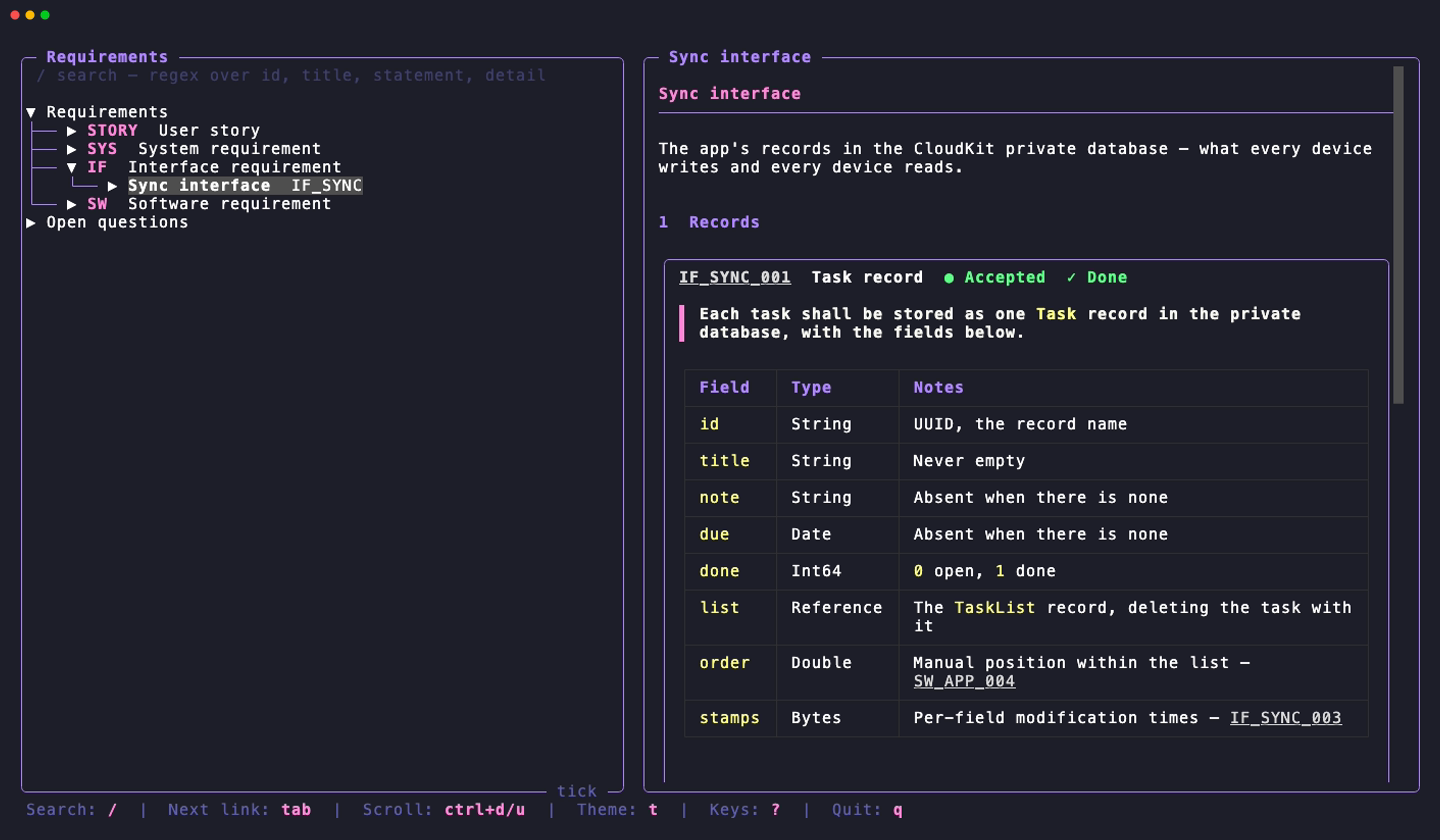
|
+
THE SOFTWARE IS PROVIDED "AS IS", WITHOUT WARRANTY OF ANY KIND, EXPRESS OR
|
|
16
|
+
IMPLIED, INCLUDING BUT NOT LIMITED TO THE WARRANTIES OF MERCHANTABILITY,
|
|
17
|
+
FITNESS FOR A PARTICULAR PURPOSE AND NONINFRINGEMENT. IN NO EVENT SHALL THE
|
|
18
|
+
AUTHORS OR COPYRIGHT HOLDERS BE LIABLE FOR ANY CLAIM, DAMAGES OR OTHER
|
|
19
|
+
LIABILITY, WHETHER IN AN ACTION OF CONTRACT, TORT OR OTHERWISE, ARISING FROM,
|
|
20
|
+
OUT OF OR IN CONNECTION WITH THE SOFTWARE OR THE USE OR OTHER DEALINGS IN THE
|
|
21
|
+
SOFTWARE.
|
reqdeck-0.1.0/PKG-INFO
ADDED
|
@@ -0,0 +1,305 @@
|
|
|
1
|
+
Metadata-Version: 2.5
|
|
2
|
+
Name: reqdeck
|
|
3
|
+
Version: 0.1.0
|
|
4
|
+
Summary: Requirements, open questions and traceability in your git repo — a CLI, a TUI, and skills for your AI agent
|
|
5
|
+
Project-URL: Homepage, https://github.com/danielriege/reqdeck
|
|
6
|
+
Project-URL: Source, https://github.com/danielriege/reqdeck
|
|
7
|
+
Project-URL: Issues, https://github.com/danielriege/reqdeck/issues
|
|
8
|
+
Project-URL: Changelog, https://github.com/danielriege/reqdeck/releases
|
|
9
|
+
Author: Daniel Riege
|
|
10
|
+
License-Expression: MIT
|
|
11
|
+
License-File: LICENSE
|
|
12
|
+
Keywords: ai-agents,claude-code,doors,requirements,requirements-engineering,traceability,tui,v-model
|
|
13
|
+
Classifier: Development Status :: 4 - Beta
|
|
14
|
+
Classifier: Environment :: Console
|
|
15
|
+
Classifier: Intended Audience :: Developers
|
|
16
|
+
Classifier: Operating System :: MacOS
|
|
17
|
+
Classifier: Operating System :: POSIX :: Linux
|
|
18
|
+
Classifier: Programming Language :: Python :: 3
|
|
19
|
+
Classifier: Programming Language :: Python :: 3.11
|
|
20
|
+
Classifier: Programming Language :: Python :: 3.12
|
|
21
|
+
Classifier: Programming Language :: Python :: 3.13
|
|
22
|
+
Classifier: Topic :: Software Development :: Documentation
|
|
23
|
+
Classifier: Topic :: Software Development :: Quality Assurance
|
|
24
|
+
Requires-Python: >=3.11
|
|
25
|
+
Requires-Dist: textual>=8.0
|
|
26
|
+
Description-Content-Type: text/markdown
|
|
27
|
+
|
|
28
|
+
|
|
29
|
+
|
|
30
|
+
<div align="center">
|
|
31
|
+
<h1>reqdeck</h1>
|
|
32
|
+
Think of <a href="https://www.ibm.com/products/requirements-management">IBM DOORS</a>, but it lives in your git repo, fits in your terminal, and your AI agent can read it.
|
|
33
|
+
<br><br>
|
|
34
|
+
|
|
35
|
+
<a href="https://github.com/danielriege/reqdeck/actions/workflows/ci.yml"><img src="https://github.com/danielriege/reqdeck/actions/workflows/ci.yml/badge.svg" alt="CI"></a>
|
|
36
|
+
<img src="https://img.shields.io/badge/python-3.11%2B-blue" alt="Python 3.11+">
|
|
37
|
+
<a href="https://pypi.org/project/reqdeck/"><img src="https://img.shields.io/pypi/v/reqdeck" alt="PyPI"></a>
|
|
38
|
+
<a href="https://github.com/danielriege/reqdeck/blob/main/LICENSE"><img src="https://img.shields.io/badge/license-MIT-green" alt="MIT license"></a>
|
|
39
|
+
|
|
40
|
+
</div>
|
|
41
|
+
|
|
42
|
+
## The problem
|
|
43
|
+
|
|
44
|
+
AI agents write code faster than anyone can review it. Describe roughly what you want and
|
|
45
|
+
you get something that runs. That is vibe coding, and for a weekend project it is great.
|
|
46
|
+
|
|
47
|
+
For anything bigger it breaks in a predictable way. The agent builds what it *guesses* you
|
|
48
|
+
meant. Every gap in the description gets filled with a plausible default — a timeout, a
|
|
49
|
+
limit, a retry policy, a field nobody asked for — and none of them were decided by anyone.
|
|
50
|
+
It works in the demo. Three months later nobody can say what the system is *supposed* to do,
|
|
51
|
+
so nobody can say whether it does it, and every change is a coin flip.
|
|
52
|
+
|
|
53
|
+
Old-school engineering has had an answer to this for decades: the
|
|
54
|
+
[V-model](https://en.wikipedia.org/wiki/V-model). Down the left side, you write down what to
|
|
55
|
+
build, at increasing levels of detail — user needs, system requirements, the requirements on
|
|
56
|
+
each part. Up the right side, you prove each of those levels with a test. Every requirement
|
|
57
|
+
has a reason above it and a test beside it.
|
|
58
|
+
|
|
59
|
+
Agents made the bottom of the V nearly free. Code is cheap now. **The left side** — deciding
|
|
60
|
+
what to build — **and the right side** — proving it was built — are what is left, and they
|
|
61
|
+
matter more than they ever did. They are also exactly the parts an agent cannot do alone:
|
|
62
|
+
the decisions have to come from a person, and the proof has to be checkable by one.
|
|
63
|
+
|
|
64
|
+
## What reqdeck does
|
|
65
|
+
|
|
66
|
+
reqdeck keeps both sides of the V in your repo, next to the code, linked together, in files
|
|
67
|
+
an agent reads as easily as you do.
|
|
68
|
+
|
|
69
|
+
- **Open questions first.** Before anything is a requirement it is a question in
|
|
70
|
+
`OPEN-QUESTIONS.md`. The agent researches it, lays out options, recommends one. **You
|
|
71
|
+
decide.** The answer is written down where the question was.
|
|
72
|
+
- **Requirements from answers.** Each requirement names the decision it came from. No
|
|
73
|
+
source, no requirement — an agent cannot slip in a number nobody chose.
|
|
74
|
+
- **Traced, both ways.** Each requirement names what it satisfies one level up. Code and tests
|
|
75
|
+
name what they implement with a `@REQ_REF` marker. `reqdeck coverage` tells you what is
|
|
76
|
+
untested, unimplemented or unjustified, and `reqdeck trace` exits non-zero for a requirement
|
|
77
|
+
that is not implemented and tested — put it in CI.
|
|
78
|
+
- **Reviewed by a human.** Every requirement is `Proposed` until *you* accept it, in the TUI.
|
|
79
|
+
The CLI has no way to write `Accepted`, so an agent cannot mark its own homework.
|
|
80
|
+
- **Skills for your agent.** Two skills for Claude Code and Codex: one for the CLI, one for
|
|
81
|
+
the method.
|
|
82
|
+
|
|
83
|
+
It works the same for an embedded product of three boards and two firmwares as for a single
|
|
84
|
+
iOS app.
|
|
85
|
+
|
|
86
|
+
## Try it
|
|
87
|
+
|
|
88
|
+
The repo has an example project — Tick, a made-up iOS to-do app with its brief, its open
|
|
89
|
+
questions, 23 requirements on three levels below its user stories, and a few Swift files
|
|
90
|
+
that point at them.
|
|
91
|
+
|
|
92
|
+
```bash
|
|
93
|
+
pip install reqdeck
|
|
94
|
+
git clone https://github.com/danielriege/reqdeck
|
|
95
|
+
cd reqdeck/examples/tick
|
|
96
|
+
reqdeck tui
|
|
97
|
+
```
|
|
98
|
+
|
|
99
|
+
Move with `j` `k`, `tab` through the links of a requirement, `enter` to follow one. Then:
|
|
100
|
+
|
|
101
|
+
```bash
|
|
102
|
+
reqdeck coverage # what is untested, uncoded, unreviewed
|
|
103
|
+
reqdeck get SW_APP_006 # one requirement: its chain up and down, its code and tests
|
|
104
|
+
reqdeck questions --open # what is still undecided
|
|
105
|
+
```
|
|
106
|
+
|
|
107
|
+
## Use it in your project
|
|
108
|
+
|
|
109
|
+
```bash
|
|
110
|
+
pip install reqdeck
|
|
111
|
+
cd your-project
|
|
112
|
+
reqdeck init
|
|
113
|
+
```
|
|
114
|
+
|
|
115
|
+
`reqdeck init` asks for the shape of your requirement tree and the parts of your product,
|
|
116
|
+
then writes `.reqdeck.toml`, one requirement file per part, an `OPEN-QUESTIONS.md`, and copies
|
|
117
|
+
both skills into `.claude/skills/` and `.agents/skills/` — commit them, and every agent working
|
|
118
|
+
on the project has them. It asks everything first, refuses to overwrite anything, and leaves
|
|
119
|
+
the project untouched if it fails halfway. After upgrading reqdeck, `reqdeck skills --update`
|
|
120
|
+
refreshes the copies.
|
|
121
|
+
|
|
122
|
+
Python 3.11 or newer, macOS or Linux. Pin it in your project's dependencies, so CI checks with
|
|
123
|
+
the version you work with.
|
|
124
|
+
|
|
125
|
+
Then tell your agent to load the `reqdeck-method` skill and start with a product brief.
|
|
126
|
+
|
|
127
|
+
### As a Claude Code plugin
|
|
128
|
+
|
|
129
|
+
Rather have the skills everywhere than committed to each project? Install them as a plugin:
|
|
130
|
+
|
|
131
|
+
```
|
|
132
|
+
/plugin install reqdeck --marketplace danielriege/reqdeck
|
|
133
|
+
```
|
|
134
|
+
|
|
135
|
+
The plugin is only the skills — the agent still runs the `reqdeck` command, so `pip install
|
|
136
|
+
reqdeck` either way.
|
|
137
|
+
|
|
138
|
+
## The method
|
|
139
|
+
|
|
140
|
+
1. **Brief.** One page: what it is, for whom, what it deliberately is not.
|
|
141
|
+
2. **Stories.** Personas and user stories — the root everything traces to.
|
|
142
|
+
3. **Topics.** Cut the design into areas: scope, each interface, each part, power, security…
|
|
143
|
+
4. **Questions.** For each topic, find what is undecided — with your agent, not by it.
|
|
144
|
+
5. **Answers.** One question per session. The agent researches and recommends, you decide,
|
|
145
|
+
the answer is written in place with the date and the reasoning.
|
|
146
|
+
6. **Requirements.** When a topic is answered, its requirements get written. Writing them
|
|
147
|
+
finds gaps; each gap becomes a new question, not an invented value.
|
|
148
|
+
7. **Build.** Code and tests carry `@REQ_REF` markers. `reqdeck coverage` is the progress bar.
|
|
149
|
+
|
|
150
|
+
The `reqdeck-method` skill holds the details: the levels, how a requirement is worded, which
|
|
151
|
+
verification method fits, where a marker goes.
|
|
152
|
+
|
|
153
|
+
## The TUI
|
|
154
|
+
|
|
155
|
+
|
|
156
|
+
|
|
157
|
+
`reqdeck tui` shows every unit as a document — sections numbered, each requirement a card with its
|
|
158
|
+
status, statement, detail tables and fields — beside the open questions by topic. The tree
|
|
159
|
+
always has the cursor; the right pane shows what it highlights.
|
|
160
|
+
|
|
161
|
+
| | |
|
|
162
|
+
|---|---|
|
|
163
|
+
| `j` `k` `h` `l` · `gg` `G` | Move through the tree, as in vim |
|
|
164
|
+
| `tab` `shift+tab` | The next, previous link in the right pane, previewed beside it |
|
|
165
|
+
| `enter` | Follow the link. A code or test reference opens in your editor |
|
|
166
|
+
| `ctrl+o` · `]` | Back, forward through the jumps |
|
|
167
|
+
| `/` · `n` `N` | Search · next, previous result |
|
|
168
|
+
| `ctrl+d` `ctrl+u` | Scroll the right pane |
|
|
169
|
+
| `a` | Accept the highlighted requirement |
|
|
170
|
+
| `t` | Theme |
|
|
171
|
+
| `?` | All keys |
|
|
172
|
+
|
|
173
|
+
Every requirement and question ID in the right pane is a link, and so is every code and test
|
|
174
|
+
reference, shown with what it is attached to — the test function, the type. Hovering one, or
|
|
175
|
+
`tab`-ing to it, previews it: the requirement, or the source around the marker. `enter` on a
|
|
176
|
+
reference opens it in `[editor]`, or `$VISUAL`/`$EDITOR`; a terminal editor like nvim gets
|
|
177
|
+
the terminal until you quit it, as in lazygit.
|
|
178
|
+
|
|
179
|
+
It draws like lazygit: rounded borders, one hint line that only lists what applies right
|
|
180
|
+
now, and no background — your terminal's shows through. The themes are Textual's own
|
|
181
|
+
(Dracula, Nord, Gruvbox, Tokyo Night, Catppuccin, Solarized, Monokai, One Dark, Rosé Pine,
|
|
182
|
+
Flexoki), each given a full colour suite by a file in [reqdeck/themes/](https://github.com/danielriege/reqdeck/blob/main/reqdeck/themes/README.md),
|
|
183
|
+
where you can add your own. Your theme and sidebar width are remembered in
|
|
184
|
+
`~/.config/reqdeck/tui.json`.
|
|
185
|
+
|
|
186
|
+
## The CLI
|
|
187
|
+
|
|
188
|
+
```bash
|
|
189
|
+
reqdeck get TSR_009 # one requirement, its chain, its code and tests
|
|
190
|
+
reqdeck search 'beacon|sync' # regex over id, title, statement, detail
|
|
191
|
+
reqdeck list --topic 06 --status proposed
|
|
192
|
+
reqdeck coverage # where traceability is missing
|
|
193
|
+
reqdeck trace TSSR_FWN_004 # implemented and tested? exit 1 if not
|
|
194
|
+
reqdeck check # validate everything, exit 1 on any problem
|
|
195
|
+
reqdeck questions --open --topic 04
|
|
196
|
+
reqdeck add TSSR_FWN --title "Channel PWM" --statement "The Node shall …" \
|
|
197
|
+
--satisfies TSR_025 --topic 06 --source "OQ-0608." --verification T
|
|
198
|
+
reqdeck edit TSR_009 --statement "…" --source "…"
|
|
199
|
+
```
|
|
200
|
+
|
|
201
|
+
Every command takes `--json`. `add` allocates the next ID and can only write `Proposed`;
|
|
202
|
+
`edit` turns an `Accepted` requirement `Reopened`, so a changed requirement goes back to you.
|
|
203
|
+
`reqdeck check` exits 1 on any problem — run it in CI next to your tests.
|
|
204
|
+
|
|
205
|
+
## The files
|
|
206
|
+
|
|
207
|
+
```
|
|
208
|
+
.reqdeck.toml levels, verification methods, marker rules, editor
|
|
209
|
+
docs/OPEN-QUESTIONS.md topics and questions — markdown, edited by hand
|
|
210
|
+
docs/requirements/
|
|
211
|
+
stories.csv stories.toml user stories, one section per persona
|
|
212
|
+
system.csv system.toml one unit per prefix
|
|
213
|
+
icd-bus.csv icd-bus.toml
|
|
214
|
+
icd-bus.details.md byte layouts, state tables — one `## <ID>` each
|
|
215
|
+
```
|
|
216
|
+
|
|
217
|
+
A unit's **CSV** holds one requirement per row, ordered by ID and only ever appended to. A
|
|
218
|
+
row's line is as permanent as its ID, and the diff of a change is exactly the rows it
|
|
219
|
+
touched. It is written by `reqdeck add` and `reqdeck edit`, never by hand; `check` rejects a file
|
|
220
|
+
that is not in the exact form the tool writes.
|
|
221
|
+
|
|
222
|
+
Its **`.toml`** describes the unit — level, prefix, title, whether code implements it — and
|
|
223
|
+
its sections:
|
|
224
|
+
|
|
225
|
+
```toml
|
|
226
|
+
level = "SW"
|
|
227
|
+
prefix = "SW_APP"
|
|
228
|
+
title = "App"
|
|
229
|
+
code = true
|
|
230
|
+
|
|
231
|
+
[[sections]]
|
|
232
|
+
key = "reminders"
|
|
233
|
+
title = "Reminders"
|
|
234
|
+
|
|
235
|
+
[[sections]]
|
|
236
|
+
key = "reminders.snooze" # nests under reminders: shown as 1.1
|
|
237
|
+
title = "Snooze"
|
|
238
|
+
```
|
|
239
|
+
|
|
240
|
+
A requirement names its section by key. Numbers come from declaration order when the
|
|
241
|
+
document is drawn, so inserting a section renumbers the document without touching a single
|
|
242
|
+
requirement — the way DOORS does it.
|
|
243
|
+
|
|
244
|
+
## `.reqdeck.toml`
|
|
245
|
+
|
|
246
|
+
```toml
|
|
247
|
+
requirements = "docs/requirements"
|
|
248
|
+
questions = "docs/OPEN-QUESTIONS.md"
|
|
249
|
+
|
|
250
|
+
[[levels]] # most abstract first
|
|
251
|
+
kind = "STORY"
|
|
252
|
+
reviewed = false # no source, verification or status
|
|
253
|
+
traced = false # never referenced from code
|
|
254
|
+
separator = "-"
|
|
255
|
+
digits = 2 # A-01
|
|
256
|
+
|
|
257
|
+
[[levels]]
|
|
258
|
+
kind = "SYS"
|
|
259
|
+
satisfies = ["STORY"] # what it may link to — check enforces it
|
|
260
|
+
topic = true # names the OPEN-QUESTIONS topic behind it
|
|
261
|
+
traced = false
|
|
262
|
+
|
|
263
|
+
[[levels]]
|
|
264
|
+
kind = "SW"
|
|
265
|
+
satisfies = ["SYS"]
|
|
266
|
+
topic = true
|
|
267
|
+
|
|
268
|
+
[verification.T]
|
|
269
|
+
name = "Test"
|
|
270
|
+
definition = "An automated test shows the requirement is met."
|
|
271
|
+
automated = true # untraced until a test names it
|
|
272
|
+
|
|
273
|
+
[markers]
|
|
274
|
+
test_paths = ["Tests"] # a path containing one is a test
|
|
275
|
+
declaration_extensions = [".h", ".swift"] # outside tests, markers only here
|
|
276
|
+
interface_suffixes = ["_interface"] # never marked
|
|
277
|
+
|
|
278
|
+
[editor]
|
|
279
|
+
command = "nvim +{line} {file}" # or "code --goto {file}:{line}"
|
|
280
|
+
```
|
|
281
|
+
|
|
282
|
+
Without `[verification]` the methods are A, I, D and T. Without `[markers]` every common
|
|
283
|
+
source file is scanned and a marker may sit anywhere.
|
|
284
|
+
|
|
285
|
+
## Limitations
|
|
286
|
+
|
|
287
|
+
- **Small teams.** It is built for one person and their agents, or a handful of people. Two
|
|
288
|
+
branches that both add a requirement to the same unit conflict on the last line of its
|
|
289
|
+
CSV — trivially resolved, but resolved by hand.
|
|
290
|
+
- **Markers are text.** `@REQ_REF` is found by a regex, not by parsing your language. Whether
|
|
291
|
+
the *right* code carries the marker is a judgement the tool cannot make for you.
|
|
292
|
+
- **No web view.** The TUI is the viewer. `reqdeck doc <unit> --markdown` renders a unit as
|
|
293
|
+
markdown when you need to hand it to someone without a terminal.
|
|
294
|
+
- **macOS and Linux.** Windows is untested, and handing the terminal to an editor certainly
|
|
295
|
+
is.
|
|
296
|
+
|
|
297
|
+
## Development
|
|
298
|
+
|
|
299
|
+
```bash
|
|
300
|
+
python3 -m unittest discover tests # the TUI tests skip without textual
|
|
301
|
+
```
|
|
302
|
+
|
|
303
|
+
## License
|
|
304
|
+
|
|
305
|
+
MIT. See [LICENSE](https://github.com/danielriege/reqdeck/blob/main/LICENSE).
|
reqdeck-0.1.0/README.md
ADDED
|
@@ -0,0 +1,278 @@
|
|
|
1
|
+

|
|
2
|
+
|
|
3
|
+
<div align="center">
|
|
4
|
+
<h1>reqdeck</h1>
|
|
5
|
+
Think of <a href="https://www.ibm.com/products/requirements-management">IBM DOORS</a>, but it lives in your git repo, fits in your terminal, and your AI agent can read it.
|
|
6
|
+
<br><br>
|
|
7
|
+
|
|
8
|
+
<a href="https://github.com/danielriege/reqdeck/actions/workflows/ci.yml"><img src="https://github.com/danielriege/reqdeck/actions/workflows/ci.yml/badge.svg" alt="CI"></a>
|
|
9
|
+
<img src="https://img.shields.io/badge/python-3.11%2B-blue" alt="Python 3.11+">
|
|
10
|
+
<a href="https://pypi.org/project/reqdeck/"><img src="https://img.shields.io/pypi/v/reqdeck" alt="PyPI"></a>
|
|
11
|
+
<a href="https://github.com/danielriege/reqdeck/blob/main/LICENSE"><img src="https://img.shields.io/badge/license-MIT-green" alt="MIT license"></a>
|
|
12
|
+
|
|
13
|
+
</div>
|
|
14
|
+
|
|
15
|
+
## The problem
|
|
16
|
+
|
|
17
|
+
AI agents write code faster than anyone can review it. Describe roughly what you want and
|
|
18
|
+
you get something that runs. That is vibe coding, and for a weekend project it is great.
|
|
19
|
+
|
|
20
|
+
For anything bigger it breaks in a predictable way. The agent builds what it *guesses* you
|
|
21
|
+
meant. Every gap in the description gets filled with a plausible default — a timeout, a
|
|
22
|
+
limit, a retry policy, a field nobody asked for — and none of them were decided by anyone.
|
|
23
|
+
It works in the demo. Three months later nobody can say what the system is *supposed* to do,
|
|
24
|
+
so nobody can say whether it does it, and every change is a coin flip.
|
|
25
|
+
|
|
26
|
+
Old-school engineering has had an answer to this for decades: the
|
|
27
|
+
[V-model](https://en.wikipedia.org/wiki/V-model). Down the left side, you write down what to
|
|
28
|
+
build, at increasing levels of detail — user needs, system requirements, the requirements on
|
|
29
|
+
each part. Up the right side, you prove each of those levels with a test. Every requirement
|
|
30
|
+
has a reason above it and a test beside it.
|
|
31
|
+
|
|
32
|
+
Agents made the bottom of the V nearly free. Code is cheap now. **The left side** — deciding
|
|
33
|
+
what to build — **and the right side** — proving it was built — are what is left, and they
|
|
34
|
+
matter more than they ever did. They are also exactly the parts an agent cannot do alone:
|
|
35
|
+
the decisions have to come from a person, and the proof has to be checkable by one.
|
|
36
|
+
|
|
37
|
+
## What reqdeck does
|
|
38
|
+
|
|
39
|
+
reqdeck keeps both sides of the V in your repo, next to the code, linked together, in files
|
|
40
|
+
an agent reads as easily as you do.
|
|
41
|
+
|
|
42
|
+
- **Open questions first.** Before anything is a requirement it is a question in
|
|
43
|
+
`OPEN-QUESTIONS.md`. The agent researches it, lays out options, recommends one. **You
|
|
44
|
+
decide.** The answer is written down where the question was.
|
|
45
|
+
- **Requirements from answers.** Each requirement names the decision it came from. No
|
|
46
|
+
source, no requirement — an agent cannot slip in a number nobody chose.
|
|
47
|
+
- **Traced, both ways.** Each requirement names what it satisfies one level up. Code and tests
|
|
48
|
+
name what they implement with a `@REQ_REF` marker. `reqdeck coverage` tells you what is
|
|
49
|
+
untested, unimplemented or unjustified, and `reqdeck trace` exits non-zero for a requirement
|
|
50
|
+
that is not implemented and tested — put it in CI.
|
|
51
|
+
- **Reviewed by a human.** Every requirement is `Proposed` until *you* accept it, in the TUI.
|
|
52
|
+
The CLI has no way to write `Accepted`, so an agent cannot mark its own homework.
|
|
53
|
+
- **Skills for your agent.** Two skills for Claude Code and Codex: one for the CLI, one for
|
|
54
|
+
the method.
|
|
55
|
+
|
|
56
|
+
It works the same for an embedded product of three boards and two firmwares as for a single
|
|
57
|
+
iOS app.
|
|
58
|
+
|
|
59
|
+
## Try it
|
|
60
|
+
|
|
61
|
+
The repo has an example project — Tick, a made-up iOS to-do app with its brief, its open
|
|
62
|
+
questions, 23 requirements on three levels below its user stories, and a few Swift files
|
|
63
|
+
that point at them.
|
|
64
|
+
|
|
65
|
+
```bash
|
|
66
|
+
pip install reqdeck
|
|
67
|
+
git clone https://github.com/danielriege/reqdeck
|
|
68
|
+
cd reqdeck/examples/tick
|
|
69
|
+
reqdeck tui
|
|
70
|
+
```
|
|
71
|
+
|
|
72
|
+
Move with `j` `k`, `tab` through the links of a requirement, `enter` to follow one. Then:
|
|
73
|
+
|
|
74
|
+
```bash
|
|
75
|
+
reqdeck coverage # what is untested, uncoded, unreviewed
|
|
76
|
+
reqdeck get SW_APP_006 # one requirement: its chain up and down, its code and tests
|
|
77
|
+
reqdeck questions --open # what is still undecided
|
|
78
|
+
```
|
|
79
|
+
|
|
80
|
+
## Use it in your project
|
|
81
|
+
|
|
82
|
+
```bash
|
|
83
|
+
pip install reqdeck
|
|
84
|
+
cd your-project
|
|
85
|
+
reqdeck init
|
|
86
|
+
```
|
|
87
|
+
|
|
88
|
+
`reqdeck init` asks for the shape of your requirement tree and the parts of your product,
|
|
89
|
+
then writes `.reqdeck.toml`, one requirement file per part, an `OPEN-QUESTIONS.md`, and copies
|
|
90
|
+
both skills into `.claude/skills/` and `.agents/skills/` — commit them, and every agent working
|
|
91
|
+
on the project has them. It asks everything first, refuses to overwrite anything, and leaves
|
|
92
|
+
the project untouched if it fails halfway. After upgrading reqdeck, `reqdeck skills --update`
|
|
93
|
+
refreshes the copies.
|
|
94
|
+
|
|
95
|
+
Python 3.11 or newer, macOS or Linux. Pin it in your project's dependencies, so CI checks with
|
|
96
|
+
the version you work with.
|
|
97
|
+
|
|
98
|
+
Then tell your agent to load the `reqdeck-method` skill and start with a product brief.
|
|
99
|
+
|
|
100
|
+
### As a Claude Code plugin
|
|
101
|
+
|
|
102
|
+
Rather have the skills everywhere than committed to each project? Install them as a plugin:
|
|
103
|
+
|
|
104
|
+
```
|
|
105
|
+
/plugin install reqdeck --marketplace danielriege/reqdeck
|
|
106
|
+
```
|
|
107
|
+
|
|
108
|
+
The plugin is only the skills — the agent still runs the `reqdeck` command, so `pip install
|
|
109
|
+
reqdeck` either way.
|
|
110
|
+
|
|
111
|
+
## The method
|
|
112
|
+
|
|
113
|
+
1. **Brief.** One page: what it is, for whom, what it deliberately is not.
|
|
114
|
+
2. **Stories.** Personas and user stories — the root everything traces to.
|
|
115
|
+
3. **Topics.** Cut the design into areas: scope, each interface, each part, power, security…
|
|
116
|
+
4. **Questions.** For each topic, find what is undecided — with your agent, not by it.
|
|
117
|
+
5. **Answers.** One question per session. The agent researches and recommends, you decide,
|
|
118
|
+
the answer is written in place with the date and the reasoning.
|
|
119
|
+
6. **Requirements.** When a topic is answered, its requirements get written. Writing them
|
|
120
|
+
finds gaps; each gap becomes a new question, not an invented value.
|
|
121
|
+
7. **Build.** Code and tests carry `@REQ_REF` markers. `reqdeck coverage` is the progress bar.
|
|
122
|
+
|
|
123
|
+
The `reqdeck-method` skill holds the details: the levels, how a requirement is worded, which
|
|
124
|
+
verification method fits, where a marker goes.
|
|
125
|
+
|
|
126
|
+
## The TUI
|
|
127
|
+
|
|
128
|
+

|
|
129
|
+
|
|
130
|
+
`reqdeck tui` shows every unit as a document — sections numbered, each requirement a card with its
|
|
131
|
+
status, statement, detail tables and fields — beside the open questions by topic. The tree
|
|
132
|
+
always has the cursor; the right pane shows what it highlights.
|
|
133
|
+
|
|
134
|
+
| | |
|
|
135
|
+
|---|---|
|
|
136
|
+
| `j` `k` `h` `l` · `gg` `G` | Move through the tree, as in vim |
|
|
137
|
+
| `tab` `shift+tab` | The next, previous link in the right pane, previewed beside it |
|
|
138
|
+
| `enter` | Follow the link. A code or test reference opens in your editor |
|
|
139
|
+
| `ctrl+o` · `]` | Back, forward through the jumps |
|
|
140
|
+
| `/` · `n` `N` | Search · next, previous result |
|
|
141
|
+
| `ctrl+d` `ctrl+u` | Scroll the right pane |
|
|
142
|
+
| `a` | Accept the highlighted requirement |
|
|
143
|
+
| `t` | Theme |
|
|
144
|
+
| `?` | All keys |
|
|
145
|
+
|
|
146
|
+
Every requirement and question ID in the right pane is a link, and so is every code and test
|
|
147
|
+
reference, shown with what it is attached to — the test function, the type. Hovering one, or
|
|
148
|
+
`tab`-ing to it, previews it: the requirement, or the source around the marker. `enter` on a
|
|
149
|
+
reference opens it in `[editor]`, or `$VISUAL`/`$EDITOR`; a terminal editor like nvim gets
|
|
150
|
+
the terminal until you quit it, as in lazygit.
|
|
151
|
+
|
|
152
|
+
It draws like lazygit: rounded borders, one hint line that only lists what applies right
|
|
153
|
+
now, and no background — your terminal's shows through. The themes are Textual's own
|
|
154
|
+
(Dracula, Nord, Gruvbox, Tokyo Night, Catppuccin, Solarized, Monokai, One Dark, Rosé Pine,
|
|
155
|
+
Flexoki), each given a full colour suite by a file in [reqdeck/themes/](https://github.com/danielriege/reqdeck/blob/main/reqdeck/themes/README.md),
|
|
156
|
+
where you can add your own. Your theme and sidebar width are remembered in
|
|
157
|
+
`~/.config/reqdeck/tui.json`.
|
|
158
|
+
|
|
159
|
+
## The CLI
|
|
160
|
+
|
|
161
|
+
```bash
|
|
162
|
+
reqdeck get TSR_009 # one requirement, its chain, its code and tests
|
|
163
|
+
reqdeck search 'beacon|sync' # regex over id, title, statement, detail
|
|
164
|
+
reqdeck list --topic 06 --status proposed
|
|
165
|
+
reqdeck coverage # where traceability is missing
|
|
166
|
+
reqdeck trace TSSR_FWN_004 # implemented and tested? exit 1 if not
|
|
167
|
+
reqdeck check # validate everything, exit 1 on any problem
|
|
168
|
+
reqdeck questions --open --topic 04
|
|
169
|
+
reqdeck add TSSR_FWN --title "Channel PWM" --statement "The Node shall …" \
|
|
170
|
+
--satisfies TSR_025 --topic 06 --source "OQ-0608." --verification T
|
|
171
|
+
reqdeck edit TSR_009 --statement "…" --source "…"
|
|
172
|
+
```
|
|
173
|
+
|
|
174
|
+
Every command takes `--json`. `add` allocates the next ID and can only write `Proposed`;
|
|
175
|
+
`edit` turns an `Accepted` requirement `Reopened`, so a changed requirement goes back to you.
|
|
176
|
+
`reqdeck check` exits 1 on any problem — run it in CI next to your tests.
|
|
177
|
+
|
|
178
|
+
## The files
|
|
179
|
+
|
|
180
|
+
```
|
|
181
|
+
.reqdeck.toml levels, verification methods, marker rules, editor
|
|
182
|
+
docs/OPEN-QUESTIONS.md topics and questions — markdown, edited by hand
|
|
183
|
+
docs/requirements/
|
|
184
|
+
stories.csv stories.toml user stories, one section per persona
|
|
185
|
+
system.csv system.toml one unit per prefix
|
|
186
|
+
icd-bus.csv icd-bus.toml
|
|
187
|
+
icd-bus.details.md byte layouts, state tables — one `## <ID>` each
|
|
188
|
+
```
|
|
189
|
+
|
|
190
|
+
A unit's **CSV** holds one requirement per row, ordered by ID and only ever appended to. A
|
|
191
|
+
row's line is as permanent as its ID, and the diff of a change is exactly the rows it
|
|
192
|
+
touched. It is written by `reqdeck add` and `reqdeck edit`, never by hand; `check` rejects a file
|
|
193
|
+
that is not in the exact form the tool writes.
|
|
194
|
+
|
|
195
|
+
Its **`.toml`** describes the unit — level, prefix, title, whether code implements it — and
|
|
196
|
+
its sections:
|
|
197
|
+
|
|
198
|
+
```toml
|
|
199
|
+
level = "SW"
|
|
200
|
+
prefix = "SW_APP"
|
|
201
|
+
title = "App"
|
|
202
|
+
code = true
|
|
203
|
+
|
|
204
|
+
[[sections]]
|
|
205
|
+
key = "reminders"
|
|
206
|
+
title = "Reminders"
|
|
207
|
+
|
|
208
|
+
[[sections]]
|
|
209
|
+
key = "reminders.snooze" # nests under reminders: shown as 1.1
|
|
210
|
+
title = "Snooze"
|
|
211
|
+
```
|
|
212
|
+
|
|
213
|
+
A requirement names its section by key. Numbers come from declaration order when the
|
|
214
|
+
document is drawn, so inserting a section renumbers the document without touching a single
|
|
215
|
+
requirement — the way DOORS does it.
|
|
216
|
+
|
|
217
|
+
## `.reqdeck.toml`
|
|
218
|
+
|
|
219
|
+
```toml
|
|
220
|
+
requirements = "docs/requirements"
|
|
221
|
+
questions = "docs/OPEN-QUESTIONS.md"
|
|
222
|
+
|
|
223
|
+
[[levels]] # most abstract first
|
|
224
|
+
kind = "STORY"
|
|
225
|
+
reviewed = false # no source, verification or status
|
|
226
|
+
traced = false # never referenced from code
|
|
227
|
+
separator = "-"
|
|
228
|
+
digits = 2 # A-01
|
|
229
|
+
|
|
230
|
+
[[levels]]
|
|
231
|
+
kind = "SYS"
|
|
232
|
+
satisfies = ["STORY"] # what it may link to — check enforces it
|
|
233
|
+
topic = true # names the OPEN-QUESTIONS topic behind it
|
|
234
|
+
traced = false
|
|
235
|
+
|
|
236
|
+
[[levels]]
|
|
237
|
+
kind = "SW"
|
|
238
|
+
satisfies = ["SYS"]
|
|
239
|
+
topic = true
|
|
240
|
+
|
|
241
|
+
[verification.T]
|
|
242
|
+
name = "Test"
|
|
243
|
+
definition = "An automated test shows the requirement is met."
|
|
244
|
+
automated = true # untraced until a test names it
|
|
245
|
+
|
|
246
|
+
[markers]
|
|
247
|
+
test_paths = ["Tests"] # a path containing one is a test
|
|
248
|
+
declaration_extensions = [".h", ".swift"] # outside tests, markers only here
|
|
249
|
+
interface_suffixes = ["_interface"] # never marked
|
|
250
|
+
|
|
251
|
+
[editor]
|
|
252
|
+
command = "nvim +{line} {file}" # or "code --goto {file}:{line}"
|
|
253
|
+
```
|
|
254
|
+
|
|
255
|
+
Without `[verification]` the methods are A, I, D and T. Without `[markers]` every common
|
|
256
|
+
source file is scanned and a marker may sit anywhere.
|
|
257
|
+
|
|
258
|
+
## Limitations
|
|
259
|
+
|
|
260
|
+
- **Small teams.** It is built for one person and their agents, or a handful of people. Two
|
|
261
|
+
branches that both add a requirement to the same unit conflict on the last line of its
|
|
262
|
+
CSV — trivially resolved, but resolved by hand.
|
|
263
|
+
- **Markers are text.** `@REQ_REF` is found by a regex, not by parsing your language. Whether
|
|
264
|
+
the *right* code carries the marker is a judgement the tool cannot make for you.
|
|
265
|
+
- **No web view.** The TUI is the viewer. `reqdeck doc <unit> --markdown` renders a unit as
|
|
266
|
+
markdown when you need to hand it to someone without a terminal.
|
|
267
|
+
- **macOS and Linux.** Windows is untested, and handing the terminal to an editor certainly
|
|
268
|
+
is.
|
|
269
|
+
|
|
270
|
+
## Development
|
|
271
|
+
|
|
272
|
+
```bash
|
|
273
|
+
python3 -m unittest discover tests # the TUI tests skip without textual
|
|
274
|
+
```
|
|
275
|
+
|
|
276
|
+
## License
|
|
277
|
+
|
|
278
|
+
MIT. See [LICENSE](https://github.com/danielriege/reqdeck/blob/main/LICENSE).
|
|
@@ -0,0 +1,55 @@
|
|
|
1
|
+
# reqdeck configuration for Tick — see ../../README.md.
|
|
2
|
+
|
|
3
|
+
requirements = "docs/requirements"
|
|
4
|
+
questions = "docs/OPEN-QUESTIONS.md"
|
|
5
|
+
|
|
6
|
+
# Most abstract first. `satisfies` names the levels a requirement may point at.
|
|
7
|
+
|
|
8
|
+
[[levels]]
|
|
9
|
+
kind = "STORY"
|
|
10
|
+
title = "User story"
|
|
11
|
+
reviewed = false
|
|
12
|
+
traced = false
|
|
13
|
+
separator = "-"
|
|
14
|
+
digits = 2
|
|
15
|
+
|
|
16
|
+
[[levels]]
|
|
17
|
+
kind = "SYS"
|
|
18
|
+
title = "System requirement"
|
|
19
|
+
satisfies = ["STORY"]
|
|
20
|
+
topic = true
|
|
21
|
+
traced = false
|
|
22
|
+
|
|
23
|
+
[[levels]]
|
|
24
|
+
kind = "IF"
|
|
25
|
+
title = "Interface requirement"
|
|
26
|
+
satisfies = ["SYS"]
|
|
27
|
+
|
|
28
|
+
[[levels]]
|
|
29
|
+
kind = "SW"
|
|
30
|
+
title = "Software requirement"
|
|
31
|
+
satisfies = ["SYS", "IF"]
|
|
32
|
+
topic = true
|
|
33
|
+
|
|
34
|
+
[verification.A]
|
|
35
|
+
name = "Analysis"
|
|
36
|
+
definition = "Calculation or modelling shows the requirement is met."
|
|
37
|
+
|
|
38
|
+
[verification.I]
|
|
39
|
+
name = "Inspection"
|
|
40
|
+
definition = "Examination of the design, the source or the built app, without running it."
|
|
41
|
+
|
|
42
|
+
[verification.D]
|
|
43
|
+
name = "Demonstration"
|
|
44
|
+
definition = "Run the app on a device and observe the expected behaviour."
|
|
45
|
+
|
|
46
|
+
[verification.T]
|
|
47
|
+
name = "Test"
|
|
48
|
+
definition = "An automated test — `swift test` — shows the requirement is met."
|
|
49
|
+
automated = true
|
|
50
|
+
|
|
51
|
+
[markers]
|
|
52
|
+
test_paths = ["Tests"]
|
|
53
|
+
|
|
54
|
+
[editor]
|
|
55
|
+
command = "nvim +{line} {file}"
|