memory-graph 0.3.15__tar.gz → 0.3.16__tar.gz
This diff represents the content of publicly available package versions that have been released to one of the supported registries. The information contained in this diff is provided for informational purposes only and reflects changes between package versions as they appear in their respective public registries.
- {memory_graph-0.3.15/memory_graph.egg-info → memory_graph-0.3.16}/PKG-INFO +22 -22
- {memory_graph-0.3.15 → memory_graph-0.3.16}/README.md +21 -21
- memory_graph-0.3.16/TODO.txt +9 -0
- memory_graph-0.3.16/images/.ipynb_checkpoints/jupyter_example-checkpoint.ipynb +85 -0
- {memory_graph-0.3.15 → memory_graph-0.3.16}/images/add_one.py +1 -1
- memory_graph-0.3.16/images/avltree.py~ +41 -0
- memory_graph-0.3.16/images/avltree_fail.gv +26 -0
- {memory_graph-0.3.15 → memory_graph-0.3.16}/images/debugging01.png +0 -0
- {memory_graph-0.3.15 → memory_graph-0.3.16}/images/debugging02.png +0 -0
- {memory_graph-0.3.15 → memory_graph-0.3.16}/images/debugging03.png +0 -0
- {memory_graph-0.3.15 → memory_graph-0.3.16}/images/debugging04.png +0 -0
- {memory_graph-0.3.15 → memory_graph-0.3.16}/images/debugging05.png +0 -0
- {memory_graph-0.3.15 → memory_graph-0.3.16}/images/debugging06.png +0 -0
- {memory_graph-0.3.15 → memory_graph-0.3.16}/images/factorial.py +5 -5
- {memory_graph-0.3.15 → memory_graph-0.3.16}/images/factorial01.png +0 -0
- {memory_graph-0.3.15 → memory_graph-0.3.16}/images/factorial02.png +0 -0
- {memory_graph-0.3.15 → memory_graph-0.3.16}/images/factorial03.png +0 -0
- {memory_graph-0.3.15 → memory_graph-0.3.16}/images/factorial04.png +0 -0
- {memory_graph-0.3.15 → memory_graph-0.3.16}/images/factorial05.png +0 -0
- {memory_graph-0.3.15 → memory_graph-0.3.16}/images/factorial06.png +0 -0
- {memory_graph-0.3.15 → memory_graph-0.3.16}/images/factorial07.png +0 -0
- memory_graph-0.3.16/images/memory_graph.gv +20 -0
- memory_graph-0.3.16/images/memory_graph.gv.pdf +0 -0
- memory_graph-0.3.16/images/my_graph.gv +35 -0
- memory_graph-0.3.16/images/my_graph.pdf +0 -0
- memory_graph-0.3.16/images/not_node_types.py~ +9 -0
- {memory_graph-0.3.15 → memory_graph-0.3.16}/images/power_set.py +2 -2
- {memory_graph-0.3.15 → memory_graph-0.3.16}/images/power_set1.png +0 -0
- {memory_graph-0.3.15 → memory_graph-0.3.16}/images/power_set10.png +0 -0
- {memory_graph-0.3.15 → memory_graph-0.3.16}/images/power_set11.png +0 -0
- {memory_graph-0.3.15 → memory_graph-0.3.16}/images/power_set12.png +0 -0
- {memory_graph-0.3.15 → memory_graph-0.3.16}/images/power_set13.png +0 -0
- {memory_graph-0.3.15 → memory_graph-0.3.16}/images/power_set14.png +0 -0
- {memory_graph-0.3.15 → memory_graph-0.3.16}/images/power_set15.png +0 -0
- {memory_graph-0.3.15 → memory_graph-0.3.16}/images/power_set16.png +0 -0
- {memory_graph-0.3.15 → memory_graph-0.3.16}/images/power_set17.png +0 -0
- {memory_graph-0.3.15 → memory_graph-0.3.16}/images/power_set18.png +0 -0
- {memory_graph-0.3.15 → memory_graph-0.3.16}/images/power_set19.png +0 -0
- {memory_graph-0.3.15 → memory_graph-0.3.16}/images/power_set2.png +0 -0
- {memory_graph-0.3.15 → memory_graph-0.3.16}/images/power_set20.png +0 -0
- {memory_graph-0.3.15 → memory_graph-0.3.16}/images/power_set21.png +0 -0
- {memory_graph-0.3.15 → memory_graph-0.3.16}/images/power_set22.png +0 -0
- {memory_graph-0.3.15 → memory_graph-0.3.16}/images/power_set3.png +0 -0
- {memory_graph-0.3.15 → memory_graph-0.3.16}/images/power_set4.png +0 -0
- {memory_graph-0.3.15 → memory_graph-0.3.16}/images/power_set5.png +0 -0
- {memory_graph-0.3.15 → memory_graph-0.3.16}/images/power_set6.png +0 -0
- {memory_graph-0.3.15 → memory_graph-0.3.16}/images/power_set7.png +0 -0
- {memory_graph-0.3.15 → memory_graph-0.3.16}/images/power_set8.png +0 -0
- {memory_graph-0.3.15 → memory_graph-0.3.16}/images/power_set9.png +0 -0
- memory_graph-0.3.16/install.txt +31 -0
- {memory_graph-0.3.15 → memory_graph-0.3.16}/memory_graph/__init__.py +24 -10
- {memory_graph-0.3.15 → memory_graph-0.3.16}/memory_graph/test.py +2 -2
- {memory_graph-0.3.15 → memory_graph-0.3.16/memory_graph.egg-info}/PKG-INFO +22 -22
- {memory_graph-0.3.15 → memory_graph-0.3.16}/memory_graph.egg-info/SOURCES.txt +15 -5
- {memory_graph-0.3.15 → memory_graph-0.3.16}/setup.py +1 -1
- memory_graph-0.3.16/src/auto_memory_graph.py +21 -0
- memory_graph-0.3.16/src/jupyter_example.ipynb +85 -0
- memory_graph-0.3.16/src/pyodide.html +182 -0
- memory_graph-0.3.16/uml/memory_graph.uxf +322 -0
- memory_graph-0.3.15/images/cmp.sh +0 -3
- memory_graph-0.3.15/images/cmp.sh~ +0 -1
- memory_graph-0.3.15/images/name_rebinding.py~ +0 -7
- memory_graph-0.3.15/memory_graph/t.py +0 -6
- {memory_graph-0.3.15 → memory_graph-0.3.16}/LICENSE.txt +0 -0
- {memory_graph-0.3.15 → memory_graph-0.3.16}/MANIFEST.in +0 -0
- {memory_graph-0.3.15 → memory_graph-0.3.16}/images/add_one.png +0 -0
- {memory_graph-0.3.15 → memory_graph-0.3.16}/images/avltree.py +0 -0
- {memory_graph-0.3.15 → memory_graph-0.3.16}/images/avltree_base.png +0 -0
- {memory_graph-0.3.15 → memory_graph-0.3.16}/images/avltree_dir.png +0 -0
- {memory_graph-0.3.15 → memory_graph-0.3.16}/images/avltree_fail.png +0 -0
- {memory_graph-0.3.15 → memory_graph-0.3.16}/images/avltree_key_value.png +0 -0
- {memory_graph-0.3.15 → memory_graph-0.3.16}/images/avltree_linear.png +0 -0
- {memory_graph-0.3.15 → memory_graph-0.3.16}/images/avltree_table.png +0 -0
- {memory_graph-0.3.15 → memory_graph-0.3.16}/images/bin_tree.png +0 -0
- {memory_graph-0.3.15 → memory_graph-0.3.16}/images/bin_tree.py +0 -0
- {memory_graph-0.3.15 → memory_graph-0.3.16}/images/copies.png +0 -0
- {memory_graph-0.3.15 → memory_graph-0.3.16}/images/copies.py +0 -0
- {memory_graph-0.3.15 → memory_graph-0.3.16}/images/copy_method.png +0 -0
- {memory_graph-0.3.15 → memory_graph-0.3.16}/images/copy_method.py +0 -0
- {memory_graph-0.3.15 → memory_graph-0.3.16}/images/create_gif.sh +0 -0
- {memory_graph-0.3.15 → memory_graph-0.3.16}/images/create_images.sh +0 -0
- {memory_graph-0.3.15 → memory_graph-0.3.16}/images/debug_vscode.png +0 -0
- {memory_graph-0.3.15 → memory_graph-0.3.16}/images/debugging.gif +0 -0
- {memory_graph-0.3.15 → memory_graph-0.3.16}/images/debugging.py +0 -0
- {memory_graph-0.3.15 → memory_graph-0.3.16}/images/extension_numpy.png +0 -0
- {memory_graph-0.3.15 → memory_graph-0.3.16}/images/extension_numpy.py +0 -0
- {memory_graph-0.3.15 → memory_graph-0.3.16}/images/extension_pandas.png +0 -0
- {memory_graph-0.3.15 → memory_graph-0.3.16}/images/extension_pandas.py +0 -0
- {memory_graph-0.3.15 → memory_graph-0.3.16}/images/factorial.gif +0 -0
- {memory_graph-0.3.15 → memory_graph-0.3.16}/images/hash_set.png +0 -0
- {memory_graph-0.3.15 → memory_graph-0.3.16}/images/hash_set.py +0 -0
- {memory_graph-0.3.15 → memory_graph-0.3.16}/images/highlight.png +0 -0
- {memory_graph-0.3.15 → memory_graph-0.3.16}/images/highlight.py +0 -0
- {memory_graph-0.3.15 → memory_graph-0.3.16}/images/immutable.py +0 -0
- {memory_graph-0.3.15 → memory_graph-0.3.16}/images/immutable1.png +0 -0
- {memory_graph-0.3.15 → memory_graph-0.3.16}/images/immutable2.png +0 -0
- {memory_graph-0.3.15 → memory_graph-0.3.16}/images/ipython.png +0 -0
- {memory_graph-0.3.15 → memory_graph-0.3.16}/images/jupyter_example.png +0 -0
- {memory_graph-0.3.15 → memory_graph-0.3.16}/images/linked_list.png +0 -0
- {memory_graph-0.3.15 → memory_graph-0.3.16}/images/linked_list.py +0 -0
- {memory_graph-0.3.15 → memory_graph-0.3.16}/images/many_types.png +0 -0
- {memory_graph-0.3.15 → memory_graph-0.3.16}/images/many_types.py +0 -0
- {memory_graph-0.3.15 → memory_graph-0.3.16}/images/mutable.py +0 -0
- {memory_graph-0.3.15 → memory_graph-0.3.16}/images/mutable1.png +0 -0
- {memory_graph-0.3.15 → memory_graph-0.3.16}/images/mutable2.png +0 -0
- {memory_graph-0.3.15 → memory_graph-0.3.16}/images/name_rebinding.py +0 -0
- {memory_graph-0.3.15 → memory_graph-0.3.16}/images/not_node_types.py +0 -0
- {memory_graph-0.3.15 → memory_graph-0.3.16}/images/not_node_types1.png +0 -0
- {memory_graph-0.3.15 → memory_graph-0.3.16}/images/not_node_types2.png +0 -0
- {memory_graph-0.3.15 → memory_graph-0.3.16}/images/power_set.gif +0 -0
- {memory_graph-0.3.15 → memory_graph-0.3.16}/images/pyodide.png +0 -0
- {memory_graph-0.3.15 → memory_graph-0.3.16}/images/rebinding1.png +0 -0
- {memory_graph-0.3.15 → memory_graph-0.3.16}/images/rebinding2.png +0 -0
- {memory_graph-0.3.15 → memory_graph-0.3.16}/images/uva.png +0 -0
- {memory_graph-0.3.15 → memory_graph-0.3.16}/memory_graph/config.py +0 -0
- {memory_graph-0.3.15 → memory_graph-0.3.16}/memory_graph/config_default.py +0 -0
- {memory_graph-0.3.15 → memory_graph-0.3.16}/memory_graph/config_helpers.py +0 -0
- {memory_graph-0.3.15 → memory_graph-0.3.16}/memory_graph/extension_numpy.py +0 -0
- {memory_graph-0.3.15 → memory_graph-0.3.16}/memory_graph/extension_pandas.py +0 -0
- {memory_graph-0.3.15 → memory_graph-0.3.16}/memory_graph/html_table.py +0 -0
- {memory_graph-0.3.15 → memory_graph-0.3.16}/memory_graph/list_view.py +0 -0
- {memory_graph-0.3.15 → memory_graph-0.3.16}/memory_graph/memory_to_nodes.py +0 -0
- {memory_graph-0.3.15 → memory_graph-0.3.16}/memory_graph/node_base.py +0 -0
- {memory_graph-0.3.15 → memory_graph-0.3.16}/memory_graph/node_key_value.py +0 -0
- {memory_graph-0.3.15 → memory_graph-0.3.16}/memory_graph/node_linear.py +0 -0
- {memory_graph-0.3.15 → memory_graph-0.3.16}/memory_graph/node_table.py +0 -0
- {memory_graph-0.3.15 → memory_graph-0.3.16}/memory_graph/sequence.py +0 -0
- {memory_graph-0.3.15 → memory_graph-0.3.16}/memory_graph/slicer.py +0 -0
- {memory_graph-0.3.15 → memory_graph-0.3.16}/memory_graph/slices.py +0 -0
- {memory_graph-0.3.15 → memory_graph-0.3.16}/memory_graph/slices_iterator.py +0 -0
- {memory_graph-0.3.15 → memory_graph-0.3.16}/memory_graph/slices_table_iterator.py +0 -0
- {memory_graph-0.3.15 → memory_graph-0.3.16}/memory_graph/test_max_graph_depth.py +0 -0
- {memory_graph-0.3.15 → memory_graph-0.3.16}/memory_graph/test_memory_graph.py +0 -0
- {memory_graph-0.3.15 → memory_graph-0.3.16}/memory_graph/test_memory_to_nodes.py +0 -0
- {memory_graph-0.3.15 → memory_graph-0.3.16}/memory_graph/test_sequence.py +0 -0
- {memory_graph-0.3.15 → memory_graph-0.3.16}/memory_graph/test_slicer.py +0 -0
- {memory_graph-0.3.15 → memory_graph-0.3.16}/memory_graph/test_slices.py +0 -0
- {memory_graph-0.3.15 → memory_graph-0.3.16}/memory_graph/test_slices_iterator.py +0 -0
- {memory_graph-0.3.15 → memory_graph-0.3.16}/memory_graph/utils.py +0 -0
- {memory_graph-0.3.15 → memory_graph-0.3.16}/memory_graph.egg-info/dependency_links.txt +0 -0
- {memory_graph-0.3.15 → memory_graph-0.3.16}/memory_graph.egg-info/requires.txt +0 -0
- {memory_graph-0.3.15 → memory_graph-0.3.16}/memory_graph.egg-info/top_level.txt +0 -0
- {memory_graph-0.3.15 → memory_graph-0.3.16}/setup.cfg +0 -0
|
@@ -1,6 +1,6 @@
|
|
|
1
1
|
Metadata-Version: 2.1
|
|
2
2
|
Name: memory_graph
|
|
3
|
-
Version: 0.3.
|
|
3
|
+
Version: 0.3.16
|
|
4
4
|
Summary: Generate intuitive graphs of your Python data, great for debugging and understanding complex relationships.
|
|
5
5
|
Home-page: https://github.com/bterwijn/memory_graph
|
|
6
6
|
Author: Bas Terwijn
|
|
@@ -199,7 +199,7 @@ mg.show(locals())
|
|
|
199
199
|
|
|
200
200
|
|
|
201
201
|
### Custom Copy ###
|
|
202
|
-
We can write our own custom copy function or method in case the three "copy" options don't do what we want. For example, in the code below the copy() method of My_Class copies the `digits` but shares the `letters` between two objects.
|
|
202
|
+
We can write our own custom copy function or method in case the three standard "copy" options don't do what we want. For example, in the code below the copy() method of My_Class copies the `digits` but shares the `letters` between two objects.
|
|
203
203
|
|
|
204
204
|
```python
|
|
205
205
|
import memory_graph as mg
|
|
@@ -242,7 +242,7 @@ mg.render(locals(), 'rebinding2.png')
|
|
|
242
242
|
| rebinding1.png | rebinding2.png |
|
|
243
243
|
|
|
244
244
|
## Call Stack ##
|
|
245
|
-
The `mg.
|
|
245
|
+
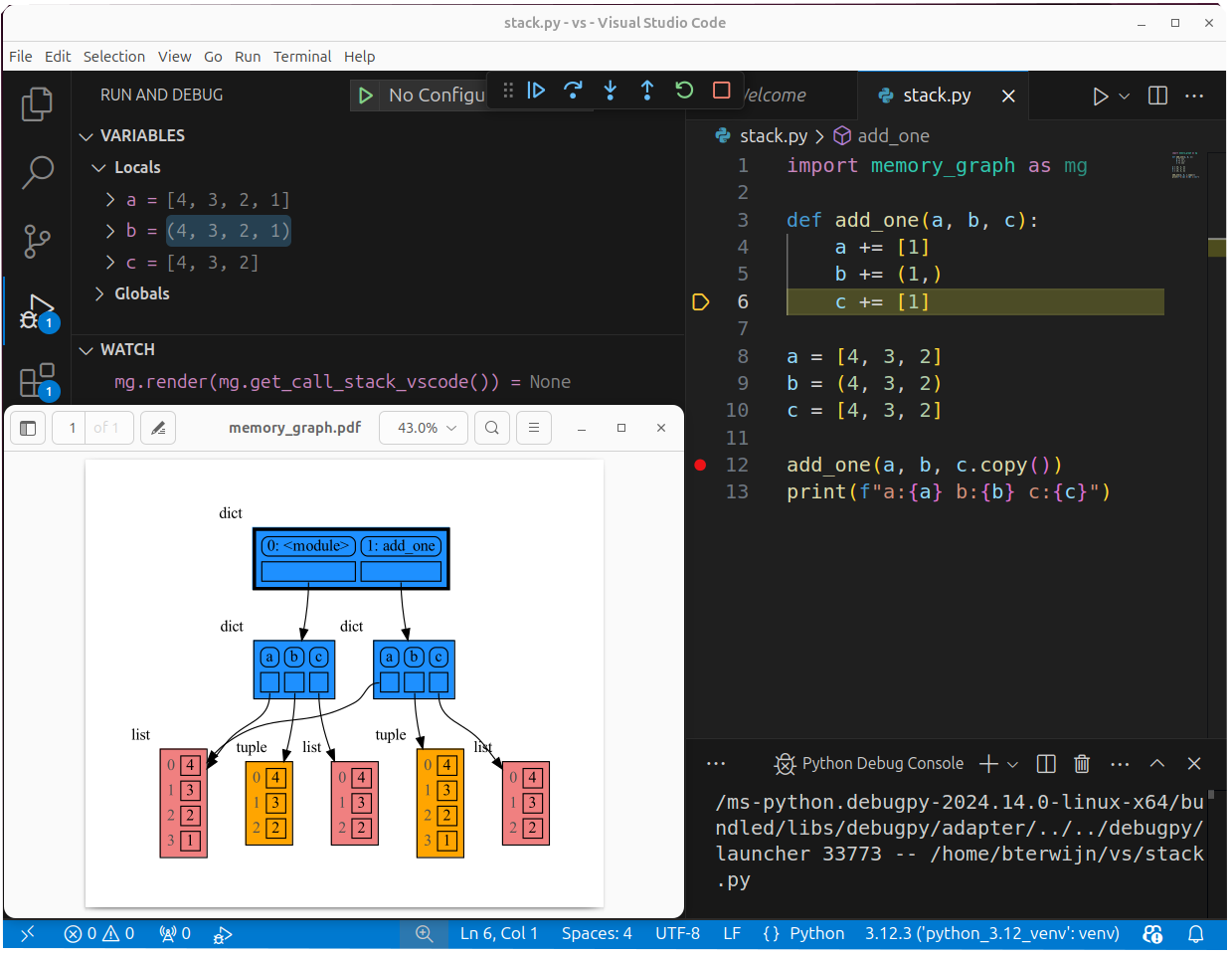
The `mg.stack()` function retrieves the entire call stack, including the local variables for each function on the stack. This enables us to visualize the local variables across all active functions simultaneously. By examining the graph, we can determine whether any local variables from different functions share data. For instance, consider the function `add_one()` which adds the value `1` to each of its parameters `a`, `b`, and `c`.
|
|
246
246
|
|
|
247
247
|
```python
|
|
248
248
|
import memory_graph as mg
|
|
@@ -251,7 +251,7 @@ def add_one(a, b, c):
|
|
|
251
251
|
a += [1]
|
|
252
252
|
b += (1,)
|
|
253
253
|
c += [1]
|
|
254
|
-
mg.show(mg.
|
|
254
|
+
mg.show(mg.stack())
|
|
255
255
|
|
|
256
256
|
a = [4, 3, 2]
|
|
257
257
|
b = (4, 3, 2)
|
|
@@ -295,9 +295,9 @@ import memory_graph as mg
|
|
|
295
295
|
def factorial(n):
|
|
296
296
|
if n==0:
|
|
297
297
|
return 1
|
|
298
|
-
mg.block(mg.show, mg.
|
|
298
|
+
mg.block(mg.show, mg.stack())
|
|
299
299
|
result = n * factorial(n-1)
|
|
300
|
-
mg.block(mg.show, mg.
|
|
300
|
+
mg.block(mg.show, mg.stack())
|
|
301
301
|
return result
|
|
302
302
|
|
|
303
303
|
print(factorial(3))
|
|
@@ -314,7 +314,7 @@ A more interesting recursive example that shows sharing of data is power_set().
|
|
|
314
314
|
import memory_graph as mg
|
|
315
315
|
|
|
316
316
|
def get_subsets(subsets, data, i, subset):
|
|
317
|
-
mg.block(mg.show, mg.
|
|
317
|
+
mg.block(mg.show, mg.stack())
|
|
318
318
|
if i == len(data):
|
|
319
319
|
subsets.append(subset.copy())
|
|
320
320
|
return
|
|
@@ -322,7 +322,7 @@ def get_subsets(subsets, data, i, subset):
|
|
|
322
322
|
get_subsets(subsets, data, i+1, subset) # do include data[i]
|
|
323
323
|
subset.pop()
|
|
324
324
|
get_subsets(subsets, data, i+1, subset) # don't include data[i]
|
|
325
|
-
mg.block(mg.show, mg.
|
|
325
|
+
mg.block(mg.show, mg.stack())
|
|
326
326
|
|
|
327
327
|
def power_set(data):
|
|
328
328
|
subsets = []
|
|
@@ -346,13 +346,13 @@ mg.render(locals(), "my_graph.pdf")
|
|
|
346
346
|
as a *watch* in a debugger tool such as the integrated debugger in Visual Studio Code. Then open the "my_graph.pdf" output file to continuously see all the local variables while debugging. This avoids having to add any memory_graph `show()` or `render()` calls to your code.
|
|
347
347
|
|
|
348
348
|
### Call Stack in Watch Context ###
|
|
349
|
-
The ```mg.
|
|
349
|
+
The ```mg.stack()``` doesn't work well in *watch* context in most debuggers because debuggers introduce additional stack frames that cause problems. Use these alternative functions for various debuggers to filter out these problematic stack frames:
|
|
350
350
|
|
|
351
351
|
| debugger | function to get the call stack |
|
|
352
352
|
|:---|:---|
|
|
353
|
-
| **pdb, pudb** | `mg.
|
|
354
|
-
| **Visual Studio Code** | `mg.
|
|
355
|
-
| **Pycharm** | `mg.
|
|
353
|
+
| **pdb, pudb** | `mg.stack_pdb()` |
|
|
354
|
+
| **Visual Studio Code** | `mg.stack_vscode()` |
|
|
355
|
+
| **Pycharm** | `mg.stack_pycharm()` |
|
|
356
356
|
|
|
357
357
|
|
|
358
358
|
|
|
@@ -363,7 +363,7 @@ mg.save_call_stack("call_stack.txt")
|
|
|
363
363
|
```
|
|
364
364
|
Choose 'after' and 'up_to' what function you want to slice and then call this function to get the desired call stack:
|
|
365
365
|
```
|
|
366
|
-
mg.
|
|
366
|
+
mg.stack_after_up_to(after_function, up_to_function="<module>")
|
|
367
367
|
```
|
|
368
368
|
|
|
369
369
|
### Debugging without Debugger Tool ###
|
|
@@ -373,13 +373,13 @@ To simplify debugging without a debugger tool, we offer these alias functions th
|
|
|
373
373
|
| alias | purpose | function call |
|
|
374
374
|
|:---|:---|:---|
|
|
375
375
|
| `mg.sl()` | **s**how **l**ocal variables | `mg.show(locals())` |
|
|
376
|
-
| `mg.ss()` | **s**how the call **s**tack | `mg.show(mg.
|
|
376
|
+
| `mg.ss()` | **s**how the call **s**tack | `mg.show(mg.stack())` |
|
|
377
377
|
| `mg.bsl()` | **b**lock after **s**howing **l**ocal variables | `mg.block(mg.show, locals())` |
|
|
378
|
-
| `mg.bss()` | **b**lock after **s**howing the call **s**tack | `mg.block(mg.show, mg.
|
|
378
|
+
| `mg.bss()` | **b**lock after **s**howing the call **s**tack | `mg.block(mg.show, mg.stack())` |
|
|
379
379
|
| `mg.rl()` | **r**ender **l**ocal variables | `mg.render(locals())` |
|
|
380
|
-
| `mg.rs()` | **r**ender the call **s**tack | `mg.render(mg.
|
|
380
|
+
| `mg.rs()` | **r**ender the call **s**tack | `mg.render(mg.stack())` |
|
|
381
381
|
| `mg.brl()` | **b**lock after **r**endering **l**ocal variables | `mg.block(mg.render, locals())` |
|
|
382
|
-
| `mg.brs()` | **b**lock after **r**endering the call **s**tack | `mg.block(mg.render, mg.
|
|
382
|
+
| `mg.brs()` | **b**lock after **r**endering the call **s**tack | `mg.block(mg.render, mg.stack())` |
|
|
383
383
|
| `mg.l()` | same as `mg.bsl()` | |
|
|
384
384
|
| `mg.s()` | same as `mg.bss()` | |
|
|
385
385
|
|
|
@@ -552,7 +552,7 @@ Different aspects of memory_graph can be configured. The default configuration i
|
|
|
552
552
|
- Maps each type to a Slicer. A slicer determines how many elements of a data type are shown in the graph to prevent the graph from getting too big. 'Slicer()' does no slicing, 'Slicer(1,2,3)' shows just 1 element at the beginning, 2 in the middle, and 3 at the end.
|
|
553
553
|
|
|
554
554
|
### Simplified Graph ###
|
|
555
|
-
Memory_graph simplifies the visualization (and the viewer's mental model) by **not** showing separate nodes for immutable types like `bool`, `int`, `float`, `complex`, and `str` by default. This simplification can sometimes be slightly misleading. As in the example below, after a shallow copy, lists `a` and `b` technically share their `int` values, but the graph makes it appear as though `a` and `b` each have their own copies. However, since `int` is immutable, this simplification will never lead to unexpected changes
|
|
555
|
+
Memory_graph simplifies the visualization (and the viewer's mental model) by **not** showing separate nodes for immutable types like `bool`, `int`, `float`, `complex`, and `str` by default. This simplification can sometimes be slightly misleading. As in the example below, after a shallow copy, lists `a` and `b` technically share their `int` values, but the graph makes it appear as though `a` and `b` each have their own copies. However, since `int` is immutable, this simplification will never lead to unexpected changes (changing `a` won’t affect `b`) so will never result in bugs.
|
|
556
556
|
|
|
557
557
|
The simplification strikes a balance: it is slightly misleading but keeps the graph clean and easy to understand and focuses on the mutable types where unexpected changes can occur. This is why it is the default behavior. If you do want to show separate nodes for `int` values, such as for educational purposes, you can simply remove `int` from the `mg.config.not_node_types` set:
|
|
558
558
|
```python
|
|
@@ -765,7 +765,7 @@ mg.show(locals())
|
|
|
765
765
|
|
|
766
766
|
|
|
767
767
|
## Jupyter Notebook ##
|
|
768
|
-
In Jupyter Notebook `locals()` has additional variables that cause problems in the graph, use `mg.locals_jupyter()` to get the local variables with these problematic variables filtered out. Use `mg.
|
|
768
|
+
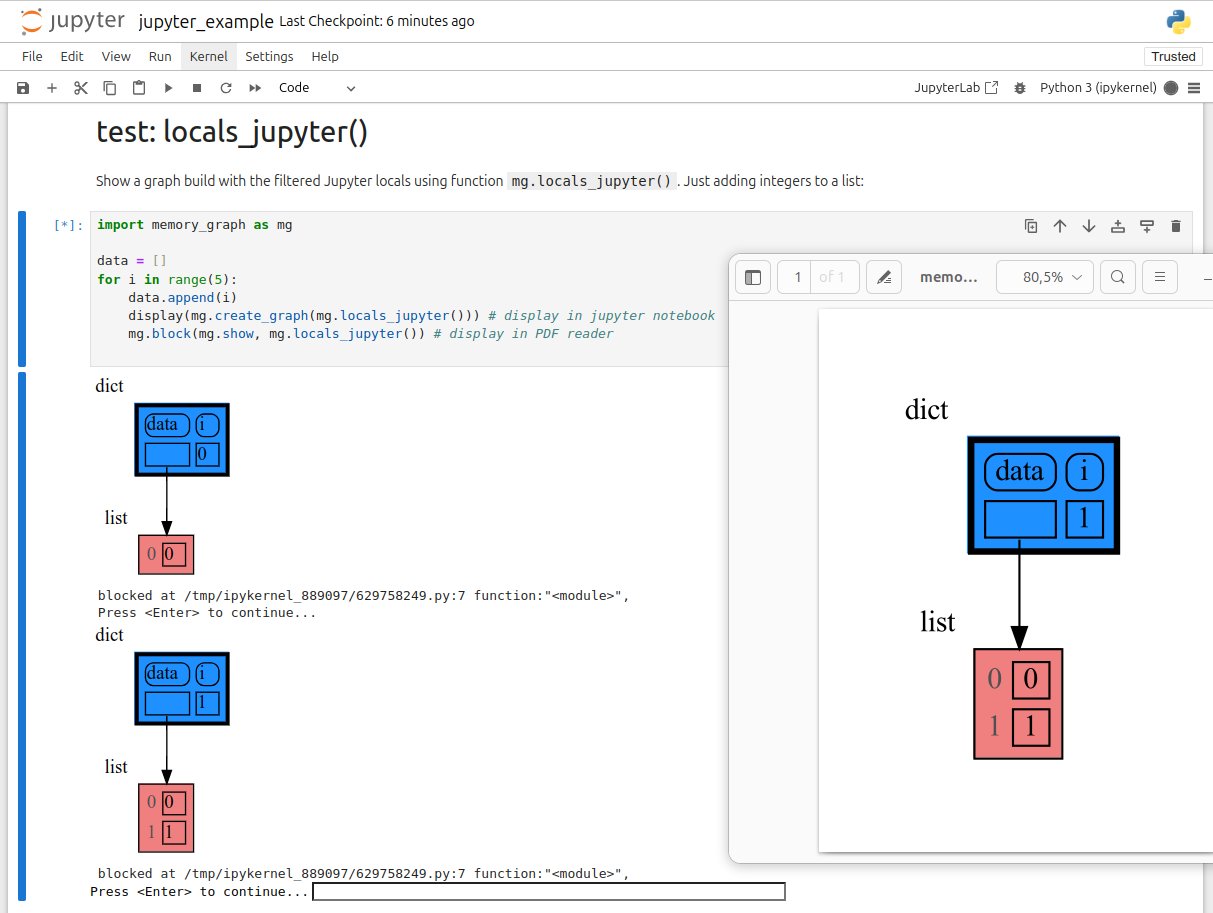
In Jupyter Notebook `locals()` has additional variables that cause problems in the graph, use `mg.locals_jupyter()` to get the local variables with these problematic variables filtered out. Use `mg.stack_jupyter()` to get the whole call stack with these variables filtered out.
|
|
769
769
|
|
|
770
770
|
We can use `mg.show()` and `mg.render()` in a Jupyter Notebook, but alternatively we can also use `mg.create_graph()` to create a graph and the `display()` function to render it inline with for example:
|
|
771
771
|
|
|
@@ -778,11 +778,11 @@ See for example [jupyter_example.ipynb](https://raw.githubusercontent.com/bterwi
|
|
|
778
778
|
|
|
779
779
|
|
|
780
780
|
## ipython ##
|
|
781
|
-
In ipython `locals()` has additional variables that cause problems in the graph, use `mg.locals_ipython()` to get the local variables with these problematic variables filtered out. Use `mg.
|
|
781
|
+
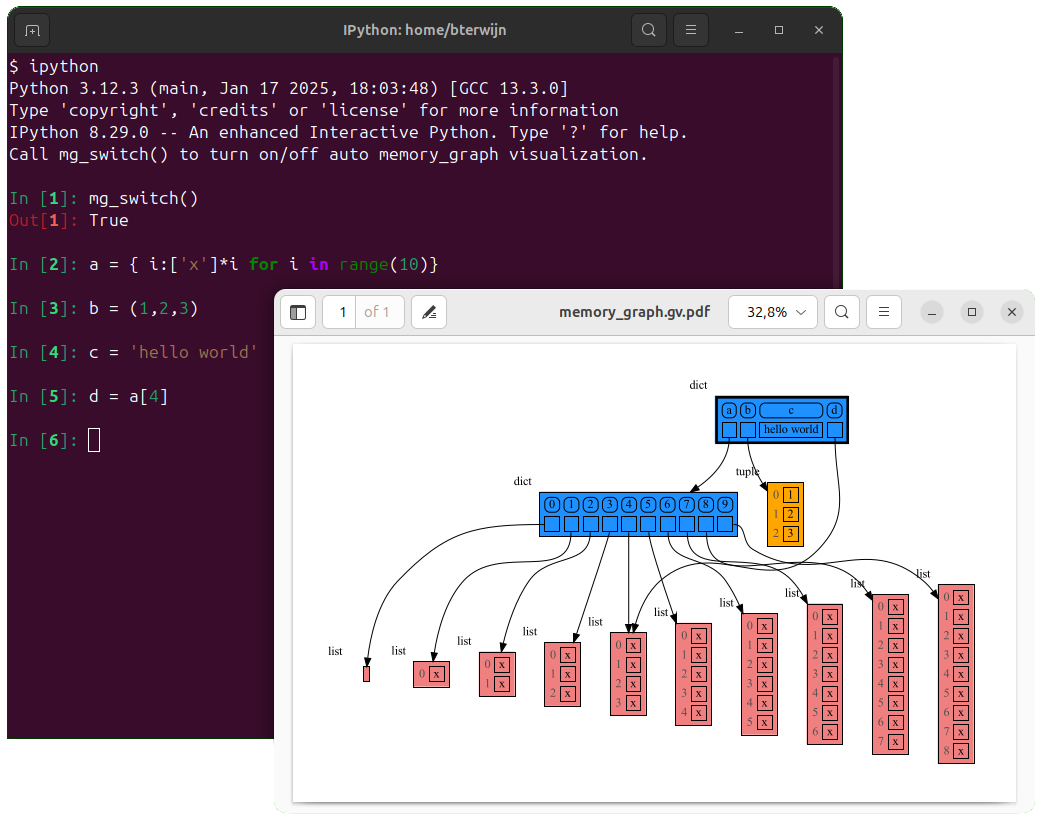
In ipython `locals()` has additional variables that cause problems in the graph, use `mg.locals_ipython()` to get the local variables with these problematic variables filtered out. Use `mg.stack_ipython()` to get the whole call stack with these variables filtered out.
|
|
782
782
|
|
|
783
783
|
Additionally install file [auto_memory_graph.py](https://raw.githubusercontent.com/bterwijn/memory_graph/main/src/auto_memory_graph.py) in the ipython startup directory:
|
|
784
|
-
* Linux/Mac:
|
|
785
|
-
* Windows:
|
|
784
|
+
* Linux/Mac: `~/.ipython/profile_default/startup/`
|
|
785
|
+
* Windows: `%USERPROFILE%\.ipython\profile_default\startup\`
|
|
786
786
|
|
|
787
787
|
Then after starting 'ipython' call function `mg_switch()` to turn on/off the automatic visualization of local variables after each command.
|
|
788
788
|
|
|
@@ -180,7 +180,7 @@ mg.show(locals())
|
|
|
180
180
|
|
|
181
181
|
|
|
182
182
|
### Custom Copy ###
|
|
183
|
-
We can write our own custom copy function or method in case the three "copy" options don't do what we want. For example, in the code below the copy() method of My_Class copies the `digits` but shares the `letters` between two objects.
|
|
183
|
+
We can write our own custom copy function or method in case the three standard "copy" options don't do what we want. For example, in the code below the copy() method of My_Class copies the `digits` but shares the `letters` between two objects.
|
|
184
184
|
|
|
185
185
|
```python
|
|
186
186
|
import memory_graph as mg
|
|
@@ -223,7 +223,7 @@ mg.render(locals(), 'rebinding2.png')
|
|
|
223
223
|
| rebinding1.png | rebinding2.png |
|
|
224
224
|
|
|
225
225
|
## Call Stack ##
|
|
226
|
-
The `mg.
|
|
226
|
+
The `mg.stack()` function retrieves the entire call stack, including the local variables for each function on the stack. This enables us to visualize the local variables across all active functions simultaneously. By examining the graph, we can determine whether any local variables from different functions share data. For instance, consider the function `add_one()` which adds the value `1` to each of its parameters `a`, `b`, and `c`.
|
|
227
227
|
|
|
228
228
|
```python
|
|
229
229
|
import memory_graph as mg
|
|
@@ -232,7 +232,7 @@ def add_one(a, b, c):
|
|
|
232
232
|
a += [1]
|
|
233
233
|
b += (1,)
|
|
234
234
|
c += [1]
|
|
235
|
-
mg.show(mg.
|
|
235
|
+
mg.show(mg.stack())
|
|
236
236
|
|
|
237
237
|
a = [4, 3, 2]
|
|
238
238
|
b = (4, 3, 2)
|
|
@@ -276,9 +276,9 @@ import memory_graph as mg
|
|
|
276
276
|
def factorial(n):
|
|
277
277
|
if n==0:
|
|
278
278
|
return 1
|
|
279
|
-
mg.block(mg.show, mg.
|
|
279
|
+
mg.block(mg.show, mg.stack())
|
|
280
280
|
result = n * factorial(n-1)
|
|
281
|
-
mg.block(mg.show, mg.
|
|
281
|
+
mg.block(mg.show, mg.stack())
|
|
282
282
|
return result
|
|
283
283
|
|
|
284
284
|
print(factorial(3))
|
|
@@ -295,7 +295,7 @@ A more interesting recursive example that shows sharing of data is power_set().
|
|
|
295
295
|
import memory_graph as mg
|
|
296
296
|
|
|
297
297
|
def get_subsets(subsets, data, i, subset):
|
|
298
|
-
mg.block(mg.show, mg.
|
|
298
|
+
mg.block(mg.show, mg.stack())
|
|
299
299
|
if i == len(data):
|
|
300
300
|
subsets.append(subset.copy())
|
|
301
301
|
return
|
|
@@ -303,7 +303,7 @@ def get_subsets(subsets, data, i, subset):
|
|
|
303
303
|
get_subsets(subsets, data, i+1, subset) # do include data[i]
|
|
304
304
|
subset.pop()
|
|
305
305
|
get_subsets(subsets, data, i+1, subset) # don't include data[i]
|
|
306
|
-
mg.block(mg.show, mg.
|
|
306
|
+
mg.block(mg.show, mg.stack())
|
|
307
307
|
|
|
308
308
|
def power_set(data):
|
|
309
309
|
subsets = []
|
|
@@ -327,13 +327,13 @@ mg.render(locals(), "my_graph.pdf")
|
|
|
327
327
|
as a *watch* in a debugger tool such as the integrated debugger in Visual Studio Code. Then open the "my_graph.pdf" output file to continuously see all the local variables while debugging. This avoids having to add any memory_graph `show()` or `render()` calls to your code.
|
|
328
328
|
|
|
329
329
|
### Call Stack in Watch Context ###
|
|
330
|
-
The ```mg.
|
|
330
|
+
The ```mg.stack()``` doesn't work well in *watch* context in most debuggers because debuggers introduce additional stack frames that cause problems. Use these alternative functions for various debuggers to filter out these problematic stack frames:
|
|
331
331
|
|
|
332
332
|
| debugger | function to get the call stack |
|
|
333
333
|
|:---|:---|
|
|
334
|
-
| **pdb, pudb** | `mg.
|
|
335
|
-
| **Visual Studio Code** | `mg.
|
|
336
|
-
| **Pycharm** | `mg.
|
|
334
|
+
| **pdb, pudb** | `mg.stack_pdb()` |
|
|
335
|
+
| **Visual Studio Code** | `mg.stack_vscode()` |
|
|
336
|
+
| **Pycharm** | `mg.stack_pycharm()` |
|
|
337
337
|
|
|
338
338
|

|
|
339
339
|
|
|
@@ -344,7 +344,7 @@ mg.save_call_stack("call_stack.txt")
|
|
|
344
344
|
```
|
|
345
345
|
Choose 'after' and 'up_to' what function you want to slice and then call this function to get the desired call stack:
|
|
346
346
|
```
|
|
347
|
-
mg.
|
|
347
|
+
mg.stack_after_up_to(after_function, up_to_function="<module>")
|
|
348
348
|
```
|
|
349
349
|
|
|
350
350
|
### Debugging without Debugger Tool ###
|
|
@@ -354,13 +354,13 @@ To simplify debugging without a debugger tool, we offer these alias functions th
|
|
|
354
354
|
| alias | purpose | function call |
|
|
355
355
|
|:---|:---|:---|
|
|
356
356
|
| `mg.sl()` | **s**how **l**ocal variables | `mg.show(locals())` |
|
|
357
|
-
| `mg.ss()` | **s**how the call **s**tack | `mg.show(mg.
|
|
357
|
+
| `mg.ss()` | **s**how the call **s**tack | `mg.show(mg.stack())` |
|
|
358
358
|
| `mg.bsl()` | **b**lock after **s**howing **l**ocal variables | `mg.block(mg.show, locals())` |
|
|
359
|
-
| `mg.bss()` | **b**lock after **s**howing the call **s**tack | `mg.block(mg.show, mg.
|
|
359
|
+
| `mg.bss()` | **b**lock after **s**howing the call **s**tack | `mg.block(mg.show, mg.stack())` |
|
|
360
360
|
| `mg.rl()` | **r**ender **l**ocal variables | `mg.render(locals())` |
|
|
361
|
-
| `mg.rs()` | **r**ender the call **s**tack | `mg.render(mg.
|
|
361
|
+
| `mg.rs()` | **r**ender the call **s**tack | `mg.render(mg.stack())` |
|
|
362
362
|
| `mg.brl()` | **b**lock after **r**endering **l**ocal variables | `mg.block(mg.render, locals())` |
|
|
363
|
-
| `mg.brs()` | **b**lock after **r**endering the call **s**tack | `mg.block(mg.render, mg.
|
|
363
|
+
| `mg.brs()` | **b**lock after **r**endering the call **s**tack | `mg.block(mg.render, mg.stack())` |
|
|
364
364
|
| `mg.l()` | same as `mg.bsl()` | |
|
|
365
365
|
| `mg.s()` | same as `mg.bss()` | |
|
|
366
366
|
|
|
@@ -533,7 +533,7 @@ Different aspects of memory_graph can be configured. The default configuration i
|
|
|
533
533
|
- Maps each type to a Slicer. A slicer determines how many elements of a data type are shown in the graph to prevent the graph from getting too big. 'Slicer()' does no slicing, 'Slicer(1,2,3)' shows just 1 element at the beginning, 2 in the middle, and 3 at the end.
|
|
534
534
|
|
|
535
535
|
### Simplified Graph ###
|
|
536
|
-
Memory_graph simplifies the visualization (and the viewer's mental model) by **not** showing separate nodes for immutable types like `bool`, `int`, `float`, `complex`, and `str` by default. This simplification can sometimes be slightly misleading. As in the example below, after a shallow copy, lists `a` and `b` technically share their `int` values, but the graph makes it appear as though `a` and `b` each have their own copies. However, since `int` is immutable, this simplification will never lead to unexpected changes
|
|
536
|
+
Memory_graph simplifies the visualization (and the viewer's mental model) by **not** showing separate nodes for immutable types like `bool`, `int`, `float`, `complex`, and `str` by default. This simplification can sometimes be slightly misleading. As in the example below, after a shallow copy, lists `a` and `b` technically share their `int` values, but the graph makes it appear as though `a` and `b` each have their own copies. However, since `int` is immutable, this simplification will never lead to unexpected changes (changing `a` won’t affect `b`) so will never result in bugs.
|
|
537
537
|
|
|
538
538
|
The simplification strikes a balance: it is slightly misleading but keeps the graph clean and easy to understand and focuses on the mutable types where unexpected changes can occur. This is why it is the default behavior. If you do want to show separate nodes for `int` values, such as for educational purposes, you can simply remove `int` from the `mg.config.not_node_types` set:
|
|
539
539
|
```python
|
|
@@ -746,7 +746,7 @@ mg.show(locals())
|
|
|
746
746
|
|
|
747
747
|
|
|
748
748
|
## Jupyter Notebook ##
|
|
749
|
-
In Jupyter Notebook `locals()` has additional variables that cause problems in the graph, use `mg.locals_jupyter()` to get the local variables with these problematic variables filtered out. Use `mg.
|
|
749
|
+
In Jupyter Notebook `locals()` has additional variables that cause problems in the graph, use `mg.locals_jupyter()` to get the local variables with these problematic variables filtered out. Use `mg.stack_jupyter()` to get the whole call stack with these variables filtered out.
|
|
750
750
|
|
|
751
751
|
We can use `mg.show()` and `mg.render()` in a Jupyter Notebook, but alternatively we can also use `mg.create_graph()` to create a graph and the `display()` function to render it inline with for example:
|
|
752
752
|
|
|
@@ -759,11 +759,11 @@ See for example [jupyter_example.ipynb](https://raw.githubusercontent.com/bterwi
|
|
|
759
759
|

|
|
760
760
|
|
|
761
761
|
## ipython ##
|
|
762
|
-
In ipython `locals()` has additional variables that cause problems in the graph, use `mg.locals_ipython()` to get the local variables with these problematic variables filtered out. Use `mg.
|
|
762
|
+
In ipython `locals()` has additional variables that cause problems in the graph, use `mg.locals_ipython()` to get the local variables with these problematic variables filtered out. Use `mg.stack_ipython()` to get the whole call stack with these variables filtered out.
|
|
763
763
|
|
|
764
764
|
Additionally install file [auto_memory_graph.py](https://raw.githubusercontent.com/bterwijn/memory_graph/main/src/auto_memory_graph.py) in the ipython startup directory:
|
|
765
|
-
* Linux/Mac:
|
|
766
|
-
* Windows:
|
|
765
|
+
* Linux/Mac: `~/.ipython/profile_default/startup/`
|
|
766
|
+
* Windows: `%USERPROFILE%\.ipython\profile_default\startup\`
|
|
767
767
|
|
|
768
768
|
Then after starting 'ipython' call function `mg_switch()` to turn on/off the automatic visualization of local variables after each command.
|
|
769
769
|

|
|
@@ -0,0 +1,9 @@
|
|
|
1
|
+
|
|
2
|
+
mg.block(fun, print_loc=True), update docs, stack-overflow posts
|
|
3
|
+
|
|
4
|
+
Jupyter Notebook inline render using display()
|
|
5
|
+
|
|
6
|
+
webassembly inline render
|
|
7
|
+
|
|
8
|
+
optional max introspect depth for each type/id
|
|
9
|
+
https://discuss.python.org/t/request-for-feedback-memory-graph-a-python-visualization-tool-for-education/78347
|
|
@@ -0,0 +1,85 @@
|
|
|
1
|
+
{
|
|
2
|
+
"cells": [
|
|
3
|
+
{
|
|
4
|
+
"cell_type": "markdown",
|
|
5
|
+
"id": "23f6d43f-dd17-4020-971e-5bb8a5b1e30b",
|
|
6
|
+
"metadata": {},
|
|
7
|
+
"source": [
|
|
8
|
+
"# test: locals_jupyter()\n",
|
|
9
|
+
"Show a graph build with the filtered Jupyter locals using function `mg.locals_jupyter()`. Just adding integers to a list:"
|
|
10
|
+
]
|
|
11
|
+
},
|
|
12
|
+
{
|
|
13
|
+
"cell_type": "code",
|
|
14
|
+
"execution_count": null,
|
|
15
|
+
"id": "e8913787-bbef-4adb-b027-ac0f28500233",
|
|
16
|
+
"metadata": {},
|
|
17
|
+
"outputs": [],
|
|
18
|
+
"source": [
|
|
19
|
+
"import memory_graph as mg\n",
|
|
20
|
+
"\n",
|
|
21
|
+
"data = []\n",
|
|
22
|
+
"for i in range(5):\n",
|
|
23
|
+
" data.append(i)\n",
|
|
24
|
+
" display(mg.create_graph(mg.locals_jupyter())) # display in jupyter notebook\n",
|
|
25
|
+
" mg.block(mg.show, mg.locals_jupyter()) # display in PDF reader\n",
|
|
26
|
+
" "
|
|
27
|
+
]
|
|
28
|
+
},
|
|
29
|
+
{
|
|
30
|
+
"cell_type": "markdown",
|
|
31
|
+
"id": "f66d9b8d-0937-4ad0-97b4-a7459e84c4f2",
|
|
32
|
+
"metadata": {},
|
|
33
|
+
"source": [
|
|
34
|
+
"# test: get_call_stack_jupyter()\n",
|
|
35
|
+
"Show a graph build the filterd Jupyter call stack from function `mg.get_call_stack_jupyter()`. Recursively filling a list with all permutation of elements with resampling:"
|
|
36
|
+
]
|
|
37
|
+
},
|
|
38
|
+
{
|
|
39
|
+
"cell_type": "code",
|
|
40
|
+
"execution_count": null,
|
|
41
|
+
"id": "15d0c443-7cc6-4b4f-a9db-598aaf261364",
|
|
42
|
+
"metadata": {},
|
|
43
|
+
"outputs": [],
|
|
44
|
+
"source": [
|
|
45
|
+
"import memory_graph as mg\n",
|
|
46
|
+
"\n",
|
|
47
|
+
"def get_all_permutations(permutations, elements, data, max_length):\n",
|
|
48
|
+
" if len(data) == max_length: # recursive stop condition\n",
|
|
49
|
+
" permutations.append(data.copy())\n",
|
|
50
|
+
" else:\n",
|
|
51
|
+
" for i in elements:\n",
|
|
52
|
+
" data.append(i)\n",
|
|
53
|
+
" mg.block(mg.show, mg.get_call_stack_jupyter())\n",
|
|
54
|
+
" get_all_permutations(permutations, elements, data, max_length)\n",
|
|
55
|
+
" data.pop()\n",
|
|
56
|
+
" mg.block(mg.show, mg.get_call_stack_jupyter())\n",
|
|
57
|
+
"\n",
|
|
58
|
+
"permutations = []\n",
|
|
59
|
+
"get_all_permutations(permutations, ['L','R'], [], 3)\n",
|
|
60
|
+
"print(permutations)"
|
|
61
|
+
]
|
|
62
|
+
}
|
|
63
|
+
],
|
|
64
|
+
"metadata": {
|
|
65
|
+
"kernelspec": {
|
|
66
|
+
"display_name": "Python 3 (ipykernel)",
|
|
67
|
+
"language": "python",
|
|
68
|
+
"name": "python3"
|
|
69
|
+
},
|
|
70
|
+
"language_info": {
|
|
71
|
+
"codemirror_mode": {
|
|
72
|
+
"name": "ipython",
|
|
73
|
+
"version": 3
|
|
74
|
+
},
|
|
75
|
+
"file_extension": ".py",
|
|
76
|
+
"mimetype": "text/x-python",
|
|
77
|
+
"name": "python",
|
|
78
|
+
"nbconvert_exporter": "python",
|
|
79
|
+
"pygments_lexer": "ipython3",
|
|
80
|
+
"version": "3.12.3"
|
|
81
|
+
}
|
|
82
|
+
},
|
|
83
|
+
"nbformat": 4,
|
|
84
|
+
"nbformat_minor": 5
|
|
85
|
+
}
|
|
@@ -0,0 +1,41 @@
|
|
|
1
|
+
import memory_graph as mg
|
|
2
|
+
import bintrees
|
|
3
|
+
|
|
4
|
+
# Create an AVL tree
|
|
5
|
+
tree = bintrees.AVLTree()
|
|
6
|
+
tree.insert(10, "ten")
|
|
7
|
+
tree.insert(5, "five")
|
|
8
|
+
tree.insert(20, "twenty")
|
|
9
|
+
tree.insert(15, "fifteen")
|
|
10
|
+
|
|
11
|
+
mg.render(locals(), 'avltree_fail.png')
|
|
12
|
+
|
|
13
|
+
mg.config.type_to_color[bintrees.avltree.Node] = "sandybrown"
|
|
14
|
+
mg.render(locals(), 'avltree_color.png')
|
|
15
|
+
|
|
16
|
+
mg.config.type_to_node[bintrees.avltree.Node] = lambda data: mg.node_linear.Node_Linear(data, dir(data))
|
|
17
|
+
mg.config.type_to_slicer[bintrees.avltree.Node] = mg.slicer.Slicer()
|
|
18
|
+
mg.render(locals(), 'avltree_dir.png')
|
|
19
|
+
|
|
20
|
+
mg.config.type_to_node[bintrees.avltree.Node] = lambda data: mg.node_base.Node_Base(f"key:{data.key} value:{data.value}")
|
|
21
|
+
mg.render(locals(), 'avltree_base.png')
|
|
22
|
+
|
|
23
|
+
mg.config.type_to_node[bintrees.avltree.Node] = lambda data: mg.node_linear.Node_Linear(data,
|
|
24
|
+
['left', data.left,
|
|
25
|
+
'key', data.key,
|
|
26
|
+
'value', data.value,
|
|
27
|
+
'right', data.right])
|
|
28
|
+
mg.render(locals(), 'avltree_linear.png')
|
|
29
|
+
|
|
30
|
+
mg.config.type_to_node[bintrees.avltree.Node] = lambda data: mg.node_key_value.Node_Key_Value(data,
|
|
31
|
+
{'left': data.left,
|
|
32
|
+
'key': data.key,
|
|
33
|
+
'value': data.value,
|
|
34
|
+
'right': data.right}.items())
|
|
35
|
+
mg.render(locals(), 'avltree_key_value.png')
|
|
36
|
+
|
|
37
|
+
mg.config.type_to_node[bintrees.avltree.Node] = lambda data: mg.node_table.Node_Table(data,
|
|
38
|
+
[[data.key, data.value],
|
|
39
|
+
[data.left, data.right]]
|
|
40
|
+
)
|
|
41
|
+
mg.render(locals(), 'avltree_table.png')
|
|
@@ -0,0 +1,26 @@
|
|
|
1
|
+
digraph memory_graph {
|
|
2
|
+
node [shape=plaintext]
|
|
3
|
+
node130513740275104 [label=<
|
|
4
|
+
<TABLE BORDER="0" CELLBORDER="1" CELLSPACING="0" CELLPADDING="0" BGCOLOR="white"><TR><TD PORT="table">
|
|
5
|
+
<bintrees.avltree.Node object at 0x76b3992...
|
|
6
|
+
</TD></TR></TABLE>
|
|
7
|
+
> xlabel="Node"]
|
|
8
|
+
node130513740453920 [label=<
|
|
9
|
+
<TABLE BORDER="0" CELLBORDER="1" CELLSPACING="0" CELLPADDING="0" BGCOLOR="seagreen1"><TR><TD PORT="table">
|
|
10
|
+
<TABLE BORDER="0" CELLBORDER="0" CELLSPACING="5" CELLPADDING="0">
|
|
11
|
+
<TR><TD BORDER="1" STYLE="ROUNDED"> _root </TD><TD BORDER="1" STYLE="ROUNDED"> _count </TD></TR>
|
|
12
|
+
<TR><TD BORDER="1" PORT="ref0"> </TD><TD BORDER="1"> 4 </TD></TR>
|
|
13
|
+
</TABLE>
|
|
14
|
+
</TD></TR></TABLE>
|
|
15
|
+
> xlabel=AVLTree]
|
|
16
|
+
node130513740453920:ref0 -> node130513740275104:table [style=solid]
|
|
17
|
+
node130513742307200 [label=<
|
|
18
|
+
<TABLE BORDER="0" CELLBORDER="3" CELLSPACING="0" CELLPADDING="0" BGCOLOR="dodgerblue1"><TR><TD PORT="table">
|
|
19
|
+
<TABLE BORDER="0" CELLBORDER="0" CELLSPACING="5" CELLPADDING="0">
|
|
20
|
+
<TR><TD BORDER="1" STYLE="ROUNDED"> tree </TD></TR>
|
|
21
|
+
<TR><TD BORDER="1" PORT="ref0"> </TD></TR>
|
|
22
|
+
</TABLE>
|
|
23
|
+
</TD></TR></TABLE>
|
|
24
|
+
> xlabel=dict]
|
|
25
|
+
node130513742307200:ref0 -> node130513740453920:table [style=solid]
|
|
26
|
+
}
|
|
Binary file
|
|
Binary file
|
|
Binary file
|
|
Binary file
|
|
Binary file
|
|
Binary file
|
|
@@ -13,12 +13,12 @@ def get_fac_name():
|
|
|
13
13
|
def factorial(n):
|
|
14
14
|
if n==0:
|
|
15
15
|
return 1
|
|
16
|
-
#mg.show( mg.
|
|
17
|
-
mg.render( mg.
|
|
16
|
+
#mg.show( mg.stack(), block=True ) # draw graph
|
|
17
|
+
mg.render( mg.stack(), get_fac_name())
|
|
18
18
|
result = n*factorial(n-1)
|
|
19
|
-
#mg.show( mg.
|
|
20
|
-
mg.render( mg.
|
|
19
|
+
#mg.show( mg.stack(), block=True ) # draw graph
|
|
20
|
+
mg.render( mg.stack(), get_fac_name())
|
|
21
21
|
return result
|
|
22
22
|
|
|
23
|
-
mg.render( mg.
|
|
23
|
+
mg.render( mg.stack(), get_fac_name())
|
|
24
24
|
factorial(3)
|
|
Binary file
|
|
Binary file
|
|
Binary file
|
|
Binary file
|
|
Binary file
|
|
Binary file
|
|
Binary file
|
|
@@ -0,0 +1,20 @@
|
|
|
1
|
+
digraph memory_graph {
|
|
2
|
+
node [shape=plaintext]
|
|
3
|
+
node126810958314944 [label=<
|
|
4
|
+
<TABLE BORDER="0" CELLBORDER="1" CELLSPACING="0" CELLPADDING="0" BGCOLOR="lightcoral"><TR><TD PORT="table">
|
|
5
|
+
<TABLE BORDER="0" CELLBORDER="0" CELLSPACING="5" CELLPADDING="0">
|
|
6
|
+
<TR><TD><font color="#505050">0</font></TD><TD BORDER="1"> 0 </TD></TR>
|
|
7
|
+
<TR><TD><font color="#505050">1</font></TD><TD BORDER="1"> 1 </TD></TR>
|
|
8
|
+
</TABLE>
|
|
9
|
+
</TD></TR></TABLE>
|
|
10
|
+
> xlabel=list]
|
|
11
|
+
node126810936962048 [label=<
|
|
12
|
+
<TABLE BORDER="0" CELLBORDER="3" CELLSPACING="0" CELLPADDING="0" BGCOLOR="dodgerblue1"><TR><TD PORT="table">
|
|
13
|
+
<TABLE BORDER="0" CELLBORDER="0" CELLSPACING="5" CELLPADDING="0">
|
|
14
|
+
<TR><TD BORDER="1" STYLE="ROUNDED"> data </TD><TD BORDER="1" STYLE="ROUNDED"> i </TD></TR>
|
|
15
|
+
<TR><TD BORDER="1" PORT="ref0"> </TD><TD BORDER="1"> 1 </TD></TR>
|
|
16
|
+
</TABLE>
|
|
17
|
+
</TD></TR></TABLE>
|
|
18
|
+
> xlabel=dict]
|
|
19
|
+
node126810936962048:ref0 -> node126810958314944:table [style=solid]
|
|
20
|
+
}
|
|
Binary file
|
|
@@ -0,0 +1,35 @@
|
|
|
1
|
+
digraph memory_graph {
|
|
2
|
+
node [shape=plaintext]
|
|
3
|
+
node123611189233536 [label=<
|
|
4
|
+
<TABLE BORDER="0" CELLBORDER="1" CELLSPACING="0" CELLPADDING="0" BGCOLOR="lightcoral"><TR><TD PORT="table">
|
|
5
|
+
<TABLE BORDER="0" CELLBORDER="0" CELLSPACING="5" CELLPADDING="0">
|
|
6
|
+
<TR><TD><font color="#505050">0</font></TD><TD BORDER="1"> 1 </TD></TR>
|
|
7
|
+
<TR><TD><font color="#505050">1</font></TD><TD BORDER="1"> 2 </TD></TR>
|
|
8
|
+
<TR><TD><font color="#505050">2</font></TD><TD BORDER="1"> 3 </TD></TR>
|
|
9
|
+
<TR><TD><font color="#505050">3</font></TD><TD BORDER="1"> 0 </TD></TR>
|
|
10
|
+
<TR><TD><font color="#505050">4</font></TD><TD BORDER="1"> 1 </TD></TR>
|
|
11
|
+
<TR><TD><font color="#505050">5</font></TD><TD BORDER="1"> 4 </TD></TR>
|
|
12
|
+
<TR><TD><font color="#505050">6</font></TD><TD BORDER="1"> 9 </TD></TR>
|
|
13
|
+
<TR><TD><font color="#505050">7</font></TD><TD BORDER="1"> 16 </TD></TR>
|
|
14
|
+
</TABLE>
|
|
15
|
+
</TD></TR></TABLE>
|
|
16
|
+
> xlabel=list]
|
|
17
|
+
node123611188190208 [label=<
|
|
18
|
+
<TABLE BORDER="0" CELLBORDER="1" CELLSPACING="0" CELLPADDING="0" BGCOLOR="dodgerblue1"><TR><TD PORT="table">
|
|
19
|
+
<TABLE BORDER="0" CELLBORDER="0" CELLSPACING="5" CELLPADDING="0">
|
|
20
|
+
<TR><TD BORDER="1" STYLE="ROUNDED"> d </TD><TD BORDER="1" STYLE="ROUNDED"> i </TD></TR>
|
|
21
|
+
<TR><TD BORDER="1" PORT="ref0"> </TD><TD BORDER="1"> 4 </TD></TR>
|
|
22
|
+
</TABLE>
|
|
23
|
+
</TD></TR></TABLE>
|
|
24
|
+
> xlabel=dict]
|
|
25
|
+
node123611188190208:ref0 -> node123611189233536:table [style=solid]
|
|
26
|
+
node123611178012800 [label=<
|
|
27
|
+
<TABLE BORDER="0" CELLBORDER="1" CELLSPACING="0" CELLPADDING="0" BGCOLOR="dodgerblue1"><TR><TD PORT="table">
|
|
28
|
+
<TABLE BORDER="0" CELLBORDER="0" CELLSPACING="5" CELLPADDING="0">
|
|
29
|
+
<TR><TD BORDER="1" STYLE="ROUNDED"> 0: <module> </TD></TR>
|
|
30
|
+
<TR><TD BORDER="1" PORT="ref0"> </TD></TR>
|
|
31
|
+
</TABLE>
|
|
32
|
+
</TD></TR></TABLE>
|
|
33
|
+
> xlabel=dict]
|
|
34
|
+
node123611178012800:ref0 -> node123611188190208:table [style=solid]
|
|
35
|
+
}
|
|
Binary file
|
|
@@ -8,7 +8,7 @@ image = 1
|
|
|
8
8
|
|
|
9
9
|
def get_subsets(subsets, data, i, subset):
|
|
10
10
|
global image
|
|
11
|
-
mg.render(mg.
|
|
11
|
+
mg.render(mg.stack(), f"power_set{image}.png")
|
|
12
12
|
image += 1
|
|
13
13
|
if i == len(data):
|
|
14
14
|
subsets.append(subset.copy())
|
|
@@ -17,7 +17,7 @@ def get_subsets(subsets, data, i, subset):
|
|
|
17
17
|
get_subsets(subsets, data, i+1, subset) # do include data[i]
|
|
18
18
|
subset.pop()
|
|
19
19
|
get_subsets(subsets, data, i+1, subset) # don't include data[i]
|
|
20
|
-
mg.render(mg.
|
|
20
|
+
mg.render(mg.stack(), f"power_set{image}.png")
|
|
21
21
|
image += 1
|
|
22
22
|
|
|
23
23
|
def power_set(data):
|
|
Binary file
|
|
Binary file
|
|
Binary file
|
|
Binary file
|
|
Binary file
|
|
Binary file
|
|
Binary file
|
|
Binary file
|
|
Binary file
|
|
Binary file
|
|
Binary file
|
|
Binary file
|
|
Binary file
|