memory-graph 0.3.11__tar.gz → 0.3.12__tar.gz
This diff represents the content of publicly available package versions that have been released to one of the supported registries. The information contained in this diff is provided for informational purposes only and reflects changes between package versions as they appear in their respective public registries.
- {memory_graph-0.3.11/memory_graph.egg-info → memory_graph-0.3.12}/PKG-INFO +7 -7
- {memory_graph-0.3.11 → memory_graph-0.3.12}/README.md +6 -6
- memory_graph-0.3.12/TODO.txt +9 -0
- memory_graph-0.3.12/images/add_one.png +0 -0
- memory_graph-0.3.12/images/add_one.py +18 -0
- memory_graph-0.3.12/images/avltree.py +43 -0
- memory_graph-0.3.12/images/avltree_base.png +0 -0
- memory_graph-0.3.12/images/avltree_dir.png +0 -0
- memory_graph-0.3.12/images/avltree_fail.png +0 -0
- memory_graph-0.3.12/images/avltree_key_value.png +0 -0
- memory_graph-0.3.12/images/avltree_linear.png +0 -0
- memory_graph-0.3.12/images/avltree_table.png +0 -0
- memory_graph-0.3.12/images/bin_tree.png +0 -0
- memory_graph-0.3.12/images/bin_tree.py +47 -0
- memory_graph-0.3.12/images/copies.png +0 -0
- memory_graph-0.3.12/images/copies.py +15 -0
- memory_graph-0.3.12/images/copy_method.png +0 -0
- memory_graph-0.3.12/images/copy_method.py +22 -0
- memory_graph-0.3.12/images/create_gif.sh +19 -0
- memory_graph-0.3.12/images/create_images.sh +34 -0
- memory_graph-0.3.12/images/debug_vscode.png +0 -0
- memory_graph-0.3.12/images/debugging.gif +0 -0
- memory_graph-0.3.12/images/debugging.py +19 -0
- memory_graph-0.3.12/images/extension_numpy.png +0 -0
- memory_graph-0.3.12/images/extension_numpy.py +14 -0
- memory_graph-0.3.12/images/extension_pandas.png +0 -0
- memory_graph-0.3.12/images/extension_pandas.py +17 -0
- memory_graph-0.3.12/images/factorial.gif +0 -0
- memory_graph-0.3.12/images/factorial.py +24 -0
- memory_graph-0.3.12/images/hash_set.png +0 -0
- memory_graph-0.3.12/images/hash_set.py +39 -0
- memory_graph-0.3.12/images/highlight.png +0 -0
- memory_graph-0.3.12/images/highlight.py +15 -0
- memory_graph-0.3.12/images/immutable.py +11 -0
- memory_graph-0.3.12/images/immutable1.png +0 -0
- memory_graph-0.3.12/images/immutable2.png +0 -0
- memory_graph-0.3.12/images/ipython.png +0 -0
- memory_graph-0.3.12/images/jupyter_example.ipynb +85 -0
- memory_graph-0.3.12/images/jupyter_example.png +0 -0
- memory_graph-0.3.12/images/linked_list.png +0 -0
- memory_graph-0.3.12/images/linked_list.py +39 -0
- memory_graph-0.3.12/images/many_types.png +0 -0
- memory_graph-0.3.12/images/many_types.py +13 -0
- memory_graph-0.3.12/images/mutable.py +11 -0
- memory_graph-0.3.12/images/mutable1.png +0 -0
- memory_graph-0.3.12/images/mutable2.png +0 -0
- memory_graph-0.3.12/images/power_set.gif +0 -0
- memory_graph-0.3.12/images/power_set.py +28 -0
- memory_graph-0.3.12/images/pyodide.png +0 -0
- memory_graph-0.3.12/images/uva.png +0 -0
- memory_graph-0.3.12/install.txt +31 -0
- {memory_graph-0.3.11 → memory_graph-0.3.12}/memory_graph/__init__.py +4 -2
- {memory_graph-0.3.11 → memory_graph-0.3.12/memory_graph.egg-info}/PKG-INFO +7 -7
- memory_graph-0.3.12/memory_graph.egg-info/SOURCES.txt +88 -0
- {memory_graph-0.3.11 → memory_graph-0.3.12}/setup.py +1 -1
- memory_graph-0.3.12/src/auto_memory_graph.py +21 -0
- memory_graph-0.3.12/src/pyodide.html +182 -0
- memory_graph-0.3.12/uml/memory_graph.uxf +322 -0
- memory_graph-0.3.11/memory_graph.egg-info/SOURCES.txt +0 -36
- {memory_graph-0.3.11 → memory_graph-0.3.12}/LICENSE.txt +0 -0
- {memory_graph-0.3.11 → memory_graph-0.3.12}/MANIFEST.in +0 -0
- {memory_graph-0.3.11 → memory_graph-0.3.12}/memory_graph/config.py +0 -0
- {memory_graph-0.3.11 → memory_graph-0.3.12}/memory_graph/config_default.py +0 -0
- {memory_graph-0.3.11 → memory_graph-0.3.12}/memory_graph/config_helpers.py +0 -0
- {memory_graph-0.3.11 → memory_graph-0.3.12}/memory_graph/extension_numpy.py +0 -0
- {memory_graph-0.3.11 → memory_graph-0.3.12}/memory_graph/extension_pandas.py +0 -0
- {memory_graph-0.3.11 → memory_graph-0.3.12}/memory_graph/html_table.py +0 -0
- {memory_graph-0.3.11 → memory_graph-0.3.12}/memory_graph/list_view.py +0 -0
- {memory_graph-0.3.11 → memory_graph-0.3.12}/memory_graph/memory_to_nodes.py +0 -0
- {memory_graph-0.3.11 → memory_graph-0.3.12}/memory_graph/node_base.py +0 -0
- {memory_graph-0.3.11 → memory_graph-0.3.12}/memory_graph/node_key_value.py +0 -0
- {memory_graph-0.3.11 → memory_graph-0.3.12}/memory_graph/node_linear.py +0 -0
- {memory_graph-0.3.11 → memory_graph-0.3.12}/memory_graph/node_table.py +0 -0
- {memory_graph-0.3.11 → memory_graph-0.3.12}/memory_graph/sequence.py +0 -0
- {memory_graph-0.3.11 → memory_graph-0.3.12}/memory_graph/slicer.py +0 -0
- {memory_graph-0.3.11 → memory_graph-0.3.12}/memory_graph/slices.py +0 -0
- {memory_graph-0.3.11 → memory_graph-0.3.12}/memory_graph/slices_iterator.py +0 -0
- {memory_graph-0.3.11 → memory_graph-0.3.12}/memory_graph/slices_table_iterator.py +0 -0
- {memory_graph-0.3.11 → memory_graph-0.3.12}/memory_graph/test.py +0 -0
- {memory_graph-0.3.11 → memory_graph-0.3.12}/memory_graph/test_max_graph_depth.py +0 -0
- {memory_graph-0.3.11 → memory_graph-0.3.12}/memory_graph/test_memory_graph.py +0 -0
- {memory_graph-0.3.11 → memory_graph-0.3.12}/memory_graph/test_memory_to_nodes.py +0 -0
- {memory_graph-0.3.11 → memory_graph-0.3.12}/memory_graph/test_sequence.py +0 -0
- {memory_graph-0.3.11 → memory_graph-0.3.12}/memory_graph/test_slicer.py +0 -0
- {memory_graph-0.3.11 → memory_graph-0.3.12}/memory_graph/test_slices.py +0 -0
- {memory_graph-0.3.11 → memory_graph-0.3.12}/memory_graph/test_slices_iterator.py +0 -0
- {memory_graph-0.3.11 → memory_graph-0.3.12}/memory_graph/utils.py +0 -0
- {memory_graph-0.3.11 → memory_graph-0.3.12}/memory_graph.egg-info/dependency_links.txt +0 -0
- {memory_graph-0.3.11 → memory_graph-0.3.12}/memory_graph.egg-info/requires.txt +0 -0
- {memory_graph-0.3.11 → memory_graph-0.3.12}/memory_graph.egg-info/top_level.txt +0 -0
- {memory_graph-0.3.11 → memory_graph-0.3.12}/setup.cfg +0 -0
|
@@ -1,6 +1,6 @@
|
|
|
1
1
|
Metadata-Version: 2.1
|
|
2
2
|
Name: memory_graph
|
|
3
|
-
Version: 0.3.
|
|
3
|
+
Version: 0.3.12
|
|
4
4
|
Summary: Draws a graph of your data to analyze its structure.
|
|
5
5
|
Home-page: https://github.com/bterwijn/memory_graph
|
|
6
6
|
Author: Bas Terwijn
|
|
@@ -156,7 +156,7 @@ mg.render(locals(), 'immutable2.png')
|
|
|
156
156
|
|
|
157
157
|
|
|
158
158
|
### Mutable Type ###
|
|
159
|
-
With mutable types the result is different. In the code below variable `a` and `b` both reference the same `list` value [4, 3, 2]. A `list` is a mutable type and therefore when we change variable `a` its value **can** be mutated in place and thus `a` and `b` both reference the same new value afterwards. Thus changing `a` also changes `b` and vice versa. Sometimes we want this but other times we don't and then we will have to make a copy so that `a` and `b` are independent.
|
|
159
|
+
With mutable types the result is different. In the code below variable `a` and `b` both reference the same `list` value [4, 3, 2]. A `list` is a mutable type and therefore when we change variable `a` its value **can** be mutated in place and thus `a` and `b` both reference the same new value afterwards. Thus changing `a` also changes `b` and vice versa. Sometimes we want this but other times we don't and then we will have to make a copy ourselfs so that `a` and `b` are independent.
|
|
160
160
|
|
|
161
161
|
```python
|
|
162
162
|
import memory_graph as mg
|
|
@@ -264,7 +264,7 @@ This function:
|
|
|
264
264
|
* then blocks execution until the <Enter> key is pressed
|
|
265
265
|
* finally returns the value of the `fun()` call
|
|
266
266
|
|
|
267
|
-
to change
|
|
267
|
+
to change its behavior:
|
|
268
268
|
* Set `mg.block_prints_location = False` to skip printing the source location.
|
|
269
269
|
* Set `mg.press_enter_message = None` to skip printing "Press <Enter> to continue...".
|
|
270
270
|
|
|
@@ -326,7 +326,7 @@ For the best debugging experience with memory_graph set for example expression:
|
|
|
326
326
|
```
|
|
327
327
|
mg.render(locals(), "my_graph.pdf")
|
|
328
328
|
```
|
|
329
|
-
as a *watch* in a debugger tool such as the integrated debugger in Visual Studio Code. Then open the "my_graph.pdf" output file to continuously see all the local variables while debugging. This avoids having to add any memory_graph `show()
|
|
329
|
+
as a *watch* in a debugger tool such as the integrated debugger in Visual Studio Code. Then open the "my_graph.pdf" output file to continuously see all the local variables while debugging. This avoids having to add any memory_graph `show()` or `render()` calls to your code.
|
|
330
330
|
|
|
331
331
|
### Call Stack in Watch Context ###
|
|
332
332
|
The ```mg.get_call_stack()``` doesn't work well in *watch* context in most debuggers because debuggers introduce additional stack frames that cause problems. Use these alternative functions for various debuggers to filter out these problematic stack frames:
|
|
@@ -511,7 +511,7 @@ for i in range(n):
|
|
|
511
511
|
Different aspects of memory_graph can be configured. The default configuration is reset by importing 'memory_graph.config_default'.
|
|
512
512
|
|
|
513
513
|
- ***mg.config.max_graph_depth*** : int
|
|
514
|
-
- The maxium depth of the graph with default value 12. A `✂` (scissor) symbol indicates where the graph is cut short.
|
|
514
|
+
- The maxium depth of the graph with default value 12. A `✂` (scissor) symbol indicates where the graph is cut short. Dashed references indicate that there are more references to a node than are shown.
|
|
515
515
|
|
|
516
516
|
- ***mg.config.max_string_length*** : int
|
|
517
517
|
- The maximum length of strings shown in the graph. Longer strings will be truncated.
|
|
@@ -535,7 +535,7 @@ Different aspects of memory_graph can be configured. The default configuration i
|
|
|
535
535
|
- Maps each type to a Slicer. A slicer determines how many elements of a data type are shown in the graph to prevent the graph from getting too big. 'Slicer()' does no slicing, 'Slicer(1,2,3)' shows just 1 element at the beginning, 2 in the middle, and 3 at the end.
|
|
536
536
|
|
|
537
537
|
### Temporary Configuration ###
|
|
538
|
-
In addition to the global configuration, a temporary configuration can be set for a single `show()
|
|
538
|
+
In addition to the global configuration, a temporary configuration can be set for a single `show()` or `render()` call to change the colors, orientation, and slicer. This example highlights a particular list element in red, gives it a horizontal orientation, and overwrites the default slicer for lists:
|
|
539
539
|
|
|
540
540
|
```python
|
|
541
541
|
import memory_graph as mg
|
|
@@ -750,7 +750,7 @@ Then after starting 'ipython' call function `mg_switch()` to turn on/off the aut
|
|
|
750
750
|
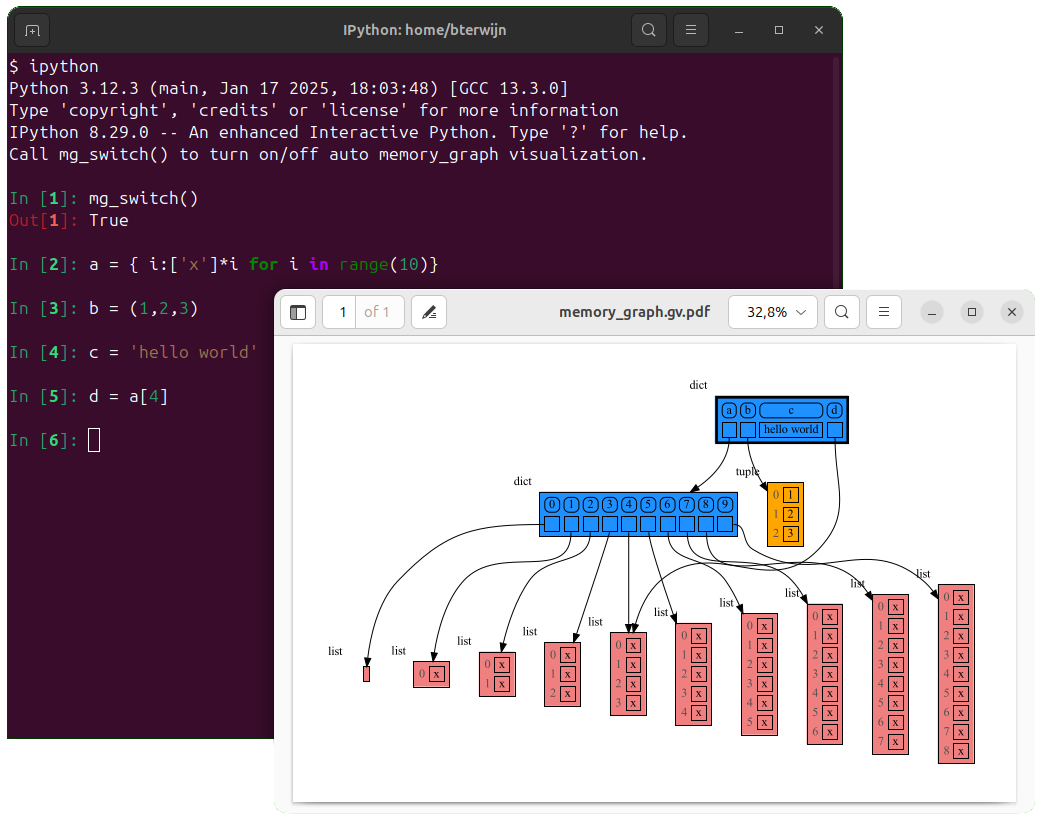
|
|
751
751
|
|
|
752
752
|
## In the Browser ##
|
|
753
|
-
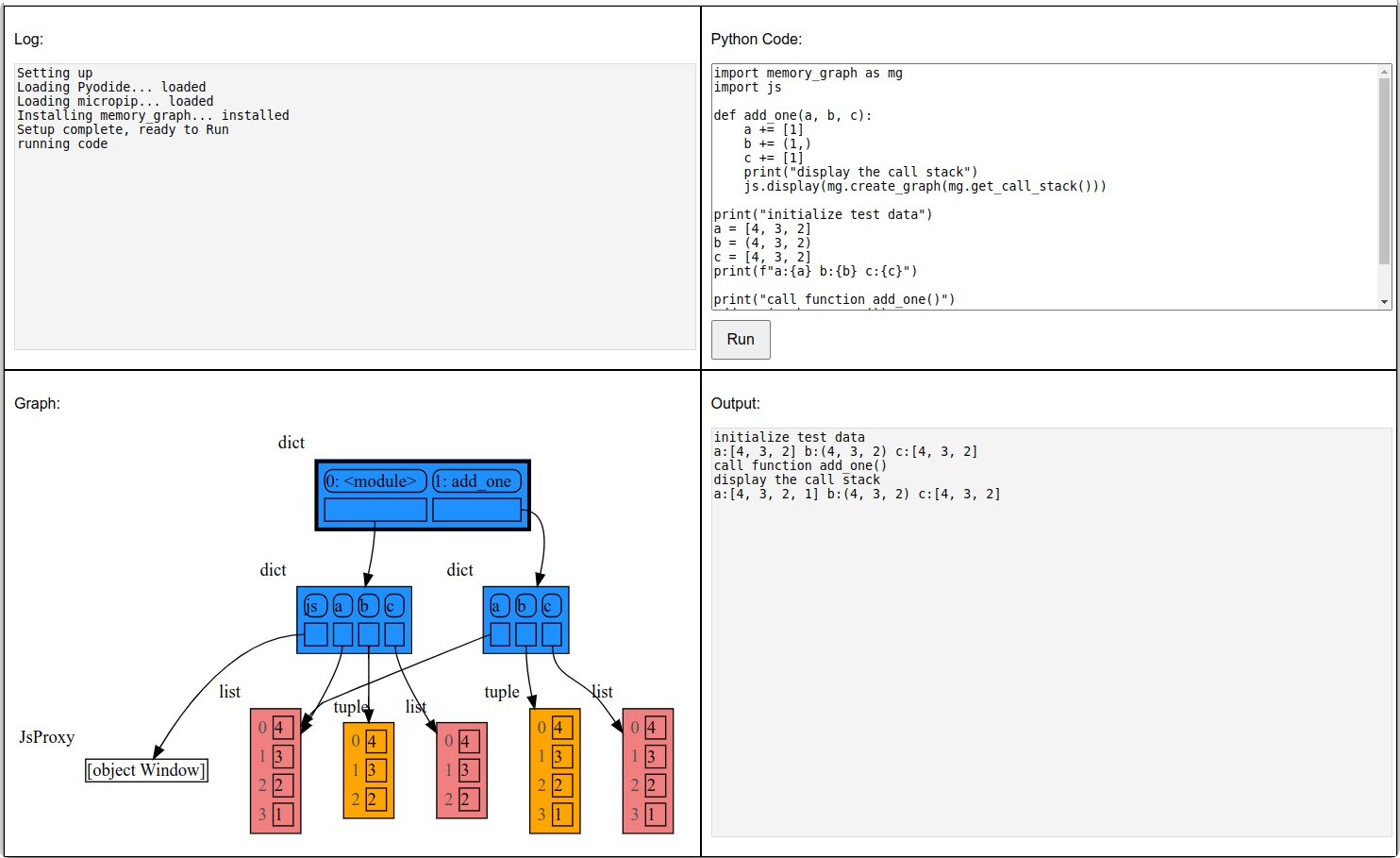
We can run memory_graph in the browser: <a href="https://bterwijn.github.io/memory_graph/src/pyodide.html" target="_blank">Pyodide Example</a>
|
|
753
|
+
We can also run memory_graph in the browser: <a href="https://bterwijn.github.io/memory_graph/src/pyodide.html" target="_blank">Pyodide Example</a>
|
|
754
754
|
|
|
755
755
|
|
|
756
756
|
## Troubleshooting ##
|
|
@@ -137,7 +137,7 @@ mg.render(locals(), 'immutable2.png')
|
|
|
137
137
|
|
|
138
138
|
|
|
139
139
|
### Mutable Type ###
|
|
140
|
-
With mutable types the result is different. In the code below variable `a` and `b` both reference the same `list` value [4, 3, 2]. A `list` is a mutable type and therefore when we change variable `a` its value **can** be mutated in place and thus `a` and `b` both reference the same new value afterwards. Thus changing `a` also changes `b` and vice versa. Sometimes we want this but other times we don't and then we will have to make a copy so that `a` and `b` are independent.
|
|
140
|
+
With mutable types the result is different. In the code below variable `a` and `b` both reference the same `list` value [4, 3, 2]. A `list` is a mutable type and therefore when we change variable `a` its value **can** be mutated in place and thus `a` and `b` both reference the same new value afterwards. Thus changing `a` also changes `b` and vice versa. Sometimes we want this but other times we don't and then we will have to make a copy ourselfs so that `a` and `b` are independent.
|
|
141
141
|
|
|
142
142
|
```python
|
|
143
143
|
import memory_graph as mg
|
|
@@ -245,7 +245,7 @@ This function:
|
|
|
245
245
|
* then blocks execution until the <Enter> key is pressed
|
|
246
246
|
* finally returns the value of the `fun()` call
|
|
247
247
|
|
|
248
|
-
to change
|
|
248
|
+
to change its behavior:
|
|
249
249
|
* Set `mg.block_prints_location = False` to skip printing the source location.
|
|
250
250
|
* Set `mg.press_enter_message = None` to skip printing "Press <Enter> to continue...".
|
|
251
251
|
|
|
@@ -307,7 +307,7 @@ For the best debugging experience with memory_graph set for example expression:
|
|
|
307
307
|
```
|
|
308
308
|
mg.render(locals(), "my_graph.pdf")
|
|
309
309
|
```
|
|
310
|
-
as a *watch* in a debugger tool such as the integrated debugger in Visual Studio Code. Then open the "my_graph.pdf" output file to continuously see all the local variables while debugging. This avoids having to add any memory_graph `show()
|
|
310
|
+
as a *watch* in a debugger tool such as the integrated debugger in Visual Studio Code. Then open the "my_graph.pdf" output file to continuously see all the local variables while debugging. This avoids having to add any memory_graph `show()` or `render()` calls to your code.
|
|
311
311
|
|
|
312
312
|
### Call Stack in Watch Context ###
|
|
313
313
|
The ```mg.get_call_stack()``` doesn't work well in *watch* context in most debuggers because debuggers introduce additional stack frames that cause problems. Use these alternative functions for various debuggers to filter out these problematic stack frames:
|
|
@@ -492,7 +492,7 @@ for i in range(n):
|
|
|
492
492
|
Different aspects of memory_graph can be configured. The default configuration is reset by importing 'memory_graph.config_default'.
|
|
493
493
|
|
|
494
494
|
- ***mg.config.max_graph_depth*** : int
|
|
495
|
-
- The maxium depth of the graph with default value 12. A `✂` (scissor) symbol indicates where the graph is cut short.
|
|
495
|
+
- The maxium depth of the graph with default value 12. A `✂` (scissor) symbol indicates where the graph is cut short. Dashed references indicate that there are more references to a node than are shown.
|
|
496
496
|
|
|
497
497
|
- ***mg.config.max_string_length*** : int
|
|
498
498
|
- The maximum length of strings shown in the graph. Longer strings will be truncated.
|
|
@@ -516,7 +516,7 @@ Different aspects of memory_graph can be configured. The default configuration i
|
|
|
516
516
|
- Maps each type to a Slicer. A slicer determines how many elements of a data type are shown in the graph to prevent the graph from getting too big. 'Slicer()' does no slicing, 'Slicer(1,2,3)' shows just 1 element at the beginning, 2 in the middle, and 3 at the end.
|
|
517
517
|
|
|
518
518
|
### Temporary Configuration ###
|
|
519
|
-
In addition to the global configuration, a temporary configuration can be set for a single `show()
|
|
519
|
+
In addition to the global configuration, a temporary configuration can be set for a single `show()` or `render()` call to change the colors, orientation, and slicer. This example highlights a particular list element in red, gives it a horizontal orientation, and overwrites the default slicer for lists:
|
|
520
520
|
|
|
521
521
|
```python
|
|
522
522
|
import memory_graph as mg
|
|
@@ -731,7 +731,7 @@ Then after starting 'ipython' call function `mg_switch()` to turn on/off the aut
|
|
|
731
731
|

|
|
732
732
|
|
|
733
733
|
## In the Browser ##
|
|
734
|
-
We can run memory_graph in the browser: <a href="https://bterwijn.github.io/memory_graph/src/pyodide.html" target="_blank">Pyodide Example</a>
|
|
734
|
+
We can also run memory_graph in the browser: <a href="https://bterwijn.github.io/memory_graph/src/pyodide.html" target="_blank">Pyodide Example</a>
|
|
735
735
|

|
|
736
736
|
|
|
737
737
|
## Troubleshooting ##
|
|
@@ -0,0 +1,9 @@
|
|
|
1
|
+
|
|
2
|
+
mg.block(fun, print_loc=True), update docs, stack-overflow posts
|
|
3
|
+
|
|
4
|
+
Jupyter Notebook inline render using display()
|
|
5
|
+
|
|
6
|
+
webassembly inline render
|
|
7
|
+
|
|
8
|
+
optional max introspect depth for each type/id
|
|
9
|
+
https://discuss.python.org/t/request-for-feedback-memory-graph-a-python-visualization-tool-for-education/78347
|
|
Binary file
|
|
@@ -0,0 +1,18 @@
|
|
|
1
|
+
# This file is part of memory_graph.
|
|
2
|
+
# Copyright (c) 2023, Bas Terwijn.
|
|
3
|
+
# SPDX-License-Identifier: BSD-2-Clause
|
|
4
|
+
|
|
5
|
+
import memory_graph as mg
|
|
6
|
+
|
|
7
|
+
def add_one(a, b, c):
|
|
8
|
+
a += [1]
|
|
9
|
+
b += (1,)
|
|
10
|
+
c += [1]
|
|
11
|
+
mg.render( mg.get_call_stack(), "add_one.png")
|
|
12
|
+
|
|
13
|
+
a = [4, 3, 2]
|
|
14
|
+
b = (4, 3, 2)
|
|
15
|
+
c = [4, 3, 2]
|
|
16
|
+
|
|
17
|
+
add_one(a, b, c.copy())
|
|
18
|
+
print(f"a:{a} b:{b} c:{c}")
|
|
@@ -0,0 +1,43 @@
|
|
|
1
|
+
# This file is part of memory_graph.
|
|
2
|
+
# Copyright (c) 2023, Bas Terwijn.
|
|
3
|
+
# SPDX-License-Identifier: BSD-2-Clause
|
|
4
|
+
|
|
5
|
+
import memory_graph as mg
|
|
6
|
+
import bintrees
|
|
7
|
+
|
|
8
|
+
# Create an AVL tree
|
|
9
|
+
tree = bintrees.AVLTree()
|
|
10
|
+
tree.insert(10, "ten")
|
|
11
|
+
tree.insert(5, "five")
|
|
12
|
+
tree.insert(20, "twenty")
|
|
13
|
+
tree.insert(15, "fifteen")
|
|
14
|
+
|
|
15
|
+
# mg.render(locals(), 'avltree_fail.png') # id keeps changing
|
|
16
|
+
|
|
17
|
+
mg.config.type_to_color[bintrees.avltree.Node] = "sandybrown"
|
|
18
|
+
mg.config.type_to_node[bintrees.avltree.Node] = lambda data: mg.node_linear.Node_Linear(data, dir(data))
|
|
19
|
+
mg.config.type_to_slicer[bintrees.avltree.Node] = mg.slicer.Slicer()
|
|
20
|
+
mg.render(locals(), 'avltree_dir.png')
|
|
21
|
+
|
|
22
|
+
mg.config.type_to_node[bintrees.avltree.Node] = lambda data: mg.node_base.Node_Base(f"key:{data.key} value:{data.value}")
|
|
23
|
+
mg.render(locals(), 'avltree_base.png')
|
|
24
|
+
|
|
25
|
+
mg.config.type_to_node[bintrees.avltree.Node] = lambda data: mg.node_linear.Node_Linear(data,
|
|
26
|
+
['left:', data.left,
|
|
27
|
+
'key:', data.key,
|
|
28
|
+
'value:', data.value,
|
|
29
|
+
'right:', data.right])
|
|
30
|
+
mg.render(locals(), 'avltree_linear.png')
|
|
31
|
+
|
|
32
|
+
mg.config.type_to_node[bintrees.avltree.Node] = lambda data: mg.node_key_value.Node_Key_Value(data,
|
|
33
|
+
{'left': data.left,
|
|
34
|
+
'key': data.key,
|
|
35
|
+
'value': data.value,
|
|
36
|
+
'right': data.right}.items())
|
|
37
|
+
mg.render(locals(), 'avltree_key_value.png')
|
|
38
|
+
|
|
39
|
+
mg.config.type_to_node[bintrees.avltree.Node] = lambda data: mg.node_table.Node_Table(data,
|
|
40
|
+
[[data.key, data.value],
|
|
41
|
+
[data.left, data.right]]
|
|
42
|
+
)
|
|
43
|
+
mg.render(locals(), 'avltree_table.png')
|
|
Binary file
|
|
Binary file
|
|
Binary file
|
|
Binary file
|
|
Binary file
|
|
Binary file
|
|
Binary file
|
|
@@ -0,0 +1,47 @@
|
|
|
1
|
+
# This file is part of memory_graph.
|
|
2
|
+
# Copyright (c) 2023, Bas Terwijn.
|
|
3
|
+
# SPDX-License-Identifier: BSD-2-Clause
|
|
4
|
+
|
|
5
|
+
import memory_graph as mg
|
|
6
|
+
import random
|
|
7
|
+
random.seed(0) # use same random numbers each run
|
|
8
|
+
|
|
9
|
+
class Node:
|
|
10
|
+
|
|
11
|
+
def __init__(self, value):
|
|
12
|
+
self.smaller = None
|
|
13
|
+
self.value = value
|
|
14
|
+
self.larger = None
|
|
15
|
+
|
|
16
|
+
class BinTree:
|
|
17
|
+
|
|
18
|
+
def __init__(self):
|
|
19
|
+
self.root = None
|
|
20
|
+
|
|
21
|
+
def add_recursive(self, new_value, node):
|
|
22
|
+
if new_value < node.value:
|
|
23
|
+
if node.smaller is None:
|
|
24
|
+
node.smaller = Node(new_value)
|
|
25
|
+
else:
|
|
26
|
+
self.add_recursive(new_value, node.smaller)
|
|
27
|
+
else:
|
|
28
|
+
if node.larger is None:
|
|
29
|
+
node.larger = Node(new_value)
|
|
30
|
+
else:
|
|
31
|
+
self.add_recursive(new_value, node.larger)
|
|
32
|
+
if new_value == 51:
|
|
33
|
+
mg.render(locals(), f"bin_tree.png")
|
|
34
|
+
exit(0)
|
|
35
|
+
|
|
36
|
+
def add(self, value):
|
|
37
|
+
if self.root is None:
|
|
38
|
+
self.root = Node(value)
|
|
39
|
+
else:
|
|
40
|
+
self.add_recursive(value, self.root)
|
|
41
|
+
|
|
42
|
+
tree = BinTree()
|
|
43
|
+
n = 100
|
|
44
|
+
for i in range(n):
|
|
45
|
+
new_value = random.randrange(n)
|
|
46
|
+
tree.add(new_value)
|
|
47
|
+
|
|
Binary file
|
|
@@ -0,0 +1,15 @@
|
|
|
1
|
+
# This file is part of memory_graph.
|
|
2
|
+
# Copyright (c) 2023, Bas Terwijn.
|
|
3
|
+
# SPDX-License-Identifier: BSD-2-Clause
|
|
4
|
+
|
|
5
|
+
import memory_graph as mg
|
|
6
|
+
import copy
|
|
7
|
+
|
|
8
|
+
a = [ [1, 2], ['x', 'y'] ] # a nested list (a list containing lists)
|
|
9
|
+
|
|
10
|
+
# three different ways to make a "copy" of 'a':
|
|
11
|
+
c1 = a
|
|
12
|
+
c2 = copy.copy(a) # equivalent to: a.copy() a[:] list(a)
|
|
13
|
+
c3 = copy.deepcopy(a)
|
|
14
|
+
|
|
15
|
+
mg.render(locals(), 'copies.png')
|
|
Binary file
|
|
@@ -0,0 +1,22 @@
|
|
|
1
|
+
# This file is part of memory_graph.
|
|
2
|
+
# Copyright (c) 2023, Bas Terwijn.
|
|
3
|
+
# SPDX-License-Identifier: BSD-2-Clause
|
|
4
|
+
|
|
5
|
+
import memory_graph as mg
|
|
6
|
+
import copy
|
|
7
|
+
|
|
8
|
+
class My_Class:
|
|
9
|
+
|
|
10
|
+
def __init__(self):
|
|
11
|
+
self.digits = [1, 2]
|
|
12
|
+
self.letters = ['x', 'y']
|
|
13
|
+
|
|
14
|
+
def copy(self): # custom copy method copies the digits but shares the letters
|
|
15
|
+
c = copy.copy(self)
|
|
16
|
+
c.digits = copy.copy(self.digits)
|
|
17
|
+
return c
|
|
18
|
+
|
|
19
|
+
a = My_Class()
|
|
20
|
+
b = a.copy()
|
|
21
|
+
|
|
22
|
+
mg.render(locals(), 'copy_method.png')
|
|
@@ -0,0 +1,19 @@
|
|
|
1
|
+
#!/bin/bash
|
|
2
|
+
#
|
|
3
|
+
# install:
|
|
4
|
+
#
|
|
5
|
+
# sudo apt install imagemagick
|
|
6
|
+
|
|
7
|
+
name="$1"
|
|
8
|
+
files=$(ls -v $name*.png)
|
|
9
|
+
echo "creating gif with:"
|
|
10
|
+
echo "$files"
|
|
11
|
+
|
|
12
|
+
largest_size=$(identify -format "%Wx%H %f\n" $name*.png | sort -nr | head -n1)
|
|
13
|
+
echo "largest_size: $largest_size"
|
|
14
|
+
|
|
15
|
+
echo "resizing images"
|
|
16
|
+
mogrify -resize $largest_size -background white -gravity center -extent $largest_size $files
|
|
17
|
+
echo "creating file: $name.gif"
|
|
18
|
+
convert -delay 150 -loop 0 $files $name.gif
|
|
19
|
+
echo "done"
|
|
@@ -0,0 +1,34 @@
|
|
|
1
|
+
# intro
|
|
2
|
+
python many_types.py
|
|
3
|
+
|
|
4
|
+
# debugging
|
|
5
|
+
python debugging.py
|
|
6
|
+
bash create_gif.sh debugging
|
|
7
|
+
|
|
8
|
+
# data model
|
|
9
|
+
python immutable.py
|
|
10
|
+
python mutable.py
|
|
11
|
+
python copies.py
|
|
12
|
+
python copy_method.py
|
|
13
|
+
|
|
14
|
+
# call stack
|
|
15
|
+
python add_one.py
|
|
16
|
+
python factorial.py
|
|
17
|
+
bash create_gif.sh factorial
|
|
18
|
+
python power_set.py
|
|
19
|
+
bash create_gif.sh power_set
|
|
20
|
+
|
|
21
|
+
# datastructures
|
|
22
|
+
python linked_list.py
|
|
23
|
+
python bin_tree.py
|
|
24
|
+
python hash_set.py
|
|
25
|
+
|
|
26
|
+
# configuration
|
|
27
|
+
python highlight.py
|
|
28
|
+
|
|
29
|
+
# extensions
|
|
30
|
+
python extension_numpy.py
|
|
31
|
+
python extension_pandas.py
|
|
32
|
+
|
|
33
|
+
# introspection
|
|
34
|
+
python avltree.py
|
|
Binary file
|
|
Binary file
|
|
@@ -0,0 +1,19 @@
|
|
|
1
|
+
# This file is part of memory_graph.
|
|
2
|
+
# Copyright (c) 2023, Bas Terwijn.
|
|
3
|
+
# SPDX-License-Identifier: BSD-2-Clause
|
|
4
|
+
|
|
5
|
+
import memory_graph as mg
|
|
6
|
+
|
|
7
|
+
image=0
|
|
8
|
+
def get_fac_name():
|
|
9
|
+
global image
|
|
10
|
+
image+=1
|
|
11
|
+
return f"debugging{image:02d}.png"
|
|
12
|
+
|
|
13
|
+
squares = []
|
|
14
|
+
squares_collector = []
|
|
15
|
+
for i in range(1,6):
|
|
16
|
+
squares.append(i**2)
|
|
17
|
+
squares_collector.append(squares.copy())
|
|
18
|
+
mg.render(locals(), get_fac_name())
|
|
19
|
+
mg.render(locals(), get_fac_name())
|
|
Binary file
|
|
@@ -0,0 +1,14 @@
|
|
|
1
|
+
# This file is part of memory_graph.
|
|
2
|
+
# Copyright (c) 2023, Bas Terwijn.
|
|
3
|
+
# SPDX-License-Identifier: BSD-2-Clause
|
|
4
|
+
|
|
5
|
+
import memory_graph as mg
|
|
6
|
+
import numpy as np
|
|
7
|
+
import memory_graph.extension_numpy
|
|
8
|
+
np.random.seed(0) # use same random numbers each run
|
|
9
|
+
|
|
10
|
+
array = np.array([1.1, 2, 3, 4, 5])
|
|
11
|
+
matrix = np.matrix([[i*20+j for j in range(20)] for i in range(20)])
|
|
12
|
+
ndarray = np.random.rand(20,20)
|
|
13
|
+
|
|
14
|
+
mg.render( locals(), "extension_numpy.png")
|
|
Binary file
|
|
@@ -0,0 +1,17 @@
|
|
|
1
|
+
# This file is part of memory_graph.
|
|
2
|
+
# Copyright (c) 2023, Bas Terwijn.
|
|
3
|
+
# SPDX-License-Identifier: BSD-2-Clause
|
|
4
|
+
|
|
5
|
+
import memory_graph as mg
|
|
6
|
+
import pandas as pd
|
|
7
|
+
import memory_graph.extension_pandas
|
|
8
|
+
|
|
9
|
+
series = pd.Series( [i for i in range(20)] )
|
|
10
|
+
dataframe1 = pd.DataFrame({ "calories": [420, 380, 390],
|
|
11
|
+
"duration": [50, 40, 45] })
|
|
12
|
+
dataframe2 = pd.DataFrame({ 'Name' : [ 'Tom', 'Anna', 'Steve', 'Lisa'],
|
|
13
|
+
'Age' : [ 28, 34, 29, 42],
|
|
14
|
+
'Length' : [ 1.70, 1.66, 1.82, 1.73] },
|
|
15
|
+
index=['one', 'two', 'three', 'four']) # with row names
|
|
16
|
+
|
|
17
|
+
mg.render( locals(), "extension_pandas.png")
|
|
Binary file
|
|
@@ -0,0 +1,24 @@
|
|
|
1
|
+
# This file is part of memory_graph.
|
|
2
|
+
# Copyright (c) 2023, Bas Terwijn.
|
|
3
|
+
# SPDX-License-Identifier: BSD-2-Clause
|
|
4
|
+
|
|
5
|
+
import memory_graph as mg
|
|
6
|
+
|
|
7
|
+
image=0
|
|
8
|
+
def get_fac_name():
|
|
9
|
+
global image
|
|
10
|
+
image+=1
|
|
11
|
+
return f"factorial{image:02d}.png"
|
|
12
|
+
|
|
13
|
+
def factorial(n):
|
|
14
|
+
if n==0:
|
|
15
|
+
return 1
|
|
16
|
+
#mg.show( mg.get_call_stack(), block=True ) # draw graph
|
|
17
|
+
mg.render( mg.get_call_stack(), get_fac_name())
|
|
18
|
+
result = n*factorial(n-1)
|
|
19
|
+
#mg.show( mg.get_call_stack(), block=True ) # draw graph
|
|
20
|
+
mg.render( mg.get_call_stack(), get_fac_name())
|
|
21
|
+
return result
|
|
22
|
+
|
|
23
|
+
mg.render( mg.get_call_stack(), get_fac_name())
|
|
24
|
+
factorial(3)
|
|
Binary file
|
|
@@ -0,0 +1,39 @@
|
|
|
1
|
+
# This file is part of memory_graph.
|
|
2
|
+
# Copyright (c) 2023, Bas Terwijn.
|
|
3
|
+
# SPDX-License-Identifier: BSD-2-Clause
|
|
4
|
+
|
|
5
|
+
import memory_graph as mg
|
|
6
|
+
import random
|
|
7
|
+
random.seed(0) # use same random numbers each run
|
|
8
|
+
|
|
9
|
+
class HashSet:
|
|
10
|
+
|
|
11
|
+
def __init__(self, capacity=15):
|
|
12
|
+
self.buckets = [None] * capacity
|
|
13
|
+
|
|
14
|
+
def add(self, value):
|
|
15
|
+
index = hash(value) % len(self.buckets)
|
|
16
|
+
if self.buckets[index] is None:
|
|
17
|
+
self.buckets[index] = []
|
|
18
|
+
bucket = self.buckets[index]
|
|
19
|
+
bucket.append(value)
|
|
20
|
+
if value == 36:
|
|
21
|
+
mg.render(locals(), "hash_set.png")
|
|
22
|
+
exit()
|
|
23
|
+
|
|
24
|
+
def contains(self, value):
|
|
25
|
+
index = hash(value) % len(self.buckets)
|
|
26
|
+
if self.buckets[index] is None:
|
|
27
|
+
return False
|
|
28
|
+
return value in self.buckets[index]
|
|
29
|
+
|
|
30
|
+
def remove(self, value):
|
|
31
|
+
index = hash(value) % len(self.buckets)
|
|
32
|
+
if self.buckets[index] is not None:
|
|
33
|
+
self.buckets[index].remove(value)
|
|
34
|
+
|
|
35
|
+
hash_set = HashSet()
|
|
36
|
+
n = 100
|
|
37
|
+
for i in range(n):
|
|
38
|
+
new_value = random.randrange(n)
|
|
39
|
+
hash_set.add(new_value)
|
|
Binary file
|
|
@@ -0,0 +1,15 @@
|
|
|
1
|
+
# This file is part of memory_graph.
|
|
2
|
+
# Copyright (c) 2023, Bas Terwijn.
|
|
3
|
+
# SPDX-License-Identifier: BSD-2-Clause
|
|
4
|
+
|
|
5
|
+
import memory_graph as mg
|
|
6
|
+
from memory_graph.slicer import Slicer
|
|
7
|
+
|
|
8
|
+
data = [ list(range(20)) for i in range(1,5)]
|
|
9
|
+
highlight = data[2]
|
|
10
|
+
|
|
11
|
+
mg.render( locals(), "highlight.png",
|
|
12
|
+
colors = {id(highlight): "red" }, # set color to "red"
|
|
13
|
+
vertical_orientations = {id(highlight): False }, # set horizontal orientation
|
|
14
|
+
slicers = {id(highlight): Slicer()} # set no slicing
|
|
15
|
+
)
|
|
@@ -0,0 +1,11 @@
|
|
|
1
|
+
# This file is part of memory_graph.
|
|
2
|
+
# Copyright (c) 2023, Bas Terwijn.
|
|
3
|
+
# SPDX-License-Identifier: BSD-2-Clause
|
|
4
|
+
|
|
5
|
+
import memory_graph as mg
|
|
6
|
+
|
|
7
|
+
a = (4, 3, 2)
|
|
8
|
+
b = a
|
|
9
|
+
mg.render(locals(), 'immutable1.png')
|
|
10
|
+
a += (1,)
|
|
11
|
+
mg.render(locals(), 'immutable2.png')
|
|
Binary file
|
|
Binary file
|
|
Binary file
|
|
@@ -0,0 +1,85 @@
|
|
|
1
|
+
{
|
|
2
|
+
"cells": [
|
|
3
|
+
{
|
|
4
|
+
"cell_type": "markdown",
|
|
5
|
+
"id": "23f6d43f-dd17-4020-971e-5bb8a5b1e30b",
|
|
6
|
+
"metadata": {},
|
|
7
|
+
"source": [
|
|
8
|
+
"# test: locals_jupyter()\n",
|
|
9
|
+
"Show a graph build with the filtered Jupyter locals using function `mg.locals_jupyter()`. Just adding integers to a list:"
|
|
10
|
+
]
|
|
11
|
+
},
|
|
12
|
+
{
|
|
13
|
+
"cell_type": "code",
|
|
14
|
+
"execution_count": null,
|
|
15
|
+
"id": "e8913787-bbef-4adb-b027-ac0f28500233",
|
|
16
|
+
"metadata": {},
|
|
17
|
+
"outputs": [],
|
|
18
|
+
"source": [
|
|
19
|
+
"import memory_graph as mg\n",
|
|
20
|
+
"\n",
|
|
21
|
+
"data = []\n",
|
|
22
|
+
"for i in range(5):\n",
|
|
23
|
+
" data.append(i)\n",
|
|
24
|
+
" display(mg.create_graph(mg.locals_jupyter())) # display in jupyter notebook\n",
|
|
25
|
+
" mg.block(mg.show, mg.locals_jupyter()) # display in PDF reader\n",
|
|
26
|
+
" "
|
|
27
|
+
]
|
|
28
|
+
},
|
|
29
|
+
{
|
|
30
|
+
"cell_type": "markdown",
|
|
31
|
+
"id": "f66d9b8d-0937-4ad0-97b4-a7459e84c4f2",
|
|
32
|
+
"metadata": {},
|
|
33
|
+
"source": [
|
|
34
|
+
"# test: get_call_stack_jupyter()\n",
|
|
35
|
+
"Show a graph build the filterd Jupyter call stack from function `mg.get_call_stack_jupyter()`. Recursively filling a list with all permutation of elements with resampling:"
|
|
36
|
+
]
|
|
37
|
+
},
|
|
38
|
+
{
|
|
39
|
+
"cell_type": "code",
|
|
40
|
+
"execution_count": null,
|
|
41
|
+
"id": "15d0c443-7cc6-4b4f-a9db-598aaf261364",
|
|
42
|
+
"metadata": {},
|
|
43
|
+
"outputs": [],
|
|
44
|
+
"source": [
|
|
45
|
+
"import memory_graph as mg\n",
|
|
46
|
+
"\n",
|
|
47
|
+
"def get_all_permutations(permutations, elements, data, max_length):\n",
|
|
48
|
+
" if len(data) == max_length: # recursive stop condition\n",
|
|
49
|
+
" permutations.append(data.copy())\n",
|
|
50
|
+
" else:\n",
|
|
51
|
+
" for i in elements:\n",
|
|
52
|
+
" data.append(i)\n",
|
|
53
|
+
" mg.block(mg.show, mg.get_call_stack_jupyter())\n",
|
|
54
|
+
" get_all_permutations(permutations, elements, data, max_length)\n",
|
|
55
|
+
" data.pop()\n",
|
|
56
|
+
" mg.block(mg.show, mg.get_call_stack_jupyter())\n",
|
|
57
|
+
"\n",
|
|
58
|
+
"permutations = []\n",
|
|
59
|
+
"get_all_permutations(permutations, ['L','R'], [], 3)\n",
|
|
60
|
+
"print(permutations)"
|
|
61
|
+
]
|
|
62
|
+
}
|
|
63
|
+
],
|
|
64
|
+
"metadata": {
|
|
65
|
+
"kernelspec": {
|
|
66
|
+
"display_name": "Python 3 (ipykernel)",
|
|
67
|
+
"language": "python",
|
|
68
|
+
"name": "python3"
|
|
69
|
+
},
|
|
70
|
+
"language_info": {
|
|
71
|
+
"codemirror_mode": {
|
|
72
|
+
"name": "ipython",
|
|
73
|
+
"version": 3
|
|
74
|
+
},
|
|
75
|
+
"file_extension": ".py",
|
|
76
|
+
"mimetype": "text/x-python",
|
|
77
|
+
"name": "python",
|
|
78
|
+
"nbconvert_exporter": "python",
|
|
79
|
+
"pygments_lexer": "ipython3",
|
|
80
|
+
"version": "3.12.3"
|
|
81
|
+
}
|
|
82
|
+
},
|
|
83
|
+
"nbformat": 4,
|
|
84
|
+
"nbformat_minor": 5
|
|
85
|
+
}
|
|
Binary file
|
|
Binary file
|