memory-graph 0.2.1__tar.gz → 0.2.2__tar.gz
This diff represents the content of publicly available package versions that have been released to one of the supported registries. The information contained in this diff is provided for informational purposes only and reflects changes between package versions as they appear in their respective public registries.
- {memory_graph-0.2.1 → memory_graph-0.2.2}/PKG-INFO +4 -4
- {memory_graph-0.2.1 → memory_graph-0.2.2}/README.md +3 -3
- {memory_graph-0.2.1 → memory_graph-0.2.2}/memory_graph/__init__.py +1 -1
- {memory_graph-0.2.1 → memory_graph-0.2.2}/memory_graph.egg-info/PKG-INFO +4 -4
- {memory_graph-0.2.1 → memory_graph-0.2.2}/setup.py +1 -1
- {memory_graph-0.2.1 → memory_graph-0.2.2}/LICENSE.txt +0 -0
- {memory_graph-0.2.1 → memory_graph-0.2.2}/MANIFEST.in +0 -0
- {memory_graph-0.2.1 → memory_graph-0.2.2}/memory_graph/HTML_Table.py +0 -0
- {memory_graph-0.2.1 → memory_graph-0.2.2}/memory_graph/Memory_Graph.py +0 -0
- {memory_graph-0.2.1 → memory_graph-0.2.2}/memory_graph/Memory_Visitor.py +0 -0
- {memory_graph-0.2.1 → memory_graph-0.2.2}/memory_graph/Node.py +0 -0
- {memory_graph-0.2.1 → memory_graph-0.2.2}/memory_graph/Node_Hidden.py +0 -0
- {memory_graph-0.2.1 → memory_graph-0.2.2}/memory_graph/Node_Key_Value.py +0 -0
- {memory_graph-0.2.1 → memory_graph-0.2.2}/memory_graph/Node_Linear.py +0 -0
- {memory_graph-0.2.1 → memory_graph-0.2.2}/memory_graph/Node_Table.py +0 -0
- {memory_graph-0.2.1 → memory_graph-0.2.2}/memory_graph/Sliced.py +0 -0
- {memory_graph-0.2.1 → memory_graph-0.2.2}/memory_graph/Slicer.py +0 -0
- {memory_graph-0.2.1 → memory_graph-0.2.2}/memory_graph/config.py +0 -0
- {memory_graph-0.2.1 → memory_graph-0.2.2}/memory_graph/config_default.py +0 -0
- {memory_graph-0.2.1 → memory_graph-0.2.2}/memory_graph/config_helpers.py +0 -0
- {memory_graph-0.2.1 → memory_graph-0.2.2}/memory_graph/extension_numpy.py +0 -0
- {memory_graph-0.2.1 → memory_graph-0.2.2}/memory_graph/extension_pandas.py +0 -0
- {memory_graph-0.2.1 → memory_graph-0.2.2}/memory_graph/special_types.py +0 -0
- {memory_graph-0.2.1 → memory_graph-0.2.2}/memory_graph/test.py +0 -0
- {memory_graph-0.2.1 → memory_graph-0.2.2}/memory_graph/test_memory_graph.py +0 -0
- {memory_graph-0.2.1 → memory_graph-0.2.2}/memory_graph/test_memory_visitor.py +0 -0
- {memory_graph-0.2.1 → memory_graph-0.2.2}/memory_graph/utils.py +0 -0
- {memory_graph-0.2.1 → memory_graph-0.2.2}/memory_graph.egg-info/SOURCES.txt +0 -0
- {memory_graph-0.2.1 → memory_graph-0.2.2}/memory_graph.egg-info/dependency_links.txt +0 -0
- {memory_graph-0.2.1 → memory_graph-0.2.2}/memory_graph.egg-info/requires.txt +0 -0
- {memory_graph-0.2.1 → memory_graph-0.2.2}/memory_graph.egg-info/top_level.txt +0 -0
- {memory_graph-0.2.1 → memory_graph-0.2.2}/setup.cfg +0 -0
|
@@ -1,6 +1,6 @@
|
|
|
1
1
|
Metadata-Version: 2.1
|
|
2
2
|
Name: memory_graph
|
|
3
|
-
Version: 0.2.
|
|
3
|
+
Version: 0.2.2
|
|
4
4
|
Summary: Draws a graph of your data to analyze its structure.
|
|
5
5
|
Home-page: https://github.com/bterwijn/memory_graph
|
|
6
6
|
Author: Bas Terwijn
|
|
@@ -131,7 +131,7 @@ The [Python Data Model](https://docs.python.org/3/reference/datamodel.html) make
|
|
|
131
131
|
In the code below variable `a` and `b` both reference the same `int` value 10. An `int` is an immutable type and therefore when we change variable `a` its value can **not** be mutated in place, and thus a copy is made and `a` and `b` reference a different value afterwards.
|
|
132
132
|
```python
|
|
133
133
|
import memory_graph
|
|
134
|
-
memory_graph.
|
|
134
|
+
memory_graph.config.no_reference_types.pop(int, None) # show references to ints
|
|
135
135
|
|
|
136
136
|
a = 10
|
|
137
137
|
b = a
|
|
@@ -488,7 +488,7 @@ Different aspects of memory_graph can be configured. The default configuration i
|
|
|
488
488
|
- Maps each type to a Slicer. A slicer determines how many elements of a data type are shown in the graph to prevent the graph from getting too big. 'Slicer()' does no slicing, 'Slicer(1,2,3)' shows just 1 element at the beginning, 2 in the middle, and 3 at the end.
|
|
489
489
|
|
|
490
490
|
### Temporary Configuration ###
|
|
491
|
-
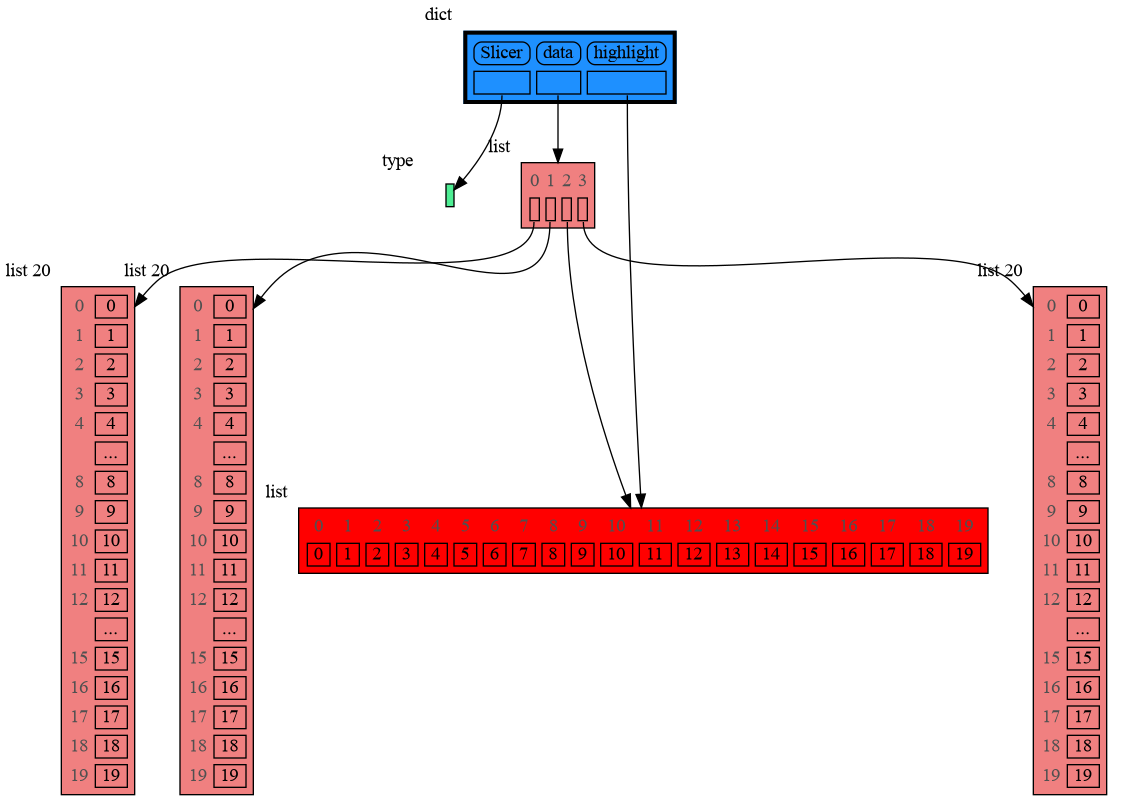
In addition to the global configuration, a temporary configuration can be set for a single `show()`, `render()`, or `d()` call to change the colors, orientation, and slicer. This example highlights a particular list element in red, gives it a horizontal
|
|
491
|
+
In addition to the global configuration, a temporary configuration can be set for a single `show()`, `render()`, or `d()` call to change the colors, orientation, and slicer. This example highlights a particular list element in red, gives it a horizontal orientation, and overwrites the default slicer for lists:
|
|
492
492
|
|
|
493
493
|
```python
|
|
494
494
|
import memory_graph
|
|
@@ -506,7 +506,7 @@ memory_graph.show( locals(),
|
|
|
506
506
|
|
|
507
507
|
|
|
508
508
|
## 6. Extensions ##
|
|
509
|
-
Different
|
|
509
|
+
Different extensions are available for types from other Python packages.
|
|
510
510
|
|
|
511
511
|
### Numpy ###
|
|
512
512
|
Numpy types `arrray` and `matrix` and `ndarray` can be graphed with the "memory_graph.extension_numpy" extension:
|
|
@@ -112,7 +112,7 @@ The [Python Data Model](https://docs.python.org/3/reference/datamodel.html) make
|
|
|
112
112
|
In the code below variable `a` and `b` both reference the same `int` value 10. An `int` is an immutable type and therefore when we change variable `a` its value can **not** be mutated in place, and thus a copy is made and `a` and `b` reference a different value afterwards.
|
|
113
113
|
```python
|
|
114
114
|
import memory_graph
|
|
115
|
-
memory_graph.
|
|
115
|
+
memory_graph.config.no_reference_types.pop(int, None) # show references to ints
|
|
116
116
|
|
|
117
117
|
a = 10
|
|
118
118
|
b = a
|
|
@@ -469,7 +469,7 @@ Different aspects of memory_graph can be configured. The default configuration i
|
|
|
469
469
|
- Maps each type to a Slicer. A slicer determines how many elements of a data type are shown in the graph to prevent the graph from getting too big. 'Slicer()' does no slicing, 'Slicer(1,2,3)' shows just 1 element at the beginning, 2 in the middle, and 3 at the end.
|
|
470
470
|
|
|
471
471
|
### Temporary Configuration ###
|
|
472
|
-
In addition to the global configuration, a temporary configuration can be set for a single `show()`, `render()`, or `d()` call to change the colors, orientation, and slicer. This example highlights a particular list element in red, gives it a horizontal
|
|
472
|
+
In addition to the global configuration, a temporary configuration can be set for a single `show()`, `render()`, or `d()` call to change the colors, orientation, and slicer. This example highlights a particular list element in red, gives it a horizontal orientation, and overwrites the default slicer for lists:
|
|
473
473
|
|
|
474
474
|
```python
|
|
475
475
|
import memory_graph
|
|
@@ -487,7 +487,7 @@ memory_graph.show( locals(),
|
|
|
487
487
|

|
|
488
488
|
|
|
489
489
|
## 6. Extensions ##
|
|
490
|
-
Different
|
|
490
|
+
Different extensions are available for types from other Python packages.
|
|
491
491
|
|
|
492
492
|
### Numpy ###
|
|
493
493
|
Numpy types `arrray` and `matrix` and `ndarray` can be graphed with the "memory_graph.extension_numpy" extension:
|
|
@@ -1,6 +1,6 @@
|
|
|
1
1
|
Metadata-Version: 2.1
|
|
2
2
|
Name: memory-graph
|
|
3
|
-
Version: 0.2.
|
|
3
|
+
Version: 0.2.2
|
|
4
4
|
Summary: Draws a graph of your data to analyze its structure.
|
|
5
5
|
Home-page: https://github.com/bterwijn/memory_graph
|
|
6
6
|
Author: Bas Terwijn
|
|
@@ -131,7 +131,7 @@ The [Python Data Model](https://docs.python.org/3/reference/datamodel.html) make
|
|
|
131
131
|
In the code below variable `a` and `b` both reference the same `int` value 10. An `int` is an immutable type and therefore when we change variable `a` its value can **not** be mutated in place, and thus a copy is made and `a` and `b` reference a different value afterwards.
|
|
132
132
|
```python
|
|
133
133
|
import memory_graph
|
|
134
|
-
memory_graph.
|
|
134
|
+
memory_graph.config.no_reference_types.pop(int, None) # show references to ints
|
|
135
135
|
|
|
136
136
|
a = 10
|
|
137
137
|
b = a
|
|
@@ -488,7 +488,7 @@ Different aspects of memory_graph can be configured. The default configuration i
|
|
|
488
488
|
- Maps each type to a Slicer. A slicer determines how many elements of a data type are shown in the graph to prevent the graph from getting too big. 'Slicer()' does no slicing, 'Slicer(1,2,3)' shows just 1 element at the beginning, 2 in the middle, and 3 at the end.
|
|
489
489
|
|
|
490
490
|
### Temporary Configuration ###
|
|
491
|
-
In addition to the global configuration, a temporary configuration can be set for a single `show()`, `render()`, or `d()` call to change the colors, orientation, and slicer. This example highlights a particular list element in red, gives it a horizontal
|
|
491
|
+
In addition to the global configuration, a temporary configuration can be set for a single `show()`, `render()`, or `d()` call to change the colors, orientation, and slicer. This example highlights a particular list element in red, gives it a horizontal orientation, and overwrites the default slicer for lists:
|
|
492
492
|
|
|
493
493
|
```python
|
|
494
494
|
import memory_graph
|
|
@@ -506,7 +506,7 @@ memory_graph.show( locals(),
|
|
|
506
506
|

|
|
507
507
|
|
|
508
508
|
## 6. Extensions ##
|
|
509
|
-
Different
|
|
509
|
+
Different extensions are available for types from other Python packages.
|
|
510
510
|
|
|
511
511
|
### Numpy ###
|
|
512
512
|
Numpy types `arrray` and `matrix` and `ndarray` can be graphed with the "memory_graph.extension_numpy" extension:
|
|
@@ -7,7 +7,7 @@ long_description_from_readme = (this_directory / "README.md").read_text()
|
|
|
7
7
|
|
|
8
8
|
setup(
|
|
9
9
|
name = 'memory_graph',
|
|
10
|
-
version = '0.2.
|
|
10
|
+
version = '0.2.02',
|
|
11
11
|
description = 'Draws a graph of your data to analyze its structure.',
|
|
12
12
|
long_description = long_description_from_readme,
|
|
13
13
|
long_description_content_type = 'text/markdown',
|
|
File without changes
|
|
File without changes
|
|
File without changes
|
|
File without changes
|
|
File without changes
|
|
File without changes
|
|
File without changes
|
|
File without changes
|
|
File without changes
|
|
File without changes
|
|
File without changes
|
|
File without changes
|
|
File without changes
|
|
File without changes
|
|
File without changes
|
|
File without changes
|
|
File without changes
|
|
File without changes
|
|
File without changes
|
|
File without changes
|
|
File without changes
|
|
File without changes
|
|
File without changes
|
|
File without changes
|
|
File without changes
|
|
File without changes
|
|
File without changes
|