mcuscope 0.1.0__tar.gz
This diff represents the content of publicly available package versions that have been released to one of the supported registries. The information contained in this diff is provided for informational purposes only and reflects changes between package versions as they appear in their respective public registries.
- mcuscope-0.1.0/.gitignore +44 -0
- mcuscope-0.1.0/LICENSE +21 -0
- mcuscope-0.1.0/PKG-INFO +122 -0
- mcuscope-0.1.0/README.md +83 -0
- mcuscope-0.1.0/contrib/config.example.toml +48 -0
- mcuscope-0.1.0/contrib/mcuscoped.service +21 -0
- mcuscope-0.1.0/mcuscope/__init__.py +14 -0
- mcuscope-0.1.0/mcuscope/cli.py +1733 -0
- mcuscope-0.1.0/mcuscope/config.py +246 -0
- mcuscope-0.1.0/mcuscope/daemon.py +207 -0
- mcuscope-0.1.0/mcuscope/lockfile.py +159 -0
- mcuscope-0.1.0/mcuscope/protocol.py +651 -0
- mcuscope-0.1.0/mcuscope/serial_link.py +875 -0
- mcuscope-0.1.0/mcuscope/server.py +1626 -0
- mcuscope-0.1.0/mcuscope/sim.py +705 -0
- mcuscope-0.1.0/mcuscope/store.py +1606 -0
- mcuscope-0.1.0/mcuscope/webui/api.js +260 -0
- mcuscope-0.1.0/mcuscope/webui/app.js +130 -0
- mcuscope-0.1.0/mcuscope/webui/can.js +284 -0
- mcuscope-0.1.0/mcuscope/webui/cmdbar.js +190 -0
- mcuscope-0.1.0/mcuscope/webui/digital.js +510 -0
- mcuscope-0.1.0/mcuscope/webui/index.html +268 -0
- mcuscope-0.1.0/mcuscope/webui/plots.js +744 -0
- mcuscope-0.1.0/mcuscope/webui/settings.js +416 -0
- mcuscope-0.1.0/mcuscope/webui/state.js +271 -0
- mcuscope-0.1.0/mcuscope/webui/statusbar.js +315 -0
- mcuscope-0.1.0/mcuscope/webui/style.css +332 -0
- mcuscope-0.1.0/mcuscope/webui/terminal.js +449 -0
- mcuscope-0.1.0/mcuscope/webui/theme.js +25 -0
- mcuscope-0.1.0/mcuscope/webui/vendor/uPlot.iife.min.js +2 -0
- mcuscope-0.1.0/mcuscope/webui/vendor/uPlot.min.css +1 -0
- mcuscope-0.1.0/pyproject.toml +109 -0
- mcuscope-0.1.0/tests/__init__.py +0 -0
- mcuscope-0.1.0/tests/conftest.py +41 -0
- mcuscope-0.1.0/tests/support.py +128 -0
- mcuscope-0.1.0/tests/test_assert.py +320 -0
- mcuscope-0.1.0/tests/test_capture_lock.py +126 -0
- mcuscope-0.1.0/tests/test_cli.py +1098 -0
- mcuscope-0.1.0/tests/test_config_api.py +259 -0
- mcuscope-0.1.0/tests/test_e2e.py +353 -0
- mcuscope-0.1.0/tests/test_firmware_monitor.py +38 -0
- mcuscope-0.1.0/tests/test_hardening.py +776 -0
- mcuscope-0.1.0/tests/test_plot.py +281 -0
- mcuscope-0.1.0/tests/test_protocol.py +444 -0
- mcuscope-0.1.0/tests/test_reconnect.py +161 -0
- mcuscope-0.1.0/tests/test_regressions.py +381 -0
- mcuscope-0.1.0/tests/test_scaffold.py +22 -0
- mcuscope-0.1.0/tests/test_security.py +176 -0
- mcuscope-0.1.0/tests/test_sessions.py +507 -0
- mcuscope-0.1.0/tests/test_sim.py +198 -0
- mcuscope-0.1.0/tests/test_sim_pty.py +88 -0
- mcuscope-0.1.0/tests/test_sim_tcp.py +79 -0
- mcuscope-0.1.0/tests/test_webui.py +154 -0
|
@@ -0,0 +1,44 @@
|
|
|
1
|
+
# Python
|
|
2
|
+
__pycache__/
|
|
3
|
+
*.py[cod]
|
|
4
|
+
*.egg-info/
|
|
5
|
+
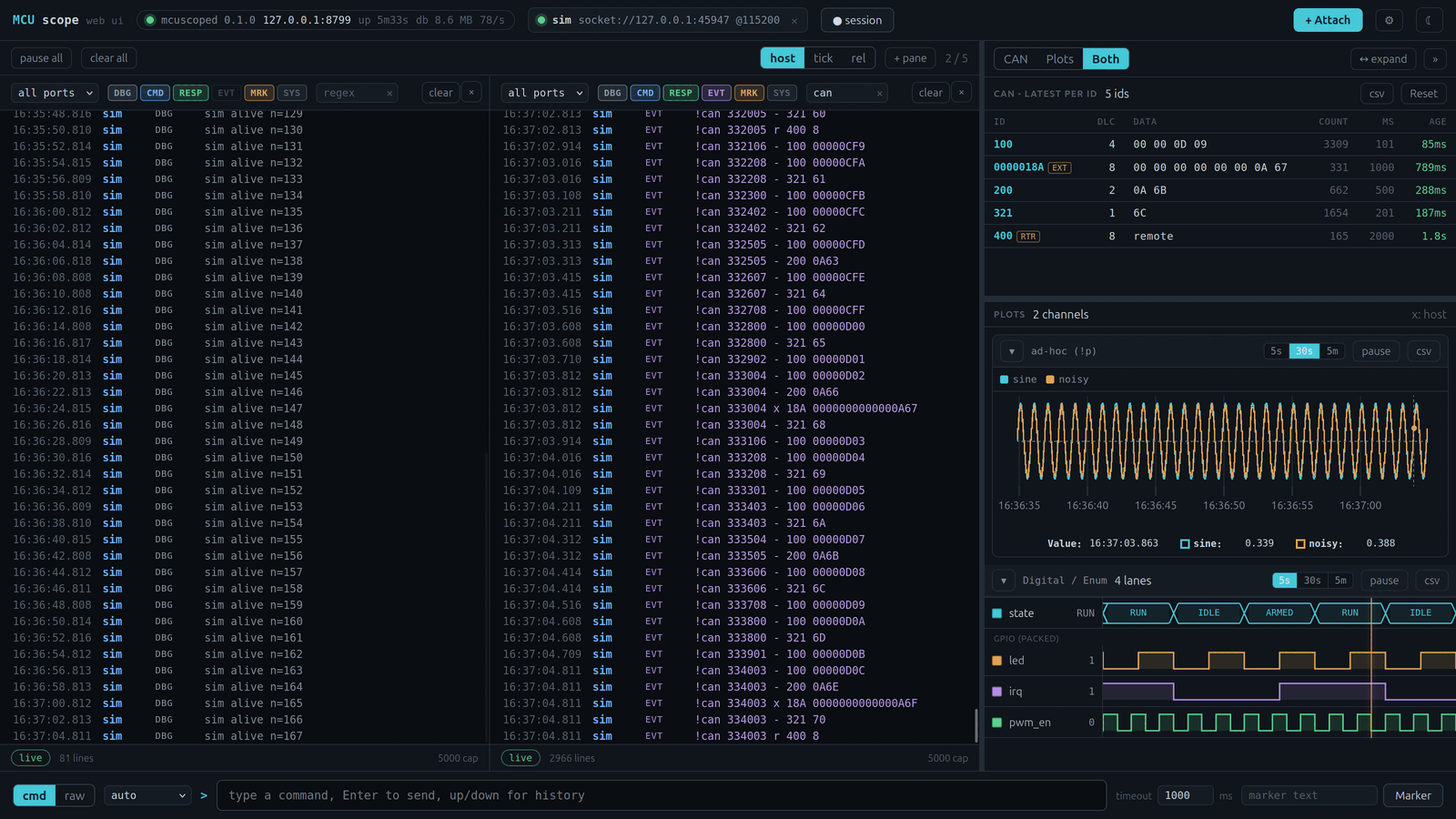
.eggs/
|
|
6
|
+
build/
|
|
7
|
+
dist/
|
|
8
|
+
.venv/
|
|
9
|
+
venv/
|
|
10
|
+
.pytest_cache/
|
|
11
|
+
.ruff_cache/
|
|
12
|
+
.mypy_cache/
|
|
13
|
+
|
|
14
|
+
# Packaging / lockfiles that should not be committed for a lib
|
|
15
|
+
*.egg
|
|
16
|
+
|
|
17
|
+
# C build artifacts
|
|
18
|
+
*.o
|
|
19
|
+
*.obj
|
|
20
|
+
*.a
|
|
21
|
+
*.elf
|
|
22
|
+
*.bin
|
|
23
|
+
*.hex
|
|
24
|
+
*.map
|
|
25
|
+
|
|
26
|
+
# Firmware host-test binary (no extension on POSIX, .exe on Windows)
|
|
27
|
+
firmware/tests/test_monitor
|
|
28
|
+
firmware/tests/test_monitor.exe
|
|
29
|
+
firmware/tests/test_monitor_asan
|
|
30
|
+
firmware/tests/test_monitor_asan.exe
|
|
31
|
+
|
|
32
|
+
# Capture databases
|
|
33
|
+
*.db
|
|
34
|
+
*.db-wal
|
|
35
|
+
*.db-shm
|
|
36
|
+
|
|
37
|
+
# Editor / OS cruft
|
|
38
|
+
.vscode/
|
|
39
|
+
.idea/
|
|
40
|
+
*.swp
|
|
41
|
+
.DS_Store
|
|
42
|
+
|
|
43
|
+
# superpowers brainstorm visual companion (local only)
|
|
44
|
+
.superpowers/
|
mcuscope-0.1.0/LICENSE
ADDED
|
@@ -0,0 +1,21 @@
|
|
|
1
|
+
MIT License
|
|
2
|
+
|
|
3
|
+
Copyright (c) 2026 Daniel Watman
|
|
4
|
+
|
|
5
|
+
Permission is hereby granted, free of charge, to any person obtaining a copy
|
|
6
|
+
of this software and associated documentation files (the "Software"), to deal
|
|
7
|
+
in the Software without restriction, including without limitation the rights
|
|
8
|
+
to use, copy, modify, merge, publish, distribute, sublicense, and/or sell
|
|
9
|
+
copies of the Software, and to permit persons to whom the Software is
|
|
10
|
+
furnished to do so, subject to the following conditions:
|
|
11
|
+
|
|
12
|
+
The above copyright notice and this permission notice shall be included in all
|
|
13
|
+
copies or substantial portions of the Software.
|
|
14
|
+
|
|
15
|
+
THE SOFTWARE IS PROVIDED "AS IS", WITHOUT WARRANTY OF ANY KIND, EXPRESS OR
|
|
16
|
+
IMPLIED, INCLUDING BUT NOT LIMITED TO THE WARRANTIES OF MERCHANTABILITY,
|
|
17
|
+
FITNESS FOR A PARTICULAR PURPOSE AND NONINFRINGEMENT. IN NO EVENT SHALL THE
|
|
18
|
+
AUTHORS OR COPYRIGHT HOLDERS BE LIABLE FOR ANY CLAIM, DAMAGES OR OTHER
|
|
19
|
+
LIABILITY, WHETHER IN AN ACTION OF CONTRACT, TORT OR OTHERWISE, ARISING FROM,
|
|
20
|
+
OUT OF OR IN CONNECTION WITH THE SOFTWARE OR THE USE OR OTHER DEALINGS IN THE
|
|
21
|
+
SOFTWARE.
|
mcuscope-0.1.0/PKG-INFO
ADDED
|
@@ -0,0 +1,122 @@
|
|
|
1
|
+
Metadata-Version: 2.4
|
|
2
|
+
Name: mcuscope
|
|
3
|
+
Version: 0.1.0
|
|
4
|
+
Summary: MCUscope: host daemon, CLI and web UI to debug, monitor and plot embedded targets over serial, for humans and AI agents.
|
|
5
|
+
Project-URL: Homepage, https://github.com/dwatman/mcuscope
|
|
6
|
+
Project-URL: Repository, https://github.com/dwatman/mcuscope
|
|
7
|
+
Project-URL: Issues, https://github.com/dwatman/mcuscope/issues
|
|
8
|
+
Author-email: Daniel Watman <dwatman@gmail.com>
|
|
9
|
+
License-Expression: MIT
|
|
10
|
+
License-File: LICENSE
|
|
11
|
+
Keywords: can,debug,embedded,i2c,mcu,microcontroller,oscilloscope,plotting,serial,spi,stm32,uart
|
|
12
|
+
Classifier: Development Status :: 4 - Beta
|
|
13
|
+
Classifier: Intended Audience :: Developers
|
|
14
|
+
Classifier: Operating System :: OS Independent
|
|
15
|
+
Classifier: Programming Language :: Python :: 3
|
|
16
|
+
Classifier: Programming Language :: Python :: 3.11
|
|
17
|
+
Classifier: Programming Language :: Python :: 3.12
|
|
18
|
+
Classifier: Programming Language :: Python :: 3.13
|
|
19
|
+
Classifier: Topic :: Scientific/Engineering :: Visualization
|
|
20
|
+
Classifier: Topic :: Software Development :: Embedded Systems
|
|
21
|
+
Classifier: Topic :: System :: Hardware
|
|
22
|
+
Requires-Python: >=3.11
|
|
23
|
+
Requires-Dist: fastapi<1.0,>=0.110
|
|
24
|
+
Requires-Dist: httpx<1.0,>=0.27
|
|
25
|
+
Requires-Dist: platformdirs>=4.0
|
|
26
|
+
Requires-Dist: pyserial>=3.5
|
|
27
|
+
Requires-Dist: regex>=2024.0
|
|
28
|
+
Requires-Dist: tomlkit<1.0,>=0.12
|
|
29
|
+
Requires-Dist: typer<1.0,>=0.12
|
|
30
|
+
Requires-Dist: uvicorn<1.0,>=0.29
|
|
31
|
+
Requires-Dist: websockets>=14.0
|
|
32
|
+
Provides-Extra: dev
|
|
33
|
+
Requires-Dist: pytest-asyncio>=0.23; extra == 'dev'
|
|
34
|
+
Requires-Dist: pytest-cov>=5.0; extra == 'dev'
|
|
35
|
+
Requires-Dist: pytest-timeout>=2.3; extra == 'dev'
|
|
36
|
+
Requires-Dist: pytest>=8.0; extra == 'dev'
|
|
37
|
+
Requires-Dist: ruff>=0.5; extra == 'dev'
|
|
38
|
+
Description-Content-Type: text/markdown
|
|
39
|
+
|
|
40
|
+
# MCUscope
|
|
41
|
+
|
|
42
|
+
**MCUscope** is a hardware debug bridge for embedded targets. It lets both humans and AI
|
|
43
|
+
agents (such as Claude Code) talk to an STM32 (or any) microcontroller over a serial link:
|
|
44
|
+
send CAN/I2C/SPI/GPIO/ADC commands, stream and query timestamped debug output, and plot
|
|
45
|
+
realtime data in the browser.
|
|
46
|
+
|
|
47
|
+
A single daemon (`mcuscoped`) owns the serial port, timestamps every line into SQLite, and
|
|
48
|
+
serves a local REST + WebSocket API and a web UI on `127.0.0.1:8765`. The `mcu` CLI is a
|
|
49
|
+
thin client over that API and is the primary interface for both the human and the agent.
|
|
50
|
+
|
|
51
|
+
This package (`mcuscope`) is the host side. The portable C firmware "monitor" module that
|
|
52
|
+
runs on the target, a hardware-free simulator, and the full specification live in the
|
|
53
|
+
[project repository](https://github.com/dwatman/mcuscope).
|
|
54
|
+
|
|
55
|
+
<!-- Absolute URL on purpose: PyPI does not resolve repo-relative image paths, and it only
|
|
56
|
+
renders once the repository is public. -->
|
|
57
|
+
|
|
58
|
+
|
|
59
|
+
## Install
|
|
60
|
+
|
|
61
|
+
Requires Python 3.11 or newer.
|
|
62
|
+
|
|
63
|
+
```bash
|
|
64
|
+
uv tool install mcuscope # or: pipx install mcuscope
|
|
65
|
+
```
|
|
66
|
+
|
|
67
|
+
This exposes three console scripts on your PATH: `mcuscoped` (the daemon), `mcu` (the
|
|
68
|
+
CLI), and `mcu-sim` (the hardware-free simulator).
|
|
69
|
+
|
|
70
|
+
To reach a real serial port, one OS-specific step:
|
|
71
|
+
|
|
72
|
+
- **Linux**: your user must be in the `dialout` group: `sudo usermod -aG dialout $USER`,
|
|
73
|
+
then log out and back in. Without it, opening `/dev/ttyACM0` fails with permission denied.
|
|
74
|
+
- **Windows 10/11**: most USB-serial adapters and ST-Link VCPs work with the in-box
|
|
75
|
+
driver; some need the vendor driver (CP210x, CH340, FTDI).
|
|
76
|
+
|
|
77
|
+
Neither is needed for the quickstart below, which runs with no hardware attached.
|
|
78
|
+
|
|
79
|
+
## Quickstart
|
|
80
|
+
|
|
81
|
+
No hardware needed to try it:
|
|
82
|
+
|
|
83
|
+
```bash
|
|
84
|
+
mcuscoped --sim --open # daemon + built-in simulator; opens the web UI
|
|
85
|
+
```
|
|
86
|
+
|
|
87
|
+
The web UI at `http://127.0.0.1:8765/ui/` shows the live terminal, CAN table, and
|
|
88
|
+
realtime plots. The Plots panel also renders a Digital/Enum view (logic-analyser bit
|
|
89
|
+
traces and labelled enum/state bands) sharing the same time base and cursor as the
|
|
90
|
+
analog charts.
|
|
91
|
+
|
|
92
|
+
With real hardware, start the daemon first (it owns the port and captures everything),
|
|
93
|
+
then attach the port - from the UI's **+ Attach** dialog, or the CLI:
|
|
94
|
+
|
|
95
|
+
```bash
|
|
96
|
+
mcuscoped # serves the API + web UI on :8765
|
|
97
|
+
# in another terminal (or use `mcu daemon start` to background the daemon):
|
|
98
|
+
mcu devices # find the port name
|
|
99
|
+
mcu attach /dev/ttyACM0 --baud 115200 --alias board # Linux
|
|
100
|
+
mcu attach COM7 --baud 115200 --alias board # Windows
|
|
101
|
+
|
|
102
|
+
mcu status # daemon + port health
|
|
103
|
+
mcu cmd ping # -> monitor 1 <project> (port-layer name, not the alias)
|
|
104
|
+
mcu cmd 'i2c scan' # -> 48 50
|
|
105
|
+
mcu tail -f # follow live capture
|
|
106
|
+
```
|
|
107
|
+
|
|
108
|
+
Every command takes `--json` for a single machine-readable object and returns meaningful
|
|
109
|
+
exit codes (**0** success/match, **1** error or bad usage, **2** timeout, **3** daemon
|
|
110
|
+
unreachable). Run `mcu ai-guide` for a compact, agent-oriented cheat sheet.
|
|
111
|
+
|
|
112
|
+
The simulator also runs standalone (`mcu-sim`, prints e.g. `socket://127.0.0.1:9900`);
|
|
113
|
+
attach it like any device: `mcu attach socket://127.0.0.1:9900 --alias sim`.
|
|
114
|
+
|
|
115
|
+
## Documentation
|
|
116
|
+
|
|
117
|
+
Full quickstart, configuration reference, protocol/API specification, and firmware
|
|
118
|
+
integration guide are in the [project repository](https://github.com/dwatman/mcuscope).
|
|
119
|
+
|
|
120
|
+
## License
|
|
121
|
+
|
|
122
|
+
MIT
|
mcuscope-0.1.0/README.md
ADDED
|
@@ -0,0 +1,83 @@
|
|
|
1
|
+
# MCUscope
|
|
2
|
+
|
|
3
|
+
**MCUscope** is a hardware debug bridge for embedded targets. It lets both humans and AI
|
|
4
|
+
agents (such as Claude Code) talk to an STM32 (or any) microcontroller over a serial link:
|
|
5
|
+
send CAN/I2C/SPI/GPIO/ADC commands, stream and query timestamped debug output, and plot
|
|
6
|
+
realtime data in the browser.
|
|
7
|
+
|
|
8
|
+
A single daemon (`mcuscoped`) owns the serial port, timestamps every line into SQLite, and
|
|
9
|
+
serves a local REST + WebSocket API and a web UI on `127.0.0.1:8765`. The `mcu` CLI is a
|
|
10
|
+
thin client over that API and is the primary interface for both the human and the agent.
|
|
11
|
+
|
|
12
|
+
This package (`mcuscope`) is the host side. The portable C firmware "monitor" module that
|
|
13
|
+
runs on the target, a hardware-free simulator, and the full specification live in the
|
|
14
|
+
[project repository](https://github.com/dwatman/mcuscope).
|
|
15
|
+
|
|
16
|
+
<!-- Absolute URL on purpose: PyPI does not resolve repo-relative image paths, and it only
|
|
17
|
+
renders once the repository is public. -->
|
|
18
|
+

|
|
19
|
+
|
|
20
|
+
## Install
|
|
21
|
+
|
|
22
|
+
Requires Python 3.11 or newer.
|
|
23
|
+
|
|
24
|
+
```bash
|
|
25
|
+
uv tool install mcuscope # or: pipx install mcuscope
|
|
26
|
+
```
|
|
27
|
+
|
|
28
|
+
This exposes three console scripts on your PATH: `mcuscoped` (the daemon), `mcu` (the
|
|
29
|
+
CLI), and `mcu-sim` (the hardware-free simulator).
|
|
30
|
+
|
|
31
|
+
To reach a real serial port, one OS-specific step:
|
|
32
|
+
|
|
33
|
+
- **Linux**: your user must be in the `dialout` group: `sudo usermod -aG dialout $USER`,
|
|
34
|
+
then log out and back in. Without it, opening `/dev/ttyACM0` fails with permission denied.
|
|
35
|
+
- **Windows 10/11**: most USB-serial adapters and ST-Link VCPs work with the in-box
|
|
36
|
+
driver; some need the vendor driver (CP210x, CH340, FTDI).
|
|
37
|
+
|
|
38
|
+
Neither is needed for the quickstart below, which runs with no hardware attached.
|
|
39
|
+
|
|
40
|
+
## Quickstart
|
|
41
|
+
|
|
42
|
+
No hardware needed to try it:
|
|
43
|
+
|
|
44
|
+
```bash
|
|
45
|
+
mcuscoped --sim --open # daemon + built-in simulator; opens the web UI
|
|
46
|
+
```
|
|
47
|
+
|
|
48
|
+
The web UI at `http://127.0.0.1:8765/ui/` shows the live terminal, CAN table, and
|
|
49
|
+
realtime plots. The Plots panel also renders a Digital/Enum view (logic-analyser bit
|
|
50
|
+
traces and labelled enum/state bands) sharing the same time base and cursor as the
|
|
51
|
+
analog charts.
|
|
52
|
+
|
|
53
|
+
With real hardware, start the daemon first (it owns the port and captures everything),
|
|
54
|
+
then attach the port - from the UI's **+ Attach** dialog, or the CLI:
|
|
55
|
+
|
|
56
|
+
```bash
|
|
57
|
+
mcuscoped # serves the API + web UI on :8765
|
|
58
|
+
# in another terminal (or use `mcu daemon start` to background the daemon):
|
|
59
|
+
mcu devices # find the port name
|
|
60
|
+
mcu attach /dev/ttyACM0 --baud 115200 --alias board # Linux
|
|
61
|
+
mcu attach COM7 --baud 115200 --alias board # Windows
|
|
62
|
+
|
|
63
|
+
mcu status # daemon + port health
|
|
64
|
+
mcu cmd ping # -> monitor 1 <project> (port-layer name, not the alias)
|
|
65
|
+
mcu cmd 'i2c scan' # -> 48 50
|
|
66
|
+
mcu tail -f # follow live capture
|
|
67
|
+
```
|
|
68
|
+
|
|
69
|
+
Every command takes `--json` for a single machine-readable object and returns meaningful
|
|
70
|
+
exit codes (**0** success/match, **1** error or bad usage, **2** timeout, **3** daemon
|
|
71
|
+
unreachable). Run `mcu ai-guide` for a compact, agent-oriented cheat sheet.
|
|
72
|
+
|
|
73
|
+
The simulator also runs standalone (`mcu-sim`, prints e.g. `socket://127.0.0.1:9900`);
|
|
74
|
+
attach it like any device: `mcu attach socket://127.0.0.1:9900 --alias sim`.
|
|
75
|
+
|
|
76
|
+
## Documentation
|
|
77
|
+
|
|
78
|
+
Full quickstart, configuration reference, protocol/API specification, and firmware
|
|
79
|
+
integration guide are in the [project repository](https://github.com/dwatman/mcuscope).
|
|
80
|
+
|
|
81
|
+
## License
|
|
82
|
+
|
|
83
|
+
MIT
|
|
@@ -0,0 +1,48 @@
|
|
|
1
|
+
# Example mcuscope daemon configuration (SPEC 3.3).
|
|
2
|
+
# Copy to the platformdirs config location and edit:
|
|
3
|
+
# Linux: ~/.config/mcuscope/config.toml
|
|
4
|
+
# Windows: %LOCALAPPDATA%\mcuscope\mcuscope\config.toml
|
|
5
|
+
# All keys are optional; the file can also be edited from the web UI settings page.
|
|
6
|
+
|
|
7
|
+
[server]
|
|
8
|
+
host = "127.0.0.1" # bind "0.0.0.0" to reach the daemon across the LAN
|
|
9
|
+
port = 8765
|
|
10
|
+
# Note: the access token is NOT a config key. Set it at runtime instead
|
|
11
|
+
# (preferred: environment variable, so it is not visible in the process list):
|
|
12
|
+
# MCUSCOPED_TOKEN=long-random-string mcuscoped
|
|
13
|
+
# Generate one with: python -c "import secrets; print(secrets.token_urlsafe(24))"
|
|
14
|
+
|
|
15
|
+
[storage]
|
|
16
|
+
# Empty db_path uses the platformdirs data dir:
|
|
17
|
+
# Linux: ~/.local/share/mcuscope/capture.db
|
|
18
|
+
# Windows: %LOCALAPPDATA%\mcuscope\mcuscope\capture.db
|
|
19
|
+
db_path = ""
|
|
20
|
+
retention_days = 10
|
|
21
|
+
|
|
22
|
+
# The newest N sessions are never expired by age, however old they get. Age alone is a
|
|
23
|
+
# poor measure of what is worth keeping: a board captured over a quiet fortnight would
|
|
24
|
+
# otherwise lose its only recorded run to the calendar. 0 = pure age-based retention.
|
|
25
|
+
min_sessions = 5
|
|
26
|
+
|
|
27
|
+
# Open a session automatically for each daemon run, so the floor above has runs to protect
|
|
28
|
+
# even when nobody types `mcu session start`. Normal use names no sessions at all, so with
|
|
29
|
+
# this off the floor protects nothing and retention is age-based alone. An automatic run
|
|
30
|
+
# that captured no device traffic is dropped when it closes.
|
|
31
|
+
auto_session = true
|
|
32
|
+
|
|
33
|
+
# Optional hard bound on disk use. 0 (the default) means no cap: the capture is bounded
|
|
34
|
+
# by retention_days alone and nothing is ever dropped for size. When set, the daemon
|
|
35
|
+
# trims the OLDEST lines once the capture exceeds it, so set it generously - the web UI
|
|
36
|
+
# status bar shows the current capture size to size it against.
|
|
37
|
+
# max_db_bytes = 2147483648 # 2 GiB
|
|
38
|
+
|
|
39
|
+
# One [[ports]] block per serial port. Attach the simulator with a socket URL, or a
|
|
40
|
+
# real board by device path / COM name, or by USB serial number (stable across replug
|
|
41
|
+
# on both Linux and Windows).
|
|
42
|
+
|
|
43
|
+
[[ports]]
|
|
44
|
+
alias = "board"
|
|
45
|
+
device = "socket://127.0.0.1:9900" # sim; or /dev/ttyACM0, COM7, /dev/serial/by-id/...
|
|
46
|
+
# serial_number = "066BFF3..." # alternative to device: resolve via list_ports
|
|
47
|
+
baud = 115200
|
|
48
|
+
autoconnect = true
|
|
@@ -0,0 +1,21 @@
|
|
|
1
|
+
# systemd user unit for mcuscoped (Linux convenience only; SPEC 3.1).
|
|
2
|
+
# Install:
|
|
3
|
+
# mkdir -p ~/.config/systemd/user
|
|
4
|
+
# cp mcuscoped.service ~/.config/systemd/user/
|
|
5
|
+
# systemctl --user daemon-reload
|
|
6
|
+
# systemctl --user start mcuscoped
|
|
7
|
+
# Enabling it at login (OS-level autostart) is intentionally left to the user;
|
|
8
|
+
# automated enable/disable is a P2 item.
|
|
9
|
+
|
|
10
|
+
[Unit]
|
|
11
|
+
Description=mcuscope hardware debug bridge daemon
|
|
12
|
+
After=network.target
|
|
13
|
+
|
|
14
|
+
[Service]
|
|
15
|
+
Type=simple
|
|
16
|
+
ExecStart=%h/.local/bin/mcuscoped
|
|
17
|
+
Restart=on-failure
|
|
18
|
+
RestartSec=2
|
|
19
|
+
|
|
20
|
+
[Install]
|
|
21
|
+
WantedBy=default.target
|
|
@@ -0,0 +1,14 @@
|
|
|
1
|
+
"""mcuscope: host daemon and CLI for MCUscope, a hardware debug and plotting bridge.
|
|
2
|
+
|
|
3
|
+
See docs/SPEC.md for the authoritative protocol and API contract. The package is
|
|
4
|
+
split into small modules:
|
|
5
|
+
|
|
6
|
+
- protocol: pure encode/decode of the UART line protocol (no I/O).
|
|
7
|
+
- store: SQLite capture storage.
|
|
8
|
+
- serial_link: per-port serial handling, seq machinery, reconnect.
|
|
9
|
+
- server: FastAPI REST + WebSocket app.
|
|
10
|
+
- daemon: mcuscoped entry point (config load, wiring, lifecycle).
|
|
11
|
+
- cli: the mcu command-line client.
|
|
12
|
+
"""
|
|
13
|
+
|
|
14
|
+
__version__ = "0.1.0"
|