llgs-simulation 0.1.0__tar.gz
This diff represents the content of publicly available package versions that have been released to one of the supported registries. The information contained in this diff is provided for informational purposes only and reflects changes between package versions as they appear in their respective public registries.
- llgs_simulation-0.1.0/LICENSE +21 -0
- llgs_simulation-0.1.0/PKG-INFO +196 -0
- llgs_simulation-0.1.0/README.md +139 -0
- llgs_simulation-0.1.0/pyproject.toml +52 -0
- llgs_simulation-0.1.0/setup.cfg +4 -0
- llgs_simulation-0.1.0/src/llgs/LLGS_simulation.py +373 -0
- llgs_simulation-0.1.0/src/llgs/__init__.py +4 -0
- llgs_simulation-0.1.0/src/llgs/interactions.py +144 -0
- llgs_simulation-0.1.0/src/llgs/lattice.py +177 -0
- llgs_simulation-0.1.0/src/llgs/plotting.py +165 -0
- llgs_simulation-0.1.0/src/llgs/read_results.py +61 -0
- llgs_simulation-0.1.0/src/llgs/spin_velocity.py +99 -0
- llgs_simulation-0.1.0/src/llgs_simulation.egg-info/PKG-INFO +196 -0
- llgs_simulation-0.1.0/src/llgs_simulation.egg-info/SOURCES.txt +19 -0
- llgs_simulation-0.1.0/src/llgs_simulation.egg-info/dependency_links.txt +1 -0
- llgs_simulation-0.1.0/src/llgs_simulation.egg-info/requires.txt +10 -0
- llgs_simulation-0.1.0/src/llgs_simulation.egg-info/top_level.txt +1 -0
- llgs_simulation-0.1.0/tests/test_example.py +322 -0
- llgs_simulation-0.1.0/tests/test_interactions.py +60 -0
- llgs_simulation-0.1.0/tests/test_plotting.py +90 -0
- llgs_simulation-0.1.0/tests/test_spin_velocities.py +184 -0
|
@@ -0,0 +1,21 @@
|
|
|
1
|
+
MIT License
|
|
2
|
+
|
|
3
|
+
Copyright (c) 2026 Ian Chang
|
|
4
|
+
|
|
5
|
+
Permission is hereby granted, free of charge, to any person obtaining a copy
|
|
6
|
+
of this software and associated documentation files (the "Software"), to deal
|
|
7
|
+
in the Software without restriction, including without limitation the rights
|
|
8
|
+
to use, copy, modify, merge, publish, distribute, sublicense, and/or sell
|
|
9
|
+
copies of the Software, and to permit persons to whom the Software is
|
|
10
|
+
furnished to do so, subject to the following conditions:
|
|
11
|
+
|
|
12
|
+
The above copyright notice and this permission notice shall be included in all
|
|
13
|
+
copies or substantial portions of the Software.
|
|
14
|
+
|
|
15
|
+
THE SOFTWARE IS PROVIDED "AS IS", WITHOUT WARRANTY OF ANY KIND, EXPRESS OR
|
|
16
|
+
IMPLIED, INCLUDING BUT NOT LIMITED TO THE WARRANTIES OF MERCHANTABILITY,
|
|
17
|
+
FITNESS FOR A PARTICULAR PURPOSE AND NONINFRINGEMENT. IN NO EVENT SHALL THE
|
|
18
|
+
AUTHORS OR COPYRIGHT HOLDERS BE LIABLE FOR ANY CLAIM, DAMAGES OR OTHER
|
|
19
|
+
LIABILITY, WHETHER IN AN ACTION OF CONTRACT, TORT OR OTHERWISE, ARISING FROM,
|
|
20
|
+
OUT OF OR IN CONNECTION WITH THE SOFTWARE OR THE USE OR OTHER DEALINGS IN THE
|
|
21
|
+
SOFTWARE.
|
|
@@ -0,0 +1,196 @@
|
|
|
1
|
+
Metadata-Version: 2.4
|
|
2
|
+
Name: llgs-simulation
|
|
3
|
+
Version: 0.1.0
|
|
4
|
+
Summary: Spin-dynamics simulations using the Landau-Lifshitz-Gilbert-Slonczewski equation
|
|
5
|
+
Author: Ian Chang
|
|
6
|
+
License: MIT License
|
|
7
|
+
|
|
8
|
+
Copyright (c) 2026 Ian Chang
|
|
9
|
+
|
|
10
|
+
Permission is hereby granted, free of charge, to any person obtaining a copy
|
|
11
|
+
of this software and associated documentation files (the "Software"), to deal
|
|
12
|
+
in the Software without restriction, including without limitation the rights
|
|
13
|
+
to use, copy, modify, merge, publish, distribute, sublicense, and/or sell
|
|
14
|
+
copies of the Software, and to permit persons to whom the Software is
|
|
15
|
+
furnished to do so, subject to the following conditions:
|
|
16
|
+
|
|
17
|
+
The above copyright notice and this permission notice shall be included in all
|
|
18
|
+
copies or substantial portions of the Software.
|
|
19
|
+
|
|
20
|
+
THE SOFTWARE IS PROVIDED "AS IS", WITHOUT WARRANTY OF ANY KIND, EXPRESS OR
|
|
21
|
+
IMPLIED, INCLUDING BUT NOT LIMITED TO THE WARRANTIES OF MERCHANTABILITY,
|
|
22
|
+
FITNESS FOR A PARTICULAR PURPOSE AND NONINFRINGEMENT. IN NO EVENT SHALL THE
|
|
23
|
+
AUTHORS OR COPYRIGHT HOLDERS BE LIABLE FOR ANY CLAIM, DAMAGES OR OTHER
|
|
24
|
+
LIABILITY, WHETHER IN AN ACTION OF CONTRACT, TORT OR OTHERWISE, ARISING FROM,
|
|
25
|
+
OUT OF OR IN CONNECTION WITH THE SOFTWARE OR THE USE OR OTHER DEALINGS IN THE
|
|
26
|
+
SOFTWARE.
|
|
27
|
+
|
|
28
|
+
Project-URL: Homepage, https://github.com/ianchung621/LLGS-simulation
|
|
29
|
+
Project-URL: Repository, https://github.com/ianchung621/LLGS-simulation.git
|
|
30
|
+
Project-URL: Issues, https://github.com/ianchung621/LLGS-simulation/issues
|
|
31
|
+
Keywords: spintronics,LLGS,magnetism,spin dynamics,simulation
|
|
32
|
+
Classifier: Development Status :: 3 - Alpha
|
|
33
|
+
Classifier: Intended Audience :: Science/Research
|
|
34
|
+
Classifier: License :: OSI Approved :: MIT License
|
|
35
|
+
Classifier: Operating System :: OS Independent
|
|
36
|
+
Classifier: Programming Language :: Python :: 3
|
|
37
|
+
Classifier: Programming Language :: Python :: 3 :: Only
|
|
38
|
+
Classifier: Programming Language :: Python :: 3.9
|
|
39
|
+
Classifier: Programming Language :: Python :: 3.10
|
|
40
|
+
Classifier: Programming Language :: Python :: 3.11
|
|
41
|
+
Classifier: Programming Language :: Python :: 3.12
|
|
42
|
+
Classifier: Programming Language :: Python :: 3.13
|
|
43
|
+
Classifier: Topic :: Scientific/Engineering :: Physics
|
|
44
|
+
Requires-Python: >=3.9
|
|
45
|
+
Description-Content-Type: text/markdown
|
|
46
|
+
License-File: LICENSE
|
|
47
|
+
Requires-Dist: h5py
|
|
48
|
+
Requires-Dist: matplotlib
|
|
49
|
+
Requires-Dist: numba
|
|
50
|
+
Requires-Dist: numpy
|
|
51
|
+
Requires-Dist: scipy
|
|
52
|
+
Requires-Dist: tqdm
|
|
53
|
+
Provides-Extra: test
|
|
54
|
+
Requires-Dist: pytest; extra == "test"
|
|
55
|
+
Requires-Dist: pytest-cov; extra == "test"
|
|
56
|
+
Dynamic: license-file
|
|
57
|
+
|
|
58
|
+
# LLGS Simulation
|
|
59
|
+
|
|
60
|
+
[](https://github.com/ianchung621/LLGS-simulation/actions/workflows/test.yml)
|
|
61
|
+
[](https://codecov.io/gh/ianchung621/LLGS-simulation)
|
|
62
|
+

|
|
63
|
+

|
|
64
|
+
|
|
65
|
+
This package provides tools for simulating and analyzing spin dynamics using
|
|
66
|
+
the Landau-Lifshitz-Gilbert-Slonczewski (LLGS) equation on two-dimensional
|
|
67
|
+
lattices. It supports antiferromagnetic exchange, DMI, anisotropy, external
|
|
68
|
+
fields, and spin-orbit torque.
|
|
69
|
+
|
|
70
|
+
## Install
|
|
71
|
+
|
|
72
|
+
LLGS Simulation requires Python 3.9 or newer:
|
|
73
|
+
|
|
74
|
+
```bash
|
|
75
|
+
python -m venv .venv
|
|
76
|
+
source .venv/bin/activate
|
|
77
|
+
python -m pip install llgs-simulation
|
|
78
|
+
```
|
|
79
|
+
|
|
80
|
+
## Example Usage
|
|
81
|
+
|
|
82
|
+
Below is a step-by-step demonstration of how to use the repository to simulate spin dynamics and visualize the results.
|
|
83
|
+
|
|
84
|
+
### 1. Creating a Lattice Object
|
|
85
|
+
|
|
86
|
+
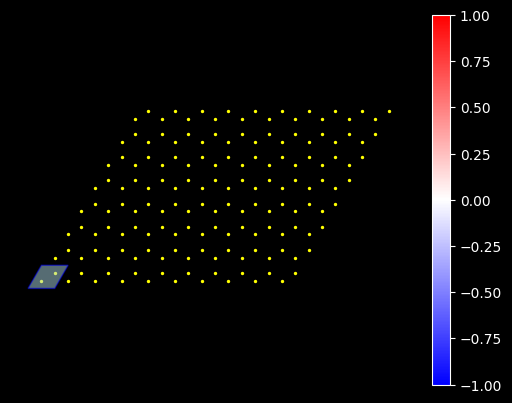
The `lattice.py` module allows you to define a spin lattice. Here's an example of creating a hexagonal lattice:
|
|
87
|
+
|
|
88
|
+
```python
|
|
89
|
+
import numpy as np
|
|
90
|
+
|
|
91
|
+
from llgs import Lattice_2D
|
|
92
|
+
|
|
93
|
+
honeycomb = Lattice_2D(
|
|
94
|
+
n_a=10,
|
|
95
|
+
n_b=8,
|
|
96
|
+
n_site=2,
|
|
97
|
+
r_a=[np.sqrt(3), 0],
|
|
98
|
+
r_b=[0.5 * np.sqrt(3), 1.5],
|
|
99
|
+
r_site=[
|
|
100
|
+
[1 / 3, 1 / 3],
|
|
101
|
+
[2 / 3, 2 / 3],
|
|
102
|
+
],
|
|
103
|
+
)
|
|
104
|
+
honeycomb.plot(draw_unitcell=True)
|
|
105
|
+
```
|
|
106
|
+
|
|
107
|
+
|
|
108
|
+
|
|
109
|
+
### 2. Initializing Spins
|
|
110
|
+
|
|
111
|
+
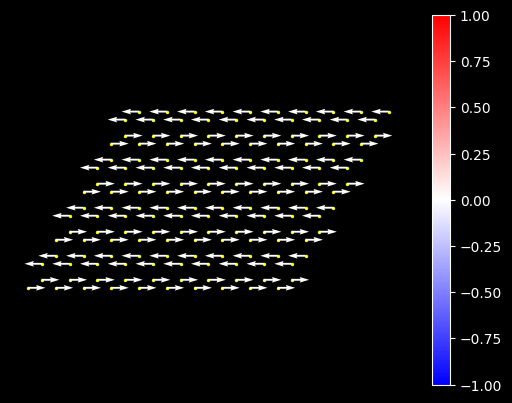
Initialize the spins on the lattice to a desired configuration:
|
|
112
|
+
|
|
113
|
+
```python
|
|
114
|
+
zigzag_config = {
|
|
115
|
+
"b % 2 == 0": np.array([1, 0, 0]),
|
|
116
|
+
"b % 2 == 1": np.array([-1, 0, 0]),
|
|
117
|
+
}
|
|
118
|
+
honeycomb.initialize_spin(zigzag_config)
|
|
119
|
+
honeycomb.plot()
|
|
120
|
+
```
|
|
121
|
+
|
|
122
|
+
|
|
123
|
+
|
|
124
|
+
### 3. Setting Up Parameters for Simulation
|
|
125
|
+
|
|
126
|
+
Build the exchange matrix from exact lattice bonds, then configure the
|
|
127
|
+
simulation. Each bond is `(source_site, target_site, cell_offset, coupling)`;
|
|
128
|
+
the reverse bond is added automatically.
|
|
129
|
+
|
|
130
|
+
```python
|
|
131
|
+
from llgs import LLGS_Simulation_2D, build_exchange
|
|
132
|
+
|
|
133
|
+
J1 = -11.2 # exchange-matrix coefficient, Tesla
|
|
134
|
+
exchange_bonds = [
|
|
135
|
+
(0, 1, (0, 0), J1),
|
|
136
|
+
(1, 0, (0, 1), J1),
|
|
137
|
+
(1, 0, (1, 0), J1),
|
|
138
|
+
]
|
|
139
|
+
H_E = build_exchange(honeycomb, exchange_bonds)
|
|
140
|
+
H_ext = np.array([5.0, 5.0, 0.0])
|
|
141
|
+
|
|
142
|
+
sim = LLGS_Simulation_2D(
|
|
143
|
+
honeycomb,
|
|
144
|
+
H_E=H_E,
|
|
145
|
+
H_ext=H_ext,
|
|
146
|
+
alpha=0.1,
|
|
147
|
+
H_para=0.086,
|
|
148
|
+
H_perp=1.812,
|
|
149
|
+
io_foldername="Data",
|
|
150
|
+
io_filename="results_RK4",
|
|
151
|
+
method="RK4",
|
|
152
|
+
)
|
|
153
|
+
```
|
|
154
|
+
|
|
155
|
+
`H_E` may be a dense `(N, N)` array or a SciPy sparse matrix. For sparse DMI,
|
|
156
|
+
pass `H_DMI` as a sequence of three sparse `(N, N)` matrices, one for each
|
|
157
|
+
Cartesian component. Dense DMI remains a `(3, N, N)` array. Use
|
|
158
|
+
`matrix_type="sparse"` to convert both fields to CSR matrices,
|
|
159
|
+
`matrix_type="dense"` to convert them to NumPy arrays, or the default
|
|
160
|
+
`matrix_type="auto"` to preserve the supplied representation.
|
|
161
|
+
|
|
162
|
+
### 4. Running the Simulation
|
|
163
|
+
|
|
164
|
+
Run the simulation for a specified number of steps and save the results:
|
|
165
|
+
|
|
166
|
+
```python
|
|
167
|
+
sim.evolve(dt=2e-4, max_iters=1000)
|
|
168
|
+
```
|
|
169
|
+
|
|
170
|
+
### 5. Visualizing Spin Dynamics
|
|
171
|
+
|
|
172
|
+
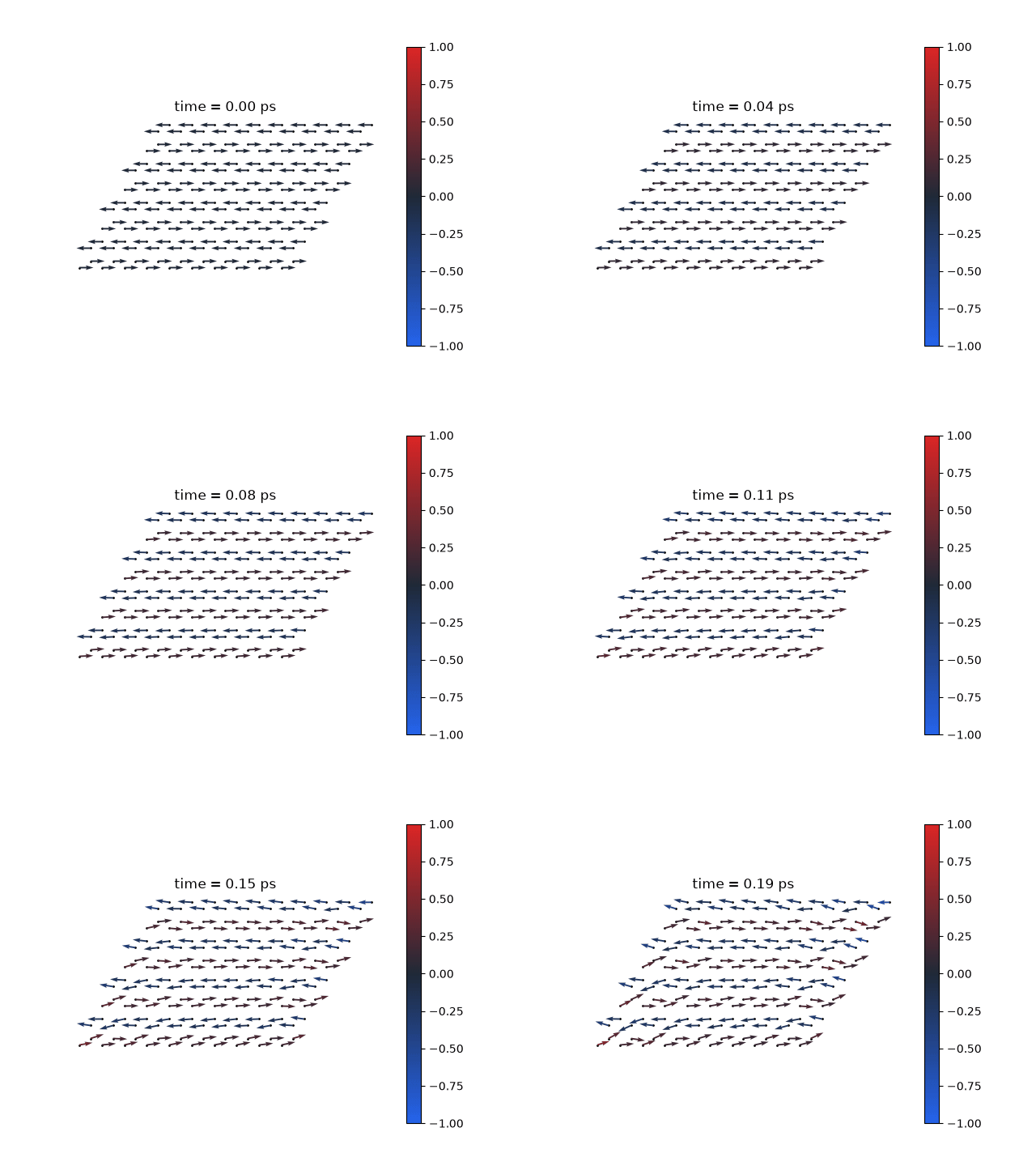
The `read_result.py` module reads the simulation results and creates visualizations. Here is how you can animate the spin dynamics:
|
|
173
|
+
|
|
174
|
+
```python
|
|
175
|
+
from llgs import ReadResult
|
|
176
|
+
|
|
177
|
+
results = ReadResult("Data/results_RK4.h5")
|
|
178
|
+
|
|
179
|
+
results.animate(period=50, save_fn="Data/movie.gif")
|
|
180
|
+
```
|
|
181
|
+
|
|
182
|
+
### Example Output
|
|
183
|
+
|
|
184
|
+
Here is an example of how the animation might look:
|
|
185
|
+
|
|
186
|
+
|
|
187
|
+
|
|
188
|
+
### Additional Details
|
|
189
|
+
|
|
190
|
+
For a comprehensive explanation of the methods, equations, and parameters,
|
|
191
|
+
see the [example notebook](https://github.com/ianchung621/LLGS-simulation/blob/main/example.ipynb).
|
|
192
|
+
|
|
193
|
+
This notebook includes:
|
|
194
|
+
- Detailed descriptions of lattice construction.
|
|
195
|
+
- Explanation of the exchange field matrix and LLGS simulation.
|
|
196
|
+
- Mathematical derivations and parameter setups.
|
|
@@ -0,0 +1,139 @@
|
|
|
1
|
+
# LLGS Simulation
|
|
2
|
+
|
|
3
|
+
[](https://github.com/ianchung621/LLGS-simulation/actions/workflows/test.yml)
|
|
4
|
+
[](https://codecov.io/gh/ianchung621/LLGS-simulation)
|
|
5
|
+

|
|
6
|
+

|
|
7
|
+
|
|
8
|
+
This package provides tools for simulating and analyzing spin dynamics using
|
|
9
|
+
the Landau-Lifshitz-Gilbert-Slonczewski (LLGS) equation on two-dimensional
|
|
10
|
+
lattices. It supports antiferromagnetic exchange, DMI, anisotropy, external
|
|
11
|
+
fields, and spin-orbit torque.
|
|
12
|
+
|
|
13
|
+
## Install
|
|
14
|
+
|
|
15
|
+
LLGS Simulation requires Python 3.9 or newer:
|
|
16
|
+
|
|
17
|
+
```bash
|
|
18
|
+
python -m venv .venv
|
|
19
|
+
source .venv/bin/activate
|
|
20
|
+
python -m pip install llgs-simulation
|
|
21
|
+
```
|
|
22
|
+
|
|
23
|
+
## Example Usage
|
|
24
|
+
|
|
25
|
+
Below is a step-by-step demonstration of how to use the repository to simulate spin dynamics and visualize the results.
|
|
26
|
+
|
|
27
|
+
### 1. Creating a Lattice Object
|
|
28
|
+
|
|
29
|
+
The `lattice.py` module allows you to define a spin lattice. Here's an example of creating a hexagonal lattice:
|
|
30
|
+
|
|
31
|
+
```python
|
|
32
|
+
import numpy as np
|
|
33
|
+
|
|
34
|
+
from llgs import Lattice_2D
|
|
35
|
+
|
|
36
|
+
honeycomb = Lattice_2D(
|
|
37
|
+
n_a=10,
|
|
38
|
+
n_b=8,
|
|
39
|
+
n_site=2,
|
|
40
|
+
r_a=[np.sqrt(3), 0],
|
|
41
|
+
r_b=[0.5 * np.sqrt(3), 1.5],
|
|
42
|
+
r_site=[
|
|
43
|
+
[1 / 3, 1 / 3],
|
|
44
|
+
[2 / 3, 2 / 3],
|
|
45
|
+
],
|
|
46
|
+
)
|
|
47
|
+
honeycomb.plot(draw_unitcell=True)
|
|
48
|
+
```
|
|
49
|
+
|
|
50
|
+

|
|
51
|
+
|
|
52
|
+
### 2. Initializing Spins
|
|
53
|
+
|
|
54
|
+
Initialize the spins on the lattice to a desired configuration:
|
|
55
|
+
|
|
56
|
+
```python
|
|
57
|
+
zigzag_config = {
|
|
58
|
+
"b % 2 == 0": np.array([1, 0, 0]),
|
|
59
|
+
"b % 2 == 1": np.array([-1, 0, 0]),
|
|
60
|
+
}
|
|
61
|
+
honeycomb.initialize_spin(zigzag_config)
|
|
62
|
+
honeycomb.plot()
|
|
63
|
+
```
|
|
64
|
+
|
|
65
|
+

|
|
66
|
+
|
|
67
|
+
### 3. Setting Up Parameters for Simulation
|
|
68
|
+
|
|
69
|
+
Build the exchange matrix from exact lattice bonds, then configure the
|
|
70
|
+
simulation. Each bond is `(source_site, target_site, cell_offset, coupling)`;
|
|
71
|
+
the reverse bond is added automatically.
|
|
72
|
+
|
|
73
|
+
```python
|
|
74
|
+
from llgs import LLGS_Simulation_2D, build_exchange
|
|
75
|
+
|
|
76
|
+
J1 = -11.2 # exchange-matrix coefficient, Tesla
|
|
77
|
+
exchange_bonds = [
|
|
78
|
+
(0, 1, (0, 0), J1),
|
|
79
|
+
(1, 0, (0, 1), J1),
|
|
80
|
+
(1, 0, (1, 0), J1),
|
|
81
|
+
]
|
|
82
|
+
H_E = build_exchange(honeycomb, exchange_bonds)
|
|
83
|
+
H_ext = np.array([5.0, 5.0, 0.0])
|
|
84
|
+
|
|
85
|
+
sim = LLGS_Simulation_2D(
|
|
86
|
+
honeycomb,
|
|
87
|
+
H_E=H_E,
|
|
88
|
+
H_ext=H_ext,
|
|
89
|
+
alpha=0.1,
|
|
90
|
+
H_para=0.086,
|
|
91
|
+
H_perp=1.812,
|
|
92
|
+
io_foldername="Data",
|
|
93
|
+
io_filename="results_RK4",
|
|
94
|
+
method="RK4",
|
|
95
|
+
)
|
|
96
|
+
```
|
|
97
|
+
|
|
98
|
+
`H_E` may be a dense `(N, N)` array or a SciPy sparse matrix. For sparse DMI,
|
|
99
|
+
pass `H_DMI` as a sequence of three sparse `(N, N)` matrices, one for each
|
|
100
|
+
Cartesian component. Dense DMI remains a `(3, N, N)` array. Use
|
|
101
|
+
`matrix_type="sparse"` to convert both fields to CSR matrices,
|
|
102
|
+
`matrix_type="dense"` to convert them to NumPy arrays, or the default
|
|
103
|
+
`matrix_type="auto"` to preserve the supplied representation.
|
|
104
|
+
|
|
105
|
+
### 4. Running the Simulation
|
|
106
|
+
|
|
107
|
+
Run the simulation for a specified number of steps and save the results:
|
|
108
|
+
|
|
109
|
+
```python
|
|
110
|
+
sim.evolve(dt=2e-4, max_iters=1000)
|
|
111
|
+
```
|
|
112
|
+
|
|
113
|
+
### 5. Visualizing Spin Dynamics
|
|
114
|
+
|
|
115
|
+
The `read_result.py` module reads the simulation results and creates visualizations. Here is how you can animate the spin dynamics:
|
|
116
|
+
|
|
117
|
+
```python
|
|
118
|
+
from llgs import ReadResult
|
|
119
|
+
|
|
120
|
+
results = ReadResult("Data/results_RK4.h5")
|
|
121
|
+
|
|
122
|
+
results.animate(period=50, save_fn="Data/movie.gif")
|
|
123
|
+
```
|
|
124
|
+
|
|
125
|
+
### Example Output
|
|
126
|
+
|
|
127
|
+
Here is an example of how the animation might look:
|
|
128
|
+
|
|
129
|
+

|
|
130
|
+
|
|
131
|
+
### Additional Details
|
|
132
|
+
|
|
133
|
+
For a comprehensive explanation of the methods, equations, and parameters,
|
|
134
|
+
see the [example notebook](https://github.com/ianchung621/LLGS-simulation/blob/main/example.ipynb).
|
|
135
|
+
|
|
136
|
+
This notebook includes:
|
|
137
|
+
- Detailed descriptions of lattice construction.
|
|
138
|
+
- Explanation of the exchange field matrix and LLGS simulation.
|
|
139
|
+
- Mathematical derivations and parameter setups.
|
|
@@ -0,0 +1,52 @@
|
|
|
1
|
+
[build-system]
|
|
2
|
+
requires = ["setuptools>=68", "wheel"]
|
|
3
|
+
build-backend = "setuptools.build_meta"
|
|
4
|
+
|
|
5
|
+
[project]
|
|
6
|
+
name = "llgs-simulation"
|
|
7
|
+
version = "0.1.0"
|
|
8
|
+
description = "Spin-dynamics simulations using the Landau-Lifshitz-Gilbert-Slonczewski equation"
|
|
9
|
+
readme = "README.md"
|
|
10
|
+
requires-python = ">=3.9"
|
|
11
|
+
license = { file = "LICENSE" }
|
|
12
|
+
authors = [
|
|
13
|
+
{ name = "Ian Chang" },
|
|
14
|
+
]
|
|
15
|
+
keywords = ["spintronics", "LLGS", "magnetism", "spin dynamics", "simulation"]
|
|
16
|
+
classifiers = [
|
|
17
|
+
"Development Status :: 3 - Alpha",
|
|
18
|
+
"Intended Audience :: Science/Research",
|
|
19
|
+
"License :: OSI Approved :: MIT License",
|
|
20
|
+
"Operating System :: OS Independent",
|
|
21
|
+
"Programming Language :: Python :: 3",
|
|
22
|
+
"Programming Language :: Python :: 3 :: Only",
|
|
23
|
+
"Programming Language :: Python :: 3.9",
|
|
24
|
+
"Programming Language :: Python :: 3.10",
|
|
25
|
+
"Programming Language :: Python :: 3.11",
|
|
26
|
+
"Programming Language :: Python :: 3.12",
|
|
27
|
+
"Programming Language :: Python :: 3.13",
|
|
28
|
+
"Topic :: Scientific/Engineering :: Physics",
|
|
29
|
+
]
|
|
30
|
+
dependencies = [
|
|
31
|
+
"h5py",
|
|
32
|
+
"matplotlib",
|
|
33
|
+
"numba",
|
|
34
|
+
"numpy",
|
|
35
|
+
"scipy",
|
|
36
|
+
"tqdm",
|
|
37
|
+
]
|
|
38
|
+
|
|
39
|
+
[project.urls]
|
|
40
|
+
Homepage = "https://github.com/ianchung621/LLGS-simulation"
|
|
41
|
+
Repository = "https://github.com/ianchung621/LLGS-simulation.git"
|
|
42
|
+
Issues = "https://github.com/ianchung621/LLGS-simulation/issues"
|
|
43
|
+
|
|
44
|
+
[project.optional-dependencies]
|
|
45
|
+
test = ["pytest", "pytest-cov"]
|
|
46
|
+
|
|
47
|
+
[tool.setuptools.packages.find]
|
|
48
|
+
where = ["src"]
|
|
49
|
+
|
|
50
|
+
[tool.pytest.ini_options]
|
|
51
|
+
testpaths = ["tests"]
|
|
52
|
+
pythonpath = ["."]
|