labqc 0.4.0__tar.gz
This diff represents the content of publicly available package versions that have been released to one of the supported registries. The information contained in this diff is provided for informational purposes only and reflects changes between package versions as they appear in their respective public registries.
- labqc-0.4.0/LICENSE +21 -0
- labqc-0.4.0/PKG-INFO +244 -0
- labqc-0.4.0/README.md +202 -0
- labqc-0.4.0/pyproject.toml +67 -0
- labqc-0.4.0/setup.cfg +4 -0
- labqc-0.4.0/src/labqc/__init__.py +6 -0
- labqc-0.4.0/src/labqc/control_charts.py +215 -0
- labqc-0.4.0/src/labqc/emissions.py +99 -0
- labqc-0.4.0/src/labqc/proficiency.py +94 -0
- labqc-0.4.0/src/labqc/py.typed +0 -0
- labqc-0.4.0/src/labqc/uncertainty.py +428 -0
- labqc-0.4.0/src/labqc/validation.py +309 -0
- labqc-0.4.0/src/labqc.egg-info/PKG-INFO +244 -0
- labqc-0.4.0/src/labqc.egg-info/SOURCES.txt +18 -0
- labqc-0.4.0/src/labqc.egg-info/dependency_links.txt +1 -0
- labqc-0.4.0/src/labqc.egg-info/requires.txt +15 -0
- labqc-0.4.0/src/labqc.egg-info/top_level.txt +1 -0
- labqc-0.4.0/tests/test_qc_emissions.py +175 -0
- labqc-0.4.0/tests/test_uncertainty.py +247 -0
- labqc-0.4.0/tests/test_validation_pt.py +175 -0
labqc-0.4.0/LICENSE
ADDED
|
@@ -0,0 +1,21 @@
|
|
|
1
|
+
MIT License
|
|
2
|
+
|
|
3
|
+
Copyright (c) 2025-2026 Mantas Valantinavičius
|
|
4
|
+
|
|
5
|
+
Permission is hereby granted, free of charge, to any person obtaining a copy
|
|
6
|
+
of this software and associated documentation files (the "Software"), to deal
|
|
7
|
+
in the Software without restriction, including without limitation the rights
|
|
8
|
+
to use, copy, modify, merge, publish, distribute, sublicense, and/or sell
|
|
9
|
+
copies of the Software, and to permit persons to whom the Software is
|
|
10
|
+
furnished to do so, subject to the following conditions:
|
|
11
|
+
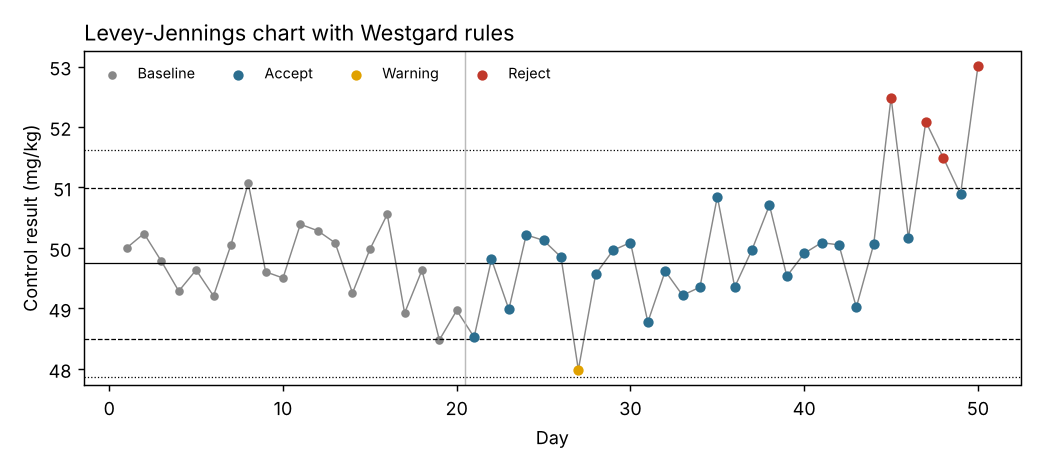
|
|
12
|
+
The above copyright notice and this permission notice shall be included in all
|
|
13
|
+
copies or substantial portions of the Software.
|
|
14
|
+
|
|
15
|
+
THE SOFTWARE IS PROVIDED "AS IS", WITHOUT WARRANTY OF ANY KIND, EXPRESS OR
|
|
16
|
+
IMPLIED, INCLUDING BUT NOT LIMITED TO THE WARRANTIES OF MERCHANTABILITY,
|
|
17
|
+
FITNESS FOR A PARTICULAR PURPOSE AND NONINFRINGEMENT. IN NO EVENT SHALL THE
|
|
18
|
+
AUTHORS OR COPYRIGHT HOLDERS BE LIABLE FOR ANY CLAIM, DAMAGES OR OTHER
|
|
19
|
+
LIABILITY, WHETHER IN AN ACTION OF CONTRACT, TORT OR OTHERWISE, ARISING FROM,
|
|
20
|
+
OUT OF OR IN CONNECTION WITH THE SOFTWARE OR THE USE OR OTHER DEALINGS IN THE
|
|
21
|
+
SOFTWARE.
|
labqc-0.4.0/PKG-INFO
ADDED
|
@@ -0,0 +1,244 @@
|
|
|
1
|
+
Metadata-Version: 2.4
|
|
2
|
+
Name: labqc
|
|
3
|
+
Version: 0.4.0
|
|
4
|
+
Summary: Laboratory quality calculations: GUM uncertainty budgets, method validation, proficiency-test scores, Westgard rules and flue-gas emission conversions
|
|
5
|
+
Author: Mantas Valantinavičius
|
|
6
|
+
License-Expression: MIT
|
|
7
|
+
Project-URL: Homepage, https://github.com/mantas123456/lab-quality-toolkit
|
|
8
|
+
Project-URL: Documentation, https://mantas123456.github.io/lab-quality-toolkit/
|
|
9
|
+
Project-URL: Source, https://github.com/mantas123456/lab-quality-toolkit
|
|
10
|
+
Project-URL: Issues, https://github.com/mantas123456/lab-quality-toolkit/issues
|
|
11
|
+
Project-URL: Changelog, https://github.com/mantas123456/lab-quality-toolkit/blob/main/CHANGELOG.md
|
|
12
|
+
Keywords: metrology,uncertainty,GUM,ISO 17025,quality control,Westgard,method validation,proficiency testing,emissions
|
|
13
|
+
Classifier: Development Status :: 4 - Beta
|
|
14
|
+
Classifier: Intended Audience :: Science/Research
|
|
15
|
+
Classifier: Operating System :: OS Independent
|
|
16
|
+
Classifier: Programming Language :: Python :: 3
|
|
17
|
+
Classifier: Programming Language :: Python :: 3 :: Only
|
|
18
|
+
Classifier: Programming Language :: Python :: 3.10
|
|
19
|
+
Classifier: Programming Language :: Python :: 3.11
|
|
20
|
+
Classifier: Programming Language :: Python :: 3.12
|
|
21
|
+
Classifier: Programming Language :: Python :: 3.13
|
|
22
|
+
Classifier: Topic :: Scientific/Engineering
|
|
23
|
+
Classifier: Topic :: Scientific/Engineering :: Chemistry
|
|
24
|
+
Classifier: Typing :: Typed
|
|
25
|
+
Requires-Python: >=3.10
|
|
26
|
+
Description-Content-Type: text/markdown
|
|
27
|
+
License-File: LICENSE
|
|
28
|
+
Requires-Dist: numpy>=1.26
|
|
29
|
+
Requires-Dist: pandas>=2.1
|
|
30
|
+
Requires-Dist: scipy>=1.11
|
|
31
|
+
Provides-Extra: dev
|
|
32
|
+
Requires-Dist: pytest>=8; extra == "dev"
|
|
33
|
+
Requires-Dist: ruff>=0.5; extra == "dev"
|
|
34
|
+
Requires-Dist: matplotlib>=3.8; extra == "dev"
|
|
35
|
+
Requires-Dist: build>=1.2; extra == "dev"
|
|
36
|
+
Requires-Dist: twine>=6; extra == "dev"
|
|
37
|
+
Provides-Extra: docs
|
|
38
|
+
Requires-Dist: mkdocs<2,>=1.6; extra == "docs"
|
|
39
|
+
Requires-Dist: mkdocs-material>=9.5; extra == "docs"
|
|
40
|
+
Requires-Dist: mkdocstrings[python]>=0.26; extra == "docs"
|
|
41
|
+
Dynamic: license-file
|
|
42
|
+
|
|
43
|
+
# labqc: laboratory quality calculations in Python
|
|
44
|
+
|
|
45
|
+
[](https://github.com/mantas123456/lab-quality-toolkit/actions/workflows/ci.yml)
|
|
46
|
+
[](https://pypi.org/project/labqc/)
|
|
47
|
+
[](https://mantas123456.github.io/lab-quality-toolkit/)
|
|
48
|
+
|
|
49
|
+
The calculations an ISO/IEC 17025 laboratory does every week, usually in spreadsheets,
|
|
50
|
+
written as small, tested Python functions:
|
|
51
|
+
|
|
52
|
+
<!-- --8<-- [start:modules] -->
|
|
53
|
+
| Module | What it covers | Reference |
|
|
54
|
+
|---|---|---|
|
|
55
|
+
| `uncertainty` | GUM uncertainty budgets: Type A and B components, sensitivity coefficients (analytic or numerical), correlated inputs, Welch–Satterthwaite degrees of freedom, coverage factor, relative uncertainty; Monte Carlo propagation | JCGM 100:2008 (GUM), JCGM 101:2008 (GUM S1) |
|
|
56
|
+
| `validation` | Calibration linearity (ordinary or weighted) with confidence intervals and lack-of-fit test, LOD/LOQ, precision (RSD), intermediate precision by ANOVA, spike recovery, trueness against a CRM | ICH Q2, Eurachem guide, ERM Application Note 1 |
|
|
57
|
+
| `proficiency` | z, zeta and E<sub>n</sub> scores with interpretation; robust consensus mean (Algorithm A); z-score history across rounds | ISO 13528, ISO/IEC 17043 |
|
|
58
|
+
| `control_charts` | Shewhart limits; Westgard rules 1<sub>2s</sub>, 1<sub>3s</sub>, 2<sub>2s</sub>, R<sub>4s</sub>, 4<sub>1s</sub>, 10<sub>x</sub>, also across two or three control levels; CUSUM and EWMA charts | Westgard multirule QC; Montgomery, *Introduction to Statistical Quality Control* |
|
|
59
|
+
| `emissions` | ppm ↔ mg/m³ at standard conditions, correction to reference O₂ and its uncertainty, wet ↔ dry, user-defined gases | Stack-emission practice, e.g. EN 303-5 at 10 % O₂ |
|
|
60
|
+
|
|
61
|
+
Every function is tested against hand-calculated values or textbook worked examples (58 tests),
|
|
62
|
+
and the examples below run in CI.
|
|
63
|
+
<!-- --8<-- [end:modules] -->
|
|
64
|
+
|
|
65
|
+
<!-- --8<-- [start:examples] -->
|
|
66
|
+
## Example 1: uncertainty of a moisture determination
|
|
67
|
+
|
|
68
|
+
Oven-dry moisture of a wood-pellet sample, `M = (m2 − m3) / (m2 − m1) × 100`, with balance
|
|
69
|
+
calibration and resolution for each weighing plus repeatability from five test portions.
|
|
70
|
+
Sensitivity coefficients are found numerically from the model function
|
|
71
|
+
([`examples/moisture_uncertainty.py`](https://github.com/mantas123456/lab-quality-toolkit/blob/main/examples/moisture_uncertainty.py)).
|
|
72
|
+
|
|
73
|
+
```text
|
|
74
|
+
component u_i c_i contribution dof share_of_variance
|
|
75
|
+
Repeatability (5 test portions) 0.0191 1 0.0191 4 0.996
|
|
76
|
+
Weighing m3 0.00104 -0.798 0.00083 inf 0.00188
|
|
77
|
+
Weighing m2 0.00104 0.742 0.000772 inf 0.00162
|
|
78
|
+
Weighing m1 0.00104 0.0556 5.79e-05 inf 9.12e-06
|
|
79
|
+
|
|
80
|
+
u_c = 0.01916, v_eff = 4.0, k = 2.77, U (95%) = 0.05306
|
|
81
|
+
Report: M = 6.97 % ± 0.05 % (k = 2.77, 95 %)
|
|
82
|
+
```
|
|
83
|
+
|
|
84
|
+
Over 99 % of the variance comes from sample repeatability. A better balance would change
|
|
85
|
+
nothing; more test portions would. With only four degrees of freedom the coverage factor is
|
|
86
|
+
2.77, not 2, which a fixed "k = 2" spreadsheet gets wrong.
|
|
87
|
+
|
|
88
|
+
## Example 2: Westgard rules on daily QC
|
|
89
|
+
|
|
90
|
+
Twenty baseline days set the limits. A +1.4 mg/kg shift is introduced from day 45
|
|
91
|
+
([`examples/westgard_iqc.py`](https://github.com/mantas123456/lab-quality-toolkit/blob/main/examples/westgard_iqc.py)).
|
|
92
|
+
|
|
93
|
+
|
|
94
|
+
|
|
95
|
+
```text
|
|
96
|
+
value z status rules
|
|
97
|
+
27 47.99 -2.817 warning 1_2s
|
|
98
|
+
45 52.49 4.385 reject 1_2s, 1_3s
|
|
99
|
+
47 52.09 3.745 reject 1_2s, 1_3s
|
|
100
|
+
48 51.50 2.798 reject 1_2s, 2_2s
|
|
101
|
+
50 53.00 5.206 reject 1_2s, 1_3s, 4_1s
|
|
102
|
+
```
|
|
103
|
+
|
|
104
|
+
Day 27 is a lone 1<sub>2s</sub> warning that needs no action. The shift is caught on its
|
|
105
|
+
first day, and the 2<sub>2s</sub> and 4<sub>1s</sub> rules confirm the error is systematic
|
|
106
|
+
(calibration), not random.
|
|
107
|
+
|
|
108
|
+
## Example 3: boiler test emissions at reference oxygen
|
|
109
|
+
|
|
110
|
+
```text
|
|
111
|
+
Measured O2 12.8 %, correction factor 1.346
|
|
112
|
+
CO 310.0 ppm -> 521.3 mg/m3 at 10 % O2 (104% of example limit)
|
|
113
|
+
NO2 118.0 ppm -> 325.9 mg/m3 at 10 % O2
|
|
114
|
+
C3H8 6.5 ppm -> 17.2 mg/m3 at 10 % O2
|
|
115
|
+
```
|
|
116
|
+
|
|
117
|
+
At high excess air, a raw reading that looks comfortably low can exceed a limit once it is
|
|
118
|
+
corrected to 10 % O₂ ([`examples/boiler_emissions.py`](https://github.com/mantas123456/lab-quality-toolkit/blob/main/examples/boiler_emissions.py)).
|
|
119
|
+
|
|
120
|
+
## Example 4: Monte Carlo and correlated weighings
|
|
121
|
+
|
|
122
|
+
Version 0.2 adds Monte Carlo propagation (GUM Supplement 1) and correlated inputs
|
|
123
|
+
([`examples/monte_carlo_vs_gum.py`](https://github.com/mantas123456/lab-quality-toolkit/blob/main/examples/monte_carlo_vs_gum.py)).
|
|
124
|
+
|
|
125
|
+
```text
|
|
126
|
+
1. Moisture, M = (m2 - m3) / (m2 - m1) x 100 [%]
|
|
127
|
+
GUM (linear): y = 6.971, u = 0.01916, k = 2.77, 95 % interval [6.918, 7.025]
|
|
128
|
+
Monte Carlo: y = 6.971, u = 0.02704, 95 % interval [6.917, 7.024]
|
|
129
|
+
|
|
130
|
+
2. Recovery-corrected result, C = C_meas / R [mg/kg]
|
|
131
|
+
GUM (linear): y = 20, u = 3.371, k = 1.96, 95 % interval [13.39, 26.61]
|
|
132
|
+
Monte Carlo: y = 20.61, u = 3.843, 95 % interval [14.15, 28.12]
|
|
133
|
+
|
|
134
|
+
3. Weighings only (no repeatability), r = 0.92 between weighings
|
|
135
|
+
treated as independent: u = 0.00114 %
|
|
136
|
+
with shared calibration: u = 0.00031 % (-72%)
|
|
137
|
+
```
|
|
138
|
+
|
|
139
|
+
For the nearly linear moisture model the two 95 % intervals agree. Monte Carlo's u is larger
|
|
140
|
+
only because a 4-dof Type A input is sampled from a t-distribution; the GUM method puts the
|
|
141
|
+
same widening into k = 2.77. Dividing by an uncertain recovery (R = 0.60 ± 0.10) is
|
|
142
|
+
non-linear: the real distribution is skewed upwards, and the first-order interval is too low
|
|
143
|
+
at both ends. When the three weighings share one balance calibration, most of the offset
|
|
144
|
+
cancels, and the balance contribution falls by 72 %.
|
|
145
|
+
|
|
146
|
+
```python
|
|
147
|
+
from labqc.uncertainty import Component, monte_carlo, propagate
|
|
148
|
+
|
|
149
|
+
inputs = {"a": Component("a", 0.1), "b": Component("b", 0.1)}
|
|
150
|
+
y, r = propagate(lambda a, b: a - b, {"a": 5.0, "b": 2.0}, inputs, correlation={("a", "b"): 0.8})
|
|
151
|
+
print(r.summary(relative=True)) # u_c, k, U and u_c/|y|, U/|y|
|
|
152
|
+
print(monte_carlo(lambda a, b: a / b, {"a": 5.0, "b": 2.0}, inputs, seed=1))
|
|
153
|
+
```
|
|
154
|
+
|
|
155
|
+
## New in 0.3: lab methods
|
|
156
|
+
|
|
157
|
+
```python
|
|
158
|
+
import pandas as pd
|
|
159
|
+
from labqc.validation import intermediate_precision, linearity, trueness
|
|
160
|
+
from labqc.emissions import corrected_uncertainty
|
|
161
|
+
|
|
162
|
+
# weighted calibration with duplicate standards: lack-of-fit test included
|
|
163
|
+
cal = linearity(
|
|
164
|
+
[1, 1, 2, 2, 5, 5, 10, 10], [0.11, 0.10, 0.21, 0.19, 0.52, 0.49, 1.08, 0.97], weights="1/x"
|
|
165
|
+
)
|
|
166
|
+
print(cal.lack_of_fit.p_value) # 0.90: a straight line is adequate
|
|
167
|
+
|
|
168
|
+
# three days x three replicates: repeatability 0.100, intermediate precision 0.224
|
|
169
|
+
days = pd.DataFrame(
|
|
170
|
+
{
|
|
171
|
+
"day": [1, 1, 1, 2, 2, 2, 3, 3, 3],
|
|
172
|
+
"value": [10.1, 10.3, 10.2, 10.6, 10.4, 10.5, 10.0, 10.2, 10.1],
|
|
173
|
+
}
|
|
174
|
+
)
|
|
175
|
+
ip = intermediate_precision(days, "value", "day")
|
|
176
|
+
|
|
177
|
+
# five results on a CRM certified at 50 with u = 0.2
|
|
178
|
+
print(trueness([50.4, 50.7, 49.1, 49.0, 51.1], crm_value=50, crm_u=0.2).passed) # True
|
|
179
|
+
|
|
180
|
+
# CO from Example 3 with u(C) = 8 mg/m3 and u(O2) = 0.2 %: 521 ± 34 mg/m3 (k = 2)
|
|
181
|
+
c_ref, r = corrected_uncertainty(387.4, 8, o2_measured=12.8, u_o2=0.2, k=2)
|
|
182
|
+
```
|
|
183
|
+
|
|
184
|
+
`pt_history()` reviews a lab's z-scores across PT rounds, and `westgard_levels()`, `cusum()`
|
|
185
|
+
and `ewma()` cover two- and three-level QC and small shifts that Westgard rules miss.
|
|
186
|
+
<!-- --8<-- [end:examples] -->
|
|
187
|
+
|
|
188
|
+
## Use it
|
|
189
|
+
|
|
190
|
+
```bash
|
|
191
|
+
pip install labqc
|
|
192
|
+
```
|
|
193
|
+
|
|
194
|
+
Full documentation, with the API reference for every module:
|
|
195
|
+
[mantas123456.github.io/lab-quality-toolkit](https://mantas123456.github.io/lab-quality-toolkit/).
|
|
196
|
+
|
|
197
|
+
```python
|
|
198
|
+
from labqc.uncertainty import Component, combine, type_a
|
|
199
|
+
from labqc.proficiency import z_score, classify
|
|
200
|
+
|
|
201
|
+
budget = [
|
|
202
|
+
type_a([10.02, 10.05, 9.98, 10.01, 10.03]),
|
|
203
|
+
Component("Reference standard", 0.010, "normal", k=2),
|
|
204
|
+
Component("Temperature effect", 0.004, "rectangular"),
|
|
205
|
+
]
|
|
206
|
+
print(combine(budget)) # u_c, v_eff, k, U
|
|
207
|
+
|
|
208
|
+
z = z_score(10.75, assigned=10.0, sigma_pt=0.3)
|
|
209
|
+
print(round(z, 2), classify(z)) # 2.5 questionable
|
|
210
|
+
```
|
|
211
|
+
|
|
212
|
+
## Develop
|
|
213
|
+
|
|
214
|
+
```bash
|
|
215
|
+
pip install -e ".[dev]"
|
|
216
|
+
pytest
|
|
217
|
+
ruff check .
|
|
218
|
+
|
|
219
|
+
pip install -e ".[docs]"
|
|
220
|
+
mkdocs serve # documentation at http://127.0.0.1:8000
|
|
221
|
+
```
|
|
222
|
+
|
|
223
|
+
Releases: push a tag `v*` (for example `v0.4.0`) that matches the version in
|
|
224
|
+
`pyproject.toml`; GitHub Actions builds the package and publishes it to PyPI.
|
|
225
|
+
|
|
226
|
+
## Scope and limits
|
|
227
|
+
|
|
228
|
+
- `propagate()` uses first-order sensitivity coefficients. For strongly non-linear models,
|
|
229
|
+
use `monte_carlo()` (GUM Supplement 1) and compare.
|
|
230
|
+
- Monte Carlo handles correlation only between normal inputs with infinite degrees of
|
|
231
|
+
freedom. Welch–Satterthwaite is applied as for independent inputs, even when correlations
|
|
232
|
+
are given.
|
|
233
|
+
- Units are stored on each component but not checked.
|
|
234
|
+
- This is a calculation aid, not validated software for regulated use. Check results
|
|
235
|
+
against your own procedures.
|
|
236
|
+
|
|
237
|
+
## How this was built
|
|
238
|
+
|
|
239
|
+
I designed the analysis and checked the results. I used Claude Code as
|
|
240
|
+
a coding assistant.
|
|
241
|
+
|
|
242
|
+
---
|
|
243
|
+
Mantas Valantinavičius · measurement scientist, 14 years in ISO/IEC 17025 testing ·
|
|
244
|
+
[github.com/mantas123456](https://github.com/mantas123456)
|
labqc-0.4.0/README.md
ADDED
|
@@ -0,0 +1,202 @@
|
|
|
1
|
+
# labqc: laboratory quality calculations in Python
|
|
2
|
+
|
|
3
|
+
[](https://github.com/mantas123456/lab-quality-toolkit/actions/workflows/ci.yml)
|
|
4
|
+
[](https://pypi.org/project/labqc/)
|
|
5
|
+
[](https://mantas123456.github.io/lab-quality-toolkit/)
|
|
6
|
+
|
|
7
|
+
The calculations an ISO/IEC 17025 laboratory does every week, usually in spreadsheets,
|
|
8
|
+
written as small, tested Python functions:
|
|
9
|
+
|
|
10
|
+
<!-- --8<-- [start:modules] -->
|
|
11
|
+
| Module | What it covers | Reference |
|
|
12
|
+
|---|---|---|
|
|
13
|
+
| `uncertainty` | GUM uncertainty budgets: Type A and B components, sensitivity coefficients (analytic or numerical), correlated inputs, Welch–Satterthwaite degrees of freedom, coverage factor, relative uncertainty; Monte Carlo propagation | JCGM 100:2008 (GUM), JCGM 101:2008 (GUM S1) |
|
|
14
|
+
| `validation` | Calibration linearity (ordinary or weighted) with confidence intervals and lack-of-fit test, LOD/LOQ, precision (RSD), intermediate precision by ANOVA, spike recovery, trueness against a CRM | ICH Q2, Eurachem guide, ERM Application Note 1 |
|
|
15
|
+
| `proficiency` | z, zeta and E<sub>n</sub> scores with interpretation; robust consensus mean (Algorithm A); z-score history across rounds | ISO 13528, ISO/IEC 17043 |
|
|
16
|
+
| `control_charts` | Shewhart limits; Westgard rules 1<sub>2s</sub>, 1<sub>3s</sub>, 2<sub>2s</sub>, R<sub>4s</sub>, 4<sub>1s</sub>, 10<sub>x</sub>, also across two or three control levels; CUSUM and EWMA charts | Westgard multirule QC; Montgomery, *Introduction to Statistical Quality Control* |
|
|
17
|
+
| `emissions` | ppm ↔ mg/m³ at standard conditions, correction to reference O₂ and its uncertainty, wet ↔ dry, user-defined gases | Stack-emission practice, e.g. EN 303-5 at 10 % O₂ |
|
|
18
|
+
|
|
19
|
+
Every function is tested against hand-calculated values or textbook worked examples (58 tests),
|
|
20
|
+
and the examples below run in CI.
|
|
21
|
+
<!-- --8<-- [end:modules] -->
|
|
22
|
+
|
|
23
|
+
<!-- --8<-- [start:examples] -->
|
|
24
|
+
## Example 1: uncertainty of a moisture determination
|
|
25
|
+
|
|
26
|
+
Oven-dry moisture of a wood-pellet sample, `M = (m2 − m3) / (m2 − m1) × 100`, with balance
|
|
27
|
+
calibration and resolution for each weighing plus repeatability from five test portions.
|
|
28
|
+
Sensitivity coefficients are found numerically from the model function
|
|
29
|
+
([`examples/moisture_uncertainty.py`](https://github.com/mantas123456/lab-quality-toolkit/blob/main/examples/moisture_uncertainty.py)).
|
|
30
|
+
|
|
31
|
+
```text
|
|
32
|
+
component u_i c_i contribution dof share_of_variance
|
|
33
|
+
Repeatability (5 test portions) 0.0191 1 0.0191 4 0.996
|
|
34
|
+
Weighing m3 0.00104 -0.798 0.00083 inf 0.00188
|
|
35
|
+
Weighing m2 0.00104 0.742 0.000772 inf 0.00162
|
|
36
|
+
Weighing m1 0.00104 0.0556 5.79e-05 inf 9.12e-06
|
|
37
|
+
|
|
38
|
+
u_c = 0.01916, v_eff = 4.0, k = 2.77, U (95%) = 0.05306
|
|
39
|
+
Report: M = 6.97 % ± 0.05 % (k = 2.77, 95 %)
|
|
40
|
+
```
|
|
41
|
+
|
|
42
|
+
Over 99 % of the variance comes from sample repeatability. A better balance would change
|
|
43
|
+
nothing; more test portions would. With only four degrees of freedom the coverage factor is
|
|
44
|
+
2.77, not 2, which a fixed "k = 2" spreadsheet gets wrong.
|
|
45
|
+
|
|
46
|
+
## Example 2: Westgard rules on daily QC
|
|
47
|
+
|
|
48
|
+
Twenty baseline days set the limits. A +1.4 mg/kg shift is introduced from day 45
|
|
49
|
+
([`examples/westgard_iqc.py`](https://github.com/mantas123456/lab-quality-toolkit/blob/main/examples/westgard_iqc.py)).
|
|
50
|
+
|
|
51
|
+

|
|
52
|
+
|
|
53
|
+
```text
|
|
54
|
+
value z status rules
|
|
55
|
+
27 47.99 -2.817 warning 1_2s
|
|
56
|
+
45 52.49 4.385 reject 1_2s, 1_3s
|
|
57
|
+
47 52.09 3.745 reject 1_2s, 1_3s
|
|
58
|
+
48 51.50 2.798 reject 1_2s, 2_2s
|
|
59
|
+
50 53.00 5.206 reject 1_2s, 1_3s, 4_1s
|
|
60
|
+
```
|
|
61
|
+
|
|
62
|
+
Day 27 is a lone 1<sub>2s</sub> warning that needs no action. The shift is caught on its
|
|
63
|
+
first day, and the 2<sub>2s</sub> and 4<sub>1s</sub> rules confirm the error is systematic
|
|
64
|
+
(calibration), not random.
|
|
65
|
+
|
|
66
|
+
## Example 3: boiler test emissions at reference oxygen
|
|
67
|
+
|
|
68
|
+
```text
|
|
69
|
+
Measured O2 12.8 %, correction factor 1.346
|
|
70
|
+
CO 310.0 ppm -> 521.3 mg/m3 at 10 % O2 (104% of example limit)
|
|
71
|
+
NO2 118.0 ppm -> 325.9 mg/m3 at 10 % O2
|
|
72
|
+
C3H8 6.5 ppm -> 17.2 mg/m3 at 10 % O2
|
|
73
|
+
```
|
|
74
|
+
|
|
75
|
+
At high excess air, a raw reading that looks comfortably low can exceed a limit once it is
|
|
76
|
+
corrected to 10 % O₂ ([`examples/boiler_emissions.py`](https://github.com/mantas123456/lab-quality-toolkit/blob/main/examples/boiler_emissions.py)).
|
|
77
|
+
|
|
78
|
+
## Example 4: Monte Carlo and correlated weighings
|
|
79
|
+
|
|
80
|
+
Version 0.2 adds Monte Carlo propagation (GUM Supplement 1) and correlated inputs
|
|
81
|
+
([`examples/monte_carlo_vs_gum.py`](https://github.com/mantas123456/lab-quality-toolkit/blob/main/examples/monte_carlo_vs_gum.py)).
|
|
82
|
+
|
|
83
|
+
```text
|
|
84
|
+
1. Moisture, M = (m2 - m3) / (m2 - m1) x 100 [%]
|
|
85
|
+
GUM (linear): y = 6.971, u = 0.01916, k = 2.77, 95 % interval [6.918, 7.025]
|
|
86
|
+
Monte Carlo: y = 6.971, u = 0.02704, 95 % interval [6.917, 7.024]
|
|
87
|
+
|
|
88
|
+
2. Recovery-corrected result, C = C_meas / R [mg/kg]
|
|
89
|
+
GUM (linear): y = 20, u = 3.371, k = 1.96, 95 % interval [13.39, 26.61]
|
|
90
|
+
Monte Carlo: y = 20.61, u = 3.843, 95 % interval [14.15, 28.12]
|
|
91
|
+
|
|
92
|
+
3. Weighings only (no repeatability), r = 0.92 between weighings
|
|
93
|
+
treated as independent: u = 0.00114 %
|
|
94
|
+
with shared calibration: u = 0.00031 % (-72%)
|
|
95
|
+
```
|
|
96
|
+
|
|
97
|
+
For the nearly linear moisture model the two 95 % intervals agree. Monte Carlo's u is larger
|
|
98
|
+
only because a 4-dof Type A input is sampled from a t-distribution; the GUM method puts the
|
|
99
|
+
same widening into k = 2.77. Dividing by an uncertain recovery (R = 0.60 ± 0.10) is
|
|
100
|
+
non-linear: the real distribution is skewed upwards, and the first-order interval is too low
|
|
101
|
+
at both ends. When the three weighings share one balance calibration, most of the offset
|
|
102
|
+
cancels, and the balance contribution falls by 72 %.
|
|
103
|
+
|
|
104
|
+
```python
|
|
105
|
+
from labqc.uncertainty import Component, monte_carlo, propagate
|
|
106
|
+
|
|
107
|
+
inputs = {"a": Component("a", 0.1), "b": Component("b", 0.1)}
|
|
108
|
+
y, r = propagate(lambda a, b: a - b, {"a": 5.0, "b": 2.0}, inputs, correlation={("a", "b"): 0.8})
|
|
109
|
+
print(r.summary(relative=True)) # u_c, k, U and u_c/|y|, U/|y|
|
|
110
|
+
print(monte_carlo(lambda a, b: a / b, {"a": 5.0, "b": 2.0}, inputs, seed=1))
|
|
111
|
+
```
|
|
112
|
+
|
|
113
|
+
## New in 0.3: lab methods
|
|
114
|
+
|
|
115
|
+
```python
|
|
116
|
+
import pandas as pd
|
|
117
|
+
from labqc.validation import intermediate_precision, linearity, trueness
|
|
118
|
+
from labqc.emissions import corrected_uncertainty
|
|
119
|
+
|
|
120
|
+
# weighted calibration with duplicate standards: lack-of-fit test included
|
|
121
|
+
cal = linearity(
|
|
122
|
+
[1, 1, 2, 2, 5, 5, 10, 10], [0.11, 0.10, 0.21, 0.19, 0.52, 0.49, 1.08, 0.97], weights="1/x"
|
|
123
|
+
)
|
|
124
|
+
print(cal.lack_of_fit.p_value) # 0.90: a straight line is adequate
|
|
125
|
+
|
|
126
|
+
# three days x three replicates: repeatability 0.100, intermediate precision 0.224
|
|
127
|
+
days = pd.DataFrame(
|
|
128
|
+
{
|
|
129
|
+
"day": [1, 1, 1, 2, 2, 2, 3, 3, 3],
|
|
130
|
+
"value": [10.1, 10.3, 10.2, 10.6, 10.4, 10.5, 10.0, 10.2, 10.1],
|
|
131
|
+
}
|
|
132
|
+
)
|
|
133
|
+
ip = intermediate_precision(days, "value", "day")
|
|
134
|
+
|
|
135
|
+
# five results on a CRM certified at 50 with u = 0.2
|
|
136
|
+
print(trueness([50.4, 50.7, 49.1, 49.0, 51.1], crm_value=50, crm_u=0.2).passed) # True
|
|
137
|
+
|
|
138
|
+
# CO from Example 3 with u(C) = 8 mg/m3 and u(O2) = 0.2 %: 521 ± 34 mg/m3 (k = 2)
|
|
139
|
+
c_ref, r = corrected_uncertainty(387.4, 8, o2_measured=12.8, u_o2=0.2, k=2)
|
|
140
|
+
```
|
|
141
|
+
|
|
142
|
+
`pt_history()` reviews a lab's z-scores across PT rounds, and `westgard_levels()`, `cusum()`
|
|
143
|
+
and `ewma()` cover two- and three-level QC and small shifts that Westgard rules miss.
|
|
144
|
+
<!-- --8<-- [end:examples] -->
|
|
145
|
+
|
|
146
|
+
## Use it
|
|
147
|
+
|
|
148
|
+
```bash
|
|
149
|
+
pip install labqc
|
|
150
|
+
```
|
|
151
|
+
|
|
152
|
+
Full documentation, with the API reference for every module:
|
|
153
|
+
[mantas123456.github.io/lab-quality-toolkit](https://mantas123456.github.io/lab-quality-toolkit/).
|
|
154
|
+
|
|
155
|
+
```python
|
|
156
|
+
from labqc.uncertainty import Component, combine, type_a
|
|
157
|
+
from labqc.proficiency import z_score, classify
|
|
158
|
+
|
|
159
|
+
budget = [
|
|
160
|
+
type_a([10.02, 10.05, 9.98, 10.01, 10.03]),
|
|
161
|
+
Component("Reference standard", 0.010, "normal", k=2),
|
|
162
|
+
Component("Temperature effect", 0.004, "rectangular"),
|
|
163
|
+
]
|
|
164
|
+
print(combine(budget)) # u_c, v_eff, k, U
|
|
165
|
+
|
|
166
|
+
z = z_score(10.75, assigned=10.0, sigma_pt=0.3)
|
|
167
|
+
print(round(z, 2), classify(z)) # 2.5 questionable
|
|
168
|
+
```
|
|
169
|
+
|
|
170
|
+
## Develop
|
|
171
|
+
|
|
172
|
+
```bash
|
|
173
|
+
pip install -e ".[dev]"
|
|
174
|
+
pytest
|
|
175
|
+
ruff check .
|
|
176
|
+
|
|
177
|
+
pip install -e ".[docs]"
|
|
178
|
+
mkdocs serve # documentation at http://127.0.0.1:8000
|
|
179
|
+
```
|
|
180
|
+
|
|
181
|
+
Releases: push a tag `v*` (for example `v0.4.0`) that matches the version in
|
|
182
|
+
`pyproject.toml`; GitHub Actions builds the package and publishes it to PyPI.
|
|
183
|
+
|
|
184
|
+
## Scope and limits
|
|
185
|
+
|
|
186
|
+
- `propagate()` uses first-order sensitivity coefficients. For strongly non-linear models,
|
|
187
|
+
use `monte_carlo()` (GUM Supplement 1) and compare.
|
|
188
|
+
- Monte Carlo handles correlation only between normal inputs with infinite degrees of
|
|
189
|
+
freedom. Welch–Satterthwaite is applied as for independent inputs, even when correlations
|
|
190
|
+
are given.
|
|
191
|
+
- Units are stored on each component but not checked.
|
|
192
|
+
- This is a calculation aid, not validated software for regulated use. Check results
|
|
193
|
+
against your own procedures.
|
|
194
|
+
|
|
195
|
+
## How this was built
|
|
196
|
+
|
|
197
|
+
I designed the analysis and checked the results. I used Claude Code as
|
|
198
|
+
a coding assistant.
|
|
199
|
+
|
|
200
|
+
---
|
|
201
|
+
Mantas Valantinavičius · measurement scientist, 14 years in ISO/IEC 17025 testing ·
|
|
202
|
+
[github.com/mantas123456](https://github.com/mantas123456)
|
|
@@ -0,0 +1,67 @@
|
|
|
1
|
+
[build-system]
|
|
2
|
+
requires = ["setuptools>=77"]
|
|
3
|
+
build-backend = "setuptools.build_meta"
|
|
4
|
+
|
|
5
|
+
[project]
|
|
6
|
+
name = "labqc"
|
|
7
|
+
version = "0.4.0"
|
|
8
|
+
description = "Laboratory quality calculations: GUM uncertainty budgets, method validation, proficiency-test scores, Westgard rules and flue-gas emission conversions"
|
|
9
|
+
readme = "README.md"
|
|
10
|
+
requires-python = ">=3.10"
|
|
11
|
+
license = "MIT"
|
|
12
|
+
license-files = ["LICENSE"]
|
|
13
|
+
authors = [{ name = "Mantas Valantinavičius" }]
|
|
14
|
+
keywords = [
|
|
15
|
+
"metrology",
|
|
16
|
+
"uncertainty",
|
|
17
|
+
"GUM",
|
|
18
|
+
"ISO 17025",
|
|
19
|
+
"quality control",
|
|
20
|
+
"Westgard",
|
|
21
|
+
"method validation",
|
|
22
|
+
"proficiency testing",
|
|
23
|
+
"emissions",
|
|
24
|
+
]
|
|
25
|
+
classifiers = [
|
|
26
|
+
"Development Status :: 4 - Beta",
|
|
27
|
+
"Intended Audience :: Science/Research",
|
|
28
|
+
"Operating System :: OS Independent",
|
|
29
|
+
"Programming Language :: Python :: 3",
|
|
30
|
+
"Programming Language :: Python :: 3 :: Only",
|
|
31
|
+
"Programming Language :: Python :: 3.10",
|
|
32
|
+
"Programming Language :: Python :: 3.11",
|
|
33
|
+
"Programming Language :: Python :: 3.12",
|
|
34
|
+
"Programming Language :: Python :: 3.13",
|
|
35
|
+
"Topic :: Scientific/Engineering",
|
|
36
|
+
"Topic :: Scientific/Engineering :: Chemistry",
|
|
37
|
+
"Typing :: Typed",
|
|
38
|
+
]
|
|
39
|
+
dependencies = ["numpy>=1.26", "pandas>=2.1", "scipy>=1.11"]
|
|
40
|
+
|
|
41
|
+
[project.urls]
|
|
42
|
+
Homepage = "https://github.com/mantas123456/lab-quality-toolkit"
|
|
43
|
+
Documentation = "https://mantas123456.github.io/lab-quality-toolkit/"
|
|
44
|
+
Source = "https://github.com/mantas123456/lab-quality-toolkit"
|
|
45
|
+
Issues = "https://github.com/mantas123456/lab-quality-toolkit/issues"
|
|
46
|
+
Changelog = "https://github.com/mantas123456/lab-quality-toolkit/blob/main/CHANGELOG.md"
|
|
47
|
+
|
|
48
|
+
[project.optional-dependencies]
|
|
49
|
+
dev = ["pytest>=8", "ruff>=0.5", "matplotlib>=3.8", "build>=1.2", "twine>=6"]
|
|
50
|
+
docs = ["mkdocs>=1.6,<2", "mkdocs-material>=9.5", "mkdocstrings[python]>=0.26"]
|
|
51
|
+
|
|
52
|
+
[tool.setuptools.packages.find]
|
|
53
|
+
where = ["src"]
|
|
54
|
+
|
|
55
|
+
[tool.setuptools.package-data]
|
|
56
|
+
labqc = ["py.typed"]
|
|
57
|
+
|
|
58
|
+
[tool.ruff]
|
|
59
|
+
line-length = 100
|
|
60
|
+
target-version = "py310"
|
|
61
|
+
|
|
62
|
+
[tool.ruff.lint]
|
|
63
|
+
select = ["E", "F", "I", "B", "UP"]
|
|
64
|
+
|
|
65
|
+
[tool.pytest.ini_options]
|
|
66
|
+
testpaths = ["tests"]
|
|
67
|
+
pythonpath = ["src"]
|
labqc-0.4.0/setup.cfg
ADDED
|
@@ -0,0 +1,6 @@
|
|
|
1
|
+
"""Calculations for laboratory quality work: uncertainty, validation, PT, IQC, emissions."""
|
|
2
|
+
|
|
3
|
+
from . import control_charts, emissions, proficiency, uncertainty, validation
|
|
4
|
+
|
|
5
|
+
__all__ = ["control_charts", "emissions", "proficiency", "uncertainty", "validation"]
|
|
6
|
+
__version__ = "0.4.0"
|