holder-kit 0.0.2__tar.gz → 0.2.5__tar.gz
This diff represents the content of publicly available package versions that have been released to one of the supported registries. The information contained in this diff is provided for informational purposes only and reflects changes between package versions as they appear in their respective public registries.
- {holder_kit-0.0.2 → holder_kit-0.2.5}/.gitignore +0 -1
- holder_kit-0.2.5/AGENTS.md +20 -0
- {holder_kit-0.0.2 → holder_kit-0.2.5}/CMakeLists.txt +1 -1
- {holder_kit-0.0.2 → holder_kit-0.2.5}/PKG-INFO +38 -23
- holder_kit-0.2.5/README.md +111 -0
- holder_kit-0.2.5/docs/building.md +128 -0
- {holder_kit-0.0.2 → holder_kit-0.2.5}/docs/development.md +39 -8
- {holder_kit-0.0.2 → holder_kit-0.2.5}/docs/packaging.md +41 -64
- holder_kit-0.2.5/docs/publication.md +100 -0
- {holder_kit-0.0.2 → holder_kit-0.2.5}/docs/record-contracts.md +172 -6
- holder_kit-0.2.5/docs/storage.md +142 -0
- holder_kit-0.2.5/docs/walkthrough.md +247 -0
- holder_kit-0.2.5/docs/which_holder_python_api.png +0 -0
- holder_kit-0.2.5/examples/card_lifecycle.py +31 -0
- holder_kit-0.2.5/examples/finish_project.py +34 -0
- holder_kit-0.2.5/examples/make_project.py +16 -0
- holder_kit-0.2.5/examples/reopen_project.py +25 -0
- {holder_kit-0.0.2 → holder_kit-0.2.5}/packaging/linux/debian/control +7 -1
- {holder_kit-0.0.2 → holder_kit-0.2.5}/packaging/linux/debian/copyright +1 -1
- {holder_kit-0.0.2 → holder_kit-0.2.5}/packaging/linux/debian/rules +6 -0
- {holder_kit-0.0.2 → holder_kit-0.2.5}/pyproject.toml +2 -2
- {holder_kit-0.0.2 → holder_kit-0.2.5}/scripts/check-release-distributions.py +12 -7
- {holder_kit-0.0.2 → holder_kit-0.2.5}/scripts/develop.py +42 -132
- holder_kit-0.2.5/scripts/licenses/microsoft-runtime.txt +36 -0
- {holder_kit-0.0.2 → holder_kit-0.2.5}/scripts/pypi_readme.py +5 -2
- {holder_kit-0.0.2 → holder_kit-0.2.5}/scripts/test-installed-debian.py +6 -0
- holder_kit-0.2.5/scripts/test-installed-wheel.py +114 -0
- holder_kit-0.2.5/scripts/ubuntu-package-ci.sh +23 -0
- {holder_kit-0.0.2 → holder_kit-0.2.5}/scripts/wheel-notices.py +5 -21
- {holder_kit-0.0.2 → holder_kit-0.2.5}/src/holderkit/__init__.py +15 -3
- {holder_kit-0.0.2 → holder_kit-0.2.5}/src/holderkit/_native.pyi +13 -0
- holder_kit-0.2.5/src/holderkit/_publication.py +168 -0
- holder_kit-0.2.5/src/holderkit/_storage.py +433 -0
- holder_kit-0.2.5/src/holderkit/card_collections.py +133 -0
- {holder_kit-0.0.2 → holder_kit-0.2.5}/src/holderkit/collections.py +12 -10
- {holder_kit-0.0.2 → holder_kit-0.2.5}/src/holderkit/data/__init__.py +3 -2
- holder_kit-0.2.5/src/holderkit/data/card.py +317 -0
- holder_kit-0.2.5/src/holderkit/data/project.py +403 -0
- holder_kit-0.2.5/src/holderkit/project_collections.py +337 -0
- {holder_kit-0.0.2 → holder_kit-0.2.5}/src/native/module.c +206 -0
- holder_kit-0.2.5/tests/test_card_batches.py +253 -0
- holder_kit-0.2.5/tests/test_card_collections.py +205 -0
- holder_kit-0.2.5/tests/test_card_movement.py +119 -0
- holder_kit-0.2.5/tests/test_card_navigation.py +138 -0
- {holder_kit-0.0.2 → holder_kit-0.2.5}/tests/test_graph.py +2 -1
- {holder_kit-0.0.2 → holder_kit-0.2.5}/tests/test_holder.py +6 -7
- holder_kit-0.2.5/tests/test_live_cards.py +197 -0
- {holder_kit-0.0.2 → holder_kit-0.2.5}/tests/test_make.py +49 -87
- {holder_kit-0.0.2 → holder_kit-0.2.5}/tests/test_pandas.py +4 -2
- holder_kit-0.2.5/tests/test_projects.py +818 -0
- holder_kit-0.0.2/.github/actions/core-sdk/action.yml +0 -21
- holder_kit-0.0.2/.github/workflows/ci.yml +0 -325
- holder_kit-0.0.2/.github/workflows/launchpad.yml +0 -79
- holder_kit-0.0.2/.github/workflows/release.yml +0 -248
- holder_kit-0.0.2/.github/workflows/ubuntu-packages.yml +0 -47
- holder_kit-0.0.2/README.md +0 -96
- holder_kit-0.0.2/core-source.json +0 -4
- holder_kit-0.0.2/docs/building.md +0 -171
- holder_kit-0.0.2/docs/walkthrough.md +0 -125
- holder_kit-0.0.2/examples/card_lifecycle.py +0 -34
- holder_kit-0.0.2/release-core.json +0 -5
- holder_kit-0.0.2/scripts/configure-holder-ppa.sh +0 -14
- holder_kit-0.0.2/scripts/core-sdk.py +0 -17
- holder_kit-0.0.2/scripts/prepare-debian-source.py +0 -54
- holder_kit-0.0.2/scripts/test-installed-wheel.py +0 -48
- holder_kit-0.0.2/scripts/ubuntu-package-ci.sh +0 -40
- holder_kit-0.0.2/src/holderkit/data/card.py +0 -166
- holder_kit-0.0.2/src/holderkit/data/project.py +0 -96
- {holder_kit-0.0.2 → holder_kit-0.2.5}/LICENSE +0 -0
- {holder_kit-0.0.2 → holder_kit-0.2.5}/docs/workflow.png +0 -0
- {holder_kit-0.0.2 → holder_kit-0.2.5}/examples/detached_records.py +0 -0
- {holder_kit-0.0.2 → holder_kit-0.2.5}/examples/graph_analysis.py +0 -0
- {holder_kit-0.0.2 → holder_kit-0.2.5}/examples/milestone_analysis.py +0 -0
- {holder_kit-0.0.2 → holder_kit-0.2.5}/examples/pandas_analysis.py +0 -0
- {holder_kit-0.0.2 → holder_kit-0.2.5}/examples/tag_analysis.py +0 -0
- {holder_kit-0.0.2 → holder_kit-0.2.5}/make.sh +0 -0
- {holder_kit-0.0.2 → holder_kit-0.2.5}/packaging/linux/debian/changelog +0 -0
- {holder_kit-0.0.2 → holder_kit-0.2.5}/packaging/linux/debian/source/format +0 -0
- {holder_kit-0.0.2 → holder_kit-0.2.5}/scripts/__init__.py +0 -0
- {holder_kit-0.0.2 → holder_kit-0.2.5}/scripts/repair-linux-wheel.py +0 -0
- {holder_kit-0.0.2 → holder_kit-0.2.5}/scripts/system-core-build-info.py +0 -0
- {holder_kit-0.0.2 → holder_kit-0.2.5}/src/holderkit/data/connection.py +0 -0
- {holder_kit-0.0.2 → holder_kit-0.2.5}/src/holderkit/data/milestone.py +0 -0
- {holder_kit-0.0.2 → holder_kit-0.2.5}/src/holderkit/data/tag.py +0 -0
- {holder_kit-0.0.2 → holder_kit-0.2.5}/src/holderkit/dataframe.py +0 -0
- {holder_kit-0.0.2 → holder_kit-0.2.5}/src/holderkit/graph.py +0 -0
- {holder_kit-0.0.2 → holder_kit-0.2.5}/src/holderkit/py.typed +0 -0
- {holder_kit-0.0.2 → holder_kit-0.2.5}/tests/test_connections.py +0 -0
- {holder_kit-0.0.2 → holder_kit-0.2.5}/tests/test_milestones.py +0 -0
- {holder_kit-0.0.2 → holder_kit-0.2.5}/tests/test_tags.py +0 -0
|
@@ -0,0 +1,20 @@
|
|
|
1
|
+
# Coding-agent instructions
|
|
2
|
+
|
|
3
|
+
Holder Kit is the CPython binding over libholder: `src/native/module.c` wraps core's C API and
|
|
4
|
+
`src/holderkit` is the Python layer over it. Reusable storage and domain behaviour belongs in core
|
|
5
|
+
(`../../core`), not here; Kit exposes it to Python.
|
|
6
|
+
|
|
7
|
+
# Core
|
|
8
|
+
|
|
9
|
+
Core lives in `../../core` in this repository. Make core changes there, with core's own tests, in
|
|
10
|
+
the same pull request as the Kit changes that need them.
|
|
11
|
+
|
|
12
|
+
Kit uses only core's stable C API (`#include <holder/holder.h>`), through what core installs: that
|
|
13
|
+
header, the `holder` CMake package and the schema. Do not include core's other headers, and do not
|
|
14
|
+
refer to files in `../../core` by path from Kit's code, CMake or scripts. CI enforces this: it builds
|
|
15
|
+
Kit against the SDK that `Core / SDK` builds from `core/` in the same commit, and a boundary check
|
|
16
|
+
rejects other core headers and paths into core.
|
|
17
|
+
|
|
18
|
+
`./make.sh` builds `../../core` from source with Kit for local development (or
|
|
19
|
+
`HOLDER_KIT_CORE_SOURCE`). `./make.sh --sdk` with `HOLDER_CORE_SDK` builds against a prepared SDK
|
|
20
|
+
instead.
|
|
@@ -45,7 +45,7 @@ elseif(HOLDER_KIT_CORE_SOURCE)
|
|
|
45
45
|
set(holder_schema "${HOLDER_KIT_CORE_SOURCE}/schema/schema.sql")
|
|
46
46
|
else()
|
|
47
47
|
if(NOT EXISTS "${HOLDER_CORE_SDK}/libholder-manifest.json")
|
|
48
|
-
message(FATAL_ERROR "Missing core SDK.
|
|
48
|
+
message(FATAL_ERROR "Missing core SDK. Set HOLDER_CORE_SDK to a prepared core SDK, or set HOLDER_KIT_CORE_SOURCE to build core from source (./make.sh uses ../../core).")
|
|
49
49
|
endif()
|
|
50
50
|
set(holder_DIR "${HOLDER_CORE_SDK}/lib/cmake/holder" CACHE PATH "Selected core CMake package" FORCE)
|
|
51
51
|
find_package(holder CONFIG REQUIRED PATHS "${holder_DIR}" NO_DEFAULT_PATH)
|
|
@@ -1,9 +1,9 @@
|
|
|
1
1
|
Metadata-Version: 2.4
|
|
2
2
|
Name: holder-kit
|
|
3
|
-
Version: 0.
|
|
3
|
+
Version: 0.2.5
|
|
4
4
|
Summary: Holder Kit: CPython bindings for embedded libholder
|
|
5
5
|
License-Expression: GPL-3.0-only
|
|
6
|
-
Project-URL: Repository, https://github.com/HolderTeam/holder
|
|
6
|
+
Project-URL: Repository, https://github.com/HolderTeam/holder/tree/main/python/kit
|
|
7
7
|
Requires-Python: >=3.10
|
|
8
8
|
Provides-Extra: test
|
|
9
9
|
Requires-Dist: mypy>=1.15; extra == "test"
|
|
@@ -39,7 +39,7 @@ The base package exposes ordinary Python records and has no data-science depende
|
|
|
39
39
|
|
|
40
40
|
A typical workflow looks like this:
|
|
41
41
|
|
|
42
|
-

|
|
43
43
|
|
|
44
44
|
1. You make a new project, or clone an existing one.
|
|
45
45
|
2. You do work and analysis.
|
|
@@ -50,19 +50,32 @@ A typical workflow looks like this:
|
|
|
50
50
|
```python
|
|
51
51
|
import holderkit
|
|
52
52
|
|
|
53
|
-
with holderkit.
|
|
54
|
-
|
|
55
|
-
|
|
56
|
-
card = holder.create_card(
|
|
57
|
-
project.project_id,
|
|
53
|
+
with holderkit.create("Research") as project:
|
|
54
|
+
card = project.create_card(
|
|
58
55
|
"Interesting question",
|
|
59
56
|
"Something worth investigating.",
|
|
60
57
|
)
|
|
61
58
|
|
|
62
|
-
print(
|
|
59
|
+
print(project.cards.to_records(include_content=True))
|
|
63
60
|
```
|
|
64
61
|
|
|
65
|
-
|
|
62
|
+
Or clone an existing Holder project and explore its cards:
|
|
63
|
+
|
|
64
|
+
```python
|
|
65
|
+
with holderkit.clone("git@example.org:research.git") as project:
|
|
66
|
+
for card in project.cards.to_records(include_content=True):
|
|
67
|
+
print(card["title"], card["content"])
|
|
68
|
+
```
|
|
69
|
+
|
|
70
|
+
Replace the example URL with your project's Git remote. Holder Kit chooses
|
|
71
|
+
local storage automatically. These examples need Git installed.
|
|
72
|
+
|
|
73
|
+
When your experiment is ready, publish it while the project is open with
|
|
74
|
+
`project.push(remote_url="git@example.org:research.git", branch="experiments/results")`.
|
|
75
|
+
Use `project.close()` to keep your work, or `project.discard(confirm=True)` to
|
|
76
|
+
remove it locally. See [Publishing and finishing a project](https://github.com/HolderTeam/holder/blob/9f3155a328431c6a5bde1b6194895834ac751437/python/kit/docs/publication.md).
|
|
77
|
+
|
|
78
|
+
Follow the [walkthrough](https://github.com/HolderTeam/holder/blob/9f3155a328431c6a5bde1b6194895834ac751437/python/kit/docs/walkthrough.md) to create connected cards, add tags
|
|
66
79
|
and milestones, and analyse detached records with pandas and NetworkX.
|
|
67
80
|
|
|
68
81
|
## Installation
|
|
@@ -71,7 +84,7 @@ Holder Kit is currently in early development.
|
|
|
71
84
|
|
|
72
85
|
The Python distribution is named `holder-kit` and the import package is `holderkit`.
|
|
73
86
|
|
|
74
|
-
See [Building Holder Kit](https://github.com/HolderTeam/holder
|
|
87
|
+
See [Building Holder Kit](https://github.com/HolderTeam/holder/blob/9f3155a328431c6a5bde1b6194895834ac751437/python/kit/docs/building.md) for installing the current version from source.
|
|
75
88
|
|
|
76
89
|
Ubuntu packages are also available as `python3-holder-kit` for supported Holder package repositories.
|
|
77
90
|
|
|
@@ -82,11 +95,10 @@ the Python process. This makes it suitable for scripts, notebooks, data analysis
|
|
|
82
95
|
and applications that want to embed Holder functionality.
|
|
83
96
|
|
|
84
97
|
To control a running Holder installation through the Framework API, use
|
|
85
|
-
[holder-python](https://github.com/HolderTeam/holder
|
|
98
|
+
[holder-python](https://github.com/HolderTeam/holder/tree/9f3155a328431c6a5bde1b6194895834ac751437/python/holder).
|
|
86
99
|
|
|
87
|
-
Holder Kit is
|
|
88
|
-
|
|
89
|
-
[core library](https://github.com/HolderTeam/holder-core).
|
|
100
|
+
Holder Kit is part of [Holder](https://github.com/HolderTeam/holder) and is
|
|
101
|
+
released with it, at the same version.
|
|
90
102
|
|
|
91
103
|
## Examples
|
|
92
104
|
|
|
@@ -97,17 +109,20 @@ The repository includes examples covering:
|
|
|
97
109
|
- pandas analysis;
|
|
98
110
|
- connection graphs;
|
|
99
111
|
- tag analysis;
|
|
100
|
-
- milestone and calendar analysis
|
|
112
|
+
- milestone and calendar analysis;
|
|
113
|
+
- creating projects, retaining local edits and explicitly finishing an experiment.
|
|
101
114
|
|
|
102
|
-
See the [`examples/`](https://github.com/HolderTeam/holder
|
|
115
|
+
See the [`examples/`](https://github.com/HolderTeam/holder/tree/9f3155a328431c6a5bde1b6194895834ac751437/python/kit/examples) directory.
|
|
103
116
|
|
|
104
117
|
## Documentation
|
|
105
118
|
|
|
106
|
-
- [Walkthrough](https://github.com/HolderTeam/holder
|
|
107
|
-
- [
|
|
108
|
-
- [
|
|
109
|
-
- [
|
|
110
|
-
- [
|
|
119
|
+
- [Walkthrough](https://github.com/HolderTeam/holder/blob/9f3155a328431c6a5bde1b6194895834ac751437/python/kit/docs/walkthrough.md)
|
|
120
|
+
- [Publishing and finishing a project](https://github.com/HolderTeam/holder/blob/9f3155a328431c6a5bde1b6194895834ac751437/python/kit/docs/publication.md)
|
|
121
|
+
- [Detached record contracts](https://github.com/HolderTeam/holder/blob/9f3155a328431c6a5bde1b6194895834ac751437/python/kit/docs/record-contracts.md)
|
|
122
|
+
- [Advanced: storage and reopening](https://github.com/HolderTeam/holder/blob/9f3155a328431c6a5bde1b6194895834ac751437/python/kit/docs/storage.md)
|
|
123
|
+
- [Building from source](https://github.com/HolderTeam/holder/blob/9f3155a328431c6a5bde1b6194895834ac751437/python/kit/docs/building.md)
|
|
124
|
+
- [Development](https://github.com/HolderTeam/holder/blob/9f3155a328431c6a5bde1b6194895834ac751437/python/kit/docs/development.md)
|
|
125
|
+
- [Packaging](https://github.com/HolderTeam/holder/blob/9f3155a328431c6a5bde1b6194895834ac751437/python/kit/docs/packaging.md)
|
|
111
126
|
|
|
112
127
|
## Status
|
|
113
128
|
|
|
@@ -115,4 +130,4 @@ Holder Kit is under active development. The current API covers projects, cards,
|
|
|
115
130
|
|
|
116
131
|
## Licence
|
|
117
132
|
|
|
118
|
-
See [LICENSE](https://github.com/HolderTeam/holder
|
|
133
|
+
See [LICENSE](https://github.com/HolderTeam/holder/blob/9f3155a328431c6a5bde1b6194895834ac751437/python/kit/LICENSE).
|
|
@@ -0,0 +1,111 @@
|
|
|
1
|
+
# Holder Kit
|
|
2
|
+
|
|
3
|
+
**Analyse, transform and import Holder data with Python.**
|
|
4
|
+
|
|
5
|
+
Holder Kit gives Python programs direct access to Holder projects, cards, connections, tags and milestones.
|
|
6
|
+
|
|
7
|
+
Typical uses include:
|
|
8
|
+
|
|
9
|
+
- **Data analysis** — load Holder data into pandas and explore it with familiar Python tools.
|
|
10
|
+
- **Bulk import and transformation** — create or modify large collections of cards programmatically.
|
|
11
|
+
- **Machine learning** — extract Holder content for classification, clustering, embeddings, ranking and other experiments.
|
|
12
|
+
- **Graph analysis** — export explicit connections between cards to NetworkX.
|
|
13
|
+
- **Dataset and corpus preparation** — turn a Holder knowledge base into structured Python records for further processing.
|
|
14
|
+
- **Offline automation** — perform maintenance, migration and batch operations without running the Holder daemon.
|
|
15
|
+
|
|
16
|
+
The base package exposes ordinary Python records and has no data-science dependencies. pandas and NetworkX integrations are available as optional extras.
|
|
17
|
+
|
|
18
|
+
A typical workflow looks like this:
|
|
19
|
+
|
|
20
|
+
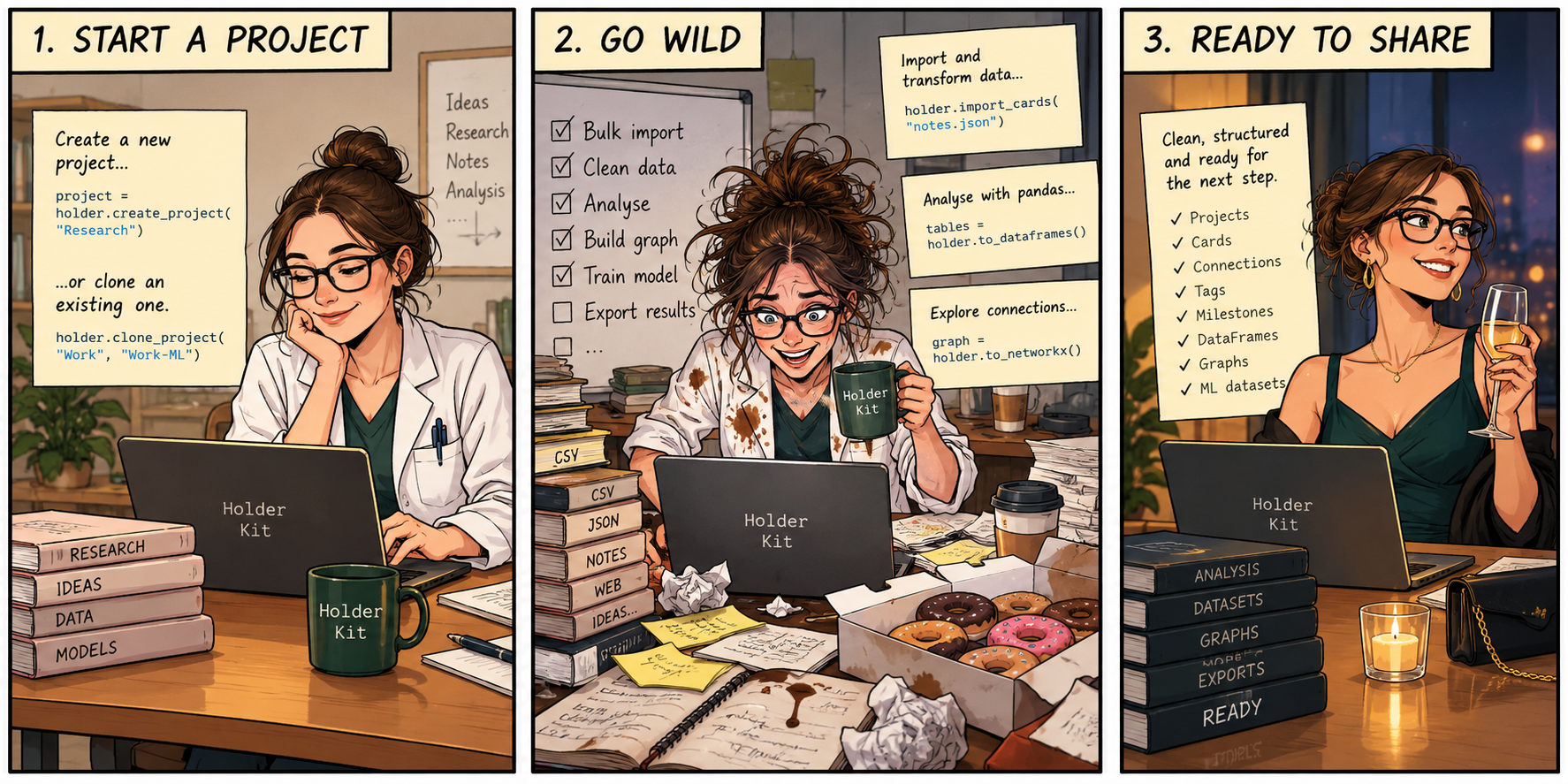
|
|
21
|
+
|
|
22
|
+
1. You make a new project, or clone an existing one.
|
|
23
|
+
2. You do work and analysis.
|
|
24
|
+
3. You push your experiment, or discard it.
|
|
25
|
+
|
|
26
|
+
## A first example
|
|
27
|
+
|
|
28
|
+
```python
|
|
29
|
+
import holderkit
|
|
30
|
+
|
|
31
|
+
with holderkit.create("Research") as project:
|
|
32
|
+
card = project.create_card(
|
|
33
|
+
"Interesting question",
|
|
34
|
+
"Something worth investigating.",
|
|
35
|
+
)
|
|
36
|
+
|
|
37
|
+
print(project.cards.to_records(include_content=True))
|
|
38
|
+
```
|
|
39
|
+
|
|
40
|
+
Or clone an existing Holder project and explore its cards:
|
|
41
|
+
|
|
42
|
+
```python
|
|
43
|
+
with holderkit.clone("git@example.org:research.git") as project:
|
|
44
|
+
for card in project.cards.to_records(include_content=True):
|
|
45
|
+
print(card["title"], card["content"])
|
|
46
|
+
```
|
|
47
|
+
|
|
48
|
+
Replace the example URL with your project's Git remote. Holder Kit chooses
|
|
49
|
+
local storage automatically. These examples need Git installed.
|
|
50
|
+
|
|
51
|
+
When your experiment is ready, publish it while the project is open with
|
|
52
|
+
`project.push(remote_url="git@example.org:research.git", branch="experiments/results")`.
|
|
53
|
+
Use `project.close()` to keep your work, or `project.discard(confirm=True)` to
|
|
54
|
+
remove it locally. See [Publishing and finishing a project](https://github.com/HolderTeam/holder/blob/9f3155a328431c6a5bde1b6194895834ac751437/python/kit/docs/publication.md).
|
|
55
|
+
|
|
56
|
+
Follow the [walkthrough](https://github.com/HolderTeam/holder/blob/9f3155a328431c6a5bde1b6194895834ac751437/python/kit/docs/walkthrough.md) to create connected cards, add tags
|
|
57
|
+
and milestones, and analyse detached records with pandas and NetworkX.
|
|
58
|
+
|
|
59
|
+
## Installation
|
|
60
|
+
|
|
61
|
+
Holder Kit is currently in early development.
|
|
62
|
+
|
|
63
|
+
The Python distribution is named `holder-kit` and the import package is `holderkit`.
|
|
64
|
+
|
|
65
|
+
See [Building Holder Kit](https://github.com/HolderTeam/holder/blob/9f3155a328431c6a5bde1b6194895834ac751437/python/kit/docs/building.md) for installing the current version from source.
|
|
66
|
+
|
|
67
|
+
Ubuntu packages are also available as `python3-holder-kit` for supported Holder package repositories.
|
|
68
|
+
|
|
69
|
+
## How Holder Kit fits into Holder
|
|
70
|
+
|
|
71
|
+
Holder Kit is a Python binding over `libholder`, running Holder directly inside
|
|
72
|
+
the Python process. This makes it suitable for scripts, notebooks, data analysis
|
|
73
|
+
and applications that want to embed Holder functionality.
|
|
74
|
+
|
|
75
|
+
To control a running Holder installation through the Framework API, use
|
|
76
|
+
[holder-python](https://github.com/HolderTeam/holder/tree/9f3155a328431c6a5bde1b6194895834ac751437/python/holder).
|
|
77
|
+
|
|
78
|
+
Holder Kit is part of [Holder](https://github.com/HolderTeam/holder) and is
|
|
79
|
+
released with it, at the same version.
|
|
80
|
+
|
|
81
|
+
## Examples
|
|
82
|
+
|
|
83
|
+
The repository includes examples covering:
|
|
84
|
+
|
|
85
|
+
- card creation and lifecycle;
|
|
86
|
+
- detached Python records;
|
|
87
|
+
- pandas analysis;
|
|
88
|
+
- connection graphs;
|
|
89
|
+
- tag analysis;
|
|
90
|
+
- milestone and calendar analysis;
|
|
91
|
+
- creating projects, retaining local edits and explicitly finishing an experiment.
|
|
92
|
+
|
|
93
|
+
See the [`examples/`](https://github.com/HolderTeam/holder/tree/9f3155a328431c6a5bde1b6194895834ac751437/python/kit/examples) directory.
|
|
94
|
+
|
|
95
|
+
## Documentation
|
|
96
|
+
|
|
97
|
+
- [Walkthrough](https://github.com/HolderTeam/holder/blob/9f3155a328431c6a5bde1b6194895834ac751437/python/kit/docs/walkthrough.md)
|
|
98
|
+
- [Publishing and finishing a project](https://github.com/HolderTeam/holder/blob/9f3155a328431c6a5bde1b6194895834ac751437/python/kit/docs/publication.md)
|
|
99
|
+
- [Detached record contracts](https://github.com/HolderTeam/holder/blob/9f3155a328431c6a5bde1b6194895834ac751437/python/kit/docs/record-contracts.md)
|
|
100
|
+
- [Advanced: storage and reopening](https://github.com/HolderTeam/holder/blob/9f3155a328431c6a5bde1b6194895834ac751437/python/kit/docs/storage.md)
|
|
101
|
+
- [Building from source](https://github.com/HolderTeam/holder/blob/9f3155a328431c6a5bde1b6194895834ac751437/python/kit/docs/building.md)
|
|
102
|
+
- [Development](https://github.com/HolderTeam/holder/blob/9f3155a328431c6a5bde1b6194895834ac751437/python/kit/docs/development.md)
|
|
103
|
+
- [Packaging](https://github.com/HolderTeam/holder/blob/9f3155a328431c6a5bde1b6194895834ac751437/python/kit/docs/packaging.md)
|
|
104
|
+
|
|
105
|
+
## Status
|
|
106
|
+
|
|
107
|
+
Holder Kit is under active development. The current API covers projects, cards, explicit connections, tags, milestones and analytical exports, with more of the `libholder` API to follow.
|
|
108
|
+
|
|
109
|
+
## Licence
|
|
110
|
+
|
|
111
|
+
See [LICENSE](https://github.com/HolderTeam/holder/blob/9f3155a328431c6a5bde1b6194895834ac751437/python/kit/LICENSE).
|
|
@@ -0,0 +1,128 @@
|
|
|
1
|
+
# Building Holder Kit
|
|
2
|
+
|
|
3
|
+
This guide covers building and installing a checkout. See
|
|
4
|
+
[Development](development.md) for tests and code changes, and
|
|
5
|
+
[Packaging](packaging.md) for wheels and Ubuntu packages.
|
|
6
|
+
|
|
7
|
+
## Prerequisites
|
|
8
|
+
|
|
9
|
+
Holder Kit requires Python 3.10 or newer with virtualenv support and development
|
|
10
|
+
headers, CMake 3.22 or newer, and C/C++ compilers. Linux, macOS and BSD builds
|
|
11
|
+
also need `pkg-config` and core's native development dependencies. Use core's
|
|
12
|
+
README (`../../core/README.md`) and CMake configuration for that dependency list.
|
|
13
|
+
|
|
14
|
+
On macOS, install Xcode Command Line Tools and the required Homebrew packages.
|
|
15
|
+
The developer script discovers Homebrew and its OpenSSL prefixes; set
|
|
16
|
+
`CMAKE_PREFIX_PATH` if CMake cannot find a library. On BSD, use the platform's
|
|
17
|
+
ports or package manager. The script does not install system packages.
|
|
18
|
+
|
|
19
|
+
## Build with core source
|
|
20
|
+
|
|
21
|
+
`make.sh` is the Bash entry point on Linux, macOS and BSD. It runs
|
|
22
|
+
`scripts/develop.py`, creates or reuses `.venv`, and installs Holder Kit as an
|
|
23
|
+
editable package with all test dependencies, including pandas and NetworkX.
|
|
24
|
+
|
|
25
|
+
From `python/kit/` in a checkout of the holder repository:
|
|
26
|
+
|
|
27
|
+
```sh
|
|
28
|
+
./make.sh setup
|
|
29
|
+
```
|
|
30
|
+
|
|
31
|
+
This builds core from source in the same checkout (`../../core`), so Kit is
|
|
32
|
+
always built against the core beside it. Set `HOLDER_KIT_CORE_SOURCE` to build
|
|
33
|
+
against a different core source directory. Builds leave the checkout on its
|
|
34
|
+
current branch and revision. They print core's revision and working-tree status,
|
|
35
|
+
and record them in `out/make/core-source.json`.
|
|
36
|
+
|
|
37
|
+
Before creating a virtualenv or installing Python packages, the source workflow
|
|
38
|
+
checks tools, Python headers and core's CMake prerequisites with
|
|
39
|
+
`BUILD_TESTING=OFF`. If configuration fails, fix the reported prerequisite and
|
|
40
|
+
rerun the command.
|
|
41
|
+
|
|
42
|
+
The script uses its own directory and invokes the virtualenv directly; shell
|
|
43
|
+
activation is optional.
|
|
44
|
+
|
|
45
|
+
For a manual build without the developer script, create a virtualenv and pass
|
|
46
|
+
the core source path explicitly:
|
|
47
|
+
|
|
48
|
+
```sh
|
|
49
|
+
python3 -m venv .venv
|
|
50
|
+
. .venv/bin/activate
|
|
51
|
+
python -m pip install -e . \
|
|
52
|
+
--config-settings=cmake.define.HOLDER_KIT_CORE_SOURCE="$PWD/../../core"
|
|
53
|
+
```
|
|
54
|
+
|
|
55
|
+
Direct pip/CMake builds require an explicit core selection; the default above
|
|
56
|
+
belongs to the developer script.
|
|
57
|
+
|
|
58
|
+
## Build with a core SDK
|
|
59
|
+
|
|
60
|
+
SDK builds use a prebuilt core library instead of building core: a Holder
|
|
61
|
+
release's core SDK, or one that a CI run's `Core / SDK` workflow built. Fetch
|
|
62
|
+
and verify it with core's `scripts/core-sdk.py`, then point `HOLDER_CORE_SDK`
|
|
63
|
+
at the prepared SDK directory (the one containing `libholder-manifest.json`):
|
|
64
|
+
|
|
65
|
+
```sh
|
|
66
|
+
HOLDER_CORE_SDK=/path/to/sdk ./make.sh --sdk setup
|
|
67
|
+
```
|
|
68
|
+
|
|
69
|
+
`HOLDER_CORE_SDK` selects the SDK workflow unless `HOLDER_KIT_CORE_SOURCE` is
|
|
70
|
+
set. Combining `--sdk` with an explicit source path is rejected, and `--sdk`
|
|
71
|
+
without a prepared SDK stops before creating a virtualenv. For manual builds on
|
|
72
|
+
Linux or macOS, set `HOLDER_CORE_SDK` and `SKBUILD_CMAKE_BUILD_TYPE` (matching
|
|
73
|
+
the SDK's configuration) and run `python -m pip install -e .`.
|
|
74
|
+
|
|
75
|
+
Linux and macOS SDK builds still need core's native development dependencies.
|
|
76
|
+
The Linux SDK uses the Ubuntu 24.04 dependency ABI. Mixing it with another
|
|
77
|
+
distribution's C++ dependency ABI can cause import failures; use a source build
|
|
78
|
+
or the series-specific [Ubuntu package](packaging.md#ubuntu-packages).
|
|
79
|
+
|
|
80
|
+
### Windows
|
|
81
|
+
|
|
82
|
+
Use an MSVC developer environment and a supported Python. Run the Python helper
|
|
83
|
+
directly if Bash is unavailable:
|
|
84
|
+
|
|
85
|
+
```powershell
|
|
86
|
+
$env:HOLDER_CORE_SDK = "C:\path\to\sdk"
|
|
87
|
+
python scripts/develop.py --sdk setup
|
|
88
|
+
```
|
|
89
|
+
|
|
90
|
+
The helper configures the SDK's bundled vcpkg toolchain and prebuilt dependencies.
|
|
91
|
+
For direct pip/CMake builds, set `HOLDER_CORE_SDK` and pass these CMake
|
|
92
|
+
definitions:
|
|
93
|
+
|
|
94
|
+
| Definition | Value |
|
|
95
|
+
| --- | --- |
|
|
96
|
+
| `CMAKE_TOOLCHAIN_FILE` | `<sdk>/vcpkg/scripts/buildsystems/vcpkg.cmake` |
|
|
97
|
+
| `VCPKG_INSTALLED_DIR` | `<sdk>/vcpkg/installed` |
|
|
98
|
+
| `VCPKG_TARGET_TRIPLET` | `x64-windows` |
|
|
99
|
+
| `VCPKG_MANIFEST_MODE` | `OFF` |
|
|
100
|
+
| `VCPKG_APPLOCAL_DEPS` | `OFF` |
|
|
101
|
+
|
|
102
|
+
Holder Kit does not bootstrap vcpkg or compile the SDK's dependencies. Windows
|
|
103
|
+
SDKs without bundled development dependencies are rejected.
|
|
104
|
+
|
|
105
|
+
## Build settings and output
|
|
106
|
+
|
|
107
|
+
Build commands accept `Debug`, `Release`, `RelWithDebInfo` or `MinSizeRel`:
|
|
108
|
+
|
|
109
|
+
```sh
|
|
110
|
+
./make.sh setup Debug
|
|
111
|
+
./make.sh --sdk setup Release
|
|
112
|
+
```
|
|
113
|
+
|
|
114
|
+
The default is `RelWithDebInfo`. Source and SDK builds, and each build type, have
|
|
115
|
+
separate native directories under `build/make`.
|
|
116
|
+
|
|
117
|
+
| Environment variable | Purpose |
|
|
118
|
+
| --- | --- |
|
|
119
|
+
| `HOLDER_KIT` | Bootstrap Python interpreter; otherwise reuse the selected venv or use `python3` |
|
|
120
|
+
| `HOLDER_KIT_VENV` | Virtualenv path; defaults to `.venv` |
|
|
121
|
+
| `HOLDER_KIT_CORE_SOURCE` | Core source directory; defaults to `../../core` |
|
|
122
|
+
| `HOLDER_CORE_SDK` | Prepared SDK directory containing `libholder-manifest.json` |
|
|
123
|
+
| `BUILD_TYPE` | Default native build type |
|
|
124
|
+
| `CMAKE_BUILD_PARALLEL_LEVEL` | Build parallelism limit |
|
|
125
|
+
|
|
126
|
+
`./make.sh clean` removes only `build/make` and `out/make`. It retains `.venv`
|
|
127
|
+
and other build directories. Run
|
|
128
|
+
`./make.sh --help` for the complete command reference.
|
|
@@ -13,14 +13,15 @@ Holder Kit embeds libholder in the Python process. It does not talk to a running
|
|
|
13
13
|
| `src/native/module.c` | CPython extension, exposed as `holderkit._native` |
|
|
14
14
|
| `src/holderkit/` | Public Python API, typed records and optional adapters |
|
|
15
15
|
| `tests/` | API, adapter and developer-script tests |
|
|
16
|
-
| `examples/` | Runnable examples
|
|
16
|
+
| `examples/` | Runnable examples for project and analysis APIs |
|
|
17
17
|
| `scripts/develop.py` | Developer environment and build commands |
|
|
18
18
|
| `CMakeLists.txt` | Native extension build and resource installation |
|
|
19
19
|
|
|
20
|
-
Keep reusable storage and domain behavior in
|
|
21
|
-
core's semantic operations, including tag and milestone edits, rather
|
|
22
|
-
reimplementing them by parsing or rewriting card files.
|
|
23
|
-
|
|
20
|
+
Keep reusable storage and domain behavior in core (`../../core`). The Python
|
|
21
|
+
layer calls core's semantic operations, including tag and milestone edits, rather
|
|
22
|
+
than reimplementing them by parsing or rewriting card files. Kit uses only core's
|
|
23
|
+
C API; see [AGENTS.md](../AGENTS.md). A change that needs both goes in one pull
|
|
24
|
+
request.
|
|
24
25
|
|
|
25
26
|
The package ships the schema from the selected core source or SDK as
|
|
26
27
|
`holderkit/_schema.sql`. Installed packages must work without a source checkout.
|
|
@@ -59,18 +60,34 @@ directory or contact a running daemon. Follow that pattern for new tests.
|
|
|
59
60
|
./make.sh examples graph
|
|
60
61
|
./make.sh examples tags
|
|
61
62
|
./make.sh examples milestones
|
|
63
|
+
./make.sh examples make_project
|
|
64
|
+
./make.sh examples finish_project
|
|
62
65
|
```
|
|
63
66
|
|
|
64
|
-
|
|
65
|
-
|
|
67
|
+
`make_project` uses automatic storage and keeps the project it creates. The other
|
|
68
|
+
examples use temporary data directories and clean up on exit. Examples can also
|
|
69
|
+
be run directly with the development environment's Python. The pandas, tag and
|
|
66
70
|
milestone analysis examples require the pandas extra; graph analysis uses both
|
|
67
71
|
pandas and graph extras. Ordinary base-package use imports neither dependency.
|
|
68
72
|
|
|
73
|
+
The workspace tests start disposable Git servers on loopback to test real remote
|
|
74
|
+
clones. They require Git and permission to bind/connect local sockets. Fixtures
|
|
75
|
+
use temporary contexts and bare repositories, never a live Holder project.
|
|
76
|
+
|
|
69
77
|
## Public API contracts
|
|
70
78
|
|
|
71
79
|
`Context` owns the native `holder_context`; close it explicitly or use a context
|
|
72
80
|
manager. Native runtime failures raise `holderkit.HolderError`, and invalid core
|
|
73
|
-
arguments raise `ValueError`. `Project`
|
|
81
|
+
arguments raise `ValueError`. `Project` is a live interface to one project;
|
|
82
|
+
its properties read current state. `Card` is also live and keeps its owning
|
|
83
|
+
Project through `card.project`. Use `Project.to_record()` and `Card.to_record()`
|
|
84
|
+
for detached values. Card identity is stable; reads and edits require an open owner. Managed Projects own
|
|
85
|
+
their context; Projects obtained from a Context borrow it and close independently.
|
|
86
|
+
|
|
87
|
+
Card-scoped tags, connections and milestones are adapters over the existing
|
|
88
|
+
Project and collection operations. Keep ownership/lifetime checks on live handles,
|
|
89
|
+
and reuse Core semantics and detached record schemas. Single-card exports must
|
|
90
|
+
not scan an entire project to select their source.
|
|
74
91
|
|
|
75
92
|
Records, DataFrames and graphs are detached data. They remain usable after the
|
|
76
93
|
context closes, and editing them does not write back to Holder. Card exports
|
|
@@ -83,6 +100,13 @@ mutation limits. Consult those contracts when changing the API, and keep them
|
|
|
83
100
|
and the examples consistent with the code. Test empty exports, optional
|
|
84
101
|
dependencies, ownership checks and failure behavior where relevant.
|
|
85
102
|
|
|
103
|
+
## Clone build requirements
|
|
104
|
+
|
|
105
|
+
Clone uses core's `holder_project_import` API, which the core beside Kit
|
|
106
|
+
provides. Building against an older core SDK without project import support
|
|
107
|
+
still makes clone raise `NotImplementedError` before creating storage or
|
|
108
|
+
contacting the remote.
|
|
109
|
+
|
|
86
110
|
## Native sanitizers
|
|
87
111
|
|
|
88
112
|
For native memory-safety work, use a separate pip/CMake build with
|
|
@@ -126,3 +150,10 @@ is `HolderTeam/holder-kit`. When updating an older environment, uninstall the
|
|
|
126
150
|
former `holder` distribution and replace `import holder` with `import holderkit`.
|
|
127
151
|
Dependency declarations use `holder-kit`, `holder-kit[pandas]` or
|
|
128
152
|
`holder-kit[graph]`. There is no compatibility import shim.
|
|
153
|
+
|
|
154
|
+
## Filtered card batch build requirements
|
|
155
|
+
|
|
156
|
+
Filtered `project.cards(...)` batches use Core's `holder_card_collection_page_json`
|
|
157
|
+
API, advertised by `HOLDER_HAS_CARD_COLLECTION_PAGE`, which the core beside Kit
|
|
158
|
+
provides. Existing unfiltered batches work with older SDKs; requesting filters
|
|
159
|
+
or explicit ordering without this API raises `NotImplementedError`.
|
|
@@ -15,16 +15,15 @@ The build backend is scikit-build-core, which invokes CMake to compile
|
|
|
15
15
|
not stable-ABI wheels.
|
|
16
16
|
|
|
17
17
|
```sh
|
|
18
|
-
./make.sh wheel Release # build with
|
|
19
|
-
./make.sh --sdk wheel Release # build with the
|
|
18
|
+
./make.sh wheel Release # build with ../../core from source
|
|
19
|
+
./make.sh --sdk wheel Release # build with the core SDK in HOLDER_CORE_SDK
|
|
20
20
|
```
|
|
21
21
|
|
|
22
|
-
Both commands write wheels to `out/make/wheels`. For a manual SDK build,
|
|
23
|
-
|
|
22
|
+
Both commands write wheels to `out/make/wheels`. For a manual SDK build, use a
|
|
23
|
+
prepared Release SDK and a matching build configuration:
|
|
24
24
|
|
|
25
25
|
```sh
|
|
26
|
-
|
|
27
|
-
export HOLDER_CORE_SDK="$(python scripts/core-sdk.py fetch --build-type Release)"
|
|
26
|
+
export HOLDER_CORE_SDK=/path/to/release-sdk
|
|
28
27
|
export SKBUILD_CMAKE_BUILD_TYPE=Release
|
|
29
28
|
python -m pip install build
|
|
30
29
|
python -m build --wheel --outdir dist
|
|
@@ -45,13 +44,14 @@ and checks the resulting wheel's platform compatibility as described below.
|
|
|
45
44
|
Validate a wheel in a fresh virtualenv outside the source checkout: import
|
|
46
45
|
`holderkit`, create temporary data, exercise the card lifecycle, and verify the
|
|
47
46
|
schema and typing resources. Test base use before installing optional adapters.
|
|
48
|
-
The Linux job in [
|
|
49
|
-
SDK-wheel smoke test, including `_core_build.json` validation.
|
|
47
|
+
The Linux job in [Kit / CI](../../../.github/workflows/kit-ci.yml) provides the
|
|
48
|
+
installed SDK-wheel smoke test, including `_core_build.json` validation.
|
|
50
49
|
|
|
51
50
|
### Release wheels
|
|
52
51
|
|
|
53
|
-
|
|
54
|
-
|
|
52
|
+
`Release / Kit to PyPI`
|
|
53
|
+
([`release-kit-pypi.yml`](../../../.github/workflows/release-kit-pypi.yml))
|
|
54
|
+
builds wheels for CPython 3.10–3.14 and a source archive. Supported wheel platforms are:
|
|
55
55
|
|
|
56
56
|
| Platform | Architecture | Minimum runtime |
|
|
57
57
|
| --- | --- | --- |
|
|
@@ -59,9 +59,9 @@ SDK-wheel smoke test, including `_core_build.json` validation.
|
|
|
59
59
|
| Windows | x86_64 | Windows 10/11 |
|
|
60
60
|
| macOS | ARM64 | macOS 15 |
|
|
61
61
|
|
|
62
|
-
Release builds use
|
|
63
|
-
|
|
64
|
-
|
|
62
|
+
Release builds use `Release` core SDKs that `Core / SDK` builds in the same run
|
|
63
|
+
from `core/` in the same commit. They are cached by `core/`'s tree, so a release
|
|
64
|
+
usually reuses the SDKs its Daemon CI run built.
|
|
65
65
|
|
|
66
66
|
Before building wheels and the source archive, the release workflow rewrites
|
|
67
67
|
relative README links in its checkout to absolute URLs at the release commit.
|
|
@@ -83,11 +83,12 @@ notices are carried in the distribution's licence metadata.
|
|
|
83
83
|
Each wheel is installed in a fresh virtualenv and tested before optional
|
|
84
84
|
adapters are installed, then runs the installed integration tests. Linux also
|
|
85
85
|
runs in clean Debian Python containers. The source archive is built and
|
|
86
|
-
installed with the same
|
|
87
|
-
15 wheels and the source archive,
|
|
88
|
-
|
|
86
|
+
installed with the same Release SDK. The final distribution check requires all
|
|
87
|
+
15 wheels and the source archive, checks each wheel's core against the SDKs'
|
|
88
|
+
`core-selection`, validates metadata, and records the core and the file sizes
|
|
89
|
+
and SHA256 hashes in the `kit-release-manifest` artifact.
|
|
89
90
|
|
|
90
|
-
To inspect a candidate from the `release-distributions` artifact:
|
|
91
|
+
To inspect a candidate from the `kit-release-distributions` artifact:
|
|
91
92
|
|
|
92
93
|
```sh
|
|
93
94
|
python -m venv .venv
|
|
@@ -103,8 +104,10 @@ explicit [native source build](building.md).
|
|
|
103
104
|
The manual workflow's `destination` defaults to `none`, which builds and tests
|
|
104
105
|
candidates. `pypi` or `testpypi` publishes only after all distribution checks
|
|
105
106
|
pass, using the corresponding GitHub environment and Trusted Publishing.
|
|
106
|
-
|
|
107
|
-
|
|
107
|
+
Holder Kit is released with the rest of Holder, at the same version: publishing
|
|
108
|
+
must run from the release's `holder-v<version>` tag, and requires the version in
|
|
109
|
+
`pyproject.toml`, the repository's `VERSION` and core's version to equal it. Pull requests build candidates without
|
|
110
|
+
publishing.
|
|
108
111
|
|
|
109
112
|
## Ubuntu packages
|
|
110
113
|
|
|
@@ -141,51 +144,25 @@ dpkg-buildpackage -b -us -uc
|
|
|
141
144
|
|
|
142
145
|
### Package validation
|
|
143
146
|
|
|
144
|
-
[`
|
|
145
|
-
Noble (Ubuntu 24.04) and Resolute (Ubuntu 26.04) separately
|
|
146
|
-
|
|
147
|
-
|
|
148
|
-
|
|
149
|
-
|
|
150
|
-
|
|
151
|
-
|
|
152
|
-
|
|
153
|
-
|
|
154
|
-
ubuntu:24.04 bash /source/scripts/ubuntu-package-ci.sh build noble
|
|
155
|
-
docker run --rm -v "$PWD:/source:ro" -v "$PWD/out/packages:/out:ro" \
|
|
156
|
-
ubuntu:24.04 bash /source/scripts/ubuntu-package-ci.sh install noble
|
|
157
|
-
```
|
|
158
|
-
|
|
159
|
-
For Resolute, use `ubuntu:26.04` and `resolute`. Keep each series' artifacts in
|
|
160
|
-
a separate output directory if testing both locally.
|
|
147
|
+
Kit / CI ([`kit-ci.yml`](../../../.github/workflows/kit-ci.yml)) builds the
|
|
148
|
+
package for Noble (Ubuntu 24.04) and Resolute (Ubuntu 26.04) separately, as
|
|
149
|
+
Launchpad does: from `python/kit/` copied out on its own, against libholder
|
|
150
|
+
packages built in the same job from `core/` in the same commit. It checks that
|
|
151
|
+
the package requires `libholder0` of the same upstream version (Kit installs
|
|
152
|
+
that core's schema and hands it to `libholder0` at runtime). It then installs
|
|
153
|
+
the packages in a fresh container without development packages or a compiler,
|
|
154
|
+
tests ordinary Python use with
|
|
155
|
+
[`scripts/ubuntu-package-ci.sh`](../scripts/ubuntu-package-ci.sh), then
|
|
156
|
+
installs optional adapters and runs integration tests.
|
|
161
157
|
|
|
162
158
|
### Launchpad source packages
|
|
163
159
|
|
|
164
|
-
|
|
165
|
-
|
|
166
|
-
|
|
167
|
-
|
|
168
|
-
|
|
169
|
-
|
|
170
|
-
|
|
171
|
-
|
|
172
|
-
|
|
173
|
-
|
|
174
|
-
Each candidate pins `libholder-dev` to the exact series-specific package version,
|
|
175
|
-
such as `0.2.0-1~noble1`. Runtime dependencies are generated against the compatible
|
|
176
|
-
shared ABI. Uploading requires the repository's `PPA_GPG_PRIVATE_KEY` secret.
|
|
177
|
-
|
|
178
|
-
To prepare a source candidate manually, use a clean disposable checkout and
|
|
179
|
-
Python 3.11 or newer (the preparation script uses `tomllib`):
|
|
180
|
-
|
|
181
|
-
```sh
|
|
182
|
-
python3 scripts/prepare-debian-source.py \
|
|
183
|
-
--version 0.0.1 --package-revision 1 --series noble \
|
|
184
|
-
--core-package-version '0.2.0-1~noble1'
|
|
185
|
-
debuild -S -d -us -uc
|
|
186
|
-
```
|
|
187
|
-
|
|
188
|
-
Use the actual Kit and core versions for the candidate. The script packages
|
|
189
|
-
committed files from `HEAD`, creates `debian/`, and writes the upstream archive
|
|
190
|
-
in the parent directory. The workflow saves the unsigned source candidate as an
|
|
191
|
-
artifact before optional signing and upload.
|
|
160
|
+
`holder-kit` is one of the source packages that `Release / Launchpad`
|
|
161
|
+
([`release-launchpad.yml`](../../../.github/workflows/release-launchpad.yml))
|
|
162
|
+
uploads to `ppa:holderteam/holder`, with `holder-core` and `holder-daemon`. The
|
|
163
|
+
release tag uploads all three. A manual run with `packages=kit` and a new
|
|
164
|
+
`package_revision` uploads only Kit, for a packaging-only fix. Kit's version
|
|
165
|
+
must equal core's: its source package builds against `libholder-dev` of that
|
|
166
|
+
version, so on Launchpad it waits for the core packages from the same upload.
|
|
167
|
+
The upstream tarball is `python/kit/` as committed. Pull requests that change
|
|
168
|
+
the packaging build the source package unsigned without uploading.
|