easyannotate 0.4.0__tar.gz → 0.4.2__tar.gz
This diff represents the content of publicly available package versions that have been released to one of the supported registries. The information contained in this diff is provided for informational purposes only and reflects changes between package versions as they appear in their respective public registries.
- {easyannotate-0.4.0 → easyannotate-0.4.2}/.gitignore +4 -0
- {easyannotate-0.4.0 → easyannotate-0.4.2}/PKG-INFO +17 -12
- {easyannotate-0.4.0 → easyannotate-0.4.2}/README.md +16 -11
- {easyannotate-0.4.0 → easyannotate-0.4.2}/data_factory/annotate/review.py +2 -2
- {easyannotate-0.4.0 → easyannotate-0.4.2}/data_factory/annotate/tools/install.py +15 -0
- {easyannotate-0.4.0 → easyannotate-0.4.2}/data_factory/core/annotations/coco.py +154 -36
- {easyannotate-0.4.0 → easyannotate-0.4.2}/data_factory/core/annotations/csvfmt.py +10 -3
- {easyannotate-0.4.0 → easyannotate-0.4.2}/data_factory/core/annotations/dota.py +11 -6
- {easyannotate-0.4.0 → easyannotate-0.4.2}/data_factory/core/annotations/formats.py +344 -92
- {easyannotate-0.4.0 → easyannotate-0.4.2}/data_factory/core/annotations/labelme.py +46 -11
- {easyannotate-0.4.0 → easyannotate-0.4.2}/data_factory/core/annotations/voc.py +56 -35
- {easyannotate-0.4.0 → easyannotate-0.4.2}/data_factory/core/annotations/yolo.py +155 -17
- {easyannotate-0.4.0 → easyannotate-0.4.2}/data_factory/core/bktree.py +1 -1
- {easyannotate-0.4.0 → easyannotate-0.4.2}/data_factory/core/imaging.py +1 -1
- {easyannotate-0.4.0 → easyannotate-0.4.2}/data_factory/core/ops/convert.py +47 -12
- {easyannotate-0.4.0 → easyannotate-0.4.2}/data_factory/core/ops/dataset.py +1 -1
- {easyannotate-0.4.0 → easyannotate-0.4.2}/data_factory/core/ops/export.py +2 -2
- {easyannotate-0.4.0 → easyannotate-0.4.2}/data_factory/core/ops/report.py +8 -2
- {easyannotate-0.4.0 → easyannotate-0.4.2}/data_factory/core/writer.py +23 -7
- {easyannotate-0.4.0 → easyannotate-0.4.2}/data_factory/pipeline.py +1 -1
- {easyannotate-0.4.0 → easyannotate-0.4.2}/data_factory/service/static/annotate/app.js +60 -9
- {easyannotate-0.4.0 → easyannotate-0.4.2}/data_factory/service/static/annotate/assist.js +1 -1
- {easyannotate-0.4.0 → easyannotate-0.4.2}/data_factory/service/static/annotate/render.js +9 -0
- {easyannotate-0.4.0 → easyannotate-0.4.2}/data_factory/service/static/annotate/tools/box.js +1 -1
- {easyannotate-0.4.0 → easyannotate-0.4.2}/data_factory/service/static/annotate.html +1 -0
- {easyannotate-0.4.0 → easyannotate-0.4.2}/pyproject.toml +1 -1
- {easyannotate-0.4.0 → easyannotate-0.4.2}/tests/conftest.py +1 -1
- {easyannotate-0.4.0 → easyannotate-0.4.2}/tests/test_annotate_editor.py +239 -0
- {easyannotate-0.4.0 → easyannotate-0.4.2}/tests/test_annotations.py +1 -1
- easyannotate-0.4.2/tests/test_converter_fixes.py +932 -0
- {easyannotate-0.4.0 → easyannotate-0.4.2}/tests/test_dataset_ops.py +9 -1
- {easyannotate-0.4.0 → easyannotate-0.4.2}/tests/test_exif.py +1 -1
- {easyannotate-0.4.0 → easyannotate-0.4.2}/tests/test_export_classes.py +23 -0
- {easyannotate-0.4.0 → easyannotate-0.4.2}/tests/test_formats.py +8 -3
- easyannotate-0.4.2/tests/test_install_clip.py +98 -0
- {easyannotate-0.4.0 → easyannotate-0.4.2}/tests/test_new_ops.py +58 -3
- {easyannotate-0.4.0 → easyannotate-0.4.2}/LICENSE +0 -0
- {easyannotate-0.4.0 → easyannotate-0.4.2}/data_factory/__init__.py +0 -0
- {easyannotate-0.4.0 → easyannotate-0.4.2}/data_factory/__main__.py +0 -0
- {easyannotate-0.4.0 → easyannotate-0.4.2}/data_factory/annotate/__init__.py +0 -0
- {easyannotate-0.4.0 → easyannotate-0.4.2}/data_factory/annotate/attach.py +0 -0
- {easyannotate-0.4.0 → easyannotate-0.4.2}/data_factory/annotate/demo.py +0 -0
- {easyannotate-0.4.0 → easyannotate-0.4.2}/data_factory/annotate/images.py +0 -0
- {easyannotate-0.4.0 → easyannotate-0.4.2}/data_factory/annotate/labels.py +0 -0
- {easyannotate-0.4.0 → easyannotate-0.4.2}/data_factory/annotate/loop.py +0 -0
- {easyannotate-0.4.0 → easyannotate-0.4.2}/data_factory/annotate/projects.py +0 -0
- {easyannotate-0.4.0 → easyannotate-0.4.2}/data_factory/annotate/schema.sql +0 -0
- {easyannotate-0.4.0 → easyannotate-0.4.2}/data_factory/annotate/shapes.py +0 -0
- {easyannotate-0.4.0 → easyannotate-0.4.2}/data_factory/annotate/store.py +0 -0
- {easyannotate-0.4.0 → easyannotate-0.4.2}/data_factory/annotate/tools/__init__.py +0 -0
- {easyannotate-0.4.0 → easyannotate-0.4.2}/data_factory/annotate/tools/fake.py +0 -0
- {easyannotate-0.4.0 → easyannotate-0.4.2}/data_factory/annotate/tools/local.py +0 -0
- {easyannotate-0.4.0 → easyannotate-0.4.2}/data_factory/annotate/tools/postprocess.py +0 -0
- {easyannotate-0.4.0 → easyannotate-0.4.2}/data_factory/annotate/tools/protocol.py +0 -0
- {easyannotate-0.4.0 → easyannotate-0.4.2}/data_factory/annotate/tools/registry.py +0 -0
- {easyannotate-0.4.0 → easyannotate-0.4.2}/data_factory/annotate/tools/results.py +0 -0
- {easyannotate-0.4.0 → easyannotate-0.4.2}/data_factory/annotate/tools/serve.py +0 -0
- {easyannotate-0.4.0 → easyannotate-0.4.2}/data_factory/cli/__init__.py +0 -0
- {easyannotate-0.4.0 → easyannotate-0.4.2}/data_factory/cli/main.py +0 -0
- {easyannotate-0.4.0 → easyannotate-0.4.2}/data_factory/cli/menu.py +0 -0
- {easyannotate-0.4.0 → easyannotate-0.4.2}/data_factory/cli/render.py +0 -0
- {easyannotate-0.4.0 → easyannotate-0.4.2}/data_factory/core/__init__.py +0 -0
- {easyannotate-0.4.0 → easyannotate-0.4.2}/data_factory/core/annotations/__init__.py +0 -0
- {easyannotate-0.4.0 → easyannotate-0.4.2}/data_factory/core/annotations/model.py +0 -0
- {easyannotate-0.4.0 → easyannotate-0.4.2}/data_factory/core/fs.py +0 -0
- {easyannotate-0.4.0 → easyannotate-0.4.2}/data_factory/core/ops/__init__.py +0 -0
- {easyannotate-0.4.0 → easyannotate-0.4.2}/data_factory/core/ops/analyze.py +0 -0
- {easyannotate-0.4.0 → easyannotate-0.4.2}/data_factory/core/ops/annotate_export.py +0 -0
- {easyannotate-0.4.0 → easyannotate-0.4.2}/data_factory/core/ops/audit.py +0 -0
- {easyannotate-0.4.0 → easyannotate-0.4.2}/data_factory/core/ops/augment.py +0 -0
- {easyannotate-0.4.0 → easyannotate-0.4.2}/data_factory/core/ops/collect.py +0 -0
- {easyannotate-0.4.0 → easyannotate-0.4.2}/data_factory/core/ops/combine.py +0 -0
- {easyannotate-0.4.0 → easyannotate-0.4.2}/data_factory/core/ops/dedup.py +0 -0
- {easyannotate-0.4.0 → easyannotate-0.4.2}/data_factory/core/ops/image.py +0 -0
- {easyannotate-0.4.0 → easyannotate-0.4.2}/data_factory/core/ops/labels.py +0 -0
- {easyannotate-0.4.0 → easyannotate-0.4.2}/data_factory/core/ops/pairing.py +0 -0
- {easyannotate-0.4.0 → easyannotate-0.4.2}/data_factory/core/ops/rename.py +0 -0
- {easyannotate-0.4.0 → easyannotate-0.4.2}/data_factory/core/ops/visualize.py +0 -0
- {easyannotate-0.4.0 → easyannotate-0.4.2}/data_factory/core/pairs.py +0 -0
- {easyannotate-0.4.0 → easyannotate-0.4.2}/data_factory/core/parallel.py +0 -0
- {easyannotate-0.4.0 → easyannotate-0.4.2}/data_factory/core/provenance.py +0 -0
- {easyannotate-0.4.0 → easyannotate-0.4.2}/data_factory/core/registry.py +0 -0
- {easyannotate-0.4.0 → easyannotate-0.4.2}/data_factory/core/stats.py +0 -0
- {easyannotate-0.4.0 → easyannotate-0.4.2}/data_factory/core/types.py +0 -0
- {easyannotate-0.4.0 → easyannotate-0.4.2}/data_factory/desktop.py +0 -0
- {easyannotate-0.4.0 → easyannotate-0.4.2}/data_factory/hardware.py +0 -0
- {easyannotate-0.4.0 → easyannotate-0.4.2}/data_factory/py.typed +0 -0
- {easyannotate-0.4.0 → easyannotate-0.4.2}/data_factory/service/__init__.py +0 -0
- {easyannotate-0.4.0 → easyannotate-0.4.2}/data_factory/service/app.py +0 -0
- {easyannotate-0.4.0 → easyannotate-0.4.2}/data_factory/service/binding.py +0 -0
- {easyannotate-0.4.0 → easyannotate-0.4.2}/data_factory/service/deps.py +0 -0
- {easyannotate-0.4.0 → easyannotate-0.4.2}/data_factory/service/jobs.py +0 -0
- {easyannotate-0.4.0 → easyannotate-0.4.2}/data_factory/service/limits.py +0 -0
- {easyannotate-0.4.0 → easyannotate-0.4.2}/data_factory/service/routers/__init__.py +0 -0
- {easyannotate-0.4.0 → easyannotate-0.4.2}/data_factory/service/routers/annotate.py +0 -0
- {easyannotate-0.4.0 → easyannotate-0.4.2}/data_factory/service/routers/local.py +0 -0
- {easyannotate-0.4.0 → easyannotate-0.4.2}/data_factory/service/routers/media.py +0 -0
- {easyannotate-0.4.0 → easyannotate-0.4.2}/data_factory/service/routers/predictions.py +0 -0
- {easyannotate-0.4.0 → easyannotate-0.4.2}/data_factory/service/routers/promote.py +0 -0
- {easyannotate-0.4.0 → easyannotate-0.4.2}/data_factory/service/routers/tools.py +0 -0
- {easyannotate-0.4.0 → easyannotate-0.4.2}/data_factory/service/static/annotate/api.js +0 -0
- {easyannotate-0.4.0 → easyannotate-0.4.2}/data_factory/service/static/annotate/filmstrip.js +0 -0
- {easyannotate-0.4.0 → easyannotate-0.4.2}/data_factory/service/static/annotate/hit.js +0 -0
- {easyannotate-0.4.0 → easyannotate-0.4.2}/data_factory/service/static/annotate/labels.js +0 -0
- {easyannotate-0.4.0 → easyannotate-0.4.2}/data_factory/service/static/annotate/scene.js +0 -0
- {easyannotate-0.4.0 → easyannotate-0.4.2}/data_factory/service/static/annotate/shapelist.js +0 -0
- {easyannotate-0.4.0 → easyannotate-0.4.2}/data_factory/service/static/annotate/tools/line.js +0 -0
- {easyannotate-0.4.0 → easyannotate-0.4.2}/data_factory/service/static/annotate/tools/obb.js +0 -0
- {easyannotate-0.4.0 → easyannotate-0.4.2}/data_factory/service/static/annotate/tools/point.js +0 -0
- {easyannotate-0.4.0 → easyannotate-0.4.2}/data_factory/service/static/annotate/tools/polygon.js +0 -0
- {easyannotate-0.4.0 → easyannotate-0.4.2}/data_factory/service/static/annotate/tools/select.js +0 -0
- {easyannotate-0.4.0 → easyannotate-0.4.2}/data_factory/service/static/annotate/undo.js +0 -0
- {easyannotate-0.4.0 → easyannotate-0.4.2}/data_factory/service/static/annotate/viewport.js +0 -0
- {easyannotate-0.4.0 → easyannotate-0.4.2}/data_factory/service/static/index.html +0 -0
- {easyannotate-0.4.0 → easyannotate-0.4.2}/data_factory/service/workspace.py +0 -0
- {easyannotate-0.4.0 → easyannotate-0.4.2}/easyannotate/__init__.py +0 -0
- {easyannotate-0.4.0 → easyannotate-0.4.2}/easyannotate/__main__.py +0 -0
- {easyannotate-0.4.0 → easyannotate-0.4.2}/easyannotate/project.py +0 -0
- {easyannotate-0.4.0 → easyannotate-0.4.2}/easyannotate/py.typed +0 -0
- {easyannotate-0.4.0 → easyannotate-0.4.2}/examples/web_api.py +0 -0
- {easyannotate-0.4.0 → easyannotate-0.4.2}/recipes/model_loop.yaml +0 -0
- {easyannotate-0.4.0 → easyannotate-0.4.2}/recipes/train_ready_yolo.yaml +0 -0
- {easyannotate-0.4.0 → easyannotate-0.4.2}/recipes/voc_to_coco.yaml +0 -0
- {easyannotate-0.4.0 → easyannotate-0.4.2}/tests/fake_trainer.py +0 -0
- {easyannotate-0.4.0 → easyannotate-0.4.2}/tests/test_annotate_api.py +0 -0
- {easyannotate-0.4.0 → easyannotate-0.4.2}/tests/test_annotate_attach.py +0 -0
- {easyannotate-0.4.0 → easyannotate-0.4.2}/tests/test_annotate_store.py +0 -0
- {easyannotate-0.4.0 → easyannotate-0.4.2}/tests/test_clean_ops.py +0 -0
- {easyannotate-0.4.0 → easyannotate-0.4.2}/tests/test_compat.py +0 -0
- {easyannotate-0.4.0 → easyannotate-0.4.2}/tests/test_core.py +0 -0
- {easyannotate-0.4.0 → easyannotate-0.4.2}/tests/test_demo.py +0 -0
- {easyannotate-0.4.0 → easyannotate-0.4.2}/tests/test_desktop.py +0 -0
- {easyannotate-0.4.0 → easyannotate-0.4.2}/tests/test_imaging.py +0 -0
- {easyannotate-0.4.0 → easyannotate-0.4.2}/tests/test_infra.py +0 -0
- {easyannotate-0.4.0 → easyannotate-0.4.2}/tests/test_kinds.py +0 -0
- {easyannotate-0.4.0 → easyannotate-0.4.2}/tests/test_local_link.py +0 -0
- {easyannotate-0.4.0 → easyannotate-0.4.2}/tests/test_loop.py +0 -0
- {easyannotate-0.4.0 → easyannotate-0.4.2}/tests/test_pipeline_cli.py +0 -0
- {easyannotate-0.4.0 → easyannotate-0.4.2}/tests/test_postprocess.py +0 -0
- {easyannotate-0.4.0 → easyannotate-0.4.2}/tests/test_public_api.py +0 -0
- {easyannotate-0.4.0 → easyannotate-0.4.2}/tests/test_review.py +0 -0
- {easyannotate-0.4.0 → easyannotate-0.4.2}/tests/test_review_b_findings.py +0 -0
- {easyannotate-0.4.0 → easyannotate-0.4.2}/tests/test_review_c_findings.py +0 -0
- {easyannotate-0.4.0 → easyannotate-0.4.2}/tests/test_review_d_findings.py +0 -0
- {easyannotate-0.4.0 → easyannotate-0.4.2}/tests/test_review_queue.py +0 -0
- {easyannotate-0.4.0 → easyannotate-0.4.2}/tests/test_service.py +0 -0
- {easyannotate-0.4.0 → easyannotate-0.4.2}/tests/test_sidecar.py +0 -0
- {easyannotate-0.4.0 → easyannotate-0.4.2}/tests/test_tools.py +0 -0
- {easyannotate-0.4.0 → easyannotate-0.4.2}/tests/test_tools_api.py +0 -0
- {easyannotate-0.4.0 → easyannotate-0.4.2}/tests/test_tools_batch.py +0 -0
- {easyannotate-0.4.0 → easyannotate-0.4.2}/tests/test_trust.py +0 -0
- {easyannotate-0.4.0 → easyannotate-0.4.2}/tests/test_wire.py +0 -0
|
@@ -15,6 +15,10 @@ Models/
|
|
|
15
15
|
*.mp4
|
|
16
16
|
*.avi
|
|
17
17
|
*.mov
|
|
18
|
+
# Except the demo's own media: CC0 photos and the recording made from them.
|
|
19
|
+
!docs/demo_photos/*.jpg
|
|
20
|
+
!docs/demo.mp4
|
|
21
|
+
!docs/segmentation.mp4
|
|
18
22
|
|
|
19
23
|
# ── Python ────────────────────────────────────────────────────────────────
|
|
20
24
|
.venv/
|
|
@@ -1,6 +1,6 @@
|
|
|
1
1
|
Metadata-Version: 2.5
|
|
2
2
|
Name: easyannotate
|
|
3
|
-
Version: 0.4.
|
|
3
|
+
Version: 0.4.2
|
|
4
4
|
Summary: Image annotation with nothing to set up: draw, review model predictions fast, export a correct dataset
|
|
5
5
|
Project-URL: Homepage, https://shivpratapsinghpanwar.github.io/EasyAnnotate/
|
|
6
6
|
Project-URL: Source, https://github.com/shivpratapsinghpanwar/EasyAnnotate
|
|
@@ -49,7 +49,7 @@ Description-Content-Type: text/markdown
|
|
|
49
49
|
|
|
50
50
|
# EasyAnnotate
|
|
51
51
|
|
|
52
|
-
|
|
53
53
|
|
|
54
54
|
**Image annotation with nothing to set up.** Open a folder, draw a box, type a
|
|
55
55
|
class name — that is the whole workflow. Load a model's predictions and review
|
|
@@ -120,7 +120,7 @@ What you get instead:
|
|
|
120
120
|
arrives as a prediction to review, dashed, with a confidence slider and one
|
|
121
121
|
key to accept. The models run in their own environment, so the editor's
|
|
122
122
|
install never depends on PyTorch, and without them it works unchanged.
|
|
123
|
-
- **Dataset tooling built in.** 28 operations — convert between
|
|
123
|
+
- **Dataset tooling built in.** 28 operations — convert between six formats,
|
|
124
124
|
find duplicates and train/val leakage, health reports, augmentation that
|
|
125
125
|
moves the labels with the pixels — one `pip install` away.
|
|
126
126
|
|
|
@@ -339,9 +339,11 @@ easyannotate tools install --cpu # skip the GPU build
|
|
|
339
339
|
easyannotate tools status # what this machine gets, and what is installed
|
|
340
340
|
```
|
|
341
341
|
|
|
342
|
-
|
|
343
|
-
`easyannotate
|
|
344
|
-
|
|
342
|
+
The tools come from PyPI as
|
|
343
|
+
[`easyannotate-tools`](https://pypi.org/project/easyannotate-tools/), pinned
|
|
344
|
+
to your `easyannotate` version. From a source checkout,
|
|
345
|
+
`easyannotate tools install --source .` installs your working copy instead.
|
|
346
|
+
The desktop app has the same thing as an "Install AI tools" button.
|
|
345
347
|
|
|
346
348
|
The installer reads the GPU, its memory and its driver. NVIDIA cards get the
|
|
347
349
|
PyTorch CUDA build their driver was made for (12.8 or 12.6; PyTorch 2.7 with
|
|
@@ -356,6 +358,9 @@ Then the Assist panel appears in the editor:
|
|
|
356
358
|
|
|
357
359
|
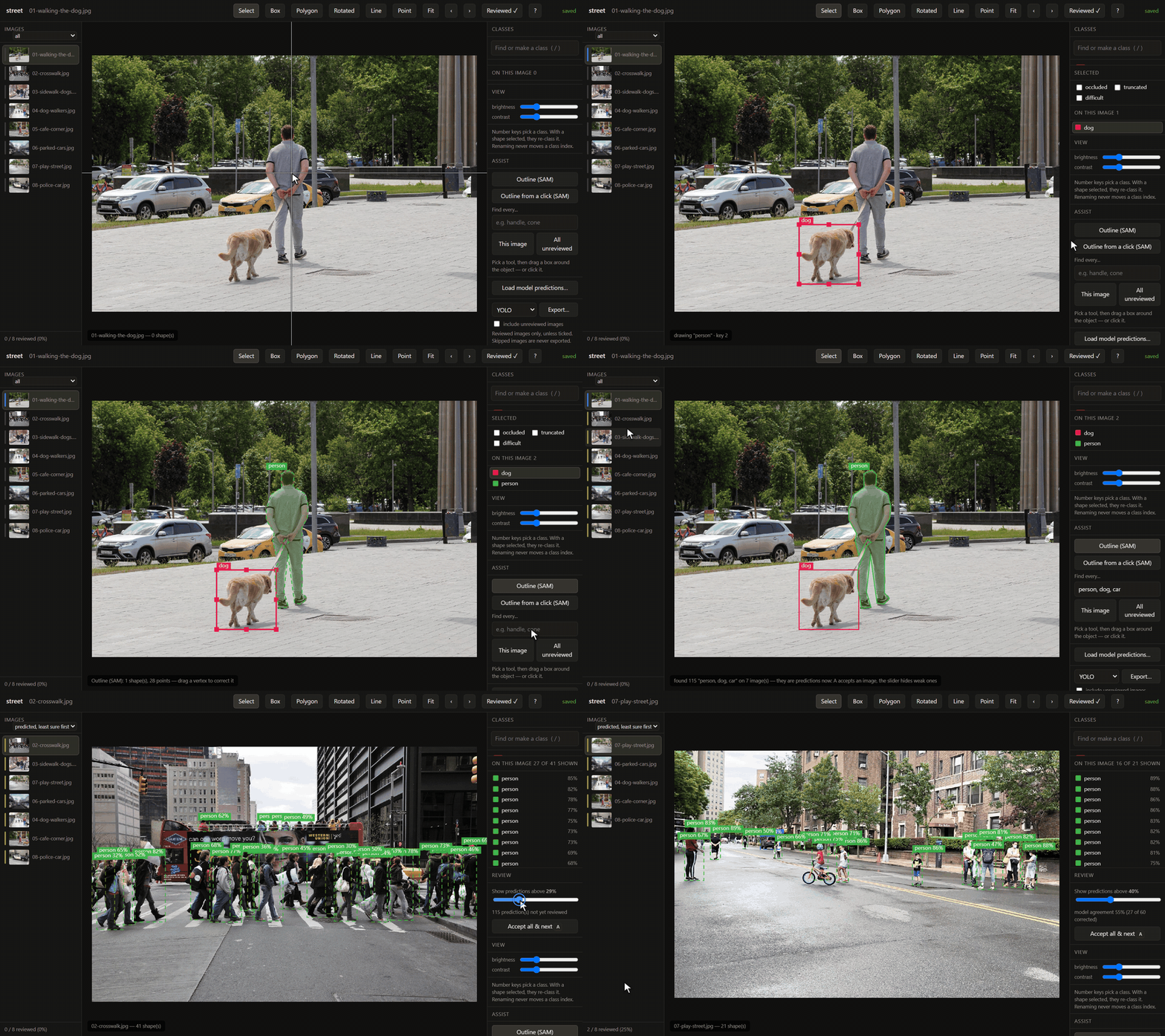
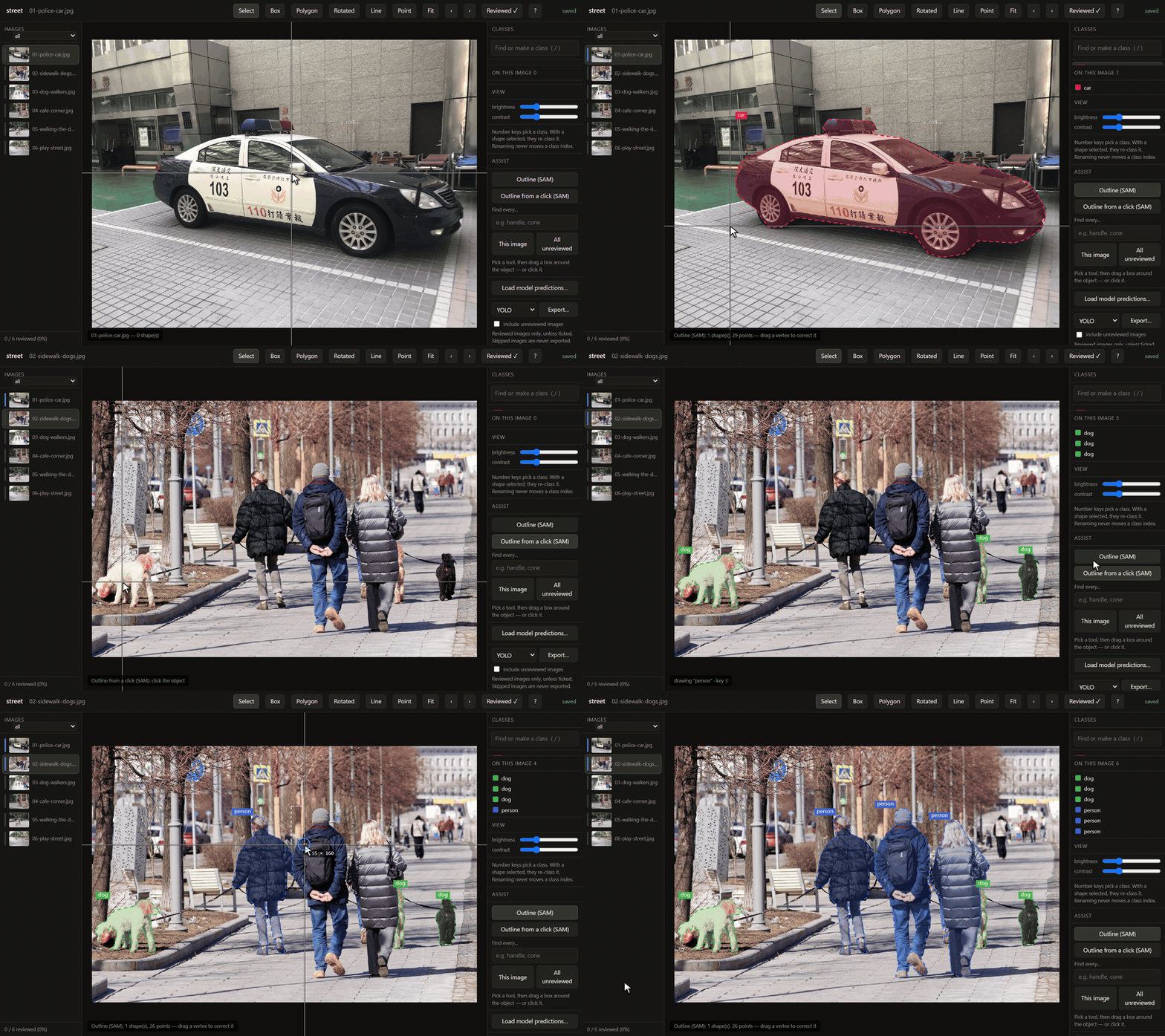
- **Outline (SAM)** — drag a box, or click, on an object: SAM 2.1 traces it
|
|
358
360
|
and you get a simplified polygon with draggable vertices.
|
|
361
|
+
|
|
362
|
+
|
|
363
|
+
|
|
359
364
|
- **Find every…** — type a class name (or several: `door, handle`) and run it
|
|
360
365
|
on this image, or on *every unreviewed image* as a job. The results are
|
|
361
366
|
predictions: dashed, scored, filtered by the slider, accepted with `A`,
|
|
@@ -485,8 +490,8 @@ remembers to do.
|
|
|
485
490
|
preview is a faithful description of the real run, not an approximation.
|
|
486
491
|
|
|
487
492
|
**Formats meet in the middle.** Readers parse into a neutral `Annotation`;
|
|
488
|
-
writers serialise out of it.
|
|
489
|
-
not
|
|
493
|
+
writers serialise out of it. Six formats cost six readers and six writers,
|
|
494
|
+
not thirty converters. Adding CreateML is one file, and it converts to and from
|
|
490
495
|
everything already here.
|
|
491
496
|
|
|
492
497
|
**Geometry is solved once.** Resize, tile and augment share one transform layer.
|
|
@@ -503,7 +508,7 @@ consumer; a web API is another.
|
|
|
503
508
|
|
|
504
509
|
## What it catches
|
|
505
510
|
|
|
506
|
-
Run on the real
|
|
511
|
+
Run on the real door dataset, V3 (3,686 images, 3,871 objects):
|
|
507
512
|
|
|
508
513
|
```
|
|
509
514
|
$ easyannotate inspect.health --folder ./pascal_voc
|
|
@@ -631,7 +636,7 @@ downloads); `easyannotate train` on 4 reviewed images, 3 epochs, then
|
|
|
631
636
|
predicting 20 more: 16 s end to end.
|
|
632
637
|
|
|
633
638
|
Decode-bound stages run across threads, in input order, so results stay
|
|
634
|
-
reproducible. Measured on the real
|
|
639
|
+
reproducible. Measured on the real door dataset:
|
|
635
640
|
|
|
636
641
|
| Stage | Serial | Parallel | |
|
|
637
642
|
|---|---|---|---|
|
|
@@ -715,7 +720,7 @@ not batch operations.
|
|
|
715
720
|
|
|
716
721
|
- **COCO exported four classes where there were two.** Categories were keyed on
|
|
717
722
|
the raw XML string, so `Open` and `open` became separate classes — splitting
|
|
718
|
-
|
|
723
|
+
the door dataset's V3 as 1341/1385/645/500. Export now folds case by default and
|
|
719
724
|
*reports* every merge; `labels.rename --fold-case` fixes it at the source, and
|
|
720
725
|
`inspect.health` now flags it as an error before you get that far.
|
|
721
726
|
- **SAM polygons exported as empty masks.** The two annotation tools write
|
|
@@ -762,6 +767,6 @@ landed, which is the failure that silently ruins a dataset.
|
|
|
762
767
|
|
|
763
768
|
## Datasets in this repository
|
|
764
769
|
|
|
765
|
-
`Projects
|
|
770
|
+
`Projects/` holds the door-state dataset (V3: 3686 images, 3871
|
|
766
771
|
objects) and `Models/Sam2.1_tiny/` the SAM 2.1 tiny checkpoint. Neither is
|
|
767
772
|
tracked by git.
|
|
@@ -1,6 +1,6 @@
|
|
|
1
1
|
# EasyAnnotate
|
|
2
2
|
|
|
3
|
-

|
|
4
4
|
|
|
5
5
|
**Image annotation with nothing to set up.** Open a folder, draw a box, type a
|
|
6
6
|
class name — that is the whole workflow. Load a model's predictions and review
|
|
@@ -71,7 +71,7 @@ What you get instead:
|
|
|
71
71
|
arrives as a prediction to review, dashed, with a confidence slider and one
|
|
72
72
|
key to accept. The models run in their own environment, so the editor's
|
|
73
73
|
install never depends on PyTorch, and without them it works unchanged.
|
|
74
|
-
- **Dataset tooling built in.** 28 operations — convert between
|
|
74
|
+
- **Dataset tooling built in.** 28 operations — convert between six formats,
|
|
75
75
|
find duplicates and train/val leakage, health reports, augmentation that
|
|
76
76
|
moves the labels with the pixels — one `pip install` away.
|
|
77
77
|
|
|
@@ -290,9 +290,11 @@ easyannotate tools install --cpu # skip the GPU build
|
|
|
290
290
|
easyannotate tools status # what this machine gets, and what is installed
|
|
291
291
|
```
|
|
292
292
|
|
|
293
|
-
|
|
294
|
-
`easyannotate
|
|
295
|
-
|
|
293
|
+
The tools come from PyPI as
|
|
294
|
+
[`easyannotate-tools`](https://pypi.org/project/easyannotate-tools/), pinned
|
|
295
|
+
to your `easyannotate` version. From a source checkout,
|
|
296
|
+
`easyannotate tools install --source .` installs your working copy instead.
|
|
297
|
+
The desktop app has the same thing as an "Install AI tools" button.
|
|
296
298
|
|
|
297
299
|
The installer reads the GPU, its memory and its driver. NVIDIA cards get the
|
|
298
300
|
PyTorch CUDA build their driver was made for (12.8 or 12.6; PyTorch 2.7 with
|
|
@@ -307,6 +309,9 @@ Then the Assist panel appears in the editor:
|
|
|
307
309
|
|
|
308
310
|
- **Outline (SAM)** — drag a box, or click, on an object: SAM 2.1 traces it
|
|
309
311
|
and you get a simplified polygon with draggable vertices.
|
|
312
|
+
|
|
313
|
+

|
|
314
|
+
|
|
310
315
|
- **Find every…** — type a class name (or several: `door, handle`) and run it
|
|
311
316
|
on this image, or on *every unreviewed image* as a job. The results are
|
|
312
317
|
predictions: dashed, scored, filtered by the slider, accepted with `A`,
|
|
@@ -436,8 +441,8 @@ remembers to do.
|
|
|
436
441
|
preview is a faithful description of the real run, not an approximation.
|
|
437
442
|
|
|
438
443
|
**Formats meet in the middle.** Readers parse into a neutral `Annotation`;
|
|
439
|
-
writers serialise out of it.
|
|
440
|
-
not
|
|
444
|
+
writers serialise out of it. Six formats cost six readers and six writers,
|
|
445
|
+
not thirty converters. Adding CreateML is one file, and it converts to and from
|
|
441
446
|
everything already here.
|
|
442
447
|
|
|
443
448
|
**Geometry is solved once.** Resize, tile and augment share one transform layer.
|
|
@@ -454,7 +459,7 @@ consumer; a web API is another.
|
|
|
454
459
|
|
|
455
460
|
## What it catches
|
|
456
461
|
|
|
457
|
-
Run on the real
|
|
462
|
+
Run on the real door dataset, V3 (3,686 images, 3,871 objects):
|
|
458
463
|
|
|
459
464
|
```
|
|
460
465
|
$ easyannotate inspect.health --folder ./pascal_voc
|
|
@@ -582,7 +587,7 @@ downloads); `easyannotate train` on 4 reviewed images, 3 epochs, then
|
|
|
582
587
|
predicting 20 more: 16 s end to end.
|
|
583
588
|
|
|
584
589
|
Decode-bound stages run across threads, in input order, so results stay
|
|
585
|
-
reproducible. Measured on the real
|
|
590
|
+
reproducible. Measured on the real door dataset:
|
|
586
591
|
|
|
587
592
|
| Stage | Serial | Parallel | |
|
|
588
593
|
|---|---|---|---|
|
|
@@ -666,7 +671,7 @@ not batch operations.
|
|
|
666
671
|
|
|
667
672
|
- **COCO exported four classes where there were two.** Categories were keyed on
|
|
668
673
|
the raw XML string, so `Open` and `open` became separate classes — splitting
|
|
669
|
-
|
|
674
|
+
the door dataset's V3 as 1341/1385/645/500. Export now folds case by default and
|
|
670
675
|
*reports* every merge; `labels.rename --fold-case` fixes it at the source, and
|
|
671
676
|
`inspect.health` now flags it as an error before you get that far.
|
|
672
677
|
- **SAM polygons exported as empty masks.** The two annotation tools write
|
|
@@ -713,6 +718,6 @@ landed, which is the failure that silently ruins a dataset.
|
|
|
713
718
|
|
|
714
719
|
## Datasets in this repository
|
|
715
720
|
|
|
716
|
-
`Projects
|
|
721
|
+
`Projects/` holds the door-state dataset (V3: 3686 images, 3871
|
|
717
722
|
objects) and `Models/Sam2.1_tiny/` the SAM 2.1 tiny checkpoint. Neither is
|
|
718
723
|
tracked by git.
|
|
@@ -90,7 +90,7 @@ def read_predictions(
|
|
|
90
90
|
if not candidate.is_file():
|
|
91
91
|
continue
|
|
92
92
|
try:
|
|
93
|
-
document = json.loads(candidate.read_text(encoding="utf-8"))
|
|
93
|
+
document = json.loads(candidate.read_text(encoding="utf-8-sig"))
|
|
94
94
|
except (OSError, ValueError):
|
|
95
95
|
continue
|
|
96
96
|
if coco_fmt.is_detection_results(document):
|
|
@@ -203,7 +203,7 @@ def _read_json(
|
|
|
203
203
|
path: Path, project_classes: list[str] | None, notes: list[str]
|
|
204
204
|
) -> tuple[list[Annotation], list[str]]:
|
|
205
205
|
try:
|
|
206
|
-
document = json.loads(path.read_text(encoding="utf-8"))
|
|
206
|
+
document = json.loads(path.read_text(encoding="utf-8-sig"))
|
|
207
207
|
except (OSError, ValueError) as exc:
|
|
208
208
|
raise ReviewError(f"{path.name}: not readable JSON ({exc})") from exc
|
|
209
209
|
|
|
@@ -40,6 +40,13 @@ from .local import child_environment, python_for_tools
|
|
|
40
40
|
PROFILE = "profile.json"
|
|
41
41
|
PYTHON_VERSION = "3.12"
|
|
42
42
|
|
|
43
|
+
#: YOLO-World's text encoder. Ultralytics installs it on first use, with git;
|
|
44
|
+
#: measured on a fresh install from PyPI with no git on PATH, that failed and
|
|
45
|
+
#: text prompts said "No module named 'clip'". The app's environment has no
|
|
46
|
+
#: pip for it either. So the installer brings it: a GitHub archive, which
|
|
47
|
+
#: needs no git, pinned to one commit.
|
|
48
|
+
CLIP = "clip @ https://github.com/ultralytics/CLIP/archive/7ffa84b3bfa40c42ecc1c77147a855e69cb2dd40.zip"
|
|
49
|
+
|
|
43
50
|
#: Run in the new environment. Real work on the device, not
|
|
44
51
|
#: torch.cuda.is_available(): measured on a 529 driver with the cu126 build,
|
|
45
52
|
#: that said True while every allocation failed ("device busy or unavailable").
|
|
@@ -205,6 +212,14 @@ def install(
|
|
|
205
212
|
packages = [f"easyannotate-tools=={__version__}"]
|
|
206
213
|
on_line("installing the EasyAnnotate tools and Ultralytics")
|
|
207
214
|
run(pip + packages)
|
|
215
|
+
# A step of its own: a network that reaches PyPI but not github.com then
|
|
216
|
+
# loses text prompts, not the whole install.
|
|
217
|
+
on_line("installing CLIP for text prompts, from github.com")
|
|
218
|
+
try:
|
|
219
|
+
run(pip + [CLIP])
|
|
220
|
+
except InstallError:
|
|
221
|
+
on_line("warning: CLIP did not install (is github.com reachable?) -- "
|
|
222
|
+
"outlines work; text prompts will not until a reinstall")
|
|
208
223
|
|
|
209
224
|
profile = {
|
|
210
225
|
"device": chosen.device,
|
|
@@ -3,7 +3,7 @@
|
|
|
3
3
|
The category handling here is deliberate. The original converter keyed
|
|
4
4
|
categories on the raw XML string, so a dataset whose labels drifted between
|
|
5
5
|
``Open`` and ``open`` came out with four classes instead of two -- exactly what
|
|
6
|
-
happened to
|
|
6
|
+
happened to the door dataset's V3 (Close/Open/open/close split 1341/1385/645/500).
|
|
7
7
|
The builder now folds case by default and reports every merge it made, so the
|
|
8
8
|
drift is fixed *and* visible rather than silently baked into the export.
|
|
9
9
|
"""
|
|
@@ -70,16 +70,21 @@ class CocoBuilder:
|
|
|
70
70
|
|
|
71
71
|
def __init__(
|
|
72
72
|
self,
|
|
73
|
-
description: str = "
|
|
73
|
+
description: str = "EasyAnnotate export",
|
|
74
74
|
version: str = "1.0",
|
|
75
75
|
case_policy: str = "casefold",
|
|
76
76
|
label_map: dict[str, str] | None = None,
|
|
77
|
+
categories: CategoryTable | None = None,
|
|
77
78
|
) -> None:
|
|
78
79
|
if case_policy not in CASE_POLICIES:
|
|
79
80
|
raise ValueError(f"case_policy must be one of {CASE_POLICIES}")
|
|
80
81
|
self.description = description
|
|
81
82
|
self.version = version
|
|
82
|
-
|
|
83
|
+
# A dataset written as several files (one per split) passes the same
|
|
84
|
+
# table to each builder, so an id names the same class in all of them.
|
|
85
|
+
self.categories = categories or CategoryTable(
|
|
86
|
+
case_policy=case_policy, label_map=label_map or {}
|
|
87
|
+
)
|
|
83
88
|
self.images: list[dict[str, Any]] = []
|
|
84
89
|
self.annotations: list[dict[str, Any]] = []
|
|
85
90
|
self.background_images = 0
|
|
@@ -119,6 +124,10 @@ class CocoBuilder:
|
|
|
119
124
|
"area": round(shape.polygon_area(), 2),
|
|
120
125
|
"iscrowd": 0,
|
|
121
126
|
}
|
|
127
|
+
# Written only when there is one, as the VOC writer does, so a
|
|
128
|
+
# hand-drawn label is unchanged. The reader has always read it back.
|
|
129
|
+
if shape.confidence is not None:
|
|
130
|
+
entry["score"] = round(float(shape.confidence), 6)
|
|
122
131
|
if shape.is_point:
|
|
123
132
|
# COCO has no point type; a visible keypoint with a one-pixel box
|
|
124
133
|
# is the form its keypoint evaluators and viewers both accept.
|
|
@@ -140,7 +149,7 @@ class CocoBuilder:
|
|
|
140
149
|
|
|
141
150
|
def write(self, path: Path) -> Path:
|
|
142
151
|
path.parent.mkdir(parents=True, exist_ok=True)
|
|
143
|
-
write_text_atomic(path, json.dumps(self.build(), indent=2))
|
|
152
|
+
write_text_atomic(path, json.dumps(self.build(), indent=2), newline="\n")
|
|
144
153
|
return path
|
|
145
154
|
|
|
146
155
|
def stats(self) -> dict[str, int]:
|
|
@@ -152,9 +161,45 @@ class CocoBuilder:
|
|
|
152
161
|
}
|
|
153
162
|
|
|
154
163
|
|
|
155
|
-
def load(path: Path) ->
|
|
156
|
-
"""Read an existing instances.json.
|
|
157
|
-
|
|
164
|
+
def load(path: Path) -> Any:
|
|
165
|
+
"""Read an existing instances.json.
|
|
166
|
+
|
|
167
|
+
A file that is not JSON raises :class:`AnnotationError` naming it, like
|
|
168
|
+
every other reader here -- a truncated download is a normal thing to be
|
|
169
|
+
handed, and a ``JSONDecodeError`` traceback tells nobody which file.
|
|
170
|
+
"""
|
|
171
|
+
path = Path(path)
|
|
172
|
+
try:
|
|
173
|
+
# utf-8-sig: a byte order mark at the start is not part of the JSON.
|
|
174
|
+
return json.loads(path.read_text(encoding="utf-8-sig"))
|
|
175
|
+
except OSError as exc:
|
|
176
|
+
raise AnnotationError(f"{path.name}: cannot read ({exc})") from exc
|
|
177
|
+
except ValueError as exc:
|
|
178
|
+
raise AnnotationError(f"{path.name}: cannot parse ({exc})") from exc
|
|
179
|
+
|
|
180
|
+
|
|
181
|
+
def _entries(coco: dict[str, Any], key: str) -> list[Any]:
|
|
182
|
+
"""One of the document's three lists; absent is empty, anything else is
|
|
183
|
+
not a COCO document."""
|
|
184
|
+
value = coco.get(key)
|
|
185
|
+
if value is None:
|
|
186
|
+
return []
|
|
187
|
+
if not isinstance(value, list):
|
|
188
|
+
raise AnnotationError(f"'{key}' must be a list, got {type(value).__name__}")
|
|
189
|
+
return value
|
|
190
|
+
|
|
191
|
+
|
|
192
|
+
def _dimension(value: Any) -> int:
|
|
193
|
+
"""An image width or height, or 0 when the entry holds no usable one."""
|
|
194
|
+
try:
|
|
195
|
+
return max(0, int(float(value or 0)))
|
|
196
|
+
except (TypeError, ValueError, OverflowError):
|
|
197
|
+
return 0
|
|
198
|
+
|
|
199
|
+
|
|
200
|
+
def _usable_id(entry: Any) -> bool:
|
|
201
|
+
"""Whether an image or category entry can be referred to at all."""
|
|
202
|
+
return isinstance(entry, dict) and isinstance(entry.get("id"), (int, float, str))
|
|
158
203
|
|
|
159
204
|
|
|
160
205
|
def _score(ann: dict[str, Any]) -> float | None:
|
|
@@ -168,6 +213,23 @@ def _score(ann: dict[str, Any]) -> float | None:
|
|
|
168
213
|
return None
|
|
169
214
|
|
|
170
215
|
|
|
216
|
+
def is_dataset(document: Any) -> bool:
|
|
217
|
+
"""Whether a parsed JSON document is a COCO dataset.
|
|
218
|
+
|
|
219
|
+
Judged by its own top-level keys: an object holding an ``images``,
|
|
220
|
+
``annotations`` or ``categories`` list, and no ``shapes`` (which is what a
|
|
221
|
+
LabelMe file has). Looking for those words in the first few kilobytes of
|
|
222
|
+
text instead got it wrong both ways -- a file whose ``images`` list came
|
|
223
|
+
first and ran past the window was not COCO, and a LabelMe file with a
|
|
224
|
+
class called "categories" was.
|
|
225
|
+
"""
|
|
226
|
+
return (
|
|
227
|
+
isinstance(document, dict)
|
|
228
|
+
and "shapes" not in document
|
|
229
|
+
and any(isinstance(document.get(key), list) for key in ("images", "annotations", "categories"))
|
|
230
|
+
)
|
|
231
|
+
|
|
232
|
+
|
|
171
233
|
def is_detection_results(document: Any) -> bool:
|
|
172
234
|
"""Whether this is the *detection results* form rather than a dataset.
|
|
173
235
|
|
|
@@ -272,45 +334,77 @@ def to_annotations(
|
|
|
272
334
|
f"a COCO document must be an object, got {type(coco).__name__}"
|
|
273
335
|
)
|
|
274
336
|
|
|
275
|
-
names = {
|
|
276
|
-
|
|
337
|
+
names = {
|
|
338
|
+
c["id"]: str(c.get("name", f"class_{c['id']}"))
|
|
339
|
+
for c in _entries(coco, "categories")
|
|
340
|
+
if _usable_id(c)
|
|
341
|
+
}
|
|
342
|
+
by_image: dict[Any, Annotation] = {}
|
|
277
343
|
|
|
278
|
-
for image in coco
|
|
344
|
+
for image in _entries(coco, "images"):
|
|
345
|
+
if not _usable_id(image):
|
|
346
|
+
continue
|
|
279
347
|
by_image[image["id"]] = Annotation(
|
|
280
348
|
filename=Path(str(image.get("file_name", ""))).name,
|
|
281
|
-
width=
|
|
282
|
-
height=
|
|
349
|
+
width=_dimension(image.get("width")),
|
|
350
|
+
height=_dimension(image.get("height")),
|
|
283
351
|
shapes=[],
|
|
284
352
|
)
|
|
285
353
|
|
|
286
|
-
rle_count = 0
|
|
287
|
-
for ann in coco
|
|
288
|
-
|
|
289
|
-
|
|
354
|
+
rle_count = orphans = unusable = in_parts = 0
|
|
355
|
+
for ann in _entries(coco, "annotations"):
|
|
356
|
+
if not isinstance(ann, dict):
|
|
357
|
+
unusable += 1
|
|
290
358
|
continue
|
|
291
|
-
|
|
292
|
-
|
|
293
|
-
|
|
294
|
-
|
|
359
|
+
image_id = ann.get("image_id")
|
|
360
|
+
annotation = by_image.get(image_id) if isinstance(image_id, (int, float, str)) else None
|
|
361
|
+
if annotation is None:
|
|
362
|
+
orphans += 1
|
|
295
363
|
continue
|
|
296
364
|
|
|
297
365
|
segmentation = ann.get("segmentation")
|
|
298
366
|
polygon: list[Point] | None = None
|
|
299
|
-
|
|
300
|
-
|
|
301
|
-
elif isinstance(segmentation, list) and segmentation:
|
|
367
|
+
is_mask = isinstance(segmentation, dict) or bool(ann.get("iscrowd"))
|
|
368
|
+
if not is_mask and isinstance(segmentation, list) and segmentation:
|
|
302
369
|
polygon = _first_polygon(segmentation)
|
|
303
370
|
|
|
371
|
+
box = _box(ann.get("bbox"))
|
|
372
|
+
if box is None and polygon:
|
|
373
|
+
# No usable bbox, but an outline: the box is the outline's own.
|
|
374
|
+
xs, ys = [p[0] for p in polygon], [p[1] for p in polygon]
|
|
375
|
+
box = (min(xs), min(ys), max(xs), max(ys))
|
|
376
|
+
if box is None:
|
|
377
|
+
unusable += 1
|
|
378
|
+
continue
|
|
379
|
+
if is_mask:
|
|
380
|
+
rle_count += 1
|
|
381
|
+
elif polygon and sum(1 for part in segmentation if _is_ring(part)) > 1:
|
|
382
|
+
in_parts += 1
|
|
383
|
+
|
|
384
|
+
kind = ""
|
|
385
|
+
keypoints = ann.get("keypoints")
|
|
386
|
+
if (
|
|
387
|
+
polygon is None
|
|
388
|
+
and isinstance(keypoints, list)
|
|
389
|
+
and len(keypoints) == 3
|
|
390
|
+
and box[2] - box[0] <= 1
|
|
391
|
+
and box[3] - box[1] <= 1
|
|
392
|
+
):
|
|
393
|
+
# One keypoint in a one-pixel box is how the writer here stores a
|
|
394
|
+
# point; read it back as the point it was, not as a tiny box.
|
|
395
|
+
point = _box([keypoints[0], keypoints[1], 0, 0])
|
|
396
|
+
if point is not None:
|
|
397
|
+
box, kind = point, "point"
|
|
398
|
+
|
|
399
|
+
category = ann.get("category_id")
|
|
304
400
|
annotation.shapes.append(
|
|
305
401
|
Shape(
|
|
306
|
-
label=names.get(
|
|
307
|
-
|
|
308
|
-
|
|
309
|
-
|
|
310
|
-
int(round(x + w)),
|
|
311
|
-
int(round(y + h)),
|
|
312
|
-
),
|
|
402
|
+
label=names.get(category, f"class_{category}")
|
|
403
|
+
if isinstance(category, (int, float, str))
|
|
404
|
+
else f"class_{category}",
|
|
405
|
+
bbox=box,
|
|
313
406
|
polygon=polygon,
|
|
407
|
+
kind=kind,
|
|
314
408
|
# 'score' is what every detector writes and no ground-truth
|
|
315
409
|
# file has. Carrying it is what lets the review layer tell a
|
|
316
410
|
# prediction from a label rather than trusting a filename.
|
|
@@ -318,10 +412,17 @@ def to_annotations(
|
|
|
318
412
|
)
|
|
319
413
|
)
|
|
320
414
|
|
|
321
|
-
if
|
|
322
|
-
|
|
323
|
-
|
|
415
|
+
if unsupported_out is not None:
|
|
416
|
+
counted = (
|
|
417
|
+
(rle_count, "RLE/crowd segmentation(s) kept as bounding boxes only"),
|
|
418
|
+
(orphans, "annotation(s) name an image that is not in 'images' and were skipped"),
|
|
419
|
+
(unusable, "annotation(s) have no usable bbox or outline and were skipped"),
|
|
420
|
+
(
|
|
421
|
+
in_parts,
|
|
422
|
+
"object(s) have an outline in several parts; only the first part of each was kept",
|
|
423
|
+
),
|
|
324
424
|
)
|
|
425
|
+
unsupported_out.extend(f"{count} {text}" for count, text in counted if count)
|
|
325
426
|
|
|
326
427
|
# Recover sizes the document omitted, so a YOLO export downstream is not
|
|
327
428
|
# left dividing by zero.
|
|
@@ -333,13 +434,29 @@ def to_annotations(
|
|
|
333
434
|
return [by_image[k] for k in sorted(by_image, key=lambda k: by_image[k].filename)]
|
|
334
435
|
|
|
335
436
|
|
|
437
|
+
def _box(raw: Any) -> tuple[int, int, int, int] | None:
|
|
438
|
+
"""A COCO ``[x, y, width, height]`` as corners, or ``None`` if it is not one."""
|
|
439
|
+
try:
|
|
440
|
+
x, y, w, h = (float(v) for v in raw[:4])
|
|
441
|
+
return int(round(x)), int(round(y)), int(round(x + w)), int(round(y + h))
|
|
442
|
+
except (TypeError, ValueError, OverflowError):
|
|
443
|
+
return None
|
|
444
|
+
|
|
445
|
+
|
|
446
|
+
def _is_ring(part: Any) -> bool:
|
|
447
|
+
return isinstance(part, list) and len(part) >= 6
|
|
448
|
+
|
|
449
|
+
|
|
336
450
|
def _first_polygon(segmentation: list[Any]) -> list[Point] | None:
|
|
337
451
|
"""Take the outer ring. Multi-part masks lose their holes, which is the
|
|
338
452
|
honest limit of a single-polygon model -- and what every VOC/YOLO consumer
|
|
339
453
|
downstream can represent anyway."""
|
|
340
454
|
for part in segmentation:
|
|
341
455
|
if isinstance(part, list) and len(part) >= 6:
|
|
342
|
-
|
|
456
|
+
try:
|
|
457
|
+
values = [float(v) for v in part]
|
|
458
|
+
except (TypeError, ValueError):
|
|
459
|
+
continue
|
|
343
460
|
return [
|
|
344
461
|
(int(round(values[i])), int(round(values[i + 1])))
|
|
345
462
|
for i in range(0, len(values) - 1, 2)
|
|
@@ -351,14 +468,15 @@ def find_annotation_files(folder: Path) -> list[Path]:
|
|
|
351
468
|
"""Locate COCO json files under the layouts exporters actually produce."""
|
|
352
469
|
candidates: list[Path] = []
|
|
353
470
|
for pattern in ("_annotations.coco.json", "instances*.json", "*.json"):
|
|
354
|
-
|
|
471
|
+
# By name as text: Path objects sort without regard to case on Windows.
|
|
472
|
+
for path in sorted(folder.glob(pattern), key=lambda p: p.name):
|
|
355
473
|
if path.is_file() and path not in candidates:
|
|
356
474
|
candidates.append(path)
|
|
357
475
|
if candidates:
|
|
358
476
|
break
|
|
359
477
|
annotations_dir = folder / "annotations"
|
|
360
478
|
if annotations_dir.is_dir():
|
|
361
|
-
for path in sorted(annotations_dir.glob("*.json")):
|
|
479
|
+
for path in sorted(annotations_dir.glob("*.json"), key=lambda p: p.name):
|
|
362
480
|
if path not in candidates:
|
|
363
481
|
candidates.append(path)
|
|
364
482
|
return candidates
|
|
@@ -87,11 +87,17 @@ def write(annotations: Iterable[Annotation], path: Path) -> Path:
|
|
|
87
87
|
def read(path: Path) -> list[Annotation]:
|
|
88
88
|
"""Read a CSV back into one :class:`Annotation` per distinct filename."""
|
|
89
89
|
try:
|
|
90
|
-
|
|
90
|
+
# newline="" hands the csv module the file as it is, which is what it
|
|
91
|
+
# asks for: a quoted field may hold a line break, and splitting the
|
|
92
|
+
# text into lines first cut such a row in two.
|
|
93
|
+
with path.open(encoding="utf-8-sig", newline="") as handle:
|
|
94
|
+
text = handle.read()
|
|
91
95
|
except OSError as exc:
|
|
92
96
|
raise AnnotationError(f"{path.name}: cannot read ({exc})") from exc
|
|
97
|
+
except UnicodeDecodeError as exc:
|
|
98
|
+
raise AnnotationError(f"{path.name}: not UTF-8 text ({exc})") from exc
|
|
93
99
|
|
|
94
|
-
reader = csv.DictReader(
|
|
100
|
+
reader = csv.DictReader(io.StringIO(text, newline=""))
|
|
95
101
|
if not reader.fieldnames:
|
|
96
102
|
raise AnnotationError(f"{path.name}: empty file")
|
|
97
103
|
|
|
@@ -165,7 +171,8 @@ def _parse_polygon(raw: str | None) -> list[Point] | None:
|
|
|
165
171
|
if not raw or not raw.strip():
|
|
166
172
|
return None
|
|
167
173
|
numbers: Sequence[str] = raw.replace(",", " ").split()
|
|
168
|
-
|
|
174
|
+
# Two points are enough: that is a line, and the writer emits it.
|
|
175
|
+
if len(numbers) < 4 or len(numbers) % 2:
|
|
169
176
|
return None
|
|
170
177
|
try:
|
|
171
178
|
values = [float(n) for n in numbers]
|
|
@@ -19,16 +19,14 @@ from pathlib import Path
|
|
|
19
19
|
|
|
20
20
|
from ..fs import write_text_atomic
|
|
21
21
|
from .model import Annotation, AnnotationError, Point, Shape
|
|
22
|
+
from .yolo import read_label_text
|
|
22
23
|
|
|
23
24
|
HEADER_PREFIXES = ("imagesource:", "gsd:")
|
|
24
25
|
|
|
25
26
|
|
|
26
27
|
def read(path: Path, width: int, height: int, *, filename: str | None = None) -> Annotation:
|
|
27
28
|
shapes: list[Shape] = []
|
|
28
|
-
|
|
29
|
-
text = path.read_text(encoding="utf-8")
|
|
30
|
-
except OSError as exc:
|
|
31
|
-
raise AnnotationError(f"{path.name}: cannot read ({exc})") from exc
|
|
29
|
+
text = read_label_text(path)
|
|
32
30
|
|
|
33
31
|
for number, line in enumerate(text.splitlines(), start=1):
|
|
34
32
|
line = line.strip()
|
|
@@ -88,11 +86,18 @@ def corners_of(shape: Shape) -> list[Point]:
|
|
|
88
86
|
return [(x1, y1), (x2, y1), (x2, y2), (x1, y2)]
|
|
89
87
|
|
|
90
88
|
|
|
89
|
+
def class_name(label: str) -> str:
|
|
90
|
+
"""A class name as DOTA can hold it. Fields are separated by spaces, so a
|
|
91
|
+
space inside a name would split it; it is written as a hyphen instead.
|
|
92
|
+
The converter reports every name this changes."""
|
|
93
|
+
return label.replace(" ", "-")
|
|
94
|
+
|
|
95
|
+
|
|
91
96
|
def write(annotation: Annotation, path: Path) -> Path:
|
|
92
97
|
lines = []
|
|
93
98
|
for shape in annotation.shapes:
|
|
94
99
|
if shape.shape_kind in ("point", "line"):
|
|
95
100
|
continue # nothing rotated-box shaped to say about these
|
|
96
101
|
coords = " ".join(f"{x} {y}" for x, y in corners_of(shape))
|
|
97
|
-
lines.append(f"{coords} {shape.label
|
|
98
|
-
return write_text_atomic(path, "\n".join(lines) + ("\n" if lines else ""))
|
|
102
|
+
lines.append(f"{coords} {class_name(shape.label)} {int(bool(shape.difficult))}")
|
|
103
|
+
return write_text_atomic(path, "\n".join(lines) + ("\n" if lines else ""), newline="\n")
|