django-routines 1.0.0__tar.gz
This diff represents the content of publicly available package versions that have been released to one of the supported registries. The information contained in this diff is provided for informational purposes only and reflects changes between package versions as they appear in their respective public registries.
- django_routines-1.0.0/LICENSE +21 -0
- django_routines-1.0.0/PKG-INFO +225 -0
- django_routines-1.0.0/README.md +183 -0
- django_routines-1.0.0/django_routines/__init__.py +301 -0
- django_routines-1.0.0/django_routines/apps.py +6 -0
- django_routines-1.0.0/django_routines/management/__init__.py +0 -0
- django_routines-1.0.0/django_routines/management/commands/__init__.py +0 -0
- django_routines-1.0.0/django_routines/management/commands/routine.py +201 -0
- django_routines-1.0.0/pyproject.toml +138 -0
|
@@ -0,0 +1,21 @@
|
|
|
1
|
+
MIT License
|
|
2
|
+
|
|
3
|
+
Copyright (c) 2024 Brian Kohan
|
|
4
|
+
|
|
5
|
+
Permission is hereby granted, free of charge, to any person obtaining a copy
|
|
6
|
+
of this software and associated documentation files (the "Software"), to deal
|
|
7
|
+
in the Software without restriction, including without limitation the rights
|
|
8
|
+
to use, copy, modify, merge, publish, distribute, sublicense, and/or sell
|
|
9
|
+
copies of the Software, and to permit persons to whom the Software is
|
|
10
|
+
furnished to do so, subject to the following conditions:
|
|
11
|
+
|
|
12
|
+
The above copyright notice and this permission notice shall be included in all
|
|
13
|
+
copies or substantial portions of the Software.
|
|
14
|
+
|
|
15
|
+
THE SOFTWARE IS PROVIDED "AS IS", WITHOUT WARRANTY OF ANY KIND, EXPRESS OR
|
|
16
|
+
IMPLIED, INCLUDING BUT NOT LIMITED TO THE WARRANTIES OF MERCHANTABILITY,
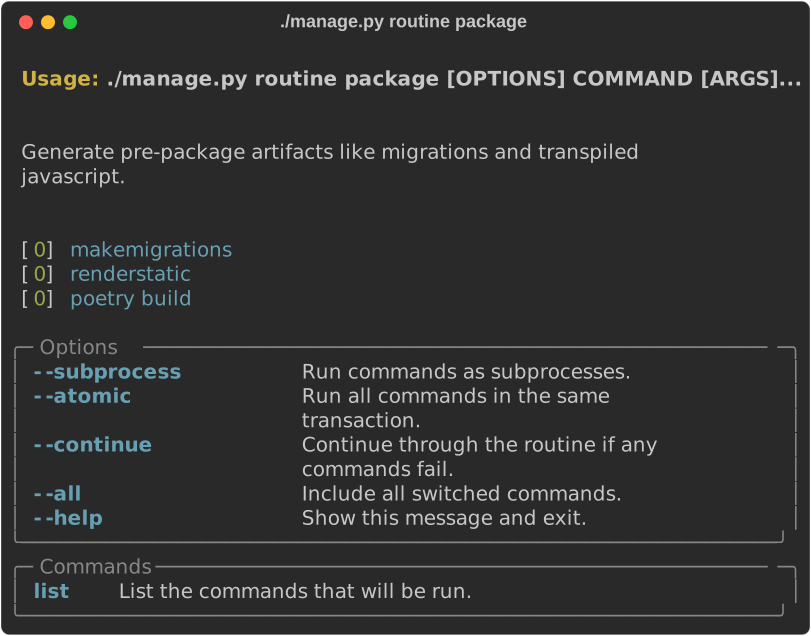
|
|
17
|
+
FITNESS FOR A PARTICULAR PURPOSE AND NONINFRINGEMENT. IN NO EVENT SHALL THE
|
|
18
|
+
AUTHORS OR COPYRIGHT HOLDERS BE LIABLE FOR ANY CLAIM, DAMAGES OR OTHER
|
|
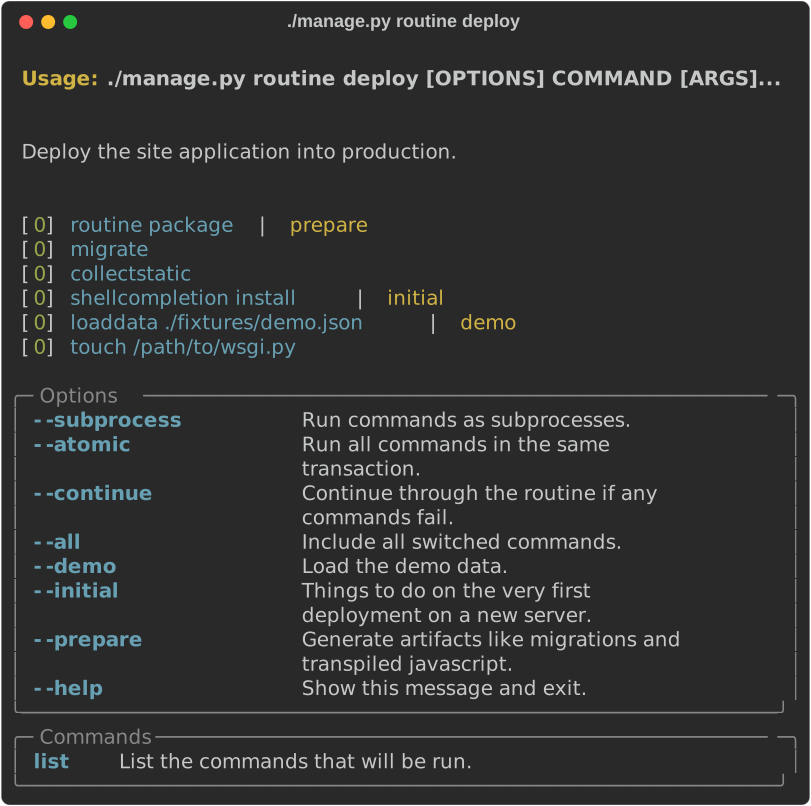
19
|
+
LIABILITY, WHETHER IN AN ACTION OF CONTRACT, TORT OR OTHERWISE, ARISING FROM,
|
|
20
|
+
OUT OF OR IN CONNECTION WITH THE SOFTWARE OR THE USE OR OTHER DEALINGS IN THE
|
|
21
|
+
SOFTWARE.
|
|
@@ -0,0 +1,225 @@
|
|
|
1
|
+
Metadata-Version: 2.1
|
|
2
|
+
Name: django-routines
|
|
3
|
+
Version: 1.0.0
|
|
4
|
+
Summary: Configure named groups of management commands in Django settings files.
|
|
5
|
+
Home-page: https://django-routines.readthedocs.io
|
|
6
|
+
License: MIT
|
|
7
|
+
Keywords: django,CLI,management,routine,routines,batch,commands,deploy
|
|
8
|
+
Author: Brian Kohan
|
|
9
|
+
Author-email: bckohan@gmail.com
|
|
10
|
+
Requires-Python: >=3.8,<4.0
|
|
11
|
+
Classifier: Development Status :: 5 - Production/Stable
|
|
12
|
+
Classifier: Environment :: Console
|
|
13
|
+
Classifier: Framework :: Django
|
|
14
|
+
Classifier: Framework :: Django :: 3.2
|
|
15
|
+
Classifier: Framework :: Django :: 4.0
|
|
16
|
+
Classifier: Framework :: Django :: 4.1
|
|
17
|
+
Classifier: Framework :: Django :: 4.2
|
|
18
|
+
Classifier: Framework :: Django :: 5.0
|
|
19
|
+
Classifier: Intended Audience :: Developers
|
|
20
|
+
Classifier: License :: OSI Approved :: MIT License
|
|
21
|
+
Classifier: Natural Language :: English
|
|
22
|
+
Classifier: Operating System :: OS Independent
|
|
23
|
+
Classifier: Programming Language :: Python
|
|
24
|
+
Classifier: Programming Language :: Python :: 3
|
|
25
|
+
Classifier: Programming Language :: Python :: 3.8
|
|
26
|
+
Classifier: Programming Language :: Python :: 3.9
|
|
27
|
+
Classifier: Programming Language :: Python :: 3.10
|
|
28
|
+
Classifier: Programming Language :: Python :: 3.11
|
|
29
|
+
Classifier: Programming Language :: Python :: 3.12
|
|
30
|
+
Classifier: Topic :: Internet :: WWW/HTTP
|
|
31
|
+
Classifier: Topic :: Internet :: WWW/HTTP :: Site Management
|
|
32
|
+
Classifier: Topic :: Software Development :: Libraries
|
|
33
|
+
Classifier: Topic :: Software Development :: Libraries :: Python Modules
|
|
34
|
+
Provides-Extra: rich
|
|
35
|
+
Requires-Dist: Django (>=3.2,<6.0)
|
|
36
|
+
Requires-Dist: django-typer (>=2.0.2,<3.0.0)
|
|
37
|
+
Requires-Dist: rich (>=10.11.0,<14.0.0) ; extra == "rich"
|
|
38
|
+
Requires-Dist: typing-extensions (>=3.7.4.3) ; python_version < "3.10"
|
|
39
|
+
Project-URL: Repository, https://github.com/bckohan/django-routines
|
|
40
|
+
Description-Content-Type: text/markdown
|
|
41
|
+
|
|
42
|
+
# django-routines
|
|
43
|
+
|
|
44
|
+
|
|
45
|
+
[](https://opensource.org/licenses/MIT)
|
|
46
|
+
[](https://github.com/astral-sh/ruff)
|
|
47
|
+
[](https://pypi.python.org/pypi/django-routines/)
|
|
48
|
+
[](https://pypi.python.org/pypi/django-routines/)
|
|
49
|
+
[](https://pypi.org/project/django-routines/)
|
|
50
|
+
[](https://pypi.python.org/pypi/django-routines)
|
|
51
|
+
[](http://django-routines.readthedocs.io/?badge=latest/)
|
|
52
|
+
[](https://codecov.io/gh/bckohan/django-routines)
|
|
53
|
+
[](https://github.com/bckohan/django-routines/actions/workflows/test.yml)
|
|
54
|
+
[](https://github.com/bckohan/django-routines/actions/workflows/lint.yml)
|
|
55
|
+
|
|
56
|
+
|
|
57
|
+
Configure batches of Django management commands in your settings files and run them all at once.
|
|
58
|
+
For example, batch together your common database maintenance tasks, deployment routines or any
|
|
59
|
+
other set of commands you need to run together. This helps single source general site maintenance
|
|
60
|
+
into your settings files keeping your code base [DRY](https://en.wikipedia.org/wiki/Don%27t_repeat_yourself).
|
|
61
|
+
|
|
62
|
+
## Example
|
|
63
|
+
|
|
64
|
+
Let's define two named routines, "package" and "deploy". The package routine will be a collection
|
|
65
|
+
of commands that we typically run to generate package artifacts (like migrations and transpiled
|
|
66
|
+
javascript). The deploy routine will be a collection of commands we typically run when deploying
|
|
67
|
+
the site for the first time on a new server or when we deploy version updates on the server.
|
|
68
|
+
|
|
69
|
+
**Routines commands are run in the order they are registered, or by [priority](#priorities).**
|
|
70
|
+
|
|
71
|
+
```python
|
|
72
|
+
from django_routines import RoutineCommand, command, routine
|
|
73
|
+
|
|
74
|
+
# register routines and their help text
|
|
75
|
+
routine(
|
|
76
|
+
name="package",
|
|
77
|
+
help_text=(
|
|
78
|
+
"Generate pre-package artifacts like migrations and transpiled "
|
|
79
|
+
"javascript."
|
|
80
|
+
)
|
|
81
|
+
)
|
|
82
|
+
# you may register commands on a routine after defining a routine (or before!)
|
|
83
|
+
command("package", "makemigrations")
|
|
84
|
+
command("package", "renderstatic")
|
|
85
|
+
|
|
86
|
+
routine(
|
|
87
|
+
"deploy",
|
|
88
|
+
"Deploy the site application into production.",
|
|
89
|
+
|
|
90
|
+
# you may also specify commands inline using the RoutineCommand dataclass
|
|
91
|
+
RoutineCommand(
|
|
92
|
+
("routine", "package"), switches=["prepare"]
|
|
93
|
+
), # routine commands can be other routines!
|
|
94
|
+
RoutineCommand("migrate"),
|
|
95
|
+
RoutineCommand("collectstatic"),
|
|
96
|
+
RoutineCommand(("shellcompletion", "install"), switches=["initial"]),
|
|
97
|
+
RoutineCommand(("loaddata", "./fixtures/demo.json"), switches=["demo"]),
|
|
98
|
+
|
|
99
|
+
# define switches that toggle commands on and off
|
|
100
|
+
prepare="Generate artifacts like migrations and transpiled javascript.",
|
|
101
|
+
initial="Things to do on the very first deployment on a new server.",
|
|
102
|
+
demo="Load the demo data.",
|
|
103
|
+
)
|
|
104
|
+
```
|
|
105
|
+
|
|
106
|
+
The routine command will read our settings file and generate two subcommands, one called deploy and one called package:
|
|
107
|
+
|
|
108
|
+
|
|
109
|
+
|
|
110
|
+
Now we can run all of our package routines with one command:
|
|
111
|
+
|
|
112
|
+
```bash
|
|
113
|
+
?> ./manage.py routine package
|
|
114
|
+
makemigrations
|
|
115
|
+
...
|
|
116
|
+
renderstatic
|
|
117
|
+
...
|
|
118
|
+
```
|
|
119
|
+
|
|
120
|
+
The deploy command has several switches that we can enable to run additional commands.
|
|
121
|
+
|
|
122
|
+
|
|
123
|
+
|
|
124
|
+
For example to deploy our demo on a new server we would run:
|
|
125
|
+
|
|
126
|
+
```bash
|
|
127
|
+
?> ./manage.py routine deploy --initial --demo
|
|
128
|
+
migrate
|
|
129
|
+
...
|
|
130
|
+
collectstatic
|
|
131
|
+
...
|
|
132
|
+
shellcompletion install
|
|
133
|
+
...
|
|
134
|
+
loaddata ./fixtures/demo.json
|
|
135
|
+
...
|
|
136
|
+
```
|
|
137
|
+
|
|
138
|
+
## Settings
|
|
139
|
+
|
|
140
|
+
The [RoutineCommand](https://django-routines.readthedocs.io/en/latest/reference.html#django_routines.RoutineCommand) dataclass, [routine](https://django-routines.readthedocs.io/en/latest/reference.html#django_routines.routine) and [command](https://django-routines.readthedocs.io/en/latest/reference.html#django_routines.command) helper functions in the example above make it easier for us to work with the native configuration format which is a dictionary structure defined in the ``DJANGO_ROUTINES`` setting attribute. For example the above configuration is equivalent to:
|
|
141
|
+
|
|
142
|
+
```python
|
|
143
|
+
DJANGO_ROUTINES = {
|
|
144
|
+
"deploy": {
|
|
145
|
+
"commands": [
|
|
146
|
+
{"command": ("routine", "package"), "switches": ["prepare"]},
|
|
147
|
+
{"command": "migrate"},
|
|
148
|
+
{"command": "collectstatic"},
|
|
149
|
+
{
|
|
150
|
+
"command": ("shellcompletion", "install"),
|
|
151
|
+
"switches": ["initial"],
|
|
152
|
+
},
|
|
153
|
+
{
|
|
154
|
+
"command": ("loaddata", "./fixtures/demo.json"),
|
|
155
|
+
"switches": ["demo"],
|
|
156
|
+
},
|
|
157
|
+
],
|
|
158
|
+
"help_text": "Deploy the site application into production.",
|
|
159
|
+
"name": "deploy",
|
|
160
|
+
"switch_helps": {
|
|
161
|
+
"demo": "Load the demo data.",
|
|
162
|
+
"initial": "Things to do on the very first deployment on a new server.",
|
|
163
|
+
"prepare": "Generate artifacts like migrations and transpiled javascript.",
|
|
164
|
+
},
|
|
165
|
+
},
|
|
166
|
+
"package": {
|
|
167
|
+
"commands": [
|
|
168
|
+
{"command": "makemigrations"},
|
|
169
|
+
{"command": "renderstatic"},
|
|
170
|
+
],
|
|
171
|
+
"help_text": "Generate pre-package artifacts like migrations and transpiled javascript.",
|
|
172
|
+
"name": "package",
|
|
173
|
+
},
|
|
174
|
+
}
|
|
175
|
+
```
|
|
176
|
+
|
|
177
|
+
|
|
178
|
+
## Priorities
|
|
179
|
+
|
|
180
|
+
If you are composing settings from multiple apps or source files using a utility like [django-split-settings](https://pypi.org/project/django-split-settings/) you may not be able to define all routines at once. You can use priorities to make sure commands defined in a de-coupled way run in the correct order.
|
|
181
|
+
|
|
182
|
+
```python
|
|
183
|
+
command("deploy", "makemigrations", priority=1)
|
|
184
|
+
command("deploy", "migrate", priority=2)
|
|
185
|
+
```
|
|
186
|
+
|
|
187
|
+
## Options
|
|
188
|
+
|
|
189
|
+
When specifying arguments you may add them to the command tuple OR specify them as named options in the style that will be passed to [call_command](https://docs.djangoproject.com/en/stable/ref/django-admin/#django.core.management.call_command):
|
|
190
|
+
|
|
191
|
+
```python
|
|
192
|
+
# these two are equivalent
|
|
193
|
+
command("package", ("makemigrations", "--no-header"))
|
|
194
|
+
command("package", "makemigrations", no_header=True)
|
|
195
|
+
```
|
|
196
|
+
|
|
197
|
+
|
|
198
|
+
## Installation
|
|
199
|
+
|
|
200
|
+
|
|
201
|
+
1. Clone django-routines from [GitHub](https://github.com/bckohan/django-routines) or install a release off [PyPI](https://pypi.python.org/pypi/django-routines) :
|
|
202
|
+
|
|
203
|
+
```bash
|
|
204
|
+
pip install django-routines
|
|
205
|
+
```
|
|
206
|
+
|
|
207
|
+
[rich](https://rich.readthedocs.io/) is a powerful library for rich text and beautiful formatting in the terminal. It is not required, but highly recommended for the best experience:
|
|
208
|
+
|
|
209
|
+
```bash
|
|
210
|
+
pip install "django-routines[rich]"
|
|
211
|
+
```
|
|
212
|
+
|
|
213
|
+
|
|
214
|
+
2. Add ``django_routines`` to your ``INSTALLED_APPS`` setting:
|
|
215
|
+
|
|
216
|
+
```python
|
|
217
|
+
INSTALLED_APPS = [
|
|
218
|
+
...
|
|
219
|
+
'django_routines',
|
|
220
|
+
'django_typer', # optional!
|
|
221
|
+
]
|
|
222
|
+
```
|
|
223
|
+
|
|
224
|
+
*You only need to install django_typer as an app if you want to use the shellcompletion command to [enable tab-completion](https://django-typer.readthedocs.io/en/latest/shell_completion.html) or if you would like django-typer to install [rich traceback rendering](https://django-typer.readthedocs.io/en/latest/howto.html#configure-rich-stack-traces) for you - which it does by default if rich is also installed.*
|
|
225
|
+
|
|
@@ -0,0 +1,183 @@
|
|
|
1
|
+
# django-routines
|
|
2
|
+
|
|
3
|
+
|
|
4
|
+
[](https://opensource.org/licenses/MIT)
|
|
5
|
+
[](https://github.com/astral-sh/ruff)
|
|
6
|
+
[](https://pypi.python.org/pypi/django-routines/)
|
|
7
|
+
[](https://pypi.python.org/pypi/django-routines/)
|
|
8
|
+
[](https://pypi.org/project/django-routines/)
|
|
9
|
+
[](https://pypi.python.org/pypi/django-routines)
|
|
10
|
+
[](http://django-routines.readthedocs.io/?badge=latest/)
|
|
11
|
+
[](https://codecov.io/gh/bckohan/django-routines)
|
|
12
|
+
[](https://github.com/bckohan/django-routines/actions/workflows/test.yml)
|
|
13
|
+
[](https://github.com/bckohan/django-routines/actions/workflows/lint.yml)
|
|
14
|
+
|
|
15
|
+
|
|
16
|
+
Configure batches of Django management commands in your settings files and run them all at once.
|
|
17
|
+
For example, batch together your common database maintenance tasks, deployment routines or any
|
|
18
|
+
other set of commands you need to run together. This helps single source general site maintenance
|
|
19
|
+
into your settings files keeping your code base [DRY](https://en.wikipedia.org/wiki/Don%27t_repeat_yourself).
|
|
20
|
+
|
|
21
|
+
## Example
|
|
22
|
+
|
|
23
|
+
Let's define two named routines, "package" and "deploy". The package routine will be a collection
|
|
24
|
+
of commands that we typically run to generate package artifacts (like migrations and transpiled
|
|
25
|
+
javascript). The deploy routine will be a collection of commands we typically run when deploying
|
|
26
|
+
the site for the first time on a new server or when we deploy version updates on the server.
|
|
27
|
+
|
|
28
|
+
**Routines commands are run in the order they are registered, or by [priority](#priorities).**
|
|
29
|
+
|
|
30
|
+
```python
|
|
31
|
+
from django_routines import RoutineCommand, command, routine
|
|
32
|
+
|
|
33
|
+
# register routines and their help text
|
|
34
|
+
routine(
|
|
35
|
+
name="package",
|
|
36
|
+
help_text=(
|
|
37
|
+
"Generate pre-package artifacts like migrations and transpiled "
|
|
38
|
+
"javascript."
|
|
39
|
+
)
|
|
40
|
+
)
|
|
41
|
+
# you may register commands on a routine after defining a routine (or before!)
|
|
42
|
+
command("package", "makemigrations")
|
|
43
|
+
command("package", "renderstatic")
|
|
44
|
+
|
|
45
|
+
routine(
|
|
46
|
+
"deploy",
|
|
47
|
+
"Deploy the site application into production.",
|
|
48
|
+
|
|
49
|
+
# you may also specify commands inline using the RoutineCommand dataclass
|
|
50
|
+
RoutineCommand(
|
|
51
|
+
("routine", "package"), switches=["prepare"]
|
|
52
|
+
), # routine commands can be other routines!
|
|
53
|
+
RoutineCommand("migrate"),
|
|
54
|
+
RoutineCommand("collectstatic"),
|
|
55
|
+
RoutineCommand(("shellcompletion", "install"), switches=["initial"]),
|
|
56
|
+
RoutineCommand(("loaddata", "./fixtures/demo.json"), switches=["demo"]),
|
|
57
|
+
|
|
58
|
+
# define switches that toggle commands on and off
|
|
59
|
+
prepare="Generate artifacts like migrations and transpiled javascript.",
|
|
60
|
+
initial="Things to do on the very first deployment on a new server.",
|
|
61
|
+
demo="Load the demo data.",
|
|
62
|
+
)
|
|
63
|
+
```
|
|
64
|
+
|
|
65
|
+
The routine command will read our settings file and generate two subcommands, one called deploy and one called package:
|
|
66
|
+
|
|
67
|
+

|
|
68
|
+
|
|
69
|
+
Now we can run all of our package routines with one command:
|
|
70
|
+
|
|
71
|
+
```bash
|
|
72
|
+
?> ./manage.py routine package
|
|
73
|
+
makemigrations
|
|
74
|
+
...
|
|
75
|
+
renderstatic
|
|
76
|
+
...
|
|
77
|
+
```
|
|
78
|
+
|
|
79
|
+
The deploy command has several switches that we can enable to run additional commands.
|
|
80
|
+
|
|
81
|
+

|
|
82
|
+
|
|
83
|
+
For example to deploy our demo on a new server we would run:
|
|
84
|
+
|
|
85
|
+
```bash
|
|
86
|
+
?> ./manage.py routine deploy --initial --demo
|
|
87
|
+
migrate
|
|
88
|
+
...
|
|
89
|
+
collectstatic
|
|
90
|
+
...
|
|
91
|
+
shellcompletion install
|
|
92
|
+
...
|
|
93
|
+
loaddata ./fixtures/demo.json
|
|
94
|
+
...
|
|
95
|
+
```
|
|
96
|
+
|
|
97
|
+
## Settings
|
|
98
|
+
|
|
99
|
+
The [RoutineCommand](https://django-routines.readthedocs.io/en/latest/reference.html#django_routines.RoutineCommand) dataclass, [routine](https://django-routines.readthedocs.io/en/latest/reference.html#django_routines.routine) and [command](https://django-routines.readthedocs.io/en/latest/reference.html#django_routines.command) helper functions in the example above make it easier for us to work with the native configuration format which is a dictionary structure defined in the ``DJANGO_ROUTINES`` setting attribute. For example the above configuration is equivalent to:
|
|
100
|
+
|
|
101
|
+
```python
|
|
102
|
+
DJANGO_ROUTINES = {
|
|
103
|
+
"deploy": {
|
|
104
|
+
"commands": [
|
|
105
|
+
{"command": ("routine", "package"), "switches": ["prepare"]},
|
|
106
|
+
{"command": "migrate"},
|
|
107
|
+
{"command": "collectstatic"},
|
|
108
|
+
{
|
|
109
|
+
"command": ("shellcompletion", "install"),
|
|
110
|
+
"switches": ["initial"],
|
|
111
|
+
},
|
|
112
|
+
{
|
|
113
|
+
"command": ("loaddata", "./fixtures/demo.json"),
|
|
114
|
+
"switches": ["demo"],
|
|
115
|
+
},
|
|
116
|
+
],
|
|
117
|
+
"help_text": "Deploy the site application into production.",
|
|
118
|
+
"name": "deploy",
|
|
119
|
+
"switch_helps": {
|
|
120
|
+
"demo": "Load the demo data.",
|
|
121
|
+
"initial": "Things to do on the very first deployment on a new server.",
|
|
122
|
+
"prepare": "Generate artifacts like migrations and transpiled javascript.",
|
|
123
|
+
},
|
|
124
|
+
},
|
|
125
|
+
"package": {
|
|
126
|
+
"commands": [
|
|
127
|
+
{"command": "makemigrations"},
|
|
128
|
+
{"command": "renderstatic"},
|
|
129
|
+
],
|
|
130
|
+
"help_text": "Generate pre-package artifacts like migrations and transpiled javascript.",
|
|
131
|
+
"name": "package",
|
|
132
|
+
},
|
|
133
|
+
}
|
|
134
|
+
```
|
|
135
|
+
|
|
136
|
+
|
|
137
|
+
## Priorities
|
|
138
|
+
|
|
139
|
+
If you are composing settings from multiple apps or source files using a utility like [django-split-settings](https://pypi.org/project/django-split-settings/) you may not be able to define all routines at once. You can use priorities to make sure commands defined in a de-coupled way run in the correct order.
|
|
140
|
+
|
|
141
|
+
```python
|
|
142
|
+
command("deploy", "makemigrations", priority=1)
|
|
143
|
+
command("deploy", "migrate", priority=2)
|
|
144
|
+
```
|
|
145
|
+
|
|
146
|
+
## Options
|
|
147
|
+
|
|
148
|
+
When specifying arguments you may add them to the command tuple OR specify them as named options in the style that will be passed to [call_command](https://docs.djangoproject.com/en/stable/ref/django-admin/#django.core.management.call_command):
|
|
149
|
+
|
|
150
|
+
```python
|
|
151
|
+
# these two are equivalent
|
|
152
|
+
command("package", ("makemigrations", "--no-header"))
|
|
153
|
+
command("package", "makemigrations", no_header=True)
|
|
154
|
+
```
|
|
155
|
+
|
|
156
|
+
|
|
157
|
+
## Installation
|
|
158
|
+
|
|
159
|
+
|
|
160
|
+
1. Clone django-routines from [GitHub](https://github.com/bckohan/django-routines) or install a release off [PyPI](https://pypi.python.org/pypi/django-routines) :
|
|
161
|
+
|
|
162
|
+
```bash
|
|
163
|
+
pip install django-routines
|
|
164
|
+
```
|
|
165
|
+
|
|
166
|
+
[rich](https://rich.readthedocs.io/) is a powerful library for rich text and beautiful formatting in the terminal. It is not required, but highly recommended for the best experience:
|
|
167
|
+
|
|
168
|
+
```bash
|
|
169
|
+
pip install "django-routines[rich]"
|
|
170
|
+
```
|
|
171
|
+
|
|
172
|
+
|
|
173
|
+
2. Add ``django_routines`` to your ``INSTALLED_APPS`` setting:
|
|
174
|
+
|
|
175
|
+
```python
|
|
176
|
+
INSTALLED_APPS = [
|
|
177
|
+
...
|
|
178
|
+
'django_routines',
|
|
179
|
+
'django_typer', # optional!
|
|
180
|
+
]
|
|
181
|
+
```
|
|
182
|
+
|
|
183
|
+
*You only need to install django_typer as an app if you want to use the shellcompletion command to [enable tab-completion](https://django-typer.readthedocs.io/en/latest/shell_completion.html) or if you would like django-typer to install [rich traceback rendering](https://django-typer.readthedocs.io/en/latest/howto.html#configure-rich-stack-traces) for you - which it does by default if rich is also installed.*
|
|
@@ -0,0 +1,301 @@
|
|
|
1
|
+
r"""
|
|
2
|
+
::
|
|
3
|
+
|
|
4
|
+
____ _ ____ __ _
|
|
5
|
+
/ __ \ (_)___ _____ ____ _____ / __ \____ __ __/ /_(_)___ ___ _____
|
|
6
|
+
/ / / / / / __ `/ __ \/ __ `/ __ \ / /_/ / __ \/ / / / __/ / __ \/ _ \/ ___/
|
|
7
|
+
/ /_/ / / / /_/ / / / / /_/ / /_/ / / _, _/ /_/ / /_/ / /_/ / / / / __(__ )
|
|
8
|
+
/_____/_/ /\__,_/_/ /_/\__, /\____/ /_/ |_|\____/\__,_/\__/_/_/ /_/\___/____/
|
|
9
|
+
/___/ /____/
|
|
10
|
+
|
|
11
|
+
|
|
12
|
+
A simple Django app that allows you to specify batches of commands in your settings files
|
|
13
|
+
and then run them in sequence by name using the provied ``routine`` command.
|
|
14
|
+
"""
|
|
15
|
+
|
|
16
|
+
import bisect
|
|
17
|
+
import sys
|
|
18
|
+
import typing as t
|
|
19
|
+
from dataclasses import asdict, dataclass, field
|
|
20
|
+
|
|
21
|
+
from django.core.exceptions import ImproperlyConfigured
|
|
22
|
+
from django.utils.functional import Promise
|
|
23
|
+
|
|
24
|
+
VERSION = (1, 0, 0)
|
|
25
|
+
|
|
26
|
+
__title__ = "Django Routines"
|
|
27
|
+
__version__ = ".".join(str(i) for i in VERSION)
|
|
28
|
+
__author__ = "Brian Kohan"
|
|
29
|
+
__license__ = "MIT"
|
|
30
|
+
__copyright__ = "Copyright 2024 Brian Kohan"
|
|
31
|
+
|
|
32
|
+
__all__ = [
|
|
33
|
+
"ROUTINE_SETTING",
|
|
34
|
+
"RoutineCommand",
|
|
35
|
+
"Routine",
|
|
36
|
+
"routine",
|
|
37
|
+
"command",
|
|
38
|
+
"get_routine",
|
|
39
|
+
"routines",
|
|
40
|
+
]
|
|
41
|
+
|
|
42
|
+
|
|
43
|
+
ROUTINE_SETTING = "DJANGO_ROUTINES"
|
|
44
|
+
|
|
45
|
+
|
|
46
|
+
R = t.TypeVar("R")
|
|
47
|
+
|
|
48
|
+
|
|
49
|
+
@dataclass
|
|
50
|
+
class RoutineCommand:
|
|
51
|
+
"""
|
|
52
|
+
Dataclass to hold the routine command information.
|
|
53
|
+
"""
|
|
54
|
+
|
|
55
|
+
command: t.Union[str, t.Tuple[str, ...]]
|
|
56
|
+
"""
|
|
57
|
+
The command and its arguments to run the routine, all strings or
|
|
58
|
+
coercible to strings that the command will parse correctly.
|
|
59
|
+
"""
|
|
60
|
+
|
|
61
|
+
priority: int = 0
|
|
62
|
+
"""
|
|
63
|
+
The order of the command in the routine. Priority ties will be run in
|
|
64
|
+
insertion order.
|
|
65
|
+
"""
|
|
66
|
+
|
|
67
|
+
switches: t.Tuple[str, ...] = tuple()
|
|
68
|
+
"""
|
|
69
|
+
The command will run only when one of these switches is active,
|
|
70
|
+
or for all invocations of the routine if no switches are configured.
|
|
71
|
+
"""
|
|
72
|
+
|
|
73
|
+
options: t.Dict[str, t.Any] = field(default_factory=dict)
|
|
74
|
+
"""
|
|
75
|
+
t.Any options to pass to the command via call_command.
|
|
76
|
+
"""
|
|
77
|
+
|
|
78
|
+
@property
|
|
79
|
+
def command_name(self) -> str:
|
|
80
|
+
return self.command if isinstance(self.command, str) else self.command[0]
|
|
81
|
+
|
|
82
|
+
@property
|
|
83
|
+
def command_args(self) -> t.Tuple[str, ...]:
|
|
84
|
+
return tuple() if isinstance(self.command, str) else self.command[1:]
|
|
85
|
+
|
|
86
|
+
@property
|
|
87
|
+
def command_str(self) -> str:
|
|
88
|
+
return self.command if isinstance(self.command, str) else " ".join(self.command)
|
|
89
|
+
|
|
90
|
+
@classmethod
|
|
91
|
+
def from_dict(
|
|
92
|
+
cls, obj: t.Union["RoutineCommand", t.Dict[str, t.Any]]
|
|
93
|
+
) -> "RoutineCommand":
|
|
94
|
+
"""
|
|
95
|
+
Return a RoutineCommand object from a dictionary representing it.
|
|
96
|
+
"""
|
|
97
|
+
return obj if isinstance(obj, RoutineCommand) else RoutineCommand(**obj)
|
|
98
|
+
|
|
99
|
+
|
|
100
|
+
def _insort_right_with_key(a: t.List[R], x: R, key: t.Callable[[R], t.Any]) -> None:
|
|
101
|
+
"""
|
|
102
|
+
A function that implements bisect.insort_right with a key callable on items.
|
|
103
|
+
|
|
104
|
+
todo: remove this and replace with key argument to bisect.insort_right when support for
|
|
105
|
+
python <3.10 dropped.
|
|
106
|
+
"""
|
|
107
|
+
transformed_list = [key(item) for item in a]
|
|
108
|
+
transformed_x = key(x)
|
|
109
|
+
insert_point = bisect.bisect_right(transformed_list, transformed_x)
|
|
110
|
+
a.insert(insert_point, x)
|
|
111
|
+
|
|
112
|
+
|
|
113
|
+
@dataclass
|
|
114
|
+
class Routine:
|
|
115
|
+
"""
|
|
116
|
+
Dataclass to hold the routine information.
|
|
117
|
+
"""
|
|
118
|
+
|
|
119
|
+
name: str
|
|
120
|
+
"""
|
|
121
|
+
The name of the routine.
|
|
122
|
+
"""
|
|
123
|
+
|
|
124
|
+
help_text: t.Union[str, Promise]
|
|
125
|
+
"""
|
|
126
|
+
The help text to display for the routine.
|
|
127
|
+
"""
|
|
128
|
+
|
|
129
|
+
commands: t.List[RoutineCommand] = field(default_factory=list)
|
|
130
|
+
"""
|
|
131
|
+
The commands to run in the routine.
|
|
132
|
+
"""
|
|
133
|
+
|
|
134
|
+
switch_helps: t.Dict[str, t.Union[str, Promise]] = field(default_factory=dict)
|
|
135
|
+
|
|
136
|
+
def __len__(self):
|
|
137
|
+
return len(self.commands)
|
|
138
|
+
|
|
139
|
+
@property
|
|
140
|
+
def switches(self) -> t.List[str]:
|
|
141
|
+
switches: t.Set[str] = set()
|
|
142
|
+
for command in self.commands:
|
|
143
|
+
if command.switches:
|
|
144
|
+
switches.update(command.switches)
|
|
145
|
+
return sorted(switches)
|
|
146
|
+
|
|
147
|
+
def plan(self, switches: t.Set[str]) -> t.List[RoutineCommand]:
|
|
148
|
+
return [
|
|
149
|
+
command
|
|
150
|
+
for command in self.commands
|
|
151
|
+
if not command.switches
|
|
152
|
+
or any(switch in switches for switch in command.switches)
|
|
153
|
+
]
|
|
154
|
+
|
|
155
|
+
def add(self, command: RoutineCommand):
|
|
156
|
+
# python >= 3.10
|
|
157
|
+
# bisect.insort(self.commands, command, key=lambda cmd: cmd.priority)
|
|
158
|
+
_insort_right_with_key(
|
|
159
|
+
self.commands, command, key=lambda cmd: cmd.priority or 0
|
|
160
|
+
)
|
|
161
|
+
return command
|
|
162
|
+
|
|
163
|
+
@classmethod
|
|
164
|
+
def from_dict(cls, obj: t.Union["Routine", t.Dict[str, t.Any]]) -> "Routine":
|
|
165
|
+
"""
|
|
166
|
+
Return a RoutineCommand object from a dictionary representing it.
|
|
167
|
+
"""
|
|
168
|
+
if isinstance(obj, Routine):
|
|
169
|
+
return obj
|
|
170
|
+
return Routine(
|
|
171
|
+
**{attr: val for attr, val in obj.items() if attr != "commands"},
|
|
172
|
+
commands=[RoutineCommand.from_dict(cmd) for cmd in obj.get("commands", [])],
|
|
173
|
+
)
|
|
174
|
+
|
|
175
|
+
|
|
176
|
+
def routine(
|
|
177
|
+
name: str,
|
|
178
|
+
help_text: t.Union[str, Promise] = "",
|
|
179
|
+
*commands: RoutineCommand,
|
|
180
|
+
**switch_helps,
|
|
181
|
+
):
|
|
182
|
+
"""
|
|
183
|
+
Register a routine to the t.List of routines in settings to be run.
|
|
184
|
+
|
|
185
|
+
:param name: The name of the routine to register.
|
|
186
|
+
:param help_text: The help text to display for the routine by the routines command.
|
|
187
|
+
:param commands: The commands to run in the routine.
|
|
188
|
+
"""
|
|
189
|
+
settings = sys._getframe(1).f_globals # noqa: WPS437
|
|
190
|
+
if not settings.get(ROUTINE_SETTING, {}):
|
|
191
|
+
settings[ROUTINE_SETTING] = {}
|
|
192
|
+
|
|
193
|
+
existing: t.List[RoutineCommand] = []
|
|
194
|
+
try:
|
|
195
|
+
routine = get_routine(name)
|
|
196
|
+
help_text = (
|
|
197
|
+
help_text
|
|
198
|
+
# don't trigger translation - we're in settings!
|
|
199
|
+
if isinstance(help_text, Promise) or help_text
|
|
200
|
+
else routine.help_text
|
|
201
|
+
)
|
|
202
|
+
switch_helps = {**routine.switch_helps, **switch_helps}
|
|
203
|
+
existing = routine.commands
|
|
204
|
+
except KeyError:
|
|
205
|
+
pass
|
|
206
|
+
routine = Routine(
|
|
207
|
+
name, help_text=help_text, commands=existing, switch_helps=switch_helps
|
|
208
|
+
)
|
|
209
|
+
|
|
210
|
+
for command in commands:
|
|
211
|
+
routine.add(command)
|
|
212
|
+
settings[ROUTINE_SETTING][name] = asdict(routine)
|
|
213
|
+
|
|
214
|
+
|
|
215
|
+
def command(
|
|
216
|
+
routine: str,
|
|
217
|
+
*command: str,
|
|
218
|
+
priority: int = RoutineCommand.priority,
|
|
219
|
+
switches: t.Optional[t.Sequence[str]] = RoutineCommand.switches,
|
|
220
|
+
**options,
|
|
221
|
+
):
|
|
222
|
+
"""
|
|
223
|
+
Add a routine to the list of routines in settings to be run.
|
|
224
|
+
|
|
225
|
+
.. note::
|
|
226
|
+
|
|
227
|
+
You must call this function from a settings file.
|
|
228
|
+
|
|
229
|
+
:param routine: The name of the routine the command belongs to.
|
|
230
|
+
:param command: The command and its arguments to run the routine, all strings or
|
|
231
|
+
coercible to strings that the command will parse correctly.
|
|
232
|
+
:param priority: The order of the command in the routine. Priority ties will be run in
|
|
233
|
+
insertion order (defaults to zero).
|
|
234
|
+
:param switches: The command will run only when one of these switches is active,
|
|
235
|
+
or for all invocations of the routine if no switches are configured.
|
|
236
|
+
:param options: t.Any options to pass to the command via call_command.
|
|
237
|
+
:return: The new command.
|
|
238
|
+
"""
|
|
239
|
+
settings = sys._getframe(1).f_globals # noqa: WPS437
|
|
240
|
+
settings[ROUTINE_SETTING] = settings.get(ROUTINE_SETTING, {}) or {}
|
|
241
|
+
routine_dict = settings[ROUTINE_SETTING]
|
|
242
|
+
routine_obj = (
|
|
243
|
+
Routine.from_dict(routine_dict[routine])
|
|
244
|
+
if routine in routine_dict
|
|
245
|
+
else Routine(routine, "", [])
|
|
246
|
+
)
|
|
247
|
+
new_cmd = routine_obj.add(
|
|
248
|
+
RoutineCommand(
|
|
249
|
+
t.cast(t.Tuple[str], command), priority, tuple(switches or []), options
|
|
250
|
+
)
|
|
251
|
+
)
|
|
252
|
+
routine_dict[routine] = asdict(routine_obj)
|
|
253
|
+
return new_cmd
|
|
254
|
+
|
|
255
|
+
|
|
256
|
+
def get_routine(name: str) -> Routine:
|
|
257
|
+
"""
|
|
258
|
+
Get the routine by name.
|
|
259
|
+
|
|
260
|
+
.. note::
|
|
261
|
+
|
|
262
|
+
If called before settings have been configured, this function must be called from settings.
|
|
263
|
+
|
|
264
|
+
:param name: The name of the routine to get.
|
|
265
|
+
:return: The routine.
|
|
266
|
+
:raises: KeyError if the routine does not exist, or routines have not been
|
|
267
|
+
configured.
|
|
268
|
+
:raises: ImproperlyConfigured if the DJANGO_ROUTINES settings variable is not valid.
|
|
269
|
+
"""
|
|
270
|
+
from django.conf import settings
|
|
271
|
+
|
|
272
|
+
try:
|
|
273
|
+
if not settings.configured:
|
|
274
|
+
Routine.from_dict(sys._getframe(1).f_globals.get(ROUTINE_SETTING, {})[name]) # noqa: WPS437
|
|
275
|
+
return Routine.from_dict(getattr(settings, ROUTINE_SETTING, {})[name])
|
|
276
|
+
except TypeError as err:
|
|
277
|
+
raise ImproperlyConfigured(
|
|
278
|
+
f"{ROUTINE_SETTING} routine {name} is malformed."
|
|
279
|
+
) from err
|
|
280
|
+
|
|
281
|
+
|
|
282
|
+
def routines() -> t.Generator[Routine, None, None]:
|
|
283
|
+
"""
|
|
284
|
+
A generator that yields Routine objects from settings.
|
|
285
|
+
:yield: Routine objects
|
|
286
|
+
:raises: ImproperlyConfigured if the DJANGO_ROUTINES settings variable is not valid.
|
|
287
|
+
"""
|
|
288
|
+
from django.conf import settings
|
|
289
|
+
|
|
290
|
+
routines = (
|
|
291
|
+
sys._getframe(1).f_globals.get(ROUTINE_SETTING, {}) # noqa: WPS437
|
|
292
|
+
if not settings.configured
|
|
293
|
+
else getattr(settings, ROUTINE_SETTING, {})
|
|
294
|
+
) or {}
|
|
295
|
+
for name, routine in routines.items():
|
|
296
|
+
try:
|
|
297
|
+
yield Routine.from_dict(routine)
|
|
298
|
+
except TypeError as err:
|
|
299
|
+
raise ImproperlyConfigured(
|
|
300
|
+
f"{ROUTINE_SETTING} routine {name} is malformed."
|
|
301
|
+
) from err
|
|
File without changes
|
|
File without changes
|
|
@@ -0,0 +1,201 @@
|
|
|
1
|
+
import typing as t
|
|
2
|
+
from importlib.util import find_spec
|
|
3
|
+
|
|
4
|
+
import click
|
|
5
|
+
import typer
|
|
6
|
+
from django.core.management import CommandError, call_command
|
|
7
|
+
from django.core.management.base import BaseCommand
|
|
8
|
+
from django.utils.translation import gettext as _
|
|
9
|
+
from django_typer import TyperCommand, get_command, initialize
|
|
10
|
+
from django_typer.types import Verbosity
|
|
11
|
+
|
|
12
|
+
from django_routines import (
|
|
13
|
+
Routine,
|
|
14
|
+
RoutineCommand,
|
|
15
|
+
get_routine,
|
|
16
|
+
routines,
|
|
17
|
+
)
|
|
18
|
+
|
|
19
|
+
width = 80
|
|
20
|
+
use_rich = find_spec("rich") is not None
|
|
21
|
+
if use_rich:
|
|
22
|
+
from rich.console import Console
|
|
23
|
+
|
|
24
|
+
width = Console().width
|
|
25
|
+
|
|
26
|
+
|
|
27
|
+
COMMAND_TMPL = """
|
|
28
|
+
import sys
|
|
29
|
+
if sys.version_info < (3, 9):
|
|
30
|
+
from typing_extensions import Annotated
|
|
31
|
+
else:
|
|
32
|
+
from typing import Annotated
|
|
33
|
+
|
|
34
|
+
def {routine}(
|
|
35
|
+
self,
|
|
36
|
+
context: typer.Context,
|
|
37
|
+
all: Annotated[bool, typer.Option("--all", help="{all_help}")] = False,
|
|
38
|
+
{switch_args}
|
|
39
|
+
):
|
|
40
|
+
self.routine = "{routine}"
|
|
41
|
+
self.switches = []
|
|
42
|
+
{add_switches}
|
|
43
|
+
if not context.invoked_subcommand:
|
|
44
|
+
return self._run_routine()
|
|
45
|
+
return self.{routine}
|
|
46
|
+
"""
|
|
47
|
+
|
|
48
|
+
|
|
49
|
+
class Command(TyperCommand, rich_markup_mode="rich"): # type: ignore
|
|
50
|
+
"""
|
|
51
|
+
A TyperCommand_
|
|
52
|
+
"""
|
|
53
|
+
|
|
54
|
+
help = _("Run batches of commands configured in settings.")
|
|
55
|
+
|
|
56
|
+
verbosity: int = 1
|
|
57
|
+
switches: t.Set[str] = set()
|
|
58
|
+
|
|
59
|
+
suppressed_base_arguments = set()
|
|
60
|
+
|
|
61
|
+
_routine: t.Optional[Routine] = None
|
|
62
|
+
_verbosity_passed: bool = False
|
|
63
|
+
|
|
64
|
+
@property
|
|
65
|
+
def routine(self) -> t.Optional[Routine]:
|
|
66
|
+
return self._routine
|
|
67
|
+
|
|
68
|
+
@routine.setter
|
|
69
|
+
def routine(self, routine: t.Union[str, Routine]):
|
|
70
|
+
self._routine = (
|
|
71
|
+
routine if isinstance(routine, Routine) else get_routine(str(routine))
|
|
72
|
+
)
|
|
73
|
+
|
|
74
|
+
@property
|
|
75
|
+
def plan(self) -> t.List[RoutineCommand]:
|
|
76
|
+
assert self.routine
|
|
77
|
+
return self.routine.plan(self.switches)
|
|
78
|
+
|
|
79
|
+
@initialize()
|
|
80
|
+
def init(self, ctx: typer.Context, verbosity: Verbosity = verbosity):
|
|
81
|
+
self.verbosity = verbosity
|
|
82
|
+
self._pass_verbosity = (
|
|
83
|
+
ctx.get_parameter_source("verbosity")
|
|
84
|
+
is not click.core.ParameterSource.DEFAULT
|
|
85
|
+
)
|
|
86
|
+
|
|
87
|
+
def _run_routine(self):
|
|
88
|
+
assert self.routine
|
|
89
|
+
for command in self.plan:
|
|
90
|
+
if self.verbosity > 0:
|
|
91
|
+
self.secho(command.command_str, fg="cyan")
|
|
92
|
+
try:
|
|
93
|
+
cmd = get_command(
|
|
94
|
+
command.command_name,
|
|
95
|
+
BaseCommand,
|
|
96
|
+
stdout=t.cast(t.IO[str], self.stdout._out),
|
|
97
|
+
stderr=t.cast(t.IO[str], self.stderr._out),
|
|
98
|
+
force_color=self.force_color,
|
|
99
|
+
no_color=self.no_color,
|
|
100
|
+
)
|
|
101
|
+
options = command.options
|
|
102
|
+
if (
|
|
103
|
+
self._pass_verbosity
|
|
104
|
+
and not any(
|
|
105
|
+
"verbosity" in arg
|
|
106
|
+
for arg in getattr(cmd, "suppressed_base_arguments", [])
|
|
107
|
+
)
|
|
108
|
+
and not any("--verbosity" in arg for arg in command.command_args)
|
|
109
|
+
):
|
|
110
|
+
# only pass verbosity if it was passed to routines, not suppressed
|
|
111
|
+
# by the command class and not passed by the configured command
|
|
112
|
+
options = {"verbosity": self.verbosity, **options}
|
|
113
|
+
call_command(cmd, *command.command_args, **options)
|
|
114
|
+
except KeyError:
|
|
115
|
+
raise CommandError(f"Command not found: {command.command_name}")
|
|
116
|
+
|
|
117
|
+
def _list(self) -> None:
|
|
118
|
+
for command in self.plan:
|
|
119
|
+
priority = str(command.priority)
|
|
120
|
+
cmd_str = command.command_str
|
|
121
|
+
switches_str = " | " if command.switches else ""
|
|
122
|
+
opt_str = " ".join([f"{k}={v}" for k, v in command.options.items()])
|
|
123
|
+
if self.force_color or not self.no_color:
|
|
124
|
+
priority = click.style(priority, fg="green")
|
|
125
|
+
cmd_str = click.style(cmd_str, fg="cyan", bold=True)
|
|
126
|
+
opt_str = " ".join(
|
|
127
|
+
[
|
|
128
|
+
f"{click.style(k, 'blue')}={click.style(v, 'magenta')}"
|
|
129
|
+
for k, v in command.options.items()
|
|
130
|
+
]
|
|
131
|
+
)
|
|
132
|
+
switches_str += ", ".join(
|
|
133
|
+
click.style(switch, fg="yellow")
|
|
134
|
+
for switch in (command.switches or [])
|
|
135
|
+
)
|
|
136
|
+
else:
|
|
137
|
+
switches_str += ", ".join(command.switches or [])
|
|
138
|
+
|
|
139
|
+
opt_str = f" ({opt_str})" if opt_str else ""
|
|
140
|
+
self.secho(f"[{priority}] {cmd_str}{opt_str}{switches_str}")
|
|
141
|
+
|
|
142
|
+
|
|
143
|
+
for routine in routines():
|
|
144
|
+
switches = routine.switches
|
|
145
|
+
switch_args = ", ".join(
|
|
146
|
+
[
|
|
147
|
+
f"{switch}: Annotated[bool, typer.Option('--{switch}', help='{routine.switch_helps.get(switch, '')}')] = False"
|
|
148
|
+
for switch in switches
|
|
149
|
+
]
|
|
150
|
+
)
|
|
151
|
+
add_switches = ""
|
|
152
|
+
for switch in switches:
|
|
153
|
+
add_switches += f'\n if all or {switch}: self.switches.append("{switch}")'
|
|
154
|
+
|
|
155
|
+
cmd_code = COMMAND_TMPL.format(
|
|
156
|
+
routine=routine.name,
|
|
157
|
+
switch_args=switch_args,
|
|
158
|
+
add_switches=add_switches,
|
|
159
|
+
all_help=_("Include all switched commands."),
|
|
160
|
+
)
|
|
161
|
+
|
|
162
|
+
command_strings = []
|
|
163
|
+
for command in routine.commands:
|
|
164
|
+
priority = f"{'[green]' if use_rich else ''}{command.priority}{'[/green]' if use_rich else ''}"
|
|
165
|
+
cmd_str = f"{'[cyan]' if use_rich else ''}{command.command_str}{'[/cyan]' if use_rich else ''}"
|
|
166
|
+
if command.options:
|
|
167
|
+
if use_rich:
|
|
168
|
+
opt_str = " ".join(
|
|
169
|
+
[
|
|
170
|
+
f"[blue]{k}[/blue]=[magenta]{v}[/magenta]"
|
|
171
|
+
for k, v in command.options.items()
|
|
172
|
+
]
|
|
173
|
+
)
|
|
174
|
+
else:
|
|
175
|
+
opt_str = " ".join([f"{k}={v}" for k, v in command.options.items()])
|
|
176
|
+
cmd_str += f" ({opt_str})"
|
|
177
|
+
switches_str = " | " if command.switches else ""
|
|
178
|
+
switches_str += ", ".join(
|
|
179
|
+
f"{'[yellow]' if use_rich else ''}{switch}{'[/yellow]' if use_rich else ''}"
|
|
180
|
+
for switch in (command.switches or [])
|
|
181
|
+
)
|
|
182
|
+
command_strings.append(f"[{priority}] {cmd_str}{switches_str}")
|
|
183
|
+
|
|
184
|
+
exec(cmd_code)
|
|
185
|
+
|
|
186
|
+
if not use_rich:
|
|
187
|
+
width = max([len(cmd) for cmd in command_strings])
|
|
188
|
+
ruler = f"[underline]{' ' * width}[/underline]\n" if use_rich else "-" * width
|
|
189
|
+
cmd_strings = "\n".join(command_strings)
|
|
190
|
+
cmd_strings = f"{'[bright]' if use_rich else ''}{cmd_strings}{'[/bright]' if use_rich else ''}"
|
|
191
|
+
lb = "\b\n"
|
|
192
|
+
help_txt = (
|
|
193
|
+
f"{lb}{routine.help_text}\n{ruler}{lb}{'' if use_rich else lb}{cmd_strings}\n"
|
|
194
|
+
)
|
|
195
|
+
grp = Command.group(
|
|
196
|
+
help=help_txt, short_help=routine.help_text, invoke_without_command=True
|
|
197
|
+
)(locals()[routine.name])
|
|
198
|
+
|
|
199
|
+
@grp.command(name="list", help=_("List the commands that will be run."))
|
|
200
|
+
def list(self):
|
|
201
|
+
self._list()
|
|
@@ -0,0 +1,138 @@
|
|
|
1
|
+
[tool.poetry]
|
|
2
|
+
name = "django-routines"
|
|
3
|
+
version = "1.0.0"
|
|
4
|
+
description = "Configure named groups of management commands in Django settings files."
|
|
5
|
+
authors = ["Brian Kohan <bckohan@gmail.com>"]
|
|
6
|
+
license = "MIT"
|
|
7
|
+
readme = "README.md"
|
|
8
|
+
repository = "https://github.com/bckohan/django-routines"
|
|
9
|
+
homepage = "https://django-routines.readthedocs.io"
|
|
10
|
+
keywords = ["django", "CLI", "management", "routine", "routines", "batch", "commands", "deploy"]
|
|
11
|
+
classifiers = [
|
|
12
|
+
"Environment :: Console",
|
|
13
|
+
"Framework :: Django",
|
|
14
|
+
"Operating System :: OS Independent",
|
|
15
|
+
"Topic :: Software Development :: Libraries :: Python Modules",
|
|
16
|
+
"Development Status :: 5 - Production/Stable",
|
|
17
|
+
"Framework :: Django :: 3.2",
|
|
18
|
+
"Framework :: Django :: 4.0",
|
|
19
|
+
"Framework :: Django :: 4.1",
|
|
20
|
+
"Framework :: Django :: 4.2",
|
|
21
|
+
"Framework :: Django :: 5.0",
|
|
22
|
+
"Intended Audience :: Developers",
|
|
23
|
+
"License :: OSI Approved :: MIT License",
|
|
24
|
+
"Natural Language :: English",
|
|
25
|
+
"Programming Language :: Python",
|
|
26
|
+
"Programming Language :: Python :: 3.8",
|
|
27
|
+
"Programming Language :: Python :: 3.9",
|
|
28
|
+
"Programming Language :: Python :: 3.10",
|
|
29
|
+
"Programming Language :: Python :: 3.11",
|
|
30
|
+
"Programming Language :: Python :: 3.12",
|
|
31
|
+
"Topic :: Internet :: WWW/HTTP",
|
|
32
|
+
"Topic :: Internet :: WWW/HTTP :: Site Management",
|
|
33
|
+
"Topic :: Software Development :: Libraries",
|
|
34
|
+
"Topic :: Software Development :: Libraries :: Python Modules"
|
|
35
|
+
]
|
|
36
|
+
|
|
37
|
+
packages = [
|
|
38
|
+
{ include = "django_routines" }
|
|
39
|
+
]
|
|
40
|
+
exclude = ["tests"]
|
|
41
|
+
|
|
42
|
+
[tool.poetry.dependencies]
|
|
43
|
+
python = ">=3.8,<4.0"
|
|
44
|
+
Django = ">=3.2,<6.0"
|
|
45
|
+
django-typer = "^2.0.2"
|
|
46
|
+
|
|
47
|
+
# this should track typer's rich dependency, so long as our console
|
|
48
|
+
# patches still work - so be sure to test on the low end of the range
|
|
49
|
+
rich = { version = ">=10.11.0,<14.0.0", optional = true }
|
|
50
|
+
|
|
51
|
+
# we need this on 3.8 for Annotated types and 3.9 for ParamSpec
|
|
52
|
+
typing-extensions = { version = ">=3.7.4.3", markers = "python_version < '3.10'" }
|
|
53
|
+
|
|
54
|
+
|
|
55
|
+
[tool.poetry.group.dev.dependencies]
|
|
56
|
+
ipdb = "^0.13.13"
|
|
57
|
+
pytest-django = "^4.7.0"
|
|
58
|
+
pytest-cov = "^5.0.0"
|
|
59
|
+
Sphinx = [
|
|
60
|
+
{ version = "^7.2.0", markers = "python_version > '3.8'" },
|
|
61
|
+
{ version = "^7.0.0", markers = "python_version <= '3.8'" },
|
|
62
|
+
]
|
|
63
|
+
sphinx-rtd-theme = "^2.0.0"
|
|
64
|
+
doc8 = "^1.1.1"
|
|
65
|
+
aiohttp = "^3.9.1"
|
|
66
|
+
readme-renderer = {extras = ["md"], version = ">=42,<44"}
|
|
67
|
+
sphinxcontrib-typer = {extras = ["html", "pdf", "png"], version = "^0.3.0", markers="python_version >= '3.9'"}
|
|
68
|
+
pytest-env = "^1.0.0"
|
|
69
|
+
pexpect = "^4.9.0"
|
|
70
|
+
pyright = "^1.1.357"
|
|
71
|
+
ruff = "^0.4.1"
|
|
72
|
+
django-stubs = "^5.0.2"
|
|
73
|
+
mypy = "^1.10.0"
|
|
74
|
+
|
|
75
|
+
[tool.poetry.extras]
|
|
76
|
+
rich = ["rich"]
|
|
77
|
+
|
|
78
|
+
[tool.mypy]
|
|
79
|
+
# The mypy configurations: http://bit.ly/2zEl9WI
|
|
80
|
+
# todo some stubs errors
|
|
81
|
+
ignore_missing_imports = true
|
|
82
|
+
exclude = ["tests"]
|
|
83
|
+
|
|
84
|
+
|
|
85
|
+
# todo doc8 configuration here is not being picked up and doesnt seem to be working
|
|
86
|
+
# as expected - for now pass these parameters manually
|
|
87
|
+
[tool.doc8]
|
|
88
|
+
max-line-length = 100
|
|
89
|
+
sphinx = true
|
|
90
|
+
|
|
91
|
+
[tool.pytest.ini_options]
|
|
92
|
+
# py.test options:
|
|
93
|
+
DJANGO_SETTINGS_MODULE = "tests.settings"
|
|
94
|
+
python_files = "test_*.py"
|
|
95
|
+
norecursedirs = "*.egg .eggs dist build docs .tox .git __pycache__ shellcompletion"
|
|
96
|
+
env = [
|
|
97
|
+
"TERMINAL_WIDTH=80",
|
|
98
|
+
]
|
|
99
|
+
|
|
100
|
+
addopts = [
|
|
101
|
+
"--strict-markers",
|
|
102
|
+
"--cov=django_routines",
|
|
103
|
+
"--cov-branch",
|
|
104
|
+
"--cov-report=term-missing:skip-covered"
|
|
105
|
+
]
|
|
106
|
+
|
|
107
|
+
[tool.coverage.run]
|
|
108
|
+
omit = ["tests/**/*.py"]
|
|
109
|
+
branch = true
|
|
110
|
+
source = ["tests"]
|
|
111
|
+
concurrency = ["multiprocessing"]
|
|
112
|
+
parallel = true
|
|
113
|
+
relative_files = true
|
|
114
|
+
command_line = "-m pytest --cov=django_routines"
|
|
115
|
+
|
|
116
|
+
[tool.coverage.paths]
|
|
117
|
+
source = [
|
|
118
|
+
"django_routines"
|
|
119
|
+
]
|
|
120
|
+
|
|
121
|
+
[tool.pyright]
|
|
122
|
+
exclude = ["tests/**/*"]
|
|
123
|
+
include = [
|
|
124
|
+
"django_routines"
|
|
125
|
+
]
|
|
126
|
+
|
|
127
|
+
[tool.ruff]
|
|
128
|
+
line-length = 88
|
|
129
|
+
exclude = [
|
|
130
|
+
"doc",
|
|
131
|
+
"dist",
|
|
132
|
+
"examples"
|
|
133
|
+
]
|
|
134
|
+
|
|
135
|
+
[tool.ruff.lint]
|
|
136
|
+
exclude = [
|
|
137
|
+
"tests/**/*"
|
|
138
|
+
]
|