divinity-forecast 0.2.0__tar.gz
This diff represents the content of publicly available package versions that have been released to one of the supported registries. The information contained in this diff is provided for informational purposes only and reflects changes between package versions as they appear in their respective public registries.
- divinity_forecast-0.2.0/LICENSE +201 -0
- divinity_forecast-0.2.0/PKG-INFO +251 -0
- divinity_forecast-0.2.0/README.md +228 -0
- divinity_forecast-0.2.0/divinity/__init__.py +32 -0
- divinity_forecast-0.2.0/divinity/features.py +93 -0
- divinity_forecast-0.2.0/divinity/forecaster.py +466 -0
- divinity_forecast-0.2.0/divinity/legacy.py +138 -0
- divinity_forecast-0.2.0/divinity/periods.py +106 -0
- divinity_forecast-0.2.0/divinity/plotting.py +77 -0
- divinity_forecast-0.2.0/divinity/residuals.py +146 -0
- divinity_forecast-0.2.0/divinity/selection.py +157 -0
- divinity_forecast-0.2.0/divinity/synthetic.py +217 -0
- divinity_forecast-0.2.0/divinity_forecast.egg-info/PKG-INFO +251 -0
- divinity_forecast-0.2.0/divinity_forecast.egg-info/SOURCES.txt +24 -0
- divinity_forecast-0.2.0/divinity_forecast.egg-info/dependency_links.txt +1 -0
- divinity_forecast-0.2.0/divinity_forecast.egg-info/requires.txt +12 -0
- divinity_forecast-0.2.0/divinity_forecast.egg-info/top_level.txt +1 -0
- divinity_forecast-0.2.0/pyproject.toml +39 -0
- divinity_forecast-0.2.0/setup.cfg +4 -0
- divinity_forecast-0.2.0/tests/test_features.py +34 -0
- divinity_forecast-0.2.0/tests/test_forecaster.py +152 -0
- divinity_forecast-0.2.0/tests/test_legacy.py +29 -0
- divinity_forecast-0.2.0/tests/test_periods.py +46 -0
- divinity_forecast-0.2.0/tests/test_residuals.py +50 -0
- divinity_forecast-0.2.0/tests/test_scenarios.py +41 -0
- divinity_forecast-0.2.0/tests/test_selection.py +58 -0
|
@@ -0,0 +1,201 @@
|
|
|
1
|
+
Apache License
|
|
2
|
+
Version 2.0, January 2004
|
|
3
|
+
http://www.apache.org/licenses/
|
|
4
|
+
|
|
5
|
+
TERMS AND CONDITIONS FOR USE, REPRODUCTION, AND DISTRIBUTION
|
|
6
|
+
|
|
7
|
+
1. Definitions.
|
|
8
|
+
|
|
9
|
+
"License" shall mean the terms and conditions for use, reproduction,
|
|
10
|
+
and distribution as defined by Sections 1 through 9 of this document.
|
|
11
|
+
|
|
12
|
+
"Licensor" shall mean the copyright owner or entity authorized by
|
|
13
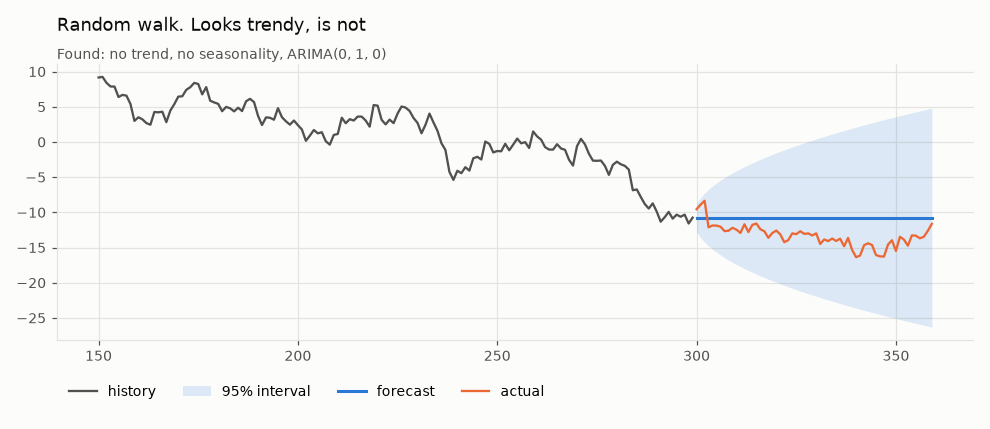
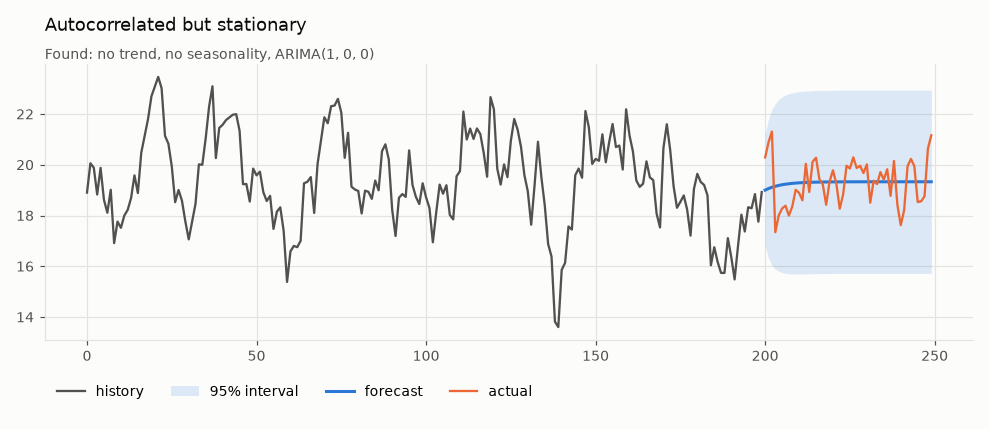
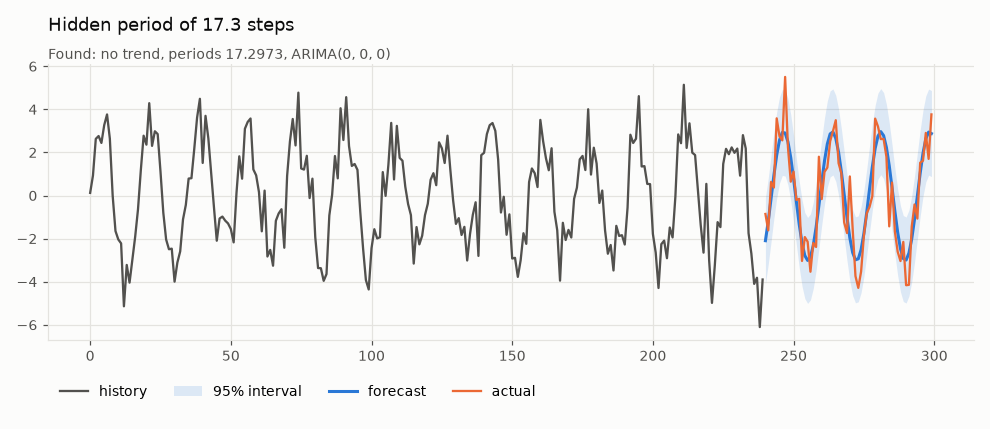
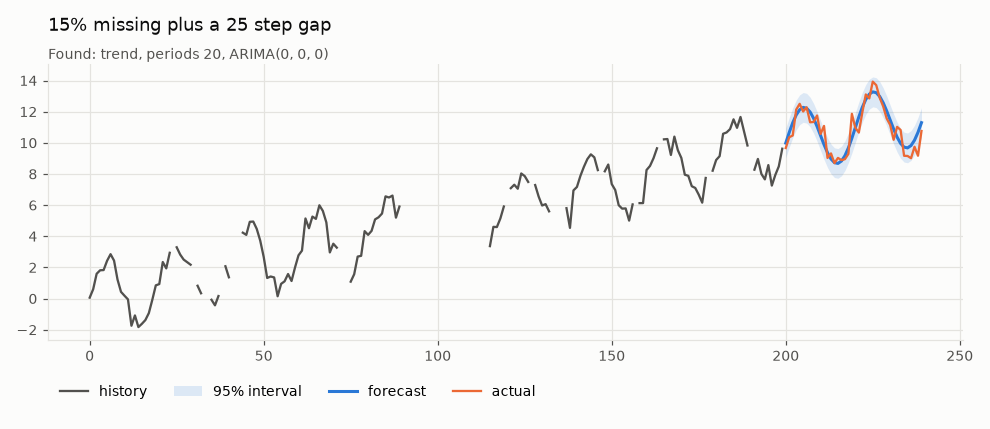
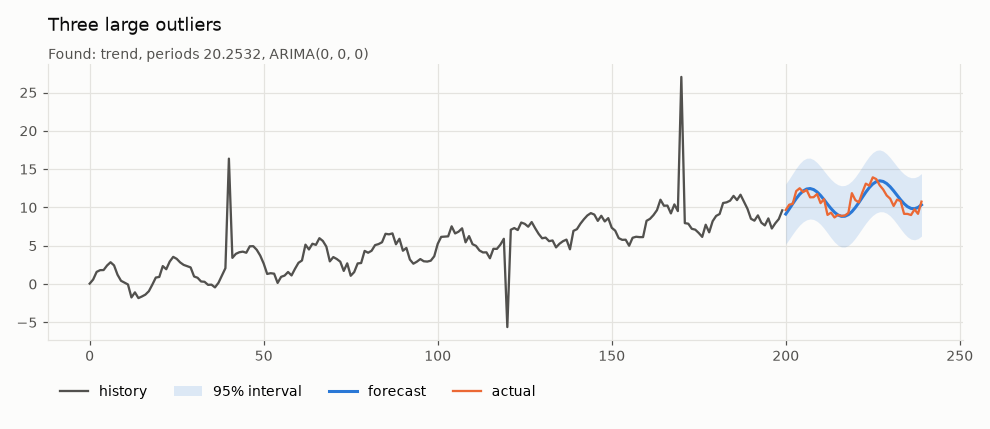
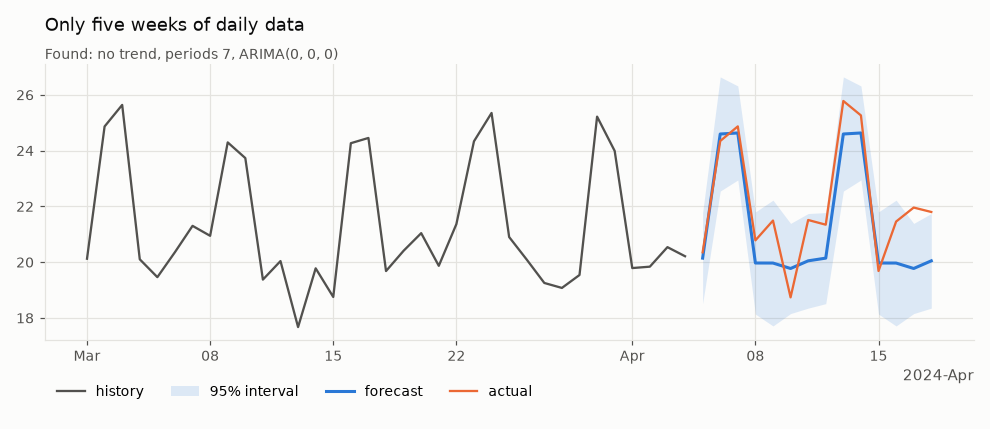
|
+
the copyright owner that is granting the License.
|
|
14
|
+
|
|
15
|
+
"Legal Entity" shall mean the union of the acting entity and all
|
|
16
|
+
other entities that control, are controlled by, or are under common
|
|
17
|
+
control with that entity. For the purposes of this definition,
|
|
18
|
+
"control" means (i) the power, direct or indirect, to cause the
|
|
19
|
+
direction or management of such entity, whether by contract or
|
|
20
|
+
otherwise, or (ii) ownership of fifty percent (50%) or more of the
|
|
21
|
+
outstanding shares, or (iii) beneficial ownership of such entity.
|
|
22
|
+
|
|
23
|
+
"You" (or "Your") shall mean an individual or Legal Entity
|
|
24
|
+
exercising permissions granted by this License.
|
|
25
|
+
|
|
26
|
+
"Source" form shall mean the preferred form for making modifications,
|
|
27
|
+
including but not limited to software source code, documentation
|
|
28
|
+
source, and configuration files.
|
|
29
|
+
|
|
30
|
+
"Object" form shall mean any form resulting from mechanical
|
|
31
|
+
transformation or translation of a Source form, including but
|
|
32
|
+
not limited to compiled object code, generated documentation,
|
|
33
|
+
and conversions to other media types.
|
|
34
|
+
|
|
35
|
+
"Work" shall mean the work of authorship, whether in Source or
|
|
36
|
+
Object form, made available under the License, as indicated by a
|
|
37
|
+
copyright notice that is included in or attached to the work
|
|
38
|
+
(an example is provided in the Appendix below).
|
|
39
|
+
|
|
40
|
+
"Derivative Works" shall mean any work, whether in Source or Object
|
|
41
|
+
form, that is based on (or derived from) the Work and for which the
|
|
42
|
+
editorial revisions, annotations, elaborations, or other modifications
|
|
43
|
+
represent, as a whole, an original work of authorship. For the purposes
|
|
44
|
+
of this License, Derivative Works shall not include works that remain
|
|
45
|
+
separable from, or merely link (or bind by name) to the interfaces of,
|
|
46
|
+
the Work and Derivative Works thereof.
|
|
47
|
+
|
|
48
|
+
"Contribution" shall mean any work of authorship, including
|
|
49
|
+
the original version of the Work and any modifications or additions
|
|
50
|
+
to that Work or Derivative Works thereof, that is intentionally
|
|
51
|
+
submitted to Licensor for inclusion in the Work by the copyright owner
|
|
52
|
+
or by an individual or Legal Entity authorized to submit on behalf of
|
|
53
|
+
the copyright owner. For the purposes of this definition, "submitted"
|
|
54
|
+
means any form of electronic, verbal, or written communication sent
|
|
55
|
+
to the Licensor or its representatives, including but not limited to
|
|
56
|
+
communication on electronic mailing lists, source code control systems,
|
|
57
|
+
and issue tracking systems that are managed by, or on behalf of, the
|
|
58
|
+
Licensor for the purpose of discussing and improving the Work, but
|
|
59
|
+
excluding communication that is conspicuously marked or otherwise
|
|
60
|
+
designated in writing by the copyright owner as "Not a Contribution."
|
|
61
|
+
|
|
62
|
+
"Contributor" shall mean Licensor and any individual or Legal Entity
|
|
63
|
+
on behalf of whom a Contribution has been received by Licensor and
|
|
64
|
+
subsequently incorporated within the Work.
|
|
65
|
+
|
|
66
|
+
2. Grant of Copyright License. Subject to the terms and conditions of
|
|
67
|
+
this License, each Contributor hereby grants to You a perpetual,
|
|
68
|
+
worldwide, non-exclusive, no-charge, royalty-free, irrevocable
|
|
69
|
+
copyright license to reproduce, prepare Derivative Works of,
|
|
70
|
+
publicly display, publicly perform, sublicense, and distribute the
|
|
71
|
+
Work and such Derivative Works in Source or Object form.
|
|
72
|
+
|
|
73
|
+
3. Grant of Patent License. Subject to the terms and conditions of
|
|
74
|
+
this License, each Contributor hereby grants to You a perpetual,
|
|
75
|
+
worldwide, non-exclusive, no-charge, royalty-free, irrevocable
|
|
76
|
+
(except as stated in this section) patent license to make, have made,
|
|
77
|
+
use, offer to sell, sell, import, and otherwise transfer the Work,
|
|
78
|
+
where such license applies only to those patent claims licensable
|
|
79
|
+
by such Contributor that are necessarily infringed by their
|
|
80
|
+
Contribution(s) alone or by combination of their Contribution(s)
|
|
81
|
+
with the Work to which such Contribution(s) was submitted. If You
|
|
82
|
+
institute patent litigation against any entity (including a
|
|
83
|
+
cross-claim or counterclaim in a lawsuit) alleging that the Work
|
|
84
|
+
or a Contribution incorporated within the Work constitutes direct
|
|
85
|
+
or contributory patent infringement, then any patent licenses
|
|
86
|
+
granted to You under this License for that Work shall terminate
|
|
87
|
+
as of the date such litigation is filed.
|
|
88
|
+
|
|
89
|
+
4. Redistribution. You may reproduce and distribute copies of the
|
|
90
|
+
Work or Derivative Works thereof in any medium, with or without
|
|
91
|
+
modifications, and in Source or Object form, provided that You
|
|
92
|
+
meet the following conditions:
|
|
93
|
+
|
|
94
|
+
(a) You must give any other recipients of the Work or
|
|
95
|
+
Derivative Works a copy of this License; and
|
|
96
|
+
|
|
97
|
+
(b) You must cause any modified files to carry prominent notices
|
|
98
|
+
stating that You changed the files; and
|
|
99
|
+
|
|
100
|
+
(c) You must retain, in the Source form of any Derivative Works
|
|
101
|
+
that You distribute, all copyright, patent, trademark, and
|
|
102
|
+
attribution notices from the Source form of the Work,
|
|
103
|
+
excluding those notices that do not pertain to any part of
|
|
104
|
+
the Derivative Works; and
|
|
105
|
+
|
|
106
|
+
(d) If the Work includes a "NOTICE" text file as part of its
|
|
107
|
+
distribution, then any Derivative Works that You distribute must
|
|
108
|
+
include a readable copy of the attribution notices contained
|
|
109
|
+
within such NOTICE file, excluding those notices that do not
|
|
110
|
+
pertain to any part of the Derivative Works, in at least one
|
|
111
|
+
of the following places: within a NOTICE text file distributed
|
|
112
|
+
as part of the Derivative Works; within the Source form or
|
|
113
|
+
documentation, if provided along with the Derivative Works; or,
|
|
114
|
+
within a display generated by the Derivative Works, if and
|
|
115
|
+
wherever such third-party notices normally appear. The contents
|
|
116
|
+
of the NOTICE file are for informational purposes only and
|
|
117
|
+
do not modify the License. You may add Your own attribution
|
|
118
|
+
notices within Derivative Works that You distribute, alongside
|
|
119
|
+
or as an addendum to the NOTICE text from the Work, provided
|
|
120
|
+
that such additional attribution notices cannot be construed
|
|
121
|
+
as modifying the License.
|
|
122
|
+
|
|
123
|
+
You may add Your own copyright statement to Your modifications and
|
|
124
|
+
may provide additional or different license terms and conditions
|
|
125
|
+
for use, reproduction, or distribution of Your modifications, or
|
|
126
|
+
for any such Derivative Works as a whole, provided Your use,
|
|
127
|
+
reproduction, and distribution of the Work otherwise complies with
|
|
128
|
+
the conditions stated in this License.
|
|
129
|
+
|
|
130
|
+
5. Submission of Contributions. Unless You explicitly state otherwise,
|
|
131
|
+
any Contribution intentionally submitted for inclusion in the Work
|
|
132
|
+
by You to the Licensor shall be under the terms and conditions of
|
|
133
|
+
this License, without any additional terms or conditions.
|
|
134
|
+
Notwithstanding the above, nothing herein shall supersede or modify
|
|
135
|
+
the terms of any separate license agreement you may have executed
|
|
136
|
+
with Licensor regarding such Contributions.
|
|
137
|
+
|
|
138
|
+
6. Trademarks. This License does not grant permission to use the trade
|
|
139
|
+
names, trademarks, service marks, or product names of the Licensor,
|
|
140
|
+
except as required for reasonable and customary use in describing the
|
|
141
|
+
origin of the Work and reproducing the content of the NOTICE file.
|
|
142
|
+
|
|
143
|
+
7. Disclaimer of Warranty. Unless required by applicable law or
|
|
144
|
+
agreed to in writing, Licensor provides the Work (and each
|
|
145
|
+
Contributor provides its Contributions) on an "AS IS" BASIS,
|
|
146
|
+
WITHOUT WARRANTIES OR CONDITIONS OF ANY KIND, either express or
|
|
147
|
+
implied, including, without limitation, any warranties or conditions
|
|
148
|
+
of TITLE, NON-INFRINGEMENT, MERCHANTABILITY, or FITNESS FOR A
|
|
149
|
+
PARTICULAR PURPOSE. You are solely responsible for determining the
|
|
150
|
+
appropriateness of using or redistributing the Work and assume any
|
|
151
|
+
risks associated with Your exercise of permissions under this License.
|
|
152
|
+
|
|
153
|
+
8. Limitation of Liability. In no event and under no legal theory,
|
|
154
|
+
whether in tort (including negligence), contract, or otherwise,
|
|
155
|
+
unless required by applicable law (such as deliberate and grossly
|
|
156
|
+
negligent acts) or agreed to in writing, shall any Contributor be
|
|
157
|
+
liable to You for damages, including any direct, indirect, special,
|
|
158
|
+
incidental, or consequential damages of any character arising as a
|
|
159
|
+
result of this License or out of the use or inability to use the
|
|
160
|
+
Work (including but not limited to damages for loss of goodwill,
|
|
161
|
+
work stoppage, computer failure or malfunction, or any and all
|
|
162
|
+
other commercial damages or losses), even if such Contributor
|
|
163
|
+
has been advised of the possibility of such damages.
|
|
164
|
+
|
|
165
|
+
9. Accepting Warranty or Additional Liability. While redistributing
|
|
166
|
+
the Work or Derivative Works thereof, You may choose to offer,
|
|
167
|
+
and charge a fee for, acceptance of support, warranty, indemnity,
|
|
168
|
+
or other liability obligations and/or rights consistent with this
|
|
169
|
+
License. However, in accepting such obligations, You may act only
|
|
170
|
+
on Your own behalf and on Your sole responsibility, not on behalf
|
|
171
|
+
of any other Contributor, and only if You agree to indemnify,
|
|
172
|
+
defend, and hold each Contributor harmless for any liability
|
|
173
|
+
incurred by, or claims asserted against, such Contributor by reason
|
|
174
|
+
of your accepting any such warranty or additional liability.
|
|
175
|
+
|
|
176
|
+
END OF TERMS AND CONDITIONS
|
|
177
|
+
|
|
178
|
+
APPENDIX: How to apply the Apache License to your work.
|
|
179
|
+
|
|
180
|
+
To apply the Apache License to your work, attach the following
|
|
181
|
+
boilerplate notice, with the fields enclosed by brackets "[]"
|
|
182
|
+
replaced with your own identifying information. (Don't include
|
|
183
|
+
the brackets!) The text should be enclosed in the appropriate
|
|
184
|
+
comment syntax for the file format. We also recommend that a
|
|
185
|
+
file or class name and description of purpose be included on the
|
|
186
|
+
same "printed page" as the copyright notice for easier
|
|
187
|
+
identification within third-party archives.
|
|
188
|
+
|
|
189
|
+
Copyright [yyyy] [name of copyright owner]
|
|
190
|
+
|
|
191
|
+
Licensed under the Apache License, Version 2.0 (the "License");
|
|
192
|
+
you may not use this file except in compliance with the License.
|
|
193
|
+
You may obtain a copy of the License at
|
|
194
|
+
|
|
195
|
+
http://www.apache.org/licenses/LICENSE-2.0
|
|
196
|
+
|
|
197
|
+
Unless required by applicable law or agreed to in writing, software
|
|
198
|
+
distributed under the License is distributed on an "AS IS" BASIS,
|
|
199
|
+
WITHOUT WARRANTIES OR CONDITIONS OF ANY KIND, either express or implied.
|
|
200
|
+
See the License for the specific language governing permissions and
|
|
201
|
+
limitations under the License.
|
|
@@ -0,0 +1,251 @@
|
|
|
1
|
+
Metadata-Version: 2.4
|
|
2
|
+
Name: divinity-forecast
|
|
3
|
+
Version: 0.2.0
|
|
4
|
+
Summary: Automatic timeseries forecasting with honest prediction intervals
|
|
5
|
+
Author-email: dstarkey23 <drds.gh1@gmail.com>
|
|
6
|
+
License-Expression: Apache-2.0
|
|
7
|
+
Project-URL: Homepage, https://github.com/drds1/divinity
|
|
8
|
+
Requires-Python: >=3.10
|
|
9
|
+
Description-Content-Type: text/markdown
|
|
10
|
+
License-File: LICENSE
|
|
11
|
+
Requires-Dist: numpy>=1.24
|
|
12
|
+
Requires-Dist: pandas>=2.0
|
|
13
|
+
Requires-Dist: scipy>=1.10
|
|
14
|
+
Requires-Dist: statsmodels>=0.14
|
|
15
|
+
Requires-Dist: matplotlib>=3.7
|
|
16
|
+
Provides-Extra: dev
|
|
17
|
+
Requires-Dist: pytest>=8; extra == "dev"
|
|
18
|
+
Requires-Dist: pre-commit>=3; extra == "dev"
|
|
19
|
+
Requires-Dist: nbclient>=0.10; extra == "dev"
|
|
20
|
+
Requires-Dist: nbformat>=5.10; extra == "dev"
|
|
21
|
+
Requires-Dist: ipykernel>=6; extra == "dev"
|
|
22
|
+
Dynamic: license-file
|
|
23
|
+
|
|
24
|
+
# Divinity
|
|
25
|
+
|
|
26
|
+
[](https://github.com/psf/black)
|
|
27
|
+
|
|
28
|
+
Automatic timeseries forecasting with prediction intervals you can trust.
|
|
29
|
+
|
|
30
|
+
Give it a series and a horizon. Divinity decides whether there is a trend, which seasonal cycles are real and how much autocorrelation is left over. It returns a forecast with an interval that widens as much as the data say it should, and no more.
|
|
31
|
+
|
|
32
|
+
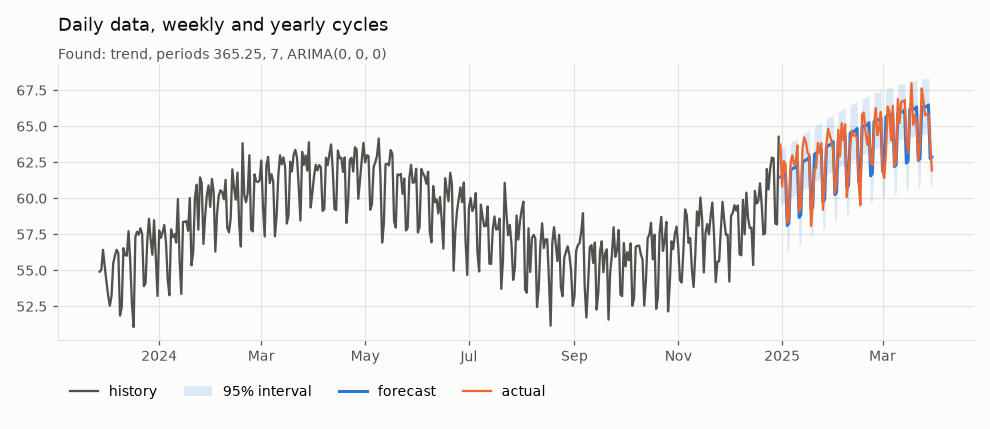
|
|
33
|
+
|
|
34
|
+
## Install
|
|
35
|
+
|
|
36
|
+
```bash
|
|
37
|
+
pip install divinity-forecast
|
|
38
|
+
```
|
|
39
|
+
|
|
40
|
+
The package installs as `divinity-forecast` but is imported as `divinity`. Version 0.1 was published as `divinity` and is no longer maintained there.
|
|
41
|
+
|
|
42
|
+
Or from a clone, with the development tools
|
|
43
|
+
|
|
44
|
+
```bash
|
|
45
|
+
pip install -e ".[dev]"
|
|
46
|
+
```
|
|
47
|
+
|
|
48
|
+
Python 3.10 or later.
|
|
49
|
+
|
|
50
|
+
## Quick start
|
|
51
|
+
|
|
52
|
+
```python
|
|
53
|
+
import divinity as dv
|
|
54
|
+
|
|
55
|
+
model = dv.Forecaster().fit(y) # y is a pandas Series, numpy array or list
|
|
56
|
+
result = model.predict(steps=30) # DataFrame with forecast, lower, upper
|
|
57
|
+
print(model.summary())
|
|
58
|
+
model.plot(result)
|
|
59
|
+
```
|
|
60
|
+
|
|
61
|
+
```text
|
|
62
|
+
Divinity forecaster
|
|
63
|
+
observations 1095
|
|
64
|
+
frequency D
|
|
65
|
+
log scale no
|
|
66
|
+
trend linear
|
|
67
|
+
seasonality 365.25 (1 harmonic), 7 (3 harmonics)
|
|
68
|
+
residuals ARIMA(0, 0, 0)
|
|
69
|
+
```
|
|
70
|
+
|
|
71
|
+
Or in one line
|
|
72
|
+
|
|
73
|
+
```python
|
|
74
|
+
result = dv.forecast(y, steps=30)
|
|
75
|
+
```
|
|
76
|
+
|
|
77
|
+
`result` is indexed by future time. A Series with a `DatetimeIndex` gives future dates, anything else gives integer steps following on from the data.
|
|
78
|
+
|
|
79
|
+
```text
|
|
80
|
+
forecast lower upper
|
|
81
|
+
2024-12-31 61.48 59.55 63.41
|
|
82
|
+
2025-01-01 61.55 59.62 63.49
|
|
83
|
+
...
|
|
84
|
+
```
|
|
85
|
+
|
|
86
|
+
The [demo notebook](https://github.com/drds1/divinity/blob/master/notebooks/demo.ipynb) walks through everything below with live examples.
|
|
87
|
+
|
|
88
|
+
## How it works
|
|
89
|
+
|
|
90
|
+
The series is modelled as a constant, plus an optional linear trend, plus Fourier terms for each seasonal period, plus ARIMA errors (regression with ARIMA errors).
|
|
91
|
+
|
|
92
|
+
1. **Candidate periods.** These come from the date frequency (7 and 365.25 for daily data, 12 for monthly, 24 and 168 for hourly and so on) and from peaks in the periodogram, so a cycle nobody mentioned can still be found. A period is only considered if the data cover at least two full cycles.
|
|
93
|
+
2. **Feature selection.** Trend and seasonal terms are added one at a time while they improve BIC. Extra harmonics of a period (for sharper, non-sinusoidal shapes) are only tried once the lower harmonic is in. There is an additional penalty for searching over many candidates. Without it, testing dozens of periods on noise will find one by chance.
|
|
94
|
+
3. **Random walk or not?** Before choosing any features, an augmented Dickey-Fuller test is run on what is left after removing the trend and the known periods. Detected periods are left out because they might be spurious. Testing first matters. On a random walk, spurious features soak up the wander and make the leftovers look stationary, so a test afterwards confirms its own mistake.
|
|
95
|
+
4. **Allowing for autocorrelation.** Least squares assumes independent errors, and on a random walk it declares almost any trend "significant". If the series has a unit root, features are selected on differenced data. Otherwise the autocorrelation of the residuals is estimated and features are reselected on quasi-differenced data (feasible GLS), repeating until the choice settles. The ARIMA order for what remains is chosen by BIC over a small grid.
|
|
96
|
+
5. **Joint fit and intervals.** Features and ARIMA errors are fitted together by maximum likelihood. Forecast intervals combine the ARIMA forecast variance with the uncertainty in the trend and seasonal coefficients, which matters most when extrapolating a trend a long way. Student t quantiles allow for the noise level being estimated, which matters for short series.
|
|
97
|
+
|
|
98
|
+
The fitted model does not depend on the forecast horizon, so `predict(10)` is exactly the first ten rows of `predict(100)`.
|
|
99
|
+
|
|
100
|
+
## Can it be fooled?
|
|
101
|
+
|
|
102
|
+
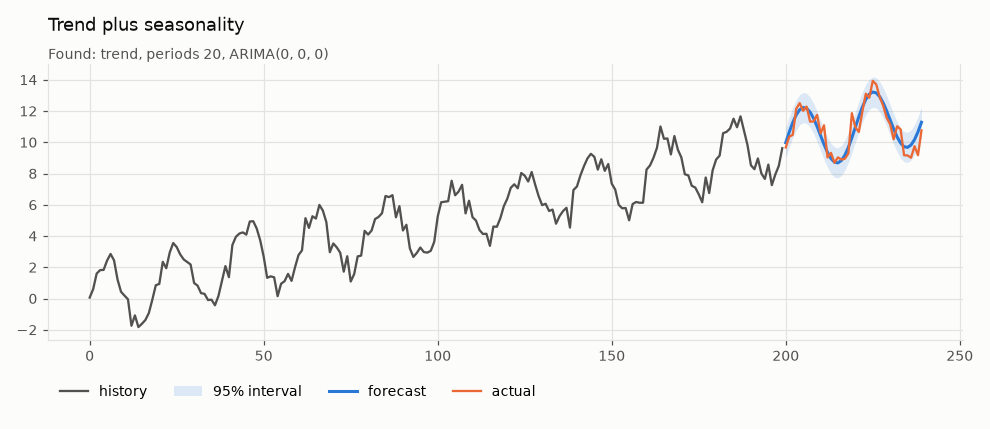
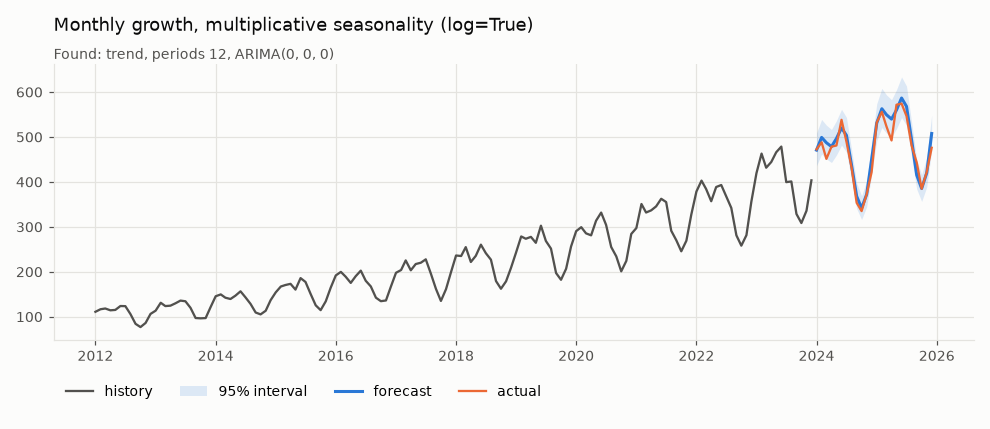
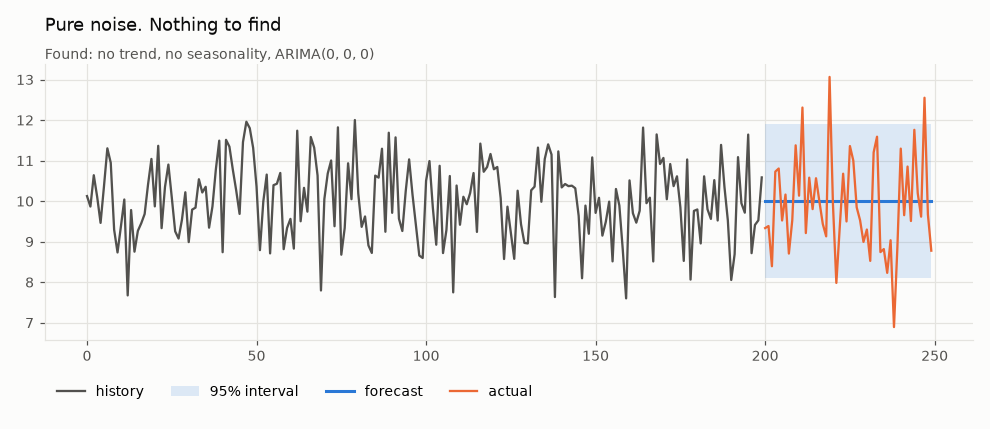
The cases below are built to catch out a naive forecaster. Each was generated by [`divinity.synthetic`](https://github.com/drds1/divinity/blob/master/divinity/synthetic.py) with seed 0, the same seed the smoke tests use, so none of them were picked because they looked good. In every chart the orange line is the true future, which the model never saw.
|
|
103
|
+
|
|
104
|
+
### The standard case
|
|
105
|
+
|
|
106
|
+
A linear trend, a 20 step cycle and noise. Neither component is specified.
|
|
107
|
+
|
|
108
|
+
|
|
109
|
+
|
|
110
|
+
### Multiplicative seasonality
|
|
111
|
+
|
|
112
|
+
The seasonal swing grows with the level. Fitting with `log=True` handles this.
|
|
113
|
+
|
|
114
|
+
|
|
115
|
+
|
|
116
|
+
### Pure noise
|
|
117
|
+
|
|
118
|
+
There is nothing to find. A model that looks hard enough for structure will find some anyway. Divinity returns a flat forecast at the mean.
|
|
119
|
+
|
|
120
|
+
|
|
121
|
+
|
|
122
|
+
### A random walk
|
|
123
|
+
|
|
124
|
+
Random walks look trendy. Ordinary least squares picks a "significant" trend in the large majority of them, which is then extrapolated with false confidence. Divinity finds no trend or seasonality, switches to a differenced model and lets the interval fan out.
|
|
125
|
+
|
|
126
|
+
|
|
127
|
+
|
|
128
|
+
### Autocorrelated but stationary
|
|
129
|
+
|
|
130
|
+
The opposite trap. The series wanders but always returns to its mean. The forecast decays back towards the mean rather than treating it as a random walk.
|
|
131
|
+
|
|
132
|
+
|
|
133
|
+
|
|
134
|
+
### A period nobody mentioned
|
|
135
|
+
|
|
136
|
+
A cycle of 17.3 steps on integer data with no frequency. It is found from the periodogram, including the fractional part.
|
|
137
|
+
|
|
138
|
+
|
|
139
|
+
|
|
140
|
+
### Missing data
|
|
141
|
+
|
|
142
|
+
15% of values missing at random plus a 25 step gap. Gaps are handled natively, with no interpolation needed.
|
|
143
|
+
|
|
144
|
+
|
|
145
|
+
|
|
146
|
+
### Outliers
|
|
147
|
+
|
|
148
|
+
Three large one-off spikes.
|
|
149
|
+
|
|
150
|
+
|
|
151
|
+
|
|
152
|
+
### Very short history
|
|
153
|
+
|
|
154
|
+
Five weeks of daily data. The yearly default period cannot be estimated from that and is dropped automatically, while the weekly cycle is kept.
|
|
155
|
+
|
|
156
|
+
|
|
157
|
+
|
|
158
|
+
### Across 100 random seeds per case
|
|
159
|
+
|
|
160
|
+
One chart per case could still be luck, so [`benchmarks/coverage.py`](https://github.com/drds1/divinity/blob/master/benchmarks/coverage.py) refits every scenario on 100 different seeds. *Interval coverage* is how often the true future falls inside the 95% interval, so it should be close to 95%. *Structure found* is how often the model chose the components the series was built with (for example no seasonality on noise, differencing on a random walk, period 17.3 when it is hidden). *RMSE vs naive* compares the error with simply repeating the last observed value, where below 1 is better.
|
|
161
|
+
|
|
162
|
+
| scenario | runs | 95% interval coverage | structure found | RMSE vs naive |
|
|
163
|
+
|---|---:|---:|---:|---:|
|
|
164
|
+
| `trend_seasonal` | 100 | 94.3% | 100% | 0.24 |
|
|
165
|
+
| `daily_multi_seasonal` | 100 | 95.1% | 100% | 0.32 |
|
|
166
|
+
| `monthly_multiplicative` | 100 | 93.9% | 97% | 0.20 |
|
|
167
|
+
| `white_noise` | 100 | 94.8% | 98% | 0.75 |
|
|
168
|
+
| `random_walk` | 100 | 93.9% | 94% | 1.04 |
|
|
169
|
+
| `ar1` | 100 | 91.8% | 88% | 0.82 |
|
|
170
|
+
| `missing_data` | 100 | 93.9% | 100% | 0.23 |
|
|
171
|
+
| `unknown_period` | 100 | 95.0% | 100% | 0.27 |
|
|
172
|
+
| `outliers` | 100 | 100.0% | 100% | 0.43 |
|
|
173
|
+
| `short_daily` | 100 | 91.4% | 100% | 0.38 |
|
|
174
|
+
|
|
175
|
+
How to read the weaker rows
|
|
176
|
+
|
|
177
|
+
- **`ar1` (91.8%).** Autoregressive coefficients estimated from 200 points are biased slightly towards zero, so the intervals come out a little narrow. In 12% of runs the model reads the series as a random walk or adds a small trend. Both are hard to tell apart from a strongly autocorrelated series of this length.
|
|
178
|
+
- **`random_walk` (RMSE 1.04).** For a random walk the naive forecast is the best possible point forecast, so about 1.0 is the floor. What matters here is the interval, and 94% coverage means the fan is honest.
|
|
179
|
+
- **`short_daily` (91.4%).** 35 points carrying seven seasonal coefficients leaves little to estimate the noise from, even with t quantiles.
|
|
180
|
+
- **`outliers` (100%).** The spikes inflate the estimated noise, so the intervals are wider than they need to be. This errs in the safe direction.
|
|
181
|
+
|
|
182
|
+
Regenerate it with
|
|
183
|
+
|
|
184
|
+
```bash
|
|
185
|
+
python benchmarks/coverage.py --seeds 100
|
|
186
|
+
```
|
|
187
|
+
|
|
188
|
+
## Options
|
|
189
|
+
|
|
190
|
+
```python
|
|
191
|
+
dv.Forecaster(
|
|
192
|
+
seasonal_periods="auto", # "auto" (from the frequency), a list of periods, or None
|
|
193
|
+
detect_periods=True, # also look for periods in the data
|
|
194
|
+
max_detected_periods=3,
|
|
195
|
+
max_harmonics=3, # Fourier harmonics per period, more allow sharper shapes
|
|
196
|
+
trend="auto", # "auto", "linear" or None
|
|
197
|
+
arima="auto", # "auto", a (p, d, q) tuple, or None for white noise
|
|
198
|
+
log=False, # fit on the log scale, for growth with growing seasonality
|
|
199
|
+
interval=0.95, # default interval coverage
|
|
200
|
+
search_penalty=1.0, # higher is more reluctant to add seasonality, 0 is plain BIC
|
|
201
|
+
)
|
|
202
|
+
```
|
|
203
|
+
|
|
204
|
+
Useful things on a fitted model
|
|
205
|
+
|
|
206
|
+
| | |
|
|
207
|
+
|---|---|
|
|
208
|
+
| `predict(steps, interval=None)` | forecast DataFrame (`forecast`, `lower`, `upper`) |
|
|
209
|
+
| `plot(forecast, actual=None, history=None)` | chart, returns the matplotlib Axes |
|
|
210
|
+
| `summary()` | readable description of what was chosen |
|
|
211
|
+
| `components_` | the same as a dict |
|
|
212
|
+
| `fitted_` | in-sample one step ahead predictions |
|
|
213
|
+
|
|
214
|
+
If dates are missing entirely from a `DatetimeIndex` the frequency cannot be inferred. Pass it, for example `fit(y, freq="D")`, and the gaps become missing values.
|
|
215
|
+
|
|
216
|
+
## Limitations
|
|
217
|
+
|
|
218
|
+
- Trends are linear. A curve or saturation will be extrapolated as a straight line.
|
|
219
|
+
- Level shifts and regime changes are not modelled.
|
|
220
|
+
- Outliers are not removed. They widen the interval a little instead.
|
|
221
|
+
- Seasonal shape is fixed (or proportional to the level with `log=True`).
|
|
222
|
+
- One series at a time, with no external regressors.
|
|
223
|
+
|
|
224
|
+
## Development
|
|
225
|
+
|
|
226
|
+
```bash
|
|
227
|
+
pip install -e ".[dev]"
|
|
228
|
+
pre-commit install
|
|
229
|
+
pytest -m "not slow" # fast unit and smoke tests
|
|
230
|
+
pytest # also the coverage checks over many seeds (a few minutes)
|
|
231
|
+
python docs/make_figures.py
|
|
232
|
+
```
|
|
233
|
+
|
|
234
|
+
The code is in [`divinity/`](https://github.com/drds1/divinity/tree/master/divinity/), with one module per stage: `periods.py` (candidate periods), `features.py` (trend and Fourier terms), `selection.py` (feature selection), `residuals.py` (ARIMA order) and `forecaster.py` (the `Forecaster` class tying them together). `synthetic.py` holds the test scenarios.
|
|
235
|
+
|
|
236
|
+
### Upgrading from 0.1
|
|
237
|
+
|
|
238
|
+
The old `divinity.divinity(forecast_length=...)` class still works but is deprecated and now runs the new model underneath. Replace
|
|
239
|
+
|
|
240
|
+
```python
|
|
241
|
+
model = dv.divinity(forecast_length=20)
|
|
242
|
+
model.fit(y)
|
|
243
|
+
y_pred = model.predict()
|
|
244
|
+
```
|
|
245
|
+
|
|
246
|
+
with
|
|
247
|
+
|
|
248
|
+
```python
|
|
249
|
+
result = dv.Forecaster().fit(y).predict(20)
|
|
250
|
+
y_pred = result["forecast"]
|
|
251
|
+
```
|