calibration-proba 0.1.0__tar.gz
This diff represents the content of publicly available package versions that have been released to one of the supported registries. The information contained in this diff is provided for informational purposes only and reflects changes between package versions as they appear in their respective public registries.
- calibration_proba-0.1.0/LICENSE +21 -0
- calibration_proba-0.1.0/PKG-INFO +95 -0
- calibration_proba-0.1.0/README.md +68 -0
- calibration_proba-0.1.0/calibration_proba/__init__.py +37 -0
- calibration_proba-0.1.0/calibration_proba/_calibrators/__init__.py +1 -0
- calibration_proba-0.1.0/calibration_proba/_calibrators/_temperature.py +34 -0
- calibration_proba-0.1.0/calibration_proba/_calibrators/binary/__init__.py +15 -0
- calibration_proba-0.1.0/calibration_proba/_calibrators/binary/_common.py +58 -0
- calibration_proba-0.1.0/calibration_proba/_calibrators/binary/isotonic.py +288 -0
- calibration_proba-0.1.0/calibration_proba/_calibrators/binary/isotonic_linear.py +354 -0
- calibration_proba-0.1.0/calibration_proba/_calibrators/binary/sigmoid.py +228 -0
- calibration_proba-0.1.0/calibration_proba/_calibrators/binary/temperature.py +60 -0
- calibration_proba-0.1.0/calibration_proba/_calibrators/multiclass/__init__.py +11 -0
- calibration_proba-0.1.0/calibration_proba/_calibrators/multiclass/_common.py +21 -0
- calibration_proba-0.1.0/calibration_proba/_calibrators/multiclass/shared.py +161 -0
- calibration_proba-0.1.0/calibration_proba/_calibrators/multiclass/temperature.py +76 -0
- calibration_proba-0.1.0/calibration_proba/_plotting/__init__.py +1 -0
- calibration_proba-0.1.0/calibration_proba/_plotting/_common.py +135 -0
- calibration_proba-0.1.0/calibration_proba/_plotting/mapping.py +292 -0
- calibration_proba-0.1.0/calibration_proba/_plotting/reliability.py +407 -0
- calibration_proba-0.1.0/calibration_proba/base.py +309 -0
- calibration_proba-0.1.0/calibration_proba/prob_calib.py +606 -0
- calibration_proba-0.1.0/calibration_proba.egg-info/PKG-INFO +95 -0
- calibration_proba-0.1.0/calibration_proba.egg-info/SOURCES.txt +32 -0
- calibration_proba-0.1.0/calibration_proba.egg-info/dependency_links.txt +1 -0
- calibration_proba-0.1.0/calibration_proba.egg-info/requires.txt +6 -0
- calibration_proba-0.1.0/calibration_proba.egg-info/top_level.txt +1 -0
- calibration_proba-0.1.0/pyproject.toml +42 -0
- calibration_proba-0.1.0/setup.cfg +4 -0
- calibration_proba-0.1.0/tests/test_base.py +97 -0
- calibration_proba-0.1.0/tests/test_binary.py +741 -0
- calibration_proba-0.1.0/tests/test_multiclass.py +336 -0
- calibration_proba-0.1.0/tests/test_plots.py +439 -0
- calibration_proba-0.1.0/tests/test_prob_calib.py +607 -0
|
@@ -0,0 +1,21 @@
|
|
|
1
|
+
MIT License
|
|
2
|
+
|
|
3
|
+
Copyright (c) 2026 Maksim Tyurikov
|
|
4
|
+
|
|
5
|
+
Permission is hereby granted, free of charge, to any person obtaining a copy
|
|
6
|
+
of this software and associated documentation files (the "Software"), to deal
|
|
7
|
+
in the Software without restriction, including without limitation the rights
|
|
8
|
+
to use, copy, modify, merge, publish, distribute, sublicense, and/or sell
|
|
9
|
+
copies of the Software, and to permit persons to whom the Software is
|
|
10
|
+
furnished to do so, subject to the following conditions:
|
|
11
|
+
|
|
12
|
+
The above copyright notice and this permission notice shall be included in all
|
|
13
|
+
copies or substantial portions of the Software.
|
|
14
|
+
|
|
15
|
+
THE SOFTWARE IS PROVIDED "AS IS", WITHOUT WARRANTY OF ANY KIND, EXPRESS OR
|
|
16
|
+
IMPLIED, INCLUDING BUT NOT LIMITED TO THE WARRANTIES OF MERCHANTABILITY,
|
|
17
|
+
FITNESS FOR A PARTICULAR PURPOSE AND NONINFRINGEMENT. IN NO EVENT SHALL THE
|
|
18
|
+
AUTHORS OR COPYRIGHT HOLDERS BE LIABLE FOR ANY CLAIM, DAMAGES OR OTHER
|
|
19
|
+
LIABILITY, WHETHER IN AN ACTION OF CONTRACT, TORT OR OTHERWISE, ARISING FROM,
|
|
20
|
+
OUT OF OR IN CONNECTION WITH THE SOFTWARE OR THE USE OR OTHER DEALINGS IN THE
|
|
21
|
+
SOFTWARE.
|
|
@@ -0,0 +1,95 @@
|
|
|
1
|
+
Metadata-Version: 2.4
|
|
2
|
+
Name: calibration-proba
|
|
3
|
+
Version: 0.1.0
|
|
4
|
+
Summary: Probability calibration for binary and multiclass models with a scikit-learn style API.
|
|
5
|
+
Author: Maksim Tyurikov
|
|
6
|
+
License-Expression: MIT
|
|
7
|
+
Keywords: probability-calibration,calibration,binary-classification,multiclass-classification,machine-learning
|
|
8
|
+
Classifier: Development Status :: 3 - Alpha
|
|
9
|
+
Classifier: Intended Audience :: Science/Research
|
|
10
|
+
Classifier: Operating System :: OS Independent
|
|
11
|
+
Classifier: Programming Language :: Python :: 3
|
|
12
|
+
Classifier: Programming Language :: Python :: 3.9
|
|
13
|
+
Classifier: Programming Language :: Python :: 3.10
|
|
14
|
+
Classifier: Programming Language :: Python :: 3.11
|
|
15
|
+
Classifier: Programming Language :: Python :: 3.12
|
|
16
|
+
Classifier: Programming Language :: Python :: 3.13
|
|
17
|
+
Classifier: Topic :: Scientific/Engineering :: Artificial Intelligence
|
|
18
|
+
Requires-Python: >=3.9
|
|
19
|
+
Description-Content-Type: text/markdown
|
|
20
|
+
License-File: LICENSE
|
|
21
|
+
Requires-Dist: numpy>=1.21
|
|
22
|
+
Requires-Dist: scipy>=1.12
|
|
23
|
+
Requires-Dist: matplotlib>=3.6
|
|
24
|
+
Provides-Extra: test
|
|
25
|
+
Requires-Dist: pytest>=7.0; extra == "test"
|
|
26
|
+
Dynamic: license-file
|
|
27
|
+
|
|
28
|
+
# calibration_proba
|
|
29
|
+
|
|
30
|
+
Calibrate predicted probabilities for binary and multiclass classifiers with
|
|
31
|
+
`ProbCalib`.
|
|
32
|
+
|
|
33
|
+
- **Binary** (`task="binary"`)
|
|
34
|
+
- `isotonic_linear` (default)
|
|
35
|
+
- `isotonic`
|
|
36
|
+
- `sigmoid`
|
|
37
|
+
- `temperature_scaling`
|
|
38
|
+
- **Multiclass** (`task="multiclass"`)
|
|
39
|
+
- `temperature_scaling` (default)
|
|
40
|
+
- `sigmoid`
|
|
41
|
+
- `isotonic_linear`
|
|
42
|
+
|
|
43
|
+
## Installation
|
|
44
|
+
|
|
45
|
+
```bash
|
|
46
|
+
pip install calibration-proba
|
|
47
|
+
```
|
|
48
|
+
|
|
49
|
+
## Calibrate probabilities
|
|
50
|
+
|
|
51
|
+
Fit the calibrator on a separate calibration set, then apply it to the test
|
|
52
|
+
predictions. This binary example uses the predicted probability of class 1.
|
|
53
|
+
|
|
54
|
+
```python
|
|
55
|
+
from calibration_proba import ProbCalib
|
|
56
|
+
|
|
57
|
+
p_cal = model.predict_proba(X_cal)[:, 1]
|
|
58
|
+
p_test = model.predict_proba(X_test)[:, 1]
|
|
59
|
+
|
|
60
|
+
calib = ProbCalib(task="binary", method="isotonic_linear", max_bins=10)
|
|
61
|
+
calib.fit(p_cal, y_cal)
|
|
62
|
+
p_calibrated = calib.predict(p_test)
|
|
63
|
+
|
|
64
|
+
calib.save_model("calibrator.npz")
|
|
65
|
+
calib = ProbCalib.load_model("calibrator.npz")
|
|
66
|
+
```
|
|
67
|
+
|
|
68
|
+
## Plot the mapping and reliability diagram
|
|
69
|
+
|
|
70
|
+
```python
|
|
71
|
+
from calibration_proba import plot_calibration_curve
|
|
72
|
+
|
|
73
|
+
mapping = calib.plot()
|
|
74
|
+
reliability = plot_calibration_curve(y_test, p_calibrated)
|
|
75
|
+
|
|
76
|
+
mapping.savefig("mapping.png", dpi=180)
|
|
77
|
+
reliability.savefig("reliability.png", dpi=180)
|
|
78
|
+
```
|
|
79
|
+
|
|
80
|
+
| Fitted calibration mapping | Reliability diagram |
|
|
81
|
+
| --- | --- |
|
|
82
|
+
| [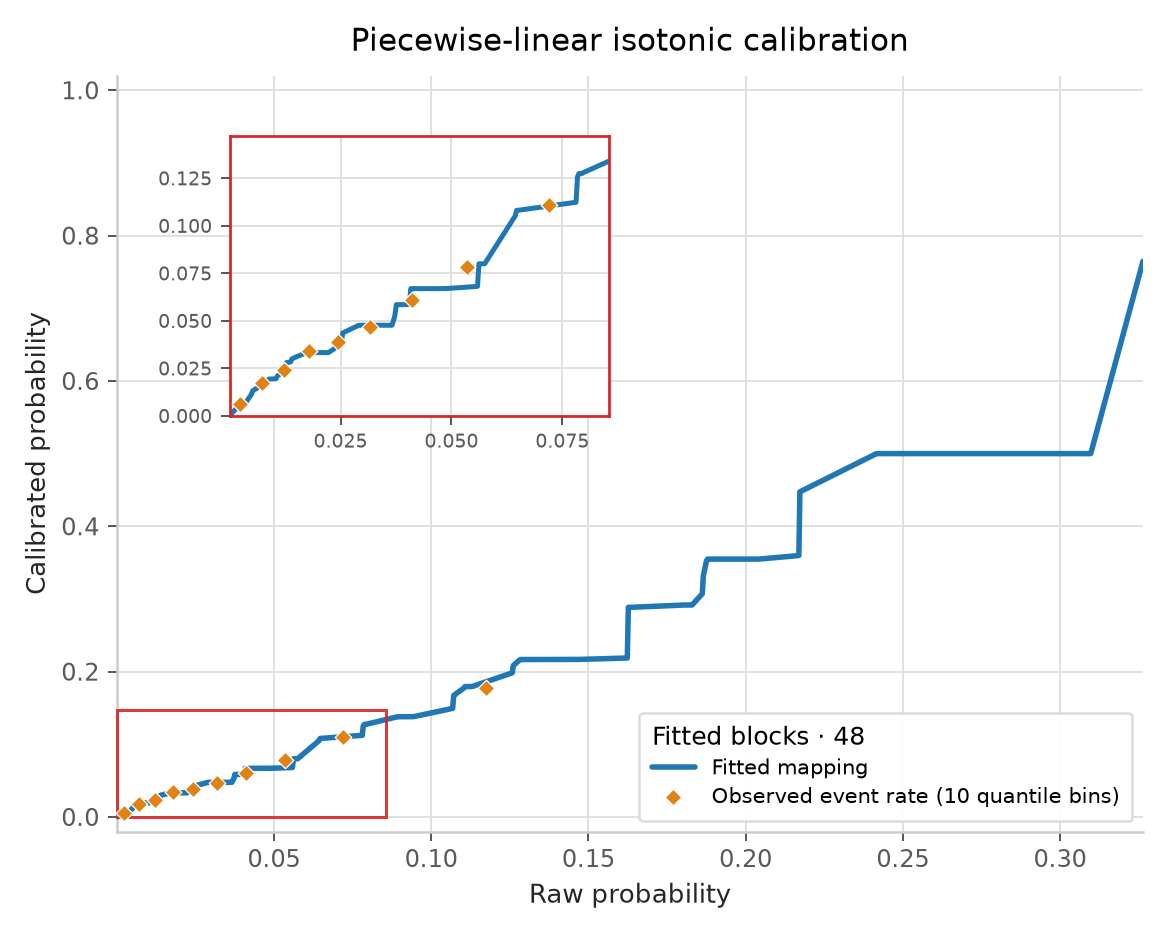](https://raw.githubusercontent.com/maks371/calibration-proba/main/examples/binary_mapping_isotonic_linear.png) | [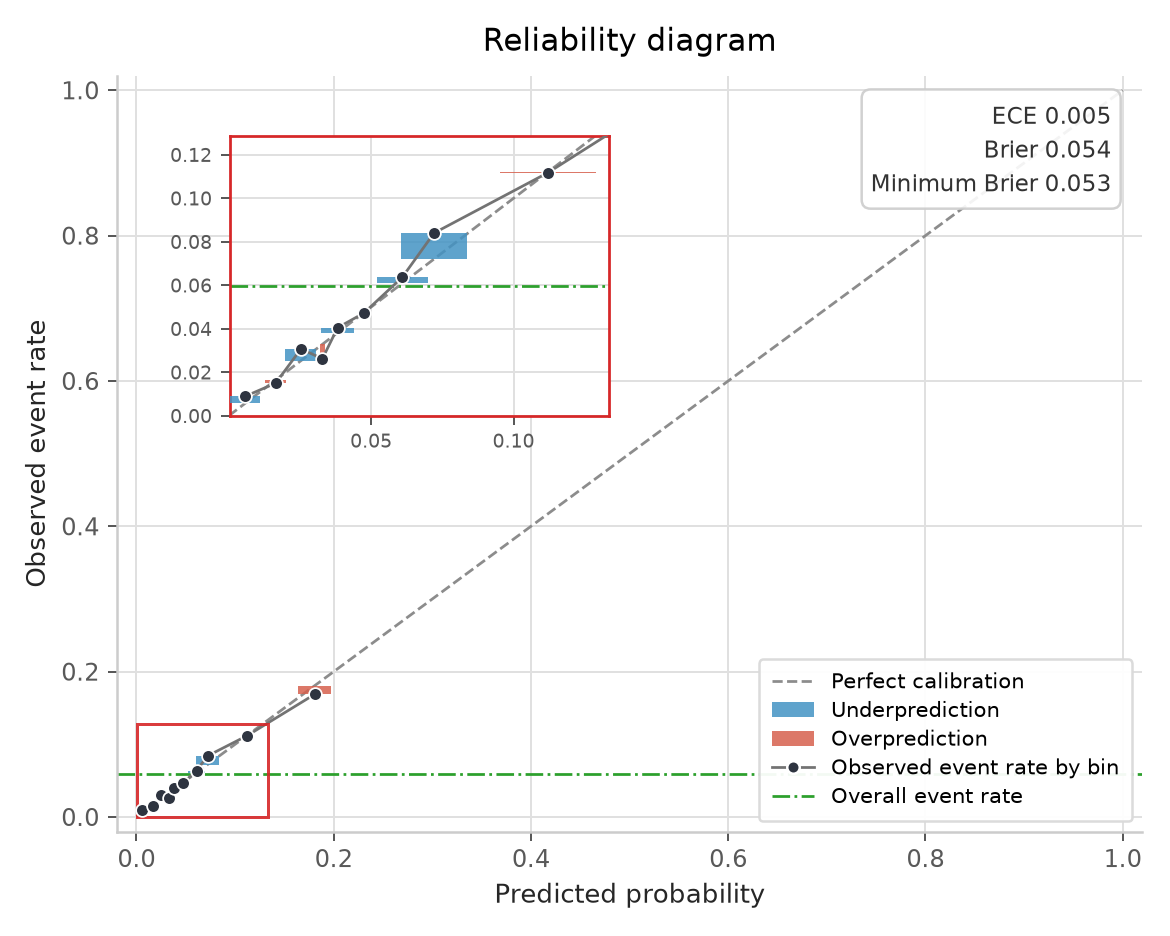](https://raw.githubusercontent.com/maks371/calibration-proba/main/examples/binary_reliability.png) |
|
|
83
|
+
|
|
84
|
+
## Benchmark on Adult with CatBoost
|
|
85
|
+
|
|
86
|
+
ECE before calibration was **0.0098**. The table shows changes on the test
|
|
87
|
+
set relative to the uncalibrated predictions. Both isotonic methods use
|
|
88
|
+
`max_bins=None`. See the [full benchmark report](https://github.com/maks371/calibration-proba/blob/main/experiments/calibration_benchmark/results.md#adult).
|
|
89
|
+
|
|
90
|
+
| Method | Δ ECE | Δ ECE (%) | Δ ROC AUC |
|
|
91
|
+
| --- | ---: | ---: | ---: |
|
|
92
|
+
| `isotonic_linear` | **-0.0047** | -47.75% | 0 |
|
|
93
|
+
| `isotonic` | -0.0041 | -42.04% | -0.00035 |
|
|
94
|
+
| `sigmoid` | -0.0002 | -2.51% | 0 |
|
|
95
|
+
| `temperature_scaling` | +0.0008 | +7.92% | 0 |
|
|
@@ -0,0 +1,68 @@
|
|
|
1
|
+
# calibration_proba
|
|
2
|
+
|
|
3
|
+
Calibrate predicted probabilities for binary and multiclass classifiers with
|
|
4
|
+
`ProbCalib`.
|
|
5
|
+
|
|
6
|
+
- **Binary** (`task="binary"`)
|
|
7
|
+
- `isotonic_linear` (default)
|
|
8
|
+
- `isotonic`
|
|
9
|
+
- `sigmoid`
|
|
10
|
+
- `temperature_scaling`
|
|
11
|
+
- **Multiclass** (`task="multiclass"`)
|
|
12
|
+
- `temperature_scaling` (default)
|
|
13
|
+
- `sigmoid`
|
|
14
|
+
- `isotonic_linear`
|
|
15
|
+
|
|
16
|
+
## Installation
|
|
17
|
+
|
|
18
|
+
```bash
|
|
19
|
+
pip install calibration-proba
|
|
20
|
+
```
|
|
21
|
+
|
|
22
|
+
## Calibrate probabilities
|
|
23
|
+
|
|
24
|
+
Fit the calibrator on a separate calibration set, then apply it to the test
|
|
25
|
+
predictions. This binary example uses the predicted probability of class 1.
|
|
26
|
+
|
|
27
|
+
```python
|
|
28
|
+
from calibration_proba import ProbCalib
|
|
29
|
+
|
|
30
|
+
p_cal = model.predict_proba(X_cal)[:, 1]
|
|
31
|
+
p_test = model.predict_proba(X_test)[:, 1]
|
|
32
|
+
|
|
33
|
+
calib = ProbCalib(task="binary", method="isotonic_linear", max_bins=10)
|
|
34
|
+
calib.fit(p_cal, y_cal)
|
|
35
|
+
p_calibrated = calib.predict(p_test)
|
|
36
|
+
|
|
37
|
+
calib.save_model("calibrator.npz")
|
|
38
|
+
calib = ProbCalib.load_model("calibrator.npz")
|
|
39
|
+
```
|
|
40
|
+
|
|
41
|
+
## Plot the mapping and reliability diagram
|
|
42
|
+
|
|
43
|
+
```python
|
|
44
|
+
from calibration_proba import plot_calibration_curve
|
|
45
|
+
|
|
46
|
+
mapping = calib.plot()
|
|
47
|
+
reliability = plot_calibration_curve(y_test, p_calibrated)
|
|
48
|
+
|
|
49
|
+
mapping.savefig("mapping.png", dpi=180)
|
|
50
|
+
reliability.savefig("reliability.png", dpi=180)
|
|
51
|
+
```
|
|
52
|
+
|
|
53
|
+
| Fitted calibration mapping | Reliability diagram |
|
|
54
|
+
| --- | --- |
|
|
55
|
+
| [](https://raw.githubusercontent.com/maks371/calibration-proba/main/examples/binary_mapping_isotonic_linear.png) | [](https://raw.githubusercontent.com/maks371/calibration-proba/main/examples/binary_reliability.png) |
|
|
56
|
+
|
|
57
|
+
## Benchmark on Adult with CatBoost
|
|
58
|
+
|
|
59
|
+
ECE before calibration was **0.0098**. The table shows changes on the test
|
|
60
|
+
set relative to the uncalibrated predictions. Both isotonic methods use
|
|
61
|
+
`max_bins=None`. See the [full benchmark report](https://github.com/maks371/calibration-proba/blob/main/experiments/calibration_benchmark/results.md#adult).
|
|
62
|
+
|
|
63
|
+
| Method | Δ ECE | Δ ECE (%) | Δ ROC AUC |
|
|
64
|
+
| --- | ---: | ---: | ---: |
|
|
65
|
+
| `isotonic_linear` | **-0.0047** | -47.75% | 0 |
|
|
66
|
+
| `isotonic` | -0.0041 | -42.04% | -0.00035 |
|
|
67
|
+
| `sigmoid` | -0.0002 | -2.51% | 0 |
|
|
68
|
+
| `temperature_scaling` | +0.0008 | +7.92% | 0 |
|
|
@@ -0,0 +1,37 @@
|
|
|
1
|
+
"""Calibration of predicted probabilities for binary and multiclass models."""
|
|
2
|
+
|
|
3
|
+
from ._calibrators.binary import (
|
|
4
|
+
BINARY_METHODS,
|
|
5
|
+
BinaryTemperatureScalingCalibrator,
|
|
6
|
+
IsotonicCalibrator,
|
|
7
|
+
IsotonicLinearCalibrator,
|
|
8
|
+
SigmoidCalibrator,
|
|
9
|
+
)
|
|
10
|
+
from ._calibrators.multiclass import (
|
|
11
|
+
MULTICLASS_METHODS,
|
|
12
|
+
SharedIsotonicLinearCalibrator,
|
|
13
|
+
SharedSigmoidCalibrator,
|
|
14
|
+
TemperatureScalingCalibrator,
|
|
15
|
+
)
|
|
16
|
+
from ._plotting.reliability import plot_calibration_curve
|
|
17
|
+
from .base import BaseCalibrator, NotFittedError
|
|
18
|
+
from .prob_calib import ProbCalib
|
|
19
|
+
|
|
20
|
+
__version__ = "0.1.0"
|
|
21
|
+
|
|
22
|
+
__all__ = [
|
|
23
|
+
"ProbCalib",
|
|
24
|
+
"plot_calibration_curve",
|
|
25
|
+
"BaseCalibrator",
|
|
26
|
+
"NotFittedError",
|
|
27
|
+
"IsotonicLinearCalibrator",
|
|
28
|
+
"SigmoidCalibrator",
|
|
29
|
+
"IsotonicCalibrator",
|
|
30
|
+
"BinaryTemperatureScalingCalibrator",
|
|
31
|
+
"TemperatureScalingCalibrator",
|
|
32
|
+
"SharedSigmoidCalibrator",
|
|
33
|
+
"SharedIsotonicLinearCalibrator",
|
|
34
|
+
"BINARY_METHODS",
|
|
35
|
+
"MULTICLASS_METHODS",
|
|
36
|
+
"__version__",
|
|
37
|
+
]
|
|
@@ -0,0 +1 @@
|
|
|
1
|
+
"""Implementations of binary and multiclass calibration methods."""
|
|
@@ -0,0 +1,34 @@
|
|
|
1
|
+
"""Bounded temperature selection shared by binary and multiclass scaling."""
|
|
2
|
+
|
|
3
|
+
import warnings
|
|
4
|
+
|
|
5
|
+
import numpy as np
|
|
6
|
+
from scipy.optimize import minimize_scalar
|
|
7
|
+
|
|
8
|
+
|
|
9
|
+
_LOG_T_BOUNDS = (np.log(1e-2), np.log(1e2))
|
|
10
|
+
_MIN_NLL_GAIN = 1e-6
|
|
11
|
+
|
|
12
|
+
|
|
13
|
+
def _fit_temperature(loss):
|
|
14
|
+
"""Return the selected temperature and the loss before and after scaling."""
|
|
15
|
+
result = minimize_scalar(
|
|
16
|
+
lambda log_temperature: loss(np.exp(log_temperature)),
|
|
17
|
+
bounds=_LOG_T_BOUNDS,
|
|
18
|
+
method="bounded",
|
|
19
|
+
options={"xatol": 1e-8},
|
|
20
|
+
)
|
|
21
|
+
before = loss(1.0)
|
|
22
|
+
temperature, after = 1.0, before
|
|
23
|
+
if before - result.fun > _MIN_NLL_GAIN:
|
|
24
|
+
temperature, after = float(np.exp(result.x)), result.fun
|
|
25
|
+
lower, upper = _LOG_T_BOUNDS
|
|
26
|
+
if min(result.x - lower, upper - result.x) < 1e-6:
|
|
27
|
+
warnings.warn(
|
|
28
|
+
f"the optimal temperature lies on the search boundary "
|
|
29
|
+
f"[{np.exp(lower):g}, {np.exp(upper):g}]; the fitted value "
|
|
30
|
+
f"{temperature:.4g} may be clipped",
|
|
31
|
+
RuntimeWarning,
|
|
32
|
+
stacklevel=3,
|
|
33
|
+
)
|
|
34
|
+
return temperature, before, after
|
|
@@ -0,0 +1,15 @@
|
|
|
1
|
+
"""Binary calibration methods used by the public estimator."""
|
|
2
|
+
|
|
3
|
+
from .isotonic import IsotonicCalibrator
|
|
4
|
+
from .isotonic_linear import IsotonicLinearCalibrator
|
|
5
|
+
from .sigmoid import SigmoidCalibrator
|
|
6
|
+
from .temperature import BinaryTemperatureScalingCalibrator
|
|
7
|
+
|
|
8
|
+
|
|
9
|
+
#: available binary calibration methods: name -> calibrator class
|
|
10
|
+
BINARY_METHODS = {
|
|
11
|
+
"isotonic_linear": IsotonicLinearCalibrator,
|
|
12
|
+
"sigmoid": SigmoidCalibrator,
|
|
13
|
+
"isotonic": IsotonicCalibrator,
|
|
14
|
+
"temperature_scaling": BinaryTemperatureScalingCalibrator,
|
|
15
|
+
}
|
|
@@ -0,0 +1,58 @@
|
|
|
1
|
+
"""Input checks and fitted score statistics for binary calibrators."""
|
|
2
|
+
|
|
3
|
+
import numpy as np
|
|
4
|
+
|
|
5
|
+
from ...base import (
|
|
6
|
+
BIN_POINTS,
|
|
7
|
+
_sorted_quantile,
|
|
8
|
+
calibration_bins,
|
|
9
|
+
check_binary_targets,
|
|
10
|
+
crowded_window,
|
|
11
|
+
to_1d_array,
|
|
12
|
+
)
|
|
13
|
+
|
|
14
|
+
|
|
15
|
+
def _check_pair(y_pred, y_true):
|
|
16
|
+
"""Validate and align the inputs of a binary calibrator."""
|
|
17
|
+
scores = to_1d_array(y_pred, "y_pred")
|
|
18
|
+
targets = check_binary_targets(y_true)
|
|
19
|
+
if scores.shape != targets.shape:
|
|
20
|
+
raise ValueError(
|
|
21
|
+
f"y_pred and y_true must have the same length, "
|
|
22
|
+
f"got {scores.size} and {targets.size}"
|
|
23
|
+
)
|
|
24
|
+
return scores, targets
|
|
25
|
+
|
|
26
|
+
|
|
27
|
+
def _store_score_range(calibrator, scores, targets, order=None):
|
|
28
|
+
"""Remember the training score range, dense-region quantiles, the
|
|
29
|
+
zoom-inset band and the observed 10-quantile-bin points so that
|
|
30
|
+
``ProbCalib.plot`` can draw the fitted mapping on the trained domain.
|
|
31
|
+
|
|
32
|
+
Everything is read off the sorted scores. ``order`` is their stable
|
|
33
|
+
argsort, which the isotonic fits compute anyway; without it the scores
|
|
34
|
+
are sorted here and the targets keep their original order.
|
|
35
|
+
|
|
36
|
+
The band is stored in the model archive as a two-float array, with
|
|
37
|
+
NaNs marking its absence.
|
|
38
|
+
"""
|
|
39
|
+
if order is None:
|
|
40
|
+
ordered = np.sort(scores)
|
|
41
|
+
bin_scores, bin_targets = scores, targets
|
|
42
|
+
else:
|
|
43
|
+
ordered = scores[order]
|
|
44
|
+
bin_scores, bin_targets = ordered, targets[order]
|
|
45
|
+
band = crowded_window(ordered)
|
|
46
|
+
zoom_band = (
|
|
47
|
+
np.array([np.nan, np.nan]) if band is None
|
|
48
|
+
else np.asarray(band, dtype=float)
|
|
49
|
+
)
|
|
50
|
+
inner = np.linspace(0.0, 1.0, BIN_POINTS + 1)[1:-1]
|
|
51
|
+
edges = np.unique([_sorted_quantile(ordered, q) for q in inner])
|
|
52
|
+
vars(calibrator).update(
|
|
53
|
+
score_min_=float(ordered[0]),
|
|
54
|
+
score_max_=float(ordered[-1]),
|
|
55
|
+
score_q90_=_sorted_quantile(ordered, 0.90),
|
|
56
|
+
score_zoom_band_=zoom_band,
|
|
57
|
+
bin_points_=calibration_bins(bin_scores, bin_targets, edges=edges),
|
|
58
|
+
)
|
|
@@ -0,0 +1,288 @@
|
|
|
1
|
+
"""Isotonic calibration and block operations shared by the isotonic fits."""
|
|
2
|
+
|
|
3
|
+
from __future__ import annotations
|
|
4
|
+
|
|
5
|
+
import heapq
|
|
6
|
+
from typing import NamedTuple, Optional
|
|
7
|
+
|
|
8
|
+
import numpy as np
|
|
9
|
+
from scipy.optimize import isotonic_regression
|
|
10
|
+
|
|
11
|
+
from ...base import BaseCalibrator, check_verbose, to_1d_array
|
|
12
|
+
from ._common import _check_pair, _store_score_range
|
|
13
|
+
|
|
14
|
+
|
|
15
|
+
class _ScoreAggregates(NamedTuple):
|
|
16
|
+
"""Training scores sorted ascending and summed up per unique score."""
|
|
17
|
+
|
|
18
|
+
order: np.ndarray # stable argsort of the scores as they were given
|
|
19
|
+
unique_scores: np.ndarray # the distinct scores, ascending
|
|
20
|
+
counts: np.ndarray # observations behind each unique score
|
|
21
|
+
score_sums: np.ndarray # sum of the scores behind each unique score
|
|
22
|
+
target_sums: np.ndarray # sum of the targets behind each unique score
|
|
23
|
+
|
|
24
|
+
|
|
25
|
+
def _sort_and_aggregate(scores, targets) -> _ScoreAggregates:
|
|
26
|
+
"""Sort by score and aggregate per unique score: the first step of every
|
|
27
|
+
isotonic fit, done once and shared by the fits and the plot statistics."""
|
|
28
|
+
order = np.argsort(scores, kind="stable")
|
|
29
|
+
sorted_scores = scores[order]
|
|
30
|
+
sorted_targets = targets[order]
|
|
31
|
+
unique_scores, first_idx = np.unique(sorted_scores, return_index=True)
|
|
32
|
+
return _ScoreAggregates(
|
|
33
|
+
order=order,
|
|
34
|
+
unique_scores=unique_scores,
|
|
35
|
+
counts=np.diff(np.append(first_idx, sorted_scores.size)).astype(float),
|
|
36
|
+
score_sums=np.add.reduceat(sorted_scores, first_idx),
|
|
37
|
+
target_sums=np.add.reduceat(sorted_targets, first_idx),
|
|
38
|
+
)
|
|
39
|
+
|
|
40
|
+
|
|
41
|
+
def _validate_bins(bins):
|
|
42
|
+
"""Validate the initial interval edges of a binary isotonic fit."""
|
|
43
|
+
if bins is None:
|
|
44
|
+
return None
|
|
45
|
+
edges = np.asarray(bins)
|
|
46
|
+
if edges.ndim != 1 or edges.size < 2:
|
|
47
|
+
raise ValueError("bins must be a 1-D array with at least two edges")
|
|
48
|
+
edges = to_1d_array(edges, "bins")
|
|
49
|
+
if np.any(edges[1:] <= edges[:-1]):
|
|
50
|
+
raise ValueError("bins must be strictly increasing")
|
|
51
|
+
return edges.copy()
|
|
52
|
+
|
|
53
|
+
|
|
54
|
+
class IsotonicCalibrator(BaseCalibrator):
|
|
55
|
+
"""Isotonic calibration: a non-decreasing step/linear interpolation.
|
|
56
|
+
|
|
57
|
+
Duplicate scores are aggregated, the monotone fit comes from the pool
|
|
58
|
+
adjacent violators algorithm as implemented by
|
|
59
|
+
:func:`scipy.optimize.isotonic_regression`, and prediction is a linear
|
|
60
|
+
interpolation between the fitted thresholds. Input scores in [0, 1]
|
|
61
|
+
outside the observed score range use the nearest fitted value.
|
|
62
|
+
|
|
63
|
+
When ``max_bins`` is set, the number of blocks (maximal runs of equal
|
|
64
|
+
value) of the monotone fit is capped: blocks are merged pairwise, each
|
|
65
|
+
fusion replacing the pair with its weighted average. Monotonicity is
|
|
66
|
+
preserved by construction, so only the choice of the pair matters.
|
|
67
|
+
|
|
68
|
+
Parameters
|
|
69
|
+
----------
|
|
70
|
+
max_bins : int, optional
|
|
71
|
+
Maximum number of blocks in the fitted mapping. ``None`` (default)
|
|
72
|
+
keeps the unrestricted isotonic fit.
|
|
73
|
+
merge_rule : {"ward", "count"}, default="ward"
|
|
74
|
+
Which blocks to merge when the fit has more blocks than
|
|
75
|
+
``max_bins``:
|
|
76
|
+
|
|
77
|
+
- ``"ward"`` — merge the adjacent pair whose fusion increases the
|
|
78
|
+
weighted squared error the least;
|
|
79
|
+
- ``"count"`` — merge the block with the fewest observations into
|
|
80
|
+
its lighter neighbour (ties resolved to the left).
|
|
81
|
+
verbose : {0, 1, 2}, default=0
|
|
82
|
+
Progress reporting: 0 is silent, 1 prints the fitted summary,
|
|
83
|
+
2 additionally prints the block counts before and after merging.
|
|
84
|
+
bins : array-like or None, default=None
|
|
85
|
+
Strictly increasing interval edges in [0, 1] covering the training
|
|
86
|
+
scores. Right edges are included in their interval, and the first
|
|
87
|
+
interval includes its left edge. Empty intervals are skipped.
|
|
88
|
+
With custom bins, ``max_bins`` is ignored.
|
|
89
|
+
"""
|
|
90
|
+
|
|
91
|
+
_fitted_attrs = ("X_thresholds_", "y_thresholds_")
|
|
92
|
+
|
|
93
|
+
def __init__(
|
|
94
|
+
self,
|
|
95
|
+
max_bins: Optional[int] = None,
|
|
96
|
+
merge_rule: str = "ward",
|
|
97
|
+
verbose: int = 0,
|
|
98
|
+
*,
|
|
99
|
+
bins=None,
|
|
100
|
+
):
|
|
101
|
+
self.bins = _validate_bins(bins)
|
|
102
|
+
if self.bins is not None:
|
|
103
|
+
max_bins = None
|
|
104
|
+
if max_bins is not None and (
|
|
105
|
+
not isinstance(max_bins, (int, np.integer)) or max_bins < 1
|
|
106
|
+
):
|
|
107
|
+
raise ValueError(
|
|
108
|
+
f"max_bins must be a positive integer or None, got {max_bins!r}"
|
|
109
|
+
)
|
|
110
|
+
if merge_rule not in ("ward", "count"):
|
|
111
|
+
raise ValueError(
|
|
112
|
+
f"merge_rule must be 'ward' or 'count', got {merge_rule!r}"
|
|
113
|
+
)
|
|
114
|
+
self.max_bins = max_bins
|
|
115
|
+
self.merge_rule = merge_rule
|
|
116
|
+
self.verbose = check_verbose(verbose)
|
|
117
|
+
|
|
118
|
+
def fit(self, y_pred, y_true):
|
|
119
|
+
scores, targets = _check_pair(y_pred, y_true)
|
|
120
|
+
data = _sort_and_aggregate(scores, targets)
|
|
121
|
+
self._log(
|
|
122
|
+
2,
|
|
123
|
+
f"fitting on {scores.size} samples, score range "
|
|
124
|
+
f"[{data.unique_scores[0]:.4g}, {data.unique_scores[-1]:.4g}]",
|
|
125
|
+
)
|
|
126
|
+
|
|
127
|
+
block_values, _, spans, n_blocks = _isotonic_blocks(
|
|
128
|
+
data, self.max_bins, self.merge_rule, self.bins,
|
|
129
|
+
)
|
|
130
|
+
self._log(
|
|
131
|
+
2,
|
|
132
|
+
f"{data.unique_scores.size} unique scores, {n_blocks} PAV blocks",
|
|
133
|
+
)
|
|
134
|
+
if n_blocks > block_values.size:
|
|
135
|
+
self._log(
|
|
136
|
+
2,
|
|
137
|
+
f"merged down to {block_values.size} blocks "
|
|
138
|
+
f"(max_bins={self.max_bins})",
|
|
139
|
+
)
|
|
140
|
+
x_thresholds = data.unique_scores.astype(float)
|
|
141
|
+
y_thresholds = np.repeat(block_values, spans)
|
|
142
|
+
_store_score_range(self, scores, targets, data.order)
|
|
143
|
+
self.X_thresholds_, self.y_thresholds_ = x_thresholds, y_thresholds
|
|
144
|
+
self._log(1, f"fitted {block_values.size} blocks")
|
|
145
|
+
return self
|
|
146
|
+
|
|
147
|
+
def predict(self, y_pred):
|
|
148
|
+
self._check_fitted()
|
|
149
|
+
scores = to_1d_array(y_pred, "y_pred")
|
|
150
|
+
return np.interp(scores, self.X_thresholds_, self.y_thresholds_)
|
|
151
|
+
|
|
152
|
+
|
|
153
|
+
def _isotonic_blocks(data: _ScoreAggregates, max_blocks, merge_rule, bins=None):
|
|
154
|
+
"""Blocks of the isotonic fit over the aggregated scores.
|
|
155
|
+
|
|
156
|
+
Returns block values, weights, spans in unique scores and the number of
|
|
157
|
+
blocks before any cap. Custom bins are pooled without a cap.
|
|
158
|
+
"""
|
|
159
|
+
counts, target_sums = data.counts, data.target_sums
|
|
160
|
+
if bins is not None:
|
|
161
|
+
scores = data.unique_scores
|
|
162
|
+
if scores[0] < bins[0] or scores[-1] > bins[-1]:
|
|
163
|
+
raise ValueError("bins must cover the full range of training scores")
|
|
164
|
+
cuts = np.searchsorted(scores, bins[1:-1], side="right")
|
|
165
|
+
bounds = np.unique(np.r_[0, cuts, scores.size]) # skip empty bins
|
|
166
|
+
counts = np.add.reduceat(counts, bounds[:-1])
|
|
167
|
+
target_sums = np.add.reduceat(target_sums, bounds[:-1])
|
|
168
|
+
|
|
169
|
+
values, weights, spans = _pool_violator_blocks(target_sums / counts, counts)
|
|
170
|
+
n_blocks = values.size
|
|
171
|
+
if bins is not None:
|
|
172
|
+
# Convert spans in the initial bins back to spans in unique scores.
|
|
173
|
+
spans = np.diff(bounds[np.cumsum(spans)], prepend=0)
|
|
174
|
+
elif max_blocks is not None and n_blocks > max_blocks:
|
|
175
|
+
values, weights, spans = _merge_monotone_blocks(
|
|
176
|
+
values, weights, spans, max_blocks, merge_rule
|
|
177
|
+
)
|
|
178
|
+
return values, weights, spans, n_blocks
|
|
179
|
+
|
|
180
|
+
|
|
181
|
+
def _pool_violator_blocks(values, weights):
|
|
182
|
+
"""Pool adjacent violators for the isotonic fit.
|
|
183
|
+
|
|
184
|
+
The fit comes from :func:`scipy.optimize.isotonic_regression`. Returns
|
|
185
|
+
``(block_values, block_weights, spans)`` where ``spans[i]`` unique-x
|
|
186
|
+
points share the constant value ``block_values[i]`` and
|
|
187
|
+
``block_weights[i]`` counts the observations behind that block. A block
|
|
188
|
+
is a maximal run of equal value: neighbours with the same value form one
|
|
189
|
+
block.
|
|
190
|
+
"""
|
|
191
|
+
result = isotonic_regression(values, weights=weights)
|
|
192
|
+
return result.x[result.blocks[:-1]], result.weights, np.diff(result.blocks)
|
|
193
|
+
|
|
194
|
+
|
|
195
|
+
def _merge_monotone_blocks(values, weights, spans, max_blocks, merge_rule):
|
|
196
|
+
"""Merge adjacent blocks of a monotone sequence until ``max_blocks`` remain.
|
|
197
|
+
|
|
198
|
+
Every fusion replaces a neighbouring pair with its weighted average,
|
|
199
|
+
which cannot break monotonicity of an already non-decreasing sequence, so
|
|
200
|
+
only the choice of the pair matters. Blocks live in doubly linked dicts;
|
|
201
|
+
stale heap entries are filtered through per-block version counters, which
|
|
202
|
+
keeps the whole merge at O(B log B).
|
|
203
|
+
|
|
204
|
+
``merge_rule="ward"`` always fuses the pair with the smallest increase of
|
|
205
|
+
the weighted squared error,
|
|
206
|
+
|
|
207
|
+
cost(a, b) = w_a * w_b / (w_a + w_b) * (m_b - m_a) ** 2,
|
|
208
|
+
|
|
209
|
+
while ``merge_rule="count"`` fuses the lightest block into its lighter
|
|
210
|
+
neighbour. Ties are broken to the left in both rules.
|
|
211
|
+
"""
|
|
212
|
+
if values.size <= max_blocks:
|
|
213
|
+
return values, weights, spans
|
|
214
|
+
|
|
215
|
+
block_value = {i: float(v) for i, v in enumerate(values)}
|
|
216
|
+
block_weight = {i: float(w) for i, w in enumerate(weights)}
|
|
217
|
+
block_span = {i: int(s) for i, s in enumerate(spans)}
|
|
218
|
+
n_blocks = values.size
|
|
219
|
+
left = {i: i - 1 for i in range(n_blocks)}
|
|
220
|
+
right = {i: i + 1 for i in range(n_blocks)}
|
|
221
|
+
left[0] = -1
|
|
222
|
+
right[n_blocks - 1] = -1
|
|
223
|
+
version = {i: 0 for i in range(n_blocks)}
|
|
224
|
+
|
|
225
|
+
def fuse(index, neighbour):
|
|
226
|
+
"""Merge ``neighbour`` (right of ``index``) into ``index``."""
|
|
227
|
+
total = block_weight[index] + block_weight[neighbour]
|
|
228
|
+
block_value[index] = (
|
|
229
|
+
block_value[index] * block_weight[index]
|
|
230
|
+
+ block_value[neighbour] * block_weight[neighbour]
|
|
231
|
+
) / total
|
|
232
|
+
block_weight[index] = total
|
|
233
|
+
block_span[index] += block_span[neighbour]
|
|
234
|
+
after = right[neighbour]
|
|
235
|
+
right[index] = after
|
|
236
|
+
if after != -1:
|
|
237
|
+
left[after] = index
|
|
238
|
+
version[index] += 1
|
|
239
|
+
version[neighbour] += 1
|
|
240
|
+
del block_value[neighbour], block_weight[neighbour], block_span[neighbour]
|
|
241
|
+
|
|
242
|
+
if merge_rule == "ward":
|
|
243
|
+
|
|
244
|
+
def pair_cost(index):
|
|
245
|
+
neighbour = right[index]
|
|
246
|
+
w_a, w_b = block_weight[index], block_weight[neighbour]
|
|
247
|
+
return (w_a * w_b / (w_a + w_b)) * (
|
|
248
|
+
block_value[neighbour] - block_value[index]
|
|
249
|
+
) ** 2
|
|
250
|
+
|
|
251
|
+
heap = [
|
|
252
|
+
(pair_cost(i), i, version[i], right[i], version[right[i]])
|
|
253
|
+
for i in range(n_blocks - 1)
|
|
254
|
+
]
|
|
255
|
+
heapq.heapify(heap)
|
|
256
|
+
while len(block_value) > max_blocks:
|
|
257
|
+
_, index, ver, neighbour, ver_nb = heapq.heappop(heap)
|
|
258
|
+
if version.get(index) != ver or version.get(neighbour) != ver_nb:
|
|
259
|
+
continue # stale entry: one of the blocks has changed since
|
|
260
|
+
fuse(index, neighbour)
|
|
261
|
+
for a, b in ((left[index], index), (index, right[index])):
|
|
262
|
+
if a != -1 and b != -1:
|
|
263
|
+
heapq.heappush(heap, (pair_cost(a), a, version[a], b, version[b]))
|
|
264
|
+
else: # "count"
|
|
265
|
+
heap = [(block_weight[i], i, version[i]) for i in range(n_blocks)]
|
|
266
|
+
heapq.heapify(heap)
|
|
267
|
+
while len(block_value) > max_blocks:
|
|
268
|
+
_, index, ver = heapq.heappop(heap)
|
|
269
|
+
if version.get(index) != ver:
|
|
270
|
+
continue # stale entry: the block has changed since
|
|
271
|
+
neighbours = [nb for nb in (left[index], right[index]) if nb != -1]
|
|
272
|
+
partner = min(neighbours, key=lambda nb: (block_weight[nb], nb))
|
|
273
|
+
if partner < index:
|
|
274
|
+
fuse(partner, index) # the left block of the pair survives
|
|
275
|
+
survivor = partner
|
|
276
|
+
else:
|
|
277
|
+
fuse(index, partner)
|
|
278
|
+
survivor = index
|
|
279
|
+
heapq.heappush(
|
|
280
|
+
heap, (block_weight[survivor], survivor, version[survivor])
|
|
281
|
+
)
|
|
282
|
+
|
|
283
|
+
order = sorted(block_value)
|
|
284
|
+
return (
|
|
285
|
+
np.array([block_value[i] for i in order]),
|
|
286
|
+
np.array([block_weight[i] for i in order]),
|
|
287
|
+
np.array([block_span[i] for i in order], dtype=int),
|
|
288
|
+
)
|