amigent 1.2.0__tar.gz → 1.4.0__tar.gz
This diff represents the content of publicly available package versions that have been released to one of the supported registries. The information contained in this diff is provided for informational purposes only and reflects changes between package versions as they appear in their respective public registries.
- {amigent-1.2.0/src/amigent.egg-info → amigent-1.4.0}/PKG-INFO +101 -5
- {amigent-1.2.0 → amigent-1.4.0}/README.md +99 -4
- {amigent-1.2.0 → amigent-1.4.0}/pyproject.toml +2 -2
- {amigent-1.2.0 → amigent-1.4.0}/src/amigent/__init__.py +1 -1
- amigent-1.4.0/src/amigent/adf.py +124 -0
- amigent-1.4.0/src/amigent/alerts.py +154 -0
- {amigent-1.2.0 → amigent-1.4.0}/src/amigent/amiga/Amigent-Update +20 -0
- amigent-1.4.0/src/amigent/amiga/Amigent.guide.info +0 -0
- {amigent-1.2.0 → amigent-1.4.0}/src/amigent/amiga/amigent-update.rexx +2 -1
- amigent-1.4.0/src/amigent/amiga/bin/amigent-monitor +0 -0
- amigent-1.4.0/src/amigent/amiga/bin/amigent-monitor.info +0 -0
- amigent-1.4.0/src/amigent/amiga/bin/amigentd +0 -0
- amigent-1.4.0/src/amigent/amiga/bin/amigentd.000 +0 -0
- {amigent-1.2.0 → amigent-1.4.0}/src/amigent/amigentd.py +227 -27
- amigent-1.4.0/src/amigent/aminet.py +128 -0
- {amigent-1.2.0 → amigent-1.4.0}/src/amigent/channel.py +299 -7
- amigent-1.4.0/src/amigent/chipset.py +86 -0
- {amigent-1.2.0 → amigent-1.4.0}/src/amigent/doctor.py +35 -0
- {amigent-1.2.0 → amigent-1.4.0}/src/amigent/files.py +2 -1
- {amigent-1.2.0 → amigent-1.4.0}/src/amigent/fleet.py +47 -0
- amigent-1.4.0/src/amigent/follow.py +98 -0
- amigent-1.4.0/src/amigent/gdb.py +218 -0
- amigent-1.4.0/src/amigent/install.py +258 -0
- amigent-1.4.0/src/amigent/journal.py +64 -0
- amigent-1.4.0/src/amigent/lvo.json +1 -0
- {amigent-1.2.0 → amigent-1.4.0}/src/amigent/lzh.py +23 -8
- amigent-1.4.0/src/amigent/memory.py +520 -0
- amigent-1.4.0/src/amigent/notes.py +90 -0
- amigent-1.4.0/src/amigent/others.py +125 -0
- amigent-1.4.0/src/amigent/pack.py +244 -0
- amigent-1.4.0/src/amigent/probes.py +102 -0
- amigent-1.4.0/src/amigent/project.py +115 -0
- amigent-1.4.0/src/amigent/screendiff.py +57 -0
- {amigent-1.2.0 → amigent-1.4.0}/src/amigent/screenfeed.py +17 -3
- amigent-1.4.0/src/amigent/screentext.py +186 -0
- amigent-1.4.0/src/amigent/server.py +2810 -0
- {amigent-1.2.0 → amigent-1.4.0}/src/amigent/setup.py +35 -2
- amigent-1.4.0/src/amigent/states.py +80 -0
- amigent-1.4.0/src/amigent/system.py +72 -0
- amigent-1.4.0/src/amigent/uptime.py +113 -0
- {amigent-1.2.0 → amigent-1.4.0}/src/amigent/viewer.py +68 -26
- {amigent-1.2.0 → amigent-1.4.0}/src/amigent/watch.py +4 -0
- {amigent-1.2.0 → amigent-1.4.0}/src/amigent/web/fleet.js +1 -1
- {amigent-1.2.0 → amigent-1.4.0}/src/amigent/web/index.html +1 -1
- {amigent-1.2.0 → amigent-1.4.0}/src/amigent/web/locales/cs.json +2 -0
- {amigent-1.2.0 → amigent-1.4.0}/src/amigent/web/locales/da.json +2 -0
- {amigent-1.2.0 → amigent-1.4.0}/src/amigent/web/locales/de.json +2 -0
- {amigent-1.2.0 → amigent-1.4.0}/src/amigent/web/locales/en.json +2 -0
- {amigent-1.2.0 → amigent-1.4.0}/src/amigent/web/locales/es.json +2 -0
- {amigent-1.2.0 → amigent-1.4.0}/src/amigent/web/locales/fi.json +2 -0
- {amigent-1.2.0 → amigent-1.4.0}/src/amigent/web/locales/fr.json +2 -0
- {amigent-1.2.0 → amigent-1.4.0}/src/amigent/web/locales/hu.json +2 -0
- {amigent-1.2.0 → amigent-1.4.0}/src/amigent/web/locales/it.json +2 -0
- {amigent-1.2.0 → amigent-1.4.0}/src/amigent/web/locales/pl.json +2 -0
- {amigent-1.2.0 → amigent-1.4.0}/src/amigent/web/locales/sk.json +2 -0
- {amigent-1.2.0 → amigent-1.4.0}/src/amigent/web/locales/sv.json +2 -0
- {amigent-1.2.0 → amigent-1.4.0}/src/amigent/web/viewer.css +2 -0
- {amigent-1.2.0 → amigent-1.4.0}/src/amigent/web/viewer.js +16 -2
- {amigent-1.2.0 → amigent-1.4.0/src/amigent.egg-info}/PKG-INFO +101 -5
- {amigent-1.2.0 → amigent-1.4.0}/src/amigent.egg-info/SOURCES.txt +33 -0
- {amigent-1.2.0 → amigent-1.4.0}/src/amigent.egg-info/requires.txt +1 -0
- amigent-1.4.0/tests/test_adf.py +123 -0
- amigent-1.4.0/tests/test_deflate_c.py +88 -0
- {amigent-1.2.0 → amigent-1.4.0}/tests/test_fast.py +20 -0
- amigent-1.4.0/tests/test_follow.py +46 -0
- amigent-1.4.0/tests/test_hold.py +145 -0
- amigent-1.4.0/tests/test_others.py +58 -0
- amigent-1.4.0/tests/test_outdated_pc.py +32 -0
- {amigent-1.2.0 → amigent-1.4.0}/tests/test_protocol2.py +13 -0
- {amigent-1.2.0 → amigent-1.4.0}/tests/test_screenfeed.py +35 -1
- amigent-1.4.0/tests/test_unpack_safety.py +34 -0
- {amigent-1.2.0 → amigent-1.4.0}/tests/test_update.py +21 -0
- amigent-1.4.0/tests/test_v13.py +844 -0
- amigent-1.4.0/tests/test_v14.py +389 -0
- amigent-1.4.0/tests/test_v14_probes.py +112 -0
- {amigent-1.2.0 → amigent-1.4.0}/tests/test_viewer.py +117 -1
- amigent-1.2.0/src/amigent/amiga/bin/amigentd +0 -0
- amigent-1.2.0/src/amigent/amiga/bin/amigentd.000 +0 -0
- amigent-1.2.0/src/amigent/server.py +0 -753
- {amigent-1.2.0 → amigent-1.4.0}/LICENSE +0 -0
- {amigent-1.2.0 → amigent-1.4.0}/setup.cfg +0 -0
- {amigent-1.2.0 → amigent-1.4.0}/src/amigent/amiga/Amigent-Update.info +0 -0
- {amigent-1.2.0 → amigent-1.4.0}/src/amigent/amiga/amigent-repair +0 -0
- {amigent-1.2.0 → amigent-1.4.0}/src/amigent/amiga/amigent-repair.info +0 -0
- {amigent-1.2.0 → amigent-1.4.0}/src/amigent/amiga/amigent-scan +0 -0
- {amigent-1.2.0 → amigent-1.4.0}/src/amigent/amiga/bin/Amigent.info +0 -0
- {amigent-1.2.0 → amigent-1.4.0}/src/amigent/amiga/bin/amigent-status +0 -0
- {amigent-1.2.0 → amigent-1.4.0}/src/amigent/amiga/bin/amigent-status.info +0 -0
- {amigent-1.2.0 → amigent-1.4.0}/src/amigent/amiga/bin/amigentd.info +0 -0
- {amigent-1.2.0 → amigent-1.4.0}/src/amigent/amiga/menu-add.rexx +0 -0
- {amigent-1.2.0 → amigent-1.4.0}/src/amigent/amigactl.py +0 -0
- {amigent-1.2.0 → amigent-1.4.0}/src/amigent/client.py +0 -0
- {amigent-1.2.0 → amigent-1.4.0}/src/amigent/desktop.py +0 -0
- {amigent-1.2.0 → amigent-1.4.0}/src/amigent/errors.py +0 -0
- {amigent-1.2.0 → amigent-1.4.0}/src/amigent/inventory.py +0 -0
- {amigent-1.2.0 → amigent-1.4.0}/src/amigent/legacy.py +0 -0
- {amigent-1.2.0 → amigent-1.4.0}/src/amigent/locks.py +0 -0
- {amigent-1.2.0 → amigent-1.4.0}/src/amigent/machines.py +0 -0
- {amigent-1.2.0 → amigent-1.4.0}/src/amigent/macos/Amigent.swift +0 -0
- {amigent-1.2.0 → amigent-1.4.0}/src/amigent/macos/Amigent.zip +0 -0
- {amigent-1.2.0 → amigent-1.4.0}/src/amigent/net.py +0 -0
- {amigent-1.2.0 → amigent-1.4.0}/src/amigent/paths.py +0 -0
- {amigent-1.2.0 → amigent-1.4.0}/src/amigent/pictures.py +0 -0
- {amigent-1.2.0 → amigent-1.4.0}/src/amigent/planar.py +0 -0
- {amigent-1.2.0 → amigent-1.4.0}/src/amigent/platform_util.py +0 -0
- {amigent-1.2.0 → amigent-1.4.0}/src/amigent/power.py +0 -0
- {amigent-1.2.0 → amigent-1.4.0}/src/amigent/roster.py +0 -0
- {amigent-1.2.0 → amigent-1.4.0}/src/amigent/secret.py +0 -0
- {amigent-1.2.0 → amigent-1.4.0}/src/amigent/serve.py +0 -0
- {amigent-1.2.0 → amigent-1.4.0}/src/amigent/tls.py +0 -0
- {amigent-1.2.0 → amigent-1.4.0}/src/amigent/transfer.py +0 -0
- {amigent-1.2.0 → amigent-1.4.0}/src/amigent/web/amigent.icns +0 -0
- {amigent-1.2.0 → amigent-1.4.0}/src/amigent/web/amigent.ico +0 -0
- {amigent-1.2.0 → amigent-1.4.0}/src/amigent/web/fleet.css +0 -0
- {amigent-1.2.0 → amigent-1.4.0}/src/amigent/web/fleet.html +0 -0
- {amigent-1.2.0 → amigent-1.4.0}/src/amigent/web/icon.png +0 -0
- {amigent-1.2.0 → amigent-1.4.0}/src/amigent/web/icon.svg +0 -0
- {amigent-1.2.0 → amigent-1.4.0}/src/amigent/webserver.py +0 -0
- {amigent-1.2.0 → amigent-1.4.0}/src/amigent.egg-info/dependency_links.txt +0 -0
- {amigent-1.2.0 → amigent-1.4.0}/src/amigent.egg-info/entry_points.txt +0 -0
- {amigent-1.2.0 → amigent-1.4.0}/src/amigent.egg-info/top_level.txt +0 -0
- {amigent-1.2.0 → amigent-1.4.0}/tests/test_amigactl.py +0 -0
- {amigent-1.2.0 → amigent-1.4.0}/tests/test_amigentd.py +0 -0
- {amigent-1.2.0 → amigent-1.4.0}/tests/test_channel.py +0 -0
- {amigent-1.2.0 → amigent-1.4.0}/tests/test_errors.py +0 -0
- {amigent-1.2.0 → amigent-1.4.0}/tests/test_fleet.py +0 -0
- {amigent-1.2.0 → amigent-1.4.0}/tests/test_inventory.py +0 -0
- {amigent-1.2.0 → amigent-1.4.0}/tests/test_lzh.py +0 -0
- {amigent-1.2.0 → amigent-1.4.0}/tests/test_machines.py +0 -0
- {amigent-1.2.0 → amigent-1.4.0}/tests/test_net.py +0 -0
- {amigent-1.2.0 → amigent-1.4.0}/tests/test_pause.py +0 -0
- {amigent-1.2.0 → amigent-1.4.0}/tests/test_planar.py +0 -0
- {amigent-1.2.0 → amigent-1.4.0}/tests/test_power.py +0 -0
- {amigent-1.2.0 → amigent-1.4.0}/tests/test_secret.py +0 -0
|
@@ -1,6 +1,6 @@
|
|
|
1
1
|
Metadata-Version: 2.4
|
|
2
2
|
Name: amigent
|
|
3
|
-
Version: 1.
|
|
3
|
+
Version: 1.4.0
|
|
4
4
|
Summary: Complete remote control for a real Amiga, by AI or manually, tuned for slow Amigas and slow networks
|
|
5
5
|
Author: Andreas Wendorf (Akustikrausch)
|
|
6
6
|
License-Expression: MIT
|
|
@@ -24,6 +24,7 @@ Description-Content-Type: text/markdown
|
|
|
24
24
|
License-File: LICENSE
|
|
25
25
|
Requires-Dist: mcp<2,>=1.2
|
|
26
26
|
Requires-Dist: pillow>=10
|
|
27
|
+
Requires-Dist: capstone>=5
|
|
27
28
|
Dynamic: license-file
|
|
28
29
|
|
|
29
30
|
```
|
|
@@ -40,7 +41,27 @@ Dynamic: license-file
|
|
|
40
41
|
|
|
41
42
|
<p align="center"><img src="https://raw.githubusercontent.com/akustikrausch/amigent/main/src/amigent/web/icon.png" width="96" alt="Amigent icon"></p>
|
|
42
43
|
|
|
43
|
-
Amigent connects your PC or Mac to your real Amiga over the home network.
|
|
44
|
+
Amigent connects your PC or Mac to your real Amiga over the home network.
|
|
45
|
+
|
|
46
|
+
## Set up in three steps
|
|
47
|
+
|
|
48
|
+
**1. On the Amiga:** copy [`amigentd`](https://github.com/akustikrausch/amigent/blob/main/src/amigent/amiga/bin/amigentd)
|
|
49
|
+
over (`amigentd.000` on a 68000) and start it with `amigentd SETUP` in a Shell.
|
|
50
|
+
|
|
51
|
+
**2. On the PC or Mac:** paste this into your AI agent:
|
|
52
|
+
|
|
53
|
+
Install Amigent for me: run "pipx install amigent", then amigent-setup,
|
|
54
|
+
register the MCP server "amigent" with the command amigent-server, and
|
|
55
|
+
run amigent-viewer --install.
|
|
56
|
+
|
|
57
|
+
**3. Ask for something:** "Open the remote desktop", or "Install the newest
|
|
58
|
+
HippoPlayer from Aminet".
|
|
59
|
+
|
|
60
|
+
The details, and the way without an AI agent, are under [Installation](#installation).
|
|
61
|
+
|
|
62
|
+
## What it does
|
|
63
|
+
|
|
64
|
+
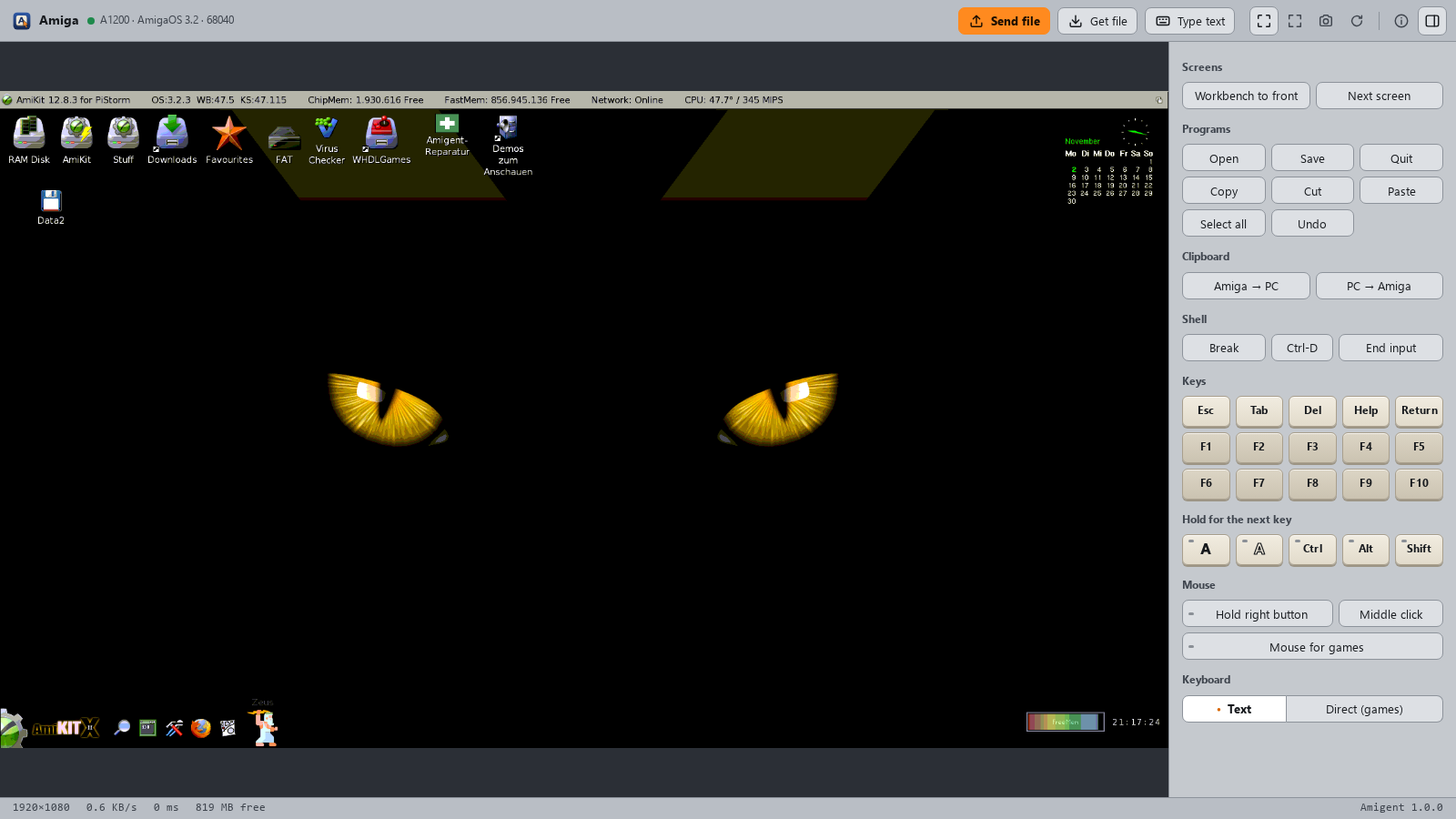
Once connected, you can:
|
|
44
65
|
|
|
45
66
|
- **let an AI agent do the work**, for example Claude Code or Codex: install
|
|
46
67
|
software, update programs, change settings, copy files, click through
|
|
@@ -58,6 +79,33 @@ any moment.
|
|
|
58
79
|
|
|
59
80
|
|
|
60
81
|
|
|
82
|
+
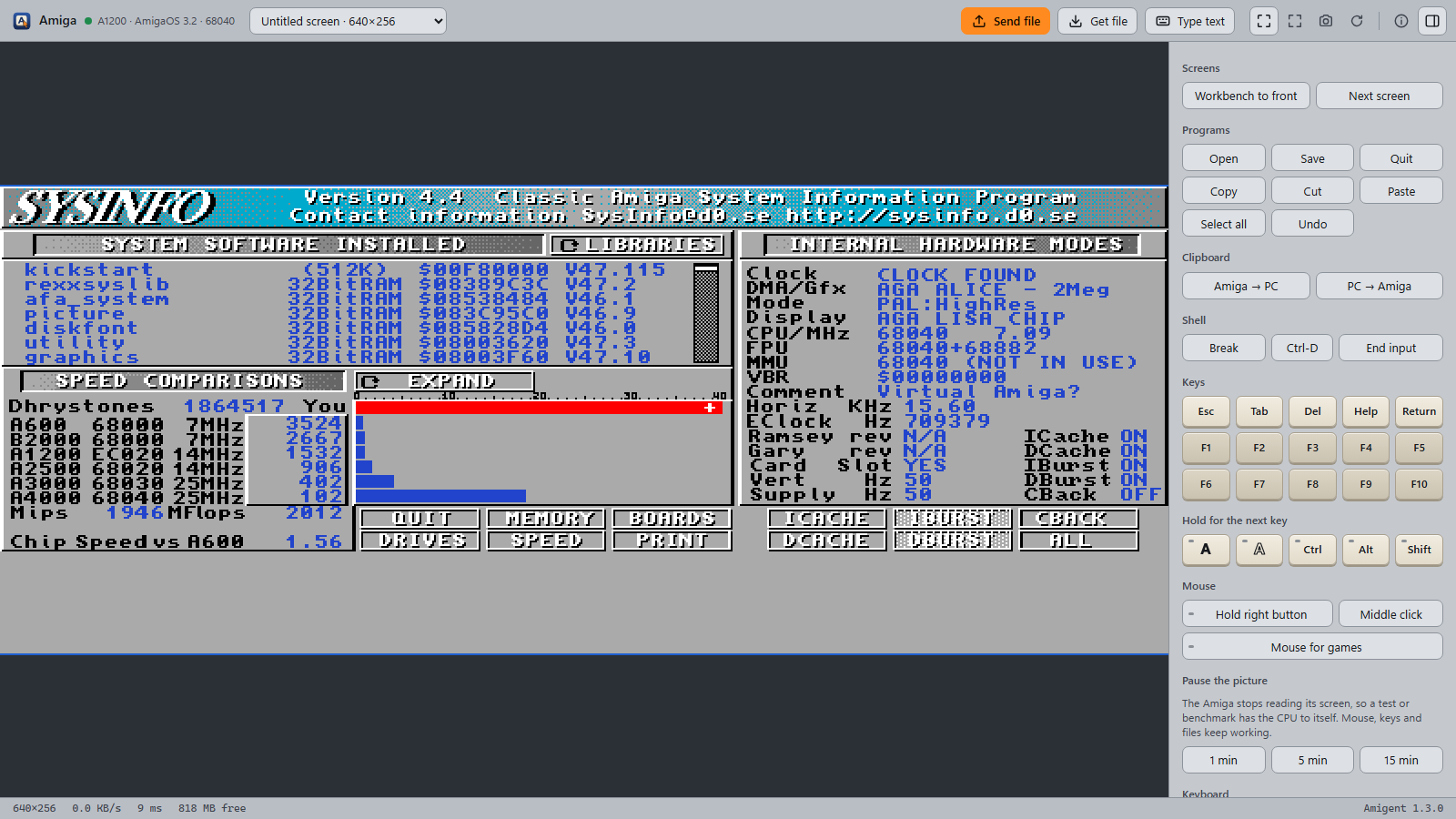
Programs that open their own screen, such as SysInfo on the chipset next to a
|
|
83
|
+
graphics-card Workbench, show up as they are. The list at the top brings any
|
|
84
|
+
screen to the front, from the PC.
|
|
85
|
+
|
|
86
|
+
|
|
87
|
+
|
|
88
|
+
## How it fits together
|
|
89
|
+
|
|
90
|
+
```mermaid
|
|
91
|
+
flowchart LR
|
|
92
|
+
subgraph PC["PC or Mac"]
|
|
93
|
+
agent["AI agent<br/>(Claude Code, Codex, ...)"] -- MCP --> server["amigent-server"]
|
|
94
|
+
you["you"] --> viewer["remote desktop<br/>amigent-viewer"]
|
|
95
|
+
end
|
|
96
|
+
subgraph Amiga["Amiga"]
|
|
97
|
+
daemon["amigentd"] --> os["screen, mouse and keys,<br/>files, Shell, ARexx"]
|
|
98
|
+
daemon --> monitor["amigent-monitor<br/>(what the agent does)"]
|
|
99
|
+
end
|
|
100
|
+
server -- "home network<br/>key, TLS" --> daemon
|
|
101
|
+
viewer -- "home network" --> daemon
|
|
102
|
+
```
|
|
103
|
+
|
|
104
|
+
One small program on the Amiga, `amigentd`, does what the PC asks: it sends
|
|
105
|
+
the screen, moves the mouse, types, runs commands and copies files. On the PC,
|
|
106
|
+
`amigent-server` gives an AI agent its tools, and the remote desktop shows the
|
|
107
|
+
screen to you. Both can work at once.
|
|
108
|
+
|
|
61
109
|
## Installation
|
|
62
110
|
|
|
63
111
|
### On the Amiga
|
|
@@ -94,6 +142,33 @@ Amiga key.
|
|
|
94
142
|
|
|
95
143
|
Without an AI agent: see the [manual installation](https://github.com/akustikrausch/amigent/blob/main/docs/GUIDE.md#manual-installation).
|
|
96
144
|
|
|
145
|
+
### Updating
|
|
146
|
+
|
|
147
|
+
Amigent has two halves, amigentd on the Amiga and the program on your PC or
|
|
148
|
+
Mac. Update both; either order works.
|
|
149
|
+
|
|
150
|
+
Paste this into your AI agent:
|
|
151
|
+
|
|
152
|
+
Update Amigent for me, both halves: run "pipx upgrade amigent" on this
|
|
153
|
+
computer, then "amigent-setup --update" for the amigentd on my Amiga.
|
|
154
|
+
Then tell me to restart you, so you get the new tools.
|
|
155
|
+
|
|
156
|
+
Or in a terminal:
|
|
157
|
+
|
|
158
|
+
pipx upgrade amigent
|
|
159
|
+
amigent-setup --update
|
|
160
|
+
|
|
161
|
+
Then restart your AI app and the remote desktop, so they run the new version.
|
|
162
|
+
|
|
163
|
+
Updated the Amiga first, at the Amiga? Unpack the new archive from the
|
|
164
|
+
[releases](https://github.com/akustikrausch/amigent/releases) or Aminet and
|
|
165
|
+
double-click *Amigent-Update* in its drawer. Then give your agent the same
|
|
166
|
+
prompt as above, or run `pipx upgrade amigent` on the PC and restart the AI app. From 1.3.0 on, the PC notices a newer
|
|
167
|
+
amigentd and says so, in the agent's answers and in the remote desktop.
|
|
168
|
+
|
|
169
|
+
Key, encryption and the start line stay as they are. One side alone keeps
|
|
170
|
+
working as before; the new features need both.
|
|
171
|
+
|
|
97
172
|
## What you need
|
|
98
173
|
|
|
99
174
|
- An Amiga with AmigaOS 2.04 or newer, any CPU from the 68000 on, a network connection
|
|
@@ -106,6 +181,12 @@ Without an AI agent: see the [manual installation](https://github.com/akustikrau
|
|
|
106
181
|
"Install the game from my Downloads folder and add it to the Games menu."
|
|
107
182
|
"Copy the demo to the Amiga and start it."
|
|
108
183
|
"Open the remote desktop."
|
|
184
|
+
"Install the newest HippoPlayer from Aminet, so I can take it back if it doesn't work."
|
|
185
|
+
"Build my program, run it on the Amiga and show me its debug output."
|
|
186
|
+
"The Amiga froze. What was it?"
|
|
187
|
+
"Which AHI driver is really loaded?"
|
|
188
|
+
"Find out whether my program leaks memory."
|
|
189
|
+
"Windows stutter when I drag them. Find out what holds things up."
|
|
109
190
|
|
|
110
191
|
## Made for slow machines and slow wires
|
|
111
192
|
|
|
@@ -122,6 +203,13 @@ feel quick, for the AI agent and for you at the mouse:
|
|
|
122
203
|
and costs the Amiga only a few percent of its CPU.
|
|
123
204
|
- **Files go in one go.** Whole folders travel in a single stream, and files
|
|
124
205
|
that are already there stay where they are.
|
|
206
|
+
- **Text where text is enough.** The AI agent reads what programs write on
|
|
207
|
+
the screen as text, a few hundred bytes, and takes a picture only of the
|
|
208
|
+
part where it needs one. It waits on the Amiga itself for a window or a
|
|
209
|
+
line of text instead of looking again and again.
|
|
210
|
+
- **Packed when the Amiga is fast.** With an accelerator behind a slow
|
|
211
|
+
network, replies, files and screen tiles travel packed; a slow CPU on a
|
|
212
|
+
fast network stays unpacked. Amigent measures both and decides.
|
|
125
213
|
|
|
126
214
|
Measured with a 640×256 Workbench screen:
|
|
127
215
|
|
|
@@ -144,9 +232,15 @@ All numbers, how they were taken and how to repeat them are in
|
|
|
144
232
|
- **New address after a restart?** Amigent finds the Amiga again by itself. It
|
|
145
233
|
takes only the one that proves to be yours.
|
|
146
234
|
- **Several Amigas?** `amigent-fleet` shows them side by side with a preview.
|
|
147
|
-
- **
|
|
148
|
-
|
|
149
|
-
|
|
235
|
+
- **Watching from the Amiga?** `amigent-monitor` in the Amigent folder opens a
|
|
236
|
+
window there that lists, line by line, what the agent is doing.
|
|
237
|
+
- **Trying out software?** The agent can record an installation and take it
|
|
238
|
+
back completely, and fetch programs from Aminet straight from the PC.
|
|
239
|
+
- **Developing for the Amiga?** The agent builds and runs your program and
|
|
240
|
+
reads its kprintf and Enforcer output, and keeps a copy of a growing log on
|
|
241
|
+
the PC that survives a crash.
|
|
242
|
+
- **A hang, a stutter, a guru?** The agent tells what a task waits for, who
|
|
243
|
+
holds a lock, how much CPU each task takes, and what a guru code means.
|
|
150
244
|
- **Running a test or a benchmark?** *Pause the picture* in the remote desktop
|
|
151
245
|
(or `PAUSE` by ARexx) gives the Amiga's CPU back to it for a while; mouse,
|
|
152
246
|
keys and files keep working.
|
|
@@ -154,6 +248,8 @@ All numbers, how they were taken and how to repeat them are in
|
|
|
154
248
|
- **Safe at home.** A key keeps other computers on the network out, and the
|
|
155
249
|
connection can be encrypted. Don't open the Amiga to the internet.
|
|
156
250
|
|
|
251
|
+
<p align="center"><img src="https://raw.githubusercontent.com/akustikrausch/amigent/main/docs/screenshots/monitor.png" width="772" alt="amigent-monitor on the Amiga: the agent's tool calls, commands and screen reads line by line, next to link, traffic and memory figures"></p>
|
|
252
|
+
|
|
157
253
|
More in the [guide](https://github.com/akustikrausch/amigent/blob/main/docs/GUIDE.md) and the [FAQ](https://github.com/akustikrausch/amigent/blob/main/docs/FAQ.md).
|
|
158
254
|
|
|
159
255
|
## License
|
|
@@ -12,7 +12,27 @@
|
|
|
12
12
|
|
|
13
13
|
<p align="center"><img src="https://raw.githubusercontent.com/akustikrausch/amigent/main/src/amigent/web/icon.png" width="96" alt="Amigent icon"></p>
|
|
14
14
|
|
|
15
|
-
Amigent connects your PC or Mac to your real Amiga over the home network.
|
|
15
|
+
Amigent connects your PC or Mac to your real Amiga over the home network.
|
|
16
|
+
|
|
17
|
+
## Set up in three steps
|
|
18
|
+
|
|
19
|
+
**1. On the Amiga:** copy [`amigentd`](https://github.com/akustikrausch/amigent/blob/main/src/amigent/amiga/bin/amigentd)
|
|
20
|
+
over (`amigentd.000` on a 68000) and start it with `amigentd SETUP` in a Shell.
|
|
21
|
+
|
|
22
|
+
**2. On the PC or Mac:** paste this into your AI agent:
|
|
23
|
+
|
|
24
|
+
Install Amigent for me: run "pipx install amigent", then amigent-setup,
|
|
25
|
+
register the MCP server "amigent" with the command amigent-server, and
|
|
26
|
+
run amigent-viewer --install.
|
|
27
|
+
|
|
28
|
+
**3. Ask for something:** "Open the remote desktop", or "Install the newest
|
|
29
|
+
HippoPlayer from Aminet".
|
|
30
|
+
|
|
31
|
+
The details, and the way without an AI agent, are under [Installation](#installation).
|
|
32
|
+
|
|
33
|
+
## What it does
|
|
34
|
+
|
|
35
|
+
Once connected, you can:
|
|
16
36
|
|
|
17
37
|
- **let an AI agent do the work**, for example Claude Code or Codex: install
|
|
18
38
|
software, update programs, change settings, copy files, click through
|
|
@@ -30,6 +50,33 @@ any moment.
|
|
|
30
50
|
|
|
31
51
|

|
|
32
52
|
|
|
53
|
+
Programs that open their own screen, such as SysInfo on the chipset next to a
|
|
54
|
+
graphics-card Workbench, show up as they are. The list at the top brings any
|
|
55
|
+
screen to the front, from the PC.
|
|
56
|
+
|
|
57
|
+

|
|
58
|
+
|
|
59
|
+
## How it fits together
|
|
60
|
+
|
|
61
|
+
```mermaid
|
|
62
|
+
flowchart LR
|
|
63
|
+
subgraph PC["PC or Mac"]
|
|
64
|
+
agent["AI agent<br/>(Claude Code, Codex, ...)"] -- MCP --> server["amigent-server"]
|
|
65
|
+
you["you"] --> viewer["remote desktop<br/>amigent-viewer"]
|
|
66
|
+
end
|
|
67
|
+
subgraph Amiga["Amiga"]
|
|
68
|
+
daemon["amigentd"] --> os["screen, mouse and keys,<br/>files, Shell, ARexx"]
|
|
69
|
+
daemon --> monitor["amigent-monitor<br/>(what the agent does)"]
|
|
70
|
+
end
|
|
71
|
+
server -- "home network<br/>key, TLS" --> daemon
|
|
72
|
+
viewer -- "home network" --> daemon
|
|
73
|
+
```
|
|
74
|
+
|
|
75
|
+
One small program on the Amiga, `amigentd`, does what the PC asks: it sends
|
|
76
|
+
the screen, moves the mouse, types, runs commands and copies files. On the PC,
|
|
77
|
+
`amigent-server` gives an AI agent its tools, and the remote desktop shows the
|
|
78
|
+
screen to you. Both can work at once.
|
|
79
|
+
|
|
33
80
|
## Installation
|
|
34
81
|
|
|
35
82
|
### On the Amiga
|
|
@@ -66,6 +113,33 @@ Amiga key.
|
|
|
66
113
|
|
|
67
114
|
Without an AI agent: see the [manual installation](https://github.com/akustikrausch/amigent/blob/main/docs/GUIDE.md#manual-installation).
|
|
68
115
|
|
|
116
|
+
### Updating
|
|
117
|
+
|
|
118
|
+
Amigent has two halves, amigentd on the Amiga and the program on your PC or
|
|
119
|
+
Mac. Update both; either order works.
|
|
120
|
+
|
|
121
|
+
Paste this into your AI agent:
|
|
122
|
+
|
|
123
|
+
Update Amigent for me, both halves: run "pipx upgrade amigent" on this
|
|
124
|
+
computer, then "amigent-setup --update" for the amigentd on my Amiga.
|
|
125
|
+
Then tell me to restart you, so you get the new tools.
|
|
126
|
+
|
|
127
|
+
Or in a terminal:
|
|
128
|
+
|
|
129
|
+
pipx upgrade amigent
|
|
130
|
+
amigent-setup --update
|
|
131
|
+
|
|
132
|
+
Then restart your AI app and the remote desktop, so they run the new version.
|
|
133
|
+
|
|
134
|
+
Updated the Amiga first, at the Amiga? Unpack the new archive from the
|
|
135
|
+
[releases](https://github.com/akustikrausch/amigent/releases) or Aminet and
|
|
136
|
+
double-click *Amigent-Update* in its drawer. Then give your agent the same
|
|
137
|
+
prompt as above, or run `pipx upgrade amigent` on the PC and restart the AI app. From 1.3.0 on, the PC notices a newer
|
|
138
|
+
amigentd and says so, in the agent's answers and in the remote desktop.
|
|
139
|
+
|
|
140
|
+
Key, encryption and the start line stay as they are. One side alone keeps
|
|
141
|
+
working as before; the new features need both.
|
|
142
|
+
|
|
69
143
|
## What you need
|
|
70
144
|
|
|
71
145
|
- An Amiga with AmigaOS 2.04 or newer, any CPU from the 68000 on, a network connection
|
|
@@ -78,6 +152,12 @@ Without an AI agent: see the [manual installation](https://github.com/akustikrau
|
|
|
78
152
|
"Install the game from my Downloads folder and add it to the Games menu."
|
|
79
153
|
"Copy the demo to the Amiga and start it."
|
|
80
154
|
"Open the remote desktop."
|
|
155
|
+
"Install the newest HippoPlayer from Aminet, so I can take it back if it doesn't work."
|
|
156
|
+
"Build my program, run it on the Amiga and show me its debug output."
|
|
157
|
+
"The Amiga froze. What was it?"
|
|
158
|
+
"Which AHI driver is really loaded?"
|
|
159
|
+
"Find out whether my program leaks memory."
|
|
160
|
+
"Windows stutter when I drag them. Find out what holds things up."
|
|
81
161
|
|
|
82
162
|
## Made for slow machines and slow wires
|
|
83
163
|
|
|
@@ -94,6 +174,13 @@ feel quick, for the AI agent and for you at the mouse:
|
|
|
94
174
|
and costs the Amiga only a few percent of its CPU.
|
|
95
175
|
- **Files go in one go.** Whole folders travel in a single stream, and files
|
|
96
176
|
that are already there stay where they are.
|
|
177
|
+
- **Text where text is enough.** The AI agent reads what programs write on
|
|
178
|
+
the screen as text, a few hundred bytes, and takes a picture only of the
|
|
179
|
+
part where it needs one. It waits on the Amiga itself for a window or a
|
|
180
|
+
line of text instead of looking again and again.
|
|
181
|
+
- **Packed when the Amiga is fast.** With an accelerator behind a slow
|
|
182
|
+
network, replies, files and screen tiles travel packed; a slow CPU on a
|
|
183
|
+
fast network stays unpacked. Amigent measures both and decides.
|
|
97
184
|
|
|
98
185
|
Measured with a 640×256 Workbench screen:
|
|
99
186
|
|
|
@@ -116,9 +203,15 @@ All numbers, how they were taken and how to repeat them are in
|
|
|
116
203
|
- **New address after a restart?** Amigent finds the Amiga again by itself. It
|
|
117
204
|
takes only the one that proves to be yours.
|
|
118
205
|
- **Several Amigas?** `amigent-fleet` shows them side by side with a preview.
|
|
119
|
-
- **
|
|
120
|
-
|
|
121
|
-
|
|
206
|
+
- **Watching from the Amiga?** `amigent-monitor` in the Amigent folder opens a
|
|
207
|
+
window there that lists, line by line, what the agent is doing.
|
|
208
|
+
- **Trying out software?** The agent can record an installation and take it
|
|
209
|
+
back completely, and fetch programs from Aminet straight from the PC.
|
|
210
|
+
- **Developing for the Amiga?** The agent builds and runs your program and
|
|
211
|
+
reads its kprintf and Enforcer output, and keeps a copy of a growing log on
|
|
212
|
+
the PC that survives a crash.
|
|
213
|
+
- **A hang, a stutter, a guru?** The agent tells what a task waits for, who
|
|
214
|
+
holds a lock, how much CPU each task takes, and what a guru code means.
|
|
122
215
|
- **Running a test or a benchmark?** *Pause the picture* in the remote desktop
|
|
123
216
|
(or `PAUSE` by ARexx) gives the Amiga's CPU back to it for a while; mouse,
|
|
124
217
|
keys and files keep working.
|
|
@@ -126,6 +219,8 @@ All numbers, how they were taken and how to repeat them are in
|
|
|
126
219
|
- **Safe at home.** A key keeps other computers on the network out, and the
|
|
127
220
|
connection can be encrypted. Don't open the Amiga to the internet.
|
|
128
221
|
|
|
222
|
+
<p align="center"><img src="https://raw.githubusercontent.com/akustikrausch/amigent/main/docs/screenshots/monitor.png" width="772" alt="amigent-monitor on the Amiga: the agent's tool calls, commands and screen reads line by line, next to link, traffic and memory figures"></p>
|
|
223
|
+
|
|
129
224
|
More in the [guide](https://github.com/akustikrausch/amigent/blob/main/docs/GUIDE.md) and the [FAQ](https://github.com/akustikrausch/amigent/blob/main/docs/FAQ.md).
|
|
130
225
|
|
|
131
226
|
## License
|
|
@@ -20,7 +20,7 @@ classifiers = [
|
|
|
20
20
|
"Topic :: System :: Emulators",
|
|
21
21
|
"Topic :: System :: Networking",
|
|
22
22
|
]
|
|
23
|
-
dependencies = ["mcp>=1.2,<2", "pillow>=10"]
|
|
23
|
+
dependencies = ["mcp>=1.2,<2", "pillow>=10", "capstone>=5"]
|
|
24
24
|
|
|
25
25
|
[project.urls]
|
|
26
26
|
Homepage = "https://github.com/akustikrausch/amigent"
|
|
@@ -46,7 +46,7 @@ where = ["src"]
|
|
|
46
46
|
version = { attr = "amigent.__version__" }
|
|
47
47
|
|
|
48
48
|
[tool.setuptools.package-data]
|
|
49
|
-
amigent = ["web/*", "web/locales/*", "macos/*", "amiga/*", "amiga/bin/*"]
|
|
49
|
+
amigent = ["*.json", "web/*", "web/locales/*", "macos/*", "amiga/*", "amiga/bin/*"]
|
|
50
50
|
|
|
51
51
|
[tool.setuptools.exclude-package-data]
|
|
52
52
|
amigent = ["amiga/bin/amigentd.080"] # untested without Vampire hardware; a 68080 runs amigentd
|
|
@@ -0,0 +1,124 @@
|
|
|
1
|
+
"""Files out of an Amiga disk image (.adf, gzipped .adz), on the PC.
|
|
2
|
+
|
|
3
|
+
AmigaDOS floppies use 512-byte blocks: 1760 (DD) or 3520 (HD). The root
|
|
4
|
+
block sits in the middle; directories keep a 72-entry hash table of header
|
|
5
|
+
blocks with chains, a file header lists its data blocks (more in extension
|
|
6
|
+
blocks), and data blocks carry a 24-byte header in OFS and none in FFS.
|
|
7
|
+
Disks in a custom format (most bootable games) can't be read this way.
|
|
8
|
+
"""
|
|
9
|
+
|
|
10
|
+
from __future__ import annotations
|
|
11
|
+
|
|
12
|
+
import gzip
|
|
13
|
+
import struct
|
|
14
|
+
|
|
15
|
+
BSIZE = 512
|
|
16
|
+
T_HEADER, T_DATA, T_LIST = 2, 8, 16
|
|
17
|
+
ST_ROOT, ST_USERDIR, ST_FILE = 1, 2, -3
|
|
18
|
+
HT_SIZE = 72
|
|
19
|
+
|
|
20
|
+
|
|
21
|
+
class AdfError(ValueError):
|
|
22
|
+
pass
|
|
23
|
+
|
|
24
|
+
|
|
25
|
+
def _longs(block: bytes) -> tuple:
|
|
26
|
+
return struct.unpack(">128l", block)
|
|
27
|
+
|
|
28
|
+
|
|
29
|
+
def _name(block: bytes) -> str:
|
|
30
|
+
n = min(block[432], 30)
|
|
31
|
+
return block[433:433 + n].decode("iso-8859-1")
|
|
32
|
+
|
|
33
|
+
|
|
34
|
+
class Disk:
|
|
35
|
+
def __init__(self, image: bytes):
|
|
36
|
+
if image[:2] == b"\x1f\x8b":
|
|
37
|
+
image = gzip.decompress(image)
|
|
38
|
+
if len(image) not in (1760 * BSIZE, 3520 * BSIZE):
|
|
39
|
+
raise AdfError(f"{len(image)} bytes is not an 880 KB or 1.76 MB disk image")
|
|
40
|
+
if image[:3] != b"DOS":
|
|
41
|
+
raise AdfError("not an AmigaDOS disk (custom format, as many games use): "
|
|
42
|
+
"write it to a floppy instead")
|
|
43
|
+
self.image = image
|
|
44
|
+
self.blocks = len(image) // BSIZE
|
|
45
|
+
self.ffs = bool(image[3] & 1)
|
|
46
|
+
self.root = self.blocks // 2
|
|
47
|
+
if _longs(self.block(self.root))[127] != ST_ROOT:
|
|
48
|
+
raise AdfError("the root block is not where it should be")
|
|
49
|
+
|
|
50
|
+
def block(self, n: int) -> bytes:
|
|
51
|
+
if not 2 <= n < self.blocks:
|
|
52
|
+
raise AdfError(f"block {n} is outside the disk")
|
|
53
|
+
return self.image[n * BSIZE:(n + 1) * BSIZE]
|
|
54
|
+
|
|
55
|
+
@property
|
|
56
|
+
def label(self) -> str:
|
|
57
|
+
return _name(self.block(self.root))
|
|
58
|
+
|
|
59
|
+
def entries(self, dir_block: int) -> list[int]:
|
|
60
|
+
"""Header blocks of everything in a directory, following the hash chains."""
|
|
61
|
+
out, seen = [], set()
|
|
62
|
+
for key in _longs(self.block(dir_block))[6:6 + HT_SIZE]:
|
|
63
|
+
while key and key not in seen:
|
|
64
|
+
seen.add(key)
|
|
65
|
+
out.append(key)
|
|
66
|
+
key = _longs(self.block(key))[124]
|
|
67
|
+
return out
|
|
68
|
+
|
|
69
|
+
def file_data(self, header: int) -> bytes:
|
|
70
|
+
b = self.block(header)
|
|
71
|
+
size = _longs(b)[81]
|
|
72
|
+
keys: list[int] = []
|
|
73
|
+
ext, hops = header, 0
|
|
74
|
+
while ext:
|
|
75
|
+
blk = _longs(self.block(ext))
|
|
76
|
+
count = blk[2]
|
|
77
|
+
keys += [blk[77 - i] for i in range(min(count, HT_SIZE))]
|
|
78
|
+
ext = blk[126]
|
|
79
|
+
hops += 1
|
|
80
|
+
if hops > self.blocks:
|
|
81
|
+
raise AdfError("extension block loop")
|
|
82
|
+
data = bytearray()
|
|
83
|
+
# Some OFS disks hold files written without the data block headers (FFS style);
|
|
84
|
+
# the block count tells: 512 bytes a block instead of 488.
|
|
85
|
+
raw_style = self.ffs or (keys and _longs(self.block(keys[0]))[0] != T_DATA
|
|
86
|
+
and len(keys) == (size + BSIZE - 1) // BSIZE)
|
|
87
|
+
for key in keys:
|
|
88
|
+
raw = self.block(key)
|
|
89
|
+
if raw_style:
|
|
90
|
+
data += raw
|
|
91
|
+
else:
|
|
92
|
+
l = _longs(raw)
|
|
93
|
+
if l[0] != T_DATA:
|
|
94
|
+
raise AdfError(f"block {key} is not a data block")
|
|
95
|
+
data += raw[24:24 + max(0, min(l[3], BSIZE - 24))]
|
|
96
|
+
if len(data) < size:
|
|
97
|
+
raise AdfError(f"file at block {header} is shorter than its size says")
|
|
98
|
+
return bytes(data[:size])
|
|
99
|
+
|
|
100
|
+
def walk(self, dir_block: int | None = None, prefix: str = "",
|
|
101
|
+
seen: set[int] | None = None) -> dict[str, bytes]:
|
|
102
|
+
"""{path: data} of every file below a directory (the root by default)."""
|
|
103
|
+
out: dict[str, bytes] = {}
|
|
104
|
+
dir_block = self.root if dir_block is None else dir_block
|
|
105
|
+
seen = set() if seen is None else seen
|
|
106
|
+
if dir_block in seen:
|
|
107
|
+
raise AdfError(f"directory at block {dir_block} contains itself")
|
|
108
|
+
seen.add(dir_block)
|
|
109
|
+
for key in self.entries(dir_block):
|
|
110
|
+
b = self.block(key)
|
|
111
|
+
l = _longs(b)
|
|
112
|
+
name = _name(b)
|
|
113
|
+
if not name or "/" in name or name in (".", ".."):
|
|
114
|
+
continue
|
|
115
|
+
path = prefix + name
|
|
116
|
+
if l[127] == ST_USERDIR:
|
|
117
|
+
out.update(self.walk(key, path + "/", seen))
|
|
118
|
+
elif l[127] == ST_FILE:
|
|
119
|
+
out[path] = self.file_data(key)
|
|
120
|
+
return out
|
|
121
|
+
|
|
122
|
+
|
|
123
|
+
def extract_all(image: bytes) -> dict[str, bytes]:
|
|
124
|
+
return Disk(image).walk()
|
|
@@ -0,0 +1,154 @@
|
|
|
1
|
+
"""Guru meditation codes in words, after exec/alerts.h.
|
|
2
|
+
|
|
3
|
+
An alert is 32 bits: the top bit says the Amiga could not go on (dead end), the
|
|
4
|
+
next seven name the part of the system, the next byte a general kind of error,
|
|
5
|
+
and the low 16 bits the specific one. Codes from CPU exceptions have no part
|
|
6
|
+
and are just the exception number. The second number of a guru is the task or
|
|
7
|
+
the address that caused it.
|
|
8
|
+
"""
|
|
9
|
+
|
|
10
|
+
from __future__ import annotations
|
|
11
|
+
|
|
12
|
+
DEADEND = 0x80000000
|
|
13
|
+
|
|
14
|
+
SUBSYSTEMS = {
|
|
15
|
+
0x01: "exec.library", 0x02: "graphics.library", 0x03: "layers.library",
|
|
16
|
+
0x04: "intuition.library", 0x05: "math libraries", 0x07: "dos.library",
|
|
17
|
+
0x08: "ramlib", 0x09: "icon.library", 0x0A: "expansion.library",
|
|
18
|
+
0x0B: "diskfont.library", 0x0C: "utility.library", 0x0D: "keymap.library",
|
|
19
|
+
0x10: "audio.device", 0x11: "console.device", 0x12: "gameport.device",
|
|
20
|
+
0x13: "keyboard.device", 0x14: "trackdisk.device", 0x15: "timer.device",
|
|
21
|
+
0x20: "cia.resource", 0x21: "disk.resource", 0x22: "misc.resource",
|
|
22
|
+
0x30: "bootstrap", 0x31: "Workbench", 0x32: "DiskCopy", 0x33: "gadtools.library",
|
|
23
|
+
0x34: "utility.library", 0x35: "an unknown part",
|
|
24
|
+
}
|
|
25
|
+
|
|
26
|
+
GENERAL = {
|
|
27
|
+
0x01: "out of memory", 0x02: "MakeLibrary() failed", 0x03: "a library did not open",
|
|
28
|
+
0x04: "a device did not open", 0x05: "a resource did not open", 0x06: "I/O error",
|
|
29
|
+
0x07: "no free signal", 0x08: "bad parameter", 0x09: "a library closed twice or wrongly",
|
|
30
|
+
0x0A: "a device closed twice or wrongly", 0x0B: "a process could not be created",
|
|
31
|
+
}
|
|
32
|
+
|
|
33
|
+
# Only the specific codes a user meets in practice; the rest gets its part and kind.
|
|
34
|
+
SPECIFIC = {
|
|
35
|
+
0x01000001: "an exception vector's checksum is wrong",
|
|
36
|
+
0x01000002: "ExecBase's checksum is wrong",
|
|
37
|
+
0x01000003: "a library's checksum is wrong",
|
|
38
|
+
0x01000005: "the memory list is corrupt (a program wrote over memory it did not own)",
|
|
39
|
+
0x01000006: "no memory for interrupt servers",
|
|
40
|
+
0x01000007: "InitStruct() of an APTR source",
|
|
41
|
+
0x01000008: "a semaphore is in an illegal state",
|
|
42
|
+
0x01000009: "memory was freed twice",
|
|
43
|
+
0x0100000A: "an exception without a handler (often a crashed program)",
|
|
44
|
+
0x0100000B: "an IORequest was used twice",
|
|
45
|
+
0x0100000C: "the memory list is insane",
|
|
46
|
+
0x0100000D: "an IORequest was used after its device was closed",
|
|
47
|
+
0x0100000E: "a stack ran out of its bounds (stack overflow)",
|
|
48
|
+
0x0100000F: "FreeMem() of an address that was never allocated",
|
|
49
|
+
0x01000010: "a bad semaphore",
|
|
50
|
+
0x02010000: "graphics ran out of memory",
|
|
51
|
+
0x04000001: "a gadget of unknown type",
|
|
52
|
+
0x04010002: "intuition could not create a message port",
|
|
53
|
+
0x04010007: "a screen could not be opened",
|
|
54
|
+
0x0401000B: "a window could not be opened",
|
|
55
|
+
0x0400000C: "intuition is in a bad state",
|
|
56
|
+
0x0400000D: "intuition got an unknown message",
|
|
57
|
+
0x0400000F: "intuition could not open console.device",
|
|
58
|
+
0x07010001: "no memory when dos started",
|
|
59
|
+
0x07000002: "EndTask() did not end the task",
|
|
60
|
+
0x07000003: "a DOS packet did not get through",
|
|
61
|
+
0x07000004: "an unexpected packet",
|
|
62
|
+
0x07000005: "FreeVec() of something that was not AllocVec()ed",
|
|
63
|
+
0x07000006: "a disk block is out of sequence",
|
|
64
|
+
0x07000007: "a disk's bitmap is corrupt",
|
|
65
|
+
0x07000008: "a disk key is already free",
|
|
66
|
+
0x07000009: "a disk block's checksum is wrong",
|
|
67
|
+
0x0700000A: "a disk error",
|
|
68
|
+
0x0700000B: "a disk key is out of range",
|
|
69
|
+
0x0700000C: "a bad overlay",
|
|
70
|
+
0x0700000D: "a bad init function in a resident module",
|
|
71
|
+
0x0700000E: "a file was closed twice",
|
|
72
|
+
0x14000001: "trackdisk: seek error during calibration",
|
|
73
|
+
0x15000001: "timer: bad request",
|
|
74
|
+
}
|
|
75
|
+
|
|
76
|
+
CPU = {
|
|
77
|
+
0x02: "bus error (access to an address nothing answers)",
|
|
78
|
+
0x03: "address error (a word or long at an odd address on a 68000)",
|
|
79
|
+
0x04: "illegal instruction (the CPU ran into data, or a CPU too old for the program)",
|
|
80
|
+
0x05: "division by zero",
|
|
81
|
+
0x06: "CHK instruction",
|
|
82
|
+
0x07: "TRAPV instruction",
|
|
83
|
+
0x08: "privilege violation (a user program used a supervisor instruction)",
|
|
84
|
+
0x09: "trace",
|
|
85
|
+
0x0A: "line A emulator (unimplemented instruction)",
|
|
86
|
+
0x0B: "line F emulator (an FPU or MMU instruction the CPU does not have)",
|
|
87
|
+
0x0E: "format error",
|
|
88
|
+
0x0F: "uninitialized interrupt",
|
|
89
|
+
0x18: "spurious interrupt",
|
|
90
|
+
}
|
|
91
|
+
|
|
92
|
+
|
|
93
|
+
def describe(code: int | str, where: int | str | None = None) -> str:
|
|
94
|
+
"""'8100000C' -> 'exec.library: the memory list is insane; dead end (the Amiga had to stop)'."""
|
|
95
|
+
if isinstance(code, str):
|
|
96
|
+
code = int(code.strip().lstrip("#$").split(".")[0], 16)
|
|
97
|
+
if isinstance(where, str):
|
|
98
|
+
try:
|
|
99
|
+
where = int(where.strip().lstrip("#$"), 16)
|
|
100
|
+
except ValueError:
|
|
101
|
+
where = None
|
|
102
|
+
deadend = bool(code & DEADEND)
|
|
103
|
+
sub = (code >> 24) & 0x7F
|
|
104
|
+
general = (code >> 16) & 0xFF
|
|
105
|
+
plain = code & 0x7FFFFFFF
|
|
106
|
+
if sub == 0 and general == 0 and (code & 0xFFFF) in CPU:
|
|
107
|
+
text = "CPU exception: " + CPU[code & 0xFFFF]
|
|
108
|
+
deadend = True # a CPU guru always stops the Amiga
|
|
109
|
+
else:
|
|
110
|
+
part = SUBSYSTEMS.get(sub, f"part {sub:02X}")
|
|
111
|
+
if plain in SPECIFIC:
|
|
112
|
+
text = f"{part}: {SPECIFIC[plain]}"
|
|
113
|
+
elif general in GENERAL:
|
|
114
|
+
text = f"{part}: {GENERAL[general]}"
|
|
115
|
+
elif general & 0x80 == 0 and general:
|
|
116
|
+
text = f"{part}: error {general:02X}.{code & 0xFFFF:04X}"
|
|
117
|
+
else:
|
|
118
|
+
text = f"{part}: error {code & 0xFFFF:04X}"
|
|
119
|
+
# AG_OpenLib and friends name what did not open: AO_xxx = $8000 + its part
|
|
120
|
+
if general in (0x03, 0x04, 0x05) and code & 0xFF00 == 0x8000 and code & 0x7F in SUBSYSTEMS:
|
|
121
|
+
text += f" ({SUBSYSTEMS[code & 0x7F]})"
|
|
122
|
+
text += "; dead end (the Amiga had to stop)" if deadend else "; recoverable"
|
|
123
|
+
if where:
|
|
124
|
+
text += f"; caused by the task or at the address {where:08X}"
|
|
125
|
+
return text
|
|
126
|
+
|
|
127
|
+
|
|
128
|
+
def gurudat(text: str) -> dict[int, str]:
|
|
129
|
+
"""MCP's S:MCP.gurudat: 'XXXXXXXX description' per line."""
|
|
130
|
+
out = {}
|
|
131
|
+
for line in text.splitlines():
|
|
132
|
+
parts = line.split(None, 1)
|
|
133
|
+
if len(parts) == 2 and len(parts[0]) == 8:
|
|
134
|
+
try:
|
|
135
|
+
out[int(parts[0], 16)] = parts[1].strip()
|
|
136
|
+
except ValueError:
|
|
137
|
+
pass
|
|
138
|
+
return out
|
|
139
|
+
|
|
140
|
+
|
|
141
|
+
def history(text: str, extra: dict[int, str] | None = None) -> list[str]:
|
|
142
|
+
"""Each line of a guru log that holds a guru code, with the code in words."""
|
|
143
|
+
import re
|
|
144
|
+
|
|
145
|
+
out = []
|
|
146
|
+
for line in text.splitlines():
|
|
147
|
+
m = re.search(r"\b([0-9A-Fa-f]{8})(?:\.([0-9A-Fa-f]{8}))?\b", line)
|
|
148
|
+
if not m:
|
|
149
|
+
continue
|
|
150
|
+
code = int(m.group(1), 16)
|
|
151
|
+
words = describe(code, m.group(2))
|
|
152
|
+
known = (extra or {}).get(code) or (extra or {}).get(code & 0x7FFFFFFF)
|
|
153
|
+
out.append(f"{line.strip()} -> {words}" + (f" (MCP: {known})" if known else ""))
|
|
154
|
+
return out
|
|
@@ -23,6 +23,26 @@ If NOT EXISTS $build
|
|
|
23
23
|
Skip done
|
|
24
24
|
EndIf
|
|
25
25
|
Echo "Installing $build from this drawer."
|
|
26
|
+
; amigent-status and amigent-monitor go to the Amigent folder; icons only when missing
|
|
27
|
+
Set home SYS:amigent
|
|
28
|
+
If EXISTS ENVARC:amigent-home
|
|
29
|
+
Set home `Type ENVARC:amigent-home`
|
|
30
|
+
EndIf
|
|
31
|
+
If EXISTS "$home"
|
|
32
|
+
If EXISTS amigent-status
|
|
33
|
+
Copy amigent-status "$home/" QUIET
|
|
34
|
+
EndIf
|
|
35
|
+
If EXISTS amigent-monitor
|
|
36
|
+
Copy amigent-monitor "$home/" QUIET
|
|
37
|
+
EndIf
|
|
38
|
+
If NOT EXISTS "$home/amigent-status.info"
|
|
39
|
+
Copy amigent-status.info "$home/" QUIET
|
|
40
|
+
EndIf
|
|
41
|
+
If NOT EXISTS "$home/amigent-monitor.info"
|
|
42
|
+
Copy amigent-monitor.info "$home/" QUIET
|
|
43
|
+
EndIf
|
|
44
|
+
EndIf
|
|
45
|
+
UnSet home
|
|
26
46
|
Copy $build C:amigentd.new QUIET
|
|
27
47
|
Run >NIL: RexxMast >NIL:
|
|
28
48
|
Wait 1
|
|
Binary file
|
|
@@ -38,7 +38,8 @@ if show('P', 'AMIGENT') then call finish 'busy', 'The running amigentd did not s
|
|
|
38
38
|
call swap
|
|
39
39
|
say 'Starting the new amigentd...'
|
|
40
40
|
address command line
|
|
41
|
-
|
|
41
|
+
/* the old one's port can stay taken for a minute; the new one tries for 90 s */
|
|
42
|
+
do 100 until show('P', 'AMIGENT'); address command 'Wait 1'; end
|
|
42
43
|
if ~show('P', 'AMIGENT') then do
|
|
43
44
|
address command 'Copy C:amigentd.old C:amigentd QUIET'
|
|
44
45
|
address command line
|
|
Binary file
|
|
Binary file
|
|
Binary file
|
|
Binary file
|